Lessons From Building A Seven Figure Recruitment Business In 12 Months with Stuart Mitchell
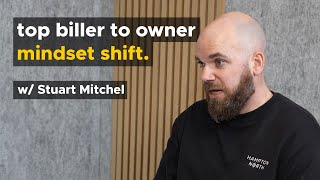
Stuart Mitchell grew Hampton North, a cybersecurity recruitment firm, to seven figures in its first year by building trust through consistent relationships and bringing on a well-known security expert as an equity-based advisor. He's now hiring an operations leader, formalizing processes, and doubling down on content to scale further while mapping clear career paths for his team.
Chapters
The reality is I'm not also just hanging around with these people to make a bunch of mates. I never hide behind the fact that I'm a commercial entity because that's what I'm doing. Like, hey, when are we going to do this? Or, you know, hey, I took you for golf. You know, you owe me one, right? So without that trust and without that execution that we went back to early on, it would all be for nothing. And I'd just have a really expensive coffee and expensive bills.
Stuart Mitchell, the founder of Hampton North, a premium US-based cybersecurity search firm. Since 2017, Stuart has been obsessed with serving and supporting the cybersecurity industry. In 2022, he launched his own recruitment business. In their first year, they did $1.6 million, and they're now a team of 5. Here is what you're going to learn in this week's episode: the things that ended up being way more challenging than Stuart expected when he first launched the business.
It's a huge responsibility. That was arguably the worst 6 weeks of, of my life. It was just so stressful. Even when the deals were done, you know, invoices out, etc., if they didn't pay on time, like, I cut it really, really, really close.
How Stuart is going about and planning to build the best cybersecurity business on the planet.
I've never had to go to a team member disappointed saying, hey, they haven't paid their invoice, and then they're humping because they're not getting paid till the next month.
The importance of being agile and how they had to open up brand new verticals because of market dynamics and how they went about it.
I think as the market feels like it's tracking up a little bit and we are getting a bigger rep, we are getting more requests internally and more inbound business as a collective, not just me. We can start to be, start to dictate the terms that we work at.
How he leads a fully remote team and drives high performance.
I'm putting complete trust into them. If you're smashing 200 grand a month, I don't Really care, like honestly.
And so, so much more. Let's get into this week's episode. Stuart, welcome to the pod.
Thanks for having me on, long overdue.
I know. Uh, yeah, nice to not see you through a screen.
Yeah, it's nice to be back in London, that's for sure.
Um, always, you know, whenever possible, try and like to do these face to face, so it's nice. You know, you're not— you, you've been in the country for a couple of weeks. Yeah, yeah, flying back on the weekend.
Yep.
So nice to look at, you know, the white of your eyes.
That's it.
And talk about this journey that you've been on. Um, and today we're going to really dig into this, uh, Hampton North entrepreneurial journey that you've been on, uh, which you started in mid-November of— what's that, 2022? 2022.
Yeah.
Um, so we thought, you know, we're over that first year and, you know, great time to reflect. I've got the, the Hampton North highlight reel in front of me. So again, if If I get any of this wrong, let me know. But first year numbers, what came in was— this was dollars because you're Americanized now, we're only talking dollars, mate. Um, $1.6 million net fee income, and a lot of— mainly all of that was perm. Then you had also some contract. Um, you got 5 people including you, but you just said that you got someone else, uh, potentially joining, all US. Your world is cyber security. Tech side, not sales. Yeah, I don't know, that might change in the future. Uh, and fully remote team.
Yes.
Yeah. And how long have you lived in the US now?
Uh, this is my— it'd be 10 years in July.
So a long time. Obviously you're just telling me like you miss, you miss home. So like, do you feel like Northampton is no longer home? How do you feel about it?
It's, it's tricky, right? Because I look at like— I've named my company after Northampton, right? So it's exactly like— it has some place in my heart. Um, But I look at my life now and I think US is really where I'm set up for home and where I see my, my kid growing up and where I see myself getting old.
So I wanted to just like dig straight in, uh, like I, um, always like to. And I feel like if anyone listens to this and if anyone sees you pop up on LinkedIn, they're gonna have like an assumption of you, your brand, these things. So what I wanted to like ask you first is what is it when it comes to your brand that people don't see, that we feel really has impacted your brand? 'Cause it's very easy to see Stuart's got all these followers, easy for him to do what he's doing, he's got this brand. But I know firstly, a huge part of you getting anywhere near that you've got to is longevity. You've been committed to this space for a long time, you've been building your brand. But there'll be all these things that we won't find on LinkedIn that will be contributing to why you get inbound business, why you've been able to build the business you have in a short period of time? Like, what is it that people won't see behind the LinkedIn newsfeed, mate, that's happening?
Yeah, so there's probably two things, and one is on the social media side, that's taken years, right? And you know this, and anyone who's committed to their social media game, it doesn't happen overnight. I feel like it compounds, and the later in the journey you get, the easier it gets because you get followers, and the way the LinkedIn algorithm works, it allows for that. But the second is there's no way that I would get this if I didn't execute. And I think a lot of people assume that— I've had people in the US say, hey, is this guy a talking head? Is he full of it? But if I didn't execute, if I wasn't able to deliver on searches, give my clients a good experience, actually be able to follow up reputationally, I think I would get destroyed because I do put myself out there every single time I'm committing on a search. I'm posting stuff on LinkedIn. I think the bigger you get, the bigger the target is. And I'm sure some people wouldn't hate to see me fall. And so I think without the execution, without the delivery, without actually being able to do recruitment, it would all be for nothing.
I'm glad you said that. And we spoke about this because I think something— it was from something that I was watching online recently and they were talking about what makes up a great personal brand. And they were looking at people like Taylor Swift, Joe Rogan, The Rock. I don't know if you're an Alex Hormozi fan. I'm a huge Alex Hormozi fan. And it's like this great video like breaking it down why they've got such a great brand. And the number one bullet point they put on all of them is longevity, which is what we just spoke about, right? They've all been doing it for a very long time. So I think for recruiters that are looking at what you're doing, and early on, um, recruiters in their career, it can be very easy to compare their, like, you know, year or two years of your 10 years, you know what I mean? I think sometimes that's like a just not the right mindset to have. And it, it is a long game. Yeah, especially with the branding. But like absolutely what is imperative in all of this is that you're actually able to be a great world-class recruiter, right? Like you weren't— you wouldn't have been able to get to where you got to with like with this brand, but then you just can't back it up.
No, exactly. And I think arguably my recruitment fundamentals were better when I didn't have the brand because I had to maximize every opportunity. I had to be better at the good old-fashioned cold calling, speccing, and whatever, and I had to maximize those opportunities. Um, and I think in your early years you, you should start the branding thing, absolutely. But the fundamentals have to be in place, whether that's, you know, everyone has their own business development strategy. But just because you're posting on LinkedIn every day doesn't mean that things are going to happen for you overnight. You have to go back to Recruitment ABCs. Um, and, you know, I would say my, my social media thing really kicked off in 2019. Um, I built a million in that year without having the social media branding. And I think what I really wanted to do was share that story with the world because I had some wonderful clients and wonderful candidates, and it's easier to amplify in the same way that paying for advertising is. And I didn't have to pay for advertising, but I was a good recruiter before I had a personal brand. I just found that, A, it's way more fun to have fun with people on LinkedIn, particularly during COVID where it was, you know, a lot— there was no conferences, there was no meetups, there was no face-to-face. So LinkedIn was a place that everybody went. But also to kind of amplify your voice because it's really difficult to send unless they're terrible, 35,000 emails or 35,000 cold calls. So it was a really good place for me to, to share the success I've had. But the success, the success was there and I was good. I was good at recruitment before the personal brand. And I think that's maybe another thing that people might not give credit for is I'm not— I haven't been successful because of the personal brand. I've used the personal brand to spread the gospel of Stuart Mitchell, essentially.
And something I wanted to highlight, 'cause I was interested to get your take on this, was I was looking at your LinkedIn posts and it was one of the recent ones over the last couple of months where it was around the positions that Hampton North were engaged on and it was just this long list of positions. And I just saw how much engagement it got, the comments, And you were saying there, like, now of course there's loads of positives, right? But now it only— like, there's a lot of people that probably— it only takes one or two people to go, Stuart isn't who he says he is, right?
Of course.
So how, how do you think about that? Because, you know, it's like, you, you have a lot more people watching you now, do you know what I mean, in your space. And as we all know, it only— it takes, you know, uh, half the time to ruin your reputation than it does Does build it.
Yeah.
So when I was looking at that post, I was like, how, how do you ensure that that doesn't happen? Like, you're gonna have to let— you're gonna have to have— you're gonna have even more of like the shit candidates reach out.
Yeah.
That you're gonna have to let down. Like, do you think about that?
Yeah. And, and it sucks, right? Because 99% of the people that reach out are not right for our roles. Um, I think I'm very deliberate in making some effort to get back to particular— particularly relevant people. I can't get back to everybody. And you you know, if somebody who has no experience in cybersecurity is reaching out because they think they might be a fit for something, I can't get back to everybody. Um, that said, and look, people call me out and I'm okay with being called out because, you know, I can't get back to everybody and I do my very best, but it puts— it sets me up. And you probably see on the comments like, hey Stu, I emailed you about this, or hey Stu, pinged you on this and you didn't get back to me, is this a real position? And it's difficult, right? Because our priority is to fill the job in the fastest time for our client and make a fee. And I'm not working on every single one of these searches. These are spread across the team, right? It could be Ross, it could be Ruby, it could be James, it could be Spencer working on the searches. So I'm just the broadcasting voice because I have the widest, widest following. But the spotlight, everything comes back to me. So I do my very best to get back to people. But you're right, people, people call me out and I will respond to comments. I will respond to to people as they get back to me. But the bigger the voice is, the bigger the following is, the harder it is. And as my role grows, the team is getting bigger, you know, it does become very difficult. And that's where, you know, as we strategically move forward, you know, there's times where I regret these posts 'cause my emails blow up, my messages blow up, and I have to be in the right frame of mind. If I was to do it while I was traveling and I couldn't get back to people for 2 days, you know, immediately I've put a bad taste in people's mouths. So I think as long as I'm in the frame of mind to respond and get back to people and I've budgeted time accordingly, I do it. But you'll see those posts, they used to be like twice a week. Now I'll do it every couple of weeks. It's a broad list of what we're working on, and I will probably lose 1 or 2 hours getting back to folks in the network, and that doesn't even cover everybody.
Why'd you do it if it doesn't— if a lot of the quality isn't there? Is it just to tell everyone how many jobs you got?
No, because it does— A, yes. To tell people how many jobs I've got because I like to put— part of me likes to put fear in other businesses. And I'm totally okay with that, right? I know it— look, I know it ruffles other businesses up when they're not doing great. And that's, you know, I look at who I'm trying to hire and they're, you know, they're looking around the rest of their teammates going, well, these guys are better than you, so I want to go join them. So part of it is that part of it is these are jobs that need to be filled. Um, and it advertises to our clients that we are busy, you know, we, we take opportunities but we don't need them. Like, we are plenty busy. Uh, and, you know, I think the, the relationship we have with the security community, which is probably one of the most unique things about our business, is we have this very special relationship where the security community are rooting for us. What— whatever the recruitment industry think, that's fine, but the there's people in the security industry that want us to win and they want us to keep pushing. And you know, last year was a tough year, but everyone in the industry that even wanted to work with us that weren't hiring or couldn't hire or didn't have agency spend, they were going out of their way to make things work for us in whatever way they could. And so I think the security community appreciates it. And then from the response's perspective, you know, I've caught, I do my best to get back to everybody because it's really embarrassing for me to reach out to these people in the future where they've pinged me twice and now all of a sudden they're in a leadership position or I have the right role for them and I, you know, I have to send a message to them and it's like, hey Stu, question mark, question mark, question mark, and I look like an idiot. And so I think it's a respectful thing. Does it feel like the best use of my time for 2 hours to do it? No. Is it an investment for the long term where 1 to 5 of these people might be useful in 4 years? I think so.
Have you thought about like having someone manager involved?
Yes. And I think there's an eventuality to that. That said, I like to be my authentic self and I don't, I don't ever want to not be a recruiter, which is maybe unique as a CEO or whatever my job is. I like recruitment. I like the people in my industry and I always want to give my— sounds like I'm way more important than I am, but I want to be my true self with them. And if I outsource or offshore or have someone manage my inbox. I feel like it's a very diluted version. Whether there's a way for me to create custom scripts to get back to people, or AI or whatever, I think there's an eventuality to that. But I do like to just be me and be fair to people because there's people that are struggling right now, and the last thing they want is just a generic, eh, no good.
You mentioned, like, I just wanted to like just get your take, like, why Like, why are— why do you feel like you're— if you were to boil it down to like one or two things, like, why do you think your industry peers and industry professionals are rooting for you?
I've always been very fair to the people in my industry. I've always been really honest. I've always given fair feedback. I spent a lot of time— like, the first 7 years in my cybersecurity recruitment career was buying coffees, buying dinners, getting a lot of time in front of people, providing high-quality content for them, rooting for them, giving them tangible feedback in their searches, whether it's from a hiring perspective or getting themselves hired. Um, and, and I think that, that is refreshing because, you know, look, of course I have reasons for it, and it's to build a very profitable business and hire a load of people and make a load of money. Um, but I think I do it in a way that is valuable to the industry, with insights, with, you know, fair salary assessments. And when people communicate with me, they don't feel like I'm trying to use them to make a buck. They feel like it's a genuine, hey, I think you should look at this position, or I need you to talk to this candidate. Of course I want to make a buck, but I'm doing it for the right reasons because I've been in the industry for so long. When everyone in our industry, in the recruitment industry, chops and changes to the next shiny thing, we have endured. And the longer you're in a space, going back to longevity, um, the more people root for you. And so I think that that's the main thing. We've never done anything shady. I've never done anything untoward. Um, even mistakes that I've made. And I can think of, you know, two searches that I've done a very bad job on over the last 5 years, and I own those. And I, you know, speak to the two people who I think I did a pretty bad job with, um, because I know they're fairly well known. But it's always, you know, everything I do is, is legitimately with best intentions versus how do we get 10 contractors on site, how do we get this guy for 30 placements. Like, I think it's because I generally want the industry to do well.
Whilst we take a short break, I wanted to take a moment to chat to you about one of our amazing partners, Sourcewell, the industry-leading recruitment engagement platform. I'm using myself and I don't know what I would do without it. From building personalized messaging cadences across a variety of channels to automating follow-ups and data tracking straight back into my CRM, it's really made an impact in streamlining my workflow and most importantly, accelerating my sales results. My favorite feature by far is the live feed. By being able to see in real time who's engaging with your campaigns, it enables me to prioritize my outreach with the most engaged prospects, which helps me get way more out of what I put in. So I'm going to be honest, if you haven't got Sourcewell and you're a recruiter, I really believe you're at a disadvantage. To find out more and see the platform in action, make sure you click the link in the show notes and mention the Recruitment Mentors podcast. Because you listen to this podcast, you're going to be able to get access to an exclusive offer: free 50 phone credits, 50 email credits, which is at the value of circa £500 per user. So make sure you mention the Recruitment Mentors Podcast and click the link in the show notes. So I wanna, I wanna, um, just break down this first year a bit more. So again, feel free to correct me, uh, here, but I feel like when we, uh, prepared for this, am I right in saying and fair in saying, you know, I feel like you're going on a bit of a journey with this now, but most of the customers that paid you, paid Hampton North, were relationships that you brought on, right, from a client development standpoint?
Yeah.
Is that fair?
Yeah, over 80%.
Over 80%. How do you feel about that? Like, obviously I'm sure that that's obviously right now one of the highest leverage things you can do to support the business, right? But yes, you're going into the second year, you're looking at continuing to grow it How do you like, you know, does that make you vulnerable? Do you worry about that?
Of course. Of course. I had nights that I lost sleep where it's like, what if this account disappears? What if, you know, something was happened with my personal life and I had to step away from the business for a few weeks? And I think, look, we hired in a way where we brought folks in to execute on a couple of very high volume accounts that were very good to us early on. And we continue to have some, some nice accounts with the business. And I will always have the ability to bring on accounts without spending my time doing 50 calls a day because of the way that I communicate with the industry. That said, scalable? Absolutely not. Vulnerable? Absolutely. And so we were very clear that our next 2 to 4 hires are absolutely in love with the sales side of recruitment, even to the point of, you know, we have Ruby, who is a 180 recruiter. She just does delivery and account management. Spencer, who is 270, which is a term where he is half a delivery consultant when volume is high. He also has the ability to bring on his own accounts and fill some of his own roles, but he's kind of a utility player. And then James and Ross, who are pure 360, and we just had somebody sign today who is an out-and-out 360 recruiter. We needed more people to buy into Hampton North, not Stuart Mitchell. And that's the journey that I'm going on right now. I think 0 to 1 last year was getting money in the bank so that we could be aggressive to double down on our marketing, hire some great people, and for me to lean on the crutch that I know really well, which is to bring people who want to work with me or Hampton North as a recruiter and spend money with us. And I learned on that crutch last year. This is the year where I make our business really impressive. So that they want to work with Hampton North and make that a many-faced entity versus a one-faced entity. And that's the, that's the fun part of the journey. And from, from a my growth journey perspective, I've always been a good recruiter. I never really delved into some of this stuff, so I'm enjoying this learning period. For me, it's a ton of fun. I'm bringing in some, some people in certain areas to help with it. But it is definitely a growth journey for me where I'm not like falling back on the crutch of, hey, we've had a bad month, I better get on the phones and go and do a couple of deals. And I think I'm still— my inner me is fighting with that. But the team are doing a tremendous job. Like I look at this year and we are— we're ahead of target. We're probably tracking just north of $200K a month for the first 2 months of the year. 6% is my revenue. So we've gone almost a complete 180 where I'm contributing a little bit and the team and the clients that the team have brought in. So in that very short period of time, and that kind of switched as of November of last year, the, the momentum has shifted. And yes, there's Hampton North accounts that are existing, but the fresh stuff is the team, and that's exciting.
What, what, what does making that shift actually look like? Because, you know, I'm sure you're still involved, but like Are you not involved on like initial client meeting calls? I don't know, like what does that shift actually look like?
So it's a lot of me getting out the way, uh, it's a lot of me focusing my attention on other activities like hiring for us, bringing in strategy advisors, um, and being more of a support on client sales calls that we look at. You know, the two new folks of Ross and James have joined the business. Hey, I'll be your backup. I'll come on the meeting, but I'll shut up until spoken to. You run point. I'll just be there rather than the classic, hey, I'm the CEO or whatever. Again, whatever my job title is, founder, talk to me. I'm the center of attention. I'm trying to play more of a backup assist person versus the center of attention and everything will work out and it's paying off, I think. But it's a mindset shift for me because from a recruitment perspective, I've always enjoyed and excelled being at the center of attention, but it doesn't do anything for the team. Team get frustrated, or we don't maximize their potential, and then they leave, or they, or they just become average. And either of those things are not things that I want.
And how do you think about— because I'm sure, like, you've had this while she was employed, even more so now— like, there'll be a lot of even, yeah, like, billing leaders or, um, founders listening to this where you'll, you know, that client that you brought on said, oh, I want to work with Stuart, like, yeah, we had the relationship. How do you think about that? Is that something that you've had to be upfront with people about? Because, you know, I feel like people can see through, like, oh, like, yeah, Stuart is talking to us here, and then like he just— everyone else is like working on it or delivering on it. I don't know if that's something that you've thought about.
I think the quality of the people you hired will dictate this, and I look at the team that we have And from an execution side, they may be better than me. So, you know, you look at some of the folks who are CEOs in and they give it to a 6-month junior. We don't have that. I'll hand it to a Ruby or Spencer and they're bang faster than me, high-level communication than me. And that's where I think we get away with it is like we want Stu who's pulled in 8 different directions, or do we want Ruby who is laser-focused, on top of us, process-driven, And to the point where it's like, no, no, no, Stu, you're not working with us anymore. We want Ruby. And we've had that with a few accounts where it's like, Stu, is Ruby free for this search? Stu, is Spencer available to dive in on this? Like, of course. And I try and step away as much as I can. Like, I know some folks want to be CC'd or do visuals. I think that's toxic and puts a little bit of a handbrake on. I'm trying to step away completely. And of course, if there's an escalation point or whatever that's needed, great, I'm happy to do it. But the more visible I am, actually, I think it hampers the consultant or the biller. So I try and step away as much as possible. But the original question is the quality of the people in this team makes it so much easier. They don't feel like they've got a diluted service.
No, yeah, I mean, that's definitely completely the right, the right answer. I wanted to, like, you know, you was quite honest with me, like, you, as, yeah, and I'm sure you'll continue to do the same, but you also that haven't always made, uh, how do I say this, like, I don't want to say the wrong decision, but you know, you've had challenges, right?
Of course.
And I think you, you obviously, you're someone that backs yourself, you got the track record, you could see things were happening. But you know, talk us through some of the, the challenges in this first year, because I know you, you've had some, right? You, uh, wanted to hire— you wanted to obviously hire someone. Did you maybe do that too early? Like, I don't know, tell us a bit about that, because You know, I don't want everyone thinking like, you know, Stuart's got a personal brand, he's done all this business, it's been easy because I know it hasn't been.
Yeah. And I think that hire too early was the one that I would absolutely say is— it's a funny story now, but I pushed it really close to the line when I, when I brought somebody to join. It's, it's a huge responsibility, right? And hiring in the US is very expensive for those folks who are in the UK or thinking about it. There's a lot of expense to it. People are not cheap and I always say this, I never did an exit. I don't come from generational wealth. I did fine out of my, you know, my employment career, but I don't have hundreds of thousands of dollars in reserve. And so, you know, I put a little bit of money up front, but I bought in my first hire, Spencer, and we got going. And we had a conversation in January of last year where we kind of fell through the end of 2022. We got a couple of bits over the line, but by the time you've got insurances, LinkedIn licenses, software, whatever, over the line, we're back to zero again. And so all of a sudden we've got salaries coming out at the end of January, end of February. And I went down, I remember flying down to Florida and saying, hey, like, we got 6 weeks and we had some stuff in later stages, but it was like, we got 6 weeks to do deals or we're going to get jobs, like, or we need to go get funding or whatever it is. Like, I cut it really, really close to the line. And again, going back to sleepless nights, like that was arguably the worst 6 weeks of my life. It was just so stressful. Even when the deals were done, you know, invoices out, etc., if they didn't pay on time, like I cut it really, really, really close. And that was, that was terrifying. Like it was a case of— and I say to any other founder who comes to me for advice, wait till the money is in the bank before you ever bring anyone else on your journey. It's It's not fair to them. And I'm probably at the other end of the spectrum from a carefulness perspective. I could go and hire 5 people tomorrow. We'd have 4 or 5 months runway. You'd expect that we do some deals on the way. But now, like, seeing how close I got to potentially screwing somebody's life over, which Spencer was the person who was in that seat, I could have really messed with him. And that's entirely unfair. So now I'm at the other end of the spectrum. But I, I hired way too soon. I didn't have the money in the bank. Yes, we had some nice pipeline.
But why did you do that?
Absolutely. Yeah, naivety. Um, and look, I'd never run a business before, and I always thought, invoice out, we're good to go, money's in the bank, spend it. Um, and I think I didn't necessarily appreciate how easy my life had been as an employee in terms of like how quickly I got paid, how hassle-free that was. The expenses of things like LinkedIn and insurance and whatever. And so that money chews away real, really quick in the early days. Um, but yeah, I was just like, I, I have unwavering confidence in my ability to do the job and bring revenue. Um, I don't have unwavering confidence in my ability to financial forecast or chase invoices. And so it, it was a— my, my ego and arrogance probably overplayed the right decision, and I got away with it. And it's a funnier story now, but I could have ended it and been back in employment in 3 months and go into an office every day or been miserable. Or even, like, I have a bit of an ego on the way, just a view of myself in terms of how I want to be seen in the industry. And I think it would have— I've had a great career up to now. I think it would have been a real X on my name if I'd have started a business, tanked it in 6 months.
No, I think like it is these things that you have to sometimes learn through experiences like that as a business owner. I guess I thought this might have been a wrong assumption here. I thought obviously those types of things like invoices and stuff like that, RecruitHub might have helped with them. I'm sure they do, but the reason why I say that is just because it is something that comes up a lot. Like I think people listening who are right now employed, they go and put the deal on the board and they know when they're going to get paid, right? But then when you're in this— it's come up time and time again— it's like, oh, like, I have to now get the money and like, they might not pay on time. Like, what, what— I know, like, what has been your experience with that? Has actually been— has there been some—
it's been solid. Um, I've been fairly grateful. I've had a couple of clients just annoy me, but not to the point where we ever went legal or had to— it was more a case of Hey, yeah, we're going to do it on the 15th. Now it's going to be the 29th. Like, we're going to pay, like, no issue, but it's annoying, right? And so you're expecting it on the 2nd so I can pay. And then I also, like, I never have to really deal with telling because we don't pay until we've been paid. We're not a huge cash-rich business like where I was before. It wasn't an issue whether the client paid. They paid as soon as the invoice was sent out. So I've never had to go to a team member disappointed saying, hey, they haven't paid their invoice. And then they're humping because they're not getting paid till the next month. And so it's been overall a fairly smooth experience, but in those early days of like, hey, we need a copy of your W-9, cool, well, I better go to get a W-9. Like, there's so many format things that you're chasing your tail a little bit on in the early days. Um, and again, it's fairly seamless right now, but even to the point of, okay, well, I'm— I get on with this client, so I can't be a dragon to them because I want them to use me. Whereas before, like, My old finance director was terrifying. And so we don't have that kind of two-pronged good cop, bad cop approach. It's, hey, I love working with you, but also give me my money, which is very much a different face that I have to put on. And then it's like, as the consultant, you get that, okay, mate, we got you, whatever. And then it's like, okay, well, finance is putting this on hold, but overall it's been fine. I think most of that— I don't think we've had anything worse than like a 15, 20 days. So it's, it's been okay, and we've been able to manage our payroll like very swimmingly since then, thank goodness.
Are you gonna keep it that way in terms of like you don't pay your recruiters until you're— until the company's paid? Because I, I do, I do feel like, like I haven't scaled a recruitment business, so I don't know of all the intricacies. And is it a fair way of doing it? I don't know. But I do speak to founders where they do keep it that way, and I do feel like that's a good thing to educate people on, you know what I mean? Especially if they're joining a startup, I think it's good that they understand that, like, oh, I've made this placement and like I'm only going to get paid until we get paid. And the reason why I think there's benefit to it is one, you're developing that commercial awareness, of course, but also like, you know, you're also going to have that in mind when you're negotiating your terms, when you speak to them about it, about the importance of payment terms and these things, right?
Exactly. And I think that's the beauty of working with— I call my team adults, right? Like we don't have any grads or even like Ruby is probably the youngest, but she is exceptionally mature. So they see the world for the bigger picture. They know that we're not this cash-rich corporation. We're bootstrapped. We're not at this point, we're not considering taking any funding or backing by private equity or anything like that. That's not in our roadmap. And so it teaches them, yeah, you're right, like good commercial knowledge. But it also like I have a good relationship with, with my team that they're— yeah, they might hump for a little bit, but they also know that like I'm, I'm as stressed as they are because I want to get paid. So there's a mutual understanding and they know like I have good relationship with my team. They know I'll always do right by them and I'm not doing anything that's, that's not in their best interests. And again, long term, I don't know, right? If we end up with $5 million in the account and it met like a reduction in commission if they got it early or something like that, maybe. But right now I'm very happy with how the business is running and structured and it's operating at a really nice level. That makes me— one of the things that I don't have to really stress about for now is like runway or cash in the bank or anything. And to do that in 16 months is something that I'm probably most proud of, is we have a really good nest egg now and we're going to continue to grow strategically. Um, but yeah, it's— I don't want to kind of push that again by paying commission early or anything like that.
How, how have you, um— so like you use the word term there, adults, and you're building a team of people. I feel like when I hear that, these are people that probably know why they're doing what they're doing. They're intrinsically motivated, they can hold themselves accountable, um, which is why I feel like you know, this fully remote, uh, model goes hand in hand with that, or is like— I feel like increases the chances of it really working. Yeah, I think it is. From the founders I've spoken to, I, I just feel like that's going to be even more difficult if you're then trying to upskill and train people and bring on people that, yeah, like, you know, may still be figuring out why they're doing what they're doing and are able to hold themselves accountable. Like, how, how is this like fully remote play worked out with your team? Like, I just find that interesting because I always feel like there's, there's pros and cons, but how have you approached it? Because I don't know, have you been like, I trust you guys, I only measure outcomes? Like, how, how have you navigated that? Because I feel like from a lot of founders I've spoken to, they've sort of almost had to go back on themselves in terms of like, they would say, yeah, we're a company that doesn't do KPIs and these things, but— and then goes on to say, but we have KPIs in a different way, you know what I mean? Like, how have you, how have you approached that?
Yeah, so The first one is I have to really be bought into the person coming into the business. If I think they're a maybe, they're a no because I'm putting complete trust into them. We— outcomes is everything and there's two layers of outcomes, right? If you're smashing $200 grand a month, I don't really care. Like honestly, if you're playing golf 3 days a week and you find a way to— you're being respectful to your teammates, you're getting back to them appropriately, you're working with your clients tightly and everything is sustainable, you play golf 3 times a week. Do what you need to do. I don't think that's— anyone could do that. Maybe they can. But we are very outcome-driven. But we also— look, I'll give you a clear example of this. I know everybody's working. I'm— again, this is something we'll see how scalable it is, but I'm tight enough to the team. I speak to everyone every day at least once, even if it's just on Slack. We have weekly meetings. We set clear objectives. Whether they're KPIs— is maybe not what we call them, but it's weekly objectives that float based on where everyone's desk is. Um, more like pledges, um, I would say. And we work towards those weekly outcomes, and then we have kind of longer-standing OKRs that everybody is working towards. The reality is the team that I've hired— we call them lifers, by the way— in terms of like, these people are in the industry of agency recruitment for life. Whether that means life, I don't know, but like, right now it's not stepping stone. Right now this is the future for them, and this is how they get to where they want to get to. Um, and so I don't need to motivate them. Like, and our culture is very much one of like, hey, either contribute or get out. Like, we don't want passengers, we don't want mediocrity. We've all worked with the— and this is a more of a US term, but like, 250K billers. Like, in the UK, that, that's good. It's— I don't think I could come to the UK tomorrow and build 250K. It's really difficult. Um, but 250K billers in the US with the salaries and the cost, etc. That's wasted on us. Like, that doesn't make sense. Um, we want people who are pushing, you know, we want to be averaging— I think this year we want to be averaging $600K ahead. Um, that's where we get to where we want to get to. Um, but to do that, everyone has to be invested. And I want— I use the culture, the culture of the 300, where if you can't hold your shield up, you shouldn't be here, because reputationally that's going to kill us, right? If we have a couple of wide boys or lazy folk who don't want to work in the way that we work, it ruins— you go back to reputation you mentioned earlier, like a couple of bad consultants could ruin Hampton North by the way that they interact or the way that they are lazy, or the fact that they think that they can get away with not working and I let them do that for 3 months, because then everybody else's standard drops. So it's complete trust, you know, the expectations, which I'm just so high on. And I've been fortunate enough to work with some amazing people that have allowed me to think like, hey, like this is, you know, averaging $600K a head is really feasible and not a magic code of hiring like the industry-leading billers. But the remote thing also means that I can cherry-pick people, right? I don't have to hire the 15 best people. Like where I live, I don't even know if there's 15 recruiters within 50 miles of me. So I can go and cherry-pick people from New York City, Florida, Texas, California, Chicago, and go, okay, you're the best in your city, come on board, have your local folks or whatever, and we can get the best people across the country and even across the world if it makes sense for us. When you set up in a physical location, it, yes, there's some wonderful moments to be had in the office, that beer after a good week or, you know, coffee after a bad week or a quick, you know, step away from the desk. Those moments are wonderful. But being able to hire the best people in the world, to me, that just outranks the, the ability to be in the office.
Yeah, no, I feel like what I take from that is you still have like a cadence, like you said, using OKRs, weekly pledges. Um, I think the, um, uh, the Oliver mentioned as well, like the, the pledges. Yeah. So yeah, like that's something that we do. But also I think what, what's really important here that you just outlined is like you've got real— you've got clarity on what you want the business to be. Yeah, I think where often people struggle is then like they don't have entire clarity on the type of business they want to build and the culture they want, and then they sort of pander to Stuart and then something a bit different for someone else, you know what I mean? So I think for, for the vision that you have for the business and the types and what you're building, like, it makes complete sense, but you still then have those like weekly cadence. I think curious, just get your thoughts on this, um, If your goal is to have everyone like averaging $600K, yeah, what are— what do you see being like in your world, like the success metrics to do that, right? So if we were to work backwards from $600K, you know, what in like— how do you see like how many, you know, um, uh, how many, uh, hiring projects are they on?
Yeah.
How many placements? Like, what does that look like? Because that, that's also what they're going to be mindful of. They're going to reverse engineer that.
Yeah. So it's fairly simple, right? So it's— there's certain metrics that we work towards. That's 4 deals a quarter roughly in our— 4 deals a quarter roughly. And then we're looking at a, from a deal perspective, and this is kind of our north star, 10 CVs is a deal.
10 CVs is a deal.
6 first interviews is a deal. And those metrics, and it's somewhere between 4 and 5 deals, and targeting a 40% fail rate is kind of what we're looking at. They're the north star metrics of if we're looking at predictable revenue, predictable data, that's what we want to be working towards. We are having a bigger push. We've probably fallen more towards a 30% fill rate and we want to get it to 50%. And I think 40% is probably where we end up and we're probably a little higher on that 10.6.1 number at the moment. It's probably tracking closer to like 15.9%, which is why we're probably not right at the numbers that we want to be at. And that's okay because we know what we're working towards and we know the North Star for improvement. I think a big contributing factor of that is We probably don't have as much retained work as we would like. Um, we found ourselves competing a bit more than we would like to, and we're trying to kind of sharpen that out and iron that out. I think historically, in my best years, about 70-75% of what I was doing was retained. Last year it was closer to 15-20%, um, and so we're looking to kind of rev that back up. Um, and secondarily, I think after a slower year last year, it's easy to have happy years. So we're We are taking on more clients and jobs than we should. And I think we're now in the process where we're kind of out here and we're just trying to narrow that down and make sure that we're spending our time on good quality work, which will get us to that 10-6-1 and that 40-50% fill rate, which will get us arguably north of $600K a year. With the team that I have, there's people that are capable and have previously done more. I just think $600K a year is like the average. I would expect that 1 to 2 should be shooting for a million, you know. A miss, a miss should be 400 or 500.
No, I appreciate you sharing that because— and that's, that's why you need to measure those things, right? Because then you know, if I'm a bit out on this, um, ratio, then right, that's what I need to work on, that's what I need to be tighter on. Why do you, why do you think you were able— I don't know, you tell me— like, was you not asking for retainers much? Was it that you was very aware of like, this is the situation I'm in, I haven't, you know, I'm no longer working start of May and I've got this huge track record of like you know, 8% of the search are done on retain, which is why I only work this way. Like, why, why didn't you shoot for retain from, from the get-go?
I think it's one of these— last year, and I don't think it was anything to do with who I was, my track record never disappeared. I knew who I was, everyone, most people knew who I was. Um, I think I was— I have a good enough relationship with the people that I've worked with where I'm like, look, how do we figure this out? Like, what is the— what, like, how do we do this? Normally I'd retain, whatever, like how are we going to get this done? Because you tell me if there's going to be pushback here based on, you know, hiring cuts in your internal team, whatever. And so we had some pushback and I think it was a, okay, I'm going to bend, not break. If I go in too hot here, I could lose this. And the accounts that we did— and there were 4 accounts last year that we did over $200,000 with— there was some level of exclusivity at a minimum. And so we weren't spinning our wheels. But I think as the market feels like it's tracking up a little bit and we are getting a bigger rep, we are getting more requests internally and more inbound business as a collective, not just me. We can start to be— start to dictate the terms that we work at, which would be project-based, exclusivity-based, you know, retain-based, essentially.
I respect— I do respect that because you basically had to maybe check your ego a bit.
Yeah, I did. And I think it's, it's one of these like I look even at the industries that I was working in. Like, I look at my, you know, 2019 through 2022. I worked with some of the most amazing names in the tech space, like Silicon Valley's hottest 50 companies. I probably worked with 20 of them. They did not fare well last year. And so I had to work with restaurant chains and law firms and hospitals and government entities that normally going back to the ego, 2021, Stu wouldn't have answered an email from because, hey, these big hot tech companies want to pay everyone $200K and make them remote. And it's a lovely brand to attach myself to. So even the types of companies that we worked with last year were very different. And so again, that kind of engagement model was different based on the reaction of the people that we were working with. And it was a case of, hey, I can go back to, hey, I only retain tech clients and build 20% of what I build. Or, okay, there's a viable commercial opportunity here. As long as we're best, as long as we're fastest, as long as there's some respect here, we'll, we'll take the money. Again, the invoices don't look any different from Fortune 1 to a school over there. If it's a $30K invoice, it's a $30K invoice. Um, and so we again had to check our ego in terms of some of the brands we worked with. Um, but it was a case of we were a new business, we had to be scrappy, uh, and as every business needs cybersecurity, um, and every business needs a good recruiter to help them out with that. And so we, you know, we followed, followed the money and doubled down on that.
We'll get back to the episode in just one minute, but today I'm excited to talk to you about one of our partners, Firefish, the recruitment CRM that accelerates data-driven growth. The problem with most recruitment CRMs is that they are just a database of records, meaning they become just one of the many tools that recruiters use every day. Like of all systems, the records are only as good as the data being captured. Our sponsors Firefish know that for agencies to win faster, data needs to be at the heart of their business, making your CRM the single source of truth. With over 10,000 records created and updated every day and 85% of placements from existing candidates, Firefish enables recruiters to enrich and engage their data, equipping you with real-time insights needed to win faster. To learn more about Firefish and take advantage of an exclusive Recruitment Mentors Podcast offer, make sure you click the link in the show notes and mention the Recruitment Mentors Podcast when speaking to the Firefish team. And then, is this why you think, um, I read your LinkedIn post just letting everyone, you know, give everyone a bit of a dig about the— where's all the cybersecurity gone? Uh, cybersecurity recruiters gone. Like, do you think that that's like a big part of that? Because yeah, sorry, I do remember you saying that, yeah, you did actually have to pivot a bit in terms of the industries that you— and then sometimes, uh, these industries in the past have maybe been a bit slower in paying or maybe not working this way. So yeah, sorry, I know you did say that, but do you think— is that a factor then where you, you did have to pivot Yeah, you had to be agile and then yeah, you had to lean away from, like you said, maybe the big hires, the big spenders that then have had like huge redundancies and stuff.
Yeah. And the streets were paved with gold in cybersecurity for a long time. Right. And a lot of people were trying to jump on that wagon and plenty of folks were trying to enter 2020. Like my inbox was full every day. I'm like, hey, do you want to start security for us? Whatever. And any recruiter that had cybersecurity experience Throughout those like 5 years were hit up every day. And I was someone that was trying to hit these recruiters up too. It was a tough year for cybersecurity last year. It's the first time that people have struggled to find jobs. There's been layoffs. Not everything's been remote. Salaries have gone down. And yeah, I'm happy to dig out some people that, you know, will follow the next shiny thing. No doubt. Like I said, it's probably AI or renewables that they go into and follow the follow the next thing. But yeah, it's again, it's a good industry. Everyone needs it, but it moves and everything evolves. It's a, you know, it's a living, breathing ecosystem. And if you're not alive to the movements, if you're not following trends, and that doesn't even mean within the security industry, you look at, you know, where the government are putting, putting their money, where VCs and private equity are spending their money, where, where the stock market is. There's a lot of things that happen outside of the industry that shape an entire industry. And, you know, interest rates, obviously a lot of founders have tracked interest rates. What does that actually mean? What it means is lending is really hard. So a business that doesn't make money doesn't want to lend at 9%. So they're going to cut everyone so that they can make money versus bankrupt themselves. So, and security, if we look at these tech companies who were investing really early in security, they're looking at going well, we can pay these folks, but if we don't have a product and we're not selling, like, what does it matter if we get hacked if we're dead anyway? And that's why a lot of these early stage companies fired or really trimmed down their security teams, because they're trying to cut off the legs to save the body. Whereas a business like General Motors or Pfizer, like, they just move and operate so slowly and keep going that, yeah, there's going to be ups and downs, but like the constant mission never changes and they're always going to need security people in the same way that, you know, 100, 150-year-old entities do. And that was the year last year where these businesses had opportunities to hire, you know, the amazing cutting-edge folks who are working for Facebook or Amazon or the early-stage companies who got let go. And that was our pitch was, hey, you're a boring insurance company, but we can supercharge your cybersecurity team with the types of folks who wouldn't have even looked. But because all of a sudden Stable is sexy was kind of our motto last year. So these longstanding businesses with no, like, no layoff history, like, okay, it might be a $50K pay cut, but these people will go there and hide away for a couple of years until tech comes back or it doesn't. But that was a big sales pitch for us last year, was you can get the folks you could never have got.
Do you think, do you think you could have done that if you didn't have your own business? Because I feel like this is one of the things I like about the entrepreneurial journey is that you might have seen something, had a few conversations like, right guys, or right, I'm going to start doing this and you can then instantly the next day change that, right?
I would say yes. I think I was well respected enough at the start of May that they would have followed me with— I maybe would have had to show my work a little bit more, but I think they would have, would have pivoted and followed the journey because I am quite in tune. So I don't think that it wouldn't have happened. But I will tell you that I wouldn't have got maximum profit and output and credit and respect for it in the same way that I got it to North because we pivoted really quickly where, look, those first 6 months was like, wow, tech is real. And it was kind of back end of '22, start of '23 when I started. I was like, wow, tech is brutal right now. And I thought the start might be a bit easier, to be honest. And so It took a little bit of time, um, but I, I think, uh, like, because of the reputation that I built, I think I would have been given that credit of like, hey, we need to, need to get out of this and move into this.
No, yeah, fair. I just think that that is one of the really cool things I like about, like, you can have an idea and you can execute that like within 24 hours, and then you can say, oh, that was a good idea, that was a shit idea. That's one of the really cool things that, um, I, uh, really like. I guess what, um What I wanted to ask you was, when I, when I sat down with, uh, Josh from Trident, I think what I'm always, uh, curious about this cybersecurity space is, um, like, you'll hear always the word, the importance of, like, relationships, right, in recruitment.
Yeah.
But from what I understand, when I sat down with Josh and other people in this space, is like, it really is tight-knit.
Yes.
Um, and like, you know, these people that you're dealing with, you know, they're very smart people and they're very aware of, like, what people are able to do to other people. And like, I don't know, I feel like— you tell me, I feel like, you know, these people, smart people, you know, might keep their cards close to their chest. So I feel like, you know, that ability to get in, you know, within, uh, within inner circles of people, relationships, is even more like key and fundamental in your world. And I wanted to ask you, because I feel like that word is so overused, how would you define like a good relationship compared to like a transactional relationship? I mean, what— how do we take it from like Stuart messages me every now and again to like I'm having, you know, I would say we have a good relationship. I mean, how do you think about that? How do you define that?
So the people that I enjoy working with, I would put as like fringe friends, honestly, that I could— I'll give you an example. I had dinner at a CISO's house on Sunday with my wife, his wife, my kid, his kid. And I think, you know, I look at Josh as a very good example. He has a lot of friends in the industry because he's very invested in that, and that takes time. Right. Because going back to your point, these people are professionally paranoid.
Yeah, exactly.
Their job is to be suspicious. Right. And so I think where a lot of people and a lot of companies struggle to break into cybersecurity is it, it takes a lot of time to get gravitas. And I think some of the old school recruitment methodologies rely on a bit of smoke and mirrors and a bit of BS, and they see right through it like they see right through it and immediately these folks are all interconnected. They're all in Slack channels. They're like, these guys are liars. Or, hey, Jim, these guys are pitching your job. Didn't know you were leaving that bank. Oh, I'm not. And that— you get found out and you're done. So I think the patience— and not a lot of people in our industry have patience. Um, and that's where when people are like, okay, well, what— how does that— as a new recruiter, what you're saying doesn't really help me. And I think that's perfectly fair feedback. Part of it is not my problem. But what I did was I attached myself to a brand who had some, you know, case studies and respectability. If you're a 2-year recruiter going to build cybersecurity out for a new company who have no, you know, reputation, you're cooked and it's going to be really difficult. But if you go and join a brand who has, you know, well-known, respected, liked in the cybersecurity industry, That's where you start. If you're a 2-year, 1-year, or an entry-level, you need to be piggybacking somebody else's work. And that's what I did, and that's how I got my in, was from a company who was respected. But from a leveling relationship perspective, it's what happens outside of the business relationship. Like, do you talk about not work? Do they know anything about you? Do you, when it comes to conference time, Do they want to just get away and have a beer or have lunch with you? And that access is there. And the people that are truly exceptional at this, like I've been at one of my ex-colleagues, it's not his wedding. One of his clients was there because he had leveled that up and they're a wonderful client to him. And that's how you really, you have clients for life. And I say to people, I'm like, look, if you have 20 of those, you're set for 10 years. Like, not all of them are going to be hiring at once, but if 3 of them turn the tap on every year, you're absolutely fine. So it's doubling down on the people that you like, who see you as somebody that is amazing and trusts you. Takes time, but if you invest, if you fly, if you're there, if you take the call, that's how you go from, hey, we share a few emails and he does a couple of deals, to, okay, we needed 17 people, let's bring Stuart in to build out the whole thing. That's where the difference is made.
And like, just to bring that to life a bit, I'm just curious, like, this CISO that you was around having dinner with, like, where, where have you often found these relationships start? Is it that you initially spoke to this guy about an opportunity? Was it you got referred to him? Was it just like you bumped into him at an event? Like, where do these often relationships start? I mean, because I'm sure it isn't always, I spekten a candidate to him once, invite me straight over for dinner.
That's it.
But like, where does, where does oftentimes you found these relationships start?
So I, I think a lot of it is little tiny baby steps, whether it's, hey, you know, and I'm, I'm very selfless with content as well. I know a lot of people see my post, but I'm always like, hey, I loved, loved the podcast you were just on. Or I've done that to some people on your podcast, but not everyone. Kidding. But I've done that to some people on your podcast. And I'm very selfless in terms of like trying to learn and understand the way people view the world because it's nice to find people that look at it the way you do. You obviously can't invite yourself over for dinner after a while, but then it's like, hey, you want to get coffee in a van? Okay, next time let's do dinner. Like, and you start to enjoy each other a little bit more, and then it evolves. Like, it's funny, you go to the— see, so I had dinner with Sunday. We were, um, we were at a conference in Vegas together, and we were just kind of away from it, getting, getting a drink. And then he was like, I'm with my friend Stuart. And then he asked me, he's like, with friends, right? I was like, yeah, yeah. So, um, but that kind of evolution, it's a weird transition that I don't think anyone puts a label on, but it's the people that you like to speak to and enjoy it. And, you know, sometimes they're a candidate. I have candidates that I speak to on occasions that I run it. Like there's a candidate I've never done any work with him, but once a month because we're in our very weird small town, we get coffee because he's very good in cybersecurity industry. Maybe one year he'll be a CISO. We'll work together. But it's those little things of I enjoy your time, we have fun together. I try and see— there's people I'll see once a year, but it's just like opening— you know, you see, I have friends I see once a year now. It just kind of happens in life, and it's like you were never apart. But the more people you meet, the more people you spend time with, eventually if you meet 100 people, 10 of those will become your people. And it's really easy to fall behind doing business via WhatsApp and email and phone call, but the magic happens, but like away from the screens.
I know it's like really cliché, but I do like when you're talking through that, the whole sort of like people buy from people thing springs to mind. But I think what I like to add to that, I can't remember where I heard this, but it's like, and it sort of brings to life what you're just saying, which is like people buy from people they trust.
Yes.
So do you know what I mean? So I feel like you're— the way that you were talking there was like, look, I enjoy spending time with this person, and at some point we might be able to help each other, but there'll probably be loads of moments throughout that time where you've got that— you're sort of building up that trust. And like, you listen, or you give good feedback, or you might give good advice, and you they might ask you for something. So I think it is that it's like people buy from people that they trust.
Yeah, if I had no value to them, they wouldn't bother. And look, the reality is I'm not also just hanging around with these people to make a bunch of mates. Like, I've got friends, I like hanging around with them, but I'm not buying people a lunch once a month or a coffee once a month. I'm commercializing these friendships because that's how— like, they know I run a business and I never— I know some people are scared to ask the question. I never hide behind the fact that I'm a commercial entity because that's what I'm doing. Like, hey, when are we going to do this? Or, you know, hey, I took you for golf, you know, you owe me one, right? So, and I look at the person who I had dinner with on Sunday night, right? He's, he's come on board as a security advisor for us. He wouldn't attach a name if he didn't trust me and he didn't trust the brand and the vision and the journey that we're going on. There's absolutely no way that he wouldn't attach his name to it because his name is so well-respected and well-revered in the cybersecurity community. So without that trust and without that execution that we went back to early on, it would all be for nothing. And I'd just have a really expensive coffee and expenses bill. So, and that's no good for anyone.
So why, why is it Sean, right?
Yes.
Why, why, why did you join that? What's that like? Because I remember speaking to Josh about this.
Yes.
They also— and he gave me his take on it. Like, why is that something that you've done, is that just so then you can say to people that Sean's attached to our business so he can get you introductions and he gets commercial benefit for that? Is it like, what, why, why have you sort of gone down that way?
The one thing I don't want to lean in for is commercial introductions. That may happen and whatnot, but I, again, going back to the fact that I'm building this business for the security industry, not the recruitment industry, I care very much about the optics of how we're viewed in the security community. And who better to give feedback on that? I care about what's actually happening in the cybersecurity community. And as clued up and as smart as I like to think I am, he knows better. But this person has also run his own business. This person has also exited a services company. So he doesn't just know security. He knows— he's a bit older than me, a bit more mature than me, and knows how to make a business attractive if we should ever exit and how to package that up. And I think This kind of happened by— it wasn't deliberate, it was something I was always thinking about. But we were just chatting quite a lot. He's between gigs, he's about to start something, but we're between— he's between gigs and he was just giving like a lot of advice. And I was like, hey, why don't we just make this official? Because I don't like— I don't want to just keep take, take, taking from you, even though I do appreciate it. Like, what if you were to come in and put your name on this and officially give some like formal advice, which is you know, an hour a month with me, an hour a month with my team so that they can get some feedback, and then a quarterly review. Why don't we formalize it? Because right now that doesn't sound like much because he's between gigs, but when he starts this new thing, that's going to be a real pain. And so we formalized it, and it's exciting. But, you know, it also, from an optics perspective, it looks amazing on us. I'm not naive. Like, I was very deliberate about how and when I shouted it. Shake together so we look like we know each other. Um, and I was very deliberate about how we launched it and whatever, and he's got behind it and it's exciting. And, you know, people have already pinged him to vet us that we've actually been chasing previously, so it's already helped us. Um, but I don't just want to milk this guy for his relationships and use it that way. I want him to make our business better and just improve the way that we're viewed in the security community.
What's in it for him then?
Uh, equity. So if we do a deal, if we do a deal, and look, I think it's one of those, should he add— and he already has some amazing ideas— should we commercialize some of those ideas, there will be upside as part of that. And I think he's— some of the things that he was thinking about, I'm not even thinking about. And it's like, wow, like, that's— I like that a lot. And you may see some of these start to come to the table, probably Q2, and they're not my ideas. This is somebody who's come in and and really helped with them. So things like that that do kick off, like I'll absolutely do right by anyone that I attach myself to. I love to have things in writing. I hate handshake deals. I know some people are like that, but I've seen too many people over the years get screwed. We finalized the long-term exit deal and there's something there should, should that play out for him. But also short-term, anything that comes via the way that he does, we'll absolutely do right by him.
Yeah, no, I do, I do really like that. I think that's really smart because like you said, he's going to have a completely different perspective. Like, he hasn't got that recruitment background, he's— his ecosystem and world is cybersecurity. So just even just like being able to talk to you and, and your team about what he's saying, his perspective on things. Yeah, um, yeah, I do think that's super smart. I guess let's just look to the, the future then before we round this out. Like, as you said, you're going on a bit of a journey now to you know, you're gonna, you know, one of the, like, you're not gonna stop doing what you're doing. You're a key person of influence, um, and you know how you can help Hampton North is by keep doing what you're doing, you know, building the brand, you doing that, getting in front of people, forming great relationships like you just, um, said, and doing these types of things. But how do you feel about, um, you know, uh, the quote-unquote like business stuff now, you know, systems and processes, like what What are things that are really top of mind this year that you really want to implement that you feel like will really benefit Hampton North, the entity, the business?
Yeah.
And then I'm sure you're going to keep figuring out how can you best help this move forward, right?
Yeah. So I think naturally I'm not an operator. I think everyone that's worked with me would, would know that I'm a salesperson, really good recruiter. I'm very good at hiring talent. I'm good at motivating people and pushing things forward from a systems and process perspective. Luckily, I have a team who are better than that. Like, I really like— they've come from great companies that that's embedded in what they do, and they drive each other forward based on system use, which is unbelievable, by the way. But I look at the future of this business. This year is really about identifying a couple more folks to come on board on the journey, really about kind of doubling down on some of the relationships that we have. I think some of our marketing and kind of core, like, collateral as a business is weak. So it's really about doubling down on, okay, how am I powering the people that come into Hampton North to sell? And I think some of the things that we're doing right now are, you know, short-form video case studies, podcasts that are kind of multi-headed and, you know, a little bit different because I don't want to It's really hard to stand out in a saturated podcast crowd, as you know, but really looking at, you know, okay, what can I be doing a little bit differently there? And so it's really about turning the business— like last year was, I call it a baby. Now all of a sudden we're like a child and we're starting to grow. I think at some point it's about hiring, whether that's this year or next year, a true operator like a COO or an MD to kind of deal with the operational pieces of the business because I'm cognizant right now we're a fairly flat structure. We have some wonderful people, but if we get too flat and we get too big, there's no growth for anybody or there's a little bit of a fight for situations. So we're going to, we're going to start to layer in some folks. I'm not saying grads, but like even everyone's a principal right now. We don't even have anyone with 2, 3 years experience. Everyone's fairly heavy hitting. So starting to bring in some hierarchy. They're the key business functions for this year. And then just to hit our number, which is, which is really important. But I'm— I think as this thing grows, the accidental rocket ship, I call it, like I didn't think we'd be where we are right now. I'm just trying to rein everything back in and not get it too far ahead because, you know, the team need to know what they're working towards as individuals. The group needs to know where we're going as a business. They know we're going places and everyone's excited about it. But what does it mean to them? What role can they play in that? Are they just going to be a 360 biller for the rest of their life? What happens if we get to 25 and there's just 24 billing consultants? Like, so it's, it's about kind of getting everything back in check and then just deciding who I want to be in that journey. Because I think one of the strange things— I look around a lot of founders and stuff— I don't know that I ever wanted to be a founder. I just looked around and wasn't super excited about doing it anywhere else in the way that they were doing it. So I wanted to do it my way. But whether I'm a natural CEO or whether I'm kind of more of a figurehead and hire somebody who can run a business properly, because, you know, the bigger we get, the more these things need to be looked at. When there's 5, as long as we're doing 5, 8, 10 deals a month, we're going to struggle to outspend that. But the second we get to 10, 15, 20 heads, we need to start looking at narrowing costs down, looking at things that we need to start saying no to, etc., which I'm not very good at, which is going to kill me with my wife and daughter, like, long run. But starting to really focus on, like, the spreadsheet, almost the spreadsheet side of the business, and making everything make sense and be really safe for the long term.
You're, you're within your next 3 hires, you've got to get an ops person. I know, like, you have to. I feel like the thing that you should— I always, um, I spoke to a recruitment business of like, I think might have been 6, 7 people, and then they hired like a really experienced like ops person, and she just put it perfectly. Like, you need systems of a 15, 20 person company before you're there.
Yeah.
Otherwise you, you are— the good thing is like you're aware of that. Yes.
Yeah. And I don't enjoy that side of the business at all.
That would be a great hire for you just because like you said, you've got everyone motivated.
Yeah.
We've got a clear goal, we're on a clear mission. But you're right, you need to make sure that you've done everything that you can to make it really clear on like what Stuart— how does Stuart have a part to play in that? What's my future in that? So you're bang on. And I feel like that's where often when I do speak to a lot of companies that are at your stage, yeah, and they go to 10, then back to 8 or whatever, that's, that's where they're like, I will worry about that when we're 15, 20.
Yeah.
So I think you're bang on. That's what you've got to definitely add in there. Yeah. And that'll be, that'll be huge.
Yeah.
And it'll make you enjoy your, what you're doing even more.
I hate doing the chasing invoices and like setting like targets in Vincere on a weekly basis and stuff like that. Like, that's not— I don't love that. And I realize right now that I'm not spending— the thing that I'm exceptional at is spreading the story of Hampton North and being out at conferences and bringing new businesses and supporting on sales pitches versus looking through contracts and, you know, putting spreadsheets together and weekly presentations. It's an entire waste of my time. So it's absolutely in our roadmap to hire, and I'm excited for it. And I think, you know, I look at how we perform as a business. We can afford it. Like, we're in a good position from a cash flow perspective. I get why 5, 6 people— like, they want everyone performing to hit the numbers so they can keep being profitable. No stress about that. I just haven't— again, I need an ops person. I haven't had the time to hire an ops person, which is telling me that I need an ops person. And so I think it's something I'm excited about. I'm just like, I'm in the process of drawing the scope of like, how ops are they? And also like, I'm obsessed with marketing. Like, do we do a split to start with or do we hire an ops and a marketing or a consultant or something like that? It's all exciting stuff.
But like, I'll be very confident if you get that person, the right person, and we sit down in 12 months' time, you might even find yourself saying like, this person has actually had even more of an impact on the business than like, you know what I mean? Like, so I guess just a final question, and I'm just, as we're on this topic, just curious to see what you would say to this. So if we were to sit down in 12 months' time, what do you think are going to end up being the, like, 1 to 3 things that Stuart, the founder of this business, is going to— what are going to be like the highest leverage things you think you could do for a business of where it's going to be? I'm just curious because a lot of people listen to this, uh, early on. Like, what do you think are going to end up being like the highest leverage things you can do for the business to help it move forward and hit its number and do more?
One of the ones I think would surprise people the most is internal recruitment. I spend probably 20% of my life talking to recruiters because I like— and what's even more interesting is we don't have a talent attraction problem. Some of it is our reputation, some of it is we hire remote, we pay well, all good things, right? But internal recruitment and keeping that 100% higher bar versus, hey, they're a 97%, let's bring them in. So if I identify— let's say we sit down in 12 months— if I have identified 3 more people, 4 more people who are as good as the people we have, I'm delighted. So internal recruitment. Second of all is doubling down on Hampton North's perception in the security community, not Stuart Mitchell's, via content. And I'm not going to entirely dilute mine, but giving the team a little bit more collateral to sell and executing on projects, etc. That's more important. And then the third is creating a, creating a journey for the individuals, which I haven't done yet, which is everyone's— everyone in our business is slightly different, but creating a journey for them in Hampton North that's going to get them excited for the next 3 to 5 years. I'm not saying that they should be— I don't believe in blind loyalty. What I want from the team is objective loyalty, and I truly think that if I can get a really clear path for them for the next 3 to 5 years, I can make it make sense for them to stay, and they'll get some wonderful things out of us, and I'll absolutely get some wonderful things out of them.
Yeah, I think that's, that's smart. I'm sure it's been a pleasure. Thank you so much. And, um, yeah, great to sit down with you.
Amazing. Thank you.
More from Hishem




You don't need as many clients as you think to bill $1 Million A Year In Recruitment



From 30 Direct Reports to Back-to-Back $1M Years as a Solo Recruiter with Zach Creighton



