Level Up Your Skills, Not Replace Them: AI for Recruiters with Siadhal Magos
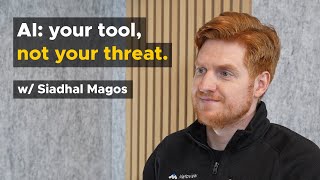
Siadhal Magos, CEO of MetaView, explains how AI handles recruiter grunt work like note-taking and data entry so recruiters focus on relationships. MetaView listens to calls, pulls key details, and feeds them into CRMs. Early adopters gain an edge that will eventually become standard.
Chapters
You're gonna find it extremely difficult to scroll on LinkedIn today and not see someone talking about AI. But how is it going to affect you as a recruiter?
The question you're asking is like, in my opinion, the most important question that any professional should be asking themselves right now, which is, what does AI mean to me? Because clearly there's so much buzz, it can't mean nothing, it has to mean something.
In this conversation, we hear directly from someone who is building an AI solution for the recruitment industry. Where AI is going to have the biggest impact day to day for recruiter?
Working out what part of a recruitment workflow can actually be automated, and what does that mean for the day-to-day of recruiter, i.e., what else can they spend their time on that's higher leverage?
How you as a recruitment consultant, a recruitment professional, can leverage AI today.
We mainly think right now, what are all the things that recruiters do that's hard, drudgerous, low-leverage work and keep you away from your more high-leverage activities? Can we start to automate away those things?
What does the future look like for recruiters? Are the most successful recruiters going to be the ones who utilize AI the quickest.
There will actually be less time spent getting to know lots and lots of people at a superficial level and more time spent getting to know fewer people on a deeper level.
How can you adopt AI in your business or convince senior stakeholders in your business why they should start adopting AI, or at least be open to it?
Much as I'm saying everyone should adopt it, I do think at the end of the day there's an adoption curve for all of these things. You should be thinking about how this is going to affect you. I think that's true.
And so, so much more. Let's get into this week's episode. Sorry, welcome to the podcast.
Thanks so much for having me, man.
Uh, in preparation for this, this got me excited, like slightly different conversation to what we're used to. However, I was telling you that got back from the Recruitment Expo the other week and every single stand had AI on the stand. Yeah. So, you know, I think everyone, if you're listening to this, there's a very good chance that you've heard this terminology AI. Um, I think everyone's relationship is, is different. But today I think we want to have like a really honest conversation. And what I think people will be interested in is like ultimately how we can leverage this from a recruiter perspective and why we should really seriously be considering and how we can leverage it. I think we have some differing opinions as well. Yeah. Which I'm excited to dig into.
Yeah.
But for those that may not know who you are and the business that you're building, could you give us a bit of an intro and then we'll get into it?
Yeah. Nice. And just before that, Good that we have different— we might have different opinion. I think the question you're asking is like, in my opinion, the most important question that any professional should be asking themselves right now, which is what does AI mean to me? Because clearly there's so much buzz, it can't mean nothing. It has to mean something. And it's obviously your job in your role or the folks who are watching this, their job in their role, their job is to work out what does this mean for my industry? Because that's, you know, it's going to happen no matter what. But anyway, introduction. So I'm Syle. I'm co-founder and the CEO at a company called MetaView. We're building an AI assistant for recruiters. So very much focused on working out what parts of a recruitment workflow with this new technology, this new capabilities that AI and large language models afford us, can actually be automated. And what does that mean for the day-to-day of a recruiter? I.e., what else can they spend their time on that's higher leverage? And that's what our product focuses on. What that means right now is we're very focused on helping recruiters make the most out of their conversations with candidates. We believe these conversations are incredibly high-leverage moments. But at the moment, recruiters often have two jobs on those calls: meet with the candidate, persuade them, influence them, get to know them, and at the same time extract data and capture that data. And it's really hard to do those two things at once. So we've built a product that uses AI to do that second half. We do the data capture, we pull out the most important points, we put the information where you need it to be in the format that you need it for your clients, so that you can just focus on getting to know candidates and building up a richer and richer black book or CRM or however you think about it.
And also, as well as that, that's on the agency side. To be fair, probably also happens when you're managing stakeholders, but also just as important, the job briefing piece as well, right?
Totally.
Any—
I just think conversations are the— almost like the inflectional moment in every hiring pipeline. And frankly, with every interaction you have, be it with clients or candidates, as you said, those intake meetings, getting that right, or those briefings, getting that right and the context, it determines that your search for the next week or two, right? So getting that information correct and also being really present in that meeting and representing yourself and showing up the best way you can for those clients in those meetings is so key. And so that's why automating away a lot of the drudgery around taking notes and then reformatting and rewriting those notes is proving really powerful.
And then like just to get technical for a second, I think you did a really good job of at the beginning there explaining AI, the language models, et cetera.
But yeah.
Just from a recruiter perspective listening right now, because I had someone ask me this about MetaView, it— from what I understand, please correct me if I'm wrong— yeah, it joins video calls. It's not necessarily at the moment joining like, um, calling, like if I'm using like a VoIP system.
It's like it joins video calls, any, any communication channel. So video conference, whether you want to just phone someone straight up, you know, and ring their mobile, or you're using a VoIP system, um, capture those and take your notes for you.
Yeah. I said I didn't know that. Yeah, I've been sending people— it would— it's like it integrates with the video call element.
Yeah, yeah.
No, no, they're like the cool bit as well.
No, no, it's like, yeah, pretty much every, every, every remote communication channel.
Oh yeah, that's unreal then. Yeah, I didn't know that.
Okay, cool.
So yeah, because I feel like— and just quickly then, because I think this would be interesting— how did you find yourself like pinpointing that and understanding that? Is there a bit of a story there? Because like I can really relate to that. I haven't worked in recruitment for 3 years. I know everyone listened to this. Yeah. You have some people in the office that take all of their notes on a pad.
Yeah.
My handwriting is terrible, so like, that would be annoying. I'd walk out of a meeting and then it would like, I'll get to my desk and then I'd have to like try and re— just reread my notes. Yeah. You'll then have people that are like really good at using the CRM.
Yeah.
You have people that aren't good at that, but there really is something to be said around when you are in these moments qualifying a candidate or taking a job brief, which are really crucial to the recruitment process. Like, the best recruiters do those moments, like, very well. Yeah, there's something to be said around just being able to be present in that moment and just focus on listening, asking good quality questions, digging deeper. And that is absolutely way more difficult to do when you're trying to do that but at the same time thinking, I should write that down because that's really important, or I shouldn't write that down because that isn't that important, right? So how did you stumble across this? Is it something that you experienced yourself when you worked in previous companies? Like, how did you stumble across something that absolutely every recruit listening to this will be able to relate to?
Well, like the very immediate— immediately before launching our AI note-taker, we, we were, we were working within the recruitment industry for 4 years up to that point. So by that point, like it is, it's my whole life and I'm hearing sort of these people's problems and challenges every day. And you obviously just end up building up a bunch of intuition and hear a bunch of sort of people's issues. Before that, before when we started the company, my, my entry point to the overall problem set, let's say, was more as a hiring manager. So I was not— I'm not a recruiter by trade, but again, been working with recruiters for a very long time and building for them. But my experience was more as a hiring manager, feeling, knowing that when it came to making hiring decisions, whether that was, hey, do you want to speak to this candidate, yes or no? I was often just looking at their LinkedIn profile and yeah, sure, there were some notes from the recruiter, but you know, they weren't especially rich or compelling. To help me make my decision. Or even more importantly, at the end of a hiring flow, the data we had at our fingertips was— felt like it was a very low amount given we've just spent sort of 7 hours talking to this candidate across various stages. So I came at it more from that perspective, like, hey, there's a ton of really interesting data in these conversations. Right now, the only way we have of capturing that data is relying on our, you know, our skilled team to write things down during that conversation. And that seems very very yesterday. And so that was really the starting point. And then just over the last few years, having, you know, got to know the recruitment industry more and more, got to know recruiters more and more, sort of realized this very specific— that was, I guess, especially a, especially painful problem at the very top of the funnel, of course, because you want to spend as much time as you can on the phones. And any times you're spending after those, that, that call, spending time cleaning up your notes, is times you're not either generating new business, you know, meeting new potential clients, or filling the recs that you've currently got on, on, on the roster. So, um, yeah, it really brought it into contrast, but it still— it was the overall problem that I, I experienced myself.
Yeah, no, that makes sense. And I think the thing as well worth noting, and that every, like, any, like, business owner of a recruitment business will know this, is like, if your team do a really good job of really committing to getting all of that important data into their CRM rather than like all different places, notepad, these things. Like you're building an asset.
Totally.
That oftentimes does go with the person that leaves. Like so many recruitment companies and organizations will have like, say, the recruiter in the business who then leaves, who's still got all the numbers on his mobile phone, had all these conversation, WhatsApp conversations on a mobile phone. But then also, if he was a really good recruiter but he wasn't great at making notes.
Yeah.
Um, as a, as a business owner, I don't get to keep all of that data as well, right? So this is what, from a business owner perspective, I think this is how you also want to be thinking about the specific, you know, products and what you're building, is it helps you build that asset.
I— yeah, I, I couldn't agree more. I think that, um, in many ways, like, if you, if you sort of like go back 15, 20 years, people— a lot of people were talking about things like LinkedIn being like a real maybe like a negative game changer for recruiters, right? Oh, what does your black book matter? Everyone's got a profile on the internet now. I can just find them myself. Now, of course, that hasn't turned out to be true. But what is true is that the actual data in the CRM of a lot of recruitment agencies, the delta that you— the larger the delta, the larger the gap between what LinkedIn has, which is obviously just basic contact information and like where they used to work, and what you have on those candidates, the more, the richer you can make those profiles, the more value you can bring to clients right out of the gate. Maybe that's because you can source so quickly, because you have amazing data on everyone you've spoken to for the last 5 years, such that you can find candidates that meet their rec incredibly quickly. Or maybe it's your ability to coach the client on what's realistic based on real examples from candidates you've spoken to, you know, in the recent past. That is essentially your delta, I think, between— or it's your alpha, I should say, as a recruitment agency, is what proprietary information do you have on the candidates you and your team have spoken to that potentially no one else on the planet has? Because everyone has the information that's on LinkedIn. That's not, that's not an advantage for you. But only you have the stuff that's in your CRM and now you can make that incredibly rich. And importantly, you can use AI to query it in a— there's no point in having tons and tons of data and then not being able to find the information you need, right? Trying to find like a needle in a haystack. That's another thing that AI is really amazing at, which is helping you find the specific things you're looking for in this sort of a mass of unstructured data. So that's really why I think conversations, again, why I think a lot of our products have proven really popular with recruitment companies at the moment is because that data is so key. Not only does it mean you can capture it, but it also means you can find the information you need much more easily than you could previously. You're not just capturing the data because you think you really should. It's actually vital for your business operations downstream. Yeah.
And I think when we prepared for this, you called it like I can't remember which way you said it, but it was like the thinner your layer is of LinkedIn, or like, that's really important, isn't it? Was it what you were saying there? Like, like you just said, the more data that you have, like you said, proprietary data that you have within your business rather than sitting on LinkedIn, that's just way more valuable.
Yeah. So, so, um, and we can— I think we can even be like almost— we can be— I don't want to be scary, but we can be scarier than that, which is, um, LinkedIn, obviously, are a Microsoft company. Microsoft is one of the front runners in the AI game. There's going to be a ton of really smart, highly paid people at LinkedIn thinking about how do we leverage AI within, within the LinkedIn platform. And so if you're as an agency, I'm not suggesting anyone is this, but let's imagine a hypothetical. You're just a thin layer on top of LinkedIn. You take a rec from a client who doesn't have the bandwidth to sort of search through and, you know, source via LinkedIn and all these things. And you're just a thin layer. You're just doing that job. That's really bad. That's the worst place you can be, because that's the type of thing that is going to be— LinkedIn's going to start to do that. There's the sort of the thin layer on top. What you really want to be is, I guess, like a fat layer on top of it. Because of course, while you don't have as many profiles in your database as LinkedIn has— that would be insane— what you do have is profiles that are most relevant to your sort of industry that you recruit within. And you have proprietary rich information, unique information maybe because of the question sets that you tend to ask candidates versus your competitors. You know, you'll end up designing that, of course, so that you have unique data. So yeah, you really want to thicken that data layer you have between what you know about candidates and what LinkedIn knows about candidates.
Yeah, I think if you listen to this, I'd really underline that. Like, I've spoke to— I don't want to get in trouble. I mean, yeah, but like, I've spoke to a lot of founders who, you know, scaled during the time where, you know, things were really buoyant.
Yeah.
Found themselves adding way more LinkedIn licenses. They've now had to scale back, finding it challenging to get their licenses back down to maybe the amount that they need. So I, I do think for any founder listening to this, what one of the things that's going to be top of mind, you know, maybe more at more times than others, is going to be thinking like, how can we be less reliant on LinkedIn?
Yeah.
And one of the ways you can do that is the way that you're talking about, right? Rather than just being this thin layer, like all the work we're doing every single day from speaking to people, hiring manager, whatever, that we originally found on LinkedIn, but then we have, you know, a system that enables us to extract all that important data that lives in our ecosystem. Yeah. Um, yeah, LinkedIn are going to be able to take that away once you have it, right? Yeah. So I think like, yeah, this is really top of mind. So I wanted to like just get your take on it because of the business that you're building. Like I said to you, like every piece of recruitment tech now seems to have AI and that's what they're leading with.
Yeah.
Like where, just from what you see, because you're in, in the detail of this every day, like where is this all going for recruitment professionals, like in the context of AI automation, these types of things?
Yeah, so I, I think it's a bit of a Back to the Future moment in that, um, historically, you know, maybe if you think about pre-LinkedIn days, the worth of a recruiter was at least some way tied to their, their black book. Who did they know? You know, do I have this unfair advantage in closing this role because of the, the, the circles that this recruiter runs in, the people they know, this sort of thing? So I think a lot of roads are going back to essentially relationships, like relationship-driven recruiting, because again, we're at least decades away from sort of developing relationships with AI agents. That's not gonna be happening. So I think a lot of the sort of the more drudgerous and robotic tasks, things like, you know, writing up notes or things like maybe even scouring LinkedIn for profiles or, you know, depending on sort of the role you play, like scheduling and these sorts of things, they're gonna essentially go away. And really what recruiters are gonna wanna focus on is, What do I know about these human beings, these candidates, or the hiring managers, the clients I'm working with, that other people don't know that makes me uniquely positioned to be that matchmaker, to be the recruiter for this role? So I think it's really all the roads are going to go towards relationship building. So when you think about sort of the agency expo you went to, you think about these other startups you're speaking to and they're all saying they offer AI. Obviously there's difference in quality levels, I'm sure, of those products. Some will be great, some will be not so great, some will just be slapping onto their existing thing and hoping it works out. Others will be, you know, built with AI in mind from the ground up. The thing that will be in common between all of them is I don't think any of them will be trying to sort of take away the recruiter's relationship with the candidate. And that's the part that's going to stay strong and actually is, again, the most differentiated part of the work a recruiter does. And therefore, what in my opinion, the best recruiter should focus on.
So it's about how we can leverage this technology to enable more of that, essentially.
To, I think, enable it for sure. Yeah, inherently. You're going to get more time back in your day from doing some of the other things, and therefore you can use it to focus on those relationships. I also think you can use AI to help you with those relationships too. But I think it's both sides of that coin, right? It's less of the things that aren't that, so you now have more time to focus on the things that are that. Plus you'll get some assistance in doing a better job at that relationship building.
Yeah, no, that is a good point, to be fair. Like if you've— if it's enabled more good quality conversations, extracting good information.
Yeah.
And then I'm about to show up for a meeting with a hiring manager and then I leverage AI to be like, yeah, what was this person's dog's name again? Or when they mention a dog, you can literally quickly straight away find that, right? And yeah, so like, yeah, that's a good way of putting it.
And just to make sure it's, I guess we can just to explore it further. Obviously, let's something that MetaView doesn't do. For example, we don't help with sourcing. Lots of AI tools out there, lots of sourcing tools are now applying AI to their platforms to help with sourcing. What that means is if you're just sourcing based on the same information that everyone else has, I don't care if a year ago you were a better sourcer, if, you know, Jimmy was a better sourcer than Sally. If now the sort of the main thing that's doing the sourcing is the AI, you're now just as good as each other. And so you don't have that differentiation anymore. And so that's what I mean, like those sort of e— those, those advantages that one recruiter may have over another in that sphere, I think are going to melt away increasingly. And the battleground is really going to become, again, what information or what emotional connection maybe do I have with these people that other people don't?
Whilst we take a short break, I wanted to take a moment to chat to you about one of our amazing partners, Sourcewell, the industry-leading recruitment engagement platform. I'm using myself and I don't know what I would do without it. From building personalized messaging cadences across a variety of channels to automating follow-ups and data tracking straight back into my CRM. It's really made an impact in streamlining my workflow and most importantly, accelerating my sales results. My favorite feature by far is the live feed. By being able to see in real time who's engaging with your campaigns, it enables me to prioritize my outreach with the most engaged prospects, which helps me get way more out of what I put in. So I'm gonna be honest, if you haven't got Sourcewell and you're a recruiter, I really believe you're at a disadvantage. To find out more and see the platform in action, make sure you click the link in the show notes and mention the Recruitment Mentors Podcast. Because you listen to this podcast, you're going to be able to get access to an exclusive offer: free 50 phone credits, 50 email credits, which is at the value of circa £500 per user. So make sure you mention the Recruitment Mentors Podcast and click the link in the show notes. And then I think what we thought a bit differently about was— so like, I'll sort of share my, my thoughts on this, and then like, let's talk through this because I think this might like resonate with people and like how they might be thinking about leveraging AI, or just it might form their opinion on AI and should we be using it, should we not. Um, is obviously a huge part of the UK recruitment industry are made up of like micro businesses, um, and that's the type of business that we sell our training platform to. And more often than not um, I find that within their business there's typically like no— a lot of time no processes, no structure, these types of things. So sort of my, my initial thought to you was like, how surely it's going to be really challenging to just add like another tool or something to like organize chaos essentially. Um, so, you know, although everyone may be thinking, right, how do I use this AI? How do I do this? Yeah, how effective are they going to be with AI if, yeah, they haven't got their house in order, for example? Yeah. So my sort of, you know, thesis on this was, you know, surely there's going to be loads of things as a recruitment business that I can improve, become more efficient in, and then, and then I'm going to have a better understanding of how I can leverage AI rather than having organized chaos running towards like the new shiny tool and running towards AI because everyone else is saying I need to use it. Yeah, adding that into that organized chaos, and then I may— it may help me, it may not. So there's a bit there, and then you're like, not sure about that.
Yeah, I think it's, uh, I do think that's the wrong, um, wrong way to think about it, basically. Um, imagine your pre-internet days and you are running a micro business, and of course you're not using email to communicate with each other or instant messenger, you're just using written letters back and forth or whatever it might be. Um, you wouldn't say, hey, we're going to skip this whole email thing until I can get on top of my in-tray and how I deal with my— what you just would not say that. You'd say, actually, wow, email's much better way to do this because I can search through it and I can make sure I only reply. I don't just reply to the letter that's on top of the pile. I just find the most important things and it can now it can automatically flag to me which things might be most important. And, you know, I can search for certain senders. It would just be crazy for you to think, hey, because I don't have a good system for how to deal with letters, I'm not going to move to email. And I think it's that scale of difference. So I think in a world where you actually have what you're essentially describing in this sort of like chaotic business, sort of this hypothetical business, is the one that sort of lacks a bit of structure. And that obviously can be stressful in itself. And you obviously want a bit of structure in how you work. And so maybe that— maybe this hypothetical agency should, you know, level up there. But actually, one of the reasons we think it's unstructured is because a lot of the software that we use asks us to be really structured. It says, hey, make sure you put the name in in this format and it has to be this. The CV has to be this way to sort of go into this field. And when you're writing up your notes, make sure you write it in sort of this bit in this box and don't put it over here because then it will go to somewhere. It's all all this sort of structure that the technology is asking us to apply, which is actually quite inhuman. That's not how we work, that's not actually how we think. And AI is different in that actually the structure doesn't matter as much. You can still leverage these tools, and frankly, over time, maybe some of the other tools that you're using become less— it becomes less important to apply the structure that they're asking you to because AI is so powerful that actually even if you do just chuck a load of information into your systems, you can still pull out the information you need when you need it because you've got a hyper-intelligent, never-sleeping artificial intelligent assistant to go and find the information you need when you need it. So it really changes the equation. I would say it's actually maybe it's those chaotic businesses who haven't optimised their processes around existing systems so much that may even be the— they may feel the biggest sigh of relief the quickest, I would say. Now, I think everyone should adopt AI really as quickly as is responsible to do so. But I definitely wouldn't sort of— I wouldn't say sort of like, hey, get your house in order first. I would say go for it, learn, play.
So why do you feel so strongly about that statement that you just said? Like everyone should be?
Because I think it's a complete foundational shift. It's going to— having this level of intelligence and this reasoning power, this prediction power at our fingertips, is going to have massive consequences. And so even just at a personal level, even if you're not the owner of the agency, you're just a recruiter or whatever it might be, you're just someone who works in any field, the way— the type of tasks and the way work that you'll do and the way work gets done is going to change. And so even just from a personal position, I think you have a responsibility to, to develop an intuition over how this might change your work. And obviously I hope that there are certain products out there that literally help you right away as well, and you feel better. You feel like you've improved your sort of quality of life, as your quality of work life because of it. But even then, just like building up your intuition is really important. Um, yeah, I think it really can't be underestimated, um, how— I guess we've got to say for now, like, potentially significant the impact is. But, um, yeah, there's going to be a whole, uh, yeah, whole tasks that we've previously considered very human that are gonna at least some of the time be done by AI now. And you can put this in extremes, right? AI is making really great art now and make really great music just based on a few inputs. So it's nothing to do with recruiting specifically. AI is now better at identifying, um, cancer in X-ray, in scans, than doctors are, right? There's all of these things that it's just inevitable that, you know, when you, when you talk about something as important as that, you know, we're not going to care if we're displacing the doctor in, in their job. If, if we can get better answers or more accurate predictions around, around whether there's a serious disease, you know, present in a, in a human being or in a scan, then we're going to go with that, that solution. And the same is going to apply through every field. We just, you know, have to figure out in which way it's going to apply.
And then, and then, just curious then, I'm sure you or through your team may have shared stories like this, or like these sort of moments have happened where I speak to a lot of recruiters who, they may listen to this podcast, they get a lot of ideas from it, may hear about tools like Metaview or other products, they get into the office excited.
Yeah.
They sit down with their manager, Sile, and he's like, nah mate, like, just, just no, we don't need to look at that, mate. Yeah, I just need to carry on, right? Yeah. So my question to you is, and I don't know if you've run into these or seen these, is like What have been the typical moments, or what have those, like, you know, people that lean towards, like, let's just keep doing what we're doing, like, we don't need to add these types of things, we don't need to be thinking about it, um, skeptics.
Yeah.
Um, or just people that have that mindset, like, what are the moments that started to make them go, hang on a minute, like, this is actually something that we should probably think about leveraging, using, um, be more open-minded to? Like, was it the first time that they had their notes emailed to them, and then, do you know what I mean? I don't know what— has there been like common moments where they've— yeah, it's like enabled someone just to open that, yeah, that mind and go, yeah, fair enough, Hishem. Like, I think actually I'm glad that you brought this to me.
Yeah, yeah. Um, I don't know if there's been like any incredibly common thing. I do think at the end of the day there's an adoption curve for all of these things.
Yeah.
So much as I'm saying everyone should adopt it, whether it's, you know, whatever sphere, whatever sort of industry you're in, you should be thinking about how this is going to affect you. I think that's true. But the adoption curve, there's still an adoption curve. Some people are going to be early, some people are going to be late. I think we're past the sort of the— I don't know how familiar with that adoption curve, but there's starts with innovators, then early adopters, and then mainstream or something like this, then the laggards, and then something else. I think we're past the innovators. I think we're into the early adopters. So like the sort of the working our way through the first third of people who are like really adopting this. Anyway, if you're at a company where you're full of laggards, you're probably going to be— you might be wasting your time trying to get people to change. And like, there's very little that, you know, advice I can give on that. I think there's the small things that I would— that the approach that we take, and therefore what I would, I guess, recommend other people to consider is how can you make it as small an investment, both from either a money perspective, like a cash perspective, or from an effort perspective, or, you know, from a process change perspective. How can you make it as small an investment as possible to create some magic? And that could mean for, you know, you know, IC sort of frontline recruiter walking up to Metaview and getting some magic out of the product. Or it could be from IC recruiter coming up to Metaview, getting some magic, sharing that with their manager rather than just going up and having a sort of like an academic or theoretical conversation about it. We're actually looking at something in our case, let's say a candidate summary sheet that has been AI-generated and is incredibly loyal and faithful and accurate to the conversation that was had and considerate of the job spec that you had, the intake meeting you had with the client, and you get it 5 seconds after you finish that call, you just— no matter how much of a sceptic you are, if MetaView achieves that for you, we're very confident that even the most sceptical person will say it's irresponsible of me not to use this thing because I'm currently waiting numerous days for these cover sheets and then they're not as well written. And sometimes we sort of you know, just get to the end of the search and then try and remember about a certain candidate before we write them up. It's clearly better. So I think it's— I basically, I guess, the long, short answer is it's sort of on people like me who want to build companies based on this technology to understand your problems well enough and your workflow and your context to make it really easy for you to get buy-in. But yeah, I— and so what that means is use the thing play with it, then talk about it, as opposed to, again, have too much of a theoretical conversation upfront.
No, I do think that's really good advice. And this is why what I love about products like yours is like you can, you can instantly start using it. And I think you're going to have way more success changing that perspective on leveraging AI or tools like you offer if you actually show them things and you say, I've used it, this is why I thought it helped me. And you ultimately like build a case for it rather than just walking up to someone saying, hey, like, listen to this podcast, keep hearing about AI, I think we should like look into it. Yeah, yeah, you're just gonna have way more success actually doing something, uh, like you said. That, that would be my recommendation, um, as well. Um, and if you really want to, um, do things that might grab the attention of people, is then particularly with what you do, like compare the quality. I think it would be quite interesting, like, hey, so like I've been playing around this AI tool, it's been joining every single one of my calls And I've actually been comparing the number of interviews that I've got from the candidate overview notes that this product has given me compared to my colleague Ben.
Yeah.
Who, as you know, we've got a process that we do that. I've actually booked more interviews than him. And I actually was able to create these candidate briefs or candidate presentations in like way less time.
Yeah.
Like, do you think this would be worth like having a look at? Yeah, totally.
Well, I think, I think that sounds obviously like as a business owner myself, I would love for people on my team to show that initiative and take that approach for sure. But I guess one thing I'm also saying is how can we empower that frontline recruiter to just use the product even if it's not sort of, you know, how can we make it not a big decision? This is what I mean about removing friction. How can we make it not a company-wide decision to use this? You get to use it, you get to submit better candidate sheets, you get to sort of fill the CRM with better data much more quickly. You realise the benefit. And of course, as, as a, as a growing company, we want to expand and sort of then envelop the, you know, get the whole agency using it. But in the meantime, we're really happy when we get individuals who are just showing initiative, want to use the product because it helps them.
Yeah. And also I think I think for people that listen to this, they listen to this because they want a competitive advantage, they want to learn from the best. I think when we do think about that adoption curve, this is something that's entirely in your control. Like, if you are an early adopter and you use it to the— and you use this technology to make you more efficient, better at the job, that is going to give you a competitive advantage. Because trust me, there are plenty of people out there have never used ChatGPT or basically have the mindset of like, well, like, I'm never going to use AI, like, what's the point? Like, I'm good at what I do, right? So I think that that's another really good frame to think about this, is it genuinely can give you a competitive advantage.
Yep.
Um, is another reason why you should at the very least experiment, try, um, and see how this can help you, which in turn could give you a huge competitive advantage. Um, I was gonna— I feel like you did a good job of this, but I think it'd be interesting for people just to make sure we fully understand how you think about this. But I wanted to make sure, like, you know, if we were to fast forward 5 to 10 years and I'm a modern-day recruiter in a, in a business, and I am a recruitment professional powered by AI, is how I would maybe think about my job. Like, you know, what is my, what is my day going to look like? Uh, that it might be a bit different now, you know, am I I, you know, show up, make my coffee, sit down. Will I have all my meetings already booked for me and I'll have an AI assistant say, hey, so, um, exciting day at work today, these are the meetings you need to think about, here are a list of the notes from the meetings that you need to maybe have a look at before you prepare for them? Uh, do you know what I mean? Like, what— I don't know, how, how do you think about it? What does like a recruiter's day look like if they're powered by AI in the future?
I think that's a pretty compelling vision, the one that you, you, you sort of, uh, drew out there. I think even there might be some sort of funny things that we might start to question around that, like even the you sort of sit down and then do this, do you know what I mean? Like, is that the way it's going to be, or will there be sort of more emphasis placed on these high-leverage in-person interactions with whether it's clients or candidates? Um, because, you know, you can really make sure you're— I guess the idea that my, my, the, the crux of what I believe is that there will actually be less time spent getting to know lots of, lots and lots of people at a superficial level and more time spent getting to know fewer people on a deeper level. And I think the value that recruiters will bring to clients, I'm talking on this timescale, let's say, you know, 5 to 10 years out, will be much more consultative and expert because you actually have a sort of a body of candidates who you know really well, and your level of understanding of the industry you're recruiting within is also so much deeper that you can actually be that matchmaker. And so I don't think necessarily it's like sit down, you know, I've got 10 meetings today, I think it's like a little bit more, um, yeah, like I guess just a more consultative and, you know, deeper, deeper understanding of, of fewer people in your industry. But in terms of like the actual form factor that has, I think it's really hard to call at this point. Um, uh, yeah, so I— we don't really think about it too much along those, those lines. We mainly think right now, what are all the things that recruiters do that either A, are what we consider toil, so they're like hard, drudgerous, low-leverage work and keep you away from your more high-leverage activities. Can we start to automate away those things? So obvious one for us that we're doing right now, of course, is taking notes during meetings, writing up those notes afterwards, putting together candidate cover— all these things that we already do. But there's a whole bunch more that, of course, you know, take up a bunch of time in a recruiter's day that isn't influencing candidates or getting to know clients. Um, so everything other than those two things, I, I hope there's less and less of, um, and recruiters just become really expert in those relationships. It's almost like an amateur psychologist, um, you know, in the bit— in the business context.
And what, like, just curious then, what are some of the things that are top of mind from the MetaVU lens on, like, those toil tasks? Is there anything else that you're like, I really want to be in the position where I'm sitting down with you and, like, these things are just as well automated as our note-taking and our candidate brief notes. What else are you— what is top of mind?
Um, so sourcing is a big— is a big— it's something we think about a lot. We think there's a lot of information within conversations that you have that can be used to massively accelerate your sourcing. Now, we don't think about it in terms of MetaView is going to build a sourcing product, but we do think about it in terms of how can we expose this data is on Metaview. Let's imagine you're a, you know, 10-person recruitment agency. You have, you know, 6 recruiters who are frontline taking calls every day, and you're getting— you're just getting hundreds and hundreds of hours every month, thousands and thousands of hours of data from candidates every year. How can we surface the information that matters based on this new rec that you've just got in? We think a lot about that. So again, not only that we're actually doing the sourcing, but we enable our customers to leverage the data within MetaView for that sourcing. So right now, for example, one thing we're working on and we'll continue to iterate and improve, and I guess by the time this goes out, it will be live to an extent, but still with a lot of ways we can take it to the next level, is essentially that content filtering. So let's imagine you've got a new rec for an engineer who's proficient in Python and is willing to relocate to Amsterdam. And, you know, of all of the out of the thousands of conversations me and my recruiters have had with candidates over the last 2 years, most of whom of course did not end up making the move to the client I had in mind at the time, some of them are going to have mentioned either proclivity to be willing to relocate to that location and their ability with a certain programming language. And to be able to just ask our database that information and it has a semantic understanding, i.e., they don't have to have said those specific words, we don't have to literally written down would relocate to Amsterdam, but it semantically understands that this person showed a willingness to relocate maybe to some other city, but therefore we assume they might also be willing to relocate to this city, like pulling through that information in just like a few keystrokes using natural language is really powerful and just again gives recruiters superpowers to really short circuit that initial like sourcing part, I guess, of their, of their, their workflow. That's it. That's it.
Yeah. No, that, that, that makes a lot of sense. And I, and the reason why I think that makes a lot of sense is, I mean, you've probably thought more about this than I have, but I feel like for me to do that right now, it would be very reliant on me to be efficient at remembering to tag you with certain things.
Exactly.
It is, isn't it? Yeah. So then again, like you said, it's relying on the individual to be structured.
Yeah, yeah. So, so you, I think that, yeah, you're pointing out really good, maybe something that I didn't, uh, include in the initial sort of thought, which is if you're actually one of those incredibly structured recruiting firms who has this playbook of make sure you tag all these things and take your notes in exactly this way, and you're really disciplined about making sure everyone on your team does that, then maybe you can do some of this stuff already. But even then, I would say there's limitations. Like you can only ask each recruiter after each call to do so much, you know, post-processing, let's call it. But even if you're not, now that's sort of the advantage of setting up the system is sort of like going down because actually AI tools like MetaView can do that automatically for you, and it means everyone has that capability. And then it becomes more of a question, how do you leverage that data? Which even a lot of people are actually doing this structured, doing this sort of the structured note-taking that you mentioned. A lot of them do it because they think, I might need this someday. Yeah, but it's not actually part of their operation to leverage it, you know, next time they get a rec through or next time they get a job through.
Just to make sure I write this down because I feel like it's important. Yeah, exactly. Yeah. Yeah. And like, just If you don't mind, because I think people might be thinking about this as they're listening to this, and I know like work in progress or whatever, but like just help us like visualize that for a second. Is that that I log into MetaView and then I might search, um, you know, open to relocation, and it surfaces candidate conversations? Or is this happening in my CRM? You might be picking this up, but I'm just curious.
No, no, no, this is, um, this is in MetaView. So the way that it works right now is you can push whatever information you want from MetaView into your CRM. So if you decide to push every sort of bit of information that MetaView has into your CRM, your CRM will get very bulky and it won't have some of the same querying tools that MetaView has. But you could, you could in theory have all the same, like all the same data. It wouldn't have obviously have the video and the snippets and the highlights and some of these very MetaView specific things which we haven't talked about so much. But you could get at least the raw data in your CRM if you wanted to. But the way it works right now is the best place to go for that type of a query is MetaView. And there's a couple of reasons for that. One is because we obviously have all of the data, not just the bits that you decided to put into the CRM. We know which bits you decided to put in CRM, but we also have all of the rest of the data too. And secondly, we have interfaces like literally, I mean, like the, the interaction layer is really important. Like how do you communicate this ask with our software is really important. And in MetaView's case, because it's an AI-native platform and most people I imagine watching this have used ChatGPT at least to play with it. You know, it's natural language is just really— it's a really great way to get what information you want out of a system is I don't need to learn how to use it. I just write it the way I want it. And actually the AI learns over time how you tend to communicate. And even if you communicate in a bit of a fuzzy way, it can sometimes make a pretty good prediction about, hey, I think this is what you're trying to do here. And that's exactly the same with MetaView. So what you walk up to MetaView, you log in, you say what you're looking for in very natural language, looking for candidates, anyone I've spoken to in the last 6 months who has mentioned they're willing to relocate to Amsterdam and is proficient in Python and demonstrated their proficiency in Python. And it will find you where that came up in your various conversations. Again, not word for word because that's not useful, but directionally, the folks who sort of demonstrated that propensity. And you can obviously make it much more complex or much more specific than the example I'm giving, if you'd like to. It's totally up to you.
What I love about that from a recruitment context, if I'm listening to this, would be what would be really cool— and you can obviously do this with your database, I guess, but we're assuming that you've done a good job of like being organized, which like I speak to so many founders and one of their biggest bugbears is always people aren't good at updating the database and doing these things right. Um, but what I really like about that is like I'm on a job briefing call, I'm really focused on asking good quality questions, qualifying the job. You tell me about your non-negotiables, and whilst I'm doing that, I can then have a quick look and be like, oh yeah, it's interesting you say that, I've just had a really quick look and I actually have spoken to 5 individuals. Do you know what I mean? That's where I'd see that being really powerful, to be able to quickly offer those insights. Yeah, that, that's like so powerful in the moment.
Love that. Yeah. So I think that, that, um, a lot of the time, certainly my experience as a hiring manager, and I work with external recruiting agencies now in the hiring we're doing at Metaview, there's often like a decent chunk of time that is spent on calibration. You know, it might just literally be, hey, let's onboard you onto this rec. Then 3 to 5, maybe to 10 days later, I get a shortlist of almost like example profiles. So you're like, hey, these are the type of folks you have in mind. Like, I think even just bringing that down to like, we do that in the first meeting because it's like, we can get that as soon as—
at least give you a bit of an idea.
As soon as the words leave your mouth, we can sort of show you who we already have access to, who seems to match up against that. And that's not just based on their LinkedIn profile, that's based on, again, unique information we've learned about these people because we've spoken in real human conversation. Yes. Um, uh, so I think like shortening that from a 2-week, maybe let's call it a 1-week process, to a 5-minute process or 5-second process is pretty magical.
And that's like competitive advantage, right? Straight away.
Yeah, totally.
And I think that works on the flip side as well.
I don't know what you think about this, but actually, just to interrupt you, Hishem, just— I think that is a competitive advantage. But one of the things about these platform shifts is actually at some point it won't be. It will just be the table stakes. And it's almost like at the moment, I think people— I still perceive people who are adopting like high-quality AI products, if they actually solve your business problem, for sure you're getting an advantage. But at some point we're going to tip into You're now just disadvantaged if you don't. It's not even an advantage anymore. You just have to be doing it.
Um, no, you're completely right.
Yeah.
We'll get back to the episode in just one minute, but today I'm excited to talk to you about one of our partners, Firefish, the recruitment CRM that accelerates data-driven growth. The problem with most recruitment CRMs is that they are just a database of records, meaning they become just one of the many tools that recruiters use every day. Like with all systems, the records are only as good as the data being captured. Our sponsors Firefish know that for agencies to win faster, data needs to be at the heart of their business, making your CRM the single source of truth. With over 10,000 records created and updated every day and 85% of placements from existing candidates, Firefish enables recruiters to enrich and engage their data, equipping you with real-time insights needed to win faster. To learn more about Firefish and take advantage of an exclusive Recruitment Mentors podcast offer, make sure you click the link in the show notes and mention the Recruitment Mentors podcast when speaking to the Firefish team. And I was just thinking then, on the flip side as well, I do feel like, um, because I'm just thinking from a recruiter context, so like a great recruiter will— like if I'm, uh, on a job briefing call with you about, um, MetaView hiring certain software engineers or whatever, like a good recruiter will like challenge your assumptions of like what you think is possible, or, you know, without being on salary expectations, or whatever it may be. I feel like that works on the flip side as well. Like, a great recruiter will probably know that information and be able to communicate it. But at the same time, if I can say in that conversation, like, it's really interesting that you say that, so the reason why I'm actually going to suggest that, like, you do this, or we do this, is for this. And also, just looking at some recent hiring manager conversations I had over the last, like, 2 weeks with companies that are quite similar to yours, this is what they're doing.
Yeah.
Did you know what I mean? It's also on that side.
Yeah, I think you're— it's, it's pretty cool that you're coming up with like very particular use cases so quickly. And obviously it's one of the reasons actually we're building the platform the way we are, which is it's quite, um, recruitment is quite like an entrepreneurial role. Like that you— it's hard for us in our product to like totally predict upfront the exact way you're going to leverage this technology. What we look at our job is, is take these foundational changes in, in AI, which are being powered by companies far more powerful than us, frankly, you know, Microsoft, OpenAI, these sorts of folks. And we want to be the sort of almost the, the lens that interprets these capabilities and thinks, how can this, how can this change the game for a recruiter? That's like really what our job is as a company. We think about recruiting, but like while also keeping one foot in this, this AI sort of of this in the AI world. And what you're describing is very specific use cases. And it's one that we've actually thought of a bunch as well, which is actually there's a whole vertical of product out there, which is, you know, compensation benchmarking tools. And people spend a lot of money for that data. And it's stale as soon as you get it, right? Because it's like based on last quarter or last half year or something like this. But again, if you're meeting with a client and you think they're being unrealistic from a salary expectation perspective, and you can just literally get essentially dynamic live information about the other hiring managers or the other candidates you've spoken to who are at these top-tier companies and what their salary expectations are, and you can present that to them, again, just through a query, through a natural language query, you're going to move that ball forward. Instead of spending 4 weeks, 6 weeks, 8 weeks getting them great candidates only to lowball them an offer, and you just know it's a waste of your time, but you knew you had to get through that with them in order to get to the point where they accept your what you knew was always the case. It just changes your ability to influence.
Yeah. And have you done, um, like, I think the other really cool thing now as well with the business that you're building is like you get access to so many data points as well. So then if you've like done anything on this, but I think as well from a recruiter perspective, what would be really cool is what I think Sourcer do a really good job of, like they have access to like all these data points that when recruiters using their platform and then they can like curate all of that and then offer like really interesting insights. Yeah, because I think people would be really in— like, if you could like show to me, or at least share things with me where it's like, we've analyzed 50 million questions on MetaView, and for every successful placement, they've asked like within— at some point in the process, they've asked these 3 questions.
Yeah, yeah.
So like, you have to ask these 3 questions. And then also on the flip side, like when we found a candidate that got put forward for a role, then took a counteroffer or like didn't get placed.
Yeah.
We found that these questions weren't asked. Yeah. I think that would be like, that's super interesting, I think. Yeah. Like, yeah, on the same thing, like there's probably some trends on the amount of questions asked on job briefing calls compared to like successful hiring projects as well. Do you know what I mean? Have you done stuff like that?
We've Yeah, we have. French sounds really nice, actually. Yeah, yeah. We've done it in what I describe as like an off-platform way. So maybe with certain customers that had some of those deep questions that they wanted to answer, we were like, yeah, we'll study that for you because we really wanted to learn. Because one of the really exciting things about life right now for people watching or listening to this is we can now do things we can never do before. So therefore, actually, there's a lot of trial and error. Sometimes you look into something, you realize, ah, that wasn't actually very telling at all, and that doesn't reveal what we thought it did. So anyway, we were really keen to do those studies, and we did it just as like desk work, you know, consultative work. I think there's a there there. I think there for sure are— is conversational data that you can tie to the outcomes. Of course there is, because we all know there's a difference between a good interview and a bad interview, and you'd think that a good interview leads to you being more likely to to understand if this candidate is a good fit and therefore, and influence them into accepting a certain role. But what we haven't found is, what we also find is that there's a lot of, what's the word? There's always a lot of caveats in the data almost. Like for example, oh, it looked like in this, we know from our data that on average, candidates that accept offers tend to— you tend to ask these questions and then they, you know, that puts them in a good frame of mind and they accept an offer. And then you find an interview where you don't ask those questions and you ask, why didn't you ask these questions? Like, well, I didn't think they were a good fit anyway. And, you know, there's— so there's all— there's always these reasons. And I think one of the things that's really interesting, and again, one of the reasons why I think recruiters are so well placed to do well out of the AI, the sort of the changes that AI is bringing about, is that it's human to human. There's not a clear objective. I know, of course, your objective as a recruiter in an agency is to get the bum in the seat. But you also know that some candidates are not the right fit for that. It's not like sales where actually your job is to, you know, as long as this company is somewhat in my ICP, I want to close them. I want to get them as a customer. It's not quite the same as recruiting. There's a matchmaking element. So because you have— you can't know that a candidate even not accepting an offer, maybe in some cases that was a good outcome. Maybe you shouldn't have offered them because they weren't a good fit for your culture and all these sorts of things. It gets really hard to pull out these really firm insights. But again, I don't want to— We think about that a lot. We will crack it. Right now we focus much more on the immediate productivity gains that we can offer to people who are super stretched and spending too much of their time on low-impact work when we'd love them to be spending more time on meeting more candidates or closing more business.
Yeah. It could even be where, like, you might already do this, but like it would even just be helpful if I'm a business owner and I have a couple of my recruiters using MetaView in their processes that, you know, I have like a monthly report that sort of shows me like the number of interviews took place, number of questions asked, or like, yeah, some of those important things that maybe if you drew them out, I can then go, oh, that's interesting, because we saw a huge spike this month, which then led to the results this month, you know what I mean? Um, because then, like you said, I completely get what you mean. There's a lot of context that would be hard Yeah, I said like the culture piece is an important one, but even I can maybe just start with figuring out these trends of like, I really need to make sure that my people are asking more questions, or whatever it may be.
I, I think, again, I, I think what you're describing works in a very high-volume situation where you are doing like almost cookie-cutter hiring, and it's not really, um, you, you're almost trying to limit the variance. You want to, you want you'd wish that every hiring manager was making the same decision. Whereas I think in a lot of the reality of recruiting is sometimes, well, right now the way I feel is that what we should look for in a candidate is this. And actually next month I know more than I do now. And now I think we should actually be thinking about it this way. And so you don't actually have this total consistency of we know exactly what we're looking for. It has to be these, you know, it would be foolish to think that you wouldn't want to tune your and calibrate over time. And that's why I think some of these, aggregate level insights, much as they are interesting, and that's why we do do some reporting around them, we haven't actually found that they've changed people's business. What we found changes people's business is their ability to put on their sort of like Sherlock Holmes monocle and like go into the interviews and actually find the information they need, develop a hypothesis about what might change this candidate's perspective about the role, or develop a hypothesis about therefore what other types of candidates they should be looking for. and it's, it's them that's making that judgment. They're just doing it based on far richer information than they were previously.
So, so no, I love that. So to round us out then, if I'm listening to this, you've inspired me to take action. I'm not someone that, you know, really, if I might have played around with ChatGPT, or I don't really have AI involved in my recruitment process right now. Yeah. Why should I experiment with it? Why should I try and see if it can take away some of these tasks that, like you rightly said, that you'd put in that toil category? Like, why should I do that? Why should I try?
Uh, I think it's just like a, a reason as old as time, which is if you, you get more time back to do other things. And you can, you can choose to use that time to put your feet up and, you know, chill out a little bit more, spend time with your family. Or you can use it to, you know, make sure you speak to a couple of extra candidates per day, or also spend a little bit more time on business development. German. Um, but I just think it's like a very human thing. You want that when you're stressed about something. Like, I speak to recruiters all the time that before they adopt MetaView, they, um, try and fill their day as much as possible with calls because there's obviously, you know, there's like times that you do business and you can only really do calls when other people are working or like want to, want to have those calls. So you do that during the day and then you've got like your desk work to do, and often that's like pajama time. That's like, okay, let sort of have my dinner and then maybe sort that out before I go to bed just so I don't have to do it first thing in the morning. And so what you're really doing is massively shrinking that. So if you love doing that, keep doing it. But that's the type of work that we can sort of get rid of. And really you can focus on the stuff that requires, again, those human-to-human interactions, those synchronous human interactions. So yeah, I think the— not that you asked me to pitch it, but don't adopt it because it's— I think there is a certain amount of like play with AI because you should, because there's a change, big change that started slash is coming, and you need to build your intuition. That's like generalized advice for everyone in the world that can sort of— is in a privileged position to play with this stuff. Um, but specifically as a recruiter, I would just think, think about things that are a headwind for you. Think about things that are slowing you down from doing your best work or from taking you away from your zone of genius as a recruiter. And just think and start to think about whether there's a chance that AI has made it so that more of those things can now be solved more easily. And literally, maybe last year the answer was no, this couldn't be done, this was not something. But now the answer could be yes. And that's going to— that'll be true again next year, where there'll be a bunch of things next year that actually we've realized can be automated away that we previously thought couldn't.
Love it. Well, look, thanks so much for joining me. I'm really excited for more recruiters to be leveraging great tools like you're offering to the marketplace. And just generally excited. So, thank you.
Nice. Thanks so much, man. It was a great conversation.
More from Hishem




You don't need as many clients as you think to bill $1 Million A Year In Recruitment



From 30 Direct Reports to Back-to-Back $1M Years as a Solo Recruiter with Zach Creighton



