LIVE Podcast | 2024's Hard Truths & How To Win In 2025
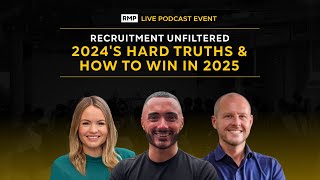
In this live podcast hosted by Hishem Azzouz, a panel of recruitment experts (Brian, Lauren, Chris) discuss the state of the recruitment industry in 2024 and outline strategies for success in 2025. The conversation covers the looming impact of AI on recruitment, emphasizing that AI should augment rather than replace recruiters and highlighting practical tools (note‑taking, voice notes, video, AI‑driven workflows) to increase efficiency. The panel debates the relative importance of personal branding versus company branding, concluding that a strong personal reputation is the most durable asset. They examine client retention, noting that poor service and missed SLAs drive the high churn rates (≈60% client loss year‑over‑year) and propose disciplined service delivery as a remedy. Hiring decisions for early‑stage firms are explored, with a focus on balancing senior hires against the time‑cost of training juniors. Culture and values are dissected, with panelists sharing how authentic, top‑down culture, peer‑recognition programs, and clear values reduce attrition (the industry sees ~40% recruiter turnover). The discussion also touches on the rapid evolution of recruitment technology, the role of offshore support, and the difficulty of defining a unique selling proposition (USP) beyond a firm’s DNA. Throughout, anecdotes, statistics, and actionable advice are interwoven with a candid, sometimes humorous tone, offering a roadmap for recruitment leaders to adapt, retain talent, and grow in 2025.
Chapters
Oh wow, this is cool. Um, can you hear me all at the back okay? Yeah, awesome. Um, I was just saying to my friends earlier in my WhatsApp group, this is definitely going to be the closest I ever come to doing stand-up. Fucking hell. Um, so just very quickly, I'm going to do a quick introduction to this evening, share with you all how it's going to run, how it's going to work. Um, So firstly, a huge thanks for all of you coming. I really appreciate it. For those of you that I have spoken to, it's been, you know, getting on the phones, grafting to get this to this point in terms of having you all in the room. So I really appreciate you being here. The goal of these events really, I've been doing them for over 4 years now, is I'm just a huge believer in collaboration over competition. The big mission that I'm on is to really trying to move the needle on how our percept— how our industry is perceived. And I think one of the ways that we can get there sooner is by sharing more, collaborating, and collectively improving, ideally. So how this is going to run tonight, for those of you that haven't been to one of these before, is we're going to have a conversation with the panelists. Firstly, talk about What have we learned from this year? For a lot of people, it's been a challenging year, for others it hasn't, but we're definitely going to start with what have we learned from this year, the hard truths of 2024. And then we'll get into what are the strategies that we're hedging our bets on, that we're doubling down on going into next year. And then we'll do some live Q&A where you promise have to not be super mean with your questions. But I've done a lot of preparation with the panelists. They're all here to share, be transparent, be honest. I'll make sure that they're honest, I'll do my best. And really, hopefully the goal here is that you will leave with something that you can implement, that you can use, or at the very least, hopefully feel motivated, inspired, engaged in being part of what I think is a great industry. So I have to sort of start by saying a huge thanks firstly to Firefish and Sourcewell. They've sponsored my podcast this year, so putting on these events and doing these things definitely wouldn't be possible. So yeah, I think obviously good friends with Dougie, and I was like, we've got to do something in Scotland. I just don't know how, Dougie, wherever you are, how you get on that plane every fucking week. How long you did that is horrible to London. And obviously working with Firefish as well, being a Scottish-based company, I thought it'd be really cool to do something here. So What would be really cool now then is if you could put your hands together for the panelists and let's kick off tonight. Got your drinks? All good? Check, one, two. Check, one, two. Hello?
Forgot that, that's very important, very important, Hishem.
As I was just saying to everyone, we've all prepared for this, we all agree that we're going to be honest, transparent, and I think in that preparation we all spoke about let's share, you know, how we've got on this year. So I'm going to do a bit of intro, like a bit of an intro for all of you. If I get any of this wrong, please correct me, but you all shared a couple of things with me. So Brian, I'm going to start, just do a bit of intro on yourself and then you can add anything else. So obviously for you, interesting year this year, you changed company after working for one company for a good amount of time. So you had to go through what a lot of recruiters have to go through, which is your covenants.
And the gardening leave.
And the gardening leave, yeah. So obviously your world is marketing, the Scottish market, right? Yes. Always been permanent recruitment?
Yes.
So up until you left in June 2024, you built £140K, then went on gardening leave, and then you've been at your new company for the last 4 months and you built £60K since then from scratch.
Yes, of course. The dreaded covenant.
Yeah, exactly. So, and of course you stuck to all of that. Like, that's— Yes. Exactly. I want to make sure that's clear. Okay.
Room for lectures.
Anything else you want to add to that that you think Or that sums up.
That's, we've been getting too bold. Yeah, yeah, let's go for it.
Um, Lauren, let me know if I get any of this wrong. Obviously co-founded a business called Iconic. Um, your financial year, April to April, or have I got that wrong? Is that right?
Okay, cool.
So I'm gonna get your help here because I want to make sure I don't get this wrong, but I've got £1.5 million as a number here, but that number is your perm revenue and the profit of your temp and contract book, right?
Yes. Yep.
Which is 1.5. Cool. And we're tracking this financial year to do 1.6, 1.7 is the goal, right? Uh, team size currently 17, 12 fee earners. Um, you're— you've got obviously a few different, um, divisions and teams. You've got HR, finance, legal, tech, marketing.
Yep, that's right.
All right, okay, cool. Um, and then currently right now 40% of your business is retained. 60% is contingent, and like 90-95% of your work's been permanent, but you've been doing some contract and hopefully looking to grow that. You've typically done the Scottish market, but you've recently been doing some placements further down south. Yeah. Majority 360 recruiters, you've got 3 people who are in non-360 roles, and your role now and position is very much not in the trenches of recruiting, you'll obviously help coach your team, help develop client relationships, and a few other bits as well, I'm sure.
Sounds spot on.
Yeah? Okay, cool. Right, and then Chris, last but not least, this year you've achieved something that a lot of founders put on their, you know, at some point, I want to exit my recruitment business. That's something that you achieved this year, so I think let's definitely give a hand to Chris. I think that's an amazing achievement. I'm sure every person I've interviewed has got to something like that and they're like, right, what next? So hopefully you've been enjoying that process. And I mean, that must be like a really cool milestone, especially I think what's cool about our industry when you go down this MBO route, which you completed in August, is the fact that the business that you helped build with the people that built it are now running that and get to own that business. I think that's such a cool way to sort of pass the baton on. So highlights on that, again, let me know if I get any of this wrong, but over whatever period of time, but typically you fluctuated between £7 to £10 million in turnover, and again, fluctuated between 25% overall profit margin in your business. 50% of that profit was typically perm, 50% of it was typically contract. Your sector focus is you had sort of two parts. You had the blue collar temp, because you were construction, and then you had white collar contract and perm. Is that right? And then, yeah, typically the revenue and profit was 50% permanent, the other part's contract. Team size when this all went through was around 22 people. You've now got 3 senior leaders running the business post-MBO who are here as well. Awesome. And your role now is to stay the fuck away. Which she was like—
She's lost.
But no, you obviously still have a minority stake, but these 3 people now are running the business and you're yet to sort of attend your first board meeting, but that's something that you attend. But now your sort of focus is going on this bit of a coaching journey and I guess like making sure that what you've learned doesn't just stay within your brain and you want to help other people maybe achieve or go through some of the things that you had to go through the hard way.
Spanish, that's exactly it.
Yeah.
Okay, cool. Right, so that hopefully I'll just do that because I think it's just helpful context. Like we wanted to just give everyone in the room a bit of an understanding. So I think, Brian, you're very much in the trenches of billing, you know, navigating today's market. Chris, you've been in the game for a long time. You've seen, you know, what your teams have done. You've been involved with different things. Obviously, this year was only this year that this went through. And then, Lauren, yourself, obviously you have a team, you're seeing loads of different things with different divisions. So I think you can all speak from slightly different perspectives. But I wanted for us to start on this business development topic, winning new clients. I think it was something that a lot of people ask questions about, but more specifically winning new clients, but then also how can people here stand out in a market that is very competitive? How can we differentiate our services? So I think what I wanted to come to you first on, Brian, and we can, we see where we end up, but you, over the last 4 months, you've had to start from zero basically, right? You can't just use all your existing relationships, that's what covenants are for. So So like, talk to us a bit about how have you approached this? How have you thought about this reflecting on the last 4 months? How have you thought about being different, standing out? Although you can point to your track record and this is what I've done, you ultimately have to start new relationships. That's the only way that you're going to be billing and doing revenue. So let's just start there and then we can talk a bit about a few different things.
Yeah, absolutely. So pretty tough time to move just now. I think we can probably all agree in the room it's been a really hard year for most sectors. And I think we were used to, we had a few years, it was kind of like champagne lifestyle, wasn't it? Like 2020 to 2022, hands up, probably you all had a great time. Great. Yes, rock and roll, brilliant. It was a great time, really, really good. So this year things have tightened up, which we've spoken about. So taking that jump was pretty damn scary. And I'd been with my last business for over 6 years with Todd Biller, doing fantastic commission. That's why we're here, doing really good. So taking a jump was scary. So what this really Making that move, having to build things up was a lot of graft. And I think one thing that I'm seeing from clients at the moment is just being authentic and being good and building partnerships. That is such a USP at the moment. You know, recruitment gets such a bad rep. In Scotland, you hear horror stories all the time from your competitors, let's be honest. So my major USP has probably just been going out and just like meeting people. I run events, I go to events, meet people, just be pretty down to earth and just be pretty grounded. I think that goes a long way. Recruitment, we sell people, that's our product. And I think it's remembering that people buy from people. So my thing has really just been being pretty damn authentic, just going out, being myself and not— I can swear, can you, on this? Yeah, yeah. Not kind of going out and being, I'll say all the F words, but not just going out and just speaking shit and being like total like battle boy and trying to like upsell, like going out to meet people and thinking long term and not just thinking, do all their signs on top of people's heads.
So just curious, I don't know if you've run into this, I hear this a lot, definitely in London. I think a good example was, it was in a, I was in a recruitment office and the guys were talking about why they're really trying to drive face-to-face meetings. Yes. And they just gave this example where one of their recruiters booked a Teams call with a company that lived, I say lived, had an office like a 5-minute walk away. They're like, let's just jump on Teams. So just curious, have you Have you often run into it then in terms of you'll meet people and they'll go, I haven't met a recruiter?
100%.
Yeah, so I think that's interesting, right? It's almost because it is very easy to say, let's jump on Teams.
Yeah. But clients get like blown away. Like genuinely, like I found this so much. There's competitors trying to, you know, vie for the same business and they're like, oh my God, being taken for a drink and a coffee. People love free stuff, let's be honest. But clients are generally blown away by it by just being taken out and you just meeting and giving them time. And again, if you're going into the meeting and not just talking about, okay, have you got jobs? Can I fill them? Going in and just talking to them, having a conversation, talking about how I've just made a move, how the market's tough, how times are tough at the moment. People just really appreciate that. It goes a really long way. And I think we just underestimate the value of just being a good person in recruitment. Just treat your clients like you would with your friends if you're taking them for a pint, you know?
And then just on this, because one of the things that you shared was being a 360 recruiter is non-negotiable. Like, just talk to me a bit about that because that was something that you felt like was a hard truth of this year. Talk to me about that because that's what we're talking about here.
Yeah. So I think it's very, very market dependent. You know, again, it's a room full of recruiters. We're all in different sectors. My sector, definitely in marketing, it's tiny. You've got a bit of marketing in your business, you know that. It's very, you know exactly who your competitors are. And again, you're all trying to get the same business. So it depends. In some businesses you might have high volume and you need that delivery. Role there. But I do think being 360 just now, and business isn't just knocking on your front door like it was in the last few years, you're having to actually go and battle for it. And I think when you're 360, you're dealing with, you know, business owners, directors. It just adds that layer of credibility on top, you know, even when you're dealing with candidates. And again, candidates then become your clients. Let's be honest, you know, if you deal with someone just now, in 5 years they'll be hiring as well. So I think it's just building that credibility because right now it feels like a bit of a war. It's really tough, and it's not as easy as it was. I think if you're 360, if you can win your business and you can also deliver on and do all the basics, it just almost gives you the competitive edge and clients just love that.
I think, Lauren, I'm going to come to you on this just to build on this. Something that you shared with me in terms of a lesson from this year was, we put down here, outdated BD methods potentially held back growth. So you were just finding that recruitment methods from 2022, 2023 just didn't cut it. Talk to us a bit about that in terms of what your perspective is on that.
Yeah, I think when I said that, it was easy. That's the thing. Like, it was like maybe 1 or 2 touch points would get you to the exact place you wanted to be with a client. Um, and see, as things tightened and yeah, the competition grew, like, it was harder to win stuff. Like, I think we probably call that a lot more like consultative selling. Like, it's multiple touch points, it's really understanding what your clients are going through and how you can sell against it. And that doesn't happen over email. It doesn't happen over the first call you're going to have with them. And it's probably just the long game, the long game, when I think everyone felt like it needed to be a real short game because it was like, I need these fees and like, I need to do this, I need to get these candidates out the door. And actually it took so much more than that. And I think we probably learned that, we've all learned that the hard way a little bit. Like we took a minute to adapt to that and just thought, well, we've had all the success by doing it this way, like let's keep doing this. And, you know, we're like, let's stay firm, this will come. And I do think like BD has changed. Like, and I know everybody has told me that they really struggle to get consultants on the phone just now. There's a fear of the phone and I don't know if that's like a kind of newer generation of consultants that's feeling the fear of the phone. I'm probably not overly like, you have to pick up the phone. I'm like, but get the meeting, get in front of them. The magic happens when you're in the room with that person. However you get to that point, that's the place that you need to be.
So just curious, because we do hear this a lot. Like, when you say hard to get people on the phone, like, what does that actually look like? Like, are you saying, right guys, let's do this together, then no one does it? Or you just keep repeating yourself? Like, what does that actually look like in the real terms?
I think it's such a natural thing for recruiters just now to revert to email, to revert to LinkedIn, to just be like, I'll get in touch with them. The first thing we'll do is like, hey so-and-so, hope you're well, I was just like asking about this. And you know, maybe not everybody is as available as they were on the phone either. Like, a lot of people say that they're not sitting in offices, they don't have their like office phone there. Like, if I go back 10 years, like, that's all we did is, like, phone people at their desks. So yeah, I think it was probably a bit of the fear of picking it up, assuming that they're not going to answer, but making the assumption before actually just trying it. Like, we'll do it, let's see if they answer.
No, because I hear it a lot. I think to build on this then, and I've heard this a lot, so I appreciate you sharing it with me, I've got a note here: not a KPI-driven business, which hindered accountability and the sales focus. I've heard this like so much, and I'm quite into this idea of like not having KPIs as like an employee benefit, because I've met so many recruiters that want to be successful and they want to understand how to be successful, and you can't improve what you don't measure. It's just as simple as that. So what— because did you have to maybe learn that the hard way? Was it very much like, we treat you like an adult, no KPIs here, and then when shit started to not work, like, I have no idea how to help you because you haven't been measuring anything?
Yeah, we had best practice, right? So we did have like, here's a set of metrics that are probably going to guide you to success, but we didn't manage people by them. It wasn't a case of getting to the end of the week, you have not hit these KPIs, like, what's happened? And we told everyone when they joined us, that's not going to be the case. That's not how we're going to manage the business. Probably when we came into summer, we were a bit like, we need some sort of minimum standards here. Like, if we're all saying it's really tough and we're not doing the numbers that we want to be doing and we're not doing the activity to get to the numbers, it's like, what gives? We actually still didn't manage people week to week on a set, like, KPI measures.
Was it all just, was it, we just care about the end outcome, however you get there?
Yeah, but we needed to become more accountable, like, more accountable for what we were doing. So, like, the types of things we did was, like, Monday morning kickoffs, get everyone together, everyone share with the whole team, like, what do you want to achieve this week and how are you going to do it? And on a Friday afternoon, let's share successes, what worked, what didn't work, like, what were your challenges? So even though they weren't being managed by them from a kind of manager-employee type relationship, like everybody shared what they were going to be accountable for. And that did work quite well. What is the magic KPI, right? I've spoken to so many businesses. It's 25 calls, it's 30 calls, it's 50 calls. It's like, what is that magic number that you put into the business? So we had to track it better, measure it better. And actually, if someone's getting really good success from emails, great, do more of that then. Like, that's then the KPI that you should be setting yourself. So, did it hinder us? Probably. Are we ever going to be a business that batters people over the heads with KPIs? Probably not.
Okay, but then in terms of, so what have you found yourself always looking at now or like tracking or seeing the most? What are those metrics you actually look at now then?
So, the kind of measures, and this is really recent for us that we've put into place, can be things like, it's obvious, fill ratios. I mean, you see these two things like success from specs, like everybody up their specs, I think, over the course of this year, take a candidate, put it to 20 places, we were like, that's all good and well, but actually do it really well 3 times and see what happens with that. So kind of measuring that. So I suppose our leadership team became more obsessed with metrics around success, like interview conversions, like doing the right thing by everybody all the time, rather than the numbers.
Yeah, rather than the inputs.
Yeah.
Yeah, I think whenever I speak to founders, I struggle to think about what bad behaviours do you end up doing if you're really focused on trying to improve job-to-fill ratio or like those performance metrics? Because I think people end up really hating KPIs because of shit managers that use them wrong, and it's like, why does it matter how many call times, how much call time I have? But I do think those ratios are super important, and it's definitely hard when you have experienced people that are saying, I'm not getting the outcome that I want, I'm not getting as much success, but you haven't been measuring anything, right? Chris, I'm going to come to you. Your experience this year was more that you had a consistent job flow, but it wasn't converting as much as you've been used to. Tell us a bit about that in your world, what you saw, because some people might resonate with that or saw that in their world.
Yeah, that's cool. Can I pick up on two things first?
Yeah, 100%.
First of all, this is the most uncomfortable seat I've sat in entirely. Oh shit, really? Really? Yeah, plus I look about 4 4 years old because I've got the shortest legs I've ever seen. I look like I'm in some sort of like stupid sitcom. So whoever did this—
For all these small men here, Hishem—
I want to put in a formal complaint. Okay, so that's the first point. The second thing, right, it's not binary anymore, this stuff, the questions that you're asking, and they both came in really great answers. It's complicated. There's choppy waters out there right now. It's really choppy, and it's not either or. It's both all the time and as much as you can. And it's mental health and it's work from home and it's micromanagement and it's take on trainees and it's offshore your staff and it's double standards. Because actually I was listening to you there and I thought to myself, Lauren, I thought, yeah, they've put in these minimum standards, probably not for the top salesperson. Let's be honest, if somebody's building £300 grand, they can do what they like. Like, all right, we'll let them away with that. And so actually what feeds up above all this, the content that we're going to talk about today, when you can actually take it up a level, actually what you might be talking about is culture and fairness and standards that you're going to set and sort of your ethics and your morals that you're willing to stick to. Like my best biller a couple years ago before Lewis overtook him, Amazing. But he didn't play the game. We just let him away with shit. And so, we had to get rid. Get rid of your top biller. And what that feeds into your culture, and then that feeds through the regulations. And if you get that culture piece right, right at the very, very top, no matter whether you're talking about business development, marketing, all these things we're talking about, if you get that culture bit right, and the communication's clear, and you've got trust, and the authenticity that you were talking about, that you show your clients, it, that just like, it's like a hot knife through butter. So your question was about, about conversion rates for jobs.
Yeah, yeah, I appreciate you sharing that.
Yeah, I couldn't decide what was going to be diet Coke, Chris, tonight, or full fat. I've decided to go full fat. So, so yeah, it was about conversion.
Yeah, so you said one of the, one of the hard truths this year was job flow without conversion has been like a challenge, basically. Talk to us a bit about what that means.
Yeah, for years our job flow has always been really, really good, like for ages. And Alison and Wishy and Lewis will back this up now. We've always had good jobs and we've qualified them when they came in. And so we've noticed virtually no change in job flow this year. So you would think to yourself, why would a client register a job if they're not hiring? And why would they then engage with an agent? And we've got processes in play, which I'll maybe talk to you about later, in terms of plan of action documents and proper qualifying the job to make sure it's real and all the rest of it. But then, what was different? Why did we not convert the same amount? And we have dropped year on year, or the team that up till 2 months ago I was still the managing director of, we did drop fee income. So what was the reason for that? And I think, to be honest, what I tried to coin a phrase that everybody's recruiting, but nobody's actually hiring.
What does that mean?
Like, as in everybody thinks they want to hire, but they're actually looking for a unicorn. They're looking for something there. I mean, you touched, Lauren, on speculative CVs back in the day. And actually, Lewis in particular has been fantastic at this. Take an amazing candidate, and creating the right opportunity for them rather than worrying about the job that you were getting in. So thinking about the metrics that you were measuring, it was job flow, the right thing for us to measure. And so actually taking a candidate to market was the important thing. But actually now with tighter financial controls within the organisations we're working with and more in-house teams and greater scrutiny from the HR side of things, the opportunity to create a vacancy for this amazing 10 out of 10 candidate. That's changed. And so actually, I think that's a good chunk of probably where the lost revenue is, because actually, yeah, that's been a challenge. And I think generally in the market post-COVID, there's an apathy. Everybody's working from home, everybody's doing this, everybody's pinching that. Nobody thinks they've got a job for life anymore. So there's a bigger thing at play, which is what I tried to say at the start before I answered your direct question. There's a culture and that apathy and that belief in about folk just thinking, What am I doing this for? And that's not only with your recruiters you're dealing with, but it's sometimes your hiring manager.
But overall, what you found this year then, even though you followed the same processes, you just found basically time wasters or like people like, yeah, we want to hire, but then actually didn't, has been a challenge. I mean, the other thing that you did say, which I spoke to a few people before we started this, that I think a few people run into and you found it in your world was I put here competing against internal TA teams. So I think something that you've experienced, I don't know how it's been for any other people in their markets, but some of your accounts that I'm assuming historically have spent a good amount of money with you had then deployed resources in building their internal capability and that just, yeah, maybe more of the job flow that you would have got isn't going to them first. Talk to us a bit about that in terms of how you've navigated that this year.
Yeah, certain organisations, the big enterprise organisations, multidisciplinary engineering organisations, construction companies, they've taken on a lot of internal recruiters to try and reduce their agency spend because their CEO or their CFO is looking at, right, holy shit, we've spent £8 million on agencies. Let's just take on 10 internal people on £50 grand and they'll fill all our jobs. And they're just thinking, right, problem is spend control. 'cause cost of living crisis was happening, obviously, a couple years ago. So they're thinking, let's just spend £500,000 on these folk and they'll follow our jobs and we'll save £6 million or whatever. And sometimes they are doing that if they hire correctly and so if they get their processes right. So that's obviously going to take a big chunk out of it. So yeah, that's definitely been a challenge, but how you manage those relationships and wait for leakage. But I think, and maybe Lewis will keep me right on this, but SSE are going to spend £8 billion on renewable energy this year or something like that, like to all the wind farms and cabling and grids that are coming in for the green agenda. And Balfour Beatty hired something like 12 or 13 internal recruiters into their team, and we are a big supplier of theirs. And there was 360 vacancies to be filled or something like that. We didn't get one. And then they phoned us, I think just 4 months ago, and it was like, yeah, we've still got a lot to come next year, but they felt they'd filled 260 themselves or something. So I mean, 260 perm hires, that's all right.
Not bad.
My MBO would have been a lot better if I'd closed that deal before I left.
Damn it. Lauren, have you, obviously you have different niches, right? Have you been running into this or have some of your teams been running into this in terms of?
I feel really guilty saying this, but we have an HR recruitment team. So when teams put investment into their internal TA function, it works in our favour because we place all those people into those roles.
But works in your favour in terms of you place these people, they can technically help you get in, okay.
Again, I think this is really common, like internal TA being our competition, and they are our competition, but in the main, the thing I've learned over the years is internal TA teams are so operational, right? They're under so much pressure all the time for delivery on this, because like that, they have been brought in, they've been given a nice salary, and they have to cut costs, right? And that is their focus, to fill these jobs. They don't have a minute to think about talent insights, what's the market telling you, future talent pooling. So, It's maybe a bit of a different value-add service that we probably lead with when we deal with these teams. But these are the candidates we speak to day in, day out in our HR teams. We understand their pain points as well, like their frustrations. There is a place that we all work in harmony, but it's getting that balance right and understanding it's okay if it's not all going to come to us, but where can we add value and where makes sense for us to step in that still helps with their cost-cutting exercises.
And what have you consistently found HR people hate about recruiters? But that's what I mean, like, where, what, what always a common thing, like you said, you understand their pain points, these things.
Yeah, just to be, just clear out to people, because it is probably, well, anybody that I've spoken to with an internal TA this year, they actually feel the same as us. They're exhausted, they're absolutely exhausted. They have the same, like, when candidate market, like, candidate markets tighten, they feel the squeeze the same way that we do. And they're not There's many exceptions to this, but generally speaking, they're not specialists. They're not in and about a market, they're not networking, they're not running events, like, they're kind of not in the battlefield to really understand what's going on there. They could have an engineering job, a marketing job, an HR job, a legal job, and they do the best that they can in that space. I think they're under pressure, I think workloads are heavy, and they don't have time to do any strategic or kind of project-based work. That helps longer term.
And then you said obviously on the flip side, I guess timing can be a factor, understanding where they're getting pressures from, where they feel confident they can deliver versus not. What have you found to be the common areas that you can add value? Is it like understanding, like, they feel like they could cover these, but these are the really hard to fill things? If they have the right partner, then they're going to help. Where's the value piece for them?
Internal TE relationships can start with things like, can you give me a salary survey, like, on this market? And we're like, sure. 'We'll come out, we'll meet you face to face,' and then it's like, okay, there, you're in the room with them already, the magic starts happening. Or it can be, like, for instance, we've got access to Talent Insights, like, they're looking for a percentage of skills that exist within a certain geography, like, how big is this talent pool to start with? And we can tell them, like, you know, the kind of front of the line. So it probably starts with, like, some of that stuff, and then they'll give you their jobs when they do, because they can't, they don't fill everything and they can't fill everything. Yeah, they do a brilliant job, by the way. I think internal TA is hard.
And then just to— Chris, I'm going to come to you on this, just like, just to round this out. Obviously you've been through a lot of different markets, a lot of different ebbs and flows. I guess in terms of like what have been the main— like, I've spoke to a lot of people that have found this year challenging, and I think one— some of the lessons, I don't know if you agree with this or not, is When you've been doing it for a long time, there's a lot of evidence to point at, you know what, it's been hard, but I know it's going to bounce back. But on reflection, to a lot of people that I've spoken to, maybe they should have taken action earlier, maybe they should have tightened up on their process with their clients and said no more and these things. But, you know, as you are reflecting on this journey that you've been on, has there been any like big lessons that stand out for you from this year and what the market's been like for the last 12, 18 months? Or is it just a lot of the same, just maybe sounds a bit different? Just around this sort of 2024 hard truths piece, because I know you're going to give us the full fat version, mate.
Do you know what, I think most people probably know already, ghosting, energy levels, you know, work from home, the clients just, they're not clear on their brief, they don't give it the time they need, it's like supposedly it's like the most important asset that they're going to have in their business, but they just ping an email off to 6 agencies and stuff, and so The important thing is actually qualifying the job and making sure you're working with partners and spending your time and energy both personally and in business with people that you want to spend time with. And I think later on we might talk a little bit about how you can score up different clients and stuff like that if we've got time. But making sure you're putting your time and energy with the right clients and not wasting your time. And sack clients, get rid of the ones that are wasting your time. If they're not paying you good money and they're not working to, the process is terrible, and they're just doing everything through email, and actually it's just everything's a challenge. Free up yourself from all that pain and actually go and focus on winning work that you can, or winning more work in multiple areas within businesses where you're aligned and there is a partnership. And that's something we did years ago, in fairness, with Kai, who was my original coach and mentor, shout out to Kai. And so, looking at those clients, and so the harsh truth this year is it's just the whole thing's a bit of a mess. And so, Jonas, we could probably sit here till midnight and I could mouth off about all the different problems that are going on, but with the choppy waters, we're meant to, as recruiters, thrive in those choppy waters. And so you need to just be resilient. And there's something about just putting the reps in as well. And there's a little bit of something lacking with the new breed of employee/recruiters that I've seen where when the going gets tough, they work from home.
Wow.
I didn't prepare that. I just made that up that second. So I'm fucking trademarking that shit. Because when the going gets tough, the tough work from home. That was Balochian, right?
Legend. Let's, I think, let's turn gears a sec. Let's go into what we're hedging our bets on, what we're focusing on, what we're thinking about going into next year. I guess, Brian, this was part of like some of the things that you was talking about because you shared some of those similar things, right, that you've, that Chris just shared there. Talk to me about some of the things that you're really doubling down on 'cause a lot of it is around this having multi-channel sales approach. That's just something you really believe in and really hedging your bets on.
Yeah, 100%. Like Chris is saying, it's been really bloody tough. There's a lot of competition against TA teams, against other recruiters. Yeah, it's really, really tough. We're doing quite a lot at Mack. So some of the stuff we're really doubling down on learning and development, for example. We're all here tonight where we're learning from others here, which is a really big thing too. But I think it's just actually having a bit of process in place as well. And I think Lauren, mentioned about a kind of like BD playbook, and that's something we're really focusing on at Mack. We're really focusing on learning from each other as well. We've got kind of champions, you know, in the company that we're going to implement. We're going to have people who are stronger at social selling. Like you said, some consultants are really good at selling via LinkedIn, selling via email. Some people are good at, you know, picking up the phone. But a big thing is just really doing a multichannel approach for BD next year. Like we've spoken a lot. So I run events in the marketing sector. Marketing's tiny in Scotland where we're We're able to get events with 60-odd people. We've got leaders in the room, and that just almost kind of pushes your credibility. So by doing things like that, by going to events, by going to awards, even just like BD, for example, you mentioned there's kind of like a fear of the phone just now. Sometimes if you pick up the phone and you speak to a new client or prospective client, say, oh God, you actually picked up the phone to me. Doing the meeting piece, it's just really doubling down on BD and approaching everything, even just silly little things that I do for BD. Bloody love a voice note. I think that works so well in BD. I don't know if anyone's the same with their pals. You literally will send 5-minute voice notes. Thank— pardon my French, but thank fuck WhatsApp you can fast forward 2 times. I do that in my BD approach. I think, how do I communicate with other humans? Oh yeah, voice note works. Things like that. Video and such, all of that works too. So it's just trying to really think multichannel because I think, like you said, it's choppy waters. We keep saying, you know, is it going to get better? Is it going to get better? It's been years of, you know, a really bloody hard time. So I think we just need to make sure we've got as much in our arsenal as possible.
Love that. Okay. And then let's build on that, Lauren. Obviously, you shared, talked to us a bit about how you landed on this idea of trying to, you told me about the iconic way, right? And some of this was going on, but maybe it wasn't really well documented as it should have been. And that's something that you're really doubling down on. So, Why is, you know, having a structured BD playbook for smarter growth, why is that something that you feel strongly about?
Yeah, so actually at the end of 2023, so this wasn't this year, we did a growth consultancy project. Like, we did a really good 4 years, we were growing year on year, and then we thought we probably need help strategising, like, how we're going to capitalise on this and keep going. And one of the things that came back was feedback is really strong. Like, it's really strong from your clients, it's really strong from your candidates, and this team went out and spoke to some people and they were like, yeah, iconic or brilliant or whatever. And then this iconic way thing was dubbed, but there was no meaning behind it. It didn't, like, nobody could actually explain what a good service is. Or when we asked our consultants, we were like, how do you do something the iconic way? And they'd be willy. It would be like, you give the best service and, you know, you do this and it's a VIP service and you go above and beyond and, you know, things like this. So like, Hannah and I, my co-founder, were like, Let's give this a narrative, like let's make it a thing. And actually it's all through our business. So BDA is something. So one of the things we've nailed is our like retained playbook. So we now have a document, we've got a pitch deck, we've got videos recorded, and our team can watch that on how you deliver a retainer the Iconic way. Here's all the things that you do, and if it's not going well, you refer back to it. Did you do that? Did you do that? Like, did you leave no stone unturned? But it's more than that. It's internal as well. So like all of our operations. Like, we went from a cool business that had 5 or 6 people and everyone was doing what they wanted, to having 15, 18 people, and all of a sudden it was like, we need some uniformity to this, like, we need to create structure. So that was operations, it was sales, it was candidate journey and experience. And we're not there yet, come back to me in another year and ask me how it's all gone and have I got it all written down. Um, but I just think it's important, like, it's important that if somebody— and for me it was like, if a client has a really good service and they're recommending us, and it's a different consultant, it's a different discipline, do they get the same service? Like, is it the same thing? So that was really important for us to understand what it is and actually building a framework that people can follow so that they get the same level of feedback.
Yeah, I love that. And I guess, I guess with that, it's interesting because that's come up more and more, I think, is when you, as you grow up in the business, you have to make things more repeatable. It can't just be like do what Lauren does and then like figure it out, right? People might resonate with this who are building their business. Like you just said, people who are on that journey with you were like, I love Iconic, it's cool, they just leave me alone, I'm an adult, no KPIs. You're now implementing this stuff. How have you found communicating that without pissing people off? Or do you know what I mean? Because I feel like we pissed people off. But I think, I know that's like part of the journey, but I think it's just interesting because it can be quite hard on how to do it, right?
It is, it is, yeah. And I suppose that was the very reason that we would have attracted some people on that, because it's like entrepreneurial spirit and they could maybe show us some things. And it was tough because then if it can be the smallest things, it can be a policy on something, right? And it's like, what, we've got a policy for this now? Like, so I have to go and check the policy. Um, but there's no other way to create fairness, like to create like equity for everybody who works with you without having actually everybody like, everybody follows these policies and processes. And it's finance, it's system usage, it's BD, you know, it kind of has to be the blood that runs through everything. So maybe our more tenured people at that point were like, this feels different, like this is different. And actually we got feedback though, like the culture changed here. And as much as we always said to people, you'll be on a journey, like this won't be the same, like we're a growing business and it's not going to feel the same this year as it will next year. It won't feel the same this year as it does like moving forward either. But that's hard for people. I think recruiters are quite inherently resistant to change.
Really?
Yeah. Absolutely.
Yeah, so I guess it sounds like just owning that and being like, this is where we're going. This is like you and your co-founder owning that and being like, this is where we're going, it's important, and if you want to come on the ride, great. If not, then maybe we're not the company that—
yeah, that's okay. Just a quick example of this, see, when we implemented hot desking, you implemented hot desking? Yeah, this was like I don't know, a year ago maybe anyway, and everybody had their desks and they had their little plant and their water bottle and they had their whatever. And we were like, well, we can collaborate a bit better, you know, if you sit next to someone who's not in your own team. And the look of blank faces in the room, I was like, it's like I've just told them we're going into liquidation. Like, all I'm saying is sit somewhere different, like, when you come in. And that's just a really good example of it. Like, recruitment's hard enough as it is without things changing internally in the business that you work for. Like, the market changes constantly, so the needs like they have like a constant and that can be a desk, it can be a way that you do things. So when you change everything all the time, it's tough for people to adjust to.
So you're still hot desking now?
We are still hot desking. Although there's definitely people who have kind of got their own desks and I'm like, yeah.
I appreciate you sharing that. Chris, do you want to talk to us a bit about like, this might be something that everyone knows, but I do think oftentimes with these things we need to be reminded more than we need to be taught. And it's like, are we doing the things that we know work? So talk to me a bit about the prioritising high-value clients piece, because I think that's going to be key when people are looking ahead. Who are we going to build our business around? What client's going to spend the most with us? I think this sort of stuff is really key. Client base management, talk to us about it, mate.
Yeah, this was something that we put in, like I mentioned, touched on earlier. A few years ago, we started looking at the clients that were taking up a lot of our time and and energy and maybe weren't paying us as much as they should do or didn't have the best projects or the processes were really challenging. And so we sort of rebranded a few years ago and started talking more about like, you know, recruiter burnout and feeling like it's transactional and that it doesn't feel good and that you just send the CV and maybe you make some money, but you don't really feel like you're adding value and stuff. And so we started trying to look at the clients that we really wanted to partner with. And years ago I said to all the team members, like, who is your ICP? Who's your ideal customer profile? Find out who they are and speak to them. Like, and that's— target them and pick them and then go and get them. Because so many people, you think, I mean, you were talking earlier about new business development. Sometimes you don't need to do new business development. The business is already there. It's probably easier to work with clients that you already know who you are than trying to warm up something brand new. So assessing your client lists and listing company A, B, C, D, E, F, G, and then assessing them on whatever criteria you want, and then putting a tick or cross or a line or a happy face, smiley face, or a meh, as we did. And then looking at who you're getting money from and who you're spending time with. And it's actually, it's really cathartic in terms of we doing that. I remember doing it with Lewis, we were working with this big consultancy and we'd went from billing good money to not so much money, but we'd still register something like 25 jobs and send them 99 pre-screened, already approved amazing CVs, and we'd made one hire with them or something. Oh shit.
Right?
And so information and, you know, that information that you measure, as you were talking about earlier, is really important. But finding out where you're spending most of your energy and where you're spending your time and is it actually adding value? That's really important.
What do you typically, you shared a couple of things with me, do they pay on time? Like, just share some of the things that you typically look for.
Yeah, what percentage terms are they on? How quickly do they pay you? Have you got stakeholder engagement? Are you dealing with the line manager and the decision maker, or are you having to deal with HR or internal talent, which causes its own frustrations? Are they working with multiple agencies? And in construction, which was our bag, do they have good projects? Are they a reputable employer? Are they somebody that they want to work with? All this stuff. So I mean, you can score up all your clients in whatever way you want, and you look at them and then you list them down, and actually you think to yourself, well, we make loads of money with Company D, but they're a pain in the ass to deal with. Are we willing to pick— are we willing to deal with the processes and them paying us after 50 days and at 10%, or would we actually be better spending our time with Company E that are paying us 20% and we love them and their brand's amazing and they're going places and the processes is amazing and stuff like that? So yeah, that's called client-based management. You score it all up and you basically look at where you're spending your time. And the idea is that you can free yourself up by not wasting time with clients. So prioritising who your true partners are, and that's something that at Peace we've tried to do for the last few years. And I know that the team are planning on doing a lot more of as well as the face-to-face stuff that you were talking about, Brian, getting closer to them and finding out who really wants to work with you. And that's the same in your personal life. Now everybody's really busy. Who Who do you make time for? Who do you text on a Friday night? Who do you want to go to the cinema with when you've got a free weekend or whatever? And it's telling, you know, who's the ones you don't want to spend time with. That's almost even more important. But by sacking off the ones that are wasting your time and are not adding value, frees up your business development to focus on who your ideal customer is. So who is that? And who is that? Absolutely clear. Who do you want to work with and who would be the easiest company to work with? And for us, Touching on the talent acquisition thing, remove that competition, actually it wasn't me that came up with the idea because I ran out of ideas about 4 years ago, hence the reason why they run it now. But actually there's a sweet spot somewhere between about probably for us in construction, maybe 30 or 40 staff to maybe 100 staff. Because in that area they're big enough to pay their bills, they're big enough to grow, they've got some churn, you probably do get line management engagement and you can feel like you're adding value and you can have part of their growth platform rather than trying to go for the Moby Dick and you have to jump through the procurement routes and you've got multiple competitions and stuff like that. So finding who your ideal customer profile is and mapping out your current client base to find out where you're spending your time and exercising all your efforts. And you might find yourself freed of working with clients that are actually just annoying to work with. But each of your consultants should do the same thing.
Yeah, I don't know if you found this, but I've just found, especially when you typically work on a contingent basis, By doing that, you just give your team just way more comfort, like, confidence saying no. And sometimes that can be hard, right, when you're like, I could place this, we could make money here. So I think that is one of the most powerful things that I found when I interview experienced recruiters. They just get way more comfortable saying no, and they're a lot more clearer on the types of relationships they want versus not. And is that just being something that you do on a yearly basis now? And I think this is the perfect time and type of time of year to do it as well, right, in terms of look back Who have we done the most work with? Why? Looking ahead. I think it's the perfect time to do it, right?
100%. Or align it with your AGM or something like that. But even just doing it once in a while, you know, but it can happen naturally as well. I'm not working with them anymore. They're annoying me. I'm just going to go and put my effort elsewhere. So I mean, you don't need to be like another job for your to-do list. Oh shit, add client base management. There's 3 hours out. No, you can just be like, well, you know what I mean? They're good to work with. They're not. Spend more time cultivating the relationships you want to work with, but be clear in your mind who you're ideal customer is. And then you need to look at the way you pull the customers towards you rather than push the sale. Yeah. And we're maybe not going to touch on that, but the ability to pull them towards you through your marketing strategy and your brand strength and your reputation and your outreach and the way you do it, and then following through on your promises once you get a chance to prove what you're actually going to do is important. So you want to pull these clients towards you and then turn the cold calls that we have to make from time to time into warmer calls by making sure your brand and your marketing and your outreach is warming them up for you so they know who you are. And more and more over the years, pretty much since starting working with Cai, when we started maturing as a business, those colder calls were warmer calls. 'I know you, you're on LinkedIn all the time. I've had your email. Oh, I think you work with a client of mine.' And all of a sudden you're already pre-approved before you get in the door. As soon as you get pre-approved, happy days. It's like a blind date where you're, you know, some tidy mate, you know what I mean? It's like, oh yeah, he's cool, you should totally meet him. Yeah, you're like, you're already approved, you're already in the door because our mate said, oh, he's a nice guy. It's the same idea. So you want to look at how you can refer and look to warm up the calls before you have to just rattle the phone because that's old school.
Client management to blind dates.
Yeah, this classic me, by the way. I'm always about the analogies and euphemisms.
Lauren, do you mind talking to us a bit about Talent Solutions? Talk to us a bit about the thought process here, why it's something that— I know you launched it this year, right? Talk to us a bit about this because I feel like again this is going to come from maybe looking at this type of data and how can we solve more problems beyond getting people in a seat in their company. Talk to us a bit about this Talent Solutions piece.
Yeah, but that's probably started when I touched on earlier about different ways to add value to clients. So that, I mean, we come into the year thinking about that, and there was a couple of clients who took it really seriously, probably started to take a piss a little bit, and like, we were doing things like workshops for their senior leadership team. So there was one accountancy practice and we were there and we were talking to their top tax teams about all the challenges and whatever else, and we did it and it was great. And then I was like, why don't we charge money for this? So, um, like, we just kind of— we worked on like a thought process, a plan, a strategy of how to commercialize some of the value-add stuff. Um, and don't get me wrong, it's been a small percentage of our revenue. Like, we've done 3 projects and they've been brilliant actually, and the feedback's been great. Um, and it's just things like, you know, it started with a little bit of advice, then the first project we did was with a company who didn't have any internal HR or recruitment actually, and they were like, help us create foundations of how our managers can recruit better. And that was a really small workshop. We then did a much bigger workshop with a business of 1,200 people across the UK. We did workshops with our hiring managers. We found out what was working well, what wasn't working well, and we did 3 full days with our talent acquisition team and we did an end-to-end recruitment audit. Some people at the time said to me, well, that's mad. Like, why would you make them better at filling their own jobs? But it worked really well. That client in particular has given us more business now than they ever had before. So, it's not about taking us away from it. It was about making them better at what they were doing. And they see recruiters like we're probably a bit better at personal branding, you know, than they would be. Like internal talent acquisition teams are not known for putting themselves out there on LinkedIn, for telling the stories, for looking at employer brand, you know, showcasing stories internally. And that's the kind of thing we started to talk to these teams about doing. So actually, we helped them be better at their jobs and we gave really strong recommendations, which were appreciated. But in turn, if we're then representing candidates to go to them, it looked like a better place to work as well. So it's worked really well so far. And I think, you know, one of the things that I said is maybe some of our talent solutions clients will never be recruitment clients, and maybe some of our recruitment clients will never be interested in our talent solutions offering, and that's okay. But in reality, I think they'll blend a lot better than than what I thought.
I think you're always going to have things that— are you playing the long game? You know, you've got to give as well. If you can't just be asking all the time. Um, just curious though, like, how did you end up coming up with these workshops, these things? Because I feel like there's also something there around clearly not just having conversations about why do you have these jobs, or like, can we fill these jobs for you, having more commercial conversations. You're— that's other things surely you've had to get better at, right? Which can lead to these types of things?
Again, it's understanding their pain points, and see, when there was such similarities, I was like, we might be able to help you get better at that, and here's how we propose doing it. It was a steep learning curve for me, and some of the clients we've spoken to about it, they've maybe used— I wouldn't name them— but like big management consultancies, and they've paid £100,000 to have somebody come in and do like a 6-month project with them in terms of business business improvement, business enhancement, but they're not recruiters. They don't understand like the grind, the day-to-day, like what you hear from candidates all the time. So we probably were able to add a bit of like just real-life, real-time insight to what the recommendations were, and it was different from them, and a few clients trusted us, and that worked well.
Nice, love that. I think that is one of the coolest things about when you have your own business, you can try these things, and it's important to take action, try different things. Um, so I've got a couple of questions that people submitted. I'm going to ask a couple and then we can come to all of you for some live Q&A if that sounds, um, like some fun. But I think, uh, obviously we can't all scroll on LinkedIn and not see or hear the word AI, so I've got a question about it if that's okay. Not for me, really.
Okay, I quite love it.
Um, I mean, the, the, the question was just like, you know, like thinking about the future, how do we feel I guess, Brian, I'll come to you first. Like, how do you feel about AI? Are you integrating it in your workflows? How do you feel about it when we, you know, look to the future?
Yes. So, um, one thing I remember thinking about my market is, oh shit. And because in marketing there's a lot of copywriting, ChatGPT. So a lot of the events that I run, the marketers were in the events going, shit, we're gonna get replaced by ChatGPT. So I began looking into it and thinking, professions, what's going to be replaced by AI, etc., etc. HR is one of the few areas, and recruitment falling into that, that people say won't be replaced with AI. Do me a favor, everyone today, Google recruitment replaced by AI, right? And go on Reddit. It is hilarious. The hate, the hate for recruiters is insane. It literally is like, I want recruiters to die, replace them with AI, yada yada Unfortunately, we're not going to be replaced. And the point of AI is, and I do a lot of these events where we're chatting about it. I just ran an event a few weeks ago and we had two speakers, a guy from JP Morgan chatting about AI and what's about. And the thing is, it's meant to amplify and augment what we do. So in recruitment, we are bogged down. Like, I bet you guys, like, have you all had busy weeks? Yeah, busy weeks. You rammed, you busy? Yeah, yeah, yeah. That's like recruiter life, isn't it? You know, just happens. We're so busy, we're juggling so many plates, and AI can just streamline that. You know, I know you're a big fan of using tools. You've got things for note-taking, you know, you've got just your tools for spell-checking, and you've got like your textblazes. You've got so many different tools that can really make you a better recruiter. So it goes back to what I was saying, where we need to almost like think of the future in recruitment as a bit like Mad Max, you know, it's looking a bit dystopian. We need to like get more more like weapons in our arsenal. And it's just about embracing AI, but it's a bit of a minefield. And you kind of said there, it sometimes is bloody— it's like, where the hell do you start, you know? And luckily I recruit in an industry where AI, we're talking about it all the time. So for me, it's day to day. But I guess for other industries, it's tough and it's scary.
Yeah, I think probably what I think is people overcomplicate it. People think of AI and they're just so overwhelmed by its possibility The reality is we use it all day without even realizing we do it anyway. I actually listened to a really good podcast, and it was one of the Google leaders, and she was like, AI is not our competition. Your competition is just somebody who's using it better than you. Like, and that for us, like, yes, we've implemented it in small parts, like, and it can be silly things like note-taking, or it can be like, I've taken these meeting notes, can you actually make them into sense, and can you give me 5 actionable points back from it? You know, when it cuts lots of time. Um, I'm just probably like, it's never going to replace the majority of what we do. And if you talk about that magic that happens in a room when you're building a really strong relationship, it can help you, but it's not overly scary to me.
We're people-focused.
So, Chris, what are you laughing at?
He's scared of what's coming out now.
What's top of mind for you, mate?
Well, it's happening whether we like it or not. So it doesn't really matter what we think, but how is it going to affect recruitment?
Yeah, how do you think about it?
It's already happening. So it's about how you adapt. You've got to evolve or die. And that's the long and short of it. Now, some people are going to survive that and other people are going to thrive within it. Will it replace jobs? It probably will, eh? But there's probably there's going to be a situation, I think, in the future. I said something, was it something you posted or something like that? It's like we've lost 32% or something like that of recruiters in the last 18 months or something like that, which is mad. I don't know where the stat came from, but there's still a lot. There's still a lot of folk have gone, right?
And so what can I work from home?
So I'm not against working from home, but you've got to work, work, work, work, work, work. And so, right? So I think you probably find is, and this is a good thing for the industry. And so positivity is that the cream's going to rise to the top as it always does in all industries. You're going to find the people that really prioritise value and relationships and delivery and are conscious that they need to do what they're going to have to do. There's going to be less of us because the person that used to do your admin or the The thing that used to pay for somebody to put up your, this is, that's not going to happen. Basically, so you're going to have probably 360 or business development winners in the UK. And then you're going to have technology and a really cool stack behind them. And then if you need heavy lifting done and personal touch, there's a right good chance that's going to be offshore because of obviously external political situations, the cost of hiring, and then the negativity towards new generations coming into the workforce and the reputation we have as an industry. I don't think it's going to be anytime soon, but maybe in 10 years or 5 years, you'll have absolute killers who know what they're doing, winning work and delivering and selling what we've got. And then you'll have tech and you'll have outsourcing. The problem with AI and technology generally I've got is it all just moves so fast. You can't keep up with it. It's like one minute you've got something for free and then they're charging and the next minute somebody's got the same tech and something better than them and that. That's free. It's like a full-time job keeping an eye on technology and new apps coming out all the time. It's exhausting. And so, you know, it's like you're trying to run a business, but you've got a full-time tech advisor expert at the side. You go, no, you should totally, you've got ChatGPT shirt now, you should totally change that. And it's like ridiculous. And so it is. And I think that's a problem. I think people struggle to keep up with that, especially as somebody in their mid-40s, it's difficult to keep up to speed with that.
Yeah.
And so it is intimidating and it is scary, but it's going to change things. But I think if you're in this room tonight, you obviously give a shit about your career. You're probably in recruitment. You guys will be fine. It's the 4 or 5 people in your office right now that you talk about when you're on your nights out. They're the ones that are going to be dead because they were shit anyway. So let's just replace them. And you know what? And national insurance is too expensive and to both, like minimum wage, just for them to work from home all the time. Just get rid of them. Just sack them. Sack them off. Go work at McDonald's and replace them with tech. And then if you need some new talent, you get some cheap stuff in South Africa and the Philippines and they speak English like they watch Friends all their life anyway. So it's amazing. Just get them.
Right, I'm going to ask one more question and then I'm going to bring the microphone over to you.
You'll know that I'm a lover of a way though, please don't sue me or anything.
I'm just, just— This is a specific question obviously from a business owner. Lauren, I'm going to come to you on this. We're a new business approaching the end of the first year trading. Should we hire an experienced senior consultant to mitigate risk, a trainee to teach them our way, or something else entirely? I don't know if you've experimented with this, how you feel about this, you're on the growth journey.
Um, okay, so we started, it was my co-founder and I And our first hire, who's still with us, was an experienced consultant. And actually, probably the reason for that is we didn't have the time and we did not have the capability to train somebody from scratch at that point. Like, it is hard work to fully train, like, graduate recruiters, I suppose. We didn't have it, we didn't have it in us at the time. So actually, in the main, we have recruited experienced people, and that might change if we become a business of 50 people and actually we've got the right learning and development infrastructure. Like, I can totally see the benefit of that. And actually, like, talent coming through can be brilliant when you train it the right way, or when you train them the right way. I would say it's so dependent on the situation. Like, what is the reason for the hire? Like, is the business already there? Like, actually, if you have the time to have somebody shadowing you, like taking away some of the easier to learn tasks and actually you're still relationship building, or like, do you need that experience to make it work? Without knowing who said it or their situation, like, it is really hard. But in my experience, like, our first few hires would experience.
And the main benefit you got from that was, like you said, you were time poor, less of like, these are the basics, they can just crack on. Ideally, hopefully, obviously that doesn't always work.
Without setting policies or processes or frameworks, they could do what they like.
Okay, love that.
But it works.
Should we, let's open this up. There'll be a microphone in the back that you can give it to Matt if you want to grab the mic. You know, let's open it to all of you guys. Is there any, normally we need the first question to get people going, but put your hand up and then Matt, my colleague, will pass the microphone. But anyone have a question for these guys? I'm sure they're prepared to talk or answer. Well done, guys. I was always doubtful about whether or not people would actually be open and honest in Scotland, but I think you guys have nailed it. And question for me, I saw a stat that said that, um, which really shocked me because in software if you had these types of stats we would be out of business, but that the average client churn year over year is 60%. So that on average a recruitment business will not place with 60% of the clients that they placed with this year, um, that they did last year. So we've talked a lot about winning new business and client management, but any hints or tips on wanting to retain, you know, 60, 70, 80% of the clients that you work with this year into next?
I think just giving shitty service, if I'm being totally honest. So a lot of times when I've gone to like pitch for clients, because again, covering and having to build things from scratch would be, is a lot of times they're just saying, you know, they're dealing with recruiters and they're like, here's a job, Recruiter's like, cool, awesome. And they're like, we'll go get your CVs. Client comes to me and they're like, 4 weeks, not seen a CV. It's like just the basics, like a lot of the basics aren't being delivered in the industry, it seems. It's just actually having SLAs in place going, this is when you're going to get CVs, giving them a VIP service. Just actually being good at your job, knowing you can fill the job, see a process through, deliver and give really shit-hot service. Like my stats are, I think in like 2 years I lost like 1 client and it was a bit of, I was a bit like user fucking high maintenance prick basically. Like it was a nightmare and it was like I was sending double-figure CVs getting nowhere. Whereas I've been able to always consult clients and kind of say to them like, you're in the wrong, we need to adapt, we need to change the spec, change the goalposts. So I think that's coming from because there's a lot of bad experiences in recruitment. There's a lot of bad recruiters out there. Again, we're all in this room, which means we care. Which is a good thing. And again, like I said, go to Reddit and see the hate on recruiters. Like, when you go on TikTok, techies— like, there'll be a lot of tech recruiters here— just talk about the bad stuff they get from recruiters. So I think that's stats coming from people that probably don't care and aren't delivering a good service.
Do you know, the only thing I was going to say in that as well is there's a difference between losing a client and a client only using you once in a year. Like, I think, you know, some of the disciplines that we recruit for, or like the executive vacancies that we place, like it's probably understanding what the value of the client is to start with. Like, what was your expectation in terms of revenue that we get back from them? I think obviously doing a really good service is like, it is so important. We're really lucky, we do get really high levels of repeat business, but we've had times where like we do a great job and place somebody in legal, and then we see that their finance role was out with another client and we're like, hang on a second, how did that— is that lost business? Is that, you know, so I think it probably depends a little bit on what you constitute as lost business to start with. Is it going to competitors or is it understanding there was only ever one job there? And that's okay too.
Great question, that. Anyone else? Matt is just at the front, mate.
Hi there, guys.
Thanks for that.
It's really insightful. I was just wondering a little more individually, who is the best recruiter you've ever worked with or for, and what made them— and what made them—
two-parter though—
what made them great? What was it about them that elevated them and made them referential within their space?
Nice.
I actually named the best recruiter I've ever worked with.
Yeah, what made them— yeah.
Eh, do you know what, have you guys got— give me a second to think about that because I don't just want to just spit something out.
Well, don't worry too much about the name, like what's— no, it's not the name, but also brings to mind in terms of what mates.
I don't want to just spit something out, I want a second just to process it so I can give a proper good answer.
That's not like you, mate.
Yeah, just, yeah, yeah, I know, try add value here.
You've got poker, Zito.
We Like, we have an absolutely brilliant recruiter that works with us, has worked with us for a long time, and delivers exceptional years, year on year. And they do the basics brilliantly and consistently. There is not a day that this person doesn't bring the right energy, doesn't bring the right mindset, probably works on themselves a little bit, looks after themselves, like personal development, is into training, is into learning, understands everything that's going on in the market. Is able to give really valuable insights. But honestly, when it comes down to it, doesn't have lazy days. It's just like, can quite honestly say I give 100% day in, day out to what I'm doing. And that can be really— it's not rocket science. It can be really simple things, but consistently and with discipline.
I've got my answer now. I've worked with some amazing recruiters, like big, big, massive big billers and amazing salespeople. Amazing business developers, amazing operational managers and all the rest of it. But for me, sometimes all those individuals, even those ones that stick out as being fantastic, are always kind of flawed to a certain extent, or they don't always put themselves, their best foot forward every day, or there's always something that gives you the heck about them. And sometimes that's amazing about certain people that shine. Do you know what I mean? There's always just something that's not quite right. And maybe that's something you need to be a standout salesperson or a standout singer or actor or whatever. One of my favorite recruiters I ever worked with is not being the biggest biller, but she just gives her all every day, even though she's going through her own personal battle. She's got her own shit going on, and it'd be easy for her to probably make different choices in her life than she's made. And as somebody that's recruited her and hired her for a long time, and she's kind of— maybe I'm getting old and soft in my old age or something like that. But do you know what? She's just— she puts her best foot forward as best she can every day. And she's truly honest, wears her heart on her sleeve. And then she originally wasn't a great biller. And eventually she's— she's with the support of the team and the people around her who care about what she's trying to do and actually lead with empathy. We've taken her from a 2 to a 7, right? And that's amazing. And she's like got all the stuff she wants and that's class. And that's something, there's something more fulfilling about taking somebody from a 2 to a 7 than taking somebody from a 9 to a 10, because certain people just are meant to shine bright and do amazing. And so that's somebody that I think that as I get older and as I move into a different career and stuff like that, actually that personal development journey and seeing people making leaps and bounds and pushing themselves out comfort zones is probably for me. And so resilience, continual development is the skills I've seen, comfortable being uncomfortable, and you know, that sort of honesty and transparency, which is a rarity these days, not just in recruiters. So yeah, that's probably my favourite.
You know, just one tiny thing on that as well, comparison is the thief of joy, right? It's It's so easy to look at somebody doing really well and being like, well, if I do exactly that— it won't work exactly like that for you. Like, authenticity is one of our values at Iconic, and we're like, if you don't bring your true self to work, to your clients, to your candidates, they'll work you out at some point. So, um, I think probably the most authentic recruiters in my experience are probably the best as well.
Authenticity is a great one for values, but it's funny because ours is no bullshit, total honesty. So Construction, but saying the same thing, same thing, but much better. Yeah, yours is better.
Imagine I just— I can pass it.
Here you go.
Nice, mate.
Yeah, first of all, guys, it's really insightful. Thank you so much. I have a couple of— it's almost like twofold. So recruitment in general, I always think is that when you think of 360, you have to have entrepreneurial spirit. Like, you cannot come to recruit and expect something to be given to you, and you also cannot expect somebody to deliver for So my question is, when it comes to recruitment, because I've come from client side back to recruitment, is what's more important in your mind? Would it be the personal brand of a person who's like saying, I will be your guy, I will deliver this for you and I will work hard for you? Do you, as a client, do you think that they invest in the person that they're dealing with, or do you feel like they look at, okay, well, I want to go to this specific brand or company because I know they have this USP? And the second part of the question is, what is a USP in recruitment nowadays?
So what's more important, a personal brand or company brand? What do people buy into more? And what actually is a genuine USP?
Yeah, it's 100% personal brand. Yeah, that's the only thing you take with you when you have a company. And that's why LinkedIn's amazing, because all your connections and your testimonials, that's 100% your own personal brand. At the end of the day, your reputation is the only thing that's going to follow you behind. The company could be dead and gone long after you, you know, and so, but your reputation and what people say about you when you're not in the room, that's going to follow you around forever, and that's going to either be amazing or stink bad. So it's 100% that, and I learned that really early on with a client I was out with, and it was a really good big organization I was working with, and, um, I was one man band and he added me to the PSL. And I said, you've just added me to the PSL? He went, yeah, I added you to the PSL. I was like, don't I need to jump through some procurement hoops or do something special? And he said, no, I mean, what did you do that for? And he said, oh, I've known you for a couple of years since your career at Hayes and I've known you for a little bit now and you just seem to give a shit, Chris. So I've just added you. And I thought, I can't really put that on a testimonial. Well, but I'll maybe talk about our podcast in 15 years. And so actually, so, and so he just knew, and I still do, and I always have give a shit about the industry, but the candidate I deal with, every single one, every single one in a piece recruitment, doesn't matter whether you're a bin man applying for a job from Indonesia for an architecture job in Glasgow, they'll get a response from us and stuff. And so it's important that even that reputation, even on the other side of the world, they know, well, at least I got a response from them. And that's a tiny little thing that makes small differences. It's not difficult to give that extra 1% than what your competitors are doing to stand out from the crowd. You don't need to be amazing. You just need to be a little bit better than your competitor. So it's 100% for me, personal brand, your own reputation.
Just on that then, does that make you— you're a business owner, right? Does that make you want to invest invest more in people's personal brands or less? Because, you know, okay, because I think that can be the hesitation, right? You know how much— because then they leave and you know that there's a very high chance they're going to take all those clients with them. So sometimes that can be, should I invest more in it? I actually try and protect that. It can be a quite hard balance, right?
That's an interesting question actually, and something that I think that, um, me and the team have done quite well on over the, over the years in terms of building people up by treating them well enough. You know, I'm not going to quote the Richard Branson thing because it's just been churned out a million times, but you just treat them well and train them well. And if they want to set up their own business, great, crack on. That's what I did. It'd be hypocritical of me to be annoyed. And many of the team members I have trained up have gone on to set up their own businesses or be shareholders in other businesses and stuff like that. And so if that's their journey, that's amazing. And actually, the amount of people that still work, they're not as paid with us, no garden leave or anything like that, the communication's clear and the values are clear and the ethics. And sometimes it's about new beginnings and endings, and the bit in the middle obviously is really important. But it says, it says, speaks volumes when somebody's chucked out the door and bad-mouthed.
But that happens a lot.
Yeah, it does happen a lot, and it's wrong. It's absolutely wrong. I mean, we have done it when the person's been completely in the wrong, you know. I'm sure you're the HR file, they And they were totally wrong.
You've got to protect your business. I get that.
But I mean, there's a little bit and it happens and it is what it is. But I think to be honest, you've got to allow people to go on their journey and support them. And if you treat them right, you'll retain them well. I mean, there's probably a reason why recruitment's got like a 40% attrition rate is because actually deep down a lot of people, we don't trust each other. First reason we're doing this kind of podcast. But if you can do it and all you've got to do is make the change yourself That's why I got into recruitment in the first place, was to try and take the good stuff that Hayes had taught me, but do it really different and try and just add more value, add more value in the areas of how they treated their staff and the way they negotiate with their clients and the communications they had. And it wasn't about profit. It was always service over sales, relationships before revenue, and people before profit. And if you get those things right, for us, internally and externally, the money will work out itself eventually. And so that was the thinking.
Lauren, how do you think about this?
We invested in personal branding early. We did this in 2022. We got a big personal branding expert, we flew her up from London, we made a big hoo-ha of it, we paid thousands, and it paid off. Like, it was brilliant. And all of our team continued to build their personal brands. The only thing I would say is, like, LinkedIn can be so noisy. Like, see, you reading something or somebody saying something on LinkedIn actually isn't their personal brand. Your personal brand is what people say about you when you're not listening. And like, your reputation is your personal brand, not because you tell all the other recruiters you've got 30 live jobs today and I've got them all retained and I'm having the best quarter ever. Or, you know, like that, yes, is one part of it. And if you authentically do that, it works really well. But your personal brand is so much more than what you decide you put out.
Anything to add?
Me? Definitely personal brand's a big thing for me. I think with personal brand, just people buy from people. It's pretty straightforward, and I've realized that since moving over. There's someone that's gone into the business I was in, and some clients just don't warm to certain people. And that's the thing, you know, like, yeah, it happens a lot. People know what Everyone's not going to like everyone, like that is just recruitment. So you'll deal with a client, they might be like, I really don't like him, like I don't gel with him, you know. Sometimes people will be like, oh, he's a bit too energetic for me, I don't like him. So it's about finding your type of people, finding your way of selling, being authentic. But like Lauren was saying, personal brand extends beyond just like what the hell are you posting on LinkedIn. And we've spoken about this before, but there's so much more to it. Like on LinkedIn, I go wild with like recommendations. I think I've got about like 80 of them, and I built assets off the back of that as well. And personal branding for me is I run events and I'm known as like a leader in my sector, and I do all of that as well. And for me, I find my personal brand's like a Trojan horse. So it means I can kind of go in and rather than going in and be like, oh, give us some jobs, like it's more of a like, hey, like I'm Brian, you've probably heard of me because I'm a wee bit noisy, and go and have a look at the testimonials. Like it basically shows I can do the job, more or less, rather than having to go in with a hard sell. And just being them being like, oh God save, there's another recruiter trying to get business off me. So yeah, massively important.
And then, and then on the second point, like, Chris, I'll come to you. Like, how do you feel about, is there a genuine USP?
No.
Yeah, okay.
It's really difficult to be really genuine.
I mean, it's like, I think that, that is the right thing to hear though, isn't it?
We're all doing the same shit. And I know it's something, yeah, oh yeah, I'm the current, this year's, uh, you know, S1 Job Award winner, press agency. Oh, that's unique. Oh cool, this year you are. Yeah, that's unique, that's cool. And you know, you prioritize this for that, but— and the clients know it, and they know it too. They churn out the same stuff about why they're a unique builder or a unique agency and stuff like that. It's really difficult to be unique at the moment apart from your DNA, you know what I mean?
But I think it comes down to that question, it comes down to what you said in terms of the consistency, right? Are still doing it consistently 5 years from now, and that can be the USP, do you know what I mean?
Yeah, I don't necessarily think any business has a USP, and I think a lot of people spend a lot of time trying to train consultants on, like, you know, if you're going out and how do you sell the company, or how do you sell, like, what we do. I probably do believe a little bit that every individual has a USP, and I think if you align yourself, like, One of the best pieces of advice actually from that personal branded person was get 3 pillars, 3 things that you want to obsess about and you want to be known for, you want to be talking about, and that can, it can become your USP. But no, I don't think there's a golden USP rule.
Do you want to do one more question? Anyone have one more question or wrap it up there? Okay, go on. Matcha, cheers.
Thank you. Brilliant, by the way, guys. There was a point made earlier on about how, you know, getting recruiters to embrace change is quite a difficult thing. I think this time last year, myself and my partner were going through a management buyout. And with that process, we inherited a team. And there was a bit of stagnation. I think some people had kind of been a little bit disillusioned with the process. And one thing that we were really keen on doing is revamping the company culture. And through the year, we've had to break a few eggs. I think some people didn't quite make the cut, but through that process, we've kind of gotten to a point whereby we're kind of close to where we want to get to, but it's been quite challenging as far as getting people to embrace the culture. So as a founder of a recruiting company, how do you actually get your team to embrace the kind of culture that you're wanting to establish?
Me?
Both of you.
It looked like you were looking at me, but these lights are quite Right. First of all, you've got to live your values and you've got to be genuine and authentic because if you're— and the culture leads from that. And so it's top down, bottom up. And it is difficult. It is difficult because if you're having a bad day, it's difficult to sort of— yeah, do you know what? It's fucking tough. But you can smell it. You can smell it and you can feel it. And if you're genuine and if you care, and maybe I'm hoping that tonight you get a passion and a genuine authenticity. And this is the real me. I'm not polished. I've not got notes. You know, Hishem Azzouz, I didn't run through this an hour before you guys came in. And that's kind of how you should be in your office. And then The cultural feed from there, and then you've got to hold people accountable on the values, and it'll happen organically and it can change. It moves all the time. One new person comes in, changes the dynamic. I remember when Wishy joined us, he's like a big alpha male. It was like all the guys in the office were like, oh shit, the culture's changed. And it was like as soon as he started on day one, you know, or a new tidy comes in the office, oh, the culture's changed. You know what I mean? She's hot. She's tidy. Culture change. Everybody's like, all of a sudden, it's funny. You've got to send the other girls first because they all start wearing better clothes. They were coming in like, they were coming in in leggings the day before. Next day, it's like full businesswear. I'm the top bill around here. And it's like, this actions are going to feed into the culture. So, you know, it's a great question. And I'm happy to get you for a beer after. And if you want to talk about it some more. I'm happy to let you know about all the mistakes I made about culture, all the good things we did about culture, but it's a constant. It's a constant and you should be thinking about it and you should be caring, but you have to be genuine and authentic and it feeds from the values and stuff, but it is the most important thing. And for me, it was probably bar hiring the right people. It was the secret sauce in my business that I was really proud to grow and build. That was the secret sauce and that's the stuff that held us together through thick and thin and all the bullshit and stuff. And that's important. But again, even through the bullshit, sometimes the culture needs to change to, nope, let's put the pedal to the metal, let's get rid of them, let's do that. And that does change the culture again. So it's fluid, but you've got to be authentic. I don't know if that answers your question, but that's my answer.
Lauren, you got any thoughts or— fine if not, but—
Do you know the only thing I would say about culture is you deciding what your culture is for your business doesn't make it a culture. And I think a lot of people fall into that trap by self-identifying their culture because they're the leader of it. Culture is the most important non-tangible. It doesn't actually— it's not a thing. It doesn't exist. It's how people feel when they come to work. It's how comfortable they are. It's how willing they are to go the extra mile for you as the founder or the business. I think values are really important. And I think a lot of business owners have hard lessons that they maybe accept. Like, what is it? The behaviour you ignore is the behaviour you're deemed to accept. And actually nipping some of that in the bud earlier, like, would probably help a lot of people, like, on their business journey. Probably what I would say is it doesn't matter what you think it is, it matters what everyone else thinks it is. And that comes with tough decisions. And as you said, maybe some people didn't make the cut, that feels really hard as a business owner, and it's like, at the time, it can feel like the world is ending, but it is usually okay. And I think in years to come, you'll look back at this and be like, okay, yeah, that was tough, and we got through it, and it maybe made it better on the other side. And it is tough, like Chris said, it's not a thing, it doesn't exist, but you can probably create frameworks and values, and if people live and breathe them, you'll probably get the right results of what you're looking for. So far.
It's definitely hard. I think just to add two pence from what I've seen in terms of founders that I've interviewed that have ended up hating their recruitment companies, it's often when they've built a culture that they think their people want and they've like pandered to what people want. Um, I don't think you should do that. I think it is your business. I know you're saying like it doesn't really matter what you decide your culture is, but I do think it's important that you don't build a culture because you think this is what people want and employees want want, you're going to end up hating your business pretty quickly. I've interviewed a lot of people that sit at their desk and go, I don't recognize this business anymore and I fucking hate it. So I think it's a hard one, but I think it starts from like definitely being clear on like what you stand for versus what you don't. But then you definitely want to pander to people. I think people really struggled with that, and I've seen people go one way and then they're like, no, that isn't us, and then they have to revert back, which obviously comes with plenty of eggs breaking, but it's hard.
You'll know when you get it right. You'll know when you get it right. And just a little bit extra about the values thing, and this is maybe something for you to take away. Every month in Peach Recruitment, we do a sort of anonymous nomination for living the values. So every month in the team meeting, from the body of the cuck, everybody will put up who they want to nominate or who they want to say has lived one of the values and the reason why they and it's really authentic, it comes from your peer, it's not just the managers going, 'Oh, the managing director's decided that the Living the Values Award goes to so-and-so.' It breeds in really well and actually the praise and that feeds out through that. And so that does, I think, help with culture. And then similarly, there was a time a few years ago when I was sitting in my ivory tower just playing Tetris and And the team were, and the team, a couple of team came in and they weren't even senior. They were like, you know, they're taking the piss. And so actually the people that are not living the values or not doing what they need to do can get weeded out from your team. It doesn't need to come through the form of a performance improvement plan or an HR process or the managers. It's actually, if you imagine it like a team, if all of a sudden your right wing's not covering back, and you're having to work double shift on 2 players, that the team will say that, you know, we're having to work too hard because that individual's not putting a shift in. And that's just, you know, another example of when you'll find out when you've got a good culture, when the shite gets weeded out from your team members. And that doesn't have to happen on a Friday night in the pub after they've had a couple of drinks and they're just having a bitch and a moan. It should happen on a Tuesday when they're like, I need to speak to you. This person's not one of us and this is the reason why. And I was like, culture. And I never did anything.
I was like, yes, you've won the Living the Values Award.
Mate, well, I'll put that in my podcast when I get answers for 15 years' time. But I was like, I just thought to myself, this kind of feels like culture. And then I thought, and then I moved on with my life.
Right, two things. Matt just texted me saying, We just let people know we've moved coats that were left in the last room next to us at the back. I said in that room.
Okay, is that a question? No, no, no, I kind of wish you hadn't moved the coats because one of mine's still there.
Wait, so the coats are in the room next door? Okay, cool. Sorry. Yeah, so just that. And then we have booked a table at— Chris, it was on your recommendation.
What's the one place we went for Christmas? Aux 184?
Aux 184. So yeah, if anyone wants—
Down the hill on the right.
Yeah, if anyone wants to come for a drink after, we booked an area table there, feel free. But huge thanks for joining us. Let's give a hand to these great people.
More from Hishem




You don't need as many clients as you think to bill $1 Million A Year In Recruitment



From 30 Direct Reports to Back-to-Back $1M Years as a Solo Recruiter with Zach Creighton



