LIVE Podcast | Australian Special with Andrew McGregor, Jason Roulston & Belinda Agnew
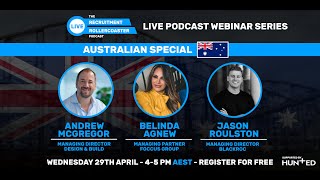
In this live YouTube podcast hosted by Hishem Azzouz, three Australian recruitment leaders—Andrew McGregor (Design & Build), Jason Roulston (BlackRock) and Belinda Agnew (Focus Group)—discuss how the COVID‑19 pandemic has reshaped their businesses and personal approaches. The conversation covers the shift from traditional cold‑calling to content‑driven business development, the creation of personal‑brand LinkedIn courses, the use of video tools like Vidyard, and the importance of empathy‑focused client calls. They share tactics for staying top‑of‑mind with clients (follow‑through, curated content streams, gratitude practices), maintaining team motivation (structured routines, sleep, meditation, gratitude journals), and the future of flexible/remote work. Throughout, they stress the need to align daily actions with long‑term purpose, gather testimonials, and celebrate small wins to build resilience during the downturn.
Chapters
Thank you everyone for joining us. This is the first live podcast webinar on Australian time. So I'm, as Andrew has already pointed out, I'm not in the cupboard under the stairs, Harry Potter style. I'm in the living room this morning because it's 7:00 AM and everyone else is asleep at the moment. So I've been forced into the living room. But really excited to have you all here. Got some great panelists and we're going to really have an open, honest conversation about how they've been finding things in the crazy times that we're all living in right now. And just a bit of housekeeping. So where Isabel has just messaged, all of you guys can chat in there and answer the questions that we may ask you. And then also what you'll see is a Q&A tab. So a huge part of today is going to be about answering your questions. I want to make sure that we get your questions answered. So you should see there that I've put in that Q&A tab, ask your questions here. And when you see someone's question come through, you can click upvote. And that's just basically going to indicate to me that that's a question that you definitely want to get answered and it's a popular question. So As we're talking, please feel free to submit your questions. But as all of you have registered, you've also submitted your questions as well. So I've got those prepared and we're going to be asking those questions. So before we start, let's start with a very quick intro. Belinda, if you go first and let everyone know who you are, what you've been up to, the market that you recruit in, and yeah, and then we can do the other chaps as well.
Yeah, sure. So, um, if anybody that doesn't know, I run an agency called Focus Group. It's fairly new, it's only 2 years old, uh, and we recruit heavily in tech digital talent. We also do, uh, sales as well, but our niche is essentially tech and digital.
Okay.
A lot of our clients are startup, uh, tech companies that, you know, have founded, um, in America and that want to tap into the Australian market. So companies like Kwandoo, OpenTable, Ethica that was just acquired by Mastercard recently, Telstra, Belong, just to kind of name a few. And we do a lot of their contracting roles, temp roles, as well as permanent roles. Life in COVID has been super interesting. Luckily enough, we've been kind of pivoting in angles in many ways, but we're so lucky that we're in tech because, as you know, uh, tech is kind of like a thriving market right now.
Yeah.
Um, so we've had a bunch of roles come in from contracting, from temp roles. Permanent has died. Okay, completely dead. We'll definitely talk about active roles right now, but that's just kind of what's happening in COVID. But we can talk more about pivoting We have launched a course which is a LinkedIn 90-day transformation course for our clients. So we actually transform their LinkedIn profiles, create personal branding for the sales and marketing team, and we charge a retainer model for that. And that's working really well. That's kind of what we're doing.
We'll definitely, we'll definitely dive into those things. I think that's really interesting. A couple of questions have definitely— a couple of questions come through on how people pivoting and how they're adapting. So we'll definitely dive into that. It's really interesting. Well, pleasure having you here. Jason, why don't you intro yourself next?
Thanks, Hishem. Yeah, as the nameplate says, my name is Jason Rolston. I've been in recruitment for 9 years this month, tomorrow month. I run a company now called BlackRock. We're a multidisciplinary recruitment recruitment and we do some exec search. We're only new, the same as Linda's company, only 2 years old. Um, we, we've got at the moment about 14 staff. Um, there's about 4 or 5 divisions.
Jason's breaking up a bit there. You're breaking up a bit.
And I must say, sorry, mate. How's that? Am I any good now?
Yeah, you did break up, but it was okay. We heard most of that, but you did definitely break up, FYI. Yeah. If you've got children, if they're on Netflix, get them off it.
No, I've asked them to turn it down.
They're streaming YouTube.
You're okay.
No, you're okay, but you did break up a little bit.
Yeah, yeah, no, I'm— thank you.
Um, pleasure, pleasure having you here and really great to meet you, mate. As I said, I, um, when I— I think my first year in recruitment, I saw, uh, your, uh, quiff all over my LinkedIn feed, mate, of your content. You're smashing it out. Early days, videos of you on the phone, business development calls a lot. So I'm looking forward to it. Andrew.
Hello.
The bald Andrew.
How are you? Yeah, thanks for that. As probably the hair suggests, I have definitely been in recruitment for longer. 14 years and counting. So whoop that. Managing Director for Design and Build. Design and Build, 15 years or 16 years now. We've got 40 team members across Melbourne, Sydney, and Brizzy. It's broken up between private sector into the construction, engineering, and property space, and then also the public sector space as well. Okay. But it's lovely to see you, Hishem. You're a beautiful man, obviously, as your picture up there suggests.
Yeah, thank you for that.
Every time I look up there, I get inspiration. So it's lovely to see you again.
Right, cool. So before we go into the questions that people submitted, what I want to ask you guys, the first thing is what, what's COVID-19 taught you so far, professionally or personally?
Don't have a baby at the same time.
Don't have a baby at the same time.
Okay, terrible idea.
Okay, anything else, or is that, is that what you're going for, Andrew? Is that what it's taught you so far?
In all seriousness, for me, you know, every day is a new day in recruitment, definitely without COVID-19 being here. I think what it's taught me already is that be proud of what you've achieved. You know, don't forget that you've got to a certain place in your career, whether or not you've done it for 1, 2, or 5 years.
Yeah.
Remember that we all need downturns. We all need to experience these sort of things because it makes us better at what we are and who we are.
Yeah.
So I think what's taught me is that you know what, yeah, it's gonna— it's tough, it is hard, but at the same time, just retain a little bit perspective that this is now, but there'll be a new reality in 3 months' time, in 6 months' time, so don't be too disheartened by the fact that we're going through this right now because there's another side to it.
Yeah, there's light at the end of the tunnel.
Absolutely.
I like it.
Big fat tunnel.
I like it.
Belinda, what about you? How— what has it taught you so far?
It has taught me that content is king.
Okay.
And what I mean by that is, what I mean by that is, uh, I've been creating content for the agency for about a year now, and a lot of people were questioning, I guess, why I was doing that at scale and how it actually was bringing value to the recruitment industry. Um, and it's funny now since, you know, you know, the COVID a lot of people are creating content and are forced to go online in a digital world to be able to create personal brands for their recruitment consultants and for the agency to be able to pivot to get in front of a bigger audience, right? So I definitely think COVID has taught me that content creation, uh, is, is winning for sure.
Okay, interesting. We'll definitely dive into that. Jason, what about you, my friend? What What has it taught you so far?
Yeah, I take both from what Belinda said and what Andrew said. I think this downturn definitely makes honest companies and honest people of ourselves, honest operators. You can't carry on with too much fat on the balance sheet. Sooner or later it'll find you out. But look, a lot of things, but more more specifically, you know, don't take things for granted as well. Obviously, from a life perspective, from a business perspective, you've got to let logic rule a little more than emotion at times.
I like that. I think the conversations that I've been having with UK businesses, I think times like this, it definitely gives you perspective on and a bit of reality check if you've been caught in the game of the sort of headcount vanity of your recruitment business rather than the sort of bottom line sanity. And I think that's, that would definitely put that into perspective for a lot of people. But okay, so some of the questions that I'd really be keen to dive into. So just to set the scene, Andrew, how many people do you manage? And Jason likewise, and Belinda also, and like what are the sort of teams and how many people you're responsible for, if any?
Yes, so I suppose from Sydney's perspective, there's 20 team members. Melbourne's perspective, there's 11, 12 in design and build, and then 8 within public sector.
Okay.
So obviously I don't manage every single one of them. I've got a leadership team in both offices that I rely on heavily.
Okay.
So yeah, they're, you know, doing the grunt work, so to speak, in terms of the day-to-day of the consultants. And I'll obviously catch up with the leadership group quite frequently, if that answers your question.
Okay, no, that's great. That's, that's good for, for me and a good context. Jason, what about yourself?
Uh, 15 including myself. Um, yeah, 15. So there's about 4 teams across that 15 in Brisbane.
Okay. And then that's okay. And then Belinda, is it just—
do you—
is it you and your business partner, or what's the—
no, so we've, we've got, um, 5 people, and we also use affiliate partners to resource for us. So we actually have different model, I guess, to a 360 recruiter agency world. So usually I do all the BD and one of my partners, and we use resources to purely just build up the candidate's portfolio to send out to clients. So there's about 5 of us in total, and then we have 3 people that do all of our content, filming, editing.
Okay, perfect. So, so you mentioned business development. Let's start there because that was one of the most common and popular questions that people asked. Um, so, so the question that came through from Craig White was, what are your key strategies right now for developing business in an economic downturn into what's going on right now? So I guess either through what you're seeing for your leadership team and your guys, or just you personally How have you guys found developing business or your people developing business and how they've gone about it?
Who's starting?
Who wants to take that one?
I guess for me. Oh yeah, if you want to go.
Oh yeah, go on, you started talking, so it's all on you now.
Oh damn, I've taken that. Okay. No. So for me, I actually used to do a bunch of cold calling and prospecting and, you know, I guess relationship building over lunches and dining. I think relationships in Melbourne, most definitely here, it's all about building relationships and maintaining those. But what I found since COVID and obviously I guess 3 months before coronavirus happened, is the content that I've been creating is essentially BD. That's why we create content, because it gives us an audience or gets us in front of people that probably would never answer my call or never would work with us, you know, down the track or even before. So an example was I created a video 2 weeks before COVID and we had a big client reach out to us on LinkedIn and message me. His line was literally, you're on LinkedIn every day, you are in my feed every time I open my LinkedIn profile, we have to work with you.
Nice.
And then we met and we won the deal. So I think content has helped us at scale to BD, but we also do the old school way of like, you know, reaching out and email marketing, you know, cold calling, referrals, you know, just conversation, building network as well.
So, and that, that's still working, like you'll get— that's, that, that's been— that's just still working for you with what's going on right now? In terms of business development within clients?
It's obviously not as good as it used to be. People are, you know, most clients are putting everything on hold. So I think 85% of our roles right now are on hold. We're actually not placing or anything like that.
That's on the perm side?
On the perm side, yeah. Contracting side and temp is a little bit different, but we're still reaching out to people. We're still asking if they need help or any assistance. Is there anything we can do right now to give value to your team or to your company to really just help but support marketing? It's not about selling right now, it's about supporting the clients that we have and, you know, building those relationships again. So the content has been a new BD way. For any of you guys, actually, this is a really good tool that we use as an agency. It's called Vidyard. Yeah, it's like an Odoo. Yeah, Vidyard, it's free. It's a Chrome extension that you can attach on your LinkedIn profile, and you can actually send messages in a video format on LinkedIn to potential clients.
Yeah, that's awesome. It's free as well. I'll definitely check that out. Jason, Andrew, what about you? Either your team, your leaders, or yourself, how, how are you finding business development right now, and how are you approaching it?
Yeah, I'm happy to pick that one up. Um, I think we have to remember that as a society, there's one thing that we love to do as human beings. It doesn't matter if you're a doctor, a nurse, a soldier, a recruiter, which is that we love to gossip. We love to gossip. Any social group wants to talk, right? So for the most part, people are always too busy to talk. They're too busy doing too many different things. So in a time like this, when there's a common enemy such as COVID-19, you can just generally pick up the phone and say, hey, how you going? In Australia in particular, how you going goes particularly well. Don't say, "You're right, mate," because that doesn't work whatsoever. But, you know, what I've been amazed with to a certain extent is that people have stopped picking up the phone and just asking, "How you going?" And I think also consider that recruitment isn't picking up the phone and getting a job. Recruitment is picking up the phone and starting a relationship. You know, someone's always got to make the first move, and it's up to us to do that. So we don't necessarily say, "Hey, how you going? What you looking for right now?" It's more about, "Hey, how are you going? How are you?" finding things at the moment, what's happened in your world? And generally speaking, when people are going through a level of crisis or whatever else, they kind of want to vent, they want to talk about it. And in fact, the feedback we've had from consultants has been, Jesus, actually people are picking up the phone for the first time in 2 years. It's like, yeah, yeah, you've got a common enemy, so it's okay to pick up the phone. But don't think you're going to get a job on the other side of it, you know, just start the conversation and then work it from there. But if you're thinking you're going to get a job on every call, you ain't going to get a job.
So have you communicated that then, and the expectations have now changed on what a successful business development call is?
Well, it's never been get a job on the first call because I think if you get a job in the first call with any client, they're not going to be a long-term client because they'll probably give that job to anyone.
Okay.
And realistically, the best clients are the ones that you have to work on over a period of time. Yeah. I think it's better to get other information related to the client than just a job because kind of if you pick up the phone and they say, hey, here's a job, you've not really found out a lot about their business. So you kind of want to have to work for it. So I would say You know, we've spoken to the guys about what's important in terms of what does the client want from us. It's not what's in it for us. It's you pick up the phone and say, hey, what do you want from me? And then start doing what you're told, which is doing what they've asked you to do. And that's always been our sort of train of thought. So yeah, like I said, in summary, I think client development work is easier than ever before.
Yeah, but it's been human, empathetic, checking in with people. How's it going? Like just having those conversations and Yeah, just building those relationships rather than, right, how can I get a job out of this phone call?
Yeah, that ain't going to be the way. That's the quickest way to, I suppose, insanity in a sense. You're just going to drive yourself mad. If that's what success looks like, you're setting the wrong goals.
Okay, nice. Jason, anything to add? How have your guys been finding business development? How have they been approaching it?
Yeah, so we've adjusted our KPIs a lot. We've decreased the amount of calls that we expect from guys. We've increased the amount of time on the phone. Naturally, that's happened. Just be interested in a talk, as I said. Still the content side of things, as Belinda's touched on. Been doing that for years now and, you know, just finding new ways to offer help and, you know, allow people to jump into our calendars at set times and and get help and service on all sorts of different things, potential recruitment. But yeah, less hit-ups, no harder selling that you probably would do in a business cycle, but more sort of find— you get to spend longer on the phone to them. They're at home, they're not getting chased down by their boss or other people in the organization, so you get more time on the phone with people. You get to find out a lot more things. So yeah, as Andrew said, it's never been a better time to client development work.
Okay, I like it. So one of the questions that Paul Jenkins put through is, so how do you stay connected with clients without annoying them in a slow market? Because it's like, once you've checked in, what are we doing after that? Do you know what I mean? So how have you guys maintained those touch points and sort of continued, yeah, after you've got through to that person? Checked in, then what, you know what I mean? How are you or your guys staying connected with your clients?
So I suppose I'm happy to pick it up. Yeah, go on, Jason, just get in there.
All right, all right.
Nice to work with Paul. Hey, Paul. For us now, it's all about the follow-through. So you have a conversation, you say you're gonna introduce them to somebody, do that, which reminds me I've got to do something. I've got to do that for someone right now. But follow through. There will always be 1, 2, or 3 things out of a 30, 40-minute call that you can pick as a next checkpoint to follow up on. So that's what a lot of our guys have been doing. Matt and Soph are brilliant at that from our company. And so yeah, just picking things on call. You can sort of use this follow-up, follow-throughs and actually follow through.
Okay, I like it. Well, Andrew, Belinda, anything to add to that? What are you guys doing to ensure you're staying connected, front of mind? Yeah, having enough touchpoints, staying in touch with people.
I can't actually hear Jason, but—
Oh really? Jason, we can hear you.
I can't hear anything Jason is saying.
Really? Jason, we can hear you. Okay.
I can hear you, Jason. It's funny, but one of the things that, you know, you find with, you know, colleagues that you work with through the years and, you know, recruitment professionals in general is the lack of follow-up and the lack of consistency. And I think again, that's expectations setting about what you're trying to get from the first, second, third, fourth, fifth, sixth, seventh, eighth, whatever call you're going to make. It's following through on what you said you're going to do. But I think also, you know, if you're a smart business and you've got a lot of content, you kind of want to start getting them into a bit of a content stream where you're sharing content that you've promoted on your social sites and sharing that with your clients. And then think about the client as well. So if your client is a health and safety manager, don't share content in relation to architecture design because, with the greatest respect, they ain't going to be interested. But if you're sharing content with them that's relevant to health and safety, they're going to kind of start to pay notice to that. So think about the content you're sharing because there's plenty of content out there. And, you know, Design and Build, you know, we're proud of the content we create. You know, we've got 50,000 followers now and, you know, we try and post content pretty much every day. But then look at what content engages your network. Look at the click-through rates, look at your impressions, look at your engagement, and then start to curate that over a period of 2 to 4 weeks and then share that with your clients. Because the ones that are engaging the network socially, that will do the same with your clients. But most of all, just do what you're bloody told. You know, trust, trust takes time to build. And your opportunity in that first call is to make, you know, start, you know, an impression on someone or perception. But how you then operate after that leaves the impression. So if they say, look, don't call me for this time, don't call them the next week or send them a CV of some random a week later because that ain't going to work. Do what you're told. And generally what I found was even when starting Sydney in 2012, starting my recruitment career, it kind of was like, call me every 6 weeks. And then towards the 6-month point, year point, they were happy to hear from me for a bit more, a bit more frequently because I've done what I was told. And I think sometimes, you know, whilst we're ambitious and we want to do well and succeed, we're also a little bit impatient. And I don't think impatience right now will actually wash at all with anyone.
Yeah, no, that's good. I think, um, so we've spoken about content a lot, right? So let's talk about this, um, for a second because there might be a lot of people watching this that never made a piece of content ever, and you're saying, look, content, content, content, right? Which I get, and obviously I'm in that game as well. But just how I want you to think about this is with the question that— hopefully I pronounce this right, but Hina Aheatam, sorry if I pronounce that wrong. So she asked a really interesting question. I think content's part of the answer to this, so it'd be good to get your thoughts on this. So she asked, within Sydney, when this is all over and work picks up, clients are hiring again, there will likely be a scramble from all recruiters to represent and place stronger candidates who've been made redundant or are back on the market. And obviously, yeah, things are moving more. How do I give myself the edge, the self-edge, over my competitors in being a candidate's go-to recruiter? I guess a lot of people will be thinking about that right now. How can I ensure that I'm front of mind, I'm the person that people call or go to when this starts picking up again? Personally, I think obviously content is part of that, so let's definitely talk a bit about that and we can go into that. But what are you— what are your thoughts on that? How can recruiters make sure that they're the go-to when we start bouncing back out of this? Because everyone's going to be wanting to— yeah, it's going to be a busy time hopefully for a lot of people. But yeah, what do we think about that? What's that?
Sorry, who do you want to throw it to? When you ask a question, I think you should direct it to someone to start off.
Okay, I'll do that. But Belinda, what about you? Obviously I know that, um, he was gonna speak, so I can't hear Jason.
I can't hear Jason. I'm so sorry. Um, you know, I definitely think going back to personal branding, it's about building a personal brand. Um, And this goes for all consultants, you know, out there, or even like owners and agencies, they should all be building a brand because brand always stays. And as you know, content creation, LinkedIn is organic, it's free. But if you want to take it to the next step, you can start putting funds aside for marketing budgets where you can organize a business manager and start paying for ads like Facebook ads, Instagram stories, Instagram ads, pushing it out to the right audience and actually narrowing, narrowing it down to who you want to target, whatever your industry is. So I definitely think it's about building a personal brand and sharing the pieces of content that you're doing on LinkedIn, Instagram, Facebook into messages of potential clients that may, that may add value to that client or that candidate in that industry. So I definitely think it's content at scale. As you know, you probably agree, Hishem, but yeah, definitely building a personal brand and awareness in that industry to be known as like the thought leader.
Okay.
The person to go to.
Okay, right. So if I'm watching this right now and I've never made a piece of content and like, okay, right, I'm gonna listen to these guys. I'm seeing I've got more time on my hands. I'm gonna start creating content. What's your sort of go-to? Because I'm sure you get asked this question all the time. I'm worried about blending in with the coronavirus noise. Don't talk about coronavirus. I've, I might have posted about my work from home setup. I've done that post. So what, where, where do I start? What's your sort of go-to advice for that?
I think you need to start, you know, that's where you need to start reading like articles in your industry. So for me, I'm in tech and digital. I follow a lot of Business Insider articles, TechCrunch, a few HR tech articles as well where I get a lot of my topics and ideas from. I also follow what's happening in the industry or I reach out to recruiters, just conversation, having conversation. When you start doing content, everything is thought in content. So me having this conversation now, there's topics that I could talk about in my next post next week on LinkedIn, having a conversation with you guys. It's about having conversations with people in the industry and reading about topics in your industry to create content, you know, that may add value to that person. But it's definitely hard to pick topics, um, I, I agree. But it's about reading more, that's what's happening in your industry, to be able to create more content.
Okay, so, so, okay, that, that, that's, that's interesting. Andrew, what, what, what, yeah, what, what are you— I'm sure you're speaking to your people about this, like how how and what should people be doing to ensure that they're the recruiter that people call when this starts picking up?
Yeah, look, and we have, and I think we have done for a long time, but I sort of break it down in terms of personal brand and, you know, what are the things that you want to be seen as? And so I think you want to be seen as a specialist. You want to be seen as dedicated. You want to be seen as knowledgeable. You want to be seen as informed. You want to be seen as well networked. But it's all well and good to be seen as that. But you need to back it up. So if you want to stand out from the crowd, think about when people go and buy products. Generally speaking, they buy it off the back of a referral from somebody else. So if you haven't got testimonials from your previously placed candidates and you haven't got clients giving you references and giving you testimonials, but you want to stand out, that's where you want to start. Because ultimately, people want to know that what they're buying from you, there's a level of you know, it's been referenced, you know, people know that it's respected, it's trusted, and you've got that to back it up. Because like I said earlier, I think you can build perception of people on branding, and I think it's great, but it's the impression that you leave. That's what, that's what your brand is. So, you know, we talk to the guys a lot about, well, every single person you've placed in a role, why have they not recommended you on LinkedIn? Because realistically, they should be able to do that for you if you've done the right thing by them. That's where it's got to be. Same with the clients. If you continue doing the right thing by them, They should be the one to help you survive in this market so you can thrive on the other side. You know, if you refer to my LinkedIn, you know, granted I don't do much recruitment anymore, or I'm failing miserably at the moment at it. I asked everyone for a recommendation, but then I was on LinkedIn in 2006 before I was on Facebook. So, you know, I'm showing my age. But if you want to stand out, you've got to help people stand you out. You've got to get references and sort of raise your profile in that manner. That's sort of what we've been talking about to the guys is it's great saying it, but you've got to back it up. Where's your capability statement? Where's your evidence to back it up?
Yeah, no, I really like that. So yeah, remaining visible, personal brand content is definitely part of how you can ensure that you're the person that people call when things start picking up. And then also, as you said, are you someone that genuinely cared about these people during this difficult time? Are you someone that followed up? Jason said, and actually deliver on the way you're still trying to be perceived online. So you can be found, like, you're one comment away from being found out, right? Which is the great thing about it, I think. Okay, Jason, anything to add, or I'll hit you with the next question? Okay, I like that. So Jason, what I wanted to ask you, and then I'd love to get The other guys talked on this, so another real popular question that came through from different people was remaining motivated and/or keeping your team motivated. I think I've definitely struggled, I have good days and bad days with this, working from home, as you can tell I'm in the living room under a staircase, so it can get a bit difficult sometimes, but like how have you been sort of how have you been trying to make sure that you keep your team motivated and or even yourself? What comes up for you?
You still can't hear me, can you? No.
No. Well, we can hear you, mate. We can hear you.
So good.
Yeah, we can hear you fine.
All right. The number one thing for me is structure. So working in real estate when I got out of high school, The biggest ballers, the best listers, the people that I have aspired to be like and I've built companies some of them like and so on and so forth, all have really good structure to their day, very disciplined. And whenever they're not feeling great or they're not getting the results that they want, they fall back into that routine. I used to poo-poo routines. My parents, my mother used to always push me into that at school. And I used to think that was a— I don't need to do that because mum's— that was when I was a kid. But the more I learned and listened, I learned that routine and having a good structure to your day is the framework to success. It's one of the most underrated strategies to success, I personally think.
Okay. And let— okay, definitely. And I think also just in times like this, getting dressed as well helps. But, um, what, what, so what, what, what, what are the tip— what are the typical types of structures that you're encouraging people today to do right now? Or what does a typical structure look like for one of your consultants right now, or even for yourself, that might be good for people on how, how you're structuring things?
Yeah, so sleep, uh, we've got a bit of a sleep project that we're rolling out through one or two of the teams here and might be through everyone, it's up to them. But there's a group here that are doing a bit of a sleep project. That means we're trying to hit the, what we call the LeBron challenge, and it's 8 hours a night.
Wow.
As much deep sleep as we can, good REM, but you want to get as close to, or thereabouts, as close to 8 hours of sleep. Yes, I know people are going to say that's not optimal for everyone, for us. But we start there. So, you know, wind down sort of 8, 9 o'clock, get to bed early. And then you can, you know, allows you to wake up and sort of start well. I've experimented with lots of different things over the past few years. I'm a big Tim Ferriss fan. And what I've found is some sleep just has, is the, for me, and for a lot of people I know, is a key catalyst in sort of eating right, thinking right, acting right, etc. Yeah. So yeah, when I wake up, I have an hour gap between not going on LinkedIn or checking inbox or going on social or returning any text messages and just do some Headspace meditation, 3, 5, 10 minutes. Okay. Go for a walk. I've just recently got back into cycling. So just, I don't want to go into too much depth, but that's thereabouts. Where I start.
I think I'll get obviously Belinda and Andrew your thoughts on this, but I think what's great about that, Jason, is you're making sure that you're getting the work-life balance right in times like this. Like, for me personally, I've worked— I've said a couple of times now, I've worked in every single room of this house besides the bathroom. So what I've found really difficult is switching off. So, so you're right. So obviously I walk into the kitchen after I've finished work and I've worked there all day. So, you know what I mean? Whereas before, when I left the office, that's when I left work and I found that quite easy to do because there was that just experience of walking, leaving the office, going home, and then that's when I was going to be. I just found that easier to be present. But I've definitely found that harder. But I love all the things that you shared there on how many, how many recruitment business owners tell people to sleep. Get enough sleep. So I think that's a great thing to advocate, to be an advocate for. But Andrew, what about you? How, obviously, as you said, you've got your leadership team. How are you communicating to your guys and people on to, because they're gonna have to keep their teams motivated, which I know can be difficult with what's going on right now. So what are the conversations that you're having with people?
Um, look, I'll come on to that in a sec, but obviously Jason, it's funny talking about sleep, but I think I've had about 4 hours in the last 6 days. The baby doesn't like you to sleep. But, um, so yeah, that's great. And, um, look, two things, um, you know, what are my, what are my tactics? Um, I think at the end of the day, write down what you're grateful for. Um, recruitment, whether or not it's COVID-19 or whether or not it's, it's pre GFC, best time of your life. You generally, 90% of the time, you're not winning. You know, unfortunately, we're lunatics in a way, but you don't always win. So write down the things that have gone well in the day, be grateful for that. But also write down things you're grateful in life that aren't related to recruitment, because there's plenty of good things happening in the world.
Yeah.
I think, you know, in terms of mental health, you know, I do meditate, I do have a morning routine. I do that every morning, subject to when the baby lets me. So there's certain structures that I try and implement, but I say to anyone, you know, at the end of the day, just make sure you write down what good's happened today because there is good in it. And in fact, your brains are trained to look for the negative because the media are absolute bastards and they like to do that to you. But if you start practicing what's good in the world, what will happen every day is you'll find better things to look at, good things, and it just starts to happen naturally. Whereas you think about the bad, all you think about is the bad. So I encourage people to do that. And that's the sort of structure we've implemented with the team leaders and the teams is we'll do morning catch-ups in relation to what's on for the day. And then we'll do sort of an afternoon sort of, hey, let us know how your day's gone, but let us know what's gone well. Don't worry about the bad shit because you know what, it is what it is. Write down what could happen today and then look at the potential in that. So that's sort of what we've tried to implement. For the most part, it's gone relatively well. Don't get me wrong, I think we'll look back and there'll be things that we could have done better. There's things that we wish we wouldn't have done. But all in all, my summary is be grateful for what you got. Don't necessarily worry about what you haven't got.
Just out of interest, and then Belinda, I'd love to get your thoughts on what you're doing to remain motivated and things like that, because I think that can be a real challenge for people. But just a quick one, Andrew, because it's come up quite a lot. What— so you mentioned about getting your leaders to tell you about the good stuff. What does that good stuff look like now? Because I feel like it's the small wins that are important to talk about and communicate right now, whereas maybe 3, 4 months ago when your leaders go, oh, I had 10 conversations today, that may not have been as good of a win to where it is now, do you get what I mean? So I guess what have been the wins that you've been celebrating? And is that— yeah, I think that's interesting.
I think we celebrate anything that's got potential. You know, ultimately we're eternal optimists, recruiters, for the most part. That's why we do the job that we do, and that's why we still do it 15 years later, is that we've got this eternal optimism. So we see the best in everything and the best opportunity. And don't get me wrong, I even think pre-COVID-19 it wasn't about the 20 good conversations, the 20 conversations you had that day. It was about the one great one, you know. It's, um, you know, in terms of jobs, I talk to people a lot about jobs they've got and they're like, I've got 20 roles. I couldn't give a monkey's how many jobs you got. I want to hear about the one that you're going to fill, the one that you can add value to.
Okay.
So I don't necessarily know that that's really changed. I think we're just trying to highlight it more. So all the guys do their reports at the end of the day and the next day we celebrate everything. Everything. We talk about any good stuff that happens, and then we talk about it socially as well, obviously, on our LinkedIn feeds, etc. else. You know, one of our standards as a business is celebrate success, and success can mean so many different things to so many different people. So just celebrate everything, because like I said, whether it's COVID-19 or not, 90% of the time we're being told no. Yeah, the 10% of the time we're being said yes to, then bloody well celebrate it.
Yeah, I think, I think, because I've been speaking to a lot of recruiters and recruiters that I think some of the challenges that I've been hearing a lot, which is interesting, is that good recruiters will know what outputs they need to do to get them to or have the opportunity to achieve what they want to. And I think obviously in the current market right now, the outputs that you're used to putting in, you may be putting in more, you may be putting in the same amount, but there's a good chance you're not going to get the outcomes that you'd normally expect. And that can be quite difficult to swallow, right? That can be difficult to swallow when you're sat on your living room table smashing it out and these types of things. So I was just interested to see, I think that's a great ethos that you have and I think it is about celebrating those small wins. So I was interested to see what you said about that.
Everyone needs to remind themselves that this is going to make them a better recruiter, not a worse recruiter. Why? So everyone who gets to the other side of this is going to be way better at their job than ever before.
Why?
Because we're going to learn how to talk to people We're going to learn how to manage our expectations. We're going to talk about more content. We're just going to become better at what we do because we're going to think about it more. Because for the last 5 years, with the greatest respect, and obviously I'm talking construction, engineering, property, you just picked up the phone and people are giving you jobs. And that's been pretty bloody easy at times for the most part. So we get through this to the other side, it's going to make us better at who we are and what we're doing. I saw that in the GFC, you know, I saw that in the recession, as we call it in the UK, where permanent teams went from 20 to 2, but the 2 that survived were way better at it. So I would say, remember that, continue to focus on adding value, but you'll get to the other side and I think you'll be better at this job and that will make you a better recruiter.
Like that, mate. Belinda, how have you been remaining motivated and keeping positive through this period?
Oh, like, it's definitely been hard, that's for sure. But pre-COVID, as you know, in recruitment in Australia they call it razor blades and champagne.
Okay.
Is it? Yeah, razor blades and champagne, right? Is that what we call it in Australia? Champagne, yeah. Yeah, that's it, that's it. Champagnes and razor blades. So you have your days where, you know, you can pop a champagne and celebrate, but you also have your days where you're just like, what is going on? I'm losing my mind. And that's literally how I feel on a daily basis, even in COVID. But keeping motivated, I'll just add to Andrew, I definitely think it's living in the moment and what's happening now and being grateful for the good things that are happening rather than reminiscing or overthinking the bad things. Because that can create negativity on yourself, on the team, on the company, on the brand. And people can see and feel that. Feel your energy, um, even if it's just over the phone or a Zoom call, people can, you know, sense that you're, you're in a negative, uh, energy. So I definitely think, you know, being grateful for the things that are happening good for you, um, and just, you know, meditate, do the simple things, go for a walk around the park, you know, enjoy nature, take your dog for a walk, read books that you may have in your house that you haven't read. You know, I'm reading The Power of Now right now.
It's a game changer book.
Yeah, it's a great book. So it's under— it's hard to read at first. Oh, you've got it?
Yeah, it's a different one, but it was, uh, yeah, fine. Yeah, yeah, that— the, the power— The Power of Now, the second time I picked it up, I really sort of got with it. But the first, the first, the first part of it's quite difficult, isn't it, to read sometimes? Yeah, very good.
Okay, but yeah, just living in the moment and, and the power.
Okay. This is probably the most— this is the first time that probably the meditation has been mentioned the most amount of times on the recruitment podcast. I think it's great. Yeah, I think that's awesome. I absolutely love that. I think, I mean, at the end of the day, how many recruitment business owners would have been speaking about meditation 4 or 5 years ago? Do you know what I mean? I'm telling Jason that I haven't hit my KPIs and I need to meditate and he's going to shut the fuck up and get back on the phone. Like, what?
I think that's great.
I think that's absolutely absolutely awesome that you guys are talking about these things. Um, so what, what I wanted to, um, get your guys' thoughts on as we sort of come to the end of this is start sort of thinking about— we're just talking about it there, Andrew, on what things might look like on the other side and how things are going to change. So, so one of the questions that Matthew Wilson submitted, and Jason, I'd love to get your thoughts on this, and we can go on this. So, and, and this is something that's come up quite a lot in, um, the, the UK as well. So what do you guys think about, will more flexible working be supported to employees now they have proven, some may not proven, that their ability to work remotely is possible? Or do you think it will still be a bit of a, he's put taboo subject? I think just to add to that, a lot of business owners in recruitment or even in your markets may have had the mindset before this that 'No, I'd rather my people in the office. I want to see if they're cracking on and I'd rather that. Not sure about flexible working or work from home.' But I think a lot of those, obviously their hands being forced, right? So I guess, Jason, what— how do you think— maybe we could start with the recruitment industry or even sort of your markets or what you're seeing. How do you think the sort of flexible working, remote working to be impacted when we start coming back out of this?
I mean, no one really knows, but I think if this goes on for another few more months, which it easily could, there's some terrible speculation about a second wave and all that sort of thing. But I think if it goes on for a few more months and a few more months or even another quarter or so is put through and people inside of recruitment and outside of recruitment can sort of prove to really hold their own, I think that it's gonna put a lot of really interesting pressure on commercial real estate around the world. A lot of people I'm speaking to now are saying things like if projects get delivered or if people can really prove that they can step up to the plate and do what's asked and even go above and beyond, that flexible working will most certainly be an option going forward. I think for younger recruiters, I know in the recruitment industry there's not a lot of senior recruiters that move from agency to agency as much in the last 5 or so years. You still got to build your organizations by finding juniors and people fresh to the industry. So I think being around someone in an office will be somewhat necessary. That takes a scale. We've got a 500 square meter office and will I re-sign that when that's due? This is making me here reconsider things.
I think a lot of people will be thinking that. So I think a lot of people will be looking at that and going, well, hang on a minute, do we need all this space? Could we? Do you know what I mean? I think that's really interesting. Okay, Andrew, what are you thinking in terms of, yeah, particularly flexible working or just as a whole in terms of as you start coming back out of this, what are your thoughts?
Yeah, our vision is to be the most trusted recruitment agency in Australia. And so if we can't trust our people, then we're kind of failing at the start of it, right? So we've already had a policy in place related to performance, but I think realistically—
What, when working from home?
Yeah, yeah. So basically we've put it on, hey, you know, we can see that you're a consistent high performer, so therefore, you know, we can have this in place. And in fact, we've had it in place for most of our senior leadership for a period of time anyhow. So I hope that we can implement something that will work not only for the consultants but the, the business as well. I think Jason's made a great point in that you can learn a lot from podcasts, webinars, you can learn from training, but you learn the most from your colleagues. You learn a lot on the floor, and so the last thing you need to do is remove that. You know, I think it's well known that, what is it, 80% of training is done in the room, and don't for one second devalue that. It's incredibly valuable. So if you do have a work-from-home policy, etc., be conscious about how many leaders are out at any one time, because a lot of what I learned was a call was made, I said something, or maybe said something else, and then the leadership, the leader would say to me, "What did you say?" And I imagined I said one thing, and in fact I said something completely opposite to that. So there's a balance in everything. And like Jason said, I think the lesser experienced consultants need that support, but the more senior ones do need a little bit of flexibility. But you've got to meet in the middle because the juniors won't learn, they'll only learn off the seniors. So be very mindful of that. That's all I would say to any business owner anywhere.
Okay. And then obviously, Belinda, for you, it seems like obviously the business that you've been building, it's been, it has been quite flexible and you've been really open to not do it in a traditional way. So I guess what—
yeah, yeah.
So I think obviously, which is really interesting. So I guess how— yeah, your thoughts on flexible working, is it going to stay? Like, I don't know, what do you think about that?
I definitely think it will stay. You know, speaking to digital agencies because they're kind of my core clients and a lot of them are also giving me the same feedback that we don't need the big space anymore. Our staff are super happy, they're mentally stable, you know, they're getting a bunch in and, you know, getting more family time and they're super productive as well. You know, obviously for sales and marketing it's probably a little bit different because you can't interact with each other because we're kind of that personality, but I definitely think we will start to see more of a flexible, uh, workflow for sure. Um, and you know, as I said, as, as you guys were saying, you know, with productivity, it's definitely going to, to rise, and it has risen for us and for agencies, for digital agencies, for tech companies. And a lot of the engineers and contractors were already working from home anyway.
Yeah.
So, um, because they were working on certain projects for whatever they're developing.
Yeah, that obviously helps in your market, doesn't it?
Yeah, so I don't really— I can't really say too much about that because flexibility was already a thing for us.
So, okay, cool. So just go on, Andrew.
One thing from a recruitment perspective is a people business, you know, and we thrive around each other. So be mindful of that in your decision process. Not yourself, by the way, I'm just talking generally. Be mindful of that. And secondly, remember that whenever you survey people and say to them, what keeps you coming back to work, they'll say it's the people.
Yeah, yeah.
Let me just add— yeah, no, sorry, we're cutting each other off. Let me just quickly add to that for one second. Recruitment, like BD, the 360 recruiters, were all out on the road anyway meeting with clients and candidates. We're never in the actual office. We're having coffees, we're having lunches and dinners. So, I don't really see, you know, I get the whole, you know, resourcing and all of that, but a lot of the BD guys and the 360 recruiters, they're all out on the road most of the time, you know, trying to get in front of clients and candidates that can't come to the office to interview.
Yeah, it's certainly market-specific, isn't it? I mean, ultimately, You know, when you live in a certain world, there's a certain way of doing things. And I think, yeah, you're right in that if you're in tech, it's going to be different to health, to different to accounting and finance, different to legal. There's always a balance. And I think that's what I would say to everyone is just make sure you consider the balance between out of the office and in the office to ensure that you're meeting everyone's needs.
Yeah, no, I think that's a good point. I guess as we wrap this up then, I guess what would be great to just get all of your thoughts on, Andrew, if you go first. We've just lost Jason. But I know Jason's still there, but we'll work it out. But Andrew, I guess just as we finish this, what would be your sort of parting words to people on sort of what would you be— if everyone listening right now was sort of in your team, what would you be saying to them and for them to be thinking about over the next couple of weeks or the short to medium term? What's your sort of go-to advice for people to power through what's going on and rise to the occasion?
Yeah, look, Matt put it earlier actually on one of the comments where you talk about short, medium, and long-term goals.
Okay.
I think you've always got to ask yourself, and again, pre-COVID or COVID-19, whatever your long-term goal is, every conversation you have, ask yourself, is this adding value to that long-term goal? Because if it's not, don't do it. Just focus on that long-term goal. For us, being the most trusted recruitment agency. So whatever we do in every day that we do, every hour, am I doing that or not doing that? Because if you're not doing it, don't worry about it.
Yeah.
Focus on that. So just focus on the long-term goal and make sure what you're doing today is adding value to that. Because as long as you're doing that, you're making steps forward every day.
Yeah, I think, yeah, I think that's a great point.
Really well said, Andrew.
I think that was awesome. I think, yeah, I guess so really. Thinking about what— yeah, really understand why you're doing this, what your purpose is, is going to really help you power through and rise to the occasion with this, right? Belinda, what would be your parting words for people in terms of getting through this, what the opportunities are, what people should stay focused on? What would you say to the people?
I really think it's about, you know, I don't want to get too— Am I frozen?
No, no, we can hear you. We can hear you. There's a bit of a delay, but we can hear you. Hello. We can hear you.
Oh, you can. Can you hear me now?
Yeah, all good.
Hello.
We've got you.
Can you guys hear me?
We can hear you.
Technical difficulties. Yeah. So I think it's definitely about— you just took me off track here.
Sorry. Sorry.
What was the question again?
So like, what would be your sort of parting words to people on sort of what they should be thinking about right now, what they should be focusing on? What would you say to people? What would your advice be for people to get through this and Yeah, to power through what's going on.
Yeah, I keep adding to Andrew because Andrew's making such good points in this. I really think it's about bringing it back to why you're actually doing what you're doing and the core purpose to what you want to achieve in the market, in the industry, and as a person as well. I think a lot of recruiters and a lot of people overall, a lot of people are doing jobs that they don't really want to do. That is doing it to have an income, right? And that's the actual truth, and that's why we're in positions we're in. But I think recruiters need to kind of think, is that— is this really something that they want to do, and why, and what value they can provide, I guess, moving forward to create that brand.
Like it.
Jason, we did lose you for a second. Good to have you back. So what would be your words of wisdom for people? What should they be thinking about focusing on over the next couple of weeks, months? What would you be saying to people?
I guess firstly, it's understanding if this is the career or the industry you really want to be in. And I think if you're not sure, it'll probably— nature will probably take its course and sort that for you. But To say something different, because Andrew and Linda both had really good points. As an owner, I think it's important if you're able to, to really reassure your team. I've been fortunate enough to do that here with the teams we've got for the next 12 months. I know some other companies are doing it longer or whatever the case is. Set a timeline in place and give some security and assurance to your team. I know that the best thing that I've done here is overcommunicate. So, certainly group meetings, mini meetings, and we do our mornings and afternoons up all the time anyway, but overcommunicate. And yeah, just what Andrew said, you know, break your time down and only focus on the positives. Take it a day at a time, but obviously have a long-term perspective and don't sort of listen too much to the media.
Awesome, Jason. I think that's evil. Yeah, I think, um, I think that's, I think that's great advice. Overcommunicate. I think that, that, that's, that's awesome, especially as a leader. Um, well, look guys, I was a bit worried at times, technical difficulties, but we made it to, uh, the end. So I guess I just wanted to take this opportunity to say a big thanks to Andrew, Belinda, Jason, um, for coming on I think you've been really open and honest. I can't believe how many times we've spoken about meditation, mindfulness. I think that's awesome. And yeah, I think it's, it's been great. So everyone that's joined us, big thank you. I hope obviously you got some value out of this. I will definitely plan to do a couple more of these as well, but it won't be until a couple of weeks. I don't have to wake up as early again for the next couple of weeks, which would be nice. Um, but honestly guys, thank you so much for all of you. Um, and yeah, I just wanted to say keep going, stay safe, and we'll get, we'll get through this together. So a big thanks guys.
More from Hishem




You don't need as many clients as you think to bill $1 Million A Year In Recruitment



From 30 Direct Reports to Back-to-Back $1M Years as a Solo Recruiter with Zach Creighton



