LIVE Podcast | Become a Top Billing Recruiter No Matter The Market
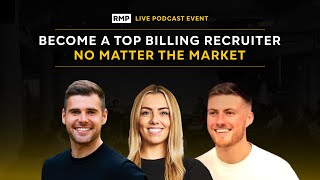
In this live, moderated panel, host Hishem Azzouz (Recruitment Mentors Podcast, founder of Hector) brings together three seasoned recruiters – Jack (co‑founder of Confera, SaaS & cyber recruitment), Phoebe (founder of Dot Recruit, accounts & finance recruitment) and Elliot Jones (head of contract US recruitment at Venturi) – to discuss practical business development (BD) tactics that work across market conditions. The conversation opens with a framing of the event’s goals: inspire attendees, deliver 1‑3 actionable strategies, and share honest challenges. The panel defines the non‑negotiable pillars of a modern recruiter’s BD strategy, emphasizing a candidate‑first mindset, multi‑channel outreach, and structured BD “buckets” (hot‑lead list, fan‑club of trusted clients, and PSL/permission‑to‑sell accounts). Each panelist shares how they allocate time, segment activities, and use market‑mapping to target high‑bar‑to‑entry employers. The discussion moves to turning senior candidates into clients, referral partnerships (including revenue‑share agreements), and the importance of adding value before asking for business. Practical examples include coffee meetings with finance directors, tracking client‑visit conversion rates, and using content‑led outreach tailored to decision‑makers. The group also tackles mindset topics: daily non‑negotiables, self‑care, handling performance slumps, and the role of managers in coaching versus KPI pressure. They reflect on the “bounce‑back” after market booms, highlighting the need to diversify client portfolios, maintain client relationships during busy periods, and build trust through consistent, value‑first interactions. The session ends with each panelist stating a core principle that endures – Jack on personal well‑being, Phoebe on doing the right thing for candidates and clients, and Elliot on accountability and effort.
Chapters
Right, cool. Hello everyone, lovely to see all of you. Um, obviously we've got a slight delayed start because I think a lot of you ended up in the car park. Um, so, uh, that's, that's a lesson learned on this one, but it's a new building so it is pretty cool in here. Um, so just to give you a bit of an idea of what we're going to cover do a short intro and then we'll welcome the guys onto the panel and get stuck in. But could you very quickly just put your hand up? Is this the first, like, live podcast event that you've been to? Would you mind? Just— oh wow, quite a few people. Okay, cool. Um, awesome. So the guy— the guy— what's the guy at the end there? Are you closing some deals, mate?
What's going on, bro?
Huh?
Okay. All right, mate. Uh, all right, mate. So yeah, so basically just to do a quick intro and then we'll get into it. So for those of you that, um, don't know me, my name is Hishem Azzouz. One of the things that I do is host a podcast called the Recruitment Mentors Podcast, and I'm on this sort of big mission to change the perception of recruitment industry, which hopefully a lot of you guys can get on board with. I think one of the ways that we can do that is by making training and education accessible to everyone. I think if more people learn how they can be great recruiters rather than just learn shit habits from people around them, then hopefully we can, you know, raise the standards collectively. Which is why I always commend people that get involved with the podcast, that do things like this, because they're, they're sharing with us all how they've achieved what they've achieved. And then as well as the podcast, I also started a business called Hector, which is an online training platform that follows that mission as well. So we haven't quite got like the walk-on music which these guys wanted, but if we could give a big round of applause for the panelists and then we'll get into it.
Hello, hello, all good?
Yeah, can we hear you? All good? Ryan, is that all good? Sweet. So what we're gonna do here, when we prepared for this together, we said with each other like, what would we want people to walk away with that we feel would make this event successful? So the goal tonight is we want all of you to walk away feeling inspired, number one, to be part of a brilliant industry. Two, we want all of you to walk away with at least one to three practical strategies that you can all implement in your desk tomorrow, in your business tomorrow. And lastly, I'm going to make sure that these 3 people here are honest with us and they share an honest account of their challenges. And I'm not here talking about record quarters and record months because I think we get enough of that on LinkedIn. We want the reality of it. So we'll do basically some short intros. I'm going to do some question and answering and lead this for the first like 30 or so minutes. And then once we're done there, we'll do some live Q&A. A lot of you submitted questions, so I've got a bunch of your questions in front of me. So I'll ask some of the questions that some of you submitted, and then for those of you that are brave enough to put your hand up, we'll then do some live Q&A as well. But Phoebe, if you could do a short intro for everyone and then we'll get stuck in.
Okay. Hi guys. Sorry, I'm like so nervous, but I'll be all right in a minute. I'm Phoebe. I've been in recruitment for 11 years now. Accounts and finance recruitment for that whole time, and 5 years ago I set up Dot Recruit.
That's me.
And you're perm recruitment, right?
Perm in Lancashire, yeah, in the Northwest.
Cool.
Elliot? Hi everyone, my name is Elliot Jones, I work for a company called Venturi as head of contract US recruitment, been in recruitment for 8 and a half years now, so yeah, that's me.
Last but not least?
Hi guys, I'm Jack, I've been in recruitment for just coming up to 10 years now, pretty much all of that time has been within the go-to-market SaaS and cyberspace, and most recently set up, along with a business partner, a new brand called Confera, which is doing exactly that.
Awesome, mate. Right, so when I looked at the questions that a lot of you submitted, the first place that we're going to start is, um, business development. Um, so I'm not sure if you're surprised by that, but most of the questions that a lot of you asked was around how can I get better at winning better clients, um, working with more committed clients, uh, these types of things. So We wanted to kickstart talking about business development, and I think just to frame what we want to talk about here, a lot of people often want the silver bullet. Like, we, you know, there isn't one thing that you're going to be able to do that completely changes your billings from, you know, 10x your billing. So with all of these three, you've heard how long they've done recruitment for. I think the way they want to be thinking about this is like, what are the first principles? What can we continue to do over the long period of time that should result in success? So just bear that in mind, but hopefully there'll be some things that you can immediately take away that can give you some immediate wins. But, um, Ellie, I'm going to start with you if that's okay. So we wanted to kickstart this by just like a bit of a question around like from your perspective, like what do you believe are the sort of non-negotiables when it comes to a modern day recruiter's business development strategy? Like what are the sort of non-negotiable pillars of a BD strategy in today's market? What, what do you think those are.
We talk about like business development and everyone straight away thinks about like clients, and for me, candidate's king. That's where all your information comes from. If you're talking about a BD strategy, that doesn't start with your client calls, that doesn't start with how you approach clients. This stems from all of the work that you do with your candidates to generate leads, build sales on candidates that are going to allow you to open doors with clients. The information that you gather from your candidate calls, that is BD. If you're approaching candidates with BD in mind, you're going to come out with valuable information that you can actually use to convert it to the BD side. So absolutely starts with candidates. Everything you're doing from a BD perspective, or for me personally, everything I do from a BD perspective comes from candidate information. What they tell me is gospel, but then from the client side, it's really straightforward. Like, this isn't a difficult job, it's just made difficult by working with people. For me, it's how much output can you do with a high level of quality to equal those results. Output plus quality is always going to lead to success on the BD side.
So yeah, I think, so basically, be silly to think about BD without thinking about candidate networks and what we can do there. Jack, what have you got to add to the non-negotiables?
I think, I think you make a really good point there about the, the candidate side. And, um, and just on the candidate side, we talk about the non-negotiables there, and you talk about the outputs and what we get in business development. I think a lot of people almost create like busy fools of themselves when they put in their diary like, I'm going to do BD within this time every single day. And just, it just looks really good from your manager's perspective. Perspective, looking into your calendar. But I think we need to be really, really disciplined about how we're spending that time within that. And I think one thing to really, really focus on when it does come to blocking out those, um, parts into your diary is, what do I want to get out of those times? Is it a certain number of CVs out the door? Is it a number of certain candidate conversations or lead generations?
One.
And then on the other side, when we talk about the types of business development, you mentioned at the start, Hishem, there's no silver bullet to this. So are we trying and are we using multiple different channels of business development, or are we just using one and just hoping it works? Are we speccing candidates out to market? Are we speaking to good senior candidates? Are we picking up the phone and cold calling and chasing down that lead from that side? So I think the biggest thing that I would say from this, from my answer, is, is are we trying multiple different approaches to business development?
So having a multi-channel approach is key. And then Phoebe, why don't you round this out with— I think the way that you broke it down, I really like, in terms of the You've got your, your fan group of clients, and then you've got your fan club, and then what was the other group? You can tell us about that because I think that'd be good.
I think what you guys both said there, I like really, really resonated with. Like, everything is a BD opportunity, every conversation you have is a BD opportunity, and again, just with, you know, not being a busy fool, um, I would have definitely added both of those. Um, no, from the buckets point of view, from my BD buckets And I suppose that the non-negotiable for me is just to like make it, just simplify it so that I'm not having— we used to be targeted to do like 10 BD calls a day, and like you said, like the busy fool thing of I'm just going to ring 10 people that I know we're going to answer, but actually it's working— it's not working smarter, is it? Um, so yeah, for me it would be, um, I've got my, my hot 100 target clients. Obviously I do accounts and finance recruitment, so it's finance directors in Lancashire, 100 of them in that bucket. In my other bucket, I've got my fan club, and these are the people that already like know, love, and trust me basically, and, and in the business. And you can't kind of like drop the ball with them. I think that's really easily done with BD. You're constantly focusing on where's the next client coming from. You've got people, there's your low-hanging fruit, who are going to give you vacancies like all the time. Um, so for me, across the 5 days a week, I've got a different strategy on each day that ensures that I'm covering my Hot 100 clients and then also my target clients and then my fan club as well. So, and just to give you kind of like a little bit of an idea of what that looks like, for example, on a Wednesday morning, I might chase like my lapsed clients, the ones that I've previously placed with, but, you know, haven't heard from in a while or whatever. They kind of like, I'm trying to get them back in my fan club. The game is get them from one to the next, basically. It's just me.
Give us some other examples on the other day, the other types of things.
Um, okay, so on a Friday, for example, it will be the clients that we're on a PSL for. We— I actually don't like— well, didn't like PSL business that much because I felt like I was dealing with an internal recruitment team rather than, um, the hiring manager. So what I'll do on a Friday is I'm kind of viewing it as a PSL is permission to build a relationship. So what I'll do is I'll be contacting all the finance directors within that business saying, we're on your PSL, can I come and meet you? So Friday is my PSL, permission to build a relationship day.
Nice.
Yeah, I can't actually think what my other days are.
And then Elliot, you had a similar thing, right? Obviously you viewed like, you put the BD activity or the types of things you were going after in like different buckets as well, and I thought this was quite helpful.
Yeah, mine's not as much like the the type of client for you. It's almost like engaged and, and new. But for me, the way I approach it is more so around like splitting up my business into thirds, knowing where my business is going to come from. Um, if you break down where your clients have come from historically, you're going to have a variety of methods as to how you've brought those in as a client. So I will always split my BD activities to make sure I'm covering each of those parts, because because they'll bring back different kind of types of clientele. So bucket or funnel 1 for me would be mass mail, eShop, mailshot, whatever you want to call it. In a tougher market, that's going to be your least fruitful source of jobs, but you've got to be consistent. This is your way of getting your marketing content or selling your top candidate out to market and putting them in front of as many people as possible. So that's bucket 1, that's going to cover the mass, but that's also your least time-consuming thing. Everybody should be writing top sales on their top candidates anyway, so great, get out to market, mass mail it, it's going to take you an hour max. And then I've got pot 2, which these are my target clients. If you've been working a market for a while, over time speaking to candidates, if you're market mapping and building structured plans around the clients that you're trying to get in with, you'll understand who are the key kind of decision makers within that business and who do I need to reach out to. So that's my list for great, These people regularly hire a lot of candidates in my core market, so I'm going to hit them with content and I'm going to call them on a regular basis. Again, in a more turbulent market, you can't guarantee that these clients are going to be hiring right now. So although that's going to take up a lot of your time, your highest priority for me, particularly in a tough market, is bucket 3, which is your hot leads. Hopefully, if you're market mapping effectively and you're understanding the top hirers in the comp— uh, for— sorry, the companies who hire the best talent in your market, your target clients will start to align quite nicely with your hot leads. And they're the first place that you should go every day for BD, is what companies do I know who I know are hiring right now that I can send content to, I can cold call, I can convert to business. That's always going to be your fastest route to market. And when they start aligning with your market maps and your, your kind of target clients, that's when you know that you're market mapping effectively and know your market well.
Does that also then mirror the amount of time that you're putting into those methods as well? Is it normally like a third, third, a third, or are you sort of making a judgment on how the market is if you're leaning more towards bucket 1, or like, are you— does it depend?
I think for me the third, third thing is more where my jobs are going to come from. Like, I know in a normal market I could break down all the clients who I've placed with over time, and they're going to be pretty split because I'm consistently kind of tapping into all three methods. But in a boom market, when I've got loads of jobs to fill, I might have less time to dedicate to BD. Well, that's when it's most important that you get your mass marketing out. Still really important that you maintain kind of a toe in each pond, if you will, because 'Cause in a tough market, the hardest thing to do is to win new business. And that's where it's most important for you to really double down on those hot leads, spend time cold calling them, spend time reaching out to hiring managers who you know are the man and others. Let's kind of, if you're not trying every method to get in with your hot leads, you're not gonna do it. 'Cause that's what everyone else is gonna be chasing as well. And for me, like, I had a period where at the start of the market dip in 2021, 2022, when it started to drop, I had to look at my client base and go, actually, I'm predominantly SMEs here because I was overly reliant on mass marketing and on market and on hot lead chasing because I wasn't market mapping and understanding the best volume hirers in my market. If you do that over time, they might not serve you really quickly, might not be the quickest route to market, but if you play with the long game in sight and really map out the clients you're going after, make sure that that's a core part of what you're doing, both candidate and client work. So you're calling candidates to understand more about those sites, you're calling managers to sell in the best candidates you're working with who you know are going to be right for them. It's going to serve you in the long run, and hopefully when they do start hiring, the leads that you start getting for those companies And that's when you know that your strategy is aligned.
Nice, yeah, and I appreciate you sharing that. I guess, Jack, a big thing that when we prepared for this, you was big on was like referrals, right? And I know everyone probably would have heard that or their manager drilled that into them, but obviously I feel like when you go out on your own, you start your own business, like I feel like that's a true testament of how good your relationships are and how willing people are to like vouch for like, yeah, Jack, Jack will be able to do a good job for you. So do you want to talk to us a bit about how that's played an important part for you in winning clients, winning business?
Yeah, for sure. I think just to put some context behind it first, so One of my biggest issues that I see with all recruiters at all levels is obviously everybody wants to try and generate referrals, generate inbound traffic, generate introductions into different clients, and I feel like managers sometimes overlook the actual point of getting a referral. It's to really put, really gain trust with somebody, to introduce them into a contact and actually get quality work from that. It tends to be the best work from that. So One thing we always say when we're asking for somebody for a referral or a candidate flip— when you, if you speak to a senior candidate, you're trying to flip them into a client, or if you speak to somebody in network that you think you get on with and you want them to refer them into somebody that they might have a relationship with— I always ask myself, do they buy into me as a person? Do they buy into me as a company and what I'm doing as an organization? And do they buy into me as an actual service and what I'm going to offer? If all three of those, you can confidently say yes, they buy into those two things, that's when you've got your one shot of saying, hi mate, can you introduce me into XYZ like we organized at the start? I see too many people rushing in, maybe even on a registration call with some poor geezer that's a VP of Sales looking for a job, trying to feed his kids at home, saying, oh, can you just— I know you just left that job, being made redundant. Do you think you can like introduce me in to try and get a few roles on the SDR side or something? We see it all the time, and it's just, you've ruined your chance with that person. You've almost made the relationship worse than it was before you even knew the person. So I think, like we mentioned in the prep, like, what 3 things can you be doing next week to, to increase this and build your network within the recruitment space, within the sector you're in? And the 3 things that I look at is, one, adding value to senior people who are open to work. That's something you can do from tomorrow— speaking to people who are your potential clients who are looking for work and not even mentioning recruitment. Spec it, like, talk to them about potential clients that you've heard of the market that's, they're looking Talk to them about potential people that you can refer them into just as a favor, and just really trying to generate and build that trust with people because it will come back in the long run. The second is like champion building within existing clients. I, about 2 or 3 years ago, I, I actually spoke to someone who gave, who gave me this intel of like, how, how much do you actually know your clients that you're working with that's outside the actual client that, that you're working with? And I made it my absolute mission to integrate myself well into that business past the person I'm actually dealing with. So Meeting all the— I do go-to-market, so a lot of my market is like account executives. Am I meeting all these people? I even work like even contingent relationships that I had, I was working in their office just to be like, look, I want to understand your culture, I'm going to be building this. But really it was to get in there and just meet as many people as possible to expand my network in this space. And then thirdly is we developed quite a successful partnership ecosystem of people that sell into the same market as us to the same people but doing something completely different. So for me, who's selling to, to CROs, it was go-to-market consultants, it was sales coaches, it was people selling like recruitment tech, or— and actually creating formal agreements that weren't just, oh, hi mate, just introduce me to your friend. It was actually formal agreements where we had like things in place that we introduce each other, and that was extremely fruitful for us in the end. So I suppose like that for me is a bit of an art form of building your network over time, over time, over time. Then it just— you have a bit of a light bulb moment and all of a sudden you're getting really good chunky work that sticks because they back you because you've been referred from somebody else.
And on that, if you don't mind sharing, like, what, what was the referral scheme? Because I'm sure it wasn't a £500 Amazon voucher.
No.
So, um, just before I say this, it wasn't into their businesses because I'm pretty sure that would be illegal. It would be more so working with like a go-to-market. So one good actual real example was a sales coach. So I created an unbelievable relationship with a sales coach who basically worked with of my target clients, obviously on the coaching and teaching side. So we created a formal agreement. It was like, I think it was like 5— well, it was 5% of all revenue for the first 12 months, which I think a lot of, a lot of people want to tell them that they're like, what, you give away revenue from fees? Like, but it's like, well, we did I think £400 grand worth of revenue through her in one year, and like 5% of that is peanuts compared to what you're actually getting for the business. So that's what it looked like. Nice.
And then this was actually, um, Jack, let's come back to you then. This is a question from Connor. I think there's a perfect time to ask it. Number one tip for turning senior candidates into clients. Is it basically what you just said? But I don't know if there's like one condensed thing.
Yeah, but I suppose like he's treating them like a sales process. Um, so how I would treat it is firstly, you've actually got to care about the person that you're speaking to and like not thinking, oh God, like how can I get them into a client eventually? Like, it is true, you've got to truly care, I suppose. Um, but I would have a first initial conversation with that person, like almost like a bit of a discovery call. Getting to know them, what are they looking for, and then I'll actually do call to action. So if I don't have a position for them right away, which 9 times out of 10 I don't, if it's like a CRO or something, I would actually go away and actually put some real legwork into coming back to him within 24, 48 hours and diarise a follow-up meeting where I come back with actually some substance. So these are through articles of companies that might be getting funding, so maybe try and use your network on that side. But also these are like 10 or 15 options that I'm going to physically introduce you into, and it just feels like you're actually doing something for him rather than just saying, oh, I'll just let you know when I've got a bit of an opportunity. Because the amount of times I've made the mistake of like speaking to a whale of a candidate, he or she is brilliant, you can't really do anything, so you let the relationship go, and then they join one of your target clients 6 months later and you're like, ah, well, he probably thinks I'm a bit of an knobhead, right?
So, so like basically like try and get like, what can you give before you take, essentially?
Yeah, exactly that. And just being Good luck with it.
Yeah, um, obviously, Ellie, you spoke— you started this by talking about it starts the candidate side. So for you, number one tip for turning candidates into senior candidates into clients, like, what do you think about that?
Yeah, I think it's really easy to like neglect that side of your business because it's a little bit unpredictable at times. You don't necessarily know if a senior engineer is going to move into a managerial role, but you can almost prescribe it. Like, if you're waiting for said senior candidate to move into a leadership position It's never going to happen because you're just waiting around. You don't know— there's no way you're prescribing that. But we, we can prescribe that by going, right, okay, instead I'm just going to go and target people who I know have got good, like, tenure and good relationships and a senior job title within certain companies. I'm just going to poach them as a candidate because I'm going to play the long game here. Meanwhile, I'm going to be hitting their managers with content because I want to work with them. This is a BD approach rather than just focusing on working with senior candidates who could move into that role. Let's be really intentional. What target clients are you looking into that you want to break into? Great, I'm going to go and speak to every kind of, for example, team lead in that business, and I'm going to build a relationship with them, and I'm going to tell them all about the clients that I work with. I might not have anything, but they're likely to be a more passive candidate anyway. But over time, if you build them enough of a solid relationship and can add value with market knowledge and the companies who you work with or are hiring that you might not be working with, um, you're much more likely to create an opportunity then. So if they move into a leadership role, you've already spoken 4 or 5 times, and it makes opening that door so much easier because you've intentionally built a plan to go, right, this guy's not yet gonna be the man who gives me business, but over time could easily move into the person with money, authority, or need.
And Phoebe, do you do much of this in your market or not?
Yeah, loads. Okay. And I think similar to you, Jack, there around giving more than you take, I think like one of the things that I'm obsessed with is booking in meetings with just coffees with finance directors. They think they're coming as a candidate. We aren't. I have one rule: we do not talk about recruitment at all unless they want to talk about recruitment.
Do you say that in the meeting?
Yeah, yeah. I'll say when we're booking, like, look, I don't want to talk about recruitment unless you want to, like, just want to meet for a coffee. Okay. And what I do also, I did, is I spend like 75% of my time meeting finance directors in coffee shops. So they want in because they're like, oh well, why have you not met me yet? So they like, they're up for it. I've never had one say no, to be fair. And then when I meet them, I literally do what I promise, like, I do not talk about recruitment whatsoever. 9 out of 10 times they bring it up. And they'll bring it up for themselves first. But then I think it's just that thing of, like you said, giving more than you take, like looking for ways to add value, going out of your way to add value. Like, I'll always— I don't know if you just mentioned this then, Jack, but put in your diary a follow-up. Yeah, um, putting my diary a follow-up a couple of days later of like, I know we were talking about this, you might be interested in this, and send them over something. I want to make it so that when they have a vacancy, they feel bad not giving it me because of everything I've done for them, you know, like, but, um, that's what I would say. It's a long game. You're not going to get it overnight. Um, I'd say if there's a candidate that you've worked with repeatedly for years and they're not giving you vacancies, I'd probably kind of ask them, to be fair. Like, if I've got— I'd probably have a good enough relationship with them to say, why are you not, like, letting me work that job? So also being brave enough to ask that question, because they might be like, oh, I thought you just recruited FDs, I'm not going to give you my management accountant job. Well, no, I do that too. So it's like making it clear of what you actually, how you can help and how you help your clients, but not a salesy way. And that's the key.
And then do you want to just mention quickly then before we move on, I thought you shared something with me which I thought was really interesting. I've got here, you know, you all mentioned when prepared for this, like the power of meetings, getting in front of people. I know, Jack, you've had some, a lot of successes recently, but Phoebe, do you want to share that stat with me that you shared, which I thought was really interesting?
Yeah, I first looked into this stat when I was going for a promotion, so this was like 7, 8 years ago, and, um, I looked at the year before, how many clients did I visit, and the following year, how many of those clients gave me a vacancy, and it was 75%. And then I was like, oh my God, I'm here like moaning about having to go on visits. That's where everything is coming from. So it's kind of like a bit of a dial where if you turn up that dial of getting out on visits, you're going to turn up your job flow as well because So what I'd recommend everybody to do is maybe look at 2022. Who did you visit? If you've not got that stat, then make it trackable because, like, it's worth it. And then in 2023, which of those ones you visited gave you a vacancy? And then you'll know what that percentage is, and you'll know how you need to turn up that dial to turn up your job flow. It's a long game still, but—
Elliot, how do you think about that? Obviously you do the US, so, like, did you do more of that when you was in the US? Is that How do you think about that?
I love meeting clients and I think it's a really valuable asset, but being obviously here now doing the US, it's very difficult. Um, a lot of my clients, although I was based in New York, were dotted around the US, so it was more proven we've done business with you clients, or huge opportunity enterprise client have been tracking for a long period that we'd go and meet, um, just because of how spread they were. But those who I did meet spent more money. And there's certainly—
yeah, you've seen— yeah, you've seen that trend. Jack, what about you? Because I know, like, you've been busy meeting people since you launched your business.
Yeah, it's, um, it's funny, it's sort of changed for me. So I lived in London for 7 years, and it was pre-COVID, and like, I'd never even signed a client without meeting them face to face. So like, that data was like, I wouldn't work with them otherwise, it'd be quite difficult.
Difficult.
And Nile, actually, there I worked with Nile for 3 years down there, and we'd literally like spend our days like nowhere near the office and just go meeting for meeting and meeting. But most importantly for me, it was just enjoyable. Like, you don't do recruitment just to place candidates in an office with a headset on, in my opinion. Like, you want to go out for these coffees, you want to go out and meet clients, you want to, you want to get yourself out there meeting candidates, networking events like this. So my only input in that is that it is just a generally more enjoyable job, and you get better at the job by doing it and meeting people.
And can we achieve the same thing via Teams, Zoom, like, have you been in— how do you feel about that?
I, I think, I think yes you can, because like, I'd probably say 90% of the billers that I know like do the, like, the US market and, and don't meet clients every single day, and they probably spend 100 grand with them before they go out and fly out and meet them. So I think it would be wrong to say you have to meet your clients to bill and, and, and make great money and succeed in recruitment. But yeah, like I say, I just prefer to do it.
I think what I'd add to that though, if I was to add anything to you, I'd say that if you're in a dead saturated market and you don't know how to stand out and your clients are on your doorstep, that's the first thing you should be doing.
So let's round out this BD focus then. This is a question from Luke. Jack, I'm going to come to you first. Question from Luke is: Amidst the sea of LinkedIn content where everyone claims to be an influencer, let's cut through the fluff. 'For a consultant solely dedicated to winning new clients, what are the essential daily non-negotiables that pave the path to success?' I think it's a tough one to answer when you've got so many different markets in the room.
For myself, and just from experience from speaking to lots of people about this subject, it's crucial to get non-negotiables that aren't how much money you're making or how many interviews you're having. Your non-negotiables have to be created by yourself with your manager, which are actual outputs of, of what you're doing every single week. So for example, how many candidates you register, how many senior leadership calls you have, like how many mail merges you do on certain areas. Or so I think it's quite difficult to answer that question and be relevant for everyone here, But what I would say in relation to the subject that we're speaking here today in terms of the market, those non-negotiables can change and have to be audited at all times depending on where the market is. And I suppose to summarize that a little bit, you might, you might know what it takes to, to make X amount of money in your market, and it might work for 1, 2, 3, 4 quarters and do really, really well. All of a sudden doing those outputs might not result in the same amount of money. And a good biller and a good consultant that I ever worked with have sat in front of me as a director and be like, look, these non-negotiables aren't working anymore, so we need to change them and adapt them. That might mean working slightly harder and putting more outputs on of what we've already got, but it also might mean switching it up and doing something different that's in the now and working, where it's starting a podcast or we're doing something different. So yeah, that would—
Oh yeah, nice. Elliot, and what's your perspective on that?
I agree, it's really hard to, like, I think we're all recruiters, right? So when we say non-negotiables, everyone thinks KPIs. Yeah, like, what are we talking about here? But I'd almost kind of move away from that.
Do you like KPIs?
I do like KPIs. I've hated them at times, don't get me wrong, as I'm sure we all have. But like, for me, your non-negotiables are your application on the call. The non-negotiable for me is You've got a candidate on the phone, you ask him where he's interviewing. You've got a candidate on the phone, you ask who his manager was at the most recent site. You've got a candidate on the phone, you ask him for references. Another non-negotiable is you call clients, you get on the phone to them. You're not always going to get through, but you've got to do it.
So it's back to those basics again, that, yes, can you consistently do them over a long period of time?
That's it.
And then when you get them, you ask the difficult questions, you make sure you're prepared in yourself I can fit in, who's relevant on the phone. You ask questions about how they operate, how they partner with other companies. You're not always going to get that airtime, but when you get the chances, you take it, because that for me is the non-negotiables. Absolutely everyone here could break down their business and go, well, I need to do X amount of volume to get results, but that differs from industry to industry, market to market, contract to pern. But the non-negotiables are how you apply yourself when you are on course when you are dialed in on what you do.
Yeah, I love that. Phoebe, you want to round us out?
Was this about non-negotiables on LinkedIn?
No, it was they're sick of the LinkedIn influencers.
Oh, okay. Okay, non-negotiables. I mean, I agree with both of you guys, so I'm like, oh, what can I add to that? I would think it's just for me, I think the hardest thing for me was when I've been really busy with vacancies in all honesty, actually getting on the phone and getting it done. So I think my non-negotiable in BD is actually just doing it, like, just, just do it. And trying to make it, trying to make it easier for myself. I think the other thing really is, like you said, really, you've got to really know your data and what, what those kind of like levers are for you that you can pull. A bit like what I just said about the visit stats, it's not going to work for everyone, it's not going to work for you, is it? So in your market, it— but Knowing what those things are for you and doing them consistently and having the discipline to do it every single day. I feel like I didn't really add much to that.
No, no, fr. I think, no, let's move on. Yeah, I mean, there's only so much you can say, right? It's like, are you actually doing it? Let's just focus a bit on the candidate side. Elliot, I want to come to you. You may have mentioned it a bit earlier, but I think when we spoke about this, you just had a really interested, like, interesting perspective on it where what you've really been committed to find out and understand is in your market, who are the employers that have a high bar for entry? And the quicker you find that out and learn who those companies are, then you know where some of the best talent are going to be in your market, and they're the people that you really want to do everything that you can to build relationships, get in front of. And that's been at the sort of core of your candidate strategy. Do you want to tell us a bit about that and like why that's been effective for you, or just Yeah, add some color to that.
Yeah, you'll hear me bang on about market maps, tracking your target clients, doing all that stuff, but like every really good recruiter I've ever worked with finds a way to kill two birds with one stone. And if you are doing your candidate gen work, specifically pulling people out of your target sites who you want to map out, you want to work with, or your hot leads, because I do the same with them if I've got a site who and they were hiring right now, great, I'm gonna go pull all the candidates out there. I'm working jobs anyway, I've got, if it's in my core market, they should all be relevant candidates. So I'm gonna go and pull candidates from those sites who, if they're my target sites, they should have what I'd call a high bar to entry. This is companies who have a difficult interview process and hire shit-hot people who you know are going to deliver for your clients. If they pass the interview process at Facebook, they're going to pass it for my client. or they're going to have a higher chance of passing that process. So I kind of rolled out a high bar to entry list for our US team, where we as a team went for all the top candidates that we work with in our market and established who, where were the consistencies, who were the companies who time and time again hired the best guys, and then speak to the candidates. Who are the highest kind of standard team that you've worked within? Who What companies are they in? Where are all the engineers at that level? Great, and then we build a list and that becomes your list of pull sites. These are sites I'm pulling out of. It dramatically reduces your CV to interview because you're able to sell on that, but even more so your interview to placement because these guys have passed really difficult interview processes for other companies, so the likelihood of them doing it for you is pretty bang on.
And then, Jack, how do you feel about, like, what's been your most successful consistent method over the years on the working with great people, great talent? Because oftentimes, if I know the market changes depending on the industry, people say it's client-led, it's candidate-led, but oftentimes you'll feel pretty confident if you're working with a shit-hot candidate, right? So what's played out for you consistently over the years? Like, what's been the most consistent source of great people that you ended up working with, that you ended up placing?
Yeah, I think, I think it, it's very similar to Elliot really, and I think it all goes down to like knowing the market. Like like an absolute specialist within the space. Um, and that isn't just in terms of like who are the good players in the market. Like, for sales recruitment, I think there is a few sales and go-to-market recruiters in here. You need to know everything from like what's the average order value within these businesses, who are they selling into, how do they split the territories, what's the average quota, what percentage of people in the business are hitting quota off that, and just upskilling yourself and upskilling yourself and speaking to the candidates and listening to that and tracking it just as well, as well, which is probably my downfall. And then off the back of that, it's when you get a, when you get a role on, it's an incredibly candidate-led industry. So you've already got those candidates to go for. You're not just going for those direct competitors like all of the other recruiters are. You go into the businesses that might be slightly different, but they sell into the same market and it's a tough barrier to entry to get into these businesses, or the average order value is very, very similar. So, or they use a similar sales methodology and things like that. And then it's up to you then to take those candidates that might be slightly off brief sometimes actually, educating the clients and say, look, the reason why you need to interview and speak to these candidates is because of these reasons. The product and the use case and what they do might be, might be a little bit different, but you need to see them. So I suppose it's just market knowledge and just knowing the space and being here for so long, and it comes quite quickly and snowballs a little bit.
And then, Phoebe, what about you? What's been like your most reliable source for placed candidates?
Or what I've found really, my market is People come back around on the market every 2 years. So really, I think the focus has just been on really doing the right thing by them and just trying to be really good at, for example, just giving feedback. Like, every candidate's bugbear is that they don't get feedback from recruiters, and you give them feedback and they think you're amazing and you're just doing your job. So I think it's just like doing what you say you're going to do, doing the right thing by these people, adding value to them, not just speaking to them when you've got a vacancy, like just checking in, how's things going, like people you've placed, for example, will come back to you. So I'd say my most consistent source is either people coming back or referrals from people that I've placed. And if you can just really focus on really working a candidate, a great candidate, really well and delivering a great service, you're kind of filling up your candidate pipeline for 2 years down the line. So it's, it could catch up on itself, and I'd say by accident I've ended up doing that. Yeah, I feel like you keep coming to me last and these guys have said so many good things.
I was actually going to go to Jack next as well. I'll go to you next.
Oh, great.
Okay. Well, let's talk about, obviously the whole idea here is you want to talk about things like no matter the market, you have a great chance of being successful, right? So if we're going to achieve that, what's going to be fundamental is your mindset. So Phoebe, I'm going to come to you on this, but this is something that Jack shared with me so we can see what you think.
Oh no.
So you tell me what you think of this, Phoebe, basically. So Jack said to me, the easiest way that you can sort of find out who the top billers are on the sales floor is you can't tell, you can't tell if it's their biggest month or their shittest month.
Yeah.
How, like, would you agree with that?
Like, I would agree with that, um, but I think the reason I would agree with that is if I, if I just— there's certain people jump into mind for me. And what I could absolutely tell you about the highest billers I've ever worked with is They're not getting involved in the conversation around what everyone watched on Netflix last night. They're just heading the game. They might nod along and pretend they're listening, they're not. They're focused on what they're doing. So it's kind of as though, like that thing of them being neutral all the time, if they're just cracking on, they're not making a big drama. The one thing that is absolutely certain is that something each year probably is going to mess up your market, it's going to impact your flow. And you just gotta deal with it. If you, if you're wasting loads of energy on drama around it and all the market, like, well, it's gonna happen. So I don't know.
So you've noticed that, but also you've noticed that they just stay focused, like, yeah, just very much in the zone, like, okay, nothing, they're indestructible.
That's what I've noticed.
Jack, if you've noticed that, how have you then thought about developing that or being described that way? Like, how, how have you thought about developing that ability to— even if you've had the best month and you want to tell everyone in the office about it, you might have those moments, but it might not last a long time. I don't know, how have you developed that?
I think it's, I think it's developing a mindset that the billions on the board and the achievements that you get is just a byproduct of the non-negotiables that you hit every single day, that you know, that you keep constantly auditing, as I said earlier, and aligning the If you hit them, you've had a good and bad week. So some weeks you'll hit them and you won't get the revenue on the board. Some weeks you'll hit them and you'll get double the revenue on the board. And when you ask me that question in the prep, I really thought about the top billers that I've worked with in the past. And 9 times out of 10, they have that mindset. It's like, oh, well done on that 50K deal last week, mate. It's like, yeah, yeah, yeah, whatever. It's just like, obviously they care, but they, they just head down and just thinking, as you mentioned, just getting on with the next thing and getting all the non-negotiable, talking about the market. Also as well, I don't— I imagine this is very similar across the room, but all of the top billers I've spoken to have just got unbelievable client relationships that they've built on time and time again, and they're just so sticky and integrated into these clients over time that it's just like easy to them. And I imagine new consultants come in like, oh well, he's got that account, so it's a little bit easier for him, but that person's just spent the last probably 4 or 5 years developing that account to what it is now. So that again, I think, is obviously a big factor.
Elliot, obviously, how old do you think about this? Because your contract book got absolutely fucking wiped and then you had to build it back up. So, you know, you're on this journey now where you've experienced that, and I've met a number of contract recruiters that's happened like 2, 3 times. Like, that must be so painful.
Yeah, it's horrible. And one thing I'd like add but also kind of counter what these guys have said is they do feel it. Like, the top billers, they, they, it probably stresses them out, it probably really pisses them off, and when they do deals, they are buzzing. But you kind of, when you get to the point where you're a top biller, typically you've been through enough crap to know that every year there's going to be a really low point. Like you said earlier, you're going to expect something to go wrong, so you almost become a little more numb to it and then just bounce back quicker because you know what to do. I'm a big believer of like, if you've done it once, you can do it again, but this time better, because you've learned from the last time that you applied yourself in that way. So there's nothing to say they don't feel it as much. I think to kind of mirror what these guys said, they're just zoned in. And know this is what I've got to do now to get out of that. So stressful situations come and your head's down, wins come and I don't know about—
It's like you don't want to get too cocky because you think—
I live in fear. My whoop goes nuts because I'm like, it's like you've been in stressful heart rate for 5.3 hours this—
So what are you fearful of?
They are all crumbles constantly, and that fear drives me. That fear makes me make calls, that fear makes me chase clients, makes me do BD every day. Because although I love what I do and the highs are amazing, I'm always like, it could all be taken away from me, so I'm just going to work my way through it anyway. And then ultimately you keep building and building and you add more than you lose. You're laughing.
And how do you make sure that doesn't go really that way where you're like, you never give yourself a pat on the back, you don't I'm sure you do, but it can also go like completely the other way where you have some big wins and like you find it hard to celebrate those or acknowledge, actually, you know what, I've done a really great job there.
I have no idea. I have no idea.
It's not who I am.
I'm asking because I struggle with that as well.
Like, I don't know, I just, I'm a very positive person and when something goes well, I'll celebrate it and I'm happy about it, but I'll still then straight away, the pressure's on to do the next one. It's like, what's coming next? So yeah, I couldn't tell you how I do that, I'm afraid.
So I think what I wanted to ask next, I think this is maybe a bit more specific to managers, but Jack, I thought you brought up something quite interesting where when you found people go through like a tough patch, I think you said you've maybe experienced this as an actual person being managed, and then you've also seen this maybe in yourself managing and reflecting on could have done a better job, but Talk to us a bit about where, when, you know, people often struggling, sometimes managers can go straight to, you haven't made your dials, these stats look shit, like that's what you need to sort out. But actually what you've had better success with is, you know, taking a step back, trying to understand the person, like why are you trying to get to the root cause of it? Just share a bit on that.
Yeah, I think where that conversation came from was, um, we were talking about the situation where you, you're in a one-to-one with, with, uh, with the consultant that you're managing and they come and they're I don't know about you guys, but the, the whole, the, the market's down sort of spreads across the office very quickly. And all of a sudden, the consultants that aren't billing as much start saying this, and it just sort of spreads across. And it's just all of a sudden, then you sort of have to get them all aside and be like, look, we need to have a conversation about this. And whenever you're a one-on-one situation with, um, a consultant and they're, they're saying that and they're bringing that up, I was sort of scratching my head thinking about the times that that's happened. And 9 times out of 10 they're not really in the right mentality to win the job. So rather than looking at into their dials and into their candidate registrations or even into the market, it's sort of first stepping back and thinking, right, are they making the right decisions with themselves? Are they going out a little bit too— again, it's not obviously their decision that you do with them all, but it's just, I suppose it's just not a counseling session, but just having actually a bit of a wider discussion of like, right, are you enjoying the job still? Are you making the right decisions? Like, is there anything we need to talk about? And just having a bit of a warmer conversation about them as a person and then maybe looping it back to like, right, okay, like we seem in a good place. Let's now talk about the market. Let's now talk about the non-negotiables, what we're going to put in place to alter so you can now win. I think that's what we were referring to, wasn't it?
Yeah. Phoebe, have you, have you like had to manage any of that when you've got, you know, people in your team that are like convinced that nothing they can do is going to work, like they're in a really tough patch?
Yeah, I think it's, um, I've seen it go both ways where I've had one person in my team who was like record biller, took some time out of the business, and when they came back just lost all the confidence. And it's really difficult then because it's like, well, you're almost trying to rebuild that person and you can't just go straight in like you say with it, oh, you know, not made these calls or whatever. Whereas I've seen it go the other way where Sometimes I've had some people need the tough love, and you know who— you know your people, and you know who can take it and who can't, I think. And that's an individualistic thing, I'd say. But I would say that from a— in like, from somebody being managed, I've had managers I would not dare sit in front of them and say, oh well, the market's on its ass, when I know I've not done my KPIs, like when I know I've not made my calls, because I know it wouldn't go down well. So I think it's a fine balance really on both sides.
I think just expanding it as well, I think it's generally the conversations that I have more often than not, it's the consultants that aren't particularly bought in as much yet or on the mission yet. Like the market is a market thing, right? It's not an individual thing. And some conversations you'll have, you're like, no, it's like they will see it as a positive, we'll get better, like competition, we'll lose people, like we'll get on it. And then there's other people that'll be like, the market share is not going, shall we pivot, should we do something else? And it's just, it generally seems to be the people that, if I really reflect on how bought in they are to the journey and the mission of the company, it's generally those people that then start blaming the market on what's happening.
And some people just need a wobble.
Yeah, like, we've all had them, let's face it.
Wait, what do you mean?
There's a really good Simon Sinek quote in one of his books that talks about like the mentality that some people get in when they just need a moan. And he has, he's talked something about how he has friends that he calls to sit in the mud with him. And when he's in the mud, sometimes as a manager, as a leader, the person you're speaking to knows the solution, they know what they need to do, and they know they're capable, they just want to sit in the mud for 10 minutes and have someone to vent to. Let them do that, sit in the mud with them, ask, do you want me to provide a solution? And 9 times out of 10, they'll tell you exactly what they need to go and do. But the fact that they've got to get that off their chest and not be made to feel guilty about the fact that, like, they're feeling shit, that'll resonate with them. Yeah, I remember a really shit period in my career where I nearly lost a client and I remember my manager at the time, I thought he was gonna grill me for it, and he just went, well, I had this situation with a client a few years ago, and he just spelled out almost the identical situation and didn't say anything. And I was like, I feel well better about myself now. I know exactly what to do. You didn't tell me anything other than that.
Just listened.
Yeah, listen and related.
Obviously it is hard to do sometimes in those moments when it's so clear what maybe the problems are as well, what the solutions are. I guess as we're reflecting, I wanted to— Elliot, I'm going to come to you on this, just interested to hear your thoughts on— every market is different, but I think a lot of people would describe that, you know, there was a real boom period in their markets. But Carl asked an interesting question where basically said, looking back, what would you or could you have done differently in the bounce-back year that you think would have better prepared you for how the market has been in the past 12 months, maybe alluding that it's been a lot more challenging. Is there anything— have you thought about that, or anything that comes to mind?
Yeah, I took too long to diversify the clients that I work with. And I'd— referring back to our initial conversation about BDIC, a lot of my results had come from either mass mail or hot lead chasing it being effective, and I hadn't spent enough time building a structured plan around who are the best hires in my market that are going to give me repeat business, bigger larger enterprise clients are going to be more kind of steady within turbulent markets. So if you can be aware of where the businesses are, if you're 99% supporting startups, if the bank has issues, you could be screwed. If, for me, they were predominantly SMEs, Silicon Valley Bank fell out and it made new projects very difficult to come by. So I pivoted later than I would have liked to towards targeting more enterprise clients and really doubling down on my market maps for the top hirers that got results, but they're the ones who take the longest. So if I'd have done that earlier, I'd have felt less of the dip because I would have had a more diverse client base that would have served me in a more turbulent market.
So diverse, yeah, diversification of the client base. Nice. Jack, any thoughts on that? I don't know if you've taken some of these lessons into like building your business now, how you're thinking about it?
I think talking about the bounce back, yeah, my biggest— so I was a director of a business then, so I was like leading more of the strategy side, and I just completely neglected any sort of like development of consultants. And we hired lots of people, it was great, we thought it was going to last forever, and a year later I was just left with a room full of delivery consultants who couldn't do any business development, and everything was relying on—
definitely not alone—
there were 27 of there were 3 of us that were doing business development. And like, nobody could really do business development. Like, we had no, they could do business development, they couldn't have like strategy behind it. We had no like really firm things in place. We didn't have a learning management solution or anything like that. And I think a lot of people during the bounce back year of COVID got into recruitment because all the mates were making loads of money and it sounded great, but they didn't actually really want to be in recruitment. And then like a year later, they're like, this is shit. I think, yeah, so I did like that, that for me, like really, like when you said the bounce back, yeah, it sort of gave me shivers. It's just like one side is really great and the other side you're sort of left with, yeah, it was a tough situation.
Phoebe, anything to add to that? I don't know if you—
I think a lot of my clients felt a little bit neglected. Really? Because, yeah, because there were a lot of like clients that have been really loyal to the business. They just didn't get the usual schmoozing that they would get in any normal year because we were too busy. To do it. So that, I think, is what I would have done differently. Like, looking back in the next boom, I will make sure that my clients still feel as special, because all of a sudden I'm then coming to them like cap in hand, like, and they're like, oh, there you are, like, where have you been type thing. And I've just been too—
maybe that's where, like, the fan club piece and how to make sure that you cover all those all the time. Yeah, nice. Um, so right, I'm going to ask you one more question, then I want to open up to you guys. I have loads of great questions on here, but just conscious of, um, time. So, Jack, let me come to you first, if that's okay. So I feel like I'm picking on you a bit, sorry. Um, so I just want to round this out and then we'll open this up and I'll run around with a microphone. But just wanted to hear your take on, you know, we said at the beginning of this, like, there's no silver bullets. You guys have been doing it for a long time. So I just wanted to ask you, like, you know, across your experience of all the years that you've worked, like, what is, you know, one of those— what is the one first principle, um, of recruitment that you know, really holds firm for you, that's always worked throughout your career? Like, what's top of mind there? What's like the one thing that you know will stand the test of time that you can always rely on?
I think for me, if I look throughout my 10 years in recruitment and I look at the good years and the bad years and the good moments, bad moments, and whenever I was in a, winning like 100K clients or whenever I was being the best manager or whenever I was being the best colleague, it was always when I was like looking after myself first. So I wasn't saying yes to every night out. I wasn't, I was like speaking, when I was down in London, I was speaking to my family regularly, my girlfriend regularly, when I was going to the gym every morning. Like, so I just think like one thing for me, recruitment is brilliant and it's such a, such a great industry to be part of. And I'm sure we all have lots of fun. But for me, if I look back at the biggest mistakes I've made, it's always been because I've just not been looking like taking care of myself first. and it's just reflected in the work, it's reflected in my client meetings, reflected in my time as a manager, so that's the biggest one for me.
I appreciate you sharing that.
Phoebe?
I've never thought of that, but I'd agree. I would say for me it's, like, the number one thing that I just think of when I think of recruitment is just always just do— I know I've said it before and I've banged on about it— just doing the right thing by people, just being a decent person, never cutting a corner because you're desperate. Like, it will come back to bite you on the arse at some point, and that feels awful. So yeah, I don't know, I think for me it's just constantly putting the candidate or the client first. It's never about me, it's always about them.
Nice. Runners out, mate.
I think you get out of it what you put into it. Everyone has felt like they're grafting at some point in this career, but ultimately, like, if you hold yourself accountable, we all know what we need to do to get there. Just hold yourself accountable and put in as much effort as you can, and you'll get there in the end. Like, everyone's here today because they want to kind of grow and learn and better themselves. If a manager is not going to give that to you, you can go and seek out another way, listen to podcasts, read books, come to events, but you get out what you put into it. So that's it, just work your ass off and know where you want to be and just go and get it.
Love it. So yeah, I want to make sure that all of you have some opportunity to ask some questions. Anyone brave enough to kick us off? Normally just need someone to ask the first question. Yes, bro, make some time for us, mate. Close deals, mate.
Elliot, my question's for you. You mentioned the hitting managers with content. I'd like to go into a bit more detail regarding the strategy and what you do in that method, please. Yeah, no problem. So, um, this will like differ depending on whether they're someone in your market map, someone that you've got hot leads on. For me, if you've built a market map on a company, you know who the kind of stakeholders are who are likely to open the door for you, like go full stalker on them. Like, know their cat's name by looking at the Facebook. Like, it's a digital age, like there's— you can know everything. But if that is in your subject line, find me a manager who doesn't open it. Like, if you've got their cat's name in the subject line, someone's gonna open it. How's Buttons this evening? Yeah, exactly, that's your opener. But then we've got to add value instead recently. So your content has to be of value, otherwise there's no point in doing it. Like, do, do the stalker stuff to get it read and provide some value. See, I was gonna do that, but then I was like, is that breaking GDPR?
Probably, but it's in the public domain if it's on Facebook.
It's fine.
Yeah, it's public. But also then your content has got to be bang on. Like, if this is a target client or a really hot lead that you're trying to kind of getting with that company. Work it like a job, find the right candidate, be really specific. If your manager's worked for Hector and you've got a candidate who's worked for Hector, or you can find one, sell them in because there's so much more crossover, um, if that's where they've previously worked. I mean, just find some common ground because they're going to be receiving so much content that we've got to be so specific with the way that we deliver content. And it should be exactly the same with your sales call. Like, your email sell should mirror your pitch. Should go in knowing, like, if you can start a conversation with, I know, I heard XXX, so X, your solution selling already. This isn't just, I know you have a vacancy for a software engineer, here is a software engineer. Like, be specific, find out project information. And that comes back to the the candidate-first side. Extract information about projects from candidates, use that in your sell. And do you find it easier with that being in the US market or the UK?
Or is it— I guess it just worked US anyway, so—
Yeah, it's same, same. I did the UK previously. I've run sessions on the same type of like content-led activity in the UK. It's absolutely the same, like find your candidate, Write a solid sell, get a good fab in there, cover your feature, advantage, benefit, find something relatable that's going to get the manager to open that for you, and you're away.
Anyone else? Nice. Wait, let me run around to you. All right, that's right. No, it's fine.
You got me.
I've got a bit of a selfish question. For you, Elliot, from someone who did Germany for 4 years and has just moved to the US tech, how did you decide how to like split your geographies or like industries?
Like, how did you do it? I didn't. No, I— for me it was about quality. I want to be associated with the best engineers, so I was like, right, let's work out who hires the best engineers, and they're my targets. In certain markets, it'll differ, and it will be more valuable to be in a niche. And I always found the periods where business development scaled the quickest for me was when I operated in a niche market. So, so happened to bring on a really big e-com client, so great, my next target was I'm pulling people out of their competitors anyway to send to them, So I'm equally market mapping them. So follow, follow the pattern. See where— like, mine was always, I want to place with the best clients who pay the highest and hire the best people. I want to be synonymous with that. So I'm going to work out who they are, make those clients my target, and then once I get a win, great, their competitor is my next target client because they're the candidates I'm pulling anyway, because it, because it makes sense. So then followed my nose and built micro-communities around the companies who I already support.
Perfect, thank you.
Anyone else want to— oh, the front left, two secs. Oh wait, I'm gonna go here just because he's close, sorry, sorry, I'll come to you after, sorry.
Yes, I've just been— sorry, no, I suppose for me it'd be really good to hear from Well, 3 of you, if you were to give one bit of advice, we'll say tomorrow morning, suppose it's not as relevant for you because yours is quite new, but tomorrow morning, business closed, you're starting off from scratch again. What's the very first step? Where are you starting? And Elias, you can't just say a candidate.
For me, so I've just gone through this exact process, and it depends on the stage of recruitment you are. I imagine if you're in that position, you've got years under your belt in terms of recruitment you're setting up. Um, it would be to try and pull in as many favors as you can from your network, who are, who are likely the, the partners that I spoke about earlier. Um, it's the previous clients that you've worked with before, um, obviously not in the non-compete stage, but, and then the senior candidates that you work with before in the past. So for me, it was just, it's just fill your diary with as many useful conversations as possible. One thing, one thing that I did do wrong though, which I suppose is, is a bit of a caveat to this, is that I was a bit of a busy fool and just tried to speak with absolutely everyone I could get my hands on. Because I wanted to be my nice little office, my headset on, having calls on the phone for my own business. And a lot of them, probably like 50, 60, 70% of them, were pretty useless conversations. So it's been really, really picky on who you speak to and who you target and going after them.
What I would do, which has been a bit of a game changer only this year, even though I've been going 5 years, to stop being a busy fool, is when I do my to-do list every day, I'll go through with a little yellow highlighter and I'll do a little circle around the little tick box for the ones that are close to the money. So whatever is— if it's revenue generating, it gets a yellow square. That gets done first before anything else on the list. So that's probably what I would do if I was to start again tomorrow, right from day one.
And yeah, this is like brand new, you don't know what— you've not spoke to any candidates, you've got no information, just starting from day one. So in the morning, you have to go out and basically you set up your business. What are you— where are you starting again? What are you doing first? What's the biggest point, point of action, really? Understand the market that you want to work into. Build candidate-led searches based on people who cover the core skill elements and speak to as many people as possible. But every time you do, build your barometer for where they fall level-wise. And when you get those at the top, amend your search again, find more people who are in that high pay, high quality category. But then also, the devil's in the detail. So with each of them, dive really thoroughly into what did you do with this client, talk to me about what you delivered, because high-level candidates will tell you what they did, what that then led on to project-wise and how it added value to the client and what the commercial benefit is. Low-level candidates are going to tell you, I built X widget with X tool, and the more detail they can go into about the business, the better the candidate, and the sites they've worked for, and make them your clients to hone in on.
I think, I think just to expand on that, because while we're talking about like, um, listening to the candidates and reaching out to candidates, doing candidate approach, one thing that I, I should have mentioned before, actually, so With, with the, the topic of the conversation about being in the market and struggling markets and still being a top biller, I also want to say don't be afraid to pivot. Um, when I moved to London 8 years ago, I was the first employee at a business called Wiser. We built a sales recruitment company for the FX industry. Literally, it was just booming. Everybody just watched Wolf of Wall Street and wanted to get into being a broker. It was brilliant. We, we made lots of traction, and it was a great sort of 18 months to 2 years. All of a sudden we were doing exactly the same thing, but we were billing like 20% of what we were doing before. And we had to make a really difficult decision because we were speaking to the candidates that would normally place in the sleep and they just didn't want to work in that industry anymore. And we'd done so much work behind it, we'd won all the clients, we had loads of big names in that space, and we had to make a difficult decision to pivot out of that and move into what, what is now SaaS. It was, it was, it obviously existed before, but it was not a really hot topic in terms of where people wanted to work. So we pivoted to SaaS. So as a business, we were exactly the same. We were a sales recruitment company, but we pivoted from being an FX specialist to a SaaS specialist. So I suppose if there's anyone sat here who does feel like they're in a bit of a bad market and they think they're going through a bit of a downturn, do you actually really think about the people that you speak to, the candidates you speak to? Are you flogging a dead horse a little bit here? Do they want to work in the space that you're into? Because if there's a pattern developing there, have a chat with your manager and strategize a little bit better. And maybe make that pivot.
But also don't chase the shiny thing. Like, yeah, if you're in your lane and your lane is, is, is going well, do it. If there is data behind it, which absolutely there would have been, great. Have the conversation, break it down, don't rush into anything, build a plan, transition out and transition in. But the worst thing you can do in recruitment is chase the shiny thing, because I've wasted months of my career doing that.
So yeah, Ellie, you're not working with any AI startups, mate.
No?
Question?
Do you think you need to have like a genuine interest in like the market that you work in? I don't. Not at all? So you think you need to just like approach that? I think you've got to understand what the words mean to those people. You do pick up on the certain things. I think some people do have a genuine interest and I'm sure it helps. I've never found it getting in my way. Like, some elements of accounts and finance I'm actually quite interested in, but the majority, like, not really. And I don't— I wouldn't say I know how to be— I don't think you need to know how to be an accountant to recruit accountants. You just need to know, yeah, that those keywords really what they're looking for.
You also don't need to like it to understand it. No, like, yeah, understand it, like the people element, because I don't love tech Nothing about it, but I'm passionate about like being the best at what I do, so I want to learn it, and then I want to kind of get to know the candidates I'm working with to build relationships because it's a relationship game, and that's about like—
I do think it helps if you like the people you're speaking to though. So like, obviously when you're picking a recruitment company, you want to pick the culture, you want to pick like the actual business that you're joining, but You've also got to pick the people who you're going to be speaking to 20 times a day. You don't have to like the industry, but the type of candidate you're speaking to, like, if you just can't stand the type of person, like, for any sort of reason, like, then I think it might be worth trying to maybe think about making a change because there's so many different industries out there where you will like them. But the actual specific industry, you don't have to have a specific interest, I wouldn't say.
I think what I'd add to that as well is, like, talk to them about things that aren't just like for me, accountants, yeah, like that's probably where you'll build your strongest relationships, talking to them about everything book— all they do is talk about where, what they do with recruiters. Why don't you talk to them about where they're going on holiday or what the cat's called or, you know, like just something.
You already know something.
Who knows, ask him. But yeah, that's where you'll stand out probably.
Anyone else having anything else? Yeah? Oh wait, sorry, it's a bit closer. Sorry, here you go, Jay.
Thank you.
No worries.
I think you've talked about a few different times, like Jack, you mentioned about if a client wouldn't meet you, that would be a red flag for you, you wouldn't work with them. And I think obviously, Phoebe, you've talked about fan club and things. What are your negotiables and non-negotiables when you sign a new client in terms of relationship?
Yeah, so I think on the meeting thing, like, that times have changed slightly, so you have to be a little bit more flexible on that. But my non-negotiable for, um, for onboarding a new client is if they— if they normally— what you tend to have in a sales cycle is, of course, you have like a discovery conversation where you'll speak to you about like us and our background track record, learn a little about them, their company, and then their hiring needs. If they don't have the time to have a follow-up like conversation, to have a full breakdown, a briefing where I can send an agenda before, run through every single selling point of their business, every single part of the job that we're looking for, and then the process, and then send it back to them. If I can't have the opportunity to do that, we're never really going to go anywhere, and you're sort of going out to market a little bit blind. So that would be my non-negotiable.
I would say that I live in my market, so if they won't spend a bit of time with me, you know, I'm on their doorstep, I can be there in an hour, and if they won't spend the time, then I think that I just know I'm not going to do a great job. I don't know them well enough. I need to know them. But the other non-negotiable for me, if they're trying to be ridiculous about fees, like, we have a very set fee structure that we will not stray away from, and if they can't fit into that, no worries, you're not the right client for us.
Yeah, same as these, it's commitment. If they'll give you the commitment, the time— doesn't have to be in person, doesn't have to be on the— whatever works, but you know if they're willing to give. And it's the same way when you're selling, like, give to get, but they've got to be able to kind of commit something. I, when qualifying jobs, will typically use, like, very specific language around I will, you will, we will, that allows me to quite clearly communicate what I'm gonna give, but also ask for things in return. Because if they won't commit to that, sometimes you need to— and again, I'm contract, so it's not like a case of signing terms and going through that whole process. Get a job, we work here. But if I'm not getting that commitment, yeah, if I'm not getting that commitment back, I'm doing the 'I will.' If they're not doing the 'You will,' then it's a waste of my time.
And all right, cool, come over here. Make this the— we'll make this the last question. Anyway, unless you wanted to— yeah, okay, right, cool. Here you go, buddy.
Thank you.
Hi guys, you're right, um, it's a bit of a silly question this, but we're quite a new— a newish recruiting business, and one of our big objections that we get when we do BD is cost, because we are a high-volume sort of recruitment business. A lot of our competitors probably charge a lot less than what we do, and a) I feel like walking, obviously walking away, which we have done in the past, but then we're not obviously growing as a business. So I was just wondering if you guys have had that challenge before and, you know, how did you overcome it?
Do you offer like an introductory offer or anything so you can show what you can do?
What we have done in the past, but you know, it's hard to sort of bring it back up. Bring it back up, yeah.
Go on.
I was just gonna add, are you predominantly contingent? Yes. Yeah.
Are you better than your competition?
I think so, but we're a lot smaller though. That's the problem, there's only two of us, so.
But that's—
you know, we work bloody hard, you know, so it's one of those things that, you know, obviously I can't to all the other businesses like the other competitors, but you've not got a big name to hide behind though, like your service is everything.
So small boutique, flexible, here for you, it is a very different sell to large corporate volume. And if you're struggling to justify your cost, I would advise sit down with the two of you and break down, right, why do we charge more and is our service worth a higher fee? If so, we need to build a sales deck or pitch that will justify why you're worth more. Because once you're aligned as to what it is about your service that makes you more expensive, that's straightforward. Because then you walk away from some, you take others, but you know why. You're charging more ultimately.
Cool, right, so I'll just wrap it up here.
So, you know, buddy, this one's for Elliot.
I—
so we're thinking about setting up a contract business next year, and we've never done contracts in his life. What would you do to start off? And secondly, what's the difference between the perm side and the contract side? Now, that's a silly question, I know, but I mean, like, in terms of, like, Dynamics things, right?
Um, right, lot, lot to unpack there. So from an infrastructure perspective, contracts— businesses typically struggle to get contracts off the ground because the cost is high. Um, infrastructure-wise, you need a lot more in play to cover contract to payroll. Um, typically there's a lot of intricacies to the, the contract world from a region industry, like whatever you're doing, perspective that can make that slightly more challenging. So your cash reserves have to be generally a lot higher to get contracts off the ground. If you've got that from a perm perspective, great. The, the main challenges and, and differences you're ultimately going to face is, I suppose, working through the process of building a team who understand contracts and the differences, because once you start contracts and get things moving, it's a lot easier to know where— and again, this doesn't really answer your question, but you're— maybe we'll catch up on this afterwards for a drink so we can go into a bit more detail, but, um, ultimately The differences aren't dramatic, like it is still recruitment, but you're going to be notably more client-led because contractors transition in and out of projects every 6-12 months. So your ability to BD and win business is even more important on the contract side because you, like I say, you, candidates are available. So yeah, that's a major difference focus on BD, can you win from that perspective? But also then processes, can you put quality processes in place that are going to ensure that a quicker interview process isn't going to mean that you have other placements that you do all drop out and don't extend? Because a long-term interview process might uncover little problems that don't lead to that contractor working out, but a shorter contract process where it is much quicker and urgency is important, might allow things to slip through. So it's aligning processes so that your contract book is stable and grows and doesn't just yo-yo, because I've heard some horror stories like that. Tell me about it.
Appreciate that, bro. Amazing. So just before we finish, I want to make sure I got the name right, but A few of us are going to— I might butcher this name, but we've booked some space in the Old Wellington. No, I'm assuming some of you know where that is. If it's a terrible pub, I'm sorry, I have no fucking clue. But if any of you want to join us after, you might want to— obviously don't try and poach Elliot, but I don't know, he seems pretty happy. All right, okay, yeah. So, um, but yeah, so yeah, feel free, any of you, uh, to join us down there. But I guess, um, you know, I want to say a massive thank you for joining us, um, and let's put our hands together for these guys.
More from Hishem




You don't need as many clients as you think to bill $1 Million A Year In Recruitment



From 30 Direct Reports to Back-to-Back $1M Years as a Solo Recruiter with Zach Creighton



