Live Podcast Event - Key Insights from 2023 & winning strategies for 2024
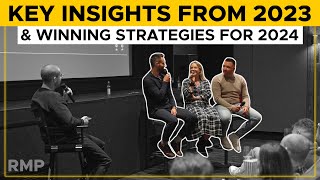
In this live panel hosted by Hishem Azzouz, recruitment leaders from SR2 (Alicia Teagle), Opus Talent Solutions (Nigel Romano) and Talentia Group (Guy Walker) reflect on the biggest challenges their firms faced in 2023 and outline practical strategies for 2024. The discussion covers a drop in gross profit across the firms, the difficulty of maintaining a true 360‑recruitment mindset, over‑reliance on SME clients, under‑investment in back‑office and contractor care, and the need for a disciplined business‑development (BD) culture. Panelists share concrete tactics such as early back‑office investment, prioritising finance before HR/TA, creating key‑account‑manager roles, personalised incentive schemes, and scaling L&D for graduates. They also discuss market opportunities – notably renewables and US contracting – and the impact of bold strategic pivots (e.g., moving away from oil & gas). The session ends with audience Q&A on graduate recruitment, incentive design, and retention, delivering candid, experience‑driven advice for recruitment owners looking to grow sustainably in 2024.
Chapters
This year we teamed up with Sourcewell to bring you some of the best industry insights from current top performers and successful recruitment entrepreneurs across the country. Tonight is no different as we host our penultimate live podcast event of the year in Bristol for the very first time. We're going to be joined by Alicia Teagle from SR2, Nigel Romano from Opus Talent Solutions, and Guy Walker from Talentia Group. We're going to be discussing the key insights from 2023. What have been the biggest challenges? What have they learned? How have they navigated the challenging market that we've all faced this year and more? Then we'll be covering winning strategies for 2024. What are they remaining laser-focused on going into next year? What lessons are they taking into 2024? And what are they communicating with their teams to ensure they have a successful 2024. No fluff, no egos, just honest advice, real experiences, and genuine insights. So now it's time for our last event of the year. So please put your hands together and welcome to the stage Hishem Azzouz, Guy Walker, Alicia Tigon, and Nigel Romana.
I feel very famous right now, by the way.
Hello?
Testing, testing.
All good? Can you hear us at the back? Yeah, awesome. Thank you all for being here. Really excited to put on this event tonight. Obviously, first one in Bristol. So together with the panel, we're going to try and keep it as honest as possible. As you just saw in the video there, we're going to talk about this year. We're going to talk about, you know, what do these guys have in mind going into next year. And then we've got about 20-30 minutes of live Q&A as well. The way that we're going to be doing it is we're not going to run around with like a microphone. I think that'd be too chaotic, so we're going to use a tech tool, which probably means we're going to have a fucking problem with it, but like, we'll, you know, we'll go with it. A lot of you submitted questions, so I've got those up my sleeve, so you know, if you just play out with me, hopefully it will work and we can get some good questions answered. So I guess before we start, let's just do some brief intros. Nigel, I want to come to you first, if that's okay. Do you want to do a brief intro to those that may not know who you are, and then Alicia will come to you next.
Hello everyone, great to be here. My name is Nigel Romana, I am the COO of Opus Talent Solutions. We are a tech and energy business, we've been going for 15 years, started in Bristol, and we've got lots of offices around the world, so I'm really looking forward to speaking at this Bristol event.
Woo!
Thanks, Mum.
Evening everyone, I'm Alicia Teagle, co-founder of SR2, socially responsible recruitment, plus many other things I'm sure we'll get into. Bristol HQ, big up Bristol. Second London office opened in Jan 2021, and we've just opened our Austin office. So excited to dig into challenges, successes, the pain that we've all been through this year.
I'm Guy Walker from Talentsia Group, started Just under 6 years ago, similar time to SL2 actually, headquartered in Bristol and we operate in various different sectors under various different brands.
Awesome. So where we're going to start this is, as I said in that video, we thought the perfect place to start is just to have a bit of a sort of honest reflection with all of you. And we're going to find out from these 3 what have been some of the biggest challenges this year, because some of them that they share maybe all of you have experienced this year as well. I think, you know, we wanted to, with this being the first event in Bristol, what I definitely experienced, I've been calling it, there's quite a lot of Bristol beef. These guys have hated that, but I think like people being sort of dubious about 100 recruiters in the same room, how's that going to be? These guys want to be as honest as possible, they want to, you know, hopefully give you as much value and insight as possible. So we thought we'd start this by sharing how these guys did last year compared to this year from a gross profit standpoint. So just to define gross profit, that is the amount of money left after they pay contractors and the amount of permanent placement fees, just to be super clear. So for SR2, last year, 2022, their GP was £8 million. This year it's £6 million. For Opus, it was £48 million and this year it's £38 million. And then Telentia Group, Last year was 5.9 and they're on track to do 8.5. I think obviously worth mentioning, SR2, mainly tech, right? Obviously different locations. Opus, tech, but then you also have a Reynolds brand, which we'll talk about because that's been a real growth area for you guys this year. And then Talentia Group, about 70-80% for guys, education, but then it has two other brands that do sales, marketing, digital, sales, marketing, digital, finance. Renewable engineering, sustainability and construction. So a bit more diverse over there. So where we'll start is let's think about some of these challenges in terms of this year. So Alicia, I'm going to come to you first. Why? So I think what you shared with me was one of your biggest challenges this year was the team having a true 360 recruitment mindset. So do you want to just share with us like what that means, how that sort of manifested? Just talk to us a bit about that and then we'll go from there.
Yeah, and I think one thing that I wanted to say before coming to this room, like I think all of us agree we're not, we haven't got this magic pill to say this is how to be successful. Like this year has been so hard, but we're just a tech recruitment company. We haven't diversified and we've really stuck in our lane in terms of what we're good at. And I think That 360 mindset has been a huge challenge because of the last couple of years, it's been a goldmine for recruiters where if we strip it real back, there's probably 20% of the business that could actually pull jobs and the rest of them were a delivery team getting paid 360 comps.
Decent.
So that's again transparent, that's what it was. And we've obviously lost a lot of people this year through various different reasons, a lot of them going travelling because of the office onset, offset of COVID and them having plans. And I think that really shone a light on people who weren't capable of pulling jobs, on what recruitment was when I started 10 years ago. Like, that was what recruitment really was, is picking up the phone, picking up the Yellow Pages, if that was still a thing. I mean, I used to have a folder, I know Jack posted about having the folder of CVs you used to write on, and it's just about, yeah, what real sales is, but equally adapting to this new world which is full of technology, full of different tools, being creative, doing indirect selling, and just people aren't capable to do that, which is absolutely fine.
Um, so how did— just on that, so how did that mindset show up? So like, what did that actually sound like? Was you speaking to people like, right, this week this is your BD plan, and then every week you've got to end of the week and gone, Alicia, I'm so sorry, I didn't get around to doing BD, I was filling these jobs. Like, what What did that actually look like? What kept coming up from the management standpoint that meant BD wasn't being done? Like, what did that actually look like?
Just like pushbacks of people not wanting to do it. Right. And yeah, our management team equally, we've got an amazing leadership team who were trying to coach people and look after people's mental health. And that was a big thing as well as part of the world that we live in now and trying to look after them where they're put into situations that they're not comfortable to do. So Yeah, I think people just weren't set up to do it because they've had, again, it given to them on a gold or silver or bronze platter for the last couple of years.
Okay, and then did that, before Nigel, I want to come to you next, but Guy, Nigel, did that show up in your environments? How do we feel about what Alicia went through or what they were saying at SRT?
Yeah, if I go, yeah, I completely agree with all of that. We're, we've not traditionally been, as a business, we've not traditionally been a delivery-focused business. So most of our staff, somewhere in their locker, have had the 360 thing for them, and it's kind of like trying to undo that. Like, it's like a sleeper cell that you've had to reignite and remind them that they have been taught this and sort of re-engage it. So we've We've definitely had that challenge. It's definitely more difficult, particularly in tech, to find clients. Client control is more difficult. So it's a little bit more about trying to ignite some old training for them and trying to re-engage that for us. But yeah, definitely agree.
I guess, Nigel, let me come back to you then. One of the things that you shared with me, which I thought was quite interesting, was diversification of clients. What you shared with me was you felt that this year you've been heavily weighted, or typically you've been heavily weighted, on the companies that you acquire have been like sort of SMEs. So something will go on to next year, but like that sort of impacted you because the investment in these certain companies dried up, which meant they weren't hiring or they were turning off the taps more quickly. So you recognise that a lot of your client portfolio was in that SME space, and you're thinking about how can we get some of these bigger clients that may not feel some of those things?
Yeah, so it's kind of like the flip side of the benefit we have of being predominantly a 360 business that I've just talked about. That's great. But as a result of that, we had a big portion of our— I'm talking tech specifically here— are the SMEs. And the SMEs are great because you can open the door with them, get in just at the time they've sealed Series A funding or whatever it is. And then you ride the coattails of them for, you know, they've got 50 developer vacancies, whatever it may be. I'm certainly not filling them, but it's, so I'm told. And you can ride those coattails and it's really, really good in the boom time. But so much of that SME tech market is reliant on market confidence and funding and so on. So when that dries up, you can find yourself a little bit more exposed. And I think we found that this year. So that's a learn is that, you know, when the market was going great last year, you know, just ignored it. You didn't care where the deals were coming from. You're just doing placements, celebrating, posting it on LinkedIn and like everyone does, not me, but everyone else. And, but you don't really analyse what's going well and you don't, you know, if I'd have sat there last year and gone, let's look at the diversification of our client portfolio, everyone would have laughed at me. We should have looked at the dark options. Because when that funding dries up in that sort of space, we were a little bit more exposed than we would have liked to have been. So a bit of a lesson learned. I don't know if we could have done anything about it, but I think—
Yeah, that's good insight.
I think that's something that we spotted this year.
So Guy, let me come to you on this. I think, Alicia, you might share this with me, but I feel like, Guy, we spoke about, you know, what does the recruiter of today look like? What do the traits that we want to hire for all these things? So I think something that you all shared, it might have been you actually, Nigel, not Alicia, sorry, but Guy, what do you think of this? I think Nigel and Alicia both said that they found it hard managing people that entered the recruitment industry in '21, '22, maybe almost had like a bit of a false start because of, you know, the quick success that they were experiencing. And then this year has been tough and like managing that, like how's that showing up for you guys? How have you and your leadership team, you know, helped people understand that Yeah, maybe you may not be as successful this year, but comparing yourself to last year, it probably isn't a wise or smart thing to do.
I've adopted the phrase, it's the hardest way to make an easy living. Like, it's literally telling people it's a shit job. So, and people still keep coming through the door, so it can't be that bad. But from my perspective, I think we've always had that routine of business development, so you can come in and pick it up and get on with it. So when we're hiring people now, We're looking for people with personality, a little bit of life experience. If you've had no jobs and you're coming in and you're 18, you're going to struggle trying to connect with people, trying to be on the phone and make money and try and get them to buy into you. So trying to solve what sort of people we're looking for and where they come from, you want them to have some life experience, you want to care, and you want to be laser-focused on what they want out of the job. Like, my business is a vehicle for everyone to get what they want out of it. Like, I'll take a bit along the way, but largely They come in to get what they want. So people that can really articulate their goals, where they want to get to, and have the life experience to contextualise that and go forward, and then willing to accept it's the hardest way to make an easy living. I'm going to— if you come into my business, you're going to hate me, right? Because you could have 10 hot jobs on and I'm going to tell you to pick up the phone and do some more business development. But guy, I got 10 jobs. Yeah, all right, they'll be gone tomorrow. Get on the next ones, right? Pick up the phone, do another 100 dials, get some more jobs on, keep your stuff fresh and hot. That's old school mentality. And as much as that might have, you might have had a softer landing in 2019, 2020. 2019 was a terrible landing, by the way. 2020 also shit. It was 2021 that was slightly better.
So the people in your business that were with you in '21, '20, and '22 who are now struggling, how have you helped them? How have you like helped them understand?
Luckily for my team, they're not particularly struggling 'cause we kept that solid 2 hours a day business development. So it wasn't a case of getting out your sword again and going back to battle. It was like, cool, you've done this every day. You know what to do. Now you've got to up it, up it a little bit. I've actually taken on a kind of key account management approach. So the most senior people in the business, which is slightly more 180 than maybe most would like, but they're still 360 consultants, will go out and build the relationship and then they've got to build the relationships under. So we'll take the relationship at a senior level and then the consultants kind of have to build their own micro relationships. But they've got the PSL, they're on the suppliers list. And then making sure that our consultants can still add value. So they can still talk about the industry, they can still put passion into their words, and that they still have a personality, but they've practised it every day for the last 8 years.
What you're saying is you feel like you guys didn't get complacent with this development, which a lot of people did.
As much as they hate me, yeah. You've got 10 jobs on, go get 10 more.
Alright, okay. So you just really drilled that?
Yeah, which is— I've never stopped.
Fair. Nige, I feel like you should— was it you that shared that with me? I feel like in terms of like managing people, that sounds like something I'd probably do. So like, how's that showed up for you guys? Because obviously You know, you've seen a lot of different markets, the peaks and troughs.
Yeah, I think, listen, yeah, it's definitely showing up. I think I've got quite a, I'm going to go on a ramble now, but I've got quite a take on this, which is I think we're really privileged in recruitment. I think we've got an absolute privilege of a job, okay? Because you don't need qualifications, you don't need to have gone to university, you don't need, you don't have to pass exams. And in front of you, you've got a, career where you can earn extremely good money, you can rocket your career progression. If you want to start your own business, you can do so without much capital, without much barrier to entry. So I think when you're in a leadership position, it's important to try and give that context for people who are having a tough time. Now, obviously, if they've got difficult, you know, circumstances where they're struggling to pay bills, it's not going to help them to tell them, get over it. But I do think it's important that you, that you, you give them the context that they've got. You— I, I just think I, I, every day I think I'm really lucky to be in recruitment. So everyone stumbles into it, right? No one goes, I'm going to grow up and be a recruitment consultant. Um, and I'm really, really lucky. So when it is— do you know what, when it is a tougher time, when it is you haven't hit your quarterly, you haven't hit your monthly, you blanked, or whatever, whatever that scenario is for you, I think it's important as a— if you're leading a business to try and make sure it's OK for people. Do you just want me to make sure that you remind— Yeah, go and tell a frontline nurse how difficult you're having it because you didn't hit your commission. Yeah, you'd get pretty humbled quite quickly, wouldn't you? So, I mean, I think it's important to make sure it's OK for people. People who did come into that '21, '22 sort of environment, it's still real for them, right? They're still hitting things, so you've still got to be real to them, but also a bit of arm around the shoulder. It's not going to be like this forever. There's some markets that are absolutely flying. If you're in tech, it's a tough year, but in the grand scheme of things, it'll be all right. You'll be forgetting about it in a year's time.
Okay, nice.
And drum.
So Alicia, let me come to you on this. More of like a lesson that you guys took at SR2 this year, which was you shared with me how you really felt like you did a good job of investing in your contractor care and the back office infrastructure. Do you want to just tell us a bit about that? Because you felt you were quite passionate in telling me about that in terms of the amount of money that they saved you, you reduced the time it took you guys to get paid, etc. So do you want to tell us a bit about why that was a bit of a lesson for you guys this year?
Yeah, and I think Chris doesn't mind me saying, but we set ourselves a business, the target this year of £11 million, and we're probably going to hit £6 million. And we set up the business and definitely the back office to be an £11 million business, which we're not going to be this year. So we did invest really heavily into our ops team. I think a lot of people forget about back office and just such a huge part that it plays in terms of invoicing and contractor care. Like, our contractors are— their customer service is exceptional. And in terms of the money that we've saved with our contractor invoices and all the interest that we're not paying in terms of our financing, it's massive. But we definitely did invest really heavily into that. Thinking that we'd be an £11 million business and we're not. So we're just tweaking it to make sure that they're adding value in the back office for people that aren't bringing in actual money. But I think it's something that's forgotten about massively. But equally, we're a business now where we're—
You're ready to scale.
I think we're like 70 heads, I forget, we're either 65, 70, that we've obviously, we're at that time to have a back office, whereas some of the micro businesses are doing it themselves. But it's something massively to, think about and to invest in quite early doors because customers do speak about it and it does make you stand out from the crowd more than I think that you think about.
So just quick one then, just quickly, so intended, obviously the plan forecast was to be 11. So yeah, I think, you know, when I interview a lot of business owners, sometimes they wait until like things break to then fix it rather than what you're saying is let's get the systems in place so we can grow into being an 11 million business. So when When did that investment start out of interest? Was it 12 months before you hoped to be 11? Was it 18 months? Was it 24 months? Because that might be helpful for people.
Yeah, I think it was probably the start of 2021. So I don't know, maybe like 18 months or so ago now is when we really invested in it and got serious about everything. And also we were expanding in terms of EU and US, and so we needed to be a real sort of professional business in terms of that back office, in terms of moving banks to to move into a global bank rather than NatWest that's just the UK, for example. So it's little things like that that you don't think about.
Yeah, we didn't do any of that.
We, yeah.
No, no, no, but I endorse it because I think we've always been a sales force, sales-first business.
Sales force?
And it's sales force. We don't do any sales force. Should do more. We've always been a sales-first business and we've always invested in the sales primarily. And, you know, the back office has gradually caught up. I think in '22 we completely overstretched it. And as a result of that, we nearly got into a real panic mode of, you know, we've got, you know, loads of money owed to us that we can't collect and all that sort of thing. So do what Alicia said, not what we did.
So we should have invested in that earlier?
Yeah, I think we should have. I think we stretched it too far. We should have looked at it maybe end of '21, instead '22 we were there. You know, just sticking in loads of deals, which is great until your systems, your functions behind it can't catch up. So we learned that the tough way this year.
Can I chip in for the startups? Yeah. Get it, start with the end in mind. Like if you are setting out to build a business that's 10, 20, 50, 60 people, don't like budget, don't pick a CRM that won't support you. Don't pick a factory that's going to do a crap job. Like check your references, check who've worked with good people. Because I've spent probably the better part of the last 6 years hating a factoring company or hating a CRM or finding a way to bodge something together that didn't work together. So if anyone's like on that precipice or starting out in early doors, 3 of you or whatever, pick your stuff right. Use the stuff, maybe it's more expensive to get the stuff that everyone else is using at the top, but invest heavily at the beginning if you can afford to. Because changing stuff later down the line, like from ITRIS to Bullhorn, is a nightmare. Don't do it. It's shit.
All right, so just on that, this was actually— oh, feel free, Guy, I'll come to you first, but this was actually a question from Chris. I think it's a good time to ask it. So his question was scaling operational parts of the business, in what order to build those out and when to do them. So he broke it down: HR, TA, L&D, finance, marketing. So if you're with, you know, with that frame that you just said, Guy, I want to be, you know, 20-person, 30-person company, when should I think about HR? When should I think about TA? At what stages do you think?
Finance first.
Okay, finance first.
Get your money in, then look at human resources, then look at business operations. And I think finally look at talent acquisition. I think business operations is something that I, my old business ops guys here, like I didn't know anything about it, didn't have a clue. Hi Tom. Didn't have a clue. And I was like, cool, this guy's a wizard. And he looked at business, he was a business analyst and systems and that was vital. But you think talent first. But as a recruiter, I know half the room, right? So you can go and recruit recruiters. That's what you do, you're a recruiter. Get your finance right day one, like as soon as possible finance, then you look at, yeah, HR, then you look at systems, then go to internal.
Yeah. Any disagreements there or just?
Yeah, again, we didn't do any of that. We were, like I said, a sales-first business. So all the investment for the first 10 years was probably in sales and it always felt so. Yeah, that's probably what you should do. But we, we focus a lot on sales. So we did have finance, I agree with. I think the only different take-up on that, it depends on your model. We've always been quite a trainee-dominant model. Therefore, your L&D function gets a light shone on it a lot quicker if you're going to go down that model. If that's not your model, then L&D you can probably put to the back of the queue behind some other stuff. So I can't, yeah, yeah, I can't, We were very sales dominant and everything else was playing catch up. And like I say, last year we probably stretched that too far. So yeah, it's probably different. Do what Guy does.
No, no, I stacked up my L&D places here that we took at 20 heads, which was before we got a finance person. So I missed L&D off that list.
So quick one and then we'll move on to thinking about next year. I think Alicia and Nigel, I both said to you, if you was in the audience tonight, what question What would you love us to talk about? So Nigel, you said, I'd be really interested to hear other people's perspective on like what industries were hot or like where people saw opportunities. So for you, you said to me like renewables for you guys grew 20% this year. Yeah. So do you want to tell us a bit about it? This might mean that people want to go into renewables industry, but like let's just talk about it. Where have you seen pockets of opportunity this year where there's been real growth?
So the story, One of the big lessons that came out of this year for us, I think people naturally talk about negative things when they talk about lessons. One of the big lessons that came out about us was making big, bold decisions because 5 years ago we made the conscious decision to turn off the tap. We were doing loads of business in oil and gas. We had £100,000 a week contract book, a load of top billers, a good team in it. And we, 5 years ago, we decided that didn't fit with our ethos. It didn't fit with our values to be making money out of oil and gas. So we completely pivoted it. And that's tough. That's really big when you've got a load of top billers. Imagine just going round to them one Monday and sort of saying, we're not going to do what you do anymore. There was some collateral with it, but I think, yeah, as in I don't think any of them are still here. This was supposed to be a positive lesson, wasn't it?
Hang on.
Sorry.
Okay.
No, no. But joking aside, the So I think the lesson was we made a big, bold decision then. And now as a result of that, this year, I think we're 5 years ahead in renewables. Lots of people looking to get into it and there's still plenty to go around. But I felt we were really well positioned because of a, you know, a difficult, bold decision 5 years ago. And yeah, we've got a presence in UK which mostly does into Europe and we've got a presence in Sydney doing it and we've got a presence in the US doing it. And in different parts of the world, there's different types of renewables. Obviously in the US there's a lot more solar than there is in the UK, for example. Wind, offshore wind is big in Europe and Sydney is solar and wind as well. So these are really good markets to be in. And I think, you know, for all the mistakes we've made, we're reaping the benefits of a big, bold, tough managerial decision 5 years ago. But it's a really good space, and if anyone's thinking about going into it, there's still plenty to go around. You know, it's not—
Yeah, mate, you don't own the market, mate.
No, no, we don't. Yeah, if you could chat with me first before you go into it.
Mate, you're all sales, mate. So I mean, everyone's on the phone doing deals.
Yeah, it's a really big market. And if you look at the sort of government pledges in every part of the world to spend on renewables, It's not going to disappear.
Yeah.
So, but I think we're reaping the benefits of a tough decision 5 years ago to be in the market and we've got a decent presence there.
Nice. No, I appreciate you sharing that. Alicia, any pockets of tech that's been hot this year or nah?
Again, like there's a lot of companies that have diversified and opened additional brands within the renewable space predominantly that we've seen. And again, as I said earlier, we've very much stuck in our lane. We set up a brand that was completely different to anyone else. I know a lot of recruitment companies say they're different, and I think we've made our stamp that we are different in terms of social responsibility, becoming a B Corp, our profit donation, and all our USPs and our initiatives that we do. So, we've really used those to win. We're still probably, our contract book's about 75% public sector. That's something that we're still massively invested in in terms of actual real partnerships, bid work, Using B Corp, helping companies improve their ESG scores is something that we're really passionate about. And equally, on the other side, 75% of contract book in public sector is something to maybe have a bit of a squeaky bum about because if, yeah, that all gets shut off tomorrow. So we are equally working to diversify more so in the private sector as well. But there's no real market, I think, that's doing better than others, in my opinion, in tech, specifically Obviously everyone's a specialist, I'm not, I'm a generalist, but I think just stick to what you're good at, don't panic, and we're just going to continue to keep doing what we're doing and be number one.
Okay, so let's look ahead then, guys. Thanks for sharing that. So let's look ahead then before we do some live Q&A. So I think, Guy, let me come to you first on this. I think something that you shared with me, I think I'm pretty sure it's an Atomic Habits quote, which I feel like every recruiter has read if they do a book club. Which, I mean, it's a banging book to be fair, but you said fall to the base of your system. So what are your, you know, what are your systems? So for you, you're really thinking about next year is all about getting more out of less, really investing in your systems. Tell us a bit about, you know, what you mean by that and what those systems look like and what you're thinking about.
Well, we're still startup culture, so our business systems are shit. So building from like where I am today, we've got some really deeply ingrained habits that are going to help us, right? But I'm I said this earlier, it's an unpopular opinion. I still want people on the phone for 3 hours a day. So I want to do all the other smart stuff around it, right? So you guys were talking about not hot markets or hot markets. Any market's hot if you add value. But what value does your market require at the time you offer it, right? And how many of these recruiters having a difficult time have gone straight to the bargain basement rates and said, actually, we'll do cheaper rather than hold the line or find a way to reinvest in value. So across all of my businesses, we're reinvesting in marketing, we're reinvesting in how we can influence our customers and how we can invest back in our customers. The phrase is give a little, get a lot, right? So if I can train all of our recruiters to have better knowledge, to invest in the sectors that they represent and give back, brilliant. And on the systems piece, it's making sure that everyone understands their position. It's a chessboard. A business is a chessboard as far as I can see. You've got people that play different roles, different responsibilities. And as long as everyone knows the systems that they are and the part of the business that they run, and they become bulletproof in that, and that system runs every time, time and time again, which anyone who works here for me knows that that's not how the business is today, but that's the investment that we're making is that everything is mapped and everything works, and that's going to take a while for sure.
So what are we talking about here? Like, so if someone's going to take a job, we've got a talent way of doing it, there's somewhere they can go find out how to do that, those sorts of things?
Yeah, it's partly training, it's partly like the commercial brain, right? So how many of the business development recruiters that can't business develop know that when you can go and get a reference? That's a sales call. Who still does that, right? I mean, it's a 10-year-old trick. If you work in construction, give me some references, I've got some jobs. So like, who's still doing that commercial element? Who knows that the person that's just been pulled out of that job is a job for someone else to fill in another market? Who's backfilling? Like, these commercial systems, as well as learning development systems, as well as the other training elements— there are so many systems, but everyone needs to know which ones work. Your habits are basically a business system. So creating the right habits in the recruiters that creates the right business.
Okay, and then Alicia, for you, top of mind was building that BD culture, that BD mindset. So are you gonna make everyone get on the phone for 3 hours a day? What's your approach? How are you gonna do it?
No, because I think it's not one size fits all in recruitment. Every market's different, every personality is different, everyone sells differently. Put me 3 hours on the phone, I just won't do it because that's not— I'm and inbound sales. But again, I've built my brand for the last 10 years to be, to be able to do that personally. So no, I think it's, yeah, it's allowing people to do something that works for them. Um, and we're not going to suddenly 10 times multiply our KPIs. Like, we again, we don't have KPIs. We have— everyone has an annual target. We work backwards in terms of how people are going to hit that. Monthly, how they're going to hit it quarterly, and how they're going to hit it annually. And we help them to do that.
So they have KPIs?
Yeah, they definitely do.
In terms of their—
Yeah, they have success metrics. They have what we call a KPI.
Okay, we're going to go and dig that up.
They have KPIs.
Come on. Yeah.
Call it reverse engineering.
Reverse engineering. Okay, we'll call it that. But no, but equally, I do think, look, phone wins. And so many people that you speak to nowadays are like, oh my God, someone's called me. And you're like, yeah, of course. But there's so many different avenues to doing recruiters doing search.
Do you think about any non-negotiables like SR2, BD culture? What are some of the non-negotiables, if any?
I'm just trying to work hard, 100%. Stand out from the crowd, like again, using USPs. But equally, there's a lot of like disingenuousness in our industry as a whole. There's a lot of— sorry to call you out— there's a lot of white privileged men speaking about that they care about diversity. Okay, if you care about that, like genuinely care about it, like, you've got to do your research. You can't just suddenly be like, oh, I'm gonna suddenly start a women in tech podcast when you don't really give a fuck. You just want to try and get money or try and get some clients on. So you've got to be genuine in terms of the things you're speaking about. And I think that's one thing that we've got as consultants is people really care about not diversity at all. And I'm not saying that, Andy, sorry, just to pick you out, that Andy massively cares about increasing diversity in tech. He doesn't be. Massively cares about adding a huge amount of value to his clients and being the best that he can be. So it's not saying, Andy, these are the KPIs that you need to do. I mean, he's a brilliant manager. He doesn't— he just makes everyone else happy and does an amazing job. But yeah, I think going back, it's, it's indirect selling and just adding real genuine value into the market. There's not just bashing the phone.
Nige, for you, because obviously you guys are sales machines, that's— we're not talking about that. But for you, no, for you, you said to me like where you feel like you've missed a trick, or, you know, across the team holistically, like you're good at opening the door, getting the first 2, 3 placements in, but then 2 or 3, it's up for that. Okay, yeah, okay, yeah, fair. So why, you know, get out for— get our first deal done, on to the next client, whatever. But we've got, um, you're thinking about increasing the client spend. How can we increase the amount of deals placements are doing with our clients. How are you thinking about that?
Exactly that. We, as a business, we're better at the hunting than the farming, and this is the way of looking at it. And we've got a lot of people who, because we do the vertical market thing, they look into their vertical market, they open doors, but they don't necessarily look sideways. So a lot of our new BD strategy, if you like, for next year will be about what can we get out of our clients that we've opened the door with and then just walked out the door.
So how are you going about, how are you thinking about that?
I think we need to set up our people. I think when you want to change, shift a mindset of a business and so on, you have to reflect it in everything right down to the commissions, right down to the targets and so on. And because our business has always been set up to be new business, it's not necessarily there. So, you know, it's great having an inherent 360 mindset. That's really, really good. But when you miss opportunities. So I think we need to look at how people are set up, what their jobs are, and how it's sort of paid. Because at the moment it's mostly 360 pay and we don't have a particularly great model for making sure people are rewarded for passing stuff sideways and so on.
I can be quite specific on this. This is an action that we tangibly took. So we've created a key account management role. So it's land and expand, right? So one person takes the relationship, which is business risk for startups and whatever. One person takes that relationship and then they know it's their job to get the other 8 specialists that can service that client introduced to the right people. So they sit, say, at HR level or they sit at procurement level, whatever. They've got the relationship with the client, they can control the information, but then they do the recommendations. So you need someone in this sector recommended, and then eventually you've mapped that entire client and it all sits in one single place and you reward those key account managers for the job that they do.
And how are they incentivized on the amount of money they spend? Or like, how's that?
Show my age a little bit here. We still use like a whiteboard metric that's made up. It's a Fugazi. It's like whatever the average value is, whatever. But they're incentivized on new business deals, right? So anything they've rewritten, not on what's existing.
So they're incentivized on every new business deal. They'll do that, they'll get a percentage of that. Okay. So I think this would be a good time to ask this then, and then we'll bring in some Q&A in a sec. But Tom asked this on this topic, which I think is interesting. So have you got— do you guys use any client retention incentives, for example discounts for repeat business, donations to charity, etc.? If so, what do they look like and how important has that been for you this year? Or maybe thinking about next year, has any of that made it into your strategies on how can we incentivise doing more business with existing clients?
I spent £10,000 on drills at the end of last year. That's not even a joke. Well, drills.
Drills?
Yeah.
Yeah.
Why would you do that?
So quite a lot of our clients are construction and engineering educators.
Yeah.
So as part of a retention strategy, I literally £10,000 on the world drills. Slightly devastated by it. I got a gift card and everything. But in the sense of that, like it was what little thing can you do as spread? I've got, I've got 300, 390-odd clients in education.
Yeah.
So what can I spread that's reasonably affordable? Like I can't send them like a bottle of wine or it doesn't help. So I sent drills and toolkits for attendance. So I sent out early in the start of the year and said, at the end of your year, give this out to your students. And there's loads of other bits and pieces that we did that was about value add, like free CPD events, putting on free subscriptions to stuff like that. Some other exciting bits, it's actually just showing up to the client and then offering them anything you can offer them to say thanks for working with us. Like, what is it you actually want? You don't want a bottle of wine that's like £6 or whatever. What is it that will say thank you for giving us the business? And asking them. And then they came out asking for cash quite a lot of the time, I'll be honest.
Brilliant.
Which was a little bit sore at points. So you went and bought £10,000 of 10 grand local drills and about, I spent about another 15 grand on sponsoring their end of year rewards and stuff like that.
Okay, nice.
That works and you get the marketing, although none of my marketing team showed up, thanks guys. But you get the marketing.
Stuff like that goes a long way, you found that? Okay, cool.
Massively, and they remember it to the next year.
Nige, got any client incentives in place, mate?
No, I've just got a few. No, we're not, as I said, I think we need to look at how we incentivise that, but we're not.
Elisha, what about you then? Because I've seen I've seen companies who like for every placement they do with the company, that company then technically donates X to like a charity, for example. Have you played around with this sort of stuff?
Well, we give 5% of our profits to charity and our clients obviously contribute towards that because that's how it happens. And we send a newsletter every single quarter to every single client that we've placed with in terms of everything that we've achieved that month, whether it's win rock interviews, whether it's how many trees we've planted, how much money has been donated, and actually tell them this is how much money you contributed. To our charity of choice this year because you working with us. And it's just a relationship thing, right? Our clients work with us because we have amazing relationships. We don't then give a discount if you do a second hire, a third hire. We do our donations and that's what we do. But equally, I do think there's a lot, again, in recruitment. And I know there was a post once upon a time on LinkedIn, actually not so long ago, about inviting head of talents or female leaders to like football days, rugby days, golf days, like, Women in talent, female CTOs, female leaders don't want to do that, so it is thinking outside the box if you're going to go and reward them and do something different. But yeah, no, we don't do anything in terms of that sort of incentive apart from our charity donation. Take them out, have relationships, have fun, and have like a real genuine value add that we can do in terms of, yeah, Women Rock! technology volunteers and all the fun stuff we do.
And do a great job by the sounds of it, right? That's the point.
And yeah, not too bad.
So we're going to come to Q&A in a sec then. So I'm going to introduce this tech tool in a sec.
Okay.
So there might be some issues, but as we're about to do that, let's just end on Nigel's prediction for next year. Like what, you know, if we're sitting down this time next year, what— talk to me about, you know, what you think the market would have experienced. Like, just give us anything that you're thinking about going into next year.
Yeah. So I think Uh, we've started to see in tech a little bit, you know, we've just come off the best, our best whiteboard month of the year and things like that. So there's little signs showing, but then it's been like that all year, then it's disappeared again. So, uh, so it's like, um, so I think that, listen, we've got two very different stories in our business. One is the tech side, one's the renewable side. There's no, there's no sign that renewables is going to stop. We can't hire people into it quick enough, we can't fill our clients' roles, that's going to be fine and that will continue to fly. I think what we're seeing in tech is the— it's a bit like that. It's been stop-start all year, but there's just a few signs, you know, the metrics are pointing in the right direction. We do use KPIs, I love KPIs. The jobs, interviews and so on are going in the right direction. We haven't quite seen it converting as we'd like yet, but there's certainly signs there. So I think on the tech side, we— tech hasn't disappeared, right? You're about to use some tech, or we're about to try and use some tech. It's everywhere. You can't do anything without some tech. So the need for tech hasn't disappeared in the world. Just the confidence around the market and the investment in it might have slowed up for a little bit. So for us, it's all about keeping ourselves positioned well so that when it goes again, we're ready to go again. I'm pretty sure we are. Nice.
Anisha, what's top of mind going into next year for you?
I think contract's going to win. Okay. In my opinion, from lots of conversations, I've just got a call to sort of, yeah, expanding in America, and they say that 1 in 10 people at the moment are contracting in the US, and by 2027, 1 in 5 people are going to be contracting in the US. And the US is huge, honestly, to map it out. It's very shiny, very exciting. But I think contract's going to win. And again, similar to what Nige said, But we're not gonna diversify in terms of our brand just yet. We're gonna stick to what we're really good at. And this month, I mean, I think our best month this year was February, randomly. And yeah, every single month we go, this is gonna be the month, we're gonna have a banger, we're gonna have a banger again. And we're not there, like we're very steady every other month. But I do think from what Nige said, again, similar, the pipeline is big for the rest of this year. And I think that, everyone's going to be hopefully a lot happier going into 2024. But I do think that contract is going to be the winner of 2024.
Guy?
I can't really, because I'm not in tech, I can't really moan. I just have to go, yeah, it'll be all right. I think, so I hope it'll be all right for tech, but from my perspective, if you do the basics really well, you build really good relationships, you work really hard, then we're going to have a great year. For me and my businesses, we're going to have a tremendous year where we're tracking a record year and everything's going to be great. But I think that's because we've done the basics so well and we continue to do the basics well. And don't get cocky. Like, really simple is the market will chop your legs out. The market will be a difficult place if you don't stay on your product, continue to enhance it, continue to offer value and give something back. You're going to find difficult periods and it's going to get more and more challenging. But as long as you continue the process of doing your best and offering the best value, you should be fine.
Nice. So what we're going to do now then, Matt, if you could. So basically the way this tool works is if you scan that QR code, you're going to be able to ask a question. The cool thing about it is it's entirely anonymous. Now I can moderate the questions. That's not cool.
So yeah, that's got disaster.
So, but if I can moderate the questions, if anything—
I can see what Omar's signing.
Omar's literally laughed the whole way through this. Every single thing that someone said, he's laughed.
So if any of you that want to ask a question, scan that. I've already got some questions that a lot of you submitted, so if you scan that. But Matt, if you go on to the next slide, I've already got some questions up and then we can start going through some. So which one have I got here? So the biggest challenge in growing— yeah, okay, cool. So let's start this one. Nigel, I'm going to come to you on this one. I know this is a big part of your model, right? So let me read out for you. Yeah, so what do you see as the single biggest challenge when growing a recruitment business, specifically with homegrown grads and what would be your solution? Talk to us a bit about that.
I was trying to read it and Alicia just went, grads. Got it.
Cheers.
So the biggest challenge, yeah, we've been a, look, graduates churn, okay? In a good market, we've had our churn below 30%, which is pretty good. In a not such good market, it goes to 50s and 60s. So yeah, I think you have to accept that and you have to have a plan for how that looks. What I see sometimes is if you're going to employ grads and if you're going to take people who are new into the industry, you have to absolutely red carpet their experience for the first 4, 8, 12, 16 weeks, whatever it may be. And I mean serious investment in L&D. And if you've had an experience where your grads aren't sticking or your trainees aren't sticking, then have you actually sat through your induction process? Are you actually happy with how that is? Have you sat through it yourself? And is it the red carpet it needs to be? And are you absolutely sure what good looks like? What are you expecting from these people after 2 weeks, 4 weeks, 6 weeks, 8 weeks? Because I think the generation coming into the workplace get a bad rep. I think it's grossly unfair. I think most of them actually want to do really well. I think it's your job to show them and demonstrate to them and give them the journey of what they need to do well.
So just on that, because I think it'd be helpful, what are the Opus's expectations then? Like, I really like that mindset of, um, got something on you. Yeah, the red carpet experience, I love that. How can we make, you know, those first couple of weeks— what are like the expectations at those milestones?
I'm definitely not the right person to ask specific metrics, but what I would say is that we've got, um, We invest heavily and review it all the time, what training they do on what day, and then what they, once they've learned it, whether it be in the classroom, whether it be digitally, whether it be online, it's a mixture of all of them. There's real clear sort of, right, you're now going to go on the sales floor, and then the sales manager is really bought into what they need to do. They'll have a task to complete, they either complete it or they don't, regular sort of review points. So I couldn't tell you that the, um, because I didn't take my own advice and sit through it recently, um, but the, but it's really, really clear and every sales manager knows, right, my trainee is on day 3, that means they'll be learning this today, I need to do this with them afterwards. Now there's only certain aspects of the recruitment lifecycle, so it can be in whatever order you pick, but I, I, we get asked this question quite a lot because we're quite a well-known predominantly Grab model. And I see so many people will sort of do a half-assed attempt of L&D, or they'll dip in and dip out, or they'll learn something with their L&D function that they've invested in. Then they go out to the sales floor, their sales rep manager tells them something completely different sort of thing. So it's a real takes-a-village thing to get the training model right and then still be okay with maybe losing the odd 1 or 2 or 3.
Okay.
Yeah.
All right, cool. Well, let's go through some of these because we've got to be out of here in like 10 to 15 minutes. So I'm going to come on this one. So can you see that now? Yeah, nice. So Alicia, talk to me. What is the most popular incentive benefit apart from komish that gets the most traction, positive press from your people? Volunteer days?
Unlimited holiday?
Unlimited holiday?
Like some people take like crazy amounts and then we have to force the others. I'd probably say People love Hika, which we—
Wait, what was that, sorry?
Hika, so we give like £30 a month or £50 for operations for them to buy whatever they want every single month, whether it's contributing towards, I don't know, their gym membership or HelloFresh boxes or buying a bike.
What's Hika, sorry?
So it's a platform for people, like it's like a—
And then they can spend it on a bunch of things.
They can spend it on something that they actually want and it gets used every single month and I think a lot of things don't get used when it comes to sort of benefit packages. Yeah, yeah, fair. But that's something that's used every single month for people. And again, it's not forcing something down their throat. It's something that they can, they can choose themselves. So that's a big win. And people do love volunteering days.
Guy?
Personalised incentives.
Personalised incentives.
Ask them what they want. Give us an example. Trainers. Should I go with trainers? If they make a, I don't know, sometimes add 50 candidates into the system in their first week, we incentivise them with a pair of shoes. But ask them, ask them what they want. Custom incentive, custom target. So you want to hit a particular thing. So say you want 3 days off, but you want, you have to do it a certain way. Set the parameters. There's obviously standardised. We have a standard commission structure, standard salaries, but whatever people want and benefits like the good benefits, like paying for the gym membership and stuff, they kind of forget about them, but they're there and then they're reminded, oh yeah, shit, I need to use that. But they definitely like being addressed as an individual and then set and then tracked and then measured against it. But don't set an incentive and then forget to measure it.
Like, I do that.
Nigel, you experimented with anything, seen anything better than the 360 commission?
No, just 360. No, no, no, we've actually, we haven't gotten a platform like Hika, but we've always been quite good at those sort of bespoke, tailored, you know, what does this individual want based on your sort of goals, hit a milestone and do it. So yeah, I'd agree with Guy on that, we've always implemented that.
Okay, nice. Right, let me just pick out one of these. So, Guy, question specifically for you, my friend. Similar to you in bashing the phone, always driving biz development, I have been over for 10 years. How do you bring your newer consultants from 2022, 2023 into driving the new BD, and AKA picking up the phone?
Sometimes you just can't teach it. Just accept some people won't have that confidence to speak to anyone about anything, right? So use your chatterboxes first, send them out to fight and they could get cold. But like, put people out and train them and invest in them. One of the things that I'm working on at the minute is how you share information and how you warm them up to business development. I've got to go from here straight to Manchester to stand in front of 75 HR directors as part of our BD strategy, right? I've got to go out and kind of petrify myself. They're slightly less scary than you lot, but stand there and it's never something I've— I've not done it before. It's new on the list. So what can I do to get my team involved in that? So face-to-face meeting, I'll bring up 8 members of my Manchester office. They'll have to meet HR people in the flesh and be petrified. So warm them up, get them into conversations, bring them into Teams meetings when you're meeting with clients. Like, show them that the client isn't as scary as you think they are, that they actually want to spend money with you, they want to work with you. So give them industry knowledge, give them industry expertise, work with them and show them it's not as scary. And when they get rejected, build them back up again, send them back out to fight, but don't accept 'Oh, I've made 100 calls and no one's picked up.' It's like, well, make another 100, or get the phone and pick up the next one, right? That was the tip in the first day— call the next person. I promise you it'll be a good phone call.
Okay, I'm going to show this one. Alicia, you shared a bit on this. Nige, what does this look like for you guys? What impact has 2023 had on your retention?
Coaching.
What's that?
Sorry, nothing.
Main reason for churn.
Main reason for churn, we, this is going to be, I'm not doing a good job of selling ourselves, am I? Let me say, the downside of when we train people and we invest in them heavily is that we lose a lot of people who go up to start their own business. And that's been true this year. And that is the—
How many do you reckon?
I can think of across the group at least 6 or 7 who've done that this year.
Does it get like easier each time or is it bitter every time?
It hurts when you keep talking about it. No, no, no, it's a sort of mixed thing because on some, normally by this stage, normally by this stage they've done a good 5 or 6 years with you. They've been really good people. They've, you know, they've built loads of money, they've had a really good impact. So you're like, In a weird way, you're kind of proud that they feel, you know, whatever you've taught them has sent them off to feel confident enough to do it. But it still hurts. No one likes losing big personalities and big billers sort of thing. So yeah, that's probably the one that we struggle with.
And then Alicia, I think you, please feel free to correct me, but I think you said obviously clearly very passionate about the amount of women in your business, the diversity in your business, and you've lost the most amount of women this year, right?
Yeah, well, most of them traveling.
Oh, is that—
yeah, most of them traveling. Um, I think again, COVID, they had plans in COVID, COVID happened, it's a tough year, and, and they decided to, to do that again. The— for some of them, red carpet is fully rolled out for them to come back. Um, some of them not. Uh, but yeah, traveling's definitely probably been the biggest thing. A couple of people have left and started their own business. And yeah, not copying anything SRT-related, of course, but yeah, the main thing. And a couple of people left, joined another recruitment company, asked to come back, left on bad terms. But yeah, travelling has been the biggest thing.
And then, like, just curious, like, is that now something you actually, like, try and find out if people have plans to do that when you interview them?
Um, I don't know. I don't know, have we asked that question recently?
I thought you might have.
We are now.
Your fans are going to scream. To be fair, like, we've only just— we're very much an experienced model in terms of that. So yeah, it's like we've got a couple of juniors that are absolutely like, one of them will blow your mind, they're unbelievable, but they're not going traveling anytime soon. But yeah, it's definitely a concern.
Nick their passport.
Yeah, yeah, you have to hand it in. But I don't interview anyone anymore, I don't know whether we do ask it, but I'm sure we do.
Nigel, I'm going to come to you on this one, I feel like surely you've thought a lot about this. Top 3 things you would all individually look for in a trainee, what are Opus's non-negotiables when it comes to—
Some display of business acumen, as in, you know, whenever we interview them, can they piece together bits of information to try and get to something, can they find You know, have they got that sort of inquisitive nature that makes them ask the right questions to get to it? Because that would translate well into business. Are they coachable and teachable? Are they receptive? Are they receptive to critique? And we'll do that in interview. We'll challenge them, get them to defend their stance on something and so on, because that shows a sort of a bit of a bravery and some broad shoulders that means that when they're being trained on something, they don't take it personally. And then just the hard work thing, they've got to have displayed at some point in their life that they've got themselves out of a comfort zone. So yeah, those three.
Alicia, I feel like that's not really—
I was just gonna say, like, our training—
that isn't really your model, is it?
Work hard, be accountable, if they're a good human. And this is probably really bad to say, but I love a chav.
Oh wow.
Like, I love a chav recruiter.
You like a chav recruiter?
Yeah, like someone who comes in, he's just gonna like I don't care and just go for it.
Wow.
Like someone who's like—
Do you tell them that?
No, but like—
You're hired on the basis of your chavness.
I knew I was going to get like, "Don't say that." But someone who's like, just like rough and ready around the edges and just going to absolutely just go for it.
Yeah, I mean, that is— that's going to be a bad clip. That is going to be a bad clip.
Oh my God. Yeah, so like someone who's just like a bit rough and ready around the edges, who's just going to go for it and like just haven't got any fear.
You're recruited. I love that.
Guy, over to you and then—
I'm so basic on this one.
What are your non-negotiables?
You just got to work hard. This is a shit job and you just have to put it in, right? You have to put in the effort. And then I look for someone that gives a shit. If you actually give a shit and we can see you care, that's so important to us because we all care so deeply that we want you to love it as much as we love it. And I love recruitment. I mean, I don't particularly love any particular industry, but I love recruitment. I love the industry that I'm in. And then you've got to be resilient because you're going to get punched in the face 100 times a day because I've got you on the phone 100 times a day and it will either be— I'm not saying I'm going to hit you, just putting it out there for the HR bods.
If you employed Sharps, it will be.
Yeah, it's going to get bad. Get your Burberry on. But nah, you've got to be resilient. This job is shit. Honestly, some days are so terrible and other days are amazing. Amazing. And 51% of my days are better than the 49% that are bad. So you've got to be hardworking and resilient.
Right, so before we finish, thanks everyone for being good sports. I think, you know, these guys have been nothing short of honest, I think. So we appreciate it. So let's give a hand to these guys before. Yeah, so yeah, just again, like a huge thanks to all of you for coming. Hopefully you've really enjoyed it. I look forward to getting feedback. We have hired a couple of tables at a place called Steam, I think. Is that a place? Yeah. Cool, right. There definitely isn't an open bar. We're not, you know, we're not doing that well. But if you want to come there after, more than welcome. But thank you all for coming. Really enjoyed, you know, being in Bristol. Appreciate the support. And yeah, just, I guess, just a large round of applause for these guys. Thank you.
More from Hishem




You don't need as many clients as you think to bill $1 Million A Year In Recruitment



From 30 Direct Reports to Back-to-Back $1M Years as a Solo Recruiter with Zach Creighton



