LIVE Podcast | How to succeed in a challenging market
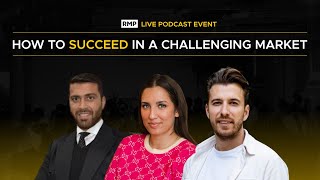
In this live podcast hosted by Hishem Azzouz, panelists Lewis Gadsden, Alicia Birch, and Jamie Fraser discuss navigating a candidate‑led recruitment market in H1 2023 and share practical tactics for agency growth. They examine market dynamics—talent surplus, reduced hiring budgets, and the shift from a jobs‑driven to a candidate‑driven environment—while emphasizing that the market has merely leveled out rather than collapsed. The conversation moves to internal culture and operating models, highlighting return‑to‑office policies, the need for a high‑performance mindset, and the transition from contingent to retained/search services with productised offerings such as Statement‑of‑Work, Team‑as‑a‑Service, Contract‑to‑Hire, and unlimited holiday. A major focus is on performance engineering: Jamie Fraser outlines three levers—language/habits, regular self‑review, and back‑to‑basics recruiting—supported by weekly desk MOTs, continuous upskilling, and a robust internal platform that drives coaching and results. Alicia Birch adds a complementary perspective on team motivation during quiet periods, stressing micro‑engagement tactics like maintaining a strong LinkedIn presence, offering salary surveys or small freebies, and staying top‑of‑mind with clients to build long‑term relationships. Both panelists stress the importance of personal purpose: Alicia shares how having a clear “why” and disciplined daily habits helped her survive three years of zero billing, while Jamie stresses that results stem from disciplined planning, goal setting, and self‑review. The panel also touches on limited AI adoption, the importance of authentic outbound messaging, and the role of habit formation in career longevity. The session concludes with each panelist offering a single piece of advice they wish they had known earlier—structured planning, effective messaging, and personal habit formation—followed by audience Q&A on retainers, product differentiation, and future market outlook.
Chapters
Thank you so much for coming this evening. See a number of familiar faces, like, really appreciate the support. So keen to get straight into it, but I guess just to frame this up for those of you that might not have been to one of these before, we'll probably spend about 30 minutes, us guys having a chat. Within that, I've also got a bunch of questions that some of you submitted, and then after sort of 30 minutes or so, we'll then bring a mic out into the audience. So for those of you that have the courage to ask a question. And we're going to encourage that, put these guys on the spot, and we can freestyle it a bit. But hopefully the goal tonight is that you all walk away with, you know, some actionable insights, some things that can help you in your career, your business, by these lovely people sharing it. So for those that don't know who you are, let's just start with a brief intro. Lewis, I'm going to come to you first and then just come back around this way. And then we'll get into it.
Nice. Good evening, everyone. I'm Lewis Gadsden. Woo! Brought my posse with me. And I'm Associate Director of Wiser Elite. We're a specialist tech sales recruitment agency. And I'm also the founder of SDRs of London, which is a peer-to-peer mentorship platform for London's best lead generators.
Let's go. Alicia?
So I am Alicia Birch. I am the Business Director of Anderson James. We are a Thanks, Mum.
Oh, I love it. My turn.
We are a construction business who supply across USA, London, obviously the Northwest as well, UK-wide. Yeah, I've been doing it for 6 years and absolutely loving every second of it.
All right, let's go. Last but not least, Jamie.
Hi, I'm Jamie Fraser, CEO of the Interex Group, founded Interex 6 or 7 years ago, at the age of 23. We're now a global business, 140 people, 3 locations. So yeah, I hope I can share some knowledge, experience, and yeah.
Awesome. Now, thanks for being here. So where I wanted to start is just to have a bit of a reflection period. So where I wanted to start is a lot of people that I've spoken to have had a challenging H1. So I think, like, let's just kick this off by sharing maybe some of the things that you and your team have been running into. Alicia, I'm going to come to you first, if that's okay. But yeah, I guess I just wanted to kickstart it by, you know, taking a step back, thinking about the first half of this year. What have been, you know, some of the challenges that you've been running into, or you keep hearing in the office that your team are running into? What have been some of the major challenges that you've been working through?
So I think for us, as you know, me personally as a 360 and also 180 as well, just doing business development. It's been really, really hard to— when it, when it comes to market at the moment, it's harder to hire. People don't want as many people, especially in the market that I do, which is construction. So it's a lot harder to actually get people through to an offer stage, but the talent needs to be a lot higher, and it's a lot harder to find that talent. You've got to be a lot more well-connected to get it anyway. And so I do think that at the moment what we found is that mainly the job control is the hardest bit. You know, we need to make sure that we're getting good jobs, they're well qualified, clients are on side, all those bits that contribute to actually getting to offer stage. But then also a really fucking good candidate, like, that's like the hardest, you know what I mean? It's a candidate-led market, recruitment is candidate-led. So as long as you've got good people and good relationships, you'll be fine.
Lewis, what have you got to share on that?
Yeah, so all of us that work in tech, I don't know if Jamie will tell us something different in a second, but the tech bubble kind of burst. 2021 was like champagne recruitment era. It was awesome. And what we had in the tech sales market was a number of people generating promotions just by moving companies in that time. It's the first time ever, the first time ever jobs outweighed talent, which was incredible for us. But then, yeah, it all came crashing down around about 6 to 9 months ago. And then What happens is there's a surplus of talent in the market because of mass redundancies, which is not good news for us. Yeah, that's one of the main challenges. And another one as well, which I'm sure we'll talk about later, is being sent on wild goose chases with contingent terms. So, yeah, putting your best foot forward. I see a lot of nodding heads. Putting your best foot forward and then like, you know, putting everything into a search only to be told that, oh, all of a sudden we haven't got sign-off or we're going to push these roles back to next queue, which you actually told me about. Exactly. So yeah, they're great challenges.
So yeah, flooded amount of people in the market. Like I said, continue, we spoke about that. We're going to talk more about that. Okay. Jamie, from your perspective, obviously maybe you've got a bit more of a global footprint compared to these guys, although Alicia's business does do the US. What did you see in the first half of the year? What were some of the challenges that you were helping your team overcome?
At the start of the year, we turned semi-soft, and that's not who I am or who we are as a business. When I drove the business at the start, it was very much about hard work, numbers, numbers, numbers. We started adding, like, my whole goal for this year was people engagement, taking our people engagement to the next level. Why? Because I want people to be attracted to our business. How we do that is make sure that we have a platform that people can join, can be part of but can grow. I speak to everyone in my interviews, is that if a company can't grow you personally or career, don't go there. And if you don't, can't get a goal out of it. So we added all of these new different quirky benefits. And, um, like, like what?
What was the quirkiest?
Don't actually like them.
So, um, I want to share what were some of the benefits.
We, we didn't offer sick days, then we started bringing in sick days.
Well, wait, what does sick day— what does that mean? So you can take a sick day and you get paid?
Paid for a sick day.
Oh, wow. Yeah. Okay.
We do have them and they do— like, people love them.
Okay, so sick days.
I don't love them people. Yeah. Okay, cool.
So sick day. So we're going to talk 3 quirks and sick day as well.
No, no, no. So we pay sick days, but we also gave them more holidays, but we also added in mental health days.
Okay.
But for me, if you take a mental health day, you should actually suffer with mental health, right? People obviously take advantage of that. Um, what else did we do?
Unlimited holiday?
Menstrual leave.
Okay, yeah.
So yeah, for the women, obviously. Yeah, so, so that, that's obviously been our challenge. I obviously— last year everyone had the percentage uptick, right? This year, this year, so people have done well last year Did they do well last year? They've come into this year. I've got a lot of great builders within my business. They come into this year with big contract books. What you've done last year is not going to work this year, right? And that's the biggest thing that we'd be trying to rein back in and drive back in is high tempo, high quality, because quality is key in this market. Numbers and just reining stuff back in. And that's obviously been our challenge in the shift that we're making as we open up New York, which has been this week. We've changed all of our structure from benefits to numbers, etc., etc. So I think the challenge for us is a lot of people have taken the foot off the gas. We have kind of struggled with that even though we're growing, but that's probably—
Yeah, no, no, I appreciate you sharing that because I said to you, didn't I, when we prepared for this, that I spoke to a lot of agency leaders that felt the same. They almost found themselves like pandering to what they've, you know, what employees wanted them to do. So how, if you don't, like, this is later on, I wanted to be brought up. So in terms of that then, what helped you come to that realization? Because that might be useful for people. Like, I know you said that it was in the, it might have been a board meeting, I'm not sure, but what helped you come to that realization? And then I've got a follow-up question on that, but what helps you realize that?
Yeah, ROI. I think that's the main thing. If you do anything for a business, if you do any sort of benefit or perk or whatever it is, you've got to check the ROI that you get back from it. Um, we also had our Fridays go from 5 PM finish to 3:30 finish. Our end of week sales meeting would be 3 o'clock. Our productivity on a Friday was shit. So that we realized it when I was having board meetings and my chairman went, that's not you, like, that is not you as a business. We had a couple months that was 80%. We're not an 80% business. Um, so it was just realization that we wasn't doing what our brand is, our vision, our mission and stuff like that.
Okay, cool. No, I appreciate you sharing that. So, because I know like we all spoke a bit about that in our own ways. So let me bring this question in then. Lewis, I'm going to come to you on this. This was a question from Charles. I think it's the right time to ask it. So he asked, how have you rolled out company-wide change in culture, processes, mindset to allow them to succeed? What was the pushback and how was that overcome? Because I'm sure you run into that, which we'll get onto, but You know, Lewis, anything to share on there in terms of how you approach things? I know you saw similar things in different ways.
Is this the return back to the office, basically?
Yeah, obviously not the whole, you know, we get enough of it on LinkedIn, do you want to work from home, the office, like, fuck that. Like, let's just keep it real in terms of, you know, what we're actually trying to drive in our businesses in the office.
Yeah, look, I think a lot of businesses have been through the same thing, haven't they? It's been like a feeling out process post-COVID as to what they can do to make sure they keep a high performing culture. But, um, at the same time, I'll just give you the story of how we went about it. Yeah, yeah. So initially, coming out of COVID we initially went back into just doing Wednesdays, and then it got back to 3 days a week, and you could do any 3 days a week that you chose. Now, initially it kind of worked, we were doing it, but we found that we just weren't really hitting the numbers that we used to. And if anything, the culture just got diluted. Like, Wiser really internally within four walls of Wiser is known as like the high-performing lot. We're gritty, we get— we roll our sleeves up, we're in early, we're last to leave, that sort of thing. And just over a period of time, it— it— we kind of lost that a little bit. And so Jack took the decision that— and, and the rest of us, not just you, took the decision that we were going to fix the days. We're going to fix a day. So we're now doing Monday to Wednesday, 3 days a week in the office, still giving people flexibility to work from home. But we actually had the excuses of things like, you know, stay at the boundary that day, or, you know, I need the boiler man to come. Do you know what I mean? If you need to do that, you do it on a Thursday and Friday now.
Okay, nice. Alicia, what have you seen in your business?
Because my house jobs need to be done on a Monday. To be fair, I think for us, I mean, I absolutely despise working from home. I think it's the devil. Okay, you know, don't get me wrong, love doing my washing on a Monday, love all that, but the day-to-day for me, like, a lot of people hide behind working from home, you know. It's an opportunity for them to— I'm having an admin day. What the fuck is an admin day? Like, you do your admin in your day, like, that is your day. But I think for me, I find, you know, I do a lot of meetings about the office a lot, but I'm not working from home. Like, it's flexible because I can go anywhere I want, and I can, you know, I cover UK-wide, so I can go to meetings here, there, and everywhere. But it's difficult because I think a lot of people see it, they come into the business, and it's like, do you do flexible working? What is that? Like, what is flexible working? Is it finishing earlier? Is it having a day off? Like, what do people define as flexible working? Because it used to be working from home, now it's not. Like, people want to come into interviews thinking, can I have 3 days off? Because that's how they see it. And it might be old-fashioned, but I think the culture when people work from home is shit. I think that, you know, it loses that personal touch of like being in the— like, for me, if I'm in the office, I'm bouncing ideas off people. I'm like, what do you think of this? And I do more when I'm around more people. And so I really struggle to grasp the concept of a new consultant coming into a business. How are you developing your role working from home? Like, what are you doing staring at your washing machine and your sink? Like, that's not going to teach you how to recruit. Like, that's my personal preference. It might be old-fashioned, but that's how I've been taught how to recruit, is be around people that know what you do and learn from them. But it's different. Everyone's different.
I agree. Well, I agree with what you can learn recruitment by looking at—
you have to be in the office. Oh yeah, the best recruiters ever are in the office. Fact. If you— as soon as—
yeah, but yeah, yeah, I think like for me, my perspective, I speak to a lot of recruitment companies, right? And I think, you know, you just shared it there. I think a lot of company owners found themselves like just not owning what they were and just sort of been, oh, you know, a few people have asked for this, let's do that. So what you guys are saying is, I own what you are, and if you want to be part of that, then great. If not, then this company might not be for you. And I think that that's where sometimes people have had a challenge.
I hate to interrupt, but I feel like if you are performing and you know how to do the job, great, work from home on a Thursday, work from home on a Tuesday, whatever you want to do, do it, whatever suits your lifestyle. But when you aren't performing and you are not able to do the job, or you don't know how to do the job, why are you working from home? Like, the people that are around you are the people that are going to teach you how to do your craft. Like, what, like, what are you doing working? It's, it's such a gray area because some people see it as a perk, a necessity, but you're never gonna learn sitting on your own at home unless you listen to, you know, the recruitment mentor.
Yeah, I completely agree. And just like I don't know, finishing point on that as well. It's just a point of efficiency as well. You're not telling me a message on Slack or a message on WhatsApp is quicker in getting something done than asking someone at your desk. Like, you know what I mean? All for the hybrid model. I enjoy the hybrid model.
Yep, same.
At the same time, you know, when you're in the office, those days are definitely needed.
Yeah. So final thing on that then, because we don't need to speak about that all night, but I guess, like, passionate about it, uh, we'll be here all night. No, I think, Jamie, I just wanted to, obviously the question was, you know, you had that realization. How did you go about rolling out changing? Because that might be helpful for people. Like they might find themselves in that predicament now. Yeah, maybe we have made some decisions because we thought that's what employees wanted. But actually, you know, from what we can see performance-wise, that has dropped. They don't want to piss everyone off. They don't want to then be known as a company that's old school, whatever it may be. How did you then go about going, hey guys, look, I actually think we've 'Yeah, maybe put things in that I actually don't believe in, aren't right for my culture and company.' So how did you go about actually rolling out and communicating? I was like, 'Look, this is how it now is. You can be part of it or you're not part of it.' How did you roll that out?
The people that I hire on, naturally globally, would be people that want to be the best. And we didn't change too much, but to scale a business at an aggressive rate, you need to build a culture. There is no company in the industry that has scaled a global business letting everyone work from home. That's an absolute fact, right? Successful business. We had to make sure that people wanted to work our way. Our model and platform is proven to make trainees right through to director level seriously successful, grow, come out their comfort zone and develop. And that's what I say to everyone, right? Is join my business if you want to be pushed and join my business if you actually want to double your billings. And that's what we do. And we removed a few people, we set a standard, and we drove it seriously fucking hard, basically.
Okay. That's what you have been doing over the last couple of months.
Yeah.
Okay. So to build on last year then, the word that I found come up a lot in my conversations has been complacency. So I think the other element that has come up a lot, which I just want to touch on here, is in terms of complacency being, I think a lot of people enter the industry over the last 12, 18 months. There was a shitload of workflow, so there's loads of stuff for them to be working on. Most people then, you know, in terms of saying like, right guys, let's really make sure that we're continuing our outbound activity, business development, whatever that looks like in your company, that just really just didn't happen for a lot of companies. Last year? Yeah, last year. That's a lot of the conversations that I've had. So a lot of companies that I've spoken to, they found that over the last 6 months when they're now trying to drive a lot more of a BD culture, people having to be, you know, a lot more proactive, they found that actually looking at their new client base, 80% of their new clients have come from 15-20% of their staff. And these people are in 360 roles, but actually, you know, just got passed roles from their managers and they got used to that. And that's been their experience. And now it's been a real challenge for a lot of people to transition into win their own clients in their business. Lewis, I know we spoke about this. How, one, is that something that you guys face? Two, how did you go about influencing and changing those behaviours or helping people on that journey? Because I know a lot of people struggle with that.
Yeah, no, absolutely. It's definitely something we faced. So the short answer is we quadrupled KPIs.
That's it.
You bastard.
Yeah, don't boo me. The less ambiguous answer is that Jack found some inefficiencies, say, in people's diaries. Do you know what I mean? People weren't using the time as best as they possibly could. And let's say someone was putting 4 hours of business development in their diary per day, the activity didn't reflect that. So instead, Jack came up with a very good example, which I actually shared with you, didn't I? But basically different things on how you could optimise your diary, still with reasonable stuff in there, an hour and a half lunch, time for resourcing in the morning, client meetings in the afternoon, but finishing the day with, with business development and really upping that. And we thought if everyone actually put their mind to it, we could quadruple our output. Now our KPIs before were bare minimums, whereas now they are stretch targets.
And what was it like?
What then?
Give us an example.
So like, well, we've quadrupled them. So, okay, it was a case of 4 times as many KPIs, 4 times as many outreach as what we were doing.
Right. Okay.
Got you.
So That's that. But that's one way we've done it. Yeah, obviously for people in Wiser, normally you get to about consultant level and that's when business development is actually expected of you.
Okay.
Actually bringing on business. Now, obviously for the people that were more junior than that, it's a bit of a scary situation, right? One little actionable that we've done with my team that seems to have been effective, I've got Darius in the crowd somewhere and he'll tell you whether it is or not. But encouraging people to go for coffee catch-ups, even with candidates. A lot of people still hide behind a screen. If you're a voice on the end of a phone or you're a message on a phone, you can just get rid of it, can't you? Shut the laptop, I can close the message and whatnot. If you become an actual real person to your candidate, to your client, you take them for a coffee, you take them for a bit of lunch or whatever, automatically it's a weird psychological thing, but they're like, well, no, actually I'm not going to just get rid of Darius because actually I'm kind of in his debt a bit now.
In bed with him.
Exactly. No, he's invested in me. And then all of a sudden you start doing that, you start meeting relevant people. They don't need to be of use right now, but they need to be of use in the future. And to me, that counts as a relevant coffee catch-up and count towards that particular KPI. So now whenever the person that Darius met 6 months ago, hopefully in 18 months' time, that person may well be an SDR manager or progressing and have some clout in that business and actually help us out. So that's a little actionable.
Jamie, I said this, did you not really experience that? But did you, do you not feel like people got— you said what, uh, work last year is going to work this year. Yeah. So did you not feel like there was, you know, complacency? That, that's what a lot of people I've spoken to felt. Did you not feel like that was happening in your business?
Or last year?
Last year.
We still done well. We've done very— we doubled last year, so we obviously done something right. Um, but just, yeah, what, what did work last year, it's, it's tougher this year. So naturally you need to work smarter, harder, more structured. You need to have a better way of how you position yourself. You need to be innovative, future-free thinking— sorry. Um, you need to make sure that you're not just talking— I believe not just talking recruitment all the time, and you're talking about your products and how you offer outcome-driven services. And that's what the difference is for this year, is that the recruiters that do great are the people that don't act like recruiters. They're the people that build relationships, offer solutions, etc., etc. And, you know, the last few months or a couple months for us, we've had some phenomenal months because people are just turning the whole, um, service to a next level. And that's what you didn't need to do last year because people could just ping a CV out and, you know, get a win out of it. You just can't do that this year.
So that leads to quite a nice thing because I think when we prepared for this, all of you shared that journey of solutions, outcome-focused. So Alicia, let me come to you on that because I think a lot of people here, like being honest, the reason why we're speaking about this, so many people ask questions about business development in all different ways. So in terms of like my question here was a lot of you spoke about selling solutions, being outcome-focused products. You all mentioned that's something that you've all had to really focus on, have been on a journey on. So, Alicia, let me come to you first on like why, firstly. You just spoke about it a bit there. And what do these products look like? What do they sound like? I think that'd be helpful for people.
Do you know what? I'm like really torn between the two because I completely get your perspective, but then I also massively agree with yours because for me, my whole job is relationships. Like, fuck everything else. Like, the people will buy off you if they trust you. And that is the job. And don't get me wrong, like, I could get on with that speaker if it had a pair of lips. Like, I swear to God, like, that's just my personal opinion. But I also think that at the moment, like, this year— last year was, was a piece of piss. Like, I could send anyone to anyone and they'd be like, yeah, I'll have them, because they needed them. This year, people have— like, sales haven't been going through, cuts have been made, companies have been structuring back. So for me, it's like, right, well, It's about the quality of the person that's coming in, but it's also what else can you offer? Like, so for me personally, as a billing, as a billing consultant, because that's still what I am, you know, can I offer reputational structuring? You know, what is the market saying about you? Do you want a report of what the market's saying about you? They'll pay for that. Like, they want to know. I speak to people every day. What is everyone saying? Gossip, like gossip queen, you know what I mean? Like, people love it. People love to know what people say about them. They will pay for that. So reputation in the market, well, the market, you know, retainers, you need to commit from the start. If you're going to search it, they need to know, like, well, I'm going to pay up front. If you trust me enough to do that service, then why would you not pay up front? It's an easy conversation. Pay up front, pay for search, and pay on completion. Easy. I think also one other thing is salary surveys. We've been doing quite a lot of them. You know, are you paying what you need to pay in the market to get the right people? There's been actually in construction an increase, then a sharp decrease, which has been really interesting because people aren't willing to pay the high salaries anymore. So we're having to manage candidates a lot differently when it comes to salary expectations. How are you having those conversations when it comes to actual candidates? I mean, I put something out every month which is like a, like a bit of a, like an email to everyone, but I send out template CVs and all sorts just to help people because I think the best things in life are free. I get it on LinkedIn. I'm like, does anyone want one? They're like, yeah, yeah. I've got hundreds of people like, yes, every one of them. And I'm, you know, cool. If I can help in any way possible that takes me out of You're just a recruiter. I'm a person, you know, I'm Alicia Birch. Like, you either want it or you don't. Do you know what I mean?
Yeah, yeah.
I'll help you in any way possible, not just getting you good people.
Yeah, the line of the podcast.
Um, so tell me anything else, because look, when we prepared for this, I know you told me about the, you know, you shared that you just wasn't asking for retainers enough. You're surprised about actually, yeah, no, people will say yes. You won't ask them enough, you felt like. 2, you also said that, you know, you won a really big project which was less about ones and twos. And like, is there anything else that—
Okay, that project came crashing down very quick.
Oh shit, okay, fair.
I won't cry about it, but it was— it's a tough time.
All right, we'll move on with that one then.
No, to be fair, but this actually leads on really nicely because when in a tough market you get very trigger happy, you know, someone says to you, I need 10 things, and you're like Oh yeah, let's get all the whole delivery team on it, everyone do it. And then all of a sudden they go, ah, they're being pushed back, they are. I'm like, you absolute bastard. I'm like, I've got to explain this to someone. Like, that's the hard thing, like, it's managing your own expectations when it comes to that. But also, you know, for me, we've got a really good delivery team that deliver on everything. Like, we can offer a really well-rounded service where the person that comes to us doesn't actually have to go anywhere else. We do everything, you know, we're a one-stop shop. Okay, like, come to Anderson James, you get everything. Okay, but at the same time, it's really, really hard because you've got to meet those expectations, you know. Yeah, I've got a high standard. Some other people might not. It's not my problem.
This— we spoke about this, didn't we? I know you've been on a bit of a journey with this. Yeah, solutions, outcome, Like you said, contingent goose chase, getting away from that. What does that actually look like, sound like in your team's business?
Yeah, no, no, similar to Alicia, we've been on a number of wild goose chases in the past sort of 6 to 9 months and it's got to a point now where we've decided, okay, we're just not going to do contingent anymore is the bottom line. So we plan to be retained fully by October and using sort of just deposit system and then the rest on delivery, but just getting upfront commitment and getting exclusivity. On everything is really what we're doing. We took stock of what we actually do for our clients. And you'd be surprised about how little some recruiters actually do during processes like throwing CVs. We like to see you at the other end of the process, that sort of thing. When in actual fact, we took audit and we were like, we're actually doing a fucking lot here. Like we're going above and beyond in every way, shape and form. And we can actually monetize that and sell it against the contingent service. So if you want contingent, we can do that, but we're going to charge more. However, if you get retained, you get the works, and guess what? It's cheaper overall.
So give us some of the breakdown of like, with contingent, this is what it is. If we're working this way, what are some of the things?
I'm not going to give away secret sauce, Hishem Azzouz.
No, come on, mate.
Instructed from that, mate.
No.
Yeah.
Oh, mate. Give us some of it, mate. Come on.
One thing may well be obviously having a weekly pipeline catch-up and a shared spreadsheet of all the talent that's currently going into that pipeline, which you wouldn't get with our contingent service.
Okay.
Yeah.
Jamie, solutions, outcome. I remember a while ago, it might have been like a Paras event, I saw you talking about like solution stuff and that approach. Like what's been your perspective on this? How do you really drive this with the team? Because one of the, I think this ties into it, you can tell me, but one of the questions, this was from a chap called Troy. The question was for Jamie, apart from attitude, what else do your consultants do in order to sell project-based contract solutions and build the numbers they do? So I think this ties into quite nicely. People want to know, what does that look like in your business, the products? Like you said, you have to not be a recruiter to be really competitive and great in this market. What does that look like for you guys?
Yeah, so we do it. So first of all, we identify projects that are in cloud or whatever it is. We identify it and we sell our service to build teams. For New York, which is now rolled out globally, We're taking 5 products to market where my goal is, in most businesses what I see is perm and contract fight against each other. I want to bring perm and contract together. How you do that is perm sells contract, contract sells perm.
Can we just do a little bit?
Perm sells contract, contract sells perm. That might sound a bit crazy, but if we train them to sell correctly, we will penetrate a client in so many different ways. So we've got 5 products we're taking to market. One's a team as a service offering, which is statement of work. One's team as a service to hire. One's contract, one's contract to hire, and the other one's retained. So our goal is every scheduled call that my team have is everyone will sell all solutions. If a client buys into one or the other, they bring on the other SME to then join that call to then sell the rest of the solutions. My goal is for us to be the best company in the market. How we do that, we train people to be, to sell the best. To sell anything and to provide an outcome-based project solution wrapped around talent. So that's our goal and that's what we've taken to market.
What are some of the— would you mind just sharing just some of the differences in those? I think that'd be useful because you said retained. Yeah. So quite a lot of people understand that. Yeah. Just give us some of the high-level differences in those products.
Yeah. So without going into detail of what consultancies do, but consultancies own a project, they deliver a project. On a statement of work. They own a project. For us, we will offer an SOW where we give the client control over the project. So effectively it's a time and material SOW. We're also doing that to hire. Consultancies can't offer people directly to businesses to allow them to hire. We can offer that. So that's the second one.
Okay.
The third one is obviously contracts, which is just self-explanatory. It's contract recruitment. The fourth one is contractor hire, and the fifth one's retained. Now, the reason why we're driving contractor hire so much is because it's two fees.
What does that mean? Yeah, what is contractor hire?
So you charge 6 months up front, sorry, 6 months time and material, and then you charge a normal percentage to go permanently after.
Okay, right.
So for a sales consultant, that's two fees. So we cap all of our contracts at 6 months. For a salesperson, they have the 6 months revenue, and then they get the permanent revenue after that. So it's basically killing two birds with one stone.
Okay, I know you want to granulate that, that'll be helpful for people. Yeah, yeah, I'm good. Go more detail, that's fine.
That's great. Just out of interest, do you send like a sales deck?
That was my next question. Yeah, pitch deck. Yeah, do you— what— yeah, do you— how do you get like— because I suppose a lot of, um, we deliver training like a lot of the time, I'll be honest, a lot of recruiters I speak to don't use any sort of visual assets to help them sell their solution. It's very much like, look, I'm Jamie, I do this space, believe in me, trust me, I will deliver on this, right? That's what we're selling rather than, you know, having a visual asset that you can use in a sales process. This is what we've done for companies like yours. This is our track record. Look, if you say yesterday, this is the process, this is what we do. Have you in your sales process, do you have, like you said, you book in like calls and then you bring people in if it's relevant to you. Do you have like visual aids and pitch decks that your guys use to help, you know, sell those solutions?
So yeah, so people don't buy into what. So wherever you say you are, if you're a cloud expert that delivers talent across Europe and North America, they don't buy into that. People buy into the how. So I train people of how to educate clients on how you actually deliver into programs. So when we set up conversations, we set an agenda. Following the agenda, we send a, like a call deck. Then we join the call and we present a call deck.
Nice.
So my team are trained on the call deck. So the call deck's based on punchy words. Um, but they've all been trained to deep dive into everything from benefits to advantages to everything we do from a service. Um, and how much do you think that's helped the guys, girls close?
How much does that help aid the sales process?
Diversity, guys and girls.
How much, how helpful is that?
I've just had a girl last month associate do 240K in her third month, so Decent.
Yeah.
Okay. Lewis, Alicia, you can tell me. Lewis, we were speaking about this. Again, we're going grounded here, but I think it'd be helpful for people. You've been on a recent journey with pitch decks. Why have they helped you and the team?
Yeah, no, absolutely. I completely echo a lot of what Jamie just said. They're not 240K months or whatever. Well, I guess, yes, I'm— we're pretty proud of our thing. I know, no, we've used the pitch deck now for the last sort of 6 to 9 months or so. It is so important to show because we've got such a great brand and all of our community and all that sort of thing. People, it's quite hard to escape us sometimes on LinkedIn in our market.
Yeah.
So it's important that we have something good looking and, and straightforward that we can present when, when actually selling the services. Key things that we have in there is obviously what we do, how we do it, the brands and the case studies that we work with.
Yeah.
And actual relevant case studies to the client that we're actually pitching. And so making sure there's brands in there that people would know, and then also the talent that we've actually placed in those brands to make sure it piques their interest. Then also as well, a game changer for us, especially in pitch and retain work, has been actually having visuals on the commercials as to how things work.
Yeah.
Working examples. So you hire—
You work this way across this.
Exactly. Having a comparison as to, okay, if you work with this contingent, it's going to be this way. We're going to charge you this much. However, retained, you're getting this, this, and this. And also you're going to save X amount of money and just making sure that's plain as hell.
Yeah.
Yeah.
Any Spanish inside on that? Because I know you've had some recent experiences.
It's really weird because last week I had a meeting about of that exact thing. So I'm putting— when I started doing quite low-level recruitment, when I got into it, you know, it was average £7,000, £7,500 fees. Like, I've started doing quite a lot of exec stuff, but every time I speak to an exec person, they go, can you send me something about yourself? And I'm sat there thinking, shit, like, I don't know.
Have you been sending them?
Fuck all.
Oh wow.
Now I've just been going and just being me. Like, I'm like, yeah, this is me. And I'm like, oh, At the end of the day, like, they want tangible things to send to a HR department, or— and it's interesting because I'm on quite a different journey, obviously. I know, obviously, Jamie's, you know, does what he does and Lewis does what he does, but for me, it's like I'm still quite early, but I've done very, very well, but I'm still very early in my journey. I've just been enjoying making loads of money. But go on, go on, the girl. But now it's like, right, how am I going to elevate myself? And that comes with case studies, you know. People want to know, well, what have you done for that person? So I put a big doc together, which is basically all about me, the business that we work with, um, something that splits up our services, which is like retained, exclusive, contingent. And it's basically a tick and cross, you know, if you want to do exclusive, this is it. If you want to do contingent, you get this, this, but you don't get that. But it's, it's all, you know, roundabout, that's what you can get with it, which is really, really interesting because I'm listening to these two and I'm like, shit, I should have done that a long time ago.
Because like before then you would just explain that and talk through it, and I would fill anything, right?
Okay, I would like— I know I could go to anyone and be like, I've got this person, they'd be like, yeah, I'll take him, anything. But I know, I know that I could go, I could sell ice to an Eskimo, that's just one of my talents. But I also know that when it comes to that sub-exec, exec market, they love knowledge, you know. Me and James sat down and did a bit of a thing the other day, and it was like, right, you know, this is that, that's that. When you get to this level up here, you know, you need to have knowledge, experience, you need to know people. These will take anything off you, like anything. But it's, it's a bit like, not, not low value because I love that market, like it's been what's got me here today, but it doesn't take as much. You just need a good person.
Okay.
These just love gossip. They love to know what's going on, who's moving where, all that shit.
Yeah.
And to have a sales deck that goes into it is great because they want to take it to HR and say, well, these people on this, and they want them to fill director roles. Like, they need that.
Yeah.
They don't.
Yeah, Alicia had it on the podcast the other day. It was the Amy episode we released last week. She lost out to another agency just simply because she spoke to the internal HR person. They're then in the board meeting talking about getting certain things signed off. The company that she was competing against had, you know, some visual, like, some assets to provide them, and she just had her words.
And like, I'm a visual learner, like, I love visuals. So for me, it's like, yeah, I love it. But other people might not be like that. But it is, it is really important to get something that says what you do, who you are, what your previous case studies are. Like, anyone in this room, if you've not got it, I would 10 out of 10 recommend doing it because it will elevate you to that next level.
Like, Yeah, I love it.
Love that.
So let's go into— I'm going to go into some questions from, uh, gonna go into some questions from the audience, and then I'll bring the mic out and then we can freestyle a bit. So might go a bit in a few different places, um, here. So Jamie, do you have a delivery team or not? Do you have—
yeah, but it's very small. We're not a 180 model at all. The only reason why we've got a delivery team is for like high volume.
Yeah, yeah. Because the question, like, you let me know what you think of this. There's a question from Henry. How do you ensure that you create a 180 business that is able to both generate the sales and also fill the roles without causing a bottleneck on either side? I don't know if there's anything.
We're not 180. So, okay, what's made us successful is we all hunt, we all are 360, go-getting, relentless recruiters. That's what we are, and that's what's made us grow. We're a business that wins new clients. We're not a business that are have been amazing expanding clients. We do have some very, very, very big and great accounts, but what's made us successful is the amount of brands that we win every month. And that's because of the 360 model.
Alicia, obviously you have a delivery team. So just to recap there, like from your perspective, how do you have these people both generate the sales and also fill the roles without causing a bottleneck at either side?
So we've recently experienced this, like, you know, it's difficult because The delivery team are absolutely unreal. Like, my delivery team are great. Give them a role, they'll fill it. Could be anything, toilet cleaner, whatever, like, they'll fill it.
Um, you're not getting toilet cleaner job, surely?
Sorry, I'm saying that.
Yeah, yeah, of course.
Anything, they will fill it. Like, they just, they know the pro— it's all about a process. It's not about the job, it's about what you do with the job. Um, but for me, I've been focusing very heavily on bringing new business you know, to them and really, really funneling it into them. But then at the same time, it's equally as important for them to tell me what's going on. If I'm not doing candidate stuff, what's going on in the market? Yeah, who's hiring, who's doing this, you know, who's moving where? It's got to be a really nice balance. So if you've got a delivery team, um, anyone in the audience who's got a delivery team, make sure that they're— it's a give-and-take relationship. You can funnel as many jobs into them as you want, make them as rich as you want, and, you know, give them whatever, but they still need to be feeding you whatever you need out of the market. For me, it's like, who's hiring? Who's the hiring managers? You know, where's the busiest? Where have people just moved from? If I'm not getting that information, I actually can't build a desk or a market because I do UK-wide now. So for me, it's like, you know, if I don't know a hiring manager in a certain— how am I going to find it? I'm gonna have to go and ring them myself. I might as well fill the jobs myself as well. So it is quite difficult. It's been a transition for me. Because I've been very used to filling my own jobs, managing my own clients, having— being a massive control freak, which I am, and letting that go. But it's been working, and they've been doing really, really well. And I appreciate every single one of the delivery team that we've got because they are so hardworking. They put the most amount of work in. But what I would say is it's worked better when they've given something back as well. It's not all give, give, give to them. You've got to take a little bit as well.
Do you have that model? Not really, in terms of 182, or—
it's— we used to, like I alluded to before, it was a case of we had almost like, from the moment you weren't a researcher anymore, you became almost like a 270 model. So team leads or senior cons upwards would win roles, and then they would deliver them. But in recent times, everyone's on the tools on BD now.
Yeah, yeah, okay.
It's not as much anymore.
Um, Jamie, let me continue this. I quite like this question. This was from Alicia. No, not from you. What top 3 things do you do with a consultant when they hit that recruitment wall? You know, it might be a certain number, they keep hitting the 250 grand mark, they just struggle to get over that next level. Like, you know, any 1 to 3 things that you found really help people break through the next barrier of performance that may be limiting beliefs or think, oh, I'm always only able to do 300 grand a year, whatever it may be. Anything there to share that you found be really helpful for people to overcome those performance barriers?
So it first starts with the words. I'm big about the words that come out of people's mouths because if they talk that, then it's naturally going to happen. I'm huge about habits and what people do in their personal life and what they create reflects what you actually do within the organization as well and obviously their career. And I'm big about people self-reviewing. So as long as you're getting someone to self-review or you're self-reviewing naturally, they're going to self-evaluate and self-learn and have more solutions before they even come to meetings. I spend about an hour and a half every week just self-evaluating and reviewing, and I preach that across my whole organization. So that's probably one. Um, two is ensuring that they are going back to basics. A lot of people forget about doing the basics. Basics get recruiters to being great, but then once they're great, they drop off and forget about the basics. So it's obviously retraining— not sure you train them, but re- reiterating what got them to where they are now.
And it just sounds like, because we hear that a lot, like, what are the basics? Like, like, how do you describe the basics from your view? Like, what are the basics that you go, right, how did you get there? Like, what is it that you reinforce?
Yeah, it's simple. Recruitment is so fucking easy if you just make it easy. Um, speak to great candidates, not good candidates. Speak to great candidates. Great candidates work at great companies. So you extract commercial information. Once you've got the commercial information, you chase down relentlessly, but you map out the client to ensure you get in there.
Get, mate, get that. Just do a bit more.
A little bit closer. Yeah, yeah, yeah. I'm gonna eat it soon.
Just a little bit.
So once you've extracted commercial information, you chase that. Once you chase it, you pitch well. Once you pitch well, you control the client. They're the 4 pillars that I discuss with my business all the time. Keep it simple and that will get you to where you need to get to.
Love that. Perfect. Was there a 3rd thing or nah? Thought there was 2. Back to basics, language. What are we saying? One more thing or no?
Self-reviewing.
Oh yeah, self-reviewing. Nice.
Habits and language, self-reviewing, and back to basics.
Back to basics. Love it. Lewis, you're, you know, on that leadership journey. What have you found to be useful in helping people around you have performance barriers? Talk to me. Anything else?
Yeah, that— and no, this may come across as like micromanaging to a lot of people, but like, you have—
no, you do quadruple KPI again.
Yeah, I quadruple KPIs. Spanish. Yeah. Um, no, full audit. That's just full audit. We'll order all audit processes, just what you do from start to finish. Yeah, things aren't going right, or, you know, they're not going where they should be. It's one of those things where— poor Darius is in the crowd, he wish he didn't come now— but we have sat there before where we've literally just gone through everything being like, right, okay, where's the mental block? We do— yeah, we know the textbook, we know what we do, we know the recipes to make sure that we're as successful— we're producing successful services and placements and all that sort of thing. Where is it going wrong? And yeah, 9 times out of 10 you find it. And you find it just going through everything from start to finish. Let's make a placement together. And yeah, and I'll tell you what, most of the time you'll be like, okay, well, this area isn't as efficient as it could be.
Okay.
You know, you're focusing too much on candidate registrations as opposed to doing your business development activity, for example. I don't know. But Yeah, there's always inefficiency.
Just deep dive into it. Yeah, okay.
Dive into it and it takes, you know, a couple of days and then before you know it, you find a deep issue that you can quickly resolve.
I had quite— so not interested in the conversation of like, oh, our robot's going to take our jobs vibe, but a lot of people message about like AI. So, Jamie, I'm going to come to you on this. People word it in different ways. But this question here from Idris, which was, how has your company incorporated AI technologies to streamline your recruitment and operational? We have. Okay.
Yeah, we have.
You haven't? Okay.
Best recruiters learn doing the job properly. If you rely on tech and tech and tech, then you're going to rely on tech. If you can, we have LinkedIn Recruiter, we have Sourcewell.
Sourcewell?
Sourcewell, do you think so? Part of the business.
Sorry, sorry, I bet— sorry, you have LinkedIn Recruiter, ZoomInfo, did you say?
Yeah, again, that's a bit of tech, but we don't rely on tech.
Yeah.
Um, LinkedIn Recruiter, ZoomInfo, and that's it.
Okay. Alicia, AI technologies in the recruitment process?
People do not buy off robots. Like, what the fuck are we doing? Like, people buy off people. We need great relationships. Like, at the end of the day, right, so me and Jamie, right, if I've got something that you want, are you gonna buy it off a robot? If I ring you and say, hello—
No, no, no, but we're not in— no, we're not interested in that. AI—
that's what I mean. It's like, that's what it's not.
That's not the question. It's not the question. It's like, are you utilizing technology to, I don't know, screen CVs quicker, format CVs quicker? Like, are you implementing—
no, we've got, we've got a formatting system, but that's one example. So we've got like a formatting system that we send it out and then they bring it back within 2 hours. That's great, like, but I think also— oh, someone's had a good time. Um, no, I think to be fair, for us, when it comes to the only way that we're going to be able to make sure that those people are good and those people are right for the job is if we do it ourselves.
Okay.
And You can invest— like, to be fair, like, I've been speaking to James about this recently, and like, we have been investing quite a lot in different systems for our team, but not for the market. You know, we do personality profiling, that's fine, but that's obviously a thing that— questions that you answer and it goes from there. I think when it comes to actually AI technology to make it more advanced, no, because people don't want that. Like, they want to make sure that a person has looked at that, that knows that person to make sure that the personality fits, that the profile's right. Oh my God, that's right. So it's a lot further than— I, I agree with that. I think a lot of people, like, I'd say probably in your market it's a bit more applicable because that's what your market is. But for construction, yeah, you know, if I'm looking selfishly and tunnel vision, you're building XYZ Do you need AI? Probably not.
Okay.
It's probably not applicable to my market, but that's me being selfish.
Lewis, what are you saying?
Sorry, mate, this question is going to fall straight on its arse because again, we don't really do much.
No, it's fine, that's what it's for. A lot of people are making a mission about it.
God, I've used the AI writing assistant to write a LinkedIn post the other day.
How'd that go?
Snapchat one.
Other than that, no, definitely not with our processes. It's all people-led.
Cool.
So I'm going to bring a microphone out. In a sec. I'm going to ask these guys one more question, but if any of you that do have a question and curious to ask these guys to, you know, dig into something maybe they've said, but let me, you know, finish with you guys on this and then we'll see what the audience have to say or want to ask you. This is just a question from Alice. Alicia, I'll come to you first, which was, you know, if there was just one thing you would have implemented in the early stage of your recruitment career with the hindsight you have now, what would it be?
Planning. Yeah, yeah, I was shit at it. Like, I was— I literally was like, I'll just go into the office and see what happens today. You have to go in with a plan, you know. You've got to know what you're doing. I always say candidates for the morning, BD in the afternoon. Candidates will be your BD. I could go on all day about it, but I see so many people coming into recruitment and they go into the office and like, I don't know what I'm doing today. You've wasted a day already. If you go in and don't know what you're doing, you might as well just not go in. Like, yeah, that's the hardest thing. But I also think that I faked the first 3 years of my career. Like, I was literally— I thought, yeah, I'm gonna go, I'm gonna be this person that people wanted me to be. I became more successful when I was myself. And some people hate it, some people love it, don't get me wrong, I get that. But it got me so much further because at least then if I can own my shit, like, you know, I get where I am. But I faked so much time. And just be yourself. Like, no one needs to know this watered-down version of you. People— someone and a client that pays a lot of money will love you for the way that you are because you are the way that you are.
But plan, plan and be authentic. Lewis?
Yeah, I think one thing that would have been massively valuable to me earlier on is actually knowing what a good outbound message looks like. Like, my outbound messages used to be horrific. They used to be like small dissertations with every single service line that we do, everything about us, our founding story, like all sorts. And they were just horrific. So actually learning about that, learning about personalization from the off, and actually what's going to grab a prospect's attention, knowing that from the off, that would be valuable to me.
Jamie, round us out, one thing.
Creating personal habits. I wish I'd done it a lot earlier. I preach about it in my business. And just creating personal habits that allow you to be great at what you do. You won't be great without having good personal habits. Um, nice, love it.
Um, let's do some questions before we finish. Who's got the courage to ask the first one? Right, let's go. I'll, uh, I'll come with the mic. Well, to be fair, you actually— I'll give you a mic, actually. Yeah, here you go.
Hello, guys. Um, what would be your favorite question or your top killer question to ask anyone that you're interviewing to join your business, and why?
Will you go first?
I don't ask questions really, I just grill.
Do I like you or not? Yeah. Um, it depends what level, it depends what level. Who keeps knocking over these bottles?
Savage, mate.
It's like a bowling alley in here. The question that I normally ask, especially if we employ a lot of people that haven't necessarily done recruitment before, at least we used to, but asking them— okay, unreal.
Savage. Absolute savage. That's your team, by the way.
That's good. What they expect the hardest thing about the job to be, and actually just seeing like where they're— where their head's currently at. So like, if you were to come into this role tomorrow, be here, what is the thing that you think you're gonna like struggle the most with or need the most coaching in? Like, it's normally a good, good way to see where they're at and actually how much they understand about what they'd be doing, because as we know, it's not all champagne and roses.
Nice. Uh, Max, did you have a—
I've got a question for Jamie. So we've done quite a lot of statement of work stuff within our business, and I 100% think it's a great way to do recruitment. And like, that's how you build good relationships, you win bigger clients, you get like decent margins.
I'd say there's some people in our business that do it very well, but I've struggled to maybe roll it out to lots of different teams.
And I think like commercial acumen is quite a big part of that if you're trying to have a conversation with CIOs and sell solutions. So how would you identify those people in the interview process? And then how would you train them to like have those conversations with senior people? I got kicked out of school last year, so I'm not— I wouldn't say that I'm academically great. My top biller is probably the thickest person ever as well, so— But he did get my biggest account anyway. I don't— it's not in the interview process for me. It's about how you train people. I love the saying poor, hungry, driven. That's the type of people I look for. Why? I want people that want to make something of themselves. I say to everyone that I interview, we will make you better. And that comes to the platform. I talk about the what, why, and how. It's not about communicating and training people on the what. It's about the why. It's about the how. And I think if you can have a good training program or training modules that's repeatable, that's replicable, and that's resilient, that is a scalable way to roll out good ways of working, training, products offerings and solutions, right? So that's my personal opinion on it, is how you train people, is giving them the education of how they sell it and how it actually comes across to the client. Because like I said, I've got some people in my business and no one that I hire in my London office, I don't think anyone's got a university degree. So I'm not all for that. Hannah, maybe? My head of talent. But yeah, I think it really just comes down to the actual platform, and I'm big about a platform and how people can elevate on a platform. So that's what I'd put it down to.
Thanks.
You guys mentioned that 2022 was a lot easier than 2023. Just like to get your insights into the rest of 2023. And if— how are you going to combat those problems? I know you said you increase your KPIs. Hope you don't have to do that again. But yeah, just how are you going to basically get over those problems if, yeah, any are going to arise in the rest of the year, basically?
Sorry, mate, I missed the last bit.
Yeah, like, how are you going to get over the problems that are going to come up in the rest of 2023, basically? If there are any, like, if you've seen into the market, you said, well, I hope there's no low pandemic or anything like that.
But no, it's just the move towards retained is the biggest thing for us. It's weeding out the time wasters. And I mean, we've all been there, we've all been on briefs where we think this is going to be the best account since sliced bread and everyone's going to be millionaires. But then it's like, yeah, it doesn't work out that way. And taking an L early on and maybe them signing with a competitor on contingent terms is probably not the worst thing in the world if you're sticking to your guns right now and making sure you're working in a way which you know when you hand over to someone in your team or you work it yourself, but you're actually working towards your next promotion target or earning that next bit of commission.
Yeah, I'd probably agree with that. I think you've got to be able to walk away. That's the key thing. When it comes to retainers, they are really, really hard because I had major imposter syndrome. I couldn't sell a retainer to save my life. And then one day I was like, I'm going to do it retained. And they went, all right, okay. I went, fucking hell, they've done it. Like, they've actually agreed to it. And then from then on, it was dead, dead easy. But the key thing I would say is for the rest of this year. It will get better. You know, I put a bit of an inspirational post out on LinkedIn the other day giving everyone a bit of a hype talk. It'll get better, like the sun will shine again. But the main thing is going to be job control. You know, you've got to make sure that your clients are committed. You could spend weeks and weeks and weeks filling a job that will never go anywhere. You know, the best way to find that out is at the start. Make sure that before, when you're qualifying the job, when can they actually offer someone, you know, what date do you offer someone, when do you want them to start? And if they say, I don't know, fuck it off, like ignore, like that, that's it, done. If they cannot give you an answer, you will not get an answer in 3 weeks after the interview process. You have to be really, really cutthroat and make sure that if, you know, as I said, I've been through it recently, like a client led me on, led me on, gave them the full service, and then they just went, we're not doing it right now. I was like, shit, like That's a lot of money to let go, but you've just got to be savage. Like, think about it, time is money. How are you spending your time? Is it something that's closest to the money or furthest away? Is it a maybe, or is it 100% that's going to go through? Like, that is my best advice.
I agree as well, but I think— no problem. The market has not slowed down by any means stretch. It's leveled out, and that's the biggest thing. People complain the market slowed down.
It's not.
The market is leveled out to what it should be, like a normal recruitment market. For us, we're still growing. For us, we're still billing. For us, we're still opening more offices. Why? Because we're continuously upskilling the people that we have in the business. We're continuously training them. We're continuously coaching them. I hate the word management. I agree with what you said as well, is we get under the bonnet. We do desk MOTs every week. Midweek. So the reason why all these companies— there's so many companies letting people go right now is because their targets are shit, the way they drive the business is shit. And that's why they looked good because they was hiring all these people, but then they're making redundant all these people as well. For us, we bring them in, put them on a great platform, drive them in the right direction and train them fucking great. And that's what's got us to allow to grow and continuously grow, it's the upskilling, it's continuous upskilling and developing people that will outbeat anyone else. Thank you.
How would it, like, anyone else have any final questions or, yeah? Okay, final one then.
I won't ask you, Lou, because I see you every day. But what's the best way to keep a team motivated when markets are challenging? Like, a lot of us have been in recruitment for a long time and we've been through the shit times and we've come out the other side. What advice would you give to your team to just keep pushing on and keep motivated? One thing I would say is do the little things that will lead on to the big things. Like, everyone thinks that the job is get a job, bill, complete, done. Like, you have to do the little things to ensure that you're still relevant. You know, building a LinkedIn profile is absolutely massive. You need to stay relevant in your market, whether that's actually staying relevant with clients on an email trail, but LinkedIn will be your biggest tool. What you do in a quiet market will be key to succeeding. You know, make hay while the sun shines, as they say. Like, when it's busy, those people that will go to you are the people that see you when things are quiet. Do little freebies here and there. There's nothing wrong with that. Like, no one's sitting there saying you have to bleed a penny out of everyone for everything. If someone says to you, do you know what people are paying this? Let me send you a little rundown of a salary survey. Look, don't worry about it. They will remember that more than anything. You've got to do things that are memorable to people that will make you rise when the market rises. Don't get me wrong, it is terrible at the moment. Like, I'm not sitting there— like, don't get me wrong, we're doing well, we're billing, we're growing as a business, we're doing all these good things, but it's tough. Like, people aren't hiring what they used to hire. But what you do in that time is really, really key to when things get busier again. You want to be at the forefront of these people's minds. Constantly pumping them with new candidates, you know, who's good, good salary surveys, what the reputation's saying. Like, do these little things that will build it, and then as soon as it gets busy, they'll be like, I've got 20 roles here, like, what do I do with them? Don't worry, I'll help you out. Like, that's how it works. Like, people love it when people support them in the dark times. But I remember when I've been through shit times, I remember all the friends up there for me. That is recruitment. Like, that's the top and bottom of it.
It's for me, don't start by saying, how do you motivate people through tough times? I don't believe it is a tough time in recruitment right now. It's leveled out, and that's the first thing I want to say. Um, you inspire people, you motivate people, you set visions, you drive them in the right way. I say to all of my team, I don't hire you to be your friend, I hire you to make you great. So the people that bring on people just to be their friend or don't train them in the right way or don't drive them the right way, that doesn't get results. And in this market right now where it has leveled out, results are key. We have missions across every office right now, which we've collaborated to get to that point. It's reminding people who the business are, what we represent, how we drive, how we work. But again, it comes down to the motivation. It comes down to inspiring people. It doesn't come down to, oh, it's a fucking shit market. What are we going to do? Let's panic and let's just, you know, put an arm around his shoulder. That's not, that doesn't work. What works is driving them and coaching them to be absolutely great at their jobs. And that's a big thing for us is I talk about the platform a lot. We have built a very, very, very good platform to inspire people to be great. And I've got some phenomenal builders in my business that are doing phenomenal numbers still. Regardless of people saying it's slowed down, it's leveled out, and all of that shit, it hasn't. It has only slowed down if you allow it to slow down. And that's my biggest thing. I never ever ever communicate across my business because I don't believe in it.
Just on that though, I would say like it depends, it depends who you are as to when it's quiet. What do you do in that quiet time?
You know, therefore why they're quiet.
No, no, not quiet. I'm being like If, say, for example, you've not got as many jobs on as— that's there to do, what do you do?
Work hard, turn up, listen.
No, I get that from my perspective because I'm, I'm billing what I'm billing. But I'm saying like, I'm talking from a billing perspective. You're talking from management.
Like, I'm talking from— I'm—
you're talking from a wider team perspective. I'm talking about what do I do day to day.
I'm talking from the— all right, so I've cherry-picked—
I do what you do, but I'm saying something else.
So I, I've cherry-picked people to work directly for me in my business. I've got about I've got 6 or 7 billers that report to me. They all do a minimum of anywhere between £100,000 to £200,000 monthly, right? And these are people that don't come in and look at a shit desk. They self-review before they come into the week. They're people that have the right plan. We talked about planning a lot. Have the right plan, have the right goals, have the right motivation, have the right activity that they go at. And that's what it comes down to. People that are quiet in this market is because they've made themselves quiet. Yeah, they're not putting in the right activity, they're not doing the right things, and that's, that's their fault at the end of the day. And they're the people that get made redundant, right? They're the people that get pushed out of companies because people need to work to generate money at the end of the day. And that's how I look at it, right, is that there are lots of companies that are doing that, but people are quiet because I do think this market will weed out shit recruiters. Like, it does.
Yeah, that's a given. But I think what I'm saying is, like, from my perspective you know, looking at— personally, I'm not quiet, but if I was looking at someone else who was sitting there on a desk and they were like, not as busy as I need to be, yeah, I get it's their fault, but what can they do to give themselves that oomph to get them busy again? You know, it's hard. Like, some— I think it's difficult for me because I look at people every day and I'm like, you know, like, what are you doing? Like, I'm busy, I'm running around giving jobs XYZ, whoever, but what are these people doing that sit there and going, God, I've not had a job in all week, I've not done this, like, it can be disheartening. And after 6 weeks of that, you will probably leave. Like, you'll probably think recruitment's not for me. But how can you edge them out? I get what— I completely agree with you. Like, that's what I'm saying. Like, I get what you're saying, but I think it's difficult when you're in that spot because I've been there. Bear in mind, I did 3 years no billing. Like, I was shit at my job. Like, don't get me wrong, but I still carried on.
Why?
Because I had a why. I knew exactly what I wanted to do. But I didn't do the day-to-day habits, which is exactly what you're talking about. But yeah, it's just like, what can you do when you're in that headspace of, God, like, the market's tough? Yeah, get out of it. It's personal development, it's all these self-help stuff, but it's harder when you're in that. I got what you're saying. I know, I know what you— yeah, I know what you're saying. I get, I get it.
Um, so look, I think before we give these guys a hand, um, massive thanks to all of you for coming. I think I'm going to leave it there. I think I just want to say we've put your coats and bags upstairs. It's going to be absolutely fucking carnage if we all try and go upstairs and get our coats and stuff. So hoping if you can help us out and if we could just go, we'll finish there and then like if the guys closest to that door can just start first and then get their bags and stuff, that'd be really helpful. But let's give a hand to these guys. Thanks everyone.
There we go.
More from Hishem




You don't need as many clients as you think to bill $1 Million A Year In Recruitment



From 30 Direct Reports to Back-to-Back $1M Years as a Solo Recruiter with Zach Creighton



