LIVE Podcast | How to win in 2023
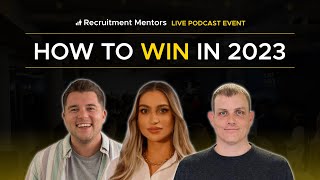
In this hour‑long live podcast hosted by Hishem Azzouz, a panel of recruitment and sales professionals—Amber (former agency recruiter, now launching her own venture), Alex (founder of Strive, investor in HR‑tech), Kyle (Sales Director at This Is Prime), and Carl (business development lead)—discuss the state of recruitment in Q1 2023 and share tactics for winning in a challenging market. The conversation covers the perceived increase in complacency among internal talent‑acquisition teams, the importance of multichannel business‑development cadences (cold calling, emailing, LinkedIn, voicemails), and the value of data‑driven prospecting and KPI tracking. Participants compare contingent, exclusive, and retained models, debate 360 vs 180 recruiter roles, and explore the logistical and cultural hurdles of expanding into the US market. Leadership themes emerge around clear expectations, team accountability, mental‑health awareness, and genuine diversity support, especially for women. The panel also addresses referral strategies, the impact of AI on recruitment, and how to sustain performance through continuous improvement and gamification.
Chapters
Do you want to do just a quick intro? Obviously you've all been on the podcast, but for those of you that, you know, may not know who you are, Amber, I'll come to you first, do a quick intro, and then we'll go Alex, Karl, and then we'll kick off.
Hi everyone. So I'm Amber. I've been in recruitment for 5 years now, and in that time have spent the entirety of that at the same agency. But plot twist, I just actually quit that company last week, so I'm unemployed. The first unemployed guest we've ever had on the pod, and I'm going to be starting on my own venture. So lots of exciting things to come.
Alex.
Hello everyone, I'm Alex. I have been in recruitment since 2003, so I'm the old person. On the panel. I built a business which I sold in 2016. I'm now a shareholder in another recruitment company, Strive. Yeah, no one else clapped. That's really— never mind. I also have started investing in the recruitment and HR tech space, so I've got a couple of investments in that space. And yeah, that's me.
Nice. Kyle.
Hello, I'm Kyle, sales director at This Is Prime. Are we going to get a woo? There we go. And there was a few more there.
You won.
So I'm Kyle, sales director at This Is Prime. We support predominantly tech companies in growing their sales teams. We're on a mission to change the perception of sales and make it a career of choice for all young people entering the industry. So that's me.
Nice. Cool. So let's get into it. I think I'm going to start, Amber, by quoting you with something you shared with me. Sorry to put you straight on the spot, but Look, most people that I've spoken to over the last couple of months would describe first quarter of this year as quite challenging, different, and hard. But in preparation for this, these are Amber's thoughts, and let's just sort of talk about it. So Amber shared with me, I don't personally think recruitment is harder in 2023. Complacency has increased, as has the amount of internal TA teams utilizing job boards due to the recession. Talk to us about that thought process. Let's start there.
I'm such a hypocrite because it is bloody hard at the minute. Like, that's just the reality. But having said that, complacency has also increased. Like, if I look at the majority of recruiters, we are kind of scrapping for companies that aren't necessarily— they have a good brand reputation, they have— like, for example, I work in the US, they have 401(k)s that are actually competitive, or I just feel like a lot of us, due to the recession, are letting our guards down in terms of what we will accept from clients, and we're focusing on maintenance versus growth a lot of the times with recruitment companies right now. Yeah.
Alex, anything to add to Amber's thoughts on complacency over it? Being more challenging?
Yeah, the market is definitely tough at this moment in time, and I think for— I think it's particularly tough for people who are coming into the market at this moment because they probably haven't seen the good times. Certainly someone who started in the last quarter or two is probably coming in and thinking, what on earth have I set myself up for? Look, maintenance is important, as is growth. I think it's also just important to be able to embrace the suck a little bit and understand that you're going through a period where, yeah, things might be a bit shit at this moment in time. You're probably not going to be earning the commission that you wanted to be earning previously, but certainly, you know, good times will always be around the corner again within recruitment.
So nice. Well, look, let's sort of build on that then. So, Carl, let me come to you and start this sort of initial part of this around, you know, business development, that typically when we talk about things being difficult Obviously, the candidate side can always be a challenge, but typically what I'm hearing is clients are being hesitant, number of accounts that people hoped were making as many hires as they hoped aren't, just the BD side tends to be difficult. So I guess let's just start high level, Carl, if we were to reflect on Q1, what have been from your side some of the most effective ways for you guys to maintain client acquisition, maintain some of the job flow that you hope for? What's been working for you guys in Q1 on the BD client acquisition side? Let's just start there.
Yeah, I think what's been working for us, and it's important to say, we kind of restructured our model towards the back end of last year, and we now have a dedicated business development team which consists of SDRs, which I think is somewhat unusual maybe for recruitment businesses. So we've got a team of 3 people now that's core responsibility is all day looking to generate opportunities for recruiters or people in the business to then subsequently close and bring on roles. So that so far has been really working for us to have that dedicated focus and people that can become experts in creating opportunities. I think what's been really useful for us as well is the cold calling, just going back to basics. Did some analysis of the clients that we've brought on within the last 6 months, and 30% of them have originated from a cold call.
So What was that percentage?
30%.
30%, okay.
Yeah. So I think for us, having the focus of people in the business that that's all that they do, and also just hitting the phones as well, has been quite effective for us.
Cool. So let's just talk about this for a sec, because picking up the phone has become really not fucking sexy, basically, has it? No one likes to do that. So Amber, I'm going to bring it back to you. You know I was going to do this, didn't you? So for those of you that haven't listened to the podcast that me and Amber did, I think we even called it like, 'Cold calling is dead,' or something clickbait like that. But anyway, preparation for this, Amber literally said to me, 'I've gone from, you know, not believing in cold calling to becoming a cold calling queen.' So let's, you know, let's talk about if that's been effective for you. Carl, that's been effective for you, you know, a third of the job opportunities have come from that method. So let's talk about this. So I guess question for you, Amber, is, you know, you've had a bit of a shift of mindset. Talk to us about, one, what does What did that actually look like? How did you go about that? Because people could benefit from that here.
Yeah, again, I'm a hypocrite. It's a running theme. But with multichannel BD, I think naturally as salespeople and as recruiters, we focus on the parts of that that we're really good at. And that's the negative that I think I had. I love, I love cold emailing. Like, I love really personalizing them and making them amazing. And I was getting really, really good responses from that, but I also recognize that I need to look at other avenues as well. And yeah, like you said, funnily enough, I came on your podcast and was slating cold calling, saying that it's dead, blah blah blah, but when in reality I was just shit. I was terrible. I'd spent all of this time educating myself and reading about and learning about cold emailing and, you know, personal branding on LinkedIn, but quite honestly, it terrified me. Like, I hated— especially for me working in executive search in biotech, these are CEOs in America of like huge molecular biology companies. They don't want to talk to me, and I'm a sensitive person, and it really knocked my confidence quite honestly. Like, just being told to politely fuck off down the phone. And for example, I was telling you both like earlier that I made 260 dials yesterday and I got one person that picked up the phone.
Wow.
And just like self-deprecating.
That doesn't sound productive.
No, it's not. But then last week I did, I think it was 33, and I got 2 amazing BDs, and now I've got like 2 VP roles from one of them. So yeah, I think what I've learned is just like focus on the things that scare you and really try and better yourself, because there are not a lot of recruiters at the moment that are picking up the phone. I think a lot of graduates especially are forgetting that this is a fucking sales job. Like, yes, there are other avenues that we can use, but you need to be doing all of them because they all marry so well. Because when I am doing the cold calls, I'm then following up with a personalized, like, amazing email that's less than 70 words, that's got a really good call to action. Um, so yeah, I think as well, when you look at the best recruiters, they're the people that recognize that you need to be constantly learning and evolving. Like, I'm constantly calling myself a hypocrite because one minute I think that I'm really good at something, and the next in it and realised that actually you need a bit of work on that. So yeah.
Nice. Alex, how do you feel about this, mate? You know, you've been in the game for a while. You're probably thinking, these fucking lot, I told them, you know, trying to drive this since 2003. Come full circle. What, you know, what are you seeing in Strive? You know, do you see similar numbers in terms of opportunities generated from cold calling? How do you feel about it?
Firstly, that's really ageist.
Sorry.
So, so fuck you, dude.
Sorry, mate.
Sorry.
Secondly, yeah, I think for me it's all about data. So I'm like a massive data geek, and I think what you have to do is have a standardized way of doing something, which is effectively your mapped-out process based around best practice for each aspect of your prospecting. If you do that, I think that hit the nail on the head, what Amber was saying there. You can understand what's working and what isn't working. If you don't have a standardized way of doing something, the problem is when you get results, it can happen for all sorts of reasons. If you have a standardized approach, it's really easy to be able to identify exactly what's working as you go through your sales funnel, depending upon what channel and how many touches you're making based upon different channels and approaches. I think that gives you the ability to understand the different levers you have to pull depending upon market conditions. So Talking about 230-odd calls leading to, you know, your reach rate, I'm assuming, was really poor. Maybe previously you had a 10-15% reach rate. All of a sudden your reach rate's gone down to 1-2%. So clearly, therefore, you can see that you're either going to have to increase the volume of your cold calling or you need to look at that and say, well, are there other things that we can do from a root cause perspective, such as, you know, your data quality? Maybe if we had better data quality, we'd be able to call more mobile numbers. Therefore, we need to look at our providers, etc., etc. So I think it's just about having a standardized approach where you can really analyze what you're doing on a granular, granular level, both from a volume perspective, but also from a conversion flow perspective. Because if you're doing those calls and that's leading to an X rate, reach rate, then you get, you know, what percentage of those calls that you do get through to, what percentage of those are positive versus negative. Once you get through to your positive calls, what percentage of those are leading to discos? Once you get to your discos, what percentage of those are leading to you know, signed contracts, etc., etc. So by understanding that data, you can really start to hone in on what is and what isn't working. So previously, CV specs would have been amazing because in, in a buoyant market where everyone's fighting over candidates, you might be sending out CVs and getting a 15% reply rate. All of a sudden, that's dropped down to 5%. It gives you that ability to understand what's working and what isn't working, and then that kind of gives you the ability to be able to pull those levers to figure out what you should be doing moving forward.
So obviously it sounds a lot, I know we're going quite granular here, but obviously we're talking about cadences really, aren't we? I feel like, is that fair?
Yes.
Can you, 'cause I wanna make sure everyone, you know, can you put your hand up if you've heard this terminology cadences before? You know, what's that, would you say? Quarter of the room? So just to make this really clear here, 'cause I think what's going on here, obviously Carl, you recruit in, you know, the tech SaaS space, so does Strive. Amber, I know you take a lot of learnings from different industries. And then bring this into recruitment. So just in— Alex, you were just explaining that just for like really lame and simple terms, you know, this word cadence, not everyone's heard it. Standardised process. Like, what does that actually look like? What does that actually mean? I've got an example that Amber's given me, but how would you describe it so everyone here will put their hand up and knows what that actually means?
So your cadence is your sales process for prospecting. So if it's a multichannel, multitouch cadence, what you've typically got is If you think about all your different routes to market, all your different channels, you've got phone, you've got sales emails, you've got CV specs, LinkedIn, social touches, voicemails, voice notes, LinkedIn emails, all those different avenues to prospect. What you do is you put that into a logical manner where you have a standardised approach where day 1 you do X, day 2 you do Y, and you can have multiple touches on each day. You prioritize those based upon their effectiveness. So let's say you've typically got a 2 or 3 week cadence where you prospect 30 accounts and you follow the same pattern to prospect those accounts, which should produce the best return on effort based upon the work that you do. So if you're doing that consistently, you can understand your sales funnel and you can say that based upon X, Y, and Z, every 2 weeks that I run this cadence with a particular account, this is the likely return I'm going to get on that. And again, going back to that previous point, the real joy— Source Whale is an example, great, great product, because what that does is it gives you the ability to analyze your cadence and understand exactly what's working and what isn't working so that you can constantly measure and optimize it.
Cool. A bit more— that is—
that—
does that help? Yeah, cool. So And then just to, you know, just tie this up and then we'll move on. Amber gave me an example. So Alex gave a really good example there, but Amber gave me a bit of an example 'cause we prepared for this. So for example, the cadence that Amber shared with me was day 1, personalised email and cold call. Day 2, in-mail and cold call. Day 3, another email with a different personalised potential problem. Day 5, LinkedIn post about business, et cetera, et cetera. Do you get what I mean? What's really helpful, because look, all I do is speak to recruiters. You know, you have people go into the office like, you know, I'm going to do— what's your day plan today, Alex? Well, 10 to 12, I'm going to do BD, right? What the fuck does that mean? Do you know what I mean? And this is where this, this really helps, you know. What is the process that we're going to take our dream clients that we hope, you know, we could do some great work with, um, through that journey? And then because you have that journey, you can recognize clear for you, oh, actually people were affected with the cold calling. And yeah.
For me, sorry to buy it, like last year I billed like way past my goal, like 750K, right? But then I got to the end of the year and I thought, I don't have a single repeat client. Like, this has all just been reactive BD and I can't keep this up. So a cadence for me has enabled me to not just chase vacancies but chase businesses, and that's been the biggest like mindset switch for me, and it's just become much easier since doing that. So yeah, great.
Okay, cool. Right, just to just keep it, uh, on the, on the BD side for a second. Curious, Carl, come to you. Um, how do we feel about, if you were to look at again Q1, how you, um, the types of companies and, and what you've been doing, what, how have you been finding, you know, just doing contingent, exclusive, retained? How has that played out for you guys in Q1? You know, everyone's saying, I never, I'm never going to work continue, only work retained. Most people I speak to on the contingent hamster wheel, you know, what's that look like in terms of the products and services? Are you finding contingent is mainly how you work? Is it exclusive? Talk to us a bit about how that's played out.
I would love to sit here and tell you and say it's all retained exclusive. It's not. A lot of it is contingent. A big thing that's been effective for us though has more so been exclusivity, because that's at least given us some security of not missing out to competitors or other agencies. We have had some success, sorry, with retained, so a bit of upfront commitment. We are still getting that, but it's just harder to secure now because so many businesses are risk-averse. So yeah, mixture of contingent, but exclusive has been a huge push for us as well.
Alex, and you know, if you're looking at the data and stuff, how does it shape up in Strive in terms of, you know, the different products and services?
Well, we're definitely doing less retain than we were based upon market conditions. I think you've got to combine— I think sometimes people get a bit too fixated on contingent, exclusive, retained, without looking at what the most important thing alongside that is, which is fill rate. So I think you've got to understand your fill rates, and I think you've also got to then look at that from a volume perspective. Amazing if you can win retained business, but the reality is if you can't win it in enough volume to be able to then feed yourself or feed the business, if you've got a BD function, I think you've got to be a little bit, um, uh, strategic with regards to that. I, I don't think contingents always— sorry, I don't think retained is always the right, the right way to go. Um, and I think you can set yourself up to fail quite a lot with retained, because if you're not 100% confident you're going to be able to fill that job within a certain time scale, you probably shouldn't be taking— you shouldn't be taking it on as retained business, because you're going to dedicate loads of time and resource to a role that you're not going to fill. You're going to piss the client off. You've given certain reassurances and guarantees from a retained perspective, so I just think you've got to be a little bit smart with that and you can't, you know, retained is great, but it's not the be-all and end-all. I think exclusive business can be fantastic because you don't necessarily have to die on your sword if you don't fill that job.
And then just from, just quick for your perspective, fill rates, what are you saying? Standard, what would you expect is like the gold standard that you'd always be aiming for?
At Strive, 100% on every single job.
Yeah, come on. Okay, what is it, 13%?
Um, I hope not. We're fucked. No, what we say, our retained rate is exceptionally high.
Okay.
Um, and that's for a reason, because we take on business which we know we're going to fill. Yeah, because again, the problem is most of the time with a retained role, you're guaranteeing fill typically. So again, you can waste a lot of time and energy on roles if you're not going to fill them on retained, because you've kind of made that, that pact with the client. Exclusive, our fill rates are also extremely high, but obviously not as good as retained. And then contingent, you know, I'm not a massive fan of contingent, but I think it depends upon the market, and I think it depends upon the business model. There are companies out there that absolutely smash it doing contingent. So, you know, there's lots of different ways to skin a cat, and I think it is a little bit dependent upon the market you work in and also your business model.
Okay, fair.
So, um, just to bring in an audience question here, I think it'd be a good time to ask it. So you've spoken a lot about having a process cadences. This is a question from Felix who basically said, when your pipeline dries up, how long do you continue to trust your same process before you try something new? I don't know if you have any thoughts on that.
Yeah, that, that 100% is all data-led, because if your process worked previously, the key is that you should understand why your process works. And that, you know, if you look at the two important bits around your sales funnel, there's the volume of things that you do And then there's the conversion rate between each stage of the funnel. So if you understand what that is, you should have a good understanding of why your cadence works and why it doesn't work. When it starts going wrong, you should therefore be able to identify why it's going wrong. And that gives you the ability, I think, to pivot and make changes, which might be increasing volume, you know, but I think that's a bit of a lazy answer that a lot of managers use. Just do more. I think it's, it's helpful to understand that if you're If your conversion rate from disco to new logo or disco to proposal—
You're saying disco like everyone understands.
Discovery. So doing a discovery call with the client.
Okay, cool. No, I just, you know, I want to make sure everyone—
Sure.
Yeah.
So again, I just think it's data-led. If you understand how, like, I see it sometimes, and this is a little bit like sport. Some people who are just really good at something, they don't actually know how they do it. And you have these gifted recruiters and they just do stuff and it works. And that's amazing, but at the same time, I think as a business, you really have to dig into that and figure out what that looks like and the reasons why something works. And then, yeah, I've kind of forgotten the question, but that gives you the ability.
It's like, yeah, when should you, you know, change your process, whatever?
Well, then the data will tell you. Let the data be your guide.
Okay, cool. Did you want to add something?
Yeah, sorry, did I look at you guys? Um, I think as well, like, when I did manage a team, so for example, I'd suggest a new technique, and then they come back to me and say, oh, this doesn't work, like I've been trying it for 2 weeks. That doesn't necessarily mean that you need to change the entirety of that technique. It could just be a small aspect of that. So for example, if I'm talking about cold calling, it could be your opener, it could be your CTA. You don't need to completely flip the script. It's A/B testing, right? So pick a small part, change that, trial it for 2 weeks. If it fails, change it, but you need it to be long enough to understand the flaws but short enough to not be wasting your time.
Okay, nice. So I think I want to bring this in. So Alex, I was looking at some of your posts. You've really upped the, the posting game, mate, which I know, kudos to you, good content. And one of your posts, right, we have a lot of retreks in the room, and you know, from what I see, it's a selling point that the company they're representing doesn't work to KPIs.
Right.
Boo. And you're talking about data, right? So your post, which I'm gonna reference here, and let's just talk about it for a sec. Recruiters, if you're not using KPIs to track and improve your performance, you're either really, really good, or you just don't care anymore. So, you know, like maybe we've gone too far, like, you know, for me, I've been saying to people, okay, well, let's change the wording. It's about what is the science to be successful, you know? I think it's really useful for people to know what should the inputs look like, rather than, no, we don't do KPIs, you know, we treat you like an adult, do what you want to do, we'll support you. So let's just talk about that for a sec, because you're saying this is absolutely integral. You know, have we gone too far towards, yeah, fuck KPIs, we treat people like adults?
Not believing in KPIs is like not believing in cause and effect, because I think the key for me is that there's 3 types of metric. You've got activities, you've got objectives, and you've got results. If you want to achieve a certain result, you need to reverse engineer that back into the objectives you need to achieve, which lead to that result. To get to those objectives, you need to do certain activities. And that's not just volume, right? Because I think people get fixated on the volume piece with KPIs as if it's just more, more, more. It's also about the quality of what you do. And if the quality isn't right, you won't have the necessary conversion rate going through your funnel. So if you break your metrics down into activities, objectives, results, you can reverse engineer that stuff and say, by the end of this quarter, I want to achieve X from a results perspective. That means I need to achieve certain objectives over the course of the quarter, and in turn I need to feed into those objectives with certain activities. So it gives you the ability. It's kind of like a golden thread, right, between your metrics. I can look into the future and say, this week, if I do a certain number of activities, and I do it to the right quality standards, that will lead me to a certain number of objectives, which in turn is my indicator of whether I'm going to achieve my quarterly goal or not. So I just think it's, it's about understanding the science of your desk. Get that stuff right. You can look into the future and then every week you say, look, I haven't achieved the objectives that I wanted to this week, so I'm going to have to change the inputs the following week if I'm going to catch up with regards to the objectives that I need to achieve, which again lead into the results. And then you combine that with time blocking. You can figure out how to manage your diary. You allocate tasks and objectives within that time span, and it's just a constant way of being able to evaluate what you're doing and where that's going to go. Because again, I think the key is that for me was always super motivational because I just knew this is what I've got to do, this is where that's going to go, and this is what that's going to lead to. So it just gave me such confidence that I was doing the right things. Without that, I'm just doing stuff and I don't know what the outcome's going to be. And that for me isn't motivationally good. So I think when we talk about KPIs being no good, I think genuinely it's because people don't go into enough detail or, or be thoughtful enough about how KPIs lead to predictable outcomes.
Okay, cool. So let's move this on to more, you know, you said about Amber, you managing a team. Obviously we're talking about, you know, the data that should lead to success. So Kyle, I'm going to come to you on this one. So this was a question from Jacob which I want your thoughts on, and then either of you can jump in here. So question is, if a member of your team is putting in the effort but the results aren't there, how long would you persevere with them for?
Um, it's a tricky one, that, isn't it? Because the one thing that you ask of the people that you hire is that they do apply themselves, work hard and put the effort in. And I think, first of all, I would go back to the beginning. If someone isn't performing but they're putting in the effort, I'd probably look internally first of all and think, hey, have we hired the right person? You know, we need to probably look at that process first of all. And then two, what's our onboarding and training like? Because if they're doing everything that we're asking but the results aren't coming, what do we need to be doing differently first? But to actually give an answer to the question, um, I would probably say 3 months, and that's probably a bit soft. Some people may be a bit more firm on that in terms of the Maybe Alex. But I would say 3 months because you ask of people to put the effort in and I feel like it's our job if they're doing that to make sure they achieve it. So that would be my take.
Thoughts, Alex?
Yeah, you've got to identify the gap. So this is where you are currently, this is where I need you to be, and this is the timescale that we need to see some improvements. And I'm saying that in like a really matter-of-fact way, right? So it doesn't come across very compassionately, but I think the challenge from my experience is, like, random example, you hire 3 people, 2 of them are performing to, like, really good standards, and 1 of them is underperforming because they're just not picking it up quick enough, and they're not demonstrating the ability to assimilate information and then action it to get the required results. The challenge you've got there is you end up spending, like, 75% of your time with the person who's underperforming, and then what's that? Well, 12.5% with the 2 people who actually are performing to a high standard. And probably have a higher potential, to be quite frank, from an early perspective. So I think that, that could be death by a thousand cuts. And then before you know it, it's 9, 12 months down the line, that person's still underperforming compared to the standard of high performance you have in your business, and they probably end up leaving anyway because no one enjoys not being successful, right? So I think your time gets sucked into individuals, and this sounds really harsh, but It's kind of a question of maths. Where should I spend my coaching time? Should it be with the people who've got really high potential? Or should it be with those— should I be spending a disproportionate amount of time with actually the people who've got the lowest potential? And my answer to that would be no. So I think you've got to allocate your time evenly between your people. And then the ones that aren't keeping up, you've just got to be really compassionate but also pragmatic about it and identify where those gaps are and say, look, here's a timescale we're working to. I'm going to do X, Y, and Z to support you, but this is what I need back from you, and these are the results we need to see based upon improving and getting better. And you know what? If that's not the case, maybe, you know, you should probably be thinking about where you can go, where you can be successful, because no one wants to be coming into work every day and feeling like it's not working for them.
Yeah, and for me, I think, you know, sales is such a numerical and quantifiable-driven realm. And sometimes, like, for example, with me in my second year of recruitment, I was terrible and I almost got sacked. And I would have just loved, in that moment, rather than people just having a magnifying glass on my KPIs and the data— whilst that was helpful— for someone to just sit me down and be like, how are you? Like, how is this making you feel, because it can be so draining. You know, we talk about having these processes and just going through those and rinsing and repeat, and it can just get draining. And especially now as we're approaching a recession, it's really hard on your mind. So I think not only looking at KPI gaps but like mental health gaps as well is really important for me at least.
So, so let's just continue this leadership conversation. A lot of people in the room who are either current leaders or aspiring leaders I think that we had a ton of questions through around, you know, the typical managing, you know, that leadership journey along with your own performance. And I think Amber, you shared some really interesting things in terms of, for you, it's always been about having really clear expectations. So did you want to just talk to us a bit about, you know, your journey with leadership? You gave me some really good examples of how you set the team up. Again, we're going a bit granular here, but I think it'd be helpful. Did you want to just talk a bit about, you know, why that clarity and clear expectations is important and what that should look like with your team?
Yeah. So I made a lot of mistakes along the way. And, you know, as an industry, we talk about how difficult being a billing manager is, let alone a billing director. And that's what I was. And it was bloody hard. Like, I did not have the time that I necessarily wanted to, you know, put into the team. And so when I did you know, set meetings, for example, just little things like actually following along with that. Because I'm sure we've all had managers in the past whereby they're like, okay, we're gonna meet on a Monday, we're gonna go through your pipeline on a Wednesday, we're gonna have a peak and pit meeting on a Friday, and none of it happens. So just when you're saying things, stick to it, because that's going to create the trust and the honesty, and that's then going to be reciprocated with how they feel about you. So I think that's something that I really tried to adhere to. And again, just like trying to instill the, the traits into my team that I wanted. So for example, we did an exercise one day— I think I told you about this— and we thought about the 3 highest performing recruiters in our business and what traits they all had within them and what made them successful. And then we kind of thought about, okay, what kinds of non-negotiables can we implement as team to hold each other accountable and to try and instill the traits that these people have that we all openly look up to. Um, so yeah, open communication, actually sticking to your word, and really reiterating your vision and your mission. Because as a leader, I think it's so clear in our heads what our values and mission is, but if you're not reiterating that constantly to your team, how the heck are they ever going to want to follow you and create this journey with you.
Yeah, I'm going to come to you because you sort of shared a similar experience, didn't you? But just really quickly, uh, what Amber shared with me in terms of, you know, what a weekly, monthly, quarterly— to use that word cadence again, but from a leadership standpoint. So Amber shared with me that every Monday, team Monday kickoff, 30-45 minutes. The other thing would be pipeline reviews weekly, potential bottlenecks. Can, um, you know, Amber provide any coaching for these people? One-to-ones monthly, and they're very much enjolred in, uh, involved in the agenda. You do quarterly reviews, and then you do BD one-to-one reviews immediately following a call with, you know, it was a rough call. So just to give you a bit of a flavor, I guess, on what some of those things could look like. But yeah, I, I asked all these guys around, you know, what, what can we do, uh, to build high-performing teams? We all want our teams to be succeeding, want to be doing well. So obviously, Amber, you just said there around a really cool exercise you did in terms of, right, let's all agree together. I don't want to just tell you what you should be. Let's obviously all arrive at the same point. So Karl, why don't you share, you know, the exercise that you did with your team? Because you actually shared a similar experience where, you know, sport— thought about your core values as a team, as a business, and why did that end up being impactful?
Yeah, so we did some internal training which was all around high-performing teams, and then we were tasked individually as our teams to go away and discuss, debate, and come up with what were the kind of free values, behaviors, non-negotiables that we all needed to live by and really buy into. Wowee. And I think why that really helped—
no, all good.
Yep, just there. Hello, testing. And so what we did was, um, we all got together and discussed like the things that we believed, and I think The point here is all about accountability and trust. And similar to what Amber said, rather than us dictating these are the things, actually getting them involved, getting them on the journey means actually they hold each other accountable to them now, hold me accountable to them, you know, everyone. And I think everyone's really bought in. And to give you an idea of the things that we came up with, number one was be relentless and never give in, which I think we stole from Sir Alex Ferguson for the United fans in the room. But that was one. 2 was win and lose together, which I think in the current market conditions is kind of really resonates with everyone at the moment, kind of in this together. And then the third one was we don't take ourselves too seriously, but we take what we do very seriously, and we have them on the board, and, you know, we hold each other to account to them. So I think the key is getting the team involved on the journey and coming up with these things is really important.
And just quickly, like, how did you then arrive at those? You know, did you have like a proper brainstorming session? Did you book out half a day? Day, Post-it notes out, all that?
We went for lunch, had a beer, and came in and discussed it. So no Post-it notes. But yeah, we took about 90 minutes outside the office. We said, this is the activity. You need to all be involved. And they were encouraged to share their ideas. And then we didn't leave until we agreed on what the 3 were.
Yeah, cool. Right, so let's move this on just to a mixture of a few different things. For those of you that might have some questions, specific questions for these guys, definitely start thinking about those and I'll come out with a microphone. So, couple of things here. Firstly, Amber, let me come to you. So, just quickly for context, let's say last year, billings-wise, how much of that was all US? Have you only always done US? Because I can't remember if it was all or you did some in Europe. How much have you typically done in the US over the last— 12 months?
Yeah, it was all—
oh, okay, cool. Um, talk to us about— look, I've spoken to a lot of people, um, you know, who are really excited about the US opportunity. Um, interviewed someone yesterday, um, who did a million quid in a year, and in the UK he did— the biggest amount he did was 260. So he was one of those classic stories that we hear about. How many of them are actually true? Don't know. But, you know, talk to us about your experience, Amber, on, you know, what has really ended up working in being successful in the US market for people here that might have aspirations to do more work in the US?
Yeah, I think I'm somewhat an anomaly as well because I was just kind of thrown into the deep end and I didn't even think about the challenges that working in the US market would present. So I joined a cold desk. I didn't even know the meaning of the industry that I work within, which is multiomics. Like I barely do now, to be honest. So whilst I've done that the whole time, I'm not necessarily sure if I'm the best person for advice, but I think the hardest thing understandably has just been like the hours. It's really, really tough. And I think partly that's what led to the burnout of me leaving. So you need to be ready for that.
So how did you structure it then?
Was it, you know, I started at 8 AM, finished at like 10, 11 PM at night every day.
Really?
Yeah, but again, that wasn't enforced by anyone else besides myself, um, and you can definitely do it a lot better. I just had this goal in mind and I would do any fucking thing to hit that goal. Okay, um, so, and what, like I was saying to you, Alex, earlier, US— sorry, Americans are crazy and they're all up at like 3 AM in the morning ready to go. So you might think that the time difference is a negative.
You're cold calling at 3 AM?
I was saying as well, my best client, um, actually that I got from a cold call came from a VP of business development, like an 800-person, um, biochemistry company in the USA, and he was on a StairMaster at 4 AM in the morning in California.
Let's go!
Um, I don't think there's ever a good or bad time, to be honest. Um, but yeah, I just love the US. They're a lot more honest, and there's none like None of this polite bullshit that us Brits like to endeavor on. But yeah, I've loved it. And the salary is obviously a lot higher. It's very, very difficult regarding different legalities in different states. And every state has a different cultural aspect as well. Like, personally, I don't love working in the Midwest, but I like Western East. You've just got to find your, your flair. But yeah, I've just kind of winged it and it's worked.
Okay, cool. I know you were early on. Talk to us about, you know, what's worked, what hasn't. Because you're early on in the journey, aren't you?
Yeah, we're very early on, and to be honest, it is tough, and it has been really tough for us. So very much in our infancy, and to be fair, I'd be keen to speak to anyone here that's been on that journey as well because we're still very much in learning phase. Um, what's worked for us at the minute is our prospecting methods because the people that we sell into, they do the same thing. So although they may not be recruiting, we've been having a lot of positive feedback on the outreach, which has given us get some reassuring signs for when the market becomes more buoyant and comes back. So that has been working, our prospecting. The candidate attraction side, from what we've experienced in the last 3 months, actually been quite straightforward. Again, that's probably down to the market, but that's not been an issue. The big challenge for us though has been just winning clients. And the advice I would give for anyone that's looking to do the US, I would make sure you've got your UK or your core market in order and kind of nailed down first and just make sure you do your due diligence first of all. And we thought we had it all planned out. I mean, we do. We've got the market mapped. We know what type of businesses we want to sell to. And then we realize our domain is.co.uk and you're like, oh wow. All the little things that you're just naive to, that you don't realize. So yeah, just make sure you do your due diligence first would be my advice.
How have you approached the hours? Because I know that's been a bit of a challenge for you as well.
How have you structured the Yeah, so we structured the hours. The legend that is Sam, he's in the audience somewhere. Go on, Sam. I think he's got a BD call shortly, actually. So the hours that we do, 10 AM to 8 PM, Monday to Thursday. We have a 3 PM finish on a Friday. So Sam still benefits from the 3 PM finish, which we think is really important because there's a lot of sacrifice doing the US, and particularly being the first person to do it. So we still want that. Element of inclusion and being involved in the bigger picture. So that's how we're structuring the hours at the moment. It's working okay for now. We may tweak them, but for, you know, the East Coast, it's not too bad.
And then I guess, Alex, anything to add? Because you guys are a bit further along, right, in the process of having people move there, setting up an office, you know. So I'm assuming, you know, there's obviously probably been mistakes and challenges, but you've built enough traction to invest in, you know, feet on the ground, people there. So talk to us a bit about, from your perspective, a bit further along, principles to, you know, making it a success in the US so far that you guys have learned.
I think it sounds really great what the two guys have already said. I think, yeah, you have to build a business before you move across. I think that's really important. There is a lot of sacrifice involved in that, and like, even the guys in the UK at the moment who work the US market, you know, I've got a huge amount of respect for them because you do have to sacrifice certain elements of your your life basically to be able to work the hours. I think then it's about ensuring that you've got the right team to go across. So I think it's all well and good, you know, strategies. I think the people come first before the strategy sometimes, especially in recruitment when it's, you know, professional services, etc., etc. It's people-led. So I just think you need to make sure you've got a really crack team to send across, and you need to send across enough people so that you're kind of managing risk a little bit there, because there's the possibility someone's going to move to a new, new country and say, you know what, actually this isn't for me. So you need a really, really good team. You need to build business before you go across, so you've got an immediate base that you can work from and expand out of, um, and tap into new opportunities when you do, do go across there. Um, and as I say, I think you need scale and you need the right people.
Cool. One or two last questions from me then, and then we'll, we'll— I'll bring the microphone in the audience. So, Carl, let me come to you on, uh, this one. 360 or 180 models, what do you prefer?
For us, 180 just suits our market so much better. I think the 360 model does work, can work. Even in one of the teams in our business, there's a case that it will work as well. But I think for what we do, there's just so much work that goes in. Hence why I said before, we've started the SDR model as well. There's a reason that we place SDRs into jobs that are very highly paid because it is a full-time job. But somehow as recruiters, we expect people to generate opportunities, book meetings, manage the accounts, agree the contracts, then find the candidates. It's just too much. So I think in some markets it can work. The way our business model is set up, it doesn't. So we have it split. We've got a couple of people that do 360, and it can work in certain markets. But for me, and for a lot of businesses, I'm not sure it works personally.
Alex, 360, 180?
They both— personally, I think they both work. I'm a 180 guy, so that's my background. And we've been playing around with that a little bit at Strive to make sure it works for everyone. I think you've got to tailor it to the individual first and foremost. So there are some people who are suitable to 360, and then there's other people who really enjoy the hunting and there's other people who enjoy the farming. So I think you can play to people's strengths. I think strength-based management is super important. But the truth is, if you look at some of the fastest-growing recruitment companies coming out of the UK at the moment, they do 360 models. So although that's not my personal preference, I, you know, I think you've just got to pick a model that works best based upon your market and then make sure that your systems and structure are really sort of, you know, slick.
And what's been your experience?
Despite being 360 myself, I'm a 180. Advocate, which is again hypocritical. But having said that, I do think 360 suits a very, very minute amount of people. Like, I just love 360. Like, that's what I love, being able to do tons of different things and learn from different aspects of the process. But it doesn't work for everyone. And also, I think in agencies, if you do have like 50 360 recruiters they have no dependency on you. You kind of think, okay, what as an agency are we actually providing? And you know, that's why I might have moved on to start my own agency. I kind of feel like I can do it all myself. So you have no dependency to the agency. So sounds a bit twisted, but you do kind of need to think about that as well.
So final one for me, um, we've spoken a lot today around, you know, winning new business, new clients. So, Cole, let me come back to you. What— obviously I speak to a lot of different companies, and when I find out, you know, the most common way they either maybe get candidates, clients. Oftentimes it can be referrals. For a lot of companies it isn't. So, you know, I think sometimes, like, like you said, Amber, when you achieved those goals, it was always with new logos, new clients, right? Which is crazy. Like, imagine what you could do if these people were giving you more than one opportunity or whatever. So let's just end with— and I'll go into the audience— Carl, what's like, you know, your principles of actually building a successful referral program, either the client side, the candidate side, because I think that's also a missed opportunity for people to think about what more could they get out of their existing relationships?
Yeah, I think client referrals for us have been key, and we've had a few new client wins that have come from referrals. Do you need a program as such or an incentive for referrals on the client side? I don't think you do. I think the biggest advocate and ambassador for generating referrals is just how good your level of service is. I think if you deliver exceptionally well for your clients, which you should be doing now, and then just asking them for referrals. You know, recently we've asked our existing accounts for referrals. Within 5 minutes, we've had an email intro into a new business that's hiring. Um, but I think a lot of people probably don't ask. Um, so for me, I don't think you need a program, or maybe for candidate side, yeah, I think that would incentivize people to refer. But on the client side, I think the best thing you can do is deliver exceptional service and just ask.
Any thoughts, Alex? On your journey?
Yeah, I think that's really good advice. Um, one of the things we did at Liquid which massively increased our referrals, we implemented MPS. So I'm assuming most people know what MPS is, but it was a brilliant way to change the culture of our business a little bit because we were really like, um, sales-focused organizations— organization. I think sometimes that had a little bit of an impact upon our, our culture with regards to having a customer-first sort of mindset and a candidate-first mindset. So We implemented NPS, which gave us the ability to be able to really effectively measure our customer satisfaction levels, which first and foremost changed the mindset of the people in the business because they knew that that all of a sudden was something that was massively important to us. And I think also it gives you a brilliant way to be able to identify learning and development opportunities. But also there's a sales trigger there. So when you have someone come back and say exceptional service levels, all of a sudden that's the perfect time to be speaking to that individual to maximize the referral opportunities. So I think as a way of like object— object— focusing on customer service levels and object— objectively being able to measure them and drive improvements throughout your business, including in candidate and client generation, I think it's, um, it's, it's a good tip for anyone out there thinking about how they can focus in on that stuff.
I don't— Amber, should I ask you? Because don't know how many referrals you got, mate.
Um, but don't you think like as recruiters we forget how like easy it is to just ask for referrals? Like how many of us are actually asking? Probably not that many. And obviously this has been something that's top of my mind, starting a new business. And how easy is it to have a lovely call with one of your existing clients, be like, Jane, I've loved working with you, I love that you're diverse, we've had an amazing honest like open communication. Is there anyone else in your network that shares our same values that you could introduce me to? Like, that is so much easier than doing 262 dials or whatever I did and being told to fuck off once. And it— yeah, and then it will equate to clients that do replicate the traits of the clients that you already work with, that you do like, and that do work with the way that, that you work. So I think just don't ask, don't get.
And get good at upfront contracts, just to throw in there. Like, that was the thing I always used to do. So 'If this is our relationship, what do you want from me? You know, what do you think I expect from you?' Get a really clear understanding from a client and from a candidate what they want from the relationship. And then I think you can close them on the fact, 'If I do those things for you, how would you feel about X? How would you feel about recommending me or introducing me into maybe 3 of— 3 colleagues that you know and respect who are really strong within your industry?' It doesn't matter whether they're active whether there's anybody looking at that time or not. All I'm really asking for is the opportunity to be introduced to maybe 3 of your colleagues who I could, you know, talk to about our services and see whether I could help them further down the line. Then focus in on those customer service levels, make sure that person's really, really happy. If you can do it objectively, amazing, that's even better. And then I think it's a case of reminding them throughout the process, are you happy? How are you finding the service levels? Are we living up to the expectations that we set ourselves at the at the beginning, and then at the end of that process, it's a case of saying, right, now give me the 3 names. So I think you can lock someone in early on in the process, live up to expectation, and then, you know, I, I was quite good at referrals, and that was the typical sort of process I used.
Cool, right, thanks for listening. Let's look, let's get you involved. I know sometimes we need the first person to have the courage and be brave to ask the question. All right, let's, let's kick this off then, right? Come to the back. There you go, bro.
Who's calling me?
Who's calling me?
Hi, Hishem.
Long time listener, first time caller. Thank you. I appreciate that. Look, I'm a business owner, and I see the struggles that you guys go through trying to motivate staff and everything like that. And I think it's a false economy for everyone to believe right now that it is the good old days recruitment. It definitely is not. I'm sure you'll all agree it's harder than it ever has been for you to attract, for you to actually demonstrate your worth to clients. Yeah. What I want to know is when we talk about what separates somebody from a good biller to a great biller, what separates that 2%, 5% that are actually, you know, flying and still flying through these economic uncertain times, what are the consistent traits that these people show and the delivering day in, day out that can hopefully influence everyone else to maybe take that little bit away from to actually apply to their daily routine to make them that little bit better.
Heard that? Go for it.
I think consistency is important. So again, I think it's about having high standards. It's about knowing what works. From a process perspective. It's about understanding best practice within each of those aspects of process. It's about maintaining those standards and having a continual focus on continuous improvement. So one thing that worked really well for me was I just gamified everything. So literally, every single day, I kind of played a game where I'd say, if I do X and Y, I wonder if I can get better at this. This is where I'm at currently. This is what I'm looking to achieve moving forward. Can I move the needle on this particular aspect? So that, for me, I had that like consistent approach to that. And I think that then feeds through to the rest of the team because, you know, especially in downturn markets, recruitment is a pretty brutally horrible job at times. So I think you've got to find wins in what you do on a day-to-day basis outside of just the success that comes from making a placement and earning commission. So if you can make those wins kind of gamified with regards to getting better at what you do, and again, I'm like a broken record, if you can attach like metrics and numbers to that so you can actually see quantifiable improvements, that for me, like, really, I always really bought into that because it meant that I could actually see I was getting better. So it always felt like I was improving.
Can I just go a little step deeper? So we talk— you're talking about how I could you could do it. How can everyone else do it? What would you expect in your team for them to progress themselves? How would you encourage them to go that little step further? Because it's all well and good saying, well, this is what I would do, but how would you encourage everyone else to do that?
I think you've got to lead by example, and then you can't over-communicate the important stuff. So, but be the change you want to see in the world. And someone quoted that somewhere. I don't know. I'm a bit worried who I've just quoted there because I don't know. If it's a really bad human being, I apologize. But I think, yeah, you've got to lead by example and you've got to be what you want to see on your sales floor. And then you've just got to communicate that like relentlessly. When you get to the point where people roll their eyes because you're saying the same thing over and over again and they know what you're going to say, you're kind of at the point where actually that stuff's starting to sink in. So I think it's about really effective communication and leading by example. 'Cause if you talk about marginal gains and continuous improvement all the time and show them how that can benefit them, people buy into that stuff. So I don't know if that answers the question anymore.
Nice. Who else we got? Who else has a question for them? Who has the courage? Let's definitely do a couple more for sure. Yeah? Have you not? Sure? Anyone else? Yeah, the front. There you go.
Thanks. So I'm actually interested to hear the answer to this from a personal perspective. So I joined the recruitment industry in 2021 where it was so buoyant, like right at the beginning. It was a brilliant, brilliant year. And obviously we're in a downturn market now, but quite a few different occasions I've heard people saying that the market conditions are actually very similar to pre-COVID times, and it's now a really saturated market where it's really difficult to be de, fr. But you guys have been here pre-COVID. Is it similar, or are we going to see a market turn and the market's going to become less saturated with recruiters, so we'll see an upturn? Or is it very similar to pre-COVID?
I'll chip in on that first. So I'd say for us, we are at pre-COVID levels. However, I think everything is magnified as 10 times worse because of how good 2021 and the beginning of 2022 was. So yeah, I think to give some reassurance to everyone, it's not massively dissimilar to probably what it was 3 years ago. It just feels a lot worse. And I think a lot of the people in the industry now probably didn't know what it used to be like. So their comparison is amazing, absolutely terrible. So yeah, hopefully that answers the question. I think it is pretty similar from what we've noticed in terms of job flow, revenue, and everything else.
I think this is personally as well for me why I find this question so hard to answer because I've been tracking, for example, in my own market in biotech, how many vacancies every day are uploaded. And there's actually way more for me right now than there were in that boom time. So I'm kind of like playing devil's advocate with myself. But one thing that's completely made recruitment for me personally more difficult is AI in our market. For example, there are lots of academic institutions that have AI platforms that basically do the whole recruitment process for them. So think about how AI is also affecting your market and how that might be playing a part in the inability to get as many vacancies. Like I think we're really not focusing on how much this is going to affect our lives as recruiters. And if you're not learning at least how to use AI, you're going to be behind.
Definitely got time for one more if anyone wants to ask one more question. You got one, huh? Do you want the microphone or are you good? I can't let— I'll give the microphone. No, no, come on. We're recording it.
Having worked in recruitment for a very, very long time— I don't want to hold it— nearly 15 years, and daring to have a uterus and a womb and using it twice, it can be— yay to the womb! No, it can be quite a tricky industry for females to be in, and I felt like quite a lot of my career has been bit of a fight. So I'm quite interested to ask the panel, what are you doing to support women in your business? And not just women, like diversity, because there's so many people that say it's a tick box exercise and nominate themselves for awards and all that bollocks on LinkedIn. But what are you actually doing, like, day to day to genuinely support women?
I don't think— love that question, by the way. The problem is companies aren't doing anything, right? That's why I want to start my own bloody female-empowered recruitment business, because I want to implement all those things. I want to have flexible working so women can still be successful billers and have a fucking family and not feel like they're a burden. I want women to be able to have fair maternity leave. I want women to be able to have role models that they can aspire to be because it's It's so difficult to envisage yourself in a position where it's just a room of white men, whereby you can't even get your point across in meetings, 'cause your voice is biologically so much quieter than theirs. It's draining. And unfortunately, I don't think right now there's an answer to that question, but all we can do as women who care about making these changes is keep advocating and keep telling our stories and keep being open about these shitty experiences experiences that we've had, because I think often people think that these things aren't happening, but it's a daily fucking struggle sometimes just trying to get your opinion heard. So I'm right there with you, bitch.
I can't follow. I can't follow that.
Yikes.
Sorry, I started really scary then, didn't I?
No, you nailed it.
Yeah, cool.
That is all.
Yeah, fair. Well, we're going to end on that note, I think. Just, just a quick bit of housekeeping before we finish. Bar's open here for another 20 minutes, so definitely grab a drink and then we can all go back upstairs to the networking area. But look, Kyle, Alex, Amber, thank you. Let's put our hands together for these guys. Thank you so much, everyone.
More from Hishem




You don't need as many clients as you think to bill $1 Million A Year In Recruitment



From 30 Direct Reports to Back-to-Back $1M Years as a Solo Recruiter with Zach Creighton



