LIVE Podcast In Manchester | Maximising the recruitment boom & preparing for the future
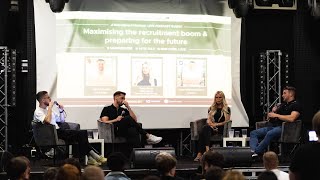
In this live Manchester‑based round‑table, host Hishem Azzouz brings together recruitment experts – John Hitchin (Strive Sales), Amy Steele (Coalesce/Amoria Bond) and Kyle (founder of Orbision) – to dissect the current recruitment boom and map out strategies for the next 6‑12 months. The conversation moves from high‑level market trends to granular tactics. Panelists discuss converting contingency work to retained models, leveraging market conditions, and using first‑refusal offers to win candidates. They explore the shift to remote and hybrid work, negotiating flexibility in job briefs, and how to push client boundaries on work‑style expectations. Amy highlights the intense competition among recruitment firms in Manchester and the personal traits required to succeed, while John shares his “old‑school” preference for office culture and predicts a gradual rise in remote work. Throughout, the group shares practical tools such as multichannel sourcing, personalized video outreach, deal‑risking, flipping reference calls, and market mapping, and they field audience questions on these topics. The session ends with a light‑hearted moment as John is prompted to perform a comedy sketch. The podcast offers a blend of strategic insight, tactical advice, and candid reflections on the evolving talent landscape.
Chapters
Yeah?
Pick that little mic up, mate. So as they're sitting down, the next thing here, just as they sit down, we're going to do a bit of intro. Again, to try and keep you guys included, we're going to have a bit of a chat. But there'll be moments you can vote on things. So for those of you that are connected on the Wi-Fi and scan the QR code, you can vote on things here. What topics are you most interested in us discussing? Your opportunity to just have some say here, and then we can make sure we cover these things. So as we do that, let's do a short intro. John, I'm gonna come to you first. Yeah, tell us a bit about who you are for people that don't know who you are, and then we'll kick things off.
Yeah, cool. No, thank you for the introduction. Pleasure to be here. So my name's John Hitchin. I work for Strive Sales as a sales manager. We help SaaS vendors at early stage scale their go-to-market sales team. We do it all across North America and Europe. So I've been in recruitment for about 10 years for all my sins. And yeah, pleasure to be here tonight.
Amy?
Hi everyone. My name is Amy Steele. I work for Coalesce Management Consulting, which which is a contracting consulting brand at Amoria Bond. I'm the director of our renewable energy team. So we look after projects in North America and the EMEA region. Also been in recruitment just over 10 years as well, been with the same company the entire time. So joined straight out of uni. There we go.
Love it. Karl?
Hi everyone. So I'm the founder of Orbision. I've been in recruitment for almost 12 years, I think.
Nice.
Cracking on now. Um, so yeah, we do data analytics, kind of talent solutions across the UK, Europe, and US, perm, contractor, but consultancy.
Okay, cool. Love it. So let's just take a look back here, guys, so we can see what's coming up here, so we can, we can take a mental note of this. As we can see, how to consistently attract shit-hot candidates. Not surprised by that. How to consistently win great clients. And then we've got a couple that— how to grow my team business. Yeah, okay, cool, perfect. So how we're going to do this is the sort of first half of this chat, we're going to focus on the current market. What have we learned in the last 6 months? What smart decisions do we think that we made at the beginning of the year that have played out? Why? What are the challenges? Um, and then again, we're going to have something here that you can vote on so you guys can share some of your challenges, make sure we speak about them, and then we'll then move on to talking about the next 6 to 12 months. Not just to shout about, oh, there's a fucking economic downturn and it's all negative. We wanna use this time to hopefully just share insights, share how are these people thinking about the next 6 to 12 months? What are they making sure their teams are prioritizing and why? And also, yeah, what decisions are they making that they feel like are gonna be decisions they're going to thank themselves for in 6, 12 months' time. So I guess to kick it off, Carl, I'm going to come to you. Talk to me, like, what comes up for you when I say, like, how would you describe the last 6 months in recruitment world? How would you describe that?
Difficult question for me to answer, mate, really, because obviously I'm an owner of a business, right? So I think what I think about may be slightly different to what some of the audience want to understand. I think it's been record quarter after quarter for most businesses. So I think the market's been really good, as you'd expect. Not too sure what more there is to say other than that, to be honest. I mean, it's been, it's been really good. It's been, you know, growth. There's been big deal after big deal. There's been record after record.
Okay. Yeah. Amy, have you had record after record?
Yeah, it's been, it's been the same actually. I think everyone spoke about the bounce back after COVID and it's been bigger than we could have ever even imagined. Some of the results that we're seeing from some of the consultants is just unbelievable and breaking boundaries of what we ever thought was possible. We've always been a business where billing has been the number one and it's an incredibly competitive company. And we used to have like a handful of people in that sort of 500K+ bracket. Now we've got like 30% of the company or more in that bracket going into this year just because of how busy the market's been. It is absolutely wild. We make a joke, we always call it the Wild West, but it actually is.
So, John, we're sick of hearing about quarter after quarter, so I'm not going to ask you that question.
So I've just prepared my answer.
No, so like, yeah, we can go on LinkedIn and get that, obviously. So what have been the challenges that have manifested in your team from your perspective over the last 6 months? Yes, maybe you've had record quarters as well, but what have been the challenges that you guys have had to navigate?
It's a good question, really. I guess challenges from a business perspective, like I think everyone will know in Manchester, like it's a really busy area for recruiters and it's very competitive to hire really A-player recruiters as well. We work in a different business to these two guys. We're a bit of a startup, so we're about 25, 30 strong, and we're building out L&D functions now. So obviously we like to bring in people who maybe have a little bit of experience. So for us, a huge focus is obviously hiring people and ramping them up and giving them sort of everything they need to support themselves and run a successful desk. From an internal point of view, that's the challenge. From an external point of view, We've been quite lucky really. Like every year in recruitment, it's a roller coaster.
Yeah.
No matter if it's a recession or a boom really, you know, we've, we've had record-breaking quarters, we've missed. It's just, yeah, roller coaster.
So, so let's see what people shared at the beginning was very much things focused on winning clients, candidate stuff. So let's get into that. So, Carl, I'm going to come to you obviously. As you said, had record quarters, fine, but what— All right, mate. No, so I guess what I want to find out from you is then, if you have, what has consistently been like the number one thing that's enabled you and your team to attract candidates, to have the best people that you're working with, to speak to your customers about because there's no way you're doing those numbers in the record quarters unless you get very good at that. So like, what have you found amongst your team to continue to work when it comes to attracting candidates, whatever that may be? What does that look like in your business?
So again, probably a little bit different because we're still startup, right? So less than 2-year-old. So to have a record quarter is not probably a massive thing. But, you know, nice.
Mate, just—
I'm just being honest. I'm just being honest, right? But, um, look, the business has done really well. I think the biggest thing that we've probably focused on around candidate attraction is multiple routes to market.
Okay.
Multiple channels in terms of how you're trying to go about attracting these people. Um, in any boom market, obviously most candidates are being hammered non-stop. So one of the things that we've had a big focus on is looking at how do you articulate a message that gets a response ultimately? Like, what, what's the compelling narrative? And I think we, we have a big conversation up front with our clients around understanding what that is from their perspective, um, because ultimately, you know, these projects that they're trying to deliver, whatever that may be, they're only as successful as the people you've got in situ. You've got to have good people to do that. To get good people, you've got to have a good story. So I think recruitment's probably been lucky in the last 12 months or so that it's been a boom because most recruiters have had the chance to pick and choose who they work with and people who've had the most compelling stories. But I think that multiple channel, multiple approach, creating a narrative that's like important, but how you articulate that and deliver that, that's been the big thing that we've probably had to focus on.
What would you say the principles then of getting a response?
I don't think there's a one-size-fits-all for that, mate. I think it's understanding the particular role that you work in, the company you're working for, understanding your audience, who you're trying to attract, what makes them tick, and articulating the narrative, whether that's message, whether it's an email, whether it's a phone call, whatever it is, getting to that point of getting them hooked. Because ultimately, you know, they're going to be 10, 15 messages a day probably, right? So it's how do you cut through the noise?
Yeah, yeah. And then just, just quickly, because it— so when you said multichannel, what does that look like?
So we were doing a bit of training on this actually today. So obviously, you know, you've got LinkedIn, you've got your email campaigns with Sourcewell, you've got your CRM. We were talking about utilizing things like GitHub or Twitter or whatever the case may be, right? You know, if you, if you narrow your search down to the top 10%, they're the people you want to get hold of. Are you going above and beyond to get hold of those people? Because that's normally the difference between win or lose.
And then, John, let me come to you then. What, like, looking internally, what, what would you say has been the most effective way that you and your team have consistently had a positive flow of candidates coming through that pipeline, that you've got people to speak to your clients about? What does that look like at Strive?
Yeah, no, good question. So we recruit sales individuals So I think for us in the industry, they can tell what we're doing. They know our approach, they know what the first cold call contact looks like, and they're probably assessing our objectional handles. So for us, similar to Kyle really, you look at those top 10% of candidates for the job who meet the brief, put them through a number of multiple touchpoints and LinkedIn, text messages, phone calls, emails. We do something a bit different with video headhunting as well. It's like personalized videos, which has been, been great. Like, our, um, our reaction rate to that has grown significantly.
Yeah.
And, you know, obviously when you cold call or email, it's like single digits. Um, this is by far double-digit sort of candidate attraction. So that helps us get to those little pockets of candidates which our competitors can't. Um, and then hence obviously ends in a bit— a lot of value to our clients.
I'm gonna put you on the spot here. I'm not gonna ask you to do like a video 3 beers, mate. No, that'd be savage. What— again, I'm gonna ask you because like people would be interested. Okay, okay, you might use Audacity, you might use Vidyard, you might— whatever, whatever video tool that you use. Like, again, I'm sure you work with your team with this. What, what, what is like the core thing these guys here need to get right when it comes to video outreach? Like, because I'm sure this is a constant thing you improve on, but number one piece of advice when it comes to video outreach and, and nailing that, do you think?
Yeah, no, really good point. So obviously when you do your video, you know, make it super personalized. I think just if you're making a video and it's not even got the name in it or it's not on their profile— the whiteboard, little whiteboard, little whiteboard, you know, Hishem Azzouz, it's John, you know, telling them a little bit like, I like your experience from X, Y, and Z or whatever it is. I think personalization is key in that. And, you know, as soon as they watch the video, it's about keeping engagement. So like, what format are you going to use on the video to ensure you've got a structured script that it gets to your call to action at the end? So process and personalisation is key there.
Nice. Thanks, Sharon. Amy, I'm going to ask you to share a bit about the BD side. I know when me and you recorded the podcast, that seemed like a really strong area for you. Like you said, you've got people in your business getting to the crazy numbers more quicker. So How have you made sure that they've remained motivated to still make time for business development, still get on the phone to speak to great clients and those things? Like, how is sort of your team's motivation around BD played out if they're doing record quarters and things are going well? How does that look?
I think because with my business division, it's effectively contract.
Yeah.
You could get a termination out of the blue at any time. So you're constantly chasing your tail on your runners. With a contract business, you have to be prospecting every single day, no matter what. I know with perm, you're effectively starting at zero every single month, and there's an argument to say when you've got a contract book, you know what you're billing, you know what you're being paid regardless. But actually, the, the contract jobs, they are a little bit fewer and far between, particularly these high-level projects. And you have to have the discipline to say no to a perm job or say no to a job that's outside of your core market, because you're never going to really become an expert and a specialist and make your job easy for yourself where you can redeploy candidates, and you've got people coming to you because you really are the go-to person. So with, with my team, we, we put a strategy in place around the type of calls that we're making. Okay. So we use the candidates that we've got, either the ones that are coming off a project that we need to redeploy onto something new. So ring competitors, sell them in, and say they're coming off a project on this date, you know, are you interested? Um, again, because it's all about the technical piece with us We take references on everybody because we're just measured purely on the performance of our contractors. That's it really. It's a lot more transactional. It's, it's, although it is a really in-depth service, a client doesn't necessarily see it that way. They see it as more outsourced. So the way we're judged on our service is really the quality of the contractor that we've got on site. So we reference everybody and that's a business development call in itself. So we'll flip that. Book as many meetings as we can, follow up contract leads, and we have to be really, really tight on leads because the jobs are fewer and far between. Most clients do want perm people, you know, that's, that's the reality. And it's really easy to slip into the trap of thinking, I'll just pick up a few perm jobs, but you can't do it. You're running that subscription model, you've got to stick to it. So you need to follow up your leads, take your references, book as— book meetings with as many people as possible. And provide a bespoke solution to that client based on what they want. It might just be manpower, they might want mobilisation, materials, all these other parts as part of it. But I just say to my team all the time, there could be a better client out there. And every client has a shelf life. It's sad to think that, but they do at the end of the day. It always makes me laugh with recruitment because you do a really good job for a client, you place lots of people, and suddenly they want a discount. So you're almost being punished for doing a good job. But you have to explain to them, you know, every person is unique. It's not like you're manufacturing a part when the volume goes up. Cheaper for us. It isn't. And eventually clients always get to the point where they want a discount or they want to try a new supplier. So you've just constantly got to be prospecting all the time because there's always a better client out there.
What's like the, the go— obviously hear that a lot— what's like the, the go-to strategy on like flipping a reference call? Like, because that's—
yeah, so I think that the key thing with the reference is you're subliminally selling your service by taking the reference anyway, because not everybody does that. And then at the end of the call, it's You can say, look, we obviously work in the same sort of areas, we supply people or we deliver on projects in the area that you're responsible for. I think it would be really beneficial for us to meet and discuss further how the two businesses can work in partnership. And because it's a pretty warm call, they don't really realise it's a sales call. More often than not, they're very keen to meet you. And it's so easy to jump on Teams or Zoom these days. Yeah. I get my guys to attend like 15, 20 meetings a month minimum. Just to keep that new business flow coming in.
Nice. And then, Carl, what— how have things manifested for you then? What's been the most consistent and effective way for you guys to win great clients and do well on that side?
Um, so everything's brand related for us, mate. Yeah, we have a very big push, you know, marketing, relationship, content, brand. So obviously the podcast the events, stuff like that. And it's, it's not too dissimilar to what Amy's just said about, you know, reference calls and flipping it. It's the same, it's the same method. You're just talking to them about something different.
So how does that actually play out then for people? Because I think a lot of people can be cynical about that, right? Just keep seeing you posting on LinkedIn thinking, fucking, how is this guy going to shut up? Does he not stop talking? Is it just to benefit himself? Like, how does it actually play out? How does it play out for the guys? Like, how does it How does it help you guys stand out when it comes to BD that you got— you have a podcast or you have a roundtable series or whatever? Like, how does that actually play out?
Well, the reality— so we did an exercise on this, man, as a business. So all the revenue that we've had from when we started the business has come back, it's 100% inbound to us. Now that's been instances where we've instigated that relationship through the podcast or through an event or whatever the case may be, but ultimately that the client is the, the aggressor in the relationship. So we have a big focus on like community. Community is our thing, like adding value back to the community. So as soon as you know, and I think that's, you know, we'll probably get into this later on, but I think that's the way it's going.
Yeah.
Um, and as soon as you start to, to do that, you know, you're again subliminally selling what you do. You know, it gives you an opportunity to be credible, to sell what you do without it being like a sales call, per se.
And then, John, coming to you then, same sort of question. Like, when it comes to effective BD, what's continued to play out for you guys? What's continued to be the best, most fruitful activity, if there is one? What's played out for you guys?
Yeah, it's one of those things, isn't it? Like, BD is so huge in recruitment, but I think when we sat down, particularly, you know, Adam and Harrison, who are the business owners at Strive, like, We just identified that there was a certain type of client we did really well with.
Okay.
Um, and in our industry, like, if you look at it broadly, there's thousands and thousands of clients. Um, and when you start to like zone into your tier 1 client, like, what, where am I going to get a return on investment? And then just map out the market from there and obviously add value to them and do everything these guys have said, whether it's flipping a reference, whether it's speccing in, whether it's cold calls and adding value in any certain way. So we just kind of found our sweet spot early on and been able to sort of really target it.
So yeah, so you really focused on like, yeah, the clients that you can serve most, the clients that you have the best results with, and then focus your energy on that.
Yeah, yeah, exactly that. And it's done really well. And then we're really fortunate in our industry that we can carry that over into different continent. We can just expand the client. So, you know, maybe one day we'll get to a point where we want to where we branch into a new market and it's like doing it completely again. But there's a few sectors we work in and we work in a really exciting industry. So it's— we're zoned in now. We know where we're going.
So, Carl, I'm going to come to you on this question. This was submitted by someone. I think it's an interesting one and maybe a challenge that has manifested in the last 6 months. So how have you balanced the recruitment needs of your clients with the headcount in the business to fulfill those requirements? Like, I feel like it could be easy to be like, what's that?
I said lol.
Like, how are you? Because I feel like, yeah, you, you, yeah, you might have experienced a lot of opportunities, big business, but you're thinking, are we actually gonna be able to fucking deliver on this?
Yeah, 100%. So everything that we do typically is done at scale, so everything is retained in some way, shape, or form, and it's normally project-led. So even on the perm side, so, you know, it might be 5 hires immediately, it might be 20 hires over the next 12 months. And obviously that from a business perspective poses a challenge because, you know, all it takes is one call, you're on to something, then all of a sudden you're like, shit, you know, I've got 20 hires to deliver and not enough people. So that's, that's probably been one of the biggest challenges in terms of, you know, growth. As John mentioned earlier about trying to hire people internally, that's, that's always a big challenge.
But have you, have you, have you said no? Have you created a waiting list? Have you said like for clients?
Yeah, they're all waiting outside, mate.
But like, how have you— yeah, how have you juggled that? Have you— yeah, have you just had to— how do you know where the limit is, um, with the resources?
We've had a few, you know, there's been things that have been in the pipeline for a while that we've purposely not gone after that aggressively in terms of us following up, you know, conversations where the client's saying, yeah, we're interested in this type of project or proposal, and, you know, we'll we'll send a proposal and then we're happy to sit on that for a couple of weeks while we wait to clear off some work. Obviously the team's growing, taking shape, you know, that stuff's now starting to really take over. So, but it's like anything, right? The more you grow, just the more you win. The challenge never goes away, it's just at a bigger scale. So, okay.
So another question which I think links quite nicely into this. Amy, I'm going to come to you on this. I don't know how you feel about this with your experience, but like, what would you say— what was shared was, what would you say would be your like top tips, best advice when it comes to expanding existing accounts? I don't know if that's something you really drive within your team, but like again, how have you gone about— if you're looking at your current client book right now, what have been the best ways to get them to spend more money with you and create extra revenue streams? Like, how has that played out?
So, I think the first thing is you've got to provide an exceptional service. Ultimately, our product is people, so you have to get to the best candidates in the quickest space of time and manage that process and streamline as effectively as possible, because if you're not gonna do that, you're not doing your job properly. So, that is absolutely priority number one. Once you've done that, it's about getting testimonials from the people that you've worked with, getting borrowed authority for them to go to their colleagues and say, "I've worked with this supplier, they've done a really good job for me." you should try them. I've always been a really, really big believer in meetings.
Okay.
Um, and that's something that I really drive home with, with my team as well. And as a business, actually, it's a huge thing that we do. Um, I think getting face time with clients is absolutely invaluable to building relationships and understanding their business. Um, so I think a combination of networking via service, meeting lots of people getting your contractors or even the people that you place permanently to do the work for you, referring you into their, their colleagues as well. Um, and we do a lot around like market mapping as well. So if you place with one client, where are the other sites, whether they're in the same country or whether they're abroad? Map them out, because it's a much easier call to ring somebody and say, we've placed with you, we've got terms with the business, than ringing a completely cold prospect. So trying to be as strategic as possible with what it is that you're doing as well.
Nice. General, I'm going to come to you on that one. What comes up for you? What do you consistently find amongst your teams in terms of like the clients that have gone from spending 100 grand a year with you to 200, 300?
Yeah, sorry, I got absolutely distracted then. Yeah, now there's obviously—
That's a bad take picture.
Hey, yeah. Cheers, guys.
It's basically going to take 2 more photos, isn't it? It's right, mate. Fucking hell.
One second, I'll be right back.
Yeah, yeah. I'm going to go put my laptop on the nightstand.
You can turn that back off. Yeah, no.
Is that done? Oh, there's one more. Wow. Right. So yeah, sorry, John, what were you saying? Expanding existing accounts. What tends to be the most effective way for you and your team, do you think?
Yeah, no, it's a really good question. I like what Amy said. Obviously mapping out a market as well and sort of going into everything.
Wow.
I'll just carry on for the sake of it. You got to kind of look at it two ways. Like you've got your current client base, And then we look at it from two points of view. So like a strategic point of view.
Okay.
So what's going to happen with this account over the next 3, 6, 9, 12 months?
Yeah.
What's the plans for us? What's our objectives? How are we going to do it? And I guess the second way of looking at it is like tactical. Okay. So tactical stuff is going on now. What jobs are they live? What are we working? Is it contingent, retained, exclusive?
Yeah.
How are we adding value and how are we going to go from there? So like getting into accounts and expanding them is like short-term and long-term, so there's two different ways to look at it.
And then on the, get that, on the long-term piece, just interested, like what, so if you get into an account, you do a good job, make a placement or two placements, what key things are you looking for that indicate to you and your team that, right, this account could definitely be someone that's, yeah, giving us 5, 10, 15, 20 jobs a year? What you said on the strategic side, what sort of levers or things do you look for?
Yeah, now again, good point. So like, I think everyone's opportunistic in recruitment. We all want to do well. So, you know, we're all bidding with like an upfront contract. So like, give me this job on a whatever basis. If I fill it, what you're going to do, your next 3 hires come to me exclusively. So kind of making that upfront contract with the clients, locking them in from an early stage, um, and then obviously looking at the different parts of the, the business that we can advise.
The market mapping, maybe.
Yeah, yeah, exactly. Like And I think what Amy says as well, like, she was like, zone in on what you do. Like, don't go off two-piece too much because you go down a rabbit hole and maybe sometimes you think you can do everything, whereas if you're just adding value into the certain sector you recruit into, you're going to, you know, get other candidates, generate other candidates, put them into your other businesses. So you kind of become your niche.
Yeah. Okay. So what we'll do then is I want us to the next segment just to talk a bit about how I think I've spoken to a lot of people and a lot of people submit questions around how are people feeling in the next 6, 12 months, all those types of things. But I guess before we do, what I've tried to do here is, I guess, just create an opportunity for you guys to share with us like what are some of the challenges that maybe we haven't even touched on here. Again, to try and make you guys feel included when it comes to the discussion and what we're talking about. So if for those of you that are connected to the Wi-Fi, there's an opportunity here just to share with us what have been or what are some of your biggest challenges currently. And then depending on what plays out here, we can have a bit of a chat. What's that? Can't see. So yeah. And then yeah, this will play out into the next 6 to 12 months as well. We can see if we're surprised by anything. I'm going to, I'm going to come to one here. So, Amy, I'm going to come to you on this one. Not having consistent performances each month. What, like, again, I know you said you like, you've, yeah, like your team have been doing really well, but again, you've been in the game for a while. When it comes to looking at people, looking at people you've managed, like, what do you think are some of the the things that you see when it comes to people not consistently performing each month? What are the common things that you see when someone has a really good month, 2 months they don't, then the next month they do?
Yeah, I mean, it's sales, isn't it? So it's not always going to be plain sailing. But the big thing that I look out for and what we talk about all the time is like the W effect. So like good month, bad month, good month, bad month, because you're never going to really, really progress if you're doing that. I think not getting complacent is obviously really, really important. You have an amazing month, it's like, I'm smashing it, feet up. The best, best performers never ever get complacent. They just always, always want more. And I think having the discipline despite how well things are going to still do the basics every day, to still hit the numbers every day, that's what's going to take you from being a great recruiter to an absolute top biller. And that's what is going to mean that you might have one bad or two bad months a year, not four or five.
How do you spot complacency?
Oh, it's so easy. Getting in a little bit later, leaving a bit earlier, phone time's not as high, being— cutting corners a little bit on process. You can spot it a mile away. You can see it really, really quickly. And actually, all it takes is a quick chat with somebody, and often they know it themselves and they're straight back in line again. But it's actually recognising it and doing something about it for yourself and your business that's the important thing. Because when you're thinking about top performers or consistent salespeople, yes, you've got a manager and a leader, but ultimately it's gotta come from you. We're here to support, to motivate, you know, to challenge you at times, but it's your desk, it's your business. You've got to have that burning drive, desire, ambition discipline to do what you need to do every day because nobody's going to pick the phone up for you.
Okay, so thanks for sharing that. That's awesome. Um, John, I'm going to come to you on this one. So, um, I think we've spoken a bit about— Cole shared a bit about the way that he's gone about attracting candidates and a few different things. But candidate management, like, have you, have you guys been experiencing that because of how busy it's been, you headhunt a candidate and, and these people have several options? And yeah, I speak to so many recruiters that are having more dropouts than they ever had and these things. So I guess what comes up for you when it comes to thinking about, again, you and your team, you guys internally, what are some of the things that you've really had to get sharp on when it comes to candidate management and getting those people an offer, but actually having these people start and do that when it comes to candidate management? Because obviously a lot of these people are spoilt for choice.
Yeah, no, no, good point. I think something typically recruiters are really good at is getting happy es. I've got a candidate in process, I've got a deal. Like, you know, it's never the case— like, we all know it's, you know, 5, 6, 7 interviews before the job's boxed off in perma. Obviously, contract's quite different. Um, so I think it's about understanding, like, is a shortlist filled? What are the quality candidates like? And something we've introduced into Strive lately is like, um, a deal risking methodology. Okay, so we're looking at different aspects of, like, the candidate. We're risking whether we feel they're going to get the job And the reality is you have to sit down and say, if, if half of the shortlist really aren't interested in this job, or they're interviewing in 5 or 6 different other processes, then we need to do more work on it.
Okay.
Because what you don't want to do is get to a point where you think this job's boxed, I'll take on 2 more. Then you've got to go back to it and work that, and before you know it, you've got too much to handle, um, then something slips. So I think just focusing on happy years and then deal risking is like a really important sector.
Deal risk framework— what, what are some of the I have to give all of them obviously, but like, what, what would be some of the things that you would go, that deal's at risk, out of interest? Because I think people would be interested in that.
Yeah, yeah. Um, so I think like two of the obvious ones, like money. Yeah. So candidates who are like really money-oriented, money-hungry, like I don't care where I work or what I do, it's just who's going to pay me the most. Um, and I think it's also important to look at like what other processes these candidates are in, getting them to rank those processes and understand from your point of view like how likely are they to sort of rank this better than everything else.
Okay.
So if you're just looking at those two, first of all, it's a really good starting point because I think it's something we've all got guilty of, is getting to a certain point thinking, yeah, it's done this. And the reality is it isn't. Like, we've probably got a little bit sloppy.
Nice.
So let's talk about— let's segue here. Let's talk about the next sort of 6 months or so. Carl, I'm going to come to you first. Been in the game for a while. What are we saying? What, what, how are you feeling about the next 6 months? Let's just start there. Like, what's top of mind?
So I'm, mate, personally I think this, um, feeling pretty positive. I know there's a lot of murmurs about a recession and all this kind of stuff, but we've not heard a great deal, you know. Hopefully in 6 months' time I've not been proven wrong.
Have you found things slowed down? Not slowed down?
Not, not really, mate. Outside, you know, we work with some clients that are like, you know, maybe private, uh, private equity backed, you know, so like Series A startups, for example. They've paused a little bit, um, more just out of caution. But okay, other than that, you know, look, you know, we're still having conversations, mate, about taking on 30, 40, 50-man retained projects over the next 12 months.
So, so overall feeling positive? Amy, how are you feeling?
Yeah, the same, to be honest. I think we're in very carefully chosen sectors. So my old division was engineering and we made the strategic switch because we had to with COVID So renewable energy is, it's the perfect storm really. It's government-backed but privately owned businesses that need to make a profit. So you put it both together and then the entire world's got like a green energy target. It's not really a case of like spend or not, it's we have to do it because we've pledged that we're going to do it on a political level. So I feel like, again, same as Kyle, I hope I'm not proven wrong, but so far we're not hearing of any sort of slowdowns or anything like that. So I just hope that it continues.
John?
Yeah, no, I was speaking to Adam today. He's been in the tech sector like quite a lot longer than me, and I think we can all agree in tech, like last year was probably the best year of recruitment we've ever had, like undoubtedly. Um, especially on the back of 2020. So probably will be a little bit peaks and troughs, but I think— so you've noticed things slowing up, so obviously now I've seen things, it's a bit of a niche right now actually. I was telling the guys in the Monday sales meeting that there are still an abundance of jobs in the market. Some organizations have let staff go, so that just means there's more candidates and more jobs in the market. Might be different in 3 or 6 months, but the reality is right now there's You know, if someone says to me, oh, there's a recession, I can't fill a job, like, bollocks, really. It's like, this is a good time.
So, Amy, I thought this is a really, um, interesting question that got shared, and I want to come to you with it first. I guess, what, what decisions then do you think we can make as recruiters, recruitment professionals, which a lot of the people here are, um, what decisions can they make today that, um, they, they feel like they'll thank themselves for in, in 6 months' time? Like, what is it that they need to prioritize, keep prioritizing, focusing on that, yeah, they're gonna give themselves a nice pat on the back in 6 months' time and be, yeah, best protected, best prepared?
No, nobody knows what's gonna happen, like, and you can only control what you're gonna control, what you can control. So, I think it's just about doing the basics properly, no matter how your business operates. We as a business, we're very numbers and KPI-driven. It's not right or wrong, other businesses aren't, But whatever it is that you're told to do that works and works for your business, work the metrics, work your ratios, best practice of basics, do it consistently every single day, and the deals will look after themselves. And in 6 months' time, you'll look back and be like, I'm really glad I did that groundwork now because it's starting to pay off.
How do you— I know everyone says that, like, back to basics. How would you describe the basics?
I think just when you rewind right back to the beginning of your career and you're taught how to do the job, not cutting corners. Every time you're speaking to a candidate, gathering information in terms of other projects, job leads, references, current managers. When you're speaking to clients, objection handle properly, you know, map out your market effectively and be strategic with what you're doing as possible. Make your life as easy as possible and, If you know what works for you, I always say to my team, you know, pick something that's your thing. Obviously you've got to do a little bit of everything, but what is your thing and really master it and really push yourself on it. I said, I think I said earlier, mine was meetings. I knew if I could get in front of a client, I'd win that business. So I used to just double the target for myself. So pick your thing, master it, and stick at it.
Really lean into that.
Yeah.
Um, Carl, I'm gonna come to you with this. I want to see what you say. This is like a really like negative potential outcome. Just see how you'd react. So if all your clients stopped hiring tomorrow, what would be your game plan? What would be your approach? Where would you start? Where would you go?
I'd let all them in that are waiting at the door, mate. Yeah. Come on. No, you can come.
But no, yeah, some of your, some of your key accounts say, Carl, really sorry, we've had an absolute fucking mare. We had to let 30% of our team go. Got no budget. Agency spend done. What we do? What would be the approach?
So I think obviously our approach is very different to a lot of other businesses' approach. Like for me, I think you double down on community.
Okay.
Like, I think— I personally think that's where the future is going. That's why we operate the way we do. Again, it's not right or it's not wrong, right? But if you are creating communities of people within your target audience, whether that's client, whether that's candidate, right, and you can add value to them in some way, shape, or form, you're visible with that, right? That's where success comes from, in my opinion. Like, I think that's— that would be the stuff that I would probably do even more of at that point because, you know, as we all know, right, recruitment's crowded, it's saturated. Even in the more niche markets, there's now a lot of other players. It's like you just need to be known as the player. Simple as that.
Okay, John, I'm gonna— I'm gonna ask you a different question.
No worries.
Uh, so I'm gonna give you a different scenario, but it's related. If you were actively consistently headhunting people and the consistent response that you got was, 'John, look, sounds really interesting, but right now it's safer to stay put. Me moving in the economic downturn in a challenging market, that's too risky.' Like, what— again, this might have been something that you experienced in COVID. So what, again, what will come up for you in terms of navigating a consistent objection like that that people might start facing or feeling with how negative things can be online?
Yeah, no, it's a tough objection. Obviously we've all had it during COVID Um, I think there's like probably two ways to look at it. Um, the first is if an organization is hiring through a really tough time, like, it probably says something about them. If they're hiring and they've got a run rate, a burn rate to employ the staff for a number of years, and they're in a market which maybe is recession-proof or COVID-proof, whatever it is, then probably is a bit of a different story. So it's a different sell. Um, I think as well, like, you've got to consider when it's a boom and all the candidates are looking, maybe salaries aren't as competitive and perhaps there's a stronger, stronger room for negotiation. But I think ultimately, unlike any deal with a candidate, like, it's, it's not just about money. Like, dig into the drivers, you know, what are you currently happy with, what would it take for you to consider a move right now, And, you know, they'll tell you a couple of things, ask another why, and then you start to generally get the truth. And once you understand the candidate's drivers, whether it's they want to progress to leadership, whether it's they want to diversify in something else, sell different products, whatever it is, like, you've got something to sell on. They've got an incentive to understand your call. So it's, it's about one or two aspects really. But yeah, I take it on that approach.
Okay, so obviously love that. Thanks for sharing that. Anyway, I'm going to come to you on this. Obviously, we've remained all quite positive and I absolutely love that. I'm an optimist myself.
You had some good views on this, didn't you?
What's— but like, so a lot of the questions that came through were just like, again, just sharing insight perspective. So from your perspective, what do you see some of the future challenges being that people in here may expect? That your team might expect, what comes up for you?
I knew I'd get this question. I mean, look, like I said before, we don't know what's around the corner. Yeah, we are. There are murmurs of a potential recession. I don't know. One of the challenges that we're experiencing as a team, because we do a lot of international projects, We've relied really, really heavily on the mobilisation of people.
Okay.
And since Brexit, a lot of the EU laws have just started to kick in over the last few months. So we can no longer send UK nationals into the likes of Scandinavia, Central Europe without like a 12-week lead time. That's really, really expensive. And we relied really, really heavily on that to deliver a lot of our international business. So we're having to look at alternative solutions to that, um, setting up entities in these different countries, changing our strategy somewhat. So I guess in the immediate horizon, they're the challenges that we're facing. Um, in terms of other things, you just don't know, do you? The thing I always say though, if you're great at recruitment, you can apply it to any sector in any industry. It's a process at the end of the day. Yeah, that's one of the beauties about this job is it's so fluid. You can become a master at whether that's permanent, retained, contract, projects, whatever it might be. If your sector and your industry has a downturn, which happens, we've been there recently, if you're good at your job, you can apply it to a new sector and you can be successful. So there's always going to be a challenge, there's always going to be something, and if it is a downturn, you just need to move into a sector that isn't. Our biggest challenge is finding good people, to be honest, both for our own business and for our clients as well. And that right now is the main challenge that as a business we're really trying to overcome.
Okay. So again, we can't predict the future, obviously. I like that answer. So again, to keep all of you guys included in this, I guess, again, a bit of an opportunity here to talk about things that we may have missed, challenges that maybe you feel like might be more strongly about that might be around the corner. We can talk about them. Again, please do share these in terms of what are you most concerned about going into the next 6 to 12 months. Depending on what gets shared here, we can again talk about this and then we'll do some actual Q&A and make sure you guys are getting your questions answered and have any specific questions for the guys, we'll answer them. Let's have a look at this then, guys, and see what we're missing, what challenges maybe we haven't thought about, or maybe people are putting more importance on? Yes, the candidates not wanting to move due to the economic downturn. We've obviously touched on that with John. Companies putting a freeze on all recruitment. The unknown of— yes, Amy, you were saying that, weren't you, in terms of the unknown of if your market is going to continue to be busy. What things do you look for in that when it comes to the actual— fuck it now, it's just getting— it's gonna fall. I'll put it back on.
I can answer, don't worry.
Yeah, so the question to Amy there is like, what things can we look at right now in terms of that's going to give us confidence that our markets are recession-proof, that they are future-proof if things do start tightening up? Like, what— because obviously you've made some moves and refocused, didn't you? So what is it that you look for?
It's really, really simple. Job numbers. That's it. Job numbers per head. That is the only metric, really. As long as all the inputs are there in terms of business conversations, data, leads, meetings, all of that, the inputs. If job numbers are down, you need to look at who you're ringing first and is there a training issue? If there's not and it's consistent across the entire team, then there's a potential there that there's going to be a little bit of a downturn. And actually, it's my job or anyone who's in a senior job to make those decisions early before it becomes a problem.
Yeah. So job flow is like the number one.
Absolutely. Really, really simple. Every single week, my two things I look for are interviews per day, jobs per day. That's it.
Interviews per day, jobs per day. Solid. Cole, how do you feel about this? The one I'm going to come to is having to potentially navigate cost reductions if client budgets get tighter. I don't know how you feel about that. How would you navigate clients saying, look, Carl, we've given you a lot of business. You've seen it's got a bit tighter. What can you do? What can you do on your fees? Can you reduce them? I don't know. How are you going to be navigating that if that comes up for you?
Well, I guess that depends how bad it gets, mate, to be honest with you. I think, look, broadly speaking, right, if you back yourself and your service, then as Amy said before, like, you know, most companies for some reason think that the more work they give you, the more, the bigger discount you should give. I think with that, again, it depends how bad it is in terms of the situation, but the conversations that we have start to span longer term. Yeah, so like the questions that I ask on a, on a call, you know, the market's good so everyone's hiring in multiples, but I'll try to look 12 months ahead. So okay, how many of these people are within this team or within this unit do you think you're going to need to hire in the next 12 months? Because then you can start to pitch bigger, longer-term, you know, more strategic revenue.
Yeah.
And then it allows you to bring the conversation back to say, well, look, we can do something on the cost, but we need more commitment for it from you.
Okay, nice. John, anything for you on that?
Um, no, that's a really good point. So, um, I just think basically with a client, sometimes it depends on the situation you are. Sometimes you have to let them fail. And you know, when clients come to us and, you know, we charge the margins and they try to reduce us and say like, look at the value of our service rather than the cost of it. Sure. You know, you're arguing over a few grand. All right, it's quite a lot in your budget, but it, you know, it's not like everybody in the world can deliver the same service. So I think if you get to the point and you add loads of value and you can get the client to see the value, you're in a different position. And then if they ask you for cost reduction, no problem, help me understand your hires over the next year, and then you're in a different negotiation point of view. Let me put it as a project, and all of a sudden you've— you're doing a discovery and you're asking requirements. Yeah, you're in a completely different ball game.
I love it. So let's move this on then to questions from you lovely lot. I feel like this is a quite— I know we've spoken a lot about the next 6-12 months, but I think this is a bit more specific on— maybe, Amy, I'm going to come to you on this. I know you love the day plan. Sorry, I'm putting you on the spot. So question is from Jenna. After the news that we're entering a recession, what would you advise to What does that say? What would you advise to add into a daily plan that would help avoid being affected by it?
Yeah, so I think the key thing there is you'd need to have a day plan. So event, obviously I said it a lot in my podcast, always, always plan the night before. It's so, so important. I think, look, if there's a potential of that, you've got to spread the risk. So you need to be adding as much data as possible, reaching out to as many clients as possible in your market. But really, really honing down on a niche. Again, don't pick up jobs that aren't in your market because you'll end up being a bit of a jack of all trades and you're not going to be famous for anything. Our chairman, his big, big thing is, what are you famous for? What are you famous for? Because if there is a recession but you are the go-to person, you're not going to be affected by it because you're going to still pick up business because you're the expert in that field. So stay disciplined, stick to what you know, become a master, provide an amazing service. With the clients that you're working with and continually try and win new business in the same area. And you should— I'm saying it won't affect you, but I think it'll affect you as little as possible.
John, I'm going to come to you on this one. Question from Millie: when hiring new talent for your teams, what is your biggest red flag in a candidate?
Hiring in my internal?
Yeah.
Oh, that's the biggest red flag.
Great question. You get solid.
Yeah, you get to do your pitch now, mate. Go on.
I know.
Yeah, biggest— yeah, red flag that you're like, no, done, interview.
Um, it's a good— it's a good point. I probably have on the flip side a number of things I do look for. Yeah, but if something was like a turn-off for me is just somebody who's, who's got know, like, longevity or something. Like, okay, show me some commitment. Show me something you've done for a while that's taken a little bit of pain and you've got some reward. Like, you know, if you've always started something and sacked it off, I'm like, well, you've got no persistence or grit about you, really. So I think in recruitment, especially if you were to go in a bad time— and I don't know if we will— you know, if you've not got that persistence and grit about you, like, what's going to happen in the bad times? Um, So I think for me that would be like a bit of a turn-off.
Carl, biggest red flag? What'd you look for?
Here we go.
Obviously you have your own business, so you, you must have— I'm sure you have— there's going to be a few things maybe.
So I think there's probably a couple of things here. So similar to, to John in some instances, but, um, I think adaptability is a massive thing.
Adaptability? Yeah. So someone that isn't adaptable would be a red flag?
Yeah, so like when you try and probe around that, that people that are like stuck in the ways, don't want to learn new things, like especially with the markets evolving the way we are, you know, we're talking about entering a recession or whatever the case may be. So I think that's massive. The other thing which we've seen quite a lot of over the last 12 months is people slagging off their old employer.
Wow.
And I think that's pretty shit, to be honest with you. Like, you know, how bad— it doesn't matter how bad it is, like just, yeah, don't Don't spend the hour conversation with me 55 minutes telling me how shit they are.
What I take from that, because this has come up a lot, is like basically they're not taking responsibility, accountability, and it's easy to point the finger. Okay, Millie, great question. Uh, what we've got here from Rio, what have you found? I feel like actually, Amy, I'm going to come to you on this one, more specific about new market. So what have you found most effective when winning new business, when entering a new market? So maybe think about when you're really trying to kick on in the renewable energy space, what ended up being the most effective way to build that?
It all starts with the beginning of the life cycle, which is candidates. Okay, you've got the best people, you can break into clients even if they've got other suppliers, a PSL, whatever. If you've got the best people, they, they can't ignore you. Yeah, so get the candidates on board first, work with some fantastic people. Market them out to multiple clients, and eventually clients will start to work with you.
John, I know you've been obviously building traction in the, in the US. What, what have you found to be the most effective approach when building out that new market? Do you think, what have you found, go, fucking, I don't know what, that, that's really working, or that continues to, to be the best way to, to build new relationships in, in this new market?
Uh, yeah, I think that's, that's a really broad question, isn't it? Because you've got the client and candidate piece, and I could— I take it back a couple of questions ago where I was like, we've got a type of client we specifically go after.
Yeah.
And there's like a few of us in the business who do business development and we have different verticals within us. But once we get that client on, it's just about delivering. And because the client might grow and we'll grow with them, about expanding the accounts. And I think for us, you know, 2 years ago when I joined the business, it was like very job-led. You get a job and there was an abundance of candidates to go out to market. With. And, and now maybe it's evened up a little bit. So to attract top talent is extremely hard, and then to attract like the kind of businesses we specifically want to work for is equally as hard.
Okay.
Um, so it's just about having that exact strategy, not having a—
again, coming back to being famous for something like—
yeah, yeah, yeah, yeah. I'll reiterate with Amy, really.
Love that. So I think we've got one more here before we then go to people can submit them. So, Carl, I'm gonna come to you on this one. It was a question from Nick. I like this one. Carl, what one career mistake would you like to go back and correct?
I've had some absolute stinkers, mate.
If you could pick one, um, be honest.
So basically, yeah, who's here?
Who do I know?
Um, So it's a funny story. So, all right, once upon a time, right, yeah, way back when, when I first started contract, I got a bit of intel off this like really senior guy and I was like, right, this is, this is mega. Like, it was on the inside of a big tech business, right? So basically I took that information, mailshot it out to a load of clients thinking, right, they're going to be like all over it, right? Because like I'm in the know before they are. And it turns out that this information might not have been as reliable as it ought to be, which resulted in SAP basically trying to sue the business that I worked for. That's probably— I mean, you know, maybe they took— Hey, listen, they told me to mailshot, so that's what you get, right?
You know what I mean?
That's what you get for mailshotting, mate. So yeah, fair.
Thanks for sharing that. Amy, what one career mistake would you like to talk about?
I don't know, I'm like looking at my team like, help me. You can think of a few, okay? Come on, come on. I don't know, I mean, there's just so many, isn't there? Every mistake is a lesson learned. I honestly don't know. There's been a lot. There's been a lot. I think you have to make mistakes to get there. Can you think of some?
Go on.
Go right there. Hiring him. No, I'm joking. He doesn't work for me anymore. He started his own company.
Amy, you have a think, right? Can you come back to me?
I honestly don't know.
John, what one career mistake would you like to go back and correct, my friend?
I mean, I've made a lot, but I think probably one of the biggest ones up there was I was a recruiter with like 9 months experience at the time. Yeah, I picked up a worldly candidate.
Yeah.
And I fucking specced them into their own job.
I've done that, done that.
That was very good, I love that.
Yeah, it didn't go down too well.
Yeah, what's it now?
Amy?
All right, yeah, we agree we can learn from mistakes, but we want the mistake.
I think, yeah, not too far off what John's just said. Okay, very, very new, was past a job when I started, rang the manager that was hiring as a candidate to pitch the job to him, and he said to me, well, I'm actually the person that's hiring, so it gives me absolutely no hope that you have a clue what you're doing and that you can fill this job. But I went on to place about 20 people with him the answer.
Nice.
It was all right.
All right, thanks for sharing that.
Thanks for the inspiration, John.
So look, before we finish and wrap up here, again, using this technology that hasn't been perfect, so what you can do with this is you can type anything. Let's keep it adult. Let's not go rogue. But as we wrap up here, let's give it like 5 minutes or so. You guys can put any questions on here. It is anonymous and they'll show up on here. I have a long fucking hour. Let's see what happens. Okay, so we got, tell me more about your record quarter. Let's definitely not fucking answer that. Okay, nice. Amy, I know you touched on this, being obviously the only fucking woman on the stage. What, like, yeah, talk to us. Like, you're up here with 3 guys. You've built a career in a highly competitive environment, which is typically surrounded by men. Talk to me. Why? Like, what would you say to women wanting to get into recruitment? Do they have the edge?
I would say do it. It's, it's, yeah, I never really knew what recruitment was when I got into it, to be honest, but I couldn't imagine doing anything else now. I think it, it's definitely seen as more of a male-dominated industry. I think that that is starting to change. When you think about the skill set required to be successful in recruitment, it's about building relationships, understanding people, reading between the lines, having a really high level of emotional intelligence. Being conscientious, detail-oriented, organized. So many of these things lend themselves to a typical female profile that I think gets overlooked because everybody just assumes it's this like really hot and heavy dog-eat-dog sales job, which of course it is at times, but really it's, it's not about that. And there's some really, really incredible successful females in recruitment, and I just would want encourage anybody to get into it, and those females that are in it, to get your friends to, to do it as well, because I just think there's so many characteristics that typically lend themselves to a female that are natural that will help you be successful.
Okay, love it. Right, right, we might be a bit longer than 5 minutes. You've got some belter questions in here, so I want to make sure we get through them. So, Kyle, wait, let me show this. Kyle, before, besides getting sued, what did you guys, what did you do differently to everyone else in your business that led you to where you are, do you think? What do you do differently? Like this question.
So I think I came from a very traditional background, kind of similar to both Amy and John. I think the thing that probably put me in the position I am today is I was just willing to try different things quite early on. So like things like events, things like podcasts. I, you know, 2018, I started doing that stuff. I think that's the thing that probably helped me to go differently. Okay. Other than that, mate, before that I was just doing same as everyone else, like smashing the numbers.
So, John, coming to you on this one. Advice for someone who lacks confidence in their ability. Thanks for sharing that, whoever shared that.
A couple of things really that come straight to mind. I'll start off with probably the most recent one. So you know, our directors are really good enough that they invest a lot in the business. And I think when you look at recruitment, the reality is it's like 4-5% training and 95% on the sales. Whereas I look at like the top athletes in the world, football teams, tennis players, they spend 96-97% of the time training. The reality is like a couple of percent game time. So I've invested a bit in, you know, a life coach recently, a guy called Chris Oil. Like, highly recommend him. Helping with not just like, you know, your sales aspect, but your mental health, your thinking. And so if you're lacking confidence, I think there's a strong network in Manchester, never mind just recruitment, that you can reach out to. And there's, you know, there's people like yourself with great contacts that I'm sure you would put consultants in touch with. So I think half the battle is like reaching out, and then once you do reach out and you have a few chats, you build your confidence and you're on your first stepping stone there.
Love it. Amy, coming to you with this one. How do you stay motivated when you're at the top?
I don't know. I always just feel like, for me, I have a real fear of failure. So that's what motivates me personally, is the fear of failing or losing drives me harder than the, like, motivation of being the best. So for me personally, that's what it is. But I think in general, it's just about always remembering your why. Why are you doing what you're doing? What are your goals? And if you can always remember that and your why is bigger than what it takes to get there, you'll always be at the top, whether that's the top of the business or just at the top of where you want to be. That's what will keep you there.
Love it. Kyle, I think I've been calling you Carl all night. Have you?
I've not even noticed, mate.
Yeah, I've been calling you Carl instead of Kyle.
I think it's your, like, Carl, your sister.
You sound funny, mate, so—
because I'm getting actually, like, bad questions here where basically, is your name Carl or Kyle?
Kyle. K-Y-L-E. You got a fucking flyer on your seat.
Um, right, I had a question, right? Who Here we go. So I'll come to this one for you, Kyle. Biggest, biggest challenge when converting contingency recruitment to retained and how to overcome.
I was having this conversation with John before. So we, we've been really lucky in obviously starting the business September 2020. We started as we were only going to do retained. So when you start something like that, that's the model you go with. That's what you're pitching, that's, that's all you know, and you're not going to deviate from that. I imagine it's really difficult when you've got clients that are used to working with your contingent, um, to try and convert that. But I think, you know, we— I managed to do it previously and before us, before I set up, um, pretty well. Again, it was with new clients that necessarily didn't know any different, but I think I mean, you've got to play to the, to the advantage of the market at the minute, right? So if the market's good, candidates are hard to come by, you know, you've got to lean on things like they get first refusal on candidates, um, you know, all of that type of stuff where you're going to focus time, energy, resource into that.
Sorry to butt in, but what about— I feel like when I speak to people about this, the most common objection that they share with me is, Kyle, we've always worked contingency.
Why don't we retain Um, again, mate, for me, and this is difficult for me to answer because a lot of our work comes inbound. So when it comes inbound, it's really, you know, you're on your terms, right? You've got the leverage. Like, look, you've come to me, this is how we work.
Yeah.
Um, fair. All right, sorry, I wasn't much use then, mate, was I?
Uh, I thought this is an interesting one. In the past 2 years, a lot of vacancies have been remote working. Are you now struggling getting candidates to get back to face-to-face or hybrid working? And how are you dealing with that? John, I'm going to come to you with that one.
Um, yeah, I mean, I think it's reality. A lot of bigger businesses went remote, and that, that's great.
Uh, yeah, sorry, sorry. So currently it just went—
sorry. Um, yeah, I think a lot of, a lot of businesses went remote, and a lot of bigger businesses did. But I've always worked in an office where it's mainly office sledding. If you need to work from home, you can do. Um, I'm a little bit old school in the sense of like, I appreciate the buzz of an office. Like, I like going out for the guys and girls with a beer after work. So, um, whilst I think working remote is important, it'll probably gather a lot more traction over the next few years.
It's—
I haven't had much personal experience.
So how have you dealt with candidates though, saying like, look, John, I like—
I'm—
I want this job, but I want it fully remote?
Are we on about recruitment?
Sorry, yeah, we're on about candidates. So Question is, if you're, if you're speaking to candidates about jobs, your client is— they want to be in, they want them to be in the office. Yeah, their first day they're going, fuck off, John, I want it fully remote.
Yeah, no, that's fair. So that's just taking your simple job spec, your job brief. Like, you negotiate on every part of a job spec, you know, the salary. Like, if I had an A-star candidate, would you do this? You know, if I had an A-star candidate that met the brief, would you allow them 2 days working? So you're just kind of pushing your boundaries when you take a job spec, really. And that's when you'll know. And If they don't have any flex, then don't even bother with the candidate.
Right. We're going to do 2 more questions and then we'll wrap it up. So I think we've spoken a lot about this. So let me just bring this up, which is what you guys do differently. Sorry, 2 seconds. We'll just do it.
Awesome.
Right, we spoke about this a lot. Amy, what comes up for you on this? Why do you think there is such a challenge in hiring good talent in Manchester?
Because there's so many recruitment companies. Yeah, um, yeah, I think that there are a lot of recruitment companies in Manchester. I feel like outside of London, it's probably the, the biggest place. There's also a lot of really good companies as well that offer really great EVPs. Benefits, incentives, and things like that. I also think as well, you can attract them, but what it takes to be successful in recruitment is, it's really difficult. So you get a lot of people who think they want it, and they genuinely do, but then when it comes to it, they don't. And it does take a certain type of character to make it in recruitment. So I think that adds to it as well. So we have a really, really rigorous internal recruitment process to try and obviously make us, you know, take the risk out of the decision as much as possible. But I think ultimately there's a lot of careers out there. Recruitment isn't necessarily something people go to uni and think, I want to be a recruiter. You tend to fall into it. It's a lot of competition and it's a really hard job. And I think a combination of all of those things together is what makes it so challenging.
Okay, so I think we're going to end on this one. John, do your stand-up comedy sketch.
I, I have no idea.
I didn't, I didn't ask the question. Come on, John, do you actually have a comedy sketch?
No, no, we had a guy in today and he was like doing us on public speaking and we had to tell a joke and like mine is not appropriate and I'm not doing that.
I, I categorically am not doing Well, look, I think, look, let's end it there. I think I just want to say massive— let's put our hands together for Kyle, for Amy, John. Thanks to all you lovely lot for coming.
More from Hishem




You don't need as many clients as you think to bill $1 Million A Year In Recruitment



From 30 Direct Reports to Back-to-Back $1M Years as a Solo Recruiter with Zach Creighton



