Live Podcast Webinar - How are Recruiters surviving amongst the current adversity.
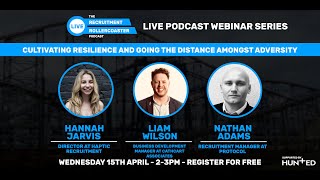
In this live YouTube webinar hosted by Hishem Azzouz, recruiters Hannah Jarvis (gaming specialist), Nathan Adams (Protocol – further education & sports), and Liam Wilson (Cathcart Associates – technology) discuss how the early COVID‑19 lockdown has reshaped recruitment. The conversation covers the immediate impact on live job numbers, the shift from “we can’t hire” to “how do we hire remotely”, and the need to adapt interview, onboarding and fee structures. Panelists share personal reflections on work‑from‑home, team motivation and the importance of empathy and long‑term relationship building. They explore business‑development tactics in a quiet market, the temptation to discount fees versus protecting brand value, and ideas for additional revenue streams such as CPD sessions and psychometric testing. Audience polls and Q&A drive deeper discussion on motivation, work‑life balance, and what practices will stick post‑lockdown. The panel concludes with advice to stay human, be consistent on social media, and focus on long‑term value for clients and candidates.
Chapters
us.
I'm joined by Hannah, Liam, and Nathan, who are going to introduce themselves very shortly. But just very firstly, just a bit of housekeeping. Um, where Marion has just, um, put in there afternoon, guys, that's a place where you guys can answer our questions, speak to each other, and just have a bit of a conversation in there. So that's just the public chat. Um, you should also be able to see the, the Q&A the Q&A function. And I'm just going to type in here, ask your questions here. So in the, uh, what you'll all be able to see now, ask your questions here. I'll just put that in there. And when you see a question that you like and you want us to, um, and you want me to get it answered, you can click upvote as well. So big part of today is going to be Q&A, so we're going to make sure that we have plenty of time for for that. So let's get these introductions done then. So Hannah, if you go first, if you could just let everyone know a bit about you, the market you recruit in, and a bit about your business, that would be amazing.
Cool. Hey guys, um, I'm Hannah Jarvis, been in recruitment for 5 years, started, uh, in the gaming space about 4 years ago, um, and set up a gaming specialist recruitment company with my brother about a year and 3 months ago. Spanish and German.
Nice, and then obviously, yeah, so you said you're perm predominantly, right?
Yeah.
And then, and then, and you recruit, and you recruit internationally as well, don't you?
Recruit internationally, based in London, uh, yeah, mostly around Europe at the moment.
Cool. Nathan?
Yeah, so my name is Nathan Adams. I work for Protocol as a recruitment manager. We're in the further education space, but my team specializes in sports and independent training providers, endpoint assessment organisations, awarding bodies, online learning providers. So a real mixed bag in that sense. Okay, cool.
And you, and you do, you have a dual desk, right?
Yeah, so all my team currently on dual desks. Yeah, so it's literally around a 50/50 split between temp and firm.
And how many people do you manage?
So there's 5 people in our team, um, going through growth at the minute as well.
Cool. Liam Wilson, last but not least.
Thanks, mate. Yeah, so I work for Cathcart Associates. We're a technology recruitment company headquartered in Scotland, but we've got further kind of bases in the Northwest and Bangkok, actually. I've recently set up into Bristol and Finland. I started about 7 or 8 years ago doing contract recruitment, but then I've done perm and set up our Manchester division as well. So done a fair few different things.
Okay. And your focus is very much— obviously your title is Business Development Director. So your focus is very much acquiring new clients and helping other consultants with that as well.
Yeah.
You always give me that promotion. I think you should lobby my boss. Business Development Manager. But I'll take it. Yeah. So helping them with new clients, current clients. I also run a bunch of events and a podcast as well.
Cool. Perfect. So what I'm going to do, everyone, before we start chatting away, is I'm just gonna release a couple of polls which is gonna help the panelists with their answers and what we talk about. So the first one is, it'd be great to know from everyone if you're currently on furlough or you're working. Um, the next one is how experienced you are if you're a billing manager, uh, how long you've been in recruitment. And then the third and final one, which will be really useful, is if you're a perm recruiter, contract recruiter, or manager at your desk. So you should all get the option to click your answers there, and then I'll share that with the panel, and that'll help us understand what we should be going deeper into and talking about in these types of things. So as we start going through this, as I said, make sure that whenever you want to submit a question, you want to ask these guys something, use the Q&A function. So the first thing, let's just set the scene for everyone, guys. How has it been over the last couple of days, week for you and your markets? What's been going on? What's the latest?
Do you want me to go?
Yeah.
Cool. Yeah. Well, I felt over the past few days it's taken a bit of a shift. I think last week a lot of operators seemed to take Easter. I think everyone took a bit of a well-deserved break is what we found. But it seems to have taken a bit of a shift that I think people have now taken the mentality of, we don't know how long we're going to be in this for, so actually do we need to start future planning? Do we need to start looking at, you know, where we're going to be in 2 months, 3 months, 4 months? And, you know, how are we going to adapt to this if we are housebound for the next 4 months? You know, what are solutions? You know, we can't just put everything on hold. What are we going to do? So conversations do seem to start happening.
I don't know what these guys have found in their markets as well, or So, so before it was a bit more of we're not sure what's going on right now. It's like, right, let's just plan as if we're going to stay like this for the next month or so, the next couple of months. How are we going to adapt, basically?
I think so. Yeah, I'd say so.
Hannah, how have you been finding it?
Yeah, I agree. Like before, it was very much a lot of cases, no, we absolutely cannot hire. Yeah, we can't interview remotely, we can't onboard remotely. We can't give out offers to key workers if we've never even met them. I just used the bloody term key workers. Yeah, we've never met them, but now it's turning into like how we're going to do it rather than we can't. Okay, we realize we might be in this for the long term, so how are we going to do all these things?
Awesome. Liam, have you found the same thing or?
Yeah, quite similar. We're quite lucky in tech that there's some companies that are unaffected or if not busier than they've ever been in some respects. But I mean, there's definitely a fair few that have, I suppose, had that blanket approach in the first couple of weeks where they put everything on hold, maybe kind of made use of the furlough scheme. But I think are coming to realize that if they want to crack on, they're going to have to work out a way to keep recruiting or at least kind of planning for whenever we're going to get out of this.
Okay, cool. So just to let you guys know, so 88% of people joining us today aren't on furlough, that they're still very much working, having to obviously weather this storm. So that's the majority of people with us today. Quite a few billing managers with us today, so that's good for you guys to know. And a lot of the people are sort of 3+ years experience in recruitment, and it's a complete 50/50. Actually, there's quite a lot of people that manage a dual desk. 47% perm recruiters, 44% dual desk, and then 8% contract recruiters with us. So that's just, um, context for you guys. So just, just to add to that then, live jobs— how many live jobs do you guys have right now? How much has that dropped? Because I think a lot of people— obviously I, I get to speak to a lot of recruiters, and I think a lot of people may be under the illusion that it was just them that have gone from 65 jobs to 5. But like, what, how many, how many live jobs and how many opportunities have sort of arisen or do you guys currently have?
So we've been quite lucky that we've had quite a lot of business from the last kind of little while that's still going around and the companies are still recruiting. In terms of brand new jobs week on week, it's definitely going down and quite dramatically in some regions. So yeah, I don't think those people are alone when they've had loads of jobs and then suddenly none.
Okay. Naif, what have you found?
I'd say the first week, I don't think it'd be an exaggeration to say that probably 90% of our jobs got either cancelled or put on hold.
Really? Yeah.
You know, I think like what we said earlier, I think people were thinking we definitely can't hire at the moment. You know, I think that was definitely the perception. I would say that probably over the last week or so, what we've tried to do is keep in touch with them people and now starting to get to the point pretty much what Hannah said of they're starting to look at it and say, well, actually, can we put this on hold forever? Do we need to start looking at solutions? So it's starting to come through in terms of new jobs, certainly dwindling down, but I think what is happening is those who were looking before are now starting to continue to look rather than just putting it on hold.
Okay, Hannah, how many live opportunities are you—
I think for us in gaming, obviously more people are gaming because of the lockdown. That doesn't necessarily mean more money because will the players spend more, will they spend less, with completely different player behavior.
Sure.
So, with all those statistics, I think the industry just needs support to be like, okay, what does this mean for us? So, the big companies are kind of carrying on the hiring of the jobs they already had open. The smaller companies, depending on investment, are pretty much pulling their jobs or putting them on pause. But we'll definitely have to see over the next couple of months how that's gonna pan out.
Okay, so first question for you guys then, before I sort of segue into audience questions. What has the coronavirus taught you so far? Let's start with that. What comes up for you guys?
Personally or as a business, do you think?
Personally, personally, professionally. What has it taught you?
I think I've realized I'm much more of a people person than what I realized. I think everyone likes to think, oh, I'm quite independent. I miss, you know, we're in quite a big office, we're quite a family-orientated organization, and I think you don't realize how much you miss that until, yeah, you know. And I think that goes again for family, you know. I've always been quite a I don't know what the term is, introvert, kind of, you know, I've never really spoke to women out a lot, you know, I'm speaking to a hell of a lot more now than what I have done previously, you know, and I think makes you realize that you probably shouldn't take advantage of that, should you, you know, and I think it'd be interesting to see when you come out of this how long that lasts for, if it lasts forever. Yeah, you see them a lot for a week and they think, oh gosh, back to normal.
Liam, what has it taught you so far, mate? Obviously besides getting a haircut.
I said that in confidence before we went on air. We, I think I learned that we didn't really have a kind of work from home policy. We're a traditional business in that it's kind of in the office at certain times. And I was probably one of the people in the organization that thought we could maybe have more flexibility or like more work from home stuff. I've actually disagreed with that now. I miss the office more than I thought I ever would. Just the kind of camaraderie, the banter. When people kind of are doing deals and doing well, it's nice to celebrate. It's not the same when you just kind of get a message on Teams or whatever that someone's done a deal. It's just not the same thing.
You're missing the gong.
Oh, we don't do the gong, but yeah, missing that kind of celebration.
Yeah.
But also, we only hire graduates as well. So, or not graduates, sorry, trainees.
Yeah.
And some of them have just been kind of thrown in the deep end. So it's kind of taught us quite a lot about people's kind of mindset, durability, flexibility. It's been really nice to see some of that as well.
Hannah, what has it taught you so far?
It's taught me, well, obviously, as Nathan said, to remind you of how important the relationships are around you. I run my own company. I have definitely taken relationships like with friends, with family for granted and perhaps haven't put as much time into them as I should have over the last couple of years. But in times like this, put things into perspective big time. But luckily, you know, health is the most important thing. We're all okay. But also, it hasn't taught me, but it's reminded me how resilient I am.
Okay.
In times of pressure and in times where, like, you do need to act differently or do something else or, like, solve a problem. And knuckle down and get through it, I actually like come out stronger.
Rise to the occasion. Nice, I like that.
So to be honest, complacency and like plodding along is like my worst nightmare. So this has actually just made me go the other way.
Okay, cool. So look, final question from me before I start, um, um, going through some of the questions that people submitted. Obviously, what— so what What's been— I think it's great in sort of times like this to make people understand and realize that the challenges— a lot of people obviously make the assumption that the challenges that they're facing is it's just them that may feel like it's just them experiencing the challenges. Right. So I've been trying to share my challenges, which have been like, I'm finding it so hard to switch off at the moment. Like last night I couldn't go to sleep because I was just thinking of loads of business ideas. And I had to get up and just write them all down. I just, I had to like write it down because they were just floating around in my head and I wouldn't have got to sleep. But I've just, I've just found it really hard to switch off because I've worked in every single part of this house besides the bathroom. So like, and what, what I got really good at was just leaving work at work when I left the office, like having a place where I left that. And that, that just really helped me. But what, what's been, what's been the biggest challenge for you guys so far? Do you Do you think?
Should I say it? Yeah, go on. Yeah, similar to you, but also being in a scenario where— I hate this fucking word— unprecedented.
Oh, we're doing the bingo now.
And everyone is going through something that unless you have been a company that's always worked 100% remotely and hired 100% remotely and onboarded and everything else, you have not experienced it. Yeah, you're a recruiter, you're a point of knowledge in the middle, and you're connecting everyone and offering a service. You're high— the people internally in companies are turning to their HR who were looking to them for answers and what we should do. Then HR are turning to you and looking to you for answers, and you're like, well, fuck, I haven't really gone through this either. So you've like just get out there, find the answers, And then basically be that fountain of knowledge or whatever you want to call it. So like, so being faced with a problem that you don't even have the answers to, but you've got to go and find them.
Interesting. All right, Liam, we'll definitely dive into sort of how you've gone about that because I think a lot of people will be experiencing that. Liam, what's been the biggest challenge for you besides obviously missing people in the office and the environment and stuff like that?
I suppose it's quite a similar theme to that, but a big part of my job doing business development is kind of going out to see customers and organizing and running events in the tech industry. So that all just got taken away overnight. So my job went from being quite varied and I don't know, like one day I was in Manchester, the next day I was down in London at a conference, and then I was organizing an event that night in Scotland or whatever. I went from doing stuff like that to I'm now just in my house.
Yeah.
So just adapting to that.
Just adapting to it and working out ways of still speaking to customers, still getting in front of them. So stuff like Zoom and obviously kind of video calls is really helpful.
Yeah.
And just trying to keep in touch with people. I think what Hannah said is bang on. We're looked at for answers and knowledge, which is a lot of the things we say we know about. But yeah, none of us have done this before.
Exactly.
Yeah. Nathan, what's been the biggest challenge for you?
Similar to Liam, really, in terms of just adapting day to day. I think, you know, my job was I was probably 50% in the office, 50% out the office, and now all of a sudden I'm 100% sat at my dining room table, you know. It's a bit mad in that sense. I think also managing a team remotely, I think in terms of the challenge, as you know, it goes back to trust. You know, I've always thought I've been quite a trustworthy person, you know. I think everyone can say that no one expected this, to be in an office on a Tuesday, then on a Wednesday you might not be seeing anyone for the next 3 months, and you might be managing at home for the next 3 months, you know, there's no— I think again what Hannah said is that there's no real answers, is there? You know, I think that's been the big thing I've struggled with, you know, it's not a case of you're sat at home for the next 3 weeks because then in 3 weeks on Monday you're going to be back in the office, you know, everything's going to be back to normal. There's no real answers, you know, I think that was the thing I struggled most to get my head around, that this could be a month, this could be 6 months, this could be the next 2 years, you know. And I think it's trying to get over that into it to an extent.
Okay, so let's talk about this for a sec then. Um, the first thing that I'd love to know from you guys, because you're just sort of talking about it, so a question that Martin Smith submitted was, how are you guys motivating yourself each day? Um, how are you, how are you finding that? So you're talking about Liam, you had variety, same with you Nathan, like how, how are you keeping yourself motivated while sitting at your dining room table all day?
I think not stressing yourself out too much. So, you know, I can always hold me to my own criticism. I think the first week or so I was trying to make myself as busy as what I was previously, you know, where I worked 12, 14 hours a day and I could have easily filled them, you know. And I think it's a case of sometimes just taking a step back, going walking on the garden, go out for your walk, you know, kind of splitting up your day and try and tackle different tasks at different times as well. Make sure you speak to people. I found that I now speak to clients, but I don't speak to them about roles. I'll just ring and see how they are, just to keep and build them relationships. And then you come off the call, and even if you haven't achieved something, what we used to achieve by bringing on a perm or getting a fee, actually, but you've built a relationship with someone and just trying to find the small gains, I think. I think, you know, getting in your head, I think the whole message I've been sending to my team, and I know as a wider business as well, is that you just want to come out of this in a stronger position than what you're in, you know, and if that is by small marginal gains, that's the way you've got to do it, you know, at least you're trying to find them small marginal gains that you class as productive.
Yeah, don't be too hard on yourself. Yeah, don't try and read 3 books a week. Yeah, stuff like that, right? Yeah, I think that's really fair. I've seen a few things Obviously, we've spoken a lot on this around sort of remaining match fit if you're on furlough, or just obviously everyone's talking about using this time for personal development and these types of things. But at the same time, like, I'm really guilty of that, being hard on myself, and obviously always want to be busy. But there's nothing wrong with putting your feet up and watching Tiger King for 4 hours back to back.
I told myself I was going to learn Spanish, French, German. I think all I've actually achieved is I've nearly watched all This Country now.
So I think, yeah, Yeah, no, I really like that. Don't be too hard on yourself. Right. I think that's a great thing. So, and that's, so that, that's helping you remain motivated, right? What about you, Liam? What are you doing to make sure that when, yeah, you're remaining motivated?
Trying to keep in touch with everyone. So like my day-to-day job's not massively hands-on with each individual consultant, but because of the situation we find ourselves in, I'm trying to speak to people as much as I can. Even if it is a couple of minutes rather than typing an email or an instant message, just jumping on a video call. We've been setting up things on our Teams channel that you can just kind of dial into and we can just shoot the shit for half an hour. It's not about work. We're not talking about clients and candidates. It's just like a general catch-up because you do a huge part of recruitment for me anyway, is that kind of office camaraderie. So we don't have any of that anymore. So just trying to do that and then also just trying to get like a working pattern that's kind of works for me. So if it's like a couple of hours blocked in to do something specific and then kind of taking a little bit of time off and then doing that again.
Yeah.
So that's why I've been trying to learn how to do that a little bit more rather than saying I need to be there 9 to 5 and can't leave the chair.
Yeah.
So that doesn't work for me.
Do you think it's brought your team closer together?
Yeah, I think as a company we're much closer together. Yeah.
Yeah. I think, I think that's really common. I think that's really interesting. Out of this. Obviously you're seeing people in their bedrooms, kitchens. I think obviously, yeah, you can sort of— personal relationships can form a bit more, right? Because you're getting to know people a bit more.
Yeah, we've had kids on the conference calls, like all sorts.
Exactly. Yeah. So I think that's really cool. Okay, so really interesting question from Felicity. Thank you, Felicity, for submitting that. Really interesting, actually. So I guess, again, just sort of tapping into sort of what this has taught you so far, if it's changed your perspective on things. But obviously she said, um, how do you think this will change your impact on your individual businesses or your individual desks in terms of what's going on right now? Um, and also, yeah, and also have any of your motivations changed since this pandemic hit? Have you really reevaluated what your businesses and/or personal needs and wants are? I think that's really interesting. What, what comes up for you guys with with that question?
That's a good question. There's a lot to it.
Probably about 5 questions in one. So thanks for that.
In terms of change and impact on individual business, I think it's kind of doubled down a lot of the stuff we've been trying to get to the consultants for a while. So like building long-term relationships, not just quick wins, getting clients on board that are bought into what we're offering instead of like this shit, just send me your CV ones.
Yeah.
Motivations for me, not really. I mean, keep doing the events and the podcasts and stuff that are kind of value adds, if you like.
Yeah.
Because it's something that I enjoy. But also you can see now how much impact they have. And I think as a business, yeah, we're just trying to— I think it's validated a lot of what we were doing already.
Okay, interesting. That's good. Nathan, Hannah, anything to add to that?
I think exactly what Liam just said. I think we positioned ourselves in quite a good way and, you know, we've always been a believer in if you work with a smaller amount of clients who actually value your service, you'll be a lot better off. And I think that is coming to the forefront. You know, I think, yeah, like Liam said, you know, we've all had those clients who just say, well, yeah, you can work on it, just send me some CVs and send me your terms. You know, you don't get a lot of success from that. And I think it's starting to show, whereas I think actually the relationship you've built previously, and I think those consultants that have been doing things right for the past 12, 18 months, 2 years, are going to be coming to the forefront, you know, because they've got those relationships with people. They've got the relationships where they can just pick up the phone and ask if someone's all right, you know, because they've got that personal relationship. You know, they can, they can ask if the wife's all right, they can ask if the husband's all right, you know, because they've gone, they've got their relationships. And it just hopefully this period, if anything, can make their relationships stronger.
Okay. And sorry.
Yeah, I agree with both of you. Like, you can really see the impact of the long-term relationships you've built. And also at the moment, we have looked into like our service offering a lot.
Okay.
In terms of like how this will change our business going forward, I strongly think that tech and gaming and other industries won't go back to how, like, how people worked before, and the landscape will be completely different. At the very least, the option will be there. So we're putting things in place both on the client side and on the candidate side to basically support that. And the first recruitment companies who are to the post in doing that and building up the relationships with the candidates who want to work remotely and facilitating the service offering for the clients who want to work remotely are gonna, are gonna come out stronger in the long term, for sure.
Okay, so let's just talk about that for a sec, because I think a lot of people are— I think what I've really had to focus on personally and sort of what's really helped me when I've found it really challenging the first week or so was just really having the mindset of like how I can innovate my services or how I'm doing things. And that's what you're talking about there. So quite a few questions on this, but a question submitted by Tom Fordham was, are there any additional revenue-generating services that you've introduced to the market instead of placement and introduction fees. Have any of you had any experience in that or had conversations or seen opportunities? How's that been for you guys?
We've half taken a look at it, but what I think is very important is that you don't dilute your image as well. I think if you're seen as the leader, just take us for example, you know, we're in the training and skills market, we call it, if we start recruiting in the care sector, you know, it's going to dilute your image. And I think you've got to look at the big picture. I think there's other revenue streams you can do. We're looking at creating CPD sessions for all our candidates and online learning courses to upskill all our candidates, you know, using an outsourced provider, you know, potentially looking at maybe getting, I don't know, a percentage of that revenue. You know, it's half conversations, but, you know, things that actually add value rather than just seeing it as, um, penny-pinching, you know, how can we make a good quid, so to speak. Actually, how can we actually impact this and look at it as a wider image and actually expand your image rather than dilute it?
Okay, yeah, good thing to be mindful of if you're thinking of other additional revenues. Yeah, you think about, is it gonna— is it adding to my brand and reputation, or is it diluting what people are going to think? Liam, what about you? Obviously business development, are you having— this may have come from conversations— are you seeing any opportunities to add additional services that can maybe help you revenue-wise in the short term?
Not really, to be honest. So a lot of the stuff that I think some people are trying to do, I think what Nathan just said is it can kind of come across a little bit like penny-pinching or desperate. So a lot of the things like the kind of CV clinics and the reviewing of the customers, like the whole recruitment process and all that kind of stuff, like we would try and offer that anyway. So to now charge for it, you'd feel like a bit of a dick. We've suggested some kind of flexible terms, for example. So we got someone who agreed to a retainer on a kind of reduced rate on our part, but it also meant money upfront for us. So trying to innovate on that stuff, or if there's customers that are maybe still quite keen to hire, but they will take longer to get cash flow sorted. As long as everyone's upfront about it, we can make those things work. But in terms of additional revenue streams, not really, because I mean, the events we do, the podcasts we do, and the services we offer, like I just said, we kind of offer them for free on purpose.
Okay, that's fair. Hannah, you agree that has that sort of been the same for you then?
Yeah, I agree. Like, we haven't done anything where we can get upfront additional revenue per se, but we've like offered like free advice, free support throughout this period in terms of remote, how to, you know, doing a remote interview, should you offer remotely, blah, blah, blah, blah, blah, how to onboard, and also facilitating the conversations between different hiring managers in the place as well, really useful. And offering, we internally will work with this really good like psychometric test, which basically breaks down your personality and says like these people should work with these people, etc. And if you're hiring someone super senior into the company but that project still needs to happen, you still need to make that hire, just something to have like an added security on that person, right, for the job, like connecting them with different psychometric testing and stuff like that. So it's not necessarily—
it's adding value rather than Yeah, adding value and strengthening our overall service offering.
Okay, 100%.
Have you guys discounted your fees over the last couple of weeks?
No.
Should people be discounting their fees?
No.
No. Again, again, no. Again, it does— it goes back to diluting your image, doesn't it? And I think what you've got to think is— and I think the whole thing you've got to think of is, again, go back to what we said in terms of you've got to think of your positioning when you come out of this because we'll all come out of this, you know, that might be in 6 months, but if you've gone to a provider and offered them a recruitment fee of £100, well, they're not then going to pay you 50 times as much as that, or however much that is, you know, you've got to be realistic, you know, you've got to maintain your service. I think the people that come out of this stronger are the people who did do that and again added value rather than just try to get a quick quid.
Okay, so there's different things that obviously with the, the payment, and that'll give you some value upfront with getting like 50% of the fee upfront. But I think if you offer like a massively reduced free— it just massively reduced fee— it just sets a precedent of your service and your value within the space, and they'll just immediately compare you to your competitors, and it's just not worth it.
Yeah, sure. Yeah, I think, I think there's a lot to be said about just having a grown-up conversation around saying, look, okay, so maybe we don't structure it in the normal way of you paying us and we like, let's work out something that works for both of us, um, and things like that. Um, so what I'd really like to speak to you guys about, you, we've all sort of already sort of touched on it in terms of you keeping in touch with your clients, building relationships, these types of things. But if I'm a recruiter right now and the client I do have a relationship with aren't hiring, how are you guys going about business development? Like, how? Because right now, if you're staying in touch with your existing clients, that they're saying, look, Nathan, we're not hiring right now, stay in touch with us, let us know, blah blah blah, you're obviously speaking to them, all these types of things. But obviously there's been loads of questions around how are you approaching business development, how are you finding it, like, what approaches are you finding working? So like, have any of you over the last 2-3 weeks bring on new jobs?
I have, but not out of that purpose in terms of— I think it matters what you deem business development to be. I think it should— I think it's changed my perception overall what business development should be, and I think it's all about long term. I think the whole message has to be long term. I think, you know, if you ring anyone now, it's just from our market, you know, I can't speak for everyone. If I ring someone now about a job, about a role, that they might be having, you know, they posted 2 months ago.
Yeah.
In my head, it might have a negative perception. Actually, the way you go around that is, you know, this might be on hold. You know what, I sent an email to someone not long ago, someone I get on with, a client I got on with, and said, look, I've spoken to this person, you might not be in a position to hire at the minute. It's better off being— here's the CV— it's better off being in your inbox than it is mine. You know, it's that kind of message of, you know, it might not be something you can act on straight away, I think it's just being accepting of what those guys can do and what their limitations are. And I think that is the way that you'll get the most success. That's the way I found it, and that's the way my team have found it as well.
Okay. So what, just so not approaching it with a typical mindset of, I need to do 50 calls and I need to pull 2 jobs from that?
Yeah.
Okay.
Yeah. Yeah.
What, Hannah, have you pulled any jobs over the last couple of weeks, new jobs?
Yeah, we actually had like a conference last week, like a virtual gaming conference. The industry is pretty good, like when shit hits the fan, people pull together.
Okay.
So they whipped up like this virtual conference, um, in like 3 weeks, and it was a lot of conversations around how are we going to get through this, what are the issues everyone's facing, etc. So I learned a lot from that. But I also— the first thing I did when this all hit, I just sat back and I just reflected, okay, Forget how I'm feeling. How are your clients feeling? What are the problems they are facing? 1, 2, 3, 4, 5, 6, 7, 8, 9, 10. What can I do? What's my solution for each of these? Do I have a solution? If I don't, can I go and find any answers?
Or should—
can I just like be empathetic with their position? And that's how you should go into every conversation. You shouldn't go into like, here's a candidate, da da da, because 100 other recruiters will be doing that at the moment. Put yourself in their shoes, forget about yourself for a second and just put yourself in their shoes and think, what issues are they facing? What problems? Because they're going to be going through a lot of the same worries, etc., as each other, and just aim to solve those problems, basically.
So, yes. And how are you finding that's helping? And so basically what you're saying is your business development approach right now should be just being a human, being empathetic, understanding what they're going through. And if that means that you can't, if they, and if that ends up being, so you're leading with that in terms of conversations?
Leading with that, yeah. So if they're, for example, a big company and their problems aren't probably going to be the money in the bank, the problems are going to be like working from home, communication internally, how is that happening, making an offer remotely, getting trust from a candidate to accept that offer, onboarding the candidate, and that's how you lead the conversation. Let's have a conversation around this. Yeah. And they're all, they'll all be thinking, what's everyone else doing? And you're the person in the middle that should have the answer to what everyone else is doing.
And has that then led to, well, actually, Hannah, could you potentially help us with this job?
Yeah.
Okay.
Conversation. Yeah, you have to open doors. Whether that door will be open tomorrow, whether it'll be open— yeah, they will remember your name. It will come back around.
Okay. And are you— just quickly, Liam, I'd love to get your thoughts on this— but are you also doing that with like people you haven't spoken to before?
Are you asking me this one?
Well, like, just that obviously on that point that you just said, Hannah, like, are you like— are you doing that with people you haven't spoken to before? Nice. Hannah, can you hear us? I don't know, I think it was delayed. Did you hear that?
Yeah, I heard that.
Yeah, I was talking to you.
Oh shit, sorry, I thought you were talking to Liam.
That's right.
No, because I think you made a really good point.
Yeah, yeah, yeah, that's right.
I was interested to say like, have you done that? Yeah.
Yeah, that's the best way to start the conversation.
Okay.
How's it going for you guys? I spoke to X and X from this company. They're thinking this. Should we have a conversation or do you want me to visit? Facilitate that conversation.
Okay, smart. Okay, I like it. Liam, what are we thinking? Business development, soon-to-be business development director, what's going on? How are you approaching business development?
To be fair, a lot of what Hannah said. So one of the first things I did was look at anyone that's given us money in the last 2 financial years and speak to them and see how they're getting on, but not to try and get all the jobs on, just to see how they're getting on.
How did they actually take that? Let's talk about that for a sec. How are people actually taking that?
Most of them, I mean, the ones that I know beyond kind of like a little bit of contact, it's just been a conversation and you kind of get a bit of chat from them. How are they getting on? How's the business going? Everyone's a lot more open just now because everyone's in the same boat. No one's trying to hide anything. Yeah. And then, I mean, one of our consultants spoke to a target client of ours yesterday just by picking up the phone from our details on our CRM, had a chat with her and she said that it was the first agency that phoned her during the whole of coronavirus to see how she was getting on. We don't even work with them. We'd like to, but their PSL agency or whatever they use haven't spoken to them, which is just mental.
Yeah. So let everyone that's tuned in right now, let's not take this for granted then, because you may think— I think it's easy to assume that everyone's approaching like Hannah's approaching or Nathan or you are, but in actual fact, there could be a lot of recruiters right now that quite frankly, I'd like to think won't be in business in the next couple of months if they're just hiding under a rock and not checking in with their clients and staff. That can give you a real opportunity that, like obviously Hannah said, they will remember this. So, okay, so yeah, don't make the assumption that everyone is checking in and saying, Liam, look, I just wanted to— how is it going? Blah, blah, blah. So, okay, that's been well received.
Yeah, I think it goes back to Hannah's point really, and it's what I've always said to to my team, and it's the way I've always tried to approach it, that you should always— they might not need you now, they might not need you in 6 months, they might not need you in a year, but if you're the first person to think of when they do need that, or if they are speaking to anyone who needs someone, if you're the first person in anyone's mind, if you can achieve that by the end of this period, it's win-win.
Okay.
Yeah.
All right. And from the conversations that I'm having, it seems like clients are definitely open and happy to get interviews booked in, doing them remotely. But it seems like from the conversations I'm having with different recruiters, different sectors, that when it comes, when push comes to shove in terms of, right, we're going to offer this, we're going to offer this candidate, Nathan, and we want them to start in April. Like, how have you actually found a lot of people talking about onboarding remotely, blah, blah, blah. But how are you finding it in your markets in terms of actually people starting remotely? Have any of you had that happen yet?
Yeah, we've had a couple in our team. Again, I think it goes back to what Hannah said previously, that we've probably been part of that. They've not experienced doing it before, but actually we've probably given them advice of what people have done previously, where people have been fully remote before, or have we looked into it? And we've worked with them on it. So people have done this previously. We've got a client who are really good and they are they thought ahead and they went and got a lot of laptops and mobiles delivered so they could send them out straight away. And it's just being ahead of the curve. So it seems to have gone okay. I think my main concern is moving forward, and this is a concern rather than actually an answer, is that, you know, how apprehensive people might be to leave a position into a new one. I don't know if anyone's found that. That's another question. Yeah, it's not something we've gone through yet.
Okay, so you've definitely had people— so just a quick one now because a lot of people may get some real value out of this. On that note then, Nathan, what was sort of one of the key things that was really important for that client that onboarded them remotely? I don't know, is there any learnings there that people could take away that could actually be really useful that you'd learned through that process?
In terms of, I think, constant communication, what they did really well is they spoke to the candidate quite quite a lot, you know, kept them in the loop. I think communication's key during this time as well, you know. I think that's something they did really well. I think they half made a joke out of it, that, you know, we didn't expect to be doing this. We half expected you in an office in London and we'd do a full 2-day induction, you know, and tried to work their way around it, introducing them to Teams. I think they did an induction period where they got everyone on Microsoft Teams and they had probably 20 people on a camera just to say hello. And it was little things like that, you know, where you'd probably have that where they were sat in a coffee room and people would walk in and say hello. They tried to introduce that on Teams and, you know, people there, the dogs and a coffee first thing in the morning. I think just trying to embrace people in the team as much as possible and constant communication.
Constant communication, yeah, that makes sense. Liam, Hannah, have you had anyone start remotely?
Yeah. Okay. I think people obviously have this massive, understandably, like, worry about doing it. They've never done it before and the company's never worked remotely. But all I would say is like, not as bad as you think it's going to be. And everyone is in the same boat. It's just our new normal. It's just life at the moment. So, like, I think he got his stuff delivered, he set up by himself. His biggest issue was like Wi-Fi. All the operational stuff was a bit tricky. But in terms of the communication and the company making them feel welcome and going above and beyond to make them feel included and have team lunches and stuff, it definitely can be done.
And it's a job. So I think obviously once you've found yourself in that position, and that's really powerful then to bring that to life, isn't it, Hannah? I could imagine now that's going to give you more confidence and them confidence to hire more people. But when you do then have a client that is not sure about it, you can then facilitate that conversation. Well, let's speak to this hiring manager that recently took someone on remotely and how they found it. And then that can be really impactful, right? Yeah, and that can really help with that. Nice. Liam, have you experienced this then so far? Because I think, again, I think this is what a lot of people are thinking about. Will people actually take on people or are they just going to wait until they can see them face to face? But clearly people are doing it. What have you found?
Yes, we've had a decent number of people start and I think Hannah might think the same thing, but working in technology, they should be quite set up for quite a lot anyway. If you're hiring software developers, a lot of them want to have some work from home as part of their deal anyway.
Sure.
So from a getting set up point of view, it's easy. I think the cultural stuff may be more difficult because you're missing out a lot of face time.
Okay.
We have had some customers who have kind of been quite adamant on a final stage face-to-face whenever we get out of this. But I think it's our job to kind of coax them out of that because we don't know when this is over. So if they need someone now or if they're trying to delay a start date, they could be delaying it till July, August, September, October. If you've identified somebody you want, we're always trying to advise people to go for the remote onboarding route.
Okay, cool. So obviously, as we said on the polls, 50% of people, perm recruiters, 40% dual desk. So for you guys then, how are you finding, like, how open are people in, from a permanent perspective, to looking at another job right now? How realistic is that? How are you finding that in terms of actually convincing people to consider a move?
I think from speaking to the guys, it's been one of the slightly easier parts of this whole lockdown. Yeah, because a bunch of people are on furlough, which means they're uncertain. A bunch of people have been made redundant straight away. Maybe you work in an industry which has just went totally tits up overnight. So if you've gotten approached about a job at a company which is maybe doing very well in an industry that's doing very well, then you'd be much more likely to leave.
Yeah. Okay. How are you finding it, Nathan or Hannah? Are you actually saying, like, what is your actual honest opinion? Is it a good time for candidates to move right now?
I think it depends on the situation. Like what Liam said, I think a lot of people are in uncertain situations. I think, you know, we're getting a lot of people embracing it from that perspective. I would never try and discourage someone. So, you know, for example, we had someone, I had a conversation with a candidate last week who said, I've been at my company for 10 years, I get all this sick cover, I get all these kind of extra perks, I've been there, I don't feel comfortable leaving. And I think it goes back to how we were being accepting with clients. I think you have to half accept it with the candidates as well. You know, you have to look, it's all down to the person, isn't it? I think everyone's dealing with it differently. I think from a candidate perspective, we're getting quite a lot of footfall in terms of the people actually speaking to us because people's got a bit more time on their hands, haven't they? They don't mind a conversation.
Okay. Hannah, how are you finding that?
Yeah, I— As Nathan said, it depends on the person. Like someone last week pulled out of a process because one of their family friends got super sick. And was in a corona. So like his wife was like an A&E nurse and all this kind of stuff, and it was like, okay, fair enough, like you have your stuff going on. Yeah, our candidate pool is in Germany and Spain, and there's obviously been like— they've been in lockdown for like double the length that we have. So it's been tricky, um, and if somebody feels uncomfortable with committing to another job at this time, I totally get it, but it really depends on the individual circumstance, individual person, and what we found really works is not approaching someone with a job, so not saying, do you want this? Yes or no? Click, like, and then you have to sign. It's like, hey, how's everything going? Like, super casual approach, but like, let's just talk about your career. I can imagine you are probably having some thinking time at the moment, looking at a few different options. Let's just discuss your career, no pressure. And then, and then in that call, a couple of things happen. We obviously understand together where they are in that, at their career, where they want to go. Is now the right time? Is now not the right time? You're accessing really, really top candidates. You've got all the information for them wanting to move, and that's going to come A lot of the time it comes back around now if you're doing your job right.
Yeah, yeah.
But if it doesn't, then it's coming back around after COVID and it's a win-win. It's not a waste of time.
Okay, cool. Yeah, totally get that. What I'd be really keen to just get some of your thoughts on, guys, because there have been quite a few questions on it. The first one, which I thought was a really good question, which was from Alexandra, is what are you guys doing different now that you think you're going to continue doing post-lockdown? If that's in your day plans, if that's how you're approaching things, is there anything that jumps out to you that you think that actually I'm going to make sure that I always continue to do this when we're all allowed back out of our houses?
From a personal perspective, I've been doing a bit more morning exercise and I find it quite refreshing. I always used to be kind of an after-work person.
Really?
Yeah, I've been doing it before work.
Doing a bit of Joe Wicks?
No, I can't work out in my living room. I can't. No matter how long this goes on, I don't think I'll get used to it.
Fair enough, mate. Hannah, Liam, anything that you think is going to stick after this that you thought that's interesting?
Yeah, so work-wise, we've had a little bit more time to do things that you maybe kind of put off during the day because you've like, work gets in the way, if you like. So one of the tasks I've had is kind of sit down with all the consultants and really talk about how they're kind of perceived on social media. So some of the stuff that you and I chatted about, Hishem, and just getting people out to have more of an opinion in the market and be the ones that are remembered at the end of it. Like you said, a lot of agencies won't be around, or a lot of agencies made their staff redundant or furloughed straight away. So we're in a nice position where everyone's still cracking on. If we can be the ones kind of, yeah, if we can continue and kind of shine right now, then whenever we go out of this, then hopefully that will be the case.
Okay. How, what, how are you, how are you guys coping and dealing with like, what are your sort of— so one of the questions from Chris Newland, which was, what would you say are the 3 best ways to incorporate work-life balance whilst working from home? How are you guys finding that?
Routine.
Routine. What, what, what does a typical day look like for you currently, Hannah?
Getting up at the same time, like actually getting dressed to the point that you would go to an office.
Yeah.
Um, I haven't— have you actually— have you spent the whole day recruiting in your pajamas yet?
Yeah.
Cool.
Oh God, no, I couldn't do that.
Fair.
So get up in time, get changed.
Yeah, just routine, um, and know when to clock off. So when my day finishes, I go for a run, but that could be like 5 o'clock, it could be 9, 10 o'clock.
But like, have a— that's really helped me recently is just like having a time or finishing your day with something that sort of says, right, that you do, they're finished.
Yeah, yeah, yeah.
Liam Naife, how do you find that balance?
I'm quite lucky. So I'm working at home with my wife and she's the most organized person in the world. So my day plan is probably stricter now that I work at home than it was in the office. But I don't know, I think a bit like Johanna said, trying to go out for kind of daily exercise to get the head cleared, even if it's just a walk, sticking to times. But I think what I've learned is it doesn't need to be like as strict as it was before.
Yeah. And not being too hard on yourself again.
Yeah. And I mean, I sometimes, I like working in the morning and then sometimes the afternoon is a bit more of a lull. So I'll pick things up at night and then, yeah, just trying to have some sort of routine in general.
Completely agree with that, actually. I found that I do a lot more work in the morning. I wake up, I do a lot of work in the morning, maybe have some lunch. And again, like we said earlier, not being too hard on yourself. You know, actually, if you want to switch off for an hour, an hour and a half, go and do it. You know, if you want some fresh air, go and do it and then actually come back. And again, I find it quite productive working from, as you say, up until probably 1 o'clock and then working up until 6 o'clock later on in the afternoon because I've had a bit of a time to refresh. And I think it's just finding a way that works for you.
Yeah.
Not being too hard on yourself.
Yeah. Okay. Um, so as we sort of come to the end of this, obviously no one knows the answer, but I think everyone's curious to hear people's perspectives and things like that. But like, how, how, firstly, like, how do you think this is going to impact the recruitment industry? What, what, what comes up for you guys when we start bouncing back out of this, when we come back to, uh, normal, the new normal, or come back to normal? What, what, how do you think it's going to impact the recruitment industry?
I think without a need for a corny saying, I think the cream will rise to the top, you know. I think people who have done the right things, like what everyone's been saying here, by treating the clients right, teaching the candidates right, and being there and not just being a typical salesman, so to speak, will be the people that come out on top. You know, those that go for the added value rather than the quick quitters, we've been saying as well. I think added value is a really big message. I think it will. I think a lot will fall away.
Yeah.
As much as you don't want to see that, you know, I think the people who have done everything right will still be here and will prosper from it as well.
Okay, interesting. Anything else to add, guys? How do you think things are going to change?
Yeah, the companies have been like— the companies who are going to be like human, um, yeah, I think it will get rid of a lot of the recruitment robots. The people that are like empathetic, have really tried to be flexible in their service offering, just human in their approach, um, will definitely rise to the top and be standing there at the end. But in terms of like working landscape, I think remote working will definitely come, come through tenfold. Yeah, the earlier that you can build a candidate and client network for that the better.
Nice.
Liam?
Yeah, I agree with that last point. I mean, I think remote working, especially in technology, why would you limit yourself to only somebody that works in Glasgow when you could potentially hire somebody in Barcelona who's better and you've just proven that you can do it remotely for the last 3 or 4 months. In terms of agencies, yeah, I think the guys are right. I think the ones that make the most noise before all of this and were the first to make everyone redundant, they won't survive. And then we had a brief talk about it before the podcast, but I think all the consultants that really want to do it and are getting kind of knuckled down and not making excuses in a time where it's very easy to make excuses will probably come out of this quite well.
Yeah.
And where— and so as we just finished then, like where on a sort of positive note, where do you think the pockets of opportunity are? Or like currently or just over the next couple of weeks, where do you think they will be for you guys individually, do you think?
I think for me individually and for the team, I think exactly what Liam just said. I think the opportunity for people who are doing the right things, you know, in terms of your progression, I think it's— the market is going to shrink. I think, you know, the amount of people that might come out of this in a year tired and think, I don't want to do this anymore, you know, I think those that actually stick with it and want to do with it, I think there's a lot of opportunity there. And I think for ambitious people, I think I think you can prosper from it.
Okay.
Liam, how about you? I think our biggest opportunity is going to be, I mean, there's obviously markets you can target. So anyone that works in healthcare technology, anyone that works in kind of, I don't know, online deliveries, video conferencing, stuff like that. But I think in terms of kind of opportunities for us, a lot of the time in recruitment, it's a kind of race to the bottom on price and everyone always says to have the best service or they're nice, they're not kind of pushy salespeople. I think this is now a really good time to prove it. And if you can leave a long-lasting impression when you're not asking for their business, I would hope it would be easier to get their business and they won't just go back to the cheapest agency at the end of it.
Okay. Yeah, I think big thing for us is like social media. Yeah. Your voice will be heard. Not many people are talking, but everyone wants to listen. So your voice and your opinions and your value is more valuable than ever. Get out there, get your opinion heard, get your voice heard, and just don't worry about it.
Yeah, don't hide under a rock. I think that's super important. Let's just finish just then with— it may have just been some of the things that you just said, but it might just sort of tap into what you might be telling your teams at the moment, telling yourself, but what would be your one piece of advice for people during this time that hopefully would help, will help them, help them remain motivated to keep going. But what would your one piece of advice be to people to carry on rising to the occasion and powering on? What would you say to the people listening? What would be your one piece of advice?
Think long term, think big picture. If you be consistent and I think like what Hannah just mentioned with LinkedIn, everything like that, be consistent and be present and you will see the reward from it. Like what we said earlier. Be the first person in your market that people think of. And if you can come out of the other side with that image, you'll be a lot better off.
Okay, cool.
Liam?
I'd say a lot of stuff is about being human and just don't be a dick.
Yeah, it goes a long way, doesn't it?
Yeah, I think so.
I think it's— but even more so now, doesn't it?
Yeah, 100%.
Yeah. Don't be a dick. Love that. Hannah, was it what you just said or anything to add?
Don't measure yourself against what anyone else is doing, what you think you should be doing because of another person's actions.
Nice.
Write down what you'll be proud to achieve in this time and how you want to grow personally and professionally, and just try to do that and block out the rest.
Really like that. Well, look, I just wanted to say a big thank you to you guys, Liam, Nathan, Hannah, for being really honest, giving some great advice. I hope everyone enjoyed it. Thank you so much for joining us. And yeah, just thanks again for giving us your time, really appreciate it. And just thanks again to Liam, Nathan, and Hannah for joining us. So I'm going to end this, but thank you.
More from Hishem




You don't need as many clients as you think to bill $1 Million A Year In Recruitment



From 30 Direct Reports to Back-to-Back $1M Years as a Solo Recruiter with Zach Creighton



