LIVE podcast with Billing Leaders - Oliver Amos, Charles Curtis & Rianna Sarsons
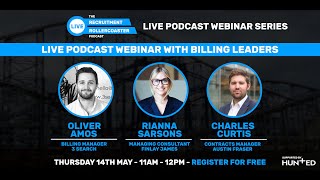
In this live YouTube panel hosted by Hishem Azzouz, billing and recruitment leaders Oliver Amos, Charles Curtis and Rianna Sarsons discuss how they have navigated the challenges of managing recruitment teams during the COVID‑19 lockdown. The conversation opens with introductions and a brief overview of each panelist’s role and company (Finley James, Austin Fraser, 3Search). The core of the discussion centres on three themes: (1) the toughest leadership challenges – remote onboarding of inexperienced or furloughed staff, maintaining motivation, and preserving team culture without the physical office; (2) structuring daily and weekly routines – using Microsoft Teams, Zoom, WhatsApp and Bullhorn for individual check‑ins, short twice‑daily team huddles, weekly win‑sharing sessions, and flexible one‑to‑one catch‑ups; (3) redefining KPIs and incentives – shifting focus to controllable activities such as outreach volume, candidate registrations, and short‑list quality, while still retaining revenue targets, and experimenting with virtual social events (quizzes, yoga, curry night) and modest perks (Deliveroo vouchers). Panelists also share personal adjustments to their own work patterns (re‑ordering tasks to match energy peaks, leveraging saved commute time) and discuss the future of flexible working post‑lockdown, emphasizing a balance between remote flexibility and the need for in‑office mentorship for junior recruiters. The session ends with reflective questions about what each leader will be most proud of or regret after six months, highlighting themes of team resilience, innovative client‑relationship building, and the importance of maintaining culture and loyalty in a hybrid work model. The dialogue is conversational, supportive, and pragmatic, offering concrete tactics and mindset shifts for recruitment managers navigating prolonged remote work.
Chapters
Good morning everyone and thank you for joining us today. So for the first time ever, been doing this for a few weeks now, Ollie Amos, which is one of the panelists, he's having a bit of some technical issues, so do bear with and he should join us shortly. But Look, firstly, thank you all for joining us. Um, just a bit of housekeeping so all of you know how you can get involved and engage with us and the panelists. So Ollie should be just coming in now in a sec, actually. So first things first, as Sam's message, Afghan's message, you guys can chat in there and talk in there and in the public chat. And then the other thing to keep an eye on and to use is to the right of you at the top as well, you'll see Q&A. So you'll see that I put in there, ask your questions here. Um, at any point when we're talking, when we're discussing things, feel free to submit your questions. And what you'll also be able to do is click upvote on the questions that you want to be asked, and I'll make sure they get answered. So let's just start with some introductions, guys, and hopefully Ollie will join us, bless him. But Rihanna, let's start with you. If you could let everyone know who you are, what you do, and then Charles will go to you.
Yeah, thank you. And hello to everyone that's publicly sending their message. It's interesting to see somebody in from Tokyo.
Yeah, I know. Sam, thanks for joining us. Super cool. And Ollie is going to join us from London, but He can't.
Thanks everyone for joining and for the intro, Hishem. So I work for Finley James and I am a billing manager. So I manage a team of 3, 4 including myself at the moment. Finley James as a business place sales and marketing professionals into the technology sector across the UK and the US. We've got an office here in the UK and Manchester is our headquarters. We've got some people in the ground over in San Francisco and New York. So that's predominantly what we do. Perfect.
And Charles?
Yep, so I'm Charles. I work for Austin Fraser. I've been in recruitment now for just under 7 years. So just got a, well, according to my LinkedIn, it's 6 years and 8 months to be precise.
Wow.
And that has gone like, as you can imagine, super, super quick. But so I started at the bottom from trainee and then now up to the point where I'm a contracts manager for Austin Fraser. So my team is, we're a team of 6 in total, so I manage 5. We're a contracts team obviously within the tech space, primarily at the moment based out of Reading with a view to kind of be landing more permanently in London at some point in the future.
Cool, thank you, Charles. And, um, Ollie, look, we can, we can see you. There's, um, 40+ people with us right now, just to let you know. But can, can you hear us okay, Ollie?
I think I can hear you.
Can you hear me at all?
Yeah, yeah, all good. So if you, if you could just do a quick intro, Ollie, to let everyone know sort of who you are, people that you manage, um, if you're a perm, contract recruiter, and then we'll get going.
Yeah, absolutely, mate. So, perm recruiter across marketing and digital, everything in terms of financial services world and kind of moving into the fintech space and all that kind of stuff. Been in recruitment for about 7 years, been at 3Search for the last 5 of those, coming up my 5-year anniversary there. Joined the business pretty small and then kind of helped them grow that business out. Now manage a team of 6 people, all in London, but recruiting kind of nationally and then a little bit more in the States as well. But yeah, so hopefully that kind of gives you, gives you what you need.
Yeah, that's perfect. Um, amazing. And as I said earlier, don't— if you, if you crash out or anything, don't stress, like, just come back and we'll, um, we'll deal with it. All right, so what, what I'd like to, to start with, guys, just, just to set the scene for everyone, is how, how have you found things over the last couple of weeks? Um, Charles, I'm going to start with you. How, how have you found things, mate? What's been going on in your world?
Uh, well, I think, um, rapidly changing is probably how I'd sum it up. Um, so we, like, we're quite fortunate, like, as a business, um, our CEO and the board kind of made us all effectively mobile anyway, so that we had the kind of infrastructure in place that anyone could work anywhere. So I guess the only thing was, like, when, when this all kind of kicked off, was like, okay, well, how are we going to perform with everyone working remote and what, you know, the stress test is, stress tests on the systems and everything like that. And that's obviously worldwide because we've got offices in Germany as well as America. So, um, I think like maybe to start with, we probably, we knew that this was obviously going to be a big thing, but I think realistically it's just been ever-evolving, changing, um, and I think we're just having to adapt as we go, um. I think there's a bit of an acceptance piece that maybe we don't have all the answers, and that's okay, but we're all in this together kind of mentality, I think, is probably where we're at right now.
Cool.
Love that, mate. And Rhianna, how have you found it? Obviously, I know when we spoke, you obviously live on your own, right? So how have you found it?
Yeah, it's been an interesting one. But yeah, isolating by myself, working from home, only being able to communicate with people sort of by video is completely different, but it's something that I think everyone's just getting used to now. It's sort of just what life is, isn't it? Because we recruit into the tech market, it's also an industry that's still doing quite well throughout this whole situation, so I'm quite fortunate in the way that I am still recruiting for a lot of clients, and actually the majority, well, a big proportion of what we'd normally recruit for has reduced dramatically given the circumstances, and I think that's quite normal across the board. So without sounding too general, it's just a really interesting situation to have to try and get your head around, and working remotely and trying to motivate people remotely. But generally, it's just been a bit of a whirlwind last couple of months, to be honest, because you start off thinking, yeah, it's only going to be a couple of weeks.
Yeah, definitely.
And now we're sort of 8, 9 weeks deep, probably going to be another couple of months. So it's just a life we're all going to have to adapt to, to be honest.
Yeah.
But yeah, without sounding too general, I think everybody's probably in the same boat, really.
No, that's good just to set the scene for everyone, I guess. So the first question that I wanted to start with— I think this podcast is all about creating a place where we can have open, honest conversations about working in recruitment, right? So the first question that really stood out to me was from Sean Kennedy, and it was basically, he basically asked, what's been your toughest challenge as a leader during this period and how have you dealt with it? Let's just sort of start there, 'cause I think right now a lot of people may think that the challenges they're facing, they're facing them alone, but I know that a lot of people are going through what they're going through. So what, maybe start with you, Rihanna, what have you found most difficult and how have you pushed through?
From a leadership perspective?
Yeah.
I mean, I'm in a position now where my team are furloughed. The main challenge for me, sort of the first month of being in lockdown and having to manage remotely, my team are quite inexperienced. So my most experienced person on my team was only sort of 6 months in.
Oh, wow.
Doing very well, but my other 2 people in my team were sort of 3 months and maybe a month after that. So sure, it was— it's very difficult to, one, dedicate as much time as you need to people that are relatively new to the business. Um, I think time is the main issue. Okay, the office, you can quite literally swing around to someone's desk and spend 2-3 minutes with them to show them how to do something. Yeah, still trying to get people up to speed. Um, it was pretty much half an hour to an hour at a time screen sharing, showing people how to do things, and it's just quite time-consuming. And I felt like I wasn't dedicating enough time to people in sort of their learning and development needs, to be honest. That was my main challenge. But all the general things, trying to keep people motivated, ensuring that people's mental health was still in sort of a positive environment when they're working remotely, working from home, don't have a team around them.
Sure.
So, yeah, to try and keep people motivated and actually just to say, Everybody's in this together and there's no sort of right or wrong answer at the moment, but we just need to see that you're doing as much as you can. So that was probably, that's probably the main challenge. But like I said, I miss my team a lot. If any of you are here, I hope you are. Okay. Yeah, I am quite fortunate, I suppose, in some ways that I'm now just being an individual contributor, but very much looking forward to the team.
So I think just, just for everyone's context then, Rhiannon, so furloughed your team, as you said, So for, so for what, the last, what, 4 weeks, 3 weeks, you've just been focusing on billing and being an individual contributor? Yeah.
Okay, exactly.
Cool. Okay, great to know. And Charles, what about you? What's been the biggest challenge for you?
Yeah, so I mean, I, I mean, I'm— so I moved into a non-management billing role quite a while ago now, so about nearly 2 years really. Um, so for me, it's kind of, uh, first of all, like, when this all happened, obviously we appreciate, like, no one really knows how long this is all going to go on for, things like that. So we're— I guess the first thing I wanted to kind of do was maybe when we all went remote and we were all on lockdown was, okay, I really don't want to kind of completely throw away all the good stuff that makes us a good team because of this. Like, I want to try and Obviously, I appreciate there's going to be a bit of change and things like that, but fundamentally, like, keep as much of that as possible. Keep the collaboration going, keep the support, keep the sharing of ideas. I guess, like, try, try our hardest to kind of sort of keep, keep this sort of one-to-one coaching going. And I think, you know, we're also, like, at the beginning of lockdown, still, still interviewing for people, and we were still kind of, you in a position where we were like, yeah, we're still going to hire because, you know, if we find good people, we've always been like that, you know, if we find good people, we'll make a space for them. So I guess so, for to start with, certainly for the first sort of 2-3 weeks was probably actually like, okay, are my guys okay? Yeah, kind of taking a little bit back from the job and more about the individual. Because one of the things, one of the challenges is that you, we're all individuals and we've all got very different lives out there behind, you know, our job. I've got, I'm quite fortunate that, you know, my team are experienced. I think my consultant has been with us probably about a year and a half now, and then I've got seniors and principals in there. So it's more about them as individuals and making sure they're okay. And, um, I've got— one has got kids, um, one is in a flat on her own, um, others have only just moved in with their partners, like, after never living before, which, you know, that could be a bit of a situation. Um, so I think, like, straight away, like, people first. Are you guys okay? Like, checking in, doing all that.
That's awesome.
And then I think it kind of sort of then moved into more like, okay, well, like I said, I don't want this to be— I don't want to be different to how I am in the office. So I'm not micromanaging. I think Karl mentioned it in there in terms of difference between. And I definitely want people to know I'm there for them. So it kind of turned into more of like, okay, strategic kind of slots throughout the week.
And that's what I see, Rihanna, you're talking about, right? Because you could just swing by the chair. But now it's like, actually, we've got to book in a Zoom call or something like that. So it's interesting that, okay, so how, okay, so you've then had to work out specific times where you do certain things and people got dedicated time.
Yeah, I think, I think people, people like that because they know it's like, okay, cool. Well, this is my time with you to talk about stuff, but also talk about work, how you're getting on, things like that. I think we also have to, manage expectations all around that sales are going to be down. We know that. But okay, if we're not doing the deals, then we need to make sure we're doing everything we can to kind of try and get us there. So actually, where we would be celebrating, you know, maybe more around sort of job activity, you know, the interviews and obviously deals, maybe we need to kind of scale that back in terms of more around like, okay, cool, well, who's actually identified a company that's hiring right now. That's actually a massive win.
Celebrating small wins.
Yeah, because ultimately, like, recruitment is fed by confidence in the market, and right now confidence is super low. So people naturally go, okay, cool, well, we're actually letting people go, we're probably not going to bring anyone else in. And, you know, it's just kind of sort of like actually like really celebrating when you find someone that is hiring. Okay, love that.
All right, well, We're definitely going to dive into that because there's quite a few questions around, um, changing sort of the goalposts, talking about celebrating some more wins, stuff like that. So we'll definitely dive into that. Um, so I think, Ollie, you can hear us, right?
Um, yeah, can you hear me?
Yeah, we can, we can hear you fine, mate. So we're gonna go— yeah, Ollie, no stress. So I guess for you, Ollie, what, what's been, what's been some of the biggest challenges for you, mate, over the last couple of weeks.
Yeah, I think just kind of catching the back of what Rihanna and Charles are saying, it really is the motivational piece. I think we're all really used to working in kind of, you know, pretty vibrant offices. Culture is really, really important to everybody, and Rihanna's saying, you know, going over to people's desks and doing that bit is a big part of how we all manage people, and that for me has been without doubt one of the hardest things is you lose that connection in that side of things. So I think that's definitely the toughest piece, and then, you know, everybody's running what are successful, hopefully successful recruitment teams, so people are used to winning and doing well and kind of hitting their targets and that kind of thing, and I think you just need to adjust expectations, and Charles was saying, you know, you start celebrating much smaller wins You know, you start, move away from celebrating, well, you celebrate more so, I suppose, when any job's on and things like that, but really start celebrating, you know, just getting quality shortlists out where we can, or quality volume, or just, you know, feeling like you've achieved something good in the day. Just keeping positivity, I think, is without doubt the hardest thing.
Okay, awesome. And look, Ollie, we can all hear you okay, right? So don't stress, all good. So I guess let's just segue straight into this then. It was one of the questions I wrote down. Charles, you were touching on it, and Rhiannon, maybe this has changed slightly for you when you've had to structure your day on focusing on yourself and things like this. But one of the questions which was submitted by Chris Bennett was pretty much around this. It was, I'd really like to know what team daily setups are, ultimately how you're now structuring your days. You talking about the slots, how, how your sort of normal weeks now look, how often they speaking to their teams and using what tech. So, Rhiannon, maybe you can start, maybe obviously as you were segueing and your team segueing into furlough or whatever, but like, how, what does your sort of normal day or week look like now? How have you structured it?
So, from a technology perspective, we're using Teams, which has worked really well, and obviously Zoom for the video meetings. When I did have my team here, what we're still doing now with the wider team that are still at Finley James, is, to be honest, there's never going to be a right or wrong answer for this question.
Yeah, sure. So I think people just want to know what other— how other people are stretching their day and stuff like that.
No, I was doing, um, individual calls into my team in the morning to understand plans, how they got on the previous day, um, what their plans are for the day, essentially. So before 9 o'clock, it was a call into each individual, um, to ask to make sure they've got out of bed as well. Yeah, yeah, exactly. Yeah. Well, then it was a 9 o'clock, uh, video meeting with the whole team. Yeah, talk about and share like ideas, what's working well, what's not working so well. So it was individual calls in the morning followed straight after by a team video call and then another team video call in the afternoon session. So we always have sort of 5-10 minutes as a team twice a day. So in the morning, in the afternoon, and that seemed to work really well. And it was actually something that we all looked forward to as well. And we sort of played maybe some games in the video calls or whatever it may be to keep up. A bit of positivity as well and not just keep it all always the same. Yeah, I mean, in terms of communication and structuring my day, it was speak to each individual in the morning and then 2 video calls, 5-10 minutes every day. And then of course it was training sessions in between that if anybody needed any assistance or support.
Okay, awesome. Thank you. I think what one of the things that— Charles, I'll ask you the same in a sec— but one of the, um, things that I heard recently with one of my clients is that what he does with his team is he'll, um, at the end of video catch-up session, what you do, he'll get everyone to share like a highlight of their day, which I think is just a really cool and nice thing to do as well, which isn't just about work and how many calls you made and all that sort of stuff. Charles, what have your sort of days, weeks been looking like and how have you structured it in terms of communicating to your team and stuff like that?
Yes, I think Like, like I said, I was keen to kind of make sure that, you know, we didn't suddenly completely flip on our head, like, what's actually brought us success before. So, um, you know, people talk about like KPIs, for instance, and I think like that's where, for instance, me as a manager can maybe sort of review, okay, cool, where's an area that maybe we need to kind of focus a bit more on as a team, um, and make it less about numbers and more about outcomes and wins off that. So, and that's kind of always been the mentality. I've never really kind of been a stickler for the, okay, this number of sales, Chris, this number, you know, things like that. I think it's actually more about, okay, cool, well, if you're working really hard and you're getting some really cool outcomes and, you know, you can quantify that and you can tell me about it, then I'm okay with that. Um, I think, um, obviously when you start working remotely, it's like, okay, cool, well, I can't see it, I can't feel it, I have to kind of sort of, okay, well, how do I actually sort of monitor that or kind of make sure if someone is just talking a good game and what it's kind of looking like. I think it's kind of actually kind of sort of making it a bit more competitive. So yeah, look, you know, maybe it can be something around like who can get the most CVs out and things like that, just actually more born out of a bit of a pride thing. Because like I said, like fundamentally, if we're not going to be doing deals, then we need to kind of demonstrate that we're doing all we can to try and create those opportunities and things like that. And so I just, I guess, like being mindful of kind of, you know, what kind of key activities we know that bring success that we're, we're aware of and that we are keeping an eye on so that people can help that sort of manage their day. We've never as a team like had you know, as many catch-ups as probably are now, so that's probably a bit different.
However, when do you do yours, Charles? And do you do— is it a similar sort of structure?
Yeah, what we're doing now is like in the Monday, uh, in the morning, sorry, um, every morning, um, it's an hour with all of us, um, and everyone brings to the table their, their biggest wins and real successes. Like maybe, like I said, it's a company that's hiring or it's a target client we've identified new managers we've connected with, things like that. And then it's, like I said, allotted kind of catch-ups with the guys one-to-one throughout the week, because I was conscious that I didn't want it to be like all the time. Like, people need to get on with their job.
Like, how long are those catch-ups typically, Charles?
So they're spaced out for up to an hour, but typically they're driven very much by the consultant. So if they only need 20 minutes, then that's cool. Um, yeah, and obviously because I've got some principals, some, uh, you know, a consultant, a senior, they're all at different levels where, okay, I might be a little bit more around, um, nitty-gritty with the consultant level where we're sort of looking into the, you know, the information a bit more and actually like there and then live offering guidance and things like that. Just, just looking at, okay, cool, we're going to get— we're going to identify opportunities So let's make sure we're maximizing every opportunity right now we've got. And that's where I can really add value, I think, in that kind of situation, kind of stepping back a bit and helping.
Cool. Like that. And then obviously, last but not least, Ollie, you want to add anything to that? How have you been structuring communicating to your team? Obviously, you said one of the biggest challenges for you has been motivating your team. So how many times are you speaking to your teams on a daily or weekly basis?
Yeah, kind of reasonably similar in that we have kind of a 9 AM setup call every day. I'd say 50% of that is just a bit of a general chit-chat and having a bit of a laugh. I think we're one of those teams, you know, we'll get to the office pretty early, sit and have a cup of tea, a bit of breakfast, and have a chit-chat. I've always been quite keen to not lose that and keep that kind of cultural piece going. And then we'll have a similar thing to you know, kind of towards the end of the day, talk about any successes, talk about any challenges, anything that we need help with, I suppose. And then again, it's just being constantly open to the consultants picking up the phone and giving me a call if they need me. So trying to avoid—
Just over-communicating that.
Yeah, exactly. So like, not, you know, not having like a Zoom call booked in necessarily, but like have, just, you know, if you need me, just give me a call. And then we've got a WhatsApp group with my team going constantly. So if there's little things or little questions or, you know, seen something helpful, sharing it with the group and then letting everybody dive in with the answer as well. So it's not all coming from me, it's coming from coming up with their own solutions. And I'm pretty fortunate to have a really driven team. So the motivation piece kind of comes from all of us. But yeah, it's all kind of digging deep, I suppose.
Okay, cool. Well, hopefully that helps some of you guys in terms of thinking about how you're structuring and communicating to your team. So Charles, you've obviously touched on it quite a bit. I'd love to get Rihanna and Oli, your thoughts. And it was a question that came up quite a lot. So I'll quote two people. Sorry if I pronounce this wrong. Zé Salt. I'm sorry if I pronounce that wrong, but basically that question was Any changes in regards to goals or targets you have set for your team for them to keep feeling they are succeeding, to keep them motivated? And then, and if so, what are those? And then the question by Louise Gilmore was, given the current market, hiring has naturally slowed down. Do you believe that consultants' daily targets should double in order to achieve the same results we are used to? Right. So, so I guess like you've been talking about, Charles, but maybe Rihanna, one of the things that came out to give you some context, one of the things that came out of a live podcast we did a couple of weeks ago was one of the managers changed the sort of typical objectives of number of sales calls, new business calls to clients, and flipped that to focus on call times rather than like really look at that. So I guess obviously making you feel like you've hit your targets or you've got something to drive towards obviously helps with the motivation, but What have you sort of changed or different activities you've looked at that have helped with that?
Yeah, I mean, I think what we did as a business is essentially we just monitored more on managing the controllables more than anything. So you can't really manage and you can't really assess in advance how many interviews you're going to arrange, for example, because you don't know what the market's going to be like. Or whether clients are fully and totally committed at the moment and are prepared to interview, or whether they're just saying it. So what we sort of set as normal KPIs for the week is something that we can control. So whether it's a certain amount of messages that are going out to prospective candidates, or whether it's candidates that are registered, because there are some things that you can control really at this stage in this type of climate, whereas like I said, you can't really control the revenue that you're making at the moment, or even a pipeline, because you don't know at what point a client is just going to say, actually, no, I can't, I can't do this currently, and I'm not going to be committed to taking on this candidate, even to the point of interviewing them. So, yeah, I mean, we changed our measurables based on something that can be controllable. So it was the outreaches. So how many people are you going to prospect or contact per week, and how many candidates are you going to commit to sort of interviewing and registering on our database per week? We felt like that was fair. Obviously, if the interviews follow, great. And if the revenue and the deals follow, then that's awesome. But I think, yeah, based on the manageable, the KPIs, that really, that's what we did.
No, absolutely. I know obviously a lot of people give that advice, control the controllables, but that really just takes some weight off your shoulders when you really recognise that and realise that. I think that's a great way to then filter into KPIs. That's completely right, because then you can communicate to your team and other people that they are in complete control of reaching these and these outcomes. So I really love that you put those two together. That's awesome. Ollie, what about you? What sort of things have you sort of maybe had to change that typically would be— you'd be measuring them differently if the circumstances were different? Anything to add to that?
Yeah. Yeah, I think it's quite similar in that it's you want to measure on things that people can control. Yeah, you know, if you're looking at putting incentives in and targets in, it needs to be something that consultants can actually go out and achieve. I think, you know, the point around kind of doubling certain targets and stuff, I think it's the right thing to do in certain areas but not in others. You know, you haven't all of a sudden got a ton of, you know, a ton more time in your day. But yeah, we absolutely need to be chasing things harder and pushing harder and driving harder, but it needs to be in the right places. I think that's really important. I think that will continue as well, as you know, we've all got KPIs and targets set when we were back in the office that were based on previous results and previous delivery. And I think, you know, depending how long this goes on for, I think that will probably become the case again, where you go, you know, over the last 8 weeks so far, this is what people have been delivering, so that's what we're now going to start basing targets on. And, you know, that becomes the new that's a good thing, that's a bad thing, that's, you know, you've hit your target. Um, but I think that still needs to remain for the foreseeable future around controllables.
Okay, cool. Really like that. Charles, anything to add, mate? I know you've already sort of touched on it, but anything to add that sort of helps you manage your teams in terms of looking at certain outcomes?
Yeah, I just think, um, again, like, expectations are right. The goal is right now cool, people might not be hiring right now, clients that we know and love might not be hiring right now. However, like, use this time more than ever than we have done to build those relationships, because 9 times out of 10, that's where our business comes from. Actually, it doesn't come from cold calling and things like that, it does come from those relationships. And it's like, use this as an opportunity to build those relationships now so that you know, 6 months' time, maybe when, you know, this all, this always behind us, we can, you can capitalize on that. You know who you're calling and they're actually going to know you now more than be like, who's this at the end?
So how, how can you measure that though as a manager? How can you, do you not mean, how can I, if I turn around to you and say, Charlie, I've built some really good relationships today, okay, yeah, again, it comes back to how you, you organize your database.
Um, so I think like, so with regards to like, we use Bullhorn, for instance, like all the consultants and their managers, part of the expectation is that they're all organised in terms of where they sit on ultimately a hierarchy of, you know, potential sort of business development. So are we already poking with them? Are they people that maybe we've had jobs with but not placed with to ultimately target clients that we're saying, right, okay, cool, these are the people in the next 3 to 6 months that we're going after. We know who they are, we know the decision And again, like during your catch-ups, you can quite quickly kind of look at that as something.
All right, let's look at the information. Yeah, yeah, okay, cool.
Yeah, you know, sometimes it's like, you know, we get such good information but then it's lost and we forget where we put it and things like that. And it's like, this is such a good way of like being like, okay, cool, right, where's your go-to list of people that, you know, back then told you that now is going to be their time?
Okay.
Like, if you come out at the end of this, maybe you haven't done as many deals as you would have done, but you've got a real slick database of, like, clients that you know, know you, and you know when they're going to hire, then that's, that's a massive win and that's a huge pipeline. So, okay.
All right, cool. Interesting. I guess just as we're on this, before we, um, move on, um, ask you the next question here, Marissa just put— so yeah, are, like, are you targeting yourself, maybe, or your team on, on the billings deals-wise right now, or is it just strictly the things you can control? Like, do you— I don't know, do you have monetary targets in place right now, either any of you guys?
Yeah, we still have those targets in place.
Okay.
It's important, you know, we're all ultimately, we're all revenue-driven, money-driven individuals, or, you know, you'd hope so at least. I think people still need to have that towards with stuff they've got in process and that kind of thing. I think you just need to adjust that per consultant and, you know, depending on what pipeline they've got on. Um, but yeah, I think it's important still that people have got a target around revenue.
Okay, cool. Anything to add, Rihanna or Charles, or is it— obviously, do you still have a monetary target in place for your guys?
Yeah, so we still have revenue targets as normal. Um, yeah, yeah, nothing too much to add to that, to be honest. Yeah, KPIs have slightly shifted, but revenue targets Still there.
Cool.
All right. So just on this topic, obviously recruiters, the industry are renowned for the incentives, right? And these things typically involve obviously a lot of drinking normally, but lunch clubs, going to eat in nice places, holidays. So quite a few questions that come through. One from Angarad, sorry if I pronounce that wrong again, but Um, basically the question was, how are you incentivizing your teams remotely, replacing things like lunch clubs, etc.? So how have you found that, and, and what are you guys doing on that front? Charles, maybe you could take that one first. Like, how are you incentivizing your team?
Uh, so I mean, to be, to be transparent around sort of where we're at, when, when obviously Tough decisions had to be made within the business. We have to look at realistic expectations for what sales are going to be like.
Okay.
We're probably looking to kind of potentially that might be 50% of where it, where it should be. And our CEO kind of quite quickly said, right, okay, fundamentally the biggest thing for us is people first and looking after as many people as we can. So obviously that meant there was some furloughing. There was also some sort of salary sacrifice, things like that. People are still going to be earning commission. And I think like, I think from our point of view, things like incentives, obviously travel, everything like that is basically like, well, that's straight away, that's where we're going to save to save people's jobs and things like that. So we have to go into this kind of sort of realm. I think from my point of view, I mean, there was talk around, we tried sort of maybe like incentivizing people with like Deliveroos and things like that. That's not a bad idea. But to be honest, like, I think, I mean, I'm really fortunate, and I think we are, like, the people that are with the business now, we're all in it for the long haul. We get it. Like, this is— we don't necessarily need incentivizing beyond the fact that, look, we get commission if we do deals still. There are some companies out there that aren't even paying their people commission. So, yeah, you know, I think, you know, when it comes to how we manage our people, Someone's raised the point there about how do you deal with some of the kids and things like that. It's like we're flexible with people, you know, we're offering people so much like that, you know, we want to help them through this as well and be with us at the end of this. Yeah, that's almost an incentive in itself. And maybe that sounds cheesy, but I know you mean there's people in seriously like tougher positions than maybe even we are. So I just kind of feel like with my guys, it's like, cool, We're the chosen ones to get us through this. So we're all kind of a bit of a Band of Brothers mentality, maybe something like that.
No, I love that. I mean, delivery definitely isn't the worst idea, but I get what you mean. It's perspective. It's, look, guys, this is the journey that we were on. And yeah, I mean, hopefully, I'm sure the lunch club when we come back, it gets to normality, will be an absolute cracking one. The first one when we get back. So I guess anything to add to that, Rhianna? Yeah, I don't know if there's any been some cool incentives for across Finney James that might be quite cool to share, or what have you guys been doing?
Yeah, I mean, just on the back of what Charles was saying, to be honest, as it stands at the moment, there's a limited amount that we can do. And the fact that people still have their jobs and they're still earning commission, we're still in a market where we are able to build sort of revenue and get deals. We're just fortunate. I think not necessarily from an incentive perspective, but we're still having virtual quizzes with the wider team.
I haven't got bored of those yet. They are good fun. Yeah, they are good.
But yeah, everybody has a drink and has a virtual quiz, so we all get to catch up with everyone. So it's not necessarily an incentive, but it's definitely something that keeps people entertained and a bit motivated. And definitely from a social perspective, perspective. We've also started doing virtual yoga classes, which is just not something that I would have ever done before, but it's really enjoyable. So, yeah, we're getting everybody involved in those types of things. And I'm sure lunch clubs and stuff like that haven't even been mentioned because I don't think people are even thinking about it. Yeah, there's nothing that anyone can do, so it's not something we we can control. But I mean, there was a trip this year to Mexico, it's been postponed, and potentially once to New York in October, that's also may or may not going to be postponed. So it's just something that everyone has to understand really at the moment. But yeah, not necessarily from an incentive perspective, but definitely from a motivational piece. We're doing quizzes, we're doing yoga, we're doing things like that. We did try to do a virtual curry night, but I think that went down very well.
Yeah.
So things like that.
Yeah. No, I think, I think it's that. I mean, I don't know about you guys, but like when you sort of had maybe a couple of hours just cracking on, working on, working by yourself, and then when you speak to someone, if that's on a video call or call them, you just feel a bit more uplifted that you just spoke to another human being and just remember that you're not going through this alone. And that really does help. Ollie, anything to add, mate, before I'll ask you guys another question. I don't know if you've done anything or tried different things that have helped with that on the incentive side.
Pretty similar, really. I think the last 8 weeks for us has just been ultimately trading as hard as we possibly can, and we've not really had to incentivize people to do that. I think they get kind of where the business is at and where the market's at. We're in a good place. If we want to keep doing that, you know, we're probably going to have to cut back on some of the bigger expenses in the short term. I think we're now at that point as a management group where we've started to look at, you know, a plan for the rest of the year as to how we bring incentives back. And they're obviously going to have to be different to going to the pub for the afternoon and stuff like that. But it's important that we have that there and we're still rewarding success. It just changes what that reward is and probably what that success is to get there as well. But yeah, it's certainly something that's on all of our minds to start bringing that back in.
Okay. So, Ollie, let me give you this question to start with. So, a question I thought was a really interesting one. It's a question from Frank Young, which was, have you made a main change to either work or non-work related that has really helped you adapt to the current situation? So that could obviously be anything, but I don't know if you've changed anything in your sort of weekly routine or daily routine that has really helped you personally or just sort of professionally.
Yeah, I think my routine has changed a huge amount. Without having to do a pretty big commute every day. So I've got a lot more time in my day. I've tried to keep a bit of routine there, but I'd say probably the biggest thing I've tried to do is, and this is off the back of noticing that I was just far more productive in the morning than I was in the afternoon. So I've just tried to structure my day quite differently to make sure that I'm doing, you know, maybe the more monotonous things or the more difficult things in the morning. And then I've got all my calls and things like that booked in the afternoon for when I ultimately know I probably will be flagging a little bit. Need a little bit of a pick-me-up. So, you know, I'll try and do as many calls as I can in the afternoon because that's what gives me a bit of energy and gets me going a little bit. So yeah, that's probably kind of the biggest change that I've made, I would have thought. Um, yeah, but I've tried to keep everything as similar as I can, you know, keep that routine, to be honest.
Yeah, no, that's really interesting. Rihanna, what about you? Have you changed anything that has been— yeah, helped you during this tip period, out of interest?
Um, yeah, I think the same as Ollie, to be honest. I've had a lot— I have a commute also into London from Hertfordshire, so I've had a lot more time in the mornings and the evenings to be able to concentrate on work. But I suppose it's a difficult one at the moment because it's actually very hard to switch off, whereas when you're in the office, it's very easy to sort of get in, set up, start on time, and then leave the office by 5:45, 6:00, 6:30, whatever it is. And by the time you've sort of shut off your computer and you commute home, you are sort of out of work, really.
Yeah.
You may or may not check your emails at the evening, but at the moment it's so easy to find yourself— my routine has changed because it's so easy to find myself still on my laptop at 8, 9 o'clock in the evening, still doing work. So I think that that's also a challenge because it's something that a lot of people will be struggling with at the moment is you do still have to give yourself that time in the evening to just shut off. Don't feel like you have to work extra hard at the moment. You should just be, I suppose, working extra smart. But it's really difficult not to.
Yeah, definitely. We spoke about this, didn't we? I've definitely found that really difficult. Have you done anything to try and combat that then? Have you sort of started to put your phone away at a certain time or—
No, not really, to be honest. I've started to do more things outside of work. So I'm cooking from scratch more and I'm going—
Love that.
I wouldn't have done those types of things before. Okay, so I'm actually just enjoying— those are the things that I'm doing, I suppose, in my personal life to be able to help me motivate myself a little bit more and to be able to just separate work from social, I suppose. Because I, like I said, live by myself and I'm always in my flat, so it's— it's— there's not that division, whereas when you're going from the office to home, there's that, yeah, like distinct division.
Totally. Yeah, yeah, totally. Yeah, yeah, that's awesome.
But no, I haven't really changed much to my day, to be honest. I structure my day the same. I speak to the same clients, I identify the same candidates, but of course it's just a little bit more challenging due to the climate.
Cool. Charles, last but not least, have you made any changes that have helped you? Like, what's been going on in your world?
Yeah, so obviously from a work perspective, so obviously as I mentioned, I was a non-billing effectively manager, but so I was due to have a new starter in July, which was a part of our graduate program. Um, that start was gonna be put back, I think, to September. Um, so I kind of took the decision that after probably about a month of with the guys and working the way we have been, that probably there comes a point where it's like, okay, I feel like the guys have got this.
Yeah.
Um, and my time, like I said, I'm not interviewing anyone anymore. Like, um, the way I work with my boss is that he's, he's like scaled down massively. Like he's capped up. So I was like, actually, I've got more time now which I can maybe invest back to hopefully bring in some revenue as well. So, um, I've essentially—
sorry, got back on the phones.
Yeah, yeah, I have to dust it off. Um, and, uh, yeah, so, so I've started sort of looking at the market that she's going to be coming into when she starts.
Okay, cool.
Um, so essentially the way I'm looking at it is the sooner I can kind of get back in a really good state for her maybe in a position where it's yielding some results, you know, maybe we could bring her start date forward, for instance, and things like that. So there's a bit of incentive there. But definitely, I think the switch-off is a big thing. I like to think that I'm always on call sort of thing, but like, you have to make time for yourself, like whether it's the exercise or, you know, just bingeing on Netflix just to kind of just give your brain a bit of, you know, a bit of distraction sort of thing. It's really, really important. For everyone's well-being.
So definitely, I think, I think it's, um, it's— I mean, I'm particularly obviously in recruitment and the sort of high standards we give ourselves, it's, it's easy to be hard on yourself, right? And I think— and that's what I've done, I'm really quite hard on myself. And sometimes you've got to give yourself a bit of a break. Um, does that mean you can watch Tiger King all day? Not sure, but you know what I mean. You need, you need to— yeah, don't be too hard on yourself, definitely. Um, So look guys, what I'd love to sort of get your points on is, look, you've all been in recruitment for a good amount of time. Rihanna, you said it, Oli, you said it, you normally obviously have a commute. Like what does— I think obviously going into this period, there was way more talks and conversations on flexibility in recruitment, 4-day weeks. And obviously, Rihanna, you guys have tried different things in the past to look at this. Maybe you had things in place already, Charles, in terms of flexible working, but quite a few questions come through just on what does sort of flexible working in recruitment look like when we start coming back out of this? Maybe, Rhiannon, you could start because I think that's going to be a really interesting thing that evolves as we start coming back out of this. So I guess obviously maybe no one knows, but it'd be good. Just people just want to hear people's thoughts. What do you think sort of flexible working might look like in recruitment as we sort of start coming back out of this?
Yeah, I mean, we, we're quite fortunate. John and Sarah have always supported a working from home policy anyway, so we have always had that flexibility. I think it will be more so the individuals. People will make up their own mind as to whether they can work efficiently from home or whether they are better off in the office. So, we will still offer that flexibility of working from home, but people may or may not choose to, I suppose, do it because a lot of people are more efficient in the office. So, I don't know what will change for us, but I suppose industry-wide, it will be interesting to see companies that didn't think they could support working from home. I suppose, honestly, I'd be interested to hear what other companies do after this because you don't think you can have the infrastructure and you don't think you can have the setup at home, but it's proven that businesses that didn't ever think they could do that—
and if they didn't have that, they would have been forced to do it now, right?
Yeah, exactly. So I, I don't know what will change for us. Um, I'm not too sure when we anticipate being back in the office, but ultimately it will be interesting to see how people, uh, how efficiently people are working from home and whether that continues. But ultimately, we've always had a working from home policy.
So it's just, uh, you haven't, you haven't gone back in the office yet and started moving chairs to each side of the office and put stickers on the floor and stuff like that? You haven't done that yet?
London? No, I think, uh, I think there's talks of that maybe, maybe happening in Manchester. London, not at the moment because of commuting in the tubes and stuff. So it may be a little bit longer than we anticipate. But, um, I did have an anxiety moment the other day thinking that I may have left like an apple or banana my desk. Oh no, going on. But, uh, yes, um, but I don't know when— I don't know what the situation is going to be. It's a really difficult one to assess, but we've always worked from home anyway, so cool.
Okay, Ollie, what about you, buddy? What, um, because obviously I've, um, had, uh, Joe Curtis on the podcast, and when I've been to your office, it's really good vibrant energy. And I know that's a big part of what you guys have over there. So what are your thoughts on, as you start coming back out of this, flexible working and what that might look like?
Yeah, that's a really interesting one for us because I think it's always been a massive sell point for us as a business in terms of retaining staff and also bringing kind of new consultants into the business is social aspects of it. And it's a massive bit for people that still work there. So yeah, I do think there'll be probably a bit more of a shift to flexible I suppose the flexible side of things, but I don't think we'd ever really want to put something in that's super structured, and I'm not sure from a recruitment perspective how that would work. You know, if I had every Friday off but a client said, can I meet you on Friday? I know I'd want to be in and meet them. So yeah, it's, you know, it's such a face-to-face industry. I think you have to have that flexibility, and that's where, you know, I think you then take that balance of, is it work-life balance and you do a few days a week from home but you change which days they are, or whatever it is, I think that has to be considered. And then, as you know, the guys have said around more junior staff coming in as a team manager, how do you get them one up to speed on what recruitment is, how it works, and all of that kind of stuff, but also a proper part of the team and part of the business? I think that again is quite hard to do working flexibly.
Because a huge part of— something that we'll have to go in Because a huge part early on is, a huge part early on, Ollie, is that, and obviously I hope you guys agree, is that, yeah, being around successful recruiters, experienced recruiters you can learn from, right? And you can soak up hearing how Rihanna's talking on the phone. Oh, you know, I'm going to use that part and all that. And that's going to be really difficult to replicate that remotely, isn't it? I think that's a really interesting point, particularly on the sort of junior coming into recruitment level. Um, Charles, look, as you, as you quite stated at the beginning, you've been in recruitment for a while. What, what are you, what are you thinking, mate? What, anything else to add?
Or I think, I think for me personally, like, um, I know that there's a, there's a hell of a lot of loyalty that is bred from having a team that are with each other day in, day out and things like that. And I think it's really, really important for a business that you know, that they, they still maintain that loyalty because, um, that's something that I think could potentially get lost quite quickly. Like, I've seen a lot of recruiters that have gone to companies purely on their remote working policies because they're like, oh, that's the dream, right? And it's like, okay, but actually they've, they've hopped a bit and they've gone on to other places and things like that. And I kind of I've only ever been with Austin Fraser, so my mentality is a bit like, is that a bit of a lack of loyalty there as a result of it? Do you really buy into the culture if you're not seeing it and a part of it all the time and things like that? I basically, the way I am with my guys and where we are as a business here is that if you need it, have it. But also, I want people that also want to be in amongst it as well. If you're one of those people that's like, I only want to be remote, then you're probably not right for my team anyway. Um, that's okay, but it's just not, not how we're— personally, I, I feel I get the best results out of people. I want, I want people to be brought in, I want people to see what they're all a part of. And, um, but I definitely want people, you know, who have different lives outside of recruitment to still be able to have that right work-life balance, work when they want to work, and take time when they need it. And ultimately, as long as the results start coming in and, you know, we're not seeing like major, major issues from a development piece, then there's definitely something that we can do for that. That's not okay.
Cool. All right, mate. So look, fine. Um, final question, guys, unless some other people submit any questions. If you want— so if you really want a question answered, submit in the Q&A and we'll make sure we get it answered. But just, I think, a really good question to finish on. So, Charles, I'll come to you first. Um, so there's a question by Joe, um, Bungie, and what he asked was, when you, when you look back at the lockdown in 6 months' time, what will you be most proud of having achieved and most regretful of having let fall to the wayside?
Okay, um, okay, so think about what my hindsight will be in the future, which is— yes, we all had that, right? I think what I'm generally, what I'm most proud of is the fact that, you know, we talked about it earlier with incentives and things like that, is that like, you know what, like my team, I generally feel like they're in it to win it. They really want to, they really want to help us like all get through this. And I think the mentality that I've seen from so many individuals in the business about like you know, coming up with new ideas of, okay, can we help a client on maybe something that's a bit gray area to kind of help them now so that in the future they'll work with us on the more core market stuff and things like that. You know, all these cool ideas that are coming out. I think that's probably been one of the, one of the, the best things I've seen. You really know who's, who's up for it sort of thing now. Yeah, I think I think like probably some of the mistakes or sort of the things I've not been too keen on was maybe there was a bit of a knee-jerk reaction for maybe some of the social sort of posting sort of thing. I think it was almost like too much noise that actually within that there was probably a lot of good stuff, but it got lost amongst quite a lot of dribble that was getting thrown out there as well. And I kind of like I felt like people that were sort of having some really good things to say were probably lost in amongst everyone jumping on this kind of got to get stuff out there, got to look busy, got to do it.
On the content front, sharing content.
Yeah, just content that was going out there and things like that. And I think sometimes there was some really good stuff, but also there was some really sort of questionable stuff that I was a bit like, okay. And I think we kind of We've kind of sort of streamlined it a bit better now that it's, um, it's hitting all the right sort of areas that we want it to hit. And, um, and I think that's probably, probably where it's at. And not, not panicking that, okay, we've got to change everything now because of this. Like, let's think about what the good stuff is and maintain that.
Okay, cool. I know it's a difficult question, but that's what I wanted to ask it. Rihanna, most proud thing, hopefully, when you look back? Yeah, most proud, and maybe the thing that you may, um, think you may let slip.
Um, I think from an individual, um, contributor perspective, I think the thing that I'm going to be able to look back and be proud on is actually still managing client relationships and still building revenue.
Yeah, that's awesome.
I think everybody expected to have a pretty low couple of months during this time in terms of what they're going to bill, in terms of revenue, and we are fortunate that we've got some really cool clients that are still hiring at the moment. So, I think ultimately you've just got to take anything that could have been seen as a normality before, whereas now actually is an added bonus that companies are still hiring and we are still placing candidates into roles. So yeah, billing still, basically, is something that I'm going to look back and be proud of. And also just being able to keep myself motivated. And as a business, we have just been very supportive of people's individual circumstances. We've given the option for people to go on furlough. It wasn't forced upon anybody. So it was more so, if you want to have some time out, you are allowed it. And I think that's something that we're we're going to be able to look back on and say that we did actually support a lot of people throughout this time. Things that I'm going to look back and wish I did differently. I'm not too sure, to be honest.
Yeah, that is a hard one.
Yeah, it's a really hard one. I don't know.
For me, it's definitely going to be not eat as much, I think. That's definitely gonna be it, yeah.
That's a given for everyone, right?
But look, last but not least, Ollie, I guess let's just keep it with looking, hopefully looking back 6 months' time, what are you going to be most proud of, Ollie, hopefully?
Yeah, I think the kind of the big thing for me is just like keeping the team going and everybody is getting better at it every single day. And I think that's the big thing that I think in 6 months' time, 12 months' time, however far in the future, I think all of us will probably come out of this as a better recruiter having been through it. I know I'm having to have more difficult conversations, having to push more to win work, to reassure candidates and do all of that bit, that piece, and I think it takes you out of that complacency of having done recruitment for 7 years and puts you right back at the start again. I think I'll be a more thorough recruiter having done that, and then ultimately, yeah, how the buy-in of people as well and, you know, how well the guys at 3Search have managed the business to get us to where we are now, to be able to kind of keep us going and then putting a plan in place in that side. I think, you know, you kind of look— everybody should look back at their business and see how they've handled it and take it as a real sign as to things moving forward as well.
Yeah, no, that's awesome, Ollie. Very well put. Well, look, that is the live podcast, guys. Got there in the end. I know we had a few technical issues. Ollie, thanks for dialing in, mate. We heard you all loud and clear. There's some really great points. It's okay. Um, but I just wanted to say big thanks to you, Charles, Rihanna, Ollie. Really appreciate you coming on, being really open, honest, shared how you've been getting on with things, shared your challenges. And, um, look, I hope everyone that joined us today— thank you firstly, and I hope you all enjoyed it, got value from it. And, um, yeah, we're definitely gonna be doing this again over the next couple of weeks, so keep your eyes out for that. But just a big thank you, guys, and
More from Hishem




You don't need as many clients as you think to bill $1 Million A Year In Recruitment



From 30 Direct Reports to Back-to-Back $1M Years as a Solo Recruiter with Zach Creighton



