Lloyd Hulme - Keep shaking the tree and it will pay off.
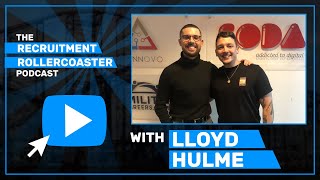
Recruiter Lloyd Hulme went viral with personal videos like a Grinch parody and saw inbound client requests spike. He credits consistency, knowing your audience, and what he calls resilience in recruitment: managing emotional ups and downs while staying persistent. His mantra: keep shaking the tree and it will pay off.
Chapters
Welcome to the Recruitment Rollercoaster podcast. My name is Hishem Azzouz, and today I'm joined by Lloyd Hume, who is the head of design for Trust in Soda, which is across 3 branches. We're in the London office today, but he also manages people in Dublin and Manchester and is currently managing, um, 8 people across those 3 branches.
Yeah, in total, we've, uh, split between design and between contracts in London.
Cool, thank you for adding that, mate. So, um, looking forward to this, mate.
Yeah, me too.
Um, yeah, as I was just saying, where, where I always like to start on this podcast, Lloyd, is how did Lloyd enter the, the lovely world of recruitment? Let's start there.
Yeah, well, for me, um, it wasn't the same as everyone else that fell into it mainly. What I've always done, sales my whole life. And, um, yeah, with that, you know, if you go to one sales place and then you leave, you kind of have to start at the bottom again, and there's no, like, continuation in position. What do you used to sell?
What was everything really?
Yeah, I think, but mainly I've sold telecoms. So not like, not like, you know, like top-ups or that kind of stuff, but like actual full-on solutions. I think we sold Westminster Abbey phone system.
All right. What's that? What, like BT systems?
Yeah, yeah. It's called voice over IP.
Okay.
A lot of places use it now.
Yeah, yeah, yeah.
So that I've sold. I've sold modeling appointments. I've sold—
Wow.
Yeah, basically just been in sales in and out. And yeah, coming back to recruitment, Um, I just wanted to go somewhere where I can build on it and then keep with it if I did, you know, if I was to move. It's never my intention to, you know, to move around a lot, but I just wanted somewhere that could continue with that.
Was your friend in—
was—
did you have a friend in recruitment then?
No, but I had— in fact, yeah, I did have a friend in recruitment and she said, Lloyd, you need to get into it.
Like, really?
Yeah, you smashed it. Started the dream. Yeah, yeah. So it wasn't even for her branch either, so she just said I wanted to get into it.
Yeah, fair enough. So it's a found, like, a love for sales. Yeah. Like, did you enjoy sales?
Yeah, I love it.
Is recruitment sales?
Not really, no. Oh, well, you know, it's sales, but so it's a lot more than that to me. So it's, you know, it's about, it's about building relationships, you know, um, and well, yeah, it's building relationships, it's, it's doing a good job, it's still getting the buzz of finding someone their perfect role, you know, the buzz of the candidate and the client come, you know, coming together, just doing the whole process really. But, you know, it's not a transactional thing. So with, with sales, what I've normally done it, you know, it's just Yes or no. Yeah.
So that's when you— that's why you initially said no, because of that. I agree with that. Yeah, to sell insurance, and if you didn't close them on that phone call, then you're not speaking to them again.
Yeah, it's done.
Do you know what I mean? I totally get that. I totally get that. But it is sales at the same time. Yeah, I mean, there's that for people that don't think recruiting is sales at all. They're—
well, no, yeah, there's definitely an element of sales in there, but there is a lot more to it.
Yeah, there's a lot more to it.
To get to the sale, you need a really good process.
So yeah, it's about that, right? I hear that. Cool. So just to set the scene then, So wanted to get into recruitment, got told about it by a friend, and wanted to build on your sales experience. Um, and then, so you've been in the industry now, so you've been at Trust Insider for how long?
Uh, just over 2 years.
Just over 2 years. Um, and yeah, obviously previous to that you was another agency for a couple of months. Yeah, so about 2 and a half years, right?
Yeah, yeah.
How long was it actually for? And obviously as well, just to where you are now, so did you get a promotion when?
So I started here as a rookie.
Yeah.
Um, I think you've been promoted 6 or 7 times from the start. So I started here, you know, uh, at level. Yeah, then I went to associate, then to consultant, then to senior, then to principal.
And now, um, now you're head of—
well, yeah, stepping into the head of role. Yeah, I don't want to say I'm qualified just yet. I've got a lot of learning to do.
Yeah, but, but they're pushing you towards that. Yeah, that's awesome, mate. So definitely, obviously, the majority of time on this, we'll definitely dive into your experience through that, learnings, all these types of things. But very— I always like to talk about it for— obviously, but let's break up Soda and the previous company. Like, how, how were the first couple of months there, mate? You wanted to get into industry.
Yeah. Oh my God, the place I worked at was, uh, it was demanding. So it was a lot of— it was, um, a lot of cold calling all day.
And I would say like tough enough.
Yeah, I would say cold calling from 9 till 12, and then from 2.
And who you calling? Businesses?
Well, yeah, we, um, just got given a list.
Really?
Yeah, you're going for these. And you know, I was, I was more than happy. I was fine cold calling people all day. I've got no problem with that. And then, you know, one of the people that was there, I was speaking to one of my colleagues and they were like, you know, this place isn't that great. I was like, really? I think it's not bad.
Yeah.
Yeah. I've never, you know, this is just normal for me. So no, this isn't like what recruitment's about. So I started doing a bit of homework, looking into other agencies, and I found this place, Soda.
I thought you were going to say you found the podcast.
I've been here as well before.
Okay. So yeah. So you found Soda, yeah?
Yeah, I found Trust in Soda. It just— it spoke volumes to me.
It's good. It's good. Like, it's got a good brand.
Yeah, yeah, yeah. But you know what, it's mad because when I turned up for an interview, I was like, is this the size of it? Like, I thought it was absolutely huge.
Really?
Yeah, but it wasn't. It just got some really, really good brands.
Perception is reality, right?
Yeah, exactly. So, um, so yeah, basically begged for an interview, went on the social media. I was looking at what they would call themselves. They were referring to themselves as Soda Lights. So, um, I thought, yeah, I'm just gonna send them an email. I'm going for it. So I said, look, you know, I've not got much experience. I would love to work 'Your brand, like, you know, the way that you're doing things, I want to be involved with that. I'd consider myself a Soda Light. Are you up for an interview?' And then got a call the next day. So yeah, it wasn't— yeah, happy days.
Okay, cool. So how— but how challenging were— look at it, first 12 months and all in all, then Soda and thing, how difficult were they then?
Yeah, very. It is challenging. It's just about, you know, just being the best that you can be. Obviously you've got nothing to compare yourself to. Or, you know, you see when you look around in the business, people have been here 3 or 4 years and they're just killing it. It's like, how am I ever going to be that? Like, you know, it's quite off-putting, isn't it? Yeah. Yeah. So you just think, oh my God, you know, this person has done 5 deals and I can't even get someone to answer a phone call. Yeah, exactly. So I was like, oh man. But, but you know what I did? I just thought, I'm just going to dig my heels in and I'm just going to graft. I'm going to be, I'm just going to be the best. I'm like, you know, I'm still not the best. You know, there's some amazing consultants in here.
Months then.
Yeah.
So, so that— so you've gone from, yeah, rookie, yeah, to obviously where you are now in 2 years. Yeah. So what, what did— how, like, was that done on billings? Was it done on demonstrating values? Was it—
so, yeah, so, so the, um, it's not just about billings, it's about, you know, it's demonstrating values, about being a team player, uh, being passionate about the company, showing signs of, like, you know, being innovative.
Yeah.
Um, and yeah, so, yeah, billings as well is, you know, one of the things, but it's like 3, 3 key things. Yeah, really.
How did you do in your first year then, mate?
In my first year, what? Come on, how did I do?
Yeah, billions-wise.
Billions?
Not to me.
Not amazing. I think it did over 150.
Okay, uh, not bad though, is it?
No, no. Yeah, yeah, yeah. But, um, I have very high expectations of myself, so yeah, I just— I, I don't know, I always push for more. I just think that that could be better. I'm not, I'm not hard on myself, but what I do is I look at something and then think, right, what could I have done better for next time? And it's just all about constantly improving yourself, like, not, not doesn't really matter what level you're on, there's always something to learn.
Have you always had that mindset?
Yeah, really? Yeah.
Where's that come from though? Uh, because not everyone has.
Yeah, I come from a, um, really, really good background.
You haven't come from a really good background?
Yeah, yeah, um, a really wealthy background even. And I didn't, you know, since I was about 17, I've not seen no handout, no nothing. It's just been about like you go out and you get your own stuff. Yeah, when, you know, you see the things that you could have, it's just things I need to be something like that, really. But my, you know, my, um, my vision's changed now. It's not about being being like really rich and all that stuff. It's just about being happy, you know, having a good time. But, you know, the money does help. Yeah, for sure. It feels better crying in a Bentley than on the bus.
Oh man, that's like some horrible wolf of Wall Street.
Yeah, exactly.
But so, okay, so that's— so that— so the mentality of wanting to be the best, learning all these types of things.
Yeah.
You've had to work on that?
Yeah, of course. You know, like, I'm still learning now. I don't think anyone's the finished article. But, um, yeah, just, just constantly try and be better. So like, you know, you get your KPIs when you first start. I looked at my KPIs on a year. So I got here, I looked at my stuff, I worked out to where it would be in a year and I thought, right, I need to do that in 6 months. And I basically—
Reverse engineered it.
Yeah, so I just reversed it. I looked at where I needed to be, worked out how to get there quicker. So I just thought I'll do double the volume in half the time and then see what happens.
Double the volume in half the time?
Yeah, yeah.
How did you do that then?
Well, I was doing 12-hour days every day.
Really?
Yeah, yeah, every day. So one time I stayed here till 11 at night. I couldn't get a train home, so I just got a hotel. Um, yeah, yeah, just commit. I committed. Yeah, yeah. Why? Why? Because I want to get the job done. I wanted to be the best, mate.
No, that's fair enough. And I guess— and that was in your first 6 months, so you— yeah, do you have a bit of a chip on your shoulder then?
Um, yeah, you have a point to prove. Yeah, you know what, yeah, I do. Really? Um, yeah, no, well, I did. Yeah, but, um, no, you know, I just— I just wanted to be— I wanted to be something good. I just wanted to make something of myself.
Yeah.
And I just thought, why not? Like, you know, if I'm going to be here for 9 hours, why not be here for 12? Why not just really push it, you know, give yourself— give 5 days.
Yeah, yeah.
And you know, just, just go for it.
Okay, so, so let's break this down a bit then. So let's just, let's just talk about your journey at Trust and Soda. So first year, obviously said, obviously performance-wise what you did, but what, what was you going into here? Did you have a warm desk? Was you building up your model?
So I was the third hire on the contract team.
Oh wow.
Yeah.
So you've always been in contract as well?
Uh, no. So my previous agency, it was dual desk. Um, okay, dual desk in here. And they wanted to separate that. And it was quite hard for the team to one, accept, you know, a head of contracts and then, you know, my colleague Lauren and then me, the third hire on the contracts team, because they're all used to dual desking. So if you've been used to that, then, you know, if you've got someone new coming in, then you might, if you're, you know, you're already in process and you just want to look after your client yourself, I can understand why you wouldn't want to give, you know, give it to a rookie.
So what did you do?
So what did I do? I had to go out and find, you know, find my own stuff. You get a lot of love at Soda, you know, some good clients call in, they'll, you know, they'll help you out with that. But, you know, really what you're here to do is, you know, to work hard. They don't want someone, you know, just resting on house accounts or what have you. So, you know, you're expected to get your own stuff as well.
So did you do, just to help me out, so you did what?
You did contract from day one in Soda? Yeah.
And then now what you do?
Now still doing the same contract.
Oh, it's a huge contract.
Okay, cool.
So look, I was a perm biller. So from what I understand from working with recruiters and these types of things, the, the, the hard part here is getting clients, right? Yeah, it seems like obviously the candidate— not that it's easier, but there's a lot more active people. You've got people actively looking for work who are going to put themselves out there. You always get weird people coming. I always see on the contract recruiters post when they've got a job, you get about 50 different people coming in from India and all sorts. Yeah, you get a little bit.
Good. Did he offer remote?
Do you know what, I would love it if they did because they make my job Yeah, so, so let's break that down, mate, because like as you said, you had to pretty much build up from scratch, right? So it was a design, design market, you said? Yeah, yeah. So one of the most common things I get asked about, and one of the, the biggest struggles a lot of people have, is business development, winning clients, which is what you had to do from scratch, right? So as you've already said, working for a business like Trust in Soda, advantage there, competitive advantage is they've got a good brand. Yeah, in the actual market, right? Yeah, of course, which obviously massively helps, right? So how, how do you approach building this desk then, mate? How did that go and how did you approach it?
Well, you know, I was— I basically spoke to colleagues in, in the business, asked them what they were doing, so like how they get— you know, I was just asking for advice.
Okay.
Knowledge sharing, I always believe, is a really good thing to do.
Seek advice.
Yeah, exactly, of course. And I'm so— I was, you know, speaking to people and everyone's like, oh well, I mentioned that I've done this, or, you know, I've helped this team with this. I thought, I can't mention any of that because I've not done anything.
That's the hard thing.
I thought, what am I going to do here? And then I was worried about phoning businesses, trying to give, trying to pitch, and then them looking at my Instagram, not Instagram, sorry, LinkedIn.
Well, they're going to see your Instagram, mate.
They don't want to see that. Yeah, looking at my LinkedIn, and I'm thinking, this guy's got 2 months experience, he can't be a specialist.
Yeah, that's exactly what we're talking about, is the challenge at the beginning. Yeah, of course.
So what I started doing was I started selling soda. I forgot to sell myself, I sell the brand. So yeah, I just thought, look at other companies, what they're doing, what we're doing, what they aren't. And then I sold on our brand. Like, you know, Soda is passion, innovation, and collaboration. Those are our 3 core values.
That's awesome.
Yeah, and that, you know, that's what we go for. So I just started selling the brand, and we've got some wicked events, you know, which really do help, um, help you sell your brand, like Soda Social, uh, Women in DevOps. You know, we've got loads of stuff, and we've got all these tools that you can use to get speaking to clients, you know. But I'm not just on the phone trying to, trying to get you contracts. Yeah, yeah, I just want you to know about Soda, put myself on your map, and then maybe when you are hiring you know, we can catch up then.
Now that, you know what, that I know that that sounds— that may sound like really simple or basic to you, but like I think that there's a— that, that speaks a lot where if you're, if you're working for a recruitment business right now and you don't believe in their values and you don't believe in their brand, yeah, there's something to think about there because like I think that's— that you're completely right. Everything that you said before you went into that, people will feel like at the beginning.
Yeah.
Um, and yeah, like so I think yeah, if you're, if you're in, if you're in that type of environment now and you're listening 100%. What— how can you leverage the business and the brand and what business is doing? I think that's really smart. So events then, this is really interesting. Let's talk about this for a sec because I think a lot of people may think that events have been done, like they've been done. Yeah, I couldn't— I couldn't disagree more. So I guess let's just shed some light on how it's impacted you. So you start leveraging the brand— look, look, this is— this is me, this is what I'm about, I can tell you what I'm going to deliver and how committed I am. Yeah, but also let me tell you about the business I work for and what we're committed to and all that. Exactly. And then the event— so how— how did that help you then? Let's break that down a bit because I think that's hugely valuable.
So what I would do, I mean, the exact way I would use it is, um, you know, I would reverse it. I would reverse it as well on people. So I would be calling, calling clients, um, or potentials, you know, prospects. And instead of saying it's Lloyd calling from Soda, it's Lloyd calling from Soda Social. I said, and then when they say you're a recruiter, say no, I'm a digital networker, you know, I'm sorting out an event, I'd quite like to have some people from the company to come down. Or, and then obviously I was targeting, um, you know, who, like, who we wanted interested to speak there. So it's always a great opportunity to get someone on the phone, say, look, we're doing this event, um, it's around this, I know that you're interested in that with your background, would you be interested in speaking? It's a much easier conversation.
How many— how many— how much more time did you get with people on the phone?
At least double.
Yeah, yeah, that's the main thing.
Yeah, you know, because they're interested in, you know, people— people like talking about themselves. I'm here, uh, so, you know, when you're telling someone that you, you, you know, you will be interested in them speaking at your event, like, people, you know, really warm to And, you know, we, we are genuinely interested in people speaking at our events. You know, like, we get wicked events, but like Bubble and Hell, Facebook, River Island, Spotify, but like some wicked speakers.
And what, and, um, what is, what is like the typical spiel? Are you saying like, look, like, because typically in your market, people really put— like, from what I can see, so I've got a couple of people I know, a couple of recruiters in your market, it seems like there's a real community.
Yes.
Yeah, do you know what I mean? Obviously that massively helps if you're recruiting that. And to be fair that seems like there's so many markets that they will happily sit in a room full of their competitors. Like, people are willing to collaborate. I think this is what's changing in recruitment now. But like, was the typical spiel like, look, um, to buy into that, look, there's an opportunity to give back to the industry, meet like-minded people, all that?
That is pretty much exactly how we did it. Yeah. And you know, it's all true. We're not, you know—
yeah, that's not— yeah, you're not gonna— that doesn't mean you have to take 15 business cards.
Yeah, exactly. And then what I would always say as well is like, look, You know, Soda Social is completely different to Trust in Soda. Like, we do— we don't recruit in there, we don't do any of that. We don't— you know, this is about an event and we are giving back to the community and, you know, we do care. And the good thing about that is when you're speaking to, um, you know, potential hiring manager, I will openly say, look, bring your business cards down, do some networking, there'll be some wicked candidates there. Yeah, you want to intro them. And then, you know, that's just something for us to give to them as well.
And I think that is the punchline as well. Like, obviously, look, obviously that, that is going to drive it, that's going to drive revenue, right? Yeah, 100%. That is gonna— that's driving business. But if you're host— if you're just hosting these events just on, right, how many, how many people can we place out of this? No, it's gonna affect your decision-making to put on an event that— do you know what I mean?
Well, you're not doing an event then for doing an event. You're doing an event to monetize on it. So yeah, it's completely different, you know. Your goals will be different then, won't they?
Yeah, yeah. No, I agree. I think it's— so I think it's something to think— obviously you want it to be commercially worth your time.
Yeah.
But I think the right mindset from the beginning is yeah, having what we're talking about, because then you're going to be prone to quitting before you've even started. Maybe 2 events down, whatever, you know what I mean? Okay, mate, so that first year then, what— how did you progress then? So in that first year, did you get up to what, senior consultant, or—
um, no, in the first year I got— I think I made it to consultant.
Consultant, yeah.
And I got Rookie of the Year.
I'm sitting down with the Rookie of the Year, 2018, 2018.
Yeah, no, 2017. Yeah, yeah.
And then, um Oh no, why do you think you got Rookie of the Year?
Why?
Come on, why do you think?
I think, I think you're just my energy. Yeah, just like with me, I work really well to, to like negative, you know, like negative criticism. Like if someone tells me I can't do something, like then I can't. Yeah, yeah, I love it. I'm actually gonna do it.
Who was you feeding off then? Was people who was out— who were the haters, mate?
Well, basically what I was doing is, oh, you know, speaking to friends in recruitment, and I was like, you know, I was phoning him saying, mate, is this— this is hard, this isn't it? And they're like, yeah, mate. And then, you know, they're all having a laugh, saying we might quit Lloyd. I'm like, I'm not going to quit. And then, um, I've made really good friends with this lad, uh, that works at Soda.
Okay.
Um, and me and him just used to have banter back and forth, and he's like, oh Lloyd, you thinking about calling it a day today? And it's only, you know, it's only between me and him, like, just having a laugh, what have you. But, you know, um, then I just thought, actually, I'm not, I'm not going to quit, I'm going to smash it.
Yeah, yeah.
And I like that, you know, you always run faster when someone's chasing you, so, you know, it's good. Or if you're trying to, you know, you always run faster if you're chasing someone as well. So yeah, it's just, it's a healthy competition to be in. Was— yeah, work ethic, determination, and just your mindset around it. Like, you know, with me, um, I just think if you want to, if you want to get something, just go and apply yourself to it. Like, how have you ever had a day where you work and you've not really done loads, and then, you know, you can't wait to get home, then when you get home you think, shit, I could have done loads more today actually. Like, yeah, exactly. Yeah, you don't want to be like that.
That is a horrible feeling. Yeah, but that depends if you actually care about a job then.
That is true. Well, hopefully if you're listening to this, you do care about it.
Yeah, no, you're right, I agree. So, so, okay, so work ethic, mate. Yeah, I've said this a couple of times now, like how when you're telling new guys, right, coming into your team, yeah, what are you telling them? They've got to do these long days? No, I'm not saying you have to do it, but like, as in like work ethic, that, that doesn't fit in with flexible working and work from home and all this, all this jazz, you know what I mean?
Yeah, and all that stuff is open for you.
Yeah, yeah, but like, what does work ethic mean to you?
Work ethic to me is just applying yourself, you know, being— do it like doing the right stuff, you know, and just taking it very seriously. Like, you know, don't be on your phone checking Instagram every 10 minutes, you know, doing all that stuff. Like, just, you know, just apply yourself. And yeah, you know, I keep saying it, but this is like my main thing to go to is, you know, it's a one thing. You either want it or you don't, and you've just got to be honest with yourself. Like, do I really want to do this?
Yeah, yeah, you're right, you're right. No, the only reason why I'm just pushing on that, mate, because I think in today's world when you say work ethic, these types of things, they, they think about what you were talking about when you worked it to 11 PM. Yeah, staying in the hotel, burnout, mental health, all this stuff. Yeah, so that, that's why I'm just pushing on that.
What I was gonna say, you know, on that, don't think you have to do that to be successful.
That's what I mean.
Yeah, that's the point. Because, you know, you should always— people always say work smarter, not harder. Yeah, I thought I'll work harder, I'm smarter.
No, you're right, you're right. There's no, there's no shortcut. You got, you got to put it in. Yeah, like that, that's, that's my thing with it is like there's sacrifices, sacrifices to be made if you want to be— if you're serious about it and you're clearly someone that has committed yourself. And, and it's okay if you're someone that doesn't want to commit yourself, that's fine. It depends what you want, right? And it's personal to you.
And you know, some people have families, like you don't want to be in an office, or I don't think you'd be allowed to be in an office if you've got a family, you know. But I didn't really you know, I didn't realize I've got major ties or anything. Um, I didn't really have anywhere to be.
No mates?
Yeah, yeah, Billy, no mates. Yeah, no, I just thought, why not? Like, I'm gonna do it. The thing is, I don't really party on a school night anyway. I still call it school night. Yeah. Um, you know, like, with me, Monday to Monday, or maybe some Thursdays. Yeah. But yeah, you know, so if I'm in work tomorrow, um, then yeah, yeah, I'm here. So why not be here a bit later?
Yeah. Something I'm always interested to ask people because I think it's come up a couple of times, like how many big billers were you surrounded by? Out of interest, like when you was— yeah, when you was in the— in the— think of that first year, obviously you got Rookie of the Year, you did well, but yeah, like how— yeah, how many big billers were you surrounded by?
Well, there's 3 different brands here, all owned by one, so there's about 3 or 4 from each brand. Yeah.
How do you think that— how do you think that How do you think that sort of impacted you?
When I first came, I was intimidated by it.
Yeah, yeah, yeah, yeah, yeah.
Well, do you know what, actually, because one of the people I looked up to, um, from one of our other brands, he— I always asked him for his advice. Like, he didn't do loads.
Why did you do that?
Why?
Because some people won't do that.
Yeah.
Why did you, why did you just go and ask him?
Collaboration is one of our main points, you know. You've got to be collaborative with people. But I did that because I thought this guy, he knows what he's doing. You know, you just tell. Yeah.
And I just thought, what did you ask him?
I said, look, what are you doing? I said, look, this is what I'm doing. Like, tell me about your day plan. Tell me how you stuck to yourself. Like, what are you doing that I'm not? And he's like, look, you know, it's just, it's just, you know, keep shaking the tree.
Yeah.
If someone's— because someone's gonna drop—
keep shaking the tree.
Yeah, yeah, just keep shaking it. Someone's gonna bounce and fall down. And if it doesn't, you're probably not shaking hard enough, or you're looking at the wrong tree, but you're definitely going to be something out there. So Anyway, with that, once I started, you know, doing better here, I don't forget it, he emailed me and he just said, you have arrived. Really? Yeah, yeah. And I was like, nice. That's the one I really want to talk to.
Yeah, that's awesome.
Yeah, I really liked it.
Um, and just quickly on that, because again, I think obviously a big part of this is the business you work for and stuff like that, but it's, it's came, it's came up so, it's came up so many times that if, like, seek advice I know it sounds so simple in it, but there'll be a lot of people that will be sitting in the corner like, not— they're worried about asking. So like, how, how receptive was he? Because you work for quite a big, big business here, right? So to walk over to the biggest fella who you may perceive as has no time— Lloyd the rookie, like, just turned up, you know what I mean? So like, how, how receptive— obviously everyone's gonna be different, but how receptive was he actually when you went, look mate, I'd love to know what you're doing?
Do you know what, um, I really hyped it up in my head. I thought, don't go and ask. Yeah. And I thought, oh, just go and do it, don't— you know what I mean? Yeah, just— so anyway, I went over, I thought, excuse me, mate. He went, yeah. I went, can I have a word? He went, yeah, yeah, of course, what do you want? Straight away. Yeah, I've created this big situation.
Yeah, a lot of people thinking that, so I'm glad you said that. So I think to finish that off, if you're listening right now, you, you look up to someone in the office, yeah, of course, awesome, awesome for help. Yeah, but what are they doing?
Not only that, like, don't sit in the corner suffering in silence because it's going to be a lot of a different more, you know, be a miles different conversation saying, so what have you done all day? Nothing, because I didn't know what to do. Or, what are you doing? You know what you're doing over there? I'm asking for advice. Yeah, there you go.
Apply yourself. So final point on that, what do you think was the biggest thing you took away from him then, would you say, out of his advice? So you mentioned, right, day plan. What was that? Structure.
Yeah, definitely.
Talk to me, mate. I love talking about structure.
Don't be a busy fool.
Don't be a busy fool.
So, you know, you've got to, first of all, commitment and buying. Like, if you're speaking to someone on the phone and they're like, oh yeah, you could have that job. And then straight away, oh my God, I've got a job. You haven't got a job.
You're great at the beginning though. You're buzzing.
Yeah, it's, you know, it's so, it's so bad to when you see a trainee or rookie or, you know, someone with not loads of experience get really excited about a role because you hope and you pray for them that it does going to come off. But you know that if they're not qualified properly, then it's not really going to happen. So here we try to make sure that doesn't happen.
It's so funny you say that because I can't remember who I had this conversation with, but we had this exact conversation, and then he was like— and then he was just like, yeah. And then when they get off the phone and then you ask them a couple of questions about their job and you're like, oh, fuck, I didn't get that.
Yeah, yeah, we make— yeah, we, we say you have to call back, right?
So structure was a bit—
yeah, so how—
so what, what are your non-negotiables in your structure now? Because I'm sure they're still there.
Yeah, 10 before 10.
10 before 10.
It just sounds good. It could be 11 before 11, 12 before 12.
What Getting 10 of what?
So that's speaking to 10 candidates.
Okay.
Before 10 AM.
Yeah.
Right, just, you know, just being on top of it.
And that's all you're focusing on?
Yeah, before 10 AM. Yeah, 10 before 10. So I'm speaking to— yeah, and I'll find— I'll get these candidates the night before, you know, work out I'm going to talk to, if they're going to be relevant to anyone.
Oh, so you plan who you're trying to get a hold of the day before?
Yeah, exactly. Yeah, like you can, you know, literally load up a job board or something like that if you want to do that, but with me I think you want to be You're a lot more targeted than that. And I would have roles, um, a lot of them would be referrals as well. Always ask for a referral. Have you got any friends that are looking? Any colleagues? Anyone?
I was gonna say, again, conversation I've had, if you're a contract recruiter, like, how important is it to leverage your candidate market through that?
Yeah, absolutely. Because, you know, contractors, they're all on site with each other and they'll all come back. And, you know, it's just, it's a circle. They're always, always working with each other.
So even if the 10 calls are Hi Lloyd, look, just wanted to check in. Yeah, yeah, your contract's up in a couple of months, like, just thought I'll give you a quick call. Do you know what's going on in the market at the moment? Have you heard anything that's coming up?
Yeah, exactly.
So that could be 10 of those calls as well?
Yeah, it could be.
Yeah, marketing doesn't have to be like new people.
No, no, because yeah, it could be existing, existing, um, candidates, could be candidates that you got in the running. And you know, if you've got a candidate with one interview for you and three for someone else, you want to be on the phone to him making sure, seeing what's going on. You know, and it's probably— he's probably, you know, you need to be aware. I'd always say good recruiters are the ones that ask the questions that you don't want to know the answer to.
Oh mate, yeah, so when I realized that, yeah, just ask that someone when I was in recruitment, I was like, oh my God, that's so true. Because early on you don't want— you don't want to ask them. Yeah, but you'd rather— you'd rather be like, nah, nah, I don't want to push on that. And then you'd be like, yeah, this deal's done, mate, it's done, it's done.
But you know, you know, you know what, yeah, I'll tell you this, I messed up my first deal here. What, um, Mate will kill me. But basically what happened was, I was speaking to a candidate, speaking to the client, had the interview, they liked each other, phoned him up, texted, sounded him out, see how he's feeling. And he's like, look Lloyd, I'll take the role, mate. You just tell me I've got it and it's yours. So anyway, I thought, what's going to make my boss more happy than just sitting at home watching me send the deal email around on a Saturday? So I got the email from the client late Friday night saying, oh yeah, Lloyd will go for it. So I just thought, great, I'm just obviously running in straight away. Didn't consult anyone, still a rookie at this time. I just thought, I'm just going to do it and be the boy. Crumbled. Yeah. Anyway, I was like, Pete, Pete, hold tight, Pete. Yeah, I was like, Pete, you've got the role. He's like, ah mate, I'll think about it. I was like, what? I was like, you told me, you told me to take it. He's like, yeah, something else has come up. I was like, oh, all right, well, shit, what do I do now? So then I rang my boss. I was like, look, I've done this. He's like, why have you done that? And I went, I don't know, you know.
He went, look mate, this is why we have these processes in place.
Face, like, you know, just you stick to the process and it's fine. Anyway, I appreciate what you're trying to do, but you've lost the deal, so it's on your head. So it's all right, cool. Is that— let it be a learning curve to you?
Learn it from that one.
And I would say, you know, there's a lot of mistakes to make in recruitment. I just would— just don't make the same one twice. Like, if you slip up on something, then, you know, just to make sure you don't do it again. It's not the end of the world.
Yeah, and I think that's that. But I, I honestly love that advice so much. Ask the questions that you don't know the answers to. Yeah, because that will that will get you uncomfortable, will ask the questions that you need to know and get the answer to, that gives you as much confidence on what should happen.
Yeah, of course. And you know, if you know your market and what the market doing, you know, you like it and you want to learn more about it, then you really do need to nail down on this. I was listening to one of your other podcasts and a guy kept saying double down. I love that, you know, double down on your process, double down on what you can do. I think that's really true. Like that is what you need to do. If you don't want to ask someone about, you know, how many other recruiters you got working on this, you might really be wasting your time.
Yeah, and at the beginning you can be really prone to that because it feels uncomfortable. Yeah, you can just like, oh fuck, I know I should say this.
But the thing is, I just remember this horrible pressure that I'd given myself. Yeah, I need to get a job, I need to do a deal. Like, you don't need to do those things. Like, obviously they'll come with time, but don't stress yourself out, put too much pressure on yourself watching everyone else do deals and then just getting bogged down with it, just thinking, you know, like it's— you can't do it. And that's why you will slip out of those questions, because when you've got the small wins, you celebrate them a bit too much. Like, you know, just stick to the process and you'll be good. 10.
So I've called 10 candidates. Yeah, it's 10 AM.
Yeah.
What am I doing next, mate, in the Lloyd's day?
You're updating the database, without a doubt.
Yeah, definitely doing that. What am I doing after that?
After that, 11 till 12, um, 10 to 12.
Um, yeah, 10 to 12.
Yeah, 10 till 12. So have you gone to BD?
All the BD, 10 to 12.
So 10 till 12, obviously a lot of people don't answer, what have you, you know, that kind of stuff.
But you're 10 to 12, you're focusing on what clients you want to speak to and who's going through my target list and stuff like that.
And then take lunch between 12 and 2.
On 10 to 12, do you work for Trust, uh, Soda Social or Trust?
Depends what I'm failing in.
So business development, lunch, after that.
Over lunch, admin. Don't forget to do your admin.
Admin is key.
Yeah, it is, because, you know, when you speak to 100 people a day or 100 people in a week you are not going to remember every conversation you have. And there's nothing worse than, you know, I've actually rung up a candidate and tried to re-resource him for a role I've already got. Yeah, exactly.
Shit like that happens.
But, you know, those are just those mistakes that you make when you are— when you first start, like being really quiet on the phone and you're scared everyone's going to hear you in the office. Mate, just stand up and do it, man. But yeah, so in the afternoon, then from 1. Yeah, from 1. So once it's like 12, I think. Yeah, that's lunch and that. But after that, in the afternoon, I'll probably jump on sort of social, something like that, start having a look at that market information, market mapping, speaking to more candidates, seeing what's going on, going through, you know, people who've applied for roles, what have you, just going through that. Or just all the general stuff, just about having a good bit of activity on the board really.
But every single day, non-negotiable, 10 to 14 hours.
Yeah, that's what we do, unless you've got a role that—
Unless you've got to prioritise.
Yeah, yeah.
But yeah, I like that. So yeah, half your day, there's obviously an element of being strategic, looking at what's going on, blah blah blah, and yeah, leveraging your network and speak to people. But 10 before 10, 10 to 12, get your solid bit in.
I guarantee you people start going 10 before 10. Yeah, sounds good. That, you know, just works. Yeah, yeah, there's no strict time things to this, it just sounds—
yeah, I think you can be flexible with it. But I think, um, what in my experience— so I work for a business of 12 people, so at the beginning I was shit scared of people listening as well, quite on that. But what— when we, when we was obviously all building out our desks and all like as a collective focus, and we did did like 2 hours just focus on business development, like that massively helped. Yeah. And there was just a clear— we, we measured it, like from the point where we decided every 10 till 12 every Tuesday and Thursday we'd always do BD, the amount of jobs that we pulled and the things that we're pulling, it had a massive impact.
Yeah, of course. I think if you're doing the same thing at the same time—
yeah, yeah, that really helps. But just actually having a focus, and I've had to do this for my own business now, like for me blocking out hour by hour, obviously I can be flexible with it, but having a complete focus on what I'm doing in this hour— yeah, of course— massively helps. And like I'm just way more productive, because especially in recruitment, like, there's so many things that you could be doing. I mean, there's so many things that you're like, oh yeah, I'll reply to that, or reply to this email, or whatever. Like, there's so many things that you could do that really, if you just kept doing those, don't amount to what, what you need.
No, I think, yeah, you definitely got to be clever with it. Um, but you know, when you first start, this, this is something that you don't understand how to do. So, you know, you could do what you're told, um, look at what other people are doing, And, you know, until you work out how best you work, yeah, that is when, you know, that's when you, um, you start basically working to the best you can.
So when did you start managing people?
Um, I'd say about 6, 7 months ago. So yeah, yeah.
How have you, how have you found that transition, mate? Um, be honest, you're smirking.
Um, yeah, it's, it's, you know, it's been tricky. Because we have some great leadership and management courses which have really, really helped. Yeah, um, they've really helped. But working— when you just work for yourself and principal and you worry about your own things, then it's quite hard to transition into, you know, into helping someone else.
You want to manage?
Yeah.
Okay, that's not always the case, right? So you did— you was motivated to— yeah, manage.
And I, I really like it because You know, after you've done X amount, you know, deals, it's like, yeah, it's good, it's a good feeling. But when you can help someone and teach them how to do something, and then you see the penny drop, and then more of a buzz, see them do a deal, I'm like, yeah, buzzing.
You just want to send those emails around now going, you have arrived.
Yeah, yeah, the arrival email.
Yeah. Okay, well, look, let's talk about that then, mate. So I guess you wanted to, you wanted to manage, um, got to a point where you obviously, I'm sure you was encouraged internally demonstrating the right things and you wanted to do it. So that transition is definitely a challenge that a lot of people have. Yeah. So obviously you're in it 6, 7 months in, so you're in it now, right? So I guess what, what has— you were just talking a bit about there, so you've gone from just having to worry about yourself.
Yeah.
Your own billing, your own performance. Obviously, no doubt, I'm sure you helped some people along the way, but yeah, now you've got an actual— you have to help these people, right? It's your role.
Yeah.
It's what you're getting paid to do.
Yeah.
You know what I mean? So how, what, how have you found that transition like?
So when I first started, so I've not blanked in quite some time. The first month of having a trainer, I blanked and I was like, oh my God. Really? Yeah, I was like, wow.
How did you feel?
I felt defeated. Really? Yeah, I felt, I thought, I didn't trust myself. I thought, wait a minute, I don't think you can do this. And then I thought, wait, I can do this.
So initially straight away you're getting the imposter syndrome.
Yeah, yeah.
Nah, I don't think I can do this.
So yeah, I just thought I'm out my depth here. I don't know what I've done this for.
Really?
And then as far as, you know what, you felt like that on your first day. Like, yeah, you don't need to feel like this, you can do it. And I just remember just sitting down and thinking, well, I just need to sort this out. And then I did the same as when I got here, you know, about where I wanted to be, then trying to envision the team that I want to have, how we're going to do that, and then working.
How do you do that? Just quickly, because I think that's interesting.
Um, I want to be known for the best— well, not me, I want Soda to be known for the best design team in like London, you know, recruitment.
So you've got a big goal.
Yeah, that's what I want. I just just, you know, as achievable as it may seem, that's just something I want to aim for now. And the way I'm doing that, so my experience is you come into recruitment, they give you a desk, probably tell you it's like roasting hot, it's probably absolutely not. Here I wasn't lied to, just said, look, you are building this up from the ground. But instead of me coming here being demotivated, you know, I'm not saying that I was, but, you know, some days are really challenging. What I've done now is I'm building up there. So I look after the whole spectrum of design and research.
Okay.
And what I do with these is I've built the desks up, I've got them, you know, piping hot, and then when I bring a trainee in, put them onto that desk and I give them like a soft landing with it.
Okay.
I'm still expected to do their own things, they've got to, you know, give me a split with it, but it's just something to keep them engaged, motivated.
So that's been the strategy? Yeah. Okay, what, for the last 6, 7 months you've been— well, so you didn't do that for the first month?
Yeah, first month we just went around.
Okay, so, but obviously back to your point, so you, you've, you've really spent— you— okay, so you had a tough first month, blank, first time for a while.
Yeah.
And then what, you made the time to go, well, actually, okay, why am I doing this?
Yes.
What do I want out of this? What do I want it to look like?
Yeah. So I'll tell you what it was. Um, the, the second month we actually had external training coming in, which was 2 days, you know, 2 days here, 2 days there. It's a great time for me to just really knuckle down and get on with my stuff.
Yeah.
Because I've got to train you out all day. And I thought, yeah, amazing. So it really took, you know, really used that time to my advantage. And Then what I learned was about, you know, again, with your timings and how you structure your day was instead of just, you know, being on the beck and call whenever they want, it's more like, right, so, you know, we'll catch up after 10. So we'll do 10 before 10, then we'll catch up after, we'll see what went right, what went wrong, what could have gone better. And then we'll catch up again after the next assignment. And then, you know, just keep catching up. Obviously there's a few bits here and there where you have to be a bit more flexible with it.
But you wanted to encourage these people to be like, right, this is what, this is your intention for the next couple of hours.
Yeah, this is what we're doing.
Let's talk about how it went and what you learned.
Always lead from the front lines, you know, sit there doing the same thing with them as well. So, you know, there's nothing—
so you see, yes, you're a billing manager, right?
Yeah.
So, okay, mate, so what do you— going through that then, if I'm, if I'm transitioning right now and I don't want to blank, how would you do it differently? Because my next question to you, which I wrote down, which was— because it's come up a lot— is like, a lot of people go through that. So I'm, I'm a, I'm a good biller, and I really like the prospects of managing. I want to manage people. However, typically I may not have thought that my billing's going to take a drop. Yeah, and take a hit, right? So knowing what you know now, you're 6, 7 months in, it's obviously still learning, right? But obviously the, the great thing about hindsight, what would you do differently, do you think, to give the best possible chance of not blanking that first month?
One thing which I'm ashamed to tell you, which you don't do, is I decided there was some area— I can't remember what time of year it was.
Yeah.
But it worked out that if you took a few days off, you get like 3 to 4 weeks off for the cost of 11. You know what the bank holiday is like. Someone did a month traveling in Colombia. You did? Yeah, yeah. I just thought I'm just going to go dip out for this and then came back. And basically what I'm getting to here is just build your pipeline up. If you don't know what's going to go on. So basically as well, I did my deals while I was in Colombia. So I was still like, you know, still on bull on that. So, you know, talking to clients, why have you obviously in different times. But I basically did all my pipeline in Colombia. Wasn't building my pipeline, so I just basically depleted it.
So definitely don't do that.
Yeah, don't do that. But Colombia is great, so do go there, but make sure you've got some pipeline before you do. I know, but yeah, I would have just built my pipeline up massively, you know, just speak to people and then, you know, engage with your clients and your candidates as well. Let them know what's going on, like, you know, keep them in the loop with it.
What, that you're growing a team?
Yeah, yeah, growing a team. We're going to be hiring in this, you know, we're going to be recruiting in this sector, this, this, that, the other, you know, where can we add some more value?
Now obviously I know you, you said that you really enjoyed the, um, James episode, but that's something that he said actually, um, which is really interesting. He said that he brought the clients on the journey. Yeah, like he was like, look, like obviously we've been working together, I'm actually growing my team, this within it, like I was doing, like they actually, yeah, brought them into what you're trying to build and stuff. Yeah, I think that's some great advice.
So some of my, some of my client calls calls are so ridiculous because people in the office are like, who are you talking to? Because I'm talking about Netflix, what you did at the weekend, like kids' birthday parties. One thing I used to do as well, which actually got really good buy-in from candidates and clients, ask them what they're doing that night. What are you doing tonight? It's like, what? What are you doing there? Don't know, why? All right, what are you having for dinner? And they tell you, and you phone them back the next day, how was your spaghetti? Just like, who's this? You know what I mean? It's just a bit different, isn't it? Yeah, yeah.
Yeah, okay. So how— so some of the key things that you've done differently now, and so you've got a bit more of a structure, and then something that you did— talk a bit about— you were saying that you've got a bit more of a strategy now. So before you start growing your team, you're trying to obviously build a bit of a platform.
That's only obviously for design, like what I can help with design, because that's what I do. However, contract team is going to be more than design.
Yeah.
So with that, I've got, you know, working with a senior at the moment who's helping a rookie as well.
So why did you do that though? So why, for with you building a bit of a platform?
Yeah.
How was, how have you found that that's helped people that come in there completely fresh?
Really well, because it gives them a chance. Like, obviously we're not just going to go, yeah, here's, you know, here's a role, work here.
Yeah.
Like, there'll be a role coming in that's in their market. They'll sit there with me, um, we'll do the role, what have you, go through the whole process, and I'll just, you know, let them shadow you doing it and just let them know this is their market, this is who they're going to be speaking to, and then take them out of meetings, involve them in everything. Like, don't just go out, you know, leave your rookies at the desk, what have you. Um, you know, take them out with you. Like, I took, um, our new starters everywhere with me— candidate client meetings, yeah, just everything. Just keep them involved.
Um, and then how involved are you in hiring for your team?
Yeah, just made a hire. I made a hire last week.
Oh really?
Yeah, someone who's got a master's in design. Really exciting.
Oh nice. Yeah. So how many people have you hired so far then?
2, made 3 hires so far.
Really?
Yeah.
Any learnings there? Because typically hiring for your own team is definitely one of the biggest challenges.
Yeah, definitely.
They're still here.
Yeah, yeah, yeah.
Um, so like, how— any learnings there to share for people?
Yeah, I would say always hire for attitude and not for skills. Um, skills can be taught, attitude can't. Um, think about your culture fit as well. Like, what, what, you know, what's the team like you work with at the moment? Can you see them fitting in there? Always go out for like maybe welcome drinks, what have you, you know, like just come meet the team. But what we do as well now is it's not just senior people who interview candidates at Soda, so we— everyone takes a go of it. So it doesn't matter if you're a brand new trainee, if you're whatever, like go and have a chat with that person, see what you think. So basically just gives, you know, really good, really good feedback from everyone. You can see like what the general gist of things are.
What are the, um, I was like asking this, like what are the, uh, non-negotiables that you look for when— for your teams? You mentioned culture, you mentioned attitude. What are the non-negotiables for you, mate?
Um, I don't think I've come across that. I don't think I've had one thing which is a non-negotiable for me. I mean, obviously culture for me. If you're not, if you're not, you know, feeling with the culture, then that's just fine. Um, and then I'd say, well, yeah, that's pretty much it. I wouldn't really say I've got a non-negotiable because I think everyone has skills to bring to the table. Yeah, it depends where you can see them fitting with you.
That's a good answer, mate. So what I wanted to, um, definitely dive in with you, mate, is your personal brand.
Yeah, this has done me really well in recruitment.
Yeah, so let's talk about it because I'm obviously banging the drum of it, but I'd love to hear your story of it, mate. Obviously, when I was on your LinkedIn, you've got an article saying, um, it's about how— how to stand out in the crowd, the market. Yeah, and I really enjoyed that. So let's just talk. Look, I'd love to just hear your story of it for people listening. So where and how— if anyone hasn't seen— so Lloyd has got some quirky, safe to say, yeah, quirky videos.
Really?
So like, how, how did you start?
Okay, so you put, you put a post on LinkedIn. I've got— I'm Lloyd, I've got this job, does anyone want it? No one wants it. No one's even interested in reading it. And then you look at your thing and it's got engaged with about 5 people. So I thought, right, what's going to stand out? And you know, we're all humans, we're like looking on our phones, we're like memes, all that kind of stuff, GIFs, whatever. So I just thought, I was, I'm all right Photoshop, so I thought I'm just gonna start doing some mad Photoshops.
Yeah.
And I put myself in some weird, you know, weird situations. Like I remember it being Harry and Meghan's wedding.
Yeah.
Um, so I Photoshopped myself into the wedding with them.
Yeah.
Like people like, who's done this?
Yeah.
So, so I did that. Then one of my favorites was I got a picture of REM, Photoshopped myself in the corner, and I went and found a photo of me. Yeah. Is— yeah, you know the band?
No, sorry, I don't know who they are, mate.
How was he, man?
Sorry, mate.
R-E-M. Yeah, so anyway, so there's a— there's a R.E.M., which is a band.
Okay.
They've got a song called, uh, I don't know what the song's called, but it says, 'That's me in the corner,' is one of the lyrics. So I got a photo of them and I photoshopped myself in the corner, and I put— I found this photo of me and R.E.M. last night. What was the poster? Yeah, yeah, still doing the same stuff. So it's basically—
yeah, yeah.
Yeah, so I just thought I'll advertise my job, people won't look at what I'm writing but they'll look at the image, and then because they've looked at the image and say, who's this? And then look at my post. And it started working massively, so I'm getting loads of traction.
And when did you start doing this?
I started, I don't know, I think it was about 6 months in. I did, I did one 6 months in. Yeah.
Wasn't you shit scared of like coming across, like how did you go over, overcome that? Because that's the biggest chance. Go on.
Well, so I had this idea, I What was it? Yeah, it was the weatherman. So I went, yeah. So basically, northern, I'm a northerner obviously, but you know, when I moved here, I went around defending everyone, saying hi, talking to people on the tube, like you don't do that. So, you know, I'm walking around doing that, what have you. And anyway, so I did this, I got, you know, the old photo of England and I Photoshopped myself in front of it. It was like a weather map. And I basically wrote about, you know, in the north, it's kind of freezing on fr, because it was always cold, obviously, you know, just did loads of wordplay on that. But I did it about basically a player from Manchester deal's been done. Yeah, pray a lot for Manchester, people in the South, and then the Midlands where no one's really quite sure what's going on. Obviously it's not true, but just having a laugh.
Yeah, yeah.
So did that—
that's your first idea?
Yeah, yeah. So that was the first idea, and it took me about 4 weeks to post it.
Really?
Yeah.
So what was you worried about?
First of all, someone just burying me online going, what is this?
Yeah, yeah. So you worried about someone going, shut up.
Yeah, that is exactly what I was worried about.
So what— how— what— how did you overcome that then?
I just thought, right, so I'm gonna get someone to tell me to shut up, I'm gonna be a legend. It's a risk I'm willing to take, so I did it. Okay, that's pretty much it. Yeah, yeah.
So what actually happened? So like, absolutely shit scared, like, yeah.
So what actually happened? I uploaded it, I uploaded it. I regret saying this, but I uploaded it and turned my LinkedIn off before I can't even look at that. Yeah, yeah. So I thought, yes, don't look at that. And then my boss come over, so I heard my boss laughing and I was like, what's he laughing at? He's like, look, that post is amazing. I was like, what? He's like, yeah, it's amazing. Said, it's dead funny. I was like, thanks, cool, you like it? And he's like, yeah. It's like, all right, should do some more. He went, yeah, definitely.
So perfect. So yeah, so that massively— so, so then did that then mean that anyone else's opinion was irrelevant?
Um, not irrelevant, no, because— but yeah, but you know, there's a weight lifted off my shoulders with it.
Yeah, yeah, which massively helps. Yeah, I think that's a key point there, that you had some internal buy-in there.
Yeah, of course.
I think that, that does help because like there's— yeah, you don't want just randomers just absolutely burying you online, but you don't want people in the office that you see every day going, that Lloyd's a weirdo, what is he up to? A lot of people— a lot of people that will also— it's obviously other people's opinions online, but also internally as well, especially when they're the new person, 6 months in. Yeah, I was that person. Like, I was trying to convince someone to do video and all that, and I was the least experienced in there.
Yeah, I think I said no to you.
That's what I mean. So it's like— so yeah, okay, cool. So you just, just did it basically, and then, and then since then— yes, but let's just get to the punchline. How, how Has it made you more money?
Right, so now I've got clients ringing in saying, can I speak to Lloyd? I say, well, how do you know about me? So you're that kid that does the videos. So I've got a Saw video, uh, like, you know, talking about buying from a company. The last video cost me boss £150. Like, I made him buy me a Saw outfit, um, a little bicycle. Yeah, have you seen the Saw one?
Like, I've seen the, um, you see the Grinch? The Grinch? I've seen the bird one.
The Grinch. I think the Grinch got like 30,000 views. And people, yeah, people just like, this is amazing. And, um, it's such a warmer conversation because you go to digital, like, meetups, design meetups, like, oh my God, you're Lloyd, how you doing?
So how has that helped you though? How?
Because clients ring up and want to work with me. Yeah, so pulled in like 3 new clients.
That's the punchline.
Yeah. And also I think as well it's just for your confidence. Like, you know, if you— if people, um, celebrating your wins, um, you know, looking up to you— I get candidates and clients ringing me saying, when's— what's the next video on? Really?
Yeah.
Yeah. and they just can't. And you know, I was, I was, I was talking to my friend the other night, I was like, it's just madness, isn't it? Like, I've climbed this really quick, you know, I'm really, really grateful for it, but like, actually it's insane. Like, you know, just what's happened. And my company allowed me to put these stupid videos online, but we have these social events, like I'm a DJ, so I take my decks down there. Yeah, DJ for everyone coming in. Like, it's just—
I've only looked like a DJ, mate. You look the part, mate.
Thank you.
To round that off then, yeah, look, recruiters work hard. Yeah. Has this made— what does it— has it made you more money? Has it helped you build?
Of course. Yeah, it's helped. Yeah. How? Because, um, what it is, is when you get this engagement off these posts, your, your name seats are cropping up in a lot of conversations. Um, people, you know, companies approach us to work with them. People start from other companies start asking about how I do my marketing. Like, I've got— I've marketed from other companies approaching me, things like this.
Um, any like huge win though? Like massive win that you'll never forget?
Yeah, I can't mention the client name. Yeah, yeah.
But like, so what happened? You pulled a job?
I pulled about 5 or 6 off it, I think. Yeah, yeah, they just, they just loved it straight away. Unfortunately didn't really go that well, but yeah, you had the opportunity. Well, and I'm assuming that was like, yeah, easy over 50 grand's worth of business. And you know, yeah, um, it would have been if it all went to plan.
Yeah, yeah, but yeah, of course, you, right? Yeah.
I mean, what recruiter do you know with 7 months experience gets people bringing in saying, 'He speaks out loud, that does the videos.' So, and it's just all about, you know, getting your brand out there, getting your name out there, because there's over 60,000 recruitment agencies in Europe, you know, and 60,000 of those will be doing the same thing. So stand out, be different, find your voice.
Okay, so advice for people that are shit scared and want to start? Yeah, what would you say?
Well, so first of all, know your audience. There's some, some markets out there that I can't do, um, You know, just the— like, design. I love design. Like, the designers are like the loveliest, like, friendliest people in the world. We'll have a conversation about anything, you know, really knowledgeable. And I think design's a really cool market anyway.
Like, so you're saying they're, um, they're more receptive to, like—
yeah, definitely, definitely. Yeah.
Okay, so know your market.
Yeah, know your market. And then think about what you want to achieve from this. You don't want to be some meme guy or some— you know, you want to make— you get something out of it. So have a target or, you know, some sort of want out of it.
And what was your one then?
Mine was just to get, um, to get my name out there. I just wanted to be— I wanted to be— so when I found— I always thought if I phoned someone, um, you know, from a company trying to speak to someone there and they say, who is it? Say, Lord Tim. They're not gonna know who Lord Tim is. And I thought, if I've got them on LinkedIn, they keep seeing this.
Yeah, it's that— it's so powerful.
Yeah, they are. No, that guy, he's like, that Grinch video. Why not try it? Yeah.
So, so it's know your audience. So bear that in mind before you decide to start making Grinch videos. Totally get that. And then, and then the next one is, uh, have like an actual goal with it. Like, don't just, don't just do it for the sake of it. Yeah, that's, that's a good thing to think.
And then also as well, lastly, what I'll say is the most important is be committed to it. So yeah, I do my— I do one a month now.
Um, that's not— but that's— I mean, you— some people may say, no, it's not enough, Lloyd. No, for what you, what you put in. Yeah, I think that's, I think that's a good—
yeah, one of the— that Saw video It took me about 3 nights to make that.
Yeah, that's what I mean, like the fact that you're going putting that much into it. Yeah, I think, yeah, so be committed to it.
Yeah, be committed, but not just be consistent, because if you're just doing the video as and when, or you know, now and again, yeah, and you will, you won't be known for that. So yeah, just be, be consistent.
There's nothing, there's nothing for me, I think it's just like when you see a recruiter go, hi guys, making my first video, and then you don't see him again for like 3, 6 months.
Obviously got no likes on it or something. Yeah, yeah, yeah, yeah.
Um, but be committed to it.
Yeah, be committed. And you know what, you're not going to get 10,000 views in your first one, you know. You're not going to—
it comes back to why you're doing it, right? If you, if you're a recruiter and you're doing it because you want a better chance for candidates or clients to know who you are, then likes don't really— it's not about that. No, no, it's about that, you know what I mean?
Yeah, it's about, it's about getting the reach.
And like, how— and did you— did anyone bury you? Um, Like, how did you do it? Like, how was that for you? Like, because you were shit scared about putting out there. Like, it wouldn't—
now I think I buried myself more than anyone.
Yeah, especially when you do shit like that.
Yeah, yeah. So, you know, mate, putting some green tights on and a summer suit and a green mask. Yeah, you're not really— you know, you are asking for it. Like, it's gonna happen. I don't know. I'm like, I will banter anyone. Like, I love stuff like that. It's just a good laugh, isn't it? Yeah. Um, but you know, I was expecting it, but actually, touch wood, it never happened.
Wasn't as bad.
No.
And that, that again, that, that's the sort of punchline there for me. It's like, honestly what is the worst that can happen?
Yeah.
And if you've got some like just absolute knobhead just trying to bury you, then for me it's like I'd feel sorry for them because it's like, yeah, they're taking time out their day to leave a comment on your post and go, what are you talking about?
Yeah, if you've got some two-bit idiot, you know, flexing his opinion with you.
Yeah, it's like, sit down, mate. Whatever. Yeah, it's not even worth it. It's not. It's just like, wow, okay.
But also what it does do for you, if someone does try and bury you online, the good thing is, all right, if you know if you can think of it like that, is you will get more traction because—
yeah, exactly.
Yeah, hate is welcome.
Yeah. So I think— no, I love that, just a real honest account on just you putting yourself out there and how it's— I think all, all I'll sort of just add my two pence on there, if I may, is just, um, there's so many people not doing anything.
Yeah.
Like, you might, you might be connected with Lloyd, or you might see what people doing now. You see loads of people doing videos, all this, but honestly I— so part of what I do with all my clients is I will say, I will say, give me 2 of your direct competitors. And I've looked at a shitload of people now, and honestly, like 90% of the people that I've looked at— I've looked at well over 200 people now— they look faceless. Yeah, there's not— there's not— it's like if Lloyd BDs me now and the, the Lloyd down the road that does exact same market BDs me, the chances of me checking out your LinkedIn profile are extremely high. If you call me, who's this Lloyd guy?
Yeah, right. Yeah.
And if there's nothing on there to demonstrate or communicate why I should go back to Lloyd's over the other Lloyd's, then yeah, that's the point, I mean. And that, that's the thing. And I think that's the most important thing. And that's why there's just huge opportunity to get a lot of cut-through right now, because everyone is shit scared, like you said at the beginning. But you got over that and you've reaped the rewards of it.
Yeah, do it. And if you know, if you're doing one— and I've actually had, um, consultants add me and say, would you give me some advice? And they still have actually give advice to other people on in recruitment and want to do videos.
That's awesome. Yes, well, you definitely, definitely helped with that. I think that was just a real honest account on you going through that process, mate. So fair play. Right, so a couple of questions on resilience. All right, so you're coming to the event, aren't you?
Yes.
Yeah, so obviously I have an event coming up in March on resilience, cultivating resilience and going the distance in recruitment.
Yeah.
So I've got a couple of questions for you before we finish. So the first one is What does resilience in recruitment mean to you?
I think it's about not letting everything affect you. Like, understand, understand what can go wrong. Part, you know, recruitment is quite a process. Understand where it could go wrong. I always expect the worst, hope for the best. Like, you know, um, the first person to say that. Yeah, yeah, well, it's true. Just, just don't put your eggs in one basket. Um, and it's so demoralizing and so soul-destroying when done so much BD and you get one meeting and then they cancel on the day. It's like, oh my God. And you know, the thing is, when you, when you see people get, you know, really torn up about it or put down, you just see it affect the rest of the day. So don't, just don't let it, you know, take— I, what I used to do is you say to my line manager, I'm really pissed off, can I go and just listen to my tunes for 2 minutes? So I'm like, yeah. So go upstairs, put my headphones in, listen to some, some horrible techno or something, whatever, right? Just get in the mood, be like, all right, yeah, fuck it, let's go. And then that was it.
So no, not— yeah, so also I think that's great answer, man. I think also like, yeah, know what, know what can help you get out of that funk.
Yeah, so with, with me, I know that sometimes when I'm in a mood, I know I'm going to be in this mood for ages, and I think, don't do it, get in that mood, don't do that. What can we do to get you out of the mood? Listen to some music, like take 2 minutes. Like literally, yeah, um, I went on this, on this management course, and the guy said to me— it was really cool actually, I've done it— but you're like a plonker. But he goes, uh, he goes, get your anger, yeah, put it in a box. Like, imagine a box in front of you and hold this box up and get your anger in it, and then go outside and throw it as hard as you can on the floor. And I tell you what, as soon as you've done that, your anger's actually gone.
Really?
Wait, it was like, all right, fine. Yeah, you look like a— yeah, it's weird outside.
Yeah, no, I like that.
It works, it works.
That's awesome. Okay, next one. This is probably something that you're definitely going through now. Um, oh no, actually, that's the next one. So how How has the importance or need for resilience changed as the industry has evolved, do you think?
I think it's, it's changed. Um, you need to be more and more resilient now. You know, there's, there's a lot of new kids coming out, these businesses cropping up, coming on site with clients. There's loads of stuff going on now. And now I think it's about, you know, I always think with it, roll with it or get rolled over. So you've got to move with the times, because if you're going to do in the, you know, your old school stuff, then you're horsing carts outside and you best jump on because 'cause you need to move with the times really, and resilience will come from that and understanding where you are working and what you're doing. It'll just give you the opportunity to look at everything in front of you. What people do, they just bury their head in the sand with these things. I just face it head on, just grab the bull by the horns. I accept there are gonna be some of those days, some are gonna be some bad days, what have you, but you just gotta keep pushing through it.
[Speaker] Nice. Last one. So what can people do themselves to instill resilience in them or their teams?
Okay, so people who— basically people who experience, you know, like being stressed out all the time, not sure how to manage themselves or what have you like that, they— it is really bad for your mental health. And, you know, recruitment is a very stressful game. So what I would say is, you know, don't be scared of having or being upset. It's cool to be, you know, it's cool to get down, but it's also cool to manage that as well. And I think what you can do to build resilience in maybe yourself or around you is to, one, understand what it is that's getting you down. Two, work out how to not do that again or how you could maybe work around it so that wouldn't happen. Three, be positive on your team. If you've got some neggy Nancy in the corner, 'Oh, no one's answering, no one's doing this,' then that's gonna bring everyone down. Yeah, so you don't need a bad apple.
What do you do with those people?
So I've got rules. So look, I understand that this is hard. I would prefer you to text or email me if you're having a down day or you're having something, you know, something's going on that you want help with or you want to rant. Yeah, and we can go to a meeting room, you can cook.
Yeah, so you said to people, look, like, you're— you, even though you may not feel like it, but your energy does affect other people. So of course, when you're feeling like you have a shit day, let me know and we'll deal with it together.
Yeah, of course. So, you know, just just let me know. But if someone's on a high, like, oh my God, you know, I've got this, pulled that job, just won this account, got a meeting, and you've got someone in the corner crying, it's like, you know, so it's not great, is it? I'm not saying anyone cries in the corner, it's not like that here.
Yeah, I know what you mean.
No, yeah, so just, you know, like, positive, just be positive. Oh yeah, so just like really is about positivity, attitude, and knowing that although there's some, it's fell on its face, there's 10,000 million other clients out there like this, you know, just go find another one.
It's not as bad as you think it is.
I think with people who first start recruitment as well, you get so hung on your first account or your first this, yeah, and you know, you really fight for that, you hold on to it, and I get that. But looking back on that now, the amount of time I wasted holding on to an account that wasn't worth holding on to, yeah, just like, you know, speak to someone, get some advice on it, like, you know, ask your peers, some seniors.
Like it, mate. Um, so before I ask you the final question, go on, what are you excited about, my man? I'm excited for 2020 and beyond.
I'm gonna get a mortgage this year. Oh yeah, yeah, I'm gonna buy my first house.
Is that gonna be in London or up north?
Uh, it's gonna be in London.
Whereabouts? Um, what are you aiming for or hoping?
Uh, I really like where I live at the moment, which is like Suffolk, Bermondsey Way.
Oh yeah, that's what I live around there. Yeah, yeah, yeah, I live in— I live in Borough.
Do you?
Yeah.
You know where— do you know where Fuck Offie is?
Yeah, yeah.
Oh yeah, yeah, yeah. Really? Yeah, yeah.
Oh yeah, it's so nice around there.
Yeah, it's lovely.
Yeah, yeah. So you want to get a place around there?
Yeah, it's really unrealistic, but yeah, you can try, can't you? Yeah. So So yeah, that's pretty much what I'm doing. So I'm not treating myself as much anymore, you know, doing any of that. I won't say that I'm boring, don't worry, but yeah, I'm just focusing on getting my mortgage done. And yeah, you know, I'm a bit older than these lot here, 31 years old. I need to be getting doing something, man. I went on like 10, 11 holidays last year. You can't be doing that.
Fair enough, mate. Cool.
What are you excited about?
What am I excited about? Yeah, definitely a few things. Podcast, the event. Super excited for that. Yeah, it's not gonna be the only event this year. Um, got a few, got a few things cooking. Yeah, yeah, excited to help more recruiters. Excited, just, just feeling grateful and just excited for life. Thank you, mate. Um, final question.
Go on.
So if Lloyd could communicate to every single recruiter out there, they'd take on your advice, they'd listen. Could be a word, a phrase, whatever comes to mind. What are you saying to the people?
I touched on it before, but if it's regarding, you know, your work and getting out there, I would say just keep shaking the tree.
Yeah, I love that.
Keep shaking the tree because it will drop, it will come, and no matter how hard it like feels or looks like it is, it will happen. Just stick with it.
Keep shaking the tree.
Yeah.
Lloyd, it's been a pleasure, mate.
More from Hishem




You don't need as many clients as you think to bill $1 Million A Year In Recruitment



From 30 Direct Reports to Back-to-Back $1M Years as a Solo Recruiter with Zach Creighton



