Marcus Godbold - Perseverance, building relationships, and having compassion when managing people
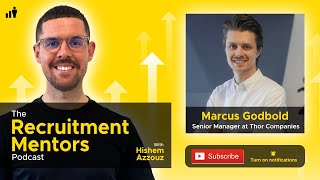
Marcus Godbold, a senior manager at Thor Companies, rose from graduate recruiter to leading 23 consultants in seven years. He built his success on genuine relationship-building, market expertise through frequent travel and conferences, and a day-planning system that separates reactive from proactive work. Moving into leadership, he emphasizes authentic compassion, clear KPIs, and three cultural pillars: humility, continuous growth, and a solid framework.
Chapters
Welcome to the Recruitment Mentors Podcast. My name is Hishem Azzouz. Today I'm really excited to be joined by Marcus Godbold, who is a senior manager within the Thor Engineering team. Marcus started his recruitment career 8 years ago straight out of university. He worked at one company for 12 months before then joining Thor Companies. He was their 10th hire and and they're now, um, a business of just under 100 people. So he joined Thor Companies at the very early stages of their business journey, and over the last 7 years he has accelerated his recruitment career from consultant all the way to senior manager, and he is now responsible for 23 consultants and the growth of the engineering division. Marcus, thanks for joining me on the podcast.
Thank you very much for having me here, Shen.
So Where we always like to start is with a question I think you're always thinking about when hiring for your teams, and that is, in your opinion, what characteristics and traits do you think make up a highly successful recruitment consultant?
So I think the first thing for me is somebody who's able to build relationships. And, you know, I'm not just talking about the relationships where, you know, you're taking clients out into the city to take them for dinner or anything like that. I think What I'm talking about is being able to show genuine care and compassion to people that you're trying to help. I think a major thing for me was I always try to start and end conversations that I have about business with something personal and about what they like and get on a level with that person. And I think that that's something that's really, really important to me and what I pride myself on and what I look for when I'm hiring future people. I think the second thing is that somebody is a good listener, and I think the reason being is because when I first started in recruitment and I think at school and everything like that, I wasn't actually the best listener as a person. However, I kind of learned how to be, you know, I have to write things down, read it, say it sometimes to really like have that 3 or 4 times repetition. And I think when I started to do that a lot better, I started to get a lot better. So, you know, when somebody is coming into the team, I always make sure that they can repeat information I'm saying or I understand how they can do that basically. So to summarize, relationship building and listening are two really, really important aspects I think that any recruiter needs.
Love that. Interested in the first point there. How do you look for that in people? Like, how do you find that out about them? How do you find out if they're someone that's compassionate, like, in the interview environment, out of interest? How do you typically try and find that?
Yeah, so I think that one thing that I've always prided myself on is that no matter what kind of room I've sat in, you know, I've whether it's with a 50-year-old CEO or whether it's, you know, a candidate who's the same age as me or something like that, I've always been able to adapt to that kind of environment. And I think that one reason for that is when I was younger, I was very exposed to lots of different adult environments, if you like. You know, my dad played football, my mum's friends were always over, we had a lot of relationships with adults and there was a lot of times when I had to kind of sit around a group of adults and behave in that sort of way. And I like to deep dive into what other people that I'm trying to hire have been exposed to in that regard as well. So have they only been to school? And if they've only been to school and only been to university and all the friends and people that they've hung around with have only been their age, how likely is it that they're going to be able to hold a room with people who are a lot more kind of senior than them and behave on the same level as them? Really meet them at that level. So yeah, I really like to understand that about a person and, you know, what their kind of upbringing was like in that regard.
Interesting. So really excited to unpack this journey of yours and the journey that you're still on. So just to frame this up, so obviously graduated from the University of Hull, from what I can see, so sport and exercise. Right?
Yeah.
Um, assuming your dad maybe had a bit of an influence on that, if he liked football and stuff like that.
Yeah, he was, uh, he played football for Norwich, so—
Oh really? Nice.
I wanted to follow in his footsteps, but, uh, never was quite good enough.
Really? Oh yeah, that did that, did that kill you a bit?
No, I mean, no, I think it's obviously the dream when you're a kid, but you grow up when you hit you know, 17, 18 years old and realize it's not going to happen, I think.
Just so, so what, what I was going to say, but I want, I want to ask you a question about your dad very quickly. But so obviously graduated there, then obviously got into, um, um, um, yeah, so, and then you got into recruitment, right?
Yeah.
Um, so can I just talk very briefly around the first year before then, obviously really unpacking this really amazing journey that you've been on from, yeah, being a temp company to now being a business that's around 100 people. But yeah, very quickly, just because I'm curious, like, what, what was it like to be surrounded by someone— so talking about your dad, who clearly would have had high standards, like, obviously that, like, for him to be at that professional level, yeah, that takes a lot, right? A lot of commitment. Potential sacrifice, maybe would have seen him working hard, putting— like, what would you say were the main things, looking back or taking a step back, would you say that you took from your dad that you think has really stuck with you? Or maybe what he's shown you that has really stuck with you, you think that's maybe showed itself up in the professional world for you?
Yeah, definitely. So I think when, um, when I played football, um, you know, I used to basically stand on the left wing and be really good at crossing. And I didn't ever really want to tackle that much or, you know, get stuck in. And my dad was the opposite to that, I think, you know, played right back. And, you know, he was always like, you don't have the, you don't have the drive, you don't have the guts, you don't have the, you know, the softer parts to really, really make it as a footballer. And obviously that's quite a tough criticism when you're, you know, 14, 15 years old, but I think someone telling you that from quite an early age really holds you in good stead for the future because, you know, that's your development area at an early age and you want it even better. And I think that when I grew up and realised that I wasn't going to become a footballer or anything like that, I realised that when I played football in the future, you know, I'd have to have that drive, the motivation, you know, I need to mean it, I need to really give it all I've got and all that sort of stuff, rather than just thinking I can stand on the wing and chuck balls in the box and it's going to happen. But actually, you know, get my hands dirty a little bit. And I think that that was great. And he was managed by a really hard bastard at Norwich. He was a bit of a slave driver. So, you know, some of the criticism I came in for from him was pretty tough, but, you know, I think it helped. He was also in sales as well when he quit playing football. Really? So I think, yeah, so I think that that helped, you know, he's got some empathy around what I've been through and stuff like that. So that was a good influence.
Did you have— I feel like you getting that fee, like, do you feel like you had the point to prove then? It's like, well, no, Dad, like, I do have grit, I can, like, I don't know. Did you have a bit— was that part of what is maybe—
yeah, I think so, I think so. Maybe subconsciously. It's not something, you know, I kind of went into and thought about each day, like, I want to prove my dad wrong or anything like that. It was more the opposite. It was like, I want to make him proud. Um, yeah, nice, you know. And that was the, that was the main thing, I think. Um, and, you know, I think what— when I, uh, I to help him out when I was 17, 18 years old, collect footballs at this refereeing thing that he used to do. And I basically used to sit on the floor sometimes while I was about to collect footballs and he was just like, stand up, you're on the job, people know you're getting paid, you need to show everybody why you're getting paid and you need to be on it. And I think that that was a really good lesson as well.
Yeah, I love that. Thanks so much for sharing that. Yeah, absolutely. So always interested to hear about first year recruitment because you typically always hear from people, and I'm sure you communicate this in your own way now, like it is a difficult part of your recruitment journey and these things. So obviously from what we can see, obviously worked one company for a year and then obviously you've joined 3 companies and it's been a real success. Although there's been plenty of bumps along the road. So like, just talk to us about that first year then. Like, how would you describe your first year in recruitment coming straight out of university?
Yeah, so I'd say my first year in recruitment was pretty horrific. I really, really struggled, I think, with a couple of things. I think firstly, you know, the environment was tough. You know, if you were at the bottom, you were at the bottom and you were treated that way, in a way. And, you know, obviously you get the training and, you know, certain people in the team are nice, but, you know, you can just tell from everybody else in the business how they're viewing you. And then I think it was so KPI-driven, very kind of, which works for some people, but it didn't necessarily work for me. You know, I was hitting the numbers and I was doing what I was getting told, and the only feedback I was getting was you're doing what you're being told, it will come, it will come. And, you know, I think the reason why I stayed in the business for a year having only done 2 deals was because I was hitting all of my KPIs, but I wasn't getting the attention where it was just like, cool, your calls are going like this. I had some really good call coaching by an L&D person, and that was great, but what I didn't have was the strategic knowledge of where to focus my time. You know, I was spending some time in Poland, in South Africa, in, you know, Timbuktu, wherever, trying to do deals. And, you know, when it came to the crunch, it wasn't necessarily ever going to happen because the rates were too low or there was withholding tax or anything like that. And, you know, the feedback I kept doing— I kept getting was just keep doing what you're doing. And, um, I, um, Yeah, I think I got a bit fed up of that and I thought about leaving recruitment altogether, to be honest. You know, I started with 14 people in the Graduate Academy. I was one of only 2 left, so I don't feel like I was the only person who felt like this. And I felt like I had some unfinished business really, because I saw other people who were working around me and, you know, I thought they were good people, they were good at what they do, but I always thought I could have been better, to be honest. And I thought that people could— I could build relationships better than the person next to me who was doing really, really well. And I was just like, I'm not really willing to waste a year of my life having done this and come away with absolutely nothing because I did 2 deals but I didn't make any commission in a year. So, yeah. But in hindsight, I would say it's literally the best thing that's ever happened to me. It really is. And I think that going from university where, you know, you feel like you're a big fish in a in a small pond and, you know, you're in the AU and playing football and all that shit, you know, it doesn't really compare or prepare you for what you're about to go into. And I needed that shock, I think, to whip me into shape a little bit.
Yeah. So there's a couple of things I want to ask you here. So one, I think you sort of touched on it a bit, but I'm just interested to hear, like, what— two deals in that year, didn't make any commission. Like, why didn't you quit?
I think it partly was because of the point I saw other people doing really well who I thought I could be better than.
Yeah.
Secondly, it was, um, yeah, this point I didn't want to give up leaving with nothing. Um, and I think third was Thor and, um, the interview that I had with, uh, Nick and Chris, the directors. Um, it was a brilliant, brilliant conversation, one of the best I've ever had, and I thought about, I applied for so many other jobs, like 4 or 5 other jobs in HR and internal recruitment and that sort of thing, but I had a chat with them and their view of recruitment was exactly what I thought I was going into when people were describing it to me before university. Very quality-driven, very relationship-driven, you get to go and meet your clients, you know, you get to actually spend time on your interviews and nurture them and prepare them properly and, you know, not just be driven by stats all the time. Time. And, um, I think that also made me think, actually, you know, maybe a smaller environment where I can learn off these guys will be a lot better suited to me.
Yeah, that makes sense. And then the other thing that I just wanted to get your thoughts on— I've been, uh, recording like a sort of graduate stroke entry-level focus podcast series in the past couple of weeks. So obviously you've been on that journey. As you said, like, you felt like in hindsight is actually the best thing that ever happened to you. You needed that shock. So I guess with hindsight, anyone listening to this that at the moment may have just graduated or is currently going through that process of interviewing at recruitment businesses or considering recruitment as a career, like, what, what would you say to those people in preparation for that first year, knowing what you know now?
I think stick with it. At the end of the day, the job gets easier the longer that you do it. And you know, what I've learned certainly through my time at Thor is if you spend enough time in a skill set, which is a niche where, you know, your managers have got a proven track record that there is deals to be done there, then trust them and really, really stick with it. And, you know, it may be the case that after, you know, 2 months, 3 months, 4 months, you're not doing any deals, but all those conversations, as long as they're good quality and on the right strategy, You know, they—
yeah, love that. So let's unpack this, this 7-year journey so far then, because I think not, not every sort of, um, not everyone goes on that journey where you're like the temp hire. And then a lot of obviously recruitment companies, I'm sure, would have said, look, Marcus, this is where we are today, this is where we're going to be in X amount of years. And that doesn't always come true, right? So obviously your temp hire the 4 companies you mentioned around how what really resonated with you is how they thought about recruitment, how they approached it. Um, and obviously they're now getting to the mark of having 100 people in the business. So let's unpack this. I guess what, what I'm interested to understand first, and this you may talk about all different parts of this 7 years so far, but I think it's really interesting the part that you said around you didn't have like the support on the strategy planning piece. I'm just interested in that. I feel like you— what you're sort of saying is like having a niche or having a focus, but like how— like from that learning, like how have you then made sure that you, you do have that? Or like, how have you made sure you do have that in the last 7 years? Like, what do you actually mean by that? How have you then applied strategic planning to building out markets, desks, helping your consultants in the last 7 years? Out of interest, I'm just really curious on that.
Yeah, so I think the first part was I started with working within HSEQ globally, and although the niche was HSEQ, it was the case that there is— yeah, like, all over the world, like way too much to go at, basically. And then, yeah, when I basically moved to Thor, they were very focused on Norwegian oil and gas, and I specifically just focused on the subsea engineering sector. And although I still didn't have that much success within my first year, I think again I did like 2 deals within that, partly because of the market crash, but partly because I still had a lot of development areas. I really learned how to map out a market, understand how many engineers within which disciplines are in each company, understand how to ask the candidates, how to get that information, and really become a genuine market expert. And I'm not talking a market expert about, you know, what the technical engineering pieces and what Orcaflex is and all that shit. I'm talking about tangible recruitment information where, you know, if somebody gives you a job, how many candidates there are in the market that you can go at and you can say to a client, okay, great. Well, you need a rigid pipeline engineer. All right. Well, there's 40 people who do that in the market. Well, there's 42 people who do that in the market, of which I've spoken to this many in the last 6 months. Here's how many people could be interested. So you need to be looking at a timeframe of between 3 and 4 months when this project finishes and those people could become available. That is being a market expert. You know, you don't have to be an engineer to be an amazing technical recruiter. And I think that when you're able to say that to a client, right, then you're not just sat there and just being like, oh yeah, we'll get those people easy when they know it's not easy. So who are you trying to kid? You know, people love the modesty. And I think that that's what I really, really learned within the oil and gas sector. When I moved over into my core market, which was the infrastructure sector in Sweden, I applied this exactly the same thing. And I think that the problem with the Norwegian oil and gas sector, which was in my first 18 months in Thor, was the market had dropped off just as I started to get good. And I don't like blaming external factors. Maybe I should have moved over sooner, but The buying signs weren't there, there were candidates that flooded the market, no one was hiring anymore, etc. So when I then understood and learned all those principles and moved over into the Swedish market, that's when it started to really, really start to kick on and I found that niche and the honeypot. And I think after doing like 4 deals in my first 2 years in recruitment and not earning any commission, I then did 48 placements 2 years by finding that niche.
Yeah, yeah, I love that.
And, you know, managing people now, as a company, we have to basically have people who are really working hard in our core markets, what we're doing now, but we also want to have people with a growth mindset. And by that, I mean, you know, people who can carve out newer niches and help grow the business, and one day they'll have their own team. And, you know, I think what I say to those people is you've got to start off quite broad and really understand and smell what sells. I don't know whether you've ever seen The Apprentice, but they have that market stall thing where it's like, okay, that's selling more, buy loads more of that. And yeah, I think that I really, really understood that in Stockholm, and that's what I really encourage my team to do, basically smell what sells, build up your inventory of candidates. You know, you wouldn't open a shop without filling the shelves with start. Yeah, yeah. And then, yeah, basically once you've done that, then go out to the market, see who could be interested in which type of candidate, and then that, that's basically the niche that you can go into.
I love that. Thanks for sharing that. So a couple of things that I want to just sort of uncover a bit here. So, um, obviously you mentioned around the— so yeah, you went from like, as you said, first 2 years not having loads of success to than like then it going a lot more better, or how you'd hoped your recruitment career would go, right? So just for a bit of context really quickly, have you always done— have you always done perm or contract or both?
I've done both.
Okay, cool. So at that time in your journey, was you doing contracts or perm in Stockholm?
Um, so the first year was all contracts. Um, second year in Norway was, uh, perm and contract. Um, in Stockholm— in Stockholm, it was probably 95% Um, in Sweden.
Okay, yeah, that's when you did like just under 50 placements.
Yeah, yeah, exactly.
Okay, perfect. So just, just interested here, so like I know you— so you've mentioned, so you said like you took away some of these core principles. I guess I'm just trying to uncover what maybe some of the other principles are that you took away that you had to learn the hard way or the long way in those first couple of years. But obviously a lot of recruiters listen to this will obviously have to go on that journey of like building out their new market or building out their own client list and these types things, right? So I guess what I'm just interested to find out from you— I know you were just talking a bit about it on trying to maybe start a bit broad, understand what sells, build up your inventory and relationships with candidates. But like, obviously looking back, and maybe you can also draw on your team as well, but like, as, as you were building out that, that market, like, what ended up being your most trusted way of like building client relationships out of interest? Like, what ended up being the most efficient way of you partnering with clients, getting more of those opportunities? Because I think that's typically where obviously a lot of people struggle or find the biggest challenge when building out a new market. So, talk to me a bit about your strategy or what ended up working on that side.
Yeah. So, I've heard it a couple of times in your podcast, but it's a lot to do with going to meet people. And I think the fact that I've basically been an English person working in a foreign market and I've made the effort to fly to another country to go and meet people has been amazing. So I think in that 2-year period, I actually had a look the other day for one of my appraisals, I had 56 client meetings in Norway or Sweden and I also went to 6 different conferences as well in Norway or Sweden and whilst still living in London. So that's like, you know, every 4 to 8 weeks really, really making the effort to go to go and see people. And I think that, you know, when you're an English person sat in the room and you know all about the local area and, you know, different words within the local language, that kind of really, you know, sets you apart from other people. So, and then I think that again, when you're there, you know, being able to be passionate, get a bit emotional about your brand and what you're doing, you know, be realistic about the type of people that you're presenting and just be really quite honest, like no bullshit sales, just, you know, be honest what you can deliver, what you can't, people will buy into that a lot more than saying you've got hundreds of candidates in the skill set that you just don't. And I've always worked off the basis that if you show people and if you're passionate about what you're doing, then people will believe in it. And yeah, I think that you can only really do that properly face-to-face, sit there, shake their hands, have a coffee with them, take them for a pint, and then I think that's the best way to business to do business development. And conferences, I absolutely love conferences. I think they're so much fun. I think every single recruiter should have the drive and will to go to an industry conference. You know, they should meet people, network in the room, and it's a really daunting feeling having to go up to somebody the first time in the room, shake their hand when they don't know you and never even heard of you, but the buzz is unreal. And, you know, the relationships that you can build off that are superb. So yeah, I definitely, definitely think that face-to-face contact is 100% what you should be pushing for. And I get that when you're new to a company, they don't necessarily invest in you and back you to do that. But I think when I worked at Thor, I said to Nick and Chris, look, I've got to go out there within the next 2 months. I never got the opportunity at my old company. I really want to go there as soon as possible so I can feel it and get a taste of it. And after 2 months, they sent me out there on a conference and I was just like, this is so cool. I'm in. I can't wait to do more of this.
So it seems like the answer there is like you just really doubled down and invested in relationships, made the effort to get over there. Really? Yeah. Okay. So just two things that I want to go into. So first, I know hopefully we can get more opportunities to go to conferences again really soon, which is really exciting. Right. But I just wanted to get your thoughts on this. What— so like, what— how do you now approach conferences that you think gives you the best chance of like maximizing your time there? So like maybe the way that you approach the first one, it'd be totally different to like the way that you approach the fifth one. What I'm trying to find out is, which I had to learn the hard way, right? When I first attended like networking events, I used to recruit the insurance industry and I did attend insurance events. Like it can be onto, right? And like, I think the wrong mindset, which I learned, was the goal isn't to like try and give out as many business cards as possible, right? It's more about like how, how can you sort of try and work the room and make as many connections as possible by not always just talking about you and finding out, like, asking things about other people. And like, like, that's how I then tried to approach things. Like, like, the goal of like having interaction connection with someone isn't to talk about recruitment and isn't to give them my business card. It was more about to at least get the space to go, hey, this is me, this is what I do, but to like find out more about them and why they're here, what's important to them, and these types of things. Like, what's, what's been your approach? Like, I don't know, how would you approach conferences now that maybe you've got much better at, that you feel gets them, gets the most out of going to these things and connects with people? How have you improved on that?
Exactly. So I think within, within my industry specifically, you know, there's obviously suppliers or subcontractors and then there's clients, right? So, you know, one thing can't happen without the other at every level of the supply chain. So I think that you need to go into the conversations and conferences to be like, everybody here is open to doing business in some form or another, right? If not, they wouldn't be here. And at the end of the day, some conversations and some people that you go up to are going to be more daunting than others, but they're probably the ones that are going to make you the most money. You know, if you've got somebody who's sat there and really keen to talk for a long, long time and they're not necessarily going to make you any money, then you need to be a little bit short and cutthroat and be like, cool, I just need to move on now. I've got other business to make here, in the most polite possible way, of course. But be really disciplined with that. And I think that some of the conversations I've had where it's just been like, okay, great, I'll pitch you as a client. Oh, hold on a sec. Well, you're the director of infrastructure you're a director of engineering for that company, you've got a PSL, you're not able to use us, cool, what's your situation? Could you move? And then it's a direct face-to-face headhunt as well. And people almost, you know, are taken a little bit aback by that, but they'll remember the conversation. And I think that that is a really key thing is, you know, be memorable at those things. Yeah, you can give your business card over, but, you know, like always remember that people are there to do business and, you know, people have an open door policy. Exactly. I think that's the main message. And yeah, your pitch needs to be good so you're not boring. But, you know, I think that you can work on that and you can get trained on that.
Yeah. Nice. So then the other thing that I know people will be really interested in is then like the culture piece or the things that you've had to do to maybe adapt to whatever. I know that it seems like your journey, you've always typically recruited like outside of the UK, but just maybe you've had more of this experience with hiring people for your team and stuff like that. But like, what would you say the main nuance differences in to like serving like a culture like Stockholm, for example, or like the Nordics? I don't know, what are some of the things that maybe you've had to change or tweak slightly that, yeah, just didn't resonate or work in the— in, in those types of markets that have been traced? A lot of people interested in that, like how different is it? Would this work, would that not work? I don't know, any sort of key things that—
Yeah, big time, big time. It's massively different to the UK. I think in the UK a lot of people know what recruitment is and, you know, they kind of know the game a little bit by now and they're already quite educated on how to use recruiters and what it's all about. Whereas, you know, in Northern Europe I think that There's a lot of different types of recruitment companies in Northern Europe. There's like CV sending services and database services and lots of different things. So, you know, it is a little bit more of an education to people. And I also think that it's a really good training bed for people to be like, you've got one chance and that's it. And, you know, it will literally be like, okay, well, we don't like confrontation as much here. Obviously in the UK, we, you know, we love a little haggle if you like, but there they don't like confrontation as much. So if you mess it up, they won't necessarily tell you or they won't give you full details. You know, you'll all of a sudden have some contact just being like, yeah, we're not interested in using you anymore without that much of an explanation. And I think that you avoid that by, you know, obviously relationship point coming up again, but, you know, providing them with a good service. And if you provide them with a good service and you can show them that you're working hard, Even if the results aren't quite there, they understand because it's a candidate-led market and the skills aren't readily accessible to everybody. And if you show them that you're working hard, they'll stick with you, definitely.
Okay, interesting.
I think like— sorry, Hishem.
That's okay, yeah.
That cultural understanding as well, like really being able to know that, you know what, if you call somebody on Swedish Midsummer, they will literally never speak to you again because that's basically Christmas Day. So, you know, obviously that's the extreme. But, you know, little things in between is also really, really important. Yeah. Whatever country you're working in.
And then just real short question, like, are— because I think sometimes people can just think this, like, are people really receptive to, like, Do they understand that you are based in the UK typically, but you go over there? Is that really like, people aren't like, oh, you're based in the UK, I want to deal with people that are based in Sweden. I don't know, is that a thing or are people really open to it?
Yeah, definitely. It is a big objection that we get. However, you explain the benefits as to why it could be better than some of your competitors who are in-country. And they love it. And not only that, but I see it as a massive strength as well. You know, when you're calling a candidate in the city and you're calling from London and you're an English person and you're headhunting somebody and you're using some Swedish terminology or Norwegian terminology or Danish or whatever, you have an edge over your local competition. And because it's a little bit, it's something new, something novel, a bit of flattery, you know, it's not every day they receive a call from an English person. So I'd say it's got strengths and weaknesses in both. But I think that one of the ways we've negated that is by hiring a lot of Scandinavian people to work in London. And then obviously we say you get the best of both. So I think that's a really, really important thing to understand, that don't have limiting beliefs around your language. If you're good, you're good. If you provide a good service and you provide the right people people don't give a shit where it comes from or how much it costs, you know. Well, to a point. But, you know, I think, like, it doesn't matter where you're from, it's just—
thanks for being really candid and honest about that. Yeah, it's like, it's easily something that you could tell yourself as to why you couldn't expand your desk or, like, crack that market, you know what I mean? But, and that's why we're having these conversations. So look, what I'm really keen to do over the next sort of 15-20 minutes, and it's just like, I really unpack this leadership journey of yours, because a lot of recruiters listen to this will definitely be aspiring leaders, and that can sometimes be like a really difficult path. But before we do, really quickly, just because we're talking a lot here around like Marcus building, um, a desk, having more success, these types of things, just another really popular— we've spoken about new business, we're speaking about the nuances of, yeah, working European market, but really interested to hear your journey with day plans and structure. It's just a really popular area, like people are interested in like what, what does Marcus's typical day plan like that he feels gives him the best chance of like maximizing your working day, getting the most out of your activity. And I'm sure this is something that you help people in your, your team with now, but like when, when you were like really, yeah, like smashing in the deals, like really at the peak of like really building out your core markets and stuff. Like, I guess, what were the non-negotiables surrounding Marcus's typical day that you felt like enabled you to get the most out of what you were putting in?
Yeah, this is a really hot topic for us at the moment, actually. I did a training session on this yesterday. Oh nice, okay, let's do it. So nice and fresh. So I think, I had one of your other podcasts where it's just like so rigid and so planned. Yeah, I wasn't really that type of recruiter. I see a recruitment day as two different things. I think one is high-level and reactive tasks. So by that I mean like, you know, going from closing deals, offers outstanding, second stage feedback, second stage interview requests, first stage prep, all of those things which is to do with your interview process. Okay, I don't think you can set a specific time of day unless you've got a booked-in call around some of those things, right? But they're things that you want to tick off throughout the day. I think after that you then have open tasks, all right? And then open tasks are around what you're doing proactively. So if you need jobs, it's business development around CVs that you've specced out, around leads that you've generated, around whatever, or it's an open task around, cool, I've got 3 jobs at the moment in 2 different skill sets. I'm going to spend, you know, this much time, you know, 3 hours in the afternoon on those 2 because obviously there's a better chance of place if there's 2. And then I'm going to spend, you know, an hour and a half on that last one. All right. And then that's kind of balancing your day versus the opportunities and commitment that you have. Is how I see that. Then afterwards, so this is something that we're massively hot on at the moment, is that you need to have your day plan done for the next day and you need to have marketed out, you know, candidate singles and emails and LinkedIn messages and all that stuff to fuel your day for the next day. And also send out any spec CVs or floats or whatever right at the end of the day. And that's kind of like a daily checkpoint that we've got going on at the moment. I think that what's really important is to have a target each day, right? And have, you know, not necessarily strict set of KPIs, but, you know, I want to achieve this in terms of my proactive work, right? And this is what I can definitely affect. However, what my goal is, is to get a CV in for this job today. 'Yeah, you know what, I could do this part amazingly well, but that part, you know, I can't necessarily affect as much as that part, so I'll focus on that part and that part will look after itself.' So yeah, I'd say that I may be a little bit more flexible and follow my nose and that sort of thing more than other recruiters, but I am not so rigid, but But yeah, that's basically how I like to look at things, open tasks and closed tasks.
Now, thanks for sharing that. I think, yeah, really common theme, something I always big advocate on because it had such an impact is, yeah, if you're not, or if you're listening to this and you're not starting your day before it starts, to change that. So like you said, understand before you come into the office, before you go into your office tomorrow, like what you need to be focusing on, et cetera. Really like the addition that you just said, like setting your future day up for success. So like doing those things that could mean that you get more traction the following day, like you said, the LinkedIn messages, those things.
Yeah.
And what I really like with what you said, which is something I definitely need to improve on but has also come from some of the sessions that we've been doing in the Recruitment Mentors platform recently on this, obviously the added benefit of like adding a target. So for example, like you said, if you blocked out 2-3 hours on BD or candidate sourcing for a particular job, like, the great thing about also setting a target in those 2 to 3 hours is that one, you can actually see how you did rather than like finishing that time and going, oh, how did that actually go? Because sometimes you feel like that, can't you? It's like, how good, how, how well did that go? And then the other great thing is then you can reflect on it, you can review it. So like, if you, if your target was to, to speak to 5 hiring managers and you spoke to 3, part of the end of your day or at the end of the week, which I really recommend, is then having some sort of self-reflection review of like, how did the week go, whatever. You can then review those things and go, right, why didn't I speak to 5 hiring managers? Well, I didn't get my— I didn't get my call list planned. That definitely had an impact. And like, if you have then those targets, you can then give yourself space to be like, right, what am I going to do next time to make sure I do hit the target? Rather than just having the block time. I think that's a great addition.
Yeah, I 100% agree. You've got to have enough of a sample of what you're doing to work out what's going wrong. And at the end of the day, if you're only calling 10 candidates a week and you're getting no CVs in, then, you know, your understanding of your skill level and the reasons why is going to be so much less if you just absolutely went for it, made 40 calls, and then actually could pick up a trend of You know, okay, great. Well, that person missed ROE, so I need to work on my commitment for ROE. So, man, I'm massively on board with that. You know, sit and reflect on the day before, have a look at your targets. I think the other thing that's good to mention around day plan is what you're doing before you get to the office, right? Because I can't remember which podcast it was, but I listened to something that was just like, you really need to warm your brain up before you get into the office. And I know I've been guilty of it in the past. I've been just sat there mindlessly playing on City Manager for my commute for 45 minutes. But what I actually did in the end was started doing some Duolingo for Swedish words on my phone. And that basically gets your brain into gear. Either that or go for a run, get your endorphins going, get your exercise going, get blood to your brain. I think that's another way to really kind of stop this really slow start when you get to the office. You know, I had a girl say on your podcast as well that, you know, I want to make sure that when I come in, I'm half an hour before my competition and I'm on it. And yeah, I thoroughly believe that, you know, you shouldn't be waiting until 9:00, 9:30 to start making your first call. You should be on it straight away. And the best way to do that is really warm yourself up and get the blood pumping thing, basically.
Yeah, for sure. Right, so are we okay for time? Like, the final, like, last next 15 minutes, I just want to talk to you about your leadership journey. Is that okay?
Yeah, go for it.
Okay, cool. So obviously, obviously we spoke a lot around the billion piece, so then obviously, like we, um, spoke about before we started this, and then it seems like you've been on then a sort of leadership journey for the last 5 years or around about that. So as I said in the introduction, and you now you're responsible to manage 23 consultants. I guess let's just go into the stuff that maybe a lot of people can learn from. Like what were some of your maybe 1 to 3 biggest challenges going from like Marcus the biller, just worrying about Marcus's billings performance to then being responsible for other people that's obviously grown the amount of people. But like what have been some of your biggest challenges that you've had to work through that maybe people could learn from that you've had to work through on this leadership journey?
Yeah, I'm absolutely not ashamed to say this because I think it's a massive part of the journey that any manager will go through, but obviously when you're billing, doing deals, you know, you're the one banging the gong or ringing the bell, your deal soon is paid or whatever it is, and then you kind of go from that to a little bit in the shadows and letting other people take the limelight a little bit, and I've got to admit that, you know, I'm somebody who who likes to be in the limelight and likes to get recognition, all that sort of stuff. And then when all of a sudden that started to taper off and I wasn't going on club lunches for deals, but I was managing people who were, a little bit of jealousy crept in. But you do have to get to the point where it's just like, okay, grow up a little bit. It's not about you anymore. You've had a really good journey where people have taught you and built you up to the point where you've got to this place, and now you need to do that for other people. And I think, yeah, that was just a bit of growing up, basically, and having a word with yourself. I also think that, secondly, I'm quite an emotional person. I think the textbook on recruitment is, you know, stay flatline, never let the highs get too high or the lows get too low. Yeah, I'm not that guy and I don't try and be anyone different really. You know, if you look at someone like Jürgen Klopp, who's one of the best leaders, you know, when they score a goal he goes absolutely crazy, when they lose he's upset. And, you know, I think that people buy into that passion and people buy into that. However, you know, you've got to harness it in the right way. I think when I first started off as a leader, a lot of my management was based on feeling and based on emotion and based on what I was thinking and I didn't ever have any evidence or clarity or transparency around what I expected and what the goals were. And, you know, I think that when you're small and you're a team of 2 or 3 and they know you and they get you, it's fine. But, you know, when you get to a team of above 6 or 7 or 8, you're not so involved in everybody, everybody doesn't know you as well as those people who have perhaps grown with you and seen some good times. It makes it really hard. And you know, there's nothing more embarrassing than sitting in front of somebody and, you know, you criticizing them and then them saying, where's the evidence for that? And you're just like, I don't know, I just got a feeling. You know, if you're just like, I've sat down and here are your numbers, I've analyzed your calls, here's what you're missing out. And by the way, you're not doing enough of this or enough of that because I can see that the month before you had a good result on this. This, etc., then that's when it's tangible and it can give something to work from. So yeah, I think that was a big learning curve, is managing from emotion works to a point, but you do also need a lot of tangible evidence stuff because I do think that people buy into people who are passionate and a little bit emotional. Wear their heart on their sleeve and aren't just a management robot who just sits and looks at numbers on the sheet. No one likes that guy. No one.
Yeah. What you're also saying there is being authentic. You would like being true to yourself. And I think what I really took from what you just said there is, which I think sometimes can be a challenge or sometimes isn't communicated that can have a real impact, is like making— like how many— if you're listening to this right now and you have a smaller growing team, like how many of your consultants actually know what the standards are? Like, do they know what is expected of them? If they don't, then there's obviously clearly going to be some bumps and some challenges, right? Because if a consultant goes, well, I've done this, and in your head you're like, well, I want you to be here. It's like, well, hang on a minute. Do you get what I mean? So I think that's clearly something that just really sort of jumped out at me when you said that around having clear understanding and standards on like where we want people to be striving for rather than guesswork.
Exactly. And, you know, a lot of people have like a KPI of 25 phone calls or 20 phone calls or 10 phone calls or however much. But what is a phone call? Yeah, you like, you know, there's got to be some sort of criteria because if not, it's just, uh, all right, mate, you're looking for a new job? All right, no, I'm not. Okay, see ya. Yeah, I'll add that to my KPI. Um, and literally, you know, it took somebody sitting in front of me and saying, well, yeah, 'Here's my 8 calls, I've already done it after 2 hours,' and they were just literally all like that to me, realising actually you do need some clarity around what actually constitutes a call even. And, you know, phone time, for example, like, 'All right, great, you've been on the phone for an hour and a quarter today to 2 candidates.' Well, you know, that's not really enough. You know, it should be an hour and a quarter to 5 or 6 candidates, but people don't know that until they're given the framework. And I'd say that's my kind of third main point about leadership is is give people a framework. And this is something I learned off a guy called Andrew Siliteau as well. You know, he sat us down as managers and was just like, gave us basically a puzzle and then gave us a diagram of the puzzle. And it was quite simple, but the amount of time it took us to complete it was amazing because he gave us the framework. And if people don't have that to go off, then they're not going to be able to solve the puzzle, right? So you've got to make sure that your infrastructure, and your process and your learning and all of that sort of stuff gives people that framework. And I think something that I created, which I'm really proud of, is I created basically a 26-page document on how to recruit from all of my training sessions I've ever done. I typed them up and, um, yeah, put them into something called the Infrex. Um, and yeah, I think that really gives people a gold standard and a process. And, you know, if you go outside of these lines then, you know, you're not sticking to what we believe in, and, you know, there'll be issues because, um, yeah, this is what we know and this is what works. Um, so I think that's also a really, really good part of this framework point as well.
Yeah, no, thanks for sharing that. The, the next thing that I think sort of leadership and managers on this journey can find difficult as well is then like getting the best out of their team. So like, talk to us a bit about that. Typically we hear people talk about really understanding that they had to go on a bit of a journey and understand like, okay, what are my people— what are my individual people really motivated by? Understand that. But like, what's been your journey in like maximizing like your team and getting the most out of them? Because I think a common challenge that sometimes people can go through as well is like, you may have the, like, Marcus expectations on someone that isn't Marcus, right? So like, yeah, you think about why aren't they doing that? Like, that's something I would do, and that, that isn't quite scalable and isn't always gonna work, right? So I don't know, what, what's been your journey in like getting the most out of your team and keeping them motivated, helping them achieve high performance? What, what does that look like for you?
Yeah, so I actually learned this quite a lot from, um, from the person I worked with my first company and the person I worked Thor, Nick, who— and I think they were very, very similar characters and very, very similar. However, one had compassion. Nick had compassion. He actually showed he cares. And the other guy didn't. You know, they were both full of energy and lots of consequences and a bit of whipping here and there and, you know, a lot of tough chats and all that sort of stuff. But, you know, one had compassion, the other one didn't. So I think I think that showing people that you care is really, really important and you care about them, not about just yourself, and that you genuinely want them to do well. And at the end of the day, I think I say this to everyone when I came in, I've had a great journey, I've learned so much, I've achieved a lot, so I feel anyway, but I think that if I don't show that to those people, then I'm not doing them a favor. Think. So yeah, I think that's the biggest thing for me is that compassionate side of management. Just get to know people, show them you care, don't treat them as a number, you know, make sure that they are somebody who you could sit in a pub with and have a pint with and, you know, shoot the shit before you hire them because then you will be compassionate for that person and want them to do well when they are there. So, I think that's the main thing. And yeah, there's all the like find out what people are motivated by, find out what their goals are and, you know, when do you want to buy a house in the next 2 or 3 years and oh, you want a Gucci or Fendi handbag or whatever. You know, that's great but it's a bit shallow. You know, and I think that like if you just show people you want what's best for them, then I think that's a great way to get that buy-in. Basically.
No, I know it sounds really basic to show compassion, but it is— it's easy to say, and there's another thing to actually like, like deliver it, to like live and breathe it every single day, to mean it. And it's, it's really interesting actually you say that because I know we both spoke about this, like we're both big fans of the, uh, High Performance podcast, and I'm a like huge fan of like Ben Francis and the Gymshark journey. I think he's just super inspirational really down to earth, big on humility. And one thing that he said a lot recently in the podcast that I listened to him about was the CEO that he brought in. He said one of his biggest assets is like the people management piece. And the thing that's always stuck with him— and you'll hear on the podcast if you listen to it, Marcus— but basically it's something along the lines of like, don't ask people how they are if you're not prepared to listen to the answer. And how many times have you experienced that where someone goes, oh Marcus, how are Yeah. And like, you don't feel like they're listening, you know what I mean? And that's the compassion bit. Like, don't ask how people are if you're not prepared to listen to the answer. And I think that's what you're saying.
Well, I think that— yeah, absolutely. And that's something I'm really proud of, is that if I took any— or I really hope, you know, if they listen to this, they'll do this. But, um, you know, I'd say that if I sat somebody down in the room, the first question I asked them was, how are you? They'd give me a completely honest answer. And I'd listen to it. And I don't want somebody being positive for the sake of it. I want someone to give it to me straight. How are you actually feeling? And you know what, if you are feeling demotivated, you know, we all go through that. Of course we do. We all go through slight lulls. Even when, you know, I felt like I was at the top of my game billing, you know, there'd be a month where, you know, it'd be a little bit slower and you'd have a little bit less interviews and whatever. But, um, you know, I think that as long as people can say that to you, I completely agree, Hishem. I think, you know, um, that shows that they buy into you and, and that you are compassionate and that you actually care how they're feeling and that you will actually listen, I think.
Yeah. So look, before we finish here, I just want to touch on like what, like what you're excited about the future. But before we do, really quickly, I have to sort of ask like As I said early on, not many people will be told, like, this is where we are today and this is where we're going. But you were the 10th hire, like 4 on there, on the verge of like hiring 100, like being 100 people in the business. Like what, I guess, what have you taken from this journey so far and like being part of this sort of, yeah, real growth story? Like what has helped you? I don't know. Like, I don't know what comes up when we think of like going from 10 people to '98 people, like, I don't know, what have been some of the maybe key highlights or key things that I guess you're never going to forget in this journey?
Yeah, so I think the feeling of just constantly doing placements and waking up in the morning, a CV is in your inbox and you're just like, I know that makes, that job makes sense to that person, I'm going to place them. I'll never forget that feeling and it kind of went on for 2 years and it's you know, you feel a bit unstoppable. Like, it's a brilliant feeling. Um, and then I think the, the next, the, the next thing I'll take from it is, you know, really growing and being entrepreneurial in a business. And, you know, I was lucky enough to not just stick within one vertical my whole career. I've managed to kind of go to 2 or 3 or 4 or 5 or 6, 7 different industries and help grow teams within within that. And I think that that's been a great thing, like replicating the process but also flexing it depending on the industry is amazing. And I think that, you know, like giving people the opportunity to, I don't know, surprise you a little bit. Like, you know, it's not all about you as a leader, it's about them. And, you know, I'm probably still guilty of it now sometimes is trying to maybe take a little bit too much control and not really giving enough out to the the guys and that sort of thing. It's something I'm working on a lot, but, you know, people will come up with some absolute goals and your idea isn't always the best idea as a leader. So, you know, create a committee, create a platform where people can come up to you and share your ideas and be entrepreneurial themselves, I think.
Yeah, I love that. And then before I ask you a bit about what you're excited about, out, may I get this? Obviously, this, I've, this totally been inspired by like the High Performance Podcast, but just interested, as this, as, as these teams have been growing, the business has been growing, what would you say are like the 3 non-negotiables that everyone sort of abides to, lives to, on, on the culture side? Is this a scale, just super interested, do you think everyone lives by, stands by?
Yeah, so I think, um, Firstly, no one's bigger than the club. Such a cliché, such a cliché, but literally, like, you know, you're never too big to sweep the sheds. At the end of the day, you can be a team leader, but, you know, you've still got to turn up to work on time. And yeah, you can be doing deal upon deal upon deal, but you've got to think that you're a role model within that business. And, you know, if you're behaving like that and you're the top biller, you know, some rookie who's coming in is going to see that person and just be like, Well, I don't know, they're behaving like that, I can get to that point eventually. No. So I think that that's definitely the main thing is to keep up the standards throughout, no matter how big or successful that you get. I think the second thing is always grow, if not, you're going to die. You know, I think that when you bring new people into a business, there is a fresh kind of perspective, fresh bit of accountability. And everyone kind of ups their game a little bit because whether they're a graduate or whether they're an experienced hire, they'll come in and they'll hit the ground running and then other people will also hit the ground running. So if you're not growing, you're dying. If you're not seeing the platform to grow within the industry that you're in and the market that you're in, go and do something about it. Go and look at another sector, go and deep dive into where the investments are being made, all over the world off the back of COVID I think that that's a really, really important thing. And I think the third one is probably the framework point. I'm going to give you a fourth one as well in a sec. But the third one, third one is the framework point. Give people a framework and set people up to succeed basically, and they'll do really well. And then the fourth one is when things aren't going your way and you've got you've got a bit of adversity or you've had a tough couple of months, look in the mirror, don't blame external factors. We touched on earlier, take responsibility for what you're doing. If you've had 40 calls and you've not got a CV in or you've had 5 offers rejected, that's not all down to bad luck. You need to really, really look at what you're doing and take responsibility. And same for me as a manager, if you've had a tough month, How did you set your team up the month before? My business wasn't crap the month before, they did 10 grand yields or whatever, but now we've dropped off a bit. So why was that? Ask yourself the question, come up with a plan, make it better, and yeah, go into the next month or the next week or next day really, really trying to improve on that point after looking in the mirror.
Love it. Look, final question, what are you excited about for then? What's on the horizon? On the horizon? Obviously, yeah, been there for 7 years now. Obviously, being there for a decade is going to be an exciting milestone for you. Like, what, what you— when you think of the future at Four, what, what do you see? What are you excited about?
I think across the whole business, you know, we've, um, what we've started to do is hire some, uh, you know, we've always been quite organic, taken a lot of graduates. We've now started to hire some really good people, uh, experienced people. And I think that what's great is that you know, they've come into our environment and our culture and they've hit the ground running and I think it's because they really like that. I'm not selling, by the way, but, you know, I think they really, really like the culture so I think that they can really, really kick on within Thor and take us to the next level and then when we do hire more graduates, which will happen throughout the next year, you know, they will be able to learn even more from those people so I'm really, really excited about that, definitely, and I think within my unit within engineering, I feel like we're in such a good niche and good vertical, and the strategy is really set to kick on for the next year to really smash it out of the park and see some more growth. I think that we've got some amazingly talented individuals in my team. They know the process, they know what to do. Now they just have to go out and do it. And, you know, we've just had a lot of work on our strategy over the last couple of months, but But I really, really feel like they're in a good place to smash it up now in the next year or so.
Brilliant. Look, I think, absolutely love your passion and really excited to see how things evolve over the next couple of years. But been on such a great journey from, yeah, not doing many deals last couple of years, but persevered, made it happen. And been an absolute pleasure having you on the podcast, Marcus. Thanks a lot.
Thank you very much, Hishem.
More from Hishem




You don't need as many clients as you think to bill $1 Million A Year In Recruitment



From 30 Direct Reports to Back-to-Back $1M Years as a Solo Recruiter with Zach Creighton



