Mark Long - How we can all raise the bar in recruitment
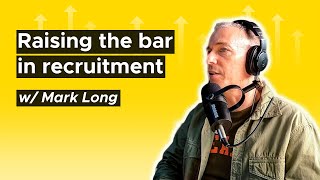
Mark Long, co-founder of recruitment firm Numi, built £1.6m revenue in year one by rejecting commission-driven pressure tactics. He looks for recruiters with intrinsic motivation and obsessive customer focus, and uses a 10-point client-assessment framework to avoid bad practices like spec-CVs and aggressive tactics.
Chapters
The recruitment industry wasn't really established. We didn't really like recruitment, we were just good at it and making money. And then at some point my moral compass kicked in and I realised some of the things that we were doing weren't really cool. We weren't looking after people. If your strength is delivering, if your strength is running the best goddamn bullion out there, if your strength is finding the best candidates, that's terrific. But if you're going to build a business, if you're going to build a community and a marketplace and a reputation, and you can't win business and you can't maintain and build relationships with the people that pay your bills, then don't do it.
Welcome back to another episode of the Recruitment Mentors Podcast. On this week's episode, I was joined by Mark Long, who is one of the 3 co-founders from a new recruitment business called Numi. Mark has worked in recruitment for over 25 years, both as a biller, manager, team lead, and now business owner. I absolutely love Mark's mindset and the passion he has for recruitment. So in this conversation, we about Mark's career, the entrepreneurial journey, and plenty of the tactics and approaches that have continued to work for Mark over the decades he's worked in the industry. Enjoy the episode. Mark, welcome to the podcast.
Hey Hishem, it's great to be here.
Thank you for making the trip, really appreciate it. I've really enjoyed our conversations leading up to this. I'm always curious to find out how people have stayed so long in the recruitment industry. Sorry to allude to that right away, but you're someone that clearly absolutely loves what you do. You're You're— I know how passionate you are about, yeah, raising the bar in recruitment, and that really resonates with me. So I'm really excited to unpack this journey of yours. I guess before we get started, um, always like to just add a bit of context to, um, your journey so everyone can just understand where you're at, where you've been, uh, right away. So feel free to add anything to this that you think is crucial that I've missed, but I guess initially you are in your fourth decade of recruitment.
That's a long time.
That's a long time, right? So yeah, I've definitely got questions around that. I think today, uh, what we're going to do is really hone in and focus on this entrepreneurial journey that you've been on with your two business partners in building your own recruitment business called Numi over the last 200 years. But obviously before that, um, you worked for a few different brands and built a successful recruitment career. So we're absolutely going to touch on that. But I guess the, the context for what we're going to be really focusing on today is, um, Numi. So just really quickly on this, and then we can get into further in the podcast, but Numi started officially, although it was incorporated in November 2020, the first full year was 2021. Official launch of the business was January 2021.
Yeah.
And you started it with two business partners, Nibs and Ricky.
Yeah, that's right.
Nibs hopefully is cool with me using that, right? Yeah, he is. So yeah, so first year it was just you three and we'll get into this, but I know the real focus was to build traction and yeah, build, start building the business between you three. So I know first year revenue-wise you ended up on around £1.6 million, and that was your first year. Then we have the second year, so 2022, last year. I know then you ended up going down the hiring route because you always wanted to grow this business. So correct me if I'm wrong, but I do believe, is there, so there's 5 recruiters and there's 2 people in ops and talent acquisition.
Yeah, that's right, yeah.
So there's around 7 of you at the moment, right? And then I know you were going to do some fact-checking on this, but I know you did share with me when preparing for this, but I think revenue circled around $2 million in 2022, or is that completely wrong?
Uh, no, the actual revenue in 2022 is $5 million. Okay, the total revenue. The gross profit is $2.2 million.
Right, okay, yeah, so I've got the, the GP and the revenue wrong, so there we go. So I think that will just help a lot of people immediately understand where you're at as a business, which is really exciting. So I'm really excited to dive into this. So where we always like to start is this million-pound question that I'm sure you and your business partners have really had to think long and hard about for your own business. So I'd love to hear your take. So in your opinion, what characteristics and traits do you believe make up a highly successful recruitment consultant in today's market?
Yeah, so your killer question. We were just talking about you hiring a salesperson yourself. Those 3 things, we've distilled those down, and I'm going to go with number 1 being intrinsic motivation. You can always tell when somebody's got grit, desire, passion. They kind of know their why, they know what they're doing and why they're getting out of bed every morning. And it's really hard if you don't have that, because the life cycle of recruitment is always changing. So from year to year, month to month, you can have highs and you can have lows, and you need to know what drives you. So intrinsic motivation. Second point I'd say is curiosity and a thirst for learning. Just to reiterate again about recruitment is always changing. No two days are the same. And in your journey, you will go through the gears from an associate to a recruiter to a principal. Then you might move into management or leadership. And so you've got to unpack, you know, one of your favorite words, what those data points are that help you to move forward in your journey, that help you to be the best version of you. And then thirdly, I like to work with people that are focused on the customer and they're obsessive about doing the right thing. They see beyond the paycheck, they see beyond the next deal. They will always do the right thing and they see the horizon of what is a really great and excellent service. So people make themselves memorable. They build relationships by building companies and helping people in their careers to move forward. So you have to be obsessive about customer experience.
I know that that's definitely something you've been obsessed— and yeah, you are obsessed with, which I sort of learned quite quickly when speaking to you. I guess to touch on Mark the recruiter, and I know that you have had to be absolutely hands-on from the very beginning of Numi, right, to build traction and build business. But I guess this— you've been in the industry for a while, so I guess the question I'd love to ask you is, what would you say are Mark's 1 to 3 key principles, um, when it comes to being great at recruitment that you've obviously learned all over this time. Like, what are some of the, the key principles that you live by each day, that you live by, uh, right now, that you've just learned along the way that you feel, um, really enables you to consistently perform, hit the goals that you set yourself? Would love just to hear Mark's perspective on, yeah, those, those key principles that you, you live by. And I'm sure you sort of try and instill in people or share why they're your key principles internally with your teams?
Yeah, sure. I mean, it's been a while. When I, when I think back to who I was when I first began and first started my journey in recruitment, I think it was just team and energy and follow-ups. The first business I worked in in the late '90s, we had a system which was driven by the technology that we had at the time. Um, which was pretty much, um, writing in a book and a really, really bad CRM. Um, but we had to follow up with all of our candidates. So we— I was a contract recruiter way, way, way back, and it was always about following up with your candidates. It was about those 3-month extensions. What are you doing? And it was about energy, and it was about kind of consistency. So it was always being really consistent, following up with your, with your marketplace and being accountable to your team. Those were the early traits that I saw. I think, I think now what makes a really great recruiter versus what makes a good recruiter is always doing the right thing, whether that is on behalf of your customer, your partner portfolio, whether that is being on behalf of your candidate and really listening to what your candidate is looking to achieve in their life, or whether that is within your company, within your team or your stakeholders. So if you're always doing the right thing by your customer, then, then, and the people that work with you, then you're going to be a great team member and you're really going to stand out and make a difference.
What do you think are some of the factors that, uh, in— what's the word? I'd love to just get your thoughts on that. That really resonates with me, but Because of the world that I'm in, and we train recruiters and they want to build a successful career, these things, sometimes it can be hard to do the right thing for like different factors. It might be that you're working with a really difficult client that isn't quite seeing or understanding the value that you can give to them. And that might encourage you to make some short-term decisions that maybe later down the line you regret or whatever. You might be in an environment where you have Mark, the manager who's really trying to encourage you to take action, hit your KPIs, these types of things. I'd love to get your perspective because, um, I really buy into that, but I'd love to get your thoughts on what do you think can sometimes be the factors, um, that can influence recruiters in our industry end up not doing the right thing? Because it makes sense, right? Do the, do the right thing by your customers and these things, and over time, um, it will play out. Sometimes quickly, sometimes over the long term. So I don't know what, what you think about that when we think about factors that influence the people not doing the right thing, because One of the most obvious factors is targets.
So you've got recruitment people that have sales targets, and if they're having a bad quarter or they're having an appraisal or a review with their manager and they're behind target, they need to do deals. Otherwise, they feel in jeopardy. They feel that they might lose their job. So they start to make bad decisions. They start to then manipulate the system and start to showcase or spec CVs or submit bad, you know, candidates that don't match the brief to the job of the customer, or they start to aggressively hound the customer to try to book in the interviews to get the deal done. That's not the right way to do the business. That's not the right way to build a sustainable career in recruitment. I think those are some of the reasons why people have, you know, bad practices in terms of recruitment, because they're possibly trying to keep their job, or, you know, there's possibly some sort of competition going on and they're trying to be the biggest biller in the, in the room. Um, I don't really like to see those. And, and in those moments when I've had conversations with people that are under those pressures and strains, the advice and the encouragement that I always give to them is that actually, if you are following the right steps, if you are being excellent in every single measurement along the way, if you're doing what you're supposed to do, over the course of time that will come out. And over the course of time, you will be successful. I mean, my dad always used to say to me that he could do my job because it sounds really easy. It does sound really easy, right? But not consistently. To do the job well, to do the job to a great and an excellent level consistently, month after month, year after year, there are no flukes, there are no shortcuts. You just have to be really great in every point.
Yeah, I love that. So I'd be, I'd be stupid not to ask you this, like, how, how has Mark, uh, stayed in industry for so long? And like, like you said, that consistency, that's, that's no fluke. So I'd love to just, yeah, delve into your mindset a bit around like why you think you've been able to just consistently show up, continue to, to love the job most of the time. I'm sure there's, yeah, really difficult times, and there's been hard times for you. But, um, yeah, like, this is— whenever we speak to, uh, recruiters who have big goals in the industry, like, you really will achieve your goals or have the best chance of achieving them if you're in it for the long run. Like, obviously most careers, right? But obviously, yeah, you're in your fourth decade of recruitment. Like, talk to us about why you think you've been able to just, yeah, consistently show up year after year. You're still here. I can tell how passionate you are about it still? Like, how have you been able to do that?
I think I'll probably break it down. Maybe, um, my first, my first role, right? Individual contributor, recruitment company before the year 2000, let's call it that. Um, and that was the Wolf of Wall Street. It was, you know, S3, kind of, you know, aggressive recruiter boilerhouse. I think there was probably 40 white blokes in an office trading, and it was just all or nothing. I found that I was really successful in the sense that I was making a lot of money. We were all killing it. The recruitment industry wasn't really established, but I definitely didn't love recruitment. It was, it was just a vehicle for me. We used to laugh and joke in the office that we didn't really like recruitment, we were just good at it and making money. And then at some point my moral compass kicked in and I realized some of the things that we were doing weren't really cool. Like, we weren't looking after people, um, and, and that didn't resonate with me. Um, and so I left that business to join, um, another firm which was a small boutique business. Um, and I joined that business as a director. So I went from no management, really, um, given a job title of a director even though I had no reports to build a business. And so for about 15 years, I felt like I was building business. And what I felt like in that drove me to build a community, to build relationships, which is where I started doing the right thing, um, and, and where I continued following up and being consistent because my name was on the door effectively. I knew that the long-term game here would outplay that immediate deal or that short-term paycheck. Um, so this is where then my career started to evolve. We started to hire people, and I went through management and leadership and different, different positions that I occupied. And I guess that over the years, I've, I've fallen in love with recruitment rather than being in love with recruitment to start with. Um, I don't know if that answers your question.
No, it does. What about— I speak to— I'm sure you've interviewed these people and you've, you've helped people on this journey, but what What sort of, what sort of things does Mark do to, yeah, protect your, your mindset, I guess? Because I love all those things that you're saying, but it's, it's bloody difficult, right? So I don't know some of the, the sort of habits you formed or just things that you live by that you think enable you to, yeah, get good at not letting your emotions take over, not letting a candidate drop out, or these things that can happen in recruitment ruin your entire day or make you think, what the hell am I doing in recruitment? Why do I do this? I don't know. Yeah, I'd to just understand a bit more about, because I'm sure you've built habits over time that you feel have just enabled you to just stay on that middle ground, not get too high with the highs, not get too low with the lows. Like, talk to us a bit about that, because I think that would be really useful for, for people that, yeah, may struggle with that.
Yeah, I guess so. When I think back to just being a straightforward biller, right, um, and a deal drops out or a candidate pulls out of an interview, um, how can you stop thinking about that? How can you take a moment and breathe How can you continue your job, go to work the next day, and not still be not smarting that you've lost that deal that you thought you'd had? And it's really tough. I think what I used to do was do my best to understand what went wrong and what could I do to change that in the future. And if that was from my initial screening with the candidate, and maybe I didn't ask the right questions or I didn't document the right notes, Or if it was from the initial screening with the client where I didn't understand what the brief was, didn't pay attention to some of the, the fine details around what the offer was going to be, then I would, I would always look to analyze and see what the gaps were and see what I could learn from. So then I could rectify that and go again, um, back on the horse and make sure I filled that job. When I was young, when I was a biller, I was just so competitive. I just, just ridiculously competitive, and I just wanted to make sure that I was being successful. There was a leaderboard and I wanted to be at the top of it. So I just sort of had that unwavering, like, commitment, competitive streak where I just needed to be the best, and I didn't really want to let anything get in my way. Um, now it's different, I guess, as I've matured and aged. Um, those individual deals don't really affect me so much now because They happen. That's part and parcel of life. People change their minds. Um, and so as I've aged, I've started to be more mindful. Um, so I manifest, I practice meditation, I exercise a lot, and I've got strong anchor points that, um, motivate me, which are principally around my, my family, my friends, my house. I practice gratitude. Um, and those kind of techniques have really helped me, um, as I've kind of grown into myself.
Yeah, I think that's the, that's the great thing that comes with experience, right? You just, just gather all this ex— this evidence and these experiences to go, yep, I've been here before, this happened before, but I now know that that happened and then this positive thing happened, right? And sometimes at the beginning when you don't have that evidence, it's tough. So I appreciate you sharing that. So let's talk about this entrepreneurial journey then, um, with Numi, and I guess what the hell we've learned so far on this journey. Obviously you're just over 2 years in. I guess what I'd love to just hear your thoughts on initially, having, um, done the job for a while and worked for different businesses, like what was top of mind, um, with you and your business partners when we're thinking about being different? Um, speak to a lot of recruitment entrepreneurs who always sort of say that I wanted to start my business because I think we could do it better, I think we could do it different. So what, what was your take on how can we make Numi different in the marketplace? As, as you'll be aware, it's bloody competitive. There's, there's so many recruitment companies in, in the UK. So talk to us a bit about, yeah, what was top of mind when we're thinking how can we be different, how can we stand out, what's our differentiator, um, when building our own recruitment business in Numi? Let's start there.
Yeah, so the, the journey starts before Numi. Um, there were plenty of times, um, where I wanted to build my own recruitment company. My dad's an entrepreneur and he ran his own company, and so I've always thought that one day I would build my own recruitment company. Um, my twin brother lives in Australia, he runs his own recruitment company, and he's a one-man band, does very well for himself, but he gets very bored and lonely. So I was really clear that it was going to be with some people to build something significant that could be a going concern that at some point I can exit gracefully from, and I can look back and be proud, proud of all of those lives that have changed, all of those careers that have moved forward, all of those people that are themselves now becoming managers and leaders. So we sat down as a team of co-founders during 2020, Um, and we were thinking, how could we be different? Like, what kind of recruitment company is different than the other recruitment companies? And that's really hard. We talked about AI, we talked about different technologies that we could build into the business. We talked about whether we were going to be a search firm or, you know, whatever it might be. Um, and then we took a look at what was going on. And in the years preceding that, the recruitment industry had been evolving. You you now have got embedded recruitment businesses, you've got search firms classically, you've got hybrid businesses. And we doubled down and thought the most important thing is people. Like, people are at the center of all companies. Great companies have got great people in. Recruitment is at the center of that. We are in the middle of the scales that balance that equation. And for the foreseeable future, I don't think the machines are going to replace people and they're going to replace how you're made to feel, um, and what kind of service levels are memorable. So we wanted to put, uh, the Numi Way at the center of everything we do, which is that 7-point guide that I talked with you about previously about how we do things to an excellent level, which is what then manifested into raising the bar when it comes to recruitment. So I guess the straightforward answer to you is We just want to do recruitment to an absolutely excellent level, um, and we're proud of that. Recruitment is helping people to find jobs, and it is helping companies to build teams. There's nothing more, right? That, that is the most important thing. We just think we do that perfectly.
It's crazy, right? Because what you're saying sounds simple and straightforward, but where the real work comes in is, like you've already mentioned, like every single day committing to that excellence, every single day committing to creating those absolute brilliant experiences, um, despite maybe getting opportunities and moments to not do the right thing or take that shortcut. So why don't you just, um, add a bit more color to give us maybe an example, right? Because I think people listening would probably be curious on, okay, Mark, that, that sounds great, and I feel the same. I want to be completely committed to delivering great experiences, doubling down on the people. But maybe give us, um, one or two examples of like how you feel you really create that absolute exceptional experience on that journey that, yeah, you think clearly has been able— enabled you guys to achieve the goals that you set, or yeah, build traction in your markets. I think that'd be useful for people.
Yeah, something about that is standards, and it's pretty easy to drop your standards, right? Especially in our world where you can see such a quick return. You can talk to one person, introduce them to another person, and before you know it, you're sending out an invoice. And it doesn't necessarily need to be a great deal. We, we think that's short-term. Um, so we've created an experience that is partnership rather than execution, and it starts at the very beginning with each partner that we onboard. We then measure, um, in a 10-point system what it is that we're going to help them with. So we would unpack and we would look at various dynamics within the journey that might be about their content, or it might be their reputation in the marketplace, or it might be their interview and selection process. And we can make a decision whether we're going to be able to help them on that, on that journey, and we're going to be able to help them to deliver the people that will build their products and services and help that company to be successful. Um, and in those conversations, sometimes we see some businesses that are not prepared to commit, they're not prepared to partner, They're looking for an agency PSL. They're just looking for bums on seats and CVs. And sometimes you think it would be really easy to fill that job. And then you take a step back and you think, but what's the candidate experience going to be like? You know, you're not going to be in control. You're not going to be able to manage. You're not going to be able to get feedback for the candidates. And then you're going to have that experience in the marketplace that all candidates moan about recruiters that I spoke to this recruitment person and I didn't get any feedback. Like, where are you? Why did you disappear on me? Um, so it's just maintaining those standards. It's, it's just having the strength of character to say no, I can't help you, even if you think there's a quick win. In the long term, that doesn't, uh, that doesn't create a sustainable recruitment company.
Yeah, no, thank you for sharing that. I guess that— let's just go into a bit more of like the business aspect. So You've spoken about you three guys getting together and really think about how can we be different. Um, so you've spoken about that. What was— obviously it was three of you at the start of the first year of the business, it was three of you at the end of the first year of the business. And yeah, I think having sat down with a lot of, um, recruitment entrepreneurs, I think sometimes people, if they were being honest, uh, hired too quickly. Um, if they were to go back and start again, a common bit of advice that we've had on this podcast is would it just really focus on building traction and getting money in the bank in that first year and then sort of going from there rather than, yeah, thinking about, wouldn't it be great if I could say to my mate down the pub that there's 5 of us now in our first year of business? You get what I mean?
Yeah.
So I guess what would be interesting is, uh, why don't you share with us, if, if, if it's cool with you, on what, what did this sort of go-to-market look like in terms of that first year? Obviously you ended up, um, doing really well in that first year and what was the plan, what was the, the strategy. Um, and I think that would be really useful for, for people, and I'm sure there'll be a ton of things that people can learn from that.
Yeah, I guess maybe, maybe for all of those entrepreneurial minds out there that are thinking of building their own recruitment company, um, so that might be that you're going to build a recruitment company on your own, or you're going to build a recruitment company with, with, uh, one person or like in my case with 2 people. Our journey was really interesting. Ricky and Ruben were people that had worked with me over the period of the 10 years prior to forming NuMe. But in the way that we worked together, I was always their superior. I was never the guy that did deals and they were the guys that did. I mean, they're million-pound billers, right? They did deals for fun. And I was just the guy that shoved around paper and made people smile and help people develop their careers, right? So the there were some really interesting dynamics for us that we had to figure out. First things first was like, can Mark do deals?
Can Mark do recruitment? Yeah. It's a common thing that people are concerned about, worried about. Yeah.
I mean, me too, right? I didn't know. I'd done one deal in the previous 5 years. Do you know what I mean? So, I mean, that was tricky, right? I mean, I felt like I had to earn the right. I felt like I had to earn the right. And both those guys, you know, they had different dynamics going on. They hadn't built companies, they hadn't managed teams, they hadn't sat at board-level meetings, they hadn't gone through strategic work in marketing or business ops and all of those things, right? So some of the things in that journey were really, really interesting for us because we look back and reflect now and we're like, why didn't we create our RACI document earlier? Like, why didn't we know what our roles and accountabilities were going to be? Because for a long time, Every decision was three-way, like, you know, Nibs, Ricky, and I all wanted to build our marketing strategy, like, so every decision within that was taking way too long. Um, and it took us a long time to figure that out. And the reason was that they were on their journeys, they wanted to learn, otherwise why the hell are they building a recruitment company? They didn't want to just be ICs, they didn't want to just be delivery consultants doing recruitment, you know, for Numi when they may as well just be doing it for somebody else. Um, so, so yeah, I think what, what we found was that we tried to work on the business and in the business all at the same time. And that's really, really, really hard because we've got customers that we've committed to, we've got partners that we need to deliver to, and that's a full-time day job. And then at the same time, we're like, when are we going to launch a website? Like, which accounting software are you going to use? What automation are we going to build into the business? And all of those things, you're kind of working on those thinking in the back of your mind, I need to send CVs, I need to send CVs, like we need to get some money in the bank. I think we just worked fast. And for those first few months, we were really at some point we, we woke up and went, do you just feel like a recruiter? It's just like, yeah. Ricky was like, yeah, like what, what are we doing? Um, and, and then we're like, okay, let's have a full strategy day. And then we sat there like, you know, with an agenda, like, what are we doing for our marketing strategy? Like, which took a couple of hours. Um, yeah. Um, and, and then we, we, we realized that actually you need to build that in. You need to be really disciplined. You need to be really, really, really disciplined and really organized to make sure that you've got moments in your diary that are working on the business. Not working in the business.
Hey everyone, a real quick one from me. This podcast would not be possible without our amazing podcast partners Vincere and Sourcebreaker. Because you listen to this podcast, you're able to get your hands on exclusive savings on both of these award-winning products. If you're a growing recruitment business, you have to check out Vincere, who are an all-in-one operating system for your growing recruitment business. With Sourcebreaker, if you want to make sure that all of your recruiters have the best tools on the market to stand and beat their competition, then you have to check out Sourcebreaker. Use the link in the show notes, in the comments below, and you'll be able to get yourself exclusive savings on these amazing products. So on that, I think it'd be really useful, Mark, if you would say, because I literally had a recent conversation with someone that I've got a good relationship with. He's come on the podcast, a guy called Callum. He was a bit similar to yourself, ended up being in like a director role, was all around getting the most out of people, culture, all of that. Recently started his own recruitment business and he's like, fucking hell, can I bill, right? Um, and yeah, quite recently, and I'm pleased to hear that, yeah, like, he surprised himself and things have got off to a good start. So I guess just to hone in on that quickly, because I think that will be common for quite a lot of people, um, what, what would your advice be? It's like, for someone listening who does have aspirations to start their own recruitment business but haven't done a deal for 2 years, 3 years, maybe longer, maybe doubting themselves, uh, what, yeah, where, where, yeah, where would the advice be to help someone like that, to help them, I guess, have a bit more confidence that they, they are still capable?
I think it's not for the faint-hearted, right? I think if you're building a company, you have no brand. Even if you've got the most outstanding go-to-market strategy, nobody knows who you are. And if nobody knows who you are, who's going to give you some jobs to fill? Um, so you're— you need to be really great at business development. You need be really great at partnership and account development, relationships with the customer, with the people that pay your bills. If your strength is delivering, if your strength is running the best goddamn Boolean out there, you know, is like if your strength is finding the best candidates, that's terrific. But if you're going to build a business, if you're going to build a community and a marketplace and a reputation, in your, in your field and you can't win business and you can't maintain and build relationships with the people that pay your bills, then don't do it. So that, that was one way to answer your question. So, you know, for a budding recruitment entrepreneur that's great at recruitment, how do they do deals when they haven't been doing deals if they were a director or a manager? Get back on the tools. Like, it's a revelation. I think I told you, didn't I? I'm sat in my kitchen, day 2 in the pandemic, when I'm working with myself. And I'm like, boom, really loud. And my wife comes running in and says, what, what's happened? And I'm like, I just, some client just messaged me and said, can you fill the job for me? And I was just so happy about it, right? Um, I had that feeling inside of me, that buzz, that, you know what, I can do this. Um, and if you don't have that buzz, right, then, then probably you're in the wrong job. And, and probably that buzz is the thing that fades as well. You know, recruitment people, they do so many deals that they lose that mojo, they lose that feeling of excitement when they've done a deal. Um, so yeah, try it, get back on the tools, see how it feels.
This was one of the things I wanted to ask you just because you mentioned it there. Um, always like to ask people around the people that I'm interviewing, like, if there's anything interesting that I should ask the guest and these things. And it was one of the things that, um, Ricky said about you just because you mentioned it. So let's get into it. I think it would be really useful, this, for, for people and how the market's shifting and the current market dynamics. So Rick said one of Marc's real strengths is business development. He has always found a way to excel in challenging times, which is super relevant right now, which I definitely agree with. I think he has been through 2 or 3 recessions and also COVID. So yeah, obviously you just touched on there getting on the tools, these things, but yeah, like talk to us a bit about Marc's philosophy around, yeah, still performing, still winning, great partnerships. Despite market conditions, despite things being really challenging. You mentioned BD there and how important it is. Yeah, talk to us a bit about your philosophies around why people would describe that Mark's always been good at that. Why do you think you've always been able to be good at that?
Um, so I think I said earlier, I— you always have to earn the right. Um, one of the things that I learned when I joined my previous recruitment firm, which was a much, much, much larger business than I'd than I'd had experience of working in before. Originally, for those 10, 15 years, I was a big fish in a little pond. It was kind of like all about my customers and a bunch of people that for the large part were filling jobs, right? So I spent a long time on the customer side of things, doing business development, doing partner account relationship. And then I joined a much larger business and one of the leaders in the business not long after I joined kind of looked at me and said, yeah, I've seen your type before. Big fish, little pond. You need to change your ways if you're going to be successful here. And that really, really hurt. And I kind of went home and I was like, what have I done here? And I was like, do you know what, I actually need to earn the right. I actually need to show these people that I can do this. Um, and that was a good lesson, as painful as it was. It was, uh, I have to lead from the front. I have to, I have to make it happen. Um, my philosophy around business development is that these are just people. They might be a CEO, or they might be, you know, some big job title that might be intimidating if you're young and you're on your career, but these are people that you're looking after. Um, I think a good example of that was when COVID hit, um, the world turned upside down. Recruiters panicked. There startled eyes everywhere because the jobs have been pulled from people's seats. So my strategy was, let's go back to basics, right? Let's fertilize the soil before the, you know, the plants have grown. Let's look after people. And so I worked really, really hard, probably 18-hour days in that blur of being at home when you're not used to being at home every day. And I just worked so hard to look after people. So I did some things that upon reflection now, I didn't really know what I was doing because I was in a panic too. I mean, it was COVID. I was going to be leaving my job and I was going to be starting a new business. So it was like, what the hell's going on here? Um, but my strategy was to call all the people that I'd ever interacted with and see how they were, see what advice I could give to them, share. I was starting to share— I was one of the first people to start to share happy news stories on LinkedIn. So I was sharing job updates that I wasn't even working on these jobs. And I was getting calls from other recruiters saying, why are you doing this? Why are you giving this information? This is gold dust. What, what is your strategy here? And I was like, I'm just literally just trying my best to help people. Um, so yeah, I think it was just that again, to, to go back to consistency. I was calling people, looking after them, then checking in with them, calling them, looking after them, checking in with them. Um, and as I said, over the course of time, people remember how you make them feel. They remember what you did to help them.
Just on that, just to get a bit granular here, just because I think it's the right time to ask, I'd love to just get your thoughts. Would be what if I'm listening to this and look, we work with a lot of recruiters that are on that journey to become like 360 recruiters and these things, and that just always tends to be a really challenging hurdle for a lot of people. To overcome and become confident with their business development and these things. I guess just to tie that together, I'd love to get your thoughts on like what, what do you think, um, people, uh, recruiters have to like really master when it comes to business development that you think, um, will enable that person to, yeah, I guess be more consistent, get better at, um, bringing in the clients that they want? But is there, is there anything particular that you think out of all the skills that are required, out of all the things that you can do, what, what are some of the things that you really have to master and get absolutely excellent at that can, yeah, have the knock-on effect of enabling you to achieve your business development goals or become more confident with that?
Yeah, people struggle with this, they really do. Um, and I found that people find one thing that they're really great at and they continue doing that. That's their go-to default strategy. Which unfortunately is usually speccing. People that know me, they know my position on speccing, right? I get it, it works. And I will always hear this story of, I specced a CV and guess what, we did a deal. But what about the 100 other specs that you did that destroyed your reputation? However, there is value in showcasing, showcasing exceptionally. Um, so I would urge and encourage people to have an engagement strategy which is interesting. You need to become the interesting person in the room. You need to be the person that when the phone rings or when the email pops up into somebody's inbox, they're like, oh, hey, it's Mark. Mark's always got an interesting thing to say. So that might be market demographics, it might be reports in the industry, it might be an interesting CV, it might be something to do with a festival or, you know, a congratulatory message about their career or their team or fundraising. Something personalized, but you would have a strategy that you can go to those people at whichever frequency is relevant for that particular client that you're trying to develop business with. But it's 6, 7, 8, 9, 10 touchpoints, interactions consistently, each one being different. And then you become interesting. And once you're that person, you're memorable and you've got your own personality and you don't sound like a robot. And I'll tell you what that means in a moment. But then people start to come back to you, and they don't go back to all of the other recruitment people that are trying to business development.
I do really like that. I think you— it'd be very surprising if we were to ask 30 recruiters right now, what is your process to take Mark, who doesn't know about you but is a dream client of yours and an ideal client that you believe you can really help, to then taking him to a position where he does know about you and he's willing to give you 10, 15 minutes to understand how you might be able to help his business. I don't think a lot of recruiters actually have a process on what that is or how they're going to do that, um, and it might just look like that I called Mark on Tuesday and I've set up a weekly calendar reminder to call him once a week, you know. So yeah, it's interesting that you, uh, said that, and I think that is something that more and more recruits can incorporate in terms of like— I really like that insight of being interesting when doing your sort of outreach or trying to grasp people's attention is like, yeah, be memorable, be interesting. So I do— have you always had that approach, or has that just evolved over time?
I mean, early on, one of my first client meetings, we were taking out a bunch of contractors that we'd hired. So I went to a bar in a pub in Uxbridge, I think, and I was early, I was nervous. It was the first time I'd hosted that kind of thing on my own. And I was sat at the bar, probably shaking, drinking beer too quickly to build up some courage. Um, and the guy walked straight over to me and said, hey Mark, how you doing? I was like, how do you know who I, who I am? And he said, you'll look the same, you'll sound the same. And I was like, what, what are you saying? And then I realized, like, we had a script at my— at that firm at the time. We basically all said the same things, we did all the same stuff, and there was nothing unique, there was nothing interesting. And I was just like a little mini robot. Um, a little mini robot. And that was why I was like, okay, I need to be me. I just need to be unique, individual. I need to be creative. I just need to bring me to the room. Um, just like let it all out.
Yeah, no, I love that. So let's talk about— so the first year was all about building traction, right? Um, you mentioned that around some of the things that you sort of learned on the more like on the business, the business side. What else did you guys have to do, or maybe evolve as a, as a, as a 3 to, I guess, grow up as business owners, not just recruiters? What are some of the things that you, I guess, thought about, had top of mind implementing going into year 2? Because that was clearly the year where you, yeah, wanted to really grow. You had money in the bank. Um, yeah, what were some of the other things? So you mentioned around being really strict with making time for on the business, not always being in the business. You mentioned around rather than always having 3 people make a decision, let's think about who's responsible for what. So I guess things can happen more quickly. Was there anything else that, yeah, was top of mind going into year 2, or other things that you did that you think then really put you into good stead going into year 2 when you're then adding other human beings on this journey and getting people that are joining? Yeah, 3 people and an actual business, not just 3 recruiters that are just doing loads of deals.
Yeah. Yeah, we definitely did. We didn't— we certainly didn't want to go to market and just hire a bunch of people that were our friends. Um, so I think about, uh, 8, 9 months in, um, Ricky, Nerubin, and I paid a lot of money to, uh, do a 4-day off-site workshop with a people and culture consulting firm. Um, during that process, uh, they ripped us apart. Which was, um, which was the best thing that could have happened at the time. We thought we had purpose, values, mission, vision, and a culture deck, um, and they were just words. Uh, so what actually happened in, in those 4 days were all of those words were thematically grouped, um, and they were ratified, uh, and checked. And we built on the back of that our culture deck, and we built on the back of that a strong purpose that we can stick to. That actually was sort of from inside of us, um, made sense and meant that our ability to go to market and hire people was really clear because we had a book basically of what it is to be a Numi, where we're headed to, what our values are. And so as we started to go about the things that we were thinking, how are we going to scale this company, how are we going to grow this company— so obviously the first thing is hiring people, super hard, but I know you're going to ask me about that. Super duper hard. But it was also about how are we going to ensure that there's consistency in the experience? How is it going to be that the three of us and anybody else that works for our company provides that same Numi experience? How is that going to happen? Because we all know that each recruiter is different. You know, some are aggressive. They'll send a CV and call the client to say, I've sent you a CV. Others are quite laid back. They'll email a CV. They won't worry about it. They might get some feedback in 4 days. And those interactions, those experiences are unique and individual, but they're not consistent. Um, and so those are some of the things that we were thinking about. It was how can we create an experience and how can we scale that?
So what might be helpful with what you did— I love that you invested in that because I think sometimes when I speak to, um, small growing recruitment companies, they can almost think doing that full day workshop is like, oh, we'll do that when we're like 15, 20 people, when we're a bit later on. But as you sort of said there, what it sounds like is that experience and then, and really being committed to it and investing what you invested has then actually made the next part a lot more easier because there's just so much more clarity around where you're going, what you are, what you stand for. And a lot of, uh, recruitment entrepreneurs, when they are small businesses with where you're at, might be, yeah, like a couple of people, don't have that, right? Um, and it's something that I think a lot about because whenever I sort of, um, have challenging periods, or yeah, I'm finding the journey tough, I found— I find myself, uh, uh, sort of detached from the why, from where we're growing, from what— yeah, what the, the clarity around, yeah, why the hell we're doing what we're doing. And I think when you— if you don't even have that, it must be so hard.
I mean, so for sure, right?
Yeah.
In, in our experience, we had 3 different people, and we need to— we needed to make sure that we were aligned We knew there are going to be times that are tough, right? And we needed to make sure that we saw the world the same way, that our wives, our families all understand what is the reason that we're building Nummi. Why is Mark working on a Sunday? Dad, what are you doing? Like, you're your own boss. And I think a lot of recruitment owners, you know, some recruitment people, they, they want to build a lifestyle business. They just want to build a business. So it's okay if they pop out on Friday afternoon, play golf, or, you know, manage their time however they will. Um, but we were really clear that that wasn't what we were gonna be doing. We wanted to build a business that was significant, that we could reinvest back into the business. It's gonna take us some years, but at point there'll be an exit. And so we needed to be sure that during tough times we had a strong purpose and a strong why. And actually, this is really important for us when we're hiring. Um, both for Numi, but also when we're hiring for our customers and when we're talking with candidates. And I don't know if this is the way the world is evolving, but it feels like it used to be about money and it doesn't— it's not like that anymore. I think this, you know, more modern generation of people, they need to see purpose. People understand the meaning and the value of purpose. Like, they have choices, they have flexibilities, they have have hybrid approaches to, to the way that they want to run their lives. And if a prospective employer doesn't have a strong purpose, they're not gonna— they're not gonna talk to them, right? And we don't want to just pay people more than the next person.
Yeah, no, it's so powerful. And what I was just going to ask you was, what, what were, uh, what sort of— if I was to say to you, what were maybe— because it all, for me, from my experience, it's all about— obviously you've got people, they're experts facilitating these days, and I'm sure so much goes into it. But for me, it's all about the quality of questions that you sort of ask yourself, and you do really have to dig deep and think about them and these things. But I think for people listening that, yeah, may not have the money to do a 4-day offsite, but for you, from that experience— and clearly it's been massively impactful— what would you say are like, I don't know, maybe 1, 2, 3 absolute crucial questions that people need to think about if they do want grow a business, a significant business, or they do, um, yeah, want to, yeah, have more clarity on their purpose. Was there any sort of questions that stood out to you, or do you think important questions that people should definitely mull over, think about, and have a clear answer to?
I think you should be clear on, um, what are you leaving? Are you leaving because you're trying to move away from something Or are you leaning into and moving towards something? And some people don't really understand that that question is so important. That's vital. You might be in a great job. You might be in a job in a company where you don't enjoy the environment or the culture. You might be looking at the revenues in that business and thinking, why am I only getting X percent of those revenues? My commission plan isn't as strong as it could be. The leadership at the board are taking all of this money and they're not really giving me that back, and I'd like a slice of that pie. So I think before you get into this, you need to think about what you're actually doing currently and what the— again, to sort of keep on that purpose and mission thing. But building a recruitment company isn't very easy at all. Like, doing deals might be easy short-term, it might be easy, but long-term, building a recruitment company is not very easy at all, which is why A lot of people don't do it. Um, and so probably take a good hard look at yourself and think, am I running away from something or am I leaning into something?
So that's for— that's probably the fundamental one, to be fair.
Yeah, I think so.
So if you answer that though, and I'm— I don't know, let's just say like you guys, a year in, 2 years in, I might have a couple of recruiters, these things. And yeah, because I speak to a lot of people that, that want to scale but find it extremely difficult, and I think it's these types of things that can massively help if you have clarity on where you're going, what you're doing. Is it— is there any question that stood out to you when you did that 4-day workshop that, I don't know, really got you guys thinking? Or are there any sort of really fundamental, uh, good quality questions that business owners need to have an answer to, do you think?
Do you know one of the questions that we couldn't answer? What was the, the consulting firm that we were working with They're like, this time next year, what are your job titles going to be? And we were like, we just all looked at each other. I don't know. You want to be CEO? What do you want to be? And we don't really have a clear answer to that now. We're now clearer on the accountabilities that we each occupy. Um, but yeah, that was hard. Um, yeah, I don't know what else to say.
No, yeah, fair enough. Yeah, I think maybe— yeah, I was just, I was just curious to find out if there's any questions that stood out, I guess. So a couple last, um, things then. Let's talk about the hiring piece because that is a real pain for a lot of, uh, recruitment owners that I, I speak to. What, what's been your, your journey with that? Obviously you did this upfront work before you got to the point of speaking to other people to come on the journey, so clearly that's had a real positive impact. But what, yeah, what, what's been really difficult so far in this last 12 months or so in hiring people for your own recruitment business?
Well, we thought we'd done an immaculate piece of work with our strategy. Um, we built some, uh, documents. Uh, we, we each agreed what our outreach strategy was going to be. Um, so there's 3 people running a business, doing deals, looking after our partners. Um, and on top of that, we then need to start hiring people. Um, you have to remember the time, right? It was about a year into the best year in most recruitment people's lives. Everybody was killing it, like everybody were earning big bonuses, and we were going for experienced recruitment people, um, that we knew could come in, adopt the Numi way, and hit the ground running. So we were going into a marketplace that was really challenging. Um, hey, look at Numi, and people were like Who are you? Why would I leave? I'm killing it. And so the response rates were really low when we actually talked to people. They were interested, but they would quite often say to us, this is really interesting. I'm going to watch you, but I'm not ready to leave now because I'm waiting for this massive bonus. Or you're a startup and I want to go to a more established company, or you're a small company and I want to work for a business that's got offices everywhere. Um, so I, I think we had to sort of rework and think about what is actually going on here and how much time are we spending. Um, we didn't really have many more hours in the day. When we break it down now, we were probably spending 3 or 4 hours a week doing recruitment to get people to come and work for us. And, um, that just wasn't enough. Um, we cracked it a little bit. We hired a few people, but I think what happened was after about 6 months, we doubled down and thought, If we're going to be serious about this, we need to employ somebody that's going to do this for us, an expert, which sounds crazy, right? Because we're recruitment people, why can't we recruit for ourselves? But it's a full-time job. It is a full-time job. It's about content. It's about engagement. It's about, you know, your interview process. It's around standing out. It's around answering why is your company different than all the other recruitment companies out there that are hiring? Um, and so that was the decision that we made second half of last year, um, was to employ an internal talent acquisition professional to build our company for us.
And how's that gone?
I think it's great so far. Yeah, um, we offered 2 people this week, um, so that's good, um, but early days, right? Um, we have— we've now got a head of operations, head of talent. They've been with us less than 3 months, and what they're doing is the engine underneath the bonnet. They're everything that makes the car go faster.
I think that just shows a real commitment to where you're going, um, or the clarity that you have on where you're going. Because I think if you think about it, I'd be very interested to know how many other recruitment businesses at the size of what they would have been, what 3, 4, like 5 of you maybe before you made those hires, are making an internal recruiter hire, or a— do you know what I mean? I think that, that says a lot because you have the clarity on where you want to go and you recognize, okay, this is bloody difficult on top of everything else. Like, that makes more sense. That's why I think the, a big sort of insight I've learned from here is, is that commitment to know where you're going, doing the work, these things. Because I'm sure you guys come to that decision more quickly because you knew like, if we get this person, it works, we're going to get to where we want to, hopefully quicker, or yeah, even in a better way, because we can have an expert just doing this every single day. But I'd love to know how many other recruitment companies made that internal recruiter hire at that sort of similar period to you guys, you know what I mean?
I mean, it's a big decision, right? You're— so, so you go from set— setting up your own company, um, winning some business, sending some invoices, all good. Then you employ people and you definitely want to employ people that are also going to bring in business, right? They're also going to bring in some revenues. Very different, by the way. Being a manager of people that you employ yourself is very different to being employed and being a manager. And then that next decision, am I going to employ people that at surface level are not going to bring anything in terms of revenues to the company? And so you start to look at those salaries as a cost. So those salaries, that operations, that talent person, their salaries are the same as the license for LinkedIn. They're the same as the license for your accounting software. They're the same as the cost of working in an office. And that's the decision, right? That's the difference that we've chose to make is we're now hiring people that are going to help with efficiencies. and help with growing the business rather than just hiring people that are going to bring in revenue.
So talk to me as we finish then, 2023, what's on the horizon for you guys then? How, like, talk to us a bit about where, yeah, if we were to sit down in another 2 years' time, where would you love Nummi to be?
Uh, so I think we're lucky in that, um, in the, uh, we, we will expand internationally. Um, the reason that I know we'll do that is because Ricky wants to move to another country. So we have the Americas on our journey. I think the most important thing that we can get right in 2023 is our learning and development program for the people that we'll be hiring, which is why we're talking to you, but also some leadership coaches, non-execs. So we're really going to double down on the career development frameworks and the leveling guides and our ability to help people to have a sustainable career and be proud of the work that they do and to be continuously learning. We have some ideas around the work that we're doing and what we're going to call the Planet Practice. So this is our society for giving back. We have some journeys to take around corporate social responsibility, EDI. We've already signed up Ecology and CleanHub to make sure that the work that we do is also helping Mother Earth. We're going to— well, we're considering going B-Corp, but we're not sure how much value that would add. But certainly we think that in the work that we can do, we can help people find jobs, we can move people forward in their careers. And while we're doing that, we can do some work that's sustainable and the planet. That's really cool.
It's a cool thing about having a business, isn't it, though, when you get into those things?
Yeah, I mean, we, we kind of think that we can build some practices and each practice can have an aligned charity, and then those different practices can look at the, the value that they're giving back. And, and, you know, you can have competitions around billings, but if you had competitions around how much your team is giving back for the work that you're doing, we think that's awesome. That's really cool.
Yeah. Well, look, Mark, absolute pleasure. I know there's just so many different things we can go into, right, with your journey, but I just, yeah, love, and I've mentioned it a few times, but just, yeah, love how engaged and passionate you are about the journey that you're on. Like, it's, yeah, no easy feat doing any job for such a long period of time, but then to have like just renewed motivation, perspective on, right, we're now going to build this great business, we're going to take people on this journey. I'm, yeah, really excited to see where you guys end up and, yeah, no doubt it's going to be in a great place and you're going to do some great things along the way. So massive thank you for joining me on the pod.
Thanks for having me, man. It's been really good fun.
Thank you so much for listening to the episode. I hope you enjoyed it and got value from the conversation. If you did enjoy it, please don't forget to like, share, and subscribe, and we'll see you in the next episode.
More from Hishem




You don't need as many clients as you think to bill $1 Million A Year In Recruitment



From 30 Direct Reports to Back-to-Back $1M Years as a Solo Recruiter with Zach Creighton



