Mitchell Franklin - The journey to building a billion pound recruitment business…
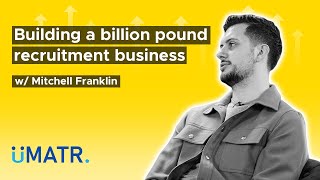
Mitchell Franklin built a recruitment empire from a commission-only sales role at 18 in Dubai. He hit £1 million invoiced in six months at Signify, then founded U Matter with a £100k OTE and a billion-pound valuation target, betting on training inexperienced consultants and putting people first.
Chapters
Welcome back to another episode of the Recruitment Mentors Podcast. This week I had the fantastic Mitchell Franklin join me in the studio to discuss his recruitment journey. He joined a company called Signify and very quickly climbed the ranks, was the first person in that business to invoice for £1 million, and in the last year he's actually gone on his own recruitment journey and built his own business. We talked about cracking the US, we talked about developing culture, and we really uncovered Mitch's mindset, which really has helped him get to the top.
Enjoy the episode. Mitch, welcome to the podcast.
Thanks for having me, mate. Like we said before, it's been a long time coming.
Long time coming, yeah. Obviously when, um, when we first spoke, he was in the US. What part of the US was you in?
Uh, LA. LA, yeah, back and forth, but yeah, yeah, yeah.
So obviously spoke to you there when you worked for your previous company, and, um, we thought obviously a year into you having your own company Probably perfect time to sit down and reminisce, talk about what you've learned, challenges. But obviously where we wanted to start was just talking about the trajectory at Signify and how you sort of climbed the ranks, came in top performer there. So if we start there and then we'll definitely focus on the U Matter piece. But I want to always kick this off with the million-pound question, which is, which I'm sure you've thought even more about now since you've been at since you've been building your own business, but would love to hear your thoughts on what you really believe are the characteristics and traits of a highly successful, high-performing modern-day recruiter.
Well, like I said, it's a million-pound question. If anyone had the answer, they'd literally sell it for a million, couldn't you, to all these companies? But I think the answer isn't as simple as these are the traits. I think it's got to be what recruiter do you want to be? Because if you want to be— if you want to hit your target, just work hard. Like, you don't need anything else. In my opinion, you can hit your target by pure hard work. You want to do more than your target, you have a belief system, you've got to be curious, you've got to build better relationships, you have, and most importantly, accountability. To go above and beyond your target, you've got to start taking responsibility for yourself. But it depends how far you want to go, right? Like, I've always had high expectations for myself and for our team as well. And yeah, I think take out everything else, so you can get by by sheer hard work, nothing else matters.
So what have ended up being some of the characteristics or things that you've typically tried to look for in people?
The curiosity.
Yeah.
Because I don't think you can teach that. And it's probably a whole nother podcast about the educational system, but people don't get taught how to think. It's like what to think. So like you need to find people that have that naturally because they don't get taught that when they're younger. So it's like you can find people that have navigated their way through life learning how to think themselves, put them in a recruitment environment and they become a consultant rather than a talent scout or whatever else. Like, they're consulting from day one, even with a talent scout title. So that naturally, the curiosity, continued desire to learn, and come back to that accountability all the time, because like, no one's gonna build for you. Don't get me wrong, now and again I did get the odd flick on, but that's to get everyone going, but you can't build a career off that. You need to be accountable for how late you stay, how many hours you put in, how many hours you work on your days off.
Yeah, so curiosity, always willing to learn, and then the accountability. I love that. Yeah, 100%. So who, or curious, like, who was Mitch before recruitment then? So did you work in property?
Yeah. So yeah, who were—
obviously you said you've always had high expectations and stuff, but who was Mitch before recruitment?
So I never wanted to get into business.
You never wanted to get into business?
I never wanted to work in an office, never wanted to do anything like that. Why?
What did you want?
I wanted to be an RAF pilot.
Oh wow.
Yeah.
Eyes weren't good enough?
No, I dislocated my knee. Oh wow. Yeah, 2 weeks before the test.
Really?
Yeah.
Oh.
So yeah, done.
That was like proper the dream, basically?
Since I was 4 years old, yeah.
Really? Yeah, yeah. Where'd that come from?
I got given a plane when I was 4, when I was on holiday by my nan. She gave me a little plane. Yeah, I was obsessed with it for years.
Really?
And for me it was like the only job for me.
Yeah.
And then I was working on a golf course at the time. Yeah. And that was plan B. I was like, if I don't be a fire pilot, I'll go travel around the world being a greenkeeper, which is to this day my favorite job.
Greenkeeper?
Yeah.
Wait, so, so that's basically just cutting the grass? Really?
Yeah. Why is it—
why is it— why is that?
I love it. I've played golf since I've been 11. Okay. And yeah, I mean, it's perfectionist, you know, like we took the golf course to number 1 in the county, like since I was there.
What about cutting grass?
Yeah, I was only 16 and I got put in charge of a few people there.
Wow.
And I was like, yeah, like this is a real passion. And like now I'm looking at houses for myself, like me and my partner are looking and she's like, walk-in wardrobe and all this stuff. And I'm like, yeah, just big garden. Because I'm going to stripe it perfectly.
Really?
Yeah, like I'm obsessed with it.
Oh, that's so interesting. So when did the first, like, business— yeah, like, business—
like, so the knee went. I tried.
Really?
Yes, yes. So I thought, what have we got to do now? And when it was in school, I was like, made a lot of money. Like, I actually left school and made less than I made in school.
Wait, what was you one of those guys that sold stuff?
Rented out 3 lockers, had a whole—
really?
Full sale operation because I hated school. Hated it.
Yeah, I think everyone, like, everyone's got— there was one or two people in their school year that was the person that had the sweets that you could buy off. Really?
Wow. I was that guy. And I had a wicked relationship with the teachers, even though I didn't like it. Like, I was good, you know? Like, I didn't fuck around. I was a good kid. And because of that, I leveraged those relationships, and I stepped out of class when I needed to go and sell something to the guys.
Where did that come from then?
Um, just— I think I've always been, like, independent. Like, I've never wanted to take anything from anyone. I've always wanted to do my own thing.
Okay.
And I was sitting in school, bored out my mind. It was a combination between what I want to— and I always like motorbikes. My dad would never let me have one. Okay. So I was like, I'll just buy one myself if I have to. So I started— I asked him for a £20 loan, put a full PowerPoint presentation together about how I'm going to repay him. He took me to Costco, bought £20 worth of stuff, and yeah, from that paid him back and a bit more and scaled it up for 4 years.
4 years?
Yeah, so I did it from year 8 to year 10, so yeah, 3 and a half.
You can make some serious bank doing that. I always think that.
I was making after costs like £50, £60 a day, which is like—
Really? Decent, that.
As a 13, 14-year-old, all right. Yeah, yeah, yeah. So as soon as the knee happened, I was like, right, I can't do what I really want to do. Yeah, I can't follow my passion. Just make, make money. Let's go for it.
So that ends— so it ended up in property, basically?
Yeah, by mistake as well.
Really?
Yeah, I wanted to get into marketing.
Okay.
And then I went for an apprenticeship scheme, didn't get the job. I got— didn't get like 4 jobs I went for.
Really? Yeah, yeah.
So like that whole story of like, I've never been rejected, like I hear other people say, it's not my story. Like, yeah, yeah, no one would have me. And I think that's because I was coming from the golf course. No one was interested in taking like—
this guy's been cutting grass.
Yeah, exactly. So no one would give him a shot. But then I had an estate agency reach out because I was on like the apprenticeship scheme, and he apparently just saw my name and really wanted to reach out. I chatted with him and he brought me in as an apprentice.
Cheap labor, innit?
Yeah, I took less money again. I left— I took— I made less money when I left school to work on the golf course, and I made less money leaving the golf course to go in property. But I'm a big believer in taking a step back to go forward.
To go forward.
Yeah, I've always done that.
So how did you end up like selling a property to a recruiter or something like that? How did the recruitment piece happen?
No, so it was all right to me. I enjoyed it. I was in sales first and then this guy bought a house in cash and he sent me his FTSE proof of funds and he had £1.5 million there.
Right.
And I was like, I'm in the wrong job. What's this guy doing? Yeah, I want to be the one buying these houses, not selling them. So I transitioned to lettings anyway, managed the office, and then I was just there, just sort of like, this is— I'm pretty much done here. Like, spoke to the director about like opening new offices and stuff, and he was so 50/50 about it. I was like, I can't wait around forever. Then Dubai come around, opportunity. I've never—
Oh, you went to Dubai?
Yeah, never heard of Dubai before.
Like, would you get sort of that classic like De Vere Group thing?
Uh, no, it was just a real estate agent. All right, 200K earning potential.
Commission only? Commission only, no salary. That's a lot of people do that, don't they?
I was 18 at the time.
Wow, right, and you went over?
Yeah, I'd never heard of it. Within 60 days I was in Dubai by myself.
Who was there?
Yeah.
How was that then?
Yeah, it's hard. Yeah, real hard.
Commission only, that's tough.
Commission only, and obviously I was only 18, so I hadn't got the most amount of savings in the world by this point.
Yeah.
But I had enough, so I went over there with about £9,000 of savings. Yeah. Literally, I've never really spent anything, so literally went over there. My dad offered me a safety net, which was nice. Like, I knew I'd be all right if I needed a little bit, but I didn't want to take it. Yeah. Went over there, met a guy that we started with, Ewan, and he's probably like one of the biggest figures in my life now. Like, he's 5, 6 years older than me. Hardest worker I've ever worked with.
Really?
Like, if he joined UMAT today, like, I'd love it. Really? But he's retired now. Yeah, retired, left Dubai, he's back in the UK doing property, doing HMOs.
So how long was he there for?
Just over a year.
Okay, yeah, got that. Yeah, that must have been some serious grounding.
I've never seen, like, to this day, like, the most resilient salespeople I've worked with. Like, the whole setup there just provided high performance, and the people that didn't cut it just got left out to dry. And the business model was exceptional. I feel like it could have been done a little bit differently, like looking after the people they had, but they didn't need to. Like, they were just churning through people. I think about a person left per week. At the time. I know they've taken—
they'll just burn through people until the people that are left are like performing.
And from what I hear, they're looking after a lot of people now, a bit more. And, um, the, the owner of it, like, he's a good guy, like, very good businessman. I look up to him a bit. And what I learned there was pivotal for going into recruitment.
Like, so what— so, so let's go into the recruitment piece then. So like, was— is there any story about how you got into it then? Did you meet someone, or did you know you wanted to get in?
So there was a guy that went to school with my brother. I had him on LinkedIn and he was in recruitment and I was like, well, it seems pretty straightforward, a lot of transferable skills. So I thought I'll look into it. Spoke to this, spoke to a rec-to-rec, he was quality, just worked for them and he told me all about it and I was like, all right, that's sweet. When I actually met him for the first time, I thought I was interviewing for their company.
Yeah, so common though.
Yeah, yeah. So started talking about their companies, met 4, yeah, met 4 companies. And when I came back to the UK from Dubai, I also met with an estate agency to manage their office and it was just the same shit. Like, I knew it weren't right, but then I met these recruitment companies, also knew they weren't right. So I only meant to spend like 4 to 6 months in recruitment. I was going to get out of it again. I was going to start my own property business. So recruitment was a short-term fix, but I always knew recruitment was at the heart of any business. So I thought, let me go into it and learn how to hire people, learn, like, work in the city, see what it's like. And then yeah, I met with 5 companies, 4 or 5 companies, all the same, like literally all the same. And then I was going to accept one, and then Dan, who I was working with, he said, look, I've got one more for you. I can set you up tomorrow morning. And I was like, I've seen so many already, like it's going to be another one. He said, let me book it in. And I was like, all right, I may or may not go to it. Went to sleep that night fully thinking I'm not going to go. Woke up and I was like, I'm doing nothing, I'll just go. Met Signify and I was like, Yeah, yeah, yeah, it's the place for me.
So let's just talk about that for a sec. So, you know, when you say they're all the same, yeah, what do you mean?
Suited and booted, like big corporate office, like the white walls, the blue carpet, like the just the corporate buildings, same talk, same thing, same promises, like same, same sort of size they were as well. Like, how was I going to make an impact to this business? It's already got 300 people in.
So who did you meet? Ryan?
Yeah, uh, Ryan, Lors, Charlie.
What was that? So how, where was the business at when you met them?
I've been about 7 people, something else. Oh wow. Super, super young.
So yeah, it's completely different proposition then.
Yeah, they're trying to get to their second office, so they'd been at one and they moved to their second one. And yeah, super, super early on.
So what struck you there then? Just the people that you would immediately be able to learn from, the impact?
Dubai was good, right? Like, and I struggled in Dubai mentally, like I hit a real low of depression because I went there and got everything I wanted, but I still wasn't happy.
Okay.
So I knew I had to come away and do and be part of something bigger than myself because Dubai, standing your own two feet, like Yeah, there's no one else there. There's no end goal. Like, you just— how much money can you earn this month and next month and month after?
And that didn't really give you fulfillment.
Yeah, like, really struggled there. So when I came back, I thought, I've got to be part of something bigger than myself. And meeting these other recruitment companies, it's like, is this going to be the same shit? And that's why I was like, I'll accept one because I'm going to leave and do my own business anyway. And I knew I weren't quite ready anyway to start straight away. Like, I knew I hadn't got the leadership attributes and stuff like that. So if I need to go somewhere and learn some stuff And then when I met those guys, I was like, this is the place I'm going to learn all this. Like, these are the guys I'm going to learn from, probably earn a bit more money, be a bit more fulfilled while I'm here. But yeah, it was never supposed to be long term. I've generally thought 6 months max.
So when you left, what did the company look like? Obviously we've had Ryan on the pod, so like, what— I think that'd be good just to get that context.
So like, there were about 35 people, and you was in the US? I was in the US. So I went over to the US in 2019. Me and Charlie went over there to open, to open up their US. Yeah, yeah, yeah.
So what, what do you think, uh, a career in recruitment has given you then that maybe you least expected?
Yeah, I thought about this question. It's a tough one really, because I think a lot of people will think about like, I never expected to earn the money I did, honestly. Like, it went above my expectation. That's changed my life and the people around me, their life.
Yeah.
I never expected to travel so much, but for me it's like, it's provided me with like my personal life now. Like, some of my best friends are people I've met through recruitment. Like, my network and my partner, like, I met her on an incentive trip. Really? I would have never met her through recruitment. So it's like I've got my whole life now because I spent 3 years.
It's all been influenced by a career. Yeah, that's interesting. So remind me, so was you at, so you was at Sigma Phi for, was it like 3 years?
3 years.
Yeah, 3 years. Nice. So obviously looking at that, from what I can see, you obviously was the first person to invoice £1 million. You was top biller for a year. So that's obviously what people are interested in. That's why people listen to this podcast. So let's Why don't we just first, like, let's think about obviously that amazing achievement of being the first person in the company to invoice the million pound. Let's unpack that a bit, I guess. What would you say are some of the things that maybe, if you, in hindsight, some of the things that maybe you did differently from the people around you that you think maybe would have helped you got there quicker?
I just knew, my belief system.
Your belief system.
Yeah, yeah. In my first 2 weeks I was at the pub with a few of the leadership guys, and I said, in, in the future, like, I'm gonna overtake all of you. And like, in a bad way, but like, we had a good relationship, but I meant it as well. Like, I genuinely believed I'd go to the top. And then we— I spent 6 and a bit months billing in 2018, the first year.
Yeah.
And I was just second top biller. Like, I was just shy of Charlie, who's Charlie, my mentor. And yeah, I contribute pretty much everything that I know of foundations.
Yeah, yeah.
And I was just shy of him even though I was only billing for 6 months.
Really?
It was like we were like 10 grand between us in that first year.
Why do you think he was able to do that though?
Um, I literally worked every day, every hour. Like, they gave me a key to the office really early on, so I was literally on there on Saturdays. Like, I traveled to London. I couldn't even afford to pay for the train when I started, so I literally used to jump the barrier, bring my little packed lunch.
Really?
I had nothing. And I was like, for me, like, my goals wasn't a goal, it's like it was a non-negotiable.
Yeah.
Like, I envisioned Before I left Dubai, I set up a 24-month plan.
Okay.
And, um, at the end of it, it was like I had loads of little goals, but I had like a little catchphrase. I was like, at the end of it, I'll be ripped and rich. Okay.
Now, 50%, like, yeah, I didn't work out as much as I wanted to, but, um, so where, like, have you, have you got a chip on your shoulder? Like, have you, do you feel like you've got something to prove?
No, not really. Yeah, I just never want to rely on anybody.
And because I just find that, because like a lot of people, I'm sure you've sat down with people that have said the same things that you did, but how many people actually—
for me, it was a non-negotiable. Like, I hear a lot of people say a lot of things, and it's like, how much does that really mean to you? Like, is that a must-have? And I had quite a good upbringing. Like, we didn't have anything when I was younger. We used to live in a two-bed flat, me and my brother, my parents. My dad was a lorry driver, my mum worked in a bar. So it's like, they're never around. And, uh, I feel like this is not the life I want. Like, my parents gave me everything, and I'm so, so happy for that, but it wasn't the life I want for my future. Like, I want to be around, I want freedom. Like, my dad was grafting. My dad's like a harder worker than me, like grafts and grafts and grafts.
You've always had that work ethic.
Yeah, but for other people. And I'm like, you're grafting for what? Like, where's the end goal? And I think, like, I remember being like young, young thinking that. So for me, it's like, I know what my life's gonna look like from very young. Like, I know what it's gonna look like.
It's completely—
yeah. So it's like my— when I say like I was going to be top biller, I was going to bill a million, Like in 2019, I said to the guys, I'm going to build a million this year, and they're like, no, you're not. Like, it's crazy.
You just had complete belief in yourself. I knew I was going to do it. How do you think people can cultivate more self-confidence and self-belief, do you think?
Self-confidence, I wish I knew. I'm not a confident person.
Okay.
I doubt myself a lot.
Really?
And I think that is probably what drives me on because I don't know how I'm doing what I'm doing. Like, I wish I could like give a blueprint to our current team, like, guys, this is exactly what to do, it's exactly what to say. But I think it's that fear of this could stop at any moment. Yeah, that I'm not going to let it— like, I'm not going to take my foot off the gas. It's the momentum that's got me here, and I'm going to keep on. Like, I could probably— I've taken like 10 holidays in my entire career, like, from back at the golf course all the way to this date now. Yeah, I've never, I've never stopped.
So let's go into some granular stuff because, you know, this is what people love, right? So let's think at the, the height of you, uh, being a top performer. What did— people love this, right? So what did Mitch's day plan look like? Like, how did you go about, yeah, achieving the outcomes that you set out? Like, what did a typical day look like for Mitch at the top of—
Yeah, again, I wish I had one. For me, I come into— I plan the night before.
Yeah.
What do I need to get out of tomorrow that's going to make me the most amount of money?
Okay.
Like, so I'd be looking at the roles, who's fastest moving and what the highest paying fees, where am I going to get my money from? And then I'll plan my day based on those. 'Cause like, would there be different roles every month, right? So I didn't have a day plan set for every day, how it looked. But for me it was like, a to-do list was imperative. That's how I worked. So I was like, cool, this client is the fastest moving, they're the highest paying, they're the most proven. I need to get 6, 7 people out of them. When I've done that and got coverage, I need to go to the next one. When I've done that, I need to go win a new role. Like when I was told to go do BD, I won my role within 48 hours and placed it, won and placed it in 48 hours. Like it was just, for me it was like the non-negotiables again. It's like, what am I going to do today? I'm going to win a role. I wasn't going to leave until that happened.
I find that interesting because I think early on in your career you can, some, and I'm sure you've seen this, where you don't value your time. And it seems like very early on you were very committed. You really made sure that like where you spent your time was in the best place. Yeah, yeah.
I learned that from Ewan in Dubai. Like the guy I lived with, I lived with him for a year. I said he was a few years older. He was incredible at sales before, so he used to be a car salesman. He came to Dubai and I was still young, I was 18, 19 when I moved there. And what I learned from him was unbelievable. Like, if I didn't meet him, I didn't go to Dubai and I got into recruitment, I probably wouldn't be here.
So what were some of the key things then?
He's relentless.
Relentless.
Like, we used to be top. We used to make about 200 to 300 calls a day.
Yeah.
He'd make 400, 500. Like, he would be dialing, like he wouldn't even put the phone down. Like, he'd have the phone here and like still typing. He wouldn't put it down. Just relentless. And like, he— but then he used to leave at like half 5, 6, and I'll be like, do you not think you could even more if you stayed longer? If I haven't got what I need to do in 8, 9 hours, why do I need to— what am I going to get out of the next one or two? He needs to go to the gym, he needs to look after himself.
Yeah.
And he'll come back the next day and hit it hard again.
Okay. And it seems like it just inspired you then.
Yeah, 100%. 100%.
So before, before we go on to U Matter then, like, because I think it's important, like, how— what was the experience like going to the US then? Like, did you— before you went there, let's just get some grounding stuff. So before you went there, was you sort of building the US business, like, just talk to us a bit about that, because I think that a lot of people, as I'm sure you've picked up on, a lot of people are currently trying to crack on with the US to have it on their business plan. So before you went over there with Signify, what did you, like, what sort of groundwork did you do before you went over there?
So we'd done 9 months of work in US hours.
Yeah. And did you have like a goal to hit before you're like, you know what?
Yeah, we had to do a million.
Million, yeah.
A million quid.
So then that would maybe, I guess, instil confidence of like, we'll get there and continue to build on that, we've got relationships. Yeah. Okay, so did that. So what was it actually like going over there then? Like, what were maybe some of the challenges that maybe you didn't expect?
I think moving to any new place is never what you expect because going on holiday somewhere, like, I'd been to LA before and it's like, but living somewhere is completely different. Like, having to get a banker's check to move into an apartment, it's like, it's just a whole different world to live in. So it's like, not only are you going to open a new office with the expectation of, sure, this has got to work, but you're also still pretty young. Like, I'm still going over there and Charlie's young as well. Charlie's only a year or so older than me.
Yeah.
And me and him are moving over there and not really knowing what to do, where to go for things, and trying to have the weight on our shoulders to take the business next level. Because at that point when we were moving over there, like, he's obviously left now as well, but we were so indebted into the business, like, we were at, like, we were staying till the end.
Yeah.
So we went over there with, like, this huge expectation on our shoulders, but it was good over there, a good experience again. But, yeah, I wouldn't have stayed there any longer than I did. This America's a weird place.
Is it? Yeah, fair. I guess what, because I think a lot of people will be, So this opportunity right now, like, anyone listening that maybe is really aspiring to be that person that goes over to the US, what advice would you maybe give them? I guess maybe personally and professionally to maybe really consider that maybe they might not be thinking about.
Uh, personally, just needs to think about like where they want their life to go. Yeah, I was with my partner and she waited for me in the UK. Yeah, so it's like that was a constant strain. So you need to think about realistically, are you ready to give up your life in the UK? And then professionally, like, you can't change what you've done, what made you successful before. I've heard a lot of stuff about going to the US, doing things differently, talking to different people, saying different— it's bullshit, man. Like, for me, like, I'll talk to a client in the UK, in Amsterdam, in Belgium, the exact same. I'll talk to them in the US because my service is my service and I'm going to provide results and I know how I do that. So like, I'm not going to beat around the bush just because the US is a different market. Like, I'll be the exact same. Like, I might talk to someone different because they got huge internal talent teams out there. So where in the UK I might talk to director of engineering, in the US I'll talk to director of recruiting, but I'll say the same thing and I'll never try and shy away from who we are, what we do. But I think that you just got to lean into your strengths. It's like, don't go to the US and do something different because you think that's what they want. It's like, what's made you successful here will make you successful there.
So own what you are.
Yeah, 100%.
Hey everyone, a real quick one from me. This podcast would not be possible without our amazing podcast partners. Vincere and Sourcebreaker. Because you listen to this podcast, you're able to get your hands on exclusive savings on both of these award-winning products. If you're a growing recruitment business, you have to check out Vincere, who are an all-in-one operating system for your growing recruitment business. With Sourcebreaker, if you want to make sure that all of your recruiters have the best tools on the market to stand out and beat their competition, then you have to check out Sourcebreaker. Use the link in the show notes, in the comments below, and you'll be able to get yourself exclusive savings on these amazing products.
So let's talk about You Matter then. So obviously hit the, the first year milestone recently. Yeah, congrats on that.
Thank you, mate.
So I guess let's start then with like, what, what do you think has been some of the, like, mentally some of the shifts that maybe you feel like you've had to make from being a top performer or just obviously worrying about the, the money that you're gonna, your bill, and being an employee compared to now being a business owner, you're growing the team, what have been some of the mindset shifts, do you think? Because I think a lot of people think about setting up on their own and have a number of concerns. So what have you, I don't know, had to maybe change or mindset shifts maybe?
People management. Yeah, I'm not like, I'm not the best people manager in the world. It's something I'm always trying to work on. I'm a biller and I've got a business mind, but like I'm not a people manager. So like for me to look after people, to have their problems on my shoulders and look after that and really take that into consideration. Whereas before, it's like as a team lead, I'm just like, oh, we need to build more. And this is how you're going to build more. And if you don't like it, like, sorry, that's the formula. Whereas now it's like, you've got to build more. Oh shit, but something's gone on in your life. Okay, like how can we help? So it's like balancing the act now of, I have to talk to you as a CEO rather than a team lead. Because a team lead, if you don't like it, go talk to the CEO. Right now I am your team lead, CEO, colleague, like I'm everything in one. It's really hard to balance that.
So how have you worked on that?
Talking to a lot of directors, listening to a lot of other people that are much better than what I'm at. So yeah, people I look up to.
Have you tried to get people in your business that, yeah, could maybe get— be better at that?
Yeah, Jay's wicked. Jay is— Jay's been with me since day one. Such like a people person, like he'll sit there and listen. People very much more approachable than I might be. I recently brought in Stefan as well as a senior. Consultant. He, again, attributes that I don't have, um, like just an all-round wicked person.
And you do that intentionally? Intentionally, yeah.
Like, for me, I know where our business is going. So everything we do now, from the branding to the people we're bringing in, it's not for next year's plans, it's for 7, 8 years' time. I know exactly where I want our business to be.
How important is that, to have clarity on that? Because I think it can be— obviously you're a startup, right? You're, you're in that journey sometimes. It's hard to look beyond like the challenges directly in front of you, right? But how important have you found it to have a vision?
Yeah, 100% need it because if you don't, then there's been critical decisions I've had to make which I probably wouldn't have made without knowing where I want to go.
Okay.
And when I spoke with Farouk before, like, well, I think it was about 2, 3 weeks after launching, the first question he asked me is, where do you want your business to go? And I told him like straight away, and he's like, oh, like good answer. Like, because not many people I don't think know that. And I think before anyone starts their own business, they've got to understand Do they want a lifestyle business, which is absolutely fine. Like, if you're going to build for somebody else, you might do it for yourself if you're like good. If you want a little like 5, 10-man company, like, fair play to you. But if you want to build something big, there's decisions you've got to make early on to give yourself the runway to do that. There's no point in me building a lifestyle business now or building it in a certain way for 3 years down the line having to switch it. Like, everything we do now is for where our end goal is at.
And then how, how has that helped? Like, because that also sort of helped when hiring and the people part? Because have you sort of, would you say that people, it's helped you get people buy into that? And also when you're hiring people, or like even when people working, it's something that they can anchor to as well? Like, has it helped on that side?
Yeah, 100%. So we have a very clear plan where we're going and everyone buys into that, and we've got a growth plan in the business and out of our business, which sounds a bit—
No, no, I like that.
But yeah, like, I don't want, I don't expect everyone to be a director of You Matter. Like, it's absolutely fine. Like, people, a lot of people fall into recruitment. Like, a lot of our team have never done recruitment before. So it's like, you don't have to do this forever. Like, I hope you do. Like, it'd be wicked to have you here at the end. But realistically, if you want to own whatever you want to own, your own brand, like even if you're in recruitment company, your own product, you've got this idea, or clothing brand, whatever it is, like, we'll help you do it. And I know it's like, won't help turnover numbers when we're looking in the future, but if I can look back at the last 40 people that left over the last 4 years, and all of these people went and done their own thing, I don't really care what somebody else thinks about turnover numbers. For me, it's about giving people a platform for what they really want to do. Because that's all I ever wanted, really. Like every business I've been in, from the estate agency to the real estate to recruitment, all I wanted was to be treated with respect and given—
Leave a better person.
Yeah. Like I want to be given a platform for what I want to do. And that's what I'm trying to create here. And if people stay because they feel fulfilled enough, amazing. And if people want to go and do their own thing, then I'll equally feel as inspired and very proud if they go off and do their own thing.
No, yeah, I love that. So why, obviously, why don't we just very quickly think about then, a lot of people want to start their own recruitment company, and I think it's very— the typical sentence I'll hear is like, we want to do things differently, right? So as you said at the early part of this conversation, you met 3, 4 companies, they're all the same. So what was Mitch's intention when we were thinking about how is You Matter going to be different? Like, how did you think about that?
And yeah, well, I hear that phrase a lot, like, we want to be different, and I don't know what people do differently a lot, to be honest. Like, there's a few few businesses out there that I think are really cool, and I don't know, I didn't actually come across them until I founded. It's like SR2, like I didn't know about them when I was planning, and I thought like what I wanted to do by putting people at the center and be responsible, like I didn't know that existed. Like I never come across them. I've done a lot of research as well, like a lot of planning went in, like I was planning like for like a year before I launched. Um, and then I just wanted it to be like genuinely, like we're not reinventing the wheel, right? Like we're not the recruitment's recruitment, we're providing a better service, but what we're doing differently is genuinely looking after our people.
Okay.
And that's what I think we're doing differently, and that will translate into that better service. And it was only when I launched, I come across SR2 and Chris, and I was like, oh shit, like, it actually works. Like, because when I first started, I was like, God knows if it's going to work. Like, does putting people first actually work? I'm not sure. Like, and then I saw, come across SR2 about 2 months in, and that was, we were getting a good, we were getting a good start. So I felt good, and then I come across these guys and I was like, oh shit, like, when you say putting people first, what would you actually mean?
Like, talk to us about some, like, what, how does that actually show up in your business?
Like, what I suppose is, to be, to be clear on that as well, it's putting people first that are right for our business. Like, there are 40,000 recruitment companies in the UK, and every time I interview someone, I share that with them, that whatever they want in a business, they can find. This is how our business looks, and this is what our expectations are. And this is what you get out of it. Like, our OTE is £100K.
Okay.
There's like, hit your target, you're taking home six figures. Yeah. So like, I don't know any other recruitment company that does that. So it's like, for me, if you want that, come in and we'll give you everything to hit it. And like, we won't talk to you like a twat.
Yeah.
And we will give you respect, but we also expect a lot back from you as well. And if that's the business for you, you have everything that we have to offer. Training, our time, like call me 24/7. I'm there for you professionally, personally, but you've got to give back to us as well. You've got to work hard and give that similar dedication. And that's for me, like, there are other businesses that will offer different things that will be right for other people, which is absolutely fine. Like, there's so many businesses out there that I respect and look up to that I wouldn't take their employees because they're not the right people for me, and vice versa. So people we've got are very unique to what we're building, and I'll give them everything for them to be successful.
So what's been the strategy then? So I know we're just catching up and You're saying going on this journey now of really focusing on the US and these things, but what's been, I guess, yeah, what have been like the key things that you've been really aiming to do and achieve this year that, yeah, I guess things that you've done that have really helped you to achieve what you wanted to basically. So straight away, did you know that you was going to focus on the US or the, I don't know, how, what was the sort of strategy?
Well, even before we launched, before we launched, I had a client that, I'd never worked with before, but I'd known him for a long time. 4 days before I launched, he reached out to me and said, I've seen your LinkedIn, you're not there anymore, presume you're doing your own thing, wanted to work with you for a long time. I'm willing to pay you 100% upfront for 6 roles. So I was like, literally before I even launched on that day, like, it took a week and a half or so, so it did get agreed after the launch day. But yeah, even before it happened, like, we were in the US like day 1.
Was that the main, the main sort of part of the plan?
That was the objective the whole time, yeah. Why? I'd been working in the US for 2 and a half years before, right, before I started in European contracts and then went to perm US. It's just, it's a different level out there. The opportunity for like the, the quantity of roles, like the how it's not being tapped up, like you can go in there and really seize it, but also just the sheer deal values, the partnerships you can create out there. The way they work, like really become an extension of their brand. Whereas in Europe, like I know people are doing better stuff now and recruiters are getting more respect, but it's a necessary evil, I think. Like people like that, yeah, like they're like, oh, we need you, we don't want you, but we're going to use you. Whereas the US, it's like if they decide to partner with you, you can seriously be like their partners. Like I'm in Slack channels, like yesterday I went to one of the board meetings for one of our companies. So I'm fully integrated in these teams and we're not doing anything different. It's just retained recruitment and we're going to roll out some different models this year. So year 1 was all about how much money can we make? Like we need to fill up this bank account because our next few years are going to be reinvesting. So year 2 now is all about structure. We've got a pretty ambitious target. It was actually like our 5-year target initially when I'd done our business plan. We're now aiming for this year, which we already make. Obviously doesn't surprise me. Yeah, we already make a big dent in as well. But I don't care if we hit that or not.
Yeah.
This month I've just sort of had so much clarity of like, I don't care if we hit that. It's all about structure this year, getting the right people in the right place so I can work on the business and not in the business. 'Cause that's what I'm doing now. Like year 1 in the trenches, billing, working 8:30 to 11 at night. Like I literally gave it all last year and I could do that again. Like I can bill a million a year. It's like, it's fine. Like I can keep turning up and doing it, but where do you go from there? Yeah. So I'm trying to put that structure in place and promote—
You don't want the business to be reliant on you though, do you?
Exactly. So I need to work on it. Like, I'm not really a salesman. Like, I'm not even the best recruiter in the world. Like, I'm just— I believe I've got a very good business mind, and I know I can take this business to a whole nother level.
So talk to me about— because people will be interested— talk to me about some of the key principles that you feel can help people succeed in America. Because as I said, a lot of people are looking at it because a number of the reasons that you've said. But from your experience so far, could be 1, 2, 3, I don't know, what are some of the key principles you think in getting the American piece right?
So it's similar to what we talked about in the first question, like the same attributes. But I think the thing you need to do to get it right is dedicate yourself.
Okay.
If you're going to try and do UK time zones and literally switch off at half 5, you're working 3 hours a day. Like, that's the only crossover you're getting. So it's like, if you're going to go for it, you need, you need to go for it. Like, I'll be honest with you, like the start of this year, so last year I was working those hours, 8:30 to 11 o'clock at night, all year. This year I've sort of taken my foot off the gas and focused on Europe and work normal-ish time zone.
Yeah.
And our US side has dropped massively.
Okay.
So we've recently made the shift that our whole team, half our company is US, half is EU, and the US half is now going to be dedicated to US time zone. And that's part of getting that structure right now. We will be opening in the US, but it's going to be Dubai first next year, and then we're going to be going to Miami after. Okay. So it's like we've got—
Why Miami?
Easier time zone. So LA was really tough to communicate with the UK team. We literally had an hour crossover.
Okay.
So I don't want a team to be in LA and me not to have hardly any communication with them. Sure. So Miami's 5-hour time zone, much, much more manageable, and it's still a nice place. Like, you still get the benefits of the sunshine, the lifestyle, because really these, these offices opening are purely talent attraction. It's not business related at all. Like, I'm not going there to liaise with clients. Like, we're going there so we can put amazing recruiters there, and they will continue working with clients across the globe.
Okay, so what, what, what are some of the things then, just thinking of people that like are on this journey or thinking about, and I guess want some insight into, like, I know you were saying like literally just treat it the same, but some people may be skeptical about that because, yeah, it's different culture, different people.
Yeah.
But I guess, what do you think, besides the hard work, the dedication, what are some of the things you think that you guys have done well to really start building great traction in your business?
Relationship building.
Okay.
But again, I do that in the UK, which I think always sets us apart in Europe. Like, we've got wicked relationships with our clients in Europe. But I think you need it in the US, whereas in the UK, like, it's a necessary evil. That even if you haven't got the best relationship, they'll probably still work with you. Whereas in the US, like, it's a must-have. And that's not to mean, like, you're chatting about their day and getting to know about them and their family. You don't have to do all that, but you just have to be a lot more long-term think with them, find out about the business problems and how you can add value. And what— yeah, like, what weight can you take off them? Like, what solution can provide them. Yeah, but it sounds crazy saying that's like a US fix. You should be doing that in Europe. If you're not, you're missing a trick. Yeah, because people have this illusion as well that the US is this massive market where you're going to become a big biller and you can't do that in Europe. Like, I build just as much in Europe as I do in the US. There's no difference between the two.
It's just the opportunity is just—
it's just the opportunities in the US for going build those relationships. But on the other spectrum, if you do that in the US and bring that back to the EU, you'll do equally as well in the EU as well.
So it is true then, because the common things that we've heard is the fees are typically larger, the obviously perception of a recruitment consultant or a headhunter, whatever, is a lot better. And obviously these things can just massively help if you're really good at your craft, you can deliver, and these things.
Yeah, I think you've got to be a good guy. I think the two attributes to make a good recruiter is money hungry and a good person. If you're money hungry without being a good person, you won't get very far because you'll get caught out early on, you won't build the relationships. And if you're just a good person without any money desire, like you won't push enough to make the money. So you need the combination of both.
Yeah, yeah, fair enough. What, just quickly, because it's a big place, right? Have you tried to focus on like a particular state or have you been quite open? Like what, how is that sort of?
So pre-COVID we did, like that's when we moved to LA, like we did try and focus on New York and San Fran.
Okay.
Because we could monopolise the markets really easy. Like you get the 5, 6 best companies in that, state, and then you're laughing. Yeah, you find, you find the person and you, you don't even have to ask for exclusivity. Like, you, you get them out to all the best places, you're placing them.
Okay.
Whereas now, like, the whole thing with distributed teams going remote, it's given more opportunity but it's made things harder.
Oh, in terms of like, so you could be working with a company in New York but now they could be hiring in other people in other states, whereas before— all right, yeah, yeah.
So it's a good thing that opens talent pool, but it's a hard thing because it opens the talent pool too much.
Yeah, yeah, because it could be quite hard to where to focus your time and where to focus that area.
Yeah, so we, yeah, there's no real focus. The focus is the US, so we have a US team with a split heavily on the US, but then also 2 people dedicated to Canada and then 1 person dedicated to South America, but heavy is the US. You just got to get as much coverage as possible, but it's a big place and that's why it'll be our biggest team.
So a couple of things before we finish then. So what people always interested, what What sort of piece of technology and things like that have you invested in that have helped on the journey with the American piece?
Yeah, hardly any. Yeah, I don't know, that's probably the opposite answer for people here, but—
Yeah, fair.
Yeah, I don't—
Yeah, but that's also good to hear, right?
Yeah, I just don't believe in automating stuff. It's like, it's a people business. Like, the whole idea of You Matter is putting people back at the centre and having things automated or outsourcing things, I don't think does any good. Obviously I use Mintare, like, I hate CRMs, I always have, and that's the best CRM I've ever used and we utilise it. But yeah, for me, like, I don't invest in tech.
Really?
Yeah, we just do everything ourselves and just make sure people are on top of it.
Okay.
I know that's an awful one.
No, that's fair, obviously, because I think obviously the mindset can be like, you need to have all these things to do work, right?
I think you get caught up in it.
Yeah, exactly. I think you get caught up in the tech. So what surprised you then so far?
Um, two ends of the spectrum. How quick it would take off.
Okay.
Like, we've done 250% of our target our first year. I wanted to be 4 to 6 people. We're now 15, and we're not slowing down. Like, we're going to be— you've seen the office, 34-people office. Like, that's going to be filled. It's like, it's just bigger so much quicker, which has been taking a toll on me as well because I've had to readjust to how—
because how have you, have you, have you managed all this, like, personally and stuff? Because we've spoken about this.
Yeah.
Because when are you spending time with your partner if you're working till 11?
Yeah, like, just in between, you know, like, and she gets it. Just after—
you've agreed, you've communicated, this is the journey that I'm on.
Like, we know where we're going. Like, in my personal life, we know where we're going, we know where the business is going. Um, so yes, it's been amazing how quick it's taken off.
Okay.
But the other spectrum is how hard it is to find the people that would be willing to do what I'd done, you know. Like, I thought when we started this, we thought, sweet, we'll just find loads of me. I like loads of— and I know they exist. And like, when I speak to people like this, like, you can't expect people to do what you've done. Yeah, for your own business. No, I've done this to other people. Like, I've done this when I was in estate agency, when I was in real estate, when I worked— I gave my all to everything. And I'm— it's hard to find the people that are willing to give their all, but I know they exist because Charlie done it. Yeah, Jay does it for me now.
Yeah, I got you, man.
You haven't done it in Dubai. Like, they exist.
I guess there's got to be a bit of a balance, isn't there? Yeah, for me it's realigning my expectations because to get to 30 people, are you going to have Is it going to be made up of all those people? No, but you've obviously got to be committed to what the minimum standard is.
It's finding that bar. And we let go of our first 2 people. Really? Yeah, we grew to 2 people and then went back to zero. A hard decision. But circling back to what I said about where I know where we're going, like I'm not planning 2 years ahead, I'm planning 10 years ahead.
Yeah, yeah.
And they weren't right. They just weren't right. And it was a crazy— but if I was a lifestyle business, probably would have kept them. Because if I only had a 2-year plan, I probably would have kept them. But I knew in the grand scheme of things these guys weren't right. And yeah, 6 months into the business, I let go of our first 2 people we employed and we were back at zero again.
That's fair enough.
But because, yeah, I just have an expectation on people. And could I have done more for them? 100%. Looking back on it, could I have given more? Could I have been a better leader? But I'm on my own journey as well, and I do look back on it and think, could I have done things differently?
Yeah.
But yeah, I'll always protect our culture. I'll always protect the brand we're building and the standards we put in place, and if people don't meet them, there's no place for them. There's 39,999 other recruitment companies they can go to.
So just on this topic before we finish, because I think it's really relevant right now with the amount of companies that are doing well or hiring, like, how have you, how have you, like you said, most, most of the people you've hired, correct me if I'm wrong, have come without experience. So how have you approached getting these people up to speed? A lot of people are thinking about that, obviously, if these two people didn't quite work out. What's been the mindset towards getting them up to speed, getting competent?
So we give a go-through training, so like spend a day with me in like classroom base, you could say. Yeah, breaking down the basics, like the stuff that probably people think so simple. Like one of the first slides on our training presentation, what is recruitment? Why would you even need it? Yeah, I think that comes back to like my my understanding of how important a belief system is. Because if you think recruiters like should only earn this amount a year or are only valuable to this extent, you're only going to go so far.
Yeah.
So from day one, I want to drill into these guys, you are going to be the most valuable asset.
Yeah, the belief system.
So yeah, we do a classroom base, go over the basics, and they shadow my current team.
Okay.
Obviously when it was just a start, they shadowed with me directly, whereas now they shadow my current team, and I'm trying to remain very hands-on. And that's where it comes into, I've got to stop working in the business and I've got to work on it. So it's like I try and give as much of my time to these guys as possible. So listening to their calls, playing them, like telling them the feedback from it, just as much as I possibly can do really. It's just training never stops. That's the thing, like this, when they pass their probation or get up and running or go past this, it doesn't stop. Like Becca, for example, is currently leading from the front. She's top biller right now. I'm still giving her the most amount of training because of it, because I know she can, got so much more.
She continues to learn.
Yeah, well, you could just leave her, I don't think sweet. She's good.
Yeah, I love it. But yeah, so where, where, where, where are you going to be then? You've spoken a lot about, you know, where you want to go. Where, where we— like, if we were to sit down another year, 2 years' time, where, where are you going to be then?
2 years? We'll be in Dubai.
Dubai.
You want to go back there? I'm not going back.
Oh, okay.
I'm not going back. Jay's going back.
Okay.
Uh, then we'll be in Miami in 2 years' time.
Yeah.
Um, opening that office. Uh, we'll have a lot of structure. We're going to build a lot of our own technology in between this time as well.
Build your own technology?
We're building our own technology. And when it's all said and done, we'll be valued at a billion.
A billion?
Yeah, billion with a B. Yeah. And it sounds crazy. And I think it's a little bit crazy. But when I chatted with Farouk, my first 2 weeks, I broke down why I wanted to get to 420 million.
Okay.
And he was so on board. He was like, yeah, sweet. Let's do it. Sounds so good. You've got to believe in something. So as soon as he said like 420 is easy. Like, cool, we just could, this is the EBITDA, we'll break it down, this is the amount of planes you get. I was like, oh, maybe I'm shooting too low. So yeah, billion. Like, we will get to a billion.
Love it.
By the end of the decade.
Mitch, love it. Keep doing what you're doing, mate.
Thank you, mate.
Thank you so much.
Thank you so much for listening to the episode. I hope you got value from the conversation and there was a number of key takeaways. So please don't forget to like, share, and please do share your key takeaways in the comments below if you did have some. And thanks for supporting the show.
More from Hishem




You don't need as many clients as you think to bill $1 Million A Year In Recruitment



From 30 Direct Reports to Back-to-Back $1M Years as a Solo Recruiter with Zach Creighton



