Natalie Chapman - The best investment you can ever make is in yourself
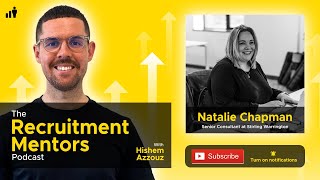
In this episode of the Recruitment Mentors Podcast, host Hishem Azzouz interviews senior recruitment consultant Natalie Chapman. Natalie shares her 16‑year journey from hospitality to recruitment, her personal vision of empowering her twin daughters as strong, independent women, and the traits she believes make a high‑performing recruiter – natural people‑skills, curiosity and a resilient mindset. The conversation explores how she balances motherhood with a demanding sales role, the importance of a clear personal vision, and the role of mentors and role models, especially for women in recruitment. Natalie outlines practical tactics for candidate engagement (listening first, multi‑touch outreach, keeping detailed candidate notes) and client commitment (securing an hour of client investment, adding value beyond placements). She discusses daily non‑negotiable habits such as planning, goal‑setting, weekly pipeline reviews, and mindset practices (mindfulness, gratitude, positive media). The episode also covers challenges in the current market – candidate scarcity, counter‑offers, and ghosting – and how to mitigate them through relationship‑focused selling. Finally, Natalie offers advice on self‑investment, cultivating a positive mindset, and her future targets, emphasizing that investing in oneself is the greatest return.
Chapters
Welcome to the Recruitment Mentors Podcast. My name is Hishem Azzouz. Today I'm really excited to be joined by Natalie Chapman, who is a senior consultant at Sterling Warrington. Natalie's personal vision is to inspire her twin daughters to be strong females by showing them what is possible to be a woman with a career whilst being a great and fantastic mum. I think this vision says it all. With what all of you need to know about Natalie and her mindset. After a long and successful career in hospitality, Natalie started her career in recruitment over 16 years ago and hasn't looked back since. Natalie recruits in the building and material sector, recruiting sales and marketing professionals. She loves the sector, she loves learning about her industry, and most of all, she loves providing an outstanding service to all of her clients and candidates. Natalie, welcome to the podcast and thank you for inviting me. Really excited for this. And, uh, as I was just telling you before we started, where, where we'd like to start this podcast is, is the million-pound question. So I'd love to hear your take. So we'd really love to hear sort of your thoughts and ideas on what you believe are the characteristics and traits that really make up a high-performing recruiter in today's market.
So I think more than anything is having a personality. I don't believe that you have to come with a certain skill set. I think if you have a personality, if you like talking to people, if you genuinely are naturally inquisitive, you know, I was 2 years old and walking up to, you know, grannies in the line for the supermarket going, what's your name? Where'd you come from? You know, how long you've been waiting there? I think if you're naturally a people person where you like talking to people, because recruitment, all that is, all it is, is talking to your candidates, finding out what's best for them, talking to your clients and finding out what they best need. So if you are naturally good at talking to people and finding out about them, you match the two together. And, you know, recruitment has come a long way in the last 16 years with training, with onboarding, with different ways of working. So, you know, to me, The other thing is a really strong mindset. You know, recruitment is a rollercoaster. It's not easy. There is a lot easier ways of making money and giving yourself, you know, less things to worry about. You know, a lot of what you do isn't down just to what you do. It's down to what other people want to do. So you have to be able to kind of brush that off and you have to pick yourself up. You know, the next day is a new day, a new challenge. And you've got to have that mindset of that, you know, you want to go on that journey because it is forever ups and downs. And, you know, even after 16 years, some days I have bad days and I, you know, and I think to myself, have I done everything possible that I could have done to save that fee? Yes, I have. But it was just the person didn't want the job or they decided to stay where they was. So, you know, mindset. And being naturally inquisitive. Everything else, I know from the businesses I've worked in, everything else can be taught.
Yeah, I love that. And I know we, we, uh, know well and truly about that, right? I mean, this podcast used to be called The Recruitment Roller Coaster. That's, that's what, uh, it began as. Because as you said, I, I was very much on that roller coaster, and I think everyone listening to this is— continues to be, regardless of how experienced they are, right? So I think where, where I'd love to start, so there's so many different things that we can go into here in the last 16 years, but there's just a couple of key things that I really want us to focus on. I mean, the first thing, like, just, just for sort of everyone's benefit, like, before we do this podcast, I typically have a conversation with the guest and we just talk a bit about what we're going to talk about and these things. And I asked Nat to send over an email just around some of her key milestones in her career because sometimes as you can imagine, when you've been in recruitment for 16 years, it can be quite difficult to— for me to ask you like, oh, tell me about the first deal you did, or whatever, to sort of jump straight back in that moment. So I asked Natalie to send me over some, some sort of key milestones and some key things about her and her career and her journey today. And yeah, that, that vision was at the top of that email, which I absolutely love. So I wouldn't— I wanted to start there, if we, uh, if we may. I guess like, where, where did this sort of where did this obviously vision come from? I get it would have happened after you had your children, obviously, because they're part of it. But I guess why do you feel it's important to have one is what I'm asking. And when did you establish this?
I think for me there's, there's several factors to my vision.
Okay.
The first one was, is, you know, I was brought up by a single mom that did everything to make sure that me and my twin sister had everything that we possibly could, but she couldn't afford a lot. So, you know, I didn't have the fancy holidays when I was a kid. I didn't have, you know, we had to save up our own pocket money if we wanted the latest trainers. So when I decided to have children, I wanted to be able to provide for my kids, to give them the life that I didn't have. But I also wanted to show them that as a strong female, you don't have to rely on somebody else to bring that in. You can do that for yourself. And for me, not saying that my husband doesn't contribute because he does, but it's about, it's about showing my daughters their own independence, about being happy in what they're doing. It's not just about the money. It's about them being strong, them being independent. Not having to, you know, because a job is a man's job, you know, you should ask a man to do it. No. You know, we were setting up the Christmas tree together, the three of us, and my husband got really annoyed at it and was like, I can't do this, blah, blah, blah, and lobbed the lights. And I said, come on, girls, let's work on this together because we are strong, independent women and we can fix the Christmas tree. We don't need your dad to do that. So when he tried to come and help them put the Christmas tree down, my Chloe turned, who's mini me, and says, Dad, it's fine. You sit down. We've got this. We're strong, independent women. So I think it's about—
How old are they?
They just turned 11 last week.
Oh, wow. Amazing.
So for me, I think it's about— it's about putting away the past for me to make sure that I know that I'm doing right by my daughters, not just with money and the things I didn't have, but with that time. And with getting involved with the school and, you know, I've just taken one of my daughters through an ADHD process, which was a lot of time and investment, but I want to show them that yes, I can earn well and bring the extra money into the house, but I also can give them that time. I can show them that juggling act of being both is possible. Don't get me wrong, I have lists upon lists. I have personal lists, I have work lists, I have this going on, But I know I can do them, them both. And I'm lucky that my kids are very happy that I can do both. You know, I changed my hours when they started school. So I work really long hours on a Monday, Tuesday, Wednesday, and I work until half 2 on a Thursday and Friday so I can go and pick them up from school, take them to their clubs and classes. But also in recruitment, I'm on my phone or if I've got Wi-Fi, I've got my laptop on. I can be watching them at a gymnastics class or a football club. And still be working and half there and half with them and being able to juggle it.
I love that. No, I think, I think it's amazing. I think there's just something so— obviously you hear it in the business context and like personal development world. I think there's something so powerful about really crystallizing that vision and seeing it, writing it down, saying it to yourself. Because I think in particularly in the recruitment world, there's always, there's always so many things going on, you can be pulled in so many different directions, and sometimes you could sort of, you can lose that grasp of like, why am I doing this? Or things fall out, or things don't go your way, and you can ask that question, can't you? Why the hell am I doing this? And I think when you've sort of crystallized that, that vision of yours, and you've really got a bit of a north star, or you really understand why you're doing what you're doing, it's just a great anchor point. I found, because I've, yeah, I've really had to do some work on that for myself with my own sort of professional journey, and that's always helped. And it's just a really good thing to think about. But I guess as you were sharing that, I was just curious. I know you said that your mom, um, brought you up, but obviously, like, you're, yeah, really committed to becoming the best possible role model for, for your children. But who was your role model? Obviously your mom, but I don't know who, who—
I don't know, is part of it because maybe you didn't have as much of that as you was growing up, or it was I think, I think from a young age I was always pushed into hospitality because I'm a natural people person.
Yeah.
And when, um, when my mum passed away— my mum passed away about 17 years ago, so similar around the time I got into, um, the construction industry— and she was a real strong woman. She was helping people, not like I do, but she went and was helping the Bushmen people over in Namibia, help them create their own, um, their own education, their own local communities, bringing money back in themselves and supporting themselves. And I did a lot of projects out there with her and I've seen what a difference she made. So to me, my mum, I know it sounds really cheesy, but my mum is this strong, independent woman that walked away from my dad. My parents split up when I was 8 or 9. She walked away and said, you know what, we're a team, we can do this together. And that's what I say to my kids, even though, you know, my husband is around. And we're all together, you know, we're Team Chapman. You know, we work together. We work as a team to make, you know, life better. My husband works full time. I work full time. The kids are obviously at school, and we have to make the best of the time that we have together to work together. So, and my mum taught me that from a very young age. You know, my friends was out, you know, going off and just hanging around the streets. And we had chores to do and we had jobs to do. And, you know, we had to be part of that because my mum couldn't do it all on her own. And I think that instilled in me that thing of teamwork and helping each other out. And, you know, that's what I bring into a business now. So, yeah, my mum is 100% my role model, even though she is— she's not with us, you know, God rest her soul. She's, she's instilled in me a really strong work ethic and drive and ambition to be knowing that she's looking down at me thinking, you know what? Wow, my Nat's really made it.
That's amazing. I love that so much. So let's sort of, I guess, use this, this conversation of role models and I guess bring it into like the professional recruitment world.
Yeah.
So like how I don't know sort of how you would, how you, how you feel about this, but I think I was telling you when we spoke before, I think one of the challenges in recruitment is definitely a lack of female role models who are in senior positions or where, I don't know, maybe Natalie, who's 21 years old, hasn't got the sort of Natalie Chapman who you are today to look up to and sort of be inspired by and motivated by within the recruitment office or recruitment environment. I think I told you some of the conversations we've had in the past when we focused on diversity in recruitment and more women in recruitment and leadership positions, I do feel like it's sort of slowly but surely changing. But when I've interviewed people on here in the past, it really feels like women had a sort of option or choice really where they had the crossroads of like, do I start sort of a family and then put my career on hold and sort of maybe try and come back to that? And sort of women weren't necessarily always supported with that journey, which meant they'd worked really hard, maybe got to a leadership position, went on maternity leave, had a family, and then just found it really difficult to then get to that sort of leadership position again, which has maybe had a real knock-on effect on the amount of women in leadership positions. And there's almost this crossroads of like, do I sort of sacrifice having a family early on and just really double down on my career and these things? So I guess to transition it into sort of women leadership and being inspired and having role models, like 2 questions really. One, did you have role models in the recruitment world and did that help you? And then two, how can we go about cultivating and creating more sort of role models like yourself that younger females or women could look up to and be inspired by and motivated by?
I think the answer to the first one is, is I met in my first part of being in recruitment a whole load of women that I didn't want to be like. Really?
Yeah, yeah, fair enough.
That were, they were money grabbing. They was all about them. It was, oh no, I don't want to be a part of that. I'm too busy, darling. You know, I need to focus on me. And that made me very clear on what I did want to be like. So, okay, one of the things that I'm, no matter where I've worked, any rookies that are coming forward, anybody that's joining our business, even though I'm not a manager, I like to be part of the mentoring leader team to actually give that wisdom, help people fall down less of those potholes that I would have gone through in the beginning of my career. But also, I mean, I do a session for our new starters and graduates on mindset, on vision boarding, and I've had a lot of training from a lot of different people over 16 years, and I've kind of cherry-picked all the bits that I like that has worked. And I kind of help and get involved in training. So for me, it's about, it's about not necessarily looking up to other people. People look at me and they'll be like, I want to be like that. But I've taken 16 years to get where I am. So I actually say to people, utilize all the bits of good things I say or good things I do or the motivation or the mindfulness stuff I do, but figure out your own thing and your own vision and everything else. And to people coming in, I think— I don't think that women have to put the child and the career in a box. It doesn't have to be one or the other nowadays. You know, I had, I had my daughters in 2011. I'm a natural people person. So 5 months off of them was more than enough. And I was ready to come back to work because I wanted to talk to people that would communicate back with me. But with a desk, as long as you're in a good business, somebody will babysit your desk for you and look after it and cultivate your clients, and then you take it back. Or if you want to do part-time or something different when you come back from having a baby, because obviously kids are expensive to put in childcare, then you still can do that. You know, there's other roles that you can do while you're, you know, growing that little human into a little person.
Yeah.
You know, like you could come— I've had people come back and do resourcing because they want to stay in it. They want to stay stay in touch, but they do want to give their focus to their child. So, whatever business you're in, just give that, give those options, see what they can do for you. At the end of the day, if you're a person adding value to the business and you're giving a return, you can move forward. And then, obviously, when, you know, kids start school and different things, then you can look at going up that food chain as well. But it's one of those businesses when you are starting out and having a child, and obviously you've got those massive amounts of costs of going to nursery. I mean, just to come back, when I first came back to work in 2011, it was costing me £1,500 a month to send my twin daughters to nursery. So for me, I had to earn the commission, otherwise there was no point me going to work, you know. So there is that, you know, because there is that earning potential in recruitment, you can do both. And I think it's just about having courageous conversations to really figure out what's right for you. Every single mum is different, and it's not until you hold that baby in your arms that you understand if, you know, the balancing act that you want to take.
Let's just talk about— let's just talk about this for a second. So the courageous conversations, because I'm sure it can be a really daunting and like difficult time as well as finding your feet of being a mother for the first time and these types of things. You then got this sort of new environment of like, oh, like I've now got to talk to my employer about having time off and what's my future role going to like, what's my future, my, the business that I've worked really hard at, like these things. So I guess, I don't know, what would your, what would your advice be for anyone that like, um, is in the process or is needing to have those courageous conversations? I don't know if there's anything that maybe you could have given advice to yourself going into those things. It seems like you would have been quite comfortable having those courageous conversations, but not everyone is. I don't know what advice you could give anyone.
To be fair, for me, I always knew I wanted to come back to work full-time because, as you can see from my vision, it's really important that I've got me. Yeah, yeah. And but my boss didn't believe, even till the week I started having my keeping in touch days, that I was going to come back full-time. He was like, I don't believe it was going to happen. Yeah. So I think, I think take the pressure out of it. You know, you take your maternity leave, you keep in contact with your employer, you can do keeping in touch days, which you get paid for, which just sort of—
What's that? Talk to us a bit about that. That might not be terminology that everyone knows.
So keeping in touch days, basically, I mean, this is when I was having my kids, so it might be slightly different now, but it was 5 days that you could get paid for on top of your maternity leave to go back into work, to do a full day's work, to see how you feel. Obviously, you've got to get the kids ready, get them to nursery, blah, blah, blah, but just see how you feel before you decide what your role looks like moving forward when you go back into work.
Did that really help?
I had a day away from two people that couldn't communicate with me. I make myself sound like such one of these mums, but I think one of my motivations is, is I need to be nat, you know, I need to be nat to show my kids the best version of myself. And ultimately, when I was at home on my own, with two babies with one pair of hands where I couldn't do all the mother and baby classes. I couldn't even go and get them weighed because Tommy took one of them, the other one was crying, and then it was just mayhem. So for me, so for me, I was like, 5 months. I said to my husband, we've got the money there to start getting him into nursery. Let's just do it, because otherwise you're going to come and see home every night, see me in a puddle on the floor. I can't deal with it. And he was like, nah. You being happy makes the kids happy. So we'll just have to figure it out.
I love that. So let's talk about this mindset journey. I guess the question I sort of wrote down to try and talk a bit about is because when we spoke before this, that after our call, I was just, yeah, I think I absolutely love your mindset and I think it's brilliant. So I think the question that I had was like, how have you continued to sort of reinvent yourself? And gone about not— I guess what I put down here, this doesn't come across the wrong way, but like getting lost with the quote-unquote times, you know, because I feel like where you are on your career journey, you could be quite easily like, I don't know, I just feel like you could quite easily be like, oh no, like other people are getting beyond me or they're younger than me. I don't know. I just like, how have you continued to reinvent yourself and not have that mindset that sometimes people can fall into? You know, I hope that doesn't come across offensive.
No, no, no, no. But I am the female version of Peter Pan and I'm not growing up. At the end of the day, you know, I am as crazy and as out there. My kids will tell you, you know, age is but a number. My body might say something different, but that's another story. So for me, I think every time, every year, especially probably since the girls have been born, I've tried to invest in me and that, and that doesn't necessarily mean going out and buying a new wardrobe, although sometimes it does involve that. But it's about, it's about being true to yourself. It's about understanding your flaws or your areas of weakness. And sometimes it's about taking a really strong, hard look at what other people see. And when I started this, probably 8 or 9 years ago, I thought everyone saw me as Bubbly Nat that was out there and was, you know, a bit mad and really loud and everything. But some people saw it as probably a little bit a know-it-all and a little bit aggressive. And, and not that I ever meant it to come across like that, but I think some people, because I am quite, I am quite out there, some people was a bit intimidated by it. So, so I had a couple of clients that was trying to put people that I'd placed there through management programs, and one of it was to do with coaching. So they said they needed to coach someone from outside of the business to get this qualification. So, right. And this person knew me, so we started talking and it was a really just open forum. And then because there has been so much probably where that anger and that intimidation comes from, from my past. And as you know, childhood stuff, I probably had more to work through than, than what I realized. So I started paying out for it all totally myself. I had hypnosis. I've had spiritual therapy, which is really good for like uncovering those childhood little clinks that you don't realize that you're holding on to, or— yeah, that you're holding on to, etc. Um, I also, um, have had some CBT therapy. Yeah, just making sure that I've got the tools when I feel myself getting triggered or really angry. Um, this is certain breathing techniques and, and stuff I do, and I write myself to-do lists so I don't get overwhelmed, etc. Um, and for me, I, I listen to quite a lot of, um, hypnosis. So I go to sleep most nights listening to one of my many hypnosis apps that allow me to just, one, have a really great night's sleep. So I think, yeah, everything is better when you've slept well. Absolutely. But also just subconsciously working on, on my mindset and also showing the girls that having that positive mindset and looking through. So they have to give me on a WhatsApp group we have, they have to give me their 3 positives of the day. So each day, yeah, before they go to bed, they have to do their 3 positives of the day because then you're hunting for, you're hunting for the positives. You're not, you're not letting those negative vibrations allow you to, to get hold of you.
Yeah, yeah, yeah. I love that.
So yeah, so they have to WhatsApp me every night before bed.
What's the, what's the WhatsApp group called?
It's just so they have a separate one. I've got Katie positive and Chloe positive.
Okay. I thought you're going to be like the Chapman superheroes or something like that or something. I love it. No, thank you so much for sharing that. And I find that so interesting. Right. Just a really quick anecdote just from something I experienced. And I find that so interesting around investing in yourself because Um, a couple of years ago I went to a meditation retreat and I was, I was, I was the only guy there. And then the, the rest of the people there was about 10 or 12 of us. The rest of the people there were, were all women and they were all parents. And there's a number of things that we did, like we, for like a day and a half we didn't speak. Um, there's a couple, a couple of other like things that we did, uh, throughout the sort of 2-3 days that were there. And there's a bunch of exercises that we did and there was a number of meditations that we did around gratitude and how we feel about ourselves and just really sort of trying to make the space to look at ourselves. Like you said, have a good hard look at yourself. And I always, always remember this because it was a room full of moms and parents. And when we were sharing after one of the exercises around what came up for you and like what you struggle with, these things like what everyone shared was these women really felt like they stopped loving themselves or they stopped making space to invest in themselves after like their sort of quote unquote children or family didn't rely on them anymore because their purpose was very much make sure the kids are okay. And then when they've sort of now they're on their own journey, they're sort of a bit lost around like, yeah, like making time for themselves, investing themselves, loving themselves. So I just wanted to share that because I think that's amazing that you did that. And I really believe that that if you were to have really honest conversations with other mums out there, that might be something they've quite struggled with, where like if they're obviously children have grown up and they may have sort of lost a touch of that purpose, if you get what I mean. I don't know if that makes sense, but that was something I always remember. So I feel like my mum has struggled with this a bit and I've tried to help her with it and spoke to her about it.
I think it is. And also, you know, I told you on our first conversation, you know, I've started going through early menopause. So for me, having that strength of mind has meant where a lot of women start doubting themselves because your body changes, your mind isn't as sharp, etc. You know, there's all these weird and wonderful things happening to you. You can start doubting yourself. You can start believing that you're not worthy or, you know, that things are happening. But because I've strengthened, you know, there is so many things that have happened in my life that could have sent me down a tunnel. Of dark despair. But because I've spent so much time investing in my mind to be the strongest version it possibly can, and still to this day, I'm still working. We're not a finished article.
Yeah, it's nonstop. It's nonstop. Yeah. Yeah.
But yeah, I know that's what's kept me strong. That's what's kept me up there instead of down there.
Yeah, I love that so much. So let's, I guess let's just break this down a bit then, because I know this is super important to you. Like what? With like maybe the recruitment context, like I think clearly, like I think that's evident considering how long you've— your career has been in recruitment, right? Because everyone listening here knows the roller coaster, know the highs, know the lows. And as I'm sure you've experienced and still experience now, like the, the low days in recruitment can be really fucking low and can be really difficult to swallow. So I guess, what, what are the sort of day-to-day weekly non-negotiables for Nat that you do to really make sure that, like you said, you don't sort of go down that tunnel of negativity or that tunnel of, yeah, not believing in yourself? What are some of the non-negotiables that you did to really help with your mindset and daily habits or weekly habits that you do to help with this?
So I think planning and preparation is key. And the thing with recruitment is, I think if you're, if you're billing a considerable amount, I think it's really difficult to fit that in 8 to 5 or whatever hours you work.
Yeah.
So I always give myself just a little bit of time doing my more admin tasks or more searchy tasks or things on LinkedIn and stuff that I do while I'm watching telly. The kids are in bed. They're not losing any of my time. My husband's, you know, listening to something on his phone. He's not overly that interested in what I'm doing. So I always try and do that for a couple of evenings a week just to get myself ahead of the game. And just make sure— at the moment, candidates are really tough to find— to make sure I've got enough people to call. And then I always just make sure that each week I don't set myself numbers to hit. I set myself goals to hit that are around the numbers. I know what my conversions are inside out and back to front and where I need to increase my conversions. So for me, it's about knowing what I want to achieve. So at the moment I've got so many jobs on, so I will put how many people against each of my jobs that I need to get over to that client. I will then, you know, put certain jobs that I know I can get to offer that week, how many interviews I want to arrange, working out on— I know my conversions on CV sent to interview, so To me, I think it's really uninspiring to walk up to a board on a Monday morning and say, oh, I'm going to get 3 jobs on, I'm going to make 10 BD calls, I'm going to do it. Because at the end of the day, they're just mindless numbers.
Yeah.
And I can't personally work like that. This is what is on my to-do list. This is what by Friday I want to achieve to go home and say, do you know what? I've smashed it this week. And there are physical things to happen. That I can influence, that I can make happen.
Give us an example then, like what your goals this week.
So, um, in fact, I'm going to talk to you about last week because I absolutely smashed it out the park.
All right, that's something nice. He's saying, come on.
So, um, I said last week, because I've got so many jobs at the minute, I just need candidates, and yeah, I wanted to feel there was 5 or 6 roles that I had to, had to get to interview. Yeah, because otherwise people were going to start getting stressed at me. Now, the most interviews I have ever arranged in a week in 16 years is 18 interviews in a week.
Mega.
Last week, how many?
25?
20.
20. Nice, love that.
So, um, for me, I went home with a massive sense of achievement. I'd be in a 17-year best. Obviously, you know, we all know in recruitment that interviews make placements and placements make money and prizes. So, I know that my pipeline is really strong, you know, coming through into this quarter and into next quarter. So, I just always look at what has to happen. My boss will come up to me and he'll be like, BD, BD, BD. And I'm like, yeah, but you know, because I've been doing it for so long, yeah, I can make 5 calls and get 5 jobs on. But if I haven't got the capacity to handle that 5 jobs on and I'm going to let 5 people down, I won't make the BD calls. I know how to develop my pipeline. So he likes to, you know, and I just say to him, look, back in your box, I'll sort it out. I know, I know when my pipeline's low and I'll pick the phone up. And yeah, if it's, if it's how it is at the moment with double the amount of jobs I should have on, then let me fill them because that's what makes us money.
I love it. So let's talk about this challenge that everyone is dealing with right now. I've had a couple of messages around this, so, and obviously you've been, you've been in the industry for some time, so be interested to get your thoughts. So like, how, how are you dealing with— so you said you've got loads of jobs on need more candidates. So obviously, safe to say the sort of supply-demand issue is really on the candidate side at the moment. So I think we can all assume the candidates have probably got more choice than they ever had.
Yeah.
And also their current employers are probably— should be aware, if, if they're not sort of naive and understand how the current market is, but are also probably doing everything they possibly can to keep their people because they know how much it's going to cost and the time and the implement implement the challenges, sorry, of like what could happen if they don't get that person back in and these things. So how, like, how are you navigating that challenge at the moment in the sense of I could speak to a candidate in my market, we build a relationship, I feel like we've got a good commitment, but like you could have a lot of jobs on the table and you could quite easily take the job or things could fall through. I could accept a— like, how are you dealing with all these challenges right now? Like, what, what are you thinking day in, day out at the moment to have to make sure you're not being ghosted, to make sure counter offers aren't being accepted, even though they can be obviously sometimes? But I don't know, what's top of mind for you? What are you doing?
So I think a lot of recruiters, and I've been very mindful of this over the years, go in and they start selling to somebody, oh, I've got the greatest job in the world, whereas I don't do that. Okay, I start a conversation whether I found that person on one of the back of the job boards, whether they've applied for a job, whether they've messaged me on LinkedIn, whether I've messaged them on, you know, Recruiter Professional, whatever it is, I do not sell a job. I listen first. What is your situation? What are your frustrations? What is the things you love about your job? What are the things you'd hate? If you could hand-carve that next job, what would it look like to you? What would it need you to do to enjoy Mondays? So once you have that information, you're in a position of power because if they say they hate new business and I've got a new business role, I'm not going to tell them about it. You know, if they say, well, hang half this role and it's exactly what I've got and it's right for them in their personal circumstance, then I'll tell them about the job. And the detail I go in that I know about my clients is like I work there.
Okay.
You know, it's not a job spec that I'm reading off. I've been down, I've visited the site, I've understood the management structure, I've understood the opportunities, I've understood what that role gives to that person. So, so for me, it's about doing, finding all the different elements that can work at the minute and making sure you've got access to all the job boards, LinkedIn, or, you know, getting all of those web crawlers and everything and getting everyone into a long list, making sure that you've got the facility to email everyone to say something, text them, phone them, because you've probably got 5 or 7 touchpoints before you get hold of somebody at the moment.
Yeah.
So anything that makes your life easier, be available to talk to people out of hours because ultimately they don't need that job right now. You know, this is on their terms, not on your terms. And when you do, build a relationship with people. You know, I've told some woman that I've placed today that my kids have got these debit cards at 11 years old— go Henry— that they can use in shops because she's a mom that's going to go, that's going to make her life easier. And if you befriend people and they understand it from, you know, that I'm a working mum myself, they're less likely to ghost you. I think in the last 2 or 3 years, if I've had 2 or 3 people ghost me, even those people that have let me down and not took jobs, they won't ghost me. They won't just— they will come back to me because I've built a relationship. I think the people that make recruitment transactional Yeah. And just want to make a placement and they do it all on numbers. They're the people that are struggling to get those people over the line at the moment because you have to build relationships. You have to, you have to identify what that person needs.
How can we, how can we get people to open up then? Because I think that that's also a challenge, right? So, yes, I need to like, like, I think let's be honest, if you're listening to this right now, If you look at, I don't know, the last 5 candidates that you've registered, like, and your manager was to ask you, okay, now what are their drivers? Like what? Like you said, what is their dream next role? Like, if you listen to this and you don't know the answer to that question, you're going to struggle, right? It can't be, oh well, like they said, if I can get them a 10 grand pay rise, they'll be buzzing. It's got to be more than that, right?
Yeah.
So I guess, but obviously part of that means that I've got to be really good not having spoken to Nat before, or we haven't really got a relationship before, and get you to open up about those drivers and what's important to you. So I don't know, like, how can people get better? Like, how can we get people to open up? I don't know, what's your thoughts on that?
It's about asking open questions. So I will start, you know, my call with you. You're a new client, you know, hi, you know, my name's Nat, I'm calling from Sterling Warrington. I found your details on this job board. I have got many opportunities in your local area, but what's really important to me is to understand what your next opportunity looks like to you. And I know that might be different from the other recruiters you've spoke about, you spoke to. However, I want to listen, I want to understand. Is now a good time to do that? If not, I can book a time and it's more convenient.
Yeah, yeah. But, and then what, and then what, what, what, what do we talk about then when I'm going, look, now I'm really busy, these recruiters, they've sent me job specs, they're just, they're, they're just getting me going, like, I've got jobs, like, no, I'd rather just—
good luck. No, I'm not going to. I know that sounds really precious, but no, no, no, no, no.
That's great.
Waste my time for somebody that's not serious about moving on because they will let me down. They will let my client down.
Yeah, right. Yeah.
And if I've— if they say to me, I can't talk right now and I can hear this stuff going on, I'll say, look, I've got your email address here. I do want to talk to you. There's several things I want to talk to you about. I'm going to email you. Tell me when's good for you and I'll call you back at that time.
Yeah, I love it. I think that's, that's great. I think that that's really useful for people. So I think the other part to this which you've mentioned is truly working with committed clients.
Yeah.
And, and businesses, hiring managers that you really understand. So let's just flip this on its head then. So like, what, what's Nat's mindset and approach to obviously gaining more commitment from clients who again could really just say Hey Nat, look, I'm working, I've got this other agency on it. They only spoke to me briefly. I've given them the job spec. They're now getting me CVs. Look, can we, can we just keep this brief? Like, how can people listen to this, like, start like getting a lot more client commitment, which is super important in increasing the placements and that availability as well?
So for me, I just say to them, if they're prepared to give me 1 hour our investment at the front end of the process, that 1-hour investment of their time will pay dividend through the life of our, um, our relationship. If they're not prepared to put that 1-hour investment, they're not a client I want, and they're not somewhere I want to send hard-to-find candidates.
Yeah. And would you say that— would you say that in a professional way?
Yeah, well, I'd say in a direct way as well, depending on the client, because at the end of the day People see recruitment as a necessary evil.
Yeah.
Whereas I am not just recruitment, I am a value-added service to their business.
Yeah, absolutely.
And if they can't see that, then they're not somebody I want to work with. I don't want loads of clients. I want key clients that want to give me multiple roles and for me to help the culture, you know, the investment in their business, the right people that are all from the message from the MD all the way down to the internal salesperson. So for me, if they let me in, they see the benefit of having that on their side, whereas if not, but I think that does come again from mindset. So yeah, you know, I don't believe because they're a sales director that they're any better than me. In fact, I probably earn the same money as them, you know, so, and I have far less responsibility than they do. So who's the cleverer? But for me, I don't think because it's, you know, a guy in his 50s or 60s that's been doing it for 20 years, he's more important than me. Or I don't think that because they've got a certain job title that, that they know it all.
Yeah, you don't know.
Yeah, no, I work with a lot of clients and the value and stuff that I can bring of what other people are doing. You know, I won't just offer them recruitment. I'll go in and I'll do time and motion studies. I'll talk to their salespeople to find out what's going on. You know, for me, I get a better understanding of how their internal sales team works. But for them, I'm adding value. So for me, it's, it's about knowing your own self-worth. Yeah. When I first started here, there was a new— there was a client I was trying to get in with. So I helped their major competitor for years. Grow from being a £5 million business to a £35 million, and I placed internal salespeople at every one of these new branches. So I phoned up this guy, I, you know, I went to do my pitch and he was like, you're recruitment, I don't want to talk to you. So like, he was about to put the phone down, and I'm like, excuse me, I've got something really important to tell you about growing your business and being the same size as X business. Is that not something you want to hear? And he was like, I'm so sorry.
Love it.
And Adam was like, how did you get away with that? I said, well, he was going to put the phone down on me anyway. It was, you know, either win or don't.
No, but I think what I take from that is what you're talking about. It's no, I'm not just another recruiter who's telling you about a specific candidate. You didn't even mention anything about a candidate. You're saying, hey, do you want to be like this business who they should know? I've helped them achieve that. This should be important to you, is it not? Right. And look, people, people will— people way more driven by decisions about what they could lose rather than what they would gain.
And at the end of the day, I've done nothing with him, but I wasn't gonna let it go without a fight, you know. At the end of the day, you know, I get a lot of— I get a lot of business because of how long I've been doing it through referrals. Yeah, of course. I will automatically say when I've made a placement, who else do you know? Or I'll go through their LinkedIn, see that they're connected to people I want. So I do very little cold business now. It's all more networking. But for me, just go in and I say the same to my daughters. They get fearful of a headmaster. Well, he goes to toilet the same way your dad does, girls.
I love it.
So, no respect.
To wrap this up then, on this point, where do you— so for recruiters that, that, um, may be struggling with this right now, and there will be a lot of people— when I mean struggling with this right now, when I mean like they might be getting a lot of candidates to maybe towards that final stage and then things are falling through— like, where do you see people go wrong with this then on, on the candidate side and are experiencing a bit more dropouts, deals falling through? Because I think that can, that, that can be happening a lot right now. With how crazy the market is? Where, where are the typical areas that you would encourage them to look at or consider improving?
So when you, um, when you go to offer a candidate a job, yeah, reconfirm in writing, yeah, why this job is the right opportunity. Don't just put salary and package, all the extras, the working hours, the flexibility, the working from home, the progression, all of those things that you've had conversations with, put it into writing. Writing, reconfirm, talk that through with them in person. Don't just send it. And then also, you know, give them some information about counteroffers because a lot of people take counteroffers 6 months down the line. You know, they've, you know, they've gone back again or, you know, they want to be looking. And don't be frightened to make a joke with somebody. Let them go and have that. They're still a candidate. For 6 months' time, 12 months' time. You know, I know they've let you down then, but don't cut your nose to spite your face. I had one guy that didn't want to go forward for my job offer last week. And I said to him and he says, you're the only one that's not tried to talk me into this. And I said, no, I says, but I do want you to change my number and my name in your phone. He says, what do I change your name to? I says, well, change it to I told you so and phone me back in 6 months.
I love that.
And so, but don't just think— a lot of recruiters think about that target here and now.
Now, yeah, yeah.
Don't think about that. Think about that, that person will recommend you to 3 other people because you've handled it right, that they'll come back to you again in 12 months' time. So just think about doing right by people, and people will do right by you.
I love that. Well, as we come to an end here, then I guess just final couple of questions. So one, for anyone listening to this that might sort of— I'm sure they'll feel inspired. They'd love your energy, your approach to mindset. I think there'll be people out there that want to have more of a mindset that you've spoken about, but find themselves having more of the days where they might be focusing on the negatives a bit too much than they should, but they know they should have a bit more of that energy and that mindset. So what, like, what advice would you give to those people that want to cultivate more of that, that mindset, which hopefully, like you said, will help them be better equipped to look at the positives or focus on the things that can hopefully help them improve and learn rather than being dragged down by that deal not going in or the negatives or that client call, how it went terribly. You know, what would your advice be for those?
So, so two things that are free. Spend 10 to 15 minutes every day on YouTube watching something around mindfulness, law of attraction. Just get into the habit of filling 10 minutes of your day with positivity. And the second thing is on Instagram and Facebook, there's loads of law of attraction or mindfulness groups. Go and join them all. And then your newsfeed gets filled with positive quotes, positive videos, etc. And they're They're free, they're easy for everyone to use. And that's how I started my journey, just filling my day with more of the positive vibrations rather than negative ones.
I love that. And I think it can be— we can so easily be filled with the negative right now. So, and I think one of the ways that this can be influencing us without us realizing is who we're following, who we're engaging with. So I love that tip. That's, that's brilliant. So what does the future look like for you then? What are you excited about this year? Are we going to break the interview record this week? What are you excited about?
We're going to break my overall target that I billed for the year.
So what, overall billings target?
Yeah. Yeah. I think it was my first year being at Sterling Warrington last year and obviously I had covenances and things like that. Yeah. So to get where I got last year, was it a great year? No. Was it a lot more than I thought I could joining, you know, a new business after being so long in another one? Yes. But for me, I want to get back to that levels again. And levels from where my, where my sort of pipeline is and what people have already told me they're looking at this year, it's definitely, definitely possible. So yeah, I'd like to do that and just, and just say that You know, after 13 and a half years being at the last company. Yeah. To say, you know, that I can do it and that I can build it back up myself and it's actually down to me, not down to anybody else. That's quite important for my mindset.
Love it. Now, it's been an absolute pleasure. I think you're an inspiration. Absolutely love your energy. I love your mindset. Keep being you. And thank you so much for joining us on the podcast.
Oh, you're more than welcome. It's been a pleasure.
More from Hishem




You don't need as many clients as you think to bill $1 Million A Year In Recruitment



From 30 Direct Reports to Back-to-Back $1M Years as a Solo Recruiter with Zach Creighton



