Nathan Darnel - Trusting the process, having a strong opening pitch, & not annoying clients!
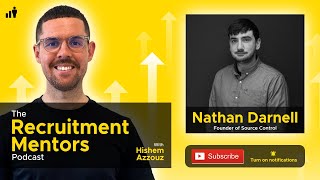
Nathan Darnell, founder of Source Control, talks recruitment strategy with Hishem Azzouz. He covers how to source candidates through headhunting and cold calls, what makes an opening pitch work, and how to keep clients happy without wearing out your welcome.
Chapters
Welcome to the Recruitment Mentors Podcast. My name is Hishem Azzouz. Today I'm really excited to be joined by Nathan Darnell, who is the founder of Source Control, who are an expert tech recruitment business specializing in distributed systems. Uh, and this business he launched in January this year. Before that, Nathan successfully climbed the ranks to associate director And along the way won multiple awards like Top Biller and Consultant of the Year awards back to back in 2018 and 2019 at his previous company that he worked for, Oakwell Hampton. And now Nathan has big goals, big plans to grow his own recruitment business with Source Control. Nathan, thanks for coming on the podcast.
Thank you very much for having me. A lovely introduction.
Yes, I'm excited to go over this with you. So obviously we're going to talk about recent times, you being a business owner, but we're gonna have a real good conversation on you being a biller, getting that top biller award and these types of things. But the first question I want to ask you, and where we start, is in your opinion, what, what characteristics and traits do you think make up a highly successful recruitment consultant?
Yeah, I mean, I thought quite a lot about this question, and it's hard to kind of stay away, I suppose, from the clichés that you'd normally hear in terms of kind of determination, resilience, goal-oriented, self-belief. But I think To be successful, it comes down to, or one of the main factors is kind of a large dose of individuality. I think everyone can bring various different kind of strengths to the table, and it's knowing how to leverage those strengths to kind of your advantage. I mean, some people I've seen in the past be fantastic at writing the perfect email and weak with the phones, but I think it's kind of a combination of playing to your strengths but doing the other stuff anyway. You know, it's like it's spinning those plates and being kind of, you know, having the awareness to know that, brilliant, you look, this is my main tactic, for example, but, you know, I'm also going to do the other things that I need to do to make sure I'm being successful, which could be the, you know, the cold calling, the BD and stuff like that. Yeah. So that would be the kind of my key takeaway. Obviously, those are the buzzwords I mentioned are equally as important, the resilience side, because, you know, there's massive good days and awful bad days, determination, kind of setting the goals, knowing what you want to achieve and going out there to try and achieve those goals. And yeah, just belief in yourself that, you know, you can do it. The glass ceiling is what you make it, I suppose. And, you know, it's most certainly easy to smash through it if you've got the right, you know, the right kind of set of beliefs behind you.
I love that. Individuality, is that Obviously, I think another word that a lot of people use is authentic, right? And I know it's like you spoke about in an interesting way, but I guess how do you think people can uncover their individuality? Because I think that's interesting.
I think it's, again, there's probably no right or wrong answer for that. It really comes down to yourself and what you're good and strong at. And it's normally a kind of, you know, you have to do it you know, by trial and error sometimes. You just gotta, you know, there's in any business when you went, you know, when you, when you're joining a business, when you're starting off in recruitment, whether you've got a couple of years experience or a lot of years experience, you know, it's still always a learning curve. And it's always about kind of, for me, variating things and just trying, trying things in different ways, in new ways, and learning what works for you. Because what works for you isn't necessarily going to work for the person sat next to you and vice versa. But it's always good to kind of leverage the advice of your peers and be able to try and put that into practice and just work out for yourself, you know, is that what I'm good at, what I'm strong at, or is that somewhere potentially I need to develop? And then, you know, most importantly as well alongside that, it's being coachable, it's leaning probably on the advice of your peers because, you know, they'll be able to identify and potentially spot, you know, strengths and weaknesses within you that, you know, you can potentially improve on.
Yeah, I love that. And I guess what you're also talking about there is self-awareness, right?
Yeah.
Like, would you— if you think sort of Nathan early on in his career— and I love that you also mentioned around always being open to learn. Like, I think anyone listening to this definitely has that mindset, and I think it's the mindset that most top billers will share, um, besides the ones that obviously have a huge ego and think they've completed recruitment. But I definitely think there's a lot less of those people, in my opinion. But I don't know, I'm just curious as we're here and then we'll go into other things. But like, how do you feel like, have you always been someone that's been self-aware? How have you cultivated your self-awareness?
Absolutely not. You know, it was, I've had to learn through mistakes. And, you know, for me personally, I kind of, I understood my purpose, what I wanted to do and what I wanted to achieve. And, you know, I'd always set myself those goals that I wanted to progress to that next level, to go from consultant, senior consultant, through and upwards. And, you know, at certain points throughout my career, in all honesty, you know, I had to have difficult conversations with, with the powers that be and the directors above me in regards to, you know, even simple things about doing the basics, attitude, just, just those general things, you know, around that. And some, you know, sometimes I've had to, I've had to adapt, change, learn, and grow from that to be able to achieve, you know, what I've wanted to achieve personally. Because, you know, without those changes I probably wouldn't have been given the opportunities that I have done so far. I'm not telling people to change themselves fundamentally, because as I say, that plays back into the individuality, but it's more about how do you learn and adapt and take on that feedback and grow from that feedback to make yourself a better-rounded individual, not just as a recruiter, but somebody that's in the office as well, because as you move up in the ranks, so do people lean to you for more advice and look at you as a bit more of a role model within a business. So it's really important, as I say, that, you know, you take that on board and kind of run with it.
Yeah, thank you for sharing that. So 2014 then, entered the recruitment world, similar background. It looks like you was a life insurance broker. I was a personal lines insurance broker, selling people car insurance and all that good stuff. So Tell us about, obviously, the world that I came from. I don't know what it was like for you, maybe a bit different than life insurance, but like it was super transactional, like the world that I was coming in. I wanted to expand my sales skills and get in a more of a consultant position and deal with bigger deal values and things like that. But describe to us your first year in recruitment. What was that like? How would you describe that?
Yeah, it was a bit of a baptism of fire, in fairness, a big learning curve, as you've kind of mentioned there, in insurance sales and such, many sales jobs, it's very transactional, it's very kind of process-driven. So, you know, you follow it to a process, and hopefully at the end of that process you get someone's bank details and you're happy. When you're, you know, when coming into recruitment, there was just so much, so much more to take into consideration because, you know, you're no longer selling a product that either works or it doesn't. You know, you're dealing with people, and, you know, they're one of the most volatile commodities out there because everyone's got their own opinions, they've got, you know, their own kind of key indicators that they need to tick off and stuff like that. So it was more for me, kind of a big adjustment in learning the psychology around, around kind of around recruitment first and foremost, but also, you know, trying to get a better understand people and people's needs. And, you know, as I say, it's until you, until you know what somebody needs, it's really hard to sell against that.
Yeah. And what was the environment that you went into? Was it a small business or—
Yeah, yeah, there was small to, small to medium kind of business. I reckon there's probably about 30 of us at the peak. It was quite, it was, it was probably a bit of a diverse kind of recruitment culture. So we had a couple of different revenue streams, so it wasn't just technology orientated. So I was part of the technology team, but we also had white collar and blue collar engineering and apprenticeship programs as well. But it was still one big team, albeit obviously working in different kind of revenue streams.
So I guess looking back, I guess just two things I just want to know from you. What was your sort of biggest challenge in this sort of— it doesn't have to be specifically the first year, but early on in that first company that you worked for. Um, and then, um, I want to know sort of what your best sort of piece of advice would be for anyone listening to this that's early on in their recruitment career. So let's go to the challenges first. Like, I guess, what— so you mentioned a bit about there what you had to adapt to, the psychology and things like that, but any other challenges and obstacles that you had to work through early on?
It was just, for me, probably coming into— it was, it was a bit of a stark difference in terms of the level of professionalism. That was required. You know, I'd been in sales environments where, you know, things got pretty wild at times, and, you know, it was kind of high-risk, high-reward type environments and such like that. But coming into recruitment, for me, the big culture shock and the big challenge was kind of changing certain kind of areas of myself and my sales process and my behaviors and such to kind of modify and fit into this recruitment environment.
And how— I mean, I, I really had to do the same, and I, um, I went into— I just really got into like my sales, basically. Like, how did you— obviously I'm assuming that you sort of spoke to people around you and your peers, but like, how did you go about upskilling yourself besides learning on the job?
Yeah, it was— again, I, I was lucky to have some close friends that were in recruitment that actually gave me the kind of the nudge and, and the, the insight. And basically, I want one of my, one of my best a friend called me up and he was living down in Bristol at the time, working for Opus Recruitment. And, you know, he'd got probably—
Sold you the dream.
Yeah, he did. He did. He just called me up and it was pretty quick, easy to sell me the dream. He just said, you know, this is the job that you're probably meant to do, mate. So definitely, you know, definitely. Really? Yeah. And then the next week I had 5 interviews and yeah, I just kind of committed to that. So for me, it was probably a pivotal change from where I was looking from you know, just the general sales jobs that I've been a part of previously and now looking to where can I make a career, where can I grow something long-term and really, really expand on that? Because I mean, I was only 23, 24 coming into recruitment. That's late by some people's standards, you know, when you've got graduates and such like that. So, you know, I knew that that next move for me was something that I was going to stick to and something I was going to dedicate myself to because, you know, the last thing I wanted to be doing is, you know, a couple of years in and being back on the drawing board and thinking, okay, that didn't work out for me, what's next?
What's next? Yeah. So I guess to round that off then, like, anyone listening, like, if you could go back and speak to Nathan early on, like, what advice would you give him, do you think?
Yeah, I would probably just tell him to believe in the trust in the process and follow the process. You know, it's really easy to hear things sometimes but not listen. And kind of make assumptions and hear probably what you want to hear, or maybe kind of, you know, glaze over the things you don't want to hear because simply, you know, it adds that little bit of concern into something. But just to be really thorough, you know, throughout the whole kind of process, from the candidate management to the client management and everything in between, because it's so easy for something to slip through the gaps and for you to miss something that's going to come back to bite you later. And second to that, probably the best advice I could give myself would be not to spend the commission until I was receive it. Because yeah, you're always living kind of a couple of paychecks in advance going, right, I'm going to have a big month. And yeah, that can come back to bite you if you've not been thorough and obviously something adverse has happened as a result.
Yeah. And on that, and then we'll sort of start talking about sort of overall your sort of billing career as an employee. But like, just on that, because we hear this a lot on here, like trust the process, don't let things slip through the gap. Obviously you've been in a leadership capacity in your, obviously the last company you worked for, leading a team. Where do you think, and I guess you can draw on any part of your journey really, but where do you think sort of recruiters maybe early on in their career can sometimes let things slip, you think, throughout the process out of interest, just to go a bit more deeper and practical on that?
Yeah, it's just the attention to the finer parts of the detail, you know. I think most businesses, every business at least I've been a part of, you know, have a a certain way of doing things, in terms of from candidate registration through to client, you know, kind of taking a job order and everything in there in between. So it's just making sure that you are 100% thorough on that, you know, you're not just taking necessarily people's first answers, you know, you're exploring that in a little bit more detail. I mean, some things that would bite me back in, you know, way back when would be, you know, somebody would say, look, I'm happy to relocate, and I'd be like, brilliant, relocate, I'm going to send you this job because you're going to relocate.
Candidate relocation. Yeah, exactly.
But then it's going that next line of questioning. Okay, so what's the practicalities behind that? What's your lease agreement like? Where have you got a family? Have you got children? Do you have to take them out of school? Do you have to do this? And it's just understanding the reality behind the dream, I suppose, because sometimes it's like, this guy looks amazing, he's amazing, he's going to send him, he's going to get the job. And again, it's because I probably didn't want to know that level of detail because in my head I just thought they were good enough for it.
Yeah, yeah. Interesting. So look, let's just talk about your sort of, uh, yeah, billing career as a whole, um, before you started your own business. Um, I guess, look, as I said to you before we started this, most recruiters that we speak to, um, and when we try and find out from them sort of where they are today and where they want to go when we, um, when they join the, the community most people will say and put down that they want to be the top biller, right? Um, and as I mentioned in this introduction, um, you managed to hold that title sort of back to back when you was at Oakwell Hampton in 2018, 2019, right? So I think, look, fair to say recruitment's, um, a really competitive environment internally as well as externally. So let's try and unpack that and there'll be different things that we can go into. But I guess my first question for you really is obviously loads of competition internally. Like, why, why do you think you was able to achieve that within that business? Do you think, what do you do differently?
I think there was a couple, a couple of different kind of reasons. I mean, just being completely frank and honest, you know, my performance whilst I was in my first two companies, it started off strong. It probably plateaued a little bit, probably got a little bit complacent, and then it was coming into my last role really where things started accelerating. There's a couple of different reasons as to a couple of subtle changes probably I made in terms of my own process to kind of help escalate that. But I just knew I was probably more focused than I'd ever been in knowing what I wanted to achieve and breaking that down into chunks of, okay, this is what I need to do and this is where I need to be by this date and so on and so forth. So I kind of worked backwards from my end goal, but tried to stick to that as rigidly as possible, I suppose. But yeah, kind of a big change and pivot for me was in the way that I try to attract candidates. So historically, I mean, you know, I was doing probably, you know, $120,000, $130,000 a push, you know, in a market that I'd been in for quite a while. And I was really, really relying on the tools that I was provided. So I was relying on the job boards. I was relying on, yeah, pretty much the job boards. Yeah, yeah. And just really kind of looking there. And to be fair, the amount of offers I had versus the amount of business that actually stuck was ridiculous. I was missing out on $90K in a year of offers that didn't end up landing. And I suppose just to give a bit of background on just a quick snippet of the journey, we went and did the recruitment out in America for a while and that we didn't have the same tools we had available when I was working in a London market that I was familiar with. I had to really kind of develop new methods of reaching candidates, a lot more kind of headhunting, calling people in the office, using more heavily reliant on LinkedIn. So when I came back to the UK to kind of pick up where I'd left off, I now came back to that market with a new set of skills, and that just immediately, that small pivot, small change in the way that I went about my business made a massive, massive impact because it meant that those offers that I was generating still were sticking because the candidates that I was finding, you know, had been purposefully headhunted rather than being the best available at that time. Yeah.
Okay. So let's talk about that. Appreciate you filling us in there on the context. So just to add to that, how long was you in America for?
So it was, it was only 6 months. So I didn't actually get a chance to move out there because I was pending marriage with my wife at the time. And yeah, unfortunately, I didn't, I didn't, I wasn't, I wasn't physically on the ground, but I was working remotely and I did go and spend some time in our LA office as well.
Nice. So basically what you're sharing with us then is that, yeah, like you really added the sort of, added a lot more tools to your toolbox in terms of the way of doing things. So I really appreciate the honesty in that. So let's just break that down a bit. So when you say headhunting and calling people in the office, I get that. Like just talk to us a bit about like what that actually looks like and why has that then ended up working for you? Is it because you're literally directly calling people and going, hey, I'm currently working with an organisation that has actually told me that they want you in their business. Like, I don't know, just talk to us a bit about that actual approach. Yeah.
So it's less probably cloak and dagger. You know, I think when I was, when I was trained on how to do that, or at least when people told me, it was always the carrot and the stick type situation. So it was always go in there and make them feel kind of, you know, they've been individually selected by the employer. But that's, that's not the case. So I've always gone down in with an honesty approach when it comes to headhunting. But it's more for me been about mapping out businesses, because what I realized as well is a keyword search and a Boolean search is fantastic. It's going to give you all these great developers and stuff to look at, but naturally, if they're coming up in your search, they're coming up in everyone else's search. So it was more understanding, okay, brilliant, so if this guy's working at this company with this skill set, then sure enough, there's going to be more people in that company because some people, when you're trying to identify them on LinkedIn, their presence is very minimal. States of employment, they may not even have any keywords or anything like that, but they're still probably equally as good, if not potentially better, than the people that are coming up in your search that do have a more profound and flushed-out LinkedIn profile or presence online. So it was more about kind of mapping companies and understanding where the hotspots were for the skills I was looking for. And then, as I say, making those introductions introductions quite directly on the phone. My process has always been to achieve a little, but a lot of times, if that makes sense. So not to go into a headhunting call with the objection of winning a candidate over and selling them the dream on that call. Going into that call with a simpler objective of getting a mobile number from them to give them a call back after work when it's more convenient.
Nice. That, yeah, so switch the objective. That's interesting because I guess you're, you're more motivated to make those calls because it's not a failure if you don't get a yes, I want to talk to you about that job. It's just more of— would you, would you mind give it, give us, um, would you mind just talking a bit because I know people love this sort of stuff. Yep. Would you mind just sharing a bit around like the script?
Yes.
So what's like the opener, basically? If you call me, I'm sitting at my desk, I'm someone that, you know, at some point there's a good chance that there'll be jobs that I might be open to. I've got the right skill set. Like, you catch me at work, obviously it's a completely different environment now, so it'd be good to get your thoughts on how this has changed. But if I'm in the office and you get my number, you call me directly, what's the opener? What's the opener?
Yeah, I mean, firstly, hopefully you'll be able to hear me because I try and just do as quick an elevator pitch as possible. So because I'm very conscious that when you go, when you land on that desk phone, they might be sending to the CTO, you might be interrupting a scrum meeting, you know, anything they could, you don't know what's going on around you. So I try and encourage them to speak as little as possible. So my two objectives are then to say, probably to speak twice on the call. The first time is to acknowledge that that's them who I'm speaking to, to make sure I'm not pitching their boss. And the second objective is to agree for a callback and hopefully get an alternative contact contact number from them if I am calling them on the desk line or what have you. So my normal introductions, that would be quick, just a very quick introduction to myself. So it'd be, hi, you know, I'm Nathan Donnell, I'm giving you a call from Source Control. Straight away, you know, sorry, I apologize, it was firstly asking if that's— I'd say, hi, is that James?
Yeah, sure, James.
Yeah, hi, it's Nathan Donnell, I'm giving you a call from Source Control. And then straight into the micro pitch, which is just, look, the reason I'm giving you a call today, I'm a specialist technical headhunter, I specialize in this area. Very, very quick glazing over that, but then bring it straight back to a personalized about them, because I mean, if I'm going in there cold with no information, then they're going to detect that straight away. So it's more identifying because, you know, at this point you've got the LinkedIn profile hopefully in front of them. You can see something about them and it's picking on a certain unique selling point about them that you can sell back to them to show that you're well researched, to show that you've done your homework and you're genuinely interested in having that conversation. That can range from, oh brilliant, I can see you've been at X company for 5 years now. You know, that's really, really impressive. Look, I just wanted to speak to you about this. It could be X, you know, I see you working with X, Y, and Z technology. That really interests me. A lot of people as well, you'll notice when you're browsing lots and lots of LinkedIn profiles, you know, people like to give information. People are passionate about what they're doing and they will detail that in their profile. So it might be that they're working with X, Y, and Z technology, but they've mentioned, you know, I've got an interest in this. If you've got a position that you know will play on that interest, then it's about letting them know about that. But again, it's probably— I've diluted it a little bit there in terms of the context, but it's a very quick introduction.
So that was really helpful. Yeah, the key there is the personalization bit.
Yeah, it is. It's just, it's just making it, but it's also showing empathy as well. So what would— so as I say, once I've quickly introduced myself, as soon as they hear technical headhunter straight away, you know, nerves are probably going to come up, the hairs on the back of the neck, you know, they're breathing heavier because the CTO, as I say, or whoever's near them, you know, straight away diffuse that. Look, I'm really apologizing. Why they're calling you so directly at work. The reason I'm calling you, and then it's the justification. Back then to the empathy at the end. Again, I apologize for contacting you directly. However, I would love to have a conversation with you outside of business hours. Look, what's the best way for me to reach you?
Simple as that. Is that the like closer of like just saying, hey, yeah, yeah.
It's just, you know, it's basically, as I say, that pitch from start to finish, you know, will generally last about 30 seconds. So they're having to pick up the phone and hopefully they can walk away from that without somebody going, oh, who was that? Because they've not had to answer anything. They can just say, oh, rubbish office, it was nothing. Because I found if you start trying to ask them and open them up, they straightaway close down.
Close down. Yeah, that's a very good point. How do you get their mobile then? That's it.
So I'll ask them, look, do you have an alternative number I can call you back on? Sometimes, 9 times out of 10 or 5 times out of 10, they'll just give you the number just to get you off the phone. And then you call back at 5 o'clock and they've got no interest in it whatsoever. But at least you've got that contact. That channel of communication's opened up and you can start to build on that because, as I say, with headhunting, it's not an overnight job. Not everyone's going to be looking straight away. But the more you do it, the wider your network gets. And those are the really good candidates to have that you can just draw back on months and months later and think, who did I speak to about that? And then you can go back because they're passive candidates at the end of the day. So, you know, you knock back on that door again. This time you've got the person's number, hopefully, and you say, look, I'm just recalling our conversation 6 months ago. 6 months ago, remember you mentioned this, I've got now this opportunity and hopefully, you know, it goes from there.
Yeah, yeah. No, thank you so much for going into so much detail. And then look, as we're on this, I know we're going into deep diving this, but I know people like the real practical things. How, how has this approach changed?
Yeah, we've loved that.
Yeah. Like how? Because obviously I think I'm sure it's changing now, like a real common sort of work dynamic seems like a hybrid approach, but I'm sure there's a lot of people still doing remote. So I don't know, how have you sort of been flexible with that?
It's become a lot more expensive just in terms of how to kind of aggregate data and get the data because obviously, you know, there's a plethora of tools out there available, you know, for you to utilise on subscription basis, free basis, whatever, you know, you'd like to, SalesQL, Lushers, all of these kind of tools, AI databases which can scrape and aggregate data, but you know, The simple fact of the matter is it's tough. You know, if they're not at work and you can't get through to them, you've got to go in, you know, you've got to again, variate your style and try something new. The massive, massive rise that I've seen, a big, big pivotal change that I've noticed and that I've had to try and adapt as much as possible as I can do is more about the outbound and email marketing. You know, how to personalize approaches there. And as I say, you know, it's hand on heart, it's not my strongest suit. I can deliberate over an email for 20 minutes thinking, is this going to hit the mark? You know, and again, I've sat next to people that, you know, within a couple of, you know, 2, 3 minutes, they've written something amazing that's really good and captures the attention. So again, it's constantly just trying to add to your artillery, really, and trying to build and improve. But there has been a huge seismic shift, I would say, in terms of how you can contact people. It works two ways though, because at the end of the day, if you can get the contact information for them, the chances are they are sat at home so they can take the call. So it takes away that awkwardness straight away. So you can ask more open questions and yeah, hopefully normally, yes, the conversation will possibly last more than 30 seconds because they might go, okay, yeah, I want to talk about it now, which is brilliant.
Yeah, sure. Okay. Interesting. So obviously what you shared there and why we spoke about that was because before you had that experience in America where you was building things from scratch, you being very honest and saying, look, I was billing £120,000, £130,000 a year and a lot of the time I was using job boards. That means I was mainly tapping into the job seeker market, which also meant that I'm assuming, yeah, you got more offers, but a lot of these people were obviously getting other offers as well, right? So what you shared with us is that that you added this tool to your toolbox and it had a real impact. I guess let's just tie it all together then. So when you got the top biller award, what did you end up billing? And then I want to speak to you about the client side because that's always something that people want to talk about and want to improve. So let's just put that into context.
Yeah, I mean, I think in the first year joining the business, kind of February to December, it was about $185K offer accepted. We were around about $160K started, which again, it's not life-changing numbers in a lot of different industries. But well, I suppose that's it on that.
Well, it's a big improvement for you. That's fair enough.
Yeah.
So the best year that you had when you won the top biller was just under $200K?
No, mate. But since the year following that, again, it was in excess of $200,000. But I think I brought a little bit of a chip on my shoulder because I'd— leaving one company and having done 6 months in America in a new market that kind of didn't really reflect what my capabilities were over a 12-month period in a consistent market. So when I was interviewing for the job, maybe I embellished something slightly by $5,000 or $10,000 here or there in terms of what I was capable of. So I knew that going into that business, I've got now a target on my head and I put that target on my own own head. So this is the level I said I can deliver at. So now I need to deliver at that level. And it was more knowing— it's again, I kind of look at it as a glass ceiling in terms of, you know, you're totally capable. I've seen lots of people really over-exceed on regular occasions because, you know, it's limiting belief that will stop you from potentially going that next step further and going from that one deal to two deals to three deals a month.
Mm, yeah, that's really interesting. And then, so I guess talking about the client side, spoke a lot around the candidate piece. This seems to be the area that typically recruiters will share, and it's a lot of the questions that I get on like where people want to improve, it seems. So what's been your journey with bringing on clients and winning business? Like, how have you improved in that department, was there anything else that you sort of really opened up to? So I'm assuming in America you had to win business and stuff. Anything that you sort of improved on which you wasn't doing early on in your career that's had a real impact, do you think?
Yeah, I mean, you know, experience accounts for quite a lot. You know, you do this job day in, day out. And so naturally, you know, you refine things that maybe didn't work so well in the past and improve upon things and get more confident as well in terms of what you're doing first and foremost. but also the sell. For BD, for me, I've always been quite phone-centric, so I've always been quite cold-call-led, quite, you know, just calling up, not necessarily when there's even any business there, you know, so not chasing leads. I just have a big list of people that I want to speak to because I know that they're in my industry. And it's one of them. It's just understanding that, you know, that you need multiple touch points. I suppose sometimes you can get on a call and brilliant, you win a job first time and you're like, most of the time when that happens, I'm scrambling for a pen because I'm just not expecting it. You know, you go and introduce yourself, they're like, okay, I'm going to take a job spec now and you're ruffling around and I'm trying to get the LinkedIn up at the same time. But yeah, I think for me, I've kind of— the way I've thrived is by having, I suppose, a fairly close knit group of clients that I know are regular hirers. And I still do and maintain a good level of BD consistently, but I would normally gravitate towards a pool of clients that I've built good relationships with and that I kind of can grow on and expand on and that they can then trust me with delivery rather than it being— because a lot of BD, I suppose, going into it is, I promise you I can do this. I swear to you, I'm going to I'll give you the best candidates and X, Y, and Z and selling them the dream. But I think really where BD is, where I suppose I've grown and seen the most benefit is from growing those client relationships over time, delivering on your word and being consistent with it as well. And as I say, not overstretching yourself. Sometimes you're fighting a losing battle and, you know, it's difficult because as a leader, I've been told to be fairly cutthroat with people and be saying, okay, well, look, that's not yielding any results. Move on, move on. And sometimes it's hard to take your own advice because, as I say, if you work and invest into something and you make that progress with it, it's hard to sometimes walk away from it and think and cut your losses and go, actually, no, this isn't the right company or opportunity or the conditions aren't right. But again, I don't know if this is kind of going away from the point, But the stronger relationship that you have with a client, a company, whatever, the more influence you have. It's very hard to jump into a recruitment process and start telling them how to do their job or how to change things that's going to necessarily benefit you or the candidate or what have you. But once you've worked consistently with people, they know your abilities and they know what you can do, they're much more receptive to take your influence and your guidance on things that you can change, extradite, you know, sometimes even remove entirely, you know, to make the process more fluid.
Yeah, no, thank you. And I guess what we're talking about here, which I'm going to ask you just to go a bit more deeper on, because I think this is what a lot of people will really benefit from, because what you're talking about there is you like where you've really improved is sort of getting away from doing just spot business, people call it, or for a worse analogy, just one-night stands, right, with businesses. You do that and then as you said, you may leave that relationship with credibility because you delivered on your word. But if you're not doing any other business with them, then there's still lack of influence. I don't know what sort of relationship that is. Maybe it's still a bit more transactional, whereas what you're talking about is, yeah, actually working with maybe less clients and making sure that these clients know that you're the person that can support them with their growth. You're building relationships and then as you said, instead, you can then sort of impact and influence the process, which not only benefits them but benefits you, and obviously attracting people and taking people through that process. I think this is something that I'm hearing a lot from recruiters where also, again, they feel like they need to improve, because I think it's very easy to get excited by that, so by those terms getting signed, and then it can be on to the next one, right? Or I'm always looking. So I guess what I'm just keen to ask you is, I guess, yeah, how have you got better, one, at sort of identifying businesses that you think could make for a great relationship long term that you, I'm assuming, will get more confident in spending more time with them because you feel like in the long term there'll be more than just one hire, two hires, etc. And then two, yeah, just talk a bit about, we always hear this word relationship, but like how can recruiters listen to this actually build like long-term relationships with their clients? Like, how do we actually do that? But yeah, that's what I was keen to ask you.
Yeah, I mean, you know, when it comes to kind of establishing obviously a kind of target audience and target list of clients, I mean, that's kind of, you know, recruitment 101 is knowing your audience. You know, it's taking the time when you're building a market because naturally most people are coming into cold swapping markets, markets that have not been in the past. It's doing your due diligence, knowing who the players are, the big movers and shakers are, you know, in your industry, and always having that kind of list of priority clients that you would love to crack into. You know, it's my old kind of, like, my old boss used to always kind of really drill into our heads that it was, you know, the 6 touchpoints, you know, with any client, you know. As time goes on, you know, if you keep knocking on that door, door, you know, after 6 times, hopefully it's going to open for you. Whereas most people get disinterested after the 3rd knock, you know, and they'll kind of— they'll abandon it. But it's the people that are consistently knocking and knocking and knocking that are, you know, eventually, even if it's to tell you to bugger off, you know, they're still going to answer that door at some point.
And just, just quickly on this, sorry to butt in. First thing, again, just— I think you're doing a really great job of keeping this really practical. One, I know it may seem really basic and simple to you, but One, how do you keep track of like— I know you say market mapping, it's simple, but like how do you do that out of interest? Like, are you set up with notifications and industry news? It's like, I don't know, just one on that. And then two, you hear these 6 points or 7 points, 12 points or whatever, but I think people sort of sometimes are unsure on like what to knock with. You know what I mean? So it's like, yeah, so that's what I just wanted to ask you.
Sorry to butt Italian. Yeah, yeah. No, I mean, I've just slipped my mind. The first question you wanted to just mention next, I was focused on the second question. So what was the first one again?
The first one was just like, I know it may seem not really second nature to you, but you said keeping track of like the top things. So how do you actually do that out of interest? Like what have been the—
Again, you know, if I've had to do throughout my career, start lots of new markets. So especially at the time at Oakwell, when I was just prior to leaving, I was kind of hotbedding markets for new consultants to come into, so I'd kind of go in there, get them off the ground, and my first point of call would be CV stripping, you know, getting on LinkedIn, getting, just putting basic Boolean searches in to find the skills that are attractive to my market audience, and then going through those companies, you know, one by one, and meticulously adding them to a database or what have you. What I've found since then is, you know, and I suppose a couple of other tools, there's a wealth of different tools available out there in the market that help to give you that edge in insight, things like Talent Ticker, for example, SourceBreaker, all these kind of things that hopefully if you're working in a fairly-sized or decent organization, you'll have access to one or two of them. Looking at LinkedIn news feeds, making sure you've got alerts and watchdogs set up for hiring trends in your demographic, all those kind of things. So the information, it's not something that gets overnight. It's something that you will build and build and build. Yeah, as you know, it's all really exciting. You come into a new market, okay, you type in.NET developers and all of a sudden, you know, there's 500 vacancies that have just been posted. You're like, brilliant, kid in a candy shop. There's loads and loads of companies that I can go after now. But you have to do that, you know, you're doing that search every day, every week, you know, for the rest of the time that you're in that market. And you'll slowly notice that, you know, that list is no longer 500. There's only 5 or 10 fresh ones that are coming up every week. So when it's the ones, it's identifying the ones that are consistently there, the ones that are always hiring and such like that, and just making, making subtle notes of it. When you talk about obviously the, you know, breaking down those 6 touch points. So again, it's phone conversation. I've always been predominantly phone-led, but it's so my first touch point would always be a phone call, you know, see if I can firstly get get through to them. If I do, brilliant. Then, you know, introducing myself, seeing how far that will get with, you know, I can get with that. Then it's backing that up with an email, which is a service overview, you know, look, thank you for your time, brilliant, you know, I had a great time talking to you. This is, this is who I am, this is what I do. And then it's just the following up again because, you know, you might call them again 3 weeks later, a month later, 2 months later, whatever that may be, whatever you've agreed with them at the time, and the door may still be closed. But again, it's following again up with an email after that call. Call and then just being regular in it and just repeat. There's no exact science to it because there's so much luck sometimes that's involved in recruitment as well. It can be the right timing, but the more opportunities, the more you contact them and the more you're there, the more opportunities hopefully you're going to create for yourself, if not today, but tomorrow. And they will remember you because the first call I make to somebody, It's brief, they tell me that they're not interested, brilliant, okay, you know, and within a week I've been forgotten about 100%, but then I call back 3 weeks ago and I reference, you know, it's about taking, I suppose, even if it's a small, but taking a bit, one piece of information as a minimum from each call and building on that each time. So it could be, you know, I just say, okay, brilliant, look, I know you're working with recruiters at the moment, just out of curiosity, you know, what do you normally work to recruiters like, with recruiters at? And they might say 15% and make a note of that the next call. Oh, look, like, you know, last time we spoke, you mentioned that you're working with some recruiters at 15%, you know, and it's just dropping that in and it's giving context to the information that you've accumulated that then starts triggering. By the time you call them for the fourth time, they're like, all right, Nathan, look, there's no more jobs, I've told you before. But they remember you, you know, and it's just about getting them to remember you because then hopefully the fifth time when everyone else has given up, they go, actually, something's just come Yeah, yeah, we're meaning to reach out because, you know, there's an opportunity there. So again, it's making sure that you, I suppose, in summary, you're going into every call with the objective of taking something away from every call.
Yeah, nice. That's what I was just looking for. Yeah, for that, because I think that's sometimes what people are unsure of, isn't it? It's like, okay, well, I called this person last time and nothing really happened. So what do I call them about? What's the reason for my call? So I think I think, so thank you for sharing that. And then I guess the other part then is the, and then so let's say you did all of that, they give you that job, they deliver, it's a company that you've mapped out on and confident are on the right track, there's growth. What, I don't know, how do you then think about sort of building on that relationship? You know, like, I don't know what are things that we could, obviously we need to deliver, that's firstly, that's gonna obviously really start building this relationship, but I don't know anything else that has really helped you in the past take a relationship where it's maybe a bit transactional to start to sort of solid.
Yeah, I mean, it comes down to me, for me, where it is being as thorough as possible from that initial job order, because given the opportunity, when sometimes when you get given the opportunity to take a job order, yeah, they're giving you the opportunity, but they don't really want to give you the opportunity because they're not willing to sit down and spend the right amount of time to tell you what they actually want. They go, you've got the job spec, don't you? 15% sounds all right, doesn't it? All right, look, what do you need No, you know, but it's, I suppose, just kind of taking control early on of that job order and really trying to understand and get as much information about the business because essentially, you know, you are a brand ambassador for that company when you work on their behalf. You know, you're the one that's out there selling that. And that also helps as well when you're looking to head up people because the better you can sell an opportunity, you know, the more interested you're going to have people that are essentially in that opportunity. So from day one, it's, I suppose, you know, it's taking, Making sure you're setting up the meetings, you know, unless it's thrown upon you, but you're setting them up with an object, you know, a kind of a couple of objectives that you want to achieve on that call as part of the job order process. Digging deeper on not just necessarily what is now the next, you know, the need right now, but what it looks like in the future. And it's then, it's just cultivating, you know, brilliant. After you've done the placement, you know, lots of people will be like, invoices sent now, passed the rebate, brilliant, but it's about keeping those touch points open, just checking in with you, how's so-and-so settling in right now, you know, what impact have they had in the team, keeping on the radar, brilliant, by the way, are you looking for anyone else in the future, you know, what's, you know, just trying to find out what's exciting is happening in the business, because, you know, lots of times they'll be really happy to tell you these things, but people just don't ask the questions, you know, and people especially when people, you know, are passionate about the businesses that they're working in, you know, it's like, oh, actually, you know, it's funny you should ask that because something really exciting is happening just around the corner. We're expecting to get all this new funding, you know, whatever that could be. But it's just, it's the place, it's keeping consistent after the placement and, you know, and just keeping those channels of communication, not so you become a hindrance because obviously you do a good job and then you send them an email every week with speculative candidates, you know, they're not hiring for for, that can become a burden for them, that can become an annoyance for them. And I've had it in the past, you know, where the doors have shut because they said, look, brilliant, you gave us a brilliant candidate, but you're pissing us off now because you won't leave us alone, you know what I mean? And we've told you. So it's being pragmatic and practical about it as well and just listening for those key indicators and just asking the right questions, I think. But yeah, the more questions you ask, the more you Yeah, no, awesome.
So look, keen to talk about your business journey so far in the last sort of 15 minutes or so. But I know we've kept this really practical, which I think is great and will really help people listening to this. The final thing that I'd really like to go sort of practical on is self-management, time management, prioritisation, whatever you want to call it. Call it, is something that again, speaking to so many recruiters has really come apparent that a lot of recruiters can struggle with this. And I think what's really happened, which we were talking before this, that people have got really busy. Maybe not everyone, so if you're not, sorry, but a lot of people have said that they've got really busy. So now it's like, oh my God, like what do I need to prioritise that's going to enable me to hit my goals and just getting better at And every time I speak to sort of top billers and high performers on this, they've really got this nailed down. And I think if I think early back when I started, and maybe you can agree or not, but that's definitely something that typically don't always— I don't remember getting any support on it. I just had to learn the hard way and find out what other people did. Did they do email reminders and how did they structure their day and just learn as I went. So I guess I guess a lot of people, and a real common question I get is, please, Hishem, can you ask top billers what their sort of daily schedule looks like or what their structure looks like when they're at the top of their game compared to when they're early on and maybe sort of, um, still, um, yeah, earning their stripes and finding it difficult? So what does self-management look like for you?
Yeah, I mean, sometimes, you know, look, I'm completely honest, sometimes it's organized chaos. Um, you know, sometimes there's like a lot more of a rigid structure to it. I mean, for myself, kind of looking back from maybe some of the kind of habitual changes that I've made throughout the time would be probably more around the organize, just the basics of organization. So the calendaring things as well, setting tasks, setting reminders, because if I don't do that, I will forget. Yeah, I'm very much a paper-based guy, so I'll be scribbling down loads and loads of notes and then I'm ripping that piece of paper off and that's going over there and then I've lost it, it's gone. You know what I mean? My wife's come into the room, was, or someone's picked it up and threw it away, and then I've lost that vital information. So it's being, you know, it's being organised in terms of calendarisation, putting things into schedules. And also, really importantly for me as well, was making sure that I'm being, you know, putting as comprehensive notes as possible on write-ups in terms of everything that I've done from the candidates through to the clients, you know, conversations I'm having with them, just so, you know, because it's very easy just to shorthand something in and pop it on there and forget about something that might be important. But going back in terms of kind of the actual how to organize my day, I think historically I've tried everything. You know, I've tried really, really strict day structures where from 9:30 to 10 o'clock I'm doing LinkedIn messaging and from 10 o'clock to 11 o'clock I'm doing this. And I always fail really hard at it because naturally, you know, you've got the best intentions going into something. But it's in recruitment, things change at the drop of a hat. All of a sudden, a job order comes through, or a candidate calls in, or something changes basically, which will deviate away from what you had intended. And because of that kind of rigidness sometimes in the goals I'd set myself for the day, I'd walk away from that day and think, I've really failed that day. A shit day, yeah. Yeah, I didn't stick to my structure. So now, I think when I look back to when I've been at kind of my best peaks performance, so to speak. Generally, it's quite systematic in terms of knowing what I need to achieve for each individual client and what I want to get out of a week, out of a kind of a BD strategy. So when I look at that, I look at daily goals and weekly goals. Okay. So I would break things down like, okay, so this— I've got this job and I've not got much coverage on it, so I need to I want to find today, my target is to find 2 good CVs for that role that I want, or 2 good headhunts for that role that I want to get shipped out. And then my wider goal for the week would be, okay, I want 2 new jobs as well, so I want 2 new clients. So I'm working on smaller goals and larger goals simultaneously, because if I say to myself, I'm going to get a job today, and I don't get that job today, I'm going to walk away from that day feeling really bad. But if I give myself that extra bit of breathing room and think on a weekly basis, okay, this is what I want to accomplish this week, then the peaks and troughs that you go through, hopefully you'll get as close to, if not hitting or overachieving those goals that you set out. I think in particular with the candidate stuff, what I used to fall into the trap of was probably not giving, getting enough coverage on jobs. So I would go out to market with loads of enthusiasm and I'd find them someone that I thought was really, really good, and then I'd send him off and I'd think he's got the job and then that would be that. So now for me, it's— and then it turns out that they weren't as good as I thought they were, or for one reason or another it wasn't a good fit for them, vice versa, whatever it may be. But now I would kind of work to a structure of this is now my focus for this amount of time. So I'm going to do this. I've set myself a target of the 3 CVs. I'm not going to look at another search until I've got the 3 CVs, because then at least I can walk away from that search with confidence that I've got 3 good people in the process, and that will give me enough time with them. Hopefully, that would be— we used to work on a rule of 3 where this kind of— I don't know who created the statistics. I think my director literally made it up to make it sound better at the time, but it was always If you can get 3 interviews for a role, you know, you'd be like 90% higher chance of you filling it than if you just get 1 interview. And obviously, yeah, to kind of work towards that. So again, slightly long way of saying it, of going around houses.
Just really quickly, because I think this is like, how do you— I think the important part that you meant there is like you anchor the time to it, because I think what you can be quite susceptible susceptible to early on, or just overall, is like, like you said, my goal is 2 CVs, but it's like, okay, well, how long am I going to give myself to, to get that? And I think you can fall down the rabbit hole then of like just doing one thing for like too long of a time. I don't know, do you like anchor it?
You mentioned there, like, I would generally, you know, I generally kind of set my objective for that day. Um, so, okay, and again, so it's, I normally plan, you know, the day before for the day ahead. Um, so it's like the last 15 minutes of my day, it's like reflection on what I've done and what have I achieved. Then it's a kind of looking forward to what do I want to do tomorrow. But again, things are subject to change. Sometimes things are outside your control, things that seem easy aren't easy, and sometimes you have to abandon ship because your time naturally, especially when you're a consultant working for somebody else, there's a hell of a lot of pressure. There's a hell of a lot of pressure to deliver because there's always that saying in recruitment, you're only as good as your last month, and you're always looking over your shoulder slightly to think like, okay, last month maybe wasn't as good as I want the next— this one's going to be very good. So it's just— no, I suppose for me it's just in terms of allotting the time, it's either till you think you've done a good enough job or until you've exhausted it enough to know that that's probably as much as you can do.
Yeah, I think the key that you've said there is to make sure that you make space to review, because instead of going, I'm not going to stop until I've got 3 interviews, like, okay, well, how long does that go on for? Like, you've got to— I think that's the key thing, isn't it? Because sometimes I could just keep going and then all of a sudden my whole week is spent on this job and I've got 2 interviews rather than 3, but I haven't reviewed and made time to prioritise anything else.
Just to add to that, I mean, I do kind of pivot. So, you know, I won't— I'll set myself an objective for that day that this is going to be my focus client for the day and I'm going to look to get coverage. But with that, naturally, by the way that we're interacting with candidates, whether it's via email, in LinkedIn messages, connections and stuff like that, that, you know, it's a bottleneck, really. There's a lot of energy that goes in and what comes out doesn't necessarily come out straight away. So even though you can sit there at the end of the day and you can think, Jesus, didn't even manage to reg one person today, you know, and kind of give yourself a hard time. But the work that you've done will come and pay back and pay for itself in the days to come because, you know, that bottleneck will start to unjam and you'll get those candidates that you sent a message to a couple of days ago. That maybe overlooked it, or maybe it's just more appropriate time to reply, to then start coming back to you. So yeah, when I say that my objectives are to get 2 CVs, my objectives more are to work the hell out of that position and then probably the next day focus on to something else. Because as I say, there's always a kind of lapse in time when you're dealing with people, essentially. Things don't happen at the click of a finger. Click your fingers, unfortunately.
Yeah. So look, what I'm thinking, Nath, is that let's not half-bake the business journey. Let's get you back on when, so then like we've spoken for a whole hour and gone real practical on, obviously you're still recruiting, right? So like this is you, this is how you approach things. This isn't like employee now business owner, like you're smashing it out on your own. But I guess real quick, like what has sort of happened so far or what have you experienced so far as a business owner that you least didn't expect maybe? And we'll ask that question.
Yeah. Back office. You know what I mean? It's something you take for granted and you think, well, it mustn't be that hard, you know, to do these things. And it's just, yeah, there's a hell of a lot of stuff kind of happens when you flick that switch and there's so many things you have to be mindful of. And, you know, for me, it's just in the 3, 4 months or so that I've been a business owner, it has been an absolute baptism of fire. I've had to think on my feet a lot quicker than I have done in the past. I've had to learn very quickly and I've had to adjust, you know. The positives that come away from that is, you know, when your name's on the door, I suppose, the kind of passion, enthusiasm you have really does kind of echo through to the people that you're engaging with because, you know, it's your baby essentially. So, yeah, it's Being back office.
So what, when you say back office, what do you mean? Are we talking accounts? Are we talking like just—
Yeah, I mean, it's all, you know, simple things. You come into a recruitment company, your first day, you've got your own mug sat there, you've got your laptop set up, you've got your email account all done, all your logins are sorted, and you know, that's all taken care of and brilliant. I'm going to log in here, I'm going to get to work. But obviously it's the negotiating behind that, it's all the invoicing, it's praying to God odd that people pay you on time because obviously in recruitment, if you're working for somebody else, regardless if they pay or not, you're getting your commission check the next month.
Yeah, you forget that, don't you? Even if the invoice hasn't been paid yet.
Yeah, exactly. Any good recruitment company is going to pay you regardless. So it's more just kind of like sitting on your hands, being very patient and stuff and just trying to manage all the noise. Because as well, I'm always on the selling end of when I have worked for somebody else and now I'm very much on the receiving end as well, where there's a lot of people with a lot of services, a lot of improvements and, you know, a lot of chats, virtual coffees that people want to have to improve my business performance and X, Y, and Z. So yeah, it's a bit of a minefield at times, but it's been a good journey so far.
Nice. As I said, we'll get you back on and we'll really dive into that. But I've got some quickfire questions to finish this. But before I do, you've— correct me if I'm wrong, but have you always been a perm recruiter?
Yeah. Predominantly throughout my career has been permanent. I've dual desked on various occasions. If someone gives me a contract, I'll bite your hand off for it. But yeah, predominantly just perm. My kind of talent, my strategy is permanent.
Yeah. So before I go into these quickfire questions, the question I wanted to ask you was, what do you think is like the most important thing a perm recruiter needs to master and why?
Why? I would say candidate control. Yeah, because I think contract recruiters, they are a special breed, especially very good contract recruiters. Everything is so fast-paced and so fast-moving, but so are the interviews. Sometimes as a contractor, they go in for a 15-minute chat and they walk out with a job getting paid £500-600 a day, whereas you could have someone on a permanent that only wants 30 and not have to go through 5 stages of interview process, you know, because they're becoming a permanent member of that team. So, it's being really, really thorough with the candidate acquisition process. So, from how you engage with them to really asking, as I say, and not shying away from those tough questions, you know, the stuff that you don't want to hear. And I suppose, really, really importantly as well, is constantly, and I can't stress enough, really going back over and being as thorough as possible with what else they've got going on, because things change very quickly. And you can ask them on the Monday, "What other interviews have you got? Have you got anything that you expect to turn into an offer?" And they say, "No, everything's at the first stage." And you speak to them on the Tuesday and they've accepted an offer. So it's trying to open them up and, as I say, be as personal as possible so that they're forthcoming with that information. They don't feel that you're prying that for your advantage. But the best way you can help people is by understanding them and understanding their needs as best as possible. Because, as I say, you could have a really, really good opportunity for them, but time is on your side. So it's just trying to understand that as best as possible. One just random bit of advice as well, and this is what I kind of— it's always stuck with me and it's not relating to anything you've just mentioned there, but it's— I think throughout my recruitment journey, what I did a lot was look over my shoulder and look at other people in other desks that were doing really well and always kind of think, you know, why is that? They've got a really good market or they've they've fell on their feet, they've just gone into a really high-paying market that does really well and it's nothing, it's not them that's doing well, it's the marketplace and everything like that. And as I've grown and as I've seen, every market has the potential to be as good as the one next to you. It's just about how you approach that market and how you work that market. And it's very easy to try and compare yourself to the person next to you, but you're not the person next to you. So I think it's really important that you're always just really focused on what you're trying to achieve. Obviously take advice from your peers, you know, look to them for aspiration and advice as much as possible. But yeah, don't be disheartened when you see someone land a 30K deal when your average AOV is 6, 7 grand because, you know, that's good for the draw. But again, it swings and roundabouts and, you know, the longer you're in the game and the more consistent you are, and again, time in market is a massive, massive factor in that, you know, what, from what you can accomplish in 6 months to 6, you know, to 18 months of being in the same market can be very much worlds apart because the longer you're doing it, the longer and more consistent you are, the better the results are going to be.
No, I love that. I really appreciate you being honest. Well, let's look, let's, um, let's finish it there. I think that's a great way to end it. That's a great piece of advice, which I think sometimes people can learn the hard way and find themselves comparing. Yeah, I think we've heard it a lot, particularly from top billers, like really, really focus on yourself. Healthy competition, great. Great, but you're the only person that can improve. And if you really focus on that rather than other people, then you're going to be in a good spot. But Nathan, really appreciate that. Thank you so much for— got really practical with us, shared some really practical tips and advice. And I'm, yeah, really excited to see how your business grows over the coming months and years. So thanks for coming on.
Really appreciate it. Thanks for the opportunity.
More from Hishem




You don't need as many clients as you think to bill $1 Million A Year In Recruitment



From 30 Direct Reports to Back-to-Back $1M Years as a Solo Recruiter with Zach Creighton



