Oliver Perry - Leading with Vulnerability
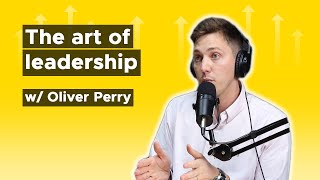
Oliver Perry, Sales Director at Trust in Soda, explains his leadership approach: be the hero maker, not the hero. He tracks performance with a data dashboard covering pipeline, CVs, interviews, and calls, and says tech recruitment has shifted from high-volume sales to teaching-oriented work that demands constant upskilling.
Chapters
I quite quickly realized, always known, that I've never been the best recruiter. Like, I've never been in a room full of recruiters and thinking I'm the best.
Welcome back to another episode of the Recruitment Mentors Podcast. I'm your host, Hishem Azzouz, and on this week's episode, I was joined by Oliver Perry.
A good recruiter should be able to spin enough plates managing 3, 4, 5, 6 interview processes at one point. I think that's fair.
It's been a long time coming. He was due to be involved in a live podcast event which we had to cancel due to COVID, so it's It was really great to sit down with him finally in the podcast booth.
If they're just like, oh, I think he, uh, I think he works in a warehouse or something, like if you're not curious about like what your best mate does for work, there's no chance you're gonna call some stranger.
And we focused on the last 4 years where he's gone from being an individual contributor and progressed all the way up to sales director for a company called Trust in Soda. We spoke about a lot in this episode, but more specifically around leadership, how he's got the most out people that he's worked with, how he's managed teams in sectors that he's never recruited in, how he's really committed to being not the hero but the hero maker. And that probably explains why he's been voted several times over the last couple of years the MVP of the entire company. Enjoy the episode. Ollie, welcome to the podcast.
Thanks, mate. Thanks for having me.
Excited to sit down with you. Like, we— I had you booked in for the— remember the live podcast event pre-COVID? You, you were part of the panel. As a panel? You was on the panel?
Oh yeah, yeah, yeah, from the shed.
Yeah, so you ended up having to do it remotely, but you was— it was you, uh, Rhonda D'Ambrosio, and Chris, um— oh no, that's gonna kill me.
That's that picture's face. Oh, I can picture his face. He does like—
oh no, that's killing me now. Yeah, that's— I'm— whoever that is, I absolutely— I'm, I'm sorry, I should remember. I should know who that is. But it's been a long time coming, right? Obviously we've got to know each other a bit over the last couple years. So like, being honest with you, I don't want to blow smoke up your ass immediately, but anyone that I speak to in and around you that have worked with you speak really highly of you, specifically around you being someone who is an inspirational leader, gets the most out of people. You're a nice guy, super smart. So yeah, I'm really excited to dig into this with you. So to give everyone some immediate context, we're just saying it's going to be your 9th year in recruitment September. Yeah. Uh, you've worked for 2 organizations, um, for the last nearly 4 years, 3 and a half years you've worked at Trust in Soda, part of the Trenovo Group, and that's what we're going to be focusing on today. So just to give everyone some immediate context, over the last 3 and a half, nearly 4 years, you've progressed from— just looking at your, uh, LinkedIn now— from Principal Consultant all the way to Sales Director. That's impressive.
Sales Director. That sounds cool.
Impressive. That does sound cool. All the way to Sales Director. So just to paint a bit of a picture of what that actually means, I think you shared with me that the most amount of direct reports that you had at the highest point was 36. It's around 25 currently.
Not direct, but Like fruit, like— yeah, yeah, in the team.
Yeah, yeah, in the team. Uh, and you, you basically, the way you described it was anything perm-related on the soda brand you was involved in. Exactly right, that, that's how you're involved. And what that means is you've got Ireland, Germany, UK.
Yeah, yeah, I don't have Ireland anymore since I moved back to London. That's main stayed in Ireland, but yeah.
Okay, cool. And then, uh, so basically what that looks like today is you've got 4 billing managers. Yeah, that you manage. Yeah. Uh, and then you've got visibility on the profit and loss, control of cost, triggers to hire. I think what you've had really good exposure to, which you shared with me, is really getting into the nitty-gritty of building a profitable business, not just, yeah, recruitment team, we're smashing our billings target. Like, there's been a lot more to it that you've been involved in and you're responsible for.
Yeah, I'm lucky that it's— that's driven by how Soda and Chernova operate. Like, they give you a lot of that, um, clarity on it because I interviewed a few people as managers and there's no fault of their own. Some businesses just don't let you see that. Here's an NFI number, hit it, we'll deal with the rest. But actually Soda, in a good way, give you like the full clarity on seeing what goes in, what comes out, and giving you a chance to control it. So yeah, I'm lucky.
And that's something that you're then measured on, right? So I think what you shared with me— please correct me if I'm wrong— but what you shared with me was 2022 So the perm, £5.5 million in revenues, in sales. Yeah, that's what we hit in 2022.
Yeah, and that was the perm sales. And we did— it was the first year we started selling what we call embedded hiring solutions, um, we did half a mil of that. Yeah, so it's about £6 mil in total. Yeah.
And I guess final bit of context, because this is what we want to speak about, is you just— like, if we were to put your role into like a pie you said around 40% of it people leadership, employee engagement.
Yeah.
So one-on-one meeting reviews, internal challenges, 20% learning development within that as well. Then 10% of your role forward-looking strategy, vertical market strategy.
Yeah.
Another, um, 10% would then be always recruiting, internal recruitment.
Yeah.
And then I just realized this doesn't make 100% and I've got 20% client acquisition, increase client spend.
Is that me or you?
But a bit— a big chunk of it leadership, culture, getting the most out of your people, make sure people are happy, they're performing. And that's what we're going to talk a lot about today, as well as what you're seeing from a client acquisition strategy sense that you're finding work within your organization.
Yeah.
So let's start with the million-pound question, something that you've probably continued to think long and hard about as you're building your teams. Yeah. What are the common characteristics and traits of current top performers in recruitment today, do you believe?
I— yeah, I'm lying if I just don't start with work ethic. Like, it's, it's such a boring answer, but, um, I'm just such a believer in it. Like, I'm such a believer that you've never met— you've never had anyone sit here that hasn't had to work really hard. Like, it's just, you just don't meet people like that. And you'll, you'll get the, um, you'll get the counter argument, like the hustle culture and um, and like quality over quantity. Like, I get it, like quality is really important, but I'm just such a believer that like quantity leads to quality. Like, you can't paint the perfect painting first time, you have to paint 100 paintings, you'll get there eventually. So yeah, work ethic for me is just— it's really hard to interview for, but like once you find— once you know someone works hard, it's a good trait. Uh, I heard your last podcast, you talked about discipline a lot. Like, I'm talking about using that word a lot because Motivation for me is kind of an overused word because it's extrinsic, it's external. Like, you expect something to happen in your environment to motivate you, and that's then hard to control. So discipline, way more important. No matter how you feel, no matter what's happening in your environment, you're going to do X, Y, and Z. And then the, the third one, the quirky one for me, is curiosity. So You can't— there is no playbook to recruitment. There is no, they say this, yeah, and you say this. And a lot of how a phone conversation will go or how like a process will go will be down to that person's curiosity of like how they ask, what they ask, etc., etc. Hard to teach, but I feel like if you meet curious recruiters, they're usually, yeah, usually high performing.
Yeah, I really like the curiosity one.
Yeah, I ask it in an interview now. One of my interview questions— I'm really bad interviewing, but I'm trying to get better— one of my interview questions is, tell me about, like, tell me about one of your mates. And they're like, what are you on about? And they're like, give me one of your mate's names. And they're like, Adam. I'm like, what does Adam do for work? Tell me all about his job. And it's genuinely one of my red or green flags.
I like that.
If they're just like, oh, I think he, uh, I think he works in a warehouse or something. Like, if you're not curious about that, what your best mate does for work, there's no chance you're going to call some stranger— stranger— candida and actually like be inquisitive and curious about them and what they want to say.
I like that.
Yeah, it's good.
I think that's super practical, actually.
Yeah, it's good.
On the— yeah, I actually, I really like that. So I want to dig straight into Ollie the leader. So something that you shared with me in preparing for this that really resonated, which I think probably explains a lot, is you said to me don't be the hero, be the hero maker. And that resonated with me because, uh, you're not going to hear a lot of top-performing recruiters say that, I don't feel like. So, uh, in, in the sense that you've ended up being known from the people that I speak to around being a leader, a great manager, whatever, that, that doesn't surprise me that one of your perspectives you have was what you really doubled down on when you went on this leadership journey was, yeah, being the hero maker.
Yeah.
So like, why, why, why, why, why was that a perspective that you started to instill and, and sort of view leadership or management from that standpoint?
I quite, um, I quite quickly realized, I always known that I was never, never been the best recruiter. Like, I've never been in a room full of recruiters and thinking I'm the best from like a quality or results perspective. Um, and then I got lucky enough to like work with some really good people when I ended up in the leadership role I'm in now, early days, who were way better than I ever was. And all I was thinking is, if they turn up like motivated, engaged, happy to come to work, proud that they work with me, with this business, like, that's all I've got to do. Like, I've just got to get them out of bed and be like, I'm well excited to go to work. And they come, and like, if I get that bit right, because they're so good at their job like I don't necessarily have to touch too much else. Um, so the chicken and egg situation— I don't think I went in with that mindset, but in this role I ended up working with some amazing people, and then I was like, yeah, okay, don't flood them, don't overrule them, but like just make sure they're really happy and engaged to come to work because they're so good at their job. And then, yeah, and then they— yeah, like they were a big part of the success of the last 2 years. So I was just— it was all like, get the good people firing, basically. So yeah, and then I heard that, I heard that phrase after the fact, and I was like, I looked retrospectively, like, I like that. Yeah, I'm gonna, I'm gonna use that. Yeah.
So let's talk about that then. For, for leaders, for playing managers, billing managers, billing leaders, directors, whatever, if they're looking at their team right now and they've probably got— because it's normally how it works— 10% of their team absolutely fucking firing. Yeah, they're exceptional. They're doing 80% of the target.
Yeah.
What were— when you recognize that and that's where you could add the most value, what were the 1, 2, 3 things you immediately or work towards doing to make them look forward to Mondays, be proud to be where they work? What were some of the things that you implemented, did to really get the best out of them?
Um, I honestly, I think it becomes Like, uh, the first thing is they're understanding like where they want to get to. You have to do that to begin with because everything you do after the fact, every single day, how you treat them, how you talk to them, you have to be led by what they want. So, um, like the personal development plan, right? If you haven't done a personal development plan with one of your like top performers, or everybody, but with your top performers, they tell you what they want, they tell you how they want to be communicated, they tell you what their career goals are, etc., etc., etc. You then it all works back from that, right? Some people want praise, some people want autonomy, some people want L&D, some people whatever. They— you have to hear what they want to treat them as individuals and get there. So that person development plan is a bit really important.
And how did you do that quickly? Was that a, here you go guys, here's a couple of questions, think about them, we're going to walk through them together on Friday?
Yeah, basically we do it once a year. And review it mid-year, basically.
Okay. Um, and it's just what, a series of prompts to say blue sky thinking?
It's a bit of blue sky thinking, like 1-year, 2-year, 3-year, 5-year stuff. Um, but it's more— it's really more about how they want to be treated and what, what they feel gets the best out of them.
So what sort of questions are you asking?
Um, uh, one of, one of them— I think there's like 4 questions on there. But what it— we talk about goals and goals being the end goal, and then they're like the rocket fuel to get there. What is that rocket fuel? So you tell me you want to build a million quid, that's a goal. Like, it doesn't— I don't— that doesn't really help me get there. But like, what is the— what is the fuel that I need to give you daily to reach that goal? And again, that, that comes out to communication style, that comes down to recognition, that comes down to time. So tell me what you need for me to reach that goal. And that's like one of the questions. One of them is Um, how do we maximize their— what are their strengths and how do we maximize— how do I— how do you think I maximize your strengths? So they may be really strong in one part of the job, and how do we— how do I top that up more and not worry about necessarily the things, right? So yeah, there's— I can't think of the two questions, but there's only four questions on the personal development plan form. But it's very blue sky thinking, it's very like blank piece of paper, um, but the aim is to like feel like you know how to manage them, come out of it.
So step one, before we even get into the things that I asked you, is you need to fucking know, yeah, what's important to them, how they want to be treated, what their big aspirations are. So we've done that.
Yeah.
What were then some of the things that you approached, attempted, did daily, weekly?
Yeah.
That then, you know, and maybe even thinking about it now, what are some of those things?
So let's see how many Atomic Habits quotes I get in this interview, by the way, because, because when— once you— once I had the goals, one of the One of the things that rings true to me from that book is you don't, uh, you don't rise to the level of your goals, you fall to the level of your system. So they tell me this is what I want, and then it's like, okay, what, what are your systems? What happens on a weekly basis, a monthly basis? That might be how much touch time we have together, that might be how much L&D time I give to you, how much L&D time you give to others. It might be, uh, community-led. What do you do outside of the day job? What do you do in your personal life? So like, what are your— there you go— what are your systems to put that in place? And Um, yeah, you have to— if the PDP is just all blue sky thinking and it's all like, I want to be the— well, I want to be the best, and then that's it, and then you just put it in the cupboard like it's rubbish. Like, you have to have the systems in place, and, and, uh, and they can be different. They can be, um, they can be things that are in your diary. They can be just things that I need to do on a regular basis. Some people want the stick, some people want the carrot, and I kind of need to know what that is basically. So the PDP hopefully should tell me that.
And then the— okay, yeah, so then you help uncover what, what systems they have in place. Yeah, talk about what they have in place, and then it's like, well, okay, well, these are maybe the systems that we need to improve or need to look at, need to work on, that are going to help you hopefully arrive at the destination that you're aiming for.
Yeah, exactly. I— it will always— and then I'm quite, um, process-driven, and I'll always end up back at the day job. Like, it'll always end up being like, okay, let's talk about your business development strategy or your your candidate network or your— how you manage the database. Like, you'll always end up back there eventually because they're the systems that you put in place to help you reach the goals. But, um, definitely work that way around. Um, but some of these people I'm talking about, that's just so fantastic at their job that actually, like, they're telling me, like, the whole coaching mentality is me just being like, oh yeah, what else? What else? And then they, they just come up with the answers. So, um, so yeah, it's, uh, Makes it easier when they're good at their job.
Let me ask you this then. Hope this comes across the right way, uh, because I, I speak to, uh, a lot of high performers. So I think you shared with me your— this might have just been your best year. I don't know if it was best year ever. You said it was like 250K.
Yeah, I know. Yeah, which now you've got people listening to podcast thinking, what's he doing there?
No, not at all, uh, but The reason why I reference that, yeah, because I'm sure you might have had to wrestle this. I don't know, I'm assuming here. Yeah, look, I, I speak to high performers who can be uninspired by their leaders because they're not better than them.
Yeah.
Have you had to wrestle that?
How have you navigated that? Because that's why I think what, what makes your story great is you might— I might speak to people that if you were to go, Ollie the Recruiter compared to me the Recruiter, yeah, I know I'm 3 times better than him.
Yeah.
However, I really respect and value Ollie, um, because of his leadership and management. These are some of the things you're talking about.
Yeah.
So what— yeah, like, what are some of the things behind that? Because I think that is something that I hear a lot where I feel like, yeah, I'm not learning anything, I'm not inspired by my leaders. And oftentimes it's that, look, they're not willing to take the first step, they're not willing to do what I do, and I'm listening to someone that I know couldn't do what I do. And I know there's a bit of an ego there, but I feel like that could potentially be something that you've had to wrestle with.
So true. Um, you said take the first step. Absolutely. Like the classic, I wouldn't tell them to do anything I wouldn't do. And that is absolutely the case, right? I wouldn't jump on— I wouldn't not jump on any call, send any email, go to any meeting that, uh, and not do what I expect them to do. And hopefully they all realize that, and they've seen that, even if it's not the quality they would do actually. Like, um, and, and then the, the word— the first word that comes to mind is vulnerability. So I feel like it works if you are a vulnerable leader where you admit your mistakes and you bring yourself down to their level, because everyone makes mistakes. Like, I lost a retainer pitch this week, um, was against one other agency, and I led the whole thing, and they went with the other agency, right? And actually telling them why I think I didn't win it and giving them the feedback the client gave me, that vulnerability I just think is so important to like get them on your level so you never feel like, um, you never create that, like, hierarchy. Like, even the silly little things, like, I hate saying my team, and like, those don't mean like it's the team, it's not my team, I don't own anybody, don't own anything. That those are like colloquialisms. But yeah, I think vulnerability is a really important part, that they, they don't— you don't create this hierarchy that doesn't need to be there. Um, and then a lot of it's just being a good human most of the time. Like, a lot of the traits are just being a good person, like, you'd want to treat your family and friends Yeah, that's fair. And then the other— the last thing is, is L&D. Like, I'm a big believer in constant learning and development, and I hope everybody that's ever worked with me does think that I would always help them fine-tune parts of their job, right? I would never ask them to just do more, do more, do more. Like, quantity is important, but like, the quality of what it is is really important. So hopefully everyone's at work with me, even if they're better than me in the day job, they've always thought like, Ollie can actually teach me something I don't know.
Yeah, I really like that. No, I think that that's very well, well put. I guess what I'd love to dive into and get into a bit of detail, because I think people will be interested in it, is how have you gone about— and I'm sure this has evolved over time— but how have you gone about structuring your days, weeks, with a big part of your role being management, getting the most out of people Yeah, what does that typically look like? I guess maybe you could take a snapshot as a sales director because there's a lot of moving parts. Yeah, I don't know if your, your diary has literally become one-on-ones and meetings, but yeah, how have you, how have you sort of chopped that up and what does it actually look like to ensure that you cover all bases on looking after your people? Um, yeah, covering any challenges or potential challenges down the road. You're also making sure that you send 10 emails out each day for potential recruiters. You're thinking about, well, like, we're really not pulling as many jobs as we were 3 months ago, like, what does this— yeah, what is the typical cadence look like for Ollie at the moment as a sales director? How have you chopped that up?
So I'll, um, I'll talk to you from a week, but I might sound really boring, but, um, and the purpose of some of the things. So, uh, first things first, there's like, you've got the mix of the team meetings and the one-to-one meetings. Again, I'm a big believer that team meetings are all about engagement, they're all about camaraderie, they're all about all agreeing we're going to do this together, not name and shaming somebody, like, um, not trying to create accountability. Like, Hishem, on a team call, you're going to do this for me this week, or whatever, right? Like, it's just, it's fruitless, right? Um, toothless. So team meetings are all about like the bigger picture. Here's where we are as a team, here's where we want to get to, here's where your part to play in that. So team meetings for me are, um, aren't as important as the one-to-one. So you have your team meetings Monday, Wednesday, Friday, which is all about here's where we are, The one-to-ones, the agenda in the follow-up of a one-to-one, I think is just so, so, so important. I think both sides of the fence can really underestimate the importance of it. The consultant can come really underprepared, chat for 20 minutes about the weather, last 10 minutes is like just a real rush through. How's your desk looking? Like those open questions, like how's your desk looking? Like, I hate it. Like, I want an agenda that has like a specific closed answer. What's your pipeline? What opportunities have you moved from X stage to X stage? What live jobs you work in? Um, like closed, closed agenda points that get followed up every single week. So everybody knows they come to a one-to-one, Ollie's going to ask me these things, he's going to help me with these things, and the next time we have a one-to-one, he's gonna hold me accountable to what I said I did or what I said I was going to do. So that, like, one-to-one agenda, everyone should know going to a meeting what the agenda is in a one-to-one, and everyone should know that it's going to get spoken about again. Otherwise, you come to a one-to-one and you're just like, let me just get through this because Ollie's never going to talk to me again. So Your team meetings, your one-to-ones.
Um, just on that quick, sorry to butt in, because I think I could improve mine, so I'm asking selfishly. Yeah, what does that agenda look like then?
Um, so we have the, the live, the live job agenda is going through your pipeline, so which is live interviews, what live interviews you've got at live jobs, and then it's understanding how you can improve the chance of that making you money. And if that's close, if that's— you need to do this with the candidate, you need to do this with the client, have you asked that candidate that question What does his wife think? What does her husband think about— like those kind of closing questions on the candidate. It's a live interview, make that closer to the money. What can you do in that process? Do you need to pre-close the client? Do they really— are they really going to offer $80K that they told you 3 weeks ago they might offer? So the actions off the back of that, then you've got your business development. So we have a very easy sales funnel, which is, um, 3-stage opportunity. So if you want to Nurture an opportunity. It's a, it's an open opportunity. I've identified that I want that to work with that client. I want to pull that job. And then you go through your sales funnel with them, your multi-channel sales funnel. And if they come back to you in a negative way, it moves to responded. So it moves like the communication's open, clients talk to you, they've answered the phone, they've answered an email, you're one step closer, but they don't want to work with you, right? And then the third stage is positive response. And then part of the agenda one-to-one is you review your positive responses. Like, what do we actually need to do to turn that into a client in terms Your review responded, what do we need to do to turn that positive? Invite them to an event, send them some market insights, send them another candidate, get them on the phone again, whatever it is. And then you open ones you haven't heard back from, what you do with them. So those two, like, live jobs opportunity funnel there, that they're the main, like, stay of it. We're very data-driven. Like, I don't, um, I don't agree with this, like, no KPI policy in recruitment. I just don't. Like, you can't improve what you can't measure. So everyone's got a what good looks like from last week, job CVs, interviews, and there might be a couple of inputs like new business calls or targeted specs. We set it week on week. This is what you want to do this week, and you review it this week. You said you'd do this, you did, you did this. Like, where can you improve? What do you need to do better? Kind of thing. So they're the three like stages of an agenda. I don't know if that's going to help you from a—
no, no, no, I think because I think mine, I've set agendas, but it's probably more lent to— because what my follow-up question on that is, everything that I've tried to learn about one-on-ones is it's about making it about only the person you're sitting down with.
Yeah.
So not one part of that— I don't know, you might just do this as you're— as you throughout the week and in different moments.
Yeah, but that's a very— like, that one-to-one I just explained is like a sales meeting.
Okay, fair.
And then you have to—
because I do one-to-one as in like, me and Ollie. So at the moment Because I think this is what a lot of people do. One-on-one, I don't know, I'd view one-on-one as, Ollie, talk to me about how this week's gone.
Yeah, yeah, that's a monthly review for us.
Okay, fair.
That's a monthly review. So not that like you're just a robot all month until you get to a monthly review, but you have to be really— I think you have to be really careful that you don't abdicate your responsibility in a sales meeting to like not help that person. And if, and if your one-to-ones are all, uh, non-actionable conversations. I just don't think it helps. So your reviews for that, your reviews about the person's well-being, about, okay, person's goals, motivations.
Um, how long is that meeting, the one that you broke down?
Uh, half an hour.
You can do all that in 30 minutes? Yeah. No, I, I, I prob— I really rate that because what you're also doing there, which I really like, as you said, this isn't— I can definitely imagine and see it now that I don't go into that meeting with you and you're like, you haven't done this, you haven't done this, you're shit. You're not doing that, right? You're trying to see opportunities where you can help them move things closer to, uh, yeah, improve where they're trying to get to or help with things. But what you're helping people do, which I— a lot of recruiters don't do because I speak to them, and when we provide learning from them and the, uh, for them and these things, is you're enabling them to self-reflect and know where they are every single week.
Exactly that.
And a lot of people don't.
If you nail that meeting as the manager you don't have to do much because the numbers, the data, the accountability, the actions speak for themselves. And the person comes with the answers. Here's what I did, here's what I didn't do, here's what I want to get better at. If it's really directive, it's not a good sales meeting. If I'm like coming over the top and telling them like everything they need to do rather than allowing them— coaching them to get there—
like, it's a bad time because you're taking away the overwhelm of going, I'm nowhere fucking near my target.
Yeah.
And yeah, like, how the fuck am I gonna get there? But if I'm taking a step back every week and go, I've— oh wow, I've moved 5 clients from non-responded to responded, I've got— well, I've got 5 more interviews than I did last week. Every single week I'm checking in. So you said follow-up is really important as well as those. What does that look like? Is it just you have to fucking follow up, or do you mean, right, we've done this week 1, week 2 we're going to talk about it and how you got on? And is that what you mean?
The basics of like putting it into writing, like, basically not— my memory is terrible and I and I shouldn't expect you a week later to remember what we spoke about. So like, just we easy thread in the Teams chat, Hishem, we're in a one-to-one. Okay, here's what we've went through. Um, this is your last 7 days, this is your last 30 days, and these are the actions we want to achieve going into this week. And we go into the next meeting and it's just there to review. There's no like, I don't know, if without the written follow-up, I just think it's so wishy-washy. It's you just relying on memory and you're relying on emotion a little bit. It's really easy for you as a manager to advocate, to be like, I can't really remember what we spoke about last week, so how was your weekend, mate? Yeah, sound. And then it's like you're, you're just getting yourself a hole. So like the written follow-up, it's so boring, it's so boring. Like it's not amazing like leadership tactics.
No, but it's the doing it. Yeah, yeah. So you've got team meetings, one-on-ones.
Yeah, and there's some quirkier things. So we'll do like monthly business development sessions where, um, try and collaborate with what we're doing. Like it's really Uh, it's really easy for us all to run off and try and nurture opportunities and speak to this point of contact here, here, and here, and this person's over here and here. So every month we'll get together and be like, this is, this is what I've done. And, and there's another consultant in another vertical trying to do the same thing with another point of contact in the other business, right? So just aligning those two things, uh, we call it opportunity collaboration.
Um, what else happens in a normal week?
Uh, we do probably an L&D session a week, um, literally just what if tip of my tongue. Like, what, last week we, uh, I don't know, we had loads of finals rejected, right? So let's just do a quick 30-minute bite size on interview debriefing and pre-close. Like, what, how can we affect the post-interview part of the job? Because we've had loads of finals rejected, are we closing both sides of the party? So like, a lot of the L&D is really, in a good way, reactive to what's happening in the here and now. Um, and yeah, then all my upward stuff is quite, uh, like to the, to the CEO is quite data-driven pipeline numbers, conversion, profitability, forecasting your profitability. You have this amount of pipeline in the team, you're averaging converting about this percent, when's that going to be invoiced? You know, you can calculate roughly if you close these amount of deals, $100K invoice this month, $100K next month, $50K next month, what's your profitability forecast looking like? And you said triggers to hire, and that's a really good way of them making sure, okay, in the next 3 months we're going to be EBITDA positive by X. Let's plan triggers to higher to maximize the like per head spread of the NFI. So that the upward stuff is all like profit and loss forecasting, which sounds boring, but I used to be an accountant, so I like it. Yeah, that's what I trained at uni.
Oh, I didn't know that.
Yeah, yeah.
Oh yeah, I bet you absolutely love that stuff.
I love numbers.
So how— a big part of, uh, your role also then And I know this is also challenges. How have you approached managing managers?
That's the hardest thing.
Why is that so hard?
Just because you're the— I call them the front line, like the front line soldiers, the people, the salespeople. Um, they are your most important asset, right? They're, they're the people doing most of the work, and I'm now too removed from them. So you're like, you don't want to— you don't want to— you want to help them, but you don't want to undermine the manager. So I did find it really hard.
Um, what did you find hard about it? Just being removed?
Yeah, just like, get— like, trying not to be in the way. So, um, coming over the top of, oh, they did, they did that, maybe they could do that. And actually me being— doing that desk coaching to that person when actually I'm, I'm undermining, potentially undermining the person that manages them, right? So just, um, accountability is the hardest thing in sales. Like, holding somebody accountable to doing something is so hard. And when it's a second-removed accountability— hey Hishem, I want you to get Bob to do that, well, I think Bob should do that, um— and then in our review you're like, oh, Bob didn't do that— and then it's like the accountability is watered down two ways, and actually getting to the bottom of it, it's really hard. So that manager-managers is really, really hard. And as we know, billing manager is just such a hard job. Like, I say it to my billing managers all the time, like, your job is harder than mine. It is hard. Like, there's, there's, there's loads of elements, but their job is so hard. So, um, how do you try and make their job easier then? Um, yeah, good question. I'd like to make it easier. How do I make billing managers' jobs easier? Um, I don't know the answer. How do I make billing managers' jobs easier?
Because if you know it's that difficult— because I speak to these people all the time, they're stressed, they're earning less money. They've got more responsibility. They're having to deal with other people's shit.
Yeah, I think the, um, I think like coaching them through where they spend their time is important. It's really easy as a billing manager to become a parent, and it's really easy to get so invested in like the people side of it and the mollycoddling and doing it for them and not coaching them through it. So it's helping them, is that like helping them fail a little bit? It's helping them be like, it's fine if Bob goes through a week and doesn't do what you want them to do, as long as the end of the week is you coaching them to improve. But if, if in that week you do everything for them, that's when you become highly stressed. That's when you lose your time to do your day job, and your day job— and actually you're not, you're not like building anything scalable because you're just spoon-feeding them and they're not going to be better next week. So helping them through that, like, coaching part is, is probably the best you can do. Um, there's a fine balance between like autonomy and abandonment. So you want to give them autonomy because they're a better manager and they're highly successful, that's why they're in their job. But you have to be really careful you don't just like abandon them and just like, yeah, I got it, you're fine, I'll see you on Friday, let me know how you get on. So, um, like giving them that right balance of time and, and letting them do what they need to do is, uh, is quite a hard challenge. But if you get that right, it really does help billing managers because you— the last thing they need is someone breathing down their neck when they've got all that responsibility.
Hey everyone, a real quick one from me. This podcast would not be possible without our amazing podcast partners Vincere and Sourcebreaker. Because you listen to this podcast, you're able to get your hands on exclusive savings on both of these award-winning products. If you're a growing recruitment business, you have to check out Vincere, who are an all-in-one operating system for your growing recruitment business. With Sourcebreaker, if you want to make sure that all of your recruiters have the best tools on the market to stand out and beat their competition, then you have to check out Sourcebreaker. Use the link in the show notes, in the comments below, and you'll be able to get yourself exclusive savings on these amazing products.
Yeah. How have you, on this journey so far, because you've had to really get— yeah, you've gone on this journey on managing more of the, the P&L, yeah, EBITDA, all these things. How has Ollie approached managing underperformance?
Uh, data-driven, to begin with. Like, I, um, Performance management for me has to be data-driven. It has to be obvious, it has to be measurable, and if it's not, then that's when I think it's really hard to overcome. Uh, I spoke to— I won't name the names, but I spoke to someone in another business who, um, who— their model was hire no, no trainees. We just hire experienced people, let them do what the hell they want, and we give them the autonomy. And they were smashing it last 2 years, and now the market's downturned and they don't know how to help them. They don't know what they were doing right. They and what they were doing wrong. And they have no idea to help these really high performers. So data-driven is really important. Here are expectations over a month, a quarter, or whatever. And it's not just sales. It's inputs. Like, what are the inputs that you need to do this job to help you get the results you want? So many different inputs. And everyone should be different. No one should just be a blanket, everyone does the same. But then when people are underperforming, it has to be data-driven to be like, you haven't done this. Like, you haven't done this part of the input of the job. And we don't know if you are ever going to hit the results that you should have because you didn't do the input. So starting there is really important, and, and like being data-driven with the, with the actions of underperformance, not like try harder, do more, do more, coming earlier. Yeah, um, I say that a little bit.
What's it like? What, what, what is Ollie's dashboard? Do you know what I mean? What are like the—
why I hold other people accountable to—
well, just, just like because I can imagine there are some really fucking key things.
Yeah.
And you love numbers. Every day, every week, you're looking at that going, oh, that's looking good this week. Like, what's like Ollie's dashboard of the performance metrics that you're always keeping an eye on?
Yeah.
That I'm assuming could act as lagging indicators of like, right, I'm starting to get a sense that we could potentially go in a downward trajectory.
Yeah.
What's that dashboard? What does that dashboard look like?
Um, so first one Uh, is pipeline entries. So pipeline entry, pipeline entry, pipeline number could be I've got £100,000 worth of live interviews, right? Um, but it's a number that's, um, it doesn't always tell the story because you could have two £50,000 processes and that's quite fragile, and you had two rejections and you're down to zero. So the total value is not necessarily the important, is the amount of entry. So I have four live interview processes going on. We, we reckon four is a sweet spot. 5, 5 good, 6 exceptional. So you've got like effectively 6 different jobs with live interviews out. So they're potentially 6 placements, right? You get to that 1, 2, and your pipeline becomes weak. So how many pipeline entries have you got is one lagging indicator. Job CVs and interviews is— everyone's got that lagging indicator. How many jobs you need to work a month, how many CVs you need to send, how many first interviews you need to get. So everyone in the business has that unique to them depending on their market and their level. But they're the 3, they're the 3 like result dials. If you're getting the job CVs and interviews, like you back yourself with the quality of the work together. The inputs before that— candidate calls is one. Like, again, someone might call me old school, but candidate is king and queen. Like, especially in the downturn market— when, when we were booming the last 2 years, every— like, a lot of information was inbound, or it could be online information that you could turn into money. Now the information you turn into money is what you get from candidates. Just the fact, like, where they work, Um, interview leads, like, uh, they're the product that you sell, so finding more good product that you sell, etc. The candidate's keen, green. How many candidates do you speak to a week? So liking indicator. New business calls, how many hiring managers you speak to. And then we have how many targeted specs you've sent out in a week. So not like I've just sent 30 people this random mass email, but I've emailed Hishem and say, hey Hishem, I know this about you, this is how I could help, whatever. Targeted spec email. And then the other one that we might use is opportunities. So we talked about the opportunity sales funnel. How many are you adding into your sales funnel? How many opportunities you identify that you put in the top of your sales funnel that you then start using your cadence and your sequence to get through to winning new clients? So they're the pipeline entries, job CVs, interviews, candidate calls, new business calls, targeted specs, opportunities.
I think that's really helpful. I really like the pipeline entry one.
Yeah, it's quite new actually. We, we always used the pipeline number a lot And it—
yeah, no, you're completely right, because on the face of it, it's like, wow, £200 grand could drop in.
Yeah, yeah.
But then when you learn, oh, that's literally two jobs, so that if both of them don't go through, exactly, fucked. Yeah, super vulnerable.
And you should be able to spin in— like, I don't, I don't know what the magic number is, but in terms of good recruiters, should be able to spin enough plates managing 3, 4, 5, 6 interview processes at one point. I think that's fair.
Yeah, that's fair. I really like that. Um, What, what I was going to say, I guess this might be it. So we've just spoken about dashboards, importance of data, and I think I could— that really rings true what you were saying with the person that you spoke to in the company that you won't name. I literally spoke to a company today where I think it's all— we spoke about this live event, didn't we— where it's almost gone too much the other way on KPIs.
Yeah.
And I think the language I like to use is just science to success. Like, people want to know or have a better idea. Because recruitment, there are— can be a lot of, particularly if you're 360, that you can be overwhelmed very easily. Yeah, definitely. So being able to sit with my manager and you can help me understand and see through all the spinning plates on like what good looks like, and if I do get in and around here, that should mean that I end up where I want to. Yeah, it's really fucking helpful and important.
Yeah.
And like you said, you can't improve things that you don't measure.
Alex, Alex put it in a really good way on the— on that podcast. Alex Elliot. Yeah, um, he was like, uh, if you don't believe in KPIs— KPI is a horrible word, but what good looks like is better— if you don't believe in what good looks like, it's like you don't believe in cause and effect. Like, you don't believe that doing something leads to something else, like, just in life. Like, yeah, and if we have to believe in cause and effect, so yeah, he put it in a really good way.
Yeah, and so I do think that's something that people will be wrestling with, particularly people, hybrid environments, not in the office as much. These things. And the reason why I'm bringing that up is because I guess it builds on to what you're just talking about. I was just curious to get your thoughts on— you've got the data, you know what things should look like. How have you then gone about maintaining standards? And is that through your one-on-ones? Is that for your team meetings? Like, how has— only like, you can see where things should be. Yeah, they're not. How are you then trying to influence those things without stepping on people's toes, just telling people to do more things? How, how is it in people's standards?
It's hard. And the first step we had to take was the communication of that, because in the downturn, in the market downturn, people did have— people do have to do more, right? But, and what I mean by that is make an extra X plus 10 calls to get that job, or send an extra X targeted specs to get that job, or send more CVs to convert because the candidates are more risk-averse now and clients more risk-averse. So people do have to do more in a downturn, but the communication of that to start with is really important. And hopefully people in soda believe me, but it's not me asking you to do more, it's not the boss asking you to do more, it's the market asking you to do more. It's just the conditions we're in. We're in— we're now playing a game where there's just more moves to make to get to the end of the game. So if we all agree on that we all agree that if we want to be successful in the commission, hit our targets, we do have to do more. Like, not a, not a, not a KPI micromanagement. I just want you to do more for the sake of it. Like, we have to do more. It's harder. And if, if that communication was rolled out hopefully as well as I hope it was, then that's the first step. So they believe why they need to do more. And then, um, then it comes down to the quality piece. Like, it's like the basics of the job— resourcing, candidate qual, job qual, interview prep, and debrief. Those basics of the job they're sometimes really easy to be like, whoop, let's just do more. And actually, like, we convert 20% of pipeline, 30% when it's good, we're getting down to 15% at the moment because like clients and candidates are risk-averse. And there's so much waste there. And actually, like, let's just do— let's just make sure we're always doing it the best as possible. Like, make sure the candidate qualification call— if you— some people just presume they do them perfectly, but actually you do need to refresh yourself. Like, what is a good one? Like, in terms of what you get out of it. Interview prep and debrief, like, the quality of that is really important. So Yeah, in terms of how it maintains standards, let's just make sure we all agree why we need to do more. Let's get on the same page and let's not put quality to the side. Let's not, let's not forget that like the fine-tuning all the parts of the recruitment process will also help us be better rather than just doing more, if that makes sense.
So, you know, that does— like, what immediately comes to my head, because this is something that I'm really trying to be disciplined with myself because I totally buy into just like what you've spoken about today and the way that you've operated things the way that you've spoken about how you operate things is you definitely have processes and you review what's working and you're measuring and you've got the data points to back up certain things. A lot of recruitment teams, one, don't, don't measure anything, so that this is even more difficult for them.
Yeah.
So like, how do you prevent— because this comes into it— like, how do you prevent people being gravitated towards the new shiny thing, if that's personal branding, if that's sequencing or whatever, and really get people to buy into the stuff which is the same. Because even if they just do the same thing and do it better, yeah, they'll probably hit their target and more. Yeah, that, that's actually the, the hard thing. Like, because, you know, we're building a training business, honestly, one of the most common feedbacks that we get is, yeah, like, really enjoying what I'm learning, um, but a lot of it is the same. I mean, like, that's a fucking good thing.
Yeah, yeah, yeah.
But that doesn't— you, you, you're trying— you, when you're learning, it's almost like you want, you want to learn new, uh, new things and all that. But actually is come back to what you're saying. Yeah, just become— commit to becoming world fucking class at those basics and just do them every day. Yes, but that isn't exciting, that isn't sexy. I want to know about personal branding, I want to know automating my fucking subject lines and like, do you know what I mean? Yeah, you probably have to get people away from the shiny objects.
Yeah, I was— I saw Ben at your event, um, from Sourcewell. I think it's a great product, had a demo, I think it's a great product. It just makes me feel really sorry for candidates and clients because they must be getting bombarded right now, do I mean? Just because it's easy to automate all that stuff. But, um, going back to your question, uh, how do I get them to do the basics?
Like, that's what you said is really key. So how do you get your— because I'm sure a lot of leaders can relate to that, they know it, they've been in the game for a while— how do you get people excited about re-looking at that candidate qualification call and trying to get them to buy into like, look, if we do this 1% better, yeah, you're gonna hit your target.
Yeah, another Atomic Habit quote: the biggest threat to success isn't failure, it's boredom. Like, it's just like, like you say, if you get bored of doing the basics in recruitment, that's— that's— you'll get closer to failure. So how do I get people excited about the basics? Um, uh, leading, leading from the front is probably the first thing. Like, if I'm not doing the basics of whatever my job is, if I'm not doing the basics on repeat, and they don't see me doing the basics, why should they do the basics, right? Our basics might be different, but like, if I'm not doing them, why should they do them? Take it back to L&D a little bit as well, not just presuming that they know the best way to do the basics, and let's just refine, let's just retune all of those little things. How you ask those open questions on the candidate qualification call, how you best prepare a candidate for interview, let's just keep fine-tuning those things. I'm really lucky Soda's got an amazing L&D function that sits outside of me that will do that as well, but from like a sales leadership perspective, you want to help. Um, like, celebrating the wins is a really important one. So like, when somebody does succeed by doing the basics, everyone's got to know about it. When someone fills a job by— and the candidate came from a LinkedIn job application— basics. Do you advertise all your jobs? Some people don't. Like, some people don't— mind boggles. Like, some people just— some parts of the basics, they just forget to advertise their job, or they just don't deem it important, for example. When someone fills a job because someone applied to that job, celebrate it. Basic. Celebrate it. Like getting an interview lead from a candidate and turning that into a job, celebrate it. Like, I think that's probably the— I think that's probably the best thing you can do is just make noise about the success that the basics are bringing to make everyone hyper-aware of why we're doing it. So, you know, and then a lot of the rest of it is intrinsic. A lot of it is about their discipline and are they disciplined enough to do the basics. Which is a bit harder to affect somebody's intrinsic behaviors.
But so, but before we finish then, let's talk about— because part of that pie that you're involved in is the, the business development element. Yeah, spoke a lot about that, the live podcast event, didn't we? So yeah, yeah, what, what, what's top of mind? What are you doubled up— what are you doubling down on at the moment? Because as, as you said, you're having to communicate to people, you're having to put more in? Yeah, more inputs to, to get maybe what you would have got 6-12 months ago with less inputs. What, what are you doubling down on?
Um, what we're talking about, business development, we're talking a lot about follow-up. Simple, boring, but obvious. Like, can't expect to do something once and for it to happen. Multiple multi-channel touchpoints: phone, email, LinkedIn, video. We're not very good at video, but like, there's many different ways to contact somebody. How many different ways you're doing it, how often you're doing it. Follow-up is really important. The strategy before the execution is really important in business development. Everyone's got something different, but if your business development plan is just, I'm gonna ring a load of numbers, or I'm just gonna— what, like, there is no strategy behind the execution, you're off to a bad start. Our opportunity funnel helps with that a little bit. It's like, these— there's a reason why they're here, and this is what I'm going to do with them. Um, helping people with that strategy— why are you contacting those people— is, is is business development in general. Looking backwards, we talk about a lot, like, it's really, it's really easy to be like, I need to add new companies, I need to find the next highly funded, uh, business, I need to new, new, new, new, new. Sometimes just turn around, look at your database, look backwards and think about all the people you've ever engaged with, all the people you've spoken to, met, worked for. There is business there, probably lower hanging fruit. So let's make sure we look backwards before we like looking for something new. Um, and yeah, I'm just a big believer about phone-based sales. Like, I'm just a massive believer that has to be incorporated in how often you speak to people, how often you build rapport, build relationships. Um, I text one of my colleagues before I came here because he sent me this stat ages ago that really resonates with me. So when, when you share information with someone, I think they measure it in, in a bit, I think it's called. And, uh, basically I think an email has like 5,000 bits bits of information in it. I don't know the science behind it. Um, and effectively, when you talk for 1 second, you give the other person 20,000 bits of information. So you think the words, the tone, the body language, whatever. Basically, like a quarter of a second of being on the phone, you're— there's more information being passed than 4 emails, right? So think about you on the phone for a minute. Think how many emails that is to actually pass that information. So I'm just a big believer in phone-based sales. That's just not—
how are you driving that? Because I do think that is— that's so common. You heard me talk about on— and I even found that I have a small team of 3 people, and like, I even find it hard to like drive it. I'm like, I'm just like, uh, like, if I was in your shoes, I'd probably just call them because you'd probably get to where you want to or understand what you need to understand quickly. Yeah, but it's up to you. But how, how are you driving that with your people? Because it's so easy Like, I don't know if you—
back in the day, you just strap their phone to their head. Not do that anymore.
I don't know what sort of things you come across, but like, something that, um, I come across in my own team would be, yeah, I just don't really like the idea of like disrupting their day. And I'm like, right. And then I'll try and communicate and educate on like, well, this is why I wouldn't view it like that. But like, how are you driving? Because if that's something that I, I believe has become a competitive advantage from all the recruitment leaders I'm speaking to— if you're willing to work hard, pick up the phone, build those relations, it's about building those relationships. As you said, you're able to build it more quickly if you're able to have those interactions, not just through a screen. How are you trying— how are you trying to drive that? Because I'm sure you get pushback on that.
Yeah, um, not to be too brutal, but that kind of pushback is probably the kind of pushback you just mentioned in terms of not enjoying that part of the job, probably goes back to like a hiring process problem, right? Because you want to be hiring people that enjoy being on the phone, from like in terms of how we operate, right? So, but if, if let's say everybody is engaged enough to do it and has the skill to do it, for me it's just about removing as much friction to, from, to make it happen. Like a lot of people find it hard, I believe, because they, their process is so bad that it takes them like 5 minutes in between each call, like research, development, what's the number, do I have the number, click here. So we've got, uh, very— love, love my CRM. So it has to— like, the CRM is the most important thing, right?
Okay.
So we have it set up in a way that we have two functionalities. We create two lists for everyone. Everyone should have— sorry, everyone should have, yeah, two lists. We call one the money list. That sounds horrible, doesn't it?
But fine.
Why should I change it?
Money list.
Yeah, I need to change that. But the money list for me is you have put a person in that list that you know there's a reason why you want to speak to them, and you know you have a mobile number for them. Okay, right. Whatever that reason is, that's up to you.
What could it be?
Could be they're someone that you used to work with that's just moved jobs.
Okay.
It could be there's a CTO of your target client. It could be, uh, whatever, talent acquisition, she lives down the road, she's your neighbor, and you've got the number.
You've got to know what the reason is.
If I close my eyes and I just clicked and dialed through these numbers and someone answered, I know, I know about— I know I'm in a worthwhile conversation. Because what happens if people don't have that list? They scroll through. Should I call them? I don't know, next one. But to get to that list, there's a lot of preparation. So you— our research and development list would be going into the database, slicing and dicing the information, and going through. And who's going in that list, right? So you search by whatever people you've worked with in the past, target companies, whether they're using like mobile scraping tools to get all that kind of stuff. You have your big research and development list, and when you identify someone, I want to speak to them, they go into there. And then when you're doing phone-based sales, Parkinson's Law— start time, end time, I'm going to do phone-based sales— you're just clicking and clicking and dialing, like removing the friction. Remove all the friction. And then you're not thinking about anything else but like, what I'm going to say when they answer the phone, what I'm going to say. You call, their profile's up, you've got the history of why you're calling them, you're prepared, you've got your script, whatever it is, right? Just remove that friction and just feel like click, click, click, click, click. Like, I don't know, sounds, sounds simple when I say it like that, but I, that's why I think phone-based sales are so hard, because people create so much friction. They're not prepared to do it, and it's so laborious. But if, if I just gave you a list of 100 numbers here and you know if any of them answered, it'd be a call you're excited about. It becomes a lot easier of an activity.
So no, no, that makes complete sense. And what I also like about that is because you are batching it, or trying to encourage people to do that, I think what also can cause friction is if Ollie hasn't done phone calls for a bit, or you haven't got recent reps in. That makes you more anxious about it, and that makes you just push it a bit. Like, yeah, I'll do that, I'll do that later. And then, because you do— because when you do, when you start calling and you speak to people, you're getting a flow. Yeah, like, you're, you're—
yeah, we make sure we all do it together, which I think is important. Like, we all do it together. I will do it. We have our sales sprints, like when we do it together and people are expected to not just do it in a sprint, like it should be happen— it should happen throughout the week. But like, let's make sure we have time, we're doing it together, we win together, we fail together, we all hear the good, the bad, the ugly. Like, that's really important, I think, is, um, and yeah, we're back in the office, um, 3 days a week now, and I think that's really helping, like, not doing that from your bedroom, from your bedroom on your own.
Is there anything, just quickly, is there anything that you've recently tweaked or done as a team on the phone side that's been effective, that's helped, whether it be the way that you've approached the why of your calling, opening your calls, close, or that— anything that springs to mind in terms of that's recently been working or anything like that?
There's a few people trialing the like, uh, permission-based opening sales call where it's like, uh, this is a sales call, you've got 30 seconds. I don't know if you like the most hated sales that Benjamin guy. Like, he's a— it kind of works out. It's not, it's not for me. I, to be honest, there's, um, the best sales calls are the ones that you know something that connects the person you're on the phone to, right? So if that, if that money list— I need a new name tonight— if that money list is good enough, when I call you, hey, Hishem, yeah, we both know Bob, or we met at this event, or actually work with you. So if, if, if you've got that bit of information to start with, that makes the sales call a lot easier from my perspective. Our value proposition as a recruitment company is being community-led, so we always have the ability to give them something without asking for something. Give them a platform to come on our podcast, give them a platform to come to an event, give them a platform to host an event. So we always have that ability to include that in our sales call. Um, but yeah, nothing, nothing too shiny and wacky outside of those things, to be honest.
What are you excited about?
I'm excited about I tell you what, we're going to look back at the end of this year in the world of recruitment and we're going to like, we're going to have learned something. We're going to, we're going to be so grateful for the harder times and what we've learned and upskilling ourselves in parts of the job. Like, I'm, I'm looking forward to the rest of the challenge this year, mate. Yeah, yeah.
What's been most challenging so far then this year?
Um, it's The job, the job that we were doing over the last 2 years in tech recruitment— you've probably got guests thinking, what's he on about? But in tech recruitment, the job we're doing last 2 years was a different job. Like, it was a different job. Like, it's like asking someone to be a teacher and now I'm asking them to be a butcher. Like, there's a lot of skill sets that was just so different. Like, what I'm asking someone to do now to what I was doing 2 years ago. And what a lot of people will say, they're listening and being like, oh, everyone should have been doing BD all the time. Like, it should never have stopped that. I, I don't necessarily agree with that controversial on the basis that you maximize the environment you're in wherever you are and you adapt accordingly, right? At the time, high volume, high potential, you fill every job you get, you maximize every client you're working with. Yes, client acquisition is important, but like the skill that people needed then was a different skill to they need now. So like it's, it's, it's, it's, it's the teaching or getting people in that mindset of like It's fine, we're all in a different job, different landscape, different environment, but we're going to do it together and this is how we're going to do it and we're going to fail together. So, um, so yeah, that's, that's, that's the challenging part at the moment. We're just doing something potentially different than we would do 2 years ago or 18 months ago.
Ollie, it's been a pleasure.
Thanks, mate.
Thank you so much for listening to the episode. I hope you enjoyed it and got value from the conversation. If you did enjoy it, please don't forget to like, share, and subscribe, and we'll see you in the next episode.
More from Hishem




You don't need as many clients as you think to bill $1 Million A Year In Recruitment



From 30 Direct Reports to Back-to-Back $1M Years as a Solo Recruiter with Zach Creighton



