Rebuilding After Loss: Luke Barrow’s Journey to Founding a Charity
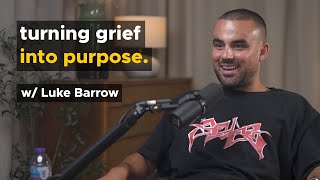
In this podcast interview, host Hishem Azzouz talks with Luke Barrow about the personal and professional journey that led him to create Two Pints Deep, a mental‑health charity aimed at men. Luke recounts how, at 23, he returned from a football stint in Australia to find his mother dying of cancer, which triggered a period of intense grief, depression, social anxiety and a gambling problem. He describes the pressure to appear "okay" for his family, the coping mechanisms he used (drinking, talking after a few pints) and the turning point when he opened up to friends at a party. Luke then explains his move into recruitment, how the role built confidence, communication and sales skills, and how after nine months he felt ready to launch a podcast called Two Pints Deep. The podcast quickly grew into a social media community of over 11,000 followers and in‑person groups in Manchester and London. He discusses the importance of vulnerability, the need for men to talk about mental health without alcohol, and the challenges of traditional grief counselling that felt generic. He shares how a later therapist and a life‑coach (Seb Randall of The Helpful Space) provided a more relatable, holistic approach, and offers practical advice on selecting therapy (company‑provided packages, multiple initial calls, matching on lived experience and vibe). The conversation shifts to workplace mental‑health, where Luke outlines a three‑step framework (identifying stress triggers, recognising behavioural signs, and co‑creating manager responses) he uses with recruitment teams. He reflects on the recruitment culture of "work hard, play hard" and the pitfalls of using alcohol as a coping tool, emphasizing the need for self‑awareness and supportive peers. Finally, Luke outlines the future of Two Pints Deep as a suicide‑prevention charity that will act as a bridge between men’s existing social spaces (pubs, sports clubs, meet‑ups) and professional mental‑health services, curating personalised recommendations. He invites listeners to follow the charity on Instagram, TikTok and LinkedIn, share its content, attend talks, and support fundraising efforts. The interview ends with gratitude and encouragement for continued support.
Chapters
Luke, welcome to the pod.
Thank you very much, pleasure to be here.
Thanks for joining me. Uh, as I said to you when I reached out, I've really admired the journey that you're on. I'm a huge supporter of people that have worked in what I believe is a great industry that equips people with a lot of skills, a lot of experiences, and then sort of taking what you've learned and the skills that you've been skill to then apply that to something that you're really passionate about. So yeah, I think that's sometimes often one of the overlooked things that a career in recruitment can give to people, is actually it— you can learn a hell of a lot and you can build a lot of skills. So yeah, I wanted to have you on the pod. We've had it a few times where we've had people, uh, on the show that worked in recruitment and now they're doing something a bit different, but we're going to talk about this topic, uh, mental health, right? And what has been the journey so far and what inspired you to start, um, what's soon to be an official charity, yeah, called Two Pints Deep.
Yeah.
And I'm sure safe to say if we were to chat in your first couple of weeks of recruitment and I was to say, Luke, you're going to become a founder of a charity, but what the hell you're about?
Yeah, I'll tell you, you're absolutely bonkers, mate. Oh, I didn't even think I could do recruitment in my first few weeks of recruitment, let alone with a business.
So So yeah, I'm really looking forward to going through this with you. So why don't we just start with— I'm sure, like, because I know there's different ways you work with companies, one of the things that you do is talks. But when you share with people what inspired to start Two Pints Deep, I'm sure that starts with your story. So why don't we start there? Let's learn about your story. Like, where does the story start for you in terms of when we think about your own journey with mental health and these types of things?
Of course, yeah. So There's, there's two sides really to Luke Barrow. There's LinkedIn Luke where you can go through my career, and then there's this side of Luke. I think that that has kind of inspired where I've got to today, um, and it all kind of started for me about, uh, just over 5 years ago when I was living and working in Australia. I was playing football over there for a living, which was my dream to do after university, go and play football abroad, a bit warmer, better pitches, that type of stuff, um, but I, um, my mum was suffering from cancer back in the UK, and I had come home a couple of times just to, like, through the chemotherapy and that type of stuff. So I was still involved in the process of supporting her and realized that she'd been suffering for a couple of years. Um, and it came to the end of my 2-year period at Australia, or towards the end. I got a call from my dad and he let me know that the latest scan was really not good and things were escalating in terms of or really going down in terms of her health, um, and to come back immediately. Um, so I had— I still had a certain amount of time left on my football contract that got cancelled. Got on the next flight home, came home, had a week with my mum, and then she passed away. And this really rocked me. I went from living what I thought was my best life and what I'd been wanting to live for so long in, in the dream of playing football abroad in Australia, living on the beach with your mates, to coming back to rural Lancashire and living with my grieving family and grieving dad, um, having just lost my mum. And that happened within a few weeks. And it— I went through the— for the first time, what I recognize now as mental health issues. During that time, I didn't react to the loss well. Um, I'd come back to um, friends that hadn't really been around for 2 years, and I didn't know whether to be Luke who's just come back from Australia or Luke who left them 2 years ago. And I had a real disconnect of who I was at that period of time.
How old was you at this point?
I was 23.
Okay.
Um, so it— I left pretty much straight after university and then came back, and everyone else had moved on with their lives, they'd started their careers, and I'd come back, I had no job, and I just lost my mum, and I felt like I was really about to square one. But the, the man inside me was like, you've got to be all right for your dad. Don't worry about you, your stuff will— we'll figure it out in the future. Just make sure your dad's all right. So for the next 6 months, I pretty much carried on like nothing had happened. I was interviewing for jobs at the time to get back in, get back to a job, interviewing sales jobs, and I just put on this character and played this character for the whole time I was there. Just to try and get through that environment. And then the times that I was by myself, I really went into dark places, went through periods of depression, social anxiety, um, and slipped into gambling issues as well. Um, but only really found myself talking about these issues after a couple of pints. And I hated that. I hated that it needed me to have a couple of pints to get to a point that I felt like I could tell my story or, or release some tension that was built up inside of me. And it all kind of came to a head once at a party, sat around with my friends and I kind of just burst and told them about the type of the stuff that I've been going through after a couple of drinks. And two of the lads at that party who were sat in this group spoke up as well and were like, because you're speaking up, I'll speak up as well. And some of those stories were really hard to hear, to hear that your friends have been going through similar things and we just didn't have that ability to talk. So I knew that I got addicted to that type of conversation, that open book policy, and really wanted to, to have those more types of conversations with my friends and ended up wanting to create more of a community around the fact that we can have these conversations as men without the need of two pints, and we just need to build confidence around the subject. So I started it originally as a, as a podcast, which is, funnily enough, we never recorded our first episode, but that was the idea, to to try and make a podcast of men having conversations, um, called it Two Pints Deep, and we kind of just kicked on from there. Um, and it's evolved now into community— what, over 10,000, 11,000 on social media followers and community groups in Manchester and London now. So really evolved from, from, I guess, a party in my own vulnerability, my own problems, has now sort of grown into something that hopefully will help others for, for years to come.
And if you don't, don't mind me asking, like, I've, like, I've two of my, um, closest friends, same age as me, so 31, both lost their mum to cancer. So like, this is something that is, will be experienced by a lot of people, and they've both had their own challenges, uh, with it, particularly with their dads as well. So like, how, like, when you, when you went away and stuff, like, how long was your mum like battling cancer? Was it like a long period? Was she like an advocate for you to go away? Because I'm sure that must have been quite hard as well, because I'm sure he was maybe even, you know, that mixture of like— I'm sure my mum would be like, no, like stay in Australia, do your thing.
Yeah.
But then also you're thinking about, I've got to be there for my dad, be there for my mum, you know what I mean? So like, how, how long was that? Was that period going on for? Was it a long time or did it all happen quite fast?
So she first got diagnosed in my final year, in the middle of my final year, um, of university, um, and then went through chemo and radio, um, successfully and went into remission, um, just before I left or was planning to leave. So it was about May, um, and I was planning to leave in sort of July, August, um, to go to Australia. Um, so she was a big advocate of me being like, go, because because at that point we had the all clear. She was like, go and do it, I'm really excited for you, I know it's something you've wanted to do. So really pushed me to do that. She then came and visited me in my, my first year out there. Her and my dad came across for the Commonwealth Games and to visit me and watch me play football and see, see me while I was out there, which was really, really nice looking back on, especially. She saw the life I was living. And then about 6 months after that, after they, they went home, she got diagnosed again. With the same type of cancer that had just come back quite quickly. And that was a lot more difficult in terms of what do I do now? And I went home for her first round of radio and chemo, stayed home for about 2 months, and she was the one that was pushing me out the door to get me back to Australia and being like, I, I, she felt more comfortable with me being over there. And she was like, I look forward to hearing your voice notes about what you're getting up to because that I'm living vicariously through you. Um, so that did push me to go back, but I think a lot of the issues that came towards after my mom's death and sort of recovering from the loss and the grief was that guilt that hung over me of I wasn't here. My dad and my sister took the—
I was gonna say, do you have siblings?
Yeah, my sister took the brunt.
She's younger or older?
She's older than me, she's 3 years older.
Right.
Um, but that did hang over me, to be honest with you. Um, And I thought— I think it contributed to, now it's my time to step up, which I thought I was doing in helping my dad by just being all right and being the rock, as I thought I was at the time, um, because they'd done it while I was away. Um, so in, in answer to your question, she really supported me being over there and lived vicariously through it, but I think there was an underlying level of guilt that I wasn't here supporting her day to day. Um, so yeah, it was— that was quite difficult to work through.
How close are you and your sister?
We became a lot closer through this process. Yeah, um, we were still close, but she lived in Leeds, I was in Birmingham doing my final year, then moved back to, to Lancashire for a little bit. Um, so we didn't see each other loads. Um, and she, she used to be a professional athlete, so she was training all the time, quite high-intensity life. Um, and it— we just didn't cross paths at that, at that point really too much. But we've grown a lot closer since, especially as a family as well.
Um, stuff like this brings you closer because I know, like, yeah, definitely, like, people handle things different, didn't they? Especially when it's also as well when it's, um, a guy and a woman. They can also potentially hand— like you said, like, I've just got to be like, step up now, these things. Whereas maybe she, she could have been a bit more vulnerable more quickly about how she, she's finding things. So I know that can be quite a hard dynamic. And then like, what, what's it been like, like with your dad? Like, because I know there's just so like so much of that sort of stuff that I've spoken to my friends about, you know. Like, um, I know for both of them it's been— they know their dad's found it really hard in terms of like having another partner in their life, and like that's been really challenging. And like, just, I know there's a lot there as well in terms of like the, the aftermath of it all.
It's, it's been really tough for him.
Yeah.
Um, getting used to life on your own is— they were together, I think they married 30, 35 years, so they had a really long stint together. Um, and holidays, like little things you don't think about now. He was like, what do I do? Like do I, do I go away? Like, do I go away on my own? Do I go with friends? Or what do I do? And I think getting used to what we called— we spoke about quite a lot as a family— the new normal, because that's what it was. And I think a big thing for him was he was living in— just after her death, me and him were living in a house that they built together. So there was a lot of memories, and a lot of those memories had been quite bad memories, because during that period of time we'd been living there 3 years of it, 2 and a half years of it, she'd been ill, right, um, or in recovery, and it's sort of been around in the topic of conversation. So a big move for him physically was he felt like he couldn't be in the house anymore, so he did move house. And that type of uproot for him, that physical move of being like, right, this is a new chapter I'm about to start, has helped him mentally a lot. But he's had to learn to be a lot more vulnerable. And I think the fact that I've started with Two Pints Deep especially being a lot more vulnerable as a person, having these open conversations has eased him into that a lot as well. He hasn't found a new partner yet. I don't think it's something he's massively interested in, but me and my sister did make sure we sat down and discussed with him that it's okay if he does want to. Um, and I think just that transparency has helped us grow and grow together as a family and find find our feet in this new normal. But it hasn't been easy and it has taken time. And I know that there's some times where my dad still does feel very, very lonely, um, but it's making sure that we're both— me and my sister are both checking in on those times and also asking him to call us and come and see us when he feels lonely as well. And that openness of vulnerability, of, of being like, right, I feel alone, I'm going to do something about it, has been really important in progression, I think.
And it sounds like you've— I know it's like a continuous thing, but it sounds like you've definitely now maybe— I don't want to say like come out the other side, but I know there'll be people listening that might be in the, in the sort of thick of that right now, and it can be quite hard to see past the like, my dad's really struggling, I've got to be there for him, like, is he ever gonna sort of accept this or change? Because I know something like that can really then lead to like bad habits, you know, whether that be potentially if your dad is someone that drinks or these things, they drink a lot more heavily, or like whatever it may be. So I don't know if there's anything you think that might be helpful to share that for someone listening right now that unfortunately might have lost one of their parents, they're now trying to be there for their mum or dad. Like, is there anything that you think could be helpful to share? Because I know when you're in it, it could— yeah, it can be hard to see like, right, how are we gonna sort of get past this? Yeah, time is just your sort of best friend in these situations. The longer things go on, then the more time that we have to heal and accept what's happened. But I know for a lot of people in the trenches of that, it can be really hard, I can imagine.
Yeah, so hard. And grief comes in so many different waves and ways and times. And there's songs that come on the radio and you automatically— it ruins your day. Or there's smells that, that you like remind you of a time and it puts you in a bad mood. Or We really struggled at the start. We were very angry because my mum was 55. It was, it was a type of mouth cancer that she had, and it's very common with people, or common, the people that smoke. She never smoked a cigarette in her life, hardly ever drunk, and we just felt like, why? That shouldn't have happened. And it's important to voice that and work through that pain, I think, is really important, and not hold on to it and not let it burn up inside you and come out in different ways, whether it's a job or whether it's having arguments with those people around you. Um, so it's understanding what point of grief you're at and what point of grief your dad or mum, um, whoever's left behind, the widower, is at as well. Um, and being as compassionate, as empathetic to that period at the— as possible. So whether it's the anger, whether it's the guilt, which comes a lot of like having fun, going on holidays and stuff like that. My dad was like, I don't want to— I shouldn't really be having fun. I've just I lost my wife 6 months ago, I shouldn't be doing— and it's understanding of working through that. And I think the biggest thing that we found with my dad was having patience in this conversation. It's not something that we expect to fix overnight, um, and he's going to gain more confidence just after one conversation. Um, so having patience around those topics and the fact that he's— he or she is going to be building themselves a new life, so that's going to go block by block. It's not going to be something that they could build overnight. So those topics of, of conversation are really important to have patience with and understand that it might take 3, 4, 5, 6 times for you to sit down with them to actually get through to, to them about anything, and not getting frustrated with that process. But also sharing your weight with any siblings or friends you've got. You're not going to be able to get this person through just on your own. I was so lucky to have a supportive sister. So being like, right, let's get him to the— him or her to this next point. How are we going to do it? If you talk to me about this, I'll try and talk to him about that. See if he can make the decision or she can make the decision about where they want to take this, but we can guide them just to get them through the next bit. Um, and keeping them really as, as close as possible, but also being vulnerable yourself about your feelings if you can. People react a lot more to conversations where they feel like they can agree or disagree and feel like the level of vulnerability has been already created that they can then feel relaxed about the way that they feel. Um, if you're going to them asking, how are you, like, tell me about your stuff without giving some of your own vulnerability, it's gonna be a lot harder to get through to them.
Yeah.
Um, so if you can be brave, be vulnerable, but also be patient in that conversation as well. Um, and there's so many support groups that are out there that, that we try and point to from Two Pints Deep. Um, that I think are really, really important to try and go get, I get involved in and give you a sense of community and meet new people and gain new connection in this new normal. It's just finding the right one. So understanding what these community groups out are that are out there and try and point towards them as well and go with them if you can. Don't like, don't let them do this on their own, handhold them as much as possible. And we, I always talk about during the presentations that I give that when you lose a parent, everything flips. Your sister and you are now the primary carer for this parent rather than the other way around. Everything flips. So you're more worried about them. And as you imagine, you growing up, your parents are so worried about you. It flips. And we— I just have this constant worry about how my dad's doing. And it's probably amplified the fact that he's the only one, only parent I've got left now. So I need to make sure that he's all right. Um, so working with those around you and really showing that care in, in the compassionate way, as compassionate way as possible, really.
Yeah, some really great things in there. And I think, obviously, what doesn't help in this equation with our generation— I'm 31— obviously our parents growing up wouldn't have been surrounded by as many people being vulnerable, particularly guys and stuff, right? So again, that, that's obviously also going to be part of the equation for people listening, is, um I'm sure there'll be some of our generation parents that might find the community groups or find those settings almost like, I don't want to go in there and it be a pity party. I don't want people to feel sorry for me. And sort of like, that can also be part of the equation which can make things challenging compared to maybe obviously our generation where we've grown up with a lot more people that we can point out that we can go, oh wow, that's really brave of them to share that and be vulnerable. Um, so let's talk about like how your sort of career and, and a few things sort of started to take place. And so that story of what you told of sharing how you felt with friends, was you in recruitment at that point?
I just start— no, I'd just finished. Well, I was still in my sales job, so I was in a sales job, um, selling holidays to university groups. So like University of Lincoln water polo have their tour to Budapest, right? We'd organize that with them, sell them as packages, and then host them as well. So, and then COVID hit. Not a travel— group travel, not a great place to be when COVID hit. So, um, was on furlough for a while and then, um, came out of that. So then I only started recruitment in February of when we first came out the second lockdown. I think it was second lockdown. Um, so that was, that was my first entry into recruitment, so Feb 2021.
Um, so you had this sort of idea before going into recruitment?
I had an idea that I sat on for a year and a bit, really, and I was like, right, I want to get into a career before I think about launching anything. Um, and I'd been thinking about the concept, thinking about the name, not doing anything with it, writing ideas in my notes section in my phone, and it was just sitting there, um, because I wasn't confident as a person at that point. I wasn't confident to go out and do it. And this is what you were— when you were speaking about at the start, how recruitment really sets you up and builds, builds so many skills within you. After 9 months of recruitment, I was ready to go. I was ready to be like, right, we're going to do something about this. Because although there's a lot of imposter syndrome when you start in recruitment and being like, what the hell, like, why is everyone so good at it? I'm never going to get to that level. Like, how do you sell this? How do you speak about all this technology? That was in tech recruitment at the time. How do you speak about all this tech? I just don't— I'm never gonna get it. And then once you realize that, after sort of your first deal goes in, next deal, like, oh, you got a bit hang of this, you understand what you're doing, that confidence that builds in you as a as a person and someone speaking on LinkedIn openly about this topic and the topics you're recruiting within allowed me to then think, well, if I can do it about this, I can do it with some, some other things in my life as well. Um, so that confidence really built over the first sort of 9 months, and then I was ready to go with it, and we launched in Feb 2022. So after a year in recruitment, I posted about Two Points Tea for the first time.
Whilst we take a short break, I wanted to take a moment to chat to you about one of our amazing partners, Sourcewell, the industry-leading recruitment engagement platform. I'm using myself and I don't know what I would do without it. From building personalized messaging cadences across a variety of channels to automating follow-ups and data tracking straight back into my CRM, it's really made an impact in streamlining my workflow and most importantly, accelerating my sales results. My favorite feature by far is the live feed. By being able to see in real time who's engaging with your campaigns, it enables me to prioritize my outreach with the most engaged prospects, which helps me get way more out of what I put in. So I'm going to be honest, if you haven't got Sourcewell and you're a recruiter, I really believe you're at a disadvantage. To find out more and see the platform in action, make sure you click the link in the show notes and mention the Recruitment Mentors Podcast. Because you listen to this podcast, you're going to be able to get access to an exclusive offer: free 50 phone credits, 50 email credits, which is at the value of circa £500 per user. So make sure you mention the Recruitment Mentors Podcast and click the link in the show notes.
How did you like talk about it then with like your colleagues or your peers? Like, what was like the initial idea for it? And what was— you at this stage a lot more comfortable like sharing? I don't know how you felt, the things that you've had to deal with. I don't know, like, what was your relationship with like— yeah, like your willingness to be vulnerable, to share things? Because that's clearly something that you probably become a lot more confident in. Yeah, and have to be, right? I feel like if you've taken this path, that other people that I've sat down with, it's almost like you have to get really comfortable sharing your story because that's a big part of like why you started doing what you're doing, right? You have to live those things and share it with other people consistently. So like, what— how did that all look for you?
So I, I'd really struggled with when starting a new job sharing what happened to me. And what I'd been through in terms of losing my mum. And there was awkward conversations that I tried to ignore about, oh, if I said I was going back to my parents at the weekend, if you say on a Friday, they'd be like, oh, like, oh, what's your mum and dad doing? It's just like, I don't want to make— put people in that awkward situation. And in our first few weeks of, um, at Oscar, we did a challenge which was, uh, David Goggins 4x4x48, which is 4 miles. You run 4 miles every 4 hours for 48 hours. So it equates to 2 marathons over 2 days. I've been there 3 weeks and I was like, sign me up for it, I'm doing it. Okay, so did it. But you were doing it to raise money for your own charity. I raised money for the hospice that my mum was in, right, that were really, really good in her final days. And that eased people that I was working with into my story a little bit, and people took interest in that story and they were asking me about my mum and asking me about that situation and think like, what you did, like the story around that is really inspiring. I was like, okay. So that gave me confidence to then, when I launched Two Pints Deep, speak about what I'd been through. So I launched it with an Instagram post with just our logo, um, and said I'm a normal bloke because I go out on the weekend, drink too much, I don't exercise as much I probably should do, but I'm also a normal bloke because I suffer from anxiety, um, and at times I felt really, really low post Next thing you know, 5,000 followers in 5 days, 23,000 likes on Instagram, everyone's sharing it on their stories, and I'm like, oh my God, what have we created here? And my boss is like, yeah, you've got to make sure you like doing your work, you're hitting your calls for the day. Um, so it was really nice that people were so receptive, and that gave me a big confidence boost in what I was doing. And from there on I've been— I've grown this confidence around my story. I only really opened up about certain aspects of it when I went full-time, which was 4 and a half months ago when I left recruitment. So the gambling I never spoke about, and that was something I was still battling and still wanted to hide.
Whatever you didn't want it to look a certain way.
Yeah, I think you're employed. Yeah. And I thought, if you're gonna do this, Luke, you have to be all in. No ghosts in the closet. And that going all in has made me really, really comfortable about speaking about my whole journey. Now I know that there's nothing— there's nothing I won't speak about. I feel like people respect that a lot more when they know that someone is 100% authentic, um, rather than just speaking about the stuff that they want to speak about.
Um, would you want to talk about that then? Like, when you say, like, what do you mean? Like, what was your relationship with gambling? When you was employed?
Yeah, I mean, it wasn't, it wasn't consistent, but I'd go through periods of spending a lot of money and chasing losses on sports gambling. Um, I didn't— and again, something I speak about when I go into businesses, especially recruitment— I wasn't prepared to go from a basic wage to earning monster commission and then thinking, what the hell do I do with it? Um, and I suddenly had all this spare money. I was like, oh brilliant. What— looking back now, I was like, I didn't realign my financial goals. And that's a big thing that I speak about with recruitment agencies and mental health and that type of stuff. Once you get a promotion or you have a big month, realign those financial goals and it'll help you moving forward. Because I just wasted mine. It just was like, right, I've got this money to spend, I may as well try and earn more money. I got used to these big figures of commission that were coming in. And I was like, £250 felt like nothing then. So putting that over a weekend on sports bets felt like nothing because I was earning £3,000 in commission at the end of the month. And because I wasn't talking about these types of values, none of it really hit me that this was real money. Um, and it just got out of hand at times and was just doing it consistently on the, like, weekly weekend basis. There was a period that I felt like I couldn't watch a game of football without having money on it.
Really?
Which is awful. Awful.
What was like the biggest— remember like the biggest bet that you put on?
I don't think it was— I don't think I'd put on big ones. I wouldn't put on like grands or anything like that. It was more how often I'd be doing it, right? Um, so I think probably around £250 was probably the biggest one, which is a lot of money, like an awful lot of money. And I just think, thank— thankfully I controlled it when I was within it, that I didn't lose everything. But there's periods of my— the time that I just felt like out of control. Um, and looking back on it now, I do have a lot of shame around it. And I think it's— I think it's so common with lads, especially my age.
How come you have so much shame around it?
Because I think It's something when people don't understand. It's— I feel like people think you're in control of it, you're doing the action, it's, it's, it's your actions, just stop. And there were so many people around me, so many people in the recruitment industry that were putting bets on when you're going out and watching football because they have that spare money too, but they were more in control of it. And I just I'd go along with it, but it's when I went home that I'd still continue to go along with it. And that's the bit of shame that I didn't have enough— I felt like I had a lot of mental strength in a lot of areas, didn't have enough strength to say, you're not, you're not handling this well, right? And I think for a lot of it, it was my escape from my mental health issues as well. I'd go home and I feel a little bit at times depressed about giving you something else to focus on. Yeah, take me away.
That Australian football team that—
exactly, exactly. Yeah, it was just like—
I had friends that went through that. It's weird looking back. I, I would have one friend that like got into it like deep, like, yeah, like again, we're early 20s and he, um, yeah, he'd have like definitely more than £250, but like he'd have like £1,000, £2,000 on like just the most obscure bets of like the most random match. Finland number 17 winning. Like 1.5 or something shit like that. Um, and yeah, like, I know, like, you can really get into that. I do, I do get the— I do get what you're saying. It's almost like when you look yourself in the mirror and like they're the things that you can see, isn't it? It's like the things you're not proud of. Yeah. And also when you're sort of doing it when other people aren't sort of watching, when you're not in that group setting and you're watching a game together, you're sort of just doing it at home. Trying to sort of chase back the things that you've lost, and that's like a consistent thing. I, I do get that, and I know that can go sort of hand in hand in like a recruitment environment as well.
You're always, oh, I'm 2 big months away from making this all back. If you're in a real deep money hole, like, it's— the money's there to be made, and it's just dangerous if the market turns like we've seen it turn, obviously, in the last sort of 12, 18 months. That— are you in control of the habits that you're— that spend is actually going to go down, or you're going to be able to decrease it if you, if you're not making the money to make it back? And I think because there's a lot of young men in recruitment as well that get their pockets lined so early on, and they've, compared to their mates in other industries, have a lot of money to spend. And it feels like money you can just spend. And gambling's everywhere these days. It's, it's on the front of football shirts, it's every advert on in between football matches at halftime, it's everywhere you look. And I think the online gambling experience now doesn't feel like the money you're losing. It feels like tokens. It feels like, yeah, it doesn't— it's just a balance. It doesn't feel like real cash. If you were to go into a bookies and give over 250 quid in cash and feel the weight of it and feel the thickness, you'd be like, God, that's a, it's a lot of money. That But you don't feel that when you just add into your wallet and another 10 of your overdraft. I'll just win 20 back and then it just never happens. And I just think how I managed to work myself out of it is I'll never— I will never win at this. Even if I win big, slowly but surely, I will never win at this. And it actually pissed me off that I was spending my money on it thinking I'd never win because I'm a competitive person. Um, but it's having that— I was able to have that viewpoint coming away from recruitment especially, and looking at my money and having to manage it a little bit better, to be like, that is not good for me.
Yeah, do you want to talk about like what— and then so we've spoken about how you've over time become more and more confident with your story, sharing it. Do you want to talk a bit about— when we prepared for this, you said that I don't know what period and what timeline from your mum passing, but do you want to talk about your experience of having therapy or counseling and then sort of initially didn't quite work out, but then the next time I wasn't sure exactly if it was definitely the next time, but you've then ended up landing on something that you actually found to be really helpful. Just talk to us a bit about that because I feel like that, that will go hand in hand in actually how can, from your experience and speaking to more men and speaking about this, like how do you currently feel about get, um, getting more men to talk about these things, or not having to rely on, um, alcohol to like open up, these types of things. So like, do you want to talk to us a bit about that?
Of course, yeah. I think my experience has really driven how we want to be within Two Point Sleeping, supporting people's journeys, because I had grief counseling.
How quickly?
6 weeks after.
Okay. Sorry to butt in, but was that like— did you want that? Was it like, Luke, I think you should Do you know what I mean?
What was— just so I understand, I did it because I wanted my dad to do it, right? Okay, so it was a little bit— I'll do it if you do it. But it was free and it came with the hospice. Once you lose someone, you can do 6 sessions. Okay. And I walk into the first session, nice enough bloke in his 70s, and we start talking about things, and I just felt my energy wasn't matched. My— he didn't get things from my point of view. There were certain topics that maybe he didn't quite understand, being from a different generation, as to how I was looking at it. Um, and I just really didn't feel like we— it was touching the sides. It was just surface-level conversation, giving me techniques of like breathing and all that type of stuff that I didn't feel associated with where I was at that point. I was just like I'm just doing this to tick a box. So it didn't work for me, that. And I saw it through because I felt like I wanted my dad to see it through, but I really didn't feel like I was getting anything from the process. But then I did. When I started recruiting, I went back into therapy, and I felt—
what prompted that? What was—
I wanted to be That, that was when I started Two Points Deep a little bit, and I was reflecting on the fact that I'm going to be giving advice and solutions and talking with other people about my mental health and giving them support on theirs and what their next steps is. And if I haven't ticked off those next steps, maybe if I've still got things hiding in my closet, I'm not gonna be best to give that advice, um, or best suitable. So I took on it. I, I did go to a few more sessions, and I had it with someone that I connected with a lot better, and it was completely new experiences. It was actually— I got talking to someone at work who then said, 'Oh, I used this person,' so went to them, um, and it was really, really helpful. And so it was someone that had done it as well that gave me a, um, gave me a recommendation really. And I felt a lot more associated. There was someone closer to my age, someone that could tell it, kind of was seeing the bigger picture, not just grief, was seeing right, business, career, like what's important to you, like how looking at my whole life rather than looking at my mom's death.
Okay.
Which I, I liked and I enjoyed, and it was— I viewed it as more of a life coach, and that was really good for me, I think, to, to see progression with my career but also me alongside it. Um, and I could very easily— and I know a lot of men that do that I've spoken to— I've tried therapy, I've tried grief counseling, didn't work, doesn't work for me. But it's the experience that you have with it I think is really important, and the fact that you may have to try 2, 3 times and really go and meet these people and understand if there's someone that can get through to you or you associate with on a level to get the best out of what therapy is. And it wasn't like I expected it to be. I expected go in, they'll open you up, open heart surgery, like look at everything, get in your heads, mess it up, get you out again. But it was a lot more broken down, structured. Conversation that felt comfortable to me. And once we get to the edge of that, if the therapist saw that I wasn't comfortable, they'd bring it back in to make me feel comfortable a lot of the time, which I really appreciated.
Was this in person or over Zoom?
Yeah, in person, um, and there was some of it over Zoom as well, so it was a little mixture of the both.
But, um, so what would you say, uh, from your— and then have you had any other experiences, or has that been your two experiences?
I then had a life coach as well. Once I took a, um, once I took a move, um, to go and head up an office, which was a bit of a big move for me at that time during my recruitment career, to oversee 3 teams moving to London from Manchester, I said to them, as part of the deal, I want you to pay for me to have a life coach because I feel like I've got a skills gap here and I just want support on this journey that I'm going to go on.
I love that.
So Oscar at the time supported me with that, um, with a guy called Seb Randall who's built an amazing platform called The Helpful Space. Okay. Um, helping people in similar areas. Actually met him when I went in and did a talk at Social Chain. He was there, um, he was a sort of life coach on site there at the time.
Okay.
Um, and he came up to me after and he— I remember exactly what he said to me. He was like, you're talking about helping everyone else there, who's helping you? And I was like, no one's ever asked that before. And I love the fact that he came up to me and asked it at the end. Really nice guy from Manchester. And as soon as I got the opportunity to get a life coach, I went to him.
And then what, worked directly with him? Love that. So I was just going to ask, like, what, what would you say, uh, if we were to maybe do like a bit of a checklist on if you're someone that's open to therapy, whatever that looks like, because there's obviously the different versions of it. What, from your experience, what would you say are like the important things to tick or look for that should hopefully increase the chances of having a better experience versus I'll try that and it didn't work, you know what I mean? Yeah, like just talk about that because I think that'd be really helpful for people. How would you view that checklist on like the important things that you think made you walk away from the better experience? Going, you know what, that, that was actually great.
Yeah, I'd say first utilize the packages that your company invest in. Talk to your company about it. It's not— there's not a taboo of being like, I want therapy. You'd be surprised about how many people within your company or within this industry are in therapy. So there's no taboo around that. So breaking that barrier and understanding what you can get for your money through the company is really, really important because they will have packages in place that you might not even know about if they don't talk about them monthly. And then I think Having a mindset of you can go and have a conversation or an initial call before committing to something. Have a couple. Have a couple initial calls with a few different people that you find. Speak to people that you know have been through it before. Talk about their experiences, who they associated with. Recommendation worked for me. So I guess work around the subject first before sort of committing. I think it's a really good way of doing it.
Um, and then what we're looking for— vibe. Do you want to, like, you know what I mean, in terms of the actual person? Because I feel like a lot of it from the conversations that I've had is like the person you're having it with. It sounds like that's similar to your experience, that completely changed it. So like, what are we looking for there? Is it just like how you sort of immediately build rapport with that person? Is it looking for someone that you maybe can relate to, like, what you've been through? Do you want to maybe decide, actually, I really like the idea of speaking about these things with a guy versus a woman, you know what I mean? Like, what, from your experience, what does that look like?
All of those things I think are really important, and their life experience as well. If you, if you feel like you have something in your life, like I did my mum, speaking with someone who has also lost does help. Okay. And there's that barrier that in the connection, you know, you have just as you sit down before you open your mouth, that you both understand what loss feels like. Um, rather than someone saying, and you hear this all the time when you lose someone, I can't imagine what you're going through, I could never imagine, like If you're gonna pay for this service, you want someone to kind of imagine what you're going through a little bit. Um, so I think understanding what they've been through as well as a person is important, but also that vibe. I, I think—
is that— would you put that at the top? I know it's quite hard to define, but do you feel like if you get that right, the chances of you going, you know what, therapy's actually— I've really enjoyed therapy— yeah, that massively increases if you get that right?
I think of it— think of it like dating. Yeah, so if you go down and sit with someone on a first date, what's the first thing that makes you feel comfortable? It's probably their vibe. They may look nice, which is brilliant, but unless you have that vibe, there's still that bit about you, or maybe I'm not going to share that bit. Think about your most— the date that you've enjoyed the most. Think about why you enjoyed it and what attributes that person had, then look for that in a therapist.
Yeah, nice. How about— so I think it'd be quite nice to tie in them because I know this is something that you, uh, go through with the companies that you've done some great stuff with at Two Pints Deep. But obviously the life coach, managing more people— do you want to talk about some of the things that you've learned around how people can get better at managing people that might be in a difficult spot? Or, um, I have some of my team and I feel like I just can't quite get to the root cause of like why some days they feel like they're up here and then some days they're I've really struggled to keep them engaged, whatever, you know, insert scenario. Like, there'll be so many people listen to this that have to manage people, manage young people, and just trying to figure out how we can sort of really understand how we can better support these people, be better leaders for them. Do you want to talk a bit about that? I think the thing that you mentioned which I thought was really cool was— yeah, Mark Hishemi, Framework for Management.
Talk to us about that. So I, I came across this the hard way actually, because I was like, right, I'm a manager now. I feel like I've not really had a lot of management training, which is a common situation to be in with, within recruitment. Um, and I'm quite young and I'm managing people of an age similar to me, or maybe even a little bit older at times. Like, what— like, this is a pretty wild scenario for me to be in. How do I support them? Like, I'm just about managing my own mental health. How am I managing these people's as well? And I started doing a bit of research and found this 3-step framework from Mark Kashimi that I now talk about in this corporate presentation, and we implement within businesses. Because I know if you— if it wasn't to be a simple framework, recruitment managers probably wouldn't be able to input it. Because I know the, the industry, and I know how wild it is. I know how busy days can be, and things just get washed away. So it's a 3-step understanding. First um, stress triggers within your people. And this can be done in sort of a monthly one-to-one or even quarterly, and just be like, right, what stresses you out at work? And understanding this within your people— is it when you get new jobs in? Is it when you have no jobs in? Is it when you're coming up to a sprint doing business development? Is it when we add more people to our team? Is it when there's been layoffs in the company? What stresses you out at work? If I miss those stress triggers How do you show that you're stressed? Do you walk up and down on the phone? Do you go and sit in the corner of the office and work on your own? Do you work through your lunchtime? Do you eat lunch at your desk? Do you drink too much in the evenings midweek and end up coming in hungover? Do you come in late? What are the signs that you show when you are stressed? And then understanding, right, I understand what situations make you stressful. I understand how you show that you're stressful. Once I realize that, that we've had a situation or you are showing those signs How do you want me to act? Do you want me to discuss it and pull you in for a meeting and we go into the office? Do you want me to take you for a coffee and we discuss it? Do you want me to make sure that you eat your lunch? Do you want me to take you for a drink after work? How do you want me to act in those situations to make you feel more comfortable about discussing those stresses and those signs? And how do we get through to you? And once you know that, it gives you a framework to then be able to know that you're supporting your staff in a way that they want to be supported. This, I think it's important to do this monthly and review these monthly because it's like a living, breathing document maybe. That, yep, yeah, that's a really good exercise because it's an exercise then you can be like, have you, is there anything else that has stressed you out this month? And you can add that to this document and add that to the stresses. Have you had any different triggers this month? Like, have you had any different responses? And this will help these people as well understand that they are being supported and understand that there is a level of care out there within the industry that this person who's managing them is looking out for them, which can often be seen. There's a lot of managers in recruitment that either haven't managed before or aren't good managers, and this allows you a sort of a specific framework to make sure that you're doing enough to support the staff around you. Um, and it's easy to, to then open the doors and have a conversation within a framework rather than being like How are you? And a lot of people within that want to want to be like, yeah, fine, because they're talking to their manager.
Yeah, we'll get back to the episode in just one minute, but today I'm excited to talk to you about one of our partners, Firefish, the recruitment CRM that accelerates data-driven growth. The problem with most recruitment CRMs is that they are just a database of records, meaning they become just one of the many tools that recruiters use every day.
Like all systems, the records are only as good as the data being captured.
Our sponsors Firefish know that for agencies to win faster, data needs to be at the heart of their business, making your CRM the single source of truth. With over 10,000 records created and updated every day and 85% of placements from existing candidates, Firefish enables recruiters to enrich and engage their data, equipping you with real-time insights needed to win faster. To learn more about Firefish and take advantage of an exclusive Recruitment Mentors podcast offer, make sure you click the link in the show notes. And mention the Recruitment Mentors podcast when speaking to the Firefish team.
What I really like about that as well, and I also think this is something that if you can develop this, then you have a way better chance of just feeling more in control of your mental health, or just like a better chance of having more good days than bad days, and that self-awareness. So I think that document as well, that's— I really like that because you also get an individual to that's developing self-awareness. Like, talk me through what you feel like are your stressors, and when you do feel stressed, like, what do you normally do? Like, sometimes people don't even think about those things, they just do it, right? So I think that's the other really cool thing about that is that you're getting that individual to, to actually think, um, and develop some of that self-awareness. And if you have, if you have self-awareness, you're gonna then, uh, yeah, just have more of a chance of like putting yourself in different situations or understanding how you're feeling. It's like, right, so I'm feeling like this, you know what, I'm gonna go and do this. Do you know what I mean? So absolutely, I think that's class.
And I think the best way to do it, in the best place to start, is to do it yourself as a manager.
For sure.
And if you can share some of them, like, this is what stresses me out. Yeah. And they'll be like, oh my God, I feel like I can talk about it. And it's kind of that open book policy and opening that book on mental health and starting that conversation and being like, this is me, I'm your manager, and I'm in a position of authority within this business. This is me. And if you can do that, oh, the doors open and these people respect you a lot more. They will work hard. I truly believe that they will work harder for you if they can see that you are— see the person behind the role that you're playing. Um, and there's certain businesses that I used to work with that have started implementing mental health days that are in addition to— in addition to your holidays as well. So it's an extra 2 days that you can take throughout the year of mental health days. And these managers, when they implemented, started putting mental health days in their, in their diaries so everyone could see it. And they could see that the management are being open about their mental health and saying, I need a day. And they've seen a big uptake since then on the people below them doing it.
That's smart. Yeah. So let— like, you've ended up, which I'm not surprised to hear on this journey with, with Two Pints Deep, obviously ended up, um, have been doing some great things with recruitment companies, and I'm sure you'll continue to do so. What have you been like most surprised by so far? Because I'm sure you would have had, uh, an assumption or perception of how the types of people or types of cultures that you'd see when you're maybe going in doing talks, workshops, or whatever. Like, is there been anything that you've been surprised by so far since you've been on this, this journey the last like 6 months?
Surprised by Maybe not.
Okay.
Just because I spent 3 years in recruitment and I feel like part my journey was full of ups and downs. When I go in and talk about it, I talk about the recruitment roller coaster and I just think that's what this podcast used to be called, that. Oh really?
Yeah, I did it when I first started it.
Yeah, well, it's so true, isn't it? Like, and I once creating these presentations for recruitment companies, I was able to reflect on my recruitment career quite a lot. And when I was at the top, on the ups, I'd be celebrating, probably turn to, to drink and go out and be like, oh, I've had a really good month, let's go out for a beer on a Wednesday, Thursday. And when I was at my lowest, I feel like I'm having a really bad month, should we go out for a drink? I need a drink. Wednesday, Thursday. And that this culture that is quite rife within recruitment of socializing, often in— often turn into alcohol. I'm seeing it in other recruitment companies as well. And it is that work hard, play hard stigma that has surrounded recruitment for a long, long time, um, that is so rife. And people don't quite have it under control, I don't think. And when going into speaking to a lot of these lads, they associate a lot with my journey of the fact that on this roller coaster. The lows, I turned to drink, I'd go to the pub. At the highs, I'd tend to drink and go to the pub. And only during the middle was I, I think, doing my healthy habits, when I was neither doing amazingly or, or really, really badly. And I think reflecting on it, I've now realized that I didn't make time within my week for my non-negotiable healthy habits because I just get lost as a young person in this recruitment lifestyle. Where I was taking my clients out, and then I was going out with the guys on Thursdays and waking up hungover on Fridays, and we're all in the office, we're all hungover together. Oh, that's funny, isn't it? Um, but I just got lost in that week in, week out. Um, so when, when I do go in, I, I'm very open about my journey with it and what I would have done differently. And I think what's really, really important— and I did have this towards the end of my recruitment career— is who's sitting next to you on that roller coaster. Who are you talking to when you're down, and who's experiencing it when you're up as well? Because you need someone. They don't have to be within work. It can be out of work, it can be a partner, it can be a friend. But who are you completely honest to about this roller coaster that you're on, and the ups and the downs and the middle bits? And I think we ask people to take away and just find one person, whether it's in work or out of work. I was lucky enough to have mine in work, our L&D manager.
How come that helped?
Because they'd get it. They'd get the ins and outs, the ups and downs. They'd get— usually when I'd go out for a drink and want to go out for a drink, and because they're on that roller coaster with you, it makes it easier to speak about the issues that can come along at a certain, certain period, certain times, the culture that you can get washed up in, and I guess center and level you that maybe I really, really struggled with. Being centered in that sense was, was massively important. And I felt like I did my best work, was my best recruiter, my best self out of recruitment when I was centered. Um, and that having that person on the roller coaster was able to send to me at the times I felt I was either too high or too low.
Yeah, so you're now in the, in the trenches of like literally building a charity. So like, there was an update on that. So like, what I know this will continue to evolve, but how have you been, um, you know, taking these experiences and like sharing these things with like recruitment companies? Firstly, like, what, what does that look like? So you've been going and doing talks? Like, what have been some of the ways that you've been working with recruitment companies and their people over the last few months?
Yeah, so I've been doing talks. Um, I've also had a— I go in and then I'm— my phone's always open for anyone that wants to have a chat following the talks.
Okay.
So they— what I often find is people don't come up immediately after. There's often no questions at the end, um, because there's still this stigma around it. I can't put my hand up and say something here because then everyone around me is going to think that I've— maybe I'm struggling, or there's this perception.
Sure.
So I go into recruitment companies a lot. I go into other companies as well, but I'm seeing a big uptake in recruitment just because of my, I guess, work history within it. And then my phone's open to be like to have conversations with these young people who maybe feel a bit lost, imposter syndrome. What did you do at this point? And have conversations based off my experience. I'm not an expert, but I think they open up a little bit more because I'm not an expert. Um, so that's really helped a few people, and we've had some feedback of people feeling really associated with the journey and, um, feeling like they have more confidence in being a manager now because they got a framework, because they felt like they were a bit lost and just making it up day to day. Mm-hmm. So that's really helped and it has been trenches, but I, I was really lucky to work in tech recruitment in different patches, geographical, different, different geographical patches. Okay, that's the word. In the UK and build a network of other companies as well who over the 2.5-year period that I was doing Two Points Deep and recruitment saw me building this community. And then once I've gone full-time with it, I've seen, wow, okay, I've seen the journey of this. We'll get you in and talk at my company as well. So having that, concentrating on that network and building that network and that community around me whilst in recruitment has really helped me out of recruitment. Um, and, um, yeah, we continue to go to strength to strength, from strength to strength within the sort of the talking. And I try and make it a little bit different to how corporate presentations are currently around mental health. So there is that relaxed feel to it. We're called Two Pints Deep because it should— I want to make mental health more like a conversation that you have down at a pub, just without the need of those two pints. So it's relaxed, and people, I think, realize that I'm a very normal bloke. And the fact that I'm going in, I'm being very open about my vulnerabilities, open book policy to everything. They're like, fr— so I'm not sure if you can swear on it, but, um, like, that's, that's really interesting, and it makes me think that I can then go and do it. Because this guy standing in front of me, he's not really special, and everything has been in my shoes as well. And now he's doing something he's really passionate about because he's took jumps at certain times and took a few risks with being vulnerable. Um, so hopefully a lot of people that— a lot of the companies that go into see me as someone that's been in their shoes and quite relatable. And authentic.
And then what's like— I know you're still figuring this out, but like, what's top of mind currently of like what the Two Pints Deep charity is then going to be doing?
Yeah, so a big issue that we want to solve— we're going to be a suicide prevention charity. Okay. So we're going to work at the grassroots of mental health. And what I mean by that is we don't provide a solution. We're not a solution provider as a, as a charity. So a solution provider would be we do a talking circle, or we do— we provide an actual thing that you can come to, and it's to better your mental health.
Okay.
What I really struggled with is finding these places when I was going through my worst times. So what we want to do is increase that accessibility. I don't want 2 pints deep. I don't want 2 pints to be a solution for anybody. It's a stepping stone. And what we want to do is basically occupy, educate, and resource the places that men already feel confident. So the pubs, the tech meetups, the football matches, the rugby matches, the social clubs. Where are men already gathering and how can we start the conversation from those areas and show them, increase, decrease the, the length of, of, of that accessibility factor to where they can go that might be suited to them? So create— I guess there's so, there's so many charities, so many communities, so many end destination solutions out there to do with mental health out there at the moment, but no one knows where they are. We want to be the platform that shows you what those solutions are, where they are, and also introduces these solutions to be like, I think these three would be best for you based off what you've told us about your hobbies, interests. This one is run by an Everton fan. I know you're an Everton fan, so you have something in common. How can we make these solutions seem more viable to, to these men at the moment that are so shut off to them because they're so far away? Yeah, there was such a gap between the problem and the solution. Problem being people in pubs drinking alcohol, and the solution being these talking circles therapy. How can we reduce that gap is our aim.
I think that's class. My mind straight away goes to that, um, when you say— when you're talking about them— that was it, a Norwich advert. Yeah, it was Norwich, wasn't it?
Norwich City.
Yeah, powerful, that one.
Amazing, simple. And so we've just, um, got 3 more people into our creative team for Two Points Deep because the content that we produce is a really important part of how we want to grow. And where we want to be in terms of our stuff that we're producing, really. And we spoke about this, we were like— we're still speaking about it 2 years later.
It's class. Yeah, if anyone hasn't seen it, it's— they're like— it's different frames of like 2 people at a football match. Yeah. And then I can't remember exactly, you might have looked at it more than me, but like, it's obviously— it sort of makes you think that the person that's struggling the most isn't actually then the person that ends up taking their own life.
Exactly. Yeah, an extravagant fan and someone that doesn't really show the emotions, and you immediately think throughout the video, throughout the seasons it goes through, that this, this guy's getting really low and he seems to be sort of more, I guess, distant in, in how he is. And then you see a fan walking at the end in a scarf and ever— and put the scarf on the seat, and it's the extravagant fan who has lost. And it's just like, there is no face to suicide. There is no— there's no personality. You have to be in sometimes with the people you, you don't realize. And so powerful. Lovely advert. Amazing. And we looked at that and we were like, but what's the follow-up been? Where would you go from that? Has— I haven't seen much, too much about the areas that I can go from there. And also, there's not been one that's hit the same since. How can we continue this conversation? It's a really important aspect of, of making poignant content that affects people in the way that Norwich City one did.
I, I do think that that's, that's bang on. Obviously, it's not going to solve all problems, but I really like the idea of making that first step a lot more easier and going to where a lot of men already are.
Yeah.
Which is why I've seen you have those like 2 points deep, like beer mats and stuff like that. Like, I, I do think that's a really smart way to sort of go about it, or at least try and be like, how can we make an impact there? Which should then mean like more people actually get into the end solution, which then means less men are killing themselves, right?
Yeah.
Um, so how, like, for people listening then, like, what like, how can people support you on this journey then, mate? Like, like, tell us.
Yes, so, um, we are close to becoming a charity, hopefully by the end of the year, um, which then will open our doors to exactly how we're going to fund these communities and help support this sort of grassroots of mental health all around the UK. So, um, suicide's a problem all over the UK in different ways, and it's all going to be community-based that we support. So there'll be fundraising aspects and stuff that we can do from, from then on in.
Yeah, so for anyone listening, Luke, like, I'm sure there'll be a lot of people that want to support the journey like, how can, you know, how can people get involved? How can people support you? Talk to us about that.
Yeah, so they can follow our journey in particular from where we are now on our Instagram. TikTok's a big one as well that we've launched recently, and supporting our content on there, sharing it. And a lot of conversation can come from sharing that content with your friends as well, and I think that's really important. We try to make it as actionable as possible from the content that we're producing. And follow my journey on LinkedIn. Um, you can support me right now. What's keeping the lights on, to be honest, at my house, is these these going into doing these corporate talks. So if you feel like you'd be interested in hearing more about how we can support your business in that, um, and delivering maybe a different talk on mental health over the next few months or into next year, please do reach out to me. Um, we've got some really exciting ones coming up with some huge businesses, so hopefully that continues to go from strength to strength. And then once we're charitable, we'll have, as every charity does, um, we'll, we'll show you in, in which ways we're going to be affecting these communities all around the UK to um, to, I guess, lower suicide rates and increase the prevention techniques and, and situations that we have there. Um, so fundraising will of course then come into it there. We're currently designing our kit with Kappa, so that kit, our fundraising kit, will be coming out. And hopefully some really cool stuff that you'll see from us along, along the way that is a little bit different to maybe what you see around mental health at the moment. We want that relatable— we want to make mental health really cool and have that vision that it can be in every conversation rather than no conversation, um, is how we really want to flip it. So following the journey on our socials is a big way to do that. And then running half marathons and marathons for us, if you associate with what we're doing, would be, would be brilliant.
Yeah, I love it. It's class. Well, look, kudos to you, mate. I think it's awesome what you're doing. I know you probably feel like you're just getting started, but really excited to continue to see how the journey plays out. And I'm sure there'll be plenty of people that are going to support from the industry and engage from afar. So I appreciate you coming on.
Thank you, appreciate it.
More from Hishem




You don't need as many clients as you think to bill $1 Million A Year In Recruitment



From 30 Direct Reports to Back-to-Back $1M Years as a Solo Recruiter with Zach Creighton



