Recruiter to Chief Revenue Officer: Career Lessons and Insights from Dougie Loan at Sourcewhale
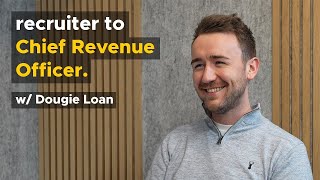
In this podcast‑style interview, host Hishem Azzouz talks with Dougie Loan, Chief Revenue Officer at recruitment‑technology firm Sourcewell (also referred to as Sourcewhale/Sourcewheel). The conversation weaves together Dougie’s personal career trajectory—from early days at Oddrow and Audra to his current CRO role—while reflecting on how the recruitment market and its technology stack have transformed over the past decade. They discuss the challenges recruiters face with fragmented toolsets, the paradox that more tools do not automatically mean higher efficiency, and the need for a unified "system of work". The interview highlights Sourcewell’s flagship capabilities: automated follow‑ups, the Content Coach email‑scoring engine, the Insights (WellGPT) personalization feed, deep CRM/ATS integrations, call‑recording and summarisation, and upcoming features such as native calling, live‑feed analytics, and post‑submission follow‑ups. They also explore broader industry themes, including the importance of offline networking events, evolving email deliverability rules, and the balance between AI‑generated outreach and genuine personalization. The discussion ends with practical advice for recruiters on when to consider Sourcewell, and a look ahead to 2024 priorities for both the product and recruitment teams.
Chapters
Duggee, welcome to the pod.
Thanks for having me, man. Thanks for having me. And it's Duggee, Duggee, Duggee, Duggee.
Yeah, obviously I told you we said about this with my team, they were like convinced it was Duggee, but I was like, no, it's Duggee. You should really own that.
I know I need to make a decision on it, right? I think it's just speaking to people in England or not in Scotland, it's always Duggee. It's like they understand that easier than Duggee, but I appreciate it.
So we wanted to make some time to have a chat about a few things. We've done quite a bit of work together this year with the podcast and Sourcewell, so definitely want to talk about that. We've done 3 live podcast events this year which have been super fun, and then we've also worked together on the BD Playbook series, which went down really well.
Absolutely.
And I think we wanted to also just talk a bit about definitely like your journey. I think you've been on such a great journey considering— I'm saying we sat down in 2019, uh, when I worked for Hookso. So that was insane. That was in East London, a little room up a set of stairs. Yeah, right at the back. Yeah. So we sat down when you was at Oddrow in 2019, and then now you've been on this journey with SoulSurfing in the last 2 years. So definitely just touch on that because I think there's definitely things there that people can learn from. And then also, like, yeah, really interested to dig into, like, your perspective sitting in the seat that you're in on, like, how Sourceware has been helping a lot of the companies and customers that you've been partnering with this year, because I do really feel like you guys have been at the forefront of driving just better business development habits and just better, like, practices across the industry. Um, and then I think we want to talk a bit about the future and some of the, the really cool features that you guys have rolled out this year. So how, how have you found the events this year?
Honestly, man, I think the events have been sick. Like, if I look back at The first one of the year was in Manchester, right? We did Manchester first. And I think that was probably my favourite event of the year. Just having everybody together in one room. Everyone was just so— like the panellists as well. So I think you had Alex, Kyle, and Amber, and they were just so open about the challenges because that was like what, April, May time?
Yeah.
So we were in the midst of market was really starting to slow down. BD was really the focus. People were starting to change their approach. And I think all three of them delivered really actionable insights in terms of stuff that could be done to improve. And don't get me wrong, the London and Bristol events were amazing as well, but I think the real value from the events has been people actually sharing tactical advice and not just big massive thoughts and ideas that sound great but don't actually translate to—
Yeah, that's really some really good tangibles from that episode. I think what I remember from stuff like that is just like always Manchester, it doesn't quite go to plan. Yeah. Northerners, alcohol, it's always a bit of a mess.
Absolutely.
It wasn't anything too crazy, but all I remember stuff like that, definitely, like, yeah, they did such a good job of communicating like the things that are working for them, the things that they're doing. But I just remember getting down into the room where we did the podcast and then people were like just still trying to get a drink and then everyone was waiting. Yes. And then do you remember the mic as well? Oh, that was a bit of a— yeah, so they're the sort of things that I remember from those types of things.
But that's the thing that you must be under pressure, right, to deliver. Yeah, you feel the pressure of delivering a really great event and then these little things are starting to like— they're like outside of the plan, so your head's almost on versus the, versus the stuff that's going on.
I agree, that was, that was great. I think it's something that I shared with you, but I do think if you think of those three, uh, people— Alex is very much involved in the business that recruits in the tech, uh, SaaS space.
Yeah.
Kyle, that's his space as well. And then because I've got to know Amber, I know that she consumes a lot of content from B2B SaaS, uh, go-to-market content. And I've definitely found, like, when we think about, you know, what you guys are doing, multi-channel approach, that's like just expected or been so normalized for a long time, from my understanding, in those types of spaces. Absolutely. So I think I shared with you that people that tend to operate in that space oftentimes are sort of probably quite a few steps ahead of, you know, a bunch of other people in the industry because they're, they're, they're placing or dealing with people that already approaching sales the way that they're approaching it, right?
Yeah, so they obviously have exposure because naturally through the questioning that they do on candid interviews or client meetings, they're learning about these skills and techniques and processes, like you said, because ultimately they're placing people into those jobs. Don't get me wrong, I definitely still think there is nuance to recruitment that is not applicable always within the sales space, right? But I do think that if we're honest, a lot of what we do as recruiters is sales. We've got a kind of B2B sales process, which is the selling to the client, if that makes sense. And then we've B2C sales process, which is the sale with the candidate or potentially selling them on an opportunity. So I think what a lot of those people have done is they've identified the transferable processes and approaches and they've been able to then apply that to the recruitment space. But I do think you need to be really aware of, like you said, those nuances and those changes, because if you just wholesale took everything that was happening in SaaS and applied it to recruitment, you'd probably end up with a pretty ineffective business model and not a lot of placements at the end of it. Yeah, for sure.
But like, you've been, as I was saying, like, you've been— I think you've been on such an interesting journey. So like, 5 years of Audre where you literally was like one of the earlier employees, right?
Absolutely.
Working with, with Ryan. And then by the time you left, you were CRO of that business, but you had also got exposed to like customer success, sales, other things, I'm sure. And then for the last 2 years, you've been in the seat of CRO for Salsa, right? Like, what— I'm just curious, because you've been serving this rec tech market for quite a while, right? Nearly, nearly a decade. So how, how much—
sounds like—
yeah, so like, how, how much have you seen it change? Like, if you think of like the landscape now, uh, and the types of products available for growing recruitment companies, like, how do you see it from like your seat? Because you've— you would have come up against a lot of companies when you worked at Audero. You would have been aware of the different partners, likewise now Sourcewell.
Yeah, absolutely. The market has changed. A decade sounds wild, but the market has changed. The market's changed a lot, particularly from the technology that's available to people. I remember back in 2016 when I first joined Audra and I was working with Ryan and we were trying to get the message out there and stuff. This concept of even meeting people online was super alien, never mind recording that interaction. It's like this concept that you would even record, that you would even meet people online and then record it, whereas I can't remember the last time I was on an online meeting where it wasn't automatically recorded, whether that's internally or externally, predominantly externally. And I think back then that was almost quite, I wouldn't say revolutionary, but definitely a very new idea and a new concept. I think a lot of the tech that existed back in 2016, 2017, a lot of it was still to do with, was coming more so from the in-house side of things. So a lot of job board technology, search and match, a lot of that kind of candidate work. Whereas what I see a lot more now in the market is tools that focus also on the business development side of things, but a big focus on recruiter efficiency and automation as well. So, but I think like automation, AI, efficiency, or an approach to a more efficient process is something that's become more of a focus for recruitment businesses naturally over time. I don't necessarily think that back in 2016 many people were thinking the way they are now, which is how can we do more with less, which I think is probably the main focus for most, most businesses.
Do you think— I've been speaking to someone about this today— do you think recruiters are more efficient now with all these tools available compared to when they didn't have all these tools available? Because the person I was speaking to was pretty convinced that they're not.
Do you know, man, like, it's going to be weird for someone in my seat to say this, um, I think like right now, as it stands right now, Probably not. And I think it's because of the volume of tools. So we've gone from, if you think of this small circle of additional products on top of your CRM that you could purchase, to now there are multiple products within multiple segments available that didn't even exist as a product category before. And very few platforms and products are doing what other platforms and products are doing as well. So for example, if I wanted to achieve this end goal of having everything in my process automated and this the analytics set up and whatever it might be. I'd have my CRM and then maybe 5, 6, 7 different pieces of technology bundled onto that. There's no way that anyone can effectively use 5, 6 different pieces of technology on a day-to-day in their role. I think probably what we see more so is there'll be recruiters who gravitate more so towards the products that do make them more efficient, but then they cap out on that. So no, I don't think recruiters are more efficient right now. I think they can be, but I think it's going to take something or somebody to almost pull all of those platforms together into one place that allows people to execute that rather than having them working across 5, 6, 7 different sites.
So what excited you about Sourcewell then when you started to— because I'm sure that you would have had other offers, opportunities.
Yeah, it was really interesting. So for me, there was 3 main things. The first one was the team. And I'm not comparing this to what I had at Ordro. This was more so just looking at this through a very different lens in terms of what am I going to do next? Next. So Tim and Harry are both incredibly intelligent people. Both don't come from a recruitment background, so I found that really interesting, but both very well educated and have backgrounds in different arenas. And they'd built this kind of initial team who are really driven, really motivated, and really believed in what they were doing. So that really stood out to me. Second thing was the product. And the product was the part that captured my attention because I knew of Sourcemail and I'd spoken to Ben, who's our VP of Sales now, and Tim a number of times over probably a 12-month period before I joined Sourcewheel. And the product always stood out to me in terms of the way it was just taking something that was such an obvious problem and making it so much more simple for everyone. At its core, automating follow-ups, just that's it. If I can just automate the follow-ups that I need to send, then never mind all the other bells and whistles, that in itself was super valuable. And then the third thing was their passion for the US market. So I was really keen to, you know, looking at what I want to do next is like take things more internationally. We'd done a lot of work at Audra in the UK and in places like Asia and some work in the US, but we'd never really had boots on the ground. So for me, I wanted the ability to kind of do more in the US market. And I mean, so far so good. It's not been without its challenges, but we're definitely making headway there.
And then like, I always ask you this, right? But like, how, how have you managed juggling all this with a young family, mate? Like you're saying, you fly— flew down this morning. Yeah, you know, I always— oh, when I think of people, uh, it's funny, when I think of Scottish people in recruitment, I think of you, Nick. Who else do I think of? The guy that works at Pageant now, I can't remember his name.
Cammy.
Cammy, yeah. And like, you know, but I feel like— did you work at Audra or not?
Yeah, Cammy worked at Audra.
Yeah, so like And I think, how are these guys just getting on the plane every day on EasyJet or Ryanair or whatever coming down?
Honestly, there's a thing called the EasyJet Plus card, right? And it's a— you've got to get an EasyJet Plus card. Basically, it gives you fast-track security. It gives you— you get on the plane first and you get extra legroom. And it's like, it's like £150 a year or whatever. But it's just, it's an absolute godsend. But like, honestly, like from a family perspective, I'm really lucky. Like, my wife's fantastic, you know, she's great. It is hard though. Like, I wouldn't say I wouldn't say it's easy to just always be away from the kids. My daughter, she's 8 now. My son, he's 18 months old. I mean, just the age gap alone between those two is an intense thing. And it's great. I absolutely love spending time with them. But I think that doing business face-to-face, both internally and externally, just gives you an advantage over so many other people in the market and so many other people in the industry. So I would never be able to give that up. Ultimately, it's my choice to work with an organisation that is headquartered in London, that has operations in the US. And when I was at Audra, whilst it was headquartered in Glasgow, predominantly served businesses that were based in London. And that's part and parcel of the job. And I got all of the upsides of that as well, right? I got all of the benefits of what that brings. So yeah, sometimes you've got to make some sacrifices.
I just always respect it. So talk to me about this, reflect a bit on 2023 because I think one of the, the core overarching themes of all the conversations I've had this year. Obviously, I'm speaking to companies about how they can get more out of their people, what skill gaps do they have. And, and the most common one has always, like, throughout this entire year has been last year was very job heavy, and I think a lot of people went into this year not equipped with the right skills to thrive in what's been, you know, a lot more of a challenging market compared to what people have been used to. I think a lot of people that have been in the industry for a long time would just describe it as a, a competitive, good quality market where you have to work hard. And, uh, you can absolutely still thrive in the market like it is today, but I think a lot of people didn't have those client acquisition skills, which I think a lot of people struggled with. And obviously that, that's why I really gravitated towards Sourcerware and why I think, like you said, it's such an obvious problem. Yeah, because when I think about when I worked in recruitment and I think about how I used to do business development, it was every Tuesday and Thursday, 10 till 12, I knew that it was the BD time. Obviously you've got to be doing BD out of that as well, but we'll be doing it, we'll be doing it collectively, and I would be just chasing live vacancies, I would be looking at my calendar and seeing who did I call last week. And it was just like so manual and so reliant on my own brain to remember like what I need to be doing. There's no strategy. So I know you guys do so much more than this, but like that's why I think in terms of like the, the prob— one of the problems that you solve for a lot, for a lot of your companies, I just feel like you guys are front and center of of like what people have had to do or how they've had to adapt this year. So talk to me a bit about like what have been, from your perspective, some of the like 1, 2 biggest problems that you've been partnering customers to solve for them?
Absolutely. I think just before we go into that, it's worth noting that actually some of the biggest success and the biggest traction that Sourcewheel had gotten prior to me joining was actually in candidate sourcing.
Really?
So yeah, so like what's happened obviously, because this concept of like automating follow-ups applies not just the clients, it applies to candidates as well. So in that market where it was really job heavy and everyone was trying their best to engage with candidates, the best way to do that was to not be the guy or girl that gave up after the first approach. They were getting a lot of emails, but if you were the person that was emailing them 2 or 3 times and then dropping a phone call in and then maybe messaging them on LinkedIn, you stood more of a chance of having that conversation. And what's happened is by working with the customers that we've had, we've been able to support them from that transition from the candidate sourcing, a lot of their work being spent on that it's sourcing more so towards that business development model as well. I think for me, the main part is that automation and organization piece. So being able to organize everything that a recruiter is doing from a BD and headhunting perspective into one place, so their calls, their emails, their LinkedIn messages, and automating some of that for them, but still maintaining a strong element of personalization. But then just making sure that they know how to reach out to and when. And when you've got a bunch of people who are learning how to probably even do BD for like the first time, not having to remember that part of the job and actually just focusing on what they have to say when they have the conversation or when they're writing that email just makes life a whole lot easier for them as well.
And what have you found when you've had your conversations with the sales team and these things? Like, what is the most common way you found that people do do that before Sourcer? I forget what I mean. Like, are you— is it still very much like people using their email calendars, they're setting themselves reminders? How are people typically doing it?
It's really varied. There are people who have— I mean, I still use a day plan, if that makes sense, but not for that type of activity. I sit down and I see what this is, the meetings I want to have today, et cetera. But there's a lot of people who still track down and say, here's the callbacks I'm going to do tomorrow morning, and they'll write that down in their notepad. Email calendars. I think some CRM systems have a reminder system. So set a reminder to reach out to this person on this date or whatever. But none of that is obviously linked into what happens before it. So if you'd responded to me or whatever it might be, obviously don't want that reminder to then come through because it's no longer relevant. And then there's some people who use spreadsheets. So they will actually plot out, and these are the people who are actually closest, I think, to doing what Sourcewheel achieves from a technology perspective, but manually where they'll plot out on a spreadsheet along the top, like step 1 to step 8 and what each of them are. And then every time they do it, they'll put like a little cross or they'll color the box or whatever to go through it. So obviously not the most efficient way, but Like, they're still—
yeah, I think the— why I think that's great, because I think this is part of the problem that you guys are trying to help solve, is a lot of people don't have a system.
Yeah.
Towards their business development or the, the headhunting. They just know, I'm going to keep trying until I maybe get a rejection or I get a no. Do you know what I mean? There's no— like, I can't put my BD plan into like a system. I think that's also where I think sometimes people really need to think about that as well.
[Speaker] Yeah, and I think that's, you're talking about the biggest problems, that's the second problem. If I think of it from a management or leadership level, whether you've got people who are experienced at business development or are doing it for the first time or anybody on that spectrum, it's really hard to actually get an insight in terms of what's working. Is our messaging resonating? Are we making enough calls? Are the calls that we're making actually leading to results? Is the way that we approach candidates in this space different to the way we approach candidates in that space? Because ultimately it's hard to see a single view of that data and you're always relying on the recruiter manually logging that information in the CRM to even get you anywhere close to that in the first place. So being able to give that data and insight automatically to the management team and also then automatically track it into the CRM for the recruiters means that they save time, the recruitment side, but the management team gets the data that they need and everybody wins. I think that's the beauty of it.
Yeah, that's what I also gravitated towards as well because like if I was to log into my Sourcewell now, then you're in the sales team, like she's got like an unreal open rate. And then when I've been doing some of my campaigns recently, I've been getting nowhere near what she's got. I'm like, but I can see what— yeah, exactly. But I can like, I can see the emails that she's done, what's working. So that's why I also liked as well, because if I think back when I was in recruitment, like everyone is sort of almost working in their own silos.
Yeah.
So if like someone's got an unbelievable email response rate, and I could— there could be a good chance I have no idea what they're putting in that, and they may not even want to share it with you.
Yeah, I remember, I remember, I think I told you that story, but, um, my one of my first ever recruitment jobs, there was a guy who was great at selling retainers. Like, we would go into the month and this guy had already done his, his target or quota for the month. Sometimes he would come into a quarter and he'd already done it. It was wild, right? It unbelievably good. I mean, he works in the Cayman Islands now doing private equity recruitment and stuff. He's amazing, right? He's really, really good. But I remember asking him, I was like, oh, teach me, how do you do that? I was like 19 or something. And he was like, I just make it happen. And I was like, that's just so not helpful. And still to this day, he's never taught me how he did it. But I think especially when people are working remotely and working from home, that was a conversation I could have with him in that office. And if he'd been more inclined to do so, he could have given me some guidance or advice. Um, but you're right, like, you just don't always have that ability to have that conversation. Even if you do, there's no guarantee that you would.
If you think about ramping up the performance of my people more quickly rather than Dougie joining my business, trying to have to figure out for however long period, like, what's working, what isn't. Yeah, I can just equip you with some of the best outreach messages that are working right now for the team.
Totally.
Do you know what I mean? It's just simple stuff like that. What, um, What I was gonna say was, we're talking about being efficient. Like, how important is it, like, to really maximize partnering with you guys? Is it going to be a real ball ache if, like, how— so basically, if I have a CRM, am I really going to get the most out of Sourcewell if Sourcewell works with that CRM? Do you know what I mean? Because we're thinking about being efficient, because, like, how How effective are you guys going to be if I've got a CRM but then I have to log into— do you know what I mean?
Yeah, I see.
Sharing that because I think that's important to get people's—
Yeah, it's a great question. So we integrate with over 60 different systems. So if you think of the most common recruitment CRM systems, we probably already integrate with them. So ultimately, the whole point of Sourcewheel, the way that we see Sourcewheel in the future for the business and for the platform is we see Sourcewheel as your system of work. You see your CRM or your ATS system as your system of record. And essentially, if you're having to execute any of your business development or candidate sourcing activity, that's all executed from a single place inside Sourcewell. And we'll automatically log all of that information for you into the system of records. So you don't have to get to Friday afternoon and be tapping away and saying, I did these calls or that calls. It's all just going through.
OK, yeah, that makes sense. So talk to me about what have been some of your— you can even talk from personal, like what you think have been great, or just the stuff that you know, that you're here for customer success, but I've written down some of the features that we've really enjoyed using this year. But what have been some of the best features you think that people really enjoyed using this year at Sourcewell?
Yeah, absolutely. I think there's probably 3 that spring to mind. I think the first one, which was really a bit of a game changer around May time, end of June, again, or sorry, end of May, was Content Coach. So again, everyone's trying trying to do business development, everyone's out there, there's more email content, LinkedIn messaging, etc. than ever before. So what we did was we took data from over 21.8 million pieces of outreach that had gone out through the platform. We looked for trends and patterns of things that were working best. And we then created almost like an algorithm and system in the background that when you're now writing a message inside Sourcewell or an email or whatever it might be, we score it against that framework and then provide insights directly to the user. So we can let you know if there's particular spam phrases that you're using or if subject line is too long, too short, or if there's certain phrases or techniques or calls to action that you should maybe consider using as well. And that's been massive in terms of the improvement that we've seen from what the average content coach score was pre-launch to post-launch and the improvement that we've seen over that time.
Yeah, because that was the one I put down, I put it as email score. What's it called? Content coach.
Content coach, there we go. Need to do better marketing on the name of it.
Content coach, that makes sense. Yeah, no, that is so helpful. Because you know how it is, there's so much information out there now as well. But I think, you know, you're not, and I always say this to people that are considering Sourcer or using it, like a big part of it is also knowing how to write an effective message. Absolutely.
Because you could be doing, like let's be honest, we promote obviously multiple steps, multiple channels, but ultimately if the message isn't great, then you're not gonna get results. You can send it 100 times, but it's just not gonna, You're not gonna—
if you can help me understand where I can improve, and that, that's the same. Like, I've, I've used, uh, Grammarly for like— oh yeah, for so long. And I think if I think about when I first started using Grammarly to now, like, my writing's just become so much more concise and you just get better. So the idea would be hopefully when you, you know, write out these initial messages, your, your baseline is a much higher score, which means there's a more likelihood you're getting response, open rates, these things.
That's it. I think just on Grammarly, I'm convinced that my spelling, grammar, and punctuation is worse than it's ever been because Grammarly just corrects it all for me and I'm not even aware of it anymore. So I just type things out and I don't even know if they're correct. But I'm so grateful for it because it's not something that I've ever had a massive focus on. So actually having that there and automatically correcting that is absolutely beautiful.
What else jumps out? So I've got on here— I'll be honest, I haven't proper played around with the WellGPT, to be honest. So the ones I put down were insights that we really enjoyed that because obviously, you know, when you're looking at people that you're sending messages to, you're looking for any, you know, points that you can use for personalization. And that made that so much easier being able to sort of see that in one window.
Absolutely. And I think we talk about the power of personalization because I think like we've used the words automated and outreach and sequences and people, you know, might have this view where you just sit and blast out 4 or 5 emails, you press a button and everyone just gets the same content. But obviously that's not the power of Sourcewheel, right? The power of Sourcewheel is having that facility but with the personalization added in. And like you said, Insights is essentially this feature whereby if I'm on your LinkedIn profile, for example, it gives me information such as an overview of your company. So when it was founded, revenue, employee headcount, gives me a list of competitors potentially. So if we're thinking of an organisation targeting a tech company, they can start to see, okay, well, if this is a company that I want to try and win from, then I might want to try and approach these organisations as well. And then obviously get things like news, any job postings that they've got on, which is obviously valuable, and then funding as well.
Yeah, so like we found that really helpful, but you are right. I think for most of our campaigns, the first thing that we have in there is a custom variable, which we have to fill out. but then we've sort of scripted and templated and played around with then like the core message. But yeah, if you're just spending time on the personalization element and hopefully giving yourself a better chance of it being opened and responded to, but then the other elements are automated, then that's—
I think the beauty of it as well is like it makes the calls warmer. So, you know, knowing that that first email is going out with that personalization, maybe there's a second email that goes out as like an automated follow-up, but then the third step has, you know, 'Hey Hishem, you've got, you know, 14 phone calls to make today. Click here to log in and make them.' Um, and then, you know, you can see the previous content that's gone out. You've got that information. I'm gonna call you up, I can reference the content that I've already sent to you as well.
Anything else jump out at you?
I'll put—
how long have you had the live feed on there?
Eh, it's not live yet. It's not, it's on video.
That got me excited because it's gonna be sick.
We've been playing around with it internally, like, again, you know, because that's like—
I think HubSpot on that, like the HubSpot extension, because it's really helpful to see when someone opens an email or like what's going on. And then you can be a bit more reactive sometimes.
You can get on it straight away. And again, we're talking about like BD in 2024. We'll maybe come on to this later. And, you know, getting in touch with people when the intent is at the highest is obviously the optimum element. Absolutely. We used to do that at Audra a lot where, you know, when we would send people like video messages and we would get notifications when it was watched, then we would make a point of calling people instantly and they would be like, that's so weird. I'm watching your video. And I'm like, I know, like that's part of the product. And It'd be a great way to—
Is there anything else that you've enjoyed or you know that people have enjoyed?
There's been lots, man. I think we do a ton of upgrades and updates to the integrations that you work with that aren't super sexy for the front end, but are always there to support the way— because someone might have a certain CRM, but actually every recruiter tends to use their CRM in a slightly different way. So we do a lot of custom work that helps people feed information in the background.
What are we saying about going into next year then? So I just put here features we're excited about. What are things that are front of mind, top of mind that people are probably going to be excited about?
Yeah, I think— I try not to commit massively to major roadmap updates, but I touched on it a little bit earlier. We very much get this vision of system of work, right? So we see Sourcemail as being— our mission is very much to look at the entire end-to-end recruitment process and look for where friction exists and then work to remove that friction, which is what we've done with our core product on the business development headhunting side and our candidate sourcing side. So we're looking at a couple of things going into the new year in terms of, you know, when you're making calls through the platform, how can we make that easier for you? How can you maybe make that natively through our platform rather than having to use, you know, third-party systems that you plug in? And, you know, subsequently from that, how can we make sure that we're then taking summaries of those calls and putting them back into the CRM system for you? And then there's a couple of other things that we're looking at around like Once you get that meeting with a client or candidate and you're having those meetings, how can we provide insight on what happens in those meetings to your leadership team to coach you? And even down to things like, if automating the follow-up has always been our key, what happens when you submit a CV to someone? How do you make sure that those follow-ups to get those interviews booked in are in place as well? And it's not just following up when you're trying to get the meeting, but actually following up when you're in the process. So there are just a couple of things that are top of mind at the moment. There's obviously a ton more on the roadmap, but But yeah, I'm really excited for it, man.
Yeah, I do really like that idea of like your system for work. I think that's a good way to think about it.
Totally.
Yeah, get your point on the phone because that makes sense. Because when you do it right now, you have to use whatever phone you're using.
Yeah, absolutely. And that's the thing. We'll never look to, you know, if you've got a third-party phone system that you love and that you're thinking, cool, like we obviously have that integration where you can call through the platform and they work together. But there are people who don't have that set up and they're calling from their mobile, et cetera. That information is not recorded. It's not logged into their system. So rather than just saying a call was made, we want to be able to say a call was made, here's the recording of it. And by the way, here's a summary of what happened in that conversation as well and push that into the system.
So to round out looking ahead, from your perspective, obviously you're in an interesting seat. What do you think you know, great companies are going to be doubling down on going into next year when we think about this multi-channel approach. Because for me, for a lot of conversations that I'm having with people, it really is about how can we make sure our, our team have the right skills and the right tools to really maximize, uh, the market when there will be another uplift. But let's learn from this year and make sure that, you know, when things do pick up, when maybe people are saying more yes, there's more maybe funding released in certain areas when it's just a bit more buoyant, our team can really maximise that whilst also making sure that, you know, things do continue to be difficult or more difficult than they have been, that they've got the right skills and tools. So like, what are you seeing people really— what do you think people should be doubling down on?
It's an interesting one, right? Like, I think if I was to look at it selfishly from a Sourcewheel perspective, you know, obviously the platform, like, from our side, we always— we're consistently pushing the message of it's great that, you know, that you're all in on BD at the moment, but 'How are you doing your candidate sourcing in the background? Can we make sure that Sourcewheel is executing that for you as well?' I think a big part of the move for 2024 internally will be people continuing to coach and upskill their team, not just on their BD approach, but also in their pitching ability, making sure that we don't end up in this almost reverse bubble where the market flips back to candidate sourcing and people have forgotten how to engage candidates properly.
Right?
Like it's almost this weird matrix. But I think the big one will actually be offline events. I see. Yeah, I just think like offline connection, like in a market where everyone is trying their best to engage with people and trying to stand out, is there anything better than being able to actually meet someone face to face, whether that's at a live podcast event or whether that's for dinner or for coffee or, you know, an exclusive roundtable event or whatever it might be. We've seen massive traction this year by, you know, meeting people offline. And certainly from what we're hearing from the clients that we work with, like some of the more kind of— I was going to say successful ones, but certainly the ones who are reporting that they're not finding it as tough as the others, is they've doubled down on making sure that their business development approach isn't just to simply get a meeting to win a job. It's to create an offline relationship. And so I think I'll be honest.
It's interesting to say that, right? Because it's almost like we go so far one way where like, because I do agree with you, what we've really been trying to do this quarter is see as many of our clients face to face as possible.
Yeah.
Which has involved a 2-hour drive out of London, these types of things. And it's almost like it's so easy to not do that now.
Yeah.
And it's so easy to use ChatGPT to create my email outreach that if I sort of overdo it on that, people see through that. And it's almost then like not doing too much of that or going the other way that people then really appreciate. Do you know what I mean?
And like, that's the thing, like, I think it's always going to be like, try and do what most people are not doing. It's almost the— it's almost the—
I've seen like posts on like, don't use like AI for this, don't use AI for that. And then, do you know what I mean? It's almost— we try and like really evolve things in a certain way, and then it's like, what would help you actually stand out is—
we had that, we had a KPI at Audra, which was the number of like on-site client visits or on-site trainings. Yeah, so we used the KPI, our team time on a minimum of 4 a month. So you had to go out there, you had to meet with either a client face-to-face or a customer face-to-face. And that's where a lot of the training we did. In fact, actually, for a very long time up until the pandemic, even though we were a video technology company, we insisted on training people at their offices. I remember when we rolled out Austin Fraser when I was at Audra, which was a couple of months after actually we did our 2019 podcast. I traveled to their London and Reading offices and then I did Munich, Berlin, and Hamburg, and then I did Austin, Dallas, and Denver to launch the product. And, you know, the engagement that we got on the back of that was, you know, much better than what it would have been if we just simply had, you know, all of those consultants. There was— I can't remember the exact number, it was over 100 of them just on, on, uh, online.
Yeah, it's interesting. That is— it's definitely like— I can definitely echo, I think, yeah, a lot of recruitment companies have that or should have that as part of their strategy. How are they going to bring people in the industry together? What they're doing. Is it through podcasts? Is it through, you know, networking events? Is it through round tables, wherever it may be? Uh, so that, that makes sense. Do you want to quickly enlighten us when we're thinking ahead?
Yes.
These, uh, what a lot of people have been posting about, these deliverability rules. Yeah, just give us some wisdom on that, mate.
Absolutely. Um, so the, the deliverability rules really apply to like Google and Yahoo Workspaces. Um, essentially, um, it was a few weeks ago now, they came out and said, look, from February 2024, if you are sending more than 5,000 emails and 0.3% of those are marked or reported as spam, which I think is 15, then there's going to be a massive clampdown on your domain essentially. And what was really interesting about this at the time was that didn't just apply to like marketing emails that you were sending from like your CRM system with a massive mailshot or the emails that you're sending for BD, either from your own emails or through something like Sourcemail. Although Sourcefield does use your emails, or actually even me and you right now organizing to meet up today. So all of those types of emails were all included in that 5,000 number. So naturally that freaked people a little bit because you can start to calculate how quick and easy it would be to go above that number in a slightly larger organization. And the part that was really tough on it was that it was applicable not just to personal, like @gmail.com, so candidates essentially, but also Workspaces as well. Really hard to know who's on a Google Workspace. But actually over the last couple of days, what's happened is Google have actually updated that guidance to say, we stand by what we were saying previously. However, it's applicable not now to Gmail Workspaces, but only to personal email addresses. However, you know, really keen to say that that could change again. Like actually, if you go onto their FAQs on it right now and you refresh it a couple of times, it goes from saying that it doesn't include work to it does include work. So I think they are probably, I think they released that saw a significant amount of pressure obviously from their customers and then have maybe made some changes. I don't know, but I think ultimately there are some things that you can do to avoid falling foul to that anyway, but I think it's important to be aware of what those changes are.
Yeah, so I mean regardless, if it encourages people to think about the quality of what they're sending and how much and how relevant it is, who it's for, I only think that's a net positive.
You're spot on. And you were talking about like the changes that people are going to make in 2024. Yes, getting people offline is obviously important to build that relationship, but just making sure that you're breaking down your ICP segment and not just saying, hey, we've got a tech candidate update, let's send it to any candidate that works in tech on our database, but actually saying, here's an update for developers versus CTOs versus X, Y, and Z, and then being really specific with that approach. You know, that's talking about it from a marketing, marketing perspective. And then yeah, from a sales perspective, like reaching out to people one-on-one, just take the extra time to personalize something. I don't get people who just want to plug something in and then just blast it off and then think, oh well, we might get 5 or 6 responses from it. It just, you could spend the same amount of time and get 10 if you just made an effort.
[Speaker] Yeah, well I think a lot of people have, that's what they're like, I literally spoke to a company today where they were like, what was working last year isn't working this year, or they're having to put like twice as much in to get half as much back. [Speaker] Totally. [Speaker] And it's just like, yeah, it's also worth thinking about can you consider what you have been doing, can you be doing that better?
Absolutely, and I think it's quality and quantity metrics. I don't believe that it's one or the other, I believe that it can be both, but it's just about having some way of monitoring what is the quality of the work that we're doing and how are we monitoring who we're targeting, not just over email but over the phone and LinkedIn, and then how are we making sure that we're doing enough of it ultimately when we find something that works.
So to round this out then, I'm extremely excited to be doing, like, just closely working with you guys this year.
Ah, so are we.
So, like, really, really excited for it. Obviously we're going to have, again, we're going to do a number of live events this year.
Yeah, I've heard there's rumors there's going to be one in Scotland, maybe. Yeah, convince you to come north of the border.
I'm not sure if everyone's happy with that, but yeah, we'll definitely do London and Manchester.
Absolutely.
Obviously we experimented with Bristol this year, which was fun.
Maybe do away with cards.
Definitely open to Scotland. You know, I think that would be— we've, we've learned, we've really enjoyed these away days. That's what we call them as a team. So yeah, I think Scotland is another great little hub for recruitment companies.
Definitely.
So yeah, really excited to work on more stuff like that. Obviously we're going to be, you know, championing Sourcewell every single week. Which I'm excited about. I think for me, the position that I'm in and the podcast and everything, I think it's just so important that, you know, when we are partnering with companies like yours, that, you know, there's an actual belief in what you guys actually do, right? I think that's just so important. So like, I was really excited to try and do something with you guys just because I just think, you know, in terms of thinking about that workspace and how you can help recruiters. I think if more and more recruiters get systems in place, um, and view, uh, you know, the way that they do their BD, the way that they do their headhunting candidate, um, the candidate stuff in a way that you're trying to encourage them with your product, I just think people will have more and more, um, success. Um, so yeah, looking forward to highlighting certain things of the, the product this year. I think, do you want to just like Would you mind just sharing, I guess, like, what are the— like, if I'm listening to this right now, yep, and I've got one or two of these problems, or I'm thinking about these one or two things, what, what are those typically that then means that they should at least look to understand how Sourceo might be able to help? Would you mind just educating us on that?
Yeah, absolutely. Sorry, there's my wife just calling me, so I'm just, uh, declining her call. Yeah, so I think if you are sitting there right now and you believe that you need to be booking more meetings with potential clients or potential candidates, then that's the first alarm bell. I think if you're sitting there saying, I'm booking— and obviously the way to do that is to be able to assess and analyze what you're currently doing, right? I think if you're sitting there saying, that's one thing, I need to book more meetings, whether it's clients or candidates. The second one is, I feel like I'm spending so much time just adding stuff into the CRM system. Or maybe I'm not adding anything into the CRM system and I'm constantly getting it tight from a manager on a Friday afternoon for what I'm doing. And then I think the third one is if I feel like I'm using multiple different systems when it comes to business development and headhunting, different ways of outreach and I'm managing across multiple different places and I just feel that coming in every day and spending an hour trying to think of who I'm going to reach out to, etc., is difficult, then I think any of those three things, give me a shout. You don't have to run a recruitment business to come and have a conversation. Like, I'm more than happy to chat to people and talk to them a little bit more, not just about what Sourcewheel is doing, but some of the best practices that we've just seen across the industry in general as well.
Yeah, I love it. Well, I'm excited for the year ahead, excited for, you know, the work we're going to do with each other. So absolutely looking forward to that.
Thank you. I'm looking forward to it as well.
More from Hishem




You don't need as many clients as you think to bill $1 Million A Year In Recruitment



From 30 Direct Reports to Back-to-Back $1M Years as a Solo Recruiter with Zach Creighton



