Ryan Cleland-Bogle - Why headcount & EBITDA isn’t the be all to a successful recruitment agency
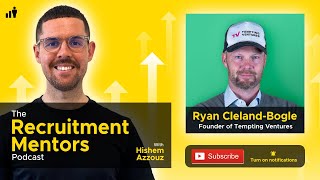
Ryan Cleland-Bogle, founder of Tempting Ventures, has built and exited four recruitment brands. He argues that headcount and EBITDA alone don't make a successful agency: what matters is talent retention, repeatable processes, and KPIs like EBITDA margin and speed-to-competency. He breaks down how to scale past the 20-30 person plateau and what investors actually look for.
Chapters
Welcome to the Recruitment Mentors Podcast. My name is Hishem Azzouz. Today I'm really excited to be joined by Ryan Cleland-Bogle, who is the founder of Tempting Ventures. Between 2002 to 2009, Ryan founded and co-founded 4 recruitment brands across different sectors and locations, which were finance, healthcare, and retto-rec, which all operated across London, New York, Hong Kong, and Ireland. By 2013, he had successfully exited all of these brands, and since then, Ryan's mission has been very focused on supporting, mentoring, and investing in successful recruitment entrepreneurs. He initially started this journey as the CEO of Recruitment Entrepreneur in 2014, but then after this, in 2017, Ryan launched Tempton Ventures, which now actively invests in early-stage recruitment businesses in exciting sectors in the UK and US. They currently have 6 different recruitment brands within their portfolio, which they're looking to grow, which all operate in different sectors and locations. Ryan, thank you for joining me on the podcast.
Good to be here.
So, uh, as I always like to start this podcast is the million-pound question, but I'm going to change it slightly for you. So in your opinion, what characteristics and traits do you think make up a highly successful recruitment entrepreneur? Let's start there.
Okay. I think in some ways it's pretty similar to what makes someone a really successful and sustainably successful recruiter. You know, I think as a starting point, I think, you know, what gives you a better chance of being a successful recruiter or entrepreneur is market. So whether I think some people get there by luck, some people by good judgment. I think we've got there initially by luck and then perhaps later by good judgment once we probably understood how important it was. But fundamentally, if you're in a good market and you have a tailwind, the common threads that I've seen with sort of successful recruitment entrepreneurs is their ability to attract, train, and retain talent. And that's the role which should probably will never change for you as the CEO of a business. So, you know, if you can't, you know, have a magnetic or attractive vision for people to join you, if you can't give them the training and personal development that, you know, give them best chance of success and you can't create a pathway to keep them in your business, you know, you're probably going to shelf life. So, you know, those things I think are the common threads that people do very well. Get right market, attract, train, and retain. Repeatedly. And that repetition is probably the hardest challenge that recruitment founders have. You know, at the start when you're bringing people into a business and maybe 2 of you, maybe 3 of you, 5 of you, you know, it's an opportunity to come and sit with you, learn from you, bastardize what you're doing, get it to work for you, you know, get lots of personal attention, whatever it may be. And, you know, all your language is in the future. We're going to be, we're going to do, it's all going to happen. And you can't really question any of that. You know, as you grow, a lot more of your language is present. Some of it becomes past. You know, it's great that you say you're going to do this, but you've been going 6 years and there's 3 of you, you know. So I love that. Yeah. And so, so I guess like that journey of a CEO and how they attract, train, and retain people, how forward-thinking entrepreneurs are around that and how much they're able to put in repeatable processes. Matters. And it's a very, very different journey to go from 0 to 10, to 10 to 30, to 30 to 100, to 100 to 300. The processes that you need to have in place and what you need to value as an entrepreneur needs to change along the way. So if everything you do is driven by personality, I need to hear it, see it, feel it, touch it in order to understand how it's working, that will slow you down. At some point you'll probably trip over it. Everything you're doing is actually how do we repeat this to give people a platform which is worth more to them than my competitors, you know, then you've probably got quite a good chance of success. So, you know, that can be L&D, that can be, you know, the marketing and being able to demonstrate, you know, X amount of our revenue came from marketing, which you don't personally need to do next year. It can be X amount of our revenue came from data we already have in our CRM and own, which you don't need to personally do. It's already there. So, you know, we have something which is of value to people joining the business. and your aim should be to continually build that value to make it a more attractive proposition for people to join you. And that part of that's obviously development pathways and giving people opportunity. But the entrepreneurs that are really focused on that, I think, tend to do pretty well if they're in a good market. And, you know, that is— it's a pretty common thread between each business. You get your operating model right. Is it scalable? Is it buildable? Um, I think a lot of people struggle with that because it's quite a different role, and you need to constantly be evolving what you prioritize, what your focus is along the way. And, you know, I think quite often culturally CEOs find it quite hard to get out of that liked mode into respected mode. You know, the two people. And but, you know, the people that do that well tend to be the people that flourish.
I love that so much. So much in there. I really like that simple, like, I guess, cornerstones of like attract, train, retain. I really like that. Super simple. Yeah. So, so let's— so basically, as I was just saying to you before, Obviously, you've been in the recruitment industry for some time now, and typically we would go into, yeah, when you started your own business, these sorts of things. But I really want to try and maximize this time for people listening and really go into this journey that you experienced, yeah, come by 2013, that a lot of aspiring recruitment entrepreneurs visualize, maybe even think about, or maybe even be the reason why they start their own recruitment business, because they think one day they'll be able to exit that business. So I guess where I want to start is just going straight to that point of like, by 2013, you'd exited a number of brands that you was involved with, started or co-founded. And I think, yeah, a lot of people in the industry may never even achieve or experience one exit, but you experienced multiple. So let's just stop there. How the hell did you achieve that? Like, how was you able to achieve that?
Different businesses, different results, really. I think with the initial brand that we founded, CharacterFox, that was a very good market in the sort of first 5 years that we were building the business. And it was pre-LinkedIn where you could leverage other people's data. So you really had to build your own. And the data that we amassed by staying a very tight talent pools became very valuable very quickly. And the average fee, the fee, you know, average fee of the market that we were in rose as the business was growing. So, you know, we had a sort of perfect storm of first mover advantage and a really exciting market for 5 years, which enabled us to get to, you know, a level of scale in the business and relationships with clients, repeatable processes, L&D, finance, etc. So we had a very difficult time in 2009 to 2012, but we had a good enough infrastructure and good enough legacy relationships with clients, people that we were able to ride that and get out of the other side as the market came back. So I think we did a lot of our learning during that period and we did a lot of things wrong. I think we probably had an attitude of like, it's our baby, don't call it ugly. And so because of that, it was very me too business, where it's like everyone sort of came in same graduate program, Hey, Mel and Dee, you know, Henry's just done 500 grand a month. You can do it too. You know, just do what he does. And, you know, I think that, you know, got us to a certain point. But I don't think we— I think because we were very young, felt we had the Midas touch, we probably weren't in listening mode. We were in talking mode for quite a long time. And it's probably only looking back that we've realized that probably quite a lot of missed opportunities there. But, you know, irrespective, you know, sold the brand in 2012 and we had some other brands around that, that it made sense to exit at that point in time because they they probably work best as an investor together. And so that was definitely a probably, and honestly, probably as many learns from that as there was wins. With LucasLife Healthcare, really different experience. So, you know, Kite Fox was, you know, huge average fees, you know, high-end contingency, bit of retained, bit of search. LucasLife Healthcare was, you know, private nursing agency, temp recruitment. And so there was common threads in that, love your candidates, love your temps, but the operating model was, you know, pulls apart. And Lucas Love Healthcare was probably a degree of right place, right time. Again, we definitely had a very candidate-short market, probably didn't have the quality of competition there are in other geographies, and just a really exceptional management team. And I guess that was the kind of point of difference between Kite Fox and Lucasoft Healthcare. Kite Fox was we built it, it was our DNA. Lucasoft Healthcare was the DNA of two founders that I knew well and backed. And so that was kind of quite a learn in terms of how do you manage that relationship to help them achieve what they want to get, what they want to out of it. And that business actually in the end probably did a bit better in exit than a larger contingency retaining business. And so, you know, it eventually sold to BetterCare Capital. So like really different experiences, you know, one is your own DNA, one is sort of trying to help people get the most out of theirs. But I think sort of by 2013, I sort of felt like I'd, you know, built something myself and with Nick and, you know, had a good result from it and supported some other people to get the most out of their vision and had a good result from it. And, you know, the question was, you know, actually, could I sort of blend that by getting involved and actually building an investment team that supports people? And it just felt like a pretty sensible move from there.
Yeah, that makes sense.
Yeah.
So a couple of things. So first thing, so just for context, so you mentioned the business that obviously acquired the healthcare brand. Was it this— what was it, the same company that bought the— obviously that you sold to all the Different deals with different people, different transaction. Um, oh really?
It sold a private equity business. Um, and the, uh, other businesses exited effectively MBOs. So really, really different, uh, experience.
Okay, so MBOs. Okay, cool, because that was definitely one of my questions. So, okay, a couple of things that I think would just be interesting at this point, and maybe you could even— you could say, obviously share how you did it then, but also maybe share how things have happened more recently. But how did you go about finding these potential opportunities to get acquired? Or like, did you speak to someone that then brokered like your, your business out to the market to people that could be interested? Did you have relationships with people that were at PE firms or these types of firms that you could potentially sell to? Like, how did you go about actually even getting that opportunity? Like, how proactive were you?
Um, it differs by brand. Um, you know, I think it's about sort of obviously what are you trying to achieve. So, you know, um, most recruitment transactions are a glorified MBO, you know. So it could either be founder driving, trying to help the management team that, you know, they've seeded and building succession plan around them, try and access capital for them to move the business forward, but effectively, you know, that's managing an MBO. Um, it can be led by the management team who are approaching the owners of the business and say you know, been a great journey to this point. Would you consider giving us the opportunity to buy you out, leverage up our position, and, you know, build a business in line with our DNA, our, our ambitions? So, and then you get sort of like something like Lucasoft Healthcare, which is quite unusual, where you get a management team that, uh, managed to attract a buyer where they just get out really quickly and, you know, move on and, uh, and, uh, and sit in the sun for a bit. So, you know, that was quite an unusual transaction in that regard. And I definitely you know, that was a bit of a beauty parade speaking to, uh, potential private equity investors who felt that, you know, they could run the vehicle effectively. Um, so, you know, that was an unusual process in that regard in terms of speed of exit. Um, you know, where it's an MBO, it's kind of understanding like, how do people's visions here align? Who wants to drive the process? How do you do it symbiotically? And, you know, quite often if it's a— if it's an investor you know, they'll probably want to drive that. You know, they want to go out and say, okay, we're going to talk to other people in private equity community and talk about, you know, how we can move our position up whilst giving the management team a better opportunity to move forward with the mixture of equity and more debt in the business to be able to grow more quickly. If it's founder-led, then they're probably approaching the— sorry, it's management team-led, they're approaching the investor and saying that, you know, we would like that opportunity. And then it's actually, can everyone agree something that they think is, is, is workable with? So, um, but ultimately, you know, most recruitment, uh, transactions are a, a sort of, you know, a, a, a, a, a ribboned MBO in some way.
Yeah, because that was just, that was just going to be my sort of just sort of next question really as we go into this. Like, in your experience in the last, I don't know, 5 or so years, like, how, like, how often, like, how realistic is it for a recruitment business to achieve that exit? Is it, is it actually a lot more common that you see now that it's actually like you just said, that, yeah, that sort of glorified MBA. And I definitely have more questions on that, but like from your, from your lens, like in the last— because obviously I feel like the more and more I speak to people like yourself and other people on this podcast, I think maybe, I don't know, in the last maybe 10 years ago, you might have been like, right, I'm starting a recruitment business because I want to start where and I'm going to exit it, right? But then how many people actually, actually achieve that? But like, how much of that is actually going on in terms of it being sold to a PE firm or whatever. Is it typically more the MBO side that you typically see more often?
Okay, so the— I guess if the question is how do you, you know, is it very easy to get an exit? The answer is it's really easy to get an exit. Depends what you want for it. If the— you know, basically pass the business to your number 2 for a quid, got an exit. So, you know, I think The question is, if you're trying to sell a business to a private equity firm, you know, is that easy? No, it's not. You know, and, you know, if it was, everyone would be doing it. You know, it doesn't happen that often, you know.
Yeah, that's what I mean. Yeah.
And so, you know, it's really important to understand, like, what is, you know, if you're thinking about my, you know, my aim is to build a business that could sell to private equity. Well, I think you need to push forward and say, well, actually, is that true? Is that what I really want? Because, you know, if it's what I really want, I'm probably going to have to build a business that would be very different. The touch, feel, look of it, process of it would be very different to just building it to, you know, be proud of the business that I own, have a nice life, make some money, you know, have the car, the house, whatever I want. So, you know, and everything that you do as early as possible needs to be driven towards presenting your business in best possible light. And so, you know, understanding, you know, the investor mentality is pretty important in that. So, you know, if, you know, if you sort of step back and maybe look from an investor's lens, you know, I am running private equity business, and, you know, first up, you know, it's, uh, I've raised a lot of money, you know, it's not really my own money, um, I, you know, need to demonstrate that I can, uh, invest that money Well, part of giving people confidence to invest in a private equity firm is saying that there's certain parameters that, you know, we will or won't invest in. And so, you know, one of that tends to be like, what's, you know, there's a certain level of EBITDA that beneath that we don't touch because that, you know, investors, the people that are giving them capital, probably feel like that's a risk profile we don't really like. Yeah. So it's really important to understand, like, you know, with your— if you're looking at speaking to private equity, you know, what are the parameters that they're looking for? What are the parameters they raise capital from? Because if you don't fit into that, there's no point really in having a conversation yet, you know. So in terms of trying to get an exit in the short term. If you think about an investor, really simply put, if I'm buying a bit of art, I want to put that on my wall, look at it, get a couple of mates around and say, oh, do you like that? Then suddenly, in 5 or 10 years' time, sell it at a profit without having to do much. If I'm buying a classic car, pretty similar, drive occasionally, turn up, goes up in value, sell it. I don't really want to have to be the mechanic. I don't really want to have to rebuild it every 6 months. And so if you're asking for a premium price from a private equity firm, you need to demonstrate to them that this is a business that will continue to grow in your absence. Yeah, it's an asset that's going to rise in value. Now, no private equity firm thinks they're that lucky. They know that they're going to have to work hard with management to get the best possible result. But they want to believe that what they're buying is what they think they're buying, which is a business that's going to continue to grow at some pace without their input. And so, you know, you need to be able to demonstrate that the business you're in hasn't capped out a market. There's other market opportunities that you continue— that you can continue to attract, train, and retain staff post-transaction too. You know, you need to demonstrate that you've invested in the business enough in the last couple of years for it to continue to grow. And actually, what you haven't been doing in the last couple of years is not investing in the business to make it look as a problem.
Yeah, yeah, yeah, yeah.
Broken it for the next person. So I think market really, really matters. Were you— what value proposition your business has, you know, it's kind of back to— I'll give you a very good example. Actually, there's, you know, a— and I spoke to a private equity investor in the US who called me up maybe 5 years ago after a well-known transaction, which was, you know, the Frank Group transaction and—
which was the— what, sorry?
Frank Group transaction.
Oh, Frank Group. Yeah. Okay.
And when we were sort of having a chat about sort of why, why buy Newcastle, because you've invested in Spotify, Airbnb, different things, what were the things that came to those? Actually saw huge value in talent pools. So actually the candidate pools that the business had built was actually seen as actually that network, that ability to network into that qualified talent pool. The size and scale of the talent pool, you know, we just see tremendous value in that because we're really long on Microsoft, we're really long on Salesforce. And that ability to build a talent pool which is probably bigger than anyone else's in the space, the investor saw a huge amount of value in that, took a huge amount of comfort and safety in that. And so, you know, it's about understanding what an investor wants to see, why they think your business has a USP, why they think it's going to continue to grow and And one of the challenges that has, you know, and one of the things I think it's important for recruitment founders or entrepreneurs to understand is that, you know, the last 20 years has, you know, some really impressive successes of private equity investing in recruitment business and continuing to grow and develop and make money. You know, and Frank Group's a really good example. Living Bridge had invested and before that did incredibly well from helping the founders build a business and moving forward. That's just a couple of really good private equity transactions. But there's also so many private equity firms have examples of investments they've made in recruitment firms which haven't panned out.
Yeah.
And it's not an asset-heavy business. Your assets are your people and they arrive at 9:00 and leave at 5:00 every day. It's not like you own a fleet of cars or a tech stack that you could— proprietary tech that you could sell to someone else. You know, investors need a lot of confidence that the management team, you know, that if there's people leaving the business as part of the transaction, that's not going to derail the business from a culture perspective. Yeah, they need a lot of confidence that the management team that are staying at the other side of the transaction have the ability and capability to continue to grow the business. Yeah, you know, I think fundamentally giving investors that confidence and assurity is, is really, it's really important. And then market, market, you know, you need to demonstrate.
Yeah, so I'm definitely gonna— one of the questions I have for you is like, in your opinion, what makes a smart market, uh, a smart market, right? We'll go into that. But just to, I guess, because this is one of my questions that I prepared for, just to, I guess, just like sort of tie this all up, because we've spoken a lot around the PE, um, path, right? And one of my questions was around the I guess like what you were saying, like really understanding the key parameters that PE investors want to see from your recruitment business, right? So that was one of the questions that I know I've had recruitment leaders ask me before. Like if I'm speaking to people like you, what are the key KPIs that I need to really have a grasp of that Ryan the investor is going to want to see and know? So let's say that we've got the management team, that people part, we've got that, right? Um, and I do feel like that is why the whole like MBO thing is more common, because I've spoke to so many recruitment leaders who are on that path to wanting to exit and they lose their purpose because they're like, I want to do deals, I miss that, right? So then, so I understand that people about why it's so important. So if I have got that now, I'm confident my management team, I've got my exit plan, I feel like it's not gonna be reliant on me, what are the like key, key KPIs, metrics parameters that I need to really demonstrate and showcase to show that we've got great assets and it's a strong place to be invested in.
I guess two things to that. Firstly, I'd sort of, you know, if you genuinely are talking to it, it was like along the way I feel a bit lost because I'm starting to lose that, you know, deal junkie mentality. You just need to reframe that and make that, you know, the deals you do is about attracting the best people to come join your business. You know, that's your role.
Yeah, fair enough.
That's the sales journey. Or about going out to back other people or acquire other businesses, that's your job now. It's just changed. It's not clients and candidates. And I think in terms of what are the key metrics that somebody should be mindful of or what should they be trying to present, it does depend a little bit on market. Search is going to be very different to logistics type business. But broadly, you need to be able to demonstrate trend. So, you know, what is my trend on sales? What's my trend in net fee income? And what's my trend in EBITDA? You know, how's that conversion looking and changing along the way? You know, and I might continue to invest to achieve that. What's my productivity per head? How's that tracking? What's my headcount? How's that tracking? How can I demonstrate that's repeatable? Am I going to maintain or grow that productivity per head? What's my margins? Are my margins defensible? Are they growing as we get better? Or actually, in order to maintain growth, are we having to accept lower margins along the way to get more sort of wholesale business? Investors don't like margins going down because they feel like they're just going to have to keep working harder a little bit every year to get the business to stand still. So margins matter. Debt for profile of the business is important. I think people do understand that too. If you're— all private equity investors will want to get someone else in beside them to help finance the deal. You know, so you, if your business is, has a very, uh, poor balance sheet, is strewn with debt, you know, that is going to come off your, your, your, your, you know, enterprise value to what you actually get. So, you know, businesses will look at that. How much more debt can the business hold against its EBITDA? It's important. Uh, debt-to-days matter, you know, declines pay, important. Um, the, uh, business will also want to see that, or a private equity investor will also want to see that there is, you know, I think one of the big things a lot of private equity firms look at, speed to competency.
Speed to what? Sorry, competency.
Competency. So, you know, and one thing I look at, I see a lot asked is, you know, people are, you know, say you've got, you know, 50 fee earners and, you know, quite often when you actually look at a 50 fee earner or 100 fee earner business. So say, you know, average productivity is, you know, average £12,000, impressive £20,000, whatever it may be. And that's factually correct. You know, there's 100 people, the average is 20. But actually, if you look at the median, it's actually 14, because there's kind of 10 guys producing 50% of the revenue. And investor won't want to see that. What they actually really want to understand is what does the average person— not what's the average— so what's not the average number someone achieves, it's actually what does the average person in this business achieve? And so that's really important, because investor will look at that and think there's a lot of key man risk. In that and you can't demonstrate to me that you can get sort of 50, 60, 70% of your people to a certain level, you can only actually demonstrate that you can get 20%.
Yeah, 20%.
Yeah, I think that's really important to be mindful of that because it will, it'll come up, you know. So I think the other key things that the, you know, an investor will want to see, like what's the trend lines and those things.
Yeah. And then just, just quickly, real practical here from your experience, what are like, what's like What should recruitment business owners be like? Let's like, what's like the, I guess, first major milestone with their EBITDA for them to even be like, okay, maybe we need to actually like, if their goal is to achieve some sort of exit, right, or transaction, like where, like at what point do you think EBITDA-wise can they then actually really start thinking about maybe we should actually start having conversation? I don't know what's like the tip, like what I know you said earlier, like if it's below a certain thing, it probably won't even be looked at. So I'm just curious as to like what you typically see that EBITDA being at? I know there's so many other factors because you've just shared, but I guess typically that you've seen—
I can answer that specific to private equity because, you know, along the way, if you're thinking about sort of raising money or some kind of transaction, like at any point you can go to a bank, raise some money, you know, at any point you can get maybe an angel investor or someone like put some money in along the way because they believe in you and your, your product and your vision. Um, so I think, you know, it's very the reality is that from your first idea, you know, that I'm going to perhaps go and set up my own brand to £100,000 of profit to £300,000 to £400,000, you know, at all points you have options of, you know, either taking debt into the business or debt equity mix, whatever it may be. So, you know, I don't think that there is a hard and fast rule that someone needs to get to a certain level before they consider, you know, should this just be the me show? Um, but I think, you know, if you're thinking about a private equity transaction, it kind of goes back to what they raise capital on. And, you know, $1 million EBIT is a pretty sort of, you know, well-known floor, kind of low market private equity. Um, so $1 to $3 million EBIT, sort of low market, you know, mid-market from there. And then sort of, you know, you get sort of like the, the huge, uh, this world that would touch anything's probably less than 10, you know. So yeah, um, So you, you know, you kind of need to know your audience. And part of the reason that private equity firms just aren't really there in stuff that's less than a billion EBITDA is that really twofold. It probably feels like there's still a bit of key man risk at that point. You know, if you apply sensitivity to sales, that would probably fall down quite quickly. But the second reason is that they find it hard to bank it. They find it hard to get, you know, an HSBC or another high street bank to come in beside them and put their—
to fund it.
Yeah. Less than that level. So, you know, it's sort of understanding that You know, the question is, you know, if you can get to a million yourself, you know, maybe you can get to 2 or 3 before you need to go and have that conversation, because it's only going to get easier. Again, you know, the higher level of EBITDA you have, believe it or not, the more investors there are in the market. And so at a higher multiple where you, you know, get a better result. So, you know, but really private equity sort of millions probably market it.
Yeah, fair enough. And what has been the typical multiple that people have been able to achieve in your career? Like what you've seen so far? Really, is it really varied? Okay, fair enough. Um, I guess just trying to get— because I feel like so many— there'd be so much, I don't know, just like chat in the pub and like, he's got this much, blah blah blah. So like, I just— I think people are interested in like, what do people— can actually people achieve? What multiple can they achieve?
You know, it is very varied. It's varied by geography, it's varied by sector, and it's very by scale of business. And actually it's varied by just timing, you know. Yeah. You know, at the right point in the cycle and there's, you know, 3 or 4 private equity businesses, uh, interest in the staffing sector and probably get a slightly better multiple than you're right at the top of the market and they're thinking you're probably apply discount to this, there's no one else at it. So, you know, I think timing, um, you know, timing and scale are probably the two things which impact multiple the most. Um, in terms of, you know, what's realistic, you know, I think if you're looking to get any kind of exit multiple you know, really it grows quite quickly from maybe 3 to 4 million EBITDA. So, um, that sort of, that kind of age-old, you know, we need to be 70% contract, 30% perm to get, you know, the right mix of multiple. I'm not sure that's as real as it once was. Um, I think people are, uh, investors probably look at quality of earnings, um, a little bit more, uh, you know, a little bit more sort of ruthlessly than they do the mix of earnings, um, these days. Um, But once you get to 3 or 4 million EBITDA, I mean, you really shouldn't be doing anything less than sort of 6 to 8 times. And, you know, once you get to 10 million EBITDA, you definitely should be doing less than 10.
Yeah. Okay. Thanks for sharing that. So final point on this, because you've mentioned quite a few things from headcount, EBITDA, NFI, time to competency. I guess the question I just had, like, if you were to— like, the question is basically from an investor's point of view, like, what would you— if I'm listening to this right now, like, what would end up being, from your point of view, like, the most valuable part of the business? Out of interest, like, if we were to zoom in on, like, maybe one particular area that could impact other things in a recruitment business, what would you say is the most valuable part of the bit of a recruitment business, would you say, if we were to really get it right?
I mean, by person or function?
Um, I don't know, you, you— I don't know, whatever comes up.
Leadership, you know, leadership. Yeah, that's an answer to that, you know. And so When we're looking— market and leadership— when we're looking at making investment, it's about really getting to know the management team and being really open about our relationships, our interests, or wants and desires aligned here. And fundamentally, you're backing the leader, ideally, to be able to execute on what he says his vision is and trying to help him do that. As an investor, leader is huge. I mean, absolutely huge. And the leader is the point of spear. And so you've got to believe that the leader has it in the locker to continue to grow and develop and thrive and as the business grows. But you also need to be able to believe that they've got a survival mentality too if things get tough. And they're two very different things. Last year, difficult year for a lot of people, right? And really, really interesting, the people that survived in that market, and, you know, managed to keep the team together, get through, aren't necessarily the same people that would really thrive in the best market, you know. So ideally you're looking for somebody that, you know, can, you know, go from survive to thrive. But if they need to, can survive and don't have a wishbone where the backbone should be.
Yes.
Leadership, huge. And then I think after that, you know, in terms of function, you know, we've got a DD tool called Arteus that we use when we're looking at— it scores businesses out of 360. Points and what we're really trying to do is like, where's the areas of improvement? If we invested, where could we help? I think the sort of functions that we would probably be most interested in and place a lot of value in, probably marketing and L&D.
Marketing and L&D, yeah.
I mean, I think as an investor, a finance function is something that, provided it's fit for purpose, you can add value to. Governance, HR, provided they're fit for purpose, you can add value to, talent attraction, L&D, and marketing. I mean, I think that they're really, really aligned to the DNA of the business. So what you're really looking at is like, how are those? I mean, are they good? Are they getting a lot of value from marketing? Are they positioning the business well? What revenue do they generate from marketing clients? Is that repeatable? What's the talent attraction process like? What's the retention like? How do they onboard? How do they induct? Is that repeatable? And then L&D, like what is, if you strip away the kind of management and the people we are talking to every day, who's coming through and how's the business helping them come through? Do they have a good track record of doing that? And so I think like by function, you know, talent attraction, L&D, and marketing would be something that, you know, we would be really encouraged if we saw those operating well.
Yeah. Okay, cool. So really, okay, so I guess this would be a nice segue then into, like you said, like how important you said leadership first, right? So I guess let's sort of take this into the direction of, yeah, maybe a bit more down the sort of MBO route and a few other questions that I have for you, but This question comes up a lot, right? Because I do feel like a lot of growing recruitment leaders and agencies do really find it hard to have that layer underneath them or like obviously cultivate those leaders within the business. So I guess my first question is like in the typical businesses that you sort of see do this well or a business that you think is in a really strong position, like what does the typical org chart look like from a leadership perspective out of interest? Like how, Is it, I don't know, how do recruitment businesses typically have their sort of management layer within the business and how does it typically operate? Just out of interest, like what are the typical org charts that you see?
It just completely changes by scale. You know, I'd expect it to be very different at 300 people than 30, you know, in terms of what the CEO's job is. I think like the big thing for me is actually sort of going back to leadership fits into, well, who you're going to have report into when. Yeah, that's kind of about a leader understanding what his job is and that should change as the business grows. So, you know, I think most people can relate to when they set up a business, you know, your job is literally everything, you know, and sort of all of the above. And, you know, you're sort of struggling to find the time to speak to clients and candidates because you're sending out an invoice and you're interviewing someone to come and join the business and then you're drawing up this contract and then you're talking about your great L&D program while you write the first module the day before you give it 2 in the morning, that stuff, you know. So, you know, and as time changes, you know, CEO needs to go, well, actually, how do I in the next 12 months as I'm writing my business plan for that year, you know, how do I impact this business best and what do I need to let go and who do I need to bring in?
What do I need to let go? Yeah.
And I think, you know, one of the things which really slows a business growth is, you know, if you kind of think about the mentality of a recruiter, it's good recruiters are quite controlling by nature.
Yeah, for sure.
So you have to be, you know, I've got a candidate here, I've got clients here, you know, my job is to influence that process, you know, get them to successfully date. And so, you know, I'm trying to manage that process, control that process to get a positive outcome. I'm God, I can do it. You know, I can make everything happen. I'm the best influencer, etc. And so, you know, your mentality as you come up through recruitment is very controlled, controlled, controlled. Don't leave anything to chance. Look where one quarter is. And actually, as you start to build a business, you know, that slows the business down. You know, if you try and be God and you're trying to come up with a solution for everything, you're not trusting people, you're not bringing the best people in, listening to them, then actually it becomes very, very difficult to run a business because you end up in that place of you're just— there's too much to control and you actually end up doing everything averagely, stepping on everyone's toes and not doing anything well because actually you're not prepared to let go and bring in people who knew more than you about a function, who can do it better, actually learn how to have a good relationship and manage that person by listening. And I think that slows down a lot of recruiting business where they never get to that big old chart because actually the founder couldn't let anything go. They feel uncomfortable letting anything go. And part of that is mentality, but part of that is also what's— it's comfort. And because If I'm a recruiter, I've done that job. So actually I find it quite easy, you know, to train someone else to do it or manage someone else to do it because I can relate. I've done it. You know, I think recruiters quite often in the building of a business, they really struggle to let go because they actually struggle to manage other functions because they've never really done it themselves or certainly haven't done it to the level or the experience of the person to bring into it. And so, you know, I think that kind of letting go and trusting, attracting the best people and then creating a framework where they can influence the business to enable you to move forward and focus on where you can impact the business best. And, you know, could get you to a point where you've got a really great org chart, which is effectively, you know, I've got my, you know, key directors, whether it's by geography or division, that, you know, reporting to me in sales and how they're doing. You know, I've got my head of marketing here, which is reporting on how he's working or she's working with key stakeholders to drive value. I've got HR and L&D who are talking about, you know, actually what's our— where's the performance improvement opportunities? What do we need to get better? You know, I've got talent attraction, which is making sure that we can repeat this process. Coming to it. And you know, those people that you should be, uh, have around you in an org chart, probably quite close to you, you know. Yeah, I think as a business grows, then there's probably a strategy point, isn't there? You know, a lot of businesses will, will, um, look to either have somebody focus on strategy or bring in a sort of chief strategy officer, which helps you sort of tie together all of those to achieve your goals.
Sure, sure.
And I think that's sort of like, if I was looking at an org chart, that's kind of broadly what you do.
Yeah, no, that's great. Thank you. So I think you, I feel like you just sort of answered this, but I want to ask it because as I'm sure you're well aware, a huge portion of the UK recruitment industry is very much made up of micro small businesses, right? Under 10 heads, 20 heads or whatever. Now, I'd like to think even though it's a high percentage, from the conversations that I have, I don't know if you'd agree, I would think that quite also, let's say it's 8% of the UK recruitment market, I would probably like to say at least half or maybe even three quarters of those recruitment leaders actually want it to be be bigger than it is, right? Or have motivations to do that. Not everyone wants a 20, 30, 40-person business, but I do feel like they have aspirations, they have big goals, but because of various things, one of them being what you just shared, they may never actually get there. So a real common question I always get in my inbox for me to ask the people that have broken through those sort of really difficult barriers of like getting over 30 heads, getting over 20 heads or 40 heads. So that was the question, William. I feel like you may have answered it a bit, I guess the question is for any founders listening to this who are at that 20-person stage that do have aspirations, they've got a vision that they want it to be bigger. Like what other advice would you give them to break through that milestone, that barrier that is maybe, yeah, things that may be preventing them from getting past it out of interest. Is there anything else on that?
Yeah, sure. Churn kills you. You know, when you're a small business. Yeah, absolutely throttles you.
Yeah, yeah. Obviously churn for your own business.
Yeah, you're quite a small team. You know, you see a lot of businesses where, you know, they start off with 1 or 2 people, go to 5 or 6, back to 3, up to 7, up to 9, back to 2, back to 6. And, you know, but my question would be like, what part do you have to play in that? Like, what are you learning from that? Because it keeps happening, you know, and, you know, I suspect the common thread is you. And so, you know, and really why is it happening? Because the the founder isn't being disciplined enough on the, basically, what's my vision of business and how do I stay disciplined to that? So, you know, if you are, I think when you're very opportunistic in nature, this is really hard to execute on, easy advice to give, but, you know, when you're opportunistic in nature, when you've got an early-stage recruiting business, you know, we do software developers, but someone's just thrown up a project manager role. Wow.
It's like, yeah, we'll do that.
All that's doing is taking you further away from your purpose. You know, that's not repeatable. The work you're doing this week isn't going to add value to next week. So like really try and make sure that every single person who touches your business, the work they're doing this week, you can extract value off in the future. You know, for me, that's about really staying tight in the market, tight in the talent pool where, you know, the value that becomes value accretive and people that join the business at whatever point have a better chance of success in the future. And so that's really huge for me. Like, don't be too opportunistic in who you're hiring. I know, you know, we're sort of doing software developers, but Jeff's a great accountant and finance recruited. I've worked with them before and I really trust them. Unless you're going to bring them in to do software development, don't fucking hire them.
You know, like, that's why you set up two businesses doing that.
Don't make it too hard. And so, you know, try and stay ruthlessly focused in setting up one business, one specialism, one thing that you can become, have a USP at, create value in, be best, own it. The second you try and go too wide too early, you know, you're not actually, you know, of course people want to, as they grow, build up, but actually that's a repeatable process. We've done it in one market, we're going to do it in another. You've nothing repeating if you're trying to do two or three markets at the start. And it's very, rarely works. And, you know, more often than not, you see it sort of distilled to one market several years later. So, you know, that'd be really strong advice on that. You know, the other thing is that don't hire and hope. And, you know, I see this like UK recruitment businesses specifically are not great at this. You know, they, they tend to, they tend to see headcount and success as inextricably linked. So, you know, if we get other 5 people in, then we'd be 15, not 10. But that distracts the 10 people you have from going from good to great. That's a really poor decision. You know, like try and get to great and then grow. Try and hire into desks that are warm where basically you're missing out on leads, missing out on opportunities if you don't hire. Don't have, you know, lukewarm desks and think, well, if I hire this hero, he'll make it really warm. Because if you can't get the people you have performing, diluting that, diluting your time, your energy is only going to dilute performance. And so I think people try and grow too quickly and it's back to that kind of, you know, what's the average performance, what's the kind of medium performance? You know, quite often, you know, someone will be at 6 or 8 heads and they look at it and go, oh, brilliant, you know, we're doing 80 grand a month. That's all right. You know, we made 25 grand last month and, you know, so probably we could hire another 3 or 4 people on the back of that. But actually the kind of 10 ads they have, only 3 of them are consistently performing. So whilst you are making money and whilst it kind of looks good in that little spreadsheet that you've done, the truth is most of your business aren't performing. So get them performing, then grow, make it repeatable. Am I repeating what I did before to grow? And you know, that is like really like I can't give that counsel strongly enough. Stay tight and you know, and also like and this is pretty ruthless thing to say, but people hire too lazily. It is hard to hire people, get good at it. So don't hire Bs hoping they'll become an A. Say, look, I'm an A, As hire Rcs. I'm gonna hold on and interview hard, interview hard, until I find somebody fucking great. Because I've really had to earn that hire, I'm gonna really value that hire. I'm gonna work them so hard to get them working. And, you know, so like really high bar in terms of attraction. You need to be clear on who you're looking for and then you can't sort of settle for someone different or change your mind on that because just find it a bit easier.
Yeah, yeah, that's a really good point.
Really, really strong on that. And then, you know, once people are in the business, you need to be honest with them. You know, like, actually, this is my expectation, you know, at this point in time in our journey. As we perform, my expectations could change, go up, I do need you to do this. And if people don't, you've got to in and out quickly because it devalues your business to everyone else. If you're sitting with like 3 people who are really, really performing, but 7 people are still sitting there, aren't they? What does that say? And so you need to be able to make strong decisions to make sure that you're trying to create a core where everyone's exceptional. And if you look at businesses that I think the obvious businesses that have been involved in any kind of transaction or event in the last number of years, whether it's Frank Group, Fade, and Spencer Open, whatever it may be, CORE is exceptional.
Yeah, CORE. So I think this is a good question to ask. I want to make sure we ask around because I feel like this is something that even when me and you started speaking, you really spoke a lot about this around the sort of smart markets piece. I want to make sure we speak about that because I know that's big for you guys at Temptum Ventures. So just Before I do that, I think it's a perfect time to ask, like, what I hear a lot of recruitment leaders struggle with is, yes, everything that you're saying, but, and then understanding what their hiring triggers are. I feel like you're talking a bit about it there where you get your core people who are missing leads, they're missing out on opportunities, and then try and get in rather than, as you said, I really like that, instead of thinking, oh, if we got someone in, then they would probably do better, or it'd be go from lukewarm to warm. I really like that. So I don't know what I like. I don't know, is there science behind hiring triggers? Because I feel like a lot of people struggle with that.
Like you said, there's two things. So I think you try and— so don't do it by your overall business, you know. So, you know, if you are at, you know, 15 people and you've got sort of two teams, you know, don't— because you're at sort of $15,000 per ad, don't just say we're hiring everywhere. You know, one team's at $20,000 and one team's at $10,000. Hire into the one that's $20,000. Don't try and get more $10,000 to $20,000. That's You know, it's like follow the success, follow what's working. And you'd be really surprised that actually a lot of people don't follow that because they want to win everywhere. And it's just far quicker to follow what wins and try and get it to critical mass. So, you know, I think that's important to separate out so you can look at it. And I think, you know, it's when your business is relatively small, average productivity can be a real red herring. You know, you do really want to look at it by stripped out the top 2 or 3 people. Where everyone else, what's the average there?
Yeah.
You know, if that's, you know, a level which is exciting, you should probably be hiring. But if it's not, it's only the top 2 or 3 that make it look exciting. I, you know, I try to get the rest up, make the tail up. That's pretty, pretty important. And then actually the other thing is, you know, speed to competency. So, you know, that's something I really try and track early in a business because it should get better. And if it's not getting better, I would be concerned if that's trending the wrong way. So, you know, when you were 5 people and you're all working really tightly together, you hired the junior or experienced hire and, you know, within 3 weeks they had interviews, within 6 weeks they made the first placement. That was pretty consistent. But that's not 3 months. You know, I'd be starting to look at that and go, should we be hiring or do we have something that we need to address here? Because speed of companies is slowing down before we are because we're not giving them the best chance of success when they, when they arrive. So those are the things that I would be looking at.
I love the speed to competency. I really like that. So, right, final question and then let's sort of finish this up with just really focusing on, yeah, tent and venture, smart people, smart markets, because I'm really curious about this. So the final point on this, because I do get this a lot and various reasons why I think people struggle with this is one, don't know how to find people. They haven't had the best experiences with people. But the question is that I get a lot of the time, which I want your thoughts on, is like, all of these things that we spoke about in the last 45 minutes, um, obviously could potentially be, um, easier, or you would make less mistakes if you were working with someone or had some sort of mentor, any de, to help you ride this, um, journey, right? Um, and I've seen you talk about that. I think one of the— your videos in Recruiting Entrepreneur, whereas you're like, look, if I had access or help, I probably would have achieved an even better multiple or got quicker, right? So I know a lot of people want like that sort of help. As I said, a few different reasons why they don't end up, but like, I don't know, how can, how can people listen to this, find credible NEDs and mentors, like how to approach them, how to find them? What's your advice on that?
Um, it's just so, it's so situational. Um, I, I've got a lot of thoughts on it. So So, you know, I guess the irony of, you know, particularly early stage investors is, you know, they're probably looking to invest in someone that doesn't really need investment to do well. You know, it's with investment could they do exceptionally. And, you know, quite often the very best people don't really believe they need the investment or the help because, you know, everything they've done has worked so far. So, you know, actually getting, you know, best people, best investors together early stage, you know, the likelihood of that happening is probably quite slim, you know. And so, you know, so Investors need to work, they need to be conscious of that and work hard to make sure that visions are aligned. And I think recruitment entrepreneurs need to be, I need to really understand what taking investment means because you've got kind of, I can take investment or I can take some advice. You know, or I could be in a network, you know, you've got lots of different options as to how to get counsel to grow your business. So, you know, you need to be very, very clear on what you're looking for. Okay. And why. And you also need to be clear, like, is it realistic? You know, because like investors want to work with management teams that are going to be, you know, like ruthlessly focused and trying to, you know, achieve their potential of building a business that is best in class at what it does. And so, you know, that honesty in relationship really matters. I think there are, you know, if you look around the market, you know, there's probably quite a negative connotation about the idea of recruitment investment. And because you tend to sort of hear, like in anything, you know, where it hasn't worked out, it's quite a loud voice.
Same with NEDs as well. I always hear it like they just don't really do much, not very proactive, just sit on our board meeting, every quarter, charge £500, £700 a month.
Yeah, but you know, my question would be, what's your part to play in that? And what part? Yeah, because, you know, if you're not driving value from an NED and if you're not listening to the advice or you're not making a decision early and say, you're not for me, you know, war story is getting a bit boring, you know, I've learned 80% of what I'm going through in the first 20% of time, and you let that go for another year or 2 years and start moaning about the NED. I actually need it tomorrow, you know. And so you've got to be selective. And I think one of the But one of the things I think is a common thread is that I think investees don't do enough DD and investwards. And quite often recruitment business founders don't do enough work to find the right NED and to do DD on the NED.
Due diligence.
Yeah, yeah, exactly. And it's kind of very similar to hiring great people to come work for you. You've got to work really hard to find the right people to come and join your business. You have to work really hard to find the right NED. You've got to kiss a few frogs. And it's exactly the same with investor. It's got to be the right mix. It's got to be the right mix of fuel to get it to ignite. So investment for investment's sake is a waste of time. It's about actual honesty of, like, actually, what are your goals? Can we help you do them? Do we understand what each other's roles are going to be in that? Are we happy to write that down? And then are we happy to be beholden to it? And we both have to work hard to deliver on it. If that conversation isn't happening— probably shouldn't be taking investment. And I think founders need to understand they do have a part to play quite often where an investment falls over or it doesn't work out with an NED. They were in the room too. So I really counsel founders, whether it's an NED, whether it's an investor, don't phone up all the people that are in their existing portfolio. Don't phone up the people that they're working with at the moment. Phone up the people that used to work start with, you know, phone up the investors that didn't work, phone up the NED that, you know, you did 2 years ago and say, look, you know, what were the positives? What were the negatives? What advice did you give me? And because, you know, an investor or an NED should want that really, you know, relationships they have in the background, you know, with perhaps businesses that haven't scaled with them where, you know, there's been a parting of ways. Like if that relationship still isn't a good one, You know, and it is impossible to say, you'd probably take something to be said there. Yeah. You know, so I think like, you know, but you know, I think the, that, that it completely depends what point you're at. I don't think broadly, you know, you should look to take an NED too early in your business. I think, you know, it's got to be your DNA at the start. You know, it's pretty obvious the things I think you need to do to get a business to 10, stay focused, hire great people, focus on L&D, get your productivity there, stay in market, look at market it. I think after that, it is a different journey to get to 10 to 30. And I think I probably would be starting to look at maybe as kind of advice to someone who's done that reasonably recently or has worked with a business that's done that reasonably recently, you know, because, you know, there's kind of war stories for somebody that did it 25 years ago. I'm just not sure.
Things change. Yeah, exactly. Even just in the last 18 months, 24 months.
Really, you know, you've got to really understand tech stack, really understand marketing, got to really understand, you know, You know, if you think about recruitment broadly, you know, 40 years ago was I'm setting up a recruitment business in Reading and anyone in a 3-mile radius, I'll find you a job. You know, now it's, you know, like Ryan Adams and Signify, you know, I'm only going to look at Scala developers. I'm going to do it globally anywhere. We can do it anywhere because technology enables us to do that. Like how recruitment business operates and models and how people, you know, remote working and how they fit together and work together and what methodology you have to do that. Like that's really the point you're playing in now. You know, not 500 people in one office, you know, basically we'll do a bit of anything 30, 40 years ago. So it ain't like that kind of currency of doing it recently matters for either an NED or investor.
Yeah, love that. Just before I ask you the final question, we'll end on the Tencent Ventures piece. Just a quick sort of quickfire question really, because I feel like in your journey you would have seen a lot of different tools and tech that you'd invested in, like In your opinion, what are like the tools or tech that come to mind that like you would, as a recruitment business owner, you would not want to be living without, out of interest, that come to mind? Just really quickly.
Yeah, I think a really good CRM matters. I mean, we're, we're, we're using Vincere across our businesses, um, and, uh, I'm impressed with the product. I think it's continuing to evolve, so I give it a thumbs up. Um, I think, you know, you do need to make sure chair about to do something with One Sales, which is going to enable—
OneUp Sales.
Yeah. To get a better quality of management data for the consultants too.
Nice.
I think, you know, that's probably something I encourage. I think there's a great product, I think it's called Conquest, which enables actual people to probably look at their forward earnings and like kind of manage that and see it and understand what the potential is going to be. I think that's really empowering. So I think that's important. LinkedIn's a pretty obvious one, but I think the question using LinkedIn is how do I get into LinkedIn, get the information off it and then live in my data? And so I think LinkedIn's kind of, it is a necessity, but I think if your business is always on LinkedIn all day at the expense of its own CRM, all you're really doing is mining the same database as X amount of recruiters out there. So, you know, it's about trying to get it off that with better quality of data that's on LinkedIn under your CRM where you understand people's wants, needs, ambitions, dreams.
Yeah, loads of different tools that can do that, isn't there? Like Luxure, LeadIQ, loads of different things.
Exactly. And we personally won't put anything in our CRM unless we've spoken to the candidate, like have, you know, I have personal details. If that hasn't happened and there aren't significant notes, keep working harder to have that conversation.
Yeah, yeah.
What you really want is your CRM to be your Everest with really great data and better quality CRM than anywhere else. And one thing I would say, depending which market you're in, you know, I think Talent Insights is a really valuable tool if you're in sort of search space.
Yeah, I've heard that'd be really valuable with Italian search projects.
Yeah, really, really, really good tool. But you get out of it what you put into it, you know? Yeah. So, and, but, you know, we've definitely seen a lot of wins from making sure that we work that data well. And so, you know, I think there's some of the key things that obviously—
Yeah, nice.
To build the market back out of your CRM effectively and automate that.
Love that. So look, let's end it here then. Tempton Ventures, where are you going? You're— as I love the statement on your website, we back smart people in smart markets.
Yeah.
To build world-beating recruitment brands. Where are we taking Tempton Ventures?
Yeah, well, I think we've got quite a few Brands that are either in the UK and US or operating in the US from the UK and operating in Germany from the UK, we think there's great opportunity to, to land and expand. So we expect to see that in the next year. Just in process of finalizing investment in the US in scientific market, which we're really excited about, which we expect to grow quite quickly next year. We expect to— I've got to brand. We've invested in a search brand called Eastward, which we think is going to grow pretty quickly in New York. And we think it's a great opportunity to actually acquire other brands and align spaces beside it. So yeah, expect to make quite a few investments the next 12 months. It's been a good ride recently, but our priority at this point is to only invest in businesses that we really, really believe in because actually we've got a great opportunity to invest time in the businesses that we've already invested in. And we're really excited about where they're going to go.
Yeah, I love that. And then look, final question is just obviously an industry that has obviously given you, obviously been a big part of your life, has obviously given you a lot. Like what if you could change the industry, what would you improve?
That's a really hard question, right? I think, you know, I guess, you know, it's very easy to say, well, you know, I wish it was a more honest industry. I don't really, because actually all the people that aren't very honest and sort of actually probably give me a bit of a USP. So I kind of feel like, you know, I should be telling you, I wish it was more transparent and more honest. But actually, I think that's your opportunity, isn't it? Because it's not really like that. And, you know, I think the— I think the— yes, I think that's important. I think there's a lot of smoke and mirrors in the business. I think people need to take a much more collaborative approach and more open approach. And I think that is happening with different networks, you know, market, which are certainly more collaborative and less combative than the market was historically. So I guess, you know, that's one thing. And then the second thing is just actually confidence. I think a lot of recruitment businesses actually just don't have the confidence to value the great service that they offer. And, you know, might seem a bit harsh to say, but, you know, if I'm Deloitte or PwC, you know, I bring someone into my business, which is basically I throw the recruiter at them and then, you know, I happily perform that personalized to client at a 300% margin because I've got the brand. It's not really doing much different, you know, but recruiters sometimes, you know, struggle to have the strength to say, actually, we add a huge amount of value and, you know, we are confident in that and we don't feel, you know, in any way ashamed or guilty for the value that we add because, you know, the market in the next few years, the place recruiters have in that market is only going to grow in importance. The market, you know, most markets which are in any way technology facing are becoming more and more candidate short. And, you know, in the absence of a relationship or relationships with great recruiters, you know, any business will struggle to grow, thrive, survive. And so, you know, got a really important part to play in the economy. And, you know, we need to sort of think like fundamentally people build businesses and we're here to try and match the best people with the best businesses. And so like, you know, we really do have a part to play and it's an important part. And I think, you know, businesses need a little bit more confidence in how they articulate that, but also how they charge for it. Because, you know, I think the recruitment, you know, the margin probably spent the last 10 years a little bit of margin erosion, you know, that should bring it back the other way now.
Yeah, love that. Ryan, been an absolute pleasure. Thanks so much for joining us on the podcast and really enjoyed that. Thanks a lot.
Okay, man.
More from Hishem




You don't need as many clients as you think to bill $1 Million A Year In Recruitment



From 30 Direct Reports to Back-to-Back $1M Years as a Solo Recruiter with Zach Creighton



