Sanne Wouters - From R2R to Tech recruiter & building a desk in the Netherlands
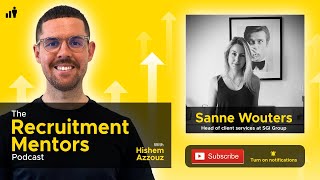
In this Recruitment Mentors Podcast episode, host Hishem Azzouz interviews Sanne (Sarné) Wouters, a senior manager at Source Group International (SGI) based in Amsterdam. Sanne shares her unconventional career journey—from a law master’s degree and a brief stint in academia to becoming a German‑speaking recruitment consultant associate, discovering rec‑to‑rec, and later moving into tech recruitment. She discusses the traits of a successful recruiter, offers practical advice for graduates, and reflects on the challenges of rec‑to‑rec, including candidate and client dynamics. The conversation then shifts to her transition into tech recruitment, the steep learning curve of becoming a data‑specialist recruiter, and the importance of continuous self‑education (books, podcasts, webinars). Sanne explains how she built SGI’s data‑cloud market in Amsterdam from scratch, covering legal compliance, local tax rules, the need for face‑to‑face client meetings, transparency about margins, and the nuances British recruiters often miss in the Dutch market. She outlines her business‑development tactics—niche focus, LinkedIn content, webinars, candidate‑driven webinars, and community building—to generate inbound demand. The episode also touches on expectation management, imposter syndrome, self‑development practices, time‑management (David Allen’s GTD), work‑life balance, and gender diversity in recruitment, proposing changes to hiring criteria, retention policies, and industry incentives to attract and retain women. Sanne ends with optimism about SGI’s future in Amsterdam.
Chapters
Welcome to the Recruitment Mentors Podcast. My name is Hishem Azzouz, and today I'm delighted to be joined by Sarné Walters, who is a senior manager based in Amsterdam for Source Group International. Sarné has worked in recruitment for over 5 years, initially starting her recruitment career as a rec-to-rec before then taking the leap into tech recruitment where she continued to progress her recruitment career from consultant to then principal and to now senior manager. Sarné is extremely passionate about offering a best-in-class recruitment experience and service to all of her customers, and she's now leading a team, growing a team, and building the SGI brand on the ground in Amsterdam. Sarné, thank you for coming on the podcast.
Thank you for having me.
Really excited and looking forward to this one. And where we always like to start is, is the million, million dollar question really, which is, in your opinion, what characteristics and traits do you think make up a highly successful recruitment consultant?
That's a very interesting one because, as you know, I started my career as a rec-to-rec and you sort of get told what a good recruiter looks like and what you need to target, I shall say. And I remember when I started many, many years ago, it was very much, you need to look for people who were competitive and money hungry or money motivated, very driven, potentially had sales experience. Whereas if you look at me, I've had none of that. I've never played football or any competition sports. I didn't have a sales job before recruitment. And although I like money, it's not the ultimate driver in life. And actually, if you'd ask me today, I'd say it's very different and I'd say it's A lot more about skills are building relationships. Everyone can do one deal, everyone can do two deals, but can people do 10 deals with the same client? It's that adding value, and I think you get that through knowing what you're talking about and adding value to people and making that relationship a lot, very different from here's a CV, and a lot more to that trusted advisor as a recruiter.
Yeah, I love that. So let's just start at the beginning here, because how the hell did you end up in doing Rectorate? I can see you did your master's in Liverpool.
Yes.
So how did you end up in Rectorate? How did that happen?
Yes. So I did a bachelor's, I did a master's in law. As part of that second master's, there was an exchange program to Liverpool. I did that. I graduated back in Belgium, had no clue what to do with my life. I had an offer to do a PhD and teach at a uni, and I had an offer for a law firm. And I was like, what am I going to do for like next 50 years? And I did what all girls do. And I looked at my dad and I said, how do I pick a career? And he said, it needs to give you fire in the belly. And neither of them gave me that fire. So I then delayed my career and I went to study again. In Liverpool, had to tell mom and pops that I was gone again for a year. And in there, I sort of, uni was only 2 days a week and I wanted to make my own living, well, wanted to, had to. And one of the jobs that was advertised was German-speaking recruitment consultant associate, whatever it was. I had no clue. And the interview lasted 4 and a half hours. Yeah. I really thought I was the Harvey Specter of the world back then. And it was a ballsy interview. And at the end of it, they said, do you actually speak German? I was like, um, they said, do you speak Dutch? And I was like, yes, that I can do. And I became Dutch associate recruitment consultant. And 2 weeks in, I was like, I'm recruiting recruiters. Is that a job? And that's how I found out I was a Rec2Rec.
Wow. That's— I love that story. I guess One of the things that we're gonna do over the coming months, and I would just— it'd be good just to just focus on this very quickly before we start unpacking it, unpacking this recruitment story. But one of the things that we're going to do over the couple of months is just do some specific episodes on sort of focus on helping grads and graduates, because I think there's a lot of stress in that period. I never went to university, I did A-levels and then I had no idea what I wanted to do, but I knew I didn't want to go to university with something that I wasn't sure that I was going to enjoy. So I guess just on that really quickly, you mentioned there that your dad's advice was go for something that makes you fire in the belly. I'm sure you've met plenty of graduates now during the time where you are now when you're the director at Light. What's your sort of— if I'm listening to this and I'm someone that is graduating this year or is still on that path, like, what would your advice be to me, do you think?
I definitely advise you to, if we could take one step back and you're still studying, I would say go do internships. Go do as many internships as you possibly can and try, do things like offer your services for free for 3 days or something to different companies in different industries. Because I did that during my law studies and I realized this is absolutely not what I want to do, which was a bit of a shame 5 years in. But it felt so negative, right? You're always dealing with problems. And I was like, oh God, no, this is not for me. So I really say go and experience as many things as possible because you are 100% right. A lot of uni studies do not prepare you for the real life. And I think that might be a bit of a flaw in the educational system. But you choose something at an age of which you think, yeah, that's kind of cool. I'd go and do that. Now you get a lot of theory about it, but you never experience what it's like to be in that job.
Yeah, I think, yeah, that's such great advice because I mean, imagine obviously the other path that you could have done is you could have had that, you could have obviously got yourself a job, been on a good salary, good benefits, and then all of a sudden there's all these things that you could lose when you work out and realize, wow, this actually isn't something I'm going to enjoy, but I've done 5 years, I've now got this salary. There's a lot more to walk away from there.
Isn't there? Yes. And also, I think also if you think about the amount of pressure as a society we put on graduates, we say you're studying and it can be something else, economics, which you can do a million things with, right? Or a business degree, whatever that might be. And then we basically say, let's say the first job doesn't work out. Okay. You spent 6 months or something that's not going to be your career. You add so much pressure to that individual. Because then the next job must be it. And if that's not it, then that person already has two things on their resume that didn't work out. Whereas actually, if you take a step back, can you blame them? Because a business degree, what is that even? Business? What does that prepare you for? It could be so many different things. How can you blame a young individual for not immediately finding the right thing? Kudos, actually, for having the courage to say, "This is not for me," and for walking away.
Yeah, yes, it's complex, isn't it? But I think, yeah, I just wanted to ask you that. So thank you for sharing that. So where I'm always curious, like, what, how would you describe your first 2 years then before you went into then tech recruitment and left rec to rec? Like, are obviously like some of the rec to recs that I know, are recruiters really like, are we horrible to rec to recs?
Oh, oh God.
What did you experience? What was it like?
I would say anyone. I basically, I've made my first boss the proposal to run a grad academy, and that I would hire anyone at double the salary after 6 months. Because if you survive rec to rec for 6 months, you could do any industry. It's so hard. Because first of all, good recruiters, if you're going to headhunt them, you have to headhunt them. Through the office line, and you're headhunting recruiters, they know what's happening, right? Good recruiters can't speak with you at 2 o'clock in the afternoon. You need to speak with them before work, at your own lunch, or after work, because most recruiters don't finish at 6 on the dot. And if you're a rec direct, that means you don't finish at all, right? But also, a lot of recruiters play, although that we say always, don't take a counteroffer, As a rec2rec, I've experienced it multiple times that recruiters do not use rec2recs, but use rec2recs to get a higher salary and to actually stay where they are. It's tricky to— I don't want to call it play the game with someone who's a player already, but it does feel— Yeah, I'll get what you mean. Yeah, you're selling someone their own traits, basically. And it's very hard also with salespeople are proud people. And billings do get inflated when you speak with candidates. It might be a bit more than it turns out to be on a reference check because everyone's quite proud of what they've done. It is tricky. Yeah. But it made, honestly, it was a great introduction into it recruitment because I was like, especially because I did perm and now I'm doing contract. And I was like, oh, these people want to speak with me. They want a new job. Oh, that's amazing. They are honest to me about their salary because they want me to get them a higher salary. It's a, Very different experience, but it taught me so much.
Yeah, I can imagine. So to sort of wrap this part up then, I guess for people listening, because I'm sure you've sort of had to take some of your own advice and you've learned a lot of things along the way, but like if I'm listening to this and I am considering a career move in recruitment, I think it can always be really— there's one, obviously, when you're sort of a couple of years into your career, there's a lot to lose, right? Particularly if you're a contract recruiter. Like you're potentially losing relationships, blah, blah, blah. So I guess for someone that's listened to this, that does have the right motivations, they're not in it to try and just get more money at their current business, but really want to progress their career and maybe want to go into a new sector or want to be in a better environment. Like, what would be your advice to me to make sure— what are some of the things that you would tell me to do to really make sure I have the best chance of finding the right company, you know, like, just, I guess, just some advice on that, I think, would be great.
Yeah, I think, I think there's a couple of things, because when I made my last move, I was earning very well, and it's indeed, as you say, you have that thing with, I'm gonna lose all my clients, I'm gonna have to do it all again, and I'm gonna start from zero. As a recruiter, you need to have faith in your skills that you can transfer them. Your skills are yours. You can do that again. This client is your client because they picked up the phone on a certain day you called them. You could do that with other companies and the money will come again. You need to sort of accept that. And then I would say, when you're going to look for a new company, when I did my interview process, I very much said, I'm going to, first of all, these are my timelines. I'm not resigning before a certain date. I'm not making a decision before a certain date. If you want to offer me beforehand, you can, but you aren't going to close me because this is a very important career decision. And then also I've said, I am going to ask members of staff what the biggest problem is in this company. And if they tell me there's nothing and everything's rosy, you're out. So I sort of made it my process. Yeah. And actually, SGI was the only company where employees were so upfront to me about what was there and what wasn't. And I was like, wow. They had the attitude of, without being trying to sell us, but in general, you want to find a company that says, we want you to know everything there is to know so that on day one, there are no surprises. It is exactly what you think it's going to be. Because at every company, there's something, there's always something, and you'd better uncover what it is beforehand rather than on day 1 or 2 or 20. I would say those two things. Accept that where you are, you will get there again and higher or better, and truly take your time. Don't be rushed. You set the expectations and you find out what a company is and what it isn't.
Yeah, I love that question. What are the current challenges or problems that you have in your area?
Yeah.
And I guess final bit on this, I think it'll be useful for people is how many people, obviously depends on the business, but like how many people would you really recommend people trying to meet? A recruitment business before, like, they make some sort of decision, you know? I feel like you definitely want to meet more than just the business owner if it's a small group. I don't know, like, what—
what—
obviously there's nuance and context here, but typically how many people do we want to be meeting to have a good grasp of what we're getting ourselves into? 5.
Yeah, 5 or more. I'd always say business owners, so you understand where the business comes from and culture, obviously. And it sounds obvious, but it isn't always. Who's going to manage you? Because they're going to put it The hiring person might be the director and they might put the team leads above you. You want to know that person. Can you work with them? And you'd also want to meet at least one, preferably two peers, and then one person who just started.
Yeah, that's great. That's really great advice. Thank you for sharing that. So how, how was the transition then into tech recruitment? What, what, what was that like? Was it daunting? What were the things that you had to learn quickly? What was that transition like?
I remember saying very arrogantly, this feels like a walk in the park. Um, because with WEG2REC, your process has to be super tight. If you miss one step, if you don't do one call, you also learn to not have WhatsApp relationships with candidates, but always, always everything on the phone. And it's sort of that, because my process was so tight and so strict, I was like, oh, these freelancers want to work with me. I did my first deal in week 3, which is great. Yeah. But it was, and I was a bit like, I've got an offer, the candidate says he wants it. And I literally asked, does that mean I've done a deal now? Because I was unsure that that was the way it worked. I do, the biggest challenge for me was suddenly not being an expert in my field, suddenly not knowing what I was talking about. 'Cause as a rec-to-rec, you work for an agency yourself, you know what life is like, you know the pros, the cons, you can talk about things. But on day one, I was allegedly, I was a data specialist and I was like, I know nothing more about data today than I did yesterday. I have no clue what I'm looking for. And I found that was the hardest part, I'd say, yeah.
Yeah, and I hear that a lot. So where, what's your advice for people that would, experience and feel that? Like, where— like, one, I guess two things really. One, what do data specialists or sort of people that have a certain focus, like, what do you feel like they need to be an expert in? Because I always say to recruiters when I'm talking to them about their brand and content, because one of the worries that they have is talking about things that they aren't extremely competent in, and I always have to remind them that you don't get paid to do the job of the people that you're supporting, right? And you're never going to be as competent as them. So one, How did you start? What do you believe makes someone an expert, or what should recruiters listen to this, focus on being an expert in? And then two, yeah, where did, what did your journey of like learning and becoming more of an expert, what did that look like? Because I feel like people could benefit from that. And how did you learn more about the industry that you are now supporting?
Yes, so on the first day, I stayed late, which seems to mark my recruitment career, and I literally Googled every blog paper article I could find, printed it all off, went home, stayed up very late, read through it, and sort of, I would say, definitely in the first 6 months, I read so much data for dummies and what is Power BI, what is Tableau, loads of what is YouTube videos and for dummy videos. And I would say I still do that. I still try to learn as much as possible about new things. One of the things I would recommend every IT recruiter is read the book, The Phoenix Project. Because it shows you it's about a project which is going terrible, and it gives you a very good idea of who your stakeholders are. What is the difference between the business and IT? Where do they meet? Who signs off budgets? Where does data come from? How does data get visualized? Why is it important? But also, when does a hire get approved? When do people hire externals? When do they hire more employees? Who says so? Which gave me a really good insight in truly understanding my stakeholder and really understanding the process. I completely agree with what you say is that I can't do a data visualization job myself. I would have no clue which buttons to hit, but I do know that when my client tells me, "I wish we'd have insight." A couple of weeks ago it happened. They said, "I wish we had some insight. We've got this huge Excel and we don't really know what it means." And I said, "Ah, you need someone to visualize it." What tools you have? Oh, we've got Tableau license somewhere. Great, let's get you project proposal for Tableau developer to come and set this up. Which metrics do you want to see? Which things do you want to click into? I can advise on that. I can't build it myself, but I know what it looks like, and I can identify when someone needs it. And I think those things, you don't need to become an expert, but definitely Google the how-to and for dummy videos and read books such as Phoenix Project.
Yeah, I like that. That's great. So let's talk about, so obviously started obviously in, you then obviously, correct me if I'm wrong, so when you started the company before SGI, it was in London and then you moved close to home, home for you is Belgium, right? And then you moved over to Amsterdam, obviously continued building out that market. I guess, look, we can cross over here with SGI and your previous employer, but One of the things that I wanted to ask you was, like, is— so I've worked with a number of recruiters that operate in Amsterdam. With Brexit and everything, like, what, like, is Amsterdam becoming the new London? Like, what's going on here? What's your view on this? Obviously, there's been quite a few big brands that have taken the head office to Amsterdam out of the UK. Like, I don't know, what's your sort of the nuances that you understand and the context that you have? Like, how are you feeling about this Amsterdam market?
Yeah, I think in the Amsterdam market, you're absolutely right, a lot of companies are coming here. Some are unaware because contract regulations are very different to, for example, Belgium or Germany or the UK.
Yeah.
Which companies aren't always aware of when they come here. For example, there's this, you have to, if you work here, you pay tax here, you can't just invoice with your Ltd and whatnot. And a lot of companies are unaware of all these very strict rules about DBA contract, whatever things. So it's a bit of a journey you take them on with you as a recruiter to also say, great, yes, there is a lot of talent. Yes, there is an airport and you can attract talent from the outside. There's also rules to make that more attractive in the Netherlands. The government also supports, by the way, companies coming over here by giving them some tax breaks. But you have to do it by the rules of the country. So I would always recommend to work with a local recruiter who does and understand the compliance and everything that goes along with it. So you are— and I hope I'm not— you can obviously work with UK recruiters, I don't want to say you can't, but what I'm trying to say is a recruiter who just does anything and everywhere will find it very hard to do a one-off placement in the Netherlands because it gets so complex. A UK recruiter who does Netherlands all day long will understand the ins and outs of it, but I definitely say always work via a local entity. And that's where a lot of clients have surprises sometimes because they are unaware of it. But I do see that it's becoming a lot more of an expat-driven city as well. A lot of people are moving here. It's very international. It's very multicultural. And I see why, because there's always something to do. It's just, it's, and at the same time, it's a small village feel because a lot of people know each other and it's really not that big.
Yeah. So if it's okay with you, if we can just focus on this for a second and then I'm really keen to go into your journey of building your market from scratch and these things. So on Amsterdam, sometimes I get quite a few messages from recruiters who are really motivated to take their career internationally, right? So if that is into mainland Europe or to the States or whatever. So I guess you're talking a bit about there in terms of like some of the laws and understanding all of that. Putting those aside for a second, what, what do we need to understand if we're going to start recruiting in the Amsterdam market or that sort of region? What do we need to, what are the nuances that we need to understand that probably Brits will probably learn the hard way? Like, out of interest, like in terms of what comes up for you with that?
Two things. On the client side, they want to see you face to face. There's very little clients that will do business with you just from over the phone. The minute you get in front of someone, and we call it having a coffee, that is the go-to thing, that's when partnerships begin. That's when your client starts to trust you. So, getting that face time. And then the other thing with candidates is something that does go against what a lot of British agencies tend to teach people is, candidates want to know your margin. Clients want to know your margin. And they want you, they want to be able to feel good about it, and you need to be able to justify it. And actually, if you're secret about it, it will always backfire because candidates and clients, you need to understand that you're a third party to that relationship. And if you're not adding value, you're not on site with them. And although your contract says do not disclose commercial information, candidates will always find out what their rate is. Always. And if clients find out that you're underpaying a candidate, you're finished. It's done. Which really goes against the traditional, oh, we're worthy of a margin, because you also need to be able to explain it. And that's why I really keep on hammering on that relationship building, that added value, because if you do that, you're never going to have an issue.
Yeah, I mean, you obviously part answered it there, but my next question was what, what do Brits get wrong when building an Amsterdam market? Yeah, no, you probably, you may, you probably probably hear, that you hear on the other side of candidate? I don't know what— so we've spoken about, yeah, there's no sort of cloak and dagger here. People want directness, people want upfront and honesty and like, look, this is what we'll be like. So that's our relationship building. But where else do you see Brits go wrong in trying to conquer the Amsterdam market?
I would say the candidate experience and feedback, because the market of local candidates is relatively small. And if you, you can't just put someone forward, never talk to them again, forget to give them feedback, whereas you might get away with that in other markets. You will have to call that candidate again if you stay in your market for longer than a year. There will come another point where that candidate is suitable for the job you've got and available. And that not giving feedback, or not telling them what the process is, not keeping them in the loop, really that relationship building also with candidates is something that I see go wrong.
Yeah. So it's a long-term mindset, really double down on relationships. Okay. All right. Amazing. And actually also on this, do I need to, do I need to, do I need to speak Dutch? Is that important or can I get by like, or do I get extra brownie points? Like, I don't know.
Yeah.
Can I—
if I'm brutally honest, I'd say before COVID You could get away with it depending on the clients you target. You're always better off if you speak Dutch. Even if it's just to be able to introduce yourself, to be able to, you know, ask a bit of Dutch things, whatever it is, but you have a big advantage. Before COVID it was easier. Then COVID hit and you noticed that recruiters who were already finding it difficult found it even more difficult. And I do think that as an English speaker, you have to work twice as hard. It's 100% possible, but you are a bit behind and you have to work a lot harder. Yeah.
Yeah. Okay. And then final point on this, I promise. With that in mind, thinking people listening, look, I guess, are we saying you're going to have to be fluent in Dutch? Absolutely not. But I think what you're sort of communicating here is that there will be things that if you go above and beyond and show that you're trying to understand the culture, the language, these sorts of things, it goes a long way. So I guess what would people appreciate? Is it if I really sort of really give it a go of trying to introduce myself in Dutch and I don't know what, like, where should I, I guess, just try and give it a real go and what people would appreciate, do you think?
I think it's definitely the charm of the effort into introducing yourself in Dutch and then politely asking, is it okay if we switch to English? But also other things like the fact that you have terms that are in Dutch goes a long way because you're trying to adapt to the market. The fact that you understand compliance process goes a long way. The fact that you try to pronounce companies by their actual name rather than some English mumble jumble will go a long way. And I think the laying out your process and saying that I'm going to be honest with you, this is who I am, this is what I do, this is what we're going to do together. I will always give you feedback and just have a good and structured process and then you're leveled, I would say.
Right, I love that. Cool. Thank you for sharing that. So let's go into the sort of journey that you're on with SGI then. So from what I can see, you joined them January 2020.
Yeah, end of last year. Yeah, somewhere in January or February of last year.
So yeah, before obviously everything changed, right? So obviously, just for context, obviously you, you obviously then obviously were working for your previous company in Amsterdam, doing contract, doing that, and then you've gone to SGI and then you're building out their data market from scratch. Is that right? And you're the sort of first person on the ground for that brand of business. Okay. Yeah. So obviously, and then you're going towards sort of a year and a half in now, right, into that journey. And I know you said that you've just hired 2 people and things are going in the right direction.
Yeah, yeah, definitely, definitely.
Okay. Yeah, let's talk about, let's talk about how this started then. Like, how, how the hell did you approach this, which I'm sure at the time felt like a really exciting challenge, an opportunity, but no doubt some sort of mountain that you knew that you're gonna have to climb up. So what, what was the strategy? What, what was like, talk to us about the thought process and how you was going to start building this market from scratch and where you started?
I think there's always two things. On the one hand, you want your compliance to be done, your legal entities and everything. But on the other hand, if there's no money coming in, then what's the point of having compliance set up? So you always want to juggle those two things. I'm a very structured person, so I had a sort of roadmap mapped out of how to do business in the Netherlands. What do you need for it? And it's literally, you know, registering with the Chamber of Commerce, getting a bank account, getting local contracts, all those things you have to do whilst in the day-to-day also drumming up new business, because obviously there's a relationship clause, so you've got to start over again, you've got to also inspire other people to go to clients together with you, ensure candidates that you are a trustworthy partner, Even though we've not done this before and this entity might be new. Um, so I think it's very much about the combination of working structured and rolling with the chaos and making that magical combination. Yeah. Making it work.
Okay. So what's, what was the, talk to us about people or I'd say the most popular that people want to know more about and learn from and hear how people people sort of approach it and tactics and these things is definitely new business. So you mentioned drum up new business there. Talk to us about how you approach that. Was it, right, you did some market mapping, you knew sort of where the types of businesses that you felt like you could support. Talk to us maybe about what, how did you identify the niche that you was going to go after? And then how did we then start communicating to these people? Was it straight getting on the phone? Was it, I don't know, talk to us a bit about that.
Yeah, it's interesting because when I was at my previous company, data was a lot of on-prem data. And actually, while I made the move to SGI, a lot more data became cloud, which also meant that it was nicer for me because I didn't have to worry that much about my non-compete because actually my market had already shifted. And by its nature, I was no longer doing on-prem stuff. I was doing cloud. And it really became about the, again, I can't say this enough, adding value, understanding where there are cloud projects, understanding where you can truly support them. And I think if you move away from a recruiter from, hey, where else are you interviewing so I can go and nick that job and backfill it without you, and genuinely go to, are there any businesses where I can add value that are currently struggling and I can go and make a difference? It's such a different approach to BD, and it will really, really help you. Because you're truly doing it with the intention to help someone else. My previous boss said to me, "If you help candidates and clients, all the rest will follow," and he couldn't be more right. The whole premise of idea of recruitment, it sounds a bit upside down that helping people, because we're here to do sales, but actually, if you help people, by helping them, if you understand how you can help someone achieve their deliverables, make their project a success, especially in COVID, How can you make that work? Then all the rest will follow. And that happened also through organizing webinars, for example, writing blogs, putting content out there. I've got a community on LinkedIn where I actively give information to. It's know, trust, buy. People need to know you, they need to trust you, and then they will buy from you. And if you built that, and at SGI I did get the time to build that up properly, then things will come in. BD turns around and suddenly jobs come to you because you're the person who's helped other people and that goes around the market very quickly.
Yes, so that was going to be my next question and you sort of mentioned it there because I was sort of where my mind went and what people might be thinking was, well, if I haven't got a sort of candidate with the right skill set, then what else can I help them with, you know? And just sort of playing devil's advocate there. So I understand this I need to give value and I need to help. So I guess, talk to us a bit about that journey of how did you then come to, I don't know, what did sort of help first look like? Was it Sane sort of sharing content on LinkedIn? Was it first webinars? I don't know, talk to us a bit about the other things that I guess recruiters maybe sometimes miss or don't understand that they can help their markets with and how you did that and achieved that.
Yeah, the easiest thing that everyone can do is, I'm sure you've got a candidate you get along with really well. And that candidate can do with a bit more market exposure. So, for example, you do an interview with the candidate, and you post that on LinkedIn. You can do it as a video, you can do it as a blog, where that candidate shares their highs, their lows, tips about certain projects, whatever it is. Because I'm not a content expert in cloud, for example, but my candidates are. Next thing you can do is a webinar, where simply the candidates will explain about past projects and what the tips are, the dos, don'ts. And because you're organizing it, you're helping the candidate get more market exposure, but you're also helping, you can invite prospect clients into it, who you know are gonna go to the clouds. And suddenly, you go from being nobody to being, "Oh, you're the person who organized all those webinars about cloud. Can we have a chat afterwards?" You message people with, if you have any questions you'd like to be addressed, drop me an email, and you suddenly get inbound emails with, oh, we're struggling with this on the project, is that something you can address in a webinar? As well as, and I'm giving all my tips away here, but I guess it's not rocket science, it's also the, if you have any questions at the end of the webinar, drop me an email, and a client goes, actually, we're really struggling with understanding how much we leave on-prem, how much we take to the cloud. "Not a problem at all. Let me organize a call with the speaker of the webinar," who's now magically available for a new project. You put everyone in a call together, the speaker helps project, and before you know it, you've got placements because he's gonna help that client, and you've brought the clients on by just doing a webinar, by just wanting to help.
I love that. Yeah, so basically what you've been doing with these webinars is sort of bringing, you've, created a space in your market for the important discussions and sort of a space for people to come and attend and learn on the things that are important to them. And guess what? You can add value. You can connect people. You can add value. And yeah. Okay. I love that. So obviously, how quickly, how long did it take you before you started doing business then?
Not long at all. Not long at all. Really? But that's also credit to I had some wonderful colleagues who are already doing engineering in Belgium, who already have a few clients. I'm obviously from Belgium, and it's crossover. There's a very thin border, um, where there's a lot of crossover between clients, and they made some wonderful introductions for me. And through that, I also got the grant running very quickly.
Yeah, okay, fair enough. So that's, that's brilliant. So I guess, so you've spoken around the, the client side. I guess let's just get a bit more practical on the on the contract side for the people listening who are in contract recruitment. So I always did, I always did perm. And from what I understand about contracts and speaking to people like yourself, etc., is that obviously the candidate piece is obviously still important. You have to continue building that network and really get good at understanding who has what skill sets, who can do what, and get really good at understanding that quickly. So you can act quickly. But what I always seem to understand and grasp is that the client side, winning projects, getting involved with a business that wants to go from 5 freelancers to 15 contractors or whatever, that's like getting the opportunity to at least speak to these companies about supporting them achieve that is the more harder part. Is that right? Yeah. So, so you mentioned around helping, giving value, that's obviously contributed to that. But I guess getting real practical, like you mentioned there around understanding sort of people, projects and stuff like that. If I'm a contract recruiter, how can I get better at understanding where the projects are going to be? Like, you know what I mean? I guess that's what I'm trying to ask you is like, how have you got better at understanding or getting the information that you need to be the first recruiter going, hey, are you going to need contract? Like, you know what I mean? How have you got better at sniffing out these projects and stuff, for lack of a better term, for the BD side of interest.
I think it very much depends on— you need to be— I can only talk from my experience. For example, I don't— I rarely do AWS. I mainly do the Microsoft stack, meaning I've got alerts set up that when Microsoft announces a new partnership with a company, I get that in my inbox. So I know, oh, this company's actually recently signed up. I've also made sure that I've got partnerships through Microsoft and I understand who their clients are. So, I understand where the projects are going to happen, who's gonna migrate from what. There are certain projects I would say that are not big enough for a consultancy to do, and that they will look for freelancers. It's very good for you to understand which ones those are. And again, if you then also going to do webinars, again, on very niche topics, or you're gonna do a, Rebecca from our marketing's done a brilliant job in, we've got a reports coming out where we talk about the cloud market, I can see who downloaded that. So I can reach out and say, "Where you at with your project?" But you can't do— you have to choose a niche. And too many recruiters do everything in development, or everything in cloud, or everything in any market, and it's too big to track. Choose your thing. Really add value to candidates, because the ones on projects will get calls through their own network and pick up a lot of information. And if you know them, I got a message yesterday saying, by the way, this customer is looking for to begin their Azure project. You can reach out to this manager. He knows you're going to call. I've recommended you. And it just changes because you do one thing and you do it extremely well.
Yeah. So obviously you hear the, you hear the phrase in recruitment, niche, a lot, right? So in your opinion, obviously you've said how important it is, like just talk to us about your, like how would you, so if I joined your team and you're saying, look Hishem, like you're going to be niche and you have to be niche, it's important. How would you explain niche to me? Like what is a niche in your opinion, right? Because I think sometimes people are unsure, is what I'm trying to think about too niche? Is it too broad? So in your opinion, like what makes a niche out of interest?
I don't think that in recruitment you always must be niche. I think if you're going to be account managing for specific clients and you're going to help them with as many needs as possible, or you're going to be in the delivery role, you don't need to be niche. You need to understand the role you're working. You need to be good at finding the right people quick. I do think from a BD perspective, if you're going to be a niche 360 recruiter, then niche would be picking a technology, And you can do that by your LinkedIn Insights, understanding which is the technology that most companies in my area, pick a country also, a country and a technology, have hired in the most lately. Where are the most perm jobs open? In what niche is that? What area is that? You can choose an industry vertical. I personally haven't done that. I go a lot more about the, you pick a country and a tech, basically. And you understand, that tech truly.
Yeah. Okay. Got it. So when you mentioned industry, you're saying, so I could do Amsterdam, AWS, and people that operate in pharmaceutical and just that. You're saying I've just done, I've stopped at AWS, for example, rather than potentially even—
Okay. Yeah. Because if you're going to go the industry, you're just to touch on D&I a little bit. Every pharmaceutical company, let's just say, well, data science, right? Every pharma company that's only going to hire data scientists that have only ever worked in pharma only get one perspective. But if a pharma company hires a data scientist who's done banking before, they get a very different view of how to look at their data.
Okay, so on this then, I'd love to hear your answer to this question. So what What do you believe then is the sort of one thing that contract recruiters need to absolutely master and be really great at, that you think will really help them achieve a consistent performance, and why?
Consistent performance, that would be expectation management with your clients. If your clients know what to expect from you, they will come back to you always knowing what the timeline is, and you will be able to work multiple jobs properly every week, getting coverage on multiple jobs and therefore setting yourself up for success every week.
Nice. Client expectation. If you get really good at that. Yeah. Okay. I like that. Okay. So I wanna, um, imposter syndrome.
Yes.
What's been your journey with that? How's that been?
Yeah, we touched on it on my first day at recruitment. I think that was the day that I felt a bit like an imposter when I had no clue what data was. And then I think when you transition into management, you're sort of like, am I winging it here? Because this is a whole new skill set. But you overcome it through learning your traits and learning your role. And I think you, through self-development, you can get over that feeling, or I did.
Really? So for someone, so for someone listening to this that may have the exact same experience as you but still has to deal with sort of constant sort of feelings of, have I deserved to be in this position? Like, and sort of could be really self-critical, like, where— talk to us a bit about that self-development journey. Was there any books that you read that had a real impact? Is there sort of certain habits or practices that you have that you feel has sort of given you that inner confidence that can sometimes lack in people?
What? Yeah, talk to us a bit about that. I read a lot of books, about 4 to 6 a month, and I listen to audiobooks. So I'm all about self-development.
Nice.
But I would also say, because there's so much content out there, so why don't you just begin by asking the last 3 people you placed. What did you like about working with me? What would you have wanted that I would have done? And what would you want me to stop doing? And there you will have the things you're already doing well, the positive feedback, the thing you need to stop right now, and the thing you can develop further. And I think, ask 3 people, very minimum. There will be a theme in there, and develop yourself within that theme. And you will feel a lot better on the one hand because you've got the feedback, On the other hand, because you can look in the mirror and you can reflect on it and you could do something about it. So empower yourself, basically.
What were those questions again?
What was it that you really liked that I did? What is it you enjoyed most in our process? What would you have wanted that I would have done, or the value I could have added? And what do you want me to stop doing immediately?
Love that. Now, what great questions to ask, to ask People that you work with. Awesome. Okay. So, and what you're saying there is if you actively ask questions like that with people that you've worked with, you're giving yourself an opportunity to work out where you can improve, but also at the same time hear from people say, hey, you're great at this. And yeah, okay. I love that. That's really practical. That's awesome. So share with me then, like, so you mentioned that I really like the way that you put the beginning of your journey around the sort of, sort of having an organization within the, the chaos. So a lot of people, um, a lot of recruiters have consistently shared over the last couple of months how they really want practical tips, advice on like self-management, time management, discipline, whatever you want to call it. I think what's really shifted over the last couple of months is how busy people have got, um, is what I continue to hear. So it's really highlighted the importance of understanding what I need to be spending time on that's going to get me closer to my outcomes and goals rather than just doing the things that I like to do, right? So would you mind sharing like what, obviously you're building this business, you're now having people in your business, so I'm assuming you're going to have to be really good at, yeah, understanding what you need to be prioritising. So talk to us about what does, people like to hear daily structures. So like what does your day look like, your typical day plan look like out of interest?
[Speaker] Well, to talk about my day plan, I think the first thing is read the book, David Allen, "Getting Things Done". Do that, 100%.
David Allen, "Get Things Done." Yes.
And what you will see is that people are busy because it's busy in your head. There's so many things in your head. And then there's constant emails coming in which crowd your head. Your head is for getting ideas, not for storing them. Busy only means you've not addressed things. So if you read the book, you understand that you need to write a lot of stuff down and create a system that you can rely on. And then it becomes, so my calendar is very well organized, which also means I can't take ad hoc meetings. Doesn't work. There's no time blocks, it can't happen. You do need to plan for the, you know, I can do meetings after 6 because I block everything till 6. So everything that is crazy and things need to happen now, I can always take that in after 6, but that sort of sacrifice I prepare to make. Map your day out. So for example, you literally say, 7:30, I like to start early. Review my action required list. That's a list of things I need to do. Review action taken follow-up. It's actions I've taken, they are with someone else, did they do their job on that? At 8 o'clock, get my list ready. Who do I need to call today, first of all? What is my action list? And that can be my clients I need to confirm contracts with, understand if they've got budget approved for roles, understand how my contractors are getting on, onboarding, et cetera. Then there's always half an hour booked in for admin. That's the time I look at my email. Designated email time. Everything that comes in over email is not urgent. Even though people write capital letters and explanation marks, if it was urgent, they would call. Email can always wait. And it's very important, do not mistake the things you have to do, as you said, with the things you want to do. There's always gonna be urgent requests. There's always gonna be things that need now, now, now. And everyone's had the client that said, "I need CVs by close of play," and then don't come back to you for feedback for 2 weeks. You are human. You are in charge of your life and your calendar. If an urgent job's coming in at 5 o'clock, you ask your client, "I know you need CVs by 12 o'clock tomorrow, but what does that mean? What happens tomorrow at 12 o'clock? Because I can get you that, but understand that that implies that I can't have my dinner with my family tonight." and I can't go to bed at 10 o'clock because I'm gonna be up all night working this job. And a lot of clients then also see the human side of the recruiter and go, "Oh, I don't want you to work those crazy hours. Actually, it was more because I would like to have CVs at 12. What is more reasonable?" And you understand what happens in the client's world, they understand what happens in your world, and life becomes a lot better. And if you have that diary mapped out, Also understand, how much time am I gonna spend on a job? And map it out in your diary, so you don't spend your life resourcing something that you should've closed. Really be honest about the quality of the jobs you've got and the time you're gonna invest in it. But block that out in your diary. Everything has to be in your diary, so that you can also tie your laptop off, close it, close your emails, and you know you've done what you need to have done. And that feeling of, how shall I say, that overwhelming feeling of being busy goes away because you know you've got time allocated to do the things you need to do to get your results. That was very passionate.
Yeah, no, I love that. Honestly, that was great. And like, so, uh, do you spend any time then reviewing your weeks out of interest? Do you then have a non-negotiable time each week to sort of look at, right, where am I 'Where am I heading?' Do you do any of that at all, or is it always sort of the day at hand?
Yeah, no, no, actually we've got what we call a jobs pipeline meeting. That means every morning you're able to pull up a report for yourself to understand what is open, what is ongoing, how long it's been ongoing for, does it have CVs against it, what's the next action, and you get a very clear insight. Are you on track or not? Are you where you're supposed to be that week? What things have required more attention? What things need more attention? So you can review and adjust your day if needed.
Yeah, I love that. That's awesome. And then, so look, I absolutely love your mindset, energy, passion for this. So like, talk to us about, obviously I'm sure it hasn't all been smooth sailing in the last 15 months. Talk to us about what have been some of the sort of real challenges that you've had to work through in the last 15 months. What have been some of the darkest darkest periods?
Oh, I think it's very much the, when you're setting up something new, you've got to be honest with yourself. No, you're not going to get it done in 40 hours a week. It's just, isn't going to happen. But there's also periods, especially, look, obviously COVID hit. And I think I always say COVID, before COVID it was busy because we're setting up a new market. Then COVID hits and I was super busy to get more jobs on to cover for the hole that COVID left. Or could have left. And then when everyone realized that working from home was a real thing, it stayed super busy because now more jobs were released because projects were behind. So it always stayed this massive peak of busyness last year. And it's very easy to not think about yourself and to keep going, keep going, keep going, because I'm setting up this new market, I am doing this, and there's a million things to do. Ben Milwaukee has also been on this podcast, my mentor, and I asked him, work-life balance, I struggle with that.
How?
Even though my fantastic planning system, I do plan away till late, way too late, if I'm honest. And he said the great phrase, there's no work-life balance, doesn't exist. There's only life, and we tend to fill it up with work. And that was so true for me. That was a real, you're so right moment. And I've had a bit of this aha moment where the world doesn't end. If you do— if you forget to put your logo on a CV the first time, and you send it again, the world doesn't end. The client doesn't think you're any less of a recruiter. If you close your laptop at 7 PM, the world doesn't end. Projects don't go away. And that realization that actually, I'm very passionate about what I do, but I'm gonna be doing this for a very long time, clients and candidates are going to be there for a very long time if you treat everyone with respect. Nobody wants an overworked recruiter. Candidates don't want to speak with someone who's stressed. Clients don't want to speak with someone who's stressed. And that was definitely an aha moment for me.
Yeah, I love that. I think, yeah, work-life balance, I just think it's so individual. I think to sort of, yeah, I'd think to paint a brush where everyone should have a work-life balance and everyone everyone should work at like sort of leave work at this time or you shouldn't be thinking about work when you're home and stuff is it's just everyone has their own individual sort of feeling towards work. You know, I think this would be a— you wouldn't be talking the way that you are if sort of a lot of the— a lot of your working life you really didn't enjoy what you did and you was miserable and you was sad and you got hurt and you was then dreading about the next day. But yeah, I just couldn't agree with that more. And I think it's just Yeah, I guess what, before we finish then, what I wanted to ask you was, which could tie into this, is then just women in recruitment. Like, how can we get more? How can we, like, what's your view on, look, so my context from speaking to people like yourself and other women in recruitment, so the sort of just an overview of what I've taken in and learned is what I think is massively changing, hopefully. But sort of maybe in the last 5 to 15 years, a lot of women have found it difficult because they've been at a crossroads where it's like, right, I need to start a family. I can't have children for ages. I need to, I need to think about when I do want to have a family. But I've worked really hard in my career. How reasonable is my company going to be when I come back? I'm worried about that. I'm just going to choose career or I'm going to choose family and I'll work out career, right? Which can sort of, I feel like it's had an impact on how many then leaders have ended up in, female leaders ended up because they may have had to make that hard decision where I'm choosing career. Hopefully COVID, remote, these things has had a real impact now. Hopefully it does. So that's, I think that's sort of some part of the play. And then the other thing is what we've already discussed really where Obviously, obviously women are a lot less likely to put their hand up for positions if they don't feel like they 100% fit the criteria, whereas guys are more likely to if it's 80% of the criteria. Right. And then there's a whole thing of then like women not feeling, having the imposter syndrome piece and really struggling with that. Where guys, I definitely feel like have that just as much, but maybe don't vocalize it. But like, I don't know, that sort of like the picture that I'm painting. But I guess what's been your journey with this? Like, you're someone I feel like has invested a lot in yourself, your own mindset, your own journey. Like, how can we inspire more women? Because that's the final piece, to be fair, a lack of female role models. So a lack of— so I could be listening to this and I'm starting my recruitment career and I haven't got a Sarné to look at and go, wow, she's done that. That's amazing. And she's like, if I don't have that in my company, there's no one for me to look up to as well. How can we impact this, do you think? How can we?
There's two things. There's the attracting and the retaining. The first thing is, as an industry, luckily, a lot of people will tell me, oh, we don't do that anymore, right? But first of all, I think every business owner has to read the book Rebel Ideas by Matthew Syed to understand why D&I is very important, because if they understand it, they value it, they will do something about it. Secondly, we need to see it, how do we attract more females? As we've said at the very beginning, so this is quite a nice circle. When I started as a rec-to-rec, I was looking for people who'd done, you know, competitive sports or who had a sales job, who were money hungry, and you get your typical white, I always say it, your white male Essex boy. That's your standard recruiter, right?
Classic.
Yeah, there you go, classic. So if we, but if you look at what actually makes a recruiter successful, it's not because someone's money hungry or because they know how to play football at 14, that they can add value and build a relationship. So the traits we're looking for are very masculine traits. The things I think make a good recruiter are very feminine traits. So I think changing that profile is a very, very big step. What are we recruiting for and how do we recruit? What questions do we ask in our interviews? Changing that model at the beginning, allowing more women to come into the industry. And then it's about retaining. And I think you've said some very valid points about I personally do not see how in 90% of the businesses you can be a 360 recruiter and a mother that brings the kids to school and still is at her desk at 8:30. I don't see how, or puts food on the table at 6:00 PM while you're also supposed to still be calling clients. I don't know how you should be able to, as well as questions as, do I get my runner book while I'm on maternity leave? Do I get it back? Most companies unfortunately do not have that covered. And I think that's something where Women in Recruitment, APSCO, can make a big, big difference by creating guidelines for how companies have to handle it. And a lot of companies, and I think that's where the crux is, say, "We don't have a policy because we've never had to deal with it." But dear company owners, because you don't have a policy, you're also never going to have to deal with it because women will leave your business because they don't think it's a safe environment. As you said, 'What will my boss say? How will they respond?' Women, you're fight or flight, and women, it's a feminine trait to flight. And if you don't know, there's uncertainty. A lot of women go internal or leave agency recruitment as an industry. So the 'we don't have it because we've never dealt with it' is a vicious circle that as a company you'll keep ending up round and round and round in, and it won't change. Your past keeps setting your future. So as an industry, we really need to think about what are the skills we reward. For example, it's a very masculine trait to peacock. Two people come back from a meeting, the male recruiter will very often say, "Fantastic meeting, this is going to be an epic client, we're going to smash it, do so many deals." Whereas the female recruiter might be like, "Good meeting, they asked us to complete an RFI." The boss will probably love the male, "Yes, let's smash it." Right? That gets celebrated. Let's go for beers because we've won this big client. Whereas actually, the female has a very different perspective of that same reality. And I think it's that, which skills do we reward? Which behaviors do we reward as an industry? The incentives. Do women care that much about all the, you know, incentives that are lined up in so many businesses? Is that going to attract and retain women? Or is that different things like flexible working and allowing them to bring their kids to school, and drop them off. And I really think that's something that as an industry we need to change and we can change massively. And that also involves other women speaking up. I, for example, I don't have a family and I'm not family-oriented, but I can see why it's important. And I also understand that's why within SGI I'm a loud voice and the owners allow me to be, to help drive that forward so we can make it possible for women who do want that work-life balance and who do want to be able to raise a family. The option's got to be there. We've got to make it possible as an industry and as individual companies.
I love it. I think that's a perfect place to end, if you ask me. And look, before we finish, what, what are you excited about then? What's— I know I mentioned briefly you've just hired 2 new people, but what's— what does the future look like for you and the Amsterdam part of SGI? That you're building.
Yeah, yeah. SGI's motto is discover your potential, and I definitely think we're going towards that a lot more now with the team, to discover what the potential is of our clients, as well as to discover what our own potential is and to really, really drive that forward. So exciting, exciting times ahead, definitely.
I love it. So it's been an absolute pleasure. Thank you so much for coming on.
Thank you for having me.
More from Hishem




You don't need as many clients as you think to bill $1 Million A Year In Recruitment



From 30 Direct Reports to Back-to-Back $1M Years as a Solo Recruiter with Zach Creighton



