Shaun Taylor - The rise to the team of the year award and building a million pound billing team.
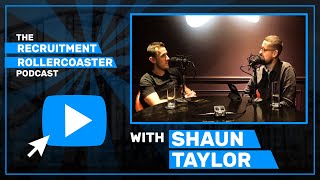
In this Recruitment Rollercoaster Podcast episode, host Hishem Azzouz interviews Shaun Taylor, a team manager at Premier Group who leads an 11‑person IT recruitment team. Shaun recounts his unconventional entry into recruitment after university, door‑to‑door sales, a call‑center stint and an apprenticeship‑selling role, before landing at Premier in 2011. He describes the tough first 12‑15 months, the mindset shift from over‑working low‑value activities to focusing on client relationships and consultative selling, and how his billings grew from ~£60k in year one to a peak of £260k and eventually contributing to a £1 million new‑business year that earned his team the “Team of the Year” award. Shaun explains how he built and scaled his team over two years, growing from a three‑person group to 11, emphasizing trust, feedback, hiring frameworks, and a collaborative culture. He shares strategies for expanding client accounts, the importance of resilience, belief, and continuous learning, and offers advice on coaching, time management, and hiring criteria (mental agility, resilience, genuine motivation). The interview concludes with Shaun’s final advice to recruiters: keep moving forward, stay consistent, consult both candidates and clients, avoid being a "yes‑person," and deliver the best service possible, trusting that results will follow.
Chapters
Welcome to the Recruitment Rollercoaster Podcast. My name is Hishem Azzouz, and today I'm joined by Sean Taylor, who is a team manager at a recruitment business called Premier Group. And Sean currently manages a team of 11, and all of these people recruit into the it sector. Sean, thank you for joining me.
Cheers, mate. Thanks for having me.
And I think we'll start with— so is your the chap that used to work for you, Max, you said?
Yes.
Who put us in touch. So I'm looking forward to this, mate. Max spoke very highly of you.
Oh dear.
I know. So, um, yeah, so as I was saying, man, as you know, um, and what we're just talking about, where I always like to start is how did Sean Taylor enter the world of recruitment, mate? Let's start there.
Um, yeah, I would say semi fell into it, semi tried to get into it.
Okay.
Um, Went to university, did what everyone does at university, business criminology, just something to—
What did you do at uni?
Business criminology.
Okay, yeah, I looked at criminology and then I was like, nah.
Yeah, it was a struggle. I shouldn't have done it. Rolled out of that, the job market was pretty good. That would have been about 2007, I think.
Yeah.
Decided to go traveling for a year. Okay. But I called, you know, I'll sort myself out, I'll get a job when I come back. Towards the end of traveling, you started hearing murmurs that there's a recession hitting. I was in Australia at the time earning some decent money. Yeah, recession, what's this? Come back, that long list of jobs on, you know, Milkround and all those other websites with all those recruitment, recruitment jobs, with all those graduate jobs, had completely disappeared. So I was in for a bit of a shock. Uh, luckily my father— I say luckily, um, He got me into door-to-door sales for about 6 weeks.
How did he get you into that?
Well, he told me I needed a job.
Really?
Yeah, I'd been applying for jobs for, I don't know, 3, 4 weeks. And he was just saying, look, you can talk, get yourself out there, knock on doors. You've only got to make one, you know, generate a couple of leads. And if something turns to money, it's £600, £700, which at the time I was keen to do. Didn't really realise that knocking on 70 to 100 doors each day—
Wait, what business was this for?
Windows, so even worse. Yeah, do you know what I mean?
Play though.
Yeah, it was good. I would— that definitely has installed some of them.
Yeah, they're about serious, Grant. Yeah.
Anyway, I got out of that very quickly, so about, about 6 months, um, and then I went into a call center. I wanted something with a base salary. Yeah, a little bit of sanity.
Um, what was you selling there?
Uh, it was— no, it was a call center.
It was just like customer service.
Yeah, for, um, uh, Viva.
Okay, that shut down.
Insurance?
Yeah, yeah, my little world, mate.
Oh, it was, it was hard graft.
People ringing up from certain locations saying their house is collapsing.
Yeah, anyway, did that, um, and then I jumped into an NVQ-based organization that was selling apprenticeships into companies. Okay, so, you know, do you want somebody— do you want to pay somebody £3.20 an hour? All you've got to do is, um, let an NPC— sorry, an assessor come in once every 2 weeks and they can gain a qualification, um, I did that for about 6 to 7 months, but it's hard graft. You're working with people that are looking to get into that sector. You had high dropout rates. The commission was next to nothing, obviously, because it was government-funded. Um, so someone said I'll be good at recruitment, and yeah, who said that? Uh, a couple of people that were there around me at the time. No, no, it's completely blind. Uh, so yeah, I thought, right, go on then, I'll give it a go.
So do you start look— looking to sort of go into it?
Yeah, so I booked off a couple of days, went down to the Berkshire area, spent a day of interviewing with a set of companies.
Would you use a récord rec?
Yeah, the age-old— you go into a récord rec and I haven't got a clue what's going on. Next thing I know, I'm being beasted to high heaven. Yeah, you know, sell me a pen.
You must have been like the— again, the perfect candidate though. Oh yeah, like you had door-to-door sales, call center, selling stuff.
Why are you wearing a black tie? Sell me this pen. You got—
you had all that?
Yeah, you bet. You're not going to a funeral. Why are you wearing that? Do you top? But like everything, it's like, right now I'm going to send you out to 4 clients. I'm there shaking thinking, right, okay, I'll go to 4 interviews now. And yeah, clearly didn't get any of the jobs there. No, no, he was— this guy was pumping me to, to some of the recruitment companies then who were clearly still doing very well. And they— I'd rocked up with this apprenticeship experience selling. Obviously, the director I could probably say I've got recruitment experience.
Yeah.
And then they've thrown me in and expected me to, to make out like I'm billing some sort of money when I wasn't. Um, so that didn't go particularly well, but I was still keen to give it another go. So I came down for a second day, spent a couple of hours with Premier, didn't think anything of it because my confidence was shot. And then, yeah, I got a phone call the following Monday.
So do you, as in like Just interviewed with Premier and then—
Well, I came down, I interviewed with them and a couple of other companies, but I'd be lying if I said that the first, that first day I went for interviewing, whenever it was, a couple of weeks before that, you know, that played its toll on me in terms of, or taken its toll in terms of, I didn't know what I was getting myself into. I thought I'd give it one last go because I'm, you know, resilient. Yeah. From the start. Yeah. And then there you go. Went home that weekend and thought, well, that's that, that's me knocked on the head, better go back to my job Monday and pretend like nothing's changed. Yeah. And then luckily I got a phone call saying, can you start in 2 weeks? You better find a place to live and come and move down to Berkshire.
Wow. And you was moving from where?
A little place called Boston in Lincolnshire, sort of. Yeah, in the middle.
Out in the sticks?
Yeah, very much so.
Nice, mate. And then, so then obviously ever since then you've been at Premier for It'd be 9 years this month, actually. That's amazing. Yeah. No, generally, I think I've sat down with a lot of people recently that have been in one recruitment company for a long time, and I think honestly, in today's world of looking for jobs and always wanting the next best thing and all that, I think that's a great achievement to— particularly in recruitment, right? Like, 9 years in one recruitment business is like 30 years in a different industry, you know what I mean? Yeah.
And especially as we've evolved with of the industry as well. You know, I've been at one, one recruitment company, Premier, but it's like they've changed, you know, 2 or 3 times. I've gone with them on their journey. Yeah.
So what year, what year did you join Premier?
Uh, 2011.
2011. Okay, cool. So then just to frame out then for everyone listening, you've, you've been on that typical route of joined as a consultant and then climbed up the ranks of— how did it go, like senior consultant, principal, or what was the typical— what's the route that you've been down?
Yes, you start off as a rookie, obviously spend I think back then, because they wanted people on the phones pretty quickly, it was 2 weeks resourcing. Luckily I managed to make a placement.
What, in 2 weeks?
As in, no, no, they contributed to find a candidate. All right, still though, yeah, contributed towards a placement as a resourcer, so that probably got me—
Premium completed it 2 weeks?
Well, that probably just kept me in my job. Back then, the resources, it'd be like, right, can I find candidates? Yes, they can. Lovely, we'll get them on clients. No, they can't. What's the purpose? Uh, no, so did that, um, and then obviously built— I was into a, a rookie recruiter then, um, got through my sign-off, and then it was, yeah, senior consultant, lead consultant, team lead, and now team manager.
Team manager, yeah. And now you manage 11 people?
Yes.
Yeah. Um, and have you always been in the same sort of sector?
Uh, yeah, um, I've always been in it. I did a couple of years in in development around.NET, Microsoft, and then I moved over to infrastructure and then later into DevOps.
Okay, that's interesting.
Yeah.
So, and then up— so then I think we just chatted before, but just to help me out as well before we sort of start unpacking this, like, like the majority of those 9 years, and have you always built? Or—
yeah, up until 4, 3, 4 months ago.
Oh wow, okay. So predominantly build.
Yeah.
And then slowly but surely obviously gaining more and more management responsibility to where now it's like your role is to get the most out of the people around you. Yeah, yeah, 100%. Yeah, first 12 months then. Oh, it's what they're like, really.
Absolute hell. Um, you know, fresh, got the job, first day, rock up, I think it was half 9. I thought, okay, this is nice. Um, you finished at half 5, the manager taps you on the shoulder and goes, oh, tomorrow— obviously that was because you're using induction— can you get yourself in for sort of, I think it was 8 o'clock. Yeah. So I've drove back to my mate's dad's house while staying on his sofa 'Okay, cool, it's 8 o'clock now. Okay, I can deal with that.' And then, you know, lo and behold, goes from 8 o'clock till rather than half 5, you're there till 6, half 6, 7. And yeah, I'd say I listened to one of your podcasts that you've done recently about someone, you know, if you'd have said, if you'd look back and said, 'Look, if you'd have told me at the start I'd have taken XYZ to get you where you needed to be.' You know, that's a tough old thing to go, 'Yeah, I'll do that again.' But, you know, the first 12, probably even longer, the first 12 to 15 months was hard graft.
Really, really putting the work effort.
Yeah, what the— putting the work in. Um, I've always been a big believer in, which obviously has changed over time because I've matured, but the, the more work you— the more effort you put in, the more you're gonna get, the more you're gonna get out. But as we know, it's not just about— it's about working smart as well.
Yeah, yeah. So, okay, cool. Why, why didn't you quit then?
Um, if I'm being honest, I don't want to be classed as a failure.
Yeah.
Um, I'd moved down from living with my parents to, uh, my mate's dad's sofa. It's not much of an upgrade. Yeah, I didn't want to—
yeah, you went all in, right?
Yeah, I didn't want to go like back then, what, I was 22, 23, um, so started a little bit later than I've thought a lot of some people do. I didn't want to go back home and admit that I was, you know, I've tried something and it hasn't worked. Yeah, later in life, you know, I promote people trying things. If it doesn't work, that's, you know, it's great, don't worry. But back then I just was like, no, I'm— this is going to— this is going to work. Yeah, 100%.
And so, so those first 12, 15 months in there were really difficult, was it? So literally after 2 weeks, was you then trying to get clients? Was it a full 360, Ralph?
Yeah, 360. Obviously from, from week 2, week 3, yeah, you, you're given quite a lot of training in terms of what to do. But yeah, it was, here's a couple of clients to be getting on with, but they were the scraps. Yeah, just to make you, you know, keep you interested. There's the database, go at it and go and go and talk to clients.
How big were Premier at that point? Because obviously they're a big, big outfit.
They were— oh, that's a good question. There's probably about 40, 50.
Really?
Something around that. Probably about 25 in our office, probably about 40 to 50 in terms of consultants.
And then there's a good amount of people in Reading where you was based.
Yeah, I mean, I joined a pretty small team that I assume the recession had probably taken over, taken hold of. I joined a team of like 4 or 5, but then on the engineering team there was sort of 7, 8, 9. Yeah, so you're probably, probably looking about 30 to 35, because I was actually looking back at it.
What would you be on your first year, mate?
Uh, about 60K.
Is it?
Absolutely nothing.
Really?
And it was hard graft.
Really?
Um, yeah, just focused on all the wrong things.
What was the biggest challenge in those first 12, 15 months, and would you say?
Changed my mindset. Changing my mindset of— I do all the things that rookies and people new into the business would do. I'd overwork the wrong roles. I wouldn't consult. I would be, yes, uh, No, sir, 3 bags full, sir. In terms of—
that's big, that, when you realize that. Yeah, you know, just being— not being a yes man.
It's, you know, get off the phone to a client and, and like, you know, the first person you spoke to in about 60 calls, because it was clearly— it was, yeah, it was 4 hours a day, 100 dials by lunch, that sort of scenario straight off the bat. You know, you got to find your manager. I've got a job, absolute no quality to it whatsoever, barely qualified it. I'm just happy I've been given a job, mate.
Absolutely buzzing.
Yeah, it's like, you gotta fill it. Yes, definitely. Yeah, yeah, yeah. What is it? Oh, it's a grad role. It's not grad season, Sean, don't worry, I'll find something. So if you did manage it, it was only 3.5 grand, 4 grand. Yeah, it took me a long while to realize that if you're going to do it, you've got to do it properly.
Yeah. So it was just the typical challenges, but mindset was quite big then, early on then.
Yeah, yeah, it had to be. Yeah, to the outside world, it was never I was doing well, but if people back home would ask, you know, how you getting on? I'll just say, you know, it's tough and it'd sort of be left at that. You know, I'd need a therapist if I told really what happened.
Was it, was you, was you surrounded by big billers at the start?
Yeah. One of my manager at the time was a really good biller. He was more contract focused and he was a, what was he at the time? Was he a lead, team lead? But he was purely, he was focused on billing. He would give— he would do the training and provide support. But you can't blame him when he's not got much around him and he's been such a successful biller. He's got to focus on that. So I had him around me and somebody else that was on my team. She was probably 6, 7 months ahead of me. I think she'd been there a bit longer, and she started to see results. So as someone who was only billing like 60k, someone who was doing 150, I was seeing her as a—
you know, how— yeah, I was gonna say, how do you— how do you think It's interesting that I think I saw a video, um, recently around like, what was it? I think, how did you word it? It was really good. It was like, you can own— you can, you can own— you can't be what you can't see. Yeah, I think that's really interesting, isn't it? Like, because I think there's a lot of people, like, again, this is a great thing about the podcast where they can go— they may think that them bidding 100K is like really, really, really decent, and then they hear someone that in the same market's bidding 200 or whatever, and it's like, oh fuck, actually that's actually realistic, or that's actually achievable, do you know what I mean? Yeah. So how do you think, how do you think being around that impacted you early on, do you think?
It, it was good, but at the same time, again, maybe because a little bit green, a little bit naive, mainly because it's probably my fault, but because both of the people that I looked up to were both contract.
Oh, and you was doing perm? Yeah.
So it was, it was, it was almost like, although it's still relatable to a degree because I see, you know permanent contract, although they're different, there's a lot of similarities in terms of, you know, you work at the speed you want to work and you can move a client along as quickly as a contract if you work it properly. But at the time, I just couldn't see— I couldn't see the light from the, you know, the light at the end of the tunnel in terms of these guys are contracted and earning a decent amount and I'm on perm just picking up some scrap. So I didn't have that. I didn't have somebody above that I could literally go, how are you doing it? Explain to me how you're pulling these perm jobs, how are you controlling these candidates, how are you working consulting clients? I didn't have that as much. Yeah. Um, so I'm not sure how much of an effect that has.
That's interesting. Yeah. How, um, so when did it start clicking for you then?
Um, would you say it would probably— it probably started clicking probably after about year 2 in terms of, um, sort of billings, um, sort of hitting senior consultants.
Is that just done on billing?
Yeah, behaviorals as well. You've got to sort of not— you've got to unlock sort of 90K over 6 months, for example. You've changed it a bit now. Yeah, but that was one of the criteria.
So it was at that stage that I thought, okay, so this is end of year 2?
Yeah, sort of end of year 2, start of year 3. So the first 12-15 months were quite difficult, and then I started— I started to build momentum, and then by the time it started to click, so, you know a lot longer journey than most. You know, most people are 12 months, then it suddenly clicks, or some that, yeah, automatically.
How you obviously recruiting, managing people in your team now, like, how long do you typically give people, would you say?
Um, I would—
like, how— what would your advice be to be like, look, Sean, if you keep doing this for the next 12, 18 months, trust me, good chance it's gonna pay off. What's the typical—
without coming across as a little bit I've— with the things that went wrong for me, I try and make sure that they aren't instilled in other people. So I've got a team, obviously 11 now, where they are all, are all perm. We've got some good people within that team as well. I've got a good structure. So these— I definitely tell people to give me at least 12 to sort of 15, 18 months, you will start to see major returns. Um, I would hope month 1 to 12 they do a lot better than what I did. Um, uh, but you know, we're looking to get these guys to sort of 'K', '150K' and beyond as quickly as possible. But as long as they want it and can see it's going to happen, then yeah.
Okay. So yeah, obviously it comes to the end of year 2, so you can't senior consultant. So does that just mean then that you didn't have any management responsibilities then? When did you start managing people?
I started managing people, so what, senior consultant after sort of end of year 2, start year 3. Did about a year in a senior role and then it was a principal or lead consultant role again. Not really managing anybody. Um, it was at that— it was at Leeds Consultant that I started to flourish. Um, just sat there in a corner on my own billing, picking up jobs now, just, you know, for— in comparison to what I've done in the past, I was pretty happy with that year. Um, and then the age-old— like happens with a lot of, a lot of firms— someone leaves a team lead role on the other side of their the end of the office, so I get pulled into a meeting room. Sean, I think it's good for your next step if you, um, go and sit in that seat and, uh, start to manage and look after that team. I had ambitions to manage.
Did you? Yeah, did you want to manage?
Yeah, of course. But I'd spent a year, a year, 13 months of being a bit of a lone wolf, sat with, um, another one of the lads who's now on my team, and we would just work quite independently of the rest of the Yeah, all you had to worry about was yourself. Yes.
How did that happen then? Why did you start doing that? Um, what, just like, how did you end up just like, yeah, just sort of YouTube, just smashing out?
Uh, it just clicks when it is confidence, isn't it? When you realize something works and you can say something with conviction, it, it just clicks. And all of a sudden, good news rolls, you know. Yeah, yeah, the secret, isn't it? You know, you projected to the universe and it comes back. And clearly during that period It was nothing but good. Yeah, nothing but good vibes, really.
Yeah. So you just— but like, did it just happen quite naturally that you got to a point where you built up confidence, start to build up a network, and, and you and whoever it was just was smashing out in the corner, just doing your thing?
Yeah, obviously.
Got left to your own devices, just smash it out.
Left to our own devices. From management point of view, we were coming in with a placement or two a week, um, you know, as we're placing one or two a week. Yeah, for a period of time it was good.
It was like, what was your best year then?
Um, it was by no means was it unbelievable, but My best year was just over sort of 260. So not—
mate, come on, bro, that's not— that's good.
Not compared to some of the guys that are in our organization. But for me, for someone that had been on such a journey of— I was, I was loving life. And don't get me wrong, during that period I was, I was still working some lower level stuff. So if I'd go back to doing that now, the level of roles I would work would be much greater. So I would back myself Yeah, to do more, as it works. I was still picking up some.
Yeah, so like the volume of placements you would have made if you just go back to it now, you would probably result in the greater billings because you would have— yeah, yeah, that makes sense.
But, um, yeah, it was a good year.
Okay, let's just, let's just talk about that for a sec, and then we'll— then let's definitely dive into sort of the management experience because I think that, that's where a lot of people can get value. So like, firstly, I get questions all the time around Hishem Azzouz. I'm at the 150 mark, 180 mark. I just I can't break this 200K mark. Like, how— what was that experience for you then? Like, was it— was it a gradual— let's just break that down a bit. Like, what— like, was it a gradual sort of increase in sort of your performance, or was it—
yeah, I would say what I— it would have been around— I hit a bit like probably all the listeners, they would have hit about 180 a couple of times. Um, still an okay money, you think, okay, but obviously you know, these guys around me and in the other offices are doing this, so I've got to start, I need to find 70K plus from somewhere. And it was just about being a little bit more ruthless with what I've worked. You know, back then we still work, that was all on contingency as well. There was no retained business in there. I didn't know what retained business was 3 or 4 years ago.
All contingent.
All contingent, just ratting around with everybody else. Uh, it's just a case of, hang on, I'm going to start to consult, I'm going to start to build a better relationship with my clients rather than it's just to be a transaction of you need a position filling, cool, give it to me, you know. And now we've got a relationship, still give me the job, you know. Uh, more meetings, more relationship building, um, you open up more opportunities, you know. You'll hear it today, um, on the sales floor, you know, if these guys will give me a job if they've got one, I get on well with them. You know, have you unlocked everything within that organization? Probably not. So I took the mentality of, right, I want more. Is this everything you could be giving me, or are there other roles in other sectors? And you tend to find that a lot of organizations will say, oh, didn't know you did that. So I just opened up companies more, I suppose.
Yeah. Where did that come from though? Was there a strategy behind that?
If I'm honest, what— in one of the organizations I was— who were one of my best clients I found out, um, when I was doing a little bit of candidate work that they'd hired, um, a small project of, um, people, um, from another agency.
Yeah.
Um, so yeah, just, just a bit of a slap in the face.
Really?
Yeah, you feel quite hurt.
Like, well, hang on a minute.
Yeah.
And I was filling all their jobs.
Exactly. Um, so yeah, just, you learn from your mistakes, don't you?
Um, so, so, okay, so, so it was You had a couple of years where you hit just under 200, and then it was, right, actually, okay, so where can I get sort of another 70K out of my desk? And obviously, typically, that can always lead to just being like, right, I need more new clients, more new clients. Well, actually, it's like, well, actually, so if I've got 10, 15 really good clients, am I doing everything that I can with those clients? So I guess some really good advice in there is then like, right, so right now, yeah, be honest with yourself. Like, have you got a real understanding of their full hiring needs? Or are you just— yeah, do they just think that you can just help with this pocket of— that's, that's interesting because obviously a lot of people will think that they have to go out and win more business rather than expand the clients and relationships they already have. Do you know what I mean?
Yeah, exactly. And if you're, if you're expanding the clients you have, um, and you're— if you're building a bit of that sort of level of relationship, you know, they know people as well. You know, you don't— it's not always about going out and winning XYZ new clients. To say open up what you've got. See, you know, if they get— we get a lot of referrals now from our clients' clients as well due to the level of service we provide.
Yeah.
So we're getting more and more roles come in that way. So yeah, it's just about opening up what you've got. Have a look at that first before you move on.
Yeah, yeah, yeah. Best of— like, what do you tell you guys now then when you're talking to them about, okay, like, do you feel, do you feel like you're doing it? Are you— do you feel like you're getting as much out of that client relationship as possible? Like, how How do you encourage people to think or approach expanding accounts?
Just ask this age-old, ask questions you don't want to hear the answer to. Or even if you think—
That's big, that one.
Of course, even if you know, even if you, the response is they will, I know my client, that's completely fine. Can you just go and ask the question though? Ask the question and if the response is the same, great, let me know, you know, happy days as it were. But just go and ask questions you don't want to hear the answers to because you'll find either not the— if the answers you don't want to hear, yeah, they are the ones you need to hear. Normally they're not as bad if you hit them.
So from with that, I love that advice. I remember getting that advice myself. I had a few like just shit things happen with candidates, and I was— and I remember hearing that advice, I was like, that's exactly what I need to be doing, asking the question you don't hear the answer to when you're taking a candidate through the process and stuff like that. But in terms of an expanding client relationships context, what are you saying? Like, um, how many other jobs have you got? I don't know, like, what would you not want to hit?
It's just a case of, you know, it's all about sort of service level agreement, the offering, the solution we offer. We've done very well within this area. I see you've got this area in this area. How could— what, what do we need to do to expand our service offering? Um, it's not sort of— or, you know, you, you're looking at pipeline, and so you're looking at the their attention. They're just trying to open it up that way, really.
Okay. Anything else that you think contributed to hitting those sorts of figures considered to—
you've been previously just stronger on my candidate side, um, the ability to, to, to work with candidates.
Um, I was going to say this word control, but yeah, well, you, you, you controlled more of the pro— like, you felt like you had more control and management of the process.
Yeah, you You know, someone's on the open market, they say they want 50K, you get them to 3 interview stages and then it's offer time and they've already got, you know, the rough stages with other people, that 50K becomes 60K because the market's allowed them to, you know, if you're talking to a candidate at the start of the process and you know, then you're vetting them heavily against the role and then you're going every time you speak to that individual, you're readdressing the reasons why they're looking to leave their current place of work.
She's got a lot more water time.
Yeah, just at every stage, requalification of that candidate.
Well, what was, what was the market like that you was recruiting then? How difficult and challenging? Was there any challenges there?
Um, the can—
the market?
No, like.NET, Microsoft. Um, there was more, there was more candidates than there were jobs. And then when I moved on to support, to a degree, yeah. I mean, the, the quality of candidate wasn't necessarily always there. But, you know, we're talking about times where a lot of companies were tightening their belts. And then when I moved over to the infrastructure side, when I started to do well, yeah, there's an abundance of candidates in that market. You know, 2, 3 years on, companies have started hiring pretty heavily again. So yeah.
How, how did you, how did you find the transition and change in slight focus of market? How was that?
It was pretty seamless, really.
Really?
And I'm a big believer in understanding what you're recruiting for. Understand your marketplace, understand the technologies, understand the, you know, the frustrations that hiring managers have. So I just spent a weekend, a couple of weeks, whatever it was, or a couple of weekends, sorry, um, just understanding my marketplace and competing technologies.
And yeah, how was you going about that? Just simple Google job, or was using a lot of conversations?
Google, Wikipedia, looking at forums, um, trying to contribute to a couple of forums on LinkedIn as well, just sort of asking questions, um, just trying to be inquisitive about my market really. I want to know what I'm, you know, if I'm going to recruit in a certain space, I want to know what I'm recruiting for because of course better engagement.
How do you get your people to start learning about their market now? Those things are the—
we'll get them to, you know, sort of presentation in a couple of the week, within a couple of weeks, that outlines their entire market. Technologies they work, they're gonna work on, and that's just tech. The training they'll do will be, you know, obviously Wikipedia, Google, and we'll get them to look at a few videos as well and things like that, just to, just try so they can understand what they're recruiting for.
Mindset, where does that, where do you think that fit in between in that sort of process of you doing really well and really starting to build a lot of confidence and upping your performance, how do you think your mindset changed? Or how, how, what did your mindset look like at that stage?
I started to believe, really. Um, I think that's the big thing for me. I'm almost quite a lot— I'm sort of a bit of a contradiction. When I first came into recruitment, I didn't want to be a failure, but because I couldn't see the earning potential, even though it was, it was there in front of me, you know, the emails were coming around with people '10, 12, 13 grand before tax.' You know, then throw the basic on, you know, those sort of emails were coming around all the time, but I couldn't see that I was going to get there. And I suppose the mindset in terms of— I'm guessing I didn't believe that it was in touching distance for me. So when I started to do— when I started to fly it, yeah, the mindset changed. I believed. I think that's the main thing in recruitment.
Believing in yourself.
Yeah, believe in yourself and believing you can get there. We know recruitment's a lucrative industry, we know it can change people's lives.
Um, and it's hard to remember that though when early on when you're just fucking everything, shit's happening.
Yeah, of course, absolutely, absolutely.
Like, how— yeah, like, how do you sort of— I guess that's part of your job now, isn't it, to make people understand that that is— and they can reach that, like as quickly as possible that they need to believe that and stuff like that.
Yeah. Anyone that comes onto my team or within the business understands that typically your first 12 months, you know, the worst 12 months you'll have in recruitment, you'll work harder for very, you know, very little reward in some cases. But it gets easier. It's the job where if you put in the graft from the start and you put in the right level of graft, you know, work smart as well. Each year that goes by, it gets a lot easier. And you start to reap the rewards.
So you've clearly sort of always been exposed and around sort of some high performers then, in the— like, anything that you've always picked up on those sorts of people then? Because clearly you really started to get yourself in the mix with everyone, but there's always still people that you're just obviously aspiring to try and be, or be in, in, in that sort of area of where the other people are in the business. Like, anything that you picked up on? Um, that it's worth it?
Just work smart, work hard, and work quickly. And be prepared to put in— well, at that time, what I took was just be prepared to put in the—
—the graft.
Yeah, the graft, the hours if needs be. Some of the best— when I look back to when I first started, some of the guys that were doing unbelievably well were the ones that if something did come in, they would drop what they had on and they would stay and they would work it, box it off. And then they would move on to the next. Appreciate recruitment's changed a lot since sort of the boiler room days of then and before, I'm sure. But it's just the ability—
I think the work ethic still stands out in that. Yeah, of course.
You know, if you say pick up a good brief from a client, you should be looking at it as— looking at it obviously is what you need to do, but also this is my next meal ticket, you know, and I need to do this to the best of my ability. Let's get this sorted quickly and let's move on to the next.
Um, yeah, urgency, work ethic.
Yeah, I've seen in these people for years, you'd hear that, you know, someone would come in for an interview and maybe if they worked in a call center, sales call center, you know, they used to volume and they used to working quickly, it'd always be, yep, they're good for subcontract, they wouldn't be good for perm, which is more process driven. But I run a team of perm individuals that I teach to actively, you know, what the urgency Yeah, it's, it's, you know, you're there to provide a service, you're there to, to help this client out, but let's, let's work quickly. If he's not— if this individual isn't willing to work to our sort of pace, then somebody else will, because it's a highly competitive market.
It sounds simple that, but you'd be— yeah, like, you'd be surprised at how much of an advantage that actually gives you if you're willing to just have a bit of an urgency around being a permanent recruiter, do you know what I mean? I've had that a couple of times where people have gone from contract to permanent. They've said that they've really applied that same urgency to the sort of perm way that they're delivering perm, um, recruitment, and it's really helped. And it 100% can give you an advantage, you know what I mean? It sounds simple, but, um, okay, cool. So ended up then— so did you know when you moved over and that person left, the team leads, you then inherited the team?
Yeah, inherited a team of 3 people.
Um, what was that like? Because obviously normally the typical route is Yeah, yeah, you sort of typically end up managing the people that you may have obviously been on a similar journey with or been around for a little while, and then it's like, Sean, I think it would be great you managing. But do you know what I mean? It's 3, 4 people I'm assuming you didn't know.
Yeah, it was, it was the lad I was sat next to, so I didn't have a problem. All right, okay. Although, um, we were sort of two lone wolves, so for me, him to then report into me, like, he took that well. He's a good lad, really good lad. Um, I took on, you know, the other 3 people and just sort of sat in the boardroom with them and just went, right, it's me, I'm sat with you boys now, it's, um, it's time to sort of try and turn this around. And they were not doing very well, um, not, not particularly, um, okay. They— there was— everyone was a little bit green in that team. I can't remember sort of the level of experience. There was no one that had been there for a period of time.
So yeah, so there was— you was going into a that some work needs to be done here. Yeah, a lot of work. Yeah, really? Yeah. And what— and then what, what market was this? Uh, it was it.
So 3 of the guys did development, um, across Java,.NET, and PHP. All right, okay.
So it's obviously always still it, but yeah, slightly different version, basically. Okay, so what, what went on in, in that period then, mate? Like, so how long did you manage that team for?
Um, well, that That's sort of the team. In truth, I probably sat there for 3 or 4 months and thought, right, I've got to continue billing, but how can I get these lot? How can I get these lots sort of performing to sort of a decent level? I was still a lead at that point. You've always got to walk the shoe, you know, walk the walk before you're given the job title. So I found it really tough. Really? I'd gone from having absolutely no confidence in recruitment, scrapping away to sort of 12, 15, 16 months, 2 years of it being good, to then now my next challenge, back to the bottom again. Just, just sort of a little bit like, well, I know what I need to do, but how do I project that into others, and how can I make them sustainable, self-sustainable, while I continue to hit the same level? So I found it really tough to start with. Um, luckily, what was the most challenging part then? Um, Just getting everybody on the same page. There was a lot— there was some sort of— there were some bad traits within some of these guys, just in terms of the habits they picked up. Maybe they've not been managed particularly well. Do you know what I mean? It was just a team that needed a bit of an arm put around it and a little bit of a push to get them to start doing what they needed to do. But I managed to get them on a reasonable level, and then we just started to to fill in. We started to hire more around them.
Um, is this a team that you built up now?
Yeah, so I think I grew that team to about 6, um, within sort of the first year. And then, and bear in mind, I had no management experience, and I'm— I was quite direct at the time. Uh, yeah, you just— in terms of, I'd give you feedback at your desk, I'd tell you you've done if you've done something well, if you haven't done something well. And you've got to remember, a lot of these, a lot of what these lads were working on were sort of my clients as well, because I, in a certain, a certain, I worked a certain discipline, so it fell outside of my discipline regardless of if it was my client or not, I'd have to pass it. So I had additional stresses of, I'm giving you a reputation, I'm giving you something to work, I've also got to manage you and try and build you up, but at the same time I'm really concerned about the level of output of what you're giving me back. So I've just got my name on the emails and the phone calls that go in. So we built it to about 6. We then dropped it to about 4. A couple of people unfortunately fell by the wayside. And then, yeah, we've been sort of slowly growing, sort of up and down. And now we're sort of a headcount of 11.
Okay. And how long has it taken you? So how long is that little journey there?
It's taken me 2 years.
2 years. Okay. So that, let's just talk about that first year then. How, how, how much of an impact did your billings? Yeah. How much of an impact did your billings take?
First year? It would, I think it did about, just about 200.
Cause I think that, that's, that's definitely what some people would be thinking, right? Management, that seems like the logical step. But how, like, how much are my billings gonna drop?
Yeah, of course. I mean, it's like the long game. It's the long game.
Yeah, yeah. Is that what kept you sort of kept going there?
I just thought that I'm not— I haven't got the sustainability for me personally to continue billing, and I wanted to long— I'm talking about, yeah, long term into the future. Um, and I like— I've sort of evolved as a person. I wanted to challenge myself, so What you've evolved as a person? Just, I think I've become more hungry, more, um, I suppose when that light switch came on, I started doing well in recruitment, it sort of switched on everything for me. Really? Um, yeah, I'm just a lot more driven now. I'm a lot more— the resilience and the, the mental strength. Or you're like, you're like fully committed to this career? Yeah, basically. To start with, it was a bit like, is this gonna work? Yeah, it's probably not gonna work. Oh, I'm starting to earn a little bit more, it's getting a bit better. All about a good year, I believe, now. Yeah.
Um, and then now you really take what you do seriously. It's just like, right, I want to make the most out of this as possible.
Absolutely. In the first few years, um, I'm not sure if I took it— not seriously is probably the wrong word, but I don't think I took it as a pride. Um, so yeah, taking that team, I dropped about £50 grand in billings, or £60 grand in billings. Um, and yeah, it was tough. Long term, I could see the goal. I could see— especially I could see some sprouts where some of the guys were starting to get it, and a couple of my new recruits were starting to get the, the vision and the culture that we were trying to implement.
How, how did you, how did you start getting these people to the point where you were sort of happy? Like, and obviously, yeah, like, how, what was that process like? Like, as you said, you had no management experience. Um, so like, what were some of the things that you started to focus on first? So you just mentioned their aligned, aligned vision, all that. Like, how How did you start approaching getting these people? Because I'm sure you just learned along the way and you made mistakes and all that. Yeah, but looking back now, how— what are some of the things that you ended up focusing on?
Or I think, you know, I've hired these guys or people, so I've got to put some trust into them. So when they were coming to me with slightly new ideas at the start, or slightly new ways of looking at things, I'd sort of listen.
Um, whereas before you might probably—
yeah, it would have been a case of, you know, way back when we were heavily KPI focused, you know, call screens on the board of 4 hours a day, 120 dials and all the rest of it. Um, and they were starting to come to new approaches with me when I took us up the new challenge. So it was about sort of listening to what they've got, repackaging it, and basically, and laying on sort of new people. So in terms of, you know, let's, let's look at qualification around the positions we're pulling, that the individuals we're working with, are we going out to meet them? Are we going to get to meet, you know, just the nuts and bolts of recruitment? And I stripped it right back and just tried to implement very simple—
but the first thing then was actually being willing to listen. Yeah, because obviously you got— before you got to that point, you, as you said, a bit of a lone wolf. You knew what you needed to do. Yeah. To get what you wanted, right? Yeah. You know what I mean? So like, why would you not then— that's the typical thing that happens, which is challenging, right? You then— why would you not then be like, look guys, look, so if we do this, there's a very good chance that we're gonna be hitting the numbers that we wanted, you know what I mean? But it's not as simple as that, is it?
No, especially you stick the framework up of, right, these KPIs and try and attach it to every different market and it just doesn't work. You know, in the, in the support market or the infrastructure market, it is all about high numbers. It is because that's what that market sort of dictates, a bit like test market. Um, but I was asking people with like.NET and PHP, especially in open source and Java to try and hit some of these big numbers. And actually you don't need that in this market.
Did that have the reverse effect of like then sort of being like, fuck, I've got no chance of hitting this, which then damaged the motivation?
No, because I tried to do it. It was when I realized the quality of— okay, the quality, yeah, but the quality against the framework wasn't working. And when we started to tailor and scrape it back and and look at what was needed, that it basically clicked for two of the lads. And from that point, we just sort of implemented, right, your market would typically dictate that you need to sort of plan your week around this. Yeah. Um, and this, you know, and you would try and help that individual into a market. So I suppose just adapting each person to what they're working on, really.
Well, how does, how does then managing, um, adapting your management style people? How— what's been your journey with that? Um, that must have been interesting as well, do you know what I mean?
Yeah, so I've gone from being quite direct— I mean, I've still, still got an element of that, but I've gone from— so what, when you—
yeah, you said earlier, well, like, good or bad feedback, straight at their desk on the phone?
Yeah, just like when, when people would be giving— people give you the story and it's like, just, you know, just, just, just give me the question and I'll ask for the back. Yeah, yeah, yeah. Um, you know, I've lost, lost a couple of people through the way, um, along the way. And they provided feedback in terms of maybe sort of the styles clashed. So there's a little bit of self-reflection from me. Yeah.
How hard is it to take that?
I agreed with what one of the individuals that gave me a little bit of feedback— and it wasn't— it was only sort of, yeah, probably about a year ago, 8 months ago. And she gave me some feedback and I thought, okay, okay.
What was the feedback?
A little bit, maybe a little bit too direct. Okay. The, you know, the sort of the level of tempo that's required to work a perm market in my eyes, I didn't quite see. And yeah, so I reflected on what was said and I took it on board. I think you've got to evolve. Yeah. You know, 2 years into sort of leading a team, managing a team. Fair enough. Exactly. So listening to what— as long as I agree with what's being said in terms of, oh, you might have a point, I'll take it on board and and try and evolve and try and adapt. And I like to think that's got me to where I am now. So, uh, there's a little bit—
I think there's a lot said in that, is that just becoming more and more willing to take that on the chin and go, right, you know what, fair enough. And then instead of just letting it go in one ear and out the other.
Yeah. And likewise, I like feedback sessions with sort of— certainly then with my team, in terms of, you know, when I'm doing their reviews, one of the last questions I would have asked would have been, and how am I getting going on in your eyes? What do you need from me? How am I—
so you're actively looking for that? Yeah, looking for it.
Again, you take the feedback, probably don't give a lot back, wait until they've left the room, and then you digest it a little bit.
And how, um, so how— and then how— what's been your sort of journey and experience in getting better at managing your time? A typical challenge for a lot of billing managers is sort of having enough time to make billing and then also having enough time to manage the people. Like, what's been your sort of experience generally with that?
Have you That was tough, that period of when I became a team leader and I had 5 or 6 underneath me at that point, um, where the emphasis was on me to sort of officially run that team. I was more accountable, um, that was difficult because you're trying to help these individuals while maintain your billing. And it took me ages to realize that, again, trust the people around you. I've employed I've trained these individuals up, you know, they've done the nuts and bolts of the role. If they ask a question, just ask it, you know, it's not rocket science, but just ask it back to them. What do you think? And it took me— I know I'm not reinventing the wheel, but it's good insight.
It's good insight.
And if you ask the question and, you know, what do you think, and they don't give you the right one back, then you help.
If not— Yeah. So like encouraging people more. This has come up quite a bit recently where like you're Yeah, you become aware that you didn't want to become like the comfort blanket where it's like, Sean, what do you think of this? Or what do you think I should do? And become— rather than help them, encourage them to come to the destination, the place themselves, right? And then, and then did that, did that then mean that you was then getting pulled, put into post less?
Because yeah, a little bit. Um, the—
yeah, did you have a structure to your day?
Uh, yeah, as a perm consultant you've got to.
How, how did your day typically look then as you're managing these people?
It would be when I was a billing manager It depends what was on my desk on the day, but it'll either be I was, or was that, that's, that of a recruiter, you know, that I need to be looking to pull roles or booking meetings, both myself and my team, or, you know, doing some resourcing. Or, but the day typically would be split between BD, candidates, and in intervals looking after the team. And obviously if they came to me during that period, then I would deal with it there and then. I'm not a believer in you can only come to my desk at a certain time. I think that, that cultivates the wrong culture for me.
Really? Yeah. What's been your, um, experience in hiring the type of people that you want in your team? That's always a challenge for people, like hiring good people for their team. Yeah. Have you got better at that?
Um, again, just don't hire with your gut. Don't hire with your gut? No, it's like your gut, your gut instinct. Yeah, well, just don't just rely on that. It's not because you were recruiters, we're typically good at, typically good at our job, but we're terrible at recruiting for our teams. We sort of go off gut instinct, you know, someone, you know, someone walks into the meeting room, to the back of the reading room, well, they walk there quickly, yes, no, you know, do they look presentable, you know, oh, we got on quite well, they've got similar hobbies, or oh, they've got some sales experience. Yeah, you just, you start to, to bounce around and you sort of create this picture of an individual, and then they start 4 weeks later and they're completely different. Um, but nice. It's about a little bit more strategic approach.
How have you made it?
Um, we've just got a framework in place now where we are asking about, you know, can you, can you show us sort of different times where, or give examples of when you've shown resilience or when you've changed someone's mind? Just more basic sort of sales-related questions, but it gives us a framework to be able to— okay. And we also throw in a few there, in there that are a little bit different, purely to, to show a bit of, you know, mental agility. This job is all about mental— you know, tell me something about— tell me something about you that's not on your CV.
You know, to people, it's like put people's finger on their feet. Yeah.
Tell me something I don't know. What, you know, But it can't be on this, on this two-sheet piece of paper. Yeah, yeah, yeah.
So for you then, what, what has become better for you, for you is that less so than let's have a conversation and see how it goes, see if we get on, if we're like, yeah, that guy instinct is— you've actually put together a bit of a real clean framework and process where if they demonstrate the right qualities against these particular things, then there's a good chance that they're going to do well, or Yeah.
And it's not, it's not rocket science. Yeah. Not reinventing the wheel. But I do think that a lot of recruitment companies and—
You'd be surprised how many people don't have a framework or some sort of clean process. The key things they always look out for or ask for, do you know what I mean? Yeah.
And if you do that, you are going to hire the same caliber of individual each time that you'd like to think, rather than just going off like what we said, you know, I quite like that person or, you know, that person What are the non-negotiables for you now then, when you're hiring for your team that they have to have, or people have to have? I like mental agility. I like people that can, can think on their feet. I don't care what, what the discussion is. I like people that can turn, can turn a phrase or can, can give a response. I like people that are resilient, resilient, some real mental strength in there. I also like people that genuinely want it, um, there's a reason for them coming to work every day, you know, not, not just to buy a new car. Anyone can get a car on finance. I like real reasons, like, you know, you've got two kids to support, or, you know, I've got— I mean, money trouble. I like people to have a real reason to come to work because, A, they'll typically get where they need to be much quicker. Yeah. Because there's a real drive behind there. But also, when they do, they are at the stage where they believe they can make money, because they are they're going to want to stay there and they're going to enjoy it more. So that, they're the sort of key things for me— mental agility, resilience.
Nice. So haven't been billing now for, uh, it's not that long, it's only about probably about 6 months.
How's that transition been for you? Uh, initially it was scary, really. Well, you've gone from controlling what you earn to a degree to— yeah, absolutely not. Uh, but yeah, it's good, It's good. I had a couple of months where the sort of the senior team around me, management, um, have helped me with some coping strategies and mechanisms to be able to, to control what I do on a day-to-day.
So what's the, what's the objective of your run now then, if you're not—
um, to improve GP per head, um, and to grow a team to be successful around that, really. And then what?
And then now what, do you have targets around those things? Yeah, yeah. Yeah, so yeah, that is completely different, especially when—
yeah, especially when you look at certain positions and you think, oh, I wouldn't have minded that if I was a recruiter.
Yeah. How do you deal with that? Like you said, coping mechanisms there. Let's talk a bit about— because people will need those, like the people will want those, or be thinking about, I need some coping mechanisms or whatever. Like, what are some of the things that have helped you through that transition?
Just having someone to act as a soundboard, someone to just sit the other side side of a desk or go for a coffee with who will just listen to you for 5-10 minutes and then just—
how do you think I'm— do you think I'm doing this right?
Yeah. Or this has happened, or that's happened, or this has happened.
How do you think I should deal with it, approach it?
Yeah. And, and what— it's just like what my team do to me. If, if they ask a question and then I ask, you know, ask them what do they think, they, they give me— you know, my manager's only doing— he's only doing the same thing to me, but it works. Yeah. Um, so I have that as a coping mechanism. And is that obviously someone in the business? Yeah, yeah. Um, okay, he's, um, yeah, he's, he's worked really well.
He's been where you have and sort of walked the path. That's obviously a mentor, right?
Yeah, he's, you know, things aren't always too bad, look at this and look at that. So it's, it's just about taking a step back, breathing, and realizing, you know, we're not in a bad place, we're doing pretty well. Um, but you know, when you're just not, you're not controlled or anything, you know, You can be even more hard on yourself.
Yeah, definitely.
And you carry the weight of the world on your shoulders. Yeah, but no, it's good, really good. I'm enjoying it. You are enjoying it? Yeah, massively, really massively. I get so much joy now, which—
like, from seeing other people do well? Yeah, it's mad. Where does that come from?
Where does that happen? When does— when do I get in the morning and look at people's figures and then start talking to them about the next incentive? Sign you you know, you're only this way or that way. Or I genuinely get excited when— so where does that come from? Like, the old me, when I was on the transitional periods or, or when I was doing well on my own, if I see someone doing a little bit better than me, there's like, yeah, there's a little bit of jealousy there. Yeah, but good jealousy. And now it's someone within the team does something well, or even someone within the wider business, I'm generally happy for them.
I don't, I don't know where that comes from, but Yeah, well, it seems like in the right job then, if that's the case. Yeah, yeah. Um, a couple of things on, a couple of things on, on that, mate, before I ask you, um, a couple of things on resilience. And as we wrap up, um, like, now, as you've, like, clearly then you've been on a, you've just been really honest with your sort of management journey. Like, what, what are some of the things that you've, that you've done, or obviously consistently do now, that you think have really enabled you to sort of empower your team to get the best out of them? And obviously it's still an ongoing journey, but Just for those listening that are managing, and obviously it's a constant battle and process of trying to get the most out of your team, but what are some of the sort of things that you've seen or you've done and been part of that you feel like has really empowered the people around you, do you think?
Um, trust them. Trust them more. Give them more responsibility.
How can you start trusting people more?
Um, I think you just have an open conversation with people in, you know, on a one-to-one basis and sort of gauge gauge where they are in their journey with the role. And if they want, if they want to be part, if they want to be part of something, you can, you can get that vibe. If they show an interest outside of what they're doing, um, outside of what they're doing in the wider business. Yeah. Um, it just starts the conversation, and then you sort of learn who needs, who needs support, who doesn't need support, who needs an arm around the— put an arm around them, who needs a little sort kick up the backside from time to time. It just starts with a conversation. And then once you learn to trust people, you can then empower them. And then they, they start to do, you know, you have champions within your team and they start to do your role for you. Almost make yourself redundant if you can do it well enough. Yeah.
So you think it all starts with really starting to breed trust with people?
Yeah. Once, once the training process is through, once the, you know, they've been given the call they're capable of doing their job and they're capable of taking advice and capable of sort of delivering to a certain degree, and you start feeding in more responsibilities and more sort of trust points, that just cultivates such a team mentality. And culture is a big element as well. You know, you can— some teams, they are a set of lone wolves and that is I wouldn't want to manage me if I was sat around 4 or 5 people back then, because you want everybody to be involved in everybody's business and everybody to be championing each other. Collaborative. Yeah, without doubt, because positivity spreads. Um, and while someone was sat there at the moment, or the listener might be thinking, well, I don't care what, you know, the person next to me does, it's all about me, that doesn't directly affect my billings. But if you've got a desk that's or a bank that's bouncing and everyone's happy and everyone's— the productivity's up. People are selling not only their services for the roles that they want, but it goes back to opening up accounts, you know, that you— the people next to you are now selling to clients and trying to pull you roles.
So I do think that you've seen a lot in— yeah, making more of a collaborative environment. Yeah, definitely, definitely. How have you kind of covered that? Anything?
Um, If I'm being completely honest, I don't know. It's something I just install into everybody, you know.
So you communicated to people early that, look, this is— obviously you have your own individual things, but this is— we're a team. And I'm assuming you communicate that quite early.
Yeah, I suppose going back to that, when I was doing well, if somebody was sat to the left and somebody was sat to the right to me, no matter how much good news I had, I wouldn't be that sort of person to openly go above and beyond shouting it out. Yeah, um, Wolf of Wall Street type, because I was very aware that the two individuals next to me might be having a bit of a shitter, and I've been there, so they don't necessarily want to see me jumping up and down going, you know, going over the top. So I have cultivated that thing. We celebrate everybody's, uh, yeah, everybody's victories.
I like that. Um, Last thing before, um, I ask some questions around resilience. What, what are some of the common things that you've seen in the people that you've managed and, um, managing now that you think sort of can— that holds them back on really hitting their peak performance? Anything you picked up there? Uh, it goes— what I said, belief. Really?
Belief. Um, no matter what, no matter what people say, um, or think, I truly believe that there's a gap between when you first start and to when you even start performing to a semi-reasonable level. There's this— so there's an element of belief of, am I, am I going to get there? This seems a bit, a bit of a reach. You know, you go into any recruitment firm and it's the big— the best billers are doing well and they've been there for quite a while. So luckily in our office and in our organization, we've got a few new people that have started, I would say, within the course of a year who are doing very well. And you actually find that that creates a different culture because the new people, the new recruits are coming into the organization, are seeing these people that aren't too far away from them doing very well. So I think belief is key.
Yeah, no, it's true. It's like when you, when you're recruiting and you truly believe that when you're on the— when you speak to a client candidate, that you truly believe you're the best person they should be speaking to, that's just so powerful to really truly believe and embody and have that mindset. Do you know what I mean? That is the game changer. Um, all right, a couple questions around resilience, mate, and then I'm gonna ask you the final question. All right, all right. So first one, what, what does resilience in recruitment mean to you?
Sticking at it, being, being prepared to, to roll your sleeves up and get stuck in. Um, you're gonna, you know, you're faced in a— you're in an environment, you find yourself in an environment even if you're good at what your job, 60% of the time people are going to say no or put the phone down or, you know, shut that door. So it's about just being the best version of yourself at every stage of every call and just driving that forward and being prepared to just keep on putting one foot in front of the other.
Look, you've been in recruiting for a while, so like, how has the importance or need for resilience changed as the industry has evolved, do you think?
Um, it's still required. Back when I started, it was purely, as I think I said at the start of this piece, it was purely hard work, hard work. Now resilience, um, it comes in slightly different forms. You've got to be creative in how you approach the market and what you do. Um, so it's still there heavily, but I think it's just you've got to be a little bit different.
Yeah. Okay. And then what and this is obviously something that you have to do, I guess, what, what can people do themselves to instill more resilience in themselves? And also, what can people do themselves to instill, um, resilience in their teams? Um, I would say just be open.
Things like podcasts, do you know what I mean? Like, do some reading, look at, look at other instances where people have, have been down and out and have succeeded, and just, just widen widen your horizons that way, really. Perspective. Yeah, perspective. Massive. It's massive for me. It's helped me go from being a nervous wreck with the team thinking, how am I gonna— how am I gonna sort of, you know, control what I earn? So actually, I've got to trust these guys. So that's what I would say.
So yeah, cultivate people to— yeah, look out, learn. I like it, mate. Um, so before I ask you the final question, what What is Sean Taylor excited about in 2020, mate? What is going on? Are you hiring for your team?
Yeah, hiring. Always on the lookout for strong individuals.
You haven't got "we are hiring" in your LinkedIn name, have you?
Everyone has that. I don't know, actually, maybe.
Big capital letters. Yeah, 2020, how's it looking, mate?
What are you excited about? Yeah, no, good. We won Team of the Year last year against some pretty heavy teams, so we've got—
Team of the Year? What's that down to?
Uh, it's down to sort of money brought into the business, um, sort of new money brought into the business as it were, not sort of existing contractors or anything.
What did you do, mate? Come on.
Uh, we did just over a million. Really?
Um, and that was how many of you?
New business, uh, that was about, about 6 to 7. A few, a few rookies in there that sort of were just resourcing, but yeah, 6 to 7. Yeah, no, good.
Really good. So how does that work out? Is that how you do it, like average GP per head?
Yeah, um, you know, because headcounts, vanity, it's all about sort of—
yeah, it's all about what— what does that look like then?
Um, they— it's 11, 12 grand, 13 grand per head, really, um, for a period of time. But it's— yeah, it's, um, nice. It's good, it's good.
And obviously, congrats, man. Obviously you're in a big organization as well. There's a lot of people in that business, so to sort of win accolades like that, that's no joke, right? Achievement.
Not from where the Perm team's been. It's, yeah, it's an absolute— I'm really proud of that. Really proud. Yeah, really good.
I love that. So final question, mate. Yep. If, if Sean could communicate to every single recruiter out there, they'd listen, they'd take on your advice, they'd implement it tomorrow, what would Sean be saying to the people? What comes to mind, mate? What would you say?
My, my piece to anyone listening would be, um, Just continue to put one foot in front of the other, stay in there and consult both your candidate and client. You know, don't be a yes man or woman and just offer the best service you can and just stay in there. It comes, it comes in the end. Love it.
Sean, it's been a pleasure, mate. Cool.
Cheers, mate. Thank you.
More from Hishem




You don't need as many clients as you think to bill $1 Million A Year In Recruitment



From 30 Direct Reports to Back-to-Back $1M Years as a Solo Recruiter with Zach Creighton



