Steph Bateman - World-class service & the power of determination to succeed
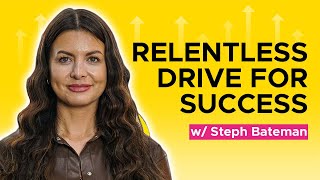
Steph Bateman, founder of Educate Staffing, talks about building a recruitment business as a young mother. She shares how successful recruiters combine drive with being personable, why service-led differentiation matters for candidate loyalty, and her approach to scaling through processes and prioritizing weekly therapy for mindset.
Chapters
Welcome to the Recruitment Mentors Podcast. My name is Hishem Azzouz, and this is the show where every single Monday I'm going to be sitting down with high-performing recruiters or successful recruitment entrepreneurs to uncover how they have remained at the top of their game by discussing their daily habits, uncovering their mindset, their approach to leadership, and much, much more. In this week's episode, I was joined by Steph Bateman, who is the founder of Educate Staffing. Steph had a difficult journey. She became a young mum at 18 years old, so she had to juggle being a mum for the first time whilst building her recruitment career and later on her recruitment business. But despite those challenges, she's been on a fantastic journey where she unlocked her inner confidence, she's grown as a leader, and she's now leading a recruitment company that's doing multi-million pounds in turnover. You're going to really enjoy this episode. Hit like, subscribe so you know every time we release a new episode on Monday.
Enjoy. Steph, welcome to the podcast.
Thank you.
Thanks to the first guest that's come a bit late, so I'm going to learn from that one. I'm going to put a bit of an emphasis on turning up on time.
Sorry about that.
But where we always like to start is, is the million-pound question in recruitment, and I'm sure it's a question that you've asked yourself a lot since growing your own recruitment company. So yeah, I want to hear your take on it. So in your view, what characteristics and traits do you really believe make up a highly successful recruitment consultant in, in today's market?
Um, it is the million-dollar question, um, and I ask myself it every time I interview people. Um, I think that one of the characteristics that you can't really get away from is people need to want to be successful and they need to want to do well. The reason why I don't think you can say it's because of just money, because there is different reasons, and— but I don't know anyone that has done well that hasn't really, really wanted to. And, you know, they've been a bit half-hearted about it. So I'd say that for number one. And I think number two, you have to be personable. If you can't build relationships, it's, it's not going to go that well for you. Yeah. And I think I have interviewed people and I have hired people that you wouldn't immediately think are personable, but over time, like, you know, you go out on socials with them and you realize actually they are. And if they don't have that trait, then And it's something that's quite hard to learn. You can build on it, but yeah, I'd say those two things.
Do you— so, um, I had Pat sit down before you and said a similar thing around drive.
Yeah.
So I'm just always curious, I guess, like, firstly, where, where's that, where's that come for yourself? Like, have you always had it? Was it your circumstances growing up that really gave you the sort of drive? I don't know, anything.
What, what do you think really gave you that Um, I think that I found when I've interviewed people that my reason and my drive was probably quite unique to me.
Okay.
Um, so I haven't been able to relate to that many people with it, but mine was that I guess my story, without going into it too much, Jeff, was that like I needed to make money. I had, I had to pay for a child.
Yeah.
I had to put a roof over my head and I had no other choice. I was working two jobs and it was like that was my drive. It was like I just need to actually like meet my basic needs.
Yeah, yeah.
Um, so, so that, that was my initial drive. But as you go on and you earn money, it was like I had this like addiction to success in my eyes. And so then that drove my continuous, um, I guess just my ambition.
Yeah. Curious, how, how comfortable have you found it yourself personally, and then also with your friends, female friends, talking about money?
Um, I definitely am not as open now as I would have been probably when I first started out in recruitment because I felt like we were all in similar situations in an essence and we were all kind of like struggling for money a little bit, whereas I think now I'm probably in a slightly different place to them so I wouldn't talk about it that much.
Come across in like an arrogant way?
Yeah, yeah, yeah, I'd be conscious of that so I don't, I don't speak about it openly.
I was just curious just because I was speaking to my girlfriend about this and like, I don't know, I do in terms of like the UK, I don't know, there's definitely sometimes shame attached talking about money and like, yeah, I've just definitely had to really push my girlfriend sometimes to talk about, like, to be proud of, like, that she's got a pay rise. And she's— I don't know if you've found that. That's why I was curious.
I massively do. And I think that for me, money's been quite a, a key thing within my life because I've— it's been difficult. And so it's been something which I've always been like, I've always talked about it. I've like always create budget spreadsheets. Like, I'm quite particular about it. And so I'm very like, for with my partner, it was something that he wouldn't really talk about, and I had to make those conversations happen because I'm like, well, if we're in a relationship, then these things need to be out in the open. Yeah. And so I think that I do find that society generally, they will steer clear of having those kinds of conversations. And it's like, if you're, if you're doing quite well financially and other people around you aren't, you do feel a little bit like, okay, this is this could be an awkward conversation, so you probably avoid it.
It's interesting. So I want to really talk a lot about your own business journey. Yeah, but let's just sort of touch on it. So from what, what I took in, in preparing for this, it looked like you worked for like two quite big brands. Yeah, right. So worked at Randstad, and then what, what was the other company?
Um, Tradewinds.
Yeah. So, so I guess when you said that like you literally needed to be in an environment where the earning potential was there.
Yeah.
Was that going into recruitment, or is that what recruitment really gave you then when you landed in? Like, how did you, how did you find yourself in recruitment?
Uh, quite an interesting story actually. So I, I, my sister was in it, so she's 5 years older, she has a recruitment company now, um, but she was doing it and she earned quite good money. And I originally was trying to get into management consultancy because I was like, I don't want to do sales because I worked— I think we'll touch— like, I worked for a company called IB for Angels, which was just sales.
Yeah.
And so I was like, no, I don't want to do that. And then she was doing really well and I thought, right, I need to make money quickly, so So, and I'm not getting into management consultancy because my maths was quite poor, and I tried to get into a graduate scheme, didn't make it. And so I was like, right, recruitment's gonna be, I'm just gonna give it a go. Went for 4 interviews for a rec-to-rec, didn't get any of them.
Really?
Yeah.
What was the feedback?
Um, couldn't present well.
Wow.
Shy. Shy?
Definitely wouldn't sit, really?
Yeah, yeah, yeah, 100%. I used to get really like flustered talking, couldn't really, um, which is why I touched on earlier about developing person— like being personable, because I definitely wasn't someone initially that was just like a trait that I could, um, that was obvious. Then I was like, well, you know, I've got to do something now because I'd actually left my job at IFB for Angels, so I had a gap.
She didn't have a—
I had no money.
Yeah, so I did the same thing, and then when you start speaking to recruiters, you learn that's not— that doesn't look very good, does it?
No, no, no, no, no, no, no, it doesn't look good. Like, you've left one job and you've not got another. Yeah, yeah, I always ask, I drill warn that. Um, but yeah, no, I did it. Um, and, and so then when I was looking at other jobs, I was like, well, I'm gonna have to do this myself. I'm like having no success with these recruiters. So I've applied myself to a job at Randstad, which at the time the salary that they were advertising was £24k.
Really? Which, starting that, like, that was quite a few years ago.
That was many years ago, and that was so high. It's like, and I remember getting my first pay pack and they'd underpaid me.
Really?
And I was like, everything was about money. Yeah. And so I just said to them, I was like, what's going on?
Yeah, like, you've underpaid me.
They're like, well, we never said we're your 'being paid like that salary, that's too high for your level.' And I was like, 'This is the advert, this is what I came in for.' And then they changed it.
Really?
Yeah, so I was really, really lucky. But it was, I interviewed there and it was for it or education. I got second for both. Not, again, I'm not really too sure how. And then I was like, 'I'm not gonna do both, I'm gonna choose.' So I went with the one that I really liked the manager. And so education, which was education, yeah. And that was how it happens.
So let— because I want to make sure we touch on this because I think a lot, a lot of people can learn from it, or I think a lot of people may see themselves with how you describe yourself when you was going to these interviews. So I guess the best way to sum that up would maybe be inner confidence or those stuff like— how did you— I know we're just speaking before we started, but like, talk to us a bit about how you went about unlocking that, I guess. Because yeah, whenever I've met you and spoke to you, I've never sort of attached you with things like shy and You get what I mean? So how did you go about unlocking that for people that may want to grow their confidence, which a lot of people do?
Yeah, yeah, yeah. So I used to, um, and I still do now, like, I love learning new things. I love, like, trying to challenge myself. And so I could quite clearly see from having not got to a second stage in the first 4 interviews that that was one of my problems.
Sure.
And so I was like, I didn't really know how to make it better, so I just literally, like, went on Google or Yahoo, maybe it was back then, um, and looked into how to build relationships. And so I just listened to— yeah, and so I literally just listened to like YouTube videos, I listened to like everything I possibly could, I read books. I actually can't remember, there wasn't really any book that I would say would stand out. Yeah, but just within that time period, and I spoke with my sister because she obviously did it as well, and I just tried to adjust the way that what I was doing and just try and put things in place like breathing and like being able to prep for questions a bit more and, and really just enjoying it instead of thinking about, oh, what are they thinking, or what's happening. Um, and I, I think that like even the interviewer that I had for Randstad, I remember one of them said, oh no, we can't hire her because she's just, she's going to be too difficult to manage.
Really?
So I must have made quite a U-turn from like the first 4 interviews to that, for them to then say that. But I think, yeah, just, just a little bit of like really self self-development, self-development, and trying to teach myself something new around how I was like portraying myself, because it was very different from my beef angels.
Would that be your advice then for people listening? I'm sure you're trying to help people with this in your own business.
Yeah, I would say that they should just really try and like even just practice stuff in the mirror, really, like to become more comfortable with having a conversation with someone that you're not used to, but, but being able to be like, ask questions that you're okay, I'm not prepared for this, and just become comfortable with it, speaking.
It is such a useful skill, isn't it?
Yeah, it is.
Like, it can help you in all areas of your life.
Yeah, I think if any job that you're going for, if you're— if any industry that you're going for, if you're not coming across as someone that's, you know, a little bit confident or a little bit personable, then it's gonna go against you. Even if maybe you've made some incorrect answers that they perhaps weren't looking for, then I think that is that will kind of get you half the way.
Yeah, so you touched on it earlier then, so correct me if I'm wrong, you've got a little girl, right? Yeah. So how old was you when you had your little girl then?
Uh, 18.
Wow, so then, so like pretty much, so you've obviously been raising her pretty much your whole entire career basically?
Yeah, so I remember she was, so I think I was 21 when I went into recruitment, I just finished my degree Um, because the other job that I used to do was, was nights. And so yeah, I think she must have been 2. Yeah, I did not, because, because I had her and I still had to have an income and I was at uni, so I was like, so I did free, generally free nights. It was a bit flexible, so you could do more if you wanted to earn more money because it was commission only, right? Yeah. And then had her when— yes, so I think she was 2 when I went into it. Yeah.
Wow.
So she's been in every office I've worked.
Really?
Yeah, she's come to visit, she's like gone on the phone.
That's amazing. Because I know when I called you, I've had, um, I haven't had loads of people, but I've had a handful of people on the podcast that have had to raise a family. I think, I'd like to think that the sort of needle has changed on it, where Steph being a young mum in recruitment 5, 10 years ago would be entirely different to how it would be now. I'd like to think so anyway, in terms of companies being more remote or being more open to being flexible, because I've had a lot of people on here where basically they've had a child or they started to raise a family and then they sort of went their careers in recruitment, they've had some sort of like ultimatum where it's like, oh, like, am I going to be able to carry on with my career when I come back? And it's, for a lot of people, shared that it was just, they made it really difficult for them. Yeah, they lost their contract book, like, I don't know, those things. So I guess it'd be great if you could just talk to us a bit about how you've gone about— and I'm sure there's been plenty of good days and bad days. Yeah, but how have you gone about juggling being Steph the mum?
Yeah.
When you walk through the door at home to being someone that's driven, money hungry, and, and have to, have to perform at work as well with clearly huge responsibilities on your shoulders?
Yeah, I think, I think one of the things is that, like, in my eyes, I didn't give myself a choice.
Okay.
It was that I was so determined to build a career that was successful And I think that a lot of people, when I was growing up and found out that I was pregnant and stuff, and I was having Aaliyah at quite a young age, that didn't believe in what I was going to be able to achieve and were like, yeah, you're probably just going to, you know, go on to benefits and not get a job or not finish uni. And I think because of that, I was really just committed to, I guess, a little bit proving them wrong.
Yeah, for sure.
I can be quite stubborn. And I think secondly, like, when you're going through that, you just Her needs are number one, so making sure that you've got— you're organized, that you have a routine. Like, I probably don't know how to sit still now because it was— it's— you're constant, you're constantly going, you're going, going. And so I'm not good— like, people always say to me now, like, I just— you don't know where to chill out. But, but I do, but I have probably different things that I do to chill out now. Well, because she's 13 now, so it's like she's, she's like self-sufficient.
Yeah.
But I think when she was a baby and it was like doing recruitment I think it was just, and I still had a social life, I still did other stuff, it wasn't like that was the only thing that I did, like live and breathe recruitment and have her. I think it was just being able to make sure that I was organised, like everything was sorted, and there were days when that didn't go to plan and that you would have to adapt and you'd have to work stuff out, but it was always okay, you know, no one was ever, it was not like I was ever in a situation where really I probably couldn't go to work or There was inflexibilities at work, definitely, because I had to start at 7, so that was hard. Um, and, and I broke up with my partner, so that made it difficult. But there's always a solution. Like, that was— there was never a time where I was like, I'm giving up, because that's what it really is. Like, yes, it's hard. It is hard. Yeah, you've, you've decided to have a child, so that is your responsibility. So now it's your responsibility to to make that happen and still build your career. And if people don't, in my opinion, there's never really a strong enough reason besides the fact that you decided that you're not going to do it.
No, good on you. Like you just, like you just said, you looked for— you had a solutions mindset and a positive mindset rather than— yeah, but that must have been difficult.
Yeah, like 100%. It's, it— there was many times where I, I would think to myself God, I've got it harder than everyone else. Um, not, not that I wanted to give up, but like, oh God, my life's hard. I would never tell anyone that, but like in my head I'd say that to myself. But then I'm like, I'm achieving. I'm not— I used to say to myself, I'm not going to compare myself to others around me. And even in my job in recruitment, I was like, I'm— I want to be better than everybody around me. I want to be able to be the— be that person that to myself is incomparable to anyone. And so like that was the thing for me, was like being a mum and doing— and doing that was like, well yeah, I'm doing it, and yeah, okay, it's quite hard, but I'm choosing I wanted to do that for myself. No one's making me do it.
I love it. Let's go into Educate Staffing then. So obviously worked at those two brands. So what was the first year like? Because like, like, what did the business look like in year one? Because that's typically the hardest. Was it just you?
Just me.
For the whole first year? It was just you?
Um, no, I did employ somebody. Um, I think it was at the sixth month I employed someone. Didn't work out, but you know, all of these things, learning curves. Um, And for the first 6 months, I literally did everything from invoices, compliance, marketing, if you could call, if there was any marketing happening, then it was minimal. Yeah, everything. And so for the first, we broke even by the 6th month. I think it was the 6th month.
Was it mainly temp recruitment that you did at that time or?
So a lot of our stuff, it is temp, but you'll usually place somebody into a job and then they'll stay there if they're good for like the academic year, sometimes longer. Okay, so, so yes, we— it's contracts, but it will be like long-term contracts.
Yeah, yeah, that makes sense.
And there's day-to-day, but then the day-to-day is a lot of it, to be fair, to begin with. I did used to say to clients like, don't come to me for day-to-day.
What do you mean by that? Sorry, so like I call you in the morning, then you're like, yeah, I've got a supply teacher that can come in today? Yeah, sometimes that could work like that.
Pretty much that. So we would stipulate within the business that— or I did for myself— that anything below 5 weeks Right, would be a day-to-day, because sometimes we'll get clients that will call and say, I need somebody next week.
Yeah, yeah.
And I'll need them for 2 weeks. And then actually sometimes it goes into a long term, or you get the calls in the morning, like at the moment that are crazy, um, I think because of COVID that they want somebody on the day.
Wow.
And that's why we have—
what, just for the day?
Yeah.
Oh, that's mad.
Yeah, so it's very, very fast-paced and intense in that sense.
Okay. And then, and then how much perm did you do then? Just because it would be good for people to understand.
In that first 6 months, none.
Okay.
Not, not in the first 6 months because I know some people build their business off perm initially. It— we— I didn't do that.
Okay.
Perm wasn't an area that I was used to or had any kind of drive to try and make that big because I wasn't used to it. But then as the business has gone on, I'd say probably now perm makes up about 10% of the business.
Yeah.
Possibly even 20%, because we've had— we have found we've had quite a bit more, but that might just be where the business is growing.
So how have you— so like, I haven't had many people on the podcast that recruit in your sector, so it'd be really just good to just break down a few things. So firstly, like, how have you— like, from my outside looking in, I feel like in those types of sectors, if it's education and sometimes other public sectors Yeah, you have a lot of like the big, like, Rammstein and these things are like really well established, got loads of people smashing the phone from 7 AM until whatever time. Like, how did you compete? Like, you're just Steph in the office on your own. Like, how did you compete?
Hey everyone, a real quick one from me. This podcast would not be possible without our amazing podcast partners Vincere and Sourcebreaker. Because you listen to this podcast, you're able to get your hands on exclusive savings on both of these award-winning products. If you're a growing recruitment business, you have to check out Vincere, who are an all-in-one operating system for your growing recruitment business. With Sourcebreaker, if you want to make sure that all of your recruiters have the best tools on the market to stand out and beat their competition, then you have to check out Sourcebreaker. Use the link in the show notes, in the comments below, and you'll be able to get yourself exclusive savings on these amazing products.
Well, you know, I, I think One of the— so, so for me, Randstad, actually, they had like a pop-up branch for education, so they weren't that— to me, they weren't a big competitor. But Tradewinds, yeah, they're an amazing company. They do things very well. I learned so much there. So what I took from that experience was like, okay, I've got a really big competitor here that I know inside out because I've worked there for how long. Um, what can I change about what they do that's going to make my business different and have a USP and better? And it, for me, it was service.
Service.
It was service, and it was because the company was quite big and there was lots of other companies out there that were big that one of the things that was missing was providing somebody that elite level of service. And so, you know, our referrals are like, we get so many referrals because every part of what we do, we will ensure it's like, I guess a good analogy would be going on like a maybe a first-class flight or like an Emirates flight against an EasyJet.
Yeah, yeah.
And it was like we wanted to provide that experience that through every step of the way that the candidate was like, oh wow, and they just want to work through us.
Sure.
Because we all know it's like a candidate, a candidate-led market in most recruitment sectors. And so, and that was one of the things that when I first started in recruitment, I never realized. I, I, I don't know if it was necessarily a candidate-led market But now I think that over time it's definitely so much that, that if you don't provide that level of experience, then what are you offering that they haven't already got? Why would they come to us?
Yeah, and I guess particularly in your working environment, like I had Pat here before and he recruits in tech and he was comparing that like you have people out there who transactional recruitment doing 1, 2, 3 deals, but now he's proper into like selling solutions and solving business problems and having those conversations. And I feel like in your environment, I've just seen this through companies or people I met in like the healthcare environment as well, like it can be even more transactional. Like if I'm calling the staff recruiter at 7 saying, hey, have you got me a job, whatever, I don't know, like it could be so easy as well in your environment, I guess, to just give like a really poor level of service and just view these people as just 5 weeks Do you get what I mean? I don't know, I feel like your environment could just facilitate that transaction even more.
Yeah, I think, I think it does, and I think that's the trap that a lot of recruiters fall into, especially as I'm training trainees. I have to really, really instill the service because it is so fast-paced that they feel like that's a lesser important part of what they're doing because it's like, we just need to get someone in. But it's— that's not what we're trying to build as a brand. And I know that there's a lot of companies that, that's what they do, and it works and it's successful. But that's the one reason that I was successful as a recruiter, was that if somebody's relying on you for a service, that, that service is— the communication's amazing, it's regular, it's more frequent than what they're used to. And that's the reason why we have people that come back. Um, but it isn't something that I think is obvious within such a transactional market. And so it's just making sure that all those little bits aren't missed. And so we have a lot more things done around the service that I feel like are just little touches that help.
Give us an example.
So one of the things we do, um, I'm not sure if this is the best one that I can, but it comes to mind, is, um, it's like this little pink envelope. So it's our lovely pink brand color. Yeah, which is not my favorite color, but anyway, we send that to every candidate that starts working for us. And inside it is chocolates and a loyalty scheme thing. And also a loyalty scheme thing. So they go into a loyalty scheme. So everyone that works for us earns a loyalty point for every day that they work. And then they can claim back the points for rewards.
Oh, that's cool idea.
So it's a little bit different. So we try and like make sure they're aware it's like better than Tesco's Clubcard points.
Yeah, that's awesome. So like little touches like that?
Yeah, little touches like that, and I think that like sometimes it just means a lot to people. Sometimes people are just like, whatever, but you know, those little things that people realize—
You're making yourself memorable, aren't you?
Yeah, I think so, and just showing that you care.
Correct me if I'm wrong, but like you're in March, Educate Staffordshire will be going for 6 years?
Yeah.
A lot of companies don't make it that far.
Yeah, people say this to me, and I don't know any stats around it, but yeah, that's what I keep hearing.
What do you think that, like, again, if we're sitting here just thinking over the last 6 years, like, what do you think has enabled you to continue going in the right direction? And yeah, I'm obviously being where you are as a business today, like, I don't know, what do you think are the things that you really stay true to, or the key parts of that that you've really made sure that, yeah, are non-negotiables, if it's the service and these things? But I don't know, last 6 years, what was it that you made sure you did?
I think develop a process, because you can't really scale if you don't have processes in place. You have to have good people around you. I think that's, that's non-negotiable. And I think I was very much to begin with, and I feel like if I could redo the last 6 years, I'd realize that like I'm— I don't know everything.
And what did you think you did?
I think, I think I, I was very like, I'm right.
Okay.
And it's not about being right or wrong, it's about, well, what can you learn and who can you have relationships around you that are going to help, you know, grow stuff. So I think taking on good advice and actually implementing it, because I've got an amazing business partner and he always said to me in the first couple of years, he's like, if you just listen to me.
What was it that like prevented you from listening, do you think?
Just, I think because he had a business in the medical sector.
Yeah.
And I, my, my business being education, I was like, yeah, but you know, it doesn't apply for education.
Right, right.
So possibly that, um, and, but yeah, that's probably it because he did really, really well. And so there shouldn't have really been a reason where I was like, well, he doesn't know best.
Yeah, yeah.
So yeah, I'd probably say that. But I think that being able to just ensure that yes, there's going to be hard times, like, God, those couple First couple of years I cried a lot. Like, that was my way of dealing with it emotionally, was like, I'd go and have, go in a room and I'd have a cry. And I think that's one of the things that probably I don't necessarily see that many people that own businesses show their weaknesses in senses. And it's like, it is hard, but at the same time, what amazing things do you achieve through things that are just easy?
[Speaker] So how did you deal with the overwhelm then? 'Cause I think a lot of people can be feeling this right now. Yeah, I speak to a lot of recruiters who have got the most jobs that they ever have, all these things. Like, how, how have you got better at dealing with the overwhelm? Because now it's not just Steph providing for your family, Steph is also— has created a business where you're supporting however many employees you got. Yeah, they're relying on you to, to pay them and those things. Like, how, how have you got better at dealing with the overwhelm? Or do you still go and cry in the meeting room?
I actually don't. But you would think because now I've got more people it'd be harder, um, which in ways it is, but it's mindset.
Okay.
I think that thankfully now, like, you know, maybe positive, negative, like the world talks a lot more about mindset and how, how you deal with things. But I think if you have certain ways of being able to deal with the way that you, you generally will treat your emotions in your head or feelings that is your typical way and you don't really change it, then you're probably not going to progress that much and things will still be hard. Whereas now I still definitely have moments where I'm like, okay, that's stressful, but oh, I feel like I have ways of being able to deal with it. I like, I'll openly say I have therapy once a week, okay? And that has been hugely beneficial for me.
How long have you had therapy? Like, when did that start?
It's probably been— so I did the Landmark, which I know that you know about, I've mentioned to you. That was like the beginning of like my, I think, my mindset journey. And then I loved it. I like, I got people to do it at work. I was like, Landmark was just amazing for me. But then I, oh, I didn't carry it. I could— I'd done probably about over 2 years maybe different courses.
How would you describe Landmark really quickly, just for anyone that hasn't heard of it? I felt like it was a bit of a cult. Yeah, a bit of a personal development.
Yeah. It— I think people can do. So it depends on like where you're at in your mind of it. So for me, it helped me deal with a lot of things that I've dealt like in my past that I probably hadn't ever addressed.
Sure.
That were like coming out with different, different ways. Yeah, I was quite an angry person.
Really?
Yeah. And so I think now I, I just— it's different ways to deal with stuff and different ways to view things. So it was really good for me. But I do agree, like, not everybody would necessarily get amazing things from it. I've got better relationships, contacts, network, work in. Um, I would say it's— oh yeah, I don't know how to summarize it.
Yeah, well, um, how would you, how would you describe like your sort of personal benefits or of, of, um, having a therapist and speaking to a therapist each week?
So that's, that's my chill, by the way, because, you know, I was like, oh, don't chill out. That's, that's like my chill 50 minutes, I feel like, every week, because I can just literally— I, I've probably— I've realized from it that I, um, I struggle to— everything's so fast-paced, I don't stop.
Sure.
So whilst I'm doing something, I'm thinking about 4 other things at the same time, so I'm not solely focused on one thing.
Yeah.
So I think that it's helped me be able to be in the moment more and be able to actually, for example, with staff, be able to actually listen to what they're saying and like really give the best possible response to— because like you said earlier, like they're dealing with loads of stuff and you are they're kind of relying on you and hoping that you're going to give them the advice and support, which kind of isn't in your job title, but it is at the same time. Yeah. So I think that part has been really helpful. I think being able to realize that failure is okay.
Okay.
Because I probably don't accept very well that failure is allowed in my brain when it's like, it's okay. It doesn't need to be like, failure, that's the worst thing ever. And that's going to be a beneficial thing. And I think just being able to just cope with like everything in a, you know, you don't have to get worked up about situations that, you know, there's 5 things happening, you know, there's 10 people calling your phone and, you know, this phone's ringing, someone's talking to you, because that was probably a hard thing for me to manage was the fact the business is growing and everybody wants to speak Steph. Yeah, yeah. And which is fine, you know, I've created that. But then how do you create it so that people know, right, I'm available then, this is when you can speak to me, this is our time together, outside of that I'm doing this.
Yeah, and you've got to be responsible for yourself.
Yeah, 100%. And your timing. And like, I used to make myself available for everyone at every, every minute, and that was something—
just went a bit too far that way.
Yeah, yeah, yeah, yeah, yeah. Because I thought I could just do everything.
Well, um, so really quickly on this, how did you go about finding a therapist? Because I've spoken to a couple of people about this and I think that can be quite overwhelming, like where do I even— where do I even go? Where do I start? Like, how was that for you really quickly? I mean, did you get someone recommended?
I cheated a little bit on this because I have a PA, so she actually found it for me.
Fair.
Um, but do you have any idea how she like found someone, or— I think she just went online.
Really?
She just literally went online and Googled like therapist. And I had one and it didn't work out, and so I have a different one now who, who it just works for me because she's just like kind of tells me a bit more like how it is, and I'm— it's just a bit more plain and simple, whereas I don't really like like pussyfooting around. Yeah, just like get to the point.
Yeah. Okay.
Um, and so that, that worked quite well for me. But I think— so we actually have an internal therapist for the business.
Really?
Yeah, because I found that with COVID like, people's mental health was real worry for, for like not just one employee but for quite a few, and how they were managing with like not going out and being at home and yeah, all the things that people did have dealt with throughout COVID. Um, and that particular person that I've actually got was a really unique relationship. So she was one of my clients, she was a head teacher.
Okay.
Um, and she started working for me as a supply teacher, and then she was like, Steph, I'm gonna stop working for you as a supply teacher. I was like, oh my God, why? I'm training to be a therapist. And so she now does that, um, and we— so whoever wants it can ask for it, and then it's completely private. We'll just pay towards it. So we pay the majority of it, and then the, the person who's having it, after the first 3 sessions, they'll just carry on. And, you know, for some people it's been really, really helpful. For other people, like, yeah, it wasn't really for me, which, which is fine. But we've— it's just an additional way to say, look, we're here to help. Yeah, yeah, and support you through whatever. Whereas like, you know, when I first started the business, I would have been like, we're not doing that for people, like we're here to make money and it's a business. But it's so much more than that.
What other things like that have you invested in maybe that you think has impacted culture or impacted— because look, basically what, what that's going to do is it's likely going to impact performance, isn't it? Yeah, people being happier and well, which means they're going to perform better likely. Is there anything else that that you ended up— have ended up investing in that had quite a positive impact, do you think?
I would say, I mean, socials are important. It's an obvious one, but I do think socials can be overlooked, especially throughout COVID. And it's such a good way to be able to just get people out of work mode and be able to like actually build better relationships, relationships with them. Because, you know, even no matter how big your business is it— we're in a relationship industry, so if you've got good relationships with your staff, that's going to be crucial, um, for them wanting to stay. Like, I don't think I can say I've ever lost anyone in the business that has left off their own back and gone to a competitor.
Really?
No, unfortunately I did— always had a little bit of a sacking mentality for the first few years, so I did sack a few people, but then I realized that that's actually um, not everyone's going to be amazing really quick, so I've adjusted. Um, but yeah, I think that—
well, you held them to your standards. Yeah, really.
Yeah, everyone needed to be like me, and if they weren't, it was a problem. And it's— that's just not the way that the world is.
Yeah.
So yeah, I've realized that. It took me a little while. But, um, I'd say also things like just having— this is, again, sounds like a bit of an obvious one, but taking the time to make sure that, like, checking in with everyone. So like, we do holidays away every year and stuff like that, and we do things like, you know, add-ons like private healthcare, and we're looking at gym, like, supporting with gym membership and stuff. But I think actually just, just like having a discussion, you know, people need time and they need— you need to be able to find out like what's going on with them. So it's just having that balance between making sure you make that time but not too much time that it's becoming detrimental.
Love it. Obviously, I've been on such a journey of your sort of leadership, it seems like.
Yeah, massively. Yeah, I think like I've only got 15 staff, so, and I feel like after 6 years, you know, don't get me wrong, it's not all about how many staff you have. It ultimately—
you're not, you're not happy with where you're at. You think you should be further along? Yeah, not that it's just on 15 heads, but yeah, because what— has the revenue gone in the right direction?
Yeah. So surprisingly, the last few years, COVID was like a big concern. Yes, we were going to do better last year than we already did, but we still had the best year ever. And after—
since you started, what did you do revenue-wise?
We did last— what year are we in? Year 5? No, I'm finishing it. Year 5, we finished on— after everything, I think it was 2— we've done, oh, 2.8 turnover. And I think after everything, we did half a million. Off my head. And I should know because we're actually just filing our accounts. And then this year we're on track to do, I think, 3.5 turnover. Yeah, so our revenue should be £750,000, I think it is, after—
well, the net fee income or the GP.
So I call it— so GP, so that we've got turnover, then— so everyone calls it different things. So GP-wise, we'll do a million this year.
Yeah. Um, and then after you paid everything, after you paid everything.
Yeah, yeah. No, that doesn't sound right. No, no, that's not right.
It doesn't matter anyway, that's gone in the right direction.
Yeah, it's gone so, so, so much better. I think I didn't really— I just thought that we'd be here a little bit quicker, and I think that all of the little things I've learned that now I feel like we're going to excel even quicker. Yeah, and like all of those little— I know it's once you get bigger it's harder to add on 50%, 50% each year. But I do feel like it should get quite a bit better quicker now because we've got more better people on a team, better talent, better processes, learnt from the lessons that we've learned from already. So it's quite exciting.
I love it. So what, as we come to the end then, like, what's— where do you want the business to be this time next year? Or like, what's, what's the, what's the next thing for you? Where do you want to be? Because I'm sure you have big goals, big ambitions.
So I think like this— so our financial year now is different. So, so I often— financial year ends in August.
Okay.
So for this year now that we're in September to August, like, I am really, really committed to making sure that we hit our revenue target.
Yeah.
So for me, yes, we've got gross profit and that's important, but we're over that already for this year, so that's looking really good. But then we're spending too much money.
Okay.
So it's like making sure that everything's aligned in that sense. So like, yes, I want to achieve that, but at the same time, over the next— like, in the next year, I want to push Manchester, um, because that didn't work out. I want to develop the business so that our— and really relevant, I think, for this is making sure like our trainees are in 3 months in and they're profitable.
Yeah, yeah.
And so far it's like we've done it with a few but not with everyone. Yeah, yeah. So it's really making sure that process is solidified. And then it's like you've got such a good system and process around everything that it's like a little, um, formula.
Yeah, yeah.
So I just want to make sure like that's solid and that we can keep growing. And obviously there's going to be problems. It's not going to be like, yeah, I've got the formula, that's it. Um, but yeah, Manchester and that formula of getting trainees 3 months in and, and, and then flying— because ultimately you've got people that were probably not on great salaries that are able to earn money really quickly, really well. And I love that. That's why, like, I have the businesses, is that yes, I want to be successful, but I love seeing people be successful and be able to, like, earn money they've never earned before.
I love it. Well, look, Steph, it's been a pleasure.
Thank you.
Thank you so much.
It's been a pleasure.
Honestly, I think you will inspire a lot of people.
Thank you.
And I think it's great, the journey that you've been on.
So thank you. Thank you very much for having me.
Thank you so much for listening to the episode. I hope you got value from the conversation and there was a number of key takeaways. So please don't forget to like, share, and please do share your key takeaways in the comments below if you did have some. And thanks for supporting the show.
More from Hishem




You don't need as many clients as you think to bill $1 Million A Year In Recruitment



From 30 Direct Reports to Back-to-Back $1M Years as a Solo Recruiter with Zach Creighton



