Take Control with 'No': Build a Client Base You Love with Arran Collymore
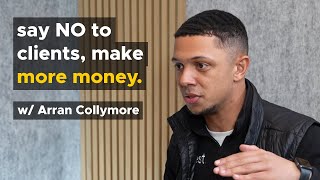
Arran Collymore, head of business development at Add Some Zest, moved from a mixed retained model to 100% retained work by saying no to the wrong clients. He uses a ruthless discovery phase to uncover real pain, charges one-third upfront and two-thirds on start, and screens candidates with video to reduce churn.
Chapters
Like the assumption that just because you're in recruitment and you want to earn money, that that's the only driver for you. I am driven by competition, and again, that is good and bad. It's good in the sense that I want to win in the environment I'm in. It's bad because I'm competing against everybody else, so I am semi-reliant on the environment I'm in to be successful.
Aaron Collymore, head of business development for Add Some Zest. 5 out of the 6 years before he joined the business, he was the back-to-back top performer. For the last year, he's been helping build a startup from the ground up, and here's what you're going to learn in this week's episode. How he went from working 40% retained to 100% retained with his clients.
Once they've got to this point, nobody has ever questioned me and said, I don't see the value in your service. No one has ever got there.
The power of saying no to clients and why it's so important.
You can do it just by being a nice human. Like, you haven't got to be like, you're wrong for me, don't call me again. Like, should be about having a conversation.
How to deliver a world-class recruitment experience and turn unplaced candidates into your best referrals.
Understanding who is this person, how would they like to be communicated with, and then delivering it in a way that is constructive but also is like just slightly empathetic.
The lessons from joining a startup that is truly committed to doing things differently.
Callum is phenomenal at building a brand, but from a leadership standpoint, for me, he gave me trust really, really early on.
Let's get into this week's episode. Aaron, welcome to the podcast.
Great to be here. Thanks for having me.
We've, um, obviously known each other for a little while. Yeah, when I was thinking about this, obviously, uh, I've got to know Callum over a period, but then obviously I've had interactions with you when you worked at Robertson Sumner. Um, so yes, it's going to be interesting unpacking this journey that you've been on. Yeah, so I think where I wanted to, to start, which I just found really interesting when we prepared for this, was I've got in front of me here from 2018, 2017, 2019, 2020, top performer.
Yeah.
2021, Adam beat you, who you still work with.
Yeah.
And 2022, you was top performer as well. Yeah. So I wanted to, to start there. Like, there's, there's not many people that will listen to this podcast and not want to be at that end of year awards, however companies do it, and walk away with the, the top performer award.
Yeah, of course.
So What we were just talking about, you being an Arsenal fan and chasing.
Yeah.
So like, when I've sat down with people, what I've often found is that what's a lot more challenging is like maintaining that, like, you know, top performer, top, whatever you want to call it. So like, let's start there. Like, when I share that with you, what— why do you think you was able to like maintain that performance when you would have had plenty of people saying to you, Aaron, maybe down the pub after work, or, "I'm coming for you." "I'm coming for you." "Yeah, you know what I mean?" Like, how, what was the mindset? How do you maintain that, do you think?
The first thing that initially springs to mind is I'm probably one of the most competitive people you'll ever meet. So, and I love the feeling of winning and all the rest of it. So it's kind of twofold. The first year that I won it, I probably shouldn't have won it based on like level of experience versus the people that I was in the room with. But at the time, I, I genuinely just outcompeted everyone that I was around at the time, and that got me top. And then I had a bit of a reputation and I didn't want to let it go. Um, that's the honest answer. To give some more like practical advice or some practical insight in terms of what I actually did, I just got really, really close with my customers and started selling them, or started offering them services that, you know, a lot of the team at the time probably weren't offering in terms of like offering a retainer or offering them, um, like additional consultancy staff around their onboarding process or induction process. I got really, really like deeply ingrained with my customers, which just allowed me to fill more jobs than other people. The really interesting thing here, I think, actually, is my deal size was probably— or not even probably— was one of the smallest.
It was like £67K when you was at Robinsons somewhere.
Yeah. And I suppose to give some context there, the way the business was set up, how the revenue is recognized, I would often split deals. So like the total fee might have been 6 or 7K, but I would have recognized like 4, 4.5 on my number for a lot of deals. So I just did a lot, really large volume deals basically in tech, which was a—
so a big part of it was basically, if we were to work backwards of like how you were able to maintain that, was like you built some really solid customer relationships.
Yeah. Really deep.
Let's just talk about that then, because I feel like there's not going to be many people that aren't like— isn't going to want to get into that position, right? So we can bring this back to you being now with Callum, joining him on the Zest journey, because you then had to build out new customers. Yeah, right. And then build new relationships. So, you know, with all this experience now behind you, and with a bit of hindsight, and you being in the trenches now having to do it for the last year, Like, how do you, if we were to think about the science of like, how, what makes a great customer like, or how do we get to the point where you go, you know what, I have a really deep relationship with this customer. Like, how do we get to that point? What are some of the things that you can—
Yeah, there's a few things. I think the first thing is it genuinely takes time to build trust. To build like a really deep, solid relationship with a customer just unfortunately just takes time and you consistently doing what you say you're going to do. That's how I think trust is built. In terms of from like a new customer standpoint, I think in order to win a new customer, certainly the way that we work, they have to really experience a pain. And if they're not experiencing a pain, then actually we're probably not the best fit or I'm probably not the best fit to actually come and fix that. So I think it starts with being really, really ruthless in the discovery phase of those conversations and trying to uncover like, Is there a problem? What's the impact of that problem? And do you believe, Mr. Customer, that we are capable of fixing that problem based on the evidence that I've shown you? If the answer to all of those things is yes, then I usually get— that's when I'll get a crack at the whip. Once I've got a crack at the whip, that's when I can start talking about like— and actually, once I've got context on their current process, then I can offer advice on like, well, actually, I worked with this business and this is how they did things. The, the impact of that was they were able to hire X number of people in a really short period of time, or their ramp period was reduced massively, whatever it may be. Um, but yeah, hopefully that gives you something.
Yeah, so like a few things there. Okay, let's talk about, um, we may like jump back and forth here, obviously you being at Robertson Sumner and you being at Zest, but like in terms of— me and Callum spoke about this when we had him on the podcast— your sales process right now, has there always been like that discovery phase at Robertson Sumner, or has that been something more over the last year that you've like embedded more? Because not everyone has that.
Yeah, probably it was something I did in my final year at Robertson Sumner, um, more. And genuinely, I think I picked this up because I did a lot more work in B2B software in my final year at Robertson Sumner, and a lot of the salespeople that I just got connected with spoke about discovery conversations and how impactful they were in their, in their business and or in their, in their roles. And I just thought, actually, we should probably test it and see if it works. And again, it just, it seemed to, seemed to work, and we just rolled it out now across, across SaaS.
So, so let's talk about that, because I actually feel like this is something that if people were to implement, like, obviously you've seen the, the benefit of it, but I think that can, this can really enable people to get closer to building that sort of relationships, because everything that you mentioned there, before you then get an opportunity to work with them, you weren't— it sounded like you wasn't talking about recruitment. No, right? Do you get what I mean? But I think that's interesting, right? Because you were talking about how you were sharing insights with them that, you know, could be helpful, valuable. You was asking them smart questions around how you're doing this, like, how are you finding this, what issues do you have. Um, so why don't we start with this? Like, how I— when I've often spoken to recruiters about having like that discovery call, sometimes the pushback that I've heard, and I don't know if you had this initially, was Sometimes people like just want to speak to Aaron and find out if like you can help him fill these jobs.
Yeah.
And like people have got like just like, am I going to miss out to my competitors who, you know, I speak to your competitor and they're like, yeah, we can work on those jobs, and then they crack on. Whereas you're going, no, no, hang on a minute, let's, let's book a further discovery. Yeah, I mean, so how, how do we sell the discovery? Or like, why, why is it worth a client's time?
Yeah, great question. I think the first thing to The first thing to try and give you some context on is when I'm engaging with customers and doing this phase of the conversation is when they don't have live jobs. If they have a live job and you're right and you go and try and do a big, let's really go and uncover your pain, Mr. Customer, and find out what's happening. A lot of them are just going to be like, you know what, Aaron, can you just, can you do it for me or not? Like, there is definitely going to be that. What I spend most of my time doing and spent most of my time doing was engaging with people that weren't actively hiring at the time and try and get an understanding like when they did last hire, What were the challenges that they faced during that process? What could be better in the process moving forward? Would you see value in a service provider that could fix those problems for you? It's those sorts of conversations. But you can't do that when there is like a burning desire to have a person in the role. Like it just doesn't really work or it can work, but it's far less impactful because really what you're asking them to do is change a whole process that they might believe is broken or might yeah, they might believe it's broken, but asking them to do that when they're under fire is just— it doesn't work as well, right? So a lot of it's about picking the time of the conversation. Um, yeah, that's the— that's the—
you know, that, that, that does— that does make sense. Like, that's, that's really important context to share. So like, why, why would I give you time if I'm not hiring, right? Because I think that's also interesting. Like, how do you frame that? Like, why is it worth a potential prospect's time to give Aaron 30, 45 minutes when I haven't got a live vacancy? It depends. It depends.
It really depends the pain that they're feeling. So a lot of that comes from like the first contact that you have with, with them should just— with a customer or prospect should just be really trying to uncover, is there even a problem with their current process? If they— if you call somebody and they love their current recruiters and they're filling all their jobs and the process, and they've got no, no qualms with it, it's fine. That's, that's not, that's not something that you should actively try and pursue. There are lots of businesses out there though that don't feel that recruit— that their recruitment process is a competitive advantage for them. And actually, if it's not a competitive advantage, that's where I can come in and actually help, or that's where we as a collective can come in and actually help, just by like tweaking things and fixing the, again, candidate experience and stuff, stuff like that. Is the, the big thing.
I think what I just find really interesting about this, and I'm sure this is like— you've got obviously way better at this, uh, in time, and maybe you've seen in like lesser experienced, uh, people, but If you call a company and they say, Aaron, we haven't actually got any vacancies right now, very— a lot of people will go, okay, no worries, and then, you know what I mean?
Yeah, see ya.
But like, the thing to take away here and to underline is the questions that you then go on to ask, right? So, okay, that's interesting. Um, I expected you to say that. When you did last hire, like, how did you do that? And like, you know, find out that information. That's like the valuable information, right? And then that's where you can learn about how did they do it last time. Was there issues? Was there not issues? Did they go external? If they didn't when would they have to go external and these types of things, right?
Yep, absolutely. And there's, there's two— again, there's two sides to that because there's what you're talking about is just like completely cold. I don't do that too frequently. I will try and have some sort of like connection to it. Again, I work in a really niche market, so if there is a candidate that I'm working with that ends up getting a job somewhere else, I've— again, I've built a good enough relationship with that person 97% of the time that I can ask them about, okay, well, when you went through that process, what did you like about it? What were the challenges What's the manager like? I can get loads of information from the candidate ahead of time, and I can ask candidate, candidate, do you think I would— again, you've worked with me briefly— do you think I could do a job for these people, for these guys? Yeah, absolutely. You can then ask for like a referral. That really depends on how good your relationship is, whether they'll actually do it or whether it's valuable. If you don't, you've at least got loads of information that is actionable that you can then take to them. So when you're talking to them, it could be 'Look, I understand that your current recruitment process is 3 stages, and again, in my experience, 3-stage processes at this level, often we see a massive churn of candidates at stage 2. Was that something that you experienced?' Again, there you can like— again, I'd probably phrase it slightly differently, but there you can take some con— like really, really, um, industry-specific context and apply it to a conversation with a prospect that just gives you some level of credibility and also enables you, enables them to open up and give you, give you time because they think actually this person is working with other people and has fixed this problem before and has somehow figured out that we have a 3-stage interview process or whatever the case may be. But that's the really important thing.
Yeah, and I love that, honestly. Like, obviously it's, it's different in my world, but yeah, like the, the discovery piece is like so, so powerful. I think, I think I'm a huge advocate for it. But I think the way that you've explained it, the context, when you're trying to get someone to give you time and when you frame it why it's worth their time, I think the bit around when they're not actually actively hiring is, is the important part there. Let me ask you this then. What about— because you obviously would have done a number of these now— what, what are you really listening out for that gets you excited? I mean, what are some of the triggers around like, okay, like this is something that I think we could really help here. Like, what are some of the typical things that you found? You know what, if they say this or they struggle with this, like, this could be a potential really great client for us and really buy into the solution that we can give them.
A few things. First thing that sort of initially springs to mind is, um, well, if they, if they have a, if they have a problem in converting people from a certain stage of the interview process to the next stage. So that really comes from like digging deep i.e., they might be able to attract top-of-funnel candidates. Maybe they can attract 15 for a role. If they end up through no choice of their own with 2 people at final stage, there's an obvious problem that, that can be addressed. That I love when I hear that, genuinely love that. The other, the other areas are, are if they don't get enough people top of funnel. So if you're talking to them and they're like, okay, well, how many people did you have at first interview? Well, how many CVs did you review? Or how many videos did you see? Whatever, whatever method they use. I saw 4. 4. Do you, do you feel that that gave you enough, enough choice? No. Music.
Yeah, love it.
Brilliant. That is so, so they're the two big things. Either their conversion rate's terrible, so they can't, they're not able to, their top person has left the process by, by step 2 or 3, or they're not even getting the superstars in the top of the final. That— they're the two things I look out for, and I'm like, I can, I can help with both of those for sure.
So let's then take this into— because I think it makes sense to— let's then take it— take this into like the, the Zest services and how you frame it, because I think this is what I really love breaking down with, with Callum. And I think what, again, um, I'm sure you feel this way, but gives you guys a real competitive advantage, right? Because when we sat down with Callum, like, you've got that 100% fill rate. I think what's really interesting as well is like you would have seen your average deal size increase.
Yeah, as well.
Like, it's more than double. Yeah, more like 14, 16K now. Um, and most importantly, you're, uh, getting great NPS scores and you're delivering a great experience.
Yep.
So if we hear those things that you love, like, talk us through then how— because I'm sure this is going to be a constant iteration, but like how it looks today like how, how do you then build this, this service? How do you then frame this service, um, that you guys provide? So you saying after you've heard those things, are you then going, look, from what I've heard today, these are the reasons why I'd really recommend that we book in like a further call or a presentation?
Yeah.
Is that fair? Yeah, yeah. Let's talk, let's, let's talk through that because I think this would be really interesting for people. How is it, like a pitch deck that you have? Is it like— talk to us about the presentation.
It's genuine, it's a live pitch deck. That we have on a— it's on the website, or it's not even a website, sorry, it's on a— it's on the internet, it's a tab that we have open that effectively we've all got one that's built specifically, which gives context to candidates that we've worked with, verticals that we operate in, and like key, key candidates, I suppose, or like candidates that are within that, within that vertical. So yeah, we'll talk through, we'll talk through that. We'll then go into the next call will be a presentation The start of that is really just about setting the agenda and making sure that there's the first thing. One of the first questions I would ask on that is, this is my— this is what I want to get out of the call. Is there anything else additional or what else is there that's additional that you want to get out of the call or get out of the meeting? And then either I can tailor the bit on the proposal, I can tailor the demonstration slightly to maybe focus more on actually, Aaron, you mentioned about the video platform. Can you do a live walkthrough of a video platform, or can you send me a link so I can jump on the other end to see how it would feel for a candidate? There's all of those kind of things that we can do live on the call. But I think so much of that comes from setting the agenda upfront. Once you've done that, a standard way that we would do it would be to run through our process in terms of how we source candidates, in terms of how we screen them initially, in terms of the second, second row vetting, which is the video interview that we use, how that looks to them when they receive it. Like, do you think that works? Is there any additional information you want us to add there? Is there anything you want us to take off? Like we can, we can take off things like salary of the candidate if you don't want to have any biases around that. There's loads of variables that we can play with there. So it's really just about ensuring that it's tailored within the parameters that we've got to their needs effectively. Or if they want to say, or if they say to me, Aaron, I really want to take a look at the psychometric area. Can we spend a little bit of time going through that? How does it quantify whether a person's a good fit? What questions will it spit out to me to ensure I'm mitigating the risk of a bad hire? It's those kind of things. So we just walk through the process with them. Ask questions around that. Ask them again, do you think this could fix your problems? Yes, no? Okay, well, let's talk about if it's a no.
It's a big part of it is really sort of walking through how it would actually work, working together. But then it sounds like the way you go through the process, you then tailor that to like, and this is how, why this is going to help you. Yeah, increase that conversion at top of funnel. This is why it's going to help you take those top, um, not lose as many top candidates.
Yeah, absolutely. And it's all about tying that back into like the original pain that they gave you whether that be I'm not getting enough people in the door or whether it being I'm losing too many people, just talking about how each step of this process can further solidify the engagement of those candidates. Like even the— for context, one of the biggest value or value adds that the video technology does is it just asks the candidate to do a little bit more than just sending a CV. Like it asks them to commit a little bit more time, a little bit more research. So What ends up happening is people that, people that you might get sent their CV off because they're a good person and the recruiter sold the job to them, you might get their CV. But I'm sure, I know so many businesses have had this, like they'll go back to the recruiter and then they can't get hold of them. We just eliminate all of that up front. It's all gone just because we vetted them in that video process. So just again, save so much time for that.
But yeah, hope that helps. And then how do you, how do you frame like the investment? Is it like you just have two options, retained or exclusive, or is it just like you literally give them one option?
Yeah, we don't, we don't have another, we don't have another service. It's all we do. Again, we have 2 customers that are non-retained, and again, they've come really from relationships that Callum has held and knows like personally. So every other business that we have worked with works on our model, and it is just our model. It's not— we don't put— we don't do this whole big like hurrah, it's retained thing. That's just how it is if you work with Zest. That's just the service.
Yeah, I'll write that because then it just makes it a lot more simpler than that, which is quite a binary option.
Either you think we're good and it works, or you don't. And actually, if you don't and you don't see the value, then either I've not done a very good job at conveying that, or the pain that I identified just isn't actually a real pain.
So how do you typically structure it then? Is it like— because I feel like everyone has like an assumption— is it like we have like an initiation fee and then we get started? Like, how have you typically structured—
so our fee structure is just third up front, which is paid 7 days after we agree, and then we do our job, do fill the role, run the service, then they pay two-thirds when the person starts. Okay, it's really simple. It's not super complex. Again, I've heard people that do like, I don't know, 25% on starting it, 25% on the shortlist, 25% a second interview, and 25% on filling it. It just, I think it can become really confusing. It makes, it can be an absolute nightmare for people in like, in the finance team to process all these different invoices. Like there's too much headache But actually, our model seems to, seems to be pretty simple.
We'll get back to the episode in just one minute, but today I'm excited to talk to you about one of our partners, Firefish, the recruitment CRM that accelerates data-driven growth. The problem with most recruitment CRMs is that they are just a database of records, meaning they become just one of the many tools that recruiters use every day. Like all systems, the records are only as good as the data being captured. Our sponsors Firefish know that for agencies to win faster, data needs to be at the heart of their business, making your CRM the single source of truth. With over 10,000 records created and updated every day and 85% of placements from existing candidates, Firefish enables recruiters to enrich and engage their data, equipping you with real-time insights needed to win faster. To learn more about Firefish and take advantage of an exclusive Recruitment Mentors Podcast offer, make sure you click the link in the show notes and mention the Recruitment Mentors Podcast when speaking to the Firefish team. So what, what are the most common objections that you run into then over the last 12 months? Like, obviously a lot of the way you— until you get to that point is about, like, I feel like the way that you structured it is about mitigating those options, uh, objections, right? Like, you've— we're here because you've shared with me like, these are the issues, these are the problems, I've walked through the process on why this is going to reduce those issues or solve those issues. And then this is our track record of like what we delivered for companies like yours. Like what, what are like the typical one or two main objections that sometimes you might find yourself wrestling with or had to wrestle with or overcome?
Yeah, well, the obvious one is paying something upfront. I've never done this before. Makes me really nervous. How do I know I can trust you? Like, though, it's those sorts of things. That, that we often get. And, and only— they're only— nobody actually, for complete clarity, nobody questions once they've got to this point. Nobody has ever questioned me and said, I don't see the value in your service. No one has ever got there, right? Where people become a little bit, I suppose, more worried about it, or we start getting objections, is when we talk about taking a third of the fee in advance. That, for some people, is a little bit terrifying But actually, the reality is, for a lot of these businesses, not having— not doing something before isn't reason to not do it now. Like, it really— it's just about re— or it's really about just re-explaining the problems that they're facing, whether that pain is big enough for them to take action. And if it is big enough for them to take action, this is the— this is the way that we can operate. There are things that we like— we can be reasonable as well around like giving people peace of mind from a commercial standpoint. Like whether that be, again, probably not from like the upfront payment bit, but whether that be like, okay, we'll give you a slightly longer rebate period or, um, or things of that ilk. The other thing that we've got really, really good at doing now is having people that we can call on for references. We obviously didn't have that to begin with, but now from doing it for 24 different businesses We've got people, we've got case studies. Yeah, well, case studies are fine, but actually, like, we've got people that if I said to them, hi, I've got somebody that wants to work with us, they're a little bit apprehensive about paying money up front, would you jump on a 5-minute call with them and just explain that we are actually who we say we are? But they're like, yeah, of course, Aaron, no worries.
Is it— is the main fear around, we haven't worked this way before, so why would we do— why would we work this way?
And again, it's not even necessarily like the way of working that scares them, it's more just how it— how the fee's comprised.
Right, right.
Like, genuinely if our conversion rate would be 100% if everyone we got to discovery— if, if we said to them, you haven't got to pay us anything up front, we'll deliver the service the same as every other recruiter. But actually, I also think then that people would probably question, like, why are you doing all of this extra stuff but not taking— not charging anything differently? So I think we have to do that. There has to be a bit of pain for them, just to like a level of commitment for them to actually say this pain is massive, or this pain is large enough for us to commit to paying you 5, 10, whatever thousand pounds up front for you to go and fix the problem for us. That's the, that's the reality of it.
And for someone right now that's listened to this and their conversion of like getting to this point to then like new customer, they're like really struggling with because I'm sure you've had periods where, you know, you might look back at the quarter and you're like, fucking hell, I've done like 10 presentations and only 4 have converted. I know we're talking— we said a lot about this when I sat down with Callum and when we were chatting before this around, you know, also you do say no to a lot of loads of companies, right? Which is important to this and why your fill rate is 100%.
Yeah.
But like, if someone is listening to this and really struggling with that conversion, like, where would you go to? Where would you start thinking about how to like diagnose that?
My, my first thing is it's probably earlier in the sales process than at the discovery. Like, if particularly if you— the numbers you gave me of like 10 meetings booked, or yeah, 10 presentations, 4 closed, you're probably pitching to the wrong people. In, in that scenario, if you have a 40% conversion rate, you're probably pitching to the wrong people, and you probably need to disqualify them earlier. So like, even if it— the conversion rate should probably be like 4 closed out of 6, really. Like, when it gets, when it gets to presentation stage, because bearing in mind you've had like first engagement, discovery call, and then the presentation. So it's 3 separate conversations and you should be really, really ruthless with like disqualifying people that don't fit or you're unsure on whether they're— whether it's just them or whether their manager sees the problem as well. Because that's the other thing. If you're talking to a line manager and they feel the problem, does their manager feel the problem? If their manager doesn't feel it, then again, just cut it. It's fine. Just move on. Yeah, earlier on in the process, just cut it earlier. Just cut it earlier. If they're— if, if they are— if they're doing a good job at qualifying people and they're still having that conversion rate, then I think the problem probably lies in listening and tailoring the pitch to the prospect in the moment. Like, I think if you were really early on and you just had one pitch deck and you were actually— and you weren't super niche in your vertical then that conversion rate probably isn't terrible. But actually, when you are really niching the vertical you operate in and you've done all the qualifying stuff, you should convert 80% of them, really.
And I'll probably add, like, if you're not leveraging your case studies and like, yeah, if you work really hard to, you know, when you've been given that shot, like, and you're not leveraging that, then definitely lean into that. Yeah. How do you, like, obviously you guys, I feel like such a, uh, a barometer of like delivering a great experience is people that doesn't get the outcome that they want, whether that be on the candidate side or, um, yeah, you guys saying no to people, whatever. Like, you, the way that you were describing that, like, yeah, just cut it early or whatever, obviously you've got to deliver that in a, in a better way, right?
Yeah, yeah, yeah.
No, people listening, some people, and I'm sure this has come with time, right? It does, it does take courage to say like no to right? So how, how do you think about, like you said, disqualifying harder, saying no in a way that still leaves that person going, you know what, I actually really respect that?
Yeah, it's, um, I think it— again, you can do it just by being a nice human. Like, you haven't got to be like, you're wrong for me, don't call me again. Like, it should— it shouldn't be— it shouldn't be that. It should just be— it should be about having a conversation and almost just kind of leading them. I think it I think the most important thing is leaving the customer thinking that it was a mutual decision. Even if I am deciding that this isn't a good fit, I will just do it in a way that I'm actually asking them questions like, well, actually, from what you've told me, Mr. Customer, it doesn't sound like this is a massive priority for you at the minute. What do you think? Do you know what, Aaron, I think you're right. Or Aaron, look, it's a real problem for me, but I just can't get it past the VP. Or the CRO's just said, I just can't do anything about it. We're staying with what we've got. Look, I completely understand it, and believe me, I'd love to help, but unfortunately I just don't think it's going to— I don't think it's going to work. If anything changes, please, let's definitely stay in touch. And again, if I can offer any more additional value, if you want an idea on what people are doing in the market from a salary standpoint, from a benefit standpoint, please just give me a call. Let me know. But at the moment, I just don't think it's the best use of either of our time to move forward. What do you think? Yeah, I agree. Yeah. Again, it's just about— you can do it and just be just be nice, be a nice human about it. I think that's the— you haven't got to be horrible, but you are right, that is something I learned.
But also, have you found— because I, I've found this, like, also if you do like, yeah, frame it like that, some people will go, no, no, Aaron, like, this is a problem. Have you had that where like when you do then start leaning towards hanging on a minute, I'm not actually sure this is big of a problem, and you sort of pull away that out? Yeah. And then they— that's also the I feel like the thing that sometimes people miss, people really trying to get people to say yes and not agree, but actually by disqualifying, you actually also have people say, no, no, this is important. Yeah, absolutely.
They pull you back in. And then, and then the follow-on question usually from there when they say something like, no, Aaron, it is a priority. Okay, well, and why do you, why do you think from what you know at the moment that we're the people that could fix that for you? They just, then, then yeah, just sell themselves on it. That's a, that's phenomenal when that happens. It's great. But But again, equally, you have— I think also, so it is about having collective agreement on what's the criteria that make it a good customer. Like, I think actually if you're— if you asked me in 2018 what was a good customer for me, I probably couldn't tell you. Not honestly. Like, I didn't intentionally go and build a desk. I built a desk the way that I would thought recruitment was. Get a lead, chase a lead, win it, win a job. And then just grow the customer from there. But now we're just much more intentional about working with people that are mission-aligned, value-aligned from with us, but equally value the service of what we do and the way that we operate. So like all of those different things enable me to disqualify much quicker than I would have done in 2018.
Yeah, I really— I'm really glad that you said that. I was speaking to a founder today about something similar, and like, I don't know how you and Callum figured this out, or maybe, um, it was like a joint exercise that you did. But I was speaking to a founder today about how, like, he— they didn't sound like crystal clear on what they're like, great, you know, great customer looks like for them. But they've got all of these great companies that they're working with, they've done a lot of work with over the last like 3, 4 years. So like, for me, if I was in that position, I don't know how you guys did it, but I'd, I'd like look back at like, what do these great companies that we've done loads of work with all have in common, like who do we— what— who the decision makers that we have relationships with there.
Yeah.
How do we initially like reach out to them, you know, what are their aspirations like? Yeah. What is the, the culture like? Whatever else it is, then you can then use that and be like, right, okay, this is what the non-negotiables are for, you know, uh, customers moving forward.
Yeah.
Did you do something like that, or did Callum help you? Did you all agree on like, this is what a great client looks like? Yeah, sure, it can slightly evolve, but of course it iterates.
Of course. Um, And we did a lot of that stuff based on like previous experience and previous work that we'd done in, in other markets. And actually, I think where we had the most success was doing all of those things, but then also taking things maybe a slight, maybe like a slight step further in thinking about like the challenges that our customers' customers are facing. So like for context, the areas of the market that I've done the most work in are, is really legal tech, which is a super niche market, right? Super niche. So the, the challenges that business— that VPs of sales are facing in their market. Again, there'll be some that are really common across all VPs in B2B SaaS. There'll be others that are really, really specific to their buyer context. So getting and trying to get an understanding of the challenges that the salespeople in that team experience when they join made a massive difference to us when it came to like identifying an ICP. And again, there was 3 of us, so we could stay be super niche for a long time. It might be hard to do if the business was— yeah, 25.
It's a worthy exercise to do, like, why are some of your best clients your best clients, and how can we get more of them? It's a worthy exercise to do.
Absolutely.
Have you got a story then of you saying no to a client and then they become a client? Does that happen quite, quite often?
Yeah, yeah. Uh, I say quite often, it's probably happened like 3 or 4 times, and 3 or 4 times in the last 12 months. And actually, what, what has happened primarily in those scenarios is actually we've agreed that it's a no for a period of time, and then they've experienced another— they've gone through a hiring process again. And then at the end of that process, when they haven't hired somebody, or maybe they have hired somebody, they've basically said, Aaron, can we have another conversation? We just experienced this. It was— it's really raw. When you called me, I hadn't hired in 3 months. I've now just done it and actually everything that you mentioned made complete sense. So I have, I've actually, yeah, I've got, so the customer I won today is exactly that. I spoke to him first time was this time last year and at the time he had just hired an enterprise AE through another agency and I just, and again at the time was like, ah, actually, and they were okay, that was, it was fine. I asked them some differences around like when they, when you paid them a retainer, what was the, what did you get for that? What was the, what did their service look like? All the rest of it. And we, again, we uncovered that that maybe the service wasn't quite what he was expecting or what was promised on the tin. Stayed in contact for 12 months, periodically checked in, spoke to the candidate. I knew the candidate fairly well as well. And then in December, he said, I'm going to raise some money. Probably, it'll probably land in like March or April time. Let's have a conversation to talk about how we can actually revolutionise our hiring process. What I uncovered in my first call though was that the person that he hired was actually like his third or fourth choice candidate from the top of funnel. So actually, when we spoke loads about like how can we mitigate that, or how can we stop that happening as frequently, and again, they ended up signing Monday, which is great.
Yeah, I love that. And then, and then just quickly then, in between, what did that look like, right? I feel like you, you always hear people like, yeah, it's important to follow up and stay in touch, you know what I mean? Like what Obviously you did the smart thing at the beginning by getting like useful information. It wasn't just like, oh, you just hired someone like and use the agency. That's, that's good. Yeah, like we're not hiring them. Okay, like on to the next. You actually got some useful information. Yeah, like, yeah, what, what sort of things did you do in between that then made sure that if like we then got to that point?
The, the thing that I have in my favor is that they're in legal tech and legal tech is 95% of what I do. So I'm able to share information in terms of like, oh, well, did you see this happened? Or X business just raised a Series B. What did you think of that? Or actually, do you know, do you know X CEO? Actually might be worth making a quick introduction there because I think you two from a technology standpoint don't compete but might be able to work together harmoniously. It's little things like that, but you can only really do that if you're super niche in your vertical. So that was a massive benefit and it was really just little things like that keeping in front of mind. We had a And I just always had the next step booked in the diary. I always had a call in the diary arranged, so I never let it go. To be fair, I, I, at the beginning I set 6-week periods because he's just hired somebody, and actually I knew the candidate and I thought if the candidate was looking for a job, he would call me, so I don't need to be pestering him to say, how's he getting on, or any of that. So I set 6 weeks out and we had another conversation and I said, how's the candidate getting on, all the rest of it. Do you know what, he's doing really well, Aaron, really happy with him. Think he's a great hire. Great. Next one was about 12 weeks after that, and that conversation was really just like synopsis of what's happened in legal tech in the last X period of time. That was just really focused on like top-line movers in the industry, stuff that I've done, how their business has done. They work in a really niche area of legal tech, which is mental to even say in a sentence, um, So, so yeah, again, really just provide like market information, movers, and yeah, new, new funding rounds raised, that sort of stuff really. But that's, that's fundamentally what it was. It was just providing, really just being like a news regurgitator to him, like, oh, I spoke to this person and they said this, what do you think about that? And then just sharing people's—
yeah, but that's smart though. Like, I think that's just really helpful for people to hear on like what you can do in between, which isn't just like I just wanted to give you a call, like, how things going, like, checking in, you know what I mean?
It's like, I think, I think generally recruiters really, really like under that or underestimate just how much information we know. Like, we speak to so many commercial— again, for us, commercial leaders or founders that will tell us information about, again, their business or what their competitors are doing or the money they're trying to raise or, or like challenges they're experiencing with their customers. Maybe it could be that you know, they're really struggling to sign magic circle law firms at the moment. There's a real challenge to go and sign magic circle law firms at the moment. That could be a— if that's a topic for conversation that I hear from one founder, then I can go and talk to every other founder, sales leader, whoever within the space and say, actually spoke to this person, they've said that they're really struggling to sign magic circle law firms. How have you found that? I found it really difficult as well. What have they done about this? Or what's happened? Just loads of that. But a lot of it's just gossip. Really taking information up and just having conversations with people. But so much of it is away from just like recruitment, your team. Oh, when can I hire for you? It's so much of it's removed from that. Yeah, it's just about having—
No, I think you're completely right. I think a lot of recruiters underestimate how much power is in that information. Yeah. And by sharing that and that's, that's one of the best things that you can do that's valuable and helpful for the people that you speak to.
Yeah.
So let's just focus a bit on like experience. We focus a lot around on like the client side, the sales process, how you guys do that. That's a bit different. Obviously you've been 12 months into this journey now. Like a huge part of, you know, um, Zest's approach is around like really committing to delivering like a world-class experience.
Yes.
So if we're just to take a bit of a step back for a moment, I feel like obviously I was telling you a bit about my business outside, like I feel like you guys are a year in, so it's less about like completely ripping up how you do things and then like doing all these different things, um, in a different way. But like, as you go into the second year, or maybe even in the last like 6 months, however you want to think about it, like what have been some of the things that you've like maybe slightly changed or added to your recruitment process that you and the team have gone, fucking hell, like that was a slight change but that's, that's actually had a big impact?
Yeah. Is there anything that you can share there that Do you know what, I don't know if it's anything that we— there was like a massive change, or I think the subtle change that we made was just in the time that we delivered feedback. We always, as a collective, certainly me, Adam, and Callum, and again now Lizzie and Charlie for sure, we always delivered the feedback, but actually it's the speed at which you're able to deliver it. I.e., if I get a no from a customer, I will tell that person pretty much instantly rather than having this like massive build-up of like, oh, I've got to call them, or I don't want to call them, or I don't agree, like whatever it may be, just executing on it really quickly. And the thing that I've— and this is much more personal— the thing that I've had to become aware of is that— well, and actually this came from our feedback— the service I got from Aaron was great, feedback was always really timely, just a quick tip, maybe could deliver the feedback in a slightly more empathetic way. That's some stuff that I've got that I got really early on that I changed. And now again, the experience, even from like the actual NPS that I'm getting, is just better. Like it goes from being an 8 or a 9 to a 9 or a 10, but far more frequently. And that's a really subtle tweak. And that's just me thinking about understanding who is this person How do I— how would they like to be communicated with? And then delivering it in a way that is constructive but also is like just slightly empathetic or just slightly taken into account the reality of the situation. Like, they've just— they've just been told they're a no from a job. You haven't got to deliver it like an idiot.
I think— let's talk about this because I feel like clearly, like you just mentioned, that's actually helped you improve massively.
Yeah.
And it's massively improved like the experience. And I think what is always interesting is, yeah, really trying to think about how you improve the experience for people that don't get the outcome they want. Because these can actually be some of your biggest promoters, 100%, um, helping you actually open up some of the, the best doors rather than the people that actually are successful. So like, this is obviously— anyone listening to this like would have experienced like that feeling that you mentioned, like, oh my God, I've got to tell this person a nice— let's just assume that you're working with a client that one, is actually willing to give you feedback and it's actually useful, right? But this comes into the types of companies you work with, your process, right? Yeah, you actually— and I'm sure part of the process is we agree you can't just email me saying, yeah, Aaron, it's a no.
No, it doesn't happen. Yeah, yeah, that doesn't happen.
So that, that's like, again, if we're taking a few steps back, that's going to one, help you to be able to do this, because there'll be a lot of recruiters listening to this where they have like— why they also avoid it is probably because they're being given fuck all from a client. Yeah, because they don't have the best relationship. But like, how, how have you got better at delivering it? Because it is hard, right? Calling someone and saying, Aaron, it's a no, you would have learned how much maybe this opportunity meant to them to get it, what it could have meant to their family, how could it impact life, of course, all of that. Like, how— talk us a bit about how you've got better at this and delivering it in a more empathetic way.
Yeah, it's really difficult to do for two reasons. It's obviously, it's a super emotional conversation to have with somebody, particularly if they're in the scenario that you mentioned. Like, you understand, like, they really wanted the job, it was their top company opportunity, loved love the product, all the rest of it, tell them that it's a no. First of all, you can't do it until you've got real committed feedback from the customer like you mentioned. You just can't do that. It's impossible to— and also, when we're— it starts with getting— setting a barometer of what feedback is expected from a customer. It can't just be, Aaron, they're a no because they were a bad culture fit. Like, what am I doing with that? Seriously, what am I like That does not give a good candidate experience. What I really need is like, okay, they're not a good culture fit. Why were they not a good culture fit? What did they do in the interview that made you believe that they weren't a good culture fit? Is there anything that they, if they had have said it slightly differently, would that have led to a different outcome? There's loads of things that you have to just draw a line and set up like, this is the minimum standard. Once you've got the minimum standard from the customer, actually delivering that to the candidate, it's quite easy to do because you feel like you're giving them value and you're actually being constructive. With them. Like, if somebody said to me, Aaron, they were no, they were no because we didn't feel that they had enough experience in, um, winning net new logo customers in mid-market law firms, right? And that was— if that was objectively true, that they don't— they've won 4 mid-market law firms, then that is— that's a very, very easy conversation to have. I'm really sorry, This is, this is the situation. What they've said to me is they're ideally looking for somebody who's had more experience. They've got a couple of people in process that have got more experience in closing this. It's a really, really sorry, but that is just the reality of it, unfortunately. Any feedback you want me to give them? That's really important. Make sure it's 2A when you're delivering feedback, because I'm, I'm certain that when I first delivered feedback, people would get off the call and be like like really deflated about it.
Really?
Yeah. And I never really gave them an opportunity to like, do you agree with the feedback?
Yeah, like make it two-way.
Yeah, yeah.
How the hell do you deliver bad culture fit? That's hard, man. It's like, surely the client gives you—
there's more context to that usually though.
Yeah, yeah. But in terms of like, I love what you said about drawing the line, like, like, yeah, they're not a good culture fit isn't like good enough.
Yeah.
But surely instantly where my mind went was because of the way you guys work, there's that trust there. So I'm assuming they might say things to you that then you have to sort of package up and deliver.
Yeah, yeah, exactly.
So like, that's hard, that's hard, right? So have you got better at that? Have you— how have you navigated that? Because that's a hard one.
Yeah, it is hard. I think interestingly though, when those— or certainly in my experience, when cult— when bad culture fit comes up as like the reason that the person is a no, the candidate also half feels that already. So When I'm taking a debrief from a candidate, I will ask them, would you, if there were one or two things that, you know, that could pop up that would mean you didn't get the job, what do you think they are? If they say to me, oh, do you know what, I like the VP, but I didn't, I just, we had a bit of a clash on a certain few things. If somebody then says to me, do you know what, culture fit was a problem, or it could be, I spoke to a couple of the team and I just, they're just not my sort of people, you know, I don't know anyone like them in my social circle, or I've never worked with anyone like them. Then like, that's— I can half expect that. And then when you're delivering it, it's like, you know what, you were bang on. Like, they also felt that, you know, in some scenario maybe you weren't quite the right fit for them from a cultural standpoint in terms of what they were looking for from a team member or the way that they approached work or just their ethos around, around work. Because equally, people— there is no right or wrong to how you approach work, but there is a, there is a reality of of how a business approaches or has a culture around work, right? And actually, even if you're in the right space, selling to the right customer, and all the rest of it, if your approach to work is, I, I like coming to work, but it's not my focus, it's not my focus, my, my hobbies are my focus, fine. But then you can't expect to fit a team where everyone, their only focus is work. You're obviously going to be a bad culture fit there. That's obvious. And you will— and If you're self-aware, you'll probably half understand that coming out of the meeting anyway.
Whilst we take a short break, I wanted to take a moment to chat to you about one of our amazing partners, Sourcewell, the industry-leading recruitment engagement platform. I'm using myself and I don't know what I would do without it. From building personalized messaging cadences across a variety of channels to automating follow-ups and data tracking straight back into my CRM. It's really made an impact in streamlining my workflow and most importantly, accelerating my sales results. My favorite feature by far is the live feed. By being able to see in real time who's engaging with your campaigns, it enables me to prioritize my outreach with the most engaged prospects, which helps me get way more out of what I put in. So I'm gonna be honest, if you haven't got Sourcewell and you're a recruiter, I really believe you're at a disadvantage. To find out more and see the platform in action, make sure you click the link in the show notes and mention the Recruitment Mentors Podcast. Because you listen to this podcast, you're going to be able to get access to an exclusive offer: free 50 phone credits, 50 email credits, which is at the value of circa £500 per user. So make sure you mention the Recruitment Mentors Podcast and click the link in the show notes. Have you got a story then of you got better at this, you— it was on— you gave— delivered a no in a much better way, and then you—
they—
then that— what then went on to happen was, because you did that in a great way, you delivered a great experience, even though they didn't get the job through you, that then you ended up either bringing them on as a client or anything like that?
Oh boy, do I. Um, yeah, yeah. So I, I spoke, and again, this was— so this was January— no, First week in Feb, um, I was working with a, I was working with a candidate who was a, at the time was an SDR manager, wanted to be an AE. Again, it's a challenging move, he'd never closed before, um, and effectively I worked with him. I gave him, he got, I got him 4 interviews. He lives in Manchester. I got 4 interviews at literally the 4 businesses that I work with in Manchester. And again, the process was fine. He said, Aaron, I think you've been good. I'm actually going to— I've actually decided I'm going to stay put for a little while, but you can maybe help me do some SDR hiring. Cool, fine. The— he gave me an 8 then, so it wasn't terrible. He gave me an 8, right? Which isn't a promoter score, as you know, right?
It's just a rough improvement.
Yeah, yeah. And the feedback— and the feedback he gave me was, um, shows lots of lagging indicators that he will— that this will be very good, but the relationship is too early on for me to give him any higher than an 8 because it all happened really quickly. It was done in like a 2-week period, right? So I didn't have loads and loads of time with him to really get under the hood or whatever. Um, he stayed for a period. We didn't actually work the SDR roles again, didn't fit from a value standpoint, all the rest of it. I— he then called me in the summer and said, Aaron, I've decided I'm definitely leaving. I don't want to be an SDR manager. All of my friends have left the company. I'm working at now. So it's me and like 4 SDRs that are super junior. So I did get him a job this time, but, but, and, but, and actually now I'm thinking about, I'm like, did he give me a 10 because I got him the job? The answer is probably yes, isn't it? Um, but I did get him the job and he gave me a 10. But that is a, that is a, that is an iteration of like the, I suppose the also the other thing that I did get him the job. So maybe that's— no, no, but like that wouldn't have happened if Well, also, I don't think he would have reached out to me if I hadn't have, uh, again, we follow up the survey, I stay close to him and all the rest of it. But there's probably a better example that I can give.
No, no, fair. But like, obviously the example there is you work with someone, they got rejected 4 times.
Yes, it was a state book.
Yeah. And like, that very easily it could have ended there, right?
Yeah. Or you could have given me a 2. Like, you've had 4 rejections in a row, back to back, in a 2-week period. And you gave me an A. Yeah, you gave me an A.
And potential opportunities at his company. Yeah, obviously didn't work out.
Yeah, but then, then actually, yeah, I did, I did, I did place him in August, which was, which is great. And then he gave me a 10 and he sang my praises. And to be fair, since then he's been great. He's been a massive champion of me.
So yeah, nice, love that. Great. So to round this out then, I'm always interested, like, I'm sure you've seen— actually, let me ask you this actually, just because it's top of mind, just talking candid experience. Did you— this is like really relevant, I rarely do this— did you see this recent thing around like ghosting companies?
Ghosting companies?
No. Okay, right. So you tell me what you think about this because like obviously you guys always thinking about experience. So I'm gonna absolutely butcher this, but I'll give it a go. There was this guy that was on The Apprentice like however many series ago, and he was on TV and basically saying like a lot of companies don't give feedback. So like there's stats, um, and data that has come out that a lot of like Gen Z people basically just like get an interview and then they're like, actually, I don't work for that company, and they just don't turn up. So like ghosting companies. So yeah, this guy was very much advocating like, if you get an interview and you're like, you know what, actually they're not a good fit, like don't turn up because these— a lot of these companies don't even come back to you anyway. So ghosting, um, companies and interviews, that's what— that's wild, isn't it?
Yeah, just— I don't understand it. I don't understand it. We're just like, that's just Two wrongs don't make a right, right? That's also an issue. Like, just because they're doing it doesn't necessarily mean—
Yeah, I just thought it was wild advice.
It is wild, but it was like flying all over LinkedIn.
I'm surprised it's here.
Mental. Genuinely mental. What are you talking about?
It's mad wild. But yeah, anyway, so what I was gonna ask you was, I'm sure you would have seen at some point, you know, great people leave like bad managers, or like what, you know, that, that whole, uh, phrase. So obviously Callum was someone that hired you at Robertson Sumner.
Yeah.
Um, brought you in, and then so like, you like, clearly Callum would have been someone that you could have been like, oh my God, he's left, like, thank God for that, right? But you've actually followed him on, on this business journey. Yeah. Like, what, like, we're gonna big up Callum a bit here, but like, I think this is a learning for other people. From your perspective, like, what does Callum do as a manager that has made you literally go on this journey with him? And, and clearly, you know, you're engaged in your work, you're enjoying the journey. Like, what do you think Callum does from a leadership standpoint that other leaders listening to this can learn from? Because you've been with him for a long time now, and I think that's like— I think that's such an amazing thing.
Um, Callum is phenomenal at a few— a few— again, he's phenomenal at the job, he's phenomenal at building a brand, but from a leadership standpoint, for me he gave me trust really, really early on. Um, he challenged me again. I said I'm a super optimist, and I'll give you a story. So like, yeah, so I've been at Robertson Sumner 6 months. Callum had just stepped into a pure leadership role, so Callum was still billing for the first 6 months that I was at, that I was at RS. And I went into my one-to-one at the end of the year and I said, I'm going to be the top biller next year. What did top biller set. And because he'd been in like a few people before me, and I said, I'm going to do that as well. Bearing in mind I'd closed 2 deals, right? Genuinely, I'd closed 2 deals in 6 months, and I, I just had no right. Callum, in that environment, I'm sure there are other managers that would have gone, what on earth are you talking about? Like, you're mental. Yeah, like, you're mental. Like, one step at a time. He said that again, this comes down to Callum knowing me about like like super competitive, like really want to go and hit the target. And actually, so he let me set it, and then I went and did it. So that for me is like a really good illustration of Callum understanding me as the human. What are my internal drivers outside of like my kids and my wife and all that sort of stuff in the family or whatever? What— when I'm at work and I'm at my desk, what things can I say to Aaron, or what things can we put in place to ensure that Aaron is just like laser focused, and that's what he's phenomenal at. But he does that, he does it in a way that makes it feel super personal but still fits in like within the business, within the brand. So it's not like there's one rule for me, one rule for Adam, but the way that we're motivated, the things that we're like intrinsically motivated by are different. So actually just understanding that deeply and then setting parameters around the job to enable you to go and execute on that. He is unreal at that, absolutely unbelievable.
And what's like, uh, you might not have experienced this, you may have, or you may have experienced for other people, what's the opposite of, uh, the opposite of that would, would be somebody saying, I'm setting your target for you.
That would be the opposite of it. Rather than having— so the first thing is, bearing in mind I've been there 6 months, I'm 19, I walk into Callum and say, I'm gonna do this, Most people are like, you're not going to do this. This is the target because this is the, this is the route that we follow. That's one option of that. It's probably part of the reason that we have a bit of a churn in recruitment, maybe. But what else could be the alternative to making it super bespoke would just be making it so that it's broad, right? So like everyone who works here operates under these parameters, full stop. Like there is no there's no caveat or no context around what motivates you internally. Because what I think I've seen as well is, and I think like Robertson Sumner had a really good, and at Zest as well, to be fair, we had lots of people that were billing well that did the job differently. Like we would achieve the same outcome. And actually I think even if you looked at it from a, if you looked at the stats in terms of like number of interviews or like core stats, they would all be very, very similar. And like conversion rates would all be very, very similar. It's just the method that got to the interviews. I'm a terrible writer. I'm, I'm okay at speaking, so I spend more time on the phone than Adam. Adam is brilliant, uh, crafting emails or influencing people over copy. Same as, same as some couple of other guys. Callum, Callum said you do it, you do it that way. So I suppose that's some other stuff that actually it just enables you to be like— he talks about it as well in his podcast, like be your authentic self. That's what he enables you to go and do. Just be authentic as long as you fit the core like morals and values and stuff of the business. Then I'm really—
yes, that is that intrinsic bit, isn't it? Yeah, a lot of people miss.
Yeah, just like— or like the assumption that just because you're in recruitment and you want to earn money, that that's the only driver for you. Like, Callum very, very quickly understood that I am driven by competition. And again, that is good and bad. It's good in the sense that I want to win in the environment I'm in. It's bad because maybe I'm not— I'm not competing against myself, I'm competing against everybody else. So I am semi-reliant on the environment I'm in to be successful. That's the only caveat to that. It's pretty bad.
So how— so like, you're going into your second year now? Yeah. I'm sure, like, with your competitive nature, you're thinking, how can I do better than last year? How can I beat the team? How, how, like, what's top of mind when you think about doing that, achieving that, without dropping standards of experience?
Uh, for, for complete clarity, last year we were nowhere near capacity. So in terms of, like, workload, I was nowhere near— from, like, a job management standpoint, I was nowhere near capacity. So My initial focus is ensuring that I'm winning enough high-quality business that's going to enable me and the rest of the team, hopefully, to just focus more time on delivering for the customers that we're going to, that we have got and that we're going to win. That really is the primary focus, I think, this year that will just enable us as a collective to build more, for me to build more individually. But really it just all comes back to spending at the moment, spending more time ruthlessly disqualifying wrong prospects and winning customers that do fit with what we're doing. That's the biggest thing for me.
I guess you might, to be fair, you might just have to learn what that capacity is maybe the hard way.
Yeah, that's—
If you're just being honest with yourself. What do you think, 'cause like, just curious before we finish, like, have you thought about what that might look like? Is it like, if we were to go over like 5 retained assignments at once per quarter or something, that'd be really difficult to—
I think, and again, there is obviously context there in terms of like the ability, the experience of the person or the ability of the person. I think I can, I could confidently run 6 processes, retain processes and be fine across the course of a quarter and that not be, and not be in a position where I'm like the quality of— Yeah, the quality. Yeah, exactly. I'm not getting, I'm not getting like 1s and 2s at least. So, so yeah, I think, I think that again, if you ask me, Adam, I think Adam could run more than me. I think Adam could probably run 8 or 9. Just because he is just unbelievable at that bit. And but from a personal standpoint, probably 6 is what I would imagine, but we'll see.
So what's the big goal for you this year then?
Uh, I am really trying to not be so like intrinsically focused. Since joining Zest, it's— that's been a massive growth area for me, is I spoke about like my whole time at RS wanting to be top, wanting to compete, all the rest of it. What I've been able to do since joining Zest, and maybe it's because I joined so early on, etc., is I'm actually focusing more on competing for Zest. Like, I genuinely just want Zest to win, and then I will win as a byproduct of that. That's more important to me this time around. But actually, if you'd asked me that 2 years ago, I'd have been like, you're mental.
Yeah, I'm sure. Yeah, but maybe the back of your mind you're thinking, yeah, hopefully I can do that and still be— I still want to win.
Yeah, yeah, I still want to lead the leaderboard, of course. Yeah, yeah. That's not— I don't think I'll ever change, but, um, but not, not at the detriment of like taking on bad business or like capitulating on our values or whatever it may be, or, or whatever. So I want to make sure that the service is great, that we're winning high-quality customers. And almost as well, I want to— I almost really want— what I really want to be is the catalyst to illustrate that we can do this at scale. Like, we can formalize a process that's going to enable, uh, Lizzie or Charlie, any new starter, to come in and be able to do it without them being Callum, who has got like mega brands, almost semi, like, semi-famous in the space, right? Um, and actually I'm nowhere near that, but actually if you follow these steps, then you can still, you can still do okay.
I love that, it's an exciting goal. Well, Aaron, thanks for joining me, mate. Kudos to you on everything that you've achieved so far.
Cheers.
Um, and thanks for joining me on the pod.
It's great to be here. Thanks very much. Cheers.
More from Hishem




You don't need as many clients as you think to bill $1 Million A Year In Recruitment



From 30 Direct Reports to Back-to-Back $1M Years as a Solo Recruiter with Zach Creighton



