The 3 Biggest Mistakes Recruiters Make in Sales Calls with Zac & Jack from We Have A Meeting
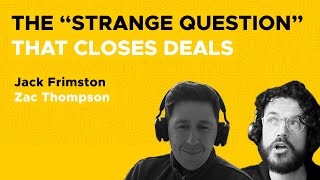
In this episode of the Recruitment Mentors Podcast, host Hishem Azzouz interviews Zach Thompson and Jack Frimston, co‑founders of the sales consultancy We Have a Meeting. The conversation centers on how recruiters can treat their outreach as a sales process and get more value from discovery meetings. Key themes include the power of upfront contracts and permission‑based questions that create explicit "yes" and "no" lanes, techniques for deep discovery and diagnostic questioning, and the importance of disqualifying prospects who aren’t motivated or willing to engage. Zach and Jack explain psychological biases that affect buyer behaviour – the brain’s negative bias and reactance – and how surfacing objections up‑front reduces resistance. They discuss the status‑quo bias and the hidden objection of change, urging recruiters to probe motivation to change. Closing strategies are broken down into simple, assumptive questions like “What would you like to do next?” and temperature checks, with an emphasis on treating a "maybe" as a de‑facto "no". The hosts also share practical frameworks such as the BAMFAM principle (Book A Meeting From A Meeting) and the "Fast and the Curious" course, and they illustrate how humor, personalization, and ethical positioning can differentiate recruiters. Throughout, anecdotes from their own recruitment experience (including an ethical departure from a previous agency) illustrate the concepts. The episode ends with a promise of a part‑2 that will dive deeper into active listening and objection handling.
Chapters
He had 2 interviews, he got both offers, but one of the offers made the recruitment company more money. So the recruitment company said, just tell him he didn't get the other one. But I never went back to working there personally after that. I like to consider myself to be an ethical man.
Jack Frimston and Zach Thompson, they're the co-founders of We Have a Meeting, a sales consultancy, and the We Have a Meeting sales community. They're a brilliant double act and in my opinion share some of the best sales content on LinkedIn currently. We focus this conversation entirely on how you can maximize your client meetings. So this is what you're going to learn in this week's episode: the power of upfront contracts and how to use them at the start of every single sales meeting you have.
A sale is two parts. It's 50/50. It's somebody with a problem and somebody with a solution coming together to solve that problem.
How to properly uncover problems. And really go beneath the surface with your clarifying questions.
I bet a lot of recruiters have had a conversation with someone and thought they've understood the requirement and sent a CV over, and their client has disqualified it for a reason that wasn't uncovered on the discovery call because they just didn't ask the tough question.
Why you need to push clients away in order to have more clients to want to work with you.
They can't even give me the time of day to sit down to truly understand the size of the problem, then they're not going to sit down to give you feedback on the candidates, you don't want to work with them.
And finally, understanding the status quo and how to find out if your clients are actually motivated to change.
Depending on what size of business you're dealing with, is bringing someone in and changing things— you're gonna have to get buy-in from lots of other people.
And so, so much more. Enjoy this week's episode. Jack, Zach, welcome to the pod.
Thank you for having us.
Thanks for having us, mate.
Slightly different one today, but I think one that a lot of recruiters who listen to this are going to get a lot of value from. Um, although I do feel like there'll be certain people in our industry that would have come across you guys. Obviously you've had Sophie Allen on your live calling show. I'm sure you've, uh, learned to love dealing with recruitment companies and you've come across recruitment companies with what you guys do. But I think there's a lot that you guys share, um, and provide education on that I think a lot of people in the recruitment industry can benefit from. So I was really excited to have both of you on. So just to give everyone some immediate context, I guess, Zach, Jack, let me know if any of this is wrong, but just really high level. So from what I understand, you guys have a few different things going on here. You've got like the full product suite. You've got We Have a Meeting, which are— I don't know if this is the correct terminology, but leads agency, you book meetings for your customers. You don't close them for your customers, but you, you know, build their pipeline, help them get in front of more of the right prospects. With We Have a Meeting. You then have a sales consultancy, which is— looks like a bit more of like a done-with-you, uh, service, you know, providing expertise consultancy on how, you know, they can get more out of their sales motion and what they're doing. And then you also have your sales community on Skool, um, so more of a way that, you know, anyone listening to this can sign up and access all of the great things that you're doing. You also have a podcast. You, you're doing it all, lads. You've got the, the full You're doing the full playbook.
You've nailed it. We try and keep busy. Zach's also got 4 kids, so, um, there's never a spare minute in the day.
Come on, mate, you've got a newborn as well. That's hard work.
Yeah, easiest stage.
And I don't know, I like— again, I'm assuming here Zach's already telling me off for assuming at the start of this, but you guys haven't worked in recruitment.
Before?
You didn't find yourself on a grad recruitment scheme at some point? Like, did we?
I will tell you, I'll tell you a story. I actually did work in recruitment, but I left for— well, I can tell you the story. We're long removed. I just won't name the company. Um, I had— I was on a grad scheme and I got hired by one of the big recruitment companies, and I got a guy to fly over from Italy for a tech company. He had 2 interviews, he got both offers, but one of the offers made the recruitment company more money. So the recruitment company said, just tell him he didn't get the other one. So, but he really wanted it, the one that, the other one, right? So he got placed in not the job he wanted, but the job that would make the recruitment company more money. And I did unfortunately do the deal. And then I sat with it for a few days and I just grabbed my boss and said, come over and chat with you, I'm going to leave. And it was about probably about a month into that role. Now, since we've worked with recruitment companies in We Have a Meeting, I did some training recently with the recruitment company, but I never went back to working there personally after that. I like to consider myself to be an ethical man.
Yeah, I mean, we're this— we're all about not that. Like, I really don't rate that. I think great, great recruiters just like, what wouldn't do that? I'm sure plenty of people have stories like that, but I really don't rate that. Like I said, I'm not surprised that you, um, left that. But safe to say then, I didn't know that, but I thought, you know, one of you is bound to end up in some sort of recruitment realm maybe at some point. So that my assumption was, uh, uh, correct then. You're right. Safe to say you guys are in, in the world of sales. And for anyone listening If you don't believe, you know, recruitment is a sales job, then you might as well not care and listen to this because this is all going to be focused on how all of you can get more out of your sales activity. But specifically, we're going to be talking about meetings today. So whatever terminology you use within your business, we're going to be focusing on discovery meetings, diagnostic meetings, just conducting great meetings with prospects, with potential clients. And I'm going to be speaking to Zach and Jack today about how all of you listening to this can get more out of those meetings. And also I'm going to maybe act as a bit of a recruiter and get some free coaching from you guys, if that's okay, and maybe give you some scenarios and see how you'd help me.
Um, cool.
So where I wanted to start, I wanted to start with you, Zach, because there's something that you mentioned when we prepared for this which I thought was quite interesting, which was obviously with all the content that you guys do, I'm sure you you guys are inundated with maybe people asking for help or getting tips and these types of things. And you said that what you have found is that when people ask for help or maybe say that they're struggling with the sales side, they often go straight to like the tactics of the cold call, want to know about, Zach, like what's working for you on the actual calling front? Like how are you approaching the calls? But you sort of shared with me that actually where a lot of people actually fall short is then— is not the calling element, but actually, like, when you get a meeting with a prospect, you get in front of people, like, there's often a lot of things there that people can improve that can actually have more of an impact on people getting more out of their sales activity. I might have paraphrased that completely terribly, but I remember you sort of highlighting that, and I thought it was interesting. So why don't we start with why, why do you feel that way? Or feel free to paint a bit more of a clearer picture on that.
Yeah, Jack's got a great thing that he always talks about— not all meetings are created equally. Right. So there's this problem that was highlighted where in sales businesses, the— there is no 360 salesperson anymore in a lot of sales jobs, right? And recruitment jobs as well. Like when I started off in sales, it was you find the people, you call them, you do the discovery call, you negotiate, close the deal, you do the whole thing. Now, if you're targeting one person on just get the meeting and their whole commission structure is based on just get the meeting, they're just going to get any old shit over the line, right? And they're not setting things up for success. So if you're booking the meeting for yourself, you should be ending all your cold calls or booking calls, warm calls, whatever they are, by taking all the pressure off that next call. And what I mean by that is you should give people lots of room to say no. So before I book a meeting with someone, I say, Do you mind if I ask you 3 very strange questions before I go ahead and put this in the diary? They say, yeah, yeah, go on. I say, well, if we sit down and you think this guy doesn't know what he's on about, are you comfortable telling me no at the end of that call? Yeah. So I've given— it's a very British thing. We don't like to tell each other no. I've given someone permission to tell me no if they don't think I can help them. Equally, if you think there is something I can help you, are you comfortable telling me yes? Now they say then, yeah, of course. I'll, you know, I'm happy if you could definitely help me. So now there's just two lanes opened up. There's a yes lane and a no lane. Okay, so those are the outcomes of that next call. If you think we're going to arrive at a think it over, you're not sure if I can help you, 9 times out of 10, Mr. or Mrs. Prospect, what do you think that really means? Well, that means no. Exactly. So let's agree, if we hit there, you're unsure, we'll put it in the no camp. Makes sense? Yeah. And then the last thing, the other one that a lot of salespeople, recruiters, all sorts of people struggle with is no-shows. So what I say then is the last one, that the strangest question of all: is there any reason I'll be crying into my coffee at 10 o'clock on Tuesday morning because you haven't shown up? Something really weird happens when someone out loud verbalizes and says, no, no, no, I'll definitely be there, I promise you I'll be there. They tend to stick to it. There's no silver bullets, but it really improves that attendance rate. So I've then set up a discovery call with someone there is a yes or no outcome at the end of it, and they will either reschedule if they're not going to attend, or they'll definitely let me know that something's come up and they need to reschedule if that is a potential outcome. So I've taken all the strain off, off the call, and just doing that tends to make those calls just run 10 times smoother.
That's, that's a great tip there. Um, and obviously we're already getting into things like upfront contracts and permission-based stuff, which I know also goes into, well, a lot of things that you guys share around then conducting these discovery call meetings well and holding these meetings well. Um, like a lot of the— like I've got it on my sort of script myself in terms of like time, permission to ask direct questions, permission for that to say no, like those types of things you was talking about. So let's just get straight into How can we do a better job of getting more out of these meetings that we've booked? So let's just say, Zach, we've done those things, which hopefully will have a direct impact on the amount of people that agree to have a meeting with you, and then you're, you're at this meeting. So let's get stuck into that. I guess, Jack, let me come to you on this. I guess the first thing that I just wanted to ask you, I think I shared with you guys when I prepared for this, not every recruiter listening to this will have like a discovery step. I know you guys might think that's wild, but it's just how it is. But I do think more and more recruiters are learning from you guys, learning from this wider sales industry. And I'd probably say from what I can see, having some sort of discovery call diagnostic is fairly normal. It'd be quite strange not to have that. But I wanted to ask you, if someone isn't— like, a lot of hiring managers, companies that will be contacted by recruiters, they won't be used to a recruiter saying, like, let— you know, I know you have these live vacancies, I know you're looking for these people. Before we just go into that, I know you— I know you have for me to send over CVs. Let's, let's jump on a call and so I can better understand, like, your business, how we can help. Like, what, what's a— like, what can be a compelling reason for people to give them time to do, to invest in something like this when like these people are so not used to doing that? Like they are just, the status quo is like, yeah, yeah, happy for you to work on this job, Jack, send me some CVs, ping it over. Like why would I give you extra time? Like I've got these other people that are just happy to send out. Like what have you found to be like compelling reasons as to like why prospects should invest in this time with you when maybe they haven't been used to doing that?
It's a really good question and you can't convince somebody to do something they don't want to do. But like you alluded to, to there, I, I imagine 99% of recruiters probably aren't actually like doing that, unless they're doing that. So it's about going against the grain. Remember, a discovery call isn't just for like you to sell to them, it's for you to actually understand whether you're a good fit for someone. I'd like based on just seeing something online, I don't know if, like, I think it's madness that you'd know, am I the right agency for you, am I the right partner. Like, you've not— if you've not gone through all the details and the finer, uh, the finer kind of details that come alongside that, it's like a sale is two parts.
It's 50/50.
It's somebody with a problem and somebody with a solution coming together to solve that problem. So I think definitely like a mindset reframe of like, you don't know if you're the right person for that job yet. You want to get deeper in that. And it's to see if they actually have the pain and the problem. Like, the last thing you want to do is like— so it's really interesting. So the way you said it, okay, how would I frame it? Listen, um, can I ask a bit of a weird question? Or you kind of prelude it. Typically, then the next step would be to sit down and run through that. This is to— if we're trying to outline why— this is to make sure that obviously we're ticking the boxes that you want to solve, to really have a deep understanding. And then I'd negatively frame it: is there any reason why we couldn't sit down and do that? And you're probably going to get all of those objections that they might have up front. Um, but, but I think it's just like, if you want me to go and do my job and really do it well, and, and just, you know, like, I'm a recruiter, I care about this, I care about finding really good solid candidates for you and solving a problem then that's the reason why we need to. And I think that you can't just go in and ask for that meeting. It's a case of, do they need that meeting? Do they have it? Yeah, they might be hiring, but that doesn't necessarily— just because someone's hiring at the moment, that means that that's a symptom of the problem. They might not— that might not actually be a big issue that they're motivated to solve because they might have 10 other recruiters working on the case. So like, how much are they struggling? What are they trying to find? Like, what have they tried to do so far? I think like use that initial call to explore it and dissect it, and then the discovery call is to really understand that, that pain and see if you're the right doctor for that.
And then like you said, I think it's also by framing it that way, you will get some people who are just so used to not doing that and having people go just be order takers and say, yeah, Jack, course, yeah, I can send over CVs, I'll get on that, rather than say, well, look, I can do that, but it's going to be very hard for me to deliver a great service if I don't understand these things, which is why typically I found the best next step to be this, and these are the reasons why. To be comfortable sort of saying like no. Like how, like if you presented that and framed it in that way, and then you had someone say, well, I'm sorry, Jack, I'm just too busy. Like you said, Zach, it's a British thing. We don't like saying no. Like how, how, because I'm sure you guys have got better at this. Like you literally have it on your website why you should not work with us. So how Jack, how could you— how— what comes to mind when people listen to this and go, oh, like, I don't like the idea of then saying, well, I'm sorry, this is sort of what I found to be best, this is how we normally work, when the other hiring manager doesn't want to do that? Like, how can you say no in the right way, if you get what I mean? How can you walk away with— from that in like the right way?
It's just being firm but fair. If they say no, right, okay, and you're thinking, right, this is going to be a customer or somebody that I work with, and you're thinking, well, I'm going to send over CVs, I'm going to go away and do all this work for them, the chances are if they can't even give me the time of day to sit down to truly understand the, the size of the problem, then they're not going to sit down to give you feedback on the candidates. They're not going to, um, sit down to really understand like you as you and your terms or whatever. You don't want to work with them. But I do think they probably like— let's also hold up the accountability mirror— that the reason that they probably don't want to sit down with you and they're busy is because they used to Um, we've, we've had experiences in the past with recruiters where we've had time wasted, so there probably is a bit of a, a guard up against that. There's a human bias towards recruiters that they might have experienced in the past. So it's how can you prove that you're different? You can't tell me that you're different, you've got to show me that you're different. And that will be the questions you ask, the answers that you unveil, and the way that you present yourself in your, in your tone, your pace, your, your complete manner. That's, that's how you're different. You don't run in there and say, we're going to do it better and we work in a really distinct way that's not done. I promise you, I've heard that millions of times by recruiters. Everybody thinks they're original and unique. It's 9 times out of 10, it's not the case. Um, so it's just like, this is why we're different. Show me, show me by the level of the questions and the level of understanding me as a customer.
We'll get back to the episode in just one minute, but today I'm excited to talk to you about one of our partners, Firefish, the recruitment CRM that accelerates data-driven growth. The problem with most recruitment CRMs is that they are just a database of records, meaning they become just one of the many tools that recruiters use every day. Like all systems, the records are only as good as the data being captured. Our sponsors Firefish know that for agencies to win faster Data needs to be at the heart of their business, making your CRM the single source of truth. With over 10,000 records created and updated every day and 85% of placements from existing candidates, Firefish enables recruiters to enrich and engage their data, equipping you with real-time insights needed to win faster. To learn more about Firefish and take advantage of an exclusive Recruitment Mentors Podcast offer, make sure you click the link in the show notes. And mention the Recruitment Mentors podcast when speaking to the Firefish team. So let's, let's move this forward then. So we've given the prospect, hiring manager, founder, a compelling reason as to why they should invest some time with us. So, Zach, let me come to you on this. If I'm, if I'm a recruiter right now and I might have reached out to you, Zach, to say that, look, I'm really good at getting these hiring managers prospects booked in We have a meeting, but right now what I'm struggling with is I— that my like close ratio, or like my closing to the next step ratio, is quite poor after that meeting. What sort of things are you gonna sort of ask me, or where, where does your mind go in terms of helping me improve that close ratio? Like, what are sort of things that come to mind in terms of instantly that we think, well, how are you approaching this? Like, tell me a bit more about that. Where did your mind go?
So the scenario is I'm great at getting the initial meeting, but the close rates from there are poor or not where I'd like them to be.
Yeah. So we've, we're doing the calling, we're doing the, the reps, we're getting people booked in, we've given a compelling reason to give us time for that initial call. But now what I'm finding is I'm having these calls, these meetings, and I'm not quite hitting the the goals that I've set myself. So maybe my ratio from there to the next step, which might be signing terms or going through my service with them or whatever the next step is, is, you know, 25-30%, and I would— I want that to get to, you know, 50-60%.
Okay, I don't know how granular you want me to get, but the first thing that jumped out to me was we're giving them a compelling reason. What does that mean?
So I'd probably answer that with Pretty much what Jack said. So the compelling reason is, look, you can, you know, work with recruiters that say they can send you CVs, they can, you know, work on the live vacancies that you have. But for me to do, you know, a really great job for you to find people that can actually solve some of the problems that you have in your business, I'm gonna need some time to understand like how we got here. Like, how do you approach hiring? What's working? What isn't? How much time are you spending on it? So compelling reason might be some of those elements as to why they've given me time to figure out if we might actually be able to help and if we can sort of figure out together if what I do provide can— is the right solution.
Okay, um, so it's hard. This one, all sales advice is quite contextual, so I'd obviously have to know a bit more about that. But the compelling reason that was given then was, was a lot of the use of of I, so yeah, fair, and what we, and what we think. Obviously all sales done properly is very, very prospect-led, but we know all our CRMs and stuff are very based on buying language, so I'd be looking at cognitive dissonance of what you think you did on the call compared to what actually happened. So if you're, if you're leaving a call and the, the wiring in your brain is based on I think it went really well, they seemed to really like us, we're going to have a callback in the next few weeks, and it's all a bit vague and wishy-washy, probably wasn't as good as you think it was. There should always be either a disqualification at the end of the conversation or a very, very concrete next step. So for us in our team, we have the principle of BAMFAM, so book a meeting from a meeting. You're physically not allowed to put something in the pipeline if there's not a confirmed scheduled next step with a prospect in the calendar. So like our sales guys that book meetings and close deals for us aren't allowed to say, look, there's that $30 grand opportunity without saying, and I'm speaking to them next Tuesday at 10 o'clock and it's confirmed. Without that last bit, it is nothing. It's just hope in the ether. So those are the bits I'll be looking at, like how, how kind of concrete and tight is it? And often what happens when we go and do shadowing with people and listening to calls, people miss all the reasons why someone's not going to show up. And, you know, recruiters, I bet a lot of recruiters have had a conversation with someone and thought they've understood the requirement. And sent a CV over and their client has disqualified it for a reason that wasn't uncovered on the discovery call because they just didn't ask the tough question.
Hmm.
So I'm going to go, I'm going to find you someone that's got 5 years experience in this space. They've worked for a startup company and a big blue chip company. Okay, I'm going to do all those things for you. Tell me all the reasons why they wouldn't be a good fit. That's all. Those are all— I can tick all those boxes for you. 'What are all the reasons why they wouldn't be a good fit?' And you'd actually know they wouldn't fit. Give me all those as well, because what they're doing is they're happy is they're just going for box ticking and not going in with what would be the reasons to disqualify for you not to be happy. Um, so yeah, so, so there'd be, there'd be loads in that bit of politicians onto that.
No, no, I know, I know. Like, like you said, it's very contextual, but I guess I've sort of put you on the spot there in terms of like a scenario. But I think That's really helpful. And I think I know a lot of people listen to this, will walk away probably from these types of meetings that we're talking about saying, yeah, yeah, like their manager will say, how'd that go, Zach? And I'm sure you'll hear that a lot, like, yeah, it went really well, like, got on with them, you know, they've— there's live vacancies for me to work. And then they never get hold of them again, or they find it really difficult to get feedback, these types of things. So I think even that little bit that you just said there, okay, like, let's talk about what you definitely need, but let's also talk about what all the reasons why you wouldn't interview someone or why they wouldn't be a good fit. I think that's a great tip straight away. But why don't we then let's get into the sort of makeup of a good discovery meeting or discovery call, because I think this is also— we're getting into bits of that already. So Jack, I'm going to come to you because I think one of the— and I'm always trying to get better at this. I don't know if you have any advice for me, to be fair, in terms of it can feel quite unnatural at the start, like doing these types of things. And I want us to start with this sort of upfront contract piece. And because, you know, I attended your— what is it— Curious? No, Furious? No, how did you name it? Because I know you always like the little names. How did you call that course?
The Fast and the Curious?
The Fast and the Curious. Yeah, that was it. So I know the beginning part of that was like laying out all the objections up front or sort of asking, you know, some of the things that Zach said earlier around like how we, for time, like, you know, I'm gonna ask you some direct questions, is that okay? If we get to the end of this call and you feel like we're not the right fit for you, happy saying no. Vice versa, do you want to just talk to us a bit about at the beginning of the meeting how we can implement this part, which could probably help a lot of people get more out of their meetings instantly, I feel like. I don't know if you agree with that, but let's just talk about this first bit.
Yeah, so I think like the— let's, let's rewind it to the Absolute beginning. So you jump on a discovery call with me. Now, depends on your personality type. Some, some people may want to have small talk. Some people may really, really want to build rapport. Some people, if you're as cold-hearted as Zach, does not want to build rapport. Okay, so you've got to read these people. If you are dealing with HR hiring managers, there may be a blend personality type of like stern but also hello. So you've got to judge it based on someone jumps into the call. And I always like to hit it with a bit of humor, so it's like you, you kind of dip your toe in the water, you see what it's like. Um, but get in there. You don't want to spend— the last thing you want to do, and I've seen this happen, is you're 15 minutes deep, nothing's happened when it comes to the selling. It's always talking about how Susan found Tenerife in the winter. We don't want to be spending 15 minutes on that, do you know what I mean? So brilliant. Well, Hishem, I appreciate that you're very busy. Are you happy to skip the small talk, so all the talk about weather and football from the weekend and dive straight in. 9 times out of 10, when I, when I deliver something like this, I find that people are like, yeah, absolutely. Um, the next one, maybe I'll pass it over to Zach after this because I know that we deliver it in 2 different styles, so it's always good to have, um, different, different styles. The best question to start, start anything— so we think of happiness as an actual equation where expectations meet reality. So, Hishem, what are your expectations for this call? What would you like to have happened by the end of it for it not to be a waste of your time? And this gets a lot of it out on the table. So they might say, well, we're pretty happy to work with you, we just need to sign the terms. Okay, tick, we can definitely do that. Someone might say, I need to be convinced, I need to know about the commercials. You're going to get it all out on the table there. What are your expectations so that by the end of the call we can make sure that we're hitting those expectations? Expectations. There's nothing that's left uncovered, there's nothing that we've not approached, and then we can dig real deep in when we, when we take them through that process. How, how do you hit that question, Zach? Because I know you do it a little bit differently.
Only slightly. I, I just say, what needs to happen by the end of this call to make it a good use of your time?
Nice. Yeah.
So they, they would, they would just give me the answers. I think for— if maybe a tip for recruiters if you're in a saturated market and perhaps even you're on a call where someone's reached out to you first, I wouldn't be going for the typical diagnosis types of questions. I'd be probably opening that call by saying, look, there's a lot of recruiters out there that do exactly what we do and a lot of really good ones. So why would you come to us? I'd probably be kicking it straight off the bat with get a bit of pressure on the other side to start off with. Because if I pull away from you and I'm like, convince me to work with you, you'll do it. But in recruitment, if I'm used to— if I've had 5, 6 different conversations with recruiters, it's like Groundhog Day. I'm having the exact same conversation. Oh my God, another one with a psychometric test. Amazing as a USP. Like, I've heard it, you know what I mean? But if someone within that can be refreshing and say, look, why don't you work with one of them? This is potentially going to be the exact same conversation. That in itself is the unique selling point that you've been refreshing and consultative and actually got in there with. I'm just here to kind of help you solve this problem, whether it's with me or with someone else. I don't really care. It takes all the weight off. Sorry, Jack, hijacked your, your opening there, mate.
No, it was good.
It's really good, wasn't it? Thank you.
It's really, really good stuff. Um, did that answer the question, or do you want it— you want to go deeper into the—
no, no, like, I think that alone will be helpful for people. Like, that's something that I've implemented, and I think what's great about that is in the first 5 minutes of the call, you're building a checklist of, from their perspective, like, what it is that they really want to go through, rather than assuming that you know what they want to go through or what they feel like is important to cover in the meeting. So I really like that. I really like what you just said, Zach, there. I think you know, the more people learn about this stuff, experiment with it, implement it, and they'll be even more, let's just say, yeah, ballsy to try those things. But I think, like, again, that's such a great way to stand out because how many recruiters are going to start their calls like that? Um, but I guess all I was going to say, Jack, what might be worth covering is then, you know, you've said around happy to cut this small talk. I love that, and I've been using that. I think that that's a really great way just to get straight into things. Then we've got, you know, from your side, like, what would make this not a waste of time? Or what, what would you feel would make a good use of time when we get to this end of the meeting? What else do you normally add in there? Because I know there's a few other bits, right, in terms of are we okay for time? Is it happy if we, you know, we're able to run over or not? And then also, correct me if I'm wrong, but do you also like, like to do the whole, like, are you happy for me to ask direct questions, or we have to say no to each other, that sort of stuff?
Yeah, yeah, so is that kind of alluded to it? It's a very similar sort of upfront contract from what each said at the the back end of a call. Um, it does depend on, on how you qualify, but like just getting in there. So yeah, confirming time definitely is always a good use of time. And then, okay, brilliant. Well, I like to do things a bit of a weird way. If we get to the end of the call, and, and again, this is— there's, there's a process to follow, but it is about you delivering it in a way that suits you. So the way that me and Zach do it is slightly different, but it's about kind of finding your own voice. I always think of sales a little bit like comedy. You can be saying the same kind of setup, punchline, but the way that you deliver it, your voice, you're, you're going to be different because we're all different personality types. It would be absurd for, for us all to be the same. So if we get to the end of the call and you feel like it's not a good fit, you don't trust me, you'd never work with a bloke that quiffs his hair to the right, are you happy to say, listen, it's no, let's leave it there? People laugh. Yes, of course. Brilliant. And if we get to the end of the call and you think actually, uh, it makes sense, there is something in this, are you happy to discuss next steps? Yes. Okay. And typically, what does that look like? Well, we'd have to get you, uh, put on the approved list of vendors. We'd have to sign a contract. We'd have to send you a brief. We'd get working. Okay, fantastic. So I know what way we're going. Um, and can I share with you— and then, and then I go into this where I'm going to give the objections up front. So can I also share with you a bit of a weird one? Okay, yeah, yeah, go on. I like things to be ethical. Can I share with you some of the reasons people choose not to work with us? And it always gets that, like, if there's a couple of decision makers in the call, you get that little look like, okay, what's going on here? And then you just want to get it all out on the, on the table. Like, if you're a recruiter whose terms are 29% and you're the most expensive recruiter in the world, get there first, because the last thing you want to do is get 30 minutes, an hour down the road and say, okay, so we do this, we do this, we do this, it's 29%, they go, oh, we'd never work with anybody that's more than 28%, we've got a written rule, it's written in Brian's office with blood on the wall, we'd never do that. All right, okay, waste of time, like, do you know what I mean? Um, so I'd like to share a couple of— the minimum commitment, the, the pricing, the commercials, whatever your objections are, getting them up front. And then you kind of deliver that in a lovely manner. And then it's like, uh, and this is the part where people say they want to get 30 minutes back in their diary, they want to run for the hills. This, this is your chance, Hishem, to, to tell me you want to run. No, no, no, we're happy with that. Cool. That's not going to come up later on. No one's going to say 29% is too expensive.
So really quickly then on this, Jack, feel free to build on this, but I don't— um, I may have this wrong, and sorry again for the assumption, but I feel like Zach between you is more of the psychology man. But that might be really unfair, and I'm really sorry, Jack.
No, that's fair, that's fine. I think what you're saying is I'm the intelligent one. Yeah, yeah, no, don't worry, you've got it right, you've got it 100% right.
So what did you mean psychology?
My next question is going be Zach, why, like, what's the why behind this? Like, why, why do we do this? Is it to, you know, get like, make sure that's on the table so everyone's comfortable and we've sort of disarmed them? Like, just curious as to like, because there's a why behind we're doing this, right? Besides just getting that all out the open, we might be disqualifying them, it might be disarming them. Like, what, just curious as to like, from either of you, the, the why we do this.
Yeah, so there's, there's hundreds of biases, right? I'm, I'm, you're right, I'm the psychology one, so buckle up. Psychologist. I'm the modest one. Yeah, exactly. So there's hundreds of different biases, right? And these are just built in. These are baked in. You're not meeting people that don't have these. They just exist on a spectrum. Okay. So the two ones that jump out is the why behind why you put the objections first. The first one is the negative bias, right? So the human amygdala, which is the bit that looks after the emotions, is wired 60 to 80% in favor of negative information. Why is that? Well, the reason behind that is like if I saw a tree and I was in a tribe, is it safer to think it's a tree or a lion? I'll assume everything's a lion. It's safer that way. Our brain's designed to keep me safe. Yeah. So if you're sat there and you're thinking, well, I'm not very negatively wired, guarantee you're walking around. If you're in the UK saying the weather's shit, it was warm last week, it's too warm this week, this office is too cold all day. Your brain's in a little spiral of slightly negative conversation. So my brain is actively seeking negative information to keep me safe. So I jump on a call with a salesperson, with a wolf or a shark, someone looking to scavenge and eat from me. What I'm thinking with my negative bias is this person's going to be very expensive. They're not going to understand my business and potentially going to waste my time. I'm putting them in with all my negative experiences. So the refreshing thing there to do is put all that on the table for them and say, look, let's let all that out of the cage. Here's all the negative things that could potentially happen as part of this call, the reasons why you might not want to work with me. Ah, okay. Well, now I've eased that part of the brain. The other part, and this is going to come up with salespeople a lot, is there's a bias called reactance. Reactance is when I feel like I'm being persuaded, I want to go the other way. So when you're a kid and you're walking along and there's a sign that says don't touch the grass, what's the first thing you want to do?
And touch it.
You want to touch the grass. Exactly. Exactly. And that's not a drugs analogy, by the way. But that is all baked in, right? So if I feel like I'm going to be persuaded and you can't actually persuade anyone of anything, you can only make them think. So that reactance bias stops me from being persuaded. It's another one that keeps me safe. So by actually pushing you away and telling you the reasons not to do it gives you room to either say, yeah, that confirms all the reasons why I didn't want to do it, or it starts that ball rolling of the prospect starting to persuade themselves. So that's the why behind it, those two things. And yeah, you're right, pretty clever guy.
Sorry, Jack, I feel actually quite bad about doing that. Apologies, mate. Whilst you take a short break, I wanted to take a moment to chat to you about one of our amazing partners, Sourcewell, the industry-leading recruitment engagement platform. I'm using myself and I don't know what I would do without it. From building personalized messaging cadences across a variety of channels to automating follow-ups and data tracking straight back into my CRM, it's really made an impact in streamlining my workflow and most importantly accelerating my sales results. My favorite feature by far is the live feed. By being able to see in real time who's engaging with your campaigns, it enables me to prioritize my outreach with the most engaged prospects, which helps me get way more out of what I put in. So I'm going to be honest, if you haven't got Sourcewell and you're a recruiter, I really believe you're at a disadvantage. To find out more and see the platform in action, make sure you click the link in the show notes and mention the Recruitment Mentors Podcast. Because you listen to this podcast, you're going to be able to get access to an exclusive offer: free 50 phone credits, 50 email credits, which is at the value of circa £500 per user. So make sure you mention the Recruitment Mentors podcast and click the link in the show notes. So, Jack, let me come to you on this. Then the next part, then I think that would be really helpful for people if we can start doing more of those things at the beginning of these types of meetings, or even just whatever meeting you're in the sales process, like having more— like getting those more things out front at the beginning of the meeting rather than waiting to the end, or not asking them, and then them coming out further down the line. This is something that I'm always trying to get better at, and I think people listening probably feel like they could improve on. And this is like uncovering problems, like, better, for a lack of, like, um, not very good language, but like, I feel like people can share that, oh, I have a challenge with this, or, you know, we really need to hire someone to do this. And I think the best salespeople don't just take that on at sort of face value, and they do a good job of like breaking it down and really getting to the crux of like what the actual problem is. So I just sort of fairly open, really, Jack, on like how can people get better at really uncovering the problem rather than just taking what oftentimes is just on the surface, just on the face value, what they say a problem is. It isn't always the case, or there's more to it, and we have to get that out of them.
The biggest mistake salespeople make is a lack of clarity. Okay, so they'll be given an answer and they will accept it for what it's worth. We take things as the truth. There's a, there's a common phrase in the world of sales: buyers are liars. Okay, that's not to slag off all buyers ever, but think, think about it. Like, a lot of, a lot of people that are buying, they want to keep their cards close to the chest. They don't want to give you all of the information readily available because they're thinking, the more I open up, the more you're going to dupe me and the more money you're going to take from me. You're going to, you're going to close me for everything that I'm worth. So clarity— a lot of the time when people present a problem, I think a lot of, a lot of sellers get confused. Is it a problem or is it a symptom of the problem? Is it a breadcrumb trail towards the problem? So I think like clarity is like The best sales question is, what do you mean? When you said X, what did you mean? When you said X, what did you mean? Like, I'm picking up on like mini contradictions throughout. You said X, but you also said X. What did you mean by that? Okay, we're hiring 3 new people. We're not struggling at the moment, but it has been quite challenging. What does that mean? Whereas I'd say 90% of sellers, when I listen to them, go, yeah, yeah, sounds great. Yeah, yeah, makes sense. Yeah, makes sense. It doesn't make sense. Stop being the kind of the happiest in the room because you're afraid, okay? But a lot of sellers put prospects on a pedestal and think, oh, they're, they're the important one, they're the one that give me the money. I just got— I better just say yes 100 times and hope that they just give me the business at the end. It doesn't work like that. We used to have a lad that kept a photo of a pneumatic drill on his desk. Are you going deep enough? What is the problem? Can they give examples of the problem? Where does the problem impact? Why is the problem there? How long has the problem existed for? What happens if they don't solve the problem? And just really, really understanding them and their world and finding the gap. That's where salespeople predominantly go wrong. It's a lack of clarity. And clarity, it's solved so simply by just asking, what do you mean? There's a beautiful quote, and it's like— I always balls this one up, but I'm gonna get it right today. Um, ask a stupid question, you're an idiot for 5 minutes. Don't ask the stupid question, you're an idiot— you're an idiot for a lifetime. So close, so close. But yeah, you know what I mean?
I'm always trying— yeah, 100%. I'm always trying to improve on that, and I think that's such a valuable takeaway for people. So what are some of your— and like, how How can you do it? I'm going granular here. I'm just asking for myself, if anything. But I feel like I know people will be able to relate. Like, how, how can you do this without making the prospect feel like you're asking them to repeat themselves? Because sometimes I feel like that can happen. It might be because of my delivery and how I'm asking the clarifying question, but sometimes I can feel like, I don't know, they're, they're almost like, I've sort of already gone over this. Because like you said, sometimes when they're not sometimes people aren't always great at really getting into, like, because they're not asked these questions, right? They're used to being— they're used to people going, oh yeah, that makes sense. Yeah, you're not the first person to say that. They're not being expected to go, Jack, do you mind— you know what you just said there around people not hitting their target? Like, just, just give me a, you know, explain that to me. Like, are you— are people, you know, 80% of the way there? They're 60% of the way there? Like, do you know what I mean? They're not used to like really giving you all that info. I don't know if you come up against that or like that make sense at all. But I feel like sometimes that's something I'm mindful of, is like, how can we do this in a way where the prospect doesn't feel like they're talking about the same thing or repeating themselves?
Yeah, well, I, I know you're a fan of Chris Voss as well, and there's a few different answers to this, but like, the, the how and what questions, they are going to fatigue people eventually. Not as much as the why question. So why is that— why is that a problem? Why does that exist? If you ask me that 7 times, I'm gonna be like Fucking hell, leave me alone. Stop asking why. You said it earlier, Hishem, but like, I am probably going to need to ask some difficult questions throughout this call. Are you comfortable for me to do that? You're getting that permission. Um, mini check-ins. Listen, I guess I bombarded you with a couple of questions so far. Are you happy for me to continue? Louis Theroux does this brilliantly. If you're watching those documentaries, it is like, oh, I'm— you do a better Louis Theroux than me, but just, can I check in before I, before I kind of like bombard you with more? Um, and then like you're mirroring and labeling. So like you're saying like, um, percentage of— what did you say, Hishem, about target?
I just said— so I said, yeah, like, oh, help me.
When you—
you know, when you said, Jack, that, you know, a lot of your team aren't hitting target, like, help me understand what that means. Like, is it people, you know, uh, you know, 90% there, just missing their target? Is it that they're 50% of the way there, they're way off? Like, give me an example.
Yes, you're putting them into a couple of brackets there. What I want them to do is just open up and tell me their world. So you said a lot of people aren't hitting their target.
Go that way.
Yeah, and then I'm doing— and then I'm going to allow that silent— absolutely, Chris. Voiceover, I'm going to use their words against them, and that way it doesn't feel like, here comes another question, here comes another question. It's got to feel like a conversation, do you know what I mean? It's two human beings interacting. I'm listening, I'm understanding. Like, think about the— we call it the pub best. If you're in the pub with your mates, you're not being like, okay, and what, what does that look like for you? Are you having a 10 out of 10 argument with your girlfriend, or are you having a 2 out of 10, you didn't fill up the dishwasher again? It's like, you're having an argument with her every night? Like, go on, what's happening? Tell me more, pad it out. It's like speaking to people, like, do you know what I mean? Like, just being human with it. But so many people— and, and we've got friends, um, that have worked in recruitment, and we know a lot of people over the years— and it's like They put on this suit and tie and then they go, they become a totally different person. They lose their sense of humor, they become this corporate entity. And it's like, and what is the impact of not finding an NVQ supplier within the next 3 weeks? Who the fuck's ever asked a question like that? Like, ask simple questions. Okay, what happens if you don't do that? What happens if that does happen?
Hmm, no, like, that, that's really helpful, I guess. Zach, I want to come to you on this, this next one.
Psychology question incoming.
No, it wasn't. It was, it was actually one of the big takeaways that I took from your training, and it's something that I've implemented a lot more which I didn't used to, which was just this really understanding of the status quo piece and how like we, we will do, you know, we, we, um, again coming back to like we're wired not to change. It's a lot easier not to change So the things I was just looking at, my notes that I have for like my initial calls and stuff, and it's like, um, I've got here advice to remember. This was taken from your training. Advice to remember: it's a lot easier to stay as you are. A bit of a silly question, but why don't you just keep doing what you're doing? Hire an internal trainer. Spend more time on training, coaching, in terms of, you know, what I sell. But like, tell us a bit about this because again, I think this is going to be really valuable for recruiters where they're so used to just maybe just jumping on calls doing the same thing, and particularly for hiring managers and prospects, they're so used to getting the same questions. Like you said, it's like Groundhog Day. So I think some of this stuff as well, and understanding it, can also be a huge advantage to stand out and, you know, move the needle on getting more out of these meetings. So tell us about this status quo piece and how we can use it in these meetings.
Cool. Okay, so the hidden objection is change, right? But it's not one that's going to come up on a call. People aren't going to sit there and say to you, I don't want to change. But it is going to show up in funny ways. So me and Jack will tell people all day, the two things you're looking for is that the prospect has a problem that you solve and has the motivation to fix it. But you could reword the second part and say, has the motivation to change? Okay, so if you went into a call thinking, why would this person work with a new recruiter?
There's no way.
Why would they want to? They've used recruiters before, they've got an in-house team, They've built a business, they've got a proven method of hiring people. Why would they want to disrupt that by hiring a new recruit? If you went in with that mindset, you would unlock so many more things. Okay, so if you go into a call and say, look, you can go on, you're looking for an operations director now in your space, you sound like you know this space really well, you're the CEO, you could spend a morning on LinkedIn add all the operations directors that would be your dream to work with and message them and say, look, I'm reaching out to you as the CEO, not as a recruiter, because I've seen you and I really want to work with you. Why don't you do that? Oh, well, I can't because I don't have enough time in the diary. Right. Okay. So time. There we go. That's the first thing that I might be able to help you with.
There we go.
Time. Okay. Well, let's say, you know, you can give a bit of time away. You can share that time. Then what would happen? Well, I'm more of a technical guy. I wouldn't know how to have a recruitment conversation with someone. Ah, okay. So a recruitment conversation. What does that mean? Well, you know, ask the tough questions, get the motivation, understand that, right? So now I'm starting to build in the reasons why they can't do it themselves. Why can't your in-house team do this themselves? Okay. So there's all those kind of processes. Why can't you solve this problem yourself? There's more reasons not to buy from you than there are to buy from you. So just bring them up first. Let the other side deal with them. Now the other one, depending on what size of business you're dealing with, is bringing someone in and changing things. You're gonna have to get buy-in from lots of other people, okay? You're gonna disrupt the apple cart. There's maybe relationships, maybe the recruiter that someone uses already is taking them out and getting them pissed every quarter to keep them happy. I don't know what goes on, right? So that's what needs to be explored. So I could say, um, look, you're gonna have to go away and speak to Jack and say, look, I want to give this other recruitment company a shot. When Jack says no, I don't want to work with someone new, what are you going to tell him? And they're then going to have to tell me two things. Well, I'd have to just trust Jack's opinion on it and he has the final say, and it's probably— it's a collaborative effort. It's going to be a no. Or he's going to sound very motivated to do something and say, no, I'll tell him straight away that we have to try something new because what we're doing at the minute isn't working. That's two very different ways of understanding how motivated someone is. Why don't you just do it yourself? And what happens when the other people in the business push back? The answers that you get from that will uncover that piece. How motivated is someone to change? And if they're not, don't waste your time.
Yeah. And that's what that's uncovering is like how, you know, they've we've uncovered a problem, but then the next part is how motivated are they to change or do something about it.
Yeah, exactly.
Yeah, I think again just that alone will be really helpful for people. So I guess just to round us out then, I feel like this might have to be a part 1 and part 2, guys, because I know there's like more here. You know, I've got things like active listening, which I'd love to hear your guys' takes on. I might have to to go to the psychology man on that one, Jack. I'm sorry. Uh, objection handling, like there's a lot that we could, uh, go into, but I guess let's just sort of, you know, round this out on maybe— Jack, and then come, come to you on like, you know, we've spoken about different parts at the beginning part, getting those things out on front where, you know, they've got the example of your colleague who had a drill on their desk to really dig deep into these problems and the clarifying questions and We've then spoken about how can you uncover people's motivations to change. Like, what, what, what's— what have you found the sort of best way to close these types of meetings? Um, I, I always have like one question that I like to ask in sort of meetings, but I don't know, let's sort of end it there. Our closing typical questions that we'd like to ask, like, ask.
Yeah, so the closing is such a funny one because closing has got got a totally different, um, stigma to it because of The Wolf of Wall Street. But like, the closing typically like happens a lot, lot earlier, so you usually get like a bit of a vibe or a feel. Um, and it's, it's my favorite closing question is very simple: what would you like to do next? Yeah, what would you like to do from here? And they, they typically like will tell you what it— okay, what, what typically happens? Do we— do you send over a contract, or— yeah, it sounds good. And another thing you can do is like a bit of temperature check. So if you're unsure— okay, Hishem, um, listen, thank you for your time today. You've got a strong poker face at this point, I guess. What, what's the feeling so far? Yeah, it sounds really good. Yeah, yeah, I think, I think it'd be a great fit for us. Okay, what would you like to do next? Okay, and then, and then you're going to move into those next steps. It's like you can be assumptive, you can, you can like tell people, you can be twisty arm, but The simplest close of all is, what would you like to do next? Yeah, let's do it. Send me a contract. Yeah, it's good. When can you invoice me? Yeah, it's good. Like, let them lead, because any kind of like, kind of any pushing, you can get that level of resistance where people just say, um, I want to think it over. And because of the way that we set up the call, we get to the end of the call, we're not, we're not getting a maybe. Well, uh, let me, let me think it over. Okay, yeah, that's fair, I guess. Can I be really honest with you? 'Earlier on in the call, we spoke, we spoke, and we said obviously if we get to the end, it's a no. You're happy to give me a no? We'll discuss next steps.' Typically when we get a maybe, like we said, it means it's a no. 'Is this a polite way of saying it's just not fit for you right now?' 'No, no.' And then you're gonna kind of, um, uncover anything else that needs to be unpacked. 'But what would you like to happen next?' Very serious like that.
And again, I think this is very probably counter how recruiters are closing their meetings right now. They're probably doing the opposite, right? How are they?
Yeah, like, yeah, potentially.
Zach, have you got your own spin on that, or do you take Jack's lead on that one on how you like to close out these types of meetings?
He takes my lead on it. He takes my lead. Um, yeah, usually all the— it depends on how you're closing. Um, if it's around terms and stuff, so if you're a recruiter and you— the last bit is like Okay, let's really understand your terms before we leave. I just big— I just big it up. That bad news thing again. I'd say, well, I'll tell you these terms. We're definitely not the cheapest. And in fact, people are usually quite shocked. Some people have actually told me this is all quite unreasonable the way that we set this up. So I suppose before I share anything with you, probably have to agree that if it was completely unreasonable, not what you were looking for, maybe even ridiculous, that you'd tell me that. And then when I deliver all my pricing, my terms, I just say— and this obviously might be the part where you agree with all those people and say, yeah, that's ridiculous. If they're like, no, no, that's not ridiculous, then I might then use Jack's point and say, would you like to do that? What would you like to do next?
Yeah, I really like that. Again, I've completely nicked that from you. I think in your training you said, are you sitting down? Like as another way to like sort of big, like big it up, up, and then they sort of almost— obviously it's not going to happen every time, but then they're sort of underwhelmed by the price because of how you approached it.
Um, a guy said to me yesterday, oh, that's more expensive than I thought. And I was like, I need to put my prices up. You know what I mean? The response I want from you is that is ridiculous. I should have done this more. Yeah.
Well, look, Zach, Jack, let's, let's call that a wrap for maybe part 1. We'll see. Um, I'm sure a lot of people are going to find this really helpful, so I think a lot of people are going to end up asking me for part 2 because I know there's probably other elements we could go into. But just want to say like a massive thank you for coming on, sharing all these types of things. I know it will be like massively valuable for a lot of recruiters to hopefully get more out of their meetings and improve their, their sales performance and their sales ability, which I know both of you guys are all about.
Appreciate it. Thank you so much.
More from Hishem




You don't need as many clients as you think to bill $1 Million A Year In Recruitment



From 30 Direct Reports to Back-to-Back $1M Years as a Solo Recruiter with Zach Creighton



