The Power of Sticking to the Basics with Anne-Marie Robinson
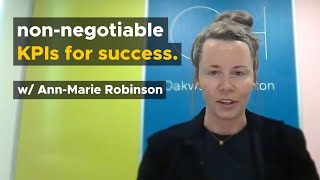
In this podcast‑style interview, Hishem Azzouz talks with Anne‑Marie Robinson, UK Divisional Director at Oakwell Hampton, about how she drives performance and culture in a recruitment business. Anne‑Marie explains the core values of togetherness and best‑interest, and how they shape recognitions like Consultant of the Week. She outlines the cadence of performance‑management rituals – Monday and Friday kick‑offs, half‑month one‑on‑ones, and monthly reviews – and stresses giving people breathing space while holding them accountable. The conversation delves into her philosophy on KPIs, treating them as a personalized performance story rather than a blanket metric, and how she co‑creates targets with her team based on quarterly data. Anne‑Marie shares her leadership style: distributing high‑value roles to develop teammates, leading by example, and avoiding a “KPI‑brush” approach. She reflects on the personal drive that fuels her work ethic, rooted in early life experiences of hard‑selling and a desire for stability, and argues that while work ethic can be nurtured, personality cannot be changed. Recruitment candidate assessment is framed around genuine motivations (“why”) rather than material aspirations. She also discusses goal‑setting as a habit‑building process, using analogies of becoming a runner or reader, and emphasizes resilience in the repetitive daily tasks of recruitment. The interview closes with optimism about her upcoming 300K retainer milestone and her reputation as a “retainer machine.”
Chapters
I hate change, right? So about 2 years ago, we got someone in to do some training on retainers. I didn't buy into it.
Why didn't you buy into it?
It was different. I've never heard of it before. I'm like, none of my clients are ever going to want to buy a retainer.
Anne-Marie Robinson, the UK divisional director for Oakwell Hampton. Last year, she had her best billings performance yet, breaking the £200K mark and finishing the year on £220K, all whilst growing her team and managing a team of 6. As well as this, she's had a clean sweep at last year's company awards, walking away with the Top Biller Award, the Values Champion Award, the Manager of the Year Award, and the Team of the Year Award. Here's what you're going to learn in this week's episode: why the basics in recruitment are the foundations to your success.
I don't want to say there's a magic wand to do recruitment because there isn't. To me, it's not rocket science. Doing the basics well every single day will will get you where you need to get to.
How to stand out in a highly competitive and saturated UK recruitment market?
It's right time, right place. It's not just me that is good at my job, there's many other recruiters. There's always opportunities to win clients over.
How to set your team up for success?
Don't get complacent either. Don't just think, oh, well, if they're here, they know more than me. Like, you know, try to get to know what everyone's strengths are, what everyone's weaknesses are, you know, just really try and map out where the team's at.
How she plans to break the £300K things marked by winning high-quality business with retainers.
I'm not gonna be a £300 grand villa just doing contingent recruitment all the time. It's quite a lot of effort. So I've got into some really good clients in some really good industries that are growing.
And so, so much more. Enjoy this week's episode. Anne-Marie, welcome to the pod.
Hello, nice to be here.
Thanks for joining me. Obviously joining me from Sunny Manchester.
It's sunny today. It wasn't yesterday.
Really, um, looking forward to this. Like always, enjoy getting an opportunity to speak to someone who's been doing the recruitment game for, you know, a long time. And I think there's a lot of things that we're going to cover today that I think is going to be really helpful for people. We're going to talk about your journey of becoming you know, a top performer whilst also becoming, you know, a great leader, a great coach, which a lot of people listen to this podcast will probably find themselves in. If they're performing really well, they're probably going to find themselves in a sort of management seat. So really looking forward to delve into how Anne-Marie has approached her career, how you've improved things that you've learned, um, and really unpack this. So what I always like to do just at the beginning is give everyone some like immediate context of like who you are, where you're on your journey, So if I get any of this wrong, please like correct me and let me know. But you've worked in recruitment for what, nearly 7 years now?
8 years.
8 years. Okay. Yeah, 8 years. Um, obviously nearly 5 years now with Oakwell.
Yep, correct.
You joined them as a team leader in a sort of management position. And then since then you've been, you know, really on this journey where last year you had your best year ever, broke the 200 grand mark whilst also growing and building a team. And I know now we're on a big journey to break the 300K mark. You've always recruited in the Northwest and within a particular niche as well, right?
Yes.
So we're going to unpack how we've gone about this, right? You know, you've been doing this for a long time, and I wanted to start with, you know, last year was a great year for you. I mean, you've got it on your LinkedIn: Top Biller 2024, Values Champion 2024, Manager of the Year 2024, Team of the Year 2024. You know, that's— that is a clean sweep from company awards, you know. So, you know, how How do we go about that, Amri? Like, how did we have such a great year? Let's just start there and keep it fairly open. Like, why do we think we had such a great year last year that meant you was really, you know, respected and awarded with these great things, you know, by your peers and also by your own performance?
Yeah, I think firstly to add, I never expected all of them awards at the start of the year. I come into the start of the year thinking, right, how am I gonna even break the £200K mark as you do every year, and then things just start falling into place. But I do really believe the 7 years I had behind me and my market and my network and just sticking to what I do best, which is helping people, I do truly believe that that shone through. And last year it just dropped. Like, I always perform well every year, but not every year do I take top biller. You know, so I do just believe, like, just with the network I've got, never changing markets. I remember Oakwell once wanted me to come and join and do London, and I was like, I'm not joining, I'm sticking with the Northwest. So I just stuck with my patch and I've never stepped out of it. So I guess network, building my brand in the market, you know, people knew me. My client skills were great, my candidate skills were great, and I think just harnessing everything I've learned over the years of doing it massively helped me get to where I needed to be last year.
And yeah, and I think there's just so— there is so much, and I'm sure you see this now with people that you manage, you coach, you, you know, want to see succeed. There's a lot to be said where if you just really stick it out, do the things that you know need to do every single day at a really high level you're going to massively increase your chances of achieving the things that you want out of your recruitment career, right?
Definitely. I've got to be honest, like, it was easy for me in year 1 and 2 to be sat around people who were billing in London and billing like double what I was doing in one deal. And it was so easy for me to give up, but I kept going with it. And the first ever recruitment company I, you know, worked for always said I would be a £300 grand biller. And they seen something in me and I thought, I'm going to stick with this, I'm going to trust the process. And I just kept going with it. And even now I sit around people in my business that are doing 20 grand deals and my deal AOV is nowhere near that. So for me to sweep top biller last year was just, was just massive, you know, in the business and the volume of what I did. Was there, and that helped me massively.
Yeah, no, I think there's a lot to be said about how not to get lost in like comparing yourself to others, right?
Yeah, running your own race, stay in your own lane.
And that can be hard to do when you're seeing people directly, your peers, like you said, smashing in those 20 grand deals. Because like, when we prepared for this— again, feel free to correct me if I'm wrong— but in 2023 your average deal size was between like 7-8 grand, right? So like you said, to, you know, then walk away with the top performer award and you was maybe in markets where you had to do double the amount of placements compared to other people, like that's massive.
Yeah, that's it. Like my, my deals, they call me the deal machine. Oh well, and places before that I've worked have called me a deal machine. And, you know, I did win top dealmaker as well of the year. And I had to do a lot of everything. I've had to do a lot of all, all of the deals, like not just one. I've had to do 3, 4, even some months to get where I've got. And so, yeah, very proud of that.
And I think this is why I'm really looking forward to sort of really delve into like, you know, the how and some of the things that you feel like you've really had to stay disciplined with and do. But where I wanted to sort of start, I was just interested, you know, with the experience you now have of, you know, managing people, coaching, getting better at that. Obviously you joined Oakwell in that sort of management seat having never managed before, which, you know, is interesting. And I think a lot of people do find themselves doing that. So I was just curious, like, initially, like, how, looking back, like, how did you approach those first initial months to make sure that, you know, you're not someone known in the office who's this sort of new manager who I don't like, who's trying to dictate things and bring their own way of doing things? And like, yeah, how do you approach those initial first months having never been in that management seat before?
Yeah, I think when I joined Oakwell, I'd only been in recruitment as well, um, 3 years. I knew I always wanted to manage, like my passion is helping people. But I knew when I got into Oakwell, I had to get buy-in, I had to build credibility, and by doing that, I had to put numbers on the board. So yeah, I had to come in, walk the talk, couldn't talk it and talk it no more, I had to walk it. And that's what I did. I didn't come in trying to make friends with people. I built a friendship through people respecting me and looking over and going, she's come in and really shaking this office up. Like in my first quarter at Oakwell, when I first started, I did £80 grand, I think, in my first 3 months stepping into the business. And people was like, you know what, 2 deal month, 3 deal months are achievable. I'm just joining, it's there. And I just, I just like built credibility through working hard. And it's something I do tell my new team members when they join my team. Don't come in trying to be everyone's friend, come in and work hard, get your head down, and people will respect you from that, you know, and you'll naturally get friendship groups. So yeah.
So created this deal machine label quite early then, it sounds like.
Yeah, well, I had it from a previous company, so yeah, it kind of stuck with me. People just started calling it me. I was like, oh, maybe this is a thing now.
So I guess I feel like you might have just answered it, but I want to ask it anyway because a lot A lot of people listen to this because they want to maximize their potential, they want to achieve their goals, you know, that will involve progressing their career, achieving promotions. And I was just curious to get your thoughts on like, if I'm listening to this and maybe I've got an opportunity to join another recruitment company, but I'm going to join as a manager, I might be a manager already, it might not be, like with what you've learned now actually managing and leading a team and having even more experience on you about doing that, like, what do you think people should not do in those first 90 days if I was joining somewhere as a manager, even internally, right, being promoted? Like, what do you think, yeah, could be the, the, the opposite of what you should do in those first initial periods, which are really important to build that respect, credibility? It's really important in that initial period. So what, what do you, what do you think people should avoid doing?
I think people should avoid doing, you know, getting into businesses just talking so much about what they did in previous businesses and, you know, how good they are. And I think they need to be humble. They need to be very careful around protecting their previous experience and not coming in and shouting about it too much. They need to show togetherness, you know, with people, make efforts with peers, and just be, you know, go about Go about the culture you're in quite clever and let people see what you're about through your work rather than talking about it too much. Because people— I've seen it a lot in recruitment, like, people talk a lot, and whether half of it's true, I don't know. But yeah, just try and avoid that. Try and build credibility through doing it. But also, if you're coming in to manage a team and you've got a team that maybe already is set up for you, you may be going into a manager role with taking over a team, you know, get to know everyone. Don't get complacent either, don't just think, oh well, they're here, they know more than me, like, you know, try to get to know what everyone's strengths are, what everyone's weaknesses are, what areas of training do they need, you know, just really try and map out where the team's at.
To really, yeah, really go in there, listen, don't try and act like you know it all or like we used to do this, which is why we're going to do this. You know, you may end up imposing some of those things, but I feel like you're going to have a way better chance of delivering that message if you've listened first and you've understood a bit more about how things are being done. And then you can then use that when you're saying, you know, over the last couple of weeks or last months, I've noticed that we've been doing this. This is what worked for me. What do you guys think of that? Right. So rather than— it sounds like taking a bit more of that approach and then you can start imposing and offering different ideas rather than, like you said, just going in there and trying to just talk the talk, like just talk all the time and say that you know it all and have that approach.
Exactly. Embrace what you embrace, the environment you're in, the culture you're in. Try and take everything in, observe. And just do what you're good at, which is, you know, hopefully you'll probably start recruiting from the get-go anyway. And just, just try and be with everyone and get to know people first, then start to offer. I mean, I think people will start naturally trying to gravitate towards you anyway, and that's a great position to be in when people start asking for your advice, because then naturally you can start to give it and it doesn't feel forced. Especially in your first couple of months, that needs to be that, I think.
And then correct me if I'm wrong, but obviously throughout the management piece with Oakwell and your journey with them, you've always had like a revenue target. If you've given yourself individually or from a company standpoint, you've always had the revenue target that you've had to hit as well as managing.
Yeah, always.
So what— so why don't we— let's just sort of, I guess, like first start on like the performance side. We're talking a bit about the management piece there, but let's sort of dig into that even more in a moment. I guess what I just wanted to, to start, and I found this really interesting when we prepared for this, you know, I speak to a lot of recruiters now, and I'm sure you see this around the office, you know, a lot of people would say the UK recruitment market is one of the most saturated, competitive markets there is, and it's why you're seeing more and more recruiters from the UK doing the German market, the mainland Europe market, or doing the US market, right? But like you said, you stay committed, you stay disciplined, even if you might have to do double the amount of deals to have, do one, like they have to do one deal, you stay committed to that. So I wanted to, I guess, just firstly hear your take on like, how from your perspective have you continue to stand out or give yourself the best chance of being like the recruiter of choice in the Northwest for your niche when it is really difficult, when you're probably going to speak to companies who have been approached by 3, 4 other agencies, or they have a supply list, like whatever the objections are, right, whatever the challenges are, you're in a difficult space, right? Which is why I think this is great that you're coming on here sharing what's worked for you, what hasn't, but like, how do you feel like you're being able to over time achieve that and give yourself the best chance of being that, you know, recruitment partner of choice in such a competitive marketplace?
Yeah, I don't want to say there's a magic wand to do recruitment because there isn't. It's not, to me, it's not rocket science. Doing the basics well every single day will get you where you need to get to. It's right time, right place. There's not just me that is good at my job. There's many other recruiters in the Northwest that are very good at their job. And once they've got their client nailed down, their client's probably not going to work with another recruiter. But there are lots of companies out there that will engage with recruiters. You're only as good as your last deal, right? So there's always opportunities to win clients over, but you've got to do the basics every day and you've got to do lots of everything. And old ways work still. Speccing out works still. Calling clients works still. It's just right time, right place, you know, and then you get in front of them and then you really show them what you're about. But it's building trust. I think a lot of businesses have lost trust with recruiters, you know, and recruiters fall off the face of the earth. They're constantly fishing speculative profiles out to clients. They don't have faith that that candidate you send them is real anymore. So you've got to build trust, you've got to build credibility, and you've, you know, you've got to go in with, with, with, with, um, just with— you've got to go in with, um, how can I put it, you've got to go in there knowing, knowing your stuff. You've got to be confident within your ability to go and service that client. So when you get that client on, yeah, I don't fill every role that I pull, or I don't fill every role that my client gives me, but what do I do? I give them a great service. I'm always keeping them in touch with the market. I'm helping them with insights, talent insights off LinkedIn, salary benchmarking. How am I going to help them hire the best person? I keep communicating with them. I don't just want a quick fill. This client could be a long-term client. They might give me roles, or I want to build like long-term relationships where clients are going to keep coming back and feeding me roles. But it's honesty, you know, it's integrity, it's being honest from the get-go as well, not getting yourself— not lying about what's going on with your candidates, just putting everything on the table from the get-go. And, you know, your clients then get trust in you that when the offer then comes, you're going to close it for them. I think it just doesn't get you anywhere lying about what a candidate's asking for or what the situation is. You know, just keeping them in touch with every part of the process is kind of where I'm at, if that answers your question.
Yeah. And I feel like, you know, people might be listening to this right now and sort of feel like they know and are aware of everything that you just said and they know they need to do that. But the real question is, are you consistently doing that day in, day out over the long-term period? That's the real thing. And I think that's what I love about what you said at the beginning, which is, you know, and I'm sure you've seen this in people that you've managed who are struggling or having challenging months. We can all— and even I even find this myself, which I'm always trying to improve on— is like, you can't always be looking for like the silver bullet, right? It's often loads of small different things that you have to keep improving or do consistently that then end up to you having your best year ever. Do you know what I mean? It's never like just one thing. So I think if you don't mind, I wanted to like ask you, I feel like you sort of broke down some of the elements there, but maybe, you know, a lot of people who listen to this or a lot of recruiters that we work with at Hector, oftentimes what they feel like is really holding them back, and you may disagree with this, but oftentimes what they think is holding them back from becoming a $250,000, $300,000 biller is consistently being able to bring on new clients that they can build great relationships with, that are gonna give them great opportunities to fill the types of jobs that they know they can fill, work with committed clients, these types of things. So, you know, we hear this sort of basics terminology a lot, and I'd love to just hear your take on like, on the sort of business development side, on forming relationships with new clients, potential clients, whatever. Like, how do you view the basics? Like, what do they actually look like? If you could break that down for us a bit, 'cause again, this might be things that people were aware of, But the sort of underlying question is, are you doing it consistently? But what are those things that you feel like are those small things that all add up that you really try and make sure that you're disciplined with and you don't cut corners on?
[Speaker] Yeah, so I'll just run you through like how I'd structure a day for myself and how that day might look. And I just replicate it because just let's face it, I love replicating the checks every single month. Like it's good. So I don't care about, sometimes I never get bored of doing it either. I love the chase. I love just the opportunity just to win a new client, and that's 8 years in. But I think, you know, making sure every single day you're adding new data to, to it, to your system. Yeah. Making sure you're sending good quality candidates to that data. You're not only are you going after active companies that are hiring, but you're also attacking the ones that are passive, the ones that are not hiring but hire for your technical stack. And also keeping in touch with your existing clients. You know, you've got your active clients, your dormant clients, your prospects. So clients you've not engaged with for a year because they ain't had no recruitment on, stay in touch with them. But also never taking your foot off business development. Every day I make sure I do, you know, at least an hour of business development. I get on the phone every single day and it's not all day, but it's an hour of my time. And I make sure that I make the effort to just ring through clients that I've identified to call with a candidate. And so they're kind of a few of the basics that I do. And, you know, outreach on all the touchpoints, outreach on LinkedIn, outreach on emails, phoning. As I say, I don't want to say there's a, there's any magic wand to get any of the jobs. But what I have realized is the same processes have worked over the last 8 years, you know, and if I keep doing them every single day, there was a point I kind of slowed down on it because I had a lot of clients giving me lots of roles. But this year especially, I have had to get back on it and it's felt tough to get back on it because I wasn't consistent with it. I weren't building that snowball effect. So I felt like a lot of the data I had was, you know, a bit redundant because a lot of people have moved on. So I had to go back doing what I've got new people doing now, like building from scratch again. You know, and last week proven that I stuck to the basics and I got a client on who needed 3 people, like, and it helped me have faith that I can still do the job. The fact that I've not had to bring any new clients on recently, like, you know, it worried me. I was like, can I still do this job?
And that was just a week off.
That's it. And then I got back into it and I was like buzzing with it and I was like, you know, I can still do it. And I won the client on and they're a great client. And that came through doing those things that I just spoke about. And it was right time, right place. They didn't go, I want to work with Amari today. I don't want to work with Amari Robinson today, kind of thing. They weren't waiting for my email, but I sent it at the right time and it landed. But I've got to send them. I've got to try these. I've got to try these things out. Nothing's going to come to me.
Yeah, like by doing those things consistently, you're increasing the chances of it being the right time. 'Cause timing's a huge piece, but are you being persistent enough, and like you said, being disciplined and doing those things where you're gonna increase your chances of people going, you know what, Amiri, I'm glad that you've continued to share these things with me, 'cause now is actually a better time for us to have a conversation. So would you mind sharing then, like you said, 'cause I think it'd be interesting for people how you think about this, 'cause I'm sure you think about this for your team. It might differ on the, on the day, but if we're talking just Anne-Marie, who's just really focusing on your own performance, putting the management piece aside, what would be like the main like metrics that you'd like target yourself against? So you said like really try and make sure at the end of each day you've done that hour of like new business generation on the phone and you've done that phone activity. What are some of the other sort of key metrics that you feel like if you do these things consistently the chances of it all paying off are just massive. So if you set yourself a target of like, I want to send, you know, 10 targeted specs each day, I don't know, you might not do it that way, but I don't know what some of the metrics are that you found. If you do these consistently, it should— the rest should take care of itself.
Yeah, I feel like just to note on that, my team where it is at now is probably the best it's ever been in terms of process and what we do. And I once had someone say to me, why do I need to speak to candidates? I don't have a job on at the minute. Well, candidates are king, right? You need to speak to candidates. Candidates are what you place the candidates into the jobs. You know, candidates can give you all lots of information about, you know, the market. So what we do is, I will, me specifically, I make sure that I at least add 10 new businesses a day to my system. I make sure I outreach to 20 clients minimum a day via email. I try and speak to at least 2 candidates a day. So I'm still doing the candidate outreach and I would like to speak to 3 to 5 decision makers every single day. So they're kind of my 4 things that I focus on to get business on.
And think how many people, if you do that every day just for a month, how much that adds up, right?
Well, that's like So I'm not good at math, so I'll just count. That's like 100. That's like 100 speculative profiles a week. That's 400 across, across the month. Now, I've had clients come back to me a year later to say, you sent me a great profile a year ago, I've now got a job, can you help me? Like, your brand is in that inbox, it's staying in that inbox. They will— businesses put it to a side in a folder Now, yeah, you might be amongst a lot of emails, but yeah, don't under— if things— you're not getting results quite quick, they will come.
We'll get back to the episode in just one minute, but today I'm excited to talk to you about one of our partners, Firefish, the recruitment CRM that accelerates data-driven growth. The problem with most recruitment CRMs is that they are just a database of records, meaning they become just one of the many tools that recruiters use every day. Like all systems, the records are only as good as the data being captured. Our sponsors Firefish know that for agencies to win faster, data needs to be at the heart of their business, making your CRM the single source of truth. With over 10,000 records created and updated every day and 85% of placements from existing candidates, Firefish enables recruiters to enrich and engage their data, equipping you with real-time insights needed to win faster. To learn more about Firefish and take advantage of an exclusive Recruitment Mentors Podcast offer, make sure you click the link in the show notes and mention the Recruitment Mentors Podcast when speaking to the Firefish team. And then something that, um, we had, uh, someone in the Manchester agency as well, actually a guy called Elliot Jones, and I think he put this in a really good way, which I feel like you're talking about here, which I wanted to get your thoughts on was he said as he was like building his recruitment career at the start, if he was being honest, he really doubled down on like quantity, right? And then along the way had to really figure out how we could do the quantity, the things that you're talking about, those non-negotiables, the activity. And then if you then match that with like really great quality, which sometimes can take a bit of time, right? You figure that out, you get better at calling people, you get better at presenting your candidates or whatever. But if you can combine that, you know, that quantity with the quality, that's really what you're going to always find top performers do, which you're talking about here. Like, you're doing the quantity, but then I'm sure what you've really got better at over time is then matching that with the quality. And that's where sometimes a lot of recruiters can fall short. So I guess just from the seat that you're in, if we were to just focus on the quality of the input— so we spoke about you know, everyone's gonna have to figure out what works for them, but you've shared with us what the quantity should look like and the minimum, you know, inputs that you feel like should give you the results that you're after over a long term. Where have you found oftentimes that you're helping your team or have helped your team on the quality side? Like, is it that you've really helped them get better at presenting the candidates and the profiles they're putting out, which has a really big knock-on effect? Is it actually you're finding yourself helping these people, you know, pitch why they're different and why Oakwell is the partner of choice and really focus on that. Like, I don't know, you know, on the quality piece, I don't know what comes to mind for you on what you've often found yourself really helping people with that they've maybe struggled with.
Yeah, I think the quality piece is important and it goes right, it starts right, it starts right at the process when you're trying to bring a client on. So sending the right profile that is ticking the boxes that client's looking for. I'm not too bothered about industries, matching industries, because I don't think clients are that bothered about what industry a developer has worked at. Are they a good developer? Unless it's specific, they might want someone who's worked in events or whatever. But yeah, it goes right back to the start. So helping people understand the technologies, skill matching from that perspective, and also I think it's important that you manage your client as well. And I've got a bit of brain freeze here, so this is cut out.
That's fine. So I was just saying, like, on the, like, just on the quality of the input side, like, I don't know if there's, you know, certain things that you found yourself helping people, you know, a lot of the time. Is it?
Yeah, the pitch. That's the sprite back. So like pitching why they're the best person to use. You know, we've been working on pitches recently and really honing in on what their brand is about and why they should be the one that that client uses. But also quality as well, like, you know, customer service from a candidate and client perspective, making sure that you're giving a quality service. You might not be able to place that candidate you speak to, 'But we do NPS here at Oakwell Hampton. Have you given them a good experience from that engagement?' You know, and we've been working a lot around experiences, pitches, and, you know, and posting some really good content on LinkedIn, helping build your brand from a quality perspective, you know, if that makes sense.
Yeah, I think again, it's like These things may be obvious to people, but are you, are you doing it right? And like, again, one of the— if you stay disciplined with, even if, you know, that candidate that you thought was going to be perfect for the job doesn't land it or whatever, really making sure that you are giving them the feedback that they deserve, they need, you're staying in contact with them, these types of things, these have such huge impacts in the long run. Yeah. Have you— has there been anything in particular that you found? You know, the whole point of NPS, we use it here, it gives you a great opportunity to see where you can improve.
Yeah.
Um, has there been any learning so far on like, oh, you know what, that's, that's, that's actually really good insight for us, we're going to really make sure that we double down on the next time? Is it often just the feedback that the candidates get?
Is it—
I don't know, has there been anything where you've gone, you know what, that's great, and we've been able to improve some of the processes or part of the processes that we deliver that's really helped the experience? Because you're collecting how people feel about the experience.
It's been a tough one because we've been like, we need some bad scores here to get a bit of feedback. Everything though, everything's like a 9, a 10. And to be fair, we've not done NPS for too long, so, um, I think ask us again in a year and we should have some real real good feedback. But I had one piece of feedback from a client once, and the candidate had autism, and as a recruiter, I didn't question that. I'd never say to a candidate, do you have any disabilities?
And that candidate was at a disadvantage in that interview because you didn't ask that.
Well, that candidate was very good, but they had a disability and they couldn't conduct themselves in the interview, um, the way the interview was set up. They didn't, they didn't thrive in that situation, right? So I didn't ask that candidate if they had any disabilities, and they got— they didn't get through. So that's something that, you know, I think, you know, I'd like to try and implement here at Oakwell is making sure you, you are asking that, because you want to give every candidate the best chance to, to get through a process.
No, that's definitely a good lesson. Obviously you mentioned pitching, so I'm not going to put you on the spot here and we want to hear the Améry pitch, but what have been some of the things that have gone into the pitch? Like what have been maybe some of the things that you feel like has made a big improvement? Because, you know, when I think about a bad pitch, surely that's got to be you just talking about yourself. I don't know, that's what I think. You may disagree, but yeah, like, how— what have been some of the things that you've added to yours or the team's pitches that you feel like has, you know, had a good impact on how they've been received, or how has that looked?
Yeah, I think my pitch very much talks about my experience. A pitch is about you. You're selling why someone should use you. Like, you can't get away from that. Although I don't like talking about myself a lot. I hate it if I do a deal and a deal goes off in the office. Deal tunes. I hate like the attention. So yeah, but I feel like you need to put your best foot forward. And for me, like I've talked about some of my, um, my quality that I deliver, um, you know, and the type of clients I've worked with, on what different types of levels have I worked with those clients, how have I helped them. So I guess I'd tailor my pitch to the need but I'd always be authentic and honest about my experience and how I've helped clients and to see if they, they like that, if it float, if it ticked or floated the boat, you know what I mean?
Yeah, I think you— I think— I don't know if you've found this, but I think it's really surprising the amount of recruiters that don't leverage their track record enough.
And I've got to be honest with you, Hishem, we was doing the pitches and I went in to do my pitch and the feedback was like, this ain't Annemarie.
Like, really?
Yeah. Like, I would not know that I was speaking to Annemarie if I was on the other end of the phone. You're not telling me what you're about. I know what you're about and you're not mentioning any of it.
You know, why do you think you did that then?
Because I think with the pitches and stuff, I think they're quite— they can be a bit staged, and I don't ever want to be staged. I say what I need to say when I need to say it. I've got— I know and I can recognize where the signals are. But in a pitch situation, you're talking about yourself for maybe 2 minutes, and that's not natural to me. So I just went in there and was like a bit robotic, so I was reading off a script. And I said to him, I went, I'm not doing this, it's not me. But then I took on the feedback and I was like, you know what, Fair point. So now if I need to pitch, I make sure that I'm putting in some of my experiences, my quality. What is my CV to interview ratio? What's my interview to placement ratio? I'm giving some figures, you know. I'm here to take that headache away for clients when it comes to recruitment. I'm an extension arm to the business. I want to sell the brand correctly, not dilute it.
And that helps you, that helps you bring like more of you to it when you're talking about—
Exactly, yeah. But to start with, I thought pitch, and I went back, I went into it and I was like, this isn't me. So I do naturally do those things, but only in a way that I can then, because you can't just ring someone out of the blue and start selling yourself. Like, that's not natural.
They're going to say— And then how, what's like top of mind for you? You know, there'll be a lot of people listening to this that you know, we all have different goals, want to break, you know, the $500K mark, $300K mark, whatever the next milestone is for them. Like, what was like, you know, talk me through what's really top of mind for you, the 1, 2 things that you're really going to double down on that you feel like is going to give you the best possible chance of breaking that $300K mark. Like, what's top of mind there for you?
I hate change, right? So about 2 years ago, we got someone in to do some training on retainers. I didn't buy into it.
Okay, why didn't you buy into it?
It was different. I've never heard of it before. I'm like, none of my clients are ever going to want to buy a retainer. Like, come on, it's the Northwest. We're doing 6, 7, 8 deals. Why are they going to want to pay me a retainer up front? It does not the way the English culture works, you know what I mean? Like, no one's going to pay you up front for doing work that you've not even placed yet. That was my mindset. And then, oh my God, last year was the biggest year for retainers. Like, I started to spot opportunities and I'm like, you know what, that client just come to me and they've said they need at least up to 15 people. This is a project I'm gonna be— they work with me exclusively anyway. I'm gonna go in and tell them that we can put it on a retainer and it can be a partnership. And we got it. And then from there, like, then we got another one and then another one, and then the business You know, I sold the biggest retainer we've ever done at Oakwell, and then my colleague went and sold a bigger one than me. And it's like setting it, setting a bit of a movement. And I feel like I've always done that at Oakwell, you know, setting a movement with how many deals you can do a month. Then people start doing them and then selling the biggest retainer. But then my colleague went and pipped me with that. He got the biggest one, but it's good stuff. So I think my strategy has got to be that like I'm not going to be a £300 grand biller just doing contingent recruitment all the time. It's, it's quite a lot of effort. Um, but I'm, I'm, I, I'm finding I've got clients that I've got 5, 6, 7, 8, 9, 10 roles. I'm not just working and doing spot placements. Um, so I've got into some really good clients in some really good industries that are growing, um, and have multiple roles, but then spotting an opportunity to pitch something like a retained solution is going to help.
Yes, it sounds like then, yeah, that's the opportunity you recognized in terms of how you can keep pushing forward.
Yeah, I mean, it's been a deal machine, but, you know, I think it got to March and I'd done like 25 placements already, but that was like a lot of them, a lot of them were in a retainer, so I had to fill them. As well as contingent. So I'm on even more than I've done last year in terms of like, you know.
Well, yeah, I'll go with you. So obviously I know what you're saying and I feel a lot of people can relate to that, but hopefully the idea here is that you can be more of a predictable deal machine.
Exactly.
Do you know what I mean?
Yeah, yeah. I want committed business. Like, for me, for a client to go, I'm gonna retain you to work with me for these next 10 roles that's protecting my billings then as well. Like, yeah, you know, that money's going on the board, they sign a contract, that money's locked in. And if that person leaves, we find them someone new. Like, it's an agreement. It's not, well, someone dropped out, we're going to use you and another recruiter, and then the other recruiter places it. It's like, ah, just lost that money. But it does, it protects your billings as well if you can get down that route.
So I don't want to turn this into like a how to pitch retainers training session, but I think it'd be like— I think it'd be very like rude of me not— like if people listen to this, they'll be really annoyed at me if I don't ask. But I only want to ask you like one or two things. So firstly, if I'm listening to this right now and I was you two years ago thinking about working this way with clients, you know, you've got very used to working in whatever way that you work with your clients, what, what, like what would you say to them? Now being on the other side, like, what would you say to them if that was— that's my response right now?
Yeah, I think it's— you've got to spot the opportunity to be able to pitch it. You can't go and pitch it on a one-off role unless that one-off role is of big deal value. It's going to take your time, but you've got to spot the opportunities where there's even 2, 3 roles, you know. And so, yeah, I just think, like, if you can spot where there's multiple vacancies, there's a big vacancy that's going to take all your time, You need to tell your client that they need to partner with you. You're going to be, you're going to, you're going to be committed to filling this role until it's absolutely completed. You know, you're going to pull and draft other people in from your team to help. You're going to be an extension arm to their business. Do you know what I mean?
Yeah. So I think firstly, maybe part of your mindset was thinking about those companies that you do spot business with or maybe one or two placements a year with. Actually, it was you know, where this actually started to change your mindset is actually seeing these opportunities where there's more hiring projects and there's more volume of hiring or like, you know, bigger roles that are going to take— you're going to require your time, as you said. So maybe rethinking about when you hear that, actually it might not be the typical roles that you're currently working on right now doing X number of deals a month. It's spotting the different opportunities.
Yeah, yeah.
I guess the other people ever like been in a situation—
sorry to cut you up— where you've never heard of something and then as soon as you hear it, it's everywhere. Yeah, that is the same as like retain, right? So all I ever knew was doing contingent recruitment because I never knew of anything outside of that. And as soon as a retainer popped up, they started all popping up, right?
Okay.
Yeah, that's kind of like if you can get your mind in your headspace into that, and when you start delivering them and you're like, oh, this is actually on contract signed, like all this money is going to be in commission now next month, you know, it's like it ain't, it ain't, you're not getting paid it 3 months later when the candidate starts due to a notice period. It's all them factors, like, if that makes sense.
So yeah, no, no, totally. So the only other thing I was gonna ask around it was, because I think this is often the pushback or how am I going to do that that I hear from recruiters, was I think you said it earlier like if I've got clients that I've worked with consistently in a certain way, you know, I already work with them exclusive.
Yeah.
Then why, why would they work with me in this other way? Like, Anne-Marie, can't we just carry on doing what we've always done? Like, it works, do you know what I mean? I don't know if that's part of what you thought, and maybe— yeah, yeah. How do we, how, how do we think about that? How do we—
you've got to, like, the way I've looked at it is you You're always taking your client to that next level. Yeah. So they're on a silver partnership at the minute. Let's talk about silver, bronze, and gold. They're a silver client at the minute. They pay you, they give you a role, it's contingent. They pay you 30 days after the invoice is released. Perfect. You build trust up, then you maybe take them to exclusivity. They want to work with you. They don't want to work with those recruiters. Why not sign exclusivity? They will. And then when they get exclusivity, you're like, actually, you've got You've got a beast of recruitment here now. You need attention on this. Your projects need filling in 2 months. You need someone who's going to dedicate all their time and not feel like they're in a rat race with other recruiters. You know, you need someone that's going to just sit down and solely fill all these roles for you. But to do that, I need committed revenue or committed business from you for me to put all my time and effort into this. Because a lot of the time you can get roles, they get pulled. You put a lot of effort into it and it gets pulled. So I guess like taking your client through that journey of silver, bronze, gold, gold being retained, they're going to get the whole shebang. They're going to get your full attention. They're going to get the rest of the business's attention as well if needed. But it's about project time sensitivity as well. It's learning about that need there. And, you know, there should be no reason they don't want to sign, sign you up for that. 'Cause I'm not going to commit all my time into it if I know I'm working against 3 other recruiters and I'm the best recruiter they've got. So they're going to want to work with me on a retainer basis. I've never had no one say no. It's a mindset shift as well. You've got to be confident in your delivery because when you sign retained up, and every time I sign retained up, oh my, the anxiety. I'm like, how the hell am I going to fill all these roles? And I fill them. But it is like, you get worried. You're like, they've given me all this money to fill all the roles, how am I gonna do it? And every time I deliver it, it's good. There are some roles though that we— I can't do, so I get other people in and we work as a team to get them filled. Um, but yeah, it is worrying, but it's good.
And then just to, just to sort of round this up then, it sounds like what I just picked up on there was that project time-sensitive sensitivity piece, which I thought was interesting. Like, it sounds like what, you know, once you spotted that first opportunity, then you saw more and more of those types of opportunities. So just out of interest, like, what, like, a couple of bullet points on, like, you know, what are the typical things that now if you hear, you're like, this could, this could, you know, work really well if we work in this way together, AKA retained? Yeah, I don't know what some of it— because I'm sure you're figuring that out or continue to, or these are the things that you're now paying a lot more closer attention to. What are some of those ingredients or those bullet points that if you hear, you're like, well, Amri, let me tell you about why I think we should work in this way because of what you've just shared with me or what I've learned today. Do you know what I mean? Because I'm sure that's what you've become a lot more focused on.
Yeah. Well, I'll give you two situations from previous clients that I've had. But one thing to note is I have tried to pitch retainers to clients I've never worked with. And they're like, you know what, fill this role for me, build a bit of trust. I don't know who you are, I don't know what you're about, then we can have a chat about it. So pitching it off the get-go, it doesn't really work. You've got to get— you've got to gain trust, you've got to show what you're about to get the opportunity to do stuff like this. So that'll be my first point. But the things I'd look out for and listen for is, you know, my— one of my clients were like, we've got a lot of recruitment coming up this year we might need in excess of 10 vacancies filled by X time. At that point, I don't do anything on the call. I just say, right, let's get a meeting booked in. I need to come over and I need to meet with you to understand this project because I don't see this as a CV sending. We're never CV senders here, but I don't see this as a quick process. This is going to take time. We need to come over, meet with you, understand all the roles, understand all the salaries that you're looking to pay for them, and really work together to make sure this project is put together correctly. And at that point, you go in and you pitch the retainer. You don't pitch it on the phone. Don't give too many sweets out at the start.
No, I love that. And then I'm gonna put you on the spot a bit here. Yeah, but I'm just I'm just curious to hear what you thought just because of what you just said. But when we did our live podcast event recently in Manchester, yeah, one of the recruiters on the panel, Phoebe, she recruits in the Northwest, accountancy and finance. And something that she shared which I thought was really interesting was the amount of hiring managers, decision makers that she met face to face last year and the percentage of those people that then gave her vacancies and opportunities to work with them, there was a really big correlation. Yeah. So, you know, with you being in the Northwest, like, how, how often do you— like, how important is it to get in front of people and meet face to face? Like, I don't— that's why I said I'm putting on— I don't want you to— I don't want you to go, I never see them.
No, no, I'll be honest with you. Um, I was all— when I first started recruiting 8 years ago, I was targeted on 3 client meetings a quarter. Yeah, it was big. I'd call a client, they'd, they'd ring, they'd message me, we're keen to work with you. The first thing I'd do is take a job spec on site. I'd be like, let's meet on Wednesday. I would not take a job spec over the phone. They'd let me come and meet them. So I'd take a job spec on site. It was big. COVID hit, remote meetings started taking place. So only to maybe July last year did we start going, right, we need to meet with clients, we need to get back out meeting them. So now we've got as a, as a team, as a UK team, we know what our billing target is, but together how we get in there, everyone's got their roadmaps as a team and everyone's roadmap is 3 meetings a quarter. Now as it stands, it's—
we brought them back.
Yeah, as it stands, we're on our target this year is to get out and meet 50 clients. Now some of those clients are London, some of them are Northwest, and we're on currently, I think, 20 clients.
And from what you've seen so far, yeah, how— what does the correlation look like from like meeting these people to forming partnerships, working with companies?
It's massive. Do you know what, going over to a client, taking it, asking them, you know, and I met with a client the other day, I was like, what can I bring you? Like, let me, let me bring you something. And she loves— she's into the gym, she loves protein bars. Took her a box of protein bars over, you know. But massive, like, people buy people. So going over, meeting with people, expressing an interest, showing that you've traveled, you know. Some of my consultants are traveling from Manchester to London to spend the day in London to meet some clients. That's effort. That is, that is good effort. Not like bad effort, as you know, that's effort. That's my man.
Yeah, no, I get it. It's like, you know, it's back to what we said at the beginning, like, it's like walking the walk of, like, I'm here, I'm, I'm gonna be someone that you can trust, I'm here, it's gonna be committed to working with you. I know I'm gonna put you—
Christmas, and I met one client in London, took him for lunch, and that was the only client I met. It was an hour and a half, and we missed our train back, didn't get home till 11 o'clock at night, and we had to set off at 6 AM. For one lunch, but that client last year spent a lot of money with us. And even if they don't spend a lot of money, like, if you're willing to work with them, you've got to go out and meet them. Get out and meet them is my—
and then let me just ask you this. I don't know if you would have asked this, just the final thing on that, because it'd be interesting to hear what you say. Let's say, you know, the person that you met recently and you sort of brought with you the, the box of protein bars Did you ask them how many other recruiters that they'd met? 100%.
That wasn't asked at the meeting, that was asked at the start in the first ever call we had. How many recruiters are you working with and who are those companies? Who's my competition?
And how, and like how many did, as in, well, I guess what I meant, sorry, what I meant was, so if I wasn't clear, as in how many, so like that person I wasn't sure if you asked like how many other agencies have they actually met face to face in person that come to the office. I don't know if you ended up asking that.
I don't ask that, no. Um, it'd be quite— it's actually a good point for me to take away here. I can't—
the only reason, because yeah, because I thought, you know, that if they go, oh, well, actually, since you say that, no one, and they're based in Manchester like you.
I just thought, you know, about one agency I'm up against, they do a lot of events in the— and they go to a lot of the events. Um, on that point, we're headline sponsors for Manchester Tech Festival, so we get out with— we're so into the tech community now, you know. I'm inviting clients, candidates over to get embraced into this stuff, um, adding that value there.
But the, the reason why I asked you that was just because I thought it could have been like an interesting way to highlight the you know, actually this is something that can actually become a competitive advantage for you, which is why you're pushing it, right? And, and something that can give you that edge and that opportunity, which was something maybe a lot more people did pre-COVID, right? Um, so let's talk about this, this sort of management journey that you've been on then. Like, you know, we're talking a lot about how you're thinking about improving your performance, and I'm sure a lot of these things translate into how you're supporting the team. But, you know, one of the One of the awards that you won was, you know, Manager of the Year. Like, you're not doing that unless you're doing some, some great things. Um, what do you feel like you've had to get a lot better at? To start off, you know, if you think over the last 4 or 5 years, what do you feel like you've really had to improve on that you feel like has enabled you to get more out of people, help drive performance, or help people achieve their goals? What are some of the things you've had to really improve on?
A bit like a football manager, eh, if we put it into a bit of context. We need a system. So before I joined Oakwell, I never heard, or well, I heard of them, but we never, I never really followed by them. Like KPIs, now people might go, oh, KPIs, I hate them. I use them as a means of telling me the story about someone's performance. So I need a system. That system is about KPIs. I'm not KPI heavy. However, I use it to help someone get to where they're getting to. So if it takes someone 6 interviews to make a placement and they want to do 2 deals that month, they need to do probably 15 interviews. You know, we always want to give a bit of comfort blanket. So it was a system I needed. It was anyone that joins my team can just slot right into the ways we work, no matter whether what market you work in. Like, I've got a process. The team work in a certain way. We have ways of working and everyone new can just slot into that and work.
So it sounds like at the beginning you didn't have some of those elements, so it was hard to like help people improve or help them understand where they need to improve or why they're not hitting their target.
I can't— with my time, it's limited. I need to be— not— I can't be a busy fool. I need to— I can't manage individuals, I need to manage a team. And to manage a team, you need a process, you need a system. You can't spend too much time trying to man-manage what everyone's doing all the time. You've got to trust people to get on with things, but obviously the results show. So I'm— I see myself as a facilitator, not a manager. I just facilitate people where to spend their time, how to get the most out of what they're doing.
Whilst you take a short break, I wanted to take a moment to chat to you about one of our amazing partners, Sourcewell, the industry-leading recruitment engagement platform. I'm using myself and I don't know what I would do without it. From building personalized messaging cadences across a variety of channels to automating follow-ups and data tracking straight back into my CRM, it's really made an impact in streamlining my workflow and most importantly, accelerating my sales results. Results. My favorite feature by far is the live feed. By being able to see in real time who's engaging with your campaigns, it enables me to prioritize my outreach with the most engaged prospects, which helps me get way more out of what I put in. So I'm going to be honest, if you haven't got Sourcewell and you're a recruiter, I really believe you're at a disadvantage. To find out more and see the platform in action, make sure you click the link in the show notes and mention the Recruitment Mentors Podcast. Because you listen to this podcast, you're going to be able to get access to an exclusive offer: free 50 phone credits, 50 email credits, which is at the value of circa £500 per user. So make sure you mention the Recruitment Mentors podcast and click the link in the show notes. And obviously, you've— again, correct me if I'm wrong here— but you've got right now 6 people that you've got 6 now. Yeah, directly manage. So talk, talk to us a bit about, you know, talking about systems, how And then this might always be something you're trying to improve or refine, but right now, over the last, you know, 3-6 months, what— how have you typically set up the week, including the sort of facilitating part, as you said? You know, are we doing, you know, a Monday weekly kickoff? Are you doing, you know, biweekly one-on-ones? I don't know, you tell me. What does that sort of management cadence look like?
Yeah, I like to give the team enough touch points but not suffocate them. And I've not got time to suffocate them because I'm billing myself. So every Monday we have a kickoff meeting, checking on everyone's weekends. We refocus for the week, and then on a Friday we wrap up. We're in the office on a Monday, Wednesday, and Thursday, so we're always speaking. But typically a Monday kickoff, Friday wrap up, and then any touch points needed within the week, I'm there. We do a half monthly review as well. So whatever we've set in the month, We review it every half month. How are you getting on to your targets? How can we get back on track? What areas do we need to focus on more of? And then we do a monthly review. Um, yeah.
And what— because this is something I'm always trying to think how we can run better or improve, and I'm sure this is something that comes to mind— those Monday kickoffs, what do we make sure we do cover in those? Because You don't want that just to end up talking about, oh well, I went to the United game, it was good fun and we're not, you know what I mean? It's got to be. So how do we—
what we cover basically, what does the pipeline look like? What first stage interviews, what final interviews have we got booked in for this week? Yeah. What options can we create? What companies do we think are good companies that we can create a billing option from that week? And we go over what the monthly KPIs were, where are we at against them? So have we boxed off all the jobs we've got? Have we sent enough CVs out to those jobs? Do we now need to start getting back onto doing business development, or have we just got a load of jobs in? Is CVs the focus? So it'll change each week depending on— we use OneUp as our analytical tool. I don't know if it's very similar. Yeah, yeah, yeah. So we know exactly where we're at every single week. And we just shift the focus. And obviously everyone's at different parts of the journey as well, you know.
So, um, and do you, like, out of interest, do you— again, I'm asking for myself here as well, but like, do you expect, like, do you go to those, do you do some of your prep for yourselves and look at, you know, from your perspective where you feel the team are or individuals are? So you've got that into that Monday meetings. And then do you expect each individual to come to it and go or this is where I'm at, Anne-Marie, this is what I've— like, you know what I mean? Is it a mixture of both? Or—
yeah, so I don't spend too much time with him. Like, we've spent time planning your month, we've reviewed your month, we plan what the month looks like ahead. I set it as a team. However we get to that goal, I don't care. If our job this week is to pull 8 jobs, I don't care if someone pulled 7 of them and I pulled 1 and not many not many people pulled the others, do you know what I mean? Like, because I know everyone contributes at different times and not everyone can have an amazing week. So I just look at it from a goals perspective. Where are we at and how we get in there as a team? And I go around.
So it sounds like it's— yeah, so it sounds like it's sort of they're adults and they come to like, well, this is sort of where I'm at. And yeah, what—
yeah, there's some— yeah, I don't want to like— I want to— we've got an L&D division at Oakwell. We give a lot of time back people. It's lots of training that goes in. There's lots of times that people can use anyone in the room. There's so much experience in the room, um, but it's very much an overview where you are, what are the key actionable things we can, we can, we can achieve this week, you know.
And then what, what does this Friday meeting look like then? Because I'm sure it's not just like a jolly of like, yeah, my week was great, how, like, like, you know what I mean? What are we saying? How does that look?
We review, so I'll send an email around, we'll review what the weeks look like. You know, we, you know, we have a working day on a Friday, so it's a kickoff meeting on a Friday morning. Um, so what we do is we'll essentially look at how we, how have we done Monday to Thursday and what things do we need to focus on to finish the week good.
Oh, interesting. So it's not like a week, it's not like an end of week wrap-up? No, we do Friday morning.
We have a business one of them, and that business one we cover wins around our values, which is togetherness, best interest, and what new clients have we won, how have people gone above and beyond, what things have we done away from work. You know, like, I'm at a networking event Friday, we did a graduate day yesterday, so we'll be talking about things like that. And then we give Consultant of the Week out to people that not only have just billed but had, had a good week as well with numbers and Love it.
So we've got the Monday kickoff, the Friday kickoff, the half month, like more one-on-one. How are we getting towards our goals? Where do we feel like we need to improve, or where are the areas that we feel like we need to focus on? And then you do that once a month. Yeah, that sounds like a really good process, to be fair. I'm sure you're always thinking about how you can improve it and these things. And in between that, as you said, there'll be ad hoc things that you might have to help them with. They've got L&D that they, you know, can tap into as well. They've got experience around them. But that seems like a pretty good process, to be fair, to then manage your own performance as well.
It is. You've got to give people space. You've got to give people breathing space. Like, you can't hound them. Gotta set the goals, you've got to let them go and try and put it to practice and bring it to life. Give people time to do that as well.
And then, curious to hear your take on this. I don't know if it's something that you found challenging, or it's something that you're always trying to get better at. But how have you found— if I go into that half a month meeting with you and I'm, you know, maybe quite a bit short of where I should be, like, how have you got better at holding people accountable and that? Because that, that can be quite challenging sometimes, or people find difficult to do.
I hate conflict, by the way. I'm getting better.
Yeah, it's hard. It's hard.
Yeah, I don't like it. Like, I don't when this is not school, you're here because you want to be here. Yeah, at the end of the day, that's my message always, and it's how can I help you get back on track? Are you being lazy and you're just not putting the work in? Because I can tell there's lots of— there's lots of ways we can check that. Or are you actually trying? And if you're trying and you're working hard, what's quite not working, you know? So I come at it from like quite an adult perspective, like a togetherness perspective. Like, I ain't here to tell you you've not done X amount of this, you're crap, or you're this, you're that. I need to keep these guys on side, and I need to build them up, and I need to facilitate them, and I need to advise on how— where my experience has brought me and how I can give back, you know. Um, I don't— I'm not a manager that bats people over the head like with a KPI brush. Do you know what I mean? Did you, did you over-target yourself this month? Because all the targets we set are together, that we discussed them together, we put them together. We don't just say you need to do this. And they're set based on their quarterly performances as well. Over this quarter, you've shown that you can do X amount. So, you know, for every 3 jobs you're pulling, you're placing a candidate. So actually, if you want to do 2 placements this month, you need to pull 6 jobs. So that's your performance and what you're tracking at. So they're not just plucked out of thin air, you know, they're thought about.
It's not just like— and that's often when some, a lot of people just speak negatively of them is like they're not personalized or they're like, you know, it's just like a blanket approach. It's like, why? But like you said, I really like what you said earlier around KPIs are like the story around your performance. Is that what you said? I think that's a really good way of looking at it and framing it.
There's a big, like, we get a lot of people in here that come to interview and they're like, yeah, we're giving KPIs, you know, if you've hit X amount of dial time or X amount of calls. I'm like, wow, okay, like, why are you doing this amount of CVs? Why are you doing this amount of interviews? What are you trying to get out of it? They don't know. KPIs are not used correctly, I don't think, in the industry. And a lot of people hate them because they're just, they, they're not used in the right way. We use them in the right way. And, um, yeah, it's a story. It's there to help you, you know. Um, it's a formula for your performance, isn't it, really?
Yeah, 100%. What if I was to speak to another one of your team members? Why else do you think they would say that you got the Manager of the Year?
I think because I'm good at my job. I think, you know, people, people follow my, follow my ways of working. People feel inspired by me. But I've always got, I've got, I wear my heart on my sleeve. Like, I love to help people. Like, I'll go above and beyond for people, and I really care about people as well. Um, and it just so happens to be that I'm good at my job as well, so people like really buy into me.
And just feel like you generally want them to do, get, be as successful as possible.
I mean, last year, um, I handed out a handful of roles that I had, you know, we spoke about that, um, and it was thousands and thousands of pounds, in the regions of £100,000. Handed those roles out. I can't fill every single role that I get. I'm not a selfish recruiter. I really like to help people and help bring people together and bring people up. And if that means me giving 10, 15 roles to my team to help them, I will. You know, recruitment is tough. It's lonely out there at times. And I'm in it with them. Like, I'm not standing from a perch saying this job's easy. I'm in it doing it every day with them. And I think that's also something that shines through is I get where they're coming from at times.
Yeah, for sure. And then, you know, when we prepared for this, I think what was really evident, and I think, you know, also evident in this conversation, is that you're really proud of this sort of mindset that you've developed, or the mindset that you have to, you know, work hard, do the best that you can. Like, how have you gone about cultivating that? Is it something you've always had? Like, because I think we both agree that that's sort of fundamental, really. You can only help someone so much, but You know, do they have the willingness and the desire to want to change their performance, their behaviors, their environment?
You've got to want it. Like, you can't be in this job and half-ass it, half-assly do it. Like, you've got to want to make something of yourself. Like, you'll very, very quickly sink if you ain't got the fire in your belly to want to do well. And I think it's instilled within you, you know. I've seen lots of—
Do you think you've not developed that then? It's just something that—
No, I think I've always had it. I mean, from being a kid, I was in gardens doing gardening, cleaning cars for the latest Man United tops, you know, doing window cleaning, all of that stuff. Like, it's just always been within me to, to, to want to make something of myself.
I don't think that's hard to teach, that, isn't it?
Yeah, it is. And I always say you can help someone adapt and, um, help someone improve their skill set. You cannot change someone's personality. You are who you are. And recruitment's not for everyone, but I don't think— I think you can develop work ethic and hard work. If you start seeing like really good paychecks come in, you want to keep repeating it. Of course you are, but you've got to have some of it there already. I don't think you can just put that in someone. I've had many people that you can't put it in, you know.
And I think part of that sort of management is like you doing a good job of understanding what really drives people, motivates people.
Yeah, like when I interview people, I don't— I interview based on them as a person, you know, how are they coming across in that interview, what's their why, what gets them out of bed in the morning, obviously coupled with what have you done in your life, what have you done in your experience, but I'm very much on the person level, what's that fire there, that's what's why, why do you want to work in recruitment, and it can't be about the latest car, the latest watch, hate that response, so if anyone's watching the podcast and wants to come and interview here, don't give me that response.
Why, why don't you like it?
I just think like everyone wants the latest car, everyone wants to buy a house, everyone wants a nice watch, everyone wants all the lovely things in life. But I've always wanted— I've, I've just always like wanted stability from not having it as a kid. And it's important for me to to, to like have all that stuff, you know. Yeah.
What would you like hearing then? You've told us what you don't like hearing. Like, what would—
what's like hearing? Like, you know, I like hearing the things like, you know, I want to do— I want to come in and I want to make my mum proud, my nan proud. I've got little brothers that I want them to look up to me. Like, it's, it's real life stuff I want to hear. I want to hear you. Why? I don't want to— like, yeah, like, some people are really successful in recruitment because they want a Porsche, they want a Rolex, they want the latest trainers. Like, that's cool and that's fine, but for me, there's got to be more of a burning drive to want to do the job, you know?
So, well, I feel like— I think, you know, those things that you said in terms of what you like hearing, that isn't something that you just get one day and then you never get again, do you know what I mean? It's like a continuous thing. Whereas, you know, I'm sure, you We've all had our goals of like, oh, we really want, you know, these pair of trainers or whatever it may be. But then once you've got it, then it's like, okay, well, what's, what's next, right?
Yeah, it's like I read— I've been reading a book recently. It's like, if you want to run a 10K, don't just say you want it, you're training for a 10K. Train to be a runner. If you want to read a book, don't just want to read that one book, become a reader. And these goals are never-ending. You want to get— if you want, if you want to do a HIROX event, don't just train for the HIROX event. Train to become fitter, more active. The— I just feel like some of the goals we set in life sometimes, you know, they have an end, they have an end goal on them all the time, and it's a vicious circle. And it just needs to become part of your life, part of its habits, you know. And that's obviously going to the gym, is they like—
yeah, I know, I know. That's like— and that's, you know, a big I'm assuming a big reason why you've been able to do it for as long as you have and why you've continued to try and keep improving and keep learning and getting better, right?
Yeah. Like, one of my goals were to buy a house. Now, you might say, well, you just said you don't want to hear that. But the reasons why I wanted to buy a house were different to a lot of other people's, you know, not having somewhere that I grew up in when I was younger. I never had a home. I was passed from pillar to post, you know. So that was my reasons for wanting a house, wanting just a roof over my head. I remember just wanting to buy any house that I could buy just to have that house that I could just know that was my safe space. That's the stuff I'm talking about. So yeah.
Yeah, that stuff doesn't sort of just go away, does it?
And it doesn't just come like it's ingrained within you. And we could all want— we all want to be millionaires, but we're not— not everyone's going to get there, you know. And people say, I want this watch. How much do you want it? Like, how much do you really want something to get there? Like, not everyone gets there.
And these are like really important things. Like you said, these things you might just really figure out over time, but they're important things to like think about, right? Especially if you're in the game of recruitment and it's hard and it's challenging and you have to show up every day. And even if you get knockbacks or whatever, like, these are the types of things that you sort of need to be aware of or understand about yourself that's going to help you brush yourself off and go again, right? Which is why this is important.
Yeah, every day sometimes is the same. You've got to make that call, you've got to send that email, you've got to connect with that person, you've got to send that CV, you've got to do a candidate pre-screen every single day. But it's repetitiveness and some people can get bored of it. And but I never get bored of it.
I love it. Well, Anne-Marie, it's been an absolute pleasure.
Thank you.
Thank you so much for, you know, you said how much you are motivated to help others by doing this and sharing everything that you've learned so far is absolutely doing that and testament to that. Really excited to hear how you get on about breaking this 300K milestone. I'm sure you're going to absolutely do it. You're going to be known as the retainer machine, I'm sure, rather than the deal machine. That's what we want to be hearing. Um, but look, absolute, uh, pleasure. Thank you so much for joining us and sharing all of that. So thanks for coming on the pod.
No, thanks, Hishem. Take care.
More from Hishem




You don't need as many clients as you think to bill $1 Million A Year In Recruitment



From 30 Direct Reports to Back-to-Back $1M Years as a Solo Recruiter with Zach Creighton



