The Systems, Culture & Strategy Behind Alex Woodhead’s $1B Goal for Apera
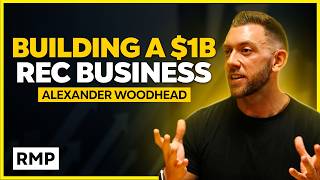
Alex Woodhead, founder of Apera, discusses his $1 billion revenue target and the systems built to reach it. He's using long-term incentives to turn employees into shareholders and millionaires, hiring roughly 25% junior talent alongside seasoned professionals, and prioritizing team-play over pure revenue in hiring and culture.
Chapters
Alex, welcome to the podcast.
Thank you, Hishem.
Looking forward to getting stuck into this. There's a few things that we want to talk about. You're, you're in the trenches of building your second recruitment business.
Yep.
So we're going to get into that. You've got some really big ambitious goals. I love hearing about people in our industry thinking big, wanting to achieve, uh, big things. I'm all for that. So we're going to get into how you believe you're going to get there. There's a few things that I think people will be interested in. I know there's a number of things that you really are passionate about in terms of that you're doing differently. Yeah, we're gonna get into that. And then we're also going to touch on you starting another business or being part of another business journey, and you leaving that, that organization and business. What did we learn from it? So to give everyone some context, let me know if I get any of this wrong.
No, I will do.
Before, before, um, so before you was part of the, the Strata journey, obviously you had— I can't remember exactly, but it was like, what, 4 or 5 years employed?
Uh, yeah, company called Cubic.
Yeah, so obviously started there before you obviously started the entrepreneurial journey. Yeah, but you actually started— I found this interesting, so I'm assuming people in, in the business knew, but, um, you actually started your own business for like a couple of months called Stratosphere, right?
Yeah, it's crazy. Um, yeah, so I suppose how the, how the story goes, I had a bit of a messy breakup from my first employer. Um, I launched my own business, 100% me, called Stratosphere Group. Obviously we do aerospace, Stratosphere. We shortened it to Stratos. Um, as I say, messy breakup, loads of legal threats, and yeah, it just wasn't, wasn't a nice experience. Um, I was looking at offices in Leeds for the, for the new venture, um, and got introduced to Ed. Me and Ed had met before, uh, in like a friendship group, but we didn't talk about what we did. Like, we had no idea we're both in recruitment. To be honest, I didn't realize people in Leeds did recruitment. Like, it was mental to me. Um, and Yeah, we literally, we were like, oh, we do the same thing, let's just do it together. So Ed had already launched Strativ. Again, the serendipity of the two names is just mental. Uh, Ed had already launched Strativ, basically said, right, let's just do it together. Um, he's, he was a really impressive guy. He'd achieved some great things in pretty short space of time. And I thought one of the other things that I liked about Ed was he had skills in a lot of the areas that I probably didn't at the time. Um, so yeah, basically decided to kind of fold my business into Strativ. Um, and yeah, the rest was—
when that was the rest of January 2019. So how old was it?
It was just— it was December, uh, December, but I officially started in January 2019. I was actually in a sling when I started as well because I decided to play— start playing rugby again, which is a terrible idea, and I broke my shoulder.
And how old was you at this point?
Oh, 2019, 29.
Okay, cool. I just thought I'd ask that because just curious, like, you maybe being self-aware of some of the things that you thought you were stronger into or not. Okay, so that was around that time. You was there for around circa 4, 4 and a bit years.
Yeah.
Um, and then you fully exited that business in November 2023.
Yeah.
Um, around the time of you exiting, things that you shared to me was headcount was around 120 people. Net fee income was around $13 million, EBITDA around $3.5 million.
Yeah.
Revenue mix in this business at this stage was about 60% Europe, 30% US, 10% different places. Yeah. And that's what that business looked like. Like I said to you before we started this, like outside looking in, there's a period where, like I'd say most weeks, I'd see someone in the marketplace be joining the company.
Yeah.
So you was part of that journey, and then might be a bit earlier, but January 2024, then officially launched your own business, which is, you know, fully 100% owned by yourself.
Yeah.
Um, so we've got that there from January 2024, and then a bit of the, the highlights here and bits that's worth noting. So 100% ownership at the start of the, the journey, took a $200K business loan. Uh, current team size, you've got 14 salespeople. You've got uh, an ops team that you're building. I know you're very excited about CFO who's pending to join, but I know you, you told me when we prepared for this, like, really on this journey now building like a world-class C-suite team. So there's a few other things in the pipeline for that. You've got your brother that I met today who's always been part of the journey in marketing, which is really cool. I know you want to also then look to add a tenant acquisition director, an ND performance director. You've got a compliance manager. So there's— I'm going to get into this, but I know you've taken this part of the business very seriously. You want to be growing into processes.
I take every part of the business very seriously.
Yeah, but I think the reason why I said that is because when I do sit down with people and they say they want to grow and scale, these types of things are an afterthought. Whereas I think you made it very clear to me in terms of, I want to get these things right maybe before we even need them so we can grow into them.
Yeah, they are, and there's a balance. Um, I'm sure, I'm sure we'll, we'll get onto it in a bit, and there's obviously quite a bit to unpack there from what you mentioned, but, um, We— you can definitely overkill operations. You can over-operationalize very easily, which is something I've got experience of. Um, but I think, I think again, different, different founders have different skills. Like, my skills and my time should be spent 100% focused on what I'm best at and the most value that I can add to the business. Therefore, in order to do that and to properly, properly grow the business I shouldn't be spending loads of time on the things that I'm not very good at, that I'm going to do a bad job of anyway. I'm not going to enjoy them, and I probably— and I won't execute them very well. So I think a big part of being a founder and creating a meaningful business is you have to hire for your weaknesses as quickly as possible, um, which is obviously why some of the key hires we've made, like CFO— CFO that we need to hire— like, I'm a, I'm a sales guy, I'm a future guy. Everyone knows from speaking to me, I just want to be— I want to talk to clients every day, I want to be hiring people. Working on our strategy. Like, I get involved every single day. Like, I'll do critical searches. Like, I love all of that. I don't love talking about operational issues all day, solving it problems, new offices, like all of these things. Like, I'm not very good at them. I know I'm not. And it's also like, it's not the best use of my time. So that's why certain hires like that, they will propel us forward tenfold.
And we're 99% US at the moment.
99% US.
I know you've got plans to go in Europe, right?
Yeah.
And then, so we're going to get into this, but markets or planning in terms of the industry is going to be— and you've got aerospace, space, or is that the same thing? Am I being stupid there?
No, you're not.
Right. Aerospace, space, defense, automotive, energy, robotics, and AI. Yeah, they're like the industries that you've mapped. And then the ones that you're like live and working in now, you've got defense And then aerospace, or no? What are the ones that we've really—
Yeah, so basically the markets that we do, most people wouldn't subcategorise them like we do. Like most companies will have like an aerospace and defence team, which is all things encompassed. The problem with that is it is way too big. Like for example, the aerospace and defence industry employs 5% of the US population. That is absolutely huge when you think about how many people are unemployed as well. So aerospace and defence has like tremendous differences throughout, and you can't specialise in all of that. It's too big. So again, aerospace and space, technically they are the same thing, but I'll kind of talk, I suppose I'll talk through the different market segments. And again, I only know all of this because I've done this, I've done this for 12 years. Like, like I know it inside out and back to front. So the markets that we have are, we call it aerospace, but it's basically aviation. That is basically anything that flies within our atmosphere for a civil or commercial purpose. So helicopters, planes, delivery drones, um, all of that side of things. Ginormous market. Second industry is defense. So that is anything that is developed for a military customer, and that usually falls around air, sea, land, electronic warfare. Uh, like, amazing market and so important in the world right now with how messed up the world is. And it's really— obviously sometimes some people have like moral issues with working in the defense market. I personally don't. Most of what we do is protection, and unfortunately there's people in the world that will take advantage of certain nations and will, they're not going to stop. So it's really important that—
Protection meaning they will use these things in protecting themselves, right?
Yeah, protecting civilization. So we do work a bit, we work less on the weaponized front. It's still obviously an important aspect, but yeah, so that's a really important component to what we're doing. So that's aerospace defense, then space. So space is anything that's outside of our atmosphere. Space is an absolutely phenomenal market. It's one I've always touched on and done a fair amount in but never gone all in on. Um, I think space is literally going to be forecast to be one of the biggest economies in the world. When you think about the 3 biggest entrepreneurs in the world, well, 2 especially have gone all in on space: Elon Musk, Jeff Bezos, uh, Richard Branson. That didn't go so well. But, um, like, the space market is absolutely ginormous, um, and it's so important for our civilization as well in terms of like what happens next. Um, so that's the third market segment. They're the three ones that we are— I'm gonna say 100% in. Um, the next market, which is AI, uh, autonomy and robotics. Now, not to be confused, our biggest skill set that we are recruiting and the most prevalent in at the moment is AI, but it's AI within those industry vertical channels. The separate— the separate AI business unit is generative AI and Robotics. It's basically anything that— any form of AI that's not— doesn't fall within aerospace, defence, space, automotive. Got you. And so that's the next pillar. Next pillar after that is automotive, uh, and then energy.
Energy.
So there's 6 business units, and our goal is pretty simple, uh, we want to be the number one supplier in all of those 6 business units. We want to work with the best companies in the world globally, uh, and we want to provide multiple service offerings to all of those industries. So if we achieve all of that, we will achieve our ridiculously audacious goal.
Yeah. And then so right now, and then in terms of the ways that you're working with your customers, you've got RPO, embedded, executive search, contracts you're going to be launching.
Yeah.
And then I know we'll talk about it, but again, a big part of your vision is then having a consulting arm. There's a tech play. And you told me this morning, engineering, which we'll get into.
Yeah. So it's basically 3 pillars to the business. And then each of those pillars is very, very large in itself. The three pillars to the business are talent, engineering, and this tech platform. Um, the talent piece, that encompasses executive search, RPO, contract, and, um, call it like high-value permanent search, like critical permanent roles. Um, I think one of the unique things that we have there is luckily I've got experience in all of these different recruitment domains, if you will, at a very high level. Most companies, when they set up, they have a slant. It might be an exec search business that then decide they want to do contracts, or it might be a contract business that decides I want to do search, or might be a permanent business that decides they want to do RPO. You like— it's quite hard to have a business that is equally good in all of those areas, but that was one of the things we did really well at Strativ, and I kind of spearheaded that. And it's because I like— I personally got experience of doing all of these things. So all those, all those services will go into the talent part of the business. Then we have the engineering services part of the business, which is effectively full-blown consulting. We will hire our own CTO. Other companies have done this. Like, I'm not saying this is entirely disruptive. No one's ever done this in the world because it's not, not the case. I don't think anyone's ever done it that way.
That's part of your plan.
Yeah, exactly. I don't think anyone's ever done it how we're going to do it. But again, one of the main barriers of what we do is And again, not to— like, it's obviously not easy to have a software development consultancy. Like, that's not easy, but it's different outsourcing a part of a web development platform to outsourcing a part of a spacecraft where we— or an aircraft where we'll take on the ownership of designing, I don't know, a wing, for example. So that's the long goal. And in order to do that, we have to have our own CTO. We have to have a phenomenal team. We have to have amazing engineers. So much infrastructure needs to go into that. And then the third part of the business is the tech platform. Again, loads of recruitment companies have tried tech platforms, but again, not like what we're trying to do. Most tech platforms are around the recruitment piece. Our tech platform is nothing to do with recruitment. It's purely to do with adding significant value to our industry. I'm a big believer that if you give, you get more in return. As opposed to what I feel a lot of organizations can do, and is they just want to take from the industry. We don't want to do that. The tech platform is designed 100% to solve some problems in the industry and add as much value to the industry as possible.
And you're going to be very close to that with the way that you're working. Yeah. Okay. So that was a really good explanation. And then revenue today, again, let me know if I get any of this wrong, but I've got here so far in the way that you have transacted with your customers has been majority of revenues RPA. Yeah.
Working that way.
I know there's been some like high-level executive search stuff as well. So year 1, total revenue $1.4 million— this is all dollars.
Yeah.
8% of that was delivered by yourself, or one by yourself. How do you want to frame that?
Yeah, I don't— yeah, it's— obviously it was a, it was a huge, a huge team effort. I don't— honestly, I couldn't even tell you. I always found it funny when, uh, like leaders track their billings. I couldn't even tell you. I couldn't tell you.
I asked you that because I think I think when you go out on your own, I think it's something that people are interested in. Like, you're building a team, like, how much of that was influenced by the founder?
Regardless, you have to— I, I genuinely, I genuinely don't understand. I think there's two, there's two things to say here, but I genuinely don't understand how anyone can, anyone can build a business in the recruitment industry that doesn't bill. I just, I just, it's just crazy to me. So like an operational founder, for example, like I know they can do it and their answer is usually, well, I'm going to surround myself with really good people. But then sure, all of those people are thinking, what am I doing here? Like, what am I doing here? This person's not adding any value to me. So I think every single— because there are some, there are, there's some, some great businesses out there in our industry. Like there's some great ones that have had huge growth. And obviously I've listened to some podcasts that you've done and there's a common theme. The ones that are good are the ones where the founder is really bloody good at what he does. Yeah, yeah. At least on the front.
I know, yeah, I know you're not about taking all the limelight and being the center of attention. I get that, but I put that down there as one of the things. And then obviously year 2 we're in, so like on track with what you're doing, this is the plan projection, which is £8 million total revenue, profit around £3 million.
Yeah.
Yeah. And in terms of— Team today, so that's the right, right, you've got 14 salespeople, 14 sales. Yeah, okay, so let's get in, get into this then. So let's first start with, I think I said to you, didn't I, like, if people knew me and you were sitting down and we were to not talk about what, what did we learn, what happened at Strative, whatever. Yeah, I think people probably be annoyed at me. As I said to you, this is never about, because I've had a few of these now and I do think, like, I didn't even know about the Cubic stuff, but I I think the more transparent we can be in our industry around what we've learned around like this legal stuff, which we're not going to get into here, I think, I think just the better. A lot of people go through these things with little to no information, and I think a lot of people in our industry start businesses with people and then it doesn't work out for whatever reason, and there's an opportunity there where everyone can learn from that and then that can maybe help people in the future. So this is never about pointing fingers when we have conversations like this. It's about this is your experience and these are the things that you took from it. But I've met plenty of people where we probably wouldn't have a real transparent conversation here on actually what happened, but it happens a lot. So talk to me about like, cuz I'm sure you like, you're in the trenches building your business now, but I'm sure you did have a bit of time to reflect.
I still reflect, I still reflect on it now.
Okay, so, so talk to me about, we can keep it fairly open to start, but like what, what were like the main reflection points for you? Like if me and you having a really reflective conversation, I'm like, Alex, what What were your main lessons, mate? Like, what did we really walk away with there? What were the main lessons in being part of this Strativ journey? What do we take away from it?
Yeah, so much. I mean, we did, we did in 4 years what most companies do in like 15, or they don't even achieve in 15, or even more. So like, the learnings were— the learnings and the journey was intense. Um, I think I think being co-founders of a business has tremendous value. Like, it really, really does, especially if you've got complementary skill sets, which in a way me and Ned did, but we weren't— we still weren't— ideally, I think with co-founders, you want a yin and a yang, complete circle, complete skill set between the two of you. Me and Ned were close, but not quite. Like there was still the heavy operational piece and the rhythm repetition, uh, the Sheryl Sandberg type character. Like, we still didn't have that bit between us. I think one of the things with— obviously, because when I merged my business into, into Strativ, at that point, Ed, Ed started the business, I think it was about 3 or 4 months before. I think there was 3 people in the business. Like, he'd funded it. We decided at that point And again, I was under a bit of financial pressure from leaving. Like, I— yeah, I was— it was a very— I'm not going to go into it, but it was really bad. And again, that— from that I learned— my first employer, I learned not how to treat people as well. Um, so I was kind of forced into a corner a little bit. So I obviously merged in. The result of that was— and it is an important piece— like, Ed was majority shareholder, and although we were partners, and he was like— it wasn't like a thing where he'd But there were the facts of it. It was the fact. And ultimately, if we had a difference in opinion, which would happen quite a lot, his idea would win because he has more voting power. But I think even at the start, there was things that I didn't fully agree with and wasn't fully like happy with certain directions. But I just thought, right, just get going. I'm here now. I've made the decision. So let's just build it. And then what will happen is we can change as the business gets bigger, we can then change it.
You can impose more of your—
Exactly. In terms of, I mean, in terms of the learnings, I just, yeah, where do we start? I had loads of positive learnings. Again, one of the things I wanted to learn was exec search. I'd never done exec search before. I'd done permanent contracts at a pretty decent level. Like I build very, very well and the bit like we made Qubic quite good. Uh, but never done exact search before, never done global either. Cubic House UK, I was UK-only recruiter, and I always wanted to do like all of that side of things. And obviously Ed had done all of that, so that was great. Um, I think in terms of like business acumen and operations and the financial aspects of running a business, Ed was really good at that. So again, I learned from him a lot there. Uh, some of the things we did with culture, even though I didn't agree with a lot of our cultural things, which was a constant debate we had around the freedom and responsibility thing, uh Like, I'm a grafter, I'm a high performer. Like, I just— I'm not— I don't give— I'm not like a KPI guy, or I don't look at when people leave, come and leave the office, because I literally don't have time to do that. But at the same time, like, it's not a— this isn't a holiday club. Like, I'm pretty— like, we're quite an intense business. So all that stuff I struggled with quite a lot, um, because it was too much that way. It was too much that way. And the problem is, when you go to market— this is another thing that I struggled with and we debated on a lot— when you go to market with because everyone's got a USP and an employer brand. Why should someone join this business? One of the problems we had is like, if the reason to join the business is freedom and flexibility and unlimited holidays, unlimited working hours, you're not going to attract the right people. So that then kind of magnified things moving forward. But anyway, long story short, that, yeah, lots of, lots of learnings. It was a brilliant experience. I'm so glad. I wouldn't be able to build Apera how I am now if I hadn't done that. Um, but again, reflect on it, like making the decision to exit, which a lot of people might think is mental, because I bet there's probably a lot of people that are in the position that I was in where you have a co-founder, you have equity in a business, all your values in it, you're not happy with how it's going, you might have an investor, all of these different things. There'll be loads of people that are in this position, but they don't quite have the courage, bravery. Yeah, to say, to say, I'm done, I'm leaving. And I, when I said that, that wasn't the best point for us to leave. Like, it wasn't— that wasn't the most— I knew I wasn't gonna get the best sale value. It was a forced value. I just wanted out. Like, I knew all of that. Like, many people would have stayed longer and just tried to increase their profit, increase the sale price, and all of this stuff. But I just needed— I needed to go.
How long has that gone for? Because this is why I wanted you to talk about this, because I know there's a lot of people.
So I wasn't— I wasn't happy for about a year.
Okay. And is this like In terms of how, like, how that felt, was it like you'd have these important discussions or you'd have these conversations and like just deep down you're like, I really believe we shouldn't be doing it this way or doing that, and like you weren't able to impose your way of doing things? Is that the most frustrating thing?
It wasn't frustrating because I did, like, I did. It wasn't like that didn't happen. The problem with the— basically, ultimately, the problem with the business was with two founders, there was like my part of the business and there was Ed's part of the business, and there was how we both ran the business and how we wanted to grow the business, and it was getting further and further apart. And then lots of people within the business were then seeing that as well, um, regular comments, like even in interviews, like, you guys are quite different in terms of your views of how you want to run and grow the business. And again, it wasn't even— I'm not saying what they— what that business does and what they do is not wrong.
No, it's not right or wrong. It's like you just talk about your experience.
It's just not me. And when I think I think in order for anyone to be successful, you have to be authentic. And when you try— when you're every single day trying to be something that you're not, it's draining. Yeah, it's literally draining.
Something you said to me which really stood out on this, which I think is a good takeaway as well, was around like being aligned. You're talking about it there, but being aligned when times are tough and being aligned when times are good. Yeah, I, I really liked the way that you put that because it's— yeah, just tell me a bit about that. I thought that was a quite interesting way to pull it in terms of like, when things are really tough, it's hard to be aligned. And I guess what, when you're just posting, things are— boxes are getting ticked. But then when things are maybe going really well, it's— I don't know, you tell me.
Well, I think it stems to where you focus your— where you focus your attention and what your strategy is. And yeah, like, when a recruitment company is not in a good place, like, it's hard. Like, it's hard. Like, we had some months that weren't good. That's right, it wasn't all plain sailing. It's really— it's really hard. Um, and like that's when like relationships are put to the test and strategies are put to the test and all of these different things. And you debate over like exits and things like that, and you have different differing opinions, and that's all tricky. Um, but then also, I mean, when times are good, again, it's like where, where are we putting the investment? Where are we putting the time and the effort and the attention? And as I said, the, the business, the business got so big because basically I like how the business was split towards the end was Ed looked after all the operational side of the business and I looked after all of the recruitment and sales part of the business. And it was— there was— because it was, it was, it was just really hard for me to be involved with everyone, if that makes sense, towards the end. And we were continuously building new divisions and hiring more and more people, and which again, great strategy for some people, but I wanted to fix— I wanted to fix what was not working. I didn't want to put more people on top and hope it, hope it works.
And then let's just round this out then. So like don't— not interested in getting the details, but I think interesting for people to hear. So like, how long from you having— roughly, how long from you having the courage to be like, you know what, I want out— what does that look like? Like, from maybe having that initial conversation to then getting to the end point, like, how long did that— did that take, do you think, roughly?
Um, well, I think an important— the important thing to answer before that about the whole, um how that all went is I went on paternity leave in August. I was having my— because I've got 4 children, which people are always surprised at. I was having my most recent baby. That sounds ridiculous. Yes, anyway, so I was on paternity leave and I'd taken like a week or 2 out. And the point I was going to make there is I'm a workaholic. I work every second of every day. I don't ever stop. The only time I stop is literally to do some form of training, or as in like gym, running, or whatever, or I spend time with my kids. Spending time with your kids is like, it's intense. It's almost as hard as work. So it's like, I didn't, I never stop. I had, I think I took a week out. I planned to take 4 weeks out because again, I'd had no, I hadn't really had a load of time when my other children were born. Um, and like about a week or two in, I'd taken myself out of the situation and I was like, I'm really not happy, am I? And I like, again, loads of people have told me, people in the business, people outside of the business, my wife, and I just wasn't, I wasn't myself. Like, I was, I was, yeah, I was, I was, I was, yeah, I was struggling mentally, to be fair. Like, it just wasn't in a good place.
Um, and who really noticed? Your wife was—
there was other— no, but there was others. There was people like everyone in that business, you know, wasn't—
but you didn't have, you didn't have the space to like really look yourself in the mirror.
Exactly. Because every day, every day was right, what do I need to do today, what do I need to do day. So I took that time out, and then when I had that time out, it just made everything so clear to me. And basically, I was, I was watching a film with some sort of kids film, uh, with the kids and my wife. And I literally just, I said, I said, I said to Bex, I was like, right, I'm back in 5 minutes. Um, I went downstairs, I called Ed, it's kind of totally out of the blue. I was like, I'm done, mate. I was like, he's like, what do you mean? I was like, I'm done, I can't, I can't do this anymore. Um, either you know you need to buy me out or I need to buy you out. I can't, I can't continue like this. And then that was in— that was a week before my daughter was born. And then obviously daughter was born and busy with all of that stuff. And then yeah, it was, it was, it was months of negotiation.
How did you feel after that call?
I felt really bad.
You felt bad? I felt relieved. Did you feel like—
did you feel like— I mean, I, I I love Ed Topeza. He's a great guy, honestly. He's a great guy. And like, my feelings towards Striker, they're never anything centered around him. Like, he's a great guy. And even after the exit, like, he was— people can, when there's like lots of money involved and things like that, people can really easily turn into not very nice people. He was never, he's never like that. Never like that. So I felt, I did feel kind of bad. And I also felt the— I felt worse about the people in the business, because then when I knew when it was communicated to them, it would be a little bit like I abandoned them. Um, but yeah, I felt, I felt, I felt relieved but guilty at the same time. I'm pretty loyal. I've always been a loyal person. It's like I say, my first business, I stayed there way too long, but it's just I felt bad. I felt bad. I felt like I was like, I felt like I was letting someone— I felt like I was letting someone down or being deceitful because I wanted to leave and set my own thing up.
Um, so yeah, it's a good couple of months before we got to the end point of like, this is what we've both agreed Yeah, basically.
And there's like, it wasn't a trade sale, we had to go through all sorts around like— yeah, obviously not going to go into all the details, but basically long and short of it, I'm selling something, I want as much as possible, he wants as little as possible. And then there's also the bigger context around restrictions and things like that.
And that's what you— the reason why I think the final point on this, you was— that was a goal for you, right? Like, how can I have as least restrictions as possible? Because I think that when I've sat down with people, they that's what they're aiming for, and that's worth saying.
I didn't care about the money. Yeah, literally didn't care. I knew it wasn't gonna be a life-changing amount of money, but even if it was a life-changing amount of money, I'd just go again anyway. That's just like who I am. Like, I need— like, I love, I love this. Um, it was— no, it was no— it was, it was never about the money. I wanted the least restrictions possible. And also, again, I speak about feeling bad for the people that I left behind. It's like, I, I I couldn't allow them not to join my new business if they wanted to because I had my restrictions in place. I wasn't bothered about clients, to be totally honest. Like, even now, like, we— they're all new clients we're working with.
So you basically— the bit on this then ended up around 12 months, basically, approaching clients and employers?
12 months, yeah.
Sweet. Okay, I think that that's just worth saying because again, like, I sat down with someone not too long ago and this was a big thing that he was trying to negotiate because then he launched his own business and that would have really helped him to be able to just crack on. Yeah, that's just trying to get as much money out of the situation as possible.
It was just, you just, you've just got to do a bit of analysis and then work through like what are the pros, what are the cons. I'm getting, I'm, I'm getting this, but what are the costs of that? Um, and yeah, literally I just wanted to, I just wanted to get on, build a new business, did not care about the money, uh, at all. And yeah, I just wanted, I just wanted free. I didn't want shackles, I didn't want handcuffs, I just want freedom.
How much time did you give yourself? Any time on, like, onto the next chapter, in between the next chapter? Like, did you have a bit of—
Yeah, so I spent, I spent probably 2, 2 months at home at my at-home office. I've got a really nice at-home office, it's like an outbuilding, kit out and stuff. I thought, yes, it's gonna be, this would be fine, like, I'm gonna work from here and I'll have no office costs. There's about a month and I was like, this is literally the worst thing in the world. Like, I hate— I don't know how genuinely just like I just don't know how people work from home. Like, it's just hard. Um, but yeah, I took about 2 months because I wanted to get the strategy right. Like, this had to work. Wanted to get the strategy right, wanted to just take my time with it a little bit. Um, so I took kind of 2— that was like November— took 2 months out, and then yeah, launched January 2024. New calendar year, fresh start, let's go.
Good to go. Yeah. Talk to me a bit about, like, I think just interested for people to hear, like, how difficult was it to get the loan?
Uh, not, not, not difficult. Um, so again, like, some people, I suppose— so basically my, my sale from Strativ was I wanted to divest that money in other areas. Just again, I, I had full confidence this was going to work, but like, I have a family, I have responsibilities, I have people to support. So I divested all of that into different areas. I knew I wanted to scale this business pretty quickly Obviously ran all the numbers, worked with a financial consultant who's an old friend, modeled everything out, and obviously cash is oxygen to a startup. Like, again, you can be smashing deals out from day one, but where's the cash? So yeah, I approached— well, in fact, I was introduced to a business. I had no shortage of— obviously everyone wanted to get involved. I think the thing was, when you were a recruiter, like, you're literally a walking cash machine. So it's like, obviously everyone wants to get involved, but I wasn't willing to give away any equity.
Why then people wouldn't invest back you?
I had some big offers. Aren't they?
Walking cash machine, mate.
It's not me, it's everyone. It's everyone. It's everyone. It's everyone. Okay.
But you was very clear on like, no, I want 100% ownership. That was one of the lessons you learned.
But again, it's just because I didn't want, like, I was just a little bit burnt by having—
Don't want to answer to anyone.
Other people in the room. Not, it's not that. I just, having other people in the room and affecting our strategy because I knew what the right strategy was. Um, so then again, purely because I've got the track record and success, like, what works with this, works with this business, and they, they did that. Um, okay, they did that loan, 5, 5 years.
Um, so you have 5 years to pay that?
Yeah.
All right. And then, yeah, hired 3 people in your first 3 months, which I'm assuming part that was enabled you to do that. Talk to me about, like, because you was really passionate about this, tell me about this sort of go-to-market strategy of like industry-led model versus— because this seemed quite foundational. There's obviously a lot that probably goes into you, um, achieving your big goal, but you felt really quite passionate about this when you explained it to me. So tell me about the, the way that you see this differently in terms of the— in being industry-led versus skill location-led. Talk to me, talk to us about that.
I think there's— this isn't the answer to everything in recruitment, by the way.
Uh, it's not a silver bullet.
It's not, it's not a silver bullet. And it is also entirely dependent on the market you're working in and selecting. Certain markets in the world, they are that specific that you, in order to develop and grow that market, you need to be only working within that channel. So the example that I usually give to people is automotive. And I suppose this is maybe a bit of an exec search approach, but if you're working with Ferrari, if you want to work with Ferrari, you need to tell them you work with Porsche. Ferrari aren't going to care if you're working with an IT consultancy or a bank that are located 2 minutes down the road. They're just not going to care. Also, if you're working with a bank 2 minutes down the road and you're trying to get an engineering leadership position for Ferrari, it's just you haven't got the sell, you haven't got the expertise, you haven't got the knowledge. People relocate all over the world for those sorts of roles. So that was a bit of a poor explanation there, but Basically, the industries that we've selected, in my opinion, the only way to be successful in all those industries is to live and breathe and only do those industries and nothing else.
So can I not do that if I'm typically niche though? Like I do—
in what sense though?
Because typically, like, people would be like, I'm very neat, I haven't— I'm a niche market, I do financial controllers and aerospace companies, right?
Well, first of all, I'll tell you who does that.
Secondly, I'd be like, that's enough.
Secondly, I'd be like, that's not a good market.
Um, but you know, people say I'm niche, I have a niche focus. Yeah, I'm just trying to understand the main difference here.
Yeah, but again, it's like saying— it's like anything in recruitment, it's like saying your niche, like, what does that even mean? Okay, right. Some— one person's niche could be entirely different to another person's niche. So we call us— again, it's just a hyper niche, right? What is a great word? Um, it's in its entire differences. My, my My fundamental belief is every single desk that a person does, every single business unit a team creates, or every single like strategy for a company, you have to be doing something where you can be the best in the world at that. So let's bring that down to an individual contributor. If as an individual contributor you're saying, I interview people doing this all the time, I do AI, right? I do AI in the US. Yes, any industry in the world, how are you possibly going to invest in the world? That is just far too big. It's far, far too big. So you need— you've got, you've got to distill, distill things down significantly. And again, where I've seen the most success is because, again, from the— this is, this is a strategy piece, and these little things that people don't even think about, but I think about, and I spent ages on, on how to do this. So how we set up the business. So some businesses— so what'd you put at the top? Right? Is the top perm, contract, delivery? Is the top US, Europe, UK? I'm looking— I'm talking about an org chart here, um, on all of those different things. Or is the top industries? And then after industries, then do you split into regions? Or then do you split into different service offerings, perm, contracts, etc.? How do you split all these things down? And again, we played around with all of this at Strative, and I saw what works the best, um, when I was there it was all industry-focused. Within those industries, we had managing directors for each of those industries. That managing director was an absolute SME in that industry. Let's just say it's energy storage, for example, which is a highly specific thing. Energy storage technology is the same in the US as it is in Europe. Different clients, but it's the same thing. You're still buying and selling off the same things. Your teams are still made up the same way in terms of different skill disciplines of cell chemistry, BMS, and all of those different things. Um, so if the MD is the person at the top of that industry down, then after that, do we then split into perm, contract, delivery, RPO, or do we split into regions after that? And all of those little things, it's quite hard to— because it's very big org chart. Um, those things are incredibly important. And the reason why I came to— and again, my old firm changed after I left, which again, I don't know if it's worked better or not, I don't know. Um, the reason why I think it works better this way is because at my, my and our way of doing business is the client always comes first. And I felt like that setup and strategy gave the clients the best possible experience because there was always a person ensuring that that client was having different service offerings approached into them in the right way. And it wasn't too much. There wasn't inner conflict between the perm team and the contract team and all of those different things.
And that's because you put industry at the top.
Yeah, yeah. It's a little thing that people don't think about, but how you like, how you, how you organize your recruitment team, sales team, whatever you want to call it, is so important. So, so, so important. And again, I'm, I'm speaking from experience. I've trialed different things, and in our business and in my experience, this is what, this is what works best. And that's why we have the different 6 business units. So that's one thing around that. The second, as I said, the second thing is just expertise. Like, even within aerospace, right? An aircraft is entirely different to a satellite. So again, we split aerospace and space. And then even within that, or even a defense client that's developing a military aircraft, again, it's very, very different. All of these things are totally different. And I think in order to really understand the size of the opportunity in each of these areas, we need 100% focus in that area.
And that's all your people do in one of those?
Yeah. We have different skill disciplines that feed into that.
Well, that's gonna be my next thing. So like, if I'm industry down, yeah, and I'm— let's just say I'm in— what, what example did you give? The energy storage industry.
Yeah.
So that's my ecosystem.
Yeah.
So all I'm doing every day is building my network, speaking to people that run those types of organizations. When it then comes to working with these companies, like I just want to make sure I understand this, or people can learn from this. I'm having more of those just overall high-level commercial conversations, which doesn't mean I'm getting bogged down with like, oh, you need this skill, you need this job.
Yeah, so, so real important differentiating factor of what we don't BD for jobs. Okay, couldn't even tell you the last time someone's BD'd for a job. Like, I think a lot of people, JobSpot, right? Said company's hiring embedded software engineer. Hello, Mr. or Mrs. Client. I can see you're a better software engineer. I'm a vertical hyper-niche, brilliant, best in the world specialist. Like, I've got a candidate for this job, right? That's what most people do, and that is totally fine. That is not what we do. Okay, we will go— we will see role, go to market. You guys have just received Series B funding, you need to get from A to B. Here is our solution. We have experts in all of these different areas. We're selling the solution to you. So solution selling.
What are the different areas?
Of which bit?
Like, so is that the skill bit?
Every product that we work— yes, the skill bit. Every product that we work with, the, the, the— one of the common themes is the majority of the hiring within that business is trying to develop a mental technology. And all of the technologies are software-enabled hard tech products. So what I mean by that is it's a physical product that is software enabled within that, whether you're looking at— and again, we don't do all these markets— whether it's a TV or a spaceship or a plane or a, a, a Whoop band or an iWatch, right? All of those things have mechanical design, electrical, electronics engineering. They have embedded software, they have different forms of software. Many might have AI components to it as well. That's just within the R&D piece. Then there's the operational piece and the manufacturing piece, and then there's the go-to-market teams.
So you would group it in that Yeah, yeah. Skills on each of those.
Exactly, exactly.
So who would be an expert in those? The MD?
The MD would overall have an understanding, and then in an ideal world, the MD would have an overall understanding of each of those skill domains. And then a consultant would be a specialist in R&D, embedded, embedded software within energy storage companies, for example. And the reason for that is, and again, I was— people, a constant conversation I've had over the years is people think the bigger the market, the more money they're going to make. Absolutely not. Absolutely not. At Cubic, I had a tiny, tiny— there was, I think, 15 companies in my entire market, and I cycled everyone around. I don't know what I billed, 600-700K. Like, I, I billed a lot, and that was 8 grand fees. I placed a lot of them because my market was so small and I knew absolutely everything about it. So a lot of people think the bigger the market, the more you can make, but it's absolutely not true. And then the other thing behind that is, if from an organizational perspective You have individuals that only do, for example, battery management software with— we're on the energy storage trade— uh, battery management software within energy storage companies in California. And that person knows every single person that does that. You put us against any other search partner in the world, we'll fill that in 3 seconds. We know everything about— we know everyone that's good. Everyone else is gonna have to go searching for that. We don't have to do that. So you, again, from the from the client's perspective and the client experience perspective. So on one hand, the consultants are significantly more successful. Client experience perspective, we're giving a tremendously better job. So, and a tremendously better experience. So it's a no-brainer.
What, and then what would you— there's always a cost, right? What do you perceive to be— what, like, what's the cost? Like, what sense in terms of like, they're the benefits, but like, what do you think then you have to give up or like, not the downside that you obviously don't view it like that, but like there will be some sort of cost where it's like you have to say turn down more business, or I don't know what's the—
well, that's, that's, it's definitely an interesting one.
Um, the consultants feel like they're being restricted. I don't know.
Yeah, okay, we never want that. Like, we're not a high control business. Like, I'm not, I'm not a control guy. Like, I'm really, I'm really not. I have really high expectations, but anyone that's worked with me in any of my business, I'm not a high control guy. Like, I want to help people. I'm the sort of person that, right, what we're trying to achieve today, how can I help? How can I help you achieve your goals? I'm that sort of person. I'm not the sort of person to say you're not allowed to do this because it's slightly out of your sphere.
Okay.
I think the main thing is waking up every day and saying, this is what I'm trying to be the best in the world at, and it is this. If something falls slightly outside of that, is it worth it? Is it the client that we really want to work with? Is it good for the business? Can we source it quickly? Is that exclusive? Is it retained? Is it in a good location? Is it— is, is meandering outside of our lane worth it? And then sometimes it is because it might be better for the business. Sometimes it is. It might— it also— that meander might mean that that person then switches market entirely. So, um, it's definitely not a high control, you're not, you're not allowed to do this sort of environment. But in terms of what is the cost, yeah, you could argue it's turning down business. Um, you could argue maybe, maybe it might take some people a bit of longer to adjust to it. But again, like, there's not a single person that I've— that's— that I've worked with that I've shown this strategy to that's then changed, that hasn't said to me, this works so much better, Alex, like, I'm doing so much better. So the cost— I mean, yeah, the cost is turning away business maybe, but it's not really— no one wants shit business.
So what— obviously RPO, some people may have heard that, some people may not have, but like I think you said to me those solutions are very tailored.
Yeah.
But like, what, what's the— like, you, you told me that the core of your revenue has been RPO, but like, what does that mean? Like, what does that actually look like? Obviously you told us about the industry-led, which means you're going to have wider commercial conversations. You're here, you want to get to here. Yeah, we can help you do that. You tell me, like, what, what actually— what does actually mean RPO? Because you told me that you've got 2 customers right now spending 7 figures within— we're 6 months into the year. So what's made up in that solution, is it? Because I'm assuming it's going to be more than just putting— yeah, talent into the business.
It's an absolute shedload of work. Like, these RPOs are not easy. I think a lot of people get really excited when they sell an RPO and they're like, right, we sold it, brilliant. The hardest thing about an RPO is not selling it, it's delivering on it. Like, we have commitments, there is nowhere to hide. We have like— these things are hard. You can't just walk away from a hard job. Might be a really critical role for the business that is absolutely— we've done everything, still there, still there. We've still got to deliver. Like, there is always a person in the world that can do that job. So it's not perfect.
No.
Yeah, but, but, but you have to deliver on it. In terms of what is an RPO, it changes on a million different occasions as to how we structure it, right?
Okay.
It's usually It's usually the outsourcing of like a department, a family of roles, a location, just the outsourcing of a volume of work that then we take full responsibility over. So we have full responsibility for all of those positions in every single way. There's multiple different ways you can deliver it. You can do embedded, which again, I'm not the first person to do embedded recruiters. I'm not. I do think we do them differently because there's there's quite big challenges with embedded recruitment, um, just in terms of math. Like, so like, for example, our, our cell with our embedded team is like a team of Navy SEALs, right? They'll go into an organization, they know exactly what they're doing, they're experts in defense tech, for example. They'll go into market and we're gonna, we're gonna like, we're gonna do some serious results, right? Um, now in order to do that, we're not cheap. But you guys will hire lots of people. You have amazing experience. And in terms of cost per hire versus our usual agency cost, it's way cheaper. So that works great for us, right? Whereas what most embedded companies do is they say, right, I'm going to go try and win the business. And then I'm going to say that obviously this person's an expert, but then I need to go and hire an embedded person to do this, this project, right? Again, what I've told you about the market, I can't go to market and hire an embedded recruiter that knows advanced autonomy within defense. You can't do it. So managing your internal requirements with your embedded requirements is really, really hard. Like you can't just have a specific embedded team. It just won't happen. So there's little things that you have to do around that. So that's one option. There's—
So you would categorize that as an RPO? That would fall under that category?
Yeah. In terms of an RPO partnership.
Yeah. That's what that might look like.
Yeah. So it's usually outsourcing off so that said embedded would look after a department of an organization and That would be our responsibility.
Okay.
We're just packaging it up and charging for it in a different way. Again, RPOs can be— so one of our RPOs, client wants to get from— client wants to hire 120 people, which is like over 100%. It's over a 200% headcount increase. Can you guys do it for us? So in addition to finding all of these people, we have to manage, we have to do weekly reporting, we have to do all of the database and ATS management. Do everything through Greenhouse and all those different things. So it's fully outsourcing of roles or departments or that side of things, and it can be contracts or perm. Obviously in contracts is MSP, but, um, so that's kind of how we're defining an RPO. I don't think I explained that very well.
So what are the— no, that's fine. What are the, what are the interchangeable bits? So like you've got the delivery of talent, you've got what, managing? Yeah, like what are the normal interchangeable bits?
Yeah, there's managing ATS, there is background checks, there is us writing the contracts for the employee, for the people that are hired. There is us booking in all the interviews, generating feedback, collating feedback. There is managing internal applicants, everything. It's like a bot, it's like a box, right? It's like, we can do all of these things. What do you want, or what works for you? This, this, this, and this, right? I think that works best for you. And then from that, this is the best solution for you guys, and then this is how we'll charge for it. We feel this will get the best results. Again, I think lots of people get really excited about RPOs, and there's a few issues. There's— if there's— they're not perfect, there's a few issues with them in many ways. But one of the things that happens is that I've seen is people sell the wrong solution and they're trying to force the wrong solution down the client, which is not right for what they're doing because they've not asked questions, they've not understood what the pain points are, they're not understood what's needed. So again, it's understanding what to— what service to offer and what service to provide. And it is, again, we're not— we're not on Michael Page. It's entirely bespoke to whatever you guys need. We have an off-the-shelf product, like, where you have to do it this way. Like, it's entirely different every single time. Um, so there's all of those things that, that change. There's also the pricing model. Like, are we doing purely success fees? Are we doing a blend of monthly retainer and success fees? Are we doing fully embedded where we don't charge success fees, it's just a monthly retainer? All of these different things.
Is that typically it? Because that was gonna be my next question. Is that typically how you're interchanging the pricing? Again, I know that can be bespoke.
Do we do all three? So whatever the, whatever the right solution is for the client.
Okay, no, so, but typically it can be varied from success on placement, blend of both, and then it's like a sliding scale, right?
Our fees are the lowest when we have the most commitment, right? Our fees are the highest when we have the least commitment. So it's like a sliding scale.
So, but I'm assuming though, with the way that you're talking, and I speak to one of your customers who work with you in this way, they're not saying, yeah, we're working with Alex's business because they save us loads of money.
No, that's not our setup.
Well, that's what I mean. Yeah, because that's why a lot of people position it that way. Yeah, it's like, it's cheap, like, work with this way, it's cheaper. Yeah. Yeah, but then you just said this, they're the most committed.
So the problem I find with most people that try to deliver these sorts of solutions, um, and yeah, there's always, there's always a problem because a recruitment process is graded on— well, maybe more things, but most recruitment processes or TA processes are graded on 3 things: quality of hire, time to hire, and cost, right? We sell off quality and time and also like stakeholder experience, but quality and time to hire. Like, we will beat that metric above any other supplier, any other internal team. We'll beat that metric in our markets every day of the week.
Quality of hire, quality of hire, and time to hire.
We'll have better— we'll hire better people, hire them quicker. We will never, we will never ever not achieve that.
How do you measure better people?
Tenure, them getting the, them getting the role, promotions after, loads of different— there's loads of different ways of measuring it. Also, I mean, long and short of it, you've got, you've got a partner in your client, they're going to say you guys hire us the best people, they're absolutely smashing it. And again, I've worked with some companies where like you speak to them, they'll be like, everyone they've hired, everyone X agency's hired for us hasn't worked out. And then at that point I'm also thinking, well, it's not really the agency's fault because you still hired the person. So maybe retention time, but What most people sell off when they're trying to sell an RPO is cost, right? Because that's just the usual thing people think about. You guys work with us, we'll drop our fees to this much if you give us this much work. But then what's the problem? What's the, what's the problem with that, right? So we've— our best client in the world is our most important client. We've sold them an RPO, we've reduced the fee percentage to— I don't know, like whatever number people can think about. We've reduced the fee percentage, right? Now we've got all of these roles We're doing more than we were before because we have all this account management stuff that we have to do. We have to hire account management teams eating into the profit margins. Then we need to have amazing people delivering all these roles. So we're going to hire a delivery team and we're going to pay them minimum wage and we're going to pay them £200 placement fees because delivery is easy. And that's— sales is the hard bit. Lo and behold, RPO is not working. Client's not getting what they need. Business loses best client they've got and RPO is not delivered on. And that shrinking of cost piece has tremendous impact on every single level, even if you don't hire a delivery team that isn't fit for purpose. I've had loads of criticism in the past because I— the delivery teams I work, we pay them a lot of money, like a lot of money. These guys earn as much as 360s because they are phenomenal. Um, delivery is not a lesser job in our business, in my business, or it wasn't at Strativ either. Delivery is a phenomenally hard role and it's highly valued in what we do. Ultimately, what is our product? Is delivering on requirements. So it has to be brilliant. But then even if you then don't hire the delivery team and you put your 360 consultants or your best consultants on that, how are you going to get your best consultant to work on a fee that's minimal? They're not going to do it. If it's a tiny fee, they're not going to do it and they're not going to deliver on it. Or they'll, they'll say, yeah, we'll work it, but they won't do a good job. So for all of those reasons, you can never, you can never win an RPO on cost down. There has to be some cost savings, obviously, but just don't— not too much because you'll never you won't deliver and the client will not be happy, which is ultimately the most important thing.
I love that. You, you can tell me what you think about this then, but you know, you said that no one in your team will be like calling live vacancies and say, I've got this person. That isn't how you operate.
Say that again, sorry.
You know, you said earlier that— I wanted you to let me know what you think of this. So, you know, you said earlier that no one in your team would like do BD in terms of like calling live vacancies and say, I've got this person for this job. That isn't how you operate, you said, right?
It would potentially be part of a solution as in you're looking for this role, like argument's sake, right? VP of software role, call CTO. I see you're advertising for VP of software role. Here's VP of software. In all of that though, where the person is saying, the person is not saying I'm a vertical niche specialist. This is what I do. This is me. I, I, I, I. It is, this is what we do. These are the solutions that we deliver to your competitors. We have this. These are all the things that we do. This is our solution. Here's a problem you've got at the moment, which is VP of software. Let's address this now. But this is where we need to get to. Half of, half of getting a business from A to B is positioning because a client will always assume and they usually assume the worst, as in you do the least. So if you don't explicitly say that you do these different service offerings at the very start and throughout the process, they will always assume that you don't.
Okay, so, okay, fair. I appreciate explaining that. So like, you're— some of your team may start the conversation there, but what you're saying is, hey, Mr. and Mrs. Client, this is a very small part of an overall solution and service that we provide. Yeah, yeah. Because what I was leading to was what I wanted to ask you. People may be listening to this and think this is like a million miles away from how they operate, but I think the people that listen to this show want to be better. They take our industry seriously, I'd like to think, striving for more. So I'd like to think that they'd love the idea of working with more committed clients. They can project their billings effectively, because these are a lot of the big upside things. You can forecast more effectively, your team can have a lot more clearer idea of like, what am I going to earn in this environment? And also, like, let's be real here, obviously you're going to deal with challenges, but I think you're probably going to feel like your work's even more meaningful. You're going to be even closer to these people every day.
Like, what we do matters. Like, I genuinely believe what we do matters. And that is like, everyone, everyone that comes into the— everyone that switches on every day to, to work with us. Like, every— like, what we do matters. I think too many people in the work, in, in the industry, just like think that they're just doing stuff to benefit themselves, and they're actually— what they're actually doing doesn't matter. But it does. And it's like, people that actually care about that— it's a slight tangent, but like, in interviews and stuff and speaking to people, because obviously I've like always built quite a lot of money in my career. Like, and then a question I always get asked is, I've obviously interviewed loads of experienced people and etc., etc., etc. It's What makes someone good? What do you do that's different? And all these questions that people always want to know. And I think one of the biggest, one of the biggest trends that I found is the people that I think are phenomenal. So Good to Great, the people that are phenomenal are the people that prioritise doing a brilliant job over scoring a fee. So every single thing they do, they work their ass off because they, they, they've got like a burning desire to make that client insanely happy, to hire the best person, to give the candidates an amazing experience. They, they have to do an amazing job. They don't even think about the fee. The fee is a byproduct, which I know some people might think is ridiculous, but I genuinely, I swear to God, I do not think, genuinely do not think about how much money we're making. Like, I always have financial reviews, but I don't care. I care about working with the best companies and giving a phenomenal service. I care about clients giving me a call and saying, like, you guys are literally changing the game for us. Like, you have, you're having such an impact. We love what you're doing. We love working with you. That's what I, that's what I care about. And again, from an individual contributor level, or from it, from an anyone level, like, don't do things to get yourself a fee. Do things to do a good job. That's the—
that's— it's easy to say it, but then it's like doing it and being disciplined with it, isn't it?
Change your mindset. Yeah, change your mindset. So again, you're talking about how can people take company— like, how can a person go from a transactional client to more of a retained client or a better relationship. Just think about what the client wants. Think about what the client wants, what they need. Don't think about what you want and what you need.
Well, this is going to be my question, which I feel like you've just answered, which is I think a lot of this— because a lot of these conversations I'm having with people who operate in this way with their customers— I think a lot of this comes downstream from conducting discovery. I'm assuming you have that in your process. So all I mean by that is The people that I sit down with, they may start the conversation of like, see that you need this VP of product, they get them on the hook that way. But when they're then going on a meeting, is like, I know you need this person, but by the way, I want to make sure that we also talk about this today. Or yeah, I don't want to just talk about what skills you need, let's take a bit of a step back, how do we get here in the first place? And like doing all of that, because I don't think you get anywhere near— and you may just do this naturally now, I don't know— but like a lot of people that we've been doing a recent training series on that, like 70% of recruiters, over 100 people signed up to this sort of training session on discovery, 70% of them don't conduct discovery. So that means a lot of the conversations are, what skills you need, Alex, how much experience they like, you know what I mean? I don't think you get anywhere near the stuff that you're doing.
No, you don't. But then again, do you think that, that is maybe a little bit of a byproduct of the mindset of, I'm trying to score a fee here?
Yeah, no, it's not trying to score a fee.
It's not, it's not, I care, like, I want to do, I have to, I want to do a great job, I want to really help my client out. It's, I want to score a fee, I want to score a fee, how can I shove this in so I can get this board this fee this month. Again, that also can stem from the way a business is run.
Yeah, it can be top-down. Yeah, yeah, yeah. But I think, yeah, like, this just continues to be a theme. So I just want to see your take, but I feel like you've answered that. Let's talk about a bit— we were talking about this before we started— like, you're not going to get anywhere near your big goals without having, like, world-class people in the organization, right? So talk to me firstly about— again, you sort of said this to me quite passionately all leaders are going to be expected to bill. That's going to be an expectation. How can you— often here, I'm sure you've heard it, billing manager is the hardest job in the industry. Just talk to me a bit about why you're, you're sort of very passionate about if you've got leaders in the organisation, you just can't really quite fathom why they wouldn't still be leading by the front billing. Talk to me about that.
I just— where to answer this. I suppose, I suppose I might have a slightly slanted view because I genuinely love what I do. I think some people want to move into operational management because they don't like the process of recruitment for whatever reason, um, and I maybe I've got a slanted opinion because I love it. I genuinely do. I find I'm even 100+ headcount, like, I'm, I'll, yeah, I want to work on searches. Like, I, I really enjoy it, um, so I think maybe I've got a slanted opinion from that, but it's just I, I just A non-billing manager, right? Let's say you're managing a team of 10. Like, what are you actually doing? Like, seriously, never— what you're— what, what you're actually doing? How are you, how are you elevating that team and making them better? In my experience, and again, I look out— I'm not saying this is right, this is just how I do things. Like, I, I lead from the front, and I think the best organizations, the leader leads from the front. I, I will work with the guys if, if some— if someone needs to learn how to do a pitch or how to do something, the best way to do that is to do it with them, for them to shadow you and mirror you and listen to you do it. Do 3 where I take the lead, then after the call we'll digest it, we'll talk about what I did, where I did it, like certain things. Then phase my contribution to the call out. So on the 4th call, like I try to drop it to 50% of me speaking, 50% of the whoever I'm doing it with speaking, and then gradually phase out. And then that person then learns. I also think as well, And this is kind of supposed to be like an unwritten thing. People leave managers, don't they? People don't leave companies, they leave managers. And a lot of the time, like, you'll hear this manager— this— my manager is giving no value to me whatsoever. It's really hard. Maybe it's just in my head. I just don't understand how you can give value to a sales and recruitment team if you're not doing the role, because you get so out of touch quickly. So even now with what I do, like, I work on myself every single day to try and get better, to constantly add value to everybody that's in in the business. Because if I'm not adding value, then why they're here? They're just like, why they're here? So I just, I, I just can't understand how even up to team of 20, 30, right, of direct and indirect reports, like, I don't understand what you're doing.
Is this something you learned at Strativ that you didn't think?
I've always, I've always thought this. I've always thought this. I just, I, yeah, I've, I've always thought it. And again, some people, some— I'm sure some people can be really successful like being a hands-off manager, just supporting and coaching. Um, that's— but that's not how we—
that's not— is that how you also visualize your org chart then? If we sit down in 2, 3 years' time, there's 100 people in an organization, all of the sales heads, even the leaders in those departments—
yeah, so there comes a point where filling roles is just too time-consuming, but the, the leaders always need to be heavily involved in the sales cycle. Heavily involved. Yeah. Pitching, winning clients, working with the team to try and help them win clients, identify roles. It's like I said, if people are struggling with searches, I'll sit down and do Boolean search of them. I'll work out some keywords, I'll figure some stuff out. But again, I can only do that if I'm close to the sales process. Skills change, technologies change. We're doing autonomy, like we need to learn all these new perception algorithm skill sets and all of those different things. I can only do all of that if I'm— and realistically add value if I'm actually in it. If I'm not in it, and you can only— you only understand those things if you actually do them. If you're not in it and you're trying to coach someone on how to do a perception algorithm search in California, how am I gonna help them with that?
How do you think about incentives then? Like, if I was to speak to one of your leaders, they're still very much expected to influence a business unit by pitching. Are they going to be incentivized more on what they bill? Are they going to be incentivized?
Yeah, I believe The leaders are heavily incentivised across their responsibility and their business unit, right? That is, that is again, I was speaking to a guy, I think to a guy the other day and he was asking me about, he'll probably listen to this. He was asking me about, obviously wanted to hire him for the business. I've known him for quite a while. He was asking me about the, how much the people that I'd worked with, how much they billed basically. Like he wanted to know how I've taken people on a journey to how much they bill. And then my response was, well, like, I've done this, this, and this, but in total honesty, I don't develop and coach billers. I develop and coach leaders. So the leaders that we develop, it doesn't actually matter what you build. We don't, we don't have that culture where, um, MD— I mean, yeah, use Mel for example. Mel, the director, Mel's not measuring her success on how much she bills. Like, she is literally— she's out to market and she's building things and she's filling roles and she's doing all of that. Her, her expectation, her measurement, and what she's trying to achieve is building the best defense business in the entire world. And that is how we will— how we reward and what we focus on, if that makes sense. Not how much person bills, but I just— in addition to that, you still need to be billing, if that makes sense.
Yeah, no, I ask you that because the incentives have got to match up with that, right?
Yeah, 100%.
So Mel would— so Mel— in— so to match your— the way that you've mainly incentivized that then, or how you're doing it, is the success of that business unit.
Yeah, yeah. And that's one of the things that we did really well at Strativ, to be fair. We did, we did, we did that really well at Strativ. Um, all of the leaders were measured, spoken about, incentivized, whatever you want to say, on their business. And how do you take personal billings out of the equation? Right, obviously if you've got a business and it's— and you're doing personal billings, it's like, that's great because the revenue is going up loads and etc., etc., etc. But Like, we— like, I develop leaders and we develop leaders. So the, the, the, the proof of success is not how much that person bills, it's how much that business unit revenue— how much revenue that business unit generates, what the profit is and what the headcount is, and the clients and the RPOs that person have. That's, that's what our focus is.
Yeah, I asked you that because, like, yeah, if you, if you were saying that, but then Mel's more incentivized on, like, her own billings, that doesn't really match up, does it? But, like, that— so that's all I want to ask you.
So how—
just out of interest, and quickly, like, a bit granular, but may really change, but typically what, what are the parts that you incentivize? Is it a profit share of the business unit? Is it you might lay out right over the 12 months, this is sort of the goals that we have, if you hit this you get a kicker for this? How do you—
yeah, so I mean there's obviously massive cash incentives along the way, which is, uh, yeah, there's obviously loads along the way, but on the, the long-term incentive piece, again, obviously we've spoken about our big, big hairy audacious goal that we're trying to achieve. Like, every— I want everyone in the business to be a shareholder. So, um, key people, especially in leadership roles, like people who've spoken about, they will earn significant shares. So when there is an event, to be honest, the event— I'm not even bothered about the event. Like, I actually don't— like, one of the things I learned from Strata, if everyone always wanted to know what we're working towards, so like, I love the grind, I love coming in every day, I love it. I do love it. I'm not actually— I'm not— I'm genuinely not even bothered about selling the business. I, I don't care. Uh, it's more for other people, and we need a destination. People need a destination. That's one of the things that I've learned. You can't just have an open-ended goal of let's just have a great time. Like, people need a destination. So like, for all of these people, that event is for them. And for people in the business, I want us to generate as many millionaires as possible, and I want, I want to reward people with showing faith in me at the very start like, even though I've obviously achieved some fairly okay things in my career, like, people are still showing a lot of faith to join me, especially the ones in the early days. So like, I want them to be really ridiculously over-rewarded.
And how often are you communicating that? Which bit?
The destination? Uh, it's not like, it's not like a daily thing, like Road to the Billion. It's, yeah, it's not, it's not like a daily thing, but it's a, it's a North Star that everyone knows what we're working towards. Everyone knows we're not here to be average. Like, I think you have to— like, what? Like, why would you not? Why would you settle for average? Why would you do okay? I just— I don't understand. So everyone's aware of what we're trying to achieve, and everyone's aware of all the things that we need to do to get there. Everyone's aware of kind of what their role is in that, um, and the business is going to go like that, and I want everyone in the business to go like that as well.
Um, so how do people become shareholders? How do you structure that?
That is something we are working through with the new CFO, hence why we had to hire a very good one. Um, but there'll be different— loads of companies do it in loads of different ways, but like there's different metrics you can do with like 10-year salary level in the business, all of that, all of those different things. But we're working through all that.
How have you got better at— because you, uh, you do— correct me if I'm wrong here, but I feel like in preparation for this you never sort of mentioned around hiring loads of inexperienced talent, going on that journey. Is that part of the plan or no?
Hiring inexperienced talent.
Yeah.
Uh, uh, how do I answer this? So we had a strategy in previous experience. I had a strategy of only hiring experienced people. And with this business— it— previous business— it, it works. I can— I'm— I like it. I love an analogy, if you couldn't already tell. Like, I liken our business and our hiring strategy to the best football team in the world, Chelsea. I'm a Chelsea from a sense, uh, local supporter. Um, and you have to have— you have to sign the best players, but you also have to have a world-class academy. So the answer to what our hiring strategy is, is it's a blend of both. I think just doing experienced hires will not work and we will not achieve our goals. And there's, there's issues and limitations with doing that. The worst thing you can ever do is hire loads of experienced average people. Those are literally the worst things you've ever done. Exactly. Um, it's not even the pay bit, it's just the— it's the cult— it's the culture. It's just— we just don't— we don't want coasters in the business. Um, vice versa, there is— I mean, and if you actually look— if you look at the most successful staffing firms of the past, I don't know how long, there is— it is inexperienced grad talent. So yeah, it definitely works. Uh, but it's just with what we do, it's just not quite— our sell is like, we literally have the best, the most technical—
that's where you're at currently, the experienced side.
Both. So we've retained a firm to find us 4 graduates. They're going to be starting in August and September. We're going to be— we will have a grad model. It will be a ratio. So there'll never be a— we'll never be too heavy on the grads. We'll do both. Exactly what that ratio is, I mean, we haven't scientifically written it down, but I'd imagine we probably don't want any more than 25% of our business sales heads to be graduates. But about 25% sounds fine. Um, but again, it's, it's the cultural piece. Like, even with hiring experienced people, I just like the billing side.
Like, well, this is what I want to get into with you because I know this was one of the things that maybe you differed a bit on your previous journey. But like, I just want to get a bit tactical here. Like, what, what, like, how do you— because we hear values, we hear culture, but like, how, how do you actually see this in practice? So like, how do you fish and find out these things in someone to find out if they are the right culture ad or culture fit for your business, however you view it. Like, talk to them about your interview process. How have you got better at this? It might be an ongoing thing. Yeah, like, how have you got— how do you stress test this if someone like Mel is right for the business or not? Like, because that is, that is also something where people go wrong, I think.
I think so. Like, obviously, what— like, let's say you work with a direct-to-direct partner, um, And obviously there's some good ones and some not good ones out there, but like the right partner headline person they send through is literally every single time without fail, $500K biller. Can I tell you how many $500K billers I've interviewed that didn't do $500K? But anyway, literally $500K biller.
Okay, great.
Some people will then interview that person and say, this person's done $500K, like they'll do their assessments and stuff, but this person does $500K. Absolutely great. And then they'll put a post on LinkedIn, say, I've just hired a $500K biller. Now I'm more bothered about, okay, you've done 500K, how did you do 500K? Like what did you actually do? Like what is the, what has the business given you? What have you done? Can you talk me through, like talk me through the process you're most proud of? Talk me through how you've secured your best client. Talk me through how many roles you filled in that year. Again, this might sound like a really basic thing. I'm really bothered about how many roles people fill, not just the amount that they've not just the amount that they bill. Because with what we— we can increase people's fees significantly. Like, our average fee is about $60,000-$65,000 USD at the moment, right? We could— we can increase your fees. The process of filling a job is always the same. Sometimes the low-level ones are harder as well, to be fair, and they're different. But I'm bothered about, like, how you've gone about your business, what your level of relentlessness is around doing whatever it takes to get the job done, doing whatever it takes to source for all these roles that you've sold, um, how many roles you've worked on that you've not filled. All of these different things really mattered to me. So I think one of the things around that is, in terms of our assessment, it's like, you've got like, that's okay, you've done that, but how have you done that? And then everyone always talks about the best year. What were the years like? When did you do your best year? Oh, post-COVID boom. All right, okay, uh, etc., etc., etc. So that, that's a big piece.
The cultural piece, are you doing that at the moment?
I'm doing what, sorry?
Going into all that, is that stage one? Is that on the phone? Is it—
hopefully, I mean, hopefully we've got a three-stage process at the moment. Hopefully we're assessing that every stage. Usually what will happen is one, like, between me, Jonathan, and Mel, for example, like, one of us will do the first stage. Second stage will come, these are the findings from the first meeting, like, can you drill down on these bits next? And that will come from any of us. Um, so yes, we do that. The cultural piece is, is really important. So, uh, like, we've got key cultural pillars that we just— what, they are just non-negotiable. So like, we will not hire a massive biller that is not a team player, ever. Like, it's just never going to happen if somebody's only ever talking about, I do this and I do this, and like, the business is crap, that— and all of these different things. Like, these are warning signals everyone tries to avoid. But, um, we'll assess cultural pillars like that. We do personality profiling, insights profiling. Again, that was something I to be fair. Again, credit to— yeah, I've learned that from my previous business.
What does that help with? It gives you a bit more time.
It helps you, it helps you understand a person's natural state. So helps you understand what their— every, every, every, every person in the world has like a natural state, right, of what their subconscious personality type is. And there's different personality types are often good for different roles. So for example, you're not going to hire like someone in finance that's not high blue. So that's high detail-oriented. You're not going to do that. And now there are anomalies in this. There are people that have not the archetypal personality profiles that are phenomenally successful. And you obviously have to keep an eye out for those. But there are also specific skill sets like the— pardon my French— get shit done mentality that we just need. And that is— we do discover that in the personality profile.
Uh, that helps, or at least gives you more confidence.
Yeah, it's that forward— you know, when you meet someone, it's that forward sense, forward center of gravity, get stuff done. Like, if there's a wall in front of me, I'll run through it, that sort of person. Because in, in the staffing game and in the recruitment game, like, no one gives you anything. You have to— like, if there's a solution, you have to figure out— if there's a problem, you have to figure out how to solve it. So it's just that we want the people that will literally just do whatever it takes to solve that problem.
Is the— is the culture piece on this, like, I think tell me what you think about this, but from sitting down with a lot of people, I think one of the big lessons with founders that I spoke with is they just, they sort of strayed away from what they wanted to be because they thought they had to pander to people. We'd do no KPIs here, all that. They just sort of pandered away from what they wanted.
Yeah.
So the way that I'm viewing this, you tell me what you think, is like one step one, be really fucking clear on what you want to be and what you stand for.
Yeah.
I think some people in today's climate, if that's like work really hard, get shit done, some people are like, oh, that's not work-life balance, I don't want to talk about that. But step 1, know what you are, which sounds like you've got clarity on. And then step 2 is just be absolutely ruthlessly disciplined with like making sure—
that's, that's hard.
Yeah, that's hard. But it seems like it's those— it's like, one, be clear on it. No, 2, like, I can't— we can't let no one come in unless this is there.
That's Yeah, that's almost like— obviously people talk about like, what is the secret sauce of having a successful business? It is knowing who the hell you are, having a really clear cultural strategy that works and that is authentic to the people in the business or the founder. So for example, like, I would never set up— if it was just me as the founder, I would never set a business up that is like, like, just do what you want, performance doesn't matter, because I couldn't do it. It's like, it's not me. I have to try really hard. Like the work-life balance thing, Anyone successful doesn't really have a great work-life balance. Um, it is what it is. You have to work. Yeah, you have to work when no one's watching if you want to achieve true success. Like, you do. You have to work in the darkness. Um, so you have to be true to yourself. You have to own it. You have to hire around it. You have to not hire said person. This is, this is the easy thing that people do, right? It's 800K bill or whatever number you want to give of these guys are brilliant, they don't fit our culture, but let's just bring them in. Person's joined the business, right? Let's change our culture for this great person. It's not going to work. And then vice versa, it's also not going to work if that person doesn't fit with your culture of your organisation. Again, I've said like, obviously I don't post that much on LinkedIn. When I do, it's like, we're not for everyone and that is totally fine. Like people listen to this might think this guy's off his head or this business sounds terrible. I don't really care. That's fine. That's absolutely fine. We are what we are. And then if you want to be a part of this, come join us. And if you don't, then that's absolutely fine. Um, but then the next thing is that's critically difficult that no one does— not no one does, that's a bold statement— but the thing that's really hard to do as a leader, and I think any leader will, will resonate with this, is when things happen that don't marry up with the culture of the business that you've created, it's having the conviction and having the guts and having the courage to not allow that to happen. Have lots of little difficult conversations, don't have one big Like, if you let stuff build up, it becomes a problem. Letting bad behaviours fester and live in a business because that person's a good performer or we need them or we don't want to drop headcount, you do not allow that to happen. And I can speak from experience that I do not, I will not allow that to happen. I will not let anything in the business jeopardise the culture. I don't care who you are. Look at Alex Ferguson and David Beckham. It's like the team is the most important thing.
And is that bad? Because when I joined your business, Alex said it was going to be like this, and I've started to see the things that don't match up with his actions. Like, that builds in people. It does build.
It does build again, authenticity. Like, I think again, I'm sure there's some people might have had negative experiences working with me. Hopefully they haven't. I don't think they have. But one thing people always say to me, always, because I'm quite an informal, direct guy, right? One thing people always say to me is like, if, when they join the business, what you said the business is and what it is is exactly the same thing. That was the same with the old firm, same with this firm. Everything that you said it would be is exactly what it is. The good bits and the bad bits. In an interview process, I will tell people the bad bits of the company. We're not perfect, we're building something. Like, we're not— like, there's loads of stuff we're not perfect in. Um, but again, I'm not trying to sell— I'm not trying to sell you the dream to join the business, because then if I sell you the dream and it's false what I've said to you, when you join the business, you're going to know it's false, and then therefore I'm not being truthful and honest, and then you'll probably just leave because I've mis-sold you something, which again, I'll never do. Um, But then, yeah, it's then keep keeping that, keeping that all the way through. So it's so important.
Yeah. And why that matters is then if I genuinely feel that and I've seen that, and then you go, we're going on a journey, I want to make as many people millionaires, I'm gonna believe that or buy into that more.
But my, my— yeah, my look, my— I see, maybe it helps because I'm a parent. I have no idea. I've tried to analyze this loads because of the fact that I became a parent from from quite a young— I was, I was, I was a dad when I was 25. I always wanted to be a young dad, but like, I had to grow up a lot then. Um, like, I take tremendous responsibility in this, in like people like believing what I say, and, um, me like holding myself to a ridiculously high standard where I don't let people down. If I say we're going to do something, we do it. If, um, if there's something I'm uncomfortable with doing. So again, like podcast, I don't love stuff like this, to be fair, uh, but I'll go and do it because I've said everyone, we need to push ourselves out of our comfort zone. We'll never grow if we don't push ourselves every single day. Therefore, if I'm saying that to everyone, I need to do it as well. If I'm saying to everyone we need to win all these clients, what do I need to do? I need to go and I need to do it as well. So, um, all of the, all of those little things have a huge huge impact. Love it.
Let's round this out then, like, just because you're really out of the other side now. I know you said that you still reflect on it a lot, but would love just to hear your take on, like, if someone's listened to this and there was maybe in a similar position that you was in where you're proud of what you built but maybe just deep down just wasn't enjoying it for whatever reason. Like, you're out on the other, the other side now, you know, you're, you're building this, you're building a team clearly very passionate about it. You've got some really exciting personal stuff that's going to change. Like, this is— you're, you're very much built, you're out the other side. So like, anyone that's listening that maybe is thinking about having the courage to say, actually, this isn't for me, but that then comes with the fear of like, oh my God, I have to do this all again, potentially on my own. So starting that sort of second business after maybe some success, not as much success as they hope, maybe that first partnership not working out, what advice would you leave them with, do you think?
I mean, the first thing I'd say is the grass isn't always greener.
There's different challenges, new challenges.
Totally, like, logistically.
But they're your challenges, right?
Yeah, I'm not— I don't know how to word this. I think— I don't want to go off into a totally different topic, but I think there's a massive issue with society at the moment where everybody feels like they have to be their own boss and that is the only definition of success. I've never thought—
yeah, that's fair.
I've never, I've never thought— I'm not doing this because I wanted to be the sole owner. Like, I'm not. I genuinely— I was, I was, I was perfectly— I was perfectly happy being like a co-founder, not even majority shareholder. Like, I don't need the ego boost. What I care about is doing amazing work. And when I have a problem is when we're not doing amazing work and I can't control us not doing amazing work. Um, So like, I think the first thing is like, why, why would you be— why are you wanting to make this move if it's just to give yourself a pat on the back and like say you answer to no one? I, I don't think that— I don't think that's the reason to do it.
Well, that could be just quick— that could be part of it, right? If you're feeling actually you started a business and it's with someone. Yeah. And actually it's like, I'm not sure this is for me. That could be part of it, right? Having the courage to go, actually, I think a big thing is—
I think a big thing is, does your business partner add value to you? Is a big thing. And do they add value to the business? Do they have skills that you don't have, etc., etc.? I think another big thing is if you are going to take the leap and do it again, touch on what I said at the start, you got to be able to bill. I don't know how far removed you are from doing this, and you might think, well, hire a team from day one. Hiring the team is never as easy as you think it is. Like, you're going to have— it's just not. But you need— you're going to have to— you need to be calling. You need to start from scratch with absolutely nothing. You need to be calling clients up, and you need to be pulling roles. You need to be filling the roles. Simple as that. So I think if anyone's not prepared to do that, don't, don't stay like, stay where you are. If you're prepared to roll your sleeves up, then yeah. But I think it's, you just got to run a pros and cons. So as simple as that, I did that honestly, I did many aspects of my life. Run a pros and cons list. It's as basic as that. What are the, what are the benefits of doing this? What are the negatives? What do I need to be aware of? Um, what are the potential risks? All of those things. And you just manage all of those things and then work through the probability of the outcome.
Love it. And I think, yeah, step one of that might be give yourself space to do that, right? Like, it sounds like you had a bit of forced space created. It is, it's because you can be in the trenches, as you know, you can always be in the weeds.
You— this is going from a workaholic, right? You need time out, you need time out, you need— so one of the things that, again, one of the things that I— so when I was— I just worked myself to the ground. I wasn't like— I've always trained, but like, I wasn't, I wasn't as healthy as I am now. Um, like some days I'd miss my training, some days I wouldn't be eating what I should be eating because I'd just be trying to get convenience. Like, and again, like I'm not saying previously I was bad because I wasn't that bad, whereas now I realized in order for me to be— in order for me to provide for the business, my family, for my wife, like I have to be on top of my game. So I now have non-negotiables in my day, like going to the gym, like my diet like nutrition, supplementation, like spending 15 minutes in a sauna every day, like all of these different things I do because they're so important. Having like— I genuinely think everyone should have at least, obviously if their holiday allowance allows this, but I think everyone should have at least 5 days off a quarter. Like obviously not too, not too much, like we've got a job to do, but like I think everyone should take time off every quarter because you need to reflect, you need to be in your thoughts. If you're just in the machine all the time and just hitting it, hitting it, hitting it, hitting it, at some point you're either going to burn out. And I've burnt out before. Um, again, I was the person, I'm never going to burn out. I did, right? It's really weird. Um, if you're just on it all the time, your best self's not gonna, not gonna come out. So everyone needs to have a bit of time out to reflect, to work on strategy, to decide if what they're doing is the right thing, etc., etc.
Yeah, I'm a huge believer in perform— if you perform outside of work, you've got a very good chance of performing in, in work. Like, huge believer in that. And I think sometimes people— it's very easy, especially when you have your own business, just to put all your eggs in the work basket. I'm working on building something, 100%. But then it's all the other stuff. That's always fun. Whenever my relationship's really good, health's good, doing all those things, then more than likely doing what I can and where I want to be work-wise.
It all— it all— it's all— it's all intertwined. And like, if you look at any— if you look at any, like, the best performing business people, sports people, like, what— like, whatever you look at, like, I, I I love like sports analogies and the comparison between high performance there and things like that. And if you look at any of like the coaches for the elite athletes, like they don't just look at the training that they're doing every day, they look at every aspect of their life. And that is how you get the highest possible level of performance. And within like, within what we're trying to do, like I'm trying to build habits and promote behaviors that enable sustainable, happy, healthy lives. Like, we don't talk about— we don't celebrate— we don't celebrate people going out and getting like smashed on a weekend. Like, we don't celebrate midweek drinks, we don't do midweek drinks, we don't do Friday afternoon drinks, we don't do things like that. And the people that join us, the people that— these guys go out on Friday afternoon for a drink, we're still in the office, we're grafting, we're working in the darkness when no one else is. Um, but also like promoting healthy habits and promoting healthy things. And like, we buy everyone in the company Woot Bands and we all like push each other. Like, I've started running, I never ran before, like the guys are pushing me to do. Like, I've done half marathons, high rocks. I'm gonna— I'm doing a marathon in LA in March, all of this stuff. But it— again, that's a cultural piece. It's not a cultural piece of like what we're putting out to the world. We're not saying like, come join us because we're great at fitness, because most of the time people aren't. It's like, we don't even talk about it, we just do it internally. And that's, that's, that's what matters. And it— that holistic view around a person's development, that is when you get the best possible performance.
Yeah, I love that. And again, this is like, if you want to be part of that, amazing. If you're not aligned with that and you do want to get smashed down on Friday, then that's sweet.
Yeah, like director's lunch club. You want to do director's lunch club, like, don't join here because we're just not doing that.
I love it. Look, Alex, I really appreciate you jumping on. I know, I think people will be generally surprised that hearing this, like, you know, great at communicating, breaking things down. So I think they'll be surprised to hear that you don't like doing these things. But I know you said this is out of your comfort zone. So I appreciate you jumping on and sharing this and going through this and I think, yeah, kudos on everything that you are building, that you're doing, and really excited from afar to see where the business is in 12, 24 months and beyond. So I appreciate you joining me.
Thank you, Hishem. Keep doing what you're doing as well. Brilliant. Very, very good.
More from Hishem




You don't need as many clients as you think to bill $1 Million A Year In Recruitment



From 30 Direct Reports to Back-to-Back $1M Years as a Solo Recruiter with Zach Creighton



