Tim Davey & Tim Cazemage - Achieving top biller status, growing a business, & a foolproof day plan!
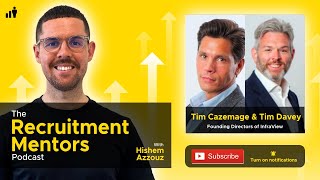
Tim Davey and Tim Cazemage, founders of Infraview, discuss what makes top recruitment consultants successful. They share their daily routines, how they shifted from billing to building a business, and the investments in marketing and systems that helped them scale.
Chapters
Welcome to the Recruitment Mentors podcast. My name is Hishem Azzouz. Today I'm really excited to be joined by both Tim Davie and Tim Casmage, who are both the founding directors of Infraview. Infraview are a specialist cloud and IT infrastructure technology recruitment business. They both founded the company in 2016 after both working for Stoughton May, and in which they both climbed the ranks to director level before deciding to set up on their own. For the last 5 years, they've been completely dedicated to building the number one recruitment brand within their markets. They currently have 9 people in the business, but due to continued success over the last 12-18 months, they have big plans to grow the business even further over the next 5. Chaps, it's a pleasure to have you on the pod.
Lovely to be here. Yeah, thanks for, thanks for the invite.
So obviously both of you called Tim, so we've sort of agreed that, Kaz, I'm going to call you Kaz. Tim, David, I'm going to call you Tim. All right. Just so everyone knows who I'm speaking to. So where we like to start on this podcast is ultimately the million-pound question. And that question is, Kaz, I'm going to come to you first on this to get your thoughts. So the question is, in your opinion, what characteristics and traits do you think make up a highly successful recruitment consultant?
Yeah, cool. First of all, thanks for coming to me first. No pressure there. Yeah, I think for me really over the years, I can just go on my own experience. You know, I think hard work, passion, you know, love your niche. Always be learning, remain teachable. And, you know, someone who's extremely hardworking. You know, I think there's this myth out there that you can make £1 million in your first year in recruitment, and it's just not true. You know, I think, you know, you've got to absolutely put the work in, put the hours in, and yeah, be extremely passionate about the market that you choose to do and live and breathe it.
Yeah, I love that. I love, love your niche. I think that's great. Tim, what about you? What would you add? What comes up for you if you think of your journey, the people you've worked with that have been really great? What comes up for you?
I mean, it's all the cheesy buzzwords, isn't it? Resilience, drive, motivation, determination. But for me, it's consistency. You know, if you're going to do something, make sure you do it consistently, consistently, whether it's marketing, whether it's LinkedIn, whether it's BD, whether it's resourcing, you know, find a process, stick to it, be there, do it consistently. And don't cut corners.
Love it. So look, so obviously we're going to spend quite a bit of time in this episode talking about the business journey so far, but I just want to just spend the first couple of minutes just touching on both of your careers as actual employees because you both built out successful recruitment careers before you started the Interview Journey. So I guess, Tim, let me come to you first, really. I guess what people would be interested in, obviously you work for brands like Esprit, Then once you went start on May. So I guess, um, for you, for you, Tim, then I'll come to you, Kaz. Like, what, what were some of the sort of early things in your career that really helped you excel your recruitment career, do you think? Like, what did you have to learn the hard way, or maybe what advice did you sort of receive early on that helped you move on your career? A lot of people listen to this, have aspirations to be top billers, start their own companies. Like, if we were to think about the early days and the years before Interview, what were some of the things that really helped you excel, do you think, and progress your career?
Yeah, I mean, that's a great question. I mean, I just think back to my— it's a long time ago, 17 years ago, my first year in recruitment and what I did. And I joined a company with about 15 people. There was a leaderboard on the wall. I wanted to be top of the leaderboard. So I I went and sat next to the top 5 people on the leaderboard and asked them how they did it, looked at how they did it, try and took ideas off the top 5 people in the room. I tried to mix all of what they did, throw in my own style to it, and then work harder than them and then sort of pick them off one by one. So I mean, I think the first year, it's the hardest year of recruitment, isn't it? Because once you know what you're doing, it's like boiling a kettle, isn't it? Once the kettle's boiling, it doesn't take a lot of energy to keep it boiling. Yeah, nice. A cold kettle from ice cold to boiling, that takes a lot of energy and a lot of effort. I sort of relate that to the first year of recruitment. You've got to do a lot more activity in the first year. You've got to understand your market, build your network, work harder than the person next to you to get ahead of them. For me, it was hard work. I was coming in at weekends. I was working evenings. I was doing whatever everyone else was doing but doing twice as much of it. You know, working double smart but double hard as well. Yeah. And eventually, you know, overcoming and rising up that leaderboard and getting to the top. So for me, it's— I mean, the first year is just, you know, working smart but working hard as well. Um, you know, if you work twice as hard as someone else— Tim Davie who works like Tim Davie, and then Tim Davie who works twice as hard, then the guy that works twice as hard is going to do twice as much.
Yeah.
All right.
So work hard and smart.
Yeah, I like— so, um, Kaz, let me change the question slightly for you. So, so basically, I guess what, what obviously people interested in are those sort of like maybe, and you might, you may go, you know what, Hishem, actually I didn't really experience these things. It was just consistency, hard work, showing up every day. But people interested in like those sort of breakthrough moments or those like aha moments or whatever, right? And a lot of people listen to this will have aspirations to get to that AD position get a director within their company. And obviously you achieved that at start of May, right? And as we were just talking, obviously if you've got people sat next to you like Tim Davie, who is gonna work double hard as you, you're competitive internally as well as you are externally in your markets, right? So I guess, were there any moments for you, Kaz, where you felt like maybe things clicked and you changed a certain way, maybe your mindset changed and shifted that you felt really propelled you to get to that AD position and then the position that you got to before you started Interview?
Yeah, sure. God, I mean, look, for me, I don't know if it's a good or bad thing. Nothing was ever enough for me, if I'm honest. And today I still suffer from that. I always want more, right? In work, outside of work, in relationships, with my kids. I want everyone to be, you know, I always want to have more. And when I first got into recruitment, I quickly just fell in love with it. I just sort of looked at, you know, an opportunity to make money double quick. And, you know, I was taught at an early age that, back to basics is key, you know. Be as thorough as you possibly can, be process-driven, but have that hunger, that passion, that desire to make it happen. So it was kind of like, um, I come from quite an aggressive sporting background, um, and it was kind of like I sort of put that sort of positivity but aggression and hard work into recruitment, you know. If I'm honest, I come from a landscape gardening background when I first got into recruitment, and I was like, I didn't know anything about it. I'd never walked into an office, never worn a suit. But I kind of very quickly thought, well, you know, instead of finding 2 CVs, let's find 4. Instead of working 2 jobs, let's work 4 jobs, right? And I was always constantly just trying to push myself and just work that little bit harder. But what was ingrained in me from an early age, my first ever boss, he was like, don't cut corners, be process-driven, you know? And this is what we've sort of implemented throughout teams that myself and Tim have grown over the years is like, you know, Yes, you can have all the passion, desire, and will to be successful, but if you cut corners, if you're not thorough, if you're not process-driven, you know, things are gonna fall short at some point of that process throughout recruitment, right? Recruitment is not difficult, okay? But people make it really complicated because they try and get to that end goal too quick and they miss what needs to be put into place from day one. So I mean, I go back to old-school profiling, pre-screening. I mean, I had to sit there and profile, you know, 50 CVs a day, you know, to stand there and open open floor sort of 4 weeks into recruitment and sell that to my boss, which was pretty intimidating, but it taught me from an early age, don't miss anything, you know? So yeah, for me, it's process-driven. Yeah, absolutely. You know, back to basics, don't cut corners, be process-driven. Because like Tim said earlier, you can have all the cheesy buzzwords, the hunger, the passion, desire, the drive. And look, if you, you know, you need that in any sales job, but you know, complement that with someone that's process-driven, you know, that's thorough, you know, that, you know, doesn't want to leave anything unturned, then yeah, that's a perfect blend. Yeah.
Okay. So Kaz, let me come back to you something quick and I guess you may say the same things, but basically I think I said to you before, so I dropped one of your old colleagues a message, Ollie, who basically, and he, he, he was just really interested to find out, like the question really was like, what's Tim's journey sort of been from his mindset of going from like being a massive biller, which is what he knew you as. To then maybe changing your mindset and style because then you had to go into more of a leadership role and then now obviously going into being a business owner and obviously the mindset that takes. Yep. So I guess what I just want to focus on is you being like a really high performing biller, right? I guess what I just want you to share with us is I'm sure you have plenty of people who have started maybe now and interview who sit down with you and go, Tim, I want to be billing what you're billing. I want to pit you to the top biller post, right? What prevents them from achieving that, do you think? What are the typical stumbling blocks that means that they don't achieve that?
So it sounds like there's a couple of questions there. So what stops my staff from being potential bullies? Because the first part of that, it sounded like you were asking me, you know, what was the change in the mindset transition?
Yeah. So we'll get, we'll park that. We'll go into that. I wanted to focus on the you being a high performer, which he was known as.
Okay.
And I guess I just wanted to talk a bit more about, so you're saying process is important, not cutting corners, all of this.
Yeah.
So I guess I just wanted you to share what comes up for you when we think about when people say, I want to be where you are, Kaz.
Yeah.
And then you see them go through certain stumbling blocks or common things that come up that prevent them from achieving that or them maximizing their potential. I don't know if there's anything that comes up for you.
Yeah, no, absolutely. I mean, it's similar to what we just sort of discussed in terms of, you know, make sure you, you know, you cover the basics, you're process-driven, utilize all the tools that are around you to be successful, whether that be technology or whether that be, like Tim mentioned earlier, well, who's the best in your business right now? Who's earning the most amount of money? Who's the most successful? Well, yeah, go and speak to them. Pick their brains, copy them, and then put your own spin on it, add your own personality and character, and be better, right? Yeah, and I go back to nothing was ever enough for me. So I'm hoping that when our staff look at top billers, what they should be doing and what we advise them to do is go and sit with them. You know, go and be mentored by them. You know, I'm a big believer of you can always, always remain teachable. I don't care if you've had 1 year recruitment or 20 years recruitment. You know, there is always something you can be learning from someone that has less or more experience than you. So if there's something there that, you know, that you believe that can add value to, you know, your process or your billings or your experience and get you to that point where you want to be an AD, then yeah, why would you not go to someone that's already been on that journey and prove success doing it, right?
Yeah.
Some people don't want to be an AD though, right? Some people just want to be a monster biller. Great. You know, other people that want to go down the track of being a leader, building a practice, growing a division, and then getting to AD. So, you know, I think it's about asking questions, you know, being surrounded by the right people, being in a business that can support, you know, your journey and your path. Cause you know, one hat doesn't fit all as we all know now in recruitment. It's not like, you know, coming in and do delivery for 3 months, go 360. That's not what recruitment is all about now. It's about utilizing your strengths where you can be most passionate about, you know, hopefully making the most amount of money, but enjoying it while you develop and progress.
Yeah, no, I really love the remain teachable and the fact that how long you've been in it and that still you see that as being a— so I just, I just think, I think that's where sometimes people can fall short. They don't remain teachable. So, okay, Tim, what about you? What comes up for you? Obviously, I'm sure you've been around high performers, people telling you that they want to be the top biller, you being in leadership positions, like any other stumbling blocks that come up for you that you think prevent people from achieving what they set out to or doesn't stop them from becoming what they could be?
Yeah, I mean, it's the cutting the corners and consistency thing again. But if that actual internal deep-rooted motivation isn't there, are people being true to themselves and real to themselves about actually, is that what they want? You know, it's like you speak to high-performing sports people, you know, they've had to make sacrifices. You know, so this guy yesterday, multi-gold medal Paralympian, you know, he wasn't going out and seeing his friends. He was making priority life choices. I mean, I'm not being as dramatic as recruitment's like winning a gold medal at the Olympics. But, you know, certainly if someone's saying the right things but mentally hasn't made that commitment to making that happen, because there are sacrifices you have to make. I mean, You know, if it was that straightforward, everyone would be driving Ferraris and earning millions of pounds a year. But it is commitment, being consistent, turning up every day, not cutting corners, and being true to yourself that you actually do want what you're committed to doing and then backing that up with that commitment and consistency.
Okay. So final question around this, and then we'll go into like the business journey. Just interesting. This is probably one of the most common questions that I get in my inbox from recruiters. So, Kaz, I'll come, I'll come back to you. I'm assuming here, but you strike me as someone that might be a quite disciplined person.
Yep.
And the most common question I get in my inbox is like, Hishem, please, can you ask high-performing billers what their typical day plan looked like when they was at the top of the leaderboard? Smashing targets compared to maybe what it looked like early on when they're trying to learn the ropes, making more mistakes? I don't know. Anything there that like, how did you structure your day for success basically? That's what people want to know.
Yep. So I can answer that really simply. So I still have a day plan now as an owner.
Love it.
Okay. Yeah. Okay. So I have a to-do list and I have a to-be list, right? So to-do list is—
To-do list and a to-be list.
Absolutely.
Yeah.
Yeah.
Okay.
A to-do list is, you know, will be done before I leave that evening. So when I come in in the morning, yeah. God, I won't bore you with the details, but I'm that annoying person that gets up at half 5 every single day.
No, no, I want the details. People like this shit.
Yeah, yeah.
So let's break down a normal day then. Let's do it.
All right, cool. So I get up at half 5 every single day without any grumble.
Yeah?
I get up, I pray, I do prayer, meditation. I get myself in the zone. I have breakfast. I get down the gym. I smash the life out of it for an hour and a half. And my thinking around that— is I've started before most other people. Yeah. So I've achieved something before most other people already.
You've won the day. You've won the day already.
I'm ahead of everyone, right?
Yeah.
I want to come first. Yeah. So whether you're a biller, a manager, team leader, or an owner, okay, I need to know that I am far more prepared and in front of everyone else. Okay. So, you know, I've already achieved something before I've even stepped in this office. I've got my to-do list. Yeah. Straight away. And that day planner, hasn't changed from when I first got shown it, printed it out, and had to fill in myself what I want to do, yeah, from quarter to 9 to quarter to 12. Then I've got to have my break, and then before I start again after my lunch break, what I want to do from quarter to 2 to quarter to 5, and then what am I going to do from half 5 till 7 o'clock, okay? So yeah, that hasn't changed, it's just got different activities now because I'm in a different role, okay? So I'm still regiment Yeah, I'm still disciplined. Yeah, I am. I've got my to-do list. My to-be list is, you know, who I want to be, how I want to be perceived, how I want to be as an individual, how I want to be as a leader, how I want to be as a manager. You know, I don't want to be forced.
Well, you write that down in the morning or you think about it, or—
Absolutely. Yeah. You know, and I work on that. And if I fail at that, I look at where I failed and I look at how I want to achieve and become better at that. Because, you know, I think a lot of people have, you know, it's all very easy to put a to-do list together. The hard part is to stick it, right? It's like anything. Tim mentioned the sport analogy earlier, but you know, what's the hardest part about going for a run? I ask you that question. What's the hardest part about going for a run?
Making— doing it.
Oh yeah, doing the run, putting your shoes on, right?
Putting your trainers on.
Yeah, putting your trainers on. You know, once you get going, you've committed, so you've got to kind of do it. Yeah, you're either going to do it— you're either going to do it really fast or do it really slow, but you're doing it. So that's done. Yeah, yeah. For me, the successful part is putting the actual trainers on. That's where the success comes. Once you've got to the end goal, i.e., you've tipped that line and you've beaten your record or whatever, that's just the achievement, okay? But, you know, for me, you know, nothing changes. I am disciplined, I am regimented, but, you know, I can be 100 miles around. I'm a bit crazy and a bit mad, but, you know, I've got to discipline that in a certain way. So, you know, like I said, you know, my plan hasn't changed. My activities do, as, you know, you would expect going from a super villa to then being a leader, director, to then being a founder.
Yeah.
But yeah, I mean, that's probably a long— I love this.
No, no, no, that's great. I love the to be fit. I love the to be part. I think that's awesome. I think that's such a great vision.
I think it's important. What owners or founders or leaders out there are actually looking at themselves every single day and going, who do I want to be? Yeah. How do I want to be perceived and seen? I don't want to be anyone in my office that when any of my staff Yeah. Meet me outside, whether it be a social event or on a weekend.
Yeah.
I don't want to be exactly the same person. I want to be approachable. You know, I want to be someone that they can come over to me and ask me and talk to me about anything. You know, that's how I live and breathe my life today. I want people to actually genuinely come up to me and be able to ask me whether it be work or non-work related. I think it's important.
And I think, I feel like I'm assuming here, but obviously that shows up then in your decision-making, right? If you've got a clear idea of who Kaz wants to be, your decision-making is going to be a bit easier because you can come back to these values or whatever you want to call them. Yeah. And what your decisions are.
Well, I think you can own what you know that you're good at and what you're not, right? I mean, yeah, you know, when me and Tim, you know, we both have the same sort of aspirations, you know, to take InfoView to be the number one sort of cloud and IT infrastructure technology recruitment company in the UK. But we're two completely different sort of personalities and characters. We've still got the same burning desire and passion to be the best. But we are completely different. So we got to utilize each other's strengths and weaknesses and lean and work on each other. And that was probably the hardest part. And that's probably a question you got for us later on. But I won't ruin that bit for you.
Okay. So, and then just final point on this, 'cause I think it's the, do you plan your to-do list the day before?
Like I said, Jed, my to-do list is done before I walk out that evening. Yeah, absolutely.
Okay, yeah, perfect. I just want people to remember that. 'Cause I think if people just start doing that one thing, they can start building great habits.
I think that is if you, you know, first day in recruitment or, you know, if you're a super biller, right. You know, if you stay average and like Tim said, if you're not, if you then become inconsistent and unregimented and undisciplined, there's only one way and that's backwards, right? Yeah. If you're going to continue to want to, you know, be better, you know, and go from a biller to a super biller to a monster biller, right. If you don't have that to-do list and it's not set out and planned, you know, you're setting yourself up for a fall. You know, how often do we see, you know, consultants coming here, you know, 5 to 9, meetings at 9 o'clock. They haven't had their breakfast, coffee. They don't know what they're doing. You know, we have a team meeting. What are you working today? I'm not too sure. You know what? We're not here to put a KPI-driven sort of, you know, horrible environment. But look, come on, we want people to take accountability for their own actions and, you know, take responsibility for their billings. And it starts, I believe, before they walk out that door. So they know exactly what they're coming into the next day.
Yeah, I love that. Tim, how— let's go into this business journey then. But as we go into the rest of it, like, how did you guys meet? Tell me about how you guys meet. How'd that happen?
Go on, David. I'll let you start.
David, the full story. About 21 years ago, I was going out with a girl and her best friend, her boyfriend was Tim Casemate. Okay. Our girlfriends were best mates.
Oh wow, that's actually how you first met.
Okay.
Yeah. Yeah.
Love that. That's how we first met. Then we had about 8 years of not being in touch really, but talking a little bit on LinkedIn that Tim was in recruitment. So obviously then, you know, we got on in the years gone by, followed him as a recruiter. When I was at StockMay, we were sort of in the founding days of people looking to grow. I noticed Tim changed his LinkedIn profile as if he was sort of teeing himself up for a new opportunity. So reached out at that time and then yeah, the rest is written in the stars really.
Love that. So cool. So Tim, like always like to start here, but like what gave you the confidence to take that step? Because a lot of people will talk about, will be down the pub looking at their payslip going, I've built 400 grand this year, I got paid this much, I'm doing it on my own, but never actually do it, right? I'm sure You've met loads of people like that. So what gave you the confidence, Tim, do you think, you personally, to start this journey, take that first step?
I think it's just belief in your own ability. Just, you know, maybe a slight bit of arrogance, but, you know, deep confidence that, you know, you can do this whether you're working for someone else or for yourself. And for me, I've done the same market since 2004. So, you know, I did that— and then I went to Stockton-on-Trent and there was no— there was no company when I started at Scott May, so I built the infrastructure practice there. So I'd already done it at Scott May, and I was like, well, I've done it for Scott May, I've done it before. In fact, there was no infrastructure practice at Manchester Black either. So I built that practice twice previously, so I was like, it's an absolute no-brainer.
Yeah, yeah.
With my belief in my ability to absolutely make it happen no matter what was thrown at me, that it was going to work. And, you know, we hadn't decided that Tim was going to joined me at that point, Tim came 6 months later. But, you know, it was always an absolute no-brainer that together we were going to be a force to be reckoned with in this space.
Okay. Love it. So just to like paint a picture for people and then, Kaz, I'm going to ask you that question that you mentioned. So obviously you're at where you're at now. There's 9 of you and I know both of you are really keen because of the journey that you've both been on in the last 12, 18 months. You've, you've done a lot of hard work to make sure, like when you're bringing people in now, you've got the infrastructure, you've got the processes to grow this business. So just quickly to paint a picture, so as you just said there, Kaz joined you 6 months after you started, Tim. So is it fair to say then what, for the first, what, 2, 3 years, was it like a small group of you just sort of smashing in deals? Like, is that what the business looked like in the first 2 years?
Pretty much first 2 and a half years was first 6 months, me in a room doing recruitment. Okay. Tim joined me, me and Tim in a room doing recruitment. Yeah. It was easy. We could do recruitment. That was pretty straightforward. So in fact, our office was smaller than this meeting room that I'm sitting in at the moment. You know, the door to the room sort of scraped off the desk once I put Tim in the room with me. So yeah, that was the first 2 and a half years. Then we started building out some delivery capability around us. And then at the start of 2020, we moved into this office here in Surbiton, which fits 19 people and took a decision to scale up.
Yeah, I love it.
Yeah.
And that's what I'm really keen to go into. So thanks for painting that. So I guess what I'm interested in, I think probably people can gauge it. Like when I hear Tim speak, he's got a different energy about him. Kaz, when you speak, 100 miles an hour, passion, energy. Like I'm, I think obviously a lot of founders that I speak to that are solo founders definitely say when I ask them, what would you maybe do differently? They'd say, I think it would have been great to start this journey with someone or have someone involved. Right. So, so there's both of you. After 6 months in, Tim, you obviously really bought into Kaz's ability and what he could add to the business. So I guess Kaz, to you then, like how, what's been the journey on both of you guys remaining aligned then on like what you wanted to achieve, right? So we were just saying 2 and a half years, like you've been on your own sort of journey, but since 2020 it's been a bit of a different journey. So talk to me about your experience of that. Like how did you make sure you and Tim were going in the right direct, same direction?
Yeah, I mean, it's a good question. And look, we're always, you know, we're— what's it— I mean, the first thing for me here is clear communication, right? Clear line of communication between us both. I mean, like, you know, like Tim said, we know each other for years, we've always got on, but it's always been going out there having a bit of a laugh. We've never actually— yeah, you know, we worked together at Stott May, we built a practice together, you know, we were both very successful, but we were against each other. Let's have it right. Yeah, you know, let's be totally honest, you know, he wanted to be top biller, I want to be top biller. One year I won, he won, vice versa, etc. So it's very different when suddenly you put two sort of strong-minded, passionate, yeah, top billers, um, that have always pretty much done it their own way. Yeah. Yeah. And, and it's always worked. And then suddenly put them in a room, then it's like, right, we're now working together. Who's making that decision? Yeah. Who's getting that overall say of, you know, uh, what, you know, what we're actually ordering, what we're doing, how we're growing, at what pace, and stuff like that. So for me personally you know, that was a bit of a challenge, right? For the first, you know, for the first couple of years, it's two guys sitting in a room doing exactly what they've done for many, many years, you know, doing recruitment, getting cash rich quick. But then when business decisions comes into play, you kind of got to work out very quickly, you know, who's doing what. Yeah. So I kind of sort of fall into the sales directorship role. Tim Davie falls into the operational director role. But we both do sales, we both win business, we both make money. But it's kind of like, I think personally for the first, when we realized that we wanted to grow and scale up and, you know, we moved into this new office, it was kind of like what I think the big thing for any owners or any business starting out, when you've got two different personalities, work out who wants to do what, you know, what are your roles, define them. Because if you don't, you are clashing, not necessarily in a negative way, but you find yourself sort of— Yeah, overlapping, right? And you find two people doing one job when actually one person could be doing it better, right? Yeah. And that for us has been huge over the last 18 months since we sort of, you know, clearly defined what Davey does, what Kaz does. Yeah, yeah. What does Davey want to do moving forward? What does Kaz want to do moving forward? You know, because together, you know, we're together, great, we get on, that's brilliant, you know, you know, we're good mates, you know, we're both good at what we do, but you know, that doesn't scale a business, right? We've got to make decisions that allows us to be interesting to the outsiders looking in. And if we don't know what we do, how can we put that across to people when they come in and go, well, where do you guys want to go? Does that make sense? Yeah, yeah, yeah.
I think what I take from that as well, which I think is really important, is that when you've defined those roles or what you want to do and what you are doing, all of a sudden then, like, you can very— you can both hold each other accountable. and you know what you're accountable for. And I think that, that instead of both of you being accountable, both of you being responsible for that, you can go, well, look, I'm, this is what I'm in charge of. I'm going to deliver this. And then it's that accountability piece, isn't it, on certain aspects?
Absolutely. Yeah, definitely. And then you're both, you know, you both use, utilize each other's strengths. Um, you know, if, uh, identifying where one person, you know, for instance, I don't, there's certain things I just don't want to do. Could I do it?
Yeah.
David's just far better. And there's other things that he doesn't want to do. Could he do it? Yes. But you know, why put someone through something that they don't want to do if someone else can do it far better and is going to enjoy it, right? You're just going to get a better result. And it allows you to, you know, free up time to actually execute the stuff you're really good at and do it to your best ability, right? So that for us has been massive, you know, since we've realized exactly how we define those roles.
Love that. So Tim, let's talk about 2020 then. So obviously got this office space that you're now in, which I've seen online and stuff, which looks great. Like, just talk to me about from your perspective. Well, I'm really excited to go into like maybe some of the key things that you've both made decisions on, that you've implemented, that you've invested time in that have really set you up to scale up. But what, Tim, what changed for you personally? Or you could talk for both of you below. Anything change mentally? But what sparked the light? You know what, let's give this a real go in terms of growing this out of interest.
Yeah, I mean, it started before 2020 with the plan to get into the office to to actually analyze and make a plan for what we wanted InfoView to look like moving forward. So, start of 2020, we moved into the office and the plan was always to fill out this office and to grow. Whilst COVID gave us a slight hiccup, but we still thrived through COVID. It did give us a bit of time, I suppose lockdowns and things like that gave us the time to look at putting some processes into place to scale up. So, outsourcing our marketing, outsourcing our finance, and going to discount factoring as opposed to using Solvay, moving to Vincere and integrating CRMs and internal processes, putting together an onboarding and development program that Tim's put together. And there's sort of the extra time that I suppose lockdowns maybe afforded us to put in.
Look inwards. Yeah. Yeah.
Yeah.
Yeah.
Okay. So let's break this down a bit if it's okay, Tim, and then Kaz, you could jump in when you want to. But I get, because I think this is what agency owners is going to— This is what agency owners, like one of the most common questions I get. So I know you guys are at 9, right? But I think obviously we can all agree you've really done the hard yards to make sure like when you're at 20 people, 15 people, 19 people, like what you've done the hard yards on is going to enable you to for this business to be successful when you've got those people. So a lot of people ask me, Hishem, there's 10 of us, there's 5 of us, and like, what advice can you get from people to help me go from 5 to 15 to 20, et cetera? So let's just break this down a bit, Tim, because you said a few things there, right? So I guess first question I have to uncover some of the key areas. So what would you say have been the most important areas that you've invested time, resources, money into the you feel has given both of you confidence to go, you know what, if we do have to get another 10 people in there over the next 12 months, we're going to be good and they're going to be set up for success.
Like what?
So you mentioned marketing, finance, like what were the key areas that you've invested in? Yeah, kind of all of them.
I know that's the easy question, but our internal processes as well. And we still haven't finished that journey. So at the moment we look at our first back office into internal person. So we're looking for an ops manager to pull together all of those processes, get into mine and Tim's minds and take everything out of there and put it into an operational, you know, structured process. But I mean, marketing is a big one for us. Both me and Tim are really keen that our perception out to market is as strong as, you know, the perception that people have who've engaged with us. So we hired a marketing guy, Jake, internally. Who's been fantastic. And then alongside outsourcing, alongside of that, to our digital agency and another marketing partner.
So marketing, so marketing's been a lot you've been invested in.
Well, marketing's been key. CRM. So we were on a CRM that wasn't really sort of fit for our needs. So, you know, analyzed the market and yeah, chose Vincere, which has been fantastic for us. So that's been great. Pulling together again the internal processes. But then moving away, as we've grown out our contract offering, moving away to an outsourced finance provider that manages paying bill contractors, timesheets, taking that all the way from us having to do it, as well as all the payroll and back office and all that kind of stuff. So yeah, 3 separate things there. Internal CRM, that is the heart of everything that goes on from a sales perspective, marketing for external, and finance for obvious reasons.
Okay. And then what I'm interested in, so am I right in saying then you said, so Kaz, you've spent time on development, like, is that like for a consult, like someone that joins your business, what their journey looks like at Interview? Is that right?
Yeah, absolutely.
Is that one of the things that you did?
Yeah, I think what's important is anyone coming into any business at any level needs to know that, you know, where can they go? What's the path look like? How can they develop? What training do they get? You know, who are they going to be surrounded by? You know, make sure there's no ceiling, right? And like Tim said, as a business, you know, through COVID, we looked at our business inwards as opposed to outwards. Outwards, we were great, loads of clients, loads of business, really successful, catch-rich. Inwards, it was like, okay, well, we're probably wearing too many hats. We're doing a bit of marketing, bit of branding, you know, we're doing the finance ourselves. It was like, right, let's just outsource the areas that are bogging us down. Allows us to look at, you know, our company in terms of, you know, where are not necessarily the failures, but what need more enhancement and development. Right. And, you know, we need to put an onboarding structure, training development plan, which we've done now for trainees, what we've done for consultants, what we've done for leadership and management. Okay. So, you know, it's been brilliant. You know, it's early days and far from the finished article. But, you know, we are still a 9-man business or a 9-man and woman business. But, you know, it's been really successful. We've had 3 new starters over the last 6 weeks. Feedback's been really positive in terms of the onboarding and the initial sort of training and development. But I think what's really key for us is to have that clear, concise message. Yeah, from the top. So everyone knows exactly, you know, what our business is, what we specialize in, where we want to go, and what the strategy is to to do that. And let's face it, you know, if you're hiring people in, whether it be a trainee or a senior consultant, they are part of making that strategy work. They're part of going on that journey with us. So if they don't see it, buy it, and are committed to it, it's not going to work. Yeah. You know, we're all about that, bringing people in together and making decisions collaboratively to, you know, to buy into that.
No, I love that. So Kaz, just quick one.
Yeah.
So as we were saying before we started, right, I think a lot of agencies right now, um, see the opportunity that they have to place the jobs that they have. Like they've got jobs coming out their ears and really, uh, sort of there's a lot more trainees coming into the market, right? And one of the most common things that I hear from young professionals as to like what one of their main drivers is or motivations is, is progression. Like yes, the good earning potential, incentives, all of that. But as you just said, if I can join an interview, sit down with you and you go, right, this is where we are today, this is where we're going, and this is the part you can play. And if you do these things, this is where you can go. So I think this is where sometimes I think a lot of smaller growing agencies fall short because they may think, oh, well, we'll think about a career plan or whatever when we're 15 people, 20 people. Right. So can I just ask you, you don't have to go through like day by day, but what did your— like, I guess what did it look like before? Rough picture of like, what did it look like if I joined Interview? What did it maybe look like in terms of my onboarding, what my career progression, the structure looked like? And then two, like, what, what does it sort of now look like? Again, don't have to go into like day by day, but like, what does it now look like if I join? How long is the onboarding? How have you mapped out the career journey? Have you got like a sort of leadership path with more people? Have you just got like a billing path? I think that would be really helpful for people. Yeah, got it.
So I can go, I could probably talk for an hour about that, but what you'll get to know about me is I'm really transparent and honest. Right. So when we first started 2 years ago, we didn't have any onboarding. It's the truth, right? We didn't have, we didn't have an onboarding.
That'd be really common.
Just being honest. Right. You know, and we hired people that we knew that we worked with in the past that we trusted and liked and knew that would be able to come in, slot into our market, into our business and make money. Right. So we kind of sort of by default didn't have to worry about the sort of ongoing training program because we knew these people and you know, they were trusted and liked to us. So, Yeah. First couple of years was just, yeah, just doing what we've always done for multiple businesses.
Right.
So like I said earlier, when we actually looked at our business inwards and how we want to be seen from the outsider looking in and how can we make our business repeatable and scalable, you know, and appealing to all levels.
Yeah.
Whether it be a trainee or a senior recruitment consultant, we've now put that in place. So I think it starts from the very beginning, the moment they walk through that door, you know, for us, both Tim and I and, you know, the current leaders within our business, we want to make sure that that is cemented the moment they walk through that door, that they have made the right decision. Yeah. So we have an interview process which is 2, 3 stages, sometimes longer, you know, and then suddenly they've got notice to serve, you know, and let's face it, they could be sitting there, you know, worried, thinking, have they made the right decision? Have they not? Or just super excited about walking through. So that level of excitement needs to be absolutely maintained the moment they step through. So their journey starts, yeah, at that induction. So, God, I won't go step by step, but once you've done all the housekeeping, right, you know, for us we do a big presentation, yeah, around, uh, um, you know, uh, our why, how we do it, what we do, our journey, our team, our division, our clients, the future, you know, and, and, and how he or she will play a part in that. You know, and that's not just a stand-up, let's chat for 5 minutes. You know, that is a 2-hour presentation on almost, like I said, cementing why they accept it and are excited about joining us. And, you know, we could go in, you know, all the bits about profiling, pre-screening candidates, you know, how to map and build a market and a division. All of that is implemented and it's all sectioned, it's all categorized. But instead of stick— we're not old school. Sort of large, aggressive recruitment. I don't wanna name names, but it's kind of like we don't stick people in the meeting room for 2 weeks and then go, right, go, here's a postcode, here's a skill set. Yeah, no, exactly. You know, it's ongoing development and training. And you know, generally they will start doing delivery off the back of our existing customers and positions that we have. But we will then with them carve out a path that is either going down a super biller route or a team lead or a building a practice. Practice, which involves still staying within our core cloud and IT infrastructure, building a market out of what we've already got in place to then, you know, hopefully go on to be, you know, AD, director, and then head of perm, head of contract. Yeah.
So you've mapped all that out, the different routes.
Yeah, it is all, you know, yeah, everything is, you know, the roles, the roles and duties and responsibilities each step of the way is mapped out, but the onboarding training development is a separate mapping document, if you like. So they can visually see the moment they walk through this door, you know, what they're involved with. And it doesn't involve, like I said, sitting in a classroom watching a video or talking to a non-biller that doesn't know how to recruit. And then in 2 weeks' time, given the postcode, go for the database, pick a client up, sound really rubbish. Now we want to nurture who we hire.
Yeah.
And make them sound knowledgeable, become a specialist in our niche.
Yeah.
So when they do go out and start attacking the market and start building out a network, whether it be candidate, client, or both, they sound credible, knowledgeable, and you know what, and get excited about it. You know, be excited. We want, you know, we want people to be excited about coming into Interview and becoming a specialist in our market. You know, we live and breathe it daily. So, you know, we'll do everything in our power to get them to that point. And if it's not structured and it's not mapped out, and we aren't all committed together and we can visually see that, how can we possibly, you know, get the best results?
Yeah, I love that.
Thanks for sharing that. Love our niche. But yeah, we've mapped out the two different routes, whether it's the recruitment consultant with sales BD or it's recruitment consultant without sales. Both are just as valuable nowadays. I mean, back in the day it was, you know, just throw 360s at it. Yeah, yeah. But, you know, we have We have the sort of, I suppose, what you call the 270 model and the 360 model and the 180 model running in tangent. And then there's the super biller route or there's the billing team leader and growing a team route. So yeah, we have both of those documented and structured and each step of that journey documented on the InfoView team site, open for everyone to see and the goals to attain to step up on all of those different journeys.
Now, Kaz, thanks for sharing that. I think that'd be really helpful for people. So, so Tim, obviously what I'd be keen to get your thoughts and then Kaz feel to add to it as well. So obviously that journey then that you were just talking about, it's safe to say that there's a lot of firsts in there, right? Doing things for the first time, mapping these types of things out. Obviously, Tim, I've always seen you at a little networking event, mate. Yeah, love showing up there. So the question I have for you, because it's a really common one I get from agency leaders, is like, what have you— have you ever gone down the path of getting help? If that's maybe an NED or getting advice or whatever, like obviously these things that you might have obviously looked to get help with, like what's, what's been your journey with that? Because a lot of people ask me, Hishem, it'd be great if you could ask agency owners like how they've gone about getting a good NED or how do they do that and these things. Like, did you go down that path at all?
Yeah, I mean, are we mentioning names and networks and things?
Yeah, well, you, you tell me like whatever you want to share that's, that's helped you. That's what people are interested in.
Yeah.
We're great recruiters and we're great leaders, but we're running a business for the first time whilst we've run businesses within businesses. We're not so arrogant to think that we know everything about everything. So yeah, we definitely reach out for help when required. And we've leaned on a few different people. We've met some individuals, but I mean, probably worth mentioning the recruitment network.
Absolutely.
James Osborne, Gordon Stoddart. I mean, we've been members with them for a long time to lean on them regularly for advice. And then the rest of the network, I mean, like you say, networking events, you know, business owners, business leaders. So, you know, there's a few that we liaise with on a regular basis and, you know, we go to for support and we're happy to share as well. So, you know, it's not collaborative.
It's not like one way. It's not, you know, taking, it's give and take.
But back in the day, it was like, you know, there was always that kind of, I don't want to see any other recruiter. I don't want other recruiters to know what I'm doing. And, you know, that was so, you know, 10, 15 years ago. But yeah, sharing what we do with others and learning from others along the way. So, you know, there's a few businesses that we really rate and, you know, we not try and copy, but, you know, learn from what they're doing well and then put the Interview Stamp on it. You know, then we're members of Members Only and RecWide as well. Yeah, we met you at, you know, industry events and all that kind of stuff.
So So it's been quite organic then?
Yeah, I mean, it's just developed over time. So I mean, you know, we're friendly guys, so, you know, we network quite well in the industry, hopefully now. So, you know, if we don't know something, we are quick to, you know, go out and lean on a network and find that out. But yeah, recruitment network, James Osborne, Gordon Sutter, have been fantastic in the last year. The doing recruitment in a room with other recruiters helping us facilitate further, that's easy, but putting in scalable growth plans, you know, they've been invaluable.
Nice. I mirror what Tim said. I mean, we've absolutely utilized, you know, additional strengths around us. Why wouldn't we? Yeah. You know, like we said earlier, when you asked the question, what advice would we give to an up-and-coming consultant that want to be a super biller? Well, go to, you know, the best consultant in that company and ask them. So, you know, if we're looking at other businesses that are slightly further on that journey, you know, that have built a decent professional, you know, recommendable business, why would we not go and pick their ideas and, you know, lean on other people that have done it before and done it well? You know, for me, that's smart.
Yeah.
You know, we're going to put our spin on it. You know, we've run and built multiple divisions in various businesses and all have been successful. But yeah, why would we not lean on other areas that, you know, perhaps is slightly out of our remit or we haven't had experience of and yeah, see if we can then, yeah, use what's around us. So yeah, absolutely. Absolutely. And yeah, for us it's been—
Yeah, whether that's small stuff or big stuff, isn't it? I mean, whether it's just finding advice of who can create you a new terms of business. I mean, that's not a massive thing, but you use a few people before and get—
Yeah, so that mindset that Kazza just said has meant that you were in different places, you can get advice, different things. So it's just that open-mindedness to be teachable or be willing to take advice from other people. And then you can tell that to different parts of your business.
Yeah. And then, you know, podcasts, your podcast. I mean, I listen to lots of different people's podcasts and, you know, these sorts of things. I mean, you know, I learn from, you know, your podcast as well.
Yeah, I love that. So cool. So like coming to the, coming to the end here. So couple of things, I guess, just sort of a couple of wrap-up questions. So Kaz, to you then, obviously seems like since 2020 it's been quite pivotal in your business journey. So if we were to just think about, maybe what, like the last year and a bit, a year and a half. So like if we think from COVID to like now, yeah, for you personally, what's been like one of the biggest learns that you think you're gonna take or continue to take with you moving forward in your business, personally, professionally? What are some of the things that you really— I know you're someone that takes, tries to take the positives from things. Yeah. What's been one of the main things that comes up for you that you really learned in this journey that we've been on all along, that you're going to really take with you forever moving forward, professionally or personally?
Okay, so, so I've learned loads. Yeah, so, you know, uh, there's no quicker— there's no quick answers to that, honestly. Um, you know, but what I will say is what I've learned, what I've challenged myself on, is probably what I want to answer, is I've learned to let go more. Yeah, so I'm one of those guys that tried to do 101 things all the time myself because I've always had that mindset of, well, if I know it and can do it and I can I'll just do it. But actually what that started to do was stopping me from looking at the wider picture, the bigger picture, you know, where Tim and I want to go as a company. How do we scale?
How do we grow?
Where do we outsource? All the things that we've discussed today. But, you know, internally from a sales perspective, you know, how can I progress and develop my staff? They are key.
Yeah.
Our staff are key to the success of Interview. Me and Tim, you know, realized after year 2, year 3, We can't grow this business ourself. Yeah. We need to hire top talent in. And when we get top talent at any level, we need to nurture, build, grow, and develop them. Okay. So we need to stop doing everything ourselves. Okay. Even though, you know, we still love recruiting and we still want to be part of it and want to bring business in and make money. But actually over the last 12 months, since we started to develop more internally, letting go, letting these guys take accountability for their own actions, in terms of whether it be more candidate care, whether it be more client exposure, you know, starting to win business themselves. Because, you know, we have been very lucky and we've made that luck throughout success over the years of just living and breathing this market. 85% of our business is exclusive. You know, we work with top leading tier number one MSP solution providers. And actually our business has been very top-heavy delivery where, you know, it's been great. But since off the back of COVID we've now nurtured internally and given these guys more accountability. And what's come off the back of that is we have had a complete uplift, yeah, in talent. And it's been sitting right in front of us. You know, guys and girls have been coming out their shell and taking more responsibility, more accountability, making more money, taking more ownership. And, you know, organically that's developed them. And then we put a plan in place to take them on that journey and develop them further. So yeah, In short, but not so short.
No, no, that's great. Letting go. I think that'd be really common for people.
That's awesome.
Absolutely.
Love that, man. Good on you.
Succession planning. Succession planning and putting the right people in the right places. Yeah. And that's just maturity as a business. We didn't need that before. What we needed 2 years ago is very different to what we need now. But ultimately, people's development and giving them stuff to strive to, that's what we've really nailed in the last 12 to 18 months.
I love that. So let's wrap this up then, Tim. What are you most excited about, mate? I can sense like the journey you guys have been on, the hard work you put in. Let's finish it there. Like, what are you excited about? What are you excited about the future of InforU? What does that look like?
Just everything. It feels like we're just at the beginning as well. So yes, we're 4 years in. You know, we had a bit of delays of COVID in terms of growth, but I mean, it feels like we are only just starting now. So, you know, years 1 to 4 was, yeah, me and Tim in a room doing recruitment, you know, getting cash in the bank and making sure we can work together. I mean, that's been a note, you know, that's been pretty, pretty straightforward. But, you know, we, we kind of are building InfoView from here forwards. This is where it starts. This is the scalable, exciting point where we turn ourselves from a, you know, really successful startup into a, you know, a really exciting scale-up business. So that's the excitement for me. Yeah, it's begun with the onboarding of the 3 people that we've hired in the last 6 weeks, and it continues to develop from there. So I'm looking forward to this time next year when we, you know, say we don't want to renew the lease on this office, and, you know, we have a leadership team, we all agree that we want to push on to the next office in the future from there. So that for me is what's exciting.
Love it. Kaz, what about you, mate?
How much more there is to do. Yeah, you know, Tim said absolutely perfectly there, you know, we've only scratched the surfaces. We've only just started. Yeah, yeah.
What a great feeling, right? 5 years in and you feel like, you know what, we're just fucking starting. Let's go.
Absolutely. Let's do it. Let's go. And it is the people that we hire right now that are going to make that difference to our business and transform it. Yeah. Um, you know, so I'm going to finish off by saying, someone said, you want to be a lifestyle or do you want to be a scale-up business? And we don't want to be a lifestyle business. We could be a lifestyle business right now and just sit here and just have a couple of guys delivering the roles we work pay our mortgages off in, you know, God knows how many years. And that's not what we want to do. You know, we're hiring top talent, you know, at all levels to come in and be part of this journey. It's going to be super exciting. And yeah, I just can't wait to see it just transform into that next, you know, number one leading cloud and IT infrastructure technology recruitment company.
So yeah, love it.
Watch this space.
Let's go.
Tim and Tim, it's been a pleasure. Thank you so much.
Brilliant. Thanks, buddy.
More from Hishem




You don't need as many clients as you think to bill $1 Million A Year In Recruitment



From 30 Direct Reports to Back-to-Back $1M Years as a Solo Recruiter with Zach Creighton



