Tim Lawrie - The importance of becoming comfortable with giving away responsibility to grow.
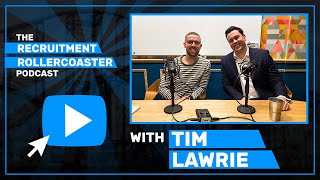
In this episode of the Recruitment Rollercoaster podcast, host Hishem Azzouz interviews Tim Lowry, founder of Projectors Consulting, a specialist med‑tech recruitment agency. The conversation covers several themes: the importance of delegating responsibility to foster creativity and growth; practical time‑management tactics such as structured planning and protecting focus time; the 2020 vision to double the sales team, expand into the United States, and build a management training pipeline; the emerging shift in recruitment toward consultative, value‑added services like employer branding and onboarding support; Tim’s personal approach to work‑life balance, including the Five Pillars framework (business, finance, mindset, health, relationships) and his first marathon challenge to boost mental resilience. The episode concludes with Tim’s core advice to recruiters: don’t try to do everything alone—seek help and collaboration.
Chapters
Welcome to the Recruitment Rollercoaster podcast. My name is Hishem Azzouz. Today I'm in another WeWork. Love to know how many WeWorks I've been in. Um, I mean, another WeWork. I'm joined by Tim Lowry, who is the founder of a recruitment agency called Projectors Consulting. Um, and you guys specialize in the med tech industry, don't you?
That's exactly right, Hishem. Yeah, thank you very much for inviting me on.
No worries. So, um, I've actually been looking forward to this, obviously having sort of getting to know your business a bit more. I'm really excited to sort of hear about the journey up until now.
Excellent. I look forward to sharing.
As, uh, as I was saying beforehand, where I always like to start on this podcast and this show is sort of how, how did Tim enter the, uh, recruitment industry? Let's talk about that.
Yeah, um, like a lot of people, um, at the time I sort of fell into it, but at the same time, um, there was some, some sort of method to the madness. So, um, essentially my wife, um, got a job or was working in London at the time, and we were living in Northampton, a little bit further up north. And I started to look for jobs in London and registered with a couple of recruiters. And then just the classics, so PRC, whatever you want to call it. Classic flip. They were sales recruiters. And met with CD, CD Recruitment. CD Sales Recruitment at the time. And yeah, got to know those guys, seemed like a great environment, good people. And yeah, went from there really. So yeah.
What was you doing before recruitment?
So I was in different sales jobs. Yeah, I did—
Sales?
Yeah, door-to-door sales for a while, which was always a good grounding. Yeah, good grounding. And the charity sales as well. So charity fundraising.
Yeah. So a lot on the street.
Yeah. All that sort of thing.
Thing is, you— Tim's actually really quite tall, so you're not going to be— was you really tall at that point? Not something that you could miss.
Threaten people. Yeah. And then also as an estate agent for about 18 months.
An estate agent?
Yeah.
So the proper sell— you must have been the perfect rep-to-rep candidate.
Yeah, I think I was. Okay.
So, um, join CD, um, and then just sort of— let's talk a bit about that for a second. And how long was you there for? Was it like 4 or 5 years? I saw—
yeah, 6 years actually, almost to the day, I think.
That's— I mean, that's a real solid stint for your first recruitment role.
Yeah, I mean, it's a good environment. I've got the opportunity to progress within the business, um, you know, good opportunity to earn as well.
Was it just the classic route of joining as a sort of trainee or consultant and then you become a manager?
Yeah, yeah, the classic sort of route started as, um— they had a slightly different model as they do in terms of BD, okay, teams and delivery. Been also a manager, kind of a sort of 180 model, 120 almost. Really? A model, yeah.
Okay.
I think that works out in terms of percentages. Yeah, but degrees or whatever. So you'd have a BD that'd get the job on, a consultant that would find the candidates, and then a manager that managed the process, if that makes sense.
Oh wow, really?
Yeah.
Okay, so just to sort of frame that up then, so we're there for nearly, uh, pretty much 6 years on the dot, joined as a consultant. Did you go into what, the BD team, or did you go?
Yeah, moved to the BD team. I'm starting construction sales recruitment. Okay, so which had great success there. Worked and got mentored by a great boss, very sort of tough love, very direct feedback.
Yeah, yeah, yeah.
Sort of live in the bear pit, so to speak.
Okay.
Which was an amazing grounding. It's obviously tough at the time getting such direct feedback, you know, right there. But actually it was unbelievable. I chatted with Colin Chandler and then I moved into the IT side of the business.
Okay.
In a BDM role.
Yeah.
And then medical, med tech basically. Really?
And then what did you, so what, you grew that from scratch?
No, I took over the team. So there's a chap that was running it that moved into another company, as it happened. Okay. The opportunity to step up.
And then how long was you in that role?
About a year, something like that. Yeah.
A year. And then in that role, you was what? You had a team that you was—
Yeah, there's about 4, 3 or 4 of us, I think, at the time. Yeah. So BDM, couple of consultants as well. So we're doing really well. But I think at the time I had that kind of bug to try and do something myself.
Yeah.
That makes sense. So there's a great opportunity within within medtech and to grow something specialist on a global scale.
Yeah, yeah.
I looked around the market and there was, there's no one really doing it actually. And our market is, you know, is incredible. It's growing all the time. It's actually set to really explode over the next decade as well.
Yeah.
So now's the time kind of thing.
So let's just talk a bit about before you got, before you obviously had that real— you're talking about there, sort of you, the thought process of you want to start your own agency. So what, I mean, what, what's, what sounds great about that is it seemed like he was always in a sort of real heavy BD sales focus role, which typically if I think of the messages that I get a lot is like, that's the most challenging part for a lot of people, the BD, the, so that type of piece. But I guess to sort of round off that experience, you mentioned it a bit there with the mentor that you had. What early on, what were some of the challenges for you? Let's just start there for a second. What were some of the challenges early on when you was a consultant?
Okay, so we are in the early days in recruitment industry? Yeah, yeah. I think it's, yeah, it's definitely about to some firing recruitment the first sort of few months. You know, it's tough, it's a much more direct sales environment than B2C, so the state agency and those kind of clients, if that makes sense.
Yeah.
Obviously the control, if you know, if you're inexperienced, the control you have over certain scenarios and situations isn't as good, if that makes sense, in terms of making sure, you know, your candidates are on point with, you know, they're actually gonna go through interviews and what have you and they're well prepped, et cetera, the clients are committed. And then obviously balancing everything as well, like that kind of balancing all those spinning plates, if that makes sense. So trying to control everything. And I think the way that I did it, and I'd always suggest to other people to do it as well, is just work through it. Just work harder. Yeah, just work harder, learn, be a bit of a sponge.
How willing was you to take that tough love feedback then from the chat?
Yeah, I was fine with it. Yeah, I've said at times, sometimes you're like, okay, you know, but I think like a lot of things, if you get feedback, reflect on it, you can improve, and improve. Yeah, and it's great. And then you can, you can, you can be a better version of yourself going next day and keep on going onwards and upwards. So it was really good for me, actually.
Really?
Yeah.
What, was you a good builder?
Yeah, yeah, I did, I did well.
So what was your best year?
So presidents clubs and that sort of thing. So because of the, the way they did the, the model, I built 560, but it was like this 120 model, if that makes sense. Yeah, yeah, yeah. My best ever month was 98, 97, 1.
Really?
Yeah. Hell, it was over 100 and someone didn't start, basically. Ah, really? I'll always forget.
I always remember 98. Oh mate, so, so how that would work is obviously, so your role was to get the, the job piece, right? The client piece.
That, that was actually when I was consulting, filling the roles. And then when I was on the client piece, um, it was a new startup team basically we did. So got like a couple hundred grand, something like 250.
Did it— how much, looking back, how useful or helpful was it that you, you were able, in that environment, you was really able to focus? Cuz that is definitely, if I think when I started, for people out there, as you were saying, juggling and spinning the different plates and stuff like, how helpful was it like just being like, just really focusing on your craft?
I think the culture was very focused.
Was it?
Yeah, there wasn't too much, yeah, everyone had fun and what have you, but it was a focused culture that sort of led from the leaders there and the directors, people like Brad and obviously Colin that I mentioned as well. So the culture was, you know, work hard culture, if that makes sense.
Put the work in.
Get your head down and what have you. So I think that probably helped actually.
Yeah.
But generally speaking anyway, I was kind of focused on trying to want to build something up and build up a career.
Really?
I was pretty serious about. Trying to be good, if that makes sense. I wasn't just there to earn enough money for the weekend. I wanted to be good.
To round that off then, what— so for those that are listening that may be early on, year in, 18 months in, or even earlier, what's the sort of advice from the journey you've been on now, which is, yeah, again, having your own agency, and it's been a while since you was back in those days, nearly done 100K, 100K a month. Like, what's your sort of go-to advice for your whole learning experience and hiring people now that people can sort of benefit from? What do you typically— yeah, what's—
I would say, yeah, just from my perspective, I would say to people, it's, um, it's about getting your head down, learning, um, not letting your ego get in the way, if that makes sense.
Yeah.
And realizing it's a long game as well.
Yeah.
You're not going to be, you know, an absolute legend overnight. You don't be brilliant at what you do overnight.
Yeah.
Um, learn, develop, try and be better every day at what you do. Look at, look at the great people in that business you're working with, how you can learn from them as well. Ask questions, look for feedback, look for criticism.
Did you naturally do that early on?
Yeah, I was actually. I was definitely a sponge looking for feedback, definitely. I think it does separate people. I was reading like a sports book the other day and they were saying, is it like a football manager? Yeah. Ancelotti, Everton fan, so I thought I'd read his book. And he was saying—
You're an Everton fan? Yeah.
What the fuck's that about? I know. I still don't know myself, still regretting every day. But he was saying the players that used to come to him that wanted criticism, like Ronaldo and Ibrahimovic, Yeah, the average players that had a really bad career, the ones that didn't care or they didn't want feedback or they couldn't handle, um, feedback directly. Yeah, those guys are like, look, what could I do better in the last game? Even though an amazing game's called hat-trick, whatever, they're like, yeah, yeah, criticize my game.
I think that's quite interesting, mate, because I think—
get that a little bit.
Yeah, I know, I think you're completely right. And I think in, um, today's world as well, the, the younger people coming through, how, how many people in today's world do you like taking criticism? Not sure.
None of us like it.
Become a bit more difficult, isn't it?
Yeah, it's more difficult now.
Like, people don't even like getting 2 likes on their post and they're like, yeah, about that, do you know what I mean?
And you know, that, that's, I guess, the age that we've moved into. And obviously this was like 12 years ago, whatever.
Yeah.
So, you know, no, no, I didn't even exist.
So it's come up a lot. So look, if you're, if you're listening right now, who, who around you is— are the people that you want to be learning from? Are you asking them questions? Are you actively trying to seek feedback? I think that, that's great advice. Um, So have you always wanted to have your own business then? Like, what did— did the sort of recruitment help sort of fuel that entrepreneurial spirit?
It definitely helped to fuel it, really, without doubt. I think, um, I was kind of searching, I guess, like a lot of people, what I want to do. I didn't really know. Yeah, throughout the majority of my younger, younger kind of days in life and what have you. And then, um, you know, it's a great industry to be part of in terms of, you know, if you, if you start to excel at it and be, you know, be good as a recruiter. It's a great platform to then go on and do all sorts of things. You know, other people have gone into different markets and obviously stayed within companies and grown with it. It gives you an amazing grounding, I think, in terms of sales, in terms of organisation, all sorts of different skills you need, people skills. But yeah, it's something that I thought about for a while and then the opportunity kind of arose in terms of my personal life as well. My wife was pregnant with our first, my son basically. So I was like, look, if I don't do it now—
When you going to do it? It's always interesting that my old boss I used to work for, he started the recruitment business when his wife was pregnant. And it's like, if you were to look like strategically, why would you start a business when you have a kid? Do you know what I mean? But it's actually happened. I've spoke to a lot of people. I remember the recruitment days where you spoke to a lot of people and actually started a business around that period. 'Cause I think it's that sort of ultimatum. It's like, wow, okay, shit's about to get serious. Like there's gonna be way more responsibility. When, if I'm really been thinking about it, like, yeah, when, when is there going to be a better time? So what did you see in them? So that definitely impacted your decision making. What did you see in the medtech piece that, that really sort of thought, you know what, this is it? What was anything there that in hindsight?
I think there's, there's a few things actually. So first of all, the markets are great to be part of in terms of the actual companies we're working with, the products they're making, making a real difference to people's lives. If you see some of the videos out there on YouTube, even of medical products and what have you and what they're doing. So that's awesome to be part of that industry. So I've enjoyed it from that perspective. The growth in the market as well is huge and it's always gonna be changing and innovating.
How did you determine that out of interest? Just in terms of the growth? How did you sort of determine strategically sort of look at?
I think it's just realizing that ultimately We've got the world population is growing, right?
Yeah.
And that's down to medical technologies and other technologies as much as anything.
Yeah.
Everyone's living longer, so that creates a bigger opportunity. We all kind of want to live forever, or, you know.
Yeah, definitely.
Definitely, you know, the best life we can live, the healthiest life. We want that for our friends, for our family. So holistically, people can invest in—
Yeah, yeah, smart.
And it's, you know, it's a safe market as well in terms of, you know, global economies and what have you. Again, because of those reasons, you know, if we've got a last couple of quid to spend, you know, and it can help us if we're not very well. We're probably gonna spend on that instead of health as well.
Yeah, exactly right.
I think it was—
what have you got, mate? Yeah. Okay, cool. So, um, when did you start the— when did you start Projectors? I saw it was like— how long?
Yeah, so it was what, September 2012? Yeah, 2012.
So, okay, so let's think about the sort of first year for a second. Cast you back to— so your, your wife Obviously pregnant, first child. How many kids have you got now?
So you've got 2 now?
2 now, yeah, cool.
7 and 5.
So first child, and then, so did you have a plan at this stage? Like what was the strategy for you to start this business?
Yeah, it's a good point. I think when the early days, probably not enough of a plan, I'd say. It was a case of just kind of recruiting, trying to get some money and then starting to grow from there. If I had my time again, I probably would've just worked out a bit more, but I think at the time, It's more the challenge of seeing if I could grow something. Was it just you? Yeah, so it's just me.
The whole first year?
Pretty much the whole first year. Certainly for the first about 6 months, 6, 7 months, something like that, was myself. So working from home for the first sort of 3 or 4 months. Then my son was born, then obviously it was more difficult to work from home with a screaming baby. So I set the first office up in—
If no one, I know obviously we spoke about this, but there's a brilliant picture of you in there, like you at your kitchen table with your newborn son. I think there's the databases in the background.
Yeah, yeah.
So, okay, so let's think about that for a second because I think, I think that definitely is probably someone listening right now thinking about starting their own recruitment business, or even listening that are on that sort of, um, the early days, that can be real tough, right? So firstly, where did, where did Projectors come from? What, where, what's, where'd that name come from? How do you think of that?
Yeah, so the idea was, um, Always wanted to work with startup businesses.
Start businesses and help businesses grow. Yeah.
The idea is if you work with us, we project you upwards, if that makes sense.
Okay.
Together, us, we can project you forward, get your business up. So that's the idea. And the logo as well, it's like two people moving upwards in their careers, their lives. So it's about growth, really. Okay, cool.
So first 6 months, predominantly working at home?
Pretty much, yeah. Pretty much at home and on my own, which is weird as well.
Really?
That's quite weird.
That's strange, right? So like, literally, was there— was it— was the mindset just needs to get cash in the bank.
Yeah, just wanted to work very hard, so I got up early, started working like 7:30, 7:00 since I got up really.
What was the approach? Was you just predominantly focused on getting jobs on?
Yeah, getting new jobs on, new clients, etc. Obviously, you know, restrictions as you do, um, get new candidates and leads. So really going kind of old school and going really to the—
just flat out on the phone as much as possible, trying to build relationships.
Exactly, yeah, um, on the phone as much as possible, speaking to candidates, clients, etc., trying to build up build up the market myself essentially. So, but yeah, that the kind of the weirdness of being on your own in the room doing it is, yeah, it's very different.
What helped you get through that then?
That early period? I guess I had to, it's that kind of sense of, I think one of the biggest motivators a lot of people have, especially entrepreneurs, is the fear of failure or just fear full stop. So it's kind of, I have to do it. There's no option.
There's no like plan B. You know, you're right, I think, Literally having no plan B, obviously scary, but at the same time it's like there's no option. There's no option. You know what I mean?
You have to make it work.
So how did you do in those first 6 months, like revenue-wise? Do you remember?
Not loads actually. Didn't do like a deal for a couple of months. How long did it take then? So started trading September, did the first deals in sort of December, I think.
September, October, November. So 3 months.
Yeah, about 3 months. Then did quite a few in December, January, et cetera, and sort of And then it just built up. Yeah, and built up from there. So, yeah, obviously remember the first kind of deals and what have you, but when the first, when you actually get paid for the first invoice, it was a good moment.
So what was you doing? What were we talking like 10, 20K a month for like what?
Yeah, something like that. Yeah. So a couple hundred or something in the first year and then grew up from there. And then basically one thing I didn't mention actually, when I set up the business, I didn't want to just be a sort of independent Did you know that from the start? Yeah, I definitely wanted to try and build an actual—
Because as you said, you didn't have a plan, but did you know—
An outline, yeah, yeah.
But you knew it wasn't like the Tim Lowry kitchen business show?
No, no, I knew I wanted to build something out.
Really?
But I didn't go into the intricacies of a massive business plan like we do now, obviously, in terms of our business.
So when did you— So after 6 months then, obviously getting cash in, What, what, so then you start, you didn't work from home then? Did you like get a—
Yeah, it's like a shared office.
Did you?
That makes sense. But I think it's before WeWork even existed, so it was, um, it was, yeah, like a shared office, like another company in the office. I just had like a desk really randomly in the corner.
Did that help, like, being in an environment?
Yeah, it did help. So obviously people working, what have you, and kind of cracking on, so it felt a bit more professional, like I was making progress. Yeah, yeah, what we do.
Okay, um, so overall then, the first 12 months definitely people are going to perceive those as the hardest, right? So, so first 6 months was getting money in the bank, complete old school, just trying to build relationships, being proactive. And then for the last sort of 6 months of those first 12 months, then was that when you obviously went into a shared office?
Yeah.
You started hiring?
Yeah, hiring people for business. I think the first hires, a couple of apprentices we hired to start off with, and that was maybe July. Yeah.
Why did you go down that route?
Um, I think at the time, honestly, I was just trying to, um, see what could be the most cost-effective way of doing things. And also more, more so, basically my wife was on maternity leave at the time. And she, her background was actually in recruitment and recruitment training. So we had some resource there that meant that I could, she came into the business part-time, I could focus on billing and new business and she could help train up different people.
So when did she get involved?
So that was around that sort of time. So we're talking September, October.
Really?
The year after, like a year in. Okay, give or take.
And yeah, so you recognize her strengths and she recognized her strengths, obviously. And then so the thought process was one, just be a bit smart in terms of cost effective on if we could train some people up. Yeah, absolutely.
Train them our way of working as well.
Yeah, exactly, that makes sense. How, how did that work? Like, is that quite easy to do now? I don't know if you've done it recently, like apprentices. Like, what's—
yeah, we hired normally one or two apprentices every year. So really, the most recent couple joined us about 6 months ago, something like that.
So what— for people listening, that could be a great way to get some people in the business. What's the Just talk a bit about that for a second. What's the sort of process of getting apprentices?
There's some apprentice agencies, really, almost like Rec2Recs and what have you, that are really good. And people would normally advertise, or they advertise on your behalf, and what have you, people that want to do an apprenticeship. And apprenticeship, I think you can actually do it in recruitment now, or it's in sales, or it's in like admin support and what have you. We've got a couple of apprentices from that as well. So it's a good route. Now, you know, it's nice to actually create opportunities for young people as well.
Yeah, yeah, for sure. That's great.
Not just focus on the graduate market, but other people that perhaps actually, um, it wasn't the right choice for them to go to university, if that makes sense.
Yeah, yeah, I think, yeah, I mean, look, go— I mean, if you're an apprentice going into that top environment you're describing, just you found, uh, you've got to make shit happen. I mean, there's a lot you can learn in that type of environment, right?
Yeah, absolutely. I mean, we've had apprentices that have been with us for 5, 6 years and done really well. Um, also around that time I hired a more experienced person as well, so we had Rebecca a chap called Dan Alexander. He's one of your early— yeah, first few employees. Um, I'd actually placed him as a candidate a couple of times, I think at least once, really, um, in medical sales.
Oh, okay. So yeah, no, I think obviously— yeah, I did the podcast with Dan ages ago. Um, okay, what was it like?
He's now at CD, so that's all right.
I did think that when I was preparing for this. So what was it like working with the other half, mate? What was that like?
Um, it's good. Yeah, it certainly helps in terms of the foundation of the business. Um, you know, and it also— the fact it was sort of part-time as well, it's a couple of days, also helps keep me sane as well, a little bit, and us, because, you know, we could go for like lunch together and stuff, whereas if you've got, you know, babies and stuff at home screaming, plus you've got a lot of pressure at the business. Yeah, so actually it's quite nice to be able to spend like an hour, just half an hour, I'm assuming.
Did it help though that like she fully understand what the hell was going on?
Yeah, exactly. So she understood obviously what we're trying to do as a business. Um, So that side of it, plus you've got the background in terms of support and getting the best out of people, which, you know, it's a great skill to have. And something that's very hard to do and something I've always seen, the one advice that I'd give and to take out from other people, their businesses and feedback I've got from other people in a similar situation. Probably the hardest one, the hardest things to do if you're looking to scale a business, especially if it's just you, is the balance between billing and growing up a business. And then also training, developing other people.
Yeah.
I think if you try and do everything yourself, it's, you know, it's virtually hectic. So it's so hard to do.
So that was— so she added so much value.
Yeah, so much value there.
That's amazing.
I think sometimes, you know, naturally with our egos and stuff, we try and do everything ourselves.
Yeah.
But then you just end up—
I can imagine early on as well, right? Early on. Yeah. So, um, okay, mate, to round that off then, first year, what, what, so what, what, what did you generate revenue-wise in that first year, remember?
I think it's maybe about a couple hundred, about 200 grand, something like that, in the first year from scratch, and then sort of doubled it the next year and sort of went on and up from there.
Biggest, so I guess for people early on in their journey, they sort of ran that off, what you know now, knowing what you know now, anything that just to sort of round off that first year, would you have done anything differently or what would sort of be the advice for people looking to take that leap tomorrow that—
Especially if you, I would say, if you are doing something on your own, is reach out to other people. Yeah, another thing I'd say is go seek out people that have done it before. So I got like, you know, advisors and I went to speak to people that had grown recruitment companies before, successful companies, and got advice from them. Went to like roundtable type things for recruitment startups and what have you. So don't feel like you're on your own, even if you're on your own, if that makes sense. Yeah, yeah. And I think people are always willing to help you out and be willing to take that on board as well.
And I think that's definitely I know you're involved in different networks and stuff, but I think that's definitely even more the case now, isn't it? And today people are willing to help with it. We're in a super connected world now where maybe back then you maybe had to do a bit more work to find people, but now, like, you could reach out to loads of people.
Yeah. So he's willing to help. Everyone's willing to help. There's all sorts of different organizations that we're part of. The IDLC, there's some other ones. Yeah, well, I understand the market, but those guys have been amazing for us. So yeah, there's a lot of people out there that are happy to give you some time and a favour, really.
And then you mentioned briefly earlier about you didn't have much of a plan. How much should people plan? How much should people have a business plan around their recruitment business?
Yeah, I think the reality with the business plan is, especially in a fluid kind of environment like recruitment, it is going to change quite often. So it's about updating it once a quarter and what have you. You know, we've got a long-term vision right now for the business. And I did at the start of growing some business where I could create value in a company and have a company that, you know, potentially we could sell in the future. However, be aware that things can change quite quickly. So always be fluid. And also, you know, the great thing about a plan as well is you can change it and you can evolve it. You know, don't be afraid to do that.
But would you agree then it'd be beneficial to have some sort of direction or intention?
Absolutely. You need to have an intention from day one. One of the key things as well, I think sometimes, is people sometimes unsure, do I want to build a really big business, do I want more of a lifestyle business, or do I want a bit of both, and kind of get trapped in there. So it's good to understand from day one what suits you.
If you have that sort of intention, then it's going to impact and help the decision-making process during the journey. Yeah, the people you hire as well.
Yeah, exactly. Okay. And their careers and their lives, because you're responsible not only for yourself if you hire other people, but it's also their futures as well. So it's important that you can give them a clear plan.
Okay, so, so that was year 1. So obviously Projectus now, it's been in business, what, 7, 7 years now? Yeah, 7 and a bit years. So let's just think about sort of the second year, maybe to the fourth year, right? Let's just think about what went on there. So second to fourth year, so going into the second year then, how big was your team at that point then?
So second year would have been maybe, um, 4 people, 4 or 5 people like that.
Yeah, yeah. And then what did that— by sort of year 4, what we're looking at there?
So year 4, we're up to about 15, something like that.
15?
Yeah, 14, 15. Okay. I would've thought by then.
Let's talk about that.
We'd moved office a couple of times as well.
What's that, sorry?
We'd moved office a couple of times by then. So yeah.
So year 2 to year 4, I mean, that's quite a bit of growth. I think what I've been messaged a lot about, so how many people have you got in the business now? Just for context.
26.
26?
Yeah, 26 right now.
So I guess we can talk about it as a whole, but I guess you may have experienced this when you speak to people, I've got a lot of messages around Hishem. Like, I'd love to hear from business owners on sort of how they've approached all their experience in scaling a business from 2 people, 5 people, to 15, 20. And that, that's a real— that it seems like from the conversations I've had and sort of the messages, that's really challenging.
It is challenging. It gets different stages and, and, um, you tend to kind of plateau at certain points, need to change certain aspects of how you run the business to get to the next level.
So what was the first plateau, do you think?
Or what's— it's first of all it's just you, and then it's like get to about 5 people and get a bit of critical mass together. So almost like Once you get to that level, that's like a recruitment team, isn't it?
Yeah.
Like, you know, yeah, working in a recruitment company, you don't have a team of 4 or 5 people.
Yeah.
Get to that stage as well. Then the next stage to get to sort of like 10 people, you've got a couple of teams and, and almost your role becomes like a sales director kind of role.
Yeah, yeah.
Um, that can be tough, um, to get those levels. And I think what we, you know, what we ultimately did is, um, it's about investing ultimately, investing and not being scared to realize that you're gonna have to hire a number of people to be able to get to that level, if that makes sense. And unfortunately, not all of them will work out with the best intentions.
Yeah.
So we did a couple of academies where we had like 4 people at once, if that made sense, to get some, some critical mass going, get some, um, some momentum ultimately, which is what it's about. Yeah, that's probably the word. Um, so I think hiring in groups of people at certain stages will help to help you to grow because it creates that momentum. For the business and pushes the business forward, really.
So how have you got better? That's clearly the real challenge, right?
That's obviously putting a lot of your own money in to do that. So you've got to be willing to do that.
So let's be realistic then. So that year 2 to year 4, getting to the sort of 15-head mark, I mean, was you pretty much reinvesting the majority of the profits?
And like, would you take much out of the business? Yeah, enough to live on. It's still that now, we're investing, want to grow the business and reinvest in—
'Cause everyone just makes assumptions like, oh, Tim's done all right, innit?
Yeah, yeah.
Like when you have your own business, but it's—
People do assume, yeah, that, you know, you're taking all the money and paying yourself, whatever. But, you know, you want to, well, I want to grow the business. So the most important investment is obviously in that. And yeah, obviously, you know, everyone wants to live a comfortable life, but, you know, and pay themselves reasonably well, but, It's always been the case that we want to reinvest in growing the people. And the same we've done this year as well. So, kind of continually, if that makes sense.
Okay.
That's been the focus.
Some of the sort of the key learnings during that period then, mate, 2 to 15 or whatever, like the sort of early stages. But, so you mentioned there in terms of if you can build a bit momentum from hiring more people at once, reinvesting the money.
Reinvest the money, having some, you need to by then create your, I guess your framework and what your business is about, if that makes sense, in terms of marketing, in terms of the way that you sell. Yeah. In terms of your kind of lyrics and your processes, lyrics on the phone when you're speaking to candidates, clients, what's different about your processes. So you need to— I'd say that's the difference. 4 or 5 people, you can just kind of roll along day to day.
Yeah.
But you'll probably stagnate if you don't have those in place, if that makes sense. And if you know what your business is about, what Projectus is about. So that's what we started to implement then.
What were some of the biggest challenges during that period then, do you think?
For me, I was kind of back in that sort of billing manager role. So again, it's kind of just managing all the different people, also looking to get, to grow people to become leaders as well.
Yeah, yeah.
So it's kind of balancing your time.
Yeah.
That's probably the key thing from—
'Cause I'm assuming then what you're saying there, you like, in order for the business to grow, you need to ensure that you're spending time on the business rather than the day-to-day. Yeah, the trenches.
So that balance is probably the hardest thing for, for the owner of the business, just to make sure you're effective, especially at that stage as well.
Yeah, that was the type of business that I worked in, and it was like, it should— like, it's just so easy for me to grab you all the time and exactly your advice. Yeah, yes, I can imagine.
Slowly but surely, it's like, you know, especially that time you've got the million ideas where the business can go because you're starting to create some some momentum as we discussed. So you're starting to think about things like marketing and branding and what have you. You're starting to think about, okay, what other markets can we go into? Or what other sort of types of roles can we recruit for? How can we grow teams? Yeah, you know, you've got a very different thought process. You've got a lot going on in your mind at once, um, and also trying to build. So there's—
yeah, so what was, um, lots of traffic? How was that process of you being in that position where you was that billing manager sort of role? What— so if I'm listening right now and I'm I'm in that sort of role, or I'm— that's my environment right now, but I want to get to the point where I may still have to be involved day to day, but I'm not always being sort of dragged pillar to post. I'm, I'm able to sort of ensure I have enough time focusing on the business, and that's going in the right direction. What's the sort of process of going from where you are, really scattered, doing all different things, to being able to focus on the business? What was that? What does that process look like? What do people need to start implementing and actioning?
I think one of the key things that we did is bring in some support at that more senior level every day.
Okay.
So we hired a sales director.
Yeah.
Liam has done a brilliant job. He's been with us about 2 and a half, 3 years now. So around that sort of time.
Oh, okay.
So that was crucial.
So having people below you.
Yeah. So having somebody— Higher up people, sorry, below you. Yeah. Somebody coming in at a senior level, whether that be somebody you can grow internally. At the time we didn't have anyone with the right level of experience. So we bought someone externally. but somebody that can help to deal with that the day-to-day and help to develop and focus on the sales side of the business. So it gives you a bit more freedom and headspace to look at other parts of the organisation and how you can grow the overall business, if that makes sense.
And I'm assuming then that when you're talking about the processes and these types of things, for that to be an effective hire and for you to maximise that investment, you must have made the time to be like, right, so if someone comes in and they do my job, what does my job look like? What do I need them to be doing? Do you get what I mean? I'm sure that must have had— people need to think about that.
Absolutely. What, you know what, and also what you're happy to give away, because I think, yeah, that kind of control thing, and it's like your babies, you know. A lot of people do struggle with that as well, I think.
So how do you deal with that? Because that can be difficult, especially at that sort of stage, right? Because, because again, a lot— I'm assuming, again, correct me if I'm wrong, but I'm assuming by that point a lot of the business came from the founder brand, which is you, it's Tim. Like, a lot of those relationships may be part of you or from you, do you know what I mean?
Yeah, exactly. At that time it was relationships I'd brought on.
Yeah.
One that sort of passing on to other people.
Exactly.
Manage that relationship. I think it's, it's a difficult one. I think it will depend on the person's persona and what they're like as a character as to how willing they are to let go. Mm-hmm.
Because it's a process, right?
Yes, it is a process. It's about trust ultimately and what have you. And we've got great directors and managers right in the business right now. But yeah, I guess it's a realization that ultimately one human being on their own, there's a limit to what you can actually achieve. You try and do everything. So if you can get other people to, I think, was it Steve Jobs says, I hire smart people to tell me what to do. Does that make sense? It's the kind of realizing that actually, you can hire other people and bring other people into your business. They're actually probably better than you at it. Aspects of the role.
Yeah.
You know, and giving them freedom to do that. But it's not easy. No, it's definitely a psychological battle that you have, especially—
it's that trust piece, isn't it?
Yeah, yeah, of course. Yeah, yeah.
Because like, how— like, did you— I don't know, did you do anything to sort of really get these people to get brought in or help speed up your trust? I'm thinking, I don't know, at this sort of stage, was you talking about, look guys, this is the journey we're going on, this is where we're going, there's opportunities to own part of the business?
I don't know. Yeah, I mean, it's about trust on both sides really, because, um, for people to be bought into your business, they need to trust that you— there's no problem, they can flourishing as well. So, so you need that from, from both perspectives. So it's an internal thing whether you're willing to, to give that. And, you know, I have been in terms of wanting to other people to, you know, to excel and to trust them to do that.
Yeah, yeah.
Um, and yeah, we within our business we've got a share scheme as well, share option scheme. So every single person in the company put that in place, um, a couple of, couple years after we started. So something I always wanted to do, I didn't have it in, in the firm I was with previously. So I thought, um, I wanted an environment where everyone felt some ownership and we were on the same journey together, if that makes sense.
So how does that actually work then? Like, is it a share scheme where, I don't know, like if you sell the business they get X, or like how does that actually work?
Yeah, exactly, they'd get that. So each year—
They get paid dividends as well sometimes at the end of the year, or?
This is an EMI scheme, so it's based on the company being sold at some point.
Okay.
And essentially you can win more share options every year depending on your performance, how much you bill as a biller, your team's performance, the manager's, the director, the whole company performance, and also for support staff, the whole company performance. So every single person in the company, you don't have to be like a director Okay.
And how do you think that's impacted people's commitment and being, yeah, being really brought into the Proyectas journey? Has it?
Yeah, people feel that there's, you know, it's a company that's got a long-term future that we're all working towards. Yeah, I think it's been, it's been really valuable from my perspective, um, and from the feedback I've got as well from, from the team. Yeah, um, you've got good longevity of the people that, that have been good, you know, and, um, and successful.
Yeah, I think that's great.
I'm staying in the company and, you know, that's great.
So just while we're talking about that, how important is it for you then to communicate where the hell this ship is going? Do you know what I mean? That must be key.
Vital. Yeah. And I think it's vital to be open and share with where the business is going. So we have catch-ups at least once a quarter. We sort of share.
Yeah.
Not just myself, but all the managers and actually everyone in the company shares their goals and where we're going as a company, where the managers want to take their teams, where the individuals want to take themselves as well. And we also look at not just the business, but also look into people's personal goals as well.
Yeah. Okay. So you, have you always typically been open around that?
Like, yeah, absolutely. And I think you develop obviously over time. And when you get to, I think it's another transition actually, once you get to a certain point, not sure entirely when that was now, but perhaps when you get to that like 8, 10 heads and grow again.
Yeah.
It's just realising that the ultimate power, as I said, is not with you as the founder, but it's with the people. People in the business and making sure that they're in the best place they can be to upgrade the business. Yeah, um, that's, that's the key thing.
Okay, so to round that off then, and then we can sort of go into sort of more recent years.
Yeah, no worries.
So I know you mentioned there, let's just talk about figures for a sec. What, where, where was your billings-wise and, and sort of net fee income revenue-wise sort of year 4? How did that—
probably about a million, something like that, in terms of NFI, um, give or take. I think about that.
That's not bad though, is it?
Yeah, yeah. So we'd kind of, um £200, £400, £700 million.
Yeah.
Then we kind of plateaued actually for one year.
Really?
And I think that was that when I started to have that realisation around the structure and the processes to get to that next level and hiring a sales director, et cetera. So we could take the next kick on again, if that makes sense. Okay. And that trust issue and letting go and, you know.
Yeah, yeah, yeah. Okay. So around the sort of year 4 mark then, hit the million pound mark, NFI, net fee income, and then what? So then at that sort of period, did you just say that? So you sort of plateaued and then push on after that.
Yeah, exactly. So then we plateaued every year, then we did up to 1.5. So it's got big growth in one year when we bought.
Was that what, year 6?
Or about year 5, 6?
That would have been last year, right?
Yeah, year before last year.
And then what's your financial year? Is it— have you just—
we just finished it. So we did just under £2 million last year.
Really?
Um, for what, January to December?
That's amazing. Um, okay, so let's talk about those, because that's, that's great growth, right? So let's sort of unpack that. Before we finish then. So clearly you've been someone that sort of had the humility to be like, right, okay, so this is where we're at. What, what can I, I don't know, either spend more time on and spend less time on so we can push a business forward? Um, yeah, so I guess, but just, just quickly, just because again it always comes up, so at the year 4 mark, you're around that sort of circa 50 head mark. Now you're at, you say just under 30, right?
Yeah, so 26. I'm gonna look at about 3 or 4 people.
Yeah, yeah, cool. Cool. So let's just talk about that for a second. So from that sort of period to where you are now, again, what do you think sort of impacted or had, yeah, enabled you to do that? Some of the key things there, because again, that is a difficult period that a lot of people— again, I'm at 15 heads right now. Getting to sort of 30 heads and growing the net fee income and growing the profits of the business, that may just seem like impossible, or I'm always at that plateau. What are some of the things that sort of you've learned during that process that have impacted that, do you think?
Yeah, there's a couple of key things. It's looking for leaders within your business and obviously looking to grow people to become leaders is key. So there's team leaders, billing manager kind of roles.
Yeah.
And to help you to get to the next level, that's absolutely crucial.
How do you cultivate that? How do you, do you know what I mean?
Yeah, I mean, obviously naturally some people want to lead others, if that makes sense, and to manage. It's also, Making people obviously aware, as we discussed earlier, they can achieve a lot more if there's other people that are backing you up, if that makes sense. Yeah, yeah. And also the opportunity for people to really enhance their careers and, you know, to develop themselves.
Okay.
And develop, you know, develop others is a key challenge. Probably the hardest thing in life is managing people, whether it be your kids, whether it be, you know, your family, your friends, or, you know, in a business context, it's a big challenge. Making, you know, encouraging people in our business to give it a go. Yeah. And obviously looking for people when we bring them in that would want to.
Yeah. Okay.
But it's not, you know, it's not for everyone. It's not the be-all and end-all, but certainly to get that next level from that sort of 15, which is basically— you need those teams, you've got, you know, you have to have that level.
I guess, um, just to sort of round that off, I guess part of that involves that you're effectively being able to attract staff to your business. Yeah, that's a real challenge, right?
It's a real challenge.
I mean, like, how— what, what's that been like for you as a business? I'm sure it's been become a bit easier, but again, that's a challenge for those people listening that may be on that sort of 10, 15 mark, even earlier on. Like, how the fuck am I gonna get people through the door? Is that really difficult? You know, I'm getting people through the door is the hardest.
I think once, um, you know, once you can tell about your story and where you're going, etc. Yeah, so you've got to, you know, it's about, um, and then obviously managing the process of meeting people, etc. So After a while, I think probably once you get to about 10, 15, you probably get a bit of an understanding of what a kind of you person looks like, if that makes sense. So we also using being, trying to be more objective with the people you're hiring as well, not just doing it on gut.
Yeah.
Like psychometric profiling and what have you.
Do you do that?
Yeah, we do two different ones.
That's great. Have you done that on your employees?
Yeah, everyone. Yeah.
Yeah. Smart. Because that's come up a couple of times and that's become like really impactful on people's— So if you— and how cost effective is that? Is that affordable for a small business?
Yeah, yeah. So anything, there's a couple of different ones we do, but yeah, it's like anything between sort of £50-100 quid a pop, something like that. It's nothing really.
How, when would you do that? Would you do that like after, I don't know, after the first stage? Like obviously you're not going to just do that on everyone, are you?
So I guess, yeah, between the sort of, if we like somebody really, and then you're gonna, yeah, like first and second stage, second, first stage.
And how does that help you make a better decision? Is it that instead of just you going around, you know what, he's a fucking great guy or great gal, you can then have some backup some stuff to back up, to back it up and some stuff to challenge you as well and go, okay, you know, this is what they're like as a person.
Also to understand whether their character would fit into the culture of the business. If it wouldn't, ask questions around that. It's really important to do. Understand the way that they sell and what sort of salesperson they are is really important as well. Okay. Depending on the sort of role you're looking to hire. So I think it's good to get some science behind.
Yeah, for sure. Especially when you're, yeah, you're at that stage of growth.
Because we're like, we're head people or heart people normally in life, right?
Yeah, yeah.
So if you can get a bit of both. It's going to always help. What—
when do you think— when do you think is a real good time to really get practical and more— because I'm assuming the 10 mark, 15 mark, I feel like gut instinct, ensuring that is this person going to fit in, blah blah blah, is probably a bit more important than— maybe. Yeah. So what is it like, what, when you're breaking, when you can't no longer like completely— can— what am I trying to say? So like when you get to a certain point that you can't hire loads of Tims, do you know what I mean?
Yeah. I think also, yeah, you know, and you kind of rush things then because you're trying to do so jobs at once. Yeah, that's when you plateau because you're like, yeah, you know, you're hiring people, you're rushing the process, you know, I want to grow, etc. But also you're trying to balance 100 other things.
Yeah.
Um, so yeah, once you have that realization, I think then it's about, again, for your hiring, for your business, making sure you've got a process in place.
And did you have anyone dedicated to getting— trying to get people through the door?
Um, we didn't up until about, um, 6 months ago.
Oh, fuck, really?
Yeah.
So how was you approaching that then? Was you just— did you always have the mentality of always hiring?
Yeah, it was me that was was primarily doing that. So I was always hiring and, um, just sliding into people's DMs. Yeah, advertising direct. And yeah, he's out here getting the guys to refer people to us, using RectorEx, etc. So, um, but it's a full-on job. Yeah.
Would you, again, think— again, that's definitely something that probably people are thinking about. Would thinking— do you feel like I should have got someone dedicated to doing this before, 6 months ago, or Yeah, well, I guess we've—
what we've done is kind of a needs must up to that point. So I was doing some— Rebecca, yeah, who I mentioned earlier, was doing some of our internal recruiting when she was working part-time. So we're kind of sharing it around. But what we realized is, um, as I said, it's kind of a full-time focus.
Yeah.
If you actually get somebody— yeah, if you get somebody doing it every day for 1 hour or 2 hours, yeah, it's amazing how much more effective that is than someone dipping in and out.
Okay.
Um, so we hired Rebecca Cooper about 6 months ago or something. It's been, been brilliant. And the people we've hired already have been, have been great.
So So the final point on hiring, what are sort of your sort of, I know you mentioned there you're getting some more science behind your hiring, stuff like that, but any sort of non-negotiables for you now through this sort of learning experience over the last 7 or so years when you hire people, what are the sort of non-negotiables for you as a business owner?
Most important is people have positive mindset.
Really?
Yeah, that's literally the most important thing. People have positive mindset.
How would you look for that?
And that want to grow and happy to, to develop themselves and be better.
How do you find that on an interview?
Just the way they come across and sort of their language, the way they answer questions. Yeah. Talk through some examples and scenarios of what they've done in the past, that sort of thing.
Yeah.
So that's the most important thing for us, people that are proactive and positive, really.
Yeah, yeah, that's fair enough. I think, yeah, I think that in recruitment, if you're not positive, then there's so much negative that can happen that you can just focus on, do you know what I mean?
That's right, it's the most important thing. So people that are naturally, or have made them, made themselves. Yeah, which you can do. Um, it's really important for us. Yeah.
Okay, cool. So I mean, look, the, the, the figures that you shared with us, that's some great growth, right? So I guess let's unpack that a bit. So you've spoken about the hiring strategy and your learnings through that and how you got better at that. So has, has you been able to sort of— I'm assuming because you've got more people around you, um, cultivating leaders in your business What do you think that's enabled you to do in terms of focus on the business or be able to give enough energy to that's enabled you to sort of ensure this business has become more profitable, do you think? Any sort of key things around that?
Yeah, absolutely. I think one of the key things now that we've got in the business is somebody who focuses on the sales side of the business.
Okay.
And somebody who focuses on the operations in terms of everyday, in terms of managing those processes for us. So operations, Italian director Rebecca, and Liam on the sales side.
So just quickly.
So my role's completely changed now to how it was.
So what, just so, I think it's pretty clear what Rebecca does, right? Yeah. So the sales, Liam, what's his role?
So he manages the sales teams essentially.
And that's, so how's it split in your business now? So you've done the BD, so you've got the 180 model.
We've got a mixture actually.
Okay.
So we've got, so we're quite flexible from that perspective in terms of we've got a BD person in each team, we're hiring for them at the moment. Then we've got some market specialists which is 360.
Yeah.
And a couple of people that, are kind of more on the journey in terms of do some BD, but more on the candidate side of things. So a bit of a hybrid blend, but that's a few reasons. To get the best out of people. Some people are—
Yeah, I was going to say, play to their strengths.
Yeah, play to their strengths, which is really important to do. But also from a BD perspective, we've realised if we ever have, you know, being perm-focused business, if we ever have the sort of ups and downs that you get with perm, it's quite often because we've got a load of jobs and the BD snaps. Yeah, yeah, yeah.
So having someone always dedicated to that. So you think that's been quite a big impact on—
Yeah, it's the next level of evolution for us to have that, really, to get that next level of growth and the sort of 20 to the 50 that we want.
So you've got— so Liam, you've got someone dedicated to helping the guys and girls who are focused on BD, sales, winning clients jobs, focus on helping them maximize their efforts and become better.
Absolutely, yeah, and manage the managers, the team leaders, the full team leaders. Yeah, so that's it.
Is that— I'm assuming that's something that you used used to do.
Yeah, that I used to, yeah, do that as part of my role.
So, um, and how long has he been doing that for? How long?
A couple of years, 2 and a half, 3 years. Yeah, yeah. So, um, so then my role changed into kind of managing him but also keeping an eye on that, um, client development side of things, but then also looking at more of the ops side, so the marketing and the ops and the business. And then that got to a certain point where I realised again I spread myself too thin, and then you're not as effective actually. Yeah. When you're doing that. So I wanted to hire somebody that could help us develop, have the best process in terms of the structure of the business. Look at how we can hire more great people for our business, which is the most important thing. And also, you know, manage the marketing aspects as well, which is, you know yourself, branding and marketing is, is coming more, is absolutely huge. Yeah.
Okay. So, so that is, that what you do now then? What is that?
Yeah. So now I manage those two guys and then my focus is looking at ways we can attract people to our business more holistically, if that makes sense.
Yeah.
And then also looking at business development for us again, how you can grow that. Yeah, I can grow our business from a sales perspective as well. So kind of more, more overarching, if that makes sense.
And still, rather than the sort of day-to-day, yeah, you can maximize that call, it's more of like strategically. Yeah. What markets can we go into? What countries can we look at that can enable us to sort of—
Yeah. So I've got, I've got time to, to kind of to think, which I think, you know, at times you don't have any time to I think so. It gives a bit more time to think. Whether that's a good thing, I don't know. We'll find out, but I'm sure.
And then, um, how involved do you get, like, in terms of, like, driving culture in your business now? Like, I'm assuming, like, I'm assuming you're very— in the business you are sized now, like, are you still very accessible? And do you know what I mean?
Yeah, I still obviously sit with everyone in, in the office and sort of go around the sales floor and sort of catch up with people briefly. Yeah, throughout the day. But I've said, on, you know, treading on people's toes at the same time. It's good to find out and get a barometer of how people are getting on. So that's, you know, really important to do that, um, to catch up with everyone and make sure everyone's, everyone's doing well. Um, but yeah, the most important thing is, you know, we get a lot of feedback from, from the people as well and the consultants and within the business.
Yeah.
And everyone, all the employees, in terms of, of what we can improve.
Yeah.
So let's look at those aspects and go, okay, what can we do holistically as a whole business?
Yeah.
It makes a little bit better every day. So that's key. And get feedback from people, make sure everyone's happy. You know, you want people coming to work with a smile on their face.
Yeah.
You know, recording, as we discussed earlier on Blue Monday or whatever.
Blue Monday, yeah.
You know, that, you know, those feelings are, you know, the opposite of what ultimately you'd want in a company. And that's key to us. So, yeah, it's about providing that platform where people are going to enjoy what they do and we're going to, you know, hopefully get the best out of them.
Okay. So before we finish then, I mean, that all seems really positive and I love the way sort of it seems like you just become more and more comfortable with of, um, loading off some of the responsibilities that you've typically—
Yeah, as I said, that is, you know, that is a challenge for a lot of people, and it has been for me. And it's, um, I was going to say, what's been the bit—
what's been the biggest challenges during the last sort of 2, 3 years for you then, personally? Because obviously, yeah, how, how is it— has it— has there been any challenges on, I don't know, the personal life?
Maximizing my time across all aspects of my life, I think, is the key challenge, really. So, you know, I think sometimes you get to a point where you're doing little bits in every area But you're not that effective in—
yeah, yeah, yeah.
Are you fit to do anything really? So having the realization that, yeah, there's other people that are probably better at certain aspects of whatever it might be than you, so giving them the freedom to do that, yeah, and then they can become more creative, actually come up with different ideas. Taking some time out to breathe and think of different ideas, um, is really important as well.
So what do you do for that? Like, how do you do that? Um, do you literally book out time, or—
yeah, sometimes book out time, or, or at least if you don't have constant day-to-day things to think about, then it gives you that—
they give you—
yeah, anyway, and you start to think and research things and go, okay, yeah, what can we do in here, what could we do in there, that sort of thing.
Um, so any, um, anything that— any sort of real practical advice that, I don't know, you've implemented over the last couple of years in terms of managing time and maximizing your time that you want to share?
Structured— making sure that, um, you have structure in the business. We've got some advice on this as well. Um, where you're not constantly just having meetings with people about random ideas that come into your head, if that makes sense. Because actually it's not that productive a thing to do. Organising yourself. So thanks to Rebecca, we've got a good way that we organise ourselves on Planner and what have you. And you've got a bit more structure in terms of when you're communicating with people.
So you can't just be grabbed for like just out of the blue.
Yeah, and I was probably the worst person for grabbing. For like random ideas that, you know. So that wouldn't be naturally what I'd do. So just, yeah, making sure that you're a bit more process-driven in terms of that side of things really. Important. Yeah, okay, I hope that gives you a bit of a—
So the future then, what's that like then, mate? What's going on? So 2020, new decade. I think in our session you was like, this has got to be the year of the vision, innit?
Yeah, 2020 vision.
It's the ultimate year to be honest.
Talking about—
Yeah, what does the vision look like, mate?
So this year we want to grow, double the size of the sales team in terms of consultants and the BD.
Yeah.
To people, people recruiting. It's great. Um, we've got some targets from the guys to set up a business in America for us.
Wow.
People working towards that. So we have a physical office.
Well, the actual opportunity, I mean, it's really— it's coming up a lot now, isn't it? I mean, yeah, like businesses moving to America and stuff like that. What opportunities have you seen?
Massive, especially in our market as well, because medical— I think it's 10 out of the top 20 paid jobs in America are medical related.
Oh wow.
Because of the insurance over there.
So how are you approaching that? Are you sort of trying to execute one in the UK and then if it goes well, get traction.
Yeah, on come on with on-rolls, um, from the UK. Yeah, in America.
And then if it goes well, get some traction, you'll then potentially move over.
And again, in our market, there's not huge exposure over there, um, in terms of specialist companies. Lots of one-man-band type, type businesses, a couple of, couple of really good ones over there. But, um, generally speaking, there's no one really working the way we're working in terms of our processes.
We know that, that from the conversation I've had, that seems a a sort of competitive advantage from day one that typically a recruiter in America will cover. Like, if I work for you, if I recruit for you, then I'll recruit like all your roles rather than like, no, no, I just do that. So how have you, how have you identified a lot of potential states to go after or anything like that? Or is it quite—
it's still fairly early. We're focusing on the East Coast stuff with the time difference.
Time difference, yeah.
We're working with clients. A lot of our— nothing but our market, actually. A lot of companies are American startups who work within Europe.
So how you can leverage potential, some—
Yes, moving back up the food chain, so to speak, and speaking to people obviously in the US and helping to build out their teams as well. Yeah, um, is, is what we're doing. So, um, yeah, so early days, but yeah, that's a big—
So excited about America, growing the actual headcount of the business.
Yep. Anything else for this year? Um, creating more managers as well, helping people to move up our food chain and create promotions for people in the business. Really critical. So we've got a management training program at the moment, which is set up a future leaders program as well.
Cool.
People that want to be leaders in the future. Yeah, that's crucial for this year.
Everyone wants progression, don't they, mate?
Yeah, exactly. And that's, you know, you've got to be able to give people a platform to progress and they need to obviously deserve it, don't get me wrong. But that's really crucial that we do that and we're working towards that.
Obviously, look, you've been in recruitment for a while. What do you see from your perspective and your experience that's sort of on the horizon for recruitment, or what do you sort of expect over the next sort of decade or next year or so?
That, yeah, it's gonna be huge innovation both in our market in terms of medtech but also, um, recruitment as well, I think. Yeah, the market is obviously changing as well. Um, it's about adding real value, I think, to your clients and candidates. Yeah, real, real value for them and helping to grow their businesses, not just putting, putting a bum in the seat. So what else can you do? What other services can you offer to your clients to help them to, to really to to excel as a business and to grow their business.
Yeah. What things do you think sort of fall into that category?
Yeah, making sure they've got that, you know, are they the sort of company people want to work for, helping them with that in terms of their employer branding and then their media work and what have you and advising them on that. Make sure their onboarding's on point.
Yeah.
Really digging into that sort of detail, consulting with them ultimately and offering a consultative solution to helping their businesses grow, not just filling the odd vacancy, if that makes sense.
Yeah, yeah. Just being more of an actual partner and— Yeah, real—
Absolutely. That's why I feel will definitely happen. Adding real value rather than just anything transactional, because that can be done by some companies directly or through, through, through tech, if that makes sense.
Yeah.
Whereas the real consulting piece and adding human value.
Yeah.
Is what will be enhanced and continue to grow, I think.
Yeah. Just a quick comment before we finish. I think, I think I'm always curious about this and I think it's important to talk about it. How, what's the journey been with you, like, your, your, your personal life and your relationships, like managing and growing this business, obviously, like, how has that been? Has that been quite easy to keep on top of, or I'm sure there's been challenges along the way?
It's not, you know, nothing, nothing's easy, if that makes sense. So yeah, of course there, um, you know, that there's a lot more, um, a lot more going on in your brain ultimately.
Yeah.
If you're running your own business than they would for other people, because you're thinking about, you know, you have to think about things a lot more and you get a lot more different thought process coming through. You know, you're managing yourself, but you're also responsible for loads of other people.
Yeah.
You've then got your family life as well.
Yeah. And, and a lot going on.
Yeah, a lot going on, basically. So trying to make sure you've got some sort of balance and release. And of course, yeah, the ups and downs within that. Um, so one of the key things we do is try and share our goals of business. They call it the Five Pillars Projectors. We share different goals with each other.
Yeah.
So helping to make personal goals. Yeah, personal goals. Yeah.
So that doesn't have to be on a build this, this year, is No, no, no.
So you do the business goals, look at finance and money and what have you, make sure people have got some goals around that as well. Um, your mind, so mindset goals.
Nice.
Health as well. Um, and also relationships.
Yeah.
So taking the time out and making sure you reconnect with people.
And you encourage people to openly share those?
Yeah, yeah, yeah.
That's wicked. Yeah. How long have you done that for?
It's done that for a couple of years. I actually got the idea from a chap called Andrew Silito. He's got the Four P's program. Um, we added one more on there. We've been doing that for a long time. So everyone shares those every quarter with each other. That's wicked. And sort of cheer each other on to achieve them. But it's very hard to keep all 5 in check and balance. I think it also helps, you know, your very close personal relationship can help in terms of, you know, if you've got a partner and what have you, making sure that they're behind you, which my life has obviously been. That helps to keep you kind of grounded and motivated in the days that go up and down. And then, Obviously responsibility of the team as well, making sure that you're on point for them. Um, but you definitely, I think, need some releases sometimes, whether that be— for some people it's exercise, isn't it?
Well, you've got a personal goal, haven't you? Which is—
yeah, I'm doing my first marathon. So, you know, Jesus Christ, 6 foot 5, 20 stone. It won't be the easiest challenge.
It's gonna be a journey.
Yeah, it's gonna be tough.
When's that?
April. April this year.
So you raising money for that, right?
Yeah, raising money for Mind, actually, talking about Mind. Yeah. We're talking about mental health.
So anyway, if anyone wants to support him on that, yeah, please help out. So you've never, like, what's like the most you've ran?
Did a half marathon about 4 years ago.
4 years ago, and that's it?
And that's it, yeah, mate. So I'm not like a runner. I wanted to do it, so yeah, again, to sort of challenge my brain. Really? Somewhere where you don't want to do. I did not want to do it.
I love that, mate.
So it's good for, um, good for you, if your mentality, I think, to sometimes sort of do things that you might not necessarily want to do.
For sure, definitely.
It will help you.
Um, well, look, so I think you've been on a great journey, mate. I think, um, it's great to hear sort of— I think what's clear is you've— you're clearly someone that's always had sort of humility, and that seems like you haven't sort of let your ego get in the way in, in any way, shape, or form. So look, um, last question I always ask everyone on this show is if you could communicate to every single recruiter, recruitment business owner out there, um, they'd take on your advice, they'd implement it tomorrow, could be a phrase, a sentence, anything. What, what comes to mind if they'd listen to Tim?
I say don't try and do everything on your own, you know, look at other people for help and advice and guidance. Really, you're not alone.
Ultimately, you're not alone.
Yeah, I like that. There you go.
Tim, it's been a pleasure, mate.
Thank you. Thank you.
More from Hishem




You don't need as many clients as you think to bill $1 Million A Year In Recruitment



From 30 Direct Reports to Back-to-Back $1M Years as a Solo Recruiter with Zach Creighton



