Tom Froggatt - Surviving a pandemic, & why 180 recruitment models is so much more effective than 360
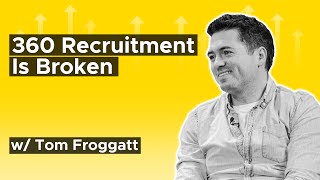
In this episode of the Recruitment Mentors Podcast, host Hishem Azzouz interviews Tom Froggatt, a recruiter with over a decade of experience who founded Singular Talent in January 2019. The conversation covers Tom’s early career at S3, the high‑performance, KPI‑driven culture that shaped his entrepreneurial mindset, and the traits he now looks for in modern recruiters – a blend of resilience, sales drive and genuine people‑centricity. Tom explains why he moved his family to Cardiff, how he financed the launch of Singular Talent with £20k of personal and loan capital, and the early milestones that proved the business model viable. He details the challenges of expanding to New York, the impact of COVID‑19, and the rapid creation of remote‑interview resources that helped the firm survive the lockdown. The interview delves into Singular Talent’s evolution from a traditional contingent model to a “180” talent‑partner approach, separating candidate‑focused recruiters from client‑focused talent partners, and the shift toward subscription‑based talent acquisition services and retained searches. Tom shares the metrics he tracks daily, his KPI tracker, pipeline calculations, and the importance of NPS (scoring 75) for candidate experience. Finally, he outlines his long‑term vision: growing to 70‑plus staff across multiple locations, expanding consulting services for early‑stage biotech and other sectors, and continuing to refine the 180 model as a scalable, people‑first recruitment business.
Chapters
Welcome back to the Recruitment Mentors Podcast. I'm your host, Hishem Azzouz, and on this week's episode, I was joined by Tom Froggott, who's worked in recruitment for over 10 years. For the last 3 and a half years, he's been building his own recruitment business called Singular Talent, and in this episode, we really dug deep into how he successfully climbed the ranks in companies like S3, how he's become a success in not just the UK market but also American, New York markets. And we really broke down over the last 3 and a half years how this COVID, despite it being just him smashing in deals, he's now really excited about growing the company and they're a team of 8 at the moment. There's some really exciting things ahead. Enjoy the episode. Tom, welcome to the podcast.
Thank you for having me. Good to be here.
Thanks for making the trip.
Yeah, yeah, no worries, no worries. Good to be back.
Now living— obviously I spoke to you quite early on in your business journey, and I think obviously you moved your whole family to Cardiff, right?
Yeah, that's right.
Where did you live before?
We were living out in Surrey, in Reigate, and I was working not far from here actually, in Liverpool Street.
Yeah, yeah, it's a complete life change.
Yeah, yeah, well, as soon as we decided to start the business, um, I just didn't need to be in London anymore.
Yeah.
And we did— I'm from Manchester, my wife's from Wales, from South Wales where we live now. And, um, the more I looked at moving there— so initially it was a personal thing and we had little kids and that kind of stuff But the more I looked at moving there, the more from a business point of view Cardiff just got more and more attractive. Yeah, it's a great place to be and there's really good talent there. There's two really good universities. It's much cheaper than being here. And you can just, you can build a business that stands out a bit more. There's so many businesses in London that are really cool to work for and they've got really great spaces and they've got really good cultures and things like that. If you go elsewhere, it's a little bit easier to stand out.
Yeah, but yeah, thanks for making the trip.
Sure, no worries.
And where we always like to start is the million-pound question really, and probably something you've really thought long and hard now for your own business. So I'd love to sort of hear your perspective on what common characteristics and traits a successful modern-day recruiter has and the things that you look for in people.
Yeah, it's interesting because it's changed a lot since 16 years ago when I got into recruitment, I think you get all types, so there's not like a personality type, I don't think, or a profile that you'd look for, but I think there are some core characteristics. I think some things haven't changed. I think this is still a difficult job and you still need to be determined and resilient and self-motivated and all that kind of stuff. But I think what has changed is that it's still a sales job, it used to be a more hardcore sales job, and so you were looking for people who were really target-driven, really money-motivated, really wanted to sort of take as much as they could for themselves. I think now what makes more effective recruiters is people who are really interested in other people and helping other people and helping them with their career and understanding them and getting to know them. And so that's become a big part of what we look for. The other side of it is that we used to do everything by phone. Now so much of your communication, especially when you first get in touch with a candidate or a client, is written. They've got to be able to write. They've got to be able to write persuasively and engagingly, and we do, we actually have started doing like a little written test as part of our interview for that. Yeah. So yeah, I think driven and motivated, obviously communication skills are really key, and you just got to want to help people and get a good result for the people you're working with on both sides of the fence, I think.
Where's the line with the helping people part? So you see people talk about it, then it's like, if you just want to help people in recruitment, then you're in the wrong job, I've seen some people say. I don't know, I just feel like there's that line of like, you can be motivated by that, but, do you know what I mean?
Well, yeah, no, it's a good point. I think the caveat I'd give to that is that wanting to help people is a good thing, but you want people who want to be the best at helping people. Like, you want people who sort of, they have some pride about their own performance, they want to stand out, they want to be successful. So I suppose that's what I mean by the driven bit is, You've got to marry that with other things. If they just want to help people, then there are better jobs that they could be doing, right?
Yeah, because there's going to be loads of challenges and recruiters aren't just perceived as people that help people, are they?
No, no. But, you know, I've always thought, or thought for a long time, that actually we're never going to get someone to take a job that they don't want to take. They might say yes on the phone if we're really good at selling it to them, but they're not going to turn up. And they're not going to do the job. So actually, all we're trying to do is help them make the right decision for their career. And what gets in a lot of people's way with their career decisions is uncertainty and risk and fear and the unknown and all that kind of stuff. Or thinking about it emotionally rather than thinking about it logically. Like, there's a lot of pride wrapped up in job titles and salaries and things like that. But realistically, what difference does a grand a year make in your pocket on a weekly basis, but you see people dig their heels in over that because it's all wrapped up with how you're valued and how you're perceived, right? So I see a lot of what we do as helping people get out of their own way to make the right decisions.
Yeah, that's a good way of putting it. So that combination, it's a combination, as you said. So we're going to talk about your journey over the last 3 and a bit years. Sure. We're going to definitely speak a lot about that today, but obviously you've worked multiple brands leading up to the point of starting on your own. So I guess before we sort of unpack some of that, where I always like to start is just because recruitment as a career isn't something that— you always hear the sentence, right, people don't grow up to think about it, uh, it finds people, people fall into it. Who, who was Tom before recruitment? How did it, like, where was you in your life?
What, like, yeah, so I mean, I joined, um, S3 straight after graduating, so I did an English degree And really just went straight into recruitment.
So it was your first, like, professional proper job?
First proper one, and I was with that company for 10 years.
Wow, okay.
I just got really lucky, just landed in the right place with the right people, I think. But, yeah, it's interesting. I've always put, since I started in recruitment, I've always put a huge amount of value on hard work and, you know, putting in a shift, and that being a really key element of why I've been successful. But that is not what people who knew me before I got into recruitment would have said about me.
Would describe you as?
No. I always remember my A-level history teacher. I went to see him after I got my exams, my exam results. I got an A in history, but I got it by one mark.
Right.
And he said, you know what, when those results come out, I looked at it, I thought, that's typical Froggott. He's just done enough to sneak in.
So you were quite described like that to get through the academic system, was like someone that would just get enough to do what he needs to do rather than like, he'll go above and beyond. He's very hardworking.
Yeah, no one would have described me like that. No, the second part of what you said.
So did that come once being in an environment where you're like, okay, if I, if I'm going to be able to achieve what maybe they told me that I could achieve, or looking at people around me, I'm gonna have to be someone that has some really good work ethic?
Yeah, I think, um, There's a few reasons for that. I think by the time I'd finished uni, I was just sick of having no money.
Really?
So that had an impact, right? I just wanted to make some money. As well, I was in an environment where everybody worked hard, and, you know, my first sort of mentor manager really instilled a lot of that work ethic in me just by how hard he worked.
Is that how he did it? Because I, yeah.
Yeah, I mean, you know, but it wasn't just him, there was everyone else around you as well. But yeah, they obviously told you that it wasn't a 9-to-5 job and all that kind of thing. That doesn't really land unless you see it and you see people doing that.
You can't give someone work ethic, can you?
No, no. But I think what it was, was I, you know, I found it challenging, first of all. So it was like the right level of challenge and it was hard enough that I was interested in it and it kept me engaged, but it wasn't so hard that I couldn't get my head around it. So I wanted to get better at it, and I was quite competitive as well. So when people were doing better than me, I wanted to catch up to them. Um, and then there's no, there's no real end to it, right? You, you just realize that, okay, well, if I do more of this stuff, then I'll do more deals. And actually, the money was good, but it wasn't really about the money in the end. It was more about the fact that I just wanted to beat everyone.
Really?
I just wanted to beat everyone. And I found something that I was good at, and I'd found something that I liked, and I decided I was going to be the best at it, and I just worked really hard.
How would you describe the S3 culture looking back? Why, why has it produced, yeah, so many recruitment entrepreneurs, produce big numbers, yeah, high performance? Obviously so many people have come out of that business.
Yeah, so I mean, I can only comment on what it was like. It's been 5, 6 years since I worked there, and I believe it's changed quite a lot, but I joined in 2006 and I was there till 2016. And I think it was hard. Like, it was hard work. The targets were hard. The hours were hard. It was competitive. There was a high expectation. But you were sort of, you were really well rewarded for doing well, not just monetary, reward, but that was part of it. But there was always lunch clubs and achievers' lunches and holidays and consultant of the month and consultant of the week and little competitions and all this kind of stuff. And, and, you know, if you were doing deals, I always remember when I did my first deal, the top biller in the office coming over to me and helping me put it on the board.
I love that.
Uh, and this was an office of like 50 people, so this wasn't like a small group. Um, and so there was real, like, there was real support for you once you were in, and then you had to perform. I think there's several reasons, I think, why it's created so many entrepreneurs. I think you're always encouraged to think like that. You know, they always wanted people to start new businesses internally, and they put a lot of emphasis on the MI scheme. And, you know, I went out and set up a business in New York for them, which was me and one other guy, and we built that over a couple of years. And I think That was always very well publicized. So you were always given the opportunity to, like, come to them with ideas if you saw a market or you saw an opportunity, that was really encouraged. But I think as well, they got down to an absolute science how to run a recruitment business. And it was a KPI-driven culture. And in some teams that would be used more effectively than others, let's say. 'Cause I don't think KPIs are inherently a bad thing, but that's a separate conversation. No, no, I agree. But what it meant was that you knew 100% that if you wanted to do this much business, you had to speak to this many candidates today.
Yeah.
So if you wanted to build this much this year, you had to call this many people today. And it was really clear to me, I don't know if it was the same for everybody, it just made it really obvious that that's how you'd be successful. And that's why they were able to replicate it in so many countries.
You really got into the data. The numbers.
Yeah.
Then it's about, obviously, what are we doing to make sure that they are the right people and it's the quality is maintained.
100%. And again, some parts of the business were better at that than others, but it was a big company, that's always going to be the way. I think the other thing that they did really well, and I didn't realize this until I left, was that they really taught you how to sell properly.
Really?
Yeah. I think there's a lot of recruitment businesses out there that teach you how to recruit, like how the process works. I don't know that there's always, and I don't know every recruitment company, but I don't know that there's always that emphasis on how to become a really good salesperson. They were very good at that, and they promoted people really quickly as well. They gave you loads of responsibility and gave you the opportunity to succeed or fail.
How did they invest in making, helping you understand to become a better salesperson? With training?
Yeah, loads of internal training, lots of coaching, lots of role plays, lots of like team workshops. They had a whole, you know, they had an L&D department obviously, and we used to go off-site for training to the L&D department all the time. And then they'd have performance coaches on the sales floor and things like that.
Performance coaches?
Yeah. But I think as well, a lot of the management, a lot of the leadership had come from other sales jobs. Like they'd been selling advertising or they'd been selling whatever it could be, you know, there's loads of different types of things. So I think that, that, that view of the job as a sales job was just really ingrained in, in what they did from the start. And so they got the science of it right with the KPIs and how you build a business, and then they got the sales bit right, and then they hired some brilliant people. Um, it was, you know, there was times where it was a pretty aggressive environment in terms of how we sold, but they were a really good bunch of people that for the most part, and I think that's why they were so successful. And then they were never satisfied. They never sat still. You know, when they were in 10 countries, they wanted to be in 20. When they were in 20 countries, they wanted to be in 30. When they were doing 2 million, they wanted to do 5. When they were doing 5, they wanted to do 20. You know, it was always moving forward.
[Speaker] It was relentless. Why, obviously you said about how competitive it was, so always curious, a lot of people listen to this who do want to progress. They do want to open up new markets. They want to be given the opportunities. Like, why was you able to get those opportunities, do you think, over other people?
Well, I asked for them, and then I hit all the targets I had to hit. So, um, so I, I basically went into the London business. So we were really small life science business. It was mostly an it recruitment company, but we had 2 people doing life sciences recruitment, and I was the 3rd one. And so I suppose that cleared a lot of space for me as well because there wasn't many people ahead of me. But I did alright in my first year. In my second year I did really well. I was top biller in the UK. And then at the beginning of my third year I said, they'd been talking about opening up a New York office, and I said, I want to go. So they said, okay, well, you've been top biller once, go and do it again and you can go. I was like, Jesus, alright. And I didn't quite, I came third the third year, I think. And, but then what happened was we were planning to go. And the person who was going to run that business actually resigned.
Oh.
So she had decided that she didn't want to move to New York. I think she was, she'd been running a big team and I think she was finding it hard being hands-on again as well. It wasn't really what she wanted to do.
Sure.
And so I went into the director's office and I said, listen, I know you're probably going to bring someone in to do it. I was a senior consultant with 2 years' experience at the time, but I'm up for giving it a go if, like, if you've not got anyone else in mind, then You know, once he'd stopped laughing and recovered, I think they interviewed everybody they could find, and I guess no one wanted the job, so they let me take that opportunity. But you have to perform first of all, but then I think for me what always worked was just asking for the opportunity.
I think that's just come up a lot, which is why I wanted to ask it, because I think sometimes that can be missed.
Yeah.
I'm sure you've had to deal with people that, I don't know, you're having an exit interview with them or they resign and sort of you learn that like they were hoping things would come to them or they'd expect because I've done this, that I'll be given this opportunity, rather than saying, hey Tom, look, if I do this, can you tell me like this is what I'll get at the end of it, or this is what we can agree? And I think that's a consistent insight for people where if you want clarity on where you want to be or your progression, then find out from people and ask that, look, if I do this, does that mean that I'll then move to this part of my career and move forward?
Yeah.
What, so you then went to New York. How long was you there for?
2 and a half years.
What, what was the, the most challenging part about that professionally, personally? Because as I'm sure you picked up on, and we'll talk about your business in a sec, I don't know how much you're doing the States now, but like crazy amount of recruitment companies going over to the US. And obviously this is a bit of time ago now, so.
Yes, this was 2010.
Yeah, so I'm sure that there's been a real trend over the last couple of years. Yeah. What, yeah, what was the challenges? What things do you have to learn quickly over there?
I mean, I loved it in New York. I think if you live in London and you recruit in London, one of the easiest places you can go is New York. Okay. I think there's not the same culture, but they're similar enough that you don't have to adapt quite as much. But the biggest challenges were nobody knew who we were. We had, when we turned up on day one, We had 14 candidates on the database.
Wow.
And no clients. And we thought, that's okay, we've got loads of clients in Europe, because we had other offices at that point. We had a Germany office, and I think we might have had a Belgium office at that point. So we had, like, a decent-sized business, 2 offices in the UK. I thought, okay, well, you know, we're working with these 5 really big—
Just speak to them about helping them in the US.
Yeah, so we did that, and then basically they all went, nah, it's separate. You have to speak to this person over there, and we'd ring that person over there and they'd go, "Oh, you work with us in Europe? Oh yeah, we've got our own suppliers, we don't care." And so that whole plan that we had about converting our clients just didn't work at all.
Oh, wow.
Eventually we ended up working with some of them, but it took a long time. So it was really starting from scratch.
Where do you even start with that? Like, is it market mapping? Is it going, "This is the niche we're going to focus on"?
Yeah, I mean, it was, to be honest, back then it was, Speak to candidates, find out where they're interviewing, look for job adverts, follow them up, see how they're getting on with them, and cold call as many companies as we could. You know, we had a really defined niche. We were working in the pharma sector and we were working in two really specialized markets. So it was quite easy to identify who we needed to speak to. But yeah, you just got to pick up the phone and do the work. But the other thing about the US is you don't realize until you get there how big it is. So we started out, we were based in New York, or we were based in London first of all doing New York hours, but then we were based in New York and what we should have really done was just focus on like the tri-state area, New York, New Jersey, Philadelphia, or the other way. We didn't do that, we just tried to pick up jobs wherever we could. But what happened was we'd be working a job in North Carolina and then we'd pick up a job in Texas And that's, I don't know what the actual distance is, but let's say that's like 1,000 miles away, right? So it's a completely different candidate pool. So we're just starting from scratch on everything.
Every time, yeah.
So I think understanding that was important. And also understanding, I think, this was one of the big cultural differences in the US. So here, if you call someone and they don't want to talk to you, they just hang up on you. In the US, a lot of the time, like, they're a bit more open to being called. Or they were then anyway. And so they'd speak to you, you'd be, "Oh, I just had this great conversation," you'd think, "I've got all these leads, we've got all these prospect clients." You'd never ever be able to get hold of them again because they were just being nice. So—
That's interesting.
Yeah, so that was what was challenging about it.
So, and then do you do much in the US now with Singular Talent?
Only a little bit at the moment. So it's only through existing clients that we have, but certainly on the agenda.
Hey everyone, a real quick one from me. This podcast would not be possible without our amazing podcast partners Vincere and Sourcebreaker. Because you listen to this podcast, you're able to get your hands on exclusive savings on both of these award-winning products. If you're a growing recruitment business, you have to check out Vincere, who are an all-in-one operating system for your growing recruitment business. With Sourcebreaker, if you want to make sure that all of your recruiters have the best tools on the market to stand out and beat their competition, then you have to check out Sourcebreaker. Use the link in the show notes, in the comments below, and you'll be able to get yourself exclusive savings on these amazing products. So let's segue into you then evolving into running and starting your own recruitment business.
Yeah.
But I guess going into, um, making that decision, I guess what would be first good to get your thoughts on was what were the things that were top of mind for you that you're like, you know what, really enjoyed that at S3, I'm taking that, really enjoyed this part of this business, like what were the key things that you wanted to take that you then have really tried to instill in your company, or when you started your company you wanted to really try and instill?
Yeah, there was definitely things that I wanted to take with me, and then there was things that I wanted to do differently, and I think, you know, I joined after S3, I'd been there for 10 years, I joined a company called Meet, M-E-E-T, not M-E-A-T, I used to have to say that a lot. And they were a business that spun out of S3 a long time before, so there was some similarities, but they'd done a really good job with their branding and their culture, and they'd done a lot of really good stuff around that. So I think that really opened my eyes to how important culture and brand and marketing in general are. So I wanted that to be, and I got really interested in that, so I wanted that to be a key part of what the business was about. I also wanted to just do recruitment properly. I think You know, we, it's easier to engage with people now than it was 16 years ago, and it's easier to find them and it's easier to contact them, but that doesn't mean it's easier to place them, you know, and I think sometimes because it's easier to engage people, we sort of rely on volume a little bit. I wanted to make sure that those sales skills that I'd learned, those relationship building skills were part of it, and I put a lot of emphasis with my guys now still, you know, when you speak to a candidate for the first time, for example, go and talk to them about their career, go and have a conversation with them about where they are, what they're up to, what their ambitions are. Try and help them out, whether it's with this job or not. Try to understand where they're going and give them— at least leave them having been asked a really good question.
Leave them better off.
Yeah.
Before, yeah, if that's insight, if that's information.
Exactly, or you've just asked them a really good question that's got them to think about stuff. So I wanted to make sure that we weren't just doing the sort of, you know, the sort of internet recruitment stuff. That's a part of it, that's a really important sourcing tool, but that we're keeping that human element.
So is that when, obviously, on what you have sort of plastered everywhere is like, I believe that hiring should be better. Is that what you mean by that then?
To an extent, yeah. So that's a bit more encompassing. So that whole thing about making hiring better is really about the fact that I really genuinely I think that if you're hiring someone for your team or you're looking for a new job, that should be a really exciting thing to do. But I mean, you and I both know, probably most people listening to this podcast know, that it's— that's not the word that most people would use to describe it, right?
The—
there's several reasons for that, right? But a lot of it's down to process, and a lot of it's down to just different priorities and all this kind of stuff. But I wanted to build a company that help to make hiring better for companies and for people. And I think, you know, some of that is about effectiveness, obviously. Some of it's about helping companies hire more effectively, helping people get the jobs they want. But a lot of it's about the experience, and a lot of it's about how you can't always give people good news on both sides, but how do they feel about it afterwards? Do they feel like it's been beneficial? Have they had the support they need? I mean, you know that one of the biggest complaints people have about recruiters is they don't get back to them and they can't get hold of them when they've not got the job. You know, we would never tolerate that at Singular Talent, and I think one of the things I'm really pleased about is we do candidate surveys every month.
Well, like NPS stuff? NPS survey?
Pretty much, yeah. And we obviously speak to candidates we've placed, but most of them are going to give you a good review. So I send the survey out to everyone we've had an interview for but we didn't place, whether they didn't get the job or they pulled out of it or whatever. And among those people, our NPS score is 75. That's brilliant. Which is phenomenal. So these are people who didn't get the job through us, but they felt that the experience was valuable. And I've had people who I've been speaking to that one of my consultants has been working with, and I've been speaking to them because it's been a tricky close or whatever. And they've turned down jobs but said, I just want to say, even though I'm not taking this job—
They've been brilliant, or you've been brilliant.
They've been absolutely brilliant.
That's what you want to hear as well.
Exactly.
Yeah, so let's just, so let's just take a step back for a second then. So what year did you start the company, Singular Talent?
2019, January 2019.
Okay, cool. And then, because I feel like when I spoke to you, like, the early of those stages, I felt like your mindset— and correct me if I'm wrong here— your mindset was really trying to give the first year a crack, build revenues, get billing, start building. Yeah, clients. And then I feel like then when I spoke to you more recently, or over what I've seen sort of externally over the last 3, 6, 9 months, it's then seemed a lot more morphed into like you've then put a lot more effort into growing the company and then focusing more on that. So when you, we had someone sit down here a couple of weeks ago and he just felt like one of the best bits of advice he could give other recruitment entrepreneurs was like, when you go on to that journey, just have clarity on what you want it to look like.
Yes.
From the outset.
Yes.
'Cause I'm sure you've met those people who are like, I don't want to use the word like lifestyle business, but like caught up on like, should I be hiring people? Is that what I should be doing? So how did you view it? 'Cause I feel like you've gone on a bit of a journey. So when you started Singular Talent, was you like, right, this is a company I do want to grow, this is a company that's going to be bigger than just myself?
[Speaker] Yeah, definitely. I mean, I spent a lot of time on the business plan before I started the company.
[Speaker] Okay.
And when I say a lot of time, I spent a lot of time writing the business plan. I spent like years thinking about it beforehand.
Yeah.
So I always wanted this to be a big company, and we're very, very early in this journey. And it was all centered around this mission of making hiring better, and that was really important to me. And what I didn't want to do was just grow a lifestyle business. And I'm not knocking that.
There's nothing wrong with that, but you knew that isn't what you wanted.
Exactly. And I was never worried that— Yeah, when you start a business, there's always things that worry you. I was never worried that I'd be able to make enough money to pay the bills. I knew even if it was just me in my spare room, I could do that.
Yeah.
And we'd be fine. Me and my family would be all right. The thing that kept me up was like, am I going to be able to grow this to the scale that I want to grow it? So that was always the plan. But, you know, when you start a business, the first thing you've got to do is survive. And we had— I had personally 6 months worth of cash.
That's the runway that you gave yourself?
Yeah. I put £20 grand into the business. £10 grand of it was mine, £10 grand of it was from a startup loan. That was it.
Yeah.
And it was all perm recruitment, right? So it took 4 months to do the first deal.
4 months.
It then took another couple of months to do the first sale.
How long did it take for them to pay?
Yeah, well, our first client won't be listening to this, but I'll mention it anyway. It was a guy called Steve Allen, and he had started a company called Charmwood Molecular 20 years 20+ years ago, so he was a founder as well. And he paid my first invoice the day that I sent it to him.
Oh, that's class.
Yeah, and I never told him, I spoke to him about this recently, I never told him that it was our first placement and I never told him how early on we were, but I think he knew that it was around there. And when I spoke to him about it recently, I mentioned that and he said, yeah, I always tried. I remember what it was like. And I was actually visiting my mom and dad in Spain when I sent that invoice, so I sent it that morning. And then looked at the bank account the next morning, I was like, oh my God, 12 grand in there.
Was that one of your best moments so far?
Yeah, yeah, well, because we were like 2 grand from the end of the overdraft in the business at that point. And we had one more month's worth of money, but only 'cause I'd had a tax refund. So like we were close.
What were you keeping an eye on or thinking about to make sure you was confident that you was doing the right things and that moment was? Gonna come.
Yeah, you know, well, I think this is where the point in my career at which I started the company helped me, because I'd run teams and I'd manage people, and I had quite a lot of experience of that.
So I knew what activities I needed to do, what the lagging indicators were to get to that point.
Yeah, exactly. And I was really quite structured with, like, setting daily targets and all that kind of stuff. And I, you know, I still to this day have, like, a KPI tracker that I have on my desk. It's now for the team rather than for me, but it was just for me. I have a day plan in my diary and all that kind of stuff. So I was really structured with all of that. So I knew it was coming. You just never quite know if it's coming fast enough because you can't quite control that bit.
What were the— people listening to this might be in that moment.
Yeah.
What were the key indicators that you were keeping a close eye on that you wanted to make sure that you show up each day and aim to hit, or what you're keeping an eye on to go, you know what, hopefully if, like you said, it's out of your control, but if we keep doing this, then—
Yeah.
We should be in a position where we're sending out invoices in X period of time?
Yeah, well, I think, I think particularly in any permanent recruitment business, right, it's— there is a big lag. So contract is a bit more reactive, and it's more about have you finished this project? But I've always said that perm recruitment is just about doing the right amount of the right things in the right way every day, and then you'll eventually get the result of that, and you'll eventually get the consistent output. But I think the indicators are You know, did you add more jobs this month than last month? Are you covering those jobs? Did you book more interviews? Have you got more interviews going on now than you had last month? Yeah, there's always been like a rule of thumb, little equation, that however many final interviews you've got or final interview shots you've got, divided by 2 and minus 1, and that's probably where you'll end up in terms of deals. So how's your pipeline looking in terms of final interviews that are happening? And I think, you know, it's not so much about this sort of blanket KPIs in terms of, well, how many CVs did I send out this week?
No, but you need to know where you're at and like what you need to be aiming for that would give you confidence that you're going to be where you want to be.
Yeah, and before that point, you know, you've got to break it down to the things you can control. So you might not know in your business today how many calls do I need to make or how many meetings do I need to book to pull a job. You might not have that information yet, but you've got to make a bit of a guess at it and give yourself a target and make sure you do that every day.
Yeah, simplify it.
And you've got to be quite hard on yourself as well. I think this is what founders—
Hold yourself accountable.
Yeah, I think I've worked with some founders of recruitment companies who don't do that, and they let themselves off the hook a little bit. And, you know, most of the time they end up being alright because they're usually good recruiters, but it takes them a lot longer, it's a lot more painful, it's a lot more stressful because they don't know where they are. So I think be like your own toughest manager in the early days particularly. 'Cause you've gotta fit, it's hard to see the progress sometimes, but you've gotta make sure you're doing the right things. But you've also gotta look at where you're making progress, 'cause otherwise it's hard.
You're just gonna sit in a room on your own. So then when did you make your first hire?
Well.
'Cause you then obviously went into COVID vibes after that.
Yeah, yeah, it was a bit of a story with that. So we, I did the first year on my own until I think it was end of October, and then I brought someone in who I'd—
And then what was the goal to like get revenue-wise to give you confidence and like, right, I'm in a position to hire if you had—
Well, that was a mistake that I made. So I did it based on the number of jobs that we had and the fact that I couldn't cover everything.
Right, okay.
We didn't really have enough money in the bank to hire someone and me not to be stressed about it.
Okay.
So that put a lot of pressure on that hire, right?
Yeah, I can imagine.
And look, it turned out that it wasn't the right fit anyway and all that kind of stuff. So they actually left the business just before the pandemic.
Oh, wow, okay.
So this was in February and I think the lockdown started in March. But the plan had been to build on that. The plan, I think, was to go to 5 in the second year and all this kind of stuff, but I hadn't done it with any financial triggers.
I've just gone, "Oh, I'm really busy, I need some help." So it was more on, like, traction on the job front and, like, missed opportunities, or, you know, if you had someone in, there'll be opportunities they can work on straight away, which should mean—
Yeah, exactly, but I think that's the wrong way to do it. That's the way I did it, but I think that's the wrong way to do it. So anyway, so we, that person left. I decided not to replace them straight away because of that, because we weren't in that stronger financial position. And then the lockdown happened. Happened.
Yeah.
We just found out we're having another baby as well.
Oh, wow.
And so like all my sort of financial plans just went, and you have no idea at that point what's going to happen with this pandemic.
Of course. Yeah, it was, yeah.
Is this, we all thought it's going to be 6 weeks, right? So, you know, that's a bit of a blip, but. But I had like a big talent partnership, which is like our subscription model, our first one that was due to be signed on the day the lockdown was announced. And the CEO rang me up and went, listen, obviously I'm going to have to park this. I can't commit to this right now. So that was £40 grand's worth of business, which at the time was like a huge— that was more than we would've done in a month at any point. So decided for that year just to get my head down.
How did you deal with that? With that, you like— because who do you speak to about that? What was like— do you know what I mean?
Yeah, well, that's— I mean, you know this, but that's one of the difficult things about starting your own business is you ain't got that person to vent to or that person to tell you it's all right, right?
What did you do on that day to deal with that bad news?
I went and picked up the phone and tried to pull more jobs.
So you didn't— I think that with that, I don't know, that's what's really helped me. Like, I can— some— I'm sure you can find moments where you're like just spiraling and you're sitting there just going, oh my God, what the fuck? And then What's always helped me is what you just said, is taking action basically. Yeah, that's what sort of shifts me straight away into like, okay, right, I just need to get cracking. There's no point just sitting there and going, okay, well, what am I going to do now? And spiraling and just thinking about those things.
I mean, I had like— so they announced the lockdowns at like 5 o'clock in the evening or something. I remember like pulling up outside my house and hearing it on the radio and going, oh, this is like serious.
Yeah.
And I I allowed myself to just panic for about 4 hours, and then I went, right, there's no point in panicking anymore. I need to sort out what I'm going to do with this. So I stayed up that night until about 2 in the morning figuring out, like, what am I going to go and talk to people about tomorrow? What am I going to put on LinkedIn? What am I, you know, what's going to be the, the, the angle that we're going to take from this? What— so, so I put together, like, a really rough, like, remote interviewing guide, remote onboarding plan, all this kind of stuff, and just posted it everywhere, sent it to everyone. And because it was the day that the lockdowns had started. I know everyone's done that now, right? But, and I did nick a few things, but, um, it was just really timely and it was just, it just received well, was proactive. Yeah. And I wasn't trying to sell them something, I was just going like, let's show you how this shit's happening. Yeah. And then I just, I made a decision early on that I was going to revert back to what I'd always done in my career. So in my career Whenever anything had gone wrong, I just worked harder and I just worked harder than anybody else. And that was like my thing. Like, I know that I can sit down and grind it out for 15 hours a day for months if I need to. It's not that I enjoy that, although there is a little perverse enjoyment in that.
But you know you've got that in you. Yeah.
I know no one's going to outwork me on it, right? So that's the decision I made. I was like, I don't know what's going to happen. I don't know what's going to happen.
But this is the impact control.
But I can do this. And it's really interesting, like, I, I was at the time part of an accelerator program in Cardiff that NatWest were running. It was really good. There was all different types of businesses on there. There was some recruitment businesses, but they're all quite early stage. But there was also like people who own chains of cafes and all sorts of stuff. And we had all these networking groups and Zoom calls, and obviously everyone was talking about it. And I saw two really distinct groups of of thinking. So one was what I was thinking was, right, this is going to be really hard, we've got to get our heads down and crack on. And one was, ah, there's nothing going on anyway, so we might as well take it easy. And almost without exception, the businesses that decided to crack on were really successful through the pandemic. And I think that you've got to, again, it's about not letting yourself off the hook. It's about just going, well, this is the situation, we've got to deal with it, we've got to do something about it. And the only thing you can control at that point, especially if you're like I was at the time and it's just you in the business, you can just control what you do.
So you ended up having a good year that year?
Very good year, yeah.
So let's, I want to make sure before we finish, I want to talk about this, 'cause I think it's unique and a lot of people are thinking about this. Yeah. Talk to me about, you mentioned there your talent partner model. Yeah. A lot of companies that I'm speaking to, sort of, it seems like there's way more companies now that have like a, whatever you want to call it, a 180 model.
Yeah.
Different solutions. And again, I do feel like fast forward another year, 2 years, a modern-day recruitment company will have different solutions that they can provide their customers. Then also, I do think it'd be interesting to see the percentage of companies that are sort of structured in a way where they have people that have a really solid career path in being delivery, account management, business development, may have less 360 recruitment consultants. Because I know you've got that sort of setup, haven't you? So talk to us a bit about that, because, and what the journey has been like that, and why you've set up your business that way? Because I think that'd be really useful for people.
Yeah, um, I agree with everything you've just said, by the way. I think so, it's been a bit of an evolution for us. So when we started out, in terms of, we were doing different things in terms of how we were recruiting and the marketing and the branding. And, and the— I was doing loads of videos on LinkedIn. I know we talked about it, um, but not doing them to sell anything. I was doing— no, you're trying to give value, insight, um, But we would, in terms of the business model, it was really traditional. It was a contingent perm business. But when I went on this accelerator program I just mentioned, we were doing a lot of stuff around strategy and creative thinking and all this kind of stuff. And I went, you know what, I've not actually done anything that different in this business. It's detail that I've done differently. I haven't done anything fundamentally different. So we launched these talent partnerships, which are essentially kind of like RPO-lite solutions for companies that are growing quickly. But our market has always been small companies.
Okay.
I'm not that bothered about the big multinationals. We work with startups and early-stage biotech companies that are from seed to just post-Series A, from a couple of people to a couple of hundred people. So I started thinking about what would be useful for them, and typically in those companies, there's one person, if there is a person, there's one person who does HR, finance, office management, admin, recruitment, and they're not actually like an expert in any of those things, but they're just good at getting stuff done, project management. So I wanted to make life easier for them. So I basically came up with a solution that was just, don't worry about it, we will be your talent acquisition department. I'll be your head of talent acquisition for 6 months or 12 months or whatever it is. We'll recruit all these positions for you, we'll work on your employer branding, we'll get your interview process sorted. We might just give it to us. You'll still be involved, but we'll manage it all. So that, and then we did it as a subscription model for 6 or 12 months. It's typically a bit cheaper than, or a fair bit cheaper than, the equivalent placement fees.
What are the deliverables typically?
Placements.
Really, it was that?
Yeah, but then you build the relationship as well, so you usually start with small ones. We'd start with like 4 roles or 5 roles or whatever, but the biggest ones we've done have been like 15, 20 roles now over a 6-month period and worth some real value.
So, just on this quickly, when have they gone wrong? And like, what have we learned from it? God, totally. But not as in like wrong, as in like, I don't know, just some, 'cause I think the perception can be, not that that's easy to do, but like, yeah, okay, yeah, great, they give us a subscription, so yeah, 100% we'll deliver on that. I don't know, what have been like the challenges maybe you didn't expect?
It's a different type of pressure.
Yeah, that's what I mean, yeah.
To deliver it, yeah. So you have to just, the biggest challenge I think is keeping your own level of engagement with it when things haven't gone well. So if you've got a contingency job that you just can't fill, you've had 5 interviews, 6 interviews, 10 interviews, whatever, and they're not hiring anyone, you just sack it off, right? You can't do that in this situation, so you've got to stay with it. But then what we did a bit later last year, so it's about 7, 8 months ago now, we actually transitioned to a fully retained model. So we were doing those talent partnerships, we were also doing contingency work alongside that. So we stopped doing all the contingency work, so now we just do talent partnerships and individual retained searches, executive searches and normal ones. And basically we got rid of 60-70% of our jobs and just initially maintained and now started to increase the level of productivity, because instead of having to work on 3 or 4 jobs to do a deal, it's one deal.
And you're working with way more committed customers.
Way more committed customers.
They—
we spend a lot more time on each job. So we just got, and we don't have as many headaches either. So we just got rid of all the distractions because yeah, over, being overcapacity is a real issue in those situations if you don't manage it.
And then what I wanted to ask you on the difference, do you believe, the sellers and a different approach, mindset required? And then let's definitely touch on the 180 piece before we finish, 'cause I think that'll be interesting for people. So we've had people on here and I really like the way where this, industry is going in the sense of like, like you said back early, like what Esprit did was the sales side. And when I think, when I wanted to get into recruitment, I wanted to build on my sales career. That's how I viewed it. I wanted to be in more of a consulting environment, sell bigger deal sizes, because I used to sell insurance, it was transactional. So like, what— so we've had people say you've now got to be solution sellers or solution focused. That's where we can really change the perception of our recruitment industry. What's the difference, you think? If you think contingent sales mindset to what you're talking about there? Because I feel like it's quite nuanced, but it's maybe more strategic. You've got to really understand the business problems maybe a bit more. It's obviously not transactional.
No, exactly. So there's several things, I think. So I think, and by the way, just caveat in this, we are putting together a second phase of this where we're going to start offering more consulting services around everything from figuring out what the gaps are in your business through to onboarding people and everything in between. So that'd be all integrated, and this has come from that. And the reason for that is basically you've got to take a step back before you start selling it and figure out who are you selling it to.
Yeah.
What are their problems? What are they trying to solve? What are their issues? What don't they know how to do that you know how to do?
Yeah.
So as a recruiter, you know how to do loads of stuff that other people don't know, but you don't realize it a lot of the time. So first of all, you've got to design the service properly, um, and we were really specific. It's drug discovery companies that are in that phase of their existence, and we're selling them to either the CEO or the chief scientific officer or the most senior HR person.
You've really nailed down your ideal customer profile.
Yeah, so what do they care about? To be honest, they just want to give it to— they don't know how to do it themselves, because they're recruiting really hard skill sets. You know, these are like PhD bioinformaticians with 10 years' industry experience in cancer research, with particular expertise in this specific thing. And that's an easy one. And so you can't just advertise and get people, you've got to go out and look for them, but people don't know how to do that. So first of all, you've got to be really clear about what are you going to do for them and what you're going to deliver. Why can you do it when they can't? Yeah, you'll be really clear about explaining what you're going to do. Then I think the other part of it is they just want to give the work to someone that they have confidence is going to deliver, and that's the biggest thing. I think particularly For the CEOs, they just don't want to have to worry about it. They haven't got the time. For the chief scientific officers, they just want the best people, whatever the solution to that is. For the HR people, they just want to be able to go to the CEO and go, "Don't worry, I've got these people on it. They're going to take care of it. I'm confident that they're going to do it." So I think you've got to find ways to establish that credibility. So you've got to— it's hard at first because you haven't got this track record. Yeah, but you've got to try and find some testimonials, try and Sell it to your existing clients first of all, and then build a bank of case studies, testimonials, that kind of stuff. A lot of our business now comes from recommendations.
Does it?
Yeah. And then you've got to just absolutely kill yourself to deliver.
Yeah. Talk to us about the 180 piece then. Is that why you set it up? Is that part of why you set it up that way? That, um, so 180 being you have people in your business dedicated and only focused on Building candidate communities, talent pools of people that you may likely be required to find and speak to for the types of companies that you're selling these solutions to.
Yeah, and then they'll work on filling the jobs as well.
Yeah, work on filling the jobs as well.
So, but they're candidate-focused. And then we have talent partners who are typically more experienced recruiters who are client-focused.
Yeah. So what's worked about this model so far? In terms of having people just dedicated to that?
Well, I think it makes everyone's job easier. Yeah. I think being really good at every part of a 360 recruitment job is difficult.
Yeah.
It's not that there aren't people who can do it, but there's very few people who can do it. So it makes hiring easier, and it also makes people really clear on what their job is. You know, the common thing when I've run 360 teams before is no one wants to do any BD, because they don't think they're good at it, or they, you know, whatever. So just take that away. If they don't want to do BD, don't make them do BD. Just let them focus on the thing that they feel confident in, that they feel like they're good at, that they feel they can do, and then help them to be as good as they can possibly be at that thing. That's not to say they can't transition, and we've got a career path that people can move from the candidate side to the client side and whatever, but yeah, they have that option. Yeah, but in your job, you are just focused on doing this particular area of the, of the work, and so you can become really, really good at it. I also think that you start a company so that you can together achieve more than anyone could on their own.
Yeah.
But if you've got a load of people doing the exact same thing in silos, then you don't.
Yeah, limit the impact and what you can achieve together.
Yeah. And, you know, people might say, oh yeah, but I taught them to do the job and they wouldn't have been able to do it. Yeah, maybe, but now they can do it. So what value are they getting out of working with you? But if you bring people together who are really good at BD, we've got, you know, there's only 8 of us, but we've got a head of marketing and a head of operations as well, and then you've got people who are really good at delivery. Those people all can do more together than any of them can on their own, because they're delivering their bit of the job and they're all benefiting from each one being really good at their bit of the job.
Yeah, I love that. So there's 8 of you today, is that what you said?
8 of us today, yeah.
What's, as we come to the end here, I feel like there's so many other things we can go into, but I like, I think No, I think I've really enjoyed— you shared a lot of interesting things around like you working for companies, what you take in, why you think you was able to grab opportunities. And then I just think you've been really honest with like you being as a business owner, you just worked really hard and made decisions. You know what, this is tricky, but I'm just going to crack on, get my head down. And you're now in a position where you are looking, willing to look at yourself in the mirror and go, I think we could do this better, or yeah, maybe we're not that different, which is what's then led to the solutions. And now you're going on evolution on that, so What are you excited about then, to sort of end it on? What are you excited going into the next 6, into next, next? Because I feel like outside looking in, hopefully you feel it as well, you've probably, the needle feels it's moved quite like in a really positive direction maybe over the last 6 or 12 months.
Yeah, definitely. I mean, loads of stuff I'm excited about. I mean, we, so I, I very much see this as a, as a 20, 30-year project for me, right? This isn't a quick in and out thing. So, um, I know roughly where we're going to be in 20 years, 30 years, and that's really exciting. I think the bit we're in at the moment over the next 5 years is about building the spine of the business that we want to build. So in 5 years, I'd expect us to be probably 70-odd people and 4 locations, and we'd be in slightly different sectors as well. Over the short term, we're growing, you know, we're hiring 4 people at the moment, talent partners and talent executives. We are always looking at improving our business, so We're working on this suite of consulting services that I mentioned earlier, that I think are going to be absolute game changers, particularly for startup companies who aren't experienced business people, where we can just go, don't worry about the talent bit, we'll take care of it for you, we'll do all of it for you, and this is what we'll do. And then I think, you know, we've got a model now and a way of working that works. We've seen it work organically across different sectors, so we've done work outside of our core sector in things like medical diagnostics, and agriculture. They're really similar skill sets, but they've just come to us through recommendations. So those are areas we can spin out into. We've got these brilliant new offices that I'm excited to fill. Uh, what else? Loads of stuff.
Exciting times.
Loads of stuff, yeah, really exciting.
So we've come a long way from you just smashing it out, losing that £40 grand deal, right?
Yeah, I got it eventually. It just took, it just took another 4 months.
Love it. Well, look, Tom, I'm excited to see where you are. Thanks so much.
Thanks for having me.
Thank you so much for listening to the episode. I hope you enjoyed it and got value from the conversation. If you did enjoy it, please don't forget to like, share, and subscribe, and we'll see you in the next episode.
More from Hishem




You don't need as many clients as you think to bill $1 Million A Year In Recruitment



From 30 Direct Reports to Back-to-Back $1M Years as a Solo Recruiter with Zach Creighton



