Tom Wood - Working with family, no off-switch, and hard work being the key to success in 2023!
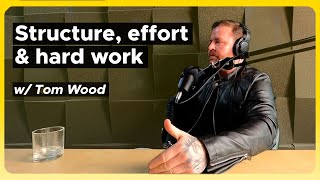
In this hour‑long podcast episode, host Hishem Azzouz interviews Tom Wood, a veteran recruiter turned founder of Evans Denham Group. Tom explains why he brands himself the “anti‑recruiter recruiter,” critiquing the broken service levels, poor candidate experience, and negative reputation of the recruitment industry. He outlines the rapid growth of his business (from 8‑10 staff and £1 m revenue in year 1 to 18‑20 staff and over £2 m in year 3), the shift from pure permanent placement to a 20 % contract mix, and the evolution of his company culture—from early remote‑first, unlimited holiday, no‑KPIs model to a hybrid approach that balances autonomy with accountability. Tom shares the traits he values in recruiters (structure, competitiveness, process‑driven mindset, often drawn from personal‑training backgrounds) and his own journey from a scatter‑gun, hustling salesperson to a disciplined, adaptable professional. He opens up about a long‑term alcohol dependency, the moment he chose sobriety, and how he now frames personal‑pillars (family, gym, work) to maintain balance. The conversation also covers hiring challenges, building leaders, involving family members in the business, the importance of owning processes, and practical advice for recruiters in 2023: work hard, do lots of everything, stay consistent, and control the use of time. Throughout, Tom’s tone is candid, conversational, and often self‑deprecating, while expressing enthusiasm for improving the industry and helping others.
Chapters
The anti-recruiter recruiter, right?
People often ask me, why do I have the anti-recruiter recruiter strapline? I kind of feel like the industry is broken. It needs fixing. The service levels in recruitment are bad. The customer service, the candidate service levels are bad. I think the reputation of recruiters is bad. And so for me it was, well, how am I going to differentiate myself? How am I going to do something different? I always say to my guys now, do lots of everything. Don't do a small amount of one thing. Do lots of everything. You cannot forget you have to work hard. What you put into this is what you get out of this.
Welcome back to another episode of the Recruitment Mentors Podcast. I'm your host, Hishem Azzouz, and on this week's episode, I was joined by Tom Wood. Tom has worked in the industry for over 2 decades, and over the last 3 and a bit years, he's been building his own recruitment business, Evans Denham Group. Tom is not afraid to share what he thinks. He's honest, and I absolutely love that. When I meet people who are nothing short of themselves and are authentic, I think it's really important in today's world to be exactly that. So talk about everything from Tom's career in recruitment, the good, the bad, the ugly, his entrepreneurial journey so far, what he's learned, the difficulties, and also why he likes to call himself the anti-recruiter recruiter. And we dive into that. So plenty to learn. I think you'll enjoy it. I think you'll be inspired. Enjoy the conversation. Welcome to the podcast.
Thanks for having me.
Thanks for making the trip. Um, as I said to you when I reached out to you. Enjoy your videos, enjoy your content. Yeah, uh, not, uh, what's the word, not scared to share your opinion. Yeah, be yourself. Yeah. And I always respect that about people. So I'm, I'm really excited to, yeah, dive into this journey of yours, what you've learned, the challenges, um, and most importantly, talk about this, uh, entrepreneurial journey that you're on after building a successful career in recruitment. So I'm going to ask you the, the million-pound question that we always like to start live. But I guess what I always like to do, just for people listening, is just offer people just some immediate context on where Tom is on his journey, what he's been up to, and then, yeah, feel free to add anything. So, um, how long have you been in recruitment?
I'll say 20 years.
Yeah.
Um, I think, give or take. Yeah, 20 years.
Okay, 2 decades of recruitment. Yeah. Okay, cool.
And then I'm feeling it.
And then obviously Obviously, just to add the, the sort of, um, in the last couple years context and what we're going to be talking about, so you officially launched your own recruitment business in Jan 2020, correct?
Right.
Um, and what's— so it's yourself, your wife is also a shareholder, and then one of the very early employees that joined you on the journey is also sharing that business, right? So your whole background, uh, was tech sales, correct?
Right.
So you did that for, yeah, over 10 years, 15 years.
Yep.
Um, but I know now, um, in your, um, over the, over the last couple of years it's become sales and digital. You have a holding company, and I know there's a few different things that you're really excited about— coaching, training, these types of things that we're definitely going to talk about. But in terms of the first year of your business journey, I think you shared with me that you ended the first year around like 8 to 10 people. Yeah, I think, um, uh, in terms of revenue, uh, in and around the million pound mark. Yeah, I think that was mainly all perm, correct? You said at that point And then obviously going into the second year, you was aware that you definitely wanted to build more of a contract part of your business. So this is where in the second year, um, you invested in the digital team, correct?
Yeah.
Um, and then, yeah, I think second year you said it ended around 14 people, um, near around the £1.5 million revenue mark.
Yeah.
Third year, just over £2 million rev.
Yeah.
And the contract split now of is around 20% contract, 8% perm, around 18 people. But then we've got people in marketing, finance, customer success. Not just, uh, recruiters.
Correct.
And then are you— so you're now in your fourth year?
Just started. Just started. So January now is the start of our fourth year.
Okay, cool, perfect. So hopefully that helps people listening. That's where you are on your business journey.
Yeah.
But I guess why don't we start with it with this question, which I'm sure you've thought long and hard about. There's one thing hiring recruiters for your team when you're employed.
Yep.
It's a whole nother thing hiring recruiters for your own business. So I'd love to hear Tom's thoughts on— yeah, in your opinion, what characteristics and traits do you believe make up a highly successful recruiter in today's market?
Yeah, good question. Um, so for me, the, the, the typical recruiter, um, has probably changed since I started. You know, um, when I started out in the boiler room, when I started out doing the 3 hours a day on the phone, KPIs, you know, beat you with a stick to work. That person was very different to the person that you now see as a successful recruiter, um, and that's a good thing. I think the characteristics have changed. What I do think though is that some of the fundamental disciplines are still there. So some of the fundamental, um, process structures, disciplines still need to be there. You know, we've become social, we've become social selling, but that still doesn't mean you can't have activity, you can't have structure, you can't have effort, you can't have work. So I think for me, I look at, I look at, do I want the stereotypical wide boy? No, I don't. Um, but do I want some of the traits that those people had historically? Absolutely I do. So if I think about some of the people I've hired and some of the people that become successful recruiters for me they haven't come from recruitment. So I've hired personal trainers, for example. So a couple of guys I've met in the gym from, from being mates, going to the gym on a social level. And I, I would look at those guys, and I've hired them in my previous companies, and that kind of person— the reason I would hire them is because they are so structured. If you think about anybody that does weight training at a decent level, they track their food, They track their diet, they track their macros, they've got training plans, they've got food plans, they've got prep time. They wake up at 5 o'clock in the morning to prep their meal, they go to the gym at 6 o'clock, they have a second meal there. If they're doing pt, they're doing their day planning, they've got a plan throughout the day of set appointments. They're structured, they're processed, they follow programs, they're competitive because they want to beat the person in the gym next and it's lifting more than them. There's an element of ego, there's an element of material things. They want to look good. Um, all of the disciplines— the competitiveness, the structure, the process, the organization— all of those disciplines are transferable, not just to recruitment but to sales. So I would say to those guys, look, you do that either for your personal gain or for your pt business, transfer that into recruitment, and you will be a success. And it's, and it's proved, you know, those guys have come in They're the ones that have the day plans. They're the ones that are doing homework at night. They're in early, they're gymming in the morning, they're in the office at 8 o'clock, you know, 9 o'clock for anybody else. They're structured, they're processed, they, they're disciplined, they're competitive, they want to beat everybody, they want to win everything. That for me is, is some of the core skills that I think make a good recruiter. I think if you're not competitive, if you're not structured, if you're not process-driven, you will struggle. You know, but it isn't, it isn't the, um, the levels of perhaps what it was in the '90s when I started, or, or late '90s, you know. It's a, it's a different version of that, but some of the fundamentals do still apply.
Yeah, no, I like the way that you've put that in terms of the mix of— yes, some of the disciplines and the important stuff is still true today.
Absolutely.
Yeah, no, I really like that. So just to touch on your career then, um, I think a couple of things I just wanted to dive into straight away, if it's cool with you, is when we're sort of preparing for this. So you've always typically been in like a perm recruitment environment, right?
Um, yeah, yeah, to a degree. So I have done contract, I've, I've built contract desks, I've built contract businesses, but the bulk of my experience would be more perm.
And then has it for a long time, was it tech sales?
Always tech. Uh, yeah, I mean, always tech, and then I'll say for the last 15 years, tech sales.
Tech sales. Okay, cool. So, um, what I'd love to ask you was one of the things that you said to me in preparing for this, which was around, um, you was in a position at that time in your career where consistently you were billing circa $500K a year.
Yeah.
Now for a lot of people, that would be a destination they'll dream of getting to.
Yeah, right.
So I want to just sort of dive straight into there in terms of like, what does Tom think he had to do consistently well? Yeah. To get to that point, right? Because I think a lot of people will be interested in that. So I guess a question to ask you then, just to start to unpack that, I'd love to just get your thoughts on Tom early days. What was he doing differently compared to Tom at the latter end of his career when he was consistently billing 500K or whatever a year? What was he doing differently that meant you were getting way different results, like, compared to early on to when you were doing later on? What were some of the fundamental things you were doing differently that, yeah, you had to learn the hard way that enabled you to get better results, do you think?
Yeah, good question. I think, um, and again, I look at, I look at that question probably from the view of recruitment but also generally in life. And I think I've, I've learned those things and applied them to life as well. Um, I think when you're younger and you're inexperienced, you do, you kind of have this scattergun approach. Um, and it's a scattergun approach where you just do anything, you know, you do anything. And again, I put that into life. You do anything in life, you know. Um, and I think in recruitment, certainly sales, that was my approach. I was always a good salesperson. I was a natural salesperson. My parents would say to me, I'll either be Arthur Daley, you know, selling used cars and hustling, or a Dale boy, or I'll be Richard Branson. Um, you know, it's kind of one, one extreme to the other. And, and for a long time I was the Dell Boy, you know, because I was kind of hustling. I was doing whatever, always had ideas, always had different business ideas, um, but never really stuck at one thing. And I think if I think about recruitment, you know, I fell into recruitment, which, which I touched on with you I think towards the end. Um, it was never a destination I wanted to be. Um, and for me it was one of those, yeah, I'll do it, I'll give it a go, see what happens. And by doing it that way, not having that focus and not having that view of I'm going to make this work, you do it and you hustle and you beg, you borrow, you steal, you kind of, you know, you do whatever you have to do to do deals. And that's kind of what I was doing. So, so there wasn't any thought process to it, there wasn't any structure to it in the early days. It was simply, I'm a good salesperson, I can blag it, I'll do this, but this isn't my job, this isn't my career. I'm going to be a professional football player, I'm going to be, you know, whatever. Um, so you hustle when you wing it and you do whatever you can. To get by. And, and then what happened, I think for me was probably 2 or 3 years into it not being my job, it became my job. Um, and, and, and I was good at it, you know, and, and people would say, you're good at this, you know, and, and my winging and my kind of hustling was actually becoming more repetitive and more consistent where actually it was now becoming, well, that is my process and that's what I do. Um, and then over the years you refine it a bit. And over the years, as you say, you make mistakes, things don't work, you learn from those things. And, and I think over a period of time you then start to recognize that this is working. You know, you start to go, shit, this is actually like, this is, this, this is, this is proving. Um, and as it proves and as it becomes more consistent, you refine it more. You focus on the things that do work. You, you realize that actually if things aren't working, you fail quickly and you learn from that and you, and you apply different approaches to things. And I think for me, that's where my career, certainly in recruitment, when it was a case of winging it and hustling and not really caring, to suddenly going, this actually works. Refining, learning, adjusting. The biggest thing I, I would say for me is that I've been adaptable in recruitment. So, so I was one of the— I suppose, um, this was one of the first recruiters on LinkedIn. But when LinkedIn hit the market in 2008, I think it was, um, I was on it, you know, and I saw the value in it and I saw the, um, the, the potential of it. Um, so I quickly I quickly took that on board. And that was in a period when it's still very much database, 3 hours a day on the phone, um, X many dials a day. Suddenly there was this social platform and that was hard then because if you were seen on LinkedIn in the day, you were getting a kicking. You know, your boss was giving you a kicking for being on LinkedIn, but it was kind of in my mind, I'm going, but this makes sense. And I quickly adapted to that and I quickly adapted to this whole social selling concept. Um, so I think being adaptable has helped me. But definitely having structure, process, routine, consistency, refinement, failing quickly, learning from my failings, and improving and keep going. That's what I've done throughout my career to where I am now, where it's become muscle memory, it's become habit, it's become routine, it's become— I know how to do that stuff because I've done it a million times. Um, but I see a lot of people that don't do that. A lot of people don't stick to things. They they fail and bail, which is a good saying that I typically use. Um, they, they don't learn from mistakes, in which case they keep making the same mistakes again and again and again, which is another thing I see regularly. A definition of insanity: keep doing the same thing again and again and again expecting different results. Um, so lots of people don't do that. And for me, that's where I've always been good, is I've, I've seen what doesn't work and I've changed it. I've done something different. I always say to my guys now, do lots of everything. Don't do a small amount of one thing. Do lots of everything. Yeah, there is a numbers game to this, and if something doesn't work, stop doing it, do something else. Um, so I think having that mentality has really served me well, and that's enabled me to do what I do. It's got me where I am, and now I'm at a point where I'm still doing those things, I'm still making mistakes, I'm still having massive errors, but I'm learning quickly. But some of the fundamentals of recruitment have become habit, they've become muscle memory.
So one or two, just one or two things on this really quickly. Honestly, Tom, people love a day plan, mate, when people listen to this. So you said there how important a structured process, being disciplined is.
Yeah.
So could we just— because it was probably different now, but could we just very quickly, before we then talk about your sort of entrepreneurial journey, cast yourself back to when Tom was doing the biggest numbers?
Yeah.
Um, what was his day plan? People want the detail, mate. Honestly, people love this.
Do you want the real answer or do you want me to give you a fake answer?
Let's keep it real, mate. Let's give me the real answer.
So the real answer is I had no day plan.
Okay.
I was drunk. You know, I talked about this. I had an alcohol problem and when I was at my peak of recruitment, I was drunk. You know, I was, I was a functioning alcoholic. So I was, you know, I was traveling the country. I was working the big systems integrators. I was up in Bradford, I was in Norwich, I was in Reading. I was supporting some big, big software projects. I was out with the program managers, the project managers, the PMO managers. I was, I was going for lunches. And so I, that was a period in my life when I didn't have that structure.
Okay.
Because I was, I was living the dream. I was billing 500 grand a year. I had a team of resources working for me. So I didn't have, I would say, the, um, the set structure that you would, you would expect to do those numbers. What I did have though was a structure that built up to that level, you know. So there was things that I did repetitively and consistently that got me to that level. Um, you know, I didn't go and pick up those clients and win those clients and those relationships by chance. There was a method to my madness that got me to that level. Um, and that was, that was, you know, simple things like in the morning you check your emails first thing. And I've always been a morning person, you know, even when I was in my drinking days, you know, I would, I would get up at 6 o'clock you know, I would work 24/7, not because I was told to, but I just enjoyed that mentality. You know, I was answering emails at 4 o'clock in the morning whilst feeding my youngest, you know, feeding them a bottle of milk whilst, you know, middle of the night. Um, so I've always had that kind of off-the-cuff reactive kind of, uh, mentality anyway. And I would always do something, uh, uh, just whenever I needed to. I wasn't a 9 till 5, but always check my emails in the morning, always kind of, you know, what needs reacting, what needs focusing on. Okay, then you start to structure your day. I'd never do BD at 8 o'clock in the morning. I'd never do BD at 9 o'clock in the morning, you know. I'd do BD at, say, 11 to 1 o'clock, for example. Afternoon's a difficult time for BD. People have lunch, they're a little bit sluggish. You start hitting them with BD calls, it doesn't go well. So I would, I would put those structures in place, um, you know, in projects on LinkedIn would be done the night before, so you get a response overnight, so you've got calls to make the next day. Those kind of things I would do, um, but yeah, when I was billing my big numbers, I was, I was you know, traveling around the country, wining, dining, entertaining, which is still a massive skill. Um, and people don't do those things as much anymore. Um, and that was largely what, what enabled me to do the big numbers. And I had a team and everything else.
Now I appreciate being honest, and I know we wanted to speak about this, or you mentioned this, because I saw, saw your, um, video that you put up. I don't know if it was yesterday, this week, or on that Dry January and stuff. Yeah, I think I made a note that— what I think you— did you say that you've been like 12 years sober?
Probably more. Yeah, took 12, 13 years now. I've kind of lost track of it. It's it's kind of lost its importance to me in terms of time frame because it's just become a thing.
Yeah, become a thing. Let's just talk about this for a sec because I think it'd be helpful. I feel like it could be its own podcast itself, but let's talk about it. You very kindly kept it real there and was honest.
Yeah, yeah.
So, um, I think what I personally would be really curious about is, let's be honest, the journey that you've been on, um, you can apply to the things that you've obviously had to learn and work through to then, I guess, move away from a habit that obviously wasn't serving you.
Yeah.
Can be applied to a lot of different habits, right, for people listening. So it doesn't necessarily— this is only relatable to you if you have a drinking problem or you have a bad relationship with drinking, right? Which is— so for me, I guess the thing that I'd be curious about was firstly, when, when did Tom look in the mirror and think and start feeling that he had a, I don't know, a toxic relationship with alcohol? Because I don't know, I feel like from all the things that I listen to and Uh, I don't know, I feel like there's— there must have been a period where you sort of— the story you told yourself was like, this is fine, it's part of the job, wine and dining, I'm making this money. So yeah, I don't know if there was a moment or it built up over time, but why don't we start there and then maybe you can talk about some of the things that you've had to learn the hard way, and that might be really helpful for people.
So I think, I think the alcohol thing for me was, was, was it recruitment? Was it before recruitment? It probably was before recruitment, if I'm honest. Um, and I think the In the video I did recently, I talk about the two, the two, um, different alcoholics. You've got the one that suppresses a problem, so you drink to self-medicate, and then you've got the one that actually alcohol is a chemical problem and you create a trigger in your body, which is the, um, uh, the craving mechanism. So the minute you have one drink, people talk about, oh, I've opened the floodgates now. Yeah, yeah, you have one drink, I needed 100 because my craving kicked in and I couldn't stop that craving. And I'm a pretty stubborn guy. I couldn't stop that craving. So I had that problem. I wasn't suppressing a problem. I wasn't suppressing a, you know, trauma. I had a craving. So that was always there, um, and perhaps it increased over time. And as I got older and drank more, perhaps it became more prominent. Um, so maybe that was an aspect of it. And going into recruitment back in the, you know, the late '90s, early 2000s, you know, that was a period when it was cocaine, it was booze, it was, you know, especially in London Um, so maybe that contributed to it, but it wasn't the, it wasn't the defining factor. Um, but I think, look, you know, for me, recruitment probably exposed my insecurities and frailties. Um, so I've always had imposter syndrome when I was playing football, when I was selling cars. I've always thought I'm going to get found out, I'm not that good. So I've always suffered, still do suffer from that. That's a big thing that, that is in my head now today. Last night, you know, it's constantly there. And I use it to drive myself now, and it channels me, or I channel it and it drives me, I should say. Um, so I've always had that. And alcohol would be something that I would, I would use perhaps to, to stop my brain, stop my insecurities, stop my anxieties. I've been an anxiety sufferer for years. Um, so I think alcohol was something that actually started to kind of, um suppressed some of those things and, and, and hide some of those things, but also it contributed to some of those things. Because the thing with alcohol is actually when you have alcohol, your depression goes up, your anxiety goes up, your insecurities do go up. They might go for a minute, but they come back a lot worse. So for me, it was— I was seeing this increased kind of feelings of, of stuff I didn't like. And, and I always had this vision of who I was. I'm gonna be successful, I'm going to be entrepreneurial, I'm going to be the strong person that everyone goes to. I'm gonna be the cool guy. You know, that was always the kind of person I wanted to be, the Brad Pitt, the George Clooney. That was always who I wanted to be. But with the alcohol, I was going the other way. I was turning into the liability. I was turning into the lunatic that everyone didn't want to go out with. I was turning into the mess in the corner. So my, my, my journey of trying to be this person I wanted to be, I was going the other direction. And I think that was the point, to answer your question, when I suddenly went, this is fucked up. I'm I'm not— I'm kind of on this destination of who I want to be. I'm going backwards. I'm turning into the bum on the street that people are laughing at. And I think that was the point for me when I suddenly went, this isn't— this isn't working. Um, and then when I had my kids, it kind of became the big thing. I didn't want my kids to see me as that person. I didn't want my kids to see this, um, person that just, you know, they were ashamed of, they're embarrassed, you know, to be around. So for me, that was it. I was like, right, I'm done. And, and the funny thing is, when you stop drinking unless you really want to stop drinking, you can't stop drinking. So for me, for 6 months, 8 months, a year before that, I couldn't stop drinking because I didn't really want to. I was like, yeah, it's fine, you know, I'm enjoying it, you know, I'm cool when I'm drunk, you know. But, but at the point when you suddenly go, this is shit, you know, that's when you know you're going to stop. And I stopped. Haven't touched it since. Don't want to touch it. Don't need it. Um, and, and do you know what, the person that I want to be, I don't think I'm there yet. I'm not saying I'm this cool guy. Yeah, I'm on that journey.
No, I appreciate you sharing that. I guess just really quickly then, um, what, what would you say if, if I'm listening to this right now, and it could be alcohol, it could be drugs, it could be just like I said, a really— you're aware of a habit that isn't— yes, you— isn't sort of serving your future self.
Yeah.
What, like, what would be your advice for someone to take? How can we take that first step, you know, of— I think you've got a direction.
I think you've got to accept and realize there's a, there's a problem. Um, and look, you know, when I talk about these things, like you say, it could be alcohol, could be drugs, could be you work too much, could be, uh, your work-life balance is wrong. It could be, um, you know, I see lots of people now when they, they stop drinking, they replace the drinking with something else. It could be the gym, it could be whatever. If you, if you find that you're doing something to the excess, um, and it's affecting the balances of everything else in your life, you've got a problem. Um, so I talk about the pillars of my life. I've typically got 3 pillars. I've got the gym, I've got work, I've got my family. And if you think about, um, a kind of a Greek Colosseum, you know, the pillars going up, they're my pillars. And on the top of the, the pillars you've got a platform. If one of my pillars is slightly, say, higher than the other, you've got a slanted platform. So you imagine me or a ball on that platform. The ball starts rolling. That ball represents your life. It represents who you are. If my pillars are slightly off, then I've got an imbalance. Yeah. Um, so the ball, my life, is going to slip away. I need my pillars to be level. I need my, my work, my gym, my family to be level. And I've kind of created that. It all kind of interacts, it intertwines, and it's got a nice balance. Sometimes, however, I go the wrong way. Sometimes I go, fucking right, work, work, work, and family suffers. I don't see my kids. I'm not reading bedtime stories. I'm not spending time with them. I'm not present. They feel it and I feel it, and it starts to suffer. Then I'm going, shit, I need to see my family more, so I stop going to the gym. For me, the gym is a mental thing as well as a physical thing. So if I'm not going to the gym, I'm getting stressed, I'm getting anxious, so I can feel it. Because I'm stressed and anxious, my kids are getting neglected, my work is suffering, it's all, it's all gone to shit. So for me, I've got to have that balance and I've got to have that harmony. And that's my advice to anybody that if they're doing something to the excess, if it's affecting other aspects of your life, you've got a problem. If it's not and your life is great and your life is brilliant and everything's fine and you're not being a twat and you're not, you know, hugely in debt and you're not getting in fights and you're not cheating on your missus or your boyfriend, your work's brilliant, everyone's happy, fine, crack on really, because you know there isn't a problem.
Yeah.
Um, but I think if, if for me the rule of thumb really is if you're doing something to excess that's affecting everything else in your life, or even one aspect of your life, you need to address it. Yeah. And it's having that self-realization. Lots of people will tell you something's wrong But until you realize it yourself, yeah, until you realize it yourself, you won't change it.
No, it's a really— yeah, you can really visualize that one where you sort of said that. It's a really good way to look at it. So let's talk about this entrepreneurial journey that you're on then. Yeah, um, why don't we start— I think an always great place to start is sort of how Tom thought about how he's going to make his recruitment business different. Um, maybe we can— maybe it could be part of it, but maybe we could start with— I know it's like one of the most engaged pieces of content you've done, the the anti-recruiter recruiter, right? And I think your video was around, why do I have this strapline? Like, why is it important to me? We don't have to start there, but I want to talk about it. But how, how was Tom thinking about making his recruitment different? How were you— yeah, what was your differentiator? Let's start there and then we'll break down this journey.
Yeah, so I mean, look, I— anybody that does well in recruitment at some point in their life goes, I'm going to do it for myself. You know, you kind of have that, have that internal conversation. Lots of people don't do it because it's a risk. Lots of people think, no, I'm not gonna bother, and they're earning big money. Um, for me it was always in the back of my mind, and I said I should have done it, I could have done it years ago. I shouldn't have done it years ago because I wasn't ready. Um, when I did it was at the right time because I was ready. I'd run businesses, I built businesses, I, you know, I'd managed, hired, fired, so I was ready. 10 years ago I wouldn't have been ready. Um, so for me when I did it, it had to be, well, how am I going to make this work? Because there's so many bloody recruitment companies, there's so many recruiters, there's so many Freds in the shed. There's so many people in their bedroom doing recruitment. So, and I didn't want to be that, you know, and I used to have battles with my wife about this because she would go, no, you know, do a lifestyle business. We go on loads of holidays. And, and for me I was like, that's cool, but I want more than that. I want to make a difference. I want to do something. I want to be impactful. I want to be remembered. I want to do something that's gonna have some kind of a legacy. I don't just want to be Tom at home going on loads of holidays, which I could have done, build half a million quid, lived a brilliant life. But I wanted more than that. Um, so when I looked at recruitment, and I've had this frustration with recruitment for many, many years, I generally don't like a lot of the industry. I don't like a lot of the people in the industry. I don't like the, um, how the industry is conducted. I don't like the, some of the practices. As I talk about the wide boys, I don't like that mentality. I don't like the sort of the pinstripe suits, the red braces, the, the brown loafers that, you know, I can't stand that. Um, and I think, I think there is an issue with that, and I think recruitment companies and recruitment owners drive that behavior. And I know why they do it, you know, they, it thinks, they think it makes them money. To a degree it might do, um, but that's a short-term win for me. Um, you see all these guys spouting off the Wolf of Wall Street bullshit, you know, and, you know, if your wife's ugly, get on the phone. And it's just like, Jesus Christ. And I've seen people do it. Yeah. So I kind of feel like the industry's broken. It needs fixing. I think the, uh, the service levels in recruitment are bad. I think the customer service, the candidate service levels are bad. I think the reputation of recruiters is bad. So there's, there's lots in there that needs fixing. So for me it was, well, how am I going to differentiate myself? How am I going to do something different? How am I going to make an impact? The anti-recruiter strapline wasn't the kind of the, the outset goal. The outset goal was we're going to do this better. The initial thing I was going to do better was be a better recruitment company for my employees. That was the thing, right? Um, so I came from a recruitment company that was quite hardcore. Um, you know, mobile phone in your drawer. Uh, the CEO would, um, would track how long you're in the toilet for. You know, you'd get an email going, you spent 7 minutes in the toilet, what were you doing? You know, it's like, do you really want to know? Um, you know, your mobile phone's in your drawer. You weren't allowed to go and talk to people, you know. So, so for me it was like, I'm going to make this a better environment for my employees. I'm going to make it a, uh, you know, a better life, work-life balance. So, and, and you know what, it pissed me off actually, because pre-COVID I was kind of one of the first recruitment companies that went remote working, unlimited holiday, relaxed environment, no KPIs. We're going to be— you're going to take ownership, you're going to be accountable, I'm going to hire adults, I'm going to treat you like an adult, you know, what you put in is what you get out. That was my whole vision. COVID came along and completely fucking stole my thunder. COVID came along and literally was like, the whole fucking world went remote. So I'm shit, gotta get a new USP. Um, and, and we, we're kind of doing that and we're kind of evolving with that. Actually, the funny thing is I've, I've slightly reverted on that now because I'm not a big fan of the fully remote model, which is what I preached at the beginning because I've seen it doesn't work. You need to have, um, a hybrid element. You need to have the, the people, the competitiveness, the culture. So I'm, I've kind of reverted a bit, but initially that was my setup. This is what we're gonna do. This is how we're gonna be different.
Mm-hmm.
The evolution of that is we can do that and that's cool. But as I said, kind of COVID came along and pissed on my bonfire a little bit. So I've kind of lost what made me different. What I'm sort of now doing is going, you know what, actually I'm gonna make more of an impact than that. Yes, we've got a lovely company. Yes, we can have our values and who we are, and I still stand by that, but I'm gonna try and impact the industry more. You know, I am gonna try and fix the service levels. I am gonna try and, uh, whittle out the shit recruiters. I am gonna try and reduce the amount of bad recruiters, bad habits, bad behaviours. So I'm on a, I'm on a journey, um, to massively change that industry, um, and it's the perception of the industry, um, from a, from a candidate perspective, from a client perspective, from the externals looking in. I'm on a journey to change that, and some of the things I'm doing from a business perspective will impact that and will change that. And there's some stuff we're going to launch this year that will do that. Um, you know, does it need to be regulated? Possibly. Um, because essentially, look, you could, you you know, meet a guy tomorrow and sell him the dream of recruitment. He goes, yeah, fucking brilliant, I'm gonna set a business up. Goes and sets it up, starts recruiting for people. What he's then essentially doing is he's affecting the company he's recruiting for, he's affecting the person he's recruiting. He hasn't got a clue. And that's the problem with recruitment. You can affect the business and you can affect someone's lives by selling them the dream but completely misleading them. And then you've knackered a business, you've knackered someone's life. Because you've sold them the wrong dream. And that for me is a worry because nothing's regulating that, nothing is stopping that from happening. And that's where I think recruitment's got an issue. But, but so, you know, I'm going to try and fix that. I'm going— I'm on a mission, I'm on a kind of a, some kind of a, I don't know, a journey to try and change that industry. And, and what I want to be is that there's credible recruiters left because there's so many of them out there, so many, but they get tarnished with that bad brush.
Hey everyone, a real quick one from me. This podcast would not be possible without our amazing podcast partners, Vincere and Sourcebreaker. Because you listen to this podcast, you're able to get your hands on exclusive savings on both of these award-winning products. If you're a growing recruitment business, you have to check out Vincere, who are an all-in-one operating system for your growing recruitment business. With Sourcebreaker, if you want to make sure that all of your recruiters have the best tools on the market to stand out and beat their competition, then you have to check out Sourcebreaker. Use the link in the show notes, in the comments below, and you'll be able to get yourself exclusive savings on these amazing products. Well, why don't you just talk really quickly on that? Because look, I think when we spoke about this, look, that, that really resonates for me. It's a big part why I started this podcast. And for me personally, I don't know what you— how you feel about this, but I think we've got a better chance of getting to the place that you're describing if we collaborate more rather than tear each other down.
100%.
But I think what I liked when you— even in this video, but it's what you said to me as well— is yes, 100%, the industry has to take accountability for some of the things that you said. But it isn't— it's also obviously you shared with me around your perspective on, well, part of the accountability as well is clients and absolutely and encouraging bad practice. So why don't you talk a bit, just share your perspective on that? Because I think that's— that would have been a big reason why people really enjoyed that video, is like, yes, there are a lot of people that cut corners, do rubbish things, but also it can't— the accountability can't just be on recruiters. I thought it was interesting.
Well, and it is for me, because it's very easy to blame recruiters. Yeah, very easy. But recruiters are only reacting to a situation. They're reacting or responding to an environment, or they're reacting, responding to a situation. Now, for me, there's accountability across all three components of recruitment: candidate, client, recruiter. There's accountability there. It's a bit like the chicken and egg. Where did it start? Um, and there'll always be an argument on that, you know, to say, no, it's them, it's you, you know. For me, when I look at it, I think there's accountability across all that. So let's think about the, the recruitment journey. Typically, I'm not talking about exclusivity, I'm not talking about retain, I'm talking about conventional speculative permanent recruitment, which is the majority of the industry. So, so a client has a role, a client goes, right, need to fill this role, mega urgent, let's get it out there, let's get it in the market, right? Let's go and hit all the, all the usual suspects. So they go and pick 6 recruitment companies, you know, they go, right, we're going to do this. Their, um, they go to market, it's right, we're gonna have one briefing call, um, you can't ask any questions on that call, you can, you can listen, you can maybe send an email through, uh, following that call you can't have any contact, um, you're going to send all your CVs through the applicant tracking system, um, and we'll come back to you, you know, when we've reviewed them, when we feel that there's, there's a good profile. Um, so they're basically going, right, we're going to handcuff you so you can't do this, you can't do that, you can't do this. Plus you're going to race against 6 people. Um, we're not going to pay you a penny up front, we're going to pay you nothing, but we're going to let you race, we're going to let you go. Essentially, the winner is the one that gets there quickest. That's the winner. The winner is the one that gets there quickest. So, so what will typically happen, and, and recruitment model is those 6 agencies will go, right, fucking hell, right, let's run, let's race, let's fucking— right, we've got to beat these guys, we've got to go and And, and what you're then doing is, as a recruiter, you're going, well, I haven't got time to be credible. I haven't got time to do the research. I haven't got time to, um, spend on a pitch. I haven't got time to spend on a nice presentation. I haven't got time to really qualify people properly because I know I'm racing against those 6 guys, and I know some of those 6 guys, and they're going to be ruthless. So, so you're racing, you're sacrificing quality, you're sacrificing substance, you're sacrificing credibility And what's going to happen is you're going to lie, you're going to cheat, you're going to manipulate, you're going to cut corners, you're going to try and shaft your mate, you're going to try and do whatever you can to win that race. So what then is happening is CVs are getting sent without being qualified, CVs are being sent without the candidate even knowing. You know, all these bad behaviors are coming into it because it's a race. And then the client's going, oh, it's amazing, got all these CVs. They start interviewing the candidates, the candidates are rubbish. There may be one that gets through the loop and they kind of go, yeah, okay, we're going to hire that person. That person then leaves after 2 months. What then happens is the client turns around and goes to the recruitment company, that was terrible, that was a shit service, you know, you were awful. But what they don't realize is they started that mechanism. They started that mechanism by basically saying you can't do this, you can't do that, it's a race, off you go, first one to get to the finish line wins. They've started that behavior. The candidate will also be accountable because the candidate sometimes will lie, the candidate will cheat, the candidate will play recruiters off against each other to get their to get their best way, or to get their, their, the way they want it. Um, so you've got all this kind of manipulation and lying going on within this process because that's what people do. People are selfish, people are greedy, people will, um, will do what's right for them. So you've got, you've got the recruiters being skeptical of the candidates, the candidates being skeptical of the recruiter, the client has basically created this race that no one's going to win in because it's going to be an absolute shit show. Um, and that's the recruitment process, but the one that will get the blame for that will be the recruitment company. Yeah. And everyone turn around and go, well, that was bloody shit, wasn't it? You know, so for me it's like That is, that is where the breakdown comes in, and that's where it needs to be fixed. Recruitment should be retained. Recruitment should be— you should even do it as like, so in the tech industry, you'll have an RFP, for example, or an RFI. So request for information, a request for pricing. You pick some companies, you let them tender. So create a presentation and tell me why you should get this rec, or you should have 6 months of exclusivity with us. They present, they pitch, you choose that person, off you go. Becomes a proper partner. You would see a massive uptake in the recruitment process if that was how it was done.
Yeah. So talk to me about this business journey then. So what's been most difficult so far?
People. Yeah, without a doubt.
Give me some color to that. Like, what, what's been difficult about people?
Are the, the biggest frustration, I think, in business, but definitely in recruiting, because unfortunately in recruitment you're dealing with people. Um, People for me has been the biggest challenge.
What have you been most surprised by?
I think so. I think with— so if I think about my business, you know, Evans Denham Group, the biggest thing for me is, is trying to do right. Um, but I think whenever you try and do right, you're still perceived to be doing wrong. Um, and that could be candidates, that can be clients, in some cases employees. You know, employees don't necessarily think you're trying to do right by them. Um, So I think people is the hardest challenge that I've seen on this journey, trying to keep everybody happy, trying to do what's right by people, um, trying to, um, create an environment where everybody's happy, because that's hard. Um, does it exist? I don't know. Um, is there ever a company where everyone's happy? I don't know. But that's been a, that's been a challenge. Um, and then I think, let's say, you, you look at the aspect there of clients are people, candidates are people, employees are people. The whole concept of this business is people. Um, so that's definitely the biggest challenge.
Yeah. What about specifically hiring? Because that, that does— I'll be honest, that whenever I sit down with recruitment entrepreneurs, that really does end up being something that they get really right or have to go through a lot of pain to get it right. Um, what, what's been your journey with that? Like, what have you had to learn the hard way when it comes to actually hiring for your own business?
So I think, I think we've kind of got it right. We haven't had huge attrition, um, in, in the 3 years we've been running. We've had some steady growth, we've lost some people, um, but I would say they were obvious errors. So I hired my nephew, um, young lad, 19 at the time, a little bit lost, wanted to give him a direction, wanted to give him a, um, a journey. Um, it was never a business benefit, you know, it was never, uh, something that was going to grow the business. I was trying to help him. Um, and in hindsight, should I have done that? I don't know. Would I do it again? I probably would. Um, but that didn't work, and that was obvious. Um, another guy I hired was a former employee. Uh, I think he lost his love of recruitment at his former company, um, and he admitted that, and I saw that, and they probably saw that. I then thought, well, I can reignite that. Um, again, in hindsight, could I? Did I know I probably couldn't? Probably, but I want him to give him a chance. So again, this is that failing quickly thing. You kind of recognize your failings and admit them, you know. Um, generally we've been okay, you know. I think where it becomes harder is to get good people, you know, get the good people, get the credible people. And especially post-COVID, because some of the things that I could chuck out there pre-COVID when I launched the business, they were attractive points. I could go unlimited holiday, I could go remote working, flexible, you know, no micromanagement, fun, you know. They were the things that I was using to attract people. And people in recruitment, that was non-existent. Post-COVID, everyone's chucking that out. So, so what is your differentiator? You know, oh, you know, we've got 30%, um, commission. So is everyone. Uh, you know, we do hybrid working. Well, so does everyone. You know, we do dress down. So does everyone. So, so there is no differentiator right now. It has to be— and this is kind of where I'm now trying to do it— has to be about the person or the people. They have to see that you are the differentiator, and that's— they want to work for that person.
So curious then, um, I think we spoke a bit about, uh, this. How, how have you gone about building, um, leaders in your business? Or how have you gone about, yeah, I guess, making Tom redundant, or Tom not sort of involved and in touch for everything? Because that would have been the, the only way that you would have, yeah, grown to over 10 going towards, uh, 20 people. Like, what's that journey been like for you? Because I know, again, that's really difficult.
Yeah, really hard, um, especially with your own business, because you, you just— you're on it, you're on everything, you're proud of everything, you're worried about everything. Um, it's hard. Um, I'm on that journey now, um, so I'm definitely not, not finished with that journey. And, and people that will listen to this that work for me will be laughing, going, fucking, he's nowhere near finished on that journey. So I, I'm, you know, what have I done and how have I done it? I want people to be leaders. I want people to step up. I want people to have responsibility. I want them to have a sense of ownership. So if I think about Jake and George who work for me, who've built the digital practice, that's exactly what they've done. They've taken a sense of ownership. They've taken pride in what they do. They're invested in it, um, to the point where they, they helped, um, our website builder build a website. You know, everything is branded to their, to their colors, their choice. I've stepped away from that completely and gone, it's yours, you do it. Um, and I can see the benefit of that because they're so invested in it and they're so proud of it. Um, trying to replicate that across the business in other areas is not as easy. Um, and I think that's because I might say, well, I've got this sales division, I want you to own that sales division. It's still not their division. Whereas Jake and George came to me and went, we're gonna build this. And I went, great, go and do it. So from the start it was theirs. So I think that does help. I think giving people autonomy, giving people the ability to make decisions is really key. One of the things I would say that I've done well is I've separated myself from operations. So I was running everything, sales, operations, everything. I've put Stacey, my wife, she's running operations. I've got my sister-in-law Sasha, she runs HR and finance. I've been lucky enough that our developer guy has now joined us on a permanent basis. He's marketing and development, so he's marketing director. I've got some amazing people that I actually completely trust. I've recently hired a sales leader which I'm going to be announcing this week or next week, um, somebody that's worked for me previously. So he's going to run sales for me. So I'm going to run the business and all the other projects. He's going to run sales. I've got my marketing director, I've got my finance and HR director, I've got Stacy now as COO, so she's overseeing operations. So for me, it's, it's Give them the power and the ability, but also hire the right people. You know, I've always been a believer of hire good people and let them be good. And that's hard sometimes because being the control freak I am, I want a medal. Um, not as in a physical medal around my neck, as in I want to meddle in their affairs. Yeah, I probably do want to meddle as well. But, um, but hire good people and let them be good. And, and actually you notice it because some people you hire that you think are good and they're not good. And you have to step in. What I will say to all my guys is, if I have to step in and do something before you do it, you know you're doing it wrong. If you do something before I step in, you're doing something right. And I'm seeing that from some of those now. They're doing things before I even say it. They're doing things before I even mention it. And that for me is an indication it's working.
So how have you then worked out where Tom can have the biggest impact on the business then? If all of a sudden you walk in the office, you're like, I'm not fucking needed, what have I got to do? Yeah, you must have figured out then, right, where to apply my energy and effort.
There was an ego thing with that, and I've struggled with that recently because I I want to walk in the room and, you know, I have an impact and they're hinged on me doing something, which is mental because that's just— you shouldn't.
That'd be really common for sure.
You shouldn't have that. Um, but the ego in me is like, why, why are they not waiting for me? Why are they doing stuff? And, you know, but that's actually fucking brilliant because they should be doing stuff. Um, so where, where am I? So running the business, you know, so I— where I was struggling back in the last year was I was, I was dipping into some of the other projects that we're going to launch, we're going to build. Focusing my attention into them and then forgetting about sales, forgetting about the consultants. And then what was happening was numbers were dipping, um, so I would then go, oh shit, right, forget about those projects. I now need to go and kick everyone up the ass and get them back focused on, on the basics of recruitment, which I would do, and numbers would go back up. Um, and then I'll go, okay, it's cool, numbers are back up, okay, I'll go back and do those projects again. And then same again, numbers would dip, and you know, so, so for me now it's like, right, I'm going to run the business, I'm going to make sure that marketing, HR, finance is the absolute best it can be. We're the best processes, uh, from a marketing perspective. There's so much to do, and I love marketing. Um, so we're doing— we're going to do podcasts, there's a book coming out, there's various different businesses we're launching. We've got the Evans Denham group page, which we're massively driving the, the brand and the following on that. We're at 250,000 followers in 3 years. Uh, we're going to get that to a million, uh, probably in the next 18 months. Um, and that, and that million becomes my audience then that I can then leverage for all the other ideas that I've got and all the other things we're going to implement. So I can focus on marketing, I can focus on running the business properly. Profitability is a big thing this year. We, we haven't focused on profitability that much, so a big focus of mine is profitability, not just on reducing cost, getting them, getting the most out of— but yeah, getting the most out of what we've got, you know, and driving the right behaviors and maximizing those. Um, we've got The Hub, which is my, one of my coaching platforms, which is a video content which we're going to enhance. We're going to start doing CV, resume, LinkedIn reviews. Um, so I'm seeing at the minute people are paying crazy money for people to do professional CV writing, which is ridiculous. Um, someone quoted me $700 the other day that they're, they're paying. Um, so we're going to do some kind of an AI, uh, CV LinkedIn review on the hub. We're going to get other people on there to talk about, you know, hiring tips. So where I've seen my mind shift a little bit now is, yes, I'm in recruitment and it's tech recruitment um, I'm actually looking at it going, I can actually have a bigger impact than that. You know, if I think about the masses out there, the masses of the people that are looking for work, I've reached the, the realization now people don't know how to get a job, people don't know how to interview correctly, people don't know how to write a CV, people don't know how to close, how to pre-close, they don't know how to get engagement, they don't know how to interview the interviewer, um, they don't know how to ensure they lock in a second stage. They don't know this stuff. Um, so I'm, I'm on a mission now to, to help the people that are looking for work, help the unemployed by teaching them those tools. So I've kind of got that side of my business, which is more of a generalized coaching. Then I've got the recruitment business. The model I've got, which is the Evans Denham Group, that's a parent company, a holding company. That's where the infrastructure of our business sits. My vision is the recruitment side can keep on growing. You know, we could have Evans Denham Healthcare, Evans Denham Construction, Evans Denham, um, Finance, for example. So we'll have those businesses in recruitment. We've got, we've got ED Sales, we've got ED Digital, we've got an internal business at the minute which is ED Tech. It's not external, it could be, um, I think it will go under Digital if I'm honest. So we've got that business, um, the other side of the business is more coaching platforms, academies that I'm going to build, um, The Hub, uh, the book I'm going to write and launch podcast we're going to put out there, and a lot of that is aimed more at helping people to get hired. So it's not specific to tech and recruitment as such, it's more about the job market, hiring, unemployment, how to get a job. Um, and that for me is where there's a massive value, there's a massive value in that. And then we've got the app business as well, which actually is recruitment. Um, so that sits on more on that side, and that will launch hopefully— excuse me— this year as well.
Family?
Yep.
Talk to us about that.
You've—
you work with, uh, you start this business with your partner in life.
Yep.
I didn't realize also your sister Laura is part of that as well.
Yeah.
What's that been like? I'm sure there's been challenges with that. Yeah. What's that been like?
Do you know what, the vision— and I had this vision, and I think I talked about my nephew hired, um, my vision was to help people. So I, I, I've always said I don't want to be the richest guy in the room. I want everybody to have some kind of a wealth realization. I want to change people's lives. I want to help people. Um, and that— some people might call that naive, but that is who I am. You know, I'm one of those guys, it's always nice to be nice. Yes, I'm opinionated, and yes, I'm a bit stubborn, but it's always nice to be nice. I will always help someone. I'll walk down the street, if I see someone needs help, I'll help them. Um, so for me it was like, you know what, I want to help help people. Um, you start with your family, you know. My sister-in-law, bless her, she was working part-time because she had kids. Um, the company she worked for, you know, it was an office job, it was hard. She was getting paid pro rata £9,000 a year, £15,000 a year, I think, in the end, maximum. Barely living, you know. Hadn't been on holiday abroad in God knows how many years. Um, and she's brilliant, you know, and I love her to death, and she works hard and she deserves more. Um, so for me, I was like, I want to help her. So I brought her in, she worked in finance and she's done HR, and so I was like, this is— she could be my operations manager. Brought her in and, and changed her life. And I don't want plaudits for that at all. The plaudits I get is seeing her going on holiday last year. So I think they went to Barbados or Cyprus, her and her kids and her husband, you That's what I love seeing, you know, seeing her, you know, being able to buy things that she couldn't buy and live the life. That for me is just— I don't need her to ever say thank you, and I wouldn't ever want to say thank you, but that for me is— I love seeing that and to know that I've helped her do that. For me, that's brilliant. So that's great. Um, she pisses me off and I piss her off, and, you know, she's the first one to ignore my WhatsApps at, you know, midnight on a Saturday night when I'm moaning about the P&L. I think she even mutes my my notifications, I think. But, but, you know, and we've had a few chats and a few conversations. I've also told her, look, I love you to death, like, don't ever forget that. You've got a job for life, but you piss me off. But we have to have that relationship. My wife, um, major issues when we first started out. She wanted the lifestyle business, um, I didn't. I wanted, you know, the bigger business. I wanted the empire. Um, huge strain in the early days because of stress, because of The business, um, was, was absorbing me. Um, our relationship was failing. My relationship with my kids was failing. So massive amounts of strain. Then, um, we, we changed the structure, um, and she is now involved. So when, when we first started out, she was a shareholder because it was just more tax convenient, you know, it was more beneficial to kind of go, well, you could have a salary and I'll have a salary. You can do a bit of office management as your job and it will kind of work. Um, and that was kind of how we positioned it. She was a hairdresser for 16, 17, maybe 20 years. Um, so she wasn't in recruitment, so she never worked in an office. So it just kind of didn't make sense. We then made a decision that, okay, I'm not gonna not do this because this for me is my dream as a kid. This for me was my ambition, was to build a business. So, you know, the only way that it's going to work is if you actually have a proper job in this. You know, if you properly do something. So I said, right, I'm going to make you operations manager at a time, I think, operations director, and this is going to be your job. And you know what, she's been unbelievable. Like, unbelievable. I mean, learned a lot. She, um, she watches a lot. She's— she runs that business as I do. Um, she can't do the things I do. She's not maybe got the ideas I've got, and she's not got the entrepreneurial side that I've got, and she's not got the maybe the people aspect and maybe the gravitas. She's very introverted, you know. If she was sitting here now, she'd be under the desk probably crying, you know. So she hasn't got that ability, but she is organized, she's structured. She is— where I'm perhaps too nice, she's not that nice, and she'll, she'll be harder. Um, she runs that business, you know, phenomenally. To, to the— I mean, you know, and, and I sort of joke about it, she ensures the bloody coffee is filled up, you know. She'll build a desk with me when a desk needs building. You know, we're in there, we're building desks, we're building chairs, we're putting TVs on the wall. You know, we're that hands-on. Um, so she'll do that stuff equally. She'll sit in marketing meetings, finance meetings. She runs the finance and operations team now. We've got a customer success manager reporting to her. She's on it, you know. Um, I've seen her looking at the P&L more than I do, you know. So she's on it. Um, so, so to, to have that I think has been really fortunate because initially it didn't work, you know, it didn't work. And it was— the kids were suffering, the business was suffering, the relationship was suffering, the extended family was suffering, my sister-in-law's, her sister, that was suffering. Um, so to get it where we've got it to is, is much better.
Just as we come to an end then, just on that, because I think a lot of people struggle with this. Um, yeah, I, I think a lot of people when they start their own business Do you actually ever switch off? I don't think so. I just think you have to get— I— what I've really had to get better at is just being present. Um, I think there's nothing more worse than your partner saying like you're, you're not there, or like that. That's horrible to hear. So I'll get just on that really quickly. Like, obviously, as you kind of shared with us, it wasn't— it was difficult. Like, what, what's ended up really working? Have you ended up putting some like good boundaries in place? Have you ended up sort of putting some non-negotiables in place?
It goes back to probably where I talk about my 3 pillars. Yeah, so my 3 pillars for me to operate have to work in harmony, and I think everybody has those, but some people might have 25 pillars. Um, again, you have to kind of do some your own self-analysis on this to work out what the important things to you. For me, it's simple. It's, it's my family, it's the gym, and it's work. Um, but I don't have a, an off switch on those, and I think that's what enables me to work work. So I don't have a no, it's family time. I don't have that. That wouldn't work for me. Um, I would struggle with that because I'd have one eye sort of in the corner looking at my phone going, what's that notification? You know. Um, it has to be combined. So when I go on holiday, I do work, but I go to the beach and I, I play in the pool with the kids. And I might go, oh, hang on a minute, Albie, let me just go and do a quick phone call and I'll come back. So I don't have what people would have sometimes, which is, okay, I'm going to do 4 hours of playtime with the kids and I'm going to do 3 hours of work. I don't do that because for me that's, that's really hard to manage. And I still think you're losing out somewhere there, and it's too rigid, it's too structured. In, in the, the running of business and the entrepreneurial world, you can't be that rigid. You have to react, you have to be spontaneous. But on the flip side of that is I then have to put the phone down and play with my kids. I then have to put the phone down and go and play football. I have to go you know, do a cannonball in the pool. And, you know, for me that works. Um, and, and as a family that works. You know, I have to go to the gym, but I go to the gym— it's on our, it's on our business park. So I go to the gym in the morning at 9 o'clock. I take the kids to school, I go to the gym at 9 o'clock. I'm in the office at 10. We start at 10. Um, I've done that. I've got the balance, you know. And then we'll go home, and we'll go home at 5 o'clock. Uh, I'll play some PlayStation with my kids. My phone will be next to me. I'll go, right, mate, I've got to go and sort this out now. I'll go and do a quick phone call. I might get on the laptop, then I'll go back and play PlayStation again. Um, I'll play— or in the summer, play football. You know, we've got a big golf net in the garden, we're gonna hit some golf balls. My phone's never not with me, so if it does ring, I go, oh, hang on, mate, let me answer this quickly, and I'll answer it. Um, so for me, it's a, it's a kind of an intertwining process, um, and that, that isn't for everyone. You've got to find what works for you, because some people having the switch off and the discipline works. For me, it doesn't. Um, if I have a switch off, it increases my anxiety massively because I think, what am I missing? So I have to have an intertwining thing. Um, but I mean, example, my kids after school, they come to the office.
Really?
Yeah, we've got Xboxes, we've got arcade machines, we've got TVs in every bloody room. We've got 3 big offices. Um, they go and play Xbox, you know. We've got, we've got drink, we've got sweets, we've got donuts, Krispy Kreme on the go. They love it, you know. My— and it's, it's good as well because my kids, especially my youngest, when we started this business, he was 3 and a half. He's now 7, 7 and a half. The people that work for me— Scott, who, who's one of the investors, he's seen my kids grow up. He's like Uncle Scott, you know. They're fighting in the office, they're, you know. So we don't have that switch off, and that is what enables it to work for us. The kids can come in, they play, um, they mess about with the guys in the office. Um, my daughter, who's the oldest, she might on a Friday night, if she's out in Tring with her mates she'll have a key to the office. We'll go, yeah, go back and get some pizza and go and watch telly in the office. Yeah, why not?
No, I appreciate you being honest there because look, I'm sure like there's definitely a narrative online that that's like, oh no, you can't do that, it's like work-life balance. I appreciate you being honest. It's what works for you. It's about what works for you then.
It's what works. I, I— when I was talking about the alcohol thing the other day, you can only listen to what I say and, and take snippets of advice. It isn't the gospel, you know. What works for me may not work for you. So you have to find what works. If you have to have an off switch and you have to have a complete, you know, turn your phone off at 9 o'clock, you know, people talk about sleep and that kind of thing and not having the UV lights and all those kind of things. If it works for you, do it. If it doesn't, don't do it. Do I mean, I don't think you should, you should follow set rules because someone says they're the set rules. Yeah, find what works for you, and if it works, keep doing it. As I said to you before, fail quickly and learn from it. Apply that to life and you won't go wrong.
So look, as we come to an end here then, I'd love to just end on here then. What's, um, what's Tom's perspective on what do great recruiters have to do in 2023 to, yeah, have a great year, stand out? Um, I don't know how you feel about it, but for sure, uh, things are going to be difficult for different people, different markets. But yeah, what, what sort of Tom's perspective and, uh, your mantra, uh, for this year and what people can do to, yeah, just be successful, do well?
Yeah, so I mean, without upsetting some of your audience, I think, I think the Generation Z, um, need to have a bit of a wake-up call, um, because I think where they want everything to be, um, happy, harmonious, you know, work-life balance, you know, my mental health must be amazing, all those things which are great, you cannot forget you have to work hard. And I think where I'm talking about Generation Z now, because that's the generation just behind me, very closely just behind me, I'm just— I think I just missed it. I think I was a millennial. The Generation Z, they have a different view, different perspective. They need to make sure they still work hard, and a lot of recruiters fall into the Generation Z bracket. They need to work hard. You cannot succeed if you don't work hard. You cannot be successful if you don't work hard. So my biggest focus for everybody right now is you need to work hard. You know, think about the return on investment. What you put into this is what you'll get out of this. So if you work hard, you will do well. There is a numbers game to this. When shit gets hard, you have to increase the numbers. So, you know, I always talk about do lots of everything. Don't do a small amount of one thing. You can get to a point where you're billing 300 grand a year and you kind of got a couple of clients and, you know, it's going well. You're probably not applying yourself as much as you would have done to build up to that point. You're probably into a routine. If you lose two of those clients and you're suddenly down to billing 100 grand a year, you can't sit back and go, it's all right, it'll change, and, and rest on your laurels. You have to go back to what you did to get those clients and to get that position. You have to do a lot of everything. So work hard, you know, you cannot sacrifice that. Work hard, put variety into what you do, do a lot of everything, and be consistent. The biggest thing for me is consistency. People do something for a week and go, that didn't work, and I'll do that again. It's too short. Or they do it for a day and go, that was shit, I didn't get any results on that. You have to be consistent. So I think the 3 things I would say to anybody now that wants to be successful: work hard, don't ever, ever sacrifice that. Number 2, do lots of everything, have variety, so mix it up, and be consistent. You do those 3 things in recruitment and you will be successful. Categorically. Even if it's a numbers game, you'll be successful. Yeah.
And just to add my thoughts on that, why people listening should feel, um, freed by that, or almost like that should be a real positive, is that all those things that you just said there are in your control massively. And yeah, we can all get caught up in today and focus on the things we can't control, right? And I think the, the sooner you start going, this— I read this on the news, so my clients said this, and all this is happening you're, you're going to be in trouble. So all those things there that Tom's just broken down, you can control, and that should— that should give you positive— that should give you optimism that if you control those things and you're honest with yourself, then you're always gonna have a fighting chance.
I think— and the thing, the thing on that as well, and this is one of the things I would say to anybody listening to this, is we've all got the same amount of hours in a day, and it's what you do with those hours and it's how you utilize those hours will determine how successful you are. You know, you look at people that are hugely successful They don't have more time, they just use that time better. And that's something else I think recruiters need to realize. You know, we're not saying it's 9 till 5. You can do 9 till 5, but you'll only get so far. Or you can do 9 till 5, but your utilization of that 9 to 5 is so unbelievable, you just fucking excel. That's hard. But think about the 24 hours you've got. Think about the time you're sitting on your ass at home on the, on the sofa watching Kim Kardashian, you know, or you're scrolling through social media for 4 hours at home. Do something else. Do something productive. Do something that is going to make you some money. You know, I always say to people, I got consumed by Instagram in lockdown. I was so self-obsessed with my six-pack and so self-obsessed with just me being an influencer and all that madness. I was spending more time on Instagram than LinkedIn, and that was the year I should be building my business. It was mental, you know. I was so consumed with it until I had an epiphany. I What the fuck am I doing? I'm on Instagram more than I'm on LinkedIn. For what? For likes, for validation that I'm, I'm, you know, I'm fit or whatever, you know, mental. So I got rid of it, completely deleted it, and I focused on LinkedIn because that would make me money. You know, your brand, you're, you're putting your profile out there, it will make you money. You're not going to become an influencer on Instagram as much as you might think you are. You're not. Do something that's going to make you money. Be productive, you know, maximize the 24 hours you've got in the day. You know, work hard, do lots of everything, be consistent, you will be successful.
Look, Tom, um, always appreciate people that I meet that are unapologetically themselves, and I think that's exactly what you are. And I've always got time for people like that. And I think, um, yeah, I think one of the best things you can be in life is authentic, and I think that's, that's what you've been in this conversation. Spoken about life, mindset, business, um, but yeah, like, yeah, I think I think you've been on a great journey. Excited to see from outside looking in the things you clearly have big aspirations, big goals. So yeah, thank you so much for joining me.
I appreciate it. I talk too much. I waffle too much. I could sit here for 4 days talking. So I try to condense it so that I'm not, you know, boring everyone. But no, I really enjoy it. And like, you know, I see what you're doing and I see the people you've got on there and to be associated to that is is really humbling, so I really appreciate it.
Tom, appreciate it. Thank you, mate.
Thank you, mate.
Thank you so much for listening to the episode. I hope you enjoyed it and got value from the conversation. If you did enjoy it, please don't forget to like, share, and subscribe, and we'll see you in the next episode.
More from Hishem




You don't need as many clients as you think to bill $1 Million A Year In Recruitment



From 30 Direct Reports to Back-to-Back $1M Years as a Solo Recruiter with Zach Creighton



