Vicki Richardson - A winning mindset, balancing parenting with recruitment and staying current!
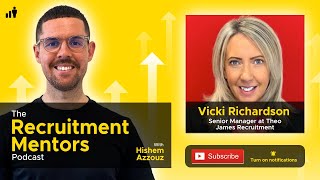
In this episode of the Recruitment Mentors Podcast, host Hishem Azzouz interviews Vicki Richardson, a senior manager at Theo James Recruitment and the company's top biller in 2020 with nearly 20 years of experience. Vicki discusses the traits that make a successful recruiter—belief, tenacity, unity, loyalty, and honesty—and emphasizes the importance of self‑confidence, especially for women in a traditionally male‑dominated field. She recounts how early role models and personal resilience helped her build confidence. Vicki explains how she stays current by embracing personal branding, video outreach, and continuous training, crediting her director Mark Bracknell for pushing her out of her comfort zone. She shares leadership practices that foster team wellbeing, such as regular check‑ins, monthly reviews, walking meetings, and a culture of open communication. Vicki offers concrete client‑development tactics, including thorough preparation, leveraging video messages, handling PSL objections, and focusing on retained assignments. She outlines her daily routine, planning the night before, structured time blocks for candidate contact, business development, and team support, and highlights non‑negotiable work‑life boundaries. The conversation also covers career progression advice, the value of marginal gains, the importance of standing firm on fees, and her ultimate goal of becoming a director. Vicki concludes with reflections on changing industry perceptions of recruiters, the impact of the book "SUMO (Shut Up and Move On)", and a motivational LinkedIn message encouraging consultants to be their own biggest cheerleaders.
Chapters
Welcome to the Recruitment Mentors Podcast. My name is Hishem Azzouz. Today I'm very excited to be joined by Vicki Richardson, who recently got promoted to senior manager and was the top biller in 2020 for Theo James Recruitment. Vicki has worked in the industry for close to 20 years, starting out as a recruiter in 2002, placing office support staff in the Durham area. To now being responsible and managing her own team and specializing in engineering and manufacturing across the UK. Vicki, thank you for joining me.
Thanks for having me. I love that introduction. Can I just take you with me wherever I enter a room now?
I wasn't sure whether to highlight the 20 years or not. I know people don't really like that because it can share their age, but I think it's something to be proud of.
Yeah, oldest recruiter in town sometimes.
So Where I want to start is, in your opinion, what characteristics and traits do you think make up a highly successful recruitment consultant?
Yeah, it's, it's a great question actually. It's something that we've been looking at really closely just recently at Theo James in terms of our values, and I think that really resonates when we do come to recruit. For me, um, whenever we get anybody new to join the business, they kind of spend some time with everybody and they always sort of ask to give advice and I always say, be your own biggest cheerleader. And I think that stems from having that belief. It's so important to believe in yourself and have that confidence because as soon as you start questioning things, I think that's just when, certainly in the early days, you can start doubting everything of what you do in the process, the system. Will it ever work? Will it ever click? So that belief for me is huge. Somebody with tenacity, again, I think is really essential. You've got to kind of have that winning mentality and really sort of go after it. So that passion and enthusiasm. So lots of phrases there. But yeah, so our values, we kind of looked at and we said belief, unity, loyalty, and honesty were the four really key things. And I think that really does say a lot about if you're coming into recruitment, you kind of need to have those values behind you.
Yeah, and what would be interesting to get your thoughts on, Vicki, is like, how long did it take you to build up that belief and confidence as Vicki 2002, being a female in the recruitment industry, typically obviously dominated by men? What did— how long did it take to build up that confidence?
Yeah, it did. I mean, I've got 3 brothers and a dad who worked— my dad worked in sort of finance sales, so I've kind of had to stand up for myself and have a bit of balls about me, if that's the right phrase. But yeah, I mean, I spent some time at Durham University. I was working in the HR department for quite a while, so working in that public sector to coming into the cut and thrust of recruitment was a huge learning curve for me. Little wins, I think you think, right, I've got this, I can do it. But I think I've always kind of— you've got to come in with a degree of enthusiasm about things and then that confidence soon builds.
Yeah, I just find it interesting. I've had a couple of people on now. Recent one was with Gabby, who sort of said that early on she lacked a bit of confidence and And part of that was that there was a lack of female role models to look up to, right? It was typically guys who are at the top of the leaderboard. And I also recorded another podcast with Mel who said the same thing, and she sort of flipped that and said, right, well, I'm going to become that female role model, right? So I was just interested on the confidence side because I think it seems like sometimes that could be a little longer to cultivate or foster for some females because there's no people to imitate or there's no people to look up to, right? Or less people to look up to, right? So that's why I was interested, um, on that.
So I was, well, I was just going to say I was actually recruited, um, in my recruitment career by some really strong female recruiters, um, really inspirational people. So perhaps that's, you know, I kind of, I did look up to them and thought, you know, this is the type of person that I do want to be, or, you know, if they can do it, then there's no reason why I can't. My eldest was 2 at the time when I joined recruitment, so having that kind of behind me to go, I'm gonna do this and I'm gonna make Georgia proud, it was kind of like, that was kind of my mentality, the way I went into it anyway.
Yeah, I love that. So Vicky, what's made you stay in the industry for so long?
I just, it's a bit cheesy, and my husband who comes in and moans about his job still can't believe that I actually still really love it, and I genuinely do. I love how it's so varied. I love that I can make some good money, and I'm still really, really passionate about it. And I think, you know, we speak to so many people every day that they're unhappy in their job, and we're trying to find them something new, and that, you know, that's when, then that's when I would leave. But I've never, I've never— you get bad days, but I've never been at that point. I still absolutely love what I do.
I love that. That's awesome. And that's, that's what we're striving for in life, right? Just to enjoy what we do. So I actually love that. And that definitely comes through whenever I've spoken to you. I guess the sort of final thing I want to ask here, and then we'll sort of start breaking down your journey and these things, but What came up for me when I was preparing for this, Vicki, you've been in the industry for a long time and what I wanted to ask you was like, how have you ensured that Vicki has stayed current, right? And not become complacent in your career? Because I think that's sometimes even more so if you look at the sort of recruitment landscape over the last couple of years, it has changed. And I think it would be very easy for someone with your experience and what you have behind you to be like, I know what I need to do that works, right? And be less open-minded to potentially be more current or look at, could I change this or whatever, right? So I guess, what have you ensured that you've done yourself to make sure you stay current and you don't become complacent?
Yeah, I think I'll put my hands up and say up until 4, 4 and a half years ago, I was very much in that category. You know, I got 14 years recruitment experience behind me, left alone to just get on with it. And yeah, perhaps fell into that category where, you know, I've learned what I need to learn. I wasn't really pushed at all to do anything about personal development or, you know, being on social media and the personal branding element of it. And it wasn't till Mark, for me, Mark Bracknell, who's our director, is a huge part of my journey in terms of that. So we've had external trainers into the business that's really kind of helped me and put me out of my comfort zone to say, you know, you don't know everything, there's different ways of doing it. And actually, you know, let's approach it in a different way because it might just help. And I've really embraced that, the personal branding on social media. When Mark first mentioned about doing videos, I was absolutely dreading it. And they were so stifled at the beginning. I don't even think I smiled. I was really nervous about it. It was a completely different way of working. I was thinking, you know, how on earth am I going to get to do this? And this part of my recruitment journey, I've really enjoyed and really begun to become to love it again. You know, I'd spent a bit of time recruiting in a different sector, and it's kind of, it was just quite monotonous, but You know, this, this part of my journey is, is really elevated, I would say, in terms of pushing myself out of that comfort zone and saying, you know, there are new things you can learn and there's things that you can be doing, doing differently and better.
Yeah, good on you for that. So I guess so besides, I guess the question on this one I ask you is like, so clearly people and environment has sort of really encouraged you to get out of your comfort zone and look at the way of doing things, etc. So I guess we can think about it. If you, if someone's listening right now and they might be in an environment that they've been in for a while and there isn't any sort of external things that could push them maybe out of their comfort zone or consider to do things differently, or if you could go back and speak to Vicki and putting the environment and people aside, like what would you communicate to those people that may be very prone to being complacent and may be less open to gaining potential marginal gains or even bigger gains, right, that could take their performance or billings that bit extra length, right? So what would you say to yourself, or what would you say to anyone listening that might have been in that same camp that you was before you went to Fear James?
Yeah, absolutely. I think, you know, you're bang on. I think as well, it's looking how recruitment's changed from when I did start. And, you know, you've got to keep yourself current. You know, how I recruit is so, so different to what I'm doing now. The fundamentals are the same, but the extras that we can offer to clients is, for us, it really elevates their experience and what we can offer. So what I would— the advice that I would give is you can't sit still. You know, you should never— you should always be learning. You know, the experience that you've got under your belt, there shouldn't be a number on there. You should constantly want to develop yourself for you. And like you said, get those marginal gains from securing that client that you've been wanting or that you thought you would never win over. You actually can do that. But, you know, it might be that you need a bit of help now and again and not being afraid and not being frightened of saying I'm struggling and I need a bit of help because, you know, whether you're, you know, directors, managers that, you know, there's always some, I think, something that they can learn or somebody they can learn from.
Yeah, I think what's massively changed from when I started this podcast is like there's just way more resources out there now. Like, I think the first part is like having the humility to be like, well, just not having the mindset of like, I've completed recruitment. Yeah, did you get what I mean? And like, yeah, like you said, being open. And actually, if you can get— if you can take that step, And then be curious. There's actually way more resources out there now for you to— for, for things to challenge your way of thinking and, um, yeah, potentially find out different things that could help you. Um, okay, so how, how would you, how would you describe your first year in recruitment?
Um, it— I was thinking back about this and I don't— I'm not afraid to say it was a bit of a whirlwind. I felt, I felt like I was I didn't know if it was Arthur or Martha. I was just all over the place. Loads to learn. As I said, I was at Durham University for 4 years, public sector. I had Pauline making my tea twice a day, the little milk trolley, and it was just, it was flexi time. It was just, it was an easy job and it was great and it gave me some exposure to the working life after university, but getting into the public sector and then getting into recruitment is a whole new ball game. So there was just so much to learn. And my first role at Hayes, it was 100 miles an hour. Again, as I said, my eldest was very, very young at the time. So, you know, I was, I was just wanting to be a good mom and also really hit this new job with, you know, with a real bang. So put that pressure on myself that, you know, it's, this has to work out. This is what I really want to do. So yeah, and all really bit of a whirlwind, but I do remember there was a call that I'd put into a client to do some aftercare. I was doing some— the roles that I was recruiting for were temporary office support roles, and I remember speaking to a client, sort of asking how that particular person was getting on, but then following on with a, well, is there anything else that we can help you with? I've actually interviewed somebody quite similar, and I remember my manager at the time saying, you know, how did you know to say that? And it kind of was natural for me to engage and have those conversations. So, you know, that was a great confidence boost for me. But working in Hays, there were so many people around me that I could learn from and listen from. I would just want to take it all in. So yeah, it was all a bit of a whirlwind, but I think I hit it quite successfully and definitely got the bug from there.
I love that. So I've got 2 things for you. What was, what was the best piece of advice that you received in early days of Vicky's recruitment career that stuck with you, that really resonated and helped you?
Yeah, I, I don't remember any advice particularly. My, um, 2 very good friends have worked in recruitment. One's actually got her own, her own business, and the way that they went about things, um, taking accountability. I often heard them speaking to people outside of working hours and just seeing how they worked. As I said, from somebody that was doing flexi-time, you know, they clocked off at 5 o'clock and didn't ever have any calls after that. It was such a different world. So I think for me, I learned a lot from my two very close friends that really got me into wanting to get into recruitment initially.
So accountability and hugely, yeah, changing the mindset of, yeah, 5 o'clock, let's clock off.
Yeah.
Okay. And then the only other thing I get messages about this every now and again, like, and there's pros and cons, but like how, obviously you've been in the industry for a while now and thinking of people that you potentially have interviewed for Theo James now and stuff like, what would you, how, what, What would you say to people who are considering working for a company, a big business like Hays compared to a growing organisation, more of a startup feel, smaller of size like Theo James? Like, what would your advice be to someone that's considering entering the recruitment world? Like, what would you say to them?
Yeah, I think it depends on your motivation or your driver, really. So a big business like Hays and Brook Street were fantastic for me. You know, learnt so much from there. So the training that they gave, you know, actual training academies that I had to go to Edinburgh or to Luton to and learn from, learn from these sort of take yourself off, off your desk and go and do some specific training and take that time out to learn specifically. I mean, as I said, they were great, but for me, I think what I love about working for an owner-managed business is the work that you're doing really does have an impact on the bottom line. You're seeing straight away how you're working. I used to get emails from directors from Brook Street that said, oh, you've had a great quarter, fantastic, well done, you're on the leaderboard. But actually they hadn't seen the days where I maybe had somebody who dropped out or who didn't go for an interview and I had to work really hard to backfill those. And yeah, that's kind of— that's what I like. I like— and also being part of a business where you can have an impact in terms of making decisions. I think you get exposure to quite a lot of different things working for an owner-managed business, for sure.
Yeah, I think especially when, yeah, you're in an industry where you really are putting in the work and, yeah, being able to actually see how that impacts the business, if that's helping it grow, if that's whatever. I think that's what I definitely personally really enjoyed about working in a smaller owned business and recruitment business. That was definitely what drew me to it. So what I wanted to sort of focus on then, Vicki, was so obviously I worked at Brook Street for a couple of years and then joined another company that you worked for for 10 years and then for the last 4 years and a bit you've been at Theo James. So from what I can see in your last 2 positions where you spent the most time, you have always managed to accelerate your recruitment career, right? So if that's taking yourself from consultant to manager or senior, etc. So I guess where I wanted to start is like, why do you think you managed to achieve that? Why did you— why do you think that you managed to push your career on like that instead of your colleagues?
Yeah, for me, I always give everything, I always jump in I'm all in. I go in with, I think I always have that air of enthusiasm about things. You know, as I said, Mark will approach me about a different idea. I'll go, yeah, yeah, yeah, let's do it. And kind of just trust him that he's, you know, these decisions are for the better. So I always give it 100%. I think I work really hard. I just buy into it and then do the best that I can, really. I mean, in terms of my journey at Core People and that promotion there was very much about, it was about being recognized, you know, so all of that work, you know, it didn't go unnoticed. I worked closely with the senior management team and they obviously saw something. At Theo James, we've actually just rolled out a specific pathway for our consultants to achieve because I think some Sometimes people don't necessarily know what they need to do to get that promotion, so that's something that we've really concentrated and worked hard in, in sort of not just looking at the numbers, but also looking at the competencies behind that. So what traits do you need to be demonstrating for you to be considered for a promotion even before you're actually doing it? So yeah, it's just giving it, giving it my all, working hard. And not really, not really sort of put my name up saying, you know, what about me for promotion? I kind of just got on with it and did what needed to be done. And as I said, at Call People, it was recognized. And then Theo James, again, you know, I work alongside Mark very, very closely and, you know, I'll make sure that I'm giving that bit extra. But, but not, it's not forced. It's just something that I genuinely want to do anyway.
OK. So had you— so as your sort of career progressed then, had you always wanted to go into management?
Probably not at the beginning. It was— it's one of those ones where, you know, it's going to take quite a bit of time. Is it going to affect my billings? Quite a selfish recruiter, just wanting to just embody myself in the work and have that little business that everybody says. But now that I'm in it, I absolutely love it. I think there's, there's just that extra bit of reward that you get, you know, where you're praising people. You've got a team of people around you and I love seeing them succeed because, you know, I'd like to think that, you know, I've got, I've taken a little bit of a part in, in helping them towards that. I would say at the beginning it's very much a learning curve. I've never had any specific management training. You know, Mark and previous managers have sort of said, you know, just just let them follow you, and that's all well and good, but sometimes, you know, you've— I think you've still got to, to, um, you've still got to spend that time with the person. If some— we've had a lot of people where they've had no recruitment experience at all, and there's just so much to learn, and I really want to give people a fair shot, a fair shot at it. So, um, I'm, I'm forcing myself to really take time out of my day to make sure that They're set up, they've got— if they've got any questions, I'm there to answer them at the very beginning stages. I think previously there's been— I would say I've maybe approached it differently. I think I've set very high standards and I just expect people to work towards that. But I listened to a podcast where I think you made a valid point that there isn't another Vicki Richardson there, that, you know, that they're individuals. So, you know, that really resonated with me that, you know, you've— I think as well, when I reflected, you can take a horse to water but you can't make it drink. And I maybe wanted it more than they wanted it for themselves, which, you know, it just was never going to work that way. So I've kind of eased off the gas a little bit and not being like, oh, you know, that job title needs to have capital letters or whatever, or, you know, you've got to ring that client straight back. It's really just letting them find their own style of things, of doing it, but also really trying to just being there as a support. There's processes that we do, so I would always check in on them before half 8, and I always check in on them at lunchtime just to see how the day's gone. And at the end of the day, not too long, but just touching base. And if I hear a good call, then I'll always give them praise. And, you know, I love that part of the job where it's that coaching and development and seeing them, you know, hitting their targets and stuff. There is a— it's a great feeling.
So what would be— so if I'm listening right now, I might be sort of early on that sort of leader trajectory and sort of learning as I go. Like you said, you haven't sort of— didn't receive any sort of formal training. I think a lot of people can relate to that. So I guess what would be your, like, I don't know, 3 best bits of advice for someone that is sort of early on on that leadership career, still billing, still responsible for their own billings, but now responsible for a team that's growing, they've got to get the most out of them. Like, knowing what you know now and the clearly things that you've improved on, like, what would you, what would be your 3 bits of advice for those people?
I would say make them aware of your expectations early on. Explain to them how you work, whether that is, you know, that you, there's a degree of time where there's that training and that, you know, you're there as a support. Secondly, I would always say to take time out to make sure that they're not sort of suffering in silence, because some people, they are, you know, as much as people say, you know, ask any questions, you know, no question's too silly. I think there's been instances where people maybe haven't put the hand up and they've kind of, they've been suffering a little bit. So make sure you do spend some time and make sure that they are okay. And third of all, thirdly, I would say Take them outside of the business, you know, find out what their motivators are, find out what their whys are, let them talk in an open forum, if you like, that they're not in the office and, you know, where people are listening to what they're saying, letting them have that time to talk freely. We do walking Wednesdays, so we have just a walk around the block on a lunchtime and just let people express their frustrations, maybe if there's anything that they need help with.
Just create a free space for them to talk about. Which isn't just like, yeah, Vicki, I've sent out this many CVs this week, whatever, right? Just a bit of free space to— yeah, I love that because you can pick up on different things and you've got them in a different environment and can pick up on different things.
We do, we do consistently monthly reviews. There isn't a month go by that I don't sit with them to reflect and review on the month and talk about a plan for the coming month. And I think having that structure as well really benefits them and me as well, so that, you know, I'm doing my thing, but at the same time I still want to make sure that I'm supporting them and offering that advice. But it's difficult, you know, to make sure that you're still consistently billing on your side of things. You know, I've got targets to meet as well and trying to get that balance and making sure that they've got the help that they need. But it does— it's just short-term pain for long-term gain, I think. It's conscious, consciously making that decision to spend that time because it will pay off. If you believe in those, if you believe in those consultants, and you obviously do because you've recruited them, then take the time to spend them, or make the decision that they're not, they're not going to fit in, and, you know, make decisions from there. But yeah, the team that I've got right now are fantastic, really, really good.
So, so just a couple more things on leadership, and then I'd love to sort of just get your thoughts on just your experience around client development and things like that. So firstly, one of the things I wanted to ask you is a question that I got sent through was just like, how has Vikki developed her communication skills as a leader and how is that? And I'm sure you've had to sort of change and change those during this period as well. So I guess how have you developed your communication skills as a leader?
I would say they have changed. I definitely take a step back or take a moment before I react. As I said, I've got quite high standards and I need to appreciate that people are going through a learning curve and, you know, then they're not automatically going to either know the answer or approach things in the way that I would. They've got to find their own style. Perhaps being less jump on them with a reaction. But right, I definitely think I approach things in a different way. I would say more calmer. I don't think I'm too aggressive, but there's been times where maybe I've reacted in a different way than what I should have done. But again, you know, I've definitely gone through a learning curve for sure.
So it's that whole thing, isn't it? So what you're saying there is like you've developed your communication skills by giving yourself space to think or process before you react. It's that whole thing sometimes, you know, when we've all been in that situation where the client has just done us over or done something that is just not fair play and you've written that email straight away, you're about to send it, like, fuck, right, maybe I should wait. Maybe I should sleep on it before I send that email. Do you get what I mean? It seems like that's helped you then become better at deciding how you communicate.
Yeah, definitely. And also putting myself in their shoes is a big thing for me. You know, not everybody's worked in recruitment for a lot. They don't know, you know, that they are learning. And it's just having that appreciation before I then respond. And that for me has been a big win. You know, I think I'm definitely a more effective manager. I think people respond much better to that way. As I said, it was never too much, but I might just pick up on things that maybe just don't need picking up on. Don't sweat the small stuff is something I've definitely learned. I'm getting there, I would say.
I love that. And then just the final thing really is, because if I look at sort of, um, Mark and you guys, you guys seem like really sort of quite open and transparent as a business, um, and what I just wanted to ask you is like, how have you also gone about getting better at sort of recognizing, um, people in your team, people that you managed who may be struggling mentally or just having their own personal struggles, right? I think even more so again during this period, that's something that managers have had to try and work out and get better at and can, can be made more difficult if you're doing it for a screen. So I guess what's been your journey with like, yeah, just helping or noticing as a manager any of your team that may be struggling mentally, if that's with personal things or just finding the job really difficult and sort of get better at that. What's been your journey with that? I don't know if anything has helped you on that journey or worth sharing for people.
Yeah. You know, the culture for the culture that we've got at Theo James, for me, I've not worked in a better culture. I think it's, it's been great. Obviously I'm biased. We do have a group WhatsApp that we're constantly messaging about, I don't know, jobs that we've seen or candidates that perhaps can cross over into a different area and sharing that information. So that's, that's constantly on the go. They'll, they'll be, you know, there's often occasions on an evening where I'll message somebody that I've seen maybe is a bit quiet on the day, or, you know, just to see how they are. And I think that's really important. You know, we are like, we are like a family. You know, we spend so much time, you know, at work. We're all very different personalities, and but it does work really well. And you know, if I can offer a support where you just want to rant, or, you know, you're perhaps struggling a little bit, then I am here. If you don't want to talk, that's fine, but I have noticed, and, um, you know, you know, I'm here kind of thing. Um, and I, that's something that I think is important to do. Um, just make them feel a little bit like, you know, somebody's noticing and, and that there's, there, there's, there's help there if they need it.
Sure. So yeah, okay, so just making sure people know that's the case, that can encourage people to share or open up or whatever. Okay.
Yeah, because I mean, we've got 8 people in the office and it's constant and you can tend to see the people that go a little bit quiet or, you know, everyone's got things on, but, you know, you can kind of notice things. And yeah, it's just a quick message just to see how they're doing and Yeah, just, yeah, I think, I think it's just, I think that's always really important to do, that they don't feel on their own. I think especially since, you know, the, the, the lockdown and people on their own and feeling a little bit isolated, then yeah, we're very much a supportive bunch of people, I would say.
Nice. So what I wanted to just ask you a couple of things now, Vicky, is like your sort of journey with client and business development. Real popular area that people want sort of advice and people to share their journey with. So I guess, like, what was your biggest challenge with client development early on, would you say?
I think initially it was just getting on the phone. It was putting the call in. I remember as well perhaps being a little bit reluctant to talk to directors or managing directors, and somebody said, you know, they put their knickers on exactly the same way as you do. You know, they should be no different. And now my My area is just focusing purely on leadership and senior-level appointments, and I, you know, I love it when I can speak to a client at that level because I know it'll have a knock-on effect with everybody else as well. So I think just initially, the butterflies in the stomach about picking up the phone and making those sales calls initially, but that's the job, and there's no getting away from it. And the the work that you do with regards to a good sales call, there's no better feeling. You know, I love when it— winning a client round. And there's been many instances where they've not been particularly nice initially. You keep going with it, you keep being visible in their space, you keep, keep at it. And then they say, you know, yeah, let's, let's have a conversation. It's, it's great for me. So, yeah.
So, so, yeah, I think that's a quite common one. I'm always definitely guilty of that, of putting clients on a pedestal. And then it is the typical advice, right? Yeah. They put your knickers on the same as you do or whatever, but it's just really remembering that they are human and yeah, go find them on Facebook or Instagram. You'll find that they're just people like, like you are. So I guess what you're talking about there, like what people are always interested to hear, like how, what's been the most effective way Vicki has managed to get the first meeting? With clients you're looking to open up or start building relationships with? What's been the most effective way that you've been able to get that first meeting with target clients?
Yeah, so it's all about the impact and engagement that you have and that trust that they built, you can build up, and that comes with time. And then by talking about the importance as to why they need to meet you and explaining those, then then that's when they get it, and that's when they think, oh, Vicki's taken this seriously. You know, she really wants to make sure that we, you know, we find the right person, and it's very much a we, and I want us to work together as a team. For me, meetings, I know we spoke about this before, but they're such an important part of the recruitment process. And again, one of my favorite things is that, you know, you get that breakaway from the office, you really unearth the issues that that person's got, or that the business has, or the type of person that they are looking for. It's just such an important part of the whole recruitment process, whether they've got a job or not. You've got to be getting to know those businesses to that degree. So yeah, to get them, it's just constant contact with them, getting their engagement, and that's being visible, definitely in their space, for sure.
What do you think is the most important thing that, like, what, when you think about, right, I've got now this first meeting, what do you think makes it a successful meeting?
Preparation, without a doubt. Um, looking at what the business does, looking at their LinkedIn profile, preparing what you want to be talking about, and very much going in from the very beginning that it's your meeting. You take control of that meeting from the moment that you, you step through the door. You know, you're taking time out of your day not doing the business development. This has to make sure that, you know, you're getting, you're getting some, something on the back of it. So it's, it's making sure you go in with that confidence that this is your meeting and this, and this is going to be the agenda. So it's definitely about preparation for me.
Yeah. And would you say you've— I know you should probably always prepare, but like the good thing about if you really prepare is then you do build up a bit of a scripts, right? Or you build up like a bit of a system of doing it. I remember that, that really helped me how to get more out of the client meetings. And actually it was as simple as preparing or really knowing what the agenda was, right? And actually when you have that initial moment, sit down, speak some blah blah blah, and then you go, right, so, um, look, I haven't gotten a formal agenda together, but this is what I wanted to achieve with our time together. And actually really break it down and set the tone. And when you do that, it actually helps you remember what you need to cover and those types of things. That's interesting that you shared that. So I guess the other thing that I wanted to ask you around this was how have you had to— how have you approached business development over the recent period? Because it seems like that's been a real common challenge for recruiters. Like what if you just keep— if you keep getting Vicky, we're doing this direct, Vicky, we're not hiring at the moment. Like, what, I don't know, what, how have you sort of made sure that you're staying front of mind, engaging these people, providing value? What, what have you been doing over the last 6 to 8 months that people could sort of benefit from that are listening to this that might be struggling?
Well, what I've really liked to do is by using video technology. So we use Oddraw, so it's very much not just the emails that may get lost in other messages, but it's sending those video messages through LinkedIn or or through email, but they actually get to see that picture. And by offering something that maybe is a little bit different, that a little bit eye-catching— business development is all about, at the moment, you know, how are you finding things? You know, it might not be that they're recruiting right now, although this second lockdown seems to be that people have a little bit more confidence. They've been through it before where they literally came to a screeching halt in March, whereas now things seem to be ticking along in the background quite nicely still, touch wood. So yeah, it's all about just making sure that, that, that we're touching base, that contact is still very much there. You know, we're here to support them for what they need, whether that's somebody on a short-term basis, if it's just a, you know, they don't want to take anybody on a permanent basis, but it's just a contract. Or, you know, in terms of the volumes of applications, you know, it's taken us too long, can you recommend 2 or 3 good people? So just really asking questions around their situation, how they're finding it, but also then being able to be there as a support for any vacancies that they seem to have at the time.
And then just a real, real practical one here, and it's something that's ended up in my inbox a couple of times. What's What's like Vicki's go-to sort of objection handle around the typical, sorry Vicki, we've got a PSL?
Yeah, PSL, god, those 3 little letters. It's actually something that's been brought up in a lot of role plays that we do or sort of training situations, and I've had various different comebacks on the back of that. What I particularly like is the you know, this business is taking recruitment seriously by having a PSL, and that you work actually with a lot of companies that are outside that PSL. You work, you know, you work and give them the best talent because you find that recruiters who are on these lists, then, are they getting a bit too complacent? Are they getting the best talent that's out there? Are they working as hard as they should be? So it's 'Love that you've got a PSL. I love that you're taking the recruitment quite seriously, and this is how I work,' sort of thing. So yeah, there are various different objection handlings for that, but that's one I really like.
Okay, interesting. So look, I'd love to just sort of break down things around why Vicky managed to achieve top biller status at Via James. What's been your best year at Theo James billings-wise? Yes, it was 2020 or it was before.
Yeah, so this is our— so in year 5, it was my third year and I've always increased, improved my billings year on year. I always try to do that. My role changed that I was focusing on leadership and senior level appointments as opposed to the supply chain arena, so it was changing slightly and it was just getting momentum and then March came. And literally, as I said, everything came to a screeching halt. My pipeline looked really, really healthy, so it was really frustrating. So these are operations managers, commercial managers, up to director-level roles. So we were starting to get some real headway there. It was, it was, it was going really well. And then, as I said, in March came to a screeching halt. Everyone came home and actually I secured a real good contract with a business that were making parts for ventilators. So their orders just went through the roof, which was great. And then so we did all of their permanent recruitment so that I was having to go back into recruiting for roles outside of leadership. And it was, you just got to get them filled. I've got, we've got people on furlough here. I really, I was, it was in the spare room in the house and I had the door shut and it was just, I've just got to crack on. So every single job came in. I was just filling, I was just making sure I was getting them filled. So it was, it was a great end to what's been just such a really rubbish year. So there was a target of winning a BMW i8 for a weekend. I managed to get that for the best quarter. I won a holiday to Vegas because I got top biller. So it's been great. It's been really, really good. But for me, it was head down. Just got to get these jobs filled. We've got to make hay while the sun shines. So, yeah, and this is a great contract for us. Um, uh, yeah, we— and, and just worked really bloody hard to try and get these jobs filled. So it's, uh, it was—
what did you finish on then?
Um, well, I mean, the fees were a lot lower, um, because of the rules, so it was about €145 I finished on. Um, but yeah, it was, uh It went a lot better than what it could have done. When I was sat in March, I was really panicking. It seems to have continued on, which is, which is good. Getting back into those leadership roles, everyone's now on, they're not, they're not furloughed, which is great. But yeah, it was a busy time.
It's been difficult. Difficult. Yeah, right. I guess just a quick question around, because you said like you've always increased your billings or pushed on, right? I guess I guess, how have you continued to motivate yourself to break your own records?
Yeah, I always look at, probably again, the last 4 years, being an advocate of reflecting and reviewing those and making a plan of action for the next year or next quarter. That's been really key for me. So one occasion I looked at, right, what was my average What was my average fee? Right, well, I want to increase that for next year. We've made a— I think we've made a real conscious effort in terms of increasing the percentages that we're charging, and that's something I'm a massive advocate of. You know, we're not working at these reduced fees and we're sticking by our guns. We do a good job and we work really hard, and this is what we're going to be doing and training people where we stop a conversation, you know, the fee is going to be this, stop the conversation. Don't start getting into the negotiation until you have to. So I think so many people think, oh well, this client's working with this, this other agency for 12% and I want to be working with them. Well, well, no, stick by your guns. You've got a good, you know, you're good at what you do. They will come back round because if that, you know, if they, they're happy to work with those discounted fees, then they may get a discounted service. So, um, really standing up for your terms and not just rolling over the first, at the first time. So that's a huge success for me.
So, so, so the part that's motivated you then is just, I guess, reflecting on areas that can, yeah, increase your billings, but you're slightly gaining marginal gains if that's the increase in average fee or whatever. And actually at the end, that, okay, that's interesting.
And I think as well, we've done a lot more focus and I have in getting those retained assignments. That's been a big game changer for me, getting those A-grade jobs where they are exclusive. You've got a commitment fee up front, so you're not working for free. Again, that's something that we do. I'm doing a lot more of, and as a company, we need to be doing more of, and that we just want to continue on doing.
So, okay, interesting. Quick one on that then. What was the biggest obstacle or barrier you had to get over yourself to go? Because a lot of people think, what's the difference between continuing and retained and these things? So I guess, what were the biggest barriers that you had to get yourself over to be more successful at closing those retained assignments?
First of all, knowing your product. That was, yeah, you've got it. You've got to know what your offerings are and what the solutions are. So, you know, finding those pains out, ultimately asking the question. We just weren't asking. I wasn't asking the question, uh, you know, going along with this contingency way of recruiting, um, is, is, is all well and good, but you know, to get those retained assignments where they're A-grade jobs, it's almost a guaranteed fee in, in your pipeline. I love being able to forecast and, uh, you know, accurately and being accountable for my figures and my pipeline. So to be able to do that a lot more accurately by getting these jobs was, was just critical. So, you know, it's, it's just getting over that because it isn't easy. You know, you've got to understand the, I think, the method behind it. But, but at the same time, you can overthink it. It's not difficult. The process should be exactly the same, but just a lot more concentrated. And the client's going to get a much better service.
So it's just, yeah, it's just actually making the time to think about, yeah, what your product is, the problems that you're solving, and then actually asking the question and explaining why. So something that people always want to hear about Vicky is like, how has Vicky's sort of daily routine and how you sort of, how you structure your day changed from like early on to now, right? Because I'm sure you've got that nailed down and you've got non-negotiables. Like, tell us about what a typical day looks like for Vikki and how you structure your day that you feel is giving you the best possible chance of maximising each day?
The big change for me was we had Trevor Pinder come into our, into our office for a couple of days training, which was great fun, and he told us about the Ivy League. So it's preparing 5 or 6 things the night before in terms of what you want to achieve. and by writing that down makes you accountable. It's in your mind as to what you're going to be attacking that day. There's no worse feeling than you sat at your desk and you don't know your plan, who you're going to be selling to that day, you know, what jobs are you going to be looking at. So to do that the night before and it sort of gets your mind thinking if you can prepare those lists as well previously. It's a real game changer, I think, that preparation. Yeah, it just gets the mindset ready for when you start the next day.
So preparing the day before and then what? So break your day down a bit then. So like, so you prepared your day before, that's super key. And you know what you need to focus on and what you're attacking the following day. Where, what, so you said like what, 8:30 you check in with the team. And then what does the rest of your day look like?
Yeah, it's 8:00 to 8:30, I check in, make sure that they're set for the day, find out what their objectives are. 8:30 till 10:00, I'll be speaking to new candidates or people that have applied for jobs. I'll also, during those conversations, not only ask for leads, but ask them to talk to me about who their best manager is for recommendations. And then 10:00 till 12:00, I'll be doing business development. 12 till 2, again, I'm catching up with the team to make sure that they are, they've achieved part of what they need to do, or if they need any steer in terms of what the afternoon's gonna, gonna involve. And then in the afternoon, a bit more business development and then some job management. So if it's, I've got interviews that I've arranged where I'm meeting with candidates online, or I've got meetings with clients. So yeah, business development with some job management as well. I work till— I work reduced hours till 4:00 and have done since my second daughter was born. So she's 13 now. So, but I'm constantly doing bits and pieces at home as well, which is just part of what I do. So yeah, I'll work to those hours.
I love that. And then just quick one on this, Vicky. What's come up a lot when, um, we've had, um, women on this show is like this sort of, sort of dilemma that people can find themselves in where you have to— you come to a bit of a crossroads where sort of Vicky has to maybe decide around putting her career first or her family first, right? It's come up a lot as to whenever we've had people on this podcast and talking about why there is a lack of female role models or a lack of female leaders in recruitment businesses. And typically, whenever we've had these conversations, it has led to, well, I was thinking about starting a family and I was really worried that that would just put my career on ice, basically, and I'd never be able to take it to where it was. So you were just talking about there where, yeah, you've had two children, obviously had the first child at the beginning of your recruitment career. So I guess How have you made sure that— I don't know what's helped you make sure that your career stayed pushing forward as well as being a mum and raising 2 children?
Yeah, really interesting, actually. I always knew that I wanted— I'm one of 4. I always wanted 2 kids. It took a while for us to decide. I'm quite indecisive. Just make a decision. So Georgia was 7 and then Chloe came along in 2007. So I returned back to work when the economy crashed. It was just the worst time. I thought I'd lost it. I thought, I thought I've absolutely lost the knack of how to do this. Many, many tears. And at the time, I really, really respect my director who just that, get that, that, that tenacious attitude where we've got to battle through. We've got to carry on here and what, you know, share information. There was meetings early on. Who are you working with? Are you talking to them? You know, there were, there were scary moments. There was redundancies happening in the office. I hadn't been in an environment where that had happened before. And actually, again, I had a fantastic year. I think I over £200,000 that year, and we diversified. I did temporary and permanent recruitment. Because we just had to be that agile. We just had to, whatever the client needed support with, we just had to just get on and do. But yeah, it was scary to initially, I thought that, you know, I love this job and I feel like that time that I had 9 months off and I couldn't have come back at a worse time.
Bless you. Well, what would your advice be like? Because a lot of people talk about work-life balance, right, and stuff, and that's something that it seems like you've really achieved, it sounds like. But I don't know what— and I'm sure you have better days of it and worse days, but like, what's really helped you make sure that Vicky, the mother, hasn't missed those moments and you have still kept your career on track and you've achieved that work-life balance? I don't know if there's anything you can share there that other people can maybe take away that can really help them achieve more work-life balance.
Yeah. To begin with, it was, it was a tough one. It was a tough one to not just get my head around. As I said, my two very good friends were— that was the way that they were working. So I kind of expected to be doing it. My husband's worked for Nissan for 30 years, so he's clocked on, he's clocked off, and that's it. That's him done. So, you know, changing mindset not only for me, but also in the family home to say, I just need to do this. I want to, but it's— I just need to do it. I can't let— I can't leave this till the next day. So there's definitely been instances where we've done that. And obviously now through the years, it's just part and parcel of what I do. I'll never forget I was driving in the car and I was taking some interview feedback and I was taking Georgia to dancing or something, and it was great. And I was able to offer the job over the phone, and Georgia was very little at the time and she was just walking around, you got the job, you got the job, copying what I said. And It was such a proud moment for me. She doesn't want to be in recruitment, which is the real thing. But yeah, they've kind of grown up with, this is what I do. I don't let it impact my time with them ever too much. I always make a conscious effort that I do what I need to do and then that's it. Mark made a really good point that he turns his phone off at 6. That's a non-negotiable for him. And, you know, just putting my phone in the drawer for a Saturday for a couple of hours, I really like, you know, I've actually come off other social media and spent more time on— if I'm going to check anything, I might flick through LinkedIn or, you know, just make sure that it's worth my while. And that's been, that's been really good for me. If we're watching telly on the nighttime, my phone's away. I'm not on it all the time. And and just really being disciplined with that is really important.
Yeah, that's awesome. Well, look, Vic, I've got 5 questions for you to end this. All right. And yeah, and then we'll—
I'm not real blonde. Is that one? No.
So the first question I have for you is if you could change the industry, what would you improve?
Hmm, I would really like to change people's mindset on what a recruiter does. I really get frustrated when we get— I was on holiday and I happened to mention what I did, and I like the distaste, the distasteful look on his face. I was really— I'm proud of what I do and I love what I do, and I was really, really upset by that. So that mindset, but also the mindset of people entering into recruitment. This, oh, you know, it's, it's, uh, you know, it might be tough, but you can make lots of money. It's actually really hard, and you need to have a really winning mindset. There's so many things that you need to have to be a good recruiter. Um, so changing people's mindset in terms of what we're about, I would say, would be the big thing that I would like to change.
Love that. Um, so next question is, uh, What book have you read that has had the biggest impact on you? And if you don't read, you can substitute that for podcasts, audiobook or whatever. But what have you read or sort of in your sort of, yeah, what's had the biggest impact on you?
Yeah, I love this question because that's something I probably couldn't answer 3 years ago. I've really made an effort in reading more books around business as well as actually other books as well. But for me, what had the biggest impact was SUMO. So it stands for Shut Up and Move On, which is, which is such a good book. We now actually make everybody read it when they come into the business. So allowing yourself that hippo time when something doesn't go well, you can have that hippo time where, you know, you're, you're fed up or, you know, you're down in the dumps, but then you shut up and you move on and you use that energy and you just crack on. So But that for me had the biggest impact. I love that book.
I love that. So what is it called?
Sumo.
Sumo, I like that. Now, I haven't heard of that.
That's my accent. It's Sumo, S-U-M-O.
Oh, okay. Okay, okay, great. So next question. So if Vicki could write a LinkedIn post that could be seen by every single recruitment consultant across the world, world, what would you want it to say?
About recruitment?
Whatever, like if every recruitment consultant would see it, what would you want to say? It could be anything.
Um, probably a post that I did quite recently, and again going back to what the advice that I give is be your own biggest cheerleader. Don't beat yourself up, you're good, you've got a lot to offer, you're good at what you do, and just go for it. Smile and just go for it.
I like it. What did you spend your first biggest commission paycheck on?
This is going to make me sound really materialistic, but I do like a Louis Vuitton bag. I do. I love them. I'm not going to lie.
Louis Vuitton bag?
Yeah.
Lovely. Last question. What's the ultimate goal for your recruitment career?
My goal would be that I get to be a director. That is the end goal for me, and it's in sight, and I will work, and I'll get it, and I'll achieve it, and I'll work towards it.
Vicky, it's been an absolute pleasure.
You too. Thank you for having me.
More from Hishem




You don't need as many clients as you think to bill $1 Million A Year In Recruitment



From 30 Direct Reports to Back-to-Back $1M Years as a Solo Recruiter with Zach Creighton



