What It Takes To Win in 2025 | Live Podcast Event in Glasgow
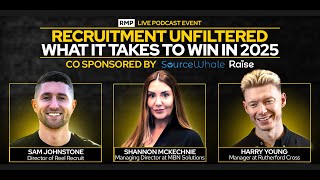
Recruitment professionals Harry, Shannon, and Sam discuss winning tactics for 2025: deep market knowledge, using AI as a productivity tool with quality inputs, and automation hacks like Text Blaze. They emphasize that human storytelling and relationship-building still matter most, and newcomers should find mentors, focus on niche value, and build a clear value proposition.
Chapters
Hello everyone, a real quick message from me before you enjoy this episode. This is the audio taken from our first live podcast event in Glasgow. We had a few technical issues on the microphones, so for the first 15-20 minutes you may hear some background noise, but after that it does get sorted. Uh, Ryan and the team who work with us, uh, on this, on editing it, have done a really great job. So, uh, just so you know, just wanted to put a message in here in case were wondering what the hell was that noise. But I hope you enjoy the conversation. It was great bringing this to Glasgow, and, uh, I'll speak to you all soon. Hello, hello, can you, can you hear me at the back? It's a fairly small— does that sound okay? Welcome everyone, thank you for coming, really appreciate it. I continue to learn that these types of recruitment events don't happen a ton in Scotland, in Glasgow. So all of you being here makes me feel good. I'm glad you're part of this, like a big mission I'm on, and I'm a big believer that collectively as an industry, we can all get better by sharing more, learning from each other versus trying to rip each other apart and be nasty to each other. So thank you for being part of this. I guess for those of you that haven't been to one of these events before, just to explain how these events sort of run and work. Firstly, my goal for all of you is to at least walk away from this event with like one thing that you can maybe implement tomorrow, consider implement in your business tomorrow is the goal. So we are going to, I'm going to make sure that the panel are honest, transparent, and we've done the prep. I've got the strategies that they're using, and it's going to be my job to make sure that they share all of those strategies with you so you can hopefully use those and learn from them. So what we're going to do is with it being June, we're going to start with sort of H1 lessons. What have they learned the hard way? What have been the challenges? What have been the main lessons so far? We're halfway through another year, which is pretty mental. So we're going to start there and then we'll go through a couple of areas. The first one will then be like go-to-market strategy. So I know a lot of people are always interested. How are people acquiring clients? How are people getting their existing clients to spend more money with them? How are they attracting and engaging the, you know, the passive talent force and these things? So we'll go into all of that. And then we're going to definitely talk about really the people side. So for the people in the panel, we're going to hear how are they feeling about attracting talent? How are they— I'm definitely going to get the guys' thoughts on like, what do we feel like can retain some of your best people? And get some of their insights on that. And then we'll definitely talk about technology and AI, which I know whenever you log on to LinkedIn, it's AI something. It's a bit crazy at the moment. And I do apologize if you smelt weed on the way in. I don't know if anyone, hopefully you didn't, but I don't know. Apparently that's part of the Glasgow experience. That's my first time here. But Ryan told me, do you know, it absolutely stinks of weed in there. But yeah, hopefully that doesn't make you think that this is a big smash-up. I know Glastonbury is on this weekend, but, um, so that's the plan. So, uh, if we could put our hands together for the panel and we'll get stuck into it. Actually, we'll be on. Give us a little— that should be all fine. That was the hardest part. Awesome. Yeah, so I'll sort of facilitate us for the first like 30 or so minutes, and then I'll definitely bring the microphone into the audience. Some of you may have some questions, so we'll make sure that you can all get involved as well. Welcome everyone. Excited?
A little.
Awesome.
Awesome. So as I said to everyone, we've got, we've got a bit of a plan. So what I'm going to start to do first is I want to do a bit of an intro so we can all make sure we're on the same page essentially. So Shannon, I'm going to start with you. Feel free to sort of correct me. So I'll give everyone some context and then let me know if I miss anything, get anything wrong. You can tell me off if I get anything wrong. 2 years at MBN Solutions. Yep. 8 months ago became the MD of that business. It was really cool because I had, uh, Mike on the podcast ages ago when the podcast was called Recruitment Rollercoaster. So really cool to now be here in Glasgow and have you involved in this. So you guys are really a data and AI recruitment firm. That's what you want to be positioned as, what you're focusing on. Operate UK-wide, definitely have goals to make that more international, which you shared with me. Right now, current mix of permanent contract is like 80% perm, 20% contract. I know you have a goal to make that more 50-50. With you being an MD, which I wanted to understand, so the context that, you know, you're speaking from is right now 50% of your workload is like managing the team. You've got 5 fee earners currently, soon to be 6. You've got 2 in operations in the business. And then the other 50% is hands-on winning new business. A big thing that you're, if you are winning new business, leading by the front, it's normally on the senior end. Winning retained projects, more exec-level hiring. And then I know something that you guys have been working really hard on, proud of, generated more profit in Q1 of 2025 than the entirety of 2024. I know last year was hard for a number of different businesses, and then just had your best per month this year in June, invoicing £140K per month. Is that all?
All good?
Okay, awesome. That's Shannon and sort of where she's at where she's going to be. That's the sort of lens that she's talking from. Sam, again, feel free to correct me if I'm wrong. Started your own business 3 and a half years ago, having not worked in recruitment but sold to recruitment businesses from Oddrow. So your, your world is sales recruitment, it's all perm. Uh, you have a bit of a wide variety, right? So you told me, you know, you could cover roles where it's like entry-level sales positions all the way up to sort of head of sales positions. Started solo, brought your brother on the journey. He's a Nicolás, I think. Still going strong, respect. Have another person in the business who's a resourcer. You're really passionate and build this business through inbound. For any of you that connect with Samuel, I'm sure you've seen one of his videos at some point. So we're definitely going to get into that, but fully inbound. Sort of client acquisition model, operate UK-wide, average deal size around 7K typically, best year to date where you've sort of been over the last couple of years has been over 200K, right? And then cost base under 30, uh, 3K. I was going to say 30K, 3K, 3K a month.
Very minimal cost base on our site and started lean and quite—
what is that?
I think it's because I've got a double mic.
Sounded like there was a mouse or something though. Hello, hello.
Let's go, it could have been a rat.
All good, seems okay.
Is that right? What is it? Okay, sure. For those of you who do events, things never go to plan. It is part of the game. Appreciate that, Ryan. Um, last but not least, Harry, who I've known for some time. We did a podcast back in the day.
Yeah, 2021. Yeah, early on in recruitment.
Yeah, really early on. So joined Rutherford Cross nearly 4 years ago, specialise in senior finance recruitment across West and East Scotland. So your ecosystem is Scotland?
Yes, very much.
All perm? I know typically in the past your average deal size has been like 7-8K, but what you've really worked hard on is increasing that. So over the last 12-24 months it's been more 10-12K, so more at the senior end. Mix of your own accounts, accounts handed to you, relationships that you've grown.
Yep.
Because obviously, uh, Rutherford Cross have been, you know, very well established for a long time.
Strong brand.
Yep. Um, very— a lot of the time the work you're winning is committed. It's 75% of the time exclusive or retained. Yes, and retained, uh, is where that's at. And then Harry was really honest with me about, you know, how things have been over the last couple of years. I mean, things have looked really strong, right? So, uh, 2023, $400K.
Yep.
Uh, 2023— no, wait, $290K.
That was last year. Yeah.
Okay, right. Last year's—
I've got it all in my head. Do you want me to do this again?
Maybe you do that. Yeah, sorry, I've got the wrong numbers here.
Yeah, so 2022 was $355K, '23 was $400K, came back a bit to $290K last year, but I'm $180K to the half year this year. So my average monthly fee performance since joining Alpha Cross has been over $30,000 a month. I was the fastest ever to a million in the group.
Love it.
2 and a half years.
Yeah, the reason why I was saying Harry's been really honest, because when we prepared for this, he was like, last year there's a lot that I learned, because like that was tough for you, right? So you're going to go into that, you learned a lot. And then a big thing that you want to position yourself in is like you want to be the person that the up-and-coming best accounting and finance talent go to. Yeah. Because I think you told me you're the youngest person in your office.
Well, the youngest in terms of leadership, so no. Should I explain in terms of when I joined, I was the youngest.
Right.
So rather for Cross, it's traditionally been a business that hires experienced consultants from the kind of more bigger established brands and gives them a platform of kind of autonomy, keeps them still retained, a better base package. And I was the kind of guinea pig for, at that time I was 24 and the next youngest person to me in the office that wasn't in operations was 37.
Right. Okay.
So we since have had a lot more, but that was kind of the transition point for the business for me coming in. Got it. So I just, I'm not very good. I just timed it well, trying to relationship.
Love it. So that's— I just always like to do that so then we can— we're all, you know, we've got the same context. I think it's helpful. So we're going to start with biggest lessons from H1. Um, and Shannon, I'm going to come to you first if that's okay, because I think people can relate to this. So I think one of the, the big things that you shared with me, and we sort of see where this takes us, was taking business outside of your niche or out of your focus And that led to lower fill rates, opportunity cost, working on roles which maybe don't have such track records. So then when the moments came to influence, consult, didn't feel as confident doing that. I think a lot of people can relate. So it can be hard to say no, right? So talk to us a bit about this. Why was this a lesson for you? What did you have to learn the hard way? And then, you know, what have we now changed?
Yeah, absolutely. And I think you're right. It's hard to say no. And let's be honest, the last couple of years have been difficult for everybody regardless of your sector. And so the business that we were saying yes to was maybe adjacent to D&AI, it was maybe in technology. But there's also been some situations where we took on some finance director roles, which is way outside of our wheelhouse. And what happened was exactly as you've said. So we are working it all from scratch. We don't have the network, we don't have the community. Our outreach isn't as finessed as maybe somebody else who works in that market. If we're getting pushback from the client, we're then finding it difficult to then counteract those objections the way that we could in a market, in an industry that we know really, really well. So difficult when, you know, there's the prospect of a deal, but we have to be really clear about what's the realistic chance of being able to convert that from opportunity to deal. And probably in the last sort of 6 months, we've really tried to double down on just being and sticking to what we do best. And while that may in the short term lead to maybe 10 grand less coming in the door a month, what can that look like in 6 months from now if that time and effort was spent on trying to run business that was absolutely in our wheelhouse and it was retained or exclusive at some of the bigger fee values where we can really approach it with a consultative approach and add value to the client rather than being what, you know, I've never really wanted to be as a niche startup, which was a job filler.
And then what's the sort of advice for people where, was it like you bringing these opportunities and going, yeah, I reckon we can do that, let's take it on, or was it people on your team that said, Shannon, Good client, I reckon we can fill this.
Do you know what, being really honest, probably a lot of it me. Okay. Because like, so historically, given that I've transitioned from an office services recruiter into tech and then into data, I'm a bit like, I can fill anything.
Okay.
So, and you know that there is a part of that, but I think you also need to be able to make sure that you're bringing in good business. So it wasn't always me that brought the business to the door, but it was always me that's like, positive mental attitude, we can do this, we can fill it. But Actually, you know, you've got to make sure that everything is kind of lined up, particularly if it's a new client, somebody you don't have a relationship with. And if you don't have all of that, um, then it's really difficult to get into a result.
And then to sort of tie that, um, together then, like, in terms of what would your advice be to people then? Is there circumstances where it's like, actually, we should maybe consider it? Or is it like, like, what is the actual opportunity cost? Is it that is wasted time? Is it the fill rate's really low? Like, what actually is the cost if they go, actually, no, I reckon we can fill this, let's do it? What actually is the pain of it if you do end up saying, we can maybe fill this, let's do it anyway?
So I think there's definitely situations where you can, right? So for example, a product role, so a VP of product. Now, it's not necessarily in data and AI, but it was within the data space. But what we had was an existing relationship with the client. We'd been working with them for years. We had that credibility with them, they had confidence in our ability, and we were able to work as an exclusive partner. We were able to get a really detailed brief. It wasn't just a job order. So I think there's, there's definitely situations where if you've got a lot of your, your ducks in a row already and you've got previous experience and success, I think it can work. But I suppose the lesson is don't just be grabbing at everything that comes at your door just because times are tough, actually use that time and energy to really focus on what you're good at. And one-on-one job that you can fill is better than 5 jobs that you can't.
Nice. Sam, how do you feel about this? Because when I speak to solo operators, small business owners, and there's small business owners in the crowd, like, it feels different saying no when it's your own business. And do you know what I mean? It's, I don't know, it can be even harder. So how have, obviously we said at the start, sales, But have you buy into this as a few of your head of sales people? I think it's, uh, I think it's swapsies.
And I think it's, uh, going to be different for every kind of like type role, to be honest, that you're working on, Hishem. Um, sorry, that's thrown me off totally.
No, it's nice. I was just saying, I was just saying, obviously when it's your own business, it can just feel a bit different. And you can have that head of sales going, Sam, look, you've done a good job here, mate, can you get us 'financial controller' into the business? Can you take care of that?
I think it's about understanding how bought-in that client is, like when you're working with them. Like if they are working with you and they're really receptive and they're responding to you, by all means take on other roles. But also try and stay within your niche, right? You don't want to spread yourself too thin. I think when I started the business, you're scared, right? When you bring on new companies, when you're trying to just bring on anything, you'll take pretty much anything. But what that ends up meaning is you're working on a sales role in Glasgow and then a guy in Manchester gives you a shout and you'll then try to jump across to Manchester, work on that. It just doesn't work very well. I think over time what I've realised is if you focus on one specific market in a specific type of location, you'll have much, much more success. Because ultimately, if you find a good candidate in Glasgow, you've got 5 clients in Glasgow, you can place them anywhere.
Love it.
Kyle, I'm going to come to you. So your lesson was a bit different, wasn't it? Because I think what I really respect when you shared it with me was When I speak to a lot of top performers, I think the thing they want to avoid at all costs is the C word, right? Complacency. And you've been reflecting on like, why did you have not as good a year last year compared to previous years? Do you want to talk us through sort of where you pinpointed it? Because I think this could be really interesting for the people that are building their careers here and also people that have been in the game for a long time.
Yeah, and firstly, if you do get any financial controller ropes, you know who I am. Um, I guess the wider context for me as well is that I've actually been off for the last couple of months. So we're talking about last 6 months. I was thinking that actually a lot of the lessons for me were probably in the back 6 of last year and into the start of this year.
Okay.
And, um, a few of the kind of key things that stuck out for me that when I was reflecting on— and like, I did 100 grand in the last 6 months last year, so it wasn't the number that was the problem, it was the amount of money lost. So I had the offers to do over 200 again and to have a year as good as the year before. So it wasn't a case of Anyone in the Scottish market doing over 200K is doing incredibly well. It wasn't a case of the numbers themselves, but rather where I was losing processes. And I think it was a case of becoming too outcome-focused and not process-focused enough. Just thinking that I know the candidate, I know the client, getting lazy, skipping steps, not being diligent around my research in terms of properly quantifying briefs and things like that with client and motivations on the candidate side. So a big part of it for me was probably actually developing a little bit more emotional intelligence, which I'm happy to own up to do, and actually start to listen a bit more and utilize my ears and mouth in the ratio of 2 to 1 in which we have them, right? So, um, I think that that was a powerful thing for me. And also a big thing as well is a lot of the time in recruitment, I think we can all be guilty of it, sometimes we don't, um, we don't ask questions that we don't want to hear the answer to. And so I think that that comes back to bite you at the back end of the process. So it's maybe like a mega small thing, but something that I found very important was making sure that I was going in with my eyes wide open into everything because there was deals that wasn't getting off the line that I was thinking, wider context of market, candidate makes sense, client makes sense, why is this not getting done? So I think it was complacency, lack of asking the hard questions. And I think the emotional intelligence piece is important and I'm still working on that. But Definitely something that I feel kind of uplifted, and I actually did see— it took a while kind of muddling through that. It was the first time in my career I'd had an extended period of just nothing going my way. Like, you have ups and downs, but it felt just like a slap in the face.
Yeah, yeah. I mean, it is so painful, isn't it, when it's like, could have done this but did this? Yeah, yeah, it's hard. Um, but I think when we think in like today's landscape, why I thought it was such a good insight is like, when we're thinking about what part is going to be replaced by AI technology. It is these sorts of things— listening, emotional intelligence. I think what you shared with me, which I really liked, which I thought was a good insight, was giving people space to talk. Yeah, talk to us a bit about it. So I think this is— I love this insight.
It's incredible what people will tell you if you just ask an open question and you just let them speak. Too much of the time, I felt like I was trying to project my own thoughts, feelings about a process, about a candidate, about a business onto other people. But that's the interesting thing about recruitment. Ultimately, we're working with, we're with people, and it's not printers. Like, people have got emotions, thoughts, feelings, experiences, biases, both good and bad. So, I really just found trying to ask as good a question as I could, an open question, not a closed question, and just letting people speak and really giving them the space to talk, really re-elevated the quality of a lot of my processes.
Yeah, it sounds really easy, but I've really had to learn this with a podcast. The amount of times I listen back to my older episodes and you just hear yourself use these filler words that you didn't even realize you used.
But do you, yeah, video yourself doing candidate calls and client calls.
Yeah.
If you ever want to get better at that.
It's horrible, but yeah, it's horrible.
I know you'll think you're terrible. I do, I still do, but it's an incredibly powerful thing to do.
We use a system called MetaView, or there's probably quite similar systems that people use for that. And what it'll do is any call you're making to a client or a candidate, it transcribes it And then it'll provide you with a chatbot at the end of it. So say 6 months later you're looking to speak to that field sales guy that you, you was based in Kirkintilloch, you can just ask the chatbot and it'll pull up those candidates from any conversation. Or if there's just like one little piece of information that you can remember about the person, really, really good to try and pull that person back up.
Yeah, and I think I'll just bring that— I always remember it was one of the first like bits of advice I got from my manager in recruitment where I was just so bad at asking a question and almost jumping in and answering it for them. I'm sure you want to fill the space, it's the opposite. Yeah, yeah, it's such a— I just thought it's Insight. And then to build on that, because Sam, this comes into your lesson, but what's also helped you with that, Harry, was you shared with me that you really got back to— I don't know if it's over the last 6 months, what time period— but face-to-face. Talk, talk to me about that, because again, I think, you know, what, like we're all doing here, we could all be sat at home, we, we could, but we've made the effort, we're here. And I think that you, you guys can tell me, but I do feel like that can give you an edge.
It's emotional contracts. Like, I know, you know, if you want any tips from my perspective is get in front of as many people as possible. It's so easy in a process with a candidate, with a client, if they've met, if they've not met you face to face multiple times, you've had multiple touchpoints and they feel that they have some buy-in to you as an individual, not just your LinkedIn profile or your email, then it's easy for them to pick up the phone and fob you off or to not respond at all. So I felt like when I was trying to get back to becoming process orientated rather than becoming outcome orientated, a good process involves meeting candidate and client. So utilizing tools to drive everything to face-to-face rather than just utilizing the tools for conversation, that was like, yeah, I mean, it sounds so elementary. I think my colleagues will say it's been a big push for us internally generally, but I think, um, I think if you want to be a relational recruiter, not a transactional one, which is where we could probably come on to with AI and recruitment and all that stuff, I think it's a, it's an absolute must.
I would also add that it doesn't always need to be in an office dynamic. Like, I would say some of my biggest wins have come from taking clients to the football, taking them out on the golf course. Like, if you can imagine, like, I think it's maybe different for me being like a solo business owner and taking a full day out to go to the golf course. I don't think you can always justify that when you're working a company. But if you think about it, you're sitting with a director, a decision maker, a hiring manager for 4 hours and you're just playing a game with them, right? So they're just relaxed. And ultimately, at the end of the day, if you're taking them for lunch and a pint, You become their best pal, and the next time they've got a role open, who are they going to come to?
Well, yeah, I was going to say, Sam, a big lesson for you was I got here committed to 2, 3 client visits per week, and you felt like, what was driving that? Obviously you're getting some wins from it, and you get sort of complacent maybe with just doing stuff on, you love video, so you're just jumping on video calls with people.
So I started the business just after COVID time, so I think like for that couple of years before that, you were just sitting in your bedroom trying to do deals, and it wasn't very motivating, but I think I continued that into the business as well, just locking myself away, trying to do as much admin working as possible. It worked well for a couple of years, but then I think the back end of last year, I started to find that some of the hiring managers, my relationships weren't actually that strong and they could drop me quite easily. So I was thinking, how can I strengthen these relationships? And in this last few months, I am constantly out visiting clients. And not all of these clients are giving me jobs straight away, but the relationships I'm building, they will come later on.
I think just to add to that, like, I came from an office services background for 15 years, and we met every single candidate face to face without fail. And our KPIs were 2 client meetings every single week. And I think if we're all being really honest, you go back and you look over the last 6 months, think about every client conversation you've had and think about how many times you've asked for a face-to-face meeting. And if we were to ask, the likelihood is we would get it because nobody else is doing it. So that's on the candidate and the client side. So it's actually much simpler than it's probably ever been because in years gone by, you were asking alongside every other agency asking and every other recruiter asking. Right now you're the only person asking, 9 times out of 10, I would say.
Yeah, I mean, you guys can tell me, feel free, any of you to jump in, but something that, that's come up a lot over the last 6 to 12 months is when recruiters are asking their clients that they've done work with, they've had success with, out of interest, how many other recruiters have you met this year that you spend money with. Most of the time people are telling me, actually, yeah, we've spent $150K with those people, but we've never actually met.
Is that absolutely accurate?
Okay. So I think, I mean, it's not a silver bullet, right? But I think it's, again, we're always looking for edges, and I think that can be an edge.
I would also add to that, it's like, look at the person. Like, rather than just think about who the leadership team are within that business, try and find out who the actual decision maker is. Make them your best pal. They'll come back to you.
Yeah, I was just gonna say as well, the other thing on top of all that, which I really like Sam's point, is you can meet people without making it feel forced and networking as well. Like, it's the rooms you put yourself in, it's the networks you put yourself in, and it's the opportunity to build relationships in an environment where people are not feeling like they're getting sold to. So you can be strategic about that as well, which is why I really like— we were talking before about the golf course or football tournaments or networking events, professional critters, whatever it is. But there's ways to be cute around that.
Uh, Shan, I'm gonna bring to life another lesson because I think everyone can benefit from this. So I was, um, speaking to Michael about outside because this has been something that I've heard a few times, and that lesson was you just being very honest with me around actually— and it's something that you're, you know, working through now— which is how confident are we that our team can competently pitch NBN Solutions and our value proposition? Do you want to just talk to us a bit about this? Because I think this is something that people— again, another great insight One, what made you sort of see this, or like, where did this come to light? And then two, how are we sort of working through it now, and what are some of the things that people can take away to consider?
Yeah, absolutely. So I think, first of all, how it came to light is twofold. So we're growing the team, and we've got new people in the team who are coming in and they're selling. And hearing that sort of day-to-day But also because we try and work really collaboratively on anyone or any pitch. So it might be me, Michael, our sales director. And actually, when you're— when you get down to the nitty-gritty, we all have different things.
Sorry, do you want to just— should we just wear that mic?
Okay.
Yeah, Ryan, sorry, sorry, I didn't want to cut that.
Let me start again.
Sorry, I just swerved that one. Get a refund on that one.
Basically twofold. So there's like new starters in business, you're, you're hearing that pitch and you're, you're trying to finesse that and help them, you know, be able position themselves correctly in the market with who they're pitching to. But also, if we're thinking about maybe big significant pieces of business, you've maybe got me, Michael, our sales director, all involved in how we're pitching that to make sure we win it. Like, every win is valuable, but it was becoming really clear that actually probably MBN of old and our legacy story versus where we're going, they're both really, really important. But how do we, how do we create that as something that's important to the client? How do we show the client that that adds value to their process? Now, I think in our heads we're all really clear, but being able to articulate that in a way that's punchy, in a way that really gets through and cuts through the noise of what everybody else is saying, is really important. And that is something that we're still, you know, we've got a meeting on Wednesday where we're all bringing our own ideas to the table, and I think working really collaboratively because it's not just one person's thought, it's everybody's thoughts, but how do we bring that together and make sure that that's what people think of when they think of MBN Solutions?
And then just to build on that, I'm putting you on the spot here, I know you're working through it, but if we were to speak in a couple of months' time and you feel like that's a lot stronger, we've got how we articulate this is MBN, where we've been, where we're going, What do you presume will also make up, if we're thinking about a value proposition for a recruiter, what are the sort of other bullets that are going to make their way in there? Is it that your network's really tight, niche-focused? I don't know, you tell me. What are the other things that are going to make up a value proposition?
Exactly that. So, you know, I'd start off by saying we're a Class X, right? And if you want to work with a classy business, but ultimately, you know, we are really values-led, right? But everything that M&A do from the legacy piece It's 18 years of building in the data space, and we're now moving into that AI space, which, you know, is a natural translation for the business. But what we do that's different is we built that community. We were the pioneers of that community, and we can open doors that nobody else can open. So ultimately, you know, everybody else will send you a message on LinkedIn. We're sitting around that table with those leaders every week, every month. And that's what sets us aside from anybody that's classed as a competitor, I would say.
Okay.
Would you buy from me?
Yeah, work in progress on that one, I reckon. But I think it's a really good thing to think about. Sam, I'm going to come to you on this so you can hand over the— sorry, I know it's a bit annoying. I've got more notes, clap. So we'll move. I know we're talking about it there, so let's all build on this. We're going to talk about some of the things that you're all doing that you feel like is working really well for you, uh, on the sort of client acquisition, uh, getting right of existing clients. So Sam, let's talk about the social selling piece. Like, you've really doubled down on this. I think at some point everyone has heard the phrase personal branding. Like, I don't know, you, you, you tell us, like, what, what actually works here? Like, we see your videos, does it make you money, does it not? Just give us, give us the playbook here.
So I would say that, um, it's a bit of a kind of mixed approach, right? So we I think a lot of people think you'll post a picture or you'll post a video on LinkedIn and you'll get loads of leads come directly to you. That does happen sometimes, but probably one of the biggest challenges over the last 6 months for me is actually just keeping it off the rollercoaster and try to keep the pipeline consistent. And I think that's because of the LinkedIn content side of things. So I would regularly post content and I would find that clients were coming to me directly at different times, but I would be very much famine or feast, right? There would be all of them coming at one point. and then other times you wouldn't have as much leads on. So what I actually found was it's great posting content, great posting videos and everything like that, but also kind of following up alongside it. So we use a system called Sourcewheel, which basically will put all our prospects into at the very start, and it will basically make us continuously engage with them, not just on the content piece. So we'll be, they'll see our piece of content, we'll then like their post, we'll comment on their post, we'll then send them a video message. And by the time that we're picking up the phone to them, they've seen our name 5 times and they know what we're talking about. So I think it is just a kind of mixed approach for that session. But there's no secret formula.
So it's very much so, yeah. I think the— when— and I probably agree with it— is like when I get the most out of my content, it's engaging with the people that are liking your stuff, commenting, viewing your profile, using that as triggers to try and start a conversation. That's what you're finding work.
100%. I would say pretty much all of our business has come from the social selling piece. I'm reluctant to say, but we've pretty much made zero cold calls since starting the business. And most of the leads that are coming to us are coming off the back of content. And that's because we create really, really good videos. We hire in a video team that are actually up the back today, and they'll create amazing content to try and attract people to the roles. And I think that just gives us a bit of good reputation then when we initially reach out to someone.
Imagine what you could do if you did cold call. What do you think about that?
Well, what I do find is, yeah, the— so to give context, I actually didn't work in recruitment before. I worked at a recruitment technology company and I was selling to recruiters. What I found when I worked there was clients who came to you and requested a demo, those conversations were so much easier because they already knew the value proposition that you've got. See, if I'm picking up the 40 people and cold calling, a lot of the time they might not understand that value proposition, they might not know who we are. So I'm starting that kind this first step. And I feel like with the social selling piece, um, you're starting a few stages down the line.
Nice. Harry, you've had a bit of a similar approach, right, but slightly different. So do you want to talk to us a bit about— when you were talking through this with me, it sounded like you've been really, really intentional about the content and the things that you promote to your network. Do you want to tell us a bit about this in your space? Because like, I know that you, you protect this at all costs, don't you, in terms of how you're perceived it's really important to you. And talk to us a bit about this because I've got here leveraging industry events, accreditations, local partnerships. Talk to us a bit about how you're combining that with building relationships, doing business with people that you want to work with.
100%. And I think everyone in my business is probably sick of hearing me talk about personal brand. I think that social selling and social proof is like 10% of personal brand and the other 90% is what people think when your name comes up and you're not in the room.
Okay.
So it's what do you want to be known for in a market? So when I joined Rutherford Cross, it was seen as a younger, friendlier face. I saw the quality of the relationships at the senior end of the business, and I saw an opportunity where I wasn't going to go and win FD CFO relationships against people that have had them for 15 years. So what my strategy was, was to identify the next cohort of FD CFOs. Didn't see anyone really doing that in the market. I thought, well, rather than trying to win those relationships, I'll play the long game. I'll play in decades. I'll identify all the most talented people in Scotland. At that level, leveraging the clients that we've got, and go from there. So my BD approach and my strategy from a candidate and a client perspective has been laser-focused around this, around growing with my market. And in 4 years that I've been there, it's absolutely already happened. And that's where I generate a lot of business from. It's like referral, essentially. So luckily with Rutherford Cross being senior finance specific as well, we're able to leverage things like we're the main member partner for ICAS, the Institute of Chartered Accountants in Scotland. We've now got a CIMA partnership, I'm involved in the ICAST West committee, all my event strategy, personal. So I run a Future Finance Leaders Forum. So it's like roundtable events with finance leaders, giving them insight from and access to our network of senior levels, uh, leaders. I run, you know, post blogs and content that's in relation specifically to those people. So it's like identifying my target people and just thinking, right, how can I add value to them? Adding value. So prioritizing adding the value to the person before the commerciality. It's here are all the ways in which I can help you. And if you, if you want a job, or if you want to give me a job, that's great, I can come too. But here's an invite to this really good event. By the way, I'll be at the ICAST admission ceremony. Also, here's a, here's a forum you might want to be a part of. Here's a blog I've written for, for ICAST around transitioning into industry. So incredibly targeted because I wanted to be the go-to person for that cohort of people.
Also, I would also add that in terms of the personal branding side, I think my— you get good success from posting like personal stuff, but the best success I've had from a business standpoint has been taking video bloggers out with us on client sites. So going on a client visit and showing them, showing the people, the viewers on LinkedIn, what it's exactly like from the day, the moment we step in that door throughout the full process. And the other hidden benefit to that is you get time, you sit with those directors for an hour or their sales team for an hour and get a really good understanding of what their company's all about.
And then just to build on this, let's just sort of keep it real because there'll be some people here that they're like, how am I going to start doing that? I've got targets to hit. Because would you sort of, would you say it's fair to say that everything that you spoke about there is a medium to long-term play? Are we mixing this with some of the things that are going to help you hopefully get wins in 30, 60 days? How do we sort of combine it with people who have got managers saying, do you know what I mean? Well, I've written 2 blogs this week and sent out to— that's hard.
You need both is the thing. But if you always prioritize the urgent, not the important, then you'll never get that long-term strategic piece. So I think you need to be good at recruitment. Sometimes you do need to have a bit of a nose in the market. Again, what I found, and it's a bit of a self-fulfilling prophecy, is that good people work in good businesses. For accountants specifically, and I'm hazing dad, I'm probably going to talk a lot about specifically about my market.
That's fine.
I'm quite specialist in terms of my knowledge, and I don't proclaim to have deep in-depth knowledge of other markets. But what I found was interesting, particularly about accountants, is that they go to uni together, a lot of them. They do professional training contracts. That often means they marry each other, they hang out with each other, they're in group chats with each other. And I think whether you're in any sector, like recruitment as well, good people hang about with other good people and they know who the good people are in their market. So by building your brand amongst those people, it becomes a referral cycle. That doesn't mean you shouldn't chase leads. That doesn't mean you shouldn't do cold BD. I think for me, it just meant that I was always supplementing that with, with the other side in terms of being very strategic and intentional about what I was going to go after and what the long-term strategy was. But absolutely, I'm not saying that you don't need to find it and work. You do it.
It's a balance. It's around both. Awesome. And then just to round this out and build on this, obviously Shannon, you've had some good success with the event piece as well, right? So maybe just talk to us a bit about, so it's a bit tactical for people here. Some people here may already do events similar to what Harry does or what you do. So talk to us a bit about the success that you've had on the senior level roundtable data stuff and how people here, if that is an idea or something that maybe they thought about like, how do you actually get started? Is it that difficult? Is it just calling people saying, hey, how interested would you be in spending an evening with 6 other leaders in your space? Drinks on us, food on us. Is that a bad idea? I don't know. You tell us how it's played out.
Yeah, and I can't claim that any of this was my idea. Do you know, I was very lucky to join a business that was already doing this incredibly well, and to be involved in it is amazing. But what I have been able to witness since I've joined MBN is as, you know, a business who has done this from grassroots level. So we do our data events, which is pretty much candidate-driven, you know, and a lot of it is maybe entry-level people coming along to gain that knowledge and listen to really incredible, incredible speakers who are really knowledgeable in their market and their field. So that's the pull from the candidate part. And what we'll do with that is, you know, when I joined, it was very much give me a list of the candidates who are coming and let's go on LinkedIn the night before or the day before, and let's connect with them and make them feel welcome to the events, rather than people just turning up to an event. So really capitalizing on the opportunity to make those face-to-face connections. And then on the other side, maybe the more senior end of the day, any eye-round tables. This is something that Michael had done for years very successfully, but you know, as anything, business is tough, it ebbs and flows. But I think by hiring me into the, the MD position, but we're really clear on where both of our experience and where both of our skills lie. And actually, Michael is the person who's curated this network for 18 years. So let's get these people in a room. And we've been really fortunate that there's actually something to talk about, right? We're in the best space we could be in data and AI. So getting people around the table to talk about not just what's happening in AI but how it's going to impact business and then how we can help present a solution has been great. So when I talk about, you know, opening doors, it's not necessary— we do not sell at these events. Like, it's not about that. It's about community. It's about adding value. And if they do need something, you know, you'd be really offended if they went anywhere else, wouldn't you? So it's just about creating the space to have the conversations that that need to happen. And just, I suppose, using the networks that have been built over the years. And as you've said, Harry, like, a lot of these people who are sitting in senior positions now, 10 years ago we placed them as part of the Data Lab, you know, when they were coming up through and they had no other way to secure their first opportunity within data by putting that work in then. So if you have a business that you want to be, you know, running in 10 years' time, or you want to still be in recruitment in 10 years' time, You have to make the space for doing the stuff that might not generate your revenue, but it generates your reputation, credibility, and a real value add.
Can I just, can I jump in on that quickly?
I was gonna say, can you, obviously you are in the position where you're employed, you work for a business, so it'd be great if you could share from your perspective, if anyone here today wanted to take action, they like the idea of getting people in their industry in a room together, how could they go about it? How did you go about it? Because you would've had to also sell it internally.
Yeah. So I just want to say as well, so many valuable points like that. That's like spot on. I had a lot of synergy in terms of approach and our thoughts around that. And like, the honest truth, I was going to kind of caveat what I said before, was I didn't come up with all those ideas. I joined a business whereby that was part of their culture and their ethos, but I just saw that they weren't applying it to my market. So I thought, well, we'd done bigger events, but no one really had done roundtables and probably hadn't been so close with the committee's network. So it was just taking something, an idea that I'd already seen someone else do well and do it myself. And it's absolutely terrifying, by the way. Like, the first time you put on an event, you've spent £4,000 on food and alcohol, and you've spent a week inviting everyone, and you're sitting there like it's your 10th birthday. Like, all my friends gonna turn up?
How did this— terrifying. How did you approach the first one? So how many people did you invite? Did you— how did you approach it?
So the really interesting thing about it was we were kind of doing it post-COVID, actually. So it was actually really quite hard to get people in a room because there was still that reticence. And the good thing is, even with the night, like, people are much more open to it again. But I remember trying to, you know, we have these big brand partnerships with like well-known household name brands in Scotland, like Wait Mackay, Greco. You'd put, you spend thousands of pounds on it and you'd get, you'd invite hundreds of people and you get 25 through the door and it wasn't as good as you'd have liked. And then you'd do the same again and you'd maybe get 27. The next one you get 22. But it's like the constant iteration. It's like you can talk about it and then the people that do come, they get something from it and it builds and it builds and it builds. And the last one I did, I was in the auditorium at ScottishPower last year speaking to 100 qualified accountants, but I'd built that from like 20 people in our boardroom coming to Bitey Mackay, and half of those people were my friends. They're not accountants, they're just drinking the free booze and eating the food. So I think that you'll have to accept that, like, don't think it's going to be the finished article at the start because you have to iterate and you have to get better, and it takes time. It's hard, it's hard, it's meant to— like, when you do things that are new and different, it takes time. But what I would say is, looking at the wider market, I don't think that loads of people are still doing it. Would you say, Shannon, as well? I think there's so much opportunity for people to go and again tie into the later conversation. I think the real kind of— I'm a big believer in relational capitalism over transactional capitalism. So I think that the recruiter of the future, the businessman or woman of the future, is someone that is prioritizing building communities and building relationships and value-add. And that is about getting people together in rooms. And that's what technology I can't take away. So just try it. It might even just be like, we've tried different things of literally just like 5 people, like a little forum and a drinks. It doesn't need to be a big event at ScottishPower. It can build and it can grow and it can develop, it can iterate. But just my advice, just start.
Just start.
Try it.
Ask people.
The worst thing that can happen is it doesn't work and you try something else.
Yeah, I think that would be— I started hosting some dinners with recruitment founders last year, never done it before, and it was just 6 to 8 people, private dining room. If you're worried about people not showing up, I'd get them to pay and it all goes to charity is a good one. If people pay some money, then it holds them accountable. And then also, you guys tell me, but I feel like with this sort of stuff, the edge that it gives you is it gives you a different reason to speak to someone. That is the thing. If it's about a podcast, an event, a roundtable, you can speak to people that you'd love to work with at some point.
But you're not going in on, hey, it gives you something different to speak to people about, right? But the other thing it gives you that I think we maybe don't think about as much is like, you're in a room with people and you're asking what their problem is, you're finding out the problem to let you go away and create a solution. So, you know, we're in a position right now where the last couple of events, data roundtables we've run, has become very clear that there's a problem and nobody else knows what that problem is. We do. And behind the scenes we're working on a solution that will be able to then take to our client base that nobody else is. So I think if you listen to what's going on and you're thinking about how you can actually solve problems for your clients and not just put people into seats, then I think there's a real value out there as well.
Just get good people in a room and let the magic happen. It's incredible, like, what that is. I think you're spot on as well. Like, again, you give people the space to talk about their problems and you give them a speaker that's someone that they aspire to and you're just in the room, but you've got the credibility for just being there.
Yeah, I do. Yeah, I agree, Sean. That's also, you know, we talk about being market experts and these types of things. It's also if you're in those rooms having those conversations, you can also learn a lot. Let's move this on then. Sean, I'm going to come to you on this, and then I think Harry, I'll get your perspective. Just as an interesting point, not everyone here is business owners, but I want to sort of hear your take on one of the reasons why MBM won't be where you want it to be in 12, 24 months' time will be you weren't able to keep hold of your best people. Right? Your best recruiters. So talk to me a bit about that. How are you thinking about— because this is top of mind of founders, leaders— retention is probably one of the, the most important things that's always in the boardroom, um, and they're discussing, like, how are you thinking about retention beyond you can work from home 1 or 2 days a week, like that sort of shit? Like, what, what is it that you feel like is gonna create an environment which is going to keep your best people for as long as possible?
So I think being really honest, right, and sort of journeying back, um, I think about it really emotionally. I've worked for businesses where, um, you know, I've been the type of leader that I wouldn't want to be when it comes to assessing somebody's success, um, and how long we give them to get there. So one of the key things that Michael and I speak about every time we go to hire somebody is I'll say to Michael, what does good look like, right? Because it looks different for everybody. It looks different for every desk, every market, you know, how much time and how likely is it that they're going to be successful. Because if we're having a conversation about somebody and they're 8 weeks in the door, that's, that's not good for me, you know, like, unless— and obviously they need to be demonstrating the right attitudes and all that kind of thing. But let's face it, it's a tough market. And if you joined recruitment in 2022, 2023, Yes, you could get success in the first 8 weeks, but right now, to build a desk from scratch in a market you've maybe never done before, I don't think that's realistic. So I think we have to be really clear and have really adult conversations and really focused conversations on each individual hire. And so whenever we're hiring now, it's never just about budgeted headcount. It's about what's this person coming in to do, how are we setting them up for success, What does good look like? How are we managing that? How are we supporting them day to day, week to week? And then it becomes about, in the first 6 months, not what they build, but what did they demonstrate? So what were they showing every day? Were they picking up the phone? Were they, you know, doing all the things that you want to see in somebody new? But I think that is really, really important because right now, when business is tough and we've all got targets to hit, it's very, very easy to look at a bottom line or look at whether they've whether or not they did their target in the first 6 months. And if that's your attitude, you're going to create more problems than good when it comes to building your business, because your reputation is shot to pieces, in my opinion.
So what, what I'm hearing there is you really get to know the human, basically.
We try to, and listen, it's like It is difficult because obviously there are metrics you measure. Yeah, but ultimately you have to look at what you give to that person as well, not just what they're giving to you. So are we making it easy for people to be successful? If we created a space, an environment where it's easy to pick up the phone, are we celebrating their wins? Are we expecting too much? Are we not expecting enough? And I think the key thing is like from day one, even in that interview process, be really, really clear about your expectations so that Nobody is caught off guard where they come in and week 1 and you're like, why are you not on the phone yet? Or whatever, right?
Yeah, I think something that sticks out to me, it came up in the panel discussion I had in Australia. Craig, he ran the Australian office for a company called Opus, scaled to like 100, 150 people. And something that stuck with me for the leaders in the room is asking the question, would you work for yourself? And asking that of yourself as a leader on a consistent basis and really reflect on that? I think that's a really powerful question. Would you work for yourself and would you leave another business to go and work for you? I think that's a quite powerful question. And also he said, which I feel like is what you're talking about there, besides the expectations, clearly communicating standards, those things, is do you truly understand the motivators and drivers of your people? And Craig was talking about he really done his homework on that. Like if I said, what Shannon's drivers, he'd be confident that he'd be able to say that and that will vary. But let me I come to you then, Harry, on this, like, you're in a different environment. I don't know what— just curious, like, what, what keeps you— what do you think keeps you at a business like Rutherford Cross? You know, I mean, what is it that— I'm just curious to hear, like, what is it that— because I think that'd be interesting for the leaders and managers in the room. Like, what do you feel like you care about? Is it the challenge? Is it feeling like I'm here today but I know I can get here? I'm, I'm in an environment where I'm not the best and I'm learning from people. You tell us, what is it that retains you?
Great question. So many different factors. And like, the first one that springs to mind, honestly, this is the most important one, I don't know, is the same reason that I joined. When I was in the market recruiting in finance, I was coming up against Oliver Kross all the time and I was losing, to be honest. So, okay, when they came in for me, I felt, well, at the time I was working from home for a good Scottish brand that had given me my break. But I identified quite quickly that you're only as good as what you're surrounded by. And I feel strongly, and I advise accountants to this all the time, whether you work in McDonald's or you work in recruitment or finance, you become what you're surrounded by. I'm a huge believer in that. And I just saw the opportunity to work with so many good people. So probably the leadership team, the learning via osmosis from those people, how they could develop me. And I think that that was a good decision. And I think that beyond that, the other thing I really, really liked about Rutherford Cross, and I still do, and it keeps me, is just alignment of values and brand. So you talked a little bit about it. I mean, I'm— I don't, I don't manage people, luckily, for the people that are in our business. But, um, you talked a bit about hiring strategy, and I know that a big thing that, you know, RMD would be happy for me to say is that we talk a lot about hiring based on values as well. And I feel like I do have a deep personal alignment of values in terms of, um, always do the right thing, make a difference, be famous for excellence. Can run off my head what that means from a cultural perspective. So generally, there's not one person I work with that I don't like, which is really nice. So you've got that nice balance of learning from what I would say are the best people, or a lot of the best people in the market from a senior finance perspective. And you know what that can give me as well in terms of relationships and opportunities, but also in terms of growth, but then also working with other people that are value aligned and a brand that fits my personal values. So it sounds like I really like it, don't I? But yeah, there's a few different threads there.
No, I appreciate you sharing that. Sam, I'm going to come to you on this. Just, I know not everyone in here has their own business, but I think let's just talk about it. What I said to you, didn't I? Like, I think for me, when we put these panels together, I think it's my job to make sure that hopefully people who attend these, there's someone that they can really relate to, because everyone's at different stages. And there's a lot of people, uh, in the recruitment industry where it's just them, it's them in a small team, and that's what they want. So talk to me about what do you, what do you feel like in your experience, you know, 3 and a half years now What are the main benefits you feel like you've felt, experienced it being you and your brother and, you know, wanting to keep it a small team? And then there's always a cost, right? What do you then think is, what's the costs been?
I think it's, so the benefits first of all, like you've got the flexibility of doing your own thing, but I think what people don't realise when they're starting out is you need to do absolutely every single thing in that business. So, like you'll be dealing with an amazing candidate, you want to send out the CV, but then actually you need to send an invoice and you get pulled the here and there, which is really, really difficult. And in terms of the growth side of things, like, it's been me, my brother, and one other name we've got, and the videographers that work with this kind of part-time. But I think it's, uh, I'm actually quite scared to grow. And at the, at the start, when I, um, had a great first year in business, went really well, got excited, hired one of my friends, and I knew this guy came with good experience, not recruitment experience. But what I can assume, realized that maybe the experience wasn't perfectly aligned. And because I was in my first year in business, I didn't have the time or the resource to allocate to that person. They trained them up to the level I needed them to be. So lesson learned in that respect, in terms of, um, hire someone when you need them and make sure that they've got the right skill set. But also, I think I'm now in a position where I probably should hire, but I'm actually reluctant to because I don't want to let anyone down.
Still friends?
Still friends.
And then, and then just to keep it real then, like, when I speak to solo founders, like, is— I'm a solo founder myself— it's like the mental side can be hard, right? And it's, uh, I think there can be a lot of weight on your shoulders sometimes, right? And I think that is the hard part. Great that you work with your brother. I think I always commend people when they work with their family or their partners. I really respect that. Is that relatable to you? I don't know, because there can be some really good mums, bad mums.
Definitely some good and some bad ones. I think having my brother work with me, I think we've got a slightly different relationship than you would if you were just kind of friends with someone or work colleagues with someone. We'll do anything for each other. And I think that really is crucial in the early stages. You need someone to be pulling exactly the same way as you. Um, in the early stages, you cannot afford to carry anybody. Um, every penny counts. So if you've got someone in your team that isn't making you money, sadly they do need to go earlier on in the process. But, um, I think that's maybe where kind of solo founders struggle to scale up because ultimately they want to bring in people to grow the business, but if they do, they might not have the resource to give them.
Let's go on to the tech piece. And then we'll bring in some questions if that's okay with all of you. So like I said, obviously there's just so much, there is just so much noise about it, and I think rightly so. I think everyone, people are already massively impacted. I'm always curious on how this is impacting recruiters. Harry, I'll come to you first. How are you, one, how are you leveraging it? Like how, if you were to say this is how I'm using technology, AI, or how I'm thinking about today, how I'm using it today, what would you answer to that? Like how are you currently using it? Are you using it? You tell me.
I have probably quite a unique view on this, and I don't really use much, um, at all. I'm not that interested in it either. And I probably— I'll tell a quick funny-ish story. I mean, when I joined Willerford Cross, my first day, I had no recruiter license. They had a terrible CRM with absolutely terrible data. I had no job boards, no access to anything. And I literally was like freaking out, having come from a business that was quite technology-focused. I was like, like, how the fuck do you expect me to do How do you actually expect me to do anything? I realized that, you know, and I'm glad that that's been brought forward now and we have Vincere, and I got myself a recruiter license very quickly and may have access to some of those things. But the point was it quickly flipped my mindset on like the in-person relationship is still the most important. I feel like I'm going to bang this drum forever. Um, but it's true, and then it's really what my mindset is, and I think it's what makes us all unique as individuals and, and as recruitment consultants in terms of that ability to build relationships with with other human beings. So I have a LinkedIn Recruiter license.
Okay.
I use a little bit of ChatGPT to check for spelling errors and stuff. But I think on the flip side of that, you can see, you know, with those long dashes on LinkedIn when consultants are using— oh, everyone loves ChatGPT for everything. And I'm like, at least try and make it look like you're not doing it.
Okay.
At least, at least put in the effort. But, but no, joking aside, literally all we have, all I have is Recruiter license. No job boards, no, no tech add-ons, nothing. Just because I think the way to sum it up, and my, I guess my insight on it for the for the value add for the audience. I'm conscious I'm talking a lot, maybe not giving a lot of insights. Whether it's email, LinkedIn, text, or phone call, I'm trying to use everything to drive that to an in-person conversation. Okay, so everything, all that technology is all just for the purpose of driving it to in-person and building that human capital element in person, if you see what I mean.
I would say yes, but also I think technology can help you data-wise, right? So I think massive, like, for us, we would get all of the data being pulled from every single call, pop directly in the CRM, that they can probably much better way than doing it than me.
I'm sure there's lots of efficiencies that I'm losing out on by not doing that as well.
I do think there's an opportunity cost there. I think there you got to think about the balance. I think—
I don't know, to be educated, I think it's just because of— yeah, I totally— I don't— I'm not coming into this saying that my view is right or wrong. I think that it's more just my experience.
I think there's a balance, right? So you're an experienced recruiter, you're billing what, 300, 400 grand in a good year? So you can afford to have all of your relationships be really personal, you know who's spending with you. But for somebody new coming into the market who has to build quickly, who has to make an impact, who's trying to make a name in probably quite a saturated market— no matter what market you're going into, I think there's an opportunity to use tools like Sourcewheel to build out your sales campaigns to make a warmer call when you initially get in. So I think there's, there's pros and cons to both, but I think we have to be realistic about what stage you're at in your recruitment career and where your desk is and what AI tools you use to elevate you further.
I think, I think you're spot on. And I think, I think as you rightly say, it's a balance, and I'm probably on one end of it. And I think it's just about how you, you'll both be able to speak on it better than me. It's about how you integrate that.
And maybe is that what, is that what you're concerned?
Yeah, teach me.
Is that what you're concerned about?
Are you personally?
Yeah, like, is that, are you concerned of like you being perceived as like, oh, he's just using, doing the same thing as everyone else? Or I don't know, is that your main concern?
I just think there's a lot of noise. Okay. I think that, I think that it's really good to cut through that. And I think that the way to do that is to be very targeted in your approach and to be really looking to really identify who you're buying from. Now, I think that there are definitely, when you talk about like video technologies and efficiencies and AI note-taking and stuff like that, there are definitely add-ons that would make my life easier, right? I'm not cognizant to that. I'm maybe a bit of a dinosaur at 27, But, um, I guess I'm not worried about it. It's more just a sense of I'm trying to be maybe over-personal, I don't know, or hyper-personalized in my approach. And that's just maybe, maybe wrongly a fixed mindset of mine. Or maybe it's just that I haven't had to leverage them and I'm in a, I'm in a lucky place.
It's just interesting to hear it. Um, rather for CrossMy— I don't know, they might not be happy that you want to increase the tech bill or the promotional tools.
I mean, the fight that I had to get a recruiter Really? And a standing desk up there back there too. So if any of the leadership are listening to this, yeah, you've got blood on your hands.
Sam, I want to come to you on this because I think it is— I'll be honest with you, again, speaking specifically, it's interesting that Harry had an expectation going into business of like, I need these tools. Obviously, for those of you that have been in the game longer, obviously you're going to have experiences of— I mean, I hear stories when you used to fax CVs and shit like that. So, but I think, uh, Sam, when I speak to like small business owners, solos, what can be— we haven't really spoken about it here, but this is part of it— is like in the world that we now live in, we can be so easily distracted. And I think when it's your own business as well, honestly, I speak to some business owners where they've demoed more products than they have made sales calls because they're looking for that silver bullet. They're looking automation. So how, how are you? Because you, you've been, you're very tech savvy, you use those words.
I would say that don't ever build in any automation until you've got a solid process that actually works. So I think like it's been a start of the business, I would send out, um, you maybe build like email automations, for example, before proving that that email might have worked in a certain context. So I think what's really important now is just like test it out on a really small scale. If it then works, you can then automate That'll be my advice.
Can I just jump in on that quickly as well? Because I'm very conscious in terms of what I'm saying. Like, I recruit qualified accountants, right? So I think this is about knowing your customer and your market, right? So if you're recruiting tech salespeople, a tech stack and video technology is going to be appreciated. And I've experienced it with qualified accountants. Not their favorite. I'm sure there's a few people in the room that might know what I mean. I think it's like that.
Is that an assumption?
No, I mean, because I've tried the sending video messages, sending voice notes.
Yeah, but do you think they're using ChatGPT?
Yeah, yeah, and I do too. So I'm not saying I don't use it, I'm just saying I still use it. I think AI as a tool right now is only as good as the input going in. So I'm sure my inputs are good and right, and it's just not— I'm not just churning out something that's not reflective of my genuine thoughts or feelings. No dashes, no long dashes.
Yeah, yeah.
But I just think, again, what I'm saying works for my market. So So it's maybe the wider advisory piece is trying to work out and trying different things to work out what works in your market. Because I remember being at home and first joining Recruitment Mentors.
Yeah.
I was trying different things that different guys in the community at the time at Recruitment Mentors had in terms of BD strategies. And like some of them worked, but a lot of them didn't. So I think it's probably about really knowing your market. And I can imagine that's maybe where there's a pro— I just thought to highlight that as well.
Yeah.
I would also say like some technologies that are not like totally reinventing the wheel, like I use a system called Text Blaze, which costs me like £2.50 a month or something like that. That. And it basically allows, if you're sending similar type messages to people, like maybe responses or follow-ups or whatever, you can just automate with that keyboard shortcut. So it makes things a lot easier instead of typing out the same message again and again if you're sending the same type of messaging.
Tech savvy.
And that's something that you're not being very— I know you're saying it in the same case.
Yeah, no, that's a good one. Yeah, I've got— I use a similar tool. It's really powerful, that stuff, if you're saying the same message. Sam, I'm going to come to you on this then, just with where you are as a business. How are you thinking about this? I think the insight for the founders, leaders in the room was you're really thinking, paying close attention on the operation side and thinking about efficiencies. You have a financial controller, someone else in the business. I don't know, just talk to us a bit about how you're thinking about this from your lens and then we'll bring some questions in.
Yeah, I think we're in a position where our business is small right now. It's lean. And we're probably where you're at, Sam, is, you know, trying to understand in our processes what is working from a sales perspective. Of before we start to automate all of it. But where we can, I think, create efficiencies is within our operational teams. And that's not about, you know, taking away a job. It's actually about making their job a bit more exciting. And one of the lessons I've learned over the years is that, you know, no recruitment business would function without their operational staff. And we are massively focused on our front office staff and the people who are doing the billing. But actually, if we can create some operational efficiencies behind the scenes, then actually that can allow us to, you know, hire more people and make the business, you know, stronger. But I think when it comes to AI and AI tools, it's not going anywhere, guys, right? And if we think back to the days— even I was too young to sort of remember when Google first came out— but this is, you know, we're talking in the office because today we use ChatGPT over using Google Now. So the AI tools are there to stay, but I think the key message is understand, like, get really clear on what your sales process is, what works for your business, what messaging works, and who needs it. But you can still make it really personal. So you can create using video technology and send it out to 100 people, and not one of those other 100 know that they're not the only person that it's going to.
You can also make things more personal by utilizing AI, right? So what I touched upon about that, that call transcription software is all of that will be transcribed, put into the CRM, and you can add that as tokens. So when you're reaching out to a specific prospect later on, you can add relevant parts with the conversation you had 6 months ago. And they're like, wow, Sam, how did you remember that?
Sam, have you got an AI avatar? Have you done that yet? No, you're thinking about it.
Does it work? Work very well.
Have you tried that?
So I tried, um, I don't know if anyone, you've been told to like clone yourself on ChatGPT.
So I got this sent, I got sent in one of my groups like this and it is crazy. It is actually crazy.
From my opinion, it doesn't work very well. We loaded all the information about the business, like our processes, everything like that. And I don't know, it was just a bit silly sometimes with some of the answers. So you couldn't guarantee it was going to give you a great result every time. So I just don't think we're quite there yet. And I don't know if it's just because the lack of good large language models, maybe they're just not up to scratch yet.
Well, sorry, I meant the video avatar. Ah, fuck, I do like— sorry. Sorry. Because you're a video guy, so have you thought about that?
So, nah, I am— I mean, like, a video avatar of me interviewing someone?
Just so you can basically upload 2-minute videos of yourself and then you can create an AI avatar of Sam.
I've found that any kind of AI or any kind of AI content I've ever put out, it's never worked.
Okay.
Um, it's always the authentic stuff that works. I would actually say in content as well, like, sometimes the personal stories work the best. Like, I know I've got a little bit off-piste here, but whenever I post personal stories, I'll get much more engagement than I will in other things. And that doesn't mean that it's— it's not necessarily bringing me business, but when then someone hits your profile and sees you're getting loads of engagement, um, again, they think you're maybe a bit more credible.
Totally, totally agree on that point. I feel like authenticity sells, whether— yeah, however you're delivering it.
I Yeah, I think Shannon, you put it here, protect authenticity and human touch across all team-client interactions. I think it is just getting that balance, isn't it?
I actually really like what you said about everything that you're doing is driving face-to-face or one-to-one conversations. Like, I like that. So I think it's about knowing what your goal is and not just using it for the sake of it. You know, on a personal level, the amount of sales emails that I get, and I just delete them. So if that's what you're putting out there and you've got an 8-week sequence and it's email after email, it's just getting deleted. You'd be as well not doing it. Doing it, but if it's a little bit more personal, because you can tell. So it's just think about what your process is, think about your cadence, think about what you're putting out there. It's about multimedia touch points, not just sending emails with the same 'any jobs.' Um, let's bring all of you on, uh, all of you.
And for those of you that have a question, I'll kick us off because when some of you, um, grab the ticket, we always try and capture some questions, but I'll come out to you. But something that come up quite a lot, and Harry, maybe I'll come to you first, is what I'm learning about— I know you don't, obviously you specifically just recruiting in the Scotland market. So for those of you that also do that, I can imagine that, I don't know, you may feel like it is— the word that I got here like 3 or 4 times from people was like saturated. So the, the question to kick us off, and then we can bring anyone else in after this, is is what advice would you give to someone who's just starting in recruitment or early on, especially with how saturated the market is right now? I think that is the perception for a lot of people. So I guess the question is like, you know, if you think about when you're in the trenches building your brand or building your reputation, imagine doing that now. And it seemed like a lot of the perception here is it's very competitive. Every time I'm— like you just said, you used to lose to run for cross every time. So it is saturated, whatever word you want to use. So what comes to mind for you there?
The first thing I think about, especially if you're early on in recruitment, is you need to look above you in a business and see someone that you want to emulate. Like, there needs to be someone blazing the path of like, I would like to be like that person, or at least like to achieve some of the things that that person's achieving. If you're going into a business whereby there's no one doing the desk that you're doing or building it and you're going from scratch, you're giving yourself no opportunity to succeed at all. So I think identifying someone, identifying a mentor, I mean, that probably is is specifically with, with Mark, and I'll name-check him, but he's not here, who really, really elevated my career because I really felt strongly coming out of COVID if I want to get from point A to point B, I'm going to need help from someone else. So I think finding a— and I think the other thing beyond that then is being in a really good brand, which I think is— helps, yeah, it helps us all, especially when it's one that you're personally bought into, or not one like MBN that is so well-renowned specifically in that data space and everyone knows it. So I brand equity is good, having someone to look up to. And I think that wherever there's money to be made, there's always going to be saturation. Like, it's something that you have to do. So it becomes about how you cut through the noise and have a unique value proposition for your market.
So you're saying go into the office and learn from people?
I'm saying go into the office.
Yeah, yeah, fair. Nice. Shannon, how are you thinking about this? And then I'll tell you, like, you know, for anyone new that you're hiring, maybe this is something they're going to be thinking about. I don't know, it might be a challenge for new hires when they come in.
Remind me of the question.
It was just like, yeah, any advice for someone that's like building their recruitment career early out, especially with how saturated the market is right now, is the language that they use. So their perception is it's very competitive, it's hard, it's saturated. How am I going to stand out?
I think the first thing is understand what your market is, right? So, you know, there's, we can talk about a market being accounting, finance, or D&I, but within that there's nuances. Niches, and some will be saturated and some won't. And I think initially, if it was me starting off for recruitment, the first thing I would do would be to speak to candidates and understand what's going on there first of all. And then I would really double down in that niche. So creating value, making sure that I was the go-to person for the candidate side of it— that's where you build your relationships— rather than trying to go in from a client perspective where it is saturated. And I also think, um, you know, just in your point where there might not be somebody in the business, but one of the reasons why things like this is so important is that you reach out to your competitors. You know, if they're doing something and they're the person that's saturating the market, ask them. And I think there's something in that humility of, you know, what are you doing and how can I emulate that? It doesn't always need to be somebody— there might be a lot of people in this room, or, you know, people coming into recruitment that they're joining the business as a one-off and I just think if there's somebody out there who's done it, ask questions.
Love that. Let's— if anyone's brave enough to kick us off, always need the first question. But anyone have a question? We can go anywhere. We've covered quite a lot. I've got some other questions here, but does anyone have any questions or a question for the panel to kick us off? Can someone help? Yeah, well, let me bring the mic. Yeah, just so we capture it. Take a minute. Probably don't need it.
I'm a plant. I'm a plant in the audience. Um, so guys, these are all very experienced and very skilled in their field.
With AI, which we've discussed quite a lot today, um, coming in and changing recruitment totally, what's your biggest fear about the future of recruitment? Is there enough space for everyone, or are we just going to—
My biggest fear is that you all believe the hype that AI is going to steal our jobs, right? It's not going to steal your job. Jobs. Like, there's always going to be a space. And actually, and I suppose to share some insight from the D&AI roundtables that we run, is that it's going to create opportunity. Um, I promise this isn't, you know, just for my own benefit, but for me, transitioning into a D&AI environment and market, I think be really clever about the market you're in just now and be really honest. And if it's not going to exist in the way that it looks right now in 5 years' time, make a brave and bold choice and look at the markets that are potentially going to be growing and that are going to allow you to still have a really fruitful, thriving recruitment career in the next 5, 10 years. Because recruitment isn't going anywhere, but there are maybe markets that will suffer because AI will automate a lot of those processes. So, MBN are hiring. Joking.
I feel like to add to that as well, like psychologically human beings are hardwired for connection. So you think about AI, yes, will eat up a lot of stuff. And I think if you are quote unquote, you know, low value add, transactional, whatever you want to call it, they don't want to be derogatory, but if all you're doing is sending emails and LinkedIn messages, AI might take your job. But let's be honest, but if you're value add, there's a lot of things that we've probably talked about on this panel beyond that. Then it won't. So I think it's just a case of thinking about what your value-add is and where that is. Because you even see it in finance, probably in tech, like even when I'm speaking to my market, it's going to eat up the menial tasks, it's going to automate things, all the things that was like the grunt work before. And all that will do is— that's why in finance we see way more business partnering roles and analytically focused roles, because it's all going to be about, right, what can human beings do with other human beings with the data that's being produced? So I think it's about developing emotional intelligence and human skills and human capital. And if you do that, then I'm very much in Shannon's camp. I think we'll be fine.
I also think it's great. I also think it's very good to demonstrate to your clients and stuff like that, that you are like looking at AI, right? You're implementing AI in different ways so that they are not thinking like this guy's not ahead of the curve. And so I think that that's always quite crucial as well. Like don't get away from what you're doing, but always be looking at the new technology coming to the market.
Anyone else have a question? Yeah, you let me.
Thanks, Hishem. First of all, thanks for coming up to Scotland.
It's good to have you here.
And maybe a plug for us all, we need to get together more often as recruiters.
My question is about resilience and the AI tools. Is that making, I guess, inexperienced hires less resilient?
And what can we do to make inexperienced hires more resilient as they go through the learning journey?
So, I think it's a really, really good point. So, for example, if you think from a sales perspective and I'm being sold to and all I'm doing is deleting your email, that's a lot easier to take than somebody saying, "F off," when you pick up the phone. So, I think there is that element of it, but we also have to be realistic that since COVID you know, desk phones are a thing of the past and we're all screening. So I think we have to find ways to get around that. I don't know that it makes us maybe less resilient, but I think we're maybe a little bit blind to some of the rejection that some of us who are a wee bit older in the tooth have had to put up with over the years.
I mean, I guess I've got—
we've not hired people for our team, so I'm not 100% sure they're answering those.
I mean, I can only speak from a person, like from a candidate market perspective, it's really an interesting point. I was meeting a CFO this morning and we were talking about someone moving on from his team after 9 months. He was saying about impatience, and I think it's maybe a thing in the youth a little bit. And I put myself in this camp because we're in this era of information overload, no overstimulus, and we all kind of look for that instant gratification rather than the delayed gratification. So I think it's about getting in the mindset that if, as a younger individual within recruitment or in any industry, if you can build up a bit more resilience, I do think it gives you a clear advantage within your market. So I definitely don't have the answers on how to instill that within people, but I definitely am a believer that if you can, then I think it's now a huge competitive advantage.
And I just guess have those conversations early on. Like, when we hire salespeople into different businesses, and what some of these sales managers will get to do is get an understanding of how they would plan out their go-to-market strategy, for example. And if that's someone that you're bringing in on the business development side, you could ultimately say, what's your go-to-market strategy? Understand what components they know of AI and see how that fits into your process.
I think, I feel like, I don't know what you think, but I think you're like, Harry, you went through a hard time, right? So that's how you build, I don't know, you have to go through hard things, I feel like. Do you know what I mean? That is, I don't know, like, I don't know what the equation is. You have to go through hard shit and then you get through it and that builds that muscle. So I think almost, I don't know how you sell the Obviously you said experienced people, but I think maybe the thing to maybe share would be if you're hiring people, just be very transparent on how hard it is and not hide any of that. I don't know, like, it's hard.
It is. It's meant to be. I think that's the point, like, to be good at anything is hard. It takes time. It hurts. It's meant to, like, growth is challenging.
I think we're in an era now though with technology where you don't need to be like breathing some down someone's neck to understand if they've been on the phone today. Like, you could log into your portal and understand like that person's done 4 calls. His talk time's 2 minutes. He needs a bit of coaching on that. And you could use technology to help you.
Anyone else have any questions to build on that? Great question. All good? You can end it there. Well, really appreciate that. I think some really good things there. Hopefully some really solid takeaways for all of you. Hopefully some things to consider. But again, massive thank you for coming. Really appreciate it. It. I asked Ryan what pub would not be a bad pub to go to. He gave me about 3 different ones, ended up on BrewDog. So if any of you want to have a drink after, don't know what you think of— I know, I don't, I don't know if you're trying to please me. Shy choice. Okay, what would an SK, uh, okay, well, it'd be nice. Where would be a good place to go after this if people wanted to go?
I reckon O'Neill's for a good pint of Guinness. Good pint of Guinness.
Yeah, if anyone wants to grab a drink after, we'll go there. But let's put our hands together for these guys. Thank you.
Thank you.
Thank you.
More from Hishem




You don't need as many clients as you think to bill $1 Million A Year In Recruitment



From 30 Direct Reports to Back-to-Back $1M Years as a Solo Recruiter with Zach Creighton



