In this recorded Hour of Hope community call, host Hope Edelman interviews author‑playwright Susan Liu, the writer of The Manicurist’s Daughter and creator of the one‑woman show 140 Pounds: How Beauty Killed My Mother. Susan recounts the sudden death of her mother at age 11 after a botched plastic‑surgery procedure performed by a surgeon with a history of lawsuits and no malpractice insurance. For two decades her family kept silent about the tragedy, leaving Susan with only seven fragmented memories. She explores how Vietnamese linguistic nuances (six tones of the word “ma”) and cultural attitudes toward shame, mental‑health stigma, and collective survival shaped that silence. Driven by a need to know her mother, Susan pursued a quest for answers—contacting the surgeon’s family, consulting spirit channelers, and confronting family members—ultimately channeling the pain into a touring solo performance and a memoir. She describes the iterative creative process (five stage drafts, eight book drafts, 7,000‑plus audience members), the differences between writing for stage versus a book, and how the work helped her renegotiate relationships with her siblings, father, and herself as a mother. The conversation also highlights the Motherless Daughters community’s weekly calls, retreats, and resources for women grieving mother loss, and Susan shares upcoming book talks, speaking engagements, and aspirations for film/TV adaptations. Throughout, Susan balances vulnerability with humor, acknowledges lingering fear and self‑doubt, and emphasizes the importance of permission‑granting, intergenerational healing, and honoring her mother’s legacy.
Chapters
Hello. So good to see all of you today. Hello. If you haven't been here before, I'm Hope Edelman, the author of Motherless Daughters, and this is the Hour of Hope. It is our free quarterly call for the Motherless Daughters community, and we interview and meet a new guest each time. Today we're here with Susan Liu. Author of The Manicurist's Daughter, the book that I've been shouting about in your email box for a couple of weeks now. Oh, Christina, you'll need to screenshot us. What is— what a cute photo. So yes, I'm gonna introduce you to Susan in just a moment. People are filtering in. Oh, hi, Lynn! I'm seeing some, some faces. Franzi coming to us from Berlin, Germany. Good to see you. I've only got the strip across the top, so I can't see everyone, but I see lots of names over in the participants list, old friends and new ones as well. So yes, we are so, so very excited today to be here with author Susan Liu, who is a playwright, a performer, and a memoirist. She's been described as an author who tells stories that refuse to be forgotten. And in her book, The Manicurist's Daughter, she talks about being the daughter of nail salon workers who was 11 years old when her mom died. She's gonna tell you more about that. And she's here to talk with us today about her mom before her death, the death of her mom, what came after, being a performer. She has an autobiographical solo show called 140 Pounds: How Beauty Killed My Mother. And you'll find out why it's called that in a few minutes. So welcome, welcome to Hour of Hope. We're thrilled that you're here. And I'm gonna start right now and jump right in with our esteemed guest author, Susan Liu. Susan, I thought— well, hello first. Welcome, welcome to Hour of Hope. And hello, you're part of this community.
Thank you so much for having me. I know we met about 5 years ago. And so it's just such an honor to be here with you today. Thank you.
Absolutely. It's an honor to support writers, especially ones who have written books that are so as compelling as yours. And I thought for those who haven't read or ordered your book yet, and I hope people on this call will, I was wondering if you can tell us a little, just why don't you fill us in a little bit on your backstory for anyone who hasn't read the book?
Yeah, of course. So I was 11 years old when my mom went in for plastic surgery, a tummy tuck, the narrowing of her nostrils, and a chin implant, and she figured she'd be home the next day with her beautiful new body. 2 hours into the operation, she lost oxygen to her brain. The human brain can go without oxygen for up to 4 minutes before permanent brain damage occurs, and 14 minutes passed before the surgeon called 911. After 5 days in a coma, she flatlined. We found out later that the surgeon was on probation, had 19 lawsuits against him, and didn't carry malpractice insurance and actively advertised to the Vietnamese refugee community.
Hmm.
For the next 2 decades, my family has never spoken of her or how she died, if they're okay or not okay, if they grieved, what, what it's been like for them for the last 2 decades. And I kind of hit— I was at a crossroads when I got married and I had kids, and my dad and aunts gave me a lot of pressure to have kids. And that led to the show and this book. And so I just wanted to read a 4-minute excerpt from chapter 1 called Vengeance for you to understand that I never wanted to talk about my family tragedy. All I ever wanted was to hear their memories of my mother. Because I only had 7 of my memories of my mom. So this is on page 17 near the bottom. Ma was more mystery than mother. In Vietnamese, there are 6 tones that can change the definition of a word. The mid-level tone, ma, means ghost. The high-rising tone, ma, means mother in the southern Vietnamese dialect we speak at home. The low falling tone, ma, means but, the word I kept saying when my family kept dismissing my insistence to know more. The low rising or questioning tone, ma, means tomb, the place where we think we buried just a body, but many more things are buried there too. The high broken tone that kind of sounds like a bleating sheep, ma, means horse. A Sino-Vietnamese word, my father's zodiac sign. And finally, the heavy glottal stop, ma, which means newborn rice seedling, the quintessential ingredient to a Vietnamese meal, and sometimes, unfortunately, the only way my family shows they care. With just another diacritic mark, the same root word takes on a different meaning. It has taken me years, but now I know how all their meanings tie together to help me understand What happened to Ma and to my family after her sudden death? For over 2 decades, we didn't speak of her. It was as if she never existed, which was worse than becoming a myth. At least with a myth, you had details. Instead, I had fading, fragmented memories. Perhaps sharing details would force my family to relive the pain of the past. Perhaps there was too much shame tied to how she died, but avoiding her altogether—that's how she truly died for me. As the youngest child, I felt like I never knew her, and no one would let me in. They accused me of being too much of a baby, too emotional. Ba wadi said ba with exasperation. Let it go. The verb ba is also used when throwing away trash. Cái gì để nói? Whispered Yifeng. What else is there to say? Live in the now, insisted Kang, my oldest sibling. Go wash your face, ordered Hang, my second oldest sibling, whenever I started to cry. Can we talk about something else? Squirmed Wendy, the next in line. Even though we were boat people who came to America in 1983, Ma's awful death made us refugees a second time in 1996. We had to rebuild our lives all over again, but instead of doing it together, as we had always done with Ma at the helm, each of us did it alone in silence. I've tried to process her death with therapists over the years, but retelling the narrative over and over again wears down even the steadiest of treadmills. Without my family providing me with more memories of Ma or joining me in processing the worst experience of our lives, I have been stuck running in place, going nowhere.
Hmm.
And that can make a person do crazy things, like join a cult, track down the killer's family, seek justice through the help of spirit channelers, and put on a touring one-woman show. About my family tragedy. But I'll get to all of that later. 2 decades after we lost her, I was still trying to reconstruct who she was, but no one, not my siblings or my mother's sisters, wanted to talk. On the brink of motherhood myself, I felt scared. How could I become a mother if I never knew my own mother? I still had so many questions. I wanted to know why my self-empowered feminist mother wanted plastic surgery. I wanted to know who she was and how I was like her. And most of all, I wanted to know if I could heal from this trauma when my family could not give me what I need. I was on the hunt for answers, and this was my attempt to resurrect her so I would never forget what my family is capable of and where we come from. Seeking the truth was how I would avenge my mother's death. I am the manicurist's daughter, and this is our story. Wow.
I'm a little teary at the end there. Susan, that is beautiful. Wow. And I think there's so much in there for our community to hold on to because your story has themes and elements of it that resonate throughout so many of our discussions when we do our weekly calls, when we hold our retreats. A lot of this comes up, but I want to grab onto something that you said when you were reading. You said you only have 7— did you say you only have 7 memories? Of your mom?
Yeah.
Tell us a little bit about that, because we work with a lot of women who were young when their moms died. And, you know, we often hear, like, around 7, 8 years old, that trauma can shut down the memory. I mean, that can happen at any age, really. But what it shuts down, not just the memory of the event, but often what came before. So how do you— what do you make of having so few memories of your mom, even though you had 11 years together?
I mean, she was always working. She had 2 nail salons. We were 13 people in a 4-bedroom house. She had worked so hard to sponsor over my 3 aunts and my grandparents. Like, she was taking care of so many people that I never had time with her. And the few times I got to have with her, and I describe it in the book, is like, maybe I get a swivel in her customer's chair when there's no customers. And like, I wanted her full attention. But that was for the customer, right? Or the few memories that I do have, so many of it is surrounded around food, and so much of it is so sad. I only recalled one memory when it was just me and her, and it was a positive memory. And that was a chicken wing story that I laid out. And I think that's the crux of the The book is that I just wanted to know more. I, I was the youngest of 4, and I kept asking my siblings and my dad for more, and they just were like, you're stuck in the past, get over it, move on. And you know what? I eventually started to believe them.
Yeah.
And I denied it. And, and I— so writing this memoir was crazy because now I'm allowed to look at all these memories that I've been, that have been hidden for so long. and that I've never been able to discuss with anyone. So that in itself was its own journey of like, how do you look at something that has been shamed away?
Absolutely. We talk about this so much, about the kind of— the way that we internalize the cultural messages or the family messages we receive around grief, and then we take them on ourselves. But that creates this incredible internal conflict. Almost a disconnect from, you know, our external world and our internal world because we know something really big has happened. We feel the need to express it, but no one's giving us permission to do it. So we stop giving ourselves permission. And I often think that writing about our losses, which is why I teach courses on writing about loss, is a way of giving ourselves permission to tell that story, to sit with that story, to externalize it, to share it. Did you go on this quest to know your mom before you started the book, or what— I mean, had you finished it, do you feel, when you started writing the book, or was writing the book part of that process?
Yeah. I mean, I think it was just like the pressure to have kids. And then at that point, I tried to track down the killer's family. I mean, I was— if the family couldn't give me any answers, I was gonna go get some resolution from the plastic surgeon, and then I found out he died. And then I tracked down his kids, 'cause you can find anything on the internet, and I sent them letters. And then the daughter called me and left a voicemail that she wanted to talk. So for me, it was like, oh, this is gonna be so great. I'm, I'm gonna finally get closure. I'm gonna get closure. Therapy was great. But I still needed that closure from my family. And if they weren't going to give it to me, I'll go to another family. Well, guess what? After I called her back, texted her so many times, sent her letters like, California statutes of limitations, it's been 20 years. I can't sue you. There's nothing. Don't be afraid. Maybe she got spooked by her brothers. Silent. Hope, how do you have an enemy if your enemy is dead?
Yeah.
You know what I mean? Like, then I hit a wall and I was like, oh, I guess I guess this is just my, my, my dumb little quest, right? And I couldn't even tell my siblings that I was doing this.
And I don't know, I hope that one day maybe you do hear from her when she's working through her own process. How do you do that if your enemy's dead? It's a good question. It reminds me of— I felt the same way about my mother's gynecologist who told her that the lump in her breast was a cyst and she should wait a year and see what happens. And that year was crucial, and, you know, maybe could have saved her life. And he died, and I couldn't ever confront him. And then weirdly, I was at a— I mean, this is how the universe works sometimes, and I hope it works this way for you. I was at a therapy week up in Northern California, and there was a woman in my circle of 40 people, and we were like, I know you, I know you. Where do I know you from? We just looked familiar. We didn't actually know each other. It turns out she was his daughter. What? I mean, we're in California now. This was back in New York. What were the chances of being there with her? And we actually became friends, and we didn't even really need to talk about it. But I just reserved the possibility and set the intention for you, Susan, that maybe that form of closure is still out there. But I know you got other closure, and it came in an unexpected way, right, through the legal system. So, but I don't want to give away too much of your book.
Yeah, yeah. So, I mean, just to wrap on that last question, it was just like, I needed to find these answers and the family couldn't give it to me because then they stopped talking. And then that led me towards the one-woman show, right? Because really, the enemy, the thing I was fighting against, was the shame and silence about talking about the past and addressing our unresolved grief. The Vietnamese community has so many issues around mental illness. Like, there's so much stigma around it. And it was just mind-blowing to me. Like, this woman who was larger than life, that was the most powerful person in our family, was just gone and then never existed. Like, that's, that's weird to me.
Yeah, it is.
And, um, and so after the, the failed quest with the, the doctor and then this, like, intense pressure from my family to have kids, I, I said, well, How do I become a mother if I don't know my own? And also, I just— I don't know if anyone else can relate to this, but I felt like a coward in my own life. Like, I felt pretty disappointed with the adult I had become. And it all kind of came to a head where I started— I just was like, okay, if I just do performance, if I— because I had started in stand-up comedy and I loved it and I got heckled and I walked away from the microphone for 3 years. I thought, if I come back, and just get the wiggles out. Maybe then I will— I can have the courage to be a mom. Maybe then I can say with true integrity to my kid, hey, be what you want in life because I was. And so that's kind of what started driving me to write the one-woman show, uh, actively do research about my mother, and then put it on stage. So 140 Pounds: How Beauty Killed My Mother, which I took on a 10-city national tour during my second trimester— good ideas at the time. Um, It came from this idea that I wanted to confront my own demons and my own shadow work so that I could finally be ready to be a mom. And that was a really transformative time for me.
And once you decided to tell your story on stage, what made you also decide to do a book?
I did that stage work for me to prove it for me, that I'm enough, that I can do it. And what I didn't realize that when I bared my entire soul out to everyone else is that they felt safe to do it for me. The work that I do, I call it therapeutic theater. We were laughing and crying together. They were seeing me go through the grief curve every single night. I play 15 characters in 65 minutes. And because I think that's what life is, right? We can't— yes, it was traumatic. Yes, it was a tragedy. But I needed people to go deep with me. And I felt like humor was that way for people to stay, take a beat, and then keep going. So then I realized it wasn't just about me. And I realized I'm doing healing work that my mother is joining me on. And I met thousands of people along the way. I performed the show 7,000 times.
Wow.
Or sorry, 60 times to 7,000 people now. To within a year. And, and it was transformative for me. I mean, there's a dot, dot, dot underscoring here, which is I also got fired from corporate America. I got fired from my management consulting job in 2018, and it came to a head. And I was like, you know what? I think I should follow this intuition. Like, I think I should do this. And my, my husband's like, we have business school loans, we have a mortgage. Are you sure you want to do this? And I was like, you know, I'm not asking for your permission. I'm just asking for your support. I'm willing to drop the D-word, divorce, here because there's something— like, I'm such an intuitive decision maker. There was something here that I knew I had to keep following that led to the tour. And then, uh, the first show, the New York premiere, that was the first stop on my tour. Who was sitting there but a literary agent? I didn't know that. If I had known that, I probably would have freaked out, right? But it was just like, that was the next step of— I was freaking— I mean, I'm in this second trimester pregnancy. What is the future of my life? Um, after having a baby, would I have postpartum anxiety and depression? Um, how could I continue being a storyteller and a healer? I didn't know. Well, guess what I couldn't plan for?
What?
I didn't know that my son would be born March 2020. I didn't know the entire theater community would be obliterated.
Right.
So what was the future of my arts career? And I thought, well, I finally got a book deal. Let me write the book. Let me see if I can do this work, because also it would allow me to share my story, but also not be gone Thursday through Sundays performing on stage. Right now, this would be a more sustainable way as a mother to continue to do this work. So for me, I mean, I see myself as a multi-hyphenate storyteller. I don't see myself attached to one medium. I'm interested in doing film and TV eventually. And, you know, if you want to see the theater work, you can stream 140 Pounds if you want to experience that too.
I think Christina has that link and she'll share it in the chat box when she gets back. She's attending to a tech matter right now. Well, you know, it's like language, right? You're fluent in 2 languages or more, but you're also fluent in stage writing memoir writing now because they're very different forms of writing. And I know there's quite a few people on this call who've taken my writing courses or are taking it right now. And I'm wondering, can you just share a little bit about writing for stage and performance versus writing a book? Because I've done some stage writing and whoa, it's— everything's different from the sentence structure to the timing to all of it.
Yeah, I will underscore here, I do not have an MFA in theater or creative writing. I have an MBA Not as translatable. I mean, I think a lot of it was just messiness, messiness, iteration, lots of drafts. You know, I think the perfectionist mind wants to get it done first try. But the question is, is, do you even get the story and the through line? Have you peeled that onion deep enough? Have you presented complex 360-dimensional characters? I remember my director was like, Susan, your siblings are kind of flat. I was like, but Sarah, how can I write something more when they're not telling me anything? How do I show the humanity in that? She was like, do you really think your mom died and they didn't feel anything? I was like, well, no, but they don't show me any feelings so how do I even know? Even talking about it is such a landmine with them, right?
Mm-hmm.
So I think part of the process in writing is it's experimental.
Yeah.
For theater, I mean, I play 15 characters. And so I had to actually change my voice and physical positioning. I don't change costumes, right? I'm just changing my mannerisms, my tone, how I walk. And so I remember one rehearsal, she was just like, just be your mom. That was so hard. I was like, Sarah, what are you— this is impossible. And then she's like, yeah, but if you were...
Wow.
Just having that space and time to do it, it was so scary. It was so scary. Another director was like, we're gonna break some eggs. Just break some eggs and start metaphorically throwing them on the ground. It's time to start breaking them. Let's make a mess. Let's just do it. And I think in that there's so much anxiety around the thinking about it, about the worrying about it. But once it's physically in my body and I'm moving and I'm writing and I'm finding collaborators to just read and highlight and be like, hey, this is really interesting, can you tell me a little bit more about this? And I'm like, okay. I think for me, I— the hardest part of writing is there were so many stories, there were so many darlings that got killed. And both in theater and in writing the memoir, my coaches were like, Susan, trifecta. Don't forget the trifecta. I'm like, what's a trifecta? And they're like, a scene or a story only belongs if it has you, your mom, and your family. And I was like, but— and I got to tell you, that filter really did weed it out. And it helped me stick to the through line because there were so many stories about family. But let's go back to the core, right? Because on stage I only have 65 minutes, and then in this book, oh my God, I have 300 pages. Now that was the hard part, right? Because before I could do quick scene changes, but now I can really bring you into the world. You can like still feel that like acrylic dust just like splash on your face when my aunts are like playing cards with my mom, you know? Like it's just like— I can create worlds for you now, which means I can't cheat them, which means I have to do all the historical research when no one talks, which means, okay, what else? What other primary sources do I have? I have depositions. I have spirit channelers, which we will hopefully talk about. And I count them as primary sources once I've validated that my mother is on the other side talking to me. Right? So I had to create this whole world when no one talks. And I think that was a challenge too. But I gotta say, there's power in iteration. And every— the 140 Pounds as you see it is my 5th show. So all the 4 shows leading up to it is this learning that I did, like live learning about my family. I call those 5 drafts. We got the 5th show. There was a sequel called Over 140 Pounds where I'm 8 and a half months pregnant on stage. thinking about my own motherhood journey. And then I've got the 8 drafts of my book. So we were looking at 38 drafts to get into my book. So it's a process. It's a long process. And don't let that perfectionism stop you from even going through.
Family silence is a recurring theme in all of our conversations and all of our programming because there are just so many families that do not talk about a mother's death, or grief, but also not about a mother's life. And I'm wondering, you know, grief and bereavement practices are culturally relative, meaning we're all part of the, you know, the American culture, but then we all have, or many of us have cultures within that culture. And I'm wondering how you feel Vietnamese culture influenced your family's response to your mother's death. Do you feel like it was Vietnamese culture or your family's unique culture or both, or can you not separate the two? Because there were Vietnamese bereavement practices that show up in the book and lighting incense every year on the anniversary of your mom's death. And so there were mourning behaviors, but do you feel that it influenced the silences or the grief or the let's move on attitude?
I think, well, I can speak to being Vietnamese with the Vietnam War and with just centuries of war that Vietnamese people have experienced. There was so much poverty. There's so much uncertainty. There's so much PTSD. They don't have tools of let's talk about it. I always say that Vietnamese people don't know how to use the F word correctly. We can't say I feel, feeling word. Like, I feel upset that when you did that, you know, like, it's more like, I feel like you're— I feel that you're dumb, Susan. Like, that's how we use the word feel in our family. Of emotional intimacy and vulnerability. Can you still hear me okay?
Yes, you popped out just for a moment, but now you're back.
Okay, great. There's a lack of emotional intimacy and connection, and it's really showcased through food. But even that itself is fraught. Right? Like, it's like, I made you your favorite. Eat, eat, eat, eat. And you're like, you're on your like second bite, and they're like, gosh, you're really fat, you know? And you're so fat that no one's gonna love you, so you need to stop eating. You know, like, it's like, but, but that is how they're actually being— showing their care. So it's a very complicated culture. Um, and there was so much shame tied to my mother's death. It was an elective surgery. Could have been prevented. I mean, this was 1996. There was no way to be like, I'm going to go on a website called the California Medical Board and look up someone's background, right? Like, you'd have to go to a physical county public health office. But even then, like, even now in 2024, record keeping across states and finding out backgrounds of doctors is actually really difficult. It's not integrated. Okay, so as much as we can say, you know, my mother's death was shameful, yes, she also was under the hands of a negligent doctor, but even still, it was elective. And so I think there's some shame around talking about that.
Yeah.
Um, so when a culture has been dealing with so much trauma their whole lives and so much poverty, Do you dwell? Because if you dwell, maybe you can't actually survive. And so this was my family's survival mechanism, right? And it sounds like— To not talk about it.
In this context, they were probably having reactivated trauma, relying on old coping skills. You were the recipient of the generational trauma. There was a lot going on there. Yeah. Yeah. So a lot for an 11-year-old to have to carry.
Yeah, and, and it was, you know, it— and then the blame kept coming back to me. So then I was like, oh my God, it is my fault. Like, what I should— what's wrong with me? Oh. And to this day, it's like the trauma, if you, if you don't move it, if you don't release it, it's gonna get lodged in you and it's gonna come out in pretty unproductive ways and toxic behaviors. And I think I had to own it through my own art to process it and to move it. And for different family members, like, some have addressed it and some haven't. Right? And then it's, how do we have compassion and hold people? And when they're trying to do their best, this is what their best is gonna be. This is what they're capable of now. This is their way of protecting themselves. And I think for me, for my own journey around healing, is for the longest time I thought they were withholding this information from me because I was a nuisance. I was bad. I was flawed. It was my fault. And I think after having a kid, I started to connect with, oh my God, is it that my father doesn't love me? Like, am I just such a problem in his life?
Okay, that can't be.
That can't be. Because when I hold my son, I love him so much without question. So there's got to be an ounce within my father that he does love me if he cannot communicate it.
Mm-hmm.
And that was the beginning of repair for me. All of my artistic work to that point was all about the intergenerational trauma. And once my son was born, I was like, I started doing my more— I didn't, I didn't know I was going to do that much inner child work myself with between me and my dad. Right? Because this memoir is not just about losing a mother. It's about losing a father that's alive, you know, like, it's like, it's how do I know who I am if I don't have deep connection with both of my parents, if I don't know their truth when it's too traumatic to share? And so after I had my son, I was like, I started to do my work around my father, and I wasn't in angry as much. I wasn't sad as much because phone calls with him are hard. They're still hard. I didn't call him after my book came out until my birthday last Tuesday because I figured he'd be nice to me on that day, you know, because I'm still talking about the very thing he doesn't want me to talk about. Yet when I do that, I actually feel alive in my life. I felt like up until that point, Upholding this culture of silence. I felt so dead. I felt like a zombie in my own life. And so I needed to flip that equation. I needed to flip the script. I had to change that narrative around that. And I didn't want to feel small anymore. I always followed my family's rules. That's what it means to be a good Vietnamese daughter, is to respect your elders. I'm the youngest of 4. That means I don't have any opinions. I don't have any authority. And eventually, I said, no, I'm going to choose a different family. I'm going to choose a different set of value systems that make me feel alive and that I think helps other people feel alive. So I chose that path. And I think there was a big transformation once I had a kid.
It's really struck me that in this quest to learn about your mom, you connected with your dad in a different way. And you've just mentioned that, but also with your siblings. And I can see in the chat box, there are a lot of questions about Your siblings, and I'm wondering, would you say that's true? Do you feel like your relationship with them changed through this quest to learn about your mom, and if so, how?
Yeah. So I have 3 siblings, Wendy, Hang, and Kang. Wendy and Kang have come to another of a number of post-show talkbacks after the theater show. I remember after the first run of 140 Pounds, my sister watches the show with them, and I locked eyes with her during the show, and then like I forgot my line, but then I was like, And I was like, I'm not gonna look at her anymore. So she leans over to my brother King after the show and said, was that really true? Did you pull the plug on Mom? She didn't even know. Hmm. She didn't even know. There were so many moments about our family narrative that both of them didn't know. And so as a truth seeker in my family, it's like, I finally put it together so that we could see it in its entirety. They came to— they came on stage to answer questions, and I didn't know what my searching did to them. My brother said, oh, well, Susan kept asking for these photos, and so now I put up an altar of Mom because I started to revisit these photos and I remembered her, and I finally put an altar of her in the kitchen, and now the kids light incense to her. And ask her for help when we go do our judo tournaments. And then my sister started to text me more when she had dreams about Mom. And she would tell me what she would say, and we would just kind of sit there and listen.
So it sounds like giving yourself permission gave them a little more permission to open up because they were, they were influenced by the same messages that you were, right?
Yeah. I mean, I will say every time I went to a spirit channeler or psychic, Everyone— we, we believe in that in our family because my dad was a spirit channeler, and everyone will just like circulate the recording and listen, and— but we won't have a discussion about it. But every— I know everyone will have listened.
Right.
So there's this like, um, a passive participation in a way around the work. Um, this other brother, he has never come to any of the shows. He didn't read the book. Um, but when his wife went to my show She puts the program on the counter in the kitchen, and the next morning it's gone. I said, well, Gayna, what do you— what do you think happened there? And she was like, oh, he put— he put it in his safe. You know what I mean? Like, there's like these like little actions of what people are doing where you're like, huh? Or last Christmas hang, he, he just brought a photo album I had never seen before. He's like, here. I figured somebody would want to see it. And he walks away and doesn't say anything else. Right? So then there's a shift, but there's also a boundary. And I think, yes, it's great to have boundaries. It's actually a very Western concept. We don't have boundaries as Vietnamese people because it's like we're so collective. But that's to the point where it like discounts your individual feelings. But I see the shift. I see that. The thing is, is I wasn't upholding the dynamic that we always had. I'm the younger sister. I would nag them about it. They'd yell at me, right? And then I just stopped asking, and I started doing my own internal work. I started going on my own journey irrespective of what they're gonna do.
Hmm.
And I saw a shift. My father didn't want me to go to Houston, um, when I was doing the 140 Pounds tour. He said, if you go, we won't have a relationship. So I canceled that leg of the tour. He's never watched it. Um, I am going to Houston for my book talk. I haven't told him, and I think I'm just going to go visit him the day after the program. You see what I'm saying? Like, it's like— and we pretend that I'm not doing this. He's like, so when are you going to get a real job, Susan? Like, why don't you— why can't you just be a loan officer? You know, like, it's like the— How I see myself and how he sees how I see myself. The distance is like a football field away, you know, like it's so wide. But at the same time, it's like, you know, I had to make my own decisions for me to feel right and go to sleep at night and feel that I'm doing the work I'm supposed to do. So that's the conflict, is that family is still very complicated. I would say my 2 siblings, my aunts— oh my God, my aunts, they're like trying to sell books from their nail salon. They're so excited. about the work. I don't think they fully understood my show, but that's okay. Their level of English is not very high, but they, they realize that by me doing this work is I'm keeping the memory of my mother alive. And on our altars, there's so many ancestors that are in black and white, and it's like, I don't know their names. I don't know their stories. It's because we don't talk about them. And I think that's what I did is I addressed the silence head on. So that she can live. And it's like a different type of legacy, right? It's about looking around the intergenerational trauma around beauty standards and the body shaming that they were upholding, right? And also around saying things that need to be spoken.
You know, it strikes me that when you're doing a show or writing a book or promoting a book, you're still spending time with your mom. She's there with you, right? But at some point, you know, the tour ends and you move on to whatever's next. And how do you think you will carry her forward differently now than you carried her before after all of these activities?
I got to tell you, there was a point when I was writing the one-woman show and she came to me and she was talking to me. And I was so terrified of actually seeing her. And it was crazy. Like, I couldn't open my eyes. My heart was beating so fast. And I was— and she started talking to me. And I capture all of this in, in the show and the book. And, um, and I, I finally get outta bed and I'm trying to look for her to see if she's in my apartment. And I'm terrified of seeing her, but yet I wanna see her so bad. I used to be frightened of my mother. I was frightened of her when she was alive. Okay, she was a terrorizing woman. She was very powerful and very scary. And I was scared of seeing her while I was writing the show.
Hmm.
Now I don't feel so scared. I have an altar in my office. And when I get nervous and scared and doubtful, because I do about all of this, I talk to her. I talk to her. I talk to her before I go to bed. I talk to her. I don't think I would have been able to accomplish all of these things without her. I'm telling you, it was uncanny. Like, the show was more than I thought it could be. My book was just in the New York Times 2 weeks ago. Like, I have like no credibility in the creative arts space, and yet this magic has been able to happen. Like, Through her, I think I've created this portal where I can access the words that I need in that moment. I feel close to her now. I feel like I talk to her. I talk about her to my son. The other nieces and nephews also talk about her, and we talk about death. We go to her gravesite. on her death anniversaries. And it's— we're trying to normalize talking about grief, you know. And, and I think that's, that's the charter of the next generation, that now we're the aunties and uncles and parents. It's like, well, that's how they did it then. How do we want to do it different?
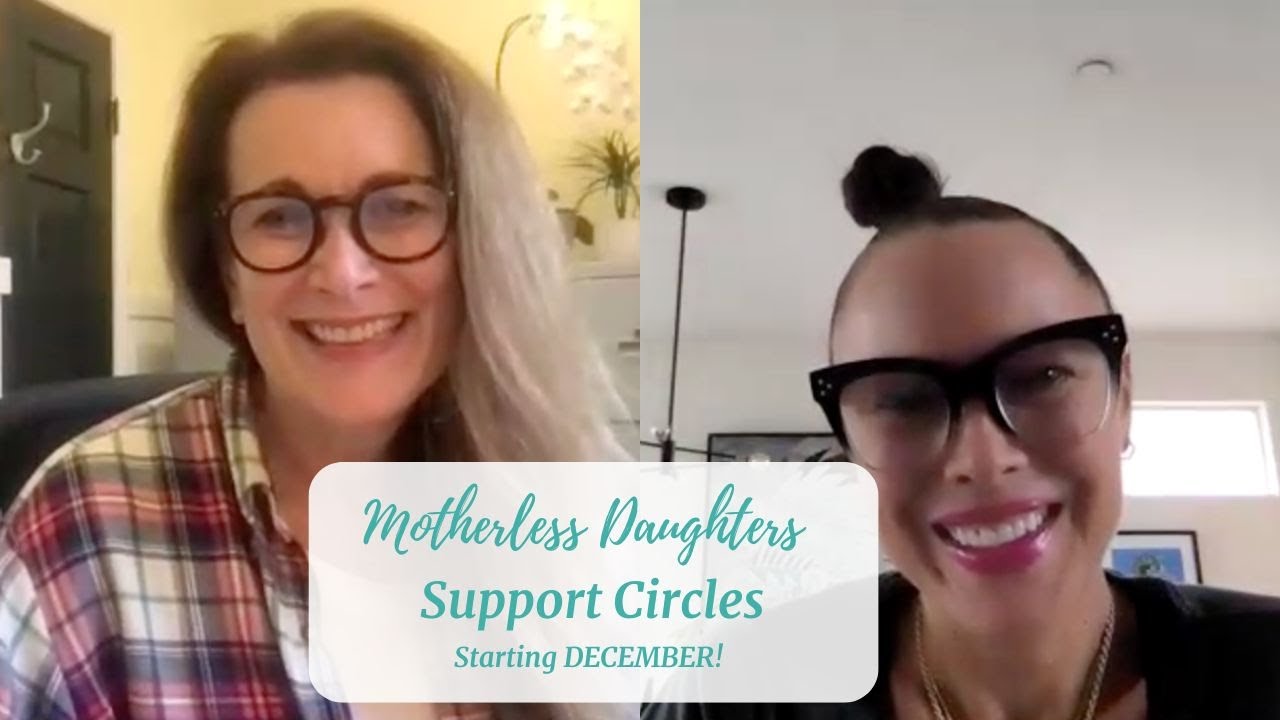
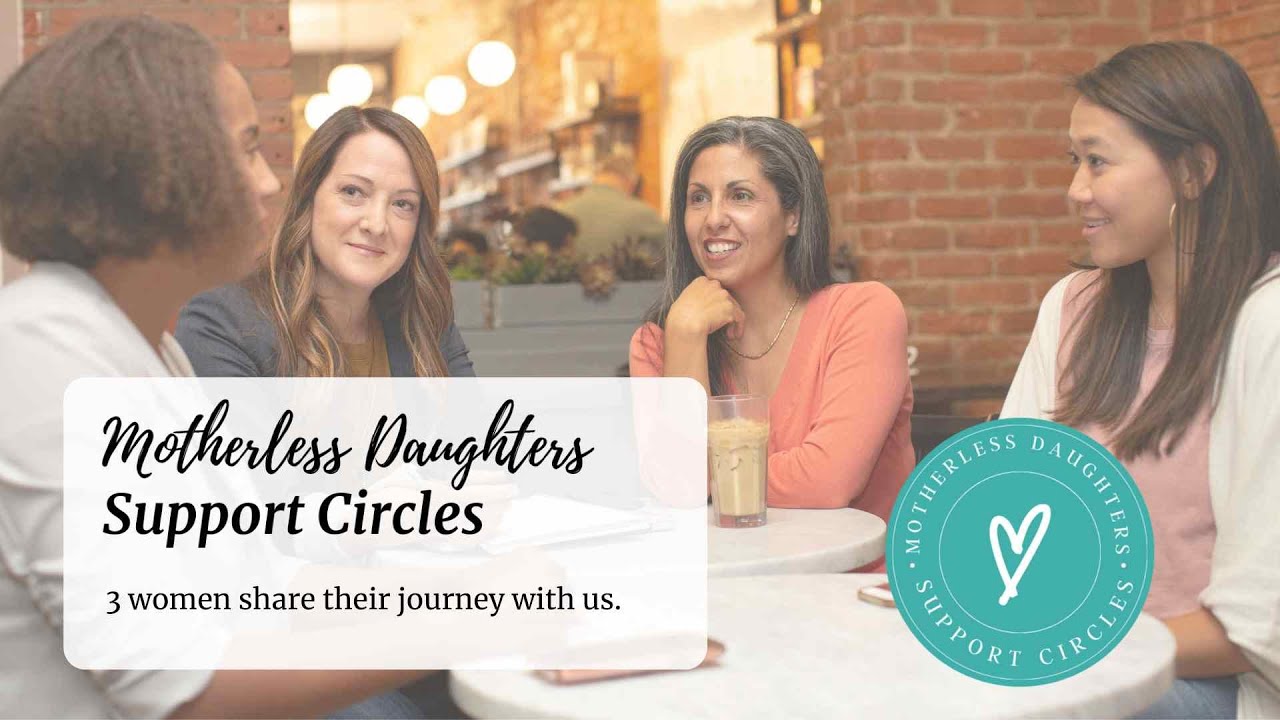
Lovely. Thank you. I'm gonna just drop a pin and come back in a moment because we have a lot of questions in the chat box that I'm going to go ahead and Refer over to you. But before we get there, I just want to take about 3 minutes to let the women on the call know about the ongoing conversations about a lot of these topics that we have, that they are invited to join. I'm going to tell them a little bit about— I'm going to tell you all a little bit about our weekly calls and then drop in just a sentence or 2 about some retreats that we have coming up for anyone who's interested. And So let's go ahead. I'm going to share my screen here and let you know about the Motherless Daughters community calls that happen every week. We've got them on Tuesdays and Thursdays for loss during childhood, adolescence, young adulthood, and adulthood. We have a new call that just started last month on, or in February rather, on Tuesday, on Thursday evenings, just for recent loss. It's just for motherless daughters. They're closed calls, weekly 60-minute calls on subjects of interest to you with live chats, interactions. And then at the end, there's a 30-minute open discussion. People say that's often their favorite part. You can either stay on and keep talking about the topic with the facilitator, or you can talk about anything that's on your mind. And on Tuesdays, we have breakout rooms, affinity breakout rooms. Sometimes they're for women who were 12 and under, sometimes for women of color, sometimes for women who are childless by circumstance and choice, um, women whose moms died suddenly. We have all different kinds of groups going on the Tuesday calls, which are the larger ones. The calls are international. We've got women from all over the world. I see women on this call right now who have called in and joined us from Switzerland, from Austria, from Berlin. Um, they're intergenerational. Women range in age from their 20s all the way up into their 70s and 80s, which is part of the magic because we all learn from each other. They're interactive, they're eclectic. No 2 calls are the same ever. And they're intentional. We co-create the community together twice a month. You guys are choosing the topics that we discuss, and we're always optimizing and changing based on feedback that we get so that they are good for you. So Tuesdays, they're at 5 PM West Coast, 8 PM East Coast, which is Wednesday morning over in Australia. On Thursdays, this is the one where people are joining us from the UK and the EU. 11 o'clock in California or West Coast, 2 o'clock on the East Coast. That's evening over in Europe. And on Thursdays, we have a recent loss call just for women who lost moms within the last 2 years because we know your bereavement needs are different. And that one's at 5 o'clock on the West Coast, 8 o'clock on the East Coast. And I see that one of the facilitators, Angela Schellenberg, is on this call. Angela, if you want to give a shout out in the chat box. Angela's wonderful. You can also meet Angela this coming weekend at the Motherless Daughters Luncheon and Gathering, Free Mother's Day. We're going to be together in LA all day on Saturday with workshops on Sunday. Christina, if you could drop the link in the chat box if anyone wants to come. I think we still have 2 or 3 days where we can add people and we'd love to see you live. Okay. If you can't make it to our calls live every week, we always send you a recorded link. Within 48 hours, you can watch it on your own. And the cost is just $59 a month because everyone wants to know, well, what's it going to cost me? $59 a month. That's 4 calls a month. You just pay for month 1 and then you automatically be billed so you don't have to keep re-signing up over and over. And you can cancel any time that you want. And if you can't start in May, join us in June, join us in July. We welcome new participants at the beginning of each month and you have a chance to introduce yourself. To the community. And if you sign up this week after this call, here's your discount code. It's HOUR39. You'll get your first 2 months. That's 8 calls for just $39 a month. That offer is good for new members only. Um, to join, you just go to motherlessdaughters.com/communitycalls. Christina will drop the link on the side. Remember to use your code to receive your $20 discount. We also, when you're over at motherlessdaughters.com, you will see that we've got 2 US retreats and one UK retreat, and there's still spaces in both. It's the first weekend in June in Connecticut for women up to 25 when their moms died. In Iowa City, the first weekend in August, it's for women who are up to age 30 when their moms died. And in the UK in September, it's up to age 21 when your mom died. So we're trying to accommodate as many people as possible. And we have some really generous scholarships available right now due to some very generous donors. So please, please let us know if financial assistance is something that you need. Please don't be shy about it. We know it's a hard time right now for lots of people. And we want to make it possible for you to join us. The 4-day retreats are really, really something one of a kind and extraordinary. So we'd love to see you at any of these, the Hour of Hope during the week, or at the weekend Mother's Day event coming up next Saturday, Sunday. Or at the one of the retreats in June, August, or September. So I'm going to come back now to Susan because I see some great questions here in the chat box. And one of them that really struck me was about your dad. Jane said your dad was a spirit channeler but didn't use it in his own family, or did he? Can you tell us a little about that? Because I bet people are really fascinated by, you know, the spirit channelers that appear in your book and the uncle that you talk about.
Uncle number 9. Uncle number 9. Yeah. So I grew up with my dad's spirit channeling. It was a thing that happened, and we would hold space for him. And most of the time, we didn't know what was going on. Like, it wasn't very clear. And it was, it was very— he's a very introverted person, and it would just be really intense. The only time my mom came through to talk to him was when she was still in a coma. And she came in and said that it was too late to come back. And she was trying and she's trying, but she said it was too late. And that was the only time we ever got a message from my mom through my dad. My dad doesn't actively want spirit channeling to happen. He doesn't try. He hasn't refined his skills around it. And there have been a couple of times where What's, what's happening here, you know? But we have not ever gotten a coherent message from my mother since then. He's not like an active person where people come to our house and give him money or donate money. That's— he doesn't do that. It's just like a thing that he hasn't really cultivated, but he has a skill for. There are other people in our lives that we would go to. I mean, it was— spirit channeling was like as normal as like going to the grocery store on the weekends. That's just what it would— we would go get the nail salon supplies, we would go eat at a Vietnamese restaurant, and then we'd go to a spirit chandler. Like, it was a part of our cultural fabric. Um, and so there are a few people, one being Uncle Number 9, who— that's his name. His name is Uncle Number 9. He legit has a giant, like, Scarface white building in Houston, Texas that has Gao Jin on it, like Uncle Number 9 on the top. Like, that's— he's everyone's uncle, and he's very talented, and he has brought messages back for us and, and has affirmed my work that way as well. So I say, I know this might be like a, hmm, really, Susan? If you ever have a chance to meet a psychic or a spirit channeler, always verify that they know information that other people might not know. And it's not like questions like, does my mother miss me? Because of course, like, sure, some people can play to your emotions. And yes, I've, I've met fakes. But are there other ways that you can check their credibility before you have conversations? You know, because it can actually be a very magical experience. So anyways, that was the only time my dad channeled my mom. And, and sometimes he tells me he doesn't even have the skill. Like, I'm just like, what? You know? So I don't know if it's turning 70 or what, but it's just how people want to remember things and how, how people want to expose themselves and their skills is, I think, changes over time based on what they're comfortable with.
Thank you. I see a question from Mary here saying she's never had a dream about her mom, and she's wondering how you tap into dreaming about your mom. Is there— are there any Tools or anything conscious that you do to encourage it?
Yeah, I mean, it was more my sister would have very active dreams about my mom. There have been a couple of times where she has come into a dream, and spiritual friends that I have were just like, just ask her to come. And I'm like, what? Like, like when you're in bed and you're trying to go to sleep, just ask your parent to come and say what you'd like them to talk about. I mean, it doesn't work every time, but I think the question is, is have you, have you made that intention clear and been open to that? Yeah.
I see a bunch of questions here about what's next for you. What do you have sort of on the, on the back burner or on the front burner?
Yeah. So in May, I have 2 final book talks live in person, one at the Smithsonian, in Washington, DC, to celebrate Asian American Heritage Month. That's on May 11th. It's on my website. I'll also be in Houston on May 21st. I'm starting to become a public speaker and going to different events. So if there's other organizations or conferences or workplaces that want to talk about these issues around following your calling or creativity or grief, beauty standards, all that yummy stuff, I'm available through my Macmillan Speakers Bureau. And earlier I told you that I, I'm so hungry for different mediums. And so I'm starting to look at film and TV and I'm starting to make steps towards seeing how we can translate this to a smaller or big screen. So that's it for me. And I'm a mother of a 4-year-old and his name is Art. I made Art. And I am really working on being a very present parent because I know my parents didn't have the time. And I'd love to show up for him because I'm also on tour, right? So it's like also trying to be the mom, the mom, the best mom I can be.
You mentioned that you're going to be in Houston where your dad lives. What other cities do you have coming up? Because we've got people here from all over who are joining the call today.
Yeah. Yeah. So it's Washington, D.C. and Houston. Yeah.
Okay. So anyone who's in Maryland, Virginia, Washington, D.C. area, or anyone who's over in Houston, would they have a chance to see you at these live events?
Yeah. Just go to my website and sign up.
Fantastic. Now I have a question for you. Curious. I like asking this question at Hours of Hope and in interviews that I do. Is there a question that no one's asked you yet that you really wish someone would ask? And that you'd like to answer. What has no one asked you about?
You feel scared doing all of this?
Something you don't— excuse me?
Do you feel scared doing all of this?
Do you feel scared doing all of this?
When I'm with people, when I'm with the audience, It's not scary at all. When I am talking to my family and I really want to connect with them, that's scary. You know, I always say my aunt is the scariest 4-foot-tall woman I know. You know, like, she— it's so scary to be emotionally vulnerable. And I do have to say, I do wake up with a lot of self-doubt each day around if I ask for help, will anyone come through? I really wanted Children of Immigrants to have my book, so I raised $50,000 in 2 weeks. And I— it was because people offered to help, you know, but when I was getting closer and closer to the deadline, I was so terrified. I was so terrified to ask people. So I guess I want to say to people that I still get scared. I still have to, like, do these exercises. Like, I really need to think about evidence of my past performance around things and accomplishments and reassure myself that I can do it and reassure myself that people care. Like, I guess I just want to say that I still feel insecure and scared.
Yeah.
When I'm writing new work, I still feel insecure and scared. When I'm gonna write a social media post, I still feel those ways, you know, like I— when I'm dealing with these intense emotions, and it's so real, and it's so personal, like, I do get scared. And I, and I want to encourage folks that if you're experiencing doubt, maybe something's at stake. Maybe something needs to be said, and that it's not all rainbows. But I will say that there has been an evolution for me. I'm so grateful to be in a healthy relationship with my husband and have a healthy relationship with my son. I wish certain family relationships could be better, but I also understand that people are also doing the best that they can. So I just want to put out there that everything is still an illusion, you know, like everything can like see, like people will be like, oh wow, you made it, or like you got what you wanted. And I'm just like, I don't think like we can ever really fulfill all our desires. Like that's the essence of Buddhism, right? Like you just can't. There, your mind will always want more. And That if you're feeling struggle and suffering, it's because you're human and it's natural and normal.
Thank you so much for being honest and vulnerable about that. It comes with being not just a writer, but an artist and also a human being. So thank you so much. We're getting lots and lots of thanks over there in the chat box. It looks like we have time for maybe one more question. Let's see. Someone asked, in what ways do you feel you are like your mother now that you have deconstructed the myth of her? And do you— in what ways did you discover ways that you're— that she's like you, or you are like her that you weren't aware of before?
A few times people have reflected to me like, oh my God, you are your mother's daughter. Oh my God, you're so fierce like her. You're fearless. You can do it. You're so powerful. And I'm, and I'm like, what? I don't feel that way.
I know.
But it's like my mother, like she— the only reason why we came to America is she started an underground lottery operation in Vietnam and won the lottery 3 times. She didn't even finish 9th grade. And somehow we had enough money to escape, and it was on the 6th attempt that they made it. And somehow we came to America, and she had 2 nail salons. And somehow I watched Legally Blonde and then applied to Harvard. Like, it was just like a series of— of the probability was so low of this all happening. And somehow I get to— on this, like, everyone has a story, but somehow I get to tell the story around marginalized manicurists and the fact that they are complex, complicated humans. And I get to tell that story now because of everything that my mother and my father have done, you know? And, and so it's just She was a baddie, you know, and I'm a baddie too. And I just want to like also recognize that and celebrate that instead of always feel like, oh, there's— I haven't gotten this yet, or I haven't, you know, like, yeah, but then this hasn't happened. Like, instead of dwelling in that sadness, my mother always said, you know, Susan. I was like, Ma, what's your advice for living life? She's like, you have one heart. one mind and 2 hands like everybody else. Do something with your life. You know what I mean? Like, she didn't dwell on the fact like, oh, Susan, we're like low-income people that, and operating in a country where we don't know the language, right? She was like, go make your destiny. Go manifest it. Go make it happen. And I think for me, as I've been just messily trying to figure out how I'm going to move forward as an artist and a storyteller, because this is my full-time job, I am feeling like I do walk in her heels, you know, like that she was so bold. And she was so fearless. And that she didn't convince herself that she couldn't. You know, I give advice to other artists. I'm like, stay naive. Like, if I had really known how hard it was to do theater, or like, to put on a touring show that was profitable, or that actually, like, to get an agent is super hard, and that you're gonna get so much rejection, and the rate at which you can actually sell a book is like so low. If I actually knew all those things, maybe I would have never tried. But I didn't know those things, and I just kept going and going because I was led by my intuition. And it was so strong, and I couldn't turn it down anymore because I had, I had shut it up my whole life. I had shut it up my whole life. And then finally, the motherhood journey, I started listening, and the more I listened, the more the higher the volume got. And then I was like, oh, I really can't ignore this. And then it's led me to here, and I get to live the life of my dreams now. So stay naive.
You know, one of the moments at the end of your book brought me to tears. It's called The Manicurist's Daughter, apostrophe S. But your dad was your mom's business partner and also worked in the salons. And at the end, when you, you know, have this or develop this new understanding of your dad, I believe there's a moment where you say, I am the manicurist's, with an apostrophe, daughter. Meaning that you are the product of both of them. And it was just such a beautiful emotional crescendo to the book. I just wanted to share that with you and with everyone here. I mean, I cannot again recommend this book enough. You can find it online. If you're in Houston or Washington, DC, you can come see Susan in person. Susan, I want to thank you so, so much for your time today and your honesty and your generosity. And I hope we'll see you at more events in the future. You're welcome at all of them.
My gosh, thank you so much for having me. Thank you so much for everyone tuning in from around the world. Everyone has a story. Everyone is doing their best. And I think the more work we can do within, then the more love and light we can share with the rest of the world. So thank you.
I want to thank everyone who was here today. Also, we look forward to seeing you at future events. Christina just reminded me that we are live streaming the Saturday gathering, and if you'd like to join us online, you can still include your mom in our tribute video and be part of our circle of remembrance virtually. So please consider that if you'd like to be there online. Susan, again, thank you. It's been an honor. It's been a blessing to spend this hour with you.
Thank you.
It was also a blessing to spend the hours with your book. I couldn't put it down. I stayed up late every night to finish chapters. So I'll see all of you, I hope, at future events or at the next Hour of Hope in 3 months from now. Susan, all best to you and your little guy. Both your guys.
Thank you.
Okay. Goodbye, everybody. I'll see you soon.
More from Hope

Bringing Mom Into the Season: A Holiday Gathering for Motherless Daughters - REPLAY