Motherless Daughters Community Calls with special guest Caroline Criado-Perez.
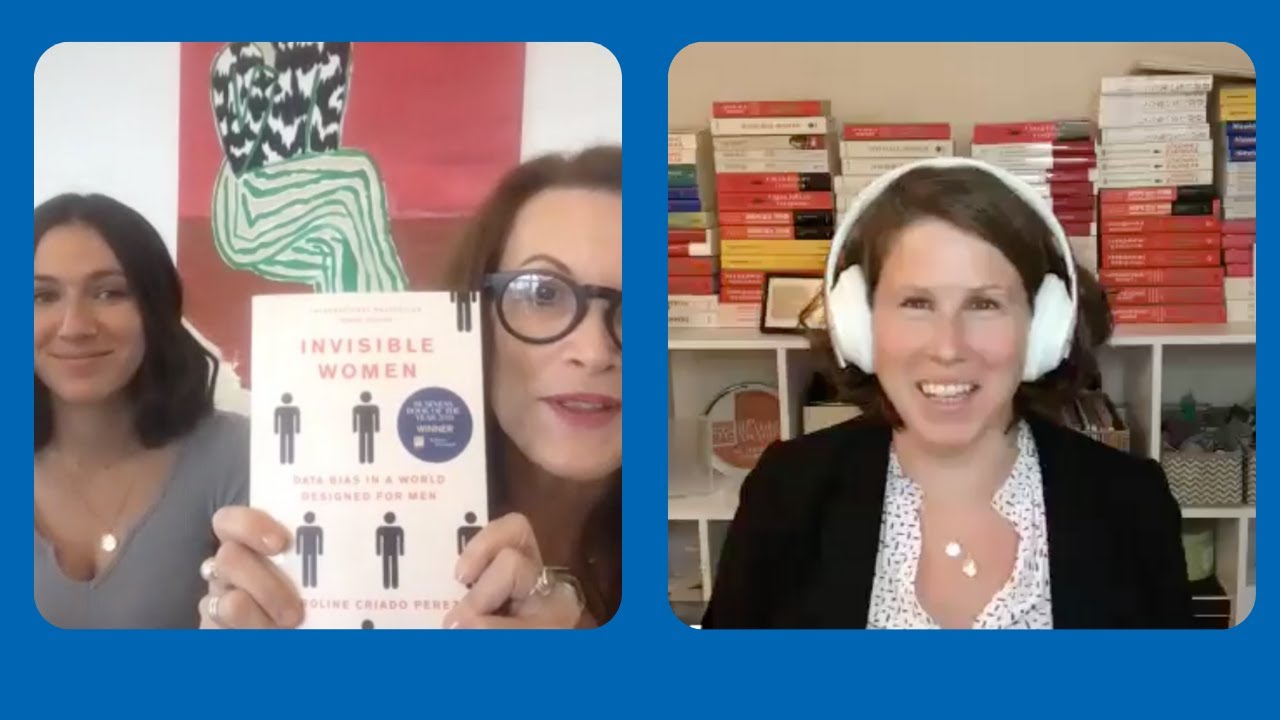
Caroline Criado-Perez discusses how medical research, car safety, and product design rely on male bodies as the default. Car crash tests use male dummies, leading to higher injury rates for women. Clinical trials exclude women, causing drugs to work differently or cause adverse effects, and Black women are 243% more likely to die in childbirth due to data gaps.
Chapters
Okay, Jenna, thank you so much. I'll take it from here. I'll let you do the admits because we have quite a few women still coming in. We have 109 women here today. It's so nice to see you all. Welcome to everyone who's here for the first time. We're so glad you're joining us. And we know that we have women here who are not motherless daughters who have come to listen to Caroline, and you're welcome to be with us for this hour as well. This is a call that is a public service to to all women, but we are the Motherless Daughters Community. We meet here every Tuesday, typically at 5:00 PM Pacific time, 8:00 PM East Coast time. So we're really thrilled to have our UK participants here today. And we have women in the UK and Europe who stay up until 1 or 2 in the morning to join us every Tuesday. So we're glad that we are accommodating you a little better today. Hi, Franzi. We see Franzi in Berlin walking on the street. She's here with us every Tuesday. So good to see you all. I'm Hope Edelman. I'm the author of Motherless Daughters, Motherless Mothers, The After Grief, which is my newest book, 8 books in total. I'm doing this call from home today because my daughter Eden, who's 19, is going to join us for the second half. So that means I'm here with my happy Tuesday mug that says, hello Tuesday, may I ask you a question? Why are you back so quickly? Don't you have a hobby? This is my favorite mug, so I get to use it today because I'm home. We will start as we always do in this community with 3 grounding breaths, and we do this so to regulate our nervous systems and so that we can all drop into the same time and place together. And it's just one big inhale, we hold it for the count of 2, exhale slower than the inhale, hold it for 2. And do it 2 more times. So let's do that together, and then we'll get started. Okay, welcome back, or welcome again to the Motherless Daughters Community Call. It is August 17th, 2021. It's week 3 of the month, which means we have a special guest speaker. And today we have a very, very special guest speaker. It is Caroline Criado Perez. She's a writer and broadcaster based in the UK. She's author of the book Invisible Women: Data Bias in a World Designed for Men. And I just listened to this entire book on tape over the weekend. Oh my God, I'm so excited that Caroline's here with us today to share this— her research with you. My daughter Eden discovered this book when it first came out in 2019. She heard Caroline speak on a podcast called 99% Invisible, and I'm going to put that in the chat box for all of you who want to take a look at that. She will be joining us, like I said, at the same time for this call to share why this book is important for all women, even teenagers, and the unexpected impact that this book had on our family. Caroline is a best-selling, award-winning writer. She is a broadcaster and an award-winning feminist campaigner. This book, Invisible Women, was a number one Sunday Times bestseller, and it was published in March 2019 in the UK by Chatto and Windus and Abrams in the United States. It's been translated into more than 30 languages. It's the winner of multiple prizes. including the 2019 Royal Society Science Book Prize, the 2019 Books Are My Bag Reader's Choice Award, and the 2019 Financial Times Business Book of the Year Award. Caroline was also a recipient, recipient of the Liberty Human Rights Campaigner of the Year Award. She was named OBE in the Queen's Birthday Honors in 2015, and in 2020, she was the recipient of Finland's HAN Award for promoting equality. What? We are so lucky that she agreed to be here with us today. So let's welcome Caroline. Thank you so much for joining us today.
Well, thank you. Thank you very much for having me and for that very lovely introduction. I've never had anyone be so enthusiastic about the HAN Award, not even me when I got it.
Well, we're not short on enthusiasm here. People think that we are a group of women who lost our mothers and that we will come together and spend an hour crying. And we don't. We spend an hour sharing our stories. We do. We laugh a lot, don't we, Jenna?
We sure do.
It's so— it's, um, it's a community like any other community of women, but we are specific in certain ways. And one is that because we lost our moms, many of us quite young, the majority to cancer and terminal diseases, because that's more likely to take women's life at an early age. But we have quite a few women here who lost their moms in accidents, due to suicide, some to homicide, other sudden health events, heart failure, for sure. So health and safety concerns are a real issue for this group. And last week, our topic was health concerns and death anxiety. And we talked about that, especially for those who are mothers. And I was just wondering, you know, if you— we can start off maybe with a really general question, because your book covers so much ground. from drug testing and medical studies to travel patterns to automobile design, workplace issues, public policies, disaster relief. Um, can you explain what the gender data gap is for those who haven't yet read your book and why it's so important for women to know about?
Right. So the gender data gap is basically the term to describe the fact that the vast majority of information that we have collected globally and continue to collect So, you know, everything from economic data to travel data to workplace data to medical data has been collected mainly on men. And the result of that is that most things in the world, from the car you drive to the medical treatment you receive, have been designed mainly to work for men. the result of that is that most of those things just don't work as well for women. So that's the gender data gap, and that's what the book is about. And the book is also about looking at where the gender data gap comes from. And my hypothesis and argument through the book is that the gender data gap is a result of the way that we think of men as somehow gender-neutral, as the default human, and that women are a kind of subtype of that. And in any way that women deviate from what is the male/human standard— obviously, that's scare quotes, it's not the human standard, but what we think of as the human standard— is somehow niche, atypical, you know, despite the fact, of course, that women are 50% of the global population.
Can you give us one glaring example of that to make this really concrete for listeners? Like, what's the one that jumps out at you?
So, I mean, I think that the one that really makes this the easiest to understand is actually the car safety statistics. So you might think that cars are equally safe and dangerous for everyone. Unfortunately, that's not the case, and it is a result of both the default male and the gender data gap. So what do I mean by that? Well, It's basically all about the car crash test dummy. And the car crash test dummy that is most commonly used— historically it was the only one that was used, and now there are some other ones— but the one that is used in most of the regulatory tests around the world is a car crash test dummy that is based around the body of the average American man. So the default male. And that car crash test dummy is too heavy, too big to represent the average woman, or indeed the small woman or the pregnant woman. And so the result of using this average male car crash test dummy is that in a lot of the ways that we have tried to improve safety in cars, they have been optimized for that body. And so there are all sorts of ways that the way women drive, the way women sit, and just the way the female body is that are not accounted for in this design. So for example, women are on average shorter than men, right? The result of that is that women sit further forward than the average man in order to do things like reach the steering wheels, reach the pedals, but that puts them outside of what's called the standard seating position, which puts them at higher risk in a frontal collision. Seat belts have never been designed to accommodate breast tissue, and women in car crashes often therefore suffer from horrific breast injuries from this thing that's meant to be protecting them. But also maybe wearing seat belts improperly because they're so uncomfortable, you know, they're sort of cutting into their neck, you know, and comfort when it comes to safety is a really important thing. It has to be comfortable for people to use it properly. So, you know, they may be sitting further forward, The seatbelt may not be being worn properly because it's uncomfortable. And then there are things like the seatback is too firm. This is not actually an issue of comfort. This is basically— it's been designed to absorb the weight of a heavier, bigger body than the body of the average woman. So in a car crash, women tend to get thrown further forward than a man because the seat isn't absorbing her body. It's just bouncing off it. And so, you know, what you have, you have this woman who's sitting further forward, her seatbelt might not be being worn properly, she's being thrown further forward. And the result of all these things is that in the event of a crash, a woman is 47% more likely to be seriously injured and 17% more likely to die than a man in the same car crash. So basically what you have there is you've got your default male car crash test dummy, which results in this gender data gap whereby we're not collecting data on an average female body, for example. And so we are creating design based on this data collected from the male car crash test dummy, and you end up with this design that is much more dangerous for women than for men. I should say that there is what is called a female car crash test dummy, which is used in a couple of the regulatory tests, not all of them. It's actually just a very scaled-down version of the male dummy, which of course doesn't account for other differences in male and female bodies. Like for example, as we mentioned, breasts or differences in the pelvic floor, which can affect your posture, differences in muscle mass distribution. So men tend to have much higher muscle mass in their necks and shoulders than women, which obviously will affect, you know, the way you move around in the car in the event of a crash. Right.
I was pregnant twice, and I live in Los Angeles, so I had to drive pregnant, and seat belts were a big issue at that time. And I know there are possible seat belt extensions that you can get, but I always wondered, why do women have to accommodate like that? Wouldn't it be nice if we could buy a car that had a special fitting for seat belts, the way that you can adjust a seat?
Well, actually, I mean, even those seat belts, though, like, you know, they've never been tested in a regulatory setting. So there isn't actually good evidence that they are safer, that they are safe, you know. But yes, you're right, like one of the issues with the seat belt is we don't currently have a seat belt that is verified as safe for a woman to use during pregnancy, and particularly during the third trimester.
Yeah.
And one of the concerning things I found in my research is that the number one cause of fetal death from trauma is car crashes.
Oh, God. So women and unborn children and—
Yeah.
Yeah, are dying as a result of this.
Yeah.
Yes.
Yeah.
I'm seeing in the chat box, Kate says, my body in the passenger seat usually does not activate the seatbelt alarm. And Joy says, headrests are also a mess in cars for women.
Headrests are interesting. So it's one of the things that I actually tried to look into for the book because I was really curious about— so I was sort of sent off on a bit of a tangent by a guy that I interviewed about sex differences in motion sickness. So we've known for a really long time that women are more susceptible to motion sickness than men, and I get really bad motion sickness unless I'm in the driver's seat.
Yeah, me too.
No one's really looked into why this is. They're just like, oh, women get carsick, whatever. But I was interested in why this might be, and one of the things he said— so his hypothesis is that it's to do with postural differences between men and women, um, and related to differences in pelvis, so that your body is constantly micro-adjusting to stay upright, um, and it's sort of slightly different for men versus women because of our postures being slightly different. And, um, and so he sort of hypothesized that there might be something to do with that, the fact that they're— there's a sex difference might account for the sex difference in motion sickness. Anyway, he was saying the one way to make sure you wouldn't get any motion sickness would be to have a way of just having your body completely still, right? And so obviously I thought, well, headrest is obviously going to have to have something to do with that. So I tried to look into if there'd been any research into headrests for male and female, but there hadn't been. But one thing that I did find that it was very interesting and it's kind of related to headrests, is the designs for whiplash. So whiplash is a far more— is one of the most common injuries as a result of a car crash. It's way more common in women than in men. And they have tried— car manufacturers have tried to design, you know, to design whiplash out. And one of the ways involves a specific kind of headrest called an active headrest, which kind of comes forward in the event of a crash to kind of keep— it's supposed to keep your head still by sort of just shoving into it, I think. And then there's another design that basically is kind of like a sling almost, that it sort of goes with the momentum of the crash and it kind of— So the seat goes back and forward and kind of you know, like mimics the, the motion that your body might be going with, so that instead of you sort of hitting against something, you're kind of just, um, going backwards and forwards with the momentum of the car. And the thing that's really interesting about that is that the first system, um, which neither of them— they didn't look into this at the time, but researchers later went and tested them, sex differences, to find out, you know, what, what they were like. And the active headrest system, which is still the system used in several cars, in several makes of cars, I think Saab and possibly Mercedes, don't quote me on that, please no one sue me, was found to drastically reduce the incidence of whiplash in men, but to increase it in women. Remember, women are the ones who are suffering most from whiplash, whereas the other one reduced it for men and women, which I find really interesting because you will have some people saying, oh, well, women are just weaker, that's why they're more injured. in cars. But then you look at evidence of that, and you realize that's just not credible, because then why would one system make things worse for women, but— and better for men, and another system reduce it for men and women equally?
Oh, so the unconscious gender bias saying, oh, women are just weaker than men contributes as well?
Yeah, yeah.
Not just data, it's the— oh, wow, this is—
Oh, yeah, no, I'm sorry, I have bad news for you. There is some sexist— there is some sexism in the car industry. This may shock you.
I see a number of people in the chat box saying that they are 5'1 and cars have never been comfortable for them. And Allison is telling us that an auto seatbelt is likely what caused her mother's death, that the lap belt cut her open. She was going 5 miles per hour and hit a small wall. Oh my God. Yeah, so we have women here who have been directly affected by some of what we're going to talk about today. I want to switch over to a little bit about medical research, because one of the most astonishing findings I thought in your book was how poorly drug trials represent female bodies and female experience, particularly with regard to female hormones and the menstrual cycle, and how drugs that work on a man's body may not work the same way on a female body. And lots of women here may have medical conditions or had mothers who died of medical conditions. So I just wanted to bring that up with you a bit. And can you let us know, like, what the heck is going on there?
Yeah, I mean, it's kind of wild. So, um, there's several things going on. So the first thing to know that it's not just trials in humans that are only studying males, it's also trials in animals and trials in cells. And the reason I think it's really important to remember that is that you will often hear this excuse— um, 2 excuses. One, women are more difficult to recruit, and 2, the menstrual cycle means that it's too difficult to study women, and the menstrual cycle will interfere with the results, and therefore you can't study women. So let me deal with both those. First of all, it is true that women are harder to recruit, and that is because women have far less leisure time than men. So for example, in the U.S., women have 5 fewer hours of leisure time than men. And they have more childcare responsibilities, they have more problems with transport. So that for me means that, yes, you need to work harder to go and get women, and you need to do that work. The menstrual cycle makes no sense whatsoever, because yes, the menstrual cycle will interfere with the results. For example, menstrual cycle impacts have been found for depression medication, meaning that at some point in your menstrual cycle it may be too high, at some other points it may be too low. Um, it's been found for antipsychotics, it's been found for certain, um, arrhythmia medications. So, uh, women are more likely to experience drug-induced heart, um, heart rhythm abnormalities, and the, um, the risk can be highest during— I can't remember which part of a menstrual cycle, but basically the risk changes during the menstrual cycle, you know. that is the menstrual cycle interfering with the results. And it's quite important to know what those results are before you go and sort of put it, put it onto, uh, into the general population. I mean, you know, the— someone mentioned in the chat about the COVID vaccine, you know, absolutely, um, they have not, um, sufficiently sex-disaggregated the side effects for women. Um, And the impact on the menstrual cycle of some women reporting menstrual cycle abnormalities has only been discovered once it went out to, you know, to millions of women, and women started saying, hey, I'm having these menstrual cycle impacts, you know, which I think is really dangerous because the data vacuum and the knowledge vacuum and women being told nothing to see here, You know, that's where conspiracy theories start to grow, right? When you don't— when something scientists are telling you, you know, this thing doesn't happen and your body is saying, but look, it's happening and it's happening to my friend and it's happening to my mom, you know? And I mean, I'm one of the women it's happened to. I'm currently 10 days late for my period and I have no idea what's going on there. And it's not very nice 'cause we're actually trying to get pregnant, you know? So like, I don't know, can I try and get pregnant this month? Does missing it— would I just miss my period? Will my period come? You know, and science doesn't have the answers. for me. Anyway, that's a little bit of a tangent. So there's the menstrual cycle and ignoring that. But if you look at, for example, cell studies right now, cells don't have children, cells don't have unpaid labor to do, they're not difficult to recruit, cells don't have a menstrual cycle. And yet the vast majority of cell trials are still done in male cells as well. So none of the excuses you— we use for why we don't recruit women apply to cells, and yet we're still doing it there. And anyway, so the end result of this is that for a whole range of medications, particularly historical ones that are still being used— for historical ones, we just have no research on it. They were never trialed in women, like Valium, for example, never trialed in women. No idea. But even sort of for modern medications, we're still continually doing trials where either— where we're not including women or we're not sex disaggregating the data.
And then beyond that, we have a number of women of color here in the community. And so beyond that, even beyond sex disaggregating, shouldn't there also be disaggregating for women of color as well? By race?
Absolutely, and that is absolutely not happening. And also for health outcomes, and that was actually a real frustration when I was writing the book, was if I want— you know, I wanted to be able to give data for whether things were the same for white women as for African-American women as for Indian women, you know, whatever it might be. And there just never was that data. The only— and the only time I found it was in pregnancy outcomes, when it did show that both in the UK and the US, Right. maternity outcomes for Black women are exponentially worse than they are for white women. And, you know, this is really shocking in the US in particular, because of course in the US, maternal outcomes are, I believe, the worst and one of the worst in the developed world. So it's already pretty bad. And then it's sort of— I think it was 243% a Black woman was more likely to die than a white woman giving birth in America.
And you quote— you use Serena Williams as an example that was in the news here that brought it into the public eye more than ever in the U.S.
Right, exactly. Because often when you give a statistic like that, people will try to argue back and say, oh, well, that's just about you know, they're more likely to be poor, so they'll have worse treatment. You know, Serena Williams is not poor. And actually the research does— you've read my book more recently than I have, so you might remember the stat better than I do. But from memory, middle-class African American women had poorer outcomes, or is it university-educated African American women had poorer outcomes than working-class— I'm not sure exactly what the terms are in, in the US. But I think it was like without a college degree, white women, in terms of giving birth. And someone just asked what happened to Serena Williams? Well, she nearly died giving, giving birth.
Yeah.
Was what happened. And she sort of wrote about how, you know, she wasn't believed in the care that— the care that she received and how that led to her almost dying.
Sam, you look like your head's going to explode there on the screen. I see you just like shaking your head. And I know that's how I felt driving on I-10 through the desert in California to Phoenix. I was just like, what? I see Crystal has said here, I have endometriosis and they prescribe women a drug used for prostate cancer, never tested on women. It causes your body to think it's in menopause. They continue to change the name of the drug and prescribe it to women. I know many who this drug caused severe damage to their bodies. So again, we have a lot of lived experience right here.
Mm-hmm.
I know also in your book, you mentioned that women are 2.5 times more likely to be prescribed antidepressants than men as well. And that's a real issue in this community, particularly in the postpartum phase for those who've had children, because it is very common, especially with a first child, to have a grief spike and really miss your mom if she has died before you become a mother yourself. And grief— the grief response is often— it looks very, very much like depression, and it has overlap with depression.
Yeah.
So women are frequently diagnosed with postpartum depression. and given antidepressants when, in fact, they are grieving and often need the social or therapeutic support that can help them with grief. So that's a real issue for us as well. Why are women prescribed antidepressants so much more than men, do you think?
Well, that is a very good question. And in the specific case that you're referring to, I think we're very good at— giving drugs instead of actually talking to people and finding out what is going on in their lives. It's cheaper to give someone a drug than to actually try and help them work through something.
Right.
However, there is also very good evidence that women are given antidepressants when they're not depressed, when they're not even sad, when they're just in pain, like physical pain. And there was a really interesting study that I came across in my research which found that women— that men were more likely to go to the doctor reporting depression, but women were more likely to be described— prescribed antidepressants. So we're not reporting depression more often than men. In fact, men in this study were reporting depression more often than women, but we were more likely to be prescribed antidepressants. And women are far more likely to be prescribed antidepressants when they report pain. When men report pain, they're given pain relief medication, which is kind of what you'd expect when you report pain.
Bad name.
So when women report pain, we're crazy. When men report pain, they're in pain.
And, you know, I always say we should not just try to medicate away sadness, that sadness is a natural human emotion, and it's an appropriate response to have when you become a mom, if your mom is not here, and trying to medicate away medicated away, never really gets to the root of that problem. I see Monica in the chat box is also talking about N95 masks and how those are really important because if they don't fit your face—
Yeah.
They were designed to fit a white male face. So if you're not a white male, the chances the mask will fit your face are very low. She's got AQI problems right now where she's living in California and wearing an N95. And she's wondering if it also has COVID implications for female medical professionals.
What's AQI?
It's Air Quality Index. Our wildfires here often create poor air quality, so people wear masks for that reason too.
Oh my goodness, I had no idea.
Oh yeah.
Well, that's horrifying because yes, the N95 masks are woefully inadequate when it comes to female faces, and in particular, actually female faces from Asian backgrounds. And there is a whole body of research going back a very long time showing that these masks fit Caucasian male faces the best, with everyone else sort of, you know, less well as it goes on. And when you look at the regulation, because I started looking into this when the pandemic hit, So I had done— I had written about personal protective equipment in Invisible Women, and I think I, in a very brief aside, touched on face masks. But when the pandemic hit, I was just inundated with messages from female medics telling me that these masks, which, as— was it Monica said?
Yeah.
need to really tightly fit your face in order to protect you from these virus particles, they were not able to pass the fit test. The fit test is basically the test that you do to make sure that the mask fits your face adequately and will protect you, and the women were not able to pass the fit test. In order to pass the fit test, some of them were able to pull the mask really, really tight, so tight that they were getting sores on their face. Some of them said that they were being sent in only having done a fit check, which is not quantitative research. It's basically, do you feel that it's fitting your face properly? And so I started looking at the regulations to try to understand, you know, what is going on here? How are these masks designed? How are they determining whether or not these masks are going to fit faces, are women actually much less likely to pass the fit test? So I sent a Freedom of Information request to basically all the NHS trusts, the National Health Service in the UK, all the NHS trusts, to find out, because they're meant to collect data on all the failures, so to find out were women more likely to fail than men? the vast majority of them weren't collecting sex-disaggregated data, so that, that kind of failed. Then I went and looked at the regulations and found that basically it's completely useless. So for example, to get an EU certification— sorry if I'm going into too much detail here, but like I went down the rabbit hole with the masks— to get the EU certification for the N95 masks, And all you have to do to demonstrate that it fits a wide variety of people is to show that it fits 10 individuals— sorry, 10 clean-shaven individuals. That's it. That's the test.
Are there any masks that are better for women to wear that you're aware of? Because one of them—
I'm not—
what can we do?
Yeah, I am actually not aware of any masks that have been specifically designed to accommodate female faces. The regulations are just not requiring them to do that, and so they aren't doing that. There are some masks that come in sort of smaller sizes. Most of the masks are just one size, unisex, fits everyone. Of course, we know that works really well historically. There are some masks that come in smaller sizes. They are more likely to fit women, but the majority of them just come in one size. So it's a huge problem. It's a really big problem.
I see some people raising their hands. If you are aware of any masks that we can know about that are better for women, please put it in the chat box so that we can all share that information and know about it. I'm going to invite my daughter on in just about 1 minute, but one thing I thought might be interesting for the community to know, and also you, Caroline, if you didn't know this already, is that bereavement research, which women here are somewhat familiar with, seems to be a bit of an exception to the data gap, because the majority of research in grief was done on female psychiatric patients in the mid-20th century. And that sort of set the gold standard for what doctors think grief should look like. And as a result, we know a lot less about male-pattern grieving.
Mm-hmm.
And what is considered the masculine form of grieving, which is more about working through problem-solving and grieving through action. So any departure from female pattern grief has historically been considered aberrant. I wonder what you make of this, and if you knew about that, because I researched this quite heavily when I was writing The After Grief, and I was surprised to see that what we think of as grief is actually coming from studies on female psychiatric patients.
That's so interesting. I didn't know that. But, you know, it fits in with these really outdated stereotypes that we have about men and women, doesn't it? You know, the only emotion men are allowed to have is anger. Men aren't allowed to be sad. You know, that's just seen as a weakness. Whereas women, of course they get sad, they're hysterical. So it doesn't really surprise me. It doesn't surprise me either. And because the gender stereotypes are still so strictly enforced, It also sadly doesn't surprise me that they haven't got around to updating it, you know, because I think it's still a very old idea.
Exactly.
Sorry, carry on.
And well, and also the idea that they will do those studies on only the most extreme examples of female grief, meaning psychiatric patients. Now, of course, for a funded study, you have a captured population if you have women in psychiatric hospitals. But that was what most studies were done on in the mid— mostly the mid-20th century.
More from Hope


Bringing Mom Into the Season: A Holiday Gathering for Motherless Daughters - REPLAY