Why the Fashion World Is Watching Copenhagen | An Interview with MUNTHE Founder Naja Munthe
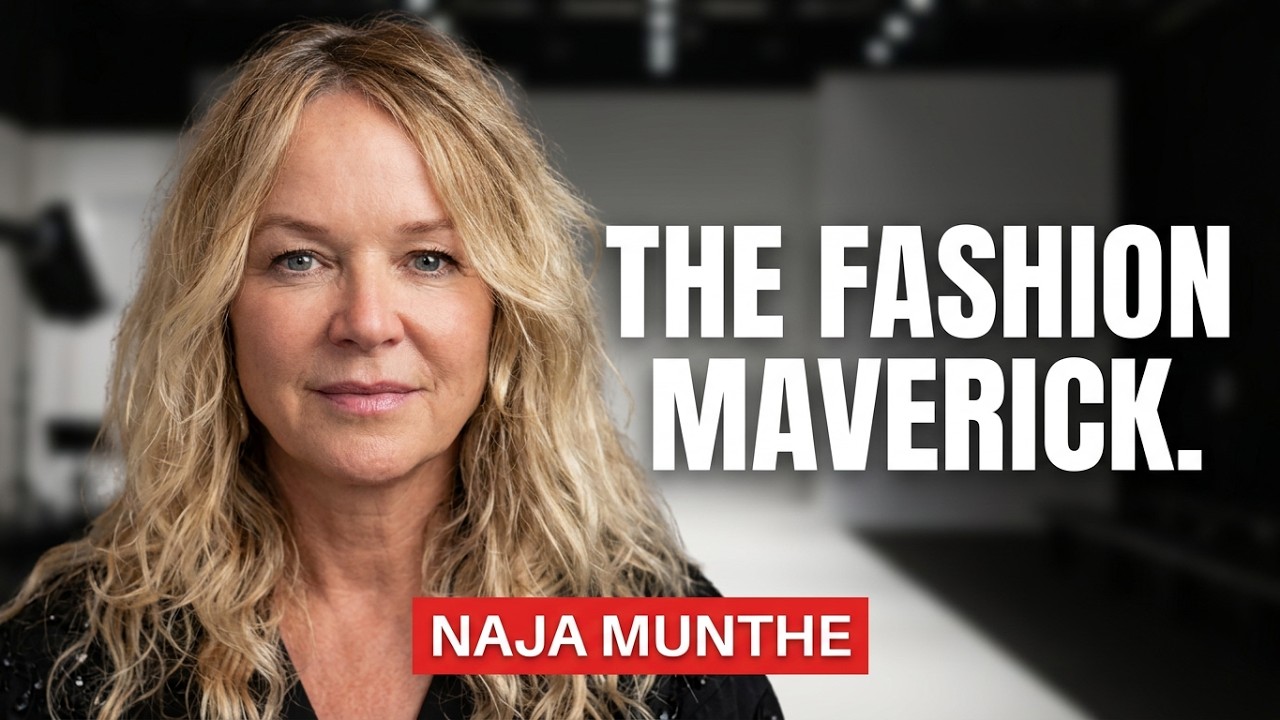
In this in‑depth interview, host Idalia Salsamendi talks with Naja Munthe, founder and creative director of the Copenhagen‑based fashion label MUNTHE, about the brand’s 32‑year journey and its place in today’s fashion landscape. Naja reflects on how the industry has shifted from a national, fax‑driven market to a global, internet‑connected arena, and how sustainability moved from non‑existent to a central, yet legally constrained, conversation in Denmark. She emphasizes that genuine sustainability for her lies in designing durable, high‑quality pieces that can be handed down and reused, rather than chasing fleeting trends. The discussion covers her long‑standing commitment to female empowerment—early charitable t‑shirts for breast‑cancer research and a current policy of donating 10 % of pre‑tax profit to women‑focused causes. Naja describes the brand’s hands‑on creative process, from hand‑drawn symbols to plant‑based fabric prints, and argues that imperfections and human‑made details differentiate her work from AI‑generated designs. She shares how financial independence frees her to make creative decisions without investor pressure, recounts a low point that forced a strategic rethink, and explains how motherhood has softened her leadership style without altering her design vision. The interview also touches on her personal background as a tomboy‑rugby player, early entrepreneurial antics, and the balance between fast‑fashion’s demand for constant newness and her belief in lasting quality. Finally, Naja outlines her future ambitions: expanding global distribution, increasing the brand’s impact on female empowerment, and ensuring MUNTHE’s legacy endures beyond her tenure.
Chapters
my next collection that I'm presenting at the, the fashion week in August. I don't want to say too much, but there's a lot of like my handwriting in the collection, and some of the symbols and the description is done by hand by me. I am opposite because when I was a kid, when I was like maybe 10 years old, I used to play rugby on the boys team because, you know, there was no girls team at that time. And I was quite a tomboy girl, but at the same time I loved, you know, wearing dresses and try this turquoise makeup. And so I've always been very comfortable with both sides.
You guys, my guest today is Naja Monte, the founder and creative director of Monte, one of Copenhagen's most enduring fashion brands and one of my favorite fashion brands. I'm actually wearing them right now. And in an industry where founders rarely remain at the creative helm, Naja has spent more than 30 years evolving her brand. And I think this is what really gives her a unique perspective on leadership and creativity and really staying relevant in this crazy, ever-changing world. That we call fashion. So Naïa, thank you so much for being here. I really appreciate being able to chat with you and you coming on to chat with, with my audience today.
Yeah, thank you so much. It's an honor to, to be with you.
We were just saying before I pressed record that I've been going to Moontae fashion shows since 2021, and I've actually gone into the office a couple of times, and I always see you scurrying around, and I'm always looking around, but this is the first time we get to sit down and talk, so it is Yeah, truly such an honor and a pleasure. So thank you. Thank you. Thank you.
Thank you.
So I'm going to hit— I'm just going to hit the ground running because one of the biggest things that really shocked, surprised me in all the positive ways is that you've been running Moontse for 30 years. I would love to know in your perspective, what about fashion in the past 30 years? Like, what belief in fashion has completely changed for you in the past 30 years, and what belief in fashion has stayed the same, or like you're more convinced of?
Yeah, well, actually it's 32 years, and it just makes it even more crazy. And I, I feel like a dinosaur when I'm telling this, uh, but you know, I guess the internet was just invented at that time. I remember in the beginning we were just, um, like, uh, we were faxing stuff to each other, uh, and everything we had to send by, by post and by mail. So the world in a sense was so much smaller, uh, and much more national at that time, uh, and the knowledge about what was happening around the world was so much smaller than it is today. And I think that by saying that it was like the difference was national and international, like today we are very, very international company and the whole world is our playground because it's so easy to reach out to anybody all around the world. But it, it's also made the competition a lot bigger because we are a lot of people like trying to have the cut of the same cake. So there's a lot of pros and cons with the way it has developed. And when I was like young in the business, there were absolutely no talk about sustainability. The word didn't exist. I mean, it was not an issue nobody talked about. What, what I've always been very into is the whole female empowerment thing. And I started out like maybe in my year 2 or 3 by designing a t-shirt where all the, the profit would go to the, the search of breast cancer. And I've been doing tons of projects like that. So my Social consciousness and like the— my awareness of trying to use my platform as a platform for helping other women has existed from day one. So that has remained with me throughout all the years. But definitely the whole sustainability thing is something that just within the past 10 years, I think, has been a part of the agenda.
Yeah, and I definitely feel it. Like, something that surprised me about Copenhagen Fashion Week when I went the first time— and I'm American, right? I'm used to New York Fashion Week, going to Paris and London and Milan. But I think something what Copenhagen does so beautifully is that there's such an awareness on sustainability. And you particularly, like, I remember the first fashion week that I went, I, you know, I read up about Monte, the sustainability. You personally are also very, very vocal sustainability. What do you think, like, when the industry just discusses sustainability, how do you think we can move beyond these marketing labels like organic and green and actually move towards more sustainability when it comes to, you know, fashion brands?
It's a very, very difficult question, and I don't have the answer on that because, uh, first of all I find it so hard to communicate what we are doing on the sustainable platform because we cannot even use the word sustainable in the way we communicate. It's illegal, at least here in Denmark. Yeah, yeah. So we cannot use the word sustainability or sustain. And yeah, so, so like, I cannot, even if I use like 100% organic or whatever it is, I cannot use the word sustainability and Even though, like, the fabric that I'm using have, like, a certification, if I don't have the same certification, I cannot communicate that this is a sustainable fabric with a certification. So it is very, very, very difficult, and I think that people are extremely frightened of being green. Greenwashing, be accused for greenwashing, and I think they should be. But on the other hand, I find it very hard to actually explain what we are doing. And also, like, you know, one year we are told that it's really good to have, like, reused polyester, and the next time it's like, oh, don't use that because it's not good after all. And so it's good to use organic cotton. Ah, wait a minute, it's using too much water. So actually, for me, sometimes it's very, very difficult to be sure that I'm taking the right— that I'm doing the right thing and taking the right choice. But having said that, I think that sustainability is actually also another thing from my point of view, because like I said, I've been existing for 32 years and almost on a weekly basis I see people around Copenhagen wearing some of my designs that could be easily 20 years old.
Easily.
And for me, as an industry, I find that that is actually the most sustainable approach. By all means, like designing something in both design and quality that has this longevity and lasts long. Maybe not the same end consumer, maybe like let's say you get tired of that knit you, you're wearing, well then you're gonna pass it on to your daughter, your sister, your mom, you're gonna sell it, you're gonna donate it, and then it it's got a second life and a third life with some other people. And I think that whole circulation and that people can see this is a nice product, I'm gonna take care of it, I'm gonna, you know, wash it carefully, I'm gonna like put it carefully, store it carefully in my closet and stuff like that. If every fashion production would have that in mind, I mean, we would eliminate a lot of the issues that we see today.
I hear you. And definitely, like, I think something that, you know, my Moontae pieces, I mean, I've had for 5 years and I keep, as you can see, I keep wearing them. It's really looking at the quality. And I love that you said that. And it's interesting that you were saying that sustainability is not a word that you can use in Denmark. And yeah, I mean, don't quote me on this, but in the United States there is so much greenwashing. So it's really interesting to hear the opposite. So And to your point, one year we're told something's good, the next year we're told something else is— the same thing is bad or maybe not as conducive as what we thought. When we're looking at fashion that can really last a longer time, that is where I think that is— I think that's the secret sauce is in it. And it goes into mass consumerism versus mass creativity. And I would love to know like in fashion, especially now in the age of like everything's online, you could just with a click of a button, you buy something. There is, I would assume, this insane pressure to always be producing something new, always, you know, staying ahead of the curve. Like, how do you distinguish between, you know, creating something new and creating something just for the sake of, you know, the launch, or because the industry is demanding something new of you, you know, within the sustainability model? Because I mean, if I were a designer, I think that I would be between a hard rock and— what is it? A rock and a hard place. Because you're constantly being told to produce. And at the same time you're saying, well, I also have to maintain quality and make sure this can last forever. Like, how do you balance those two extremes in this industry?
Well, I've never tried anything else. I mean, for me, Quality has always been very, very important, and I think it's just who I am as a person. I'd rather buy something a little more expensive and know that it's lasting longer. And that approach I had long before the sustainability, sustainability word was invented. And in terms of the fast pace in the fashion industry, I think it's just I accept that. I buy into that because it's like, it's fashion by nature that you see new trends, you want to, you know, have new stuff and new inspiration. So I honestly, I don't believe in the slow fashion. I think that maybe for some companies it could work, But for a lot of us, this newness, this new themes and new ideas that we invent new stuff that surprises and maybe provokes some people, it's who we are. And I think for what I'm more— not concerned about, but what is important for me right now in this whole AI area where everything can happen in AI, it's becoming more and more important for me to show how much this company is doing with the hands. I mean, like physically. Like last year we had a collection with the plant Daim where in my garden we were taking a lot of you know, leaves and flowers and pressing them into fabric and sort of steaming them and unrolling the fabric again. And the marks that the flowers and plants had made was our print for that season. And we documented like the whole process just to show this is not an AI, this is real people struggling with real processes and real, like you're steaming your rice sort of things. And, you know, and for a lot of the design that we're doing and a lot of the print, it's done by hand. It's real, like, craftsmanship. And I think that's very important for me to communicate this honest process that it is.
That's beautiful. And I love that. And there's— I don't know if you've been reading, I, I read an article, I think it was last week or the week before, and I'm blanking on the source, but it was basically like that now with AI, it's so prevalent, ChatGPT, Claude. I mean, there's just so many apps that can basically run your life and do your business that the quality is going to be the human touch. Like, the human touch is even more expensive now. So when we're looking at designers, who are the designers that are really getting in there and doing the work. In my particular case, I'm a strategist and I'm a coach. Me actually coming up and having these conversations with you and not depending on ChatGPT to ask my questions. And that human touch is going to be vital, vital currency moving forward. And it's interesting that you're catching up on that now. And it's something that I don't think it's spoken about so often is that there is a human behind, like, anything that's quality, there's a human behind it. There is a team of humans behind it. Like, that, I mean, knock on wood, at least within the next 50 years cannot be replaced. Like, there's a reason we're conscious beings and we can create, and I think that that's what's going to draw the attention moving forward.
Yeah, definitely. And also because I think that, you know, I'm a big fan of failures. And I am a big fan of mistakes, making mistakes, but also showing mistakes. And it's all these imperfections that makes things more relatable. And I think within this design process, like for instance my example with all the flower print, you can also see like where the steam has hit with some drops and like destroyed the, the edge of a flower a little bit. And you could never have the AI to do something like that because they try to make things perfect. So, and, and I, you know, I don't want to lie, I've been using Retouch as well, like on a model if she had a spot or something like that. But I think in a way I'm moving more and more away from that because now it's these imperfections that actually makes it look real. The wrinkles and, you know, all these things that maybe 10 years ago you were like, oh no, no, let's get it perfect. And I think that it's becoming more and more valuable to actually see the real touch behind it.
Yes, yes. And I just— oh my God, I feel like running into my closet right now. There is a set from you and I'm tempted to say it was spring— oh my gosh, I think it was spring summer 2022 collection. Oh my gosh, I don't see if you can follow me. Maybe my husband can get it. It's, it's a set. It's a long sleeve, um, button-down shirt. It's blue and then it goes down to like brown and it kind of, it looks like tie-dye but it's not. It's just beautifully done. And the trousers are the same, so it's these like baby blue trousers, drawstring, and then it's in the bottom, there's this tie-dye element. And it was interesting because when I got it, there was two dots that looked like they weren't supposed to be there. And it's one of the things that I loved the most about it. And I'm like, oh my gosh, this is not perfect. And I know, I knew that it was a conscious decision. Like I knew that like, oh my, I get so many compliments to the fact that I was in London last summer, and someone was going to stop me to tell me how much they loved my outfit. They found me on Instagram and they commented, you are so stylish. I felt weird, like stopping you in the middle of the street, but I'm so glad I found you online. Something random. But yeah, you could tell that things are made with love. You could tell. And I love— my husband's in the shower. I wish I could just run to my closet, place these two dots, and I'm like, I don't think they're supposed to be there, but I'm glad they're there. It was a conscious decision to keep them there.
Yeah. Yeah. Actually, my next collection that I'm presenting at the Fashion Week in August, I don't want to say too much, but there's a lot of like my handwriting in the collection, and some of the symbols and the description is done by hand by me. And I made a lot of effort of telling that because then again It's a story about things that are made with real hands and real mistakes and real like, oops, shouldn't have been there. Well, never mind. And let's move on. Maybe it's quite cute. And I think that for me, it's a huge part of being creative. That is that whole process of like, like in your mind finding out what you, what you, Which direction do you want to go? And back to your initial question of this inventing yourself all the time, is it necessary and is it difficult? Yeah, both, because like you have to have an endless source of creativity that you can always like dip your spoon in the pond because otherwise it's a fast pace, definitely.
It's crazy. And also, I mean, you are still the creative director of the brand. You're the founder of the brand. That is— you're, I mean, you're a unicorn in, you know, either brands have been bought out or they're highly heavy financialized. When you're thinking about your creative freedoms, what freedoms do you get from being independent? And also, what sacrifices do you have to make just, you know, keep producing and making sure that you're in the front runner because the helm is literally in your hands. And again, this, you are a unicorn in this industry in that sense. Yeah.
Well, I learned it the hard way. It's why I'm saying that you should really treasure your failures because like, I think around 15 years ago, I mean, it was my lowest point in the history of the company. We were really struggling both with the branding and the distribution and the financial, and I was at a cross path and I had to rethink a lot of the way that I was running this business. And a part of my rethinking was what kind of company do I want in the future? And there were like 4 or 5 things that were really important to me. Of course, being very creative was still super important. And I wanted to rebrand the whole position in the market. I want to have a good work environment. It's important both for me and of course for everybody who wants to join. And then I wanted to be financially independent because I have, at that time, I had been in the, in the wheel of the financial institutions for too long. And, you know, they will tell you what kind of deal can you do, how much can you spend on this and that, and it kills the creativity. So for me, it was like, I need to become financially independent immediately. That's one of my top topic, um, because being financially free is the key to every freedom in this industry. Because I've seen so many of my good colleagues in the business, uh, that are really brave and bright and creative, but if you don't have a business sense, uh, you're not gonna last. Maybe 2 or 3 years and then it's done because you cannot— like, they're gonna own you. And, uh, so for me, I had, you know, my, my mindset on this needs to be, um, a sustainable economic, financially sustainable business. So I make every decision here. I don't have to ask anybody about anything. And if some of my employees comes to me and say, listen, I have this good idea. It costs like, I don't know, $100,000. If I think it's a good idea, I'm like, go ahead, you do it. I don't have to respond or refer to anybody at all. And for me, that's the ultimate kind of freedom, um, because it sets me free creatively. I can do whatever I want.
It blends into your female empowerment, your sustainability. Like, you are— you feel like— I'm very big on female empowerment, very big on sustainability. It keeps going back and back and back. Did you know that? Like, because you said that, that this was, you know, if this was 15 years ago, but did you know that in the beginning that you were like, this this is gonna be my baby, I'm gonna run the show, I don't care how much, or when you first started, were you looking for investors? I mean, I think it's always so interesting, and now everyone's so heavy on investors, everyone's so heavy in bringing in money from the outside, and bring money from the outside, you need to respond to the outside. Did you know from the start that this was, you were gonna be, that that's it, this was gonna be you financially?
Well, I wasn't aware of it. In the beginning because I had just come out of fashion school and I was in everything quite new and green. So for me to start the business, it was just like, okay, whatever, we do that. And for the first many years, I was just like a little bit happy-go-lucky, you know, whatever, we do this and okay, let's try this. And it was not until the company started growing a lot And, you know, the duties became more heavy, more people employed. You come into this wheel where like, okay, so 2 collections a year, 4 collections a year. And I had to reset by thinking, okay, this is not a small business anymore. This is not just entrepreneurial, me just starting something out. It's way too big. Yeah, so I had to rethink it, but I think that in the beginning I had no, like, idea what it was going to become. And I think I had no idea that I would end up like this. But I want to tell you a story which might have given some clues from when I was a child. Because when I was about maybe 5 years old, I was stealing a lot from the shops in my neighborhood. So I would, you know, take some soap bags from my mom, and then I would go and steal a lot of different stuff in these shops. And then I would go to the local grocery store and get one of these, what do you call it, cart boxes, you know, where you have the groceries in. And go to the street and place these things that I have stolen and sell them, resell them. And I think that from a very early age, I probably had like an entrepreneur in my stomach. Like, this is not the— I know it's not the best personality to show, but I think that was when it all started. So I think that, that over the year, in the beginning, it was all about creativity when I started the company. But I think in the back of my head, I was becoming more and more aware of this is not just the, I don't know what the left or the right part of the brain you can use. You have to use your business brain as well, because otherwise you're going to end up like a lot of the other good people that you have 5 years, maybe 6 years. And then you're out.
So that's so funny. So I'm, I was cracking up because while you were sharing your story, I used to take popcorn, like, yeah, just, you know, you buy a box of popcorn and there's individual popcorn sachets. I used to take, and then my mom would buy Vienna sausages, like the little canned sausages that, you know, we would eat randomly. And With her permission, I used to like take it from the pantry and instead of doing a lemonade stand, I would do like a little mini market outside and I would resell a lot of things. My mom always tells me, she's like, yeah, I think that's where you started your entrepreneurial spirit.
Yeah.
Yeah. Like if you could sell Vienna sausages at 6 years old outside, like, you're gonna be fine. So when you were saying that, I'm like, yeah, I hear you, I hear you, I hear you.
Yeah.
Naya, you're also a mom of two.
Yeah.
There's a lot of that we've been diving into. What would you want your children to understand about you or the company that maybe is a little bit more internal and maybe not as public-facing? Like, what do you hope that your children, when they see you doing what you do, that they really understand about what it is that you're doing?
Well, there are two things. Hard work pays off. Like, that's so important that I used to tell them, you know, it's a long way from Denmark to Rome, but if you put one foot in front of the other, eventually you'll get there. And that's just a very, very important lesson. You need to work and you need to to work over and over and over again and never give up. I mean, even through the bad times, you just have to continue and it will pay off. It's not only for my boys, it's for me, it's for everybody. I cannot, you know, for everybody I've seen work a lot, dedicated and consistent. Almost without, um, I mean, all of them have almost reached their goals. So it's just saying that having success has nothing to do with luck, it's hard work. And that's a big lesson. And then for me, it's very important that, um, that they are giving back, because a lot of my philosophy in the company is about giving back, and it's about sharing some of your benefits. And that could be money, that can be your time, that can be your, I don't know, your wisdom to share it with others. That's, that's, it has been a very important part of me, or it is. And, and also, of course, in that sense, the company And I think for my— to give something, wisdom to my kids, it would definitely be like give back, be a good person to other people. I think that's super important. It's not just a cliché. I really mean it.
That's beautiful. Do you think motherhood has changed you as— I mean, obviously as a woman, but has it changed you as a designer, as a business leader?
Not as a designer. It has definitely— both the kids but also the years— has softened me. Like, 10, 20 years ago, I think I was a much tougher leader than I am now, where I'm rounded by the years, I would say, and just wiser. And maybe more, I have more, what do you call it, nuances. Nuances, like, yeah, nuances now. I see things from more angles now than I used to when I was younger. But I think it's the same for me as for everybody else. You see all your wrinkles and you say, okay, that I exchanged that for some wisdom and some calmness and some, yeah, some other good mindful stuff. So I wouldn't say that the motherhood itself has changed me. It made me happy, very happy, but not so much within the business.
Interesting. Is there, because I mean, when you are a designer, you're the mother of the business. You're constantly creating. Been able to kind of keep the head focused on the creation of the business and then the creation of life as, as two separate entities?
Um, yeah, in a way, but I think that, that the kids has always seen me working a lot and talking a lot, but, um, when I come home, I'm good at just relaxing and not thinking about work. And yeah, really And just being, um, how do you do that?
Is it just that?
I thought about it, but I think it's in a way like being creative is like an ongoing thing on and on and on and on and on. So I can easily, you know, spend time with my kids, you know, at the beach and then certainly like Was that a purple bathing suit there? Maybe purple is coming back. And then I'm back to my kids. So I think it's just the way that I'm connected. I think my kids would say the same, that I have been quite present when I'm with them.
That's beautiful. And if someone were discovering Munte for the first time today, what would you want them to immediately understand about the brand and everything that you've belt?
I hope that they would see this artistic vein that we have, both from me as a designer, but also all the collaborations that we're doing with female artists. Like, you know, every Monday we're dedicating all our platforms for a female artist, and and yeah, a lot of collaborations that we're doing. So I hope they sense that, and I hope that they are sensing this female empowerment, like a lot of the things that we're doing to empower women. And then of course, basically, do they like the clothes? And also because when they meet it in the shops in their countries on a hanger, they wouldn't know the story behind it. So it would be, do I love this pair of pants or is it not my style? So I just hope that a lot of people, you know, fall in love with their first meeting with one of my designs.
I think they will because it's so— I know when something's Munthe. I could like, I'm like, Munthe, got it! Like, I— yeah, it's so thoughtful. I think there's a, there's a blending of nature There's also something that you've, you know, doing my research here, you do, you talk a lot about opposites, you know, like masculine, feminine, soft, structured. What do those opposites mean to you when we're talking about fashion? Like, does it come from your personality? Is it something that you've always wanted to make sure that the line represented? How important are those opposites?
Well, I think I think I am opposite because when I was a kid, when I was like maybe 10 years old, I used to play rugby on the boys' team because, you know, there was no girls' team at that time. And I was quite a tomboy girl, but at the same time I loved, you know, wearing dresses and try this turquoise makeup. And so I've always been very comfortable with both sides, um, and I'm still very comfortable with it. Uh, you know, I like to do, um, maybe more masculine stuff. I like to, you know, when you, when you cut the wood into pieces, uh, you know, that you use for fire, like, oh, kindling. Yeah, like the— no, you know when you have a big piece of wood and you with an axe?
Yes.
Yeah, stuff like that. Like, I love to do that. Yeah, the chopping. Yeah, the wood chopping, maybe. Yeah, it's wood chopping.
Yeah, but you get the log.
Yes, exactly.
You're a wood chopper.
Yeah, I'm a wood chopper. Yeah, I love to do stuff like that. Are you too?
No, no, no, I don't. I try to move my life in San Francisco. No, no, no. I, I, no, I, I mean, I would love to. I think that's— I mean, I don't have the biceps for that. Not yet.
No, no, it's all about technique. Amen.
Amen. Okay, so you're a good chopper.
Yeah, but also like stuff like that, I'm, um, I'm very much a no-bullshit person in, in the office, so I'm always like, all these gossip, female gossip I'm allergic to it. If you have a problem or issue, come to me or your leader. Let's talk about it. Let's be open. Let's be straight. Let's be fair. Fix it, and then we're good. So I think I have a lot of these masculine sides to me, but on the other hand, you know, I love being feminine, wearing jewels and, and making feminine clothes. And of course, these contradictions are reflected in the way I design as well. I mean, one day I can look more like a tomboy, wear a tie or like oversized baggy shorts, and the next day you would see me in high heels with a belt in the waist and a beautiful skirt. So for me, it's, uh, I, I easily in both personalities. Yeah.
I love that. Naia, thank you so much. I want to end with this question that if I was going to interview you in 5 or 10 years from now, where is Munte? Like, where would we find Munte as opposed to right now? What evolution would you like for the brand to do within the next 5 or 10 years?
Well, honestly, I think, yeah, well, I think that with the fashion part of it, we would continue and we are quite bigger than we are now. And our distribution is even bigger around the world. So in that sense, we are doing what we're doing now, but just doing it bigger and better because I'm very ambitious. But I think that— I hope that we would have put a bigger footprint on the female empowerment. You know, like right now I'm donating 10% of all my profit before taxes for female empowerment issues. So this year we're donating around $150,000 for all kind of female, female issues. And I hope that we can do even better on that platform. So I, my hope would be that when I'm retiring, uh, and I don't know who's going to take over the company and whatever's going to happen, that there will be some organizations or some women out there saying that they got along a little easier with the help from Munche or the donations or whatever we have been helping with. Yeah, so that's my hope for the next 5 years.
That's beautiful. Is there anything that we did not cover with the time we're together that you want to also express about you or your company and what you're doing? Or did I check the boxes? Did I? Yeah, I think it was so much with like I mean, number one, there is— you have such an incredible timeline. You are very vocal. So getting, you know, seeing your past interviews, it was easy for me to accumulate these questions. Being at your fashion shows, being in your office, you know, like I really wanted to get this 360 view of what the brand is, but who you are as well and what it represents.
Yeah. Anything that I missed out on or No, no, I think you covered it very nice.
Awesome.
Do I get to see you in August?
I am crossing my fingers. So my husband and I spend our summers in London.
Yeah.
And this summer we're only going to be there for 6 weeks, so I think I told my husband I think I'm going to escape to go to Copenhagen Fashion Week for 3 days and then come back. Yeah, I—
sounds like a perfect idea.
I love it. And Copenhagen there is, number one, it's such a beautiful and nice culture. Number two, the sustainability conversations that are happening are real. I feel like there's this easiness to the city that I just don't see in any other city. And when people ask me like, what's my favorite fashion week? I always say Copenhagen because there's no frills to it. And there's also this creative expression that I think that is lost in other cities. I don't know, I just think Copenhagen has such a special place for me. It is beautiful. And the brands have been so welcoming to me since I first got there. And yeah, and Munte, I think you guys were— I think you were my first show ever during Copenhagen Fashion Week.
Really? Yeah.
Yeah. Yeah, yeah, yeah, yeah.
Definitely, I hope I'm going to see you this time.
Likewise. Naja, thank you so much.
Thank you, Jacob.
Big virtual hug. And I think my audience is like, what I'm going to do is I'm going to ask you and your team to let us know a link to the donation so that we can also forward that female empowerment. And, um, I will make sure that my company after this call also gives a donation to your favorite company, and we keep that conversation going and we pay it forward.
Yeah, so thank you.
Thank you.
Yeah, take care. Have a nice day.
More from Idalia
POV: How Creators REALLY Get Dressed for Paris Fashion Week 👀 | Balmain BTS #shorts

Why Being a 40+ Creator Is Actually Your Biggest Advantage | Over 40 Creators #shorts

How to Build a Personal Brand That Stands Out in 2026 (Beyond Authenticity) #shorts
3 Secrets to Landing Lucrative Brand Deals as a Creator | Get More Brand Deals
The Follower Era Is Dead: 3 Instagram Carousel Strategies to Build Real Connection #shorts

BEIS Sold to Samsonite: The ONE Thing Creators Must Know Before Launching a Product 👀 #shorts

How Do Creators Get Invited to Fashion Week? 👀 | Copenhagen Fashion Week #shorts
