AWS Partner Talk ACE+

Accenture and AWS's 13-year partnership delivers Advanced Customer Engagement, a platform combining cloud infrastructure with industry consulting. The system handles omnichannel journeys, AI-augmented agents, and serverless services. A live demo showed a customer moving seamlessly from Alexa to chatbot to live agent while preserving context and sentiment analysis.
Chapters
Good morning, good afternoon, good evening. My name's Alistair Fraser. I'm a Senior Partner Development Manager here at AWS. In my role, I have kind of a pleasure of overseeing our Accenture partnerships, specifically as it relates to the 100 or so customer engagement opportunities we're engaged in collaboratively across the globe. Before I introduce today's speaker, I'd like to just start by giving an overview of the AABG partnership. So before we jump in, the Accenture AWS Business Group, or as we affectionately kind of refer to it as the AABG, is kind of the culmination of 13 years of partnership together. Why is that Accenture partnership important? Well, it allows us to take kind of the broadest and deepest set of cloud capabilities we know and love in the form of AWS and extend them by leveraging things like Accenture's deep domain expertise or vertical-specific knowledge or expertise and skills around strategy and consulting to really ensure that our customers are getting the maximum value out of their AWS services. So right now, Accenture have around 8,000 trained and 6,000 certified professionals we can leverage to serve our customers at kind of a global scale. And we're fortunate enough to be able to leverage their resources, not just in terms of the technical capabilities, but those things I mentioned earlier around strategy consulting and domain-specific knowledge to help build solutions that arguably help our customers innovate at a pace that we wouldn't be able to accomplish without kind of their support. So with that in mind, I'd like to go ahead and go to the next slide and introduce today's topic, which is Advanced Customer Experience on AWS. Our speakers today on the phone will give us an overview of the solution we've developed in partnership with AWS and Accenture, and we're deploying around the globe to help our customers rethink and reimagine customer experiences. And as I referred to that pace of innovation earlier, we'll talk a lot about some of the great work we've done in public sector, We've helped our customers and kind of respective clients respond to the kind of global crisis at a pace, help them build resilience, and rethink and reimagine kind of their customer experiences overall. So without further ado, I'd like to introduce today's speakers. If we can go to the next slide. So on the phone today, we've got John Bowles. He's the Senior Managing Director and oversees the Advanced Customer Engagement solution globally for Accenture.
Hi, everyone.
We're also joined today by Eyal Darmon, he's the Advanced Customer Engagement Lead for Public Sector, and also J.C. Novoa, who's our Global Technical Evangelist, who'll talk about in deep about the technological capabilities we've developed in this space around customer engagement. So with that, I'll go ahead and turn it over to John Bowles.
Excellent, thank you, Alistair. So quick introduction to myself, my name is John Bowles, as it says there, and I've been with the firm 28 years and I held many, many different roles. A couple years ago, I was running all of our digital work and the communications in high-tech and software platform space. And then I moved in the last couple years doing all this broad digital transformation, and we noticed the importance of leveraging AI to make amazing experiences for our clients. And, and so it became such an important program for us that Julie, our CEO, we have a couple areas we want to be famous for, and one of them is this, which is Driving advanced customer engagement for our clients and using AI. And just right off the bat, simply put, it's a capability. Our clients— we're there to help our clients create this capability, and then we bring to the table our accelerators you're gonna hear about today, a skilled workforce across many different areas to make it work. You working with you all, because you all actually have the platform and the serverless capabilities we, we need. and our clients need, and then other ecosystem partners that are doing innovation. So that's what it is. We're putting in place for our clients a capability. That's a key message to take away from today. As you all know, customer experience matters. And specifically, when I was out there for a long time, we had many clients who were saying, oh, customers still wanna call in. And we all know that's not the case. And in fact, after COVID, it's been amazing. Everyone finally realizes people actually wanna do messaging and virtual assistants, and that volume's up literally 40%, but the clients who haven't done it well have seen that drop right back down. I find this stat really interesting. Look at this. From May, we did a survey and you saw that our, the C-suite pretty much said, yes, transforming how we engage with our customers is important. But then in July, they realized how important it is.
And look at that switch.
from the CIO to the CTO, the CMO, and the CEO as well, massive shifts where they used to wake up every day worrying about what's the new services they're gonna launch. They realize they have to deal with how they completely reengage with the customer. The next is massive investment in AI and contact center modernization. And what we talk to our clients about at the C-suite is if you are a business-driven organization, In other words, don't just put in a point solution. If you become business-driven, then you will leapfrog your competitors, you will cause disruption and cause amazing overall returns. So that's what we're really trying to get our clients to realize is, and to help them accelerate themselves on this journey. So that's what we call the business of experience journey. Our clients want to be constantly creating personalized journeys in B2C. B2B and B2E across all their functions, care, sales, ops, patient care management, and they want to disrupt the industry by making sure the key journeys that matter in their industry, like you'll hear about later, digital claims and insurance, they dominate because then that puts them head and shoulders above competitors. To make this happen, there are 3 major elements. Number one, the experience side, which is they wanna take advantage of all the channels now more than ever. They know they have to be predictive and proactive, which oftentimes, and they wanna personalize it. So they know that it doesn't matter your age or what segment you're in, they wanna make sure they personalize it for you, having good information about yourself and let you interact with any different channel, which often requires amazing interaction with data. Then it's about the workforce. How do you transform your skills from people who are operational to actually training and creating these amazing AI-powered solutions? They realize now that, well, my organization's gonna look very different. If once, let's say I had, if I had 20,000 call center reps, now I'm gonna maybe have 4,000, but a huge chunk of them are gonna move over and actually do part of the training of making that work better. And it's not just in the call center, every element of the company wants to be involved in human plus AI. Then it's about how do you take advantage of the platform, the AI, and what it gives to you? And then what I'm really excited about is we're telling our clients, if you wanna get there, you gotta go to cloud. But then what's great about AWS is you guys are saying, let's be serverless. And that's a great message and a great— where the industry's going, you're leading the way. And then you're gonna drive amazing outcomes. So I'm gonna bring this to life in the communications industry first, and then you're gonna hear about public sector. And this is a journey, 'cause what happened was in this phase, really the comms providers and some banking people kind of took the lead for a while in really investing. And in the case of multiple communications companies that we're working with, what we did was first we started with omnichannel analytics, okay? And that enabled us to really understand why are customers going to digital first or trying to do self-service, but then ending up calling the call center. And having that analysis and ability to see that that was happening was critical. And that's what we call omnichannel journey analytics, really understanding how your customers start in one channel and end up in another one and then why, and then we fix that digital self-service. Then we moved to, then we realized that, okay, once you got digital self-service up to around 30 to 40%, Then that wasn't enough. So then we took advantage of, let's make digital assistants and specifically make them what we call high-fidelity conversation flows, such that a customer, if they start a conversation with a virtual assistant, they can complete it. So we wanna move as fast as possible away from FAQ bots. Instead, let them, for instance, if they wanna make a payment, do it all through that flow or upgrade a phone. And then what was interesting was we really proved out that you could go voice to digital. So by putting the right messaging on the IVR, the— and the customer would be willing to try a new digital experience. So getting them to take an experience from the phone and to digital was great. And then of course it's moving now to voice AI to contain them with voice. And then what we did, if you look in the middle though, the workforce change, we actually changed out the customer operations where we took people who used to wake up every day handling the phones, we took them out, worked with our teams to actually design how the experiences should work, which if you think about it was very different in the days of where, you know, just the team in digital would get some insights, but then they would build out digital self-service. Now we have the people in the call center becoming AI trainers and making these great journeys. And so the customer, the clients, Love that because now they're changing their organization and they would improve the ontologies there. Then you move to proactive communications. So we then started realizing, okay, what are the right— everyone talks about we should proactively message customers so they never have to call in. Well, that's kind of hard to do. You have to know when and what works. And so we noticed for things like bill shock as a classic, where you see the customer's bill might have gone up $20 that month, So you hit them with a message, say, look, this is why this is— it's going to go up and this is why. And then they don't call in, but some of them do call in. And then some of them instead, we added another capability where they say, I understand my— I went over my data plan, can I just top it for next month? So you let them interact right then and there. So then we move to where I think the future now is really going, which is multi-day journey management. So a lot of people have been fixated on like customer calls in or customer wants a question answered now, answer it and we're done. When in actuality, all you wanna do is actually manage a journey through many days. So for example, a customer calls up and in this case says, for some reason my modem at home is not working, I have an issue. It looks like, you know, you test first of all whether or not you don't have to roll a truck, but if you do, you set an appointment. Well, then you're not done. What you wanna do then is check a day ahead of time, Believe it or not, 40% of bad truck rolls come by checking ahead of time and realizing that 2 things either happened. One, the problem got fixed, or 2, the customer's not going to be ready. So you hit them with a text and the customer says, oh my gosh, you know what, I can't make this time, and let them in the text environment actually change the date that they can then meet. It was interesting during COVID we also were really helpful and we would ping them and say, just so you know, if anyone has COVID, let us know in the house and we will address the problem. problem differently. So that was great. And you manage that journey with the proactive messaging, and that's a different skillset and capability. And then we expanded. Then, you know, there's the idea of sales with, of course, all of your people in retail stores. Now they're home, they're sales reps. The idea was, how do you create this digital experience? How do you let customers still get to that person, but not by phone, and make it better? And that's where we essentially do The enabling customers and then go on a website and they can see if they can chat with someone, they're chatting with a human, but now let's use AI to actually guide them through the sales better, asking, determining when the right time is to write what questions and giving the right offers at the right time. And that has been extremely successful. So you can see that ACE is about enabling a client to go through this journey of using lots of different technologies to improve all the different journeys. And then of course, what's really exciting is we can talk to massive scaled outcomes. So luckily in this industry, as well as many others, we can talk about, and our clients will publicly talk about how they didn't just improve an intent or a little journey, they actually saw enough of an impact on their actual quarterly statements. So it was that much of an impact. And so you can see things like in the reduction in truck rolls there at the end I talked about and the conversion rates on sales and so forth. So with that, we do this in many industries, but I thought what I'd really like to do is I'm going to turn it over to a person on my team so you see how we're organized. I have a person who leads all of this in our public service domain, and what's really exciting is that we were able— this started 3 years ago with many of our comms clients, and we get better. Well, then it was done at lightning speed with all the AWS technology in public service. So with that, I'm going to turn it over to my colleague, A.L.
Darnan.
Thank you, John. As John mentioned, I'm responsible for the advanced customer engagement work that we do across our public service clients. And in the age of COVID we've supported our public service organizations with support around surge in the unemployment insurance industry, as well as in our public health areas with contact tracing. As part of that work, we were able to deploy virtual contact centers within 24 hours using AWS Connect. Those agents have answered more than 2 million calls across every one of our projects, and we've deployed 6,000 agents in that space. In order to help ensure that those agents are providing the most accurate, reliable and complete conversations and support, we've been able to leverage agent assist capabilities and intelligent operations using stuff like Lambda to dip into customer mainframes and be able to get information in order to better serve those citizens. We've also been able to deploy virtual agents. Our virtual agents and SMS support have answered more than 2 million conversations and have increased incrementally to support our citizens. Our agents are able to, over time, learn more, enable more conversations, and ultimately what we've done subsequent to that is interconnect them back into a live agent so that we can make sure that citizens are getting the answers they need and are provided information, and if need be, transition from the virtual agent to the human agent. Those virtual agents are powered by AWS Lex, and the integration back to the live agent is using the AWS capability for Connect that we talked about earlier. And then lastly, we're enabling proactive outreach across our digital channels. And so in our contact tracing space, We've been sending out SMS messages using Pinpoint and being able to provide information for either isolation as it relates to contact tracing or monitoring activities. Every one of those capabilities have given us the ability to provide even further expansion in the channels that we're providing to our customers using tools like Facebook Messenger, and also other social media tools to provide even more channels for citizens to interact with government agencies. And with that, I'll turn it back to John to talk a little bit more about our ACE customer experience.
Thank you, Eyal. So now we talked about ACE in the world of communications and we talked about in public service, but as I alluded to when I was talking in communications, we're deploying ACE capabilities across all industries. And one of the critical elements that helps accelerate us to do that is that if you think about it, there's so many similarities between the industries. So for instance, what we do is we've already seen some of the best ways to simply even update a contact or upgrade a device, or most importantly in the comms industry, inquire about billing. Well, guess what? In the utility space, We have massive deployments of ACE where, shocker, there are people to inquire about bills. But what's interesting is that we've thought through the best way about how a customer wants to inquire about a bill, and they let them answer it within the dialogue. So someday we'll have to show you what those look like, 'cause there's a way to disambiguate the bill so that people can really understand, you know, why did my charges change, and not let them go somewhere else to a website, instead answer the question. And then it goes into retirement and pensions. And then the payer world, the payer world gets into understanding who your caregiver is and so forth. And it's about then understanding the language and diagnosis codes in there that we figured out. So we have now captured these into what we call cartridges that then kick off that code right in Lex. So in summary, at the end of the day, ACE is a capability where then We're driving personalized journeys across functions and industry, and the assets that we bring to the table are pretty simple. In the experience world, it's those industry cartridges. So you can go show a client in different industries how we solve similar problems and extend it every day. Then there are practitioners. There's a lot of different skills needed there, from journey value architects to ontology developers, to how you actually make the integration work with our legacy systems. So we've got that. Then there's the platform, which essentially is where we're gonna now pass over soon to JC Novoa, who's gonna show you our conversation asset suite that has accelerators that sit on top of AWS. And then like I alluded to, we then also work with some emerging ecosystem partners to do things, some of the things like multi-day journey management, really high advanced AI assist. And then we have these great credentials. So that's what we bring to the table. And so in summary, ACE, as I said, is a capability. The slide before showed you what we bring to the table across that framework. Then when we talk, if you look at it holistically, we attack it at the industry level, how we make amazing journeys at these industries, taking the learnings from others. We're looking across all types of functions from sales, delivery, health management, contact tracing, support. And we really tend to have to stress to our clients leveraging all channels. It's not just the call center, it's not just messaging, it's Apple Business Chat, it's social, it's devices. It's about being predictive. The workforce is so critical, how you get their skills up, how do you make them be data-driven? The AI engagement, it's not just virtual agents, it's also voice and digital, it's also proactive messaging, it's also multi-day journey management agent assist. And then of course, all that being powered by the data analytic foundations through all that omnichannel analytics is so important, and then driving great value. So with that, I'm gonna now have JC Novoa, who wakes up every day working with AWS to create, and ourselves, to create then the specific accelerators we can put on top so we can then go to market together with a great solution. And with that, I'm going to pass it over to J.C.
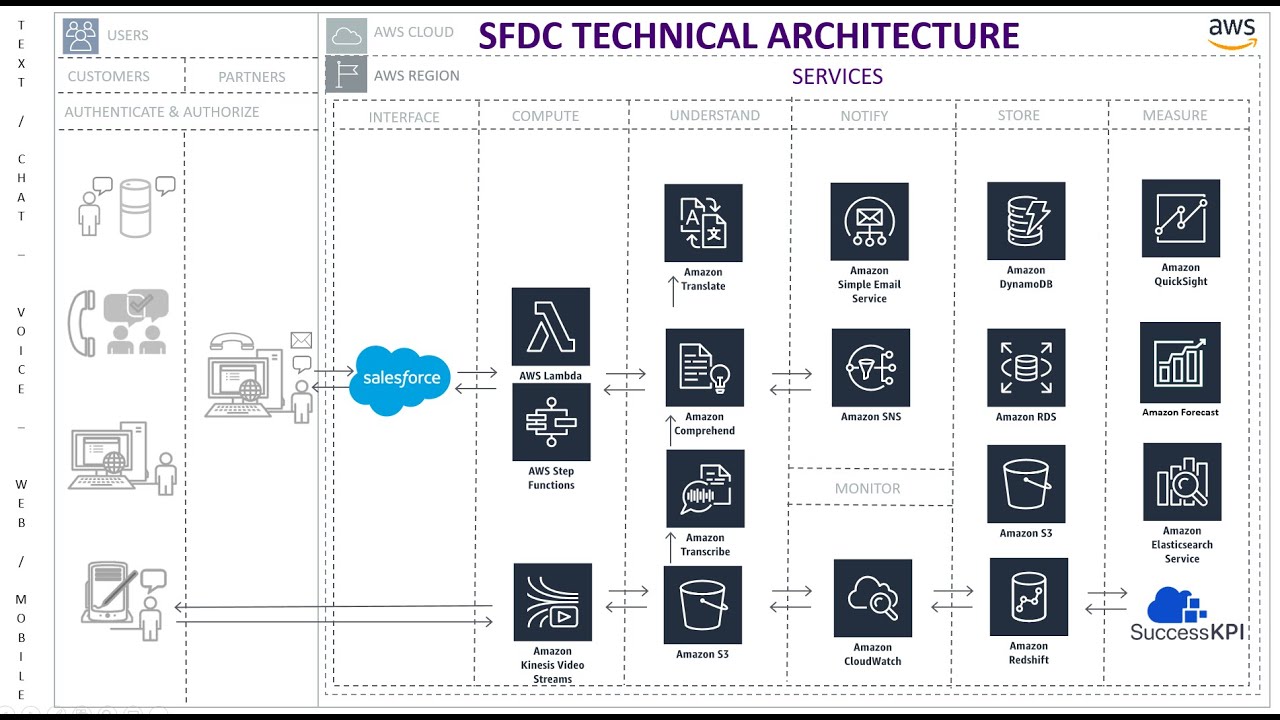
All right, thanks, John, for that introduction. Hello everyone, J.C. Novoa. I'm the ACE AWS Play Lead within Accenture, and as the name denotes, I get to play with toys. And today I'm going to show you a little bit about the how behind the why and the what. You know, as you heard from some of the client examples in this always-changing, always-on gig economy world, Our clients' customers' expectations are also changing. Everything is remote, 24/7, 365, instant, same-day access to products and services is becoming the norm. You know, we have realized that consumer-facing technologies are a huge factor in recasting customer expectations. As such, you know, we are helping our clients rotate to the new to meet these expectations head-on. Now, our proposed solutions and accelerators are based on 4 guiding principles. We want to help solve external problems for customers. We want to fix internal problems for their agents and employees. We want them to act based on data insights and move away from merely describing what's happening with their customers and the contact center to diagnosing, predicting, and prescribing how to introduce the efficiencies of scale. And lastly, we want to support the modernization of the underlying technology stack via the proposed solution. Today's contact centers operate in a purely descriptive manner, supporting single or disjointed multichannel interactions. Tomorrow's contact center needs to operate beyond that and need to focus on diagnosing, predicting, and prescribing efficiencies of scale across channels so as to effectively move towards omnichannel and into omnipresence type of support, enablement, and empowerment for their customers. You know, to maintain a competitive advantage, digital businesses must transform and innovate as rapid as possible in order to meet customer expectations. You know, they need to move away from monolithic applications that do everything, that are bogged down by a shared feature release pipeline, that are rigid when scaling and that have high impact of change when adopting new technologies. Instead, they need to adopt best-of-breed modular plug-and-play solutions that gradually scale to meet just-in-time demand. This is where ACE with AWS Accelerators have a role. They facilitate and expedite this transformation. Think of this picture as an outside Accenture Lego box. of sorts, you know, where the insides carry adaptable, expandable, reusable Accenture-built components we call accelerators, in dark purple, built atop AWS services in orange, and fully integrated with third parties and clients' backend systems. Inside the Starter Kit, you will find an inventory of all the parts and their purpose, as John mentioned. These composite components come in the form of omnichannel adapters, AI-powered agent portals, intent libraries powering next best action agent assist type capabilities built atop multi-tenant secure best practices for the AWS Cloud. This is at the core of our offering as it furthers propel cloud technologies in the contact center based on field-tested solutions of scale, which further augment AWS services. We have invested the past 2.5 years and millions of dollars to create them in order to provide like-for-like functionality for legacy contact center solutions migrating to the cloud while reducing in half the delivery costs required when compared to starting from scratch and improving their ability to innovate. Additionally, inside Accenture Starter Kit, you will find a blueprint of sorts. This we call a customer journey, a specific use case related to a day in the life of a customer, how they behave while they use our clients' products and services, and what can be done to improve their experience across multiple channels of engagement. When you document the customer journey, you are mapping out different behavioral scenarios using existing data. Using a customer journey map to analyze user behavior, help an organization understand how their customers travel through the entire sales support process and how they feel during their time there. This approach provides 2 major benefits: it allows decision makers to stay focused on customers, and it helps make each step of the, of the buying and support experience easier. For example, as depicted here, buying insurance or reporting a car accident. Submitting the claim, getting in contact with the repair shop, and finally getting the car fixed are all parts of a claim management customer journey. It is here where Accenture's design thinking principles come into the picture as another set of accelerators we call industry cartridges, geared towards expediting and facilitating a digital transformation. Now, to execute this journey, We leverage Accenture's Launchpad group to build proof of value showcasing these customer journeys to industry-specific intents as ways of accelerating the adoption. Lastly, also in this Lego box of sorts, you will find cloud-native AWS services, which are the underpinning of our configurable solution. You know, wherever applicable, these resources get deployed automatically and the changes required for a specific tenant are parameterized in the CloudFormation templates. Furthermore, the demo we'll review shortly speaks of how these deployments not only are automated but dynamically configured through data stored in DynamoDB. It is at this core where multi-tenancy orchestration and integration of services come into a consolidated picture for both the customers and the agents. In summary, our ACE with AWS offering is comprised of AWS services, Accenture components, and industry cartridges, which make up the end-to-end solution. We leverage Accenture's Products and Platforms Group to industrialize our assets following strict agile software development lifecycle practices. The composite go-to-market efforts around these accelerators is our advanced customer engagement practice, and the individual tangible accelerators take the form of a data and analytics platform called Artemis, a digital assistant platform called Converse, various unified agent portals which are either standalone and integrated with third-party CRMs or embedded within, as is the case for Salesforce, ServiceNow, Dynamics, and Zendesk, to name a few. Our graduated approach coupled with our modular accelerators enable and empower our mutual clients to move at their own speed, to start small in a single channel with services like Amazon Connect or Lex, and to stack additional services and accelerators atop previous implementations to aid in their journey to omnichannel, where data insights will power decision-making in a predictive manner as to prescribe operational efficiencies of scale based on facts. And with that said, we're going to jump into a demo and literally show you how these accelerators work. So with this demo, what I wanted to do is show you a life in the day of a customer. In this case, I am the customer. I used to own a property in Florida that had a meter running and I received a bill for over $200. And the journey goes from discovering the bill issues, reviewing the bill details, disputing the bill, and potentially even paying the bill, all through 100% deflection and automation. And so the services that you're going to see here are outlined in this slide. You know, you have an Alexa skill, you have Amazon Connect integration, you have email integration, you have a chatbot integration with Lex, you have IVR integration with Amazon Connect, of course, and then all the way through it, there is not a need to interact with an agent. The second version of that demo, actually, we escalate to an agent and we're gonna go straight from an Alexa skill to a voice conversation with, with an IVR, and we're gonna showcase our unified agent portal. So with that said, let me get into the demo. And I'm going to show my computer here and my phone to do the demo because I'm going to talk to an Alexa skill first. So I'm going to just show you a high level of the skill that we're talking about. And again, this is a sample of an accelerator that we have built to handle Bill disputes. And this skill is fully integrated with a SAML identity provider, and you're going to see the pictures of my profile as a customer. And I want to start by saying something to this Alexa skill, so let me start that interaction. Alexa, open my accountant and read my transactions for August.
Your August bill for $264.03 is due on Tuesday, September 29th, 2020. Is there anything else I can help you with, J.C.?
Alexa, open my accountant and dispute my electric bill for August.
Your August electric bill for $264.02, due on Tuesday, September 29th, 2020, will be disputed. An email was sent with details to complete your dispute.
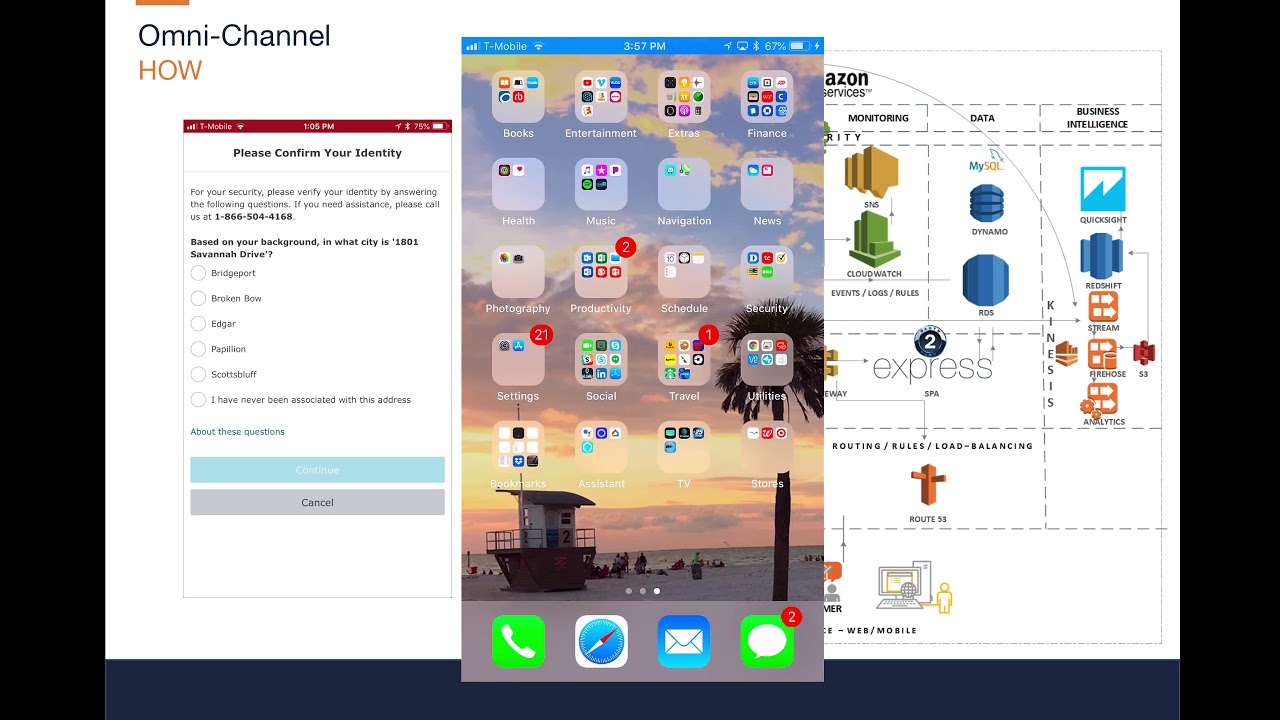
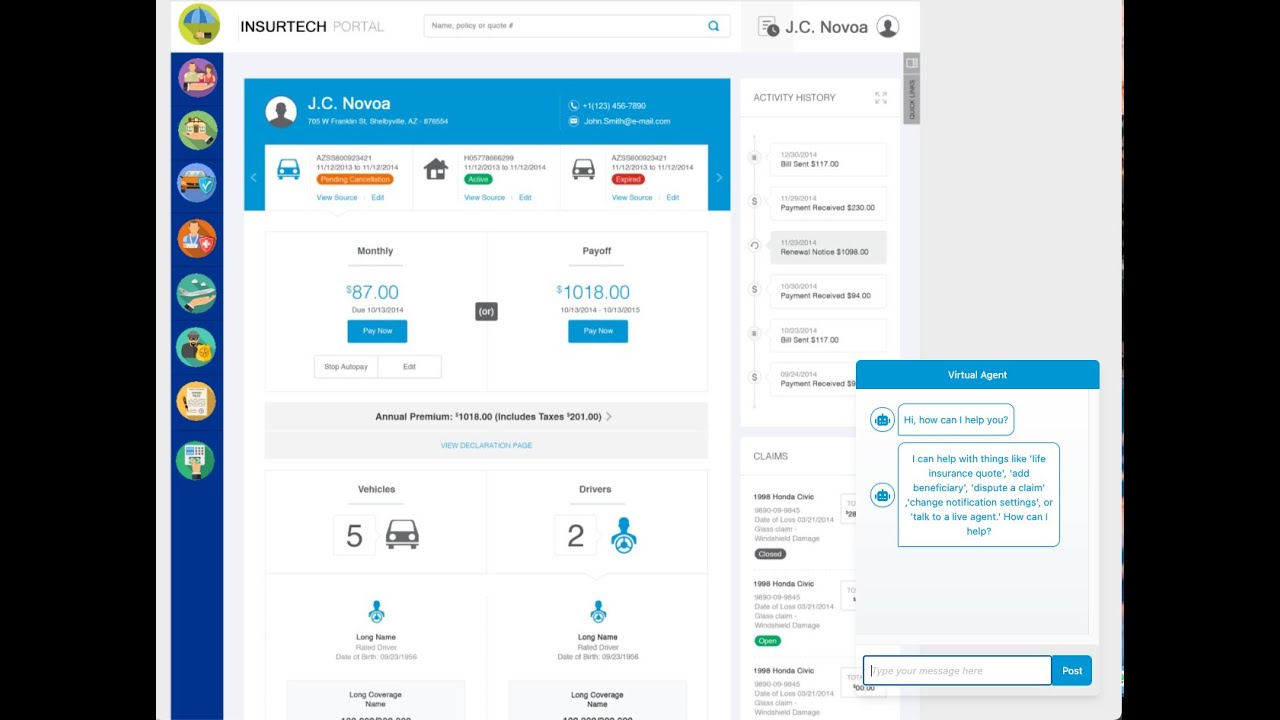
So now I received an email, and in this email I'm gonna actually migrate to moving from an Alexa skill to an email to a chatbot that is powered by Lex. In this chatbot, I I'm going to go and dispute my balance for my bill, and I'm going to tell it for the month of August. And the context around the bill cost, right, as you can see from the Alexa skill, remains. And I'm going to say yes to this. Again, it's happy path for purposes of demonstration. And I want to talk to an agent because I'm upset. And again, for purpose of demonstration, I'm just going to put my number that I use for demonstration. And I want to update my notification settings in addition to this. And so I'm going to change My notification. And notice that it, you know, the conversation, as you saw from John's screenshot, doesn't have to be just text, right? It could be rich environment for the users. And I don't want to receive a phone call about these issues. I just want to be emailed and text messaged whenever there is an outage or an account discrepancy. And then I'm going to save that. And then I want to tell it to yeah. Now I want to talk to to an agent, and I'm going to flip to my phone. And now I'm getting a call.
Mr. Novoa, I understand you need help disputing your August bill for $264.03. We will need to send a technician to your house. In order to schedule the appointment, we need to ask you a few questions. Currently, there is a 10-minute wait. You can say live agent and wait in the queue or say continue to answer these questions now instead.
Continue.
Is the meter inside a gated area? Yes. Are there any pets that need to be secured prior to the appointment?
Yes.
Okay. It seems that this appointment requires that someone over the age of 18 be present. Would you like to schedule your appointment now via an online form?
Yes.
Thank you. We now have all the information necessary to plan the technician visit. You will get a text shortly to schedule an appointment with the technician. Please take your time to complete appointment.
And what you'll see is that I will receive a text message here. And then I'm going to click on it just now and notice that the call is on hold. I don't know if you guys can hear that. Now I'm using Visual IVR to select a date and time in the future to schedule my appointment and then submit it.
Okay, your appointment has now been scheduled on September 24th, 2020 at 1 PM. Your dispute for your August bill of $264.03 has been submitted for review. Thank you, bye.
And so now that's a 100%, you know, deflection that went from an Alexa skill, right? To an email notification, to a chatbot, to IVR, and then ultimately to text messaging. Now what we're gonna showcase is one last example of how we can escalate this call to a live agent and then also showcase our unified agent portal. So let me bring that up first, which is here. In the Unified Agent portal, you'll see it's an omnichannel functionality. I'm logging in right now as Thomas Anderson, and I'm going to call the number associated with this experience from the Alexa skill. So let me go back to here. Alexa, ask my accountant To call my electric company about my August bill.
Your August electric bill for $264.03 due on Tuesday.
So now I'm going to pick up the call.
Hello, Mr. Novoa. I understand you need help disputing your August bill for $264.03. 3 cents balance. We will need to send a technician to your house. In order to schedule the appointment, we need to ask you a few questions. Currently there is a 10-minute wait. You can say live agent and wait in the queue, or say continue to answer these questions now instead.
Live agent. So I'm being transferred now to a queue.
Hi, welcome to Accenture Support Portal. Thank you for calling. Your call is very important.
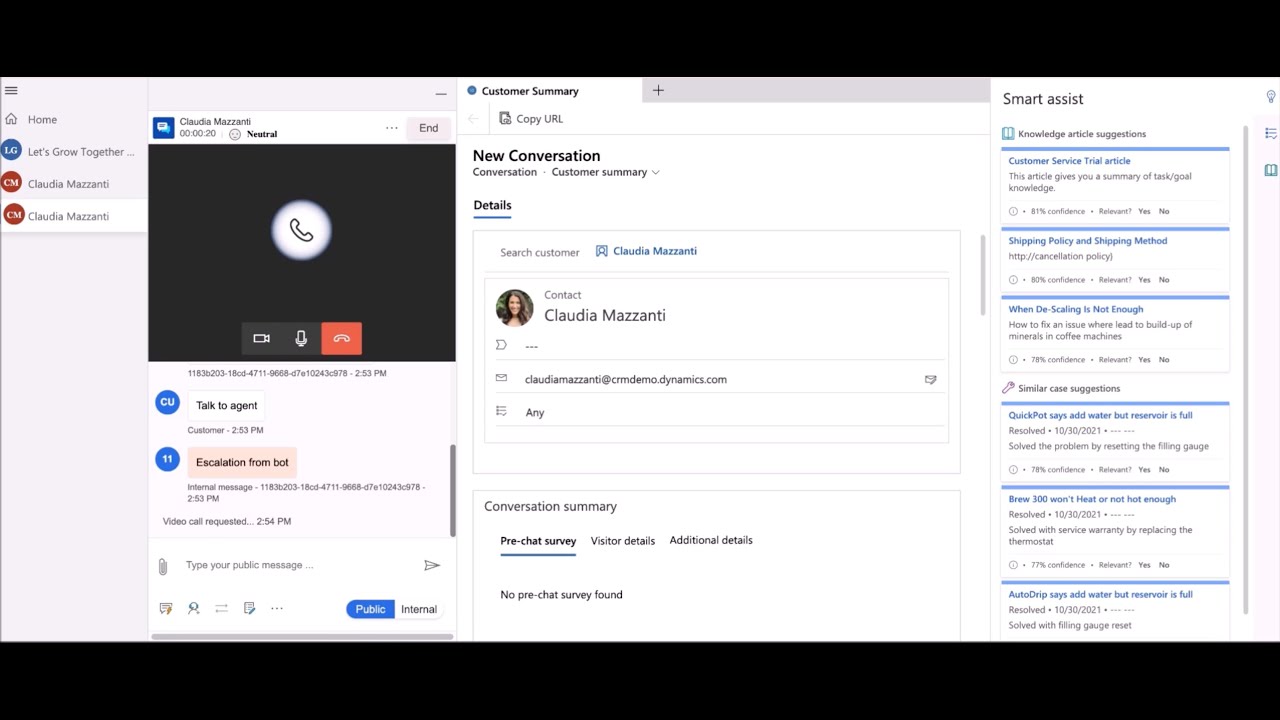
Now my phone is ringing as an agent, right? So I'm going to put this on mute and I'm going to answer the call. Hello, welcome to Accenture. How can I help you, Mr. Novoa? My account is locked and that's it, right? So as an example of how that interaction will happen from an agent conversation, I cannot, you know, go through it together because there is a double sound attached here, but I'm pretty much done with the demonstration of how we can go from any of these channels one after the other and maintain the context. Lastly, what I wanted to show you here is the historical information around the conversation and then actually look at the transcription and the sentiment analysis that exists within that conversation. So as an agent, I'm able to see historically not only my information on a daily, weekly, or monthly basis, but also look at the call history that I have attended to and then look at information of previous calls like this one where I can actually play, you know, the recording and look at a sentiment analysis. Let me see, that's not a good example, right? So this is the sentiment analysis associated with that, and all the Customer 360 information associated with this client conversation is logged here for calls, chats, and emails. You know, the Omni Channel Unified Agent portal is multi-tenant, provides access to voice, chat, live agent chat, email, text messaging, integration with ServiceNow as an example. It can also escalate to full-blown video conference. And it provides additional dynamic reporting for historical and real-time metrics. And that's about it. Now back to Joe— to John here for the last summary of the slide.
Thank you, JC. So hopefully what you all saw is what we're doing with AWS. What we're doing is we're actually building accelerators on top of your services in order to help our clients achieve being a business experience client. And so if you summarize it, at the end of the day, hopefully your big takeaways are the fact that our clients need to have us help them accelerate getting this done. And what we bring to the table are, on the experience side, these industry journeys, what's been done in health and basically in insurance or in banking or in comms. We then combine that with our differentiated skills and depending on where the client is, we marry up with the client to help make this happen. And then you saw some of those assets there under that Lego block brought to life. One I wanna call out is that conversational AI platform. That's an interface that sits right on top of AWS that lets business users create their journeys. omnichannel journeys quickly, create the code, and then deploy it on all the different channels. And then he talked about the portal and some of the others. So at the end of the day, what I'm really hoping is that we go out together where we already are doing this, where you are our innovation partner creating some amazing technology, our clients are buying it, and then we're helping them achieve it. And when they achieve their outcomes, they drive more volume.
to yourselves.
With that, how we go to market then, really simple at the end of the day, looks complex, but it's pretty simple. We got myself who cares about this overall solution for us. I've got Jonathan Ross and J.C. Novoa who wake up every day specifically with AWS creating amazing assets with you and going to market. I then have Alistair as my partner here at AWS, who then he works with Tom Lewis, our team from the go-to-market side, and then you all can work directly with people on this page from our geographic markets and from all the different industries. And that's where the magic happens. We have targeted clients by these industries who have the unique situations that we want to help them with, and these are the people to work with. And with that, I'm going to pass it over to Alistair to wrap it up.
Thank you.
Perfect.
Thank you so much to our Accenture speakers. For those of you on the phone, we'll be opening up for Q&A shortly. Thanks again to John, to JC, and A.L. for continuing to invest in AWS and innovate on top of our platform. For those of you who wanna find out more information about Advanced Customer Engagement with Accenture and AWS, or wanna get access to some of the pre-approved customer materials, the contact information you can see on this slide, and some of the prerecorded videos and demonstrations we have, you can find all of that on the AABG wiki internally, the link to which we'll send out after today's session. So with that, we'll go ahead and open it up for Q&A.