In this presentation, the speaker critiques the traditional, siloed contact‑center architecture that evolves channel‑by‑channel (voice → email → SMS → chat → video/co‑browsing) and proposes a hybrid, API‑first, cloud‑native modernization path. He introduces a four‑stage Contact‑Centre Modernisation Maturity Model—Standard (voice & chat, ≤3 months), Professional (adds email, SMS, video, ≤6 months), Corporate (adds video, co‑browsing, social, CRM integrations, predictive analytics, ≤1 year) and Enterprise (full omnichannel, outbound automation, workforce optimisation, quality management, ≤1‑2 years). The speaker advocates a graduated “crawl‑walk‑run” migration, leveraging pay‑as‑you‑go marketplaces and API‑first services rather than a risky big‑bang replacement. He compares leading cloud providers, noting which offer native omnichannel capabilities versus reliance on third‑party platforms, and stresses the importance of integrating analytics, machine‑learning‑driven next‑best‑action, and event‑driven architectures to move from merely describing customer interactions to diagnosing, predicting, and prescribing outcomes. The talk concludes that a hybrid, agile approach enables enterprises to offload infrastructure management, focus on core products, and achieve higher ROI through data‑driven customer lifecycle optimization.
Chapters
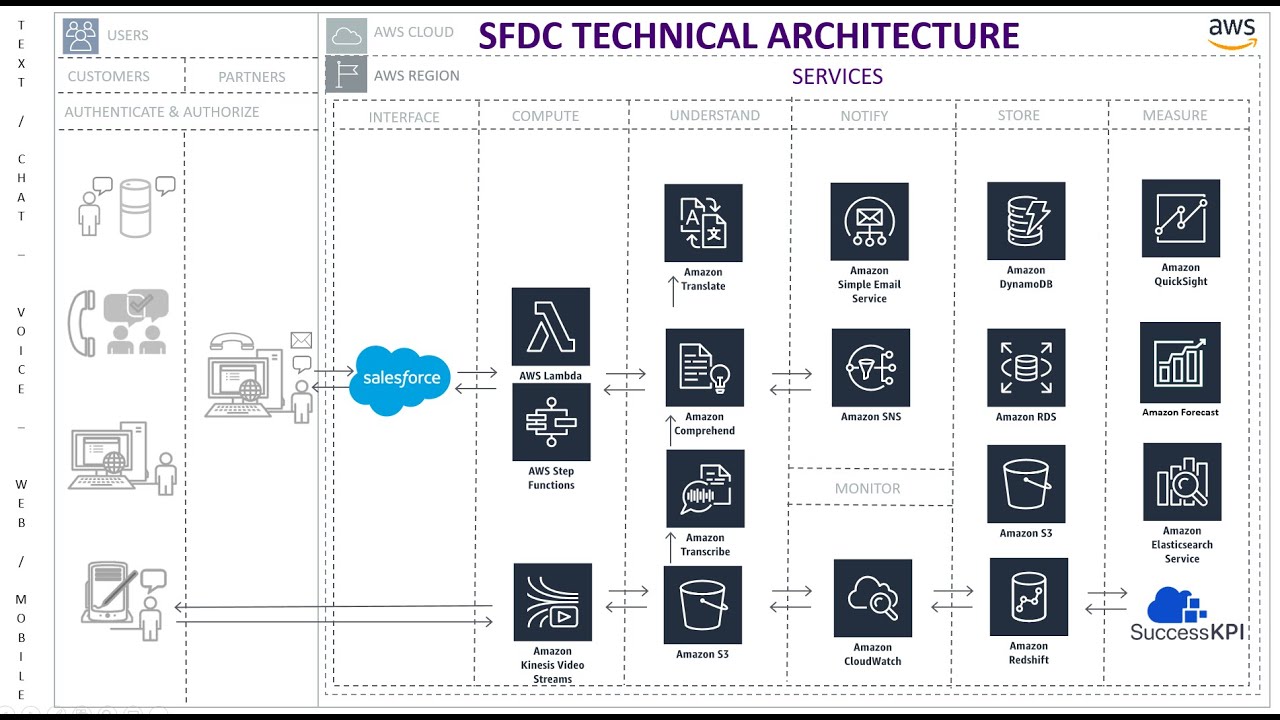
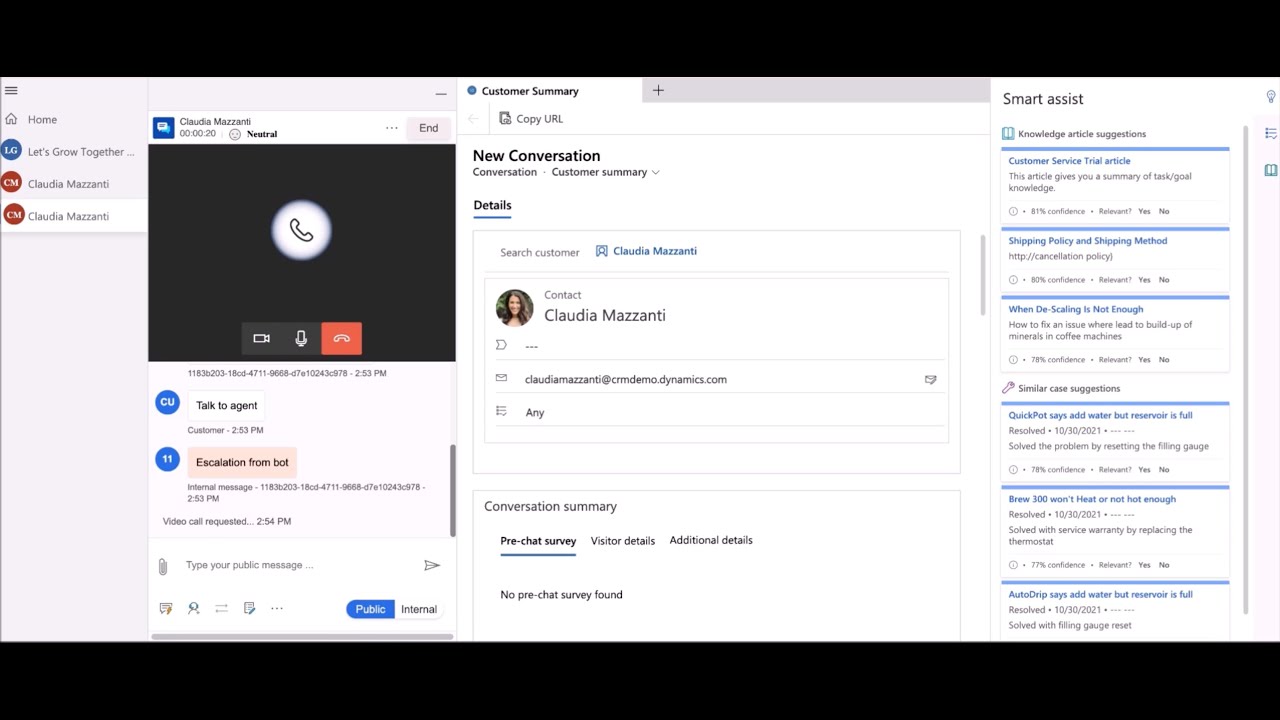
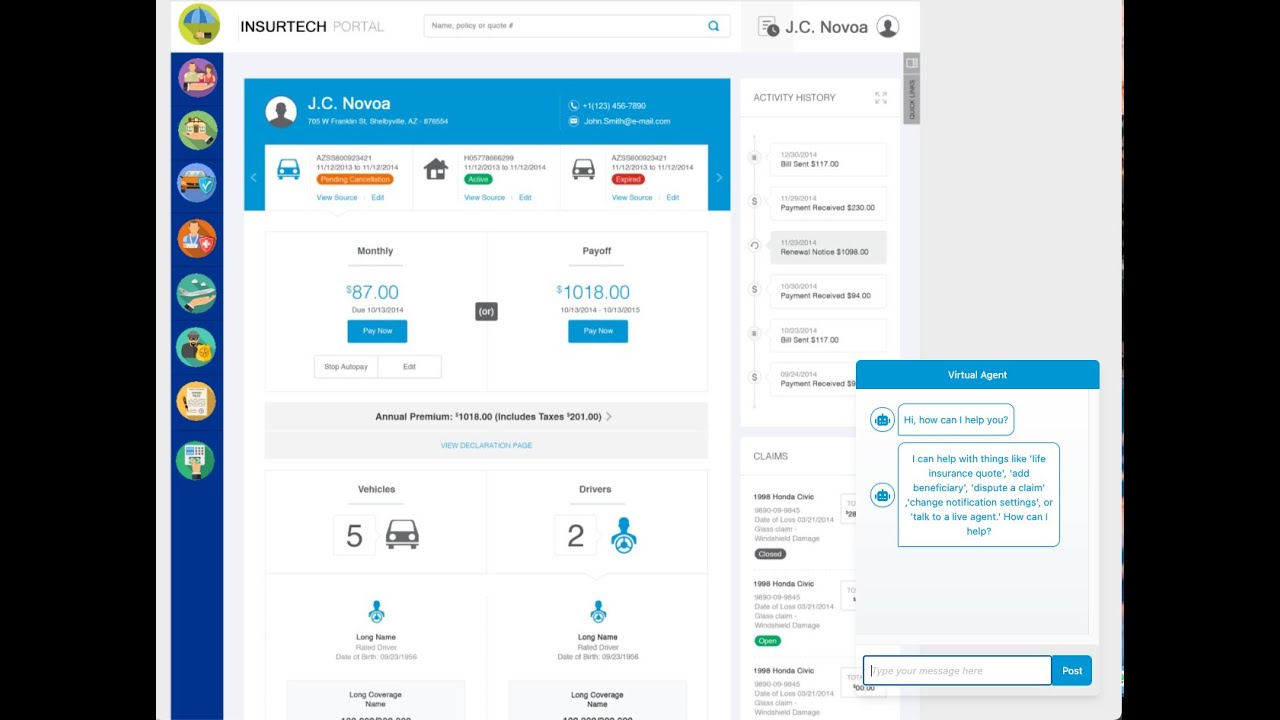
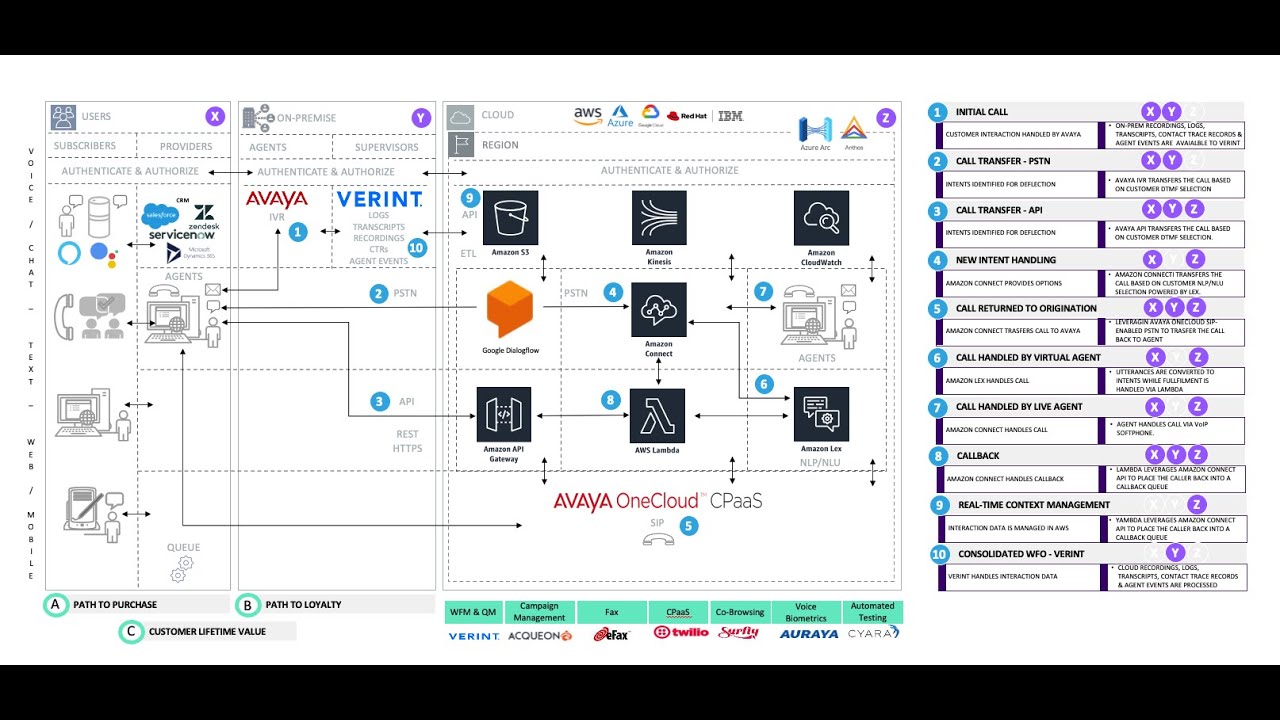
Do you see anything wrong with this picture? Do you recognize it? If you don't, I am sure your customers do. It is a very common depiction of a customer journey, driven by legacy siloed technologies organically deployed at the enterprise, one channel of engagement at a time. It often starts with just voice, then evolves into email, then SMS, chat, chatbots, and nowadays video conferencing and co-browsing. While I understand it is difficult to gradually unravel calcified solutions like these, it is not impossible. In fact, with the advent of API-first cloud-native technologies, it is easier than you think. Unless you are a startup who lacks all of this baggage, it is a daunting proposition to rip and replace on-premise convoluted solutions with those from the leading providers of the contact center platforms you see here. More importantly, Even if you do decide to upgrade and consolidate, it is key that you plan the transition in a graduated fashion, ideally starting with a non-critical area of your business where you can experiment and take a crawl, walk, run approach. Most of these providers have developed APIs for better integration as to enable a graduated migration. Let's take a look at the possible implementation levels of effort and associated stages in the Contact Centre Modernisation Maturity Model spectrum. Perhaps in order to merely describe the health of your customer engagement and associated brand awareness, all that the first phase would require is a standard subscription, with multi-channels of engagement like voice and chat. At this stage, you should plan for delivery work and associated cost not to exceed 3 months. Once you have been able to operate at this level, Whichever contact centre platform you chose should be able to provide the necessary building blocks to enable the second phase of your journey via a professional subscription, where, with additional cross-channels of engagement like email and SMS, you should be able to diagnose areas of improvement. You should plan for the additional delivery work and associated cost not to exceed 6 months. As you progress in your transformation journey and into phase 3 via a corporate-level subscription, You should expect extra channels of engagement in the form of video, co-browsing, and social media integrations. This, in addition to third-party system type integrations like CRM and office tools powered by single sign-on. These omnichannel capabilities for your agents and your customers should give you access to data insights required to predict customer behaviors atop of business intelligence and analytical tools included in your subscription. This slightly larger and more complex transformation should not exceed 1 year worth of delivery work and associated cost. As you move into an enterprise-scale rollout, at the end of your journey, the platform you chose and associated vendor should be able to support the run and management of the end-to-end solution. This of course, in addition to enabling more channels of engagement for outreach programs like marketing campaigns, powered by automated outbound technologies. In order to ensure a larger return on investment, you should also plan to introduce workforce optimisation and quality management capabilities which will provide the data required to prescribe both customer and agent behaviour. Plan on 1 to 2 years' worth of delivery work and associated cost to fully implement all these features. Of course, if this graduated agile approach while keeping the lights on, is not ideal and you are set on a big bang rip and replace waterfall approach, best of luck to you, I wouldn't recommend it. On the other hand, if you are not interested on a big bang approach and would rather build versus buy, I am happy to report that there are marketplaces full of agile cloud-native API-first technologies to help you take back control of your customer experience, and more importantly pay for only what you use. While there are leading and laggards in all industries, Rest assured that the cloud providers you see here are in a race to compete for your business and provide the tools and services you need to graduate through the stages we discussed previously and help you move away from merely describing what is happening in your business, to diagnosing, predicting, and prescribing assisted next-best actions via event-driven architectures, which in return will provide the insights to a more targeted roadmap and easier change management, objectively driven by data. With statistical significance. Like pieces of Legos, you should be able to coalesce a bespoke solution atop a standard stack to fit your specific needs and those of your customers. So what does this look like? Clearly, not all cloud providers are created equal and they are all at different stages in their respective maturity journeys, and the approach they are taking in regards to their contact centre as a service offering also differs from one another. As you can see from this side-by-side comparison, the respective cloud providers have either native capabilities and services, in green, to enable multiple channels of engagement, or rely on a third-party platform, depicted in yellow. Some of them even provide CRM capabilities, as is the case of Microsoft Dynamics 365, where the rest would have to rely on third-party integrations with the vendors depicted on the left. They might even go as far as providing collaboration tools for telesupport via software like Microsoft Teams or Amazon Chime, but none of them provide the required capabilities to manage their workforce or manage their outreach campaigns. They would all have to rely on vendors like Verint or Acqueon to successfully enable similar capabilities provided by the contact centre-in-a-box vendors we reviewed earlier. So why would you want to do that? The answer is easy: leveraging best-of-breed pay-by-the-drink capabilities in a graduated fashion, all while delegating the risk and responsibility of keeping your contact center running 24/7/365 is certainly appealing. Coupled with the fact that managing redundant infrastructure is likely not part of your business core competencies, and doing this will free up resources to focus on your specific products and services, makes this a very attractive proposition. Let's review in more detail each of the possible stages a company like yours could take. Starting with the first option, a standard contact centre as a service offering would have to include multi-channel voice and chat capabilities, either powered by basic IVR and DTMF or natural language processing and understanding engines. This, in addition to escalation to a live agent, would meet the minimum requirements for customer support. At this stage, you should be able to at least describe customer and agent interactions, review the transcripts and logs via standard real-time and historical metrics reports. All in an integrated, secured, resilient, and redundant manner across any of these cloud providers. If we dig deeper into a standard implementation, you might encounter that even within the basic voice and chat channels, their capabilities vary and the effort required to make them intelligent, redundant and integrated might not be possible to accomplish in a 1 to 3 month timeframe. Furthermore, the deployment might not be fully automated and you might not be able to derive the expected analytical insights at this point. Additionally, in this shared responsibility model, everything outside of the infrastructure will likely still be your responsibility and you will have to manage it all. Moving on to the second stage with a professional implementation, You should expect all standard capabilities, plus additional channels like email, SMS, video conferencing and customer-facing chatbots interfaces to be delivered in about 6 months. Operationally, is at this stage where you can start to better diagnose areas of improvement and further benefit from cross-channel communications while correlating and grouping customer and agent profile data into dynamic dashboards, giving you the real-time visibility needed to better manage your agents. While the integrated and elastic capabilities of the additional channels is apparent, email, SMS, and video will still rely on a live agent for processing and will lack the intelligence needed to automate customer interactions within. Nonetheless, they should be secured and turnkey and somewhat redundant in a passive warm standby sort of way. As you progress to the 3rd stage in your journey and into a corporate-level type implementation, Your team should be ready to adopt more engaging omnichannel mechanisms like social media and co-browsing. Leveraging standard and professional capabilities in addition to enabling deeper integrations with third-party systems and CRMs will provide the additional business intelligence and analytical insights needed to predict customer and agent behavior and leverage artificial intelligence to enhance a customer journey in a guided manner through automated agent and customer assist and next best action type features. Powered by data residing in these integrated backend systems. By leveraging machine learning-powered features at this stage, you will start to see more autonomous and intelligent self-service capabilities being used by both customers and agents in an integrated and fully redundant manner, where most of the implementation work is automated and can be completed in about 1 year. Now that you have executed all the necessary steps to have a fully functional contact centre as a service, You can start to divest the management of it all, especially if running the contact center is not your core competency. Your focus should be on harvesting the insights derived from the cloud, workforce, and quality management tooling in order to create targeted and automated customer outreach campaigns that will effectively maximize your customer lifetime value and expedite their path to purchase and facilitate their path to loyalty through technology. It is here, at the enterprise level, where your focus should be about reducing the cost to acquire and retain a customer, and removing the friction across the steps required to attract, nurture, convert and engage your customer base so as to ensure they in return adopt, follow, advocate and influence brand recognition. By relying on partners to manage it all, you can go back to focusing on further maturing and expanding your products and services, and truly provide an omnipresence experience to your customer 24/7/365, regardless of their preferred channel of engagement. Armed with the insights and data accumulated throughout this journey, you should be able to move away from merely describing and diagnosing what your customers are doing and why, and into predicting and prescribing what they should be doing, all less than 2 years. By now, Your customer's journey and associated micro-moments should look more like this, better organized and more predictable. Scan the QR code to learn more on reasons why this agile, distributed and hybrid approach to contact center modernization initiatives is best.