Governing Fleet Risk in an Era of Nuclear Verdicts Recording

In this recorded Rhythm Innovations technology webinar, CTO J.C. Novoa explains why the fleet industry must move beyond simple telematics visibility to a defensible, certifiable governance model in order to protect against costly "nuclear verdict" lawsuits (jury awards exceeding $10 million). He defines nuclear verdicts, illustrates how isolated telematics and motor‑vehicle‑record (MVR) data create a "liability gap," and presents a four‑pillar governance framework—historical trends, MVR/compliance, telematics, and learning‑management‑system (LMS). Novoa introduces Rhythm Innovations’ Operating System (RIOS) and the Rhythm Risk Index, which fuses behavioral and compliance signals into a single risk score that drives fit‑to‑drive decisions, automated interventions, and auditable evidence. He compares this approach to ISO 39001 (road‑traffic safety management) and explains why external FMCSA data are lagging and insufficient for proactive risk mitigation. The webinar quantifies financial ROI (collision‑rate reduction, insurance‑premium savings, productivity gains) for a 2,400‑driver fleet, and describes the Rhythm Go mobile app that delivers safety nudges directly to drivers to avoid a surveillance‑heavy culture. The session concludes with a live Q&A covering the liability gap, standards of care, CFO‑focused financial impact, driver‑privacy concerns, and the distinction between mere visibility and true risk governance, and invites attendees to a follow‑up technical deep‑dive.
Chapters
Hi everyone, and welcome. Thank you for joining us for today's Technology Webinar Series Session 1. We're so glad you're here. Today's conversation is titled Beyond Visibility: Governing Fleet Risk in an Era of Nuclear Verdicts, and we'll be exploring how fleet leaders are moving from dashboards and monitoring to true defensible governance. Now, before we get started, just a few quick housekeeping notes. This session is being recorded and a replay will be shared with all registrants. Please use the Q&A panel to submit your questions at any time. And here you'll see an overview of our 2026 webinar series. We are running 2 flagship tracks this year. One is our Safety Masterclass series, which is focused on leadership and governance. You're not going to want to miss this. We have some incredible thought leaders and educators lined up for this series, so I encourage you to join us. The first starting on May— sorry, March 5th. And of course, our technology webinar series focused on execution and architecture. And this session is part 1 of a 2-track, 2-part track. Second part is taking place on March 19th. If you'd like to join us for all future sessions, you can register at rhythminnovations.com/webinars. We also have this QR code that you can scan. I'll pop this up at the end of our session as well. And with that, it's my pleasure to introduce JC Novoa, our Chief Technology Officer at Rhythm Innovations. JC, the floor is yours.
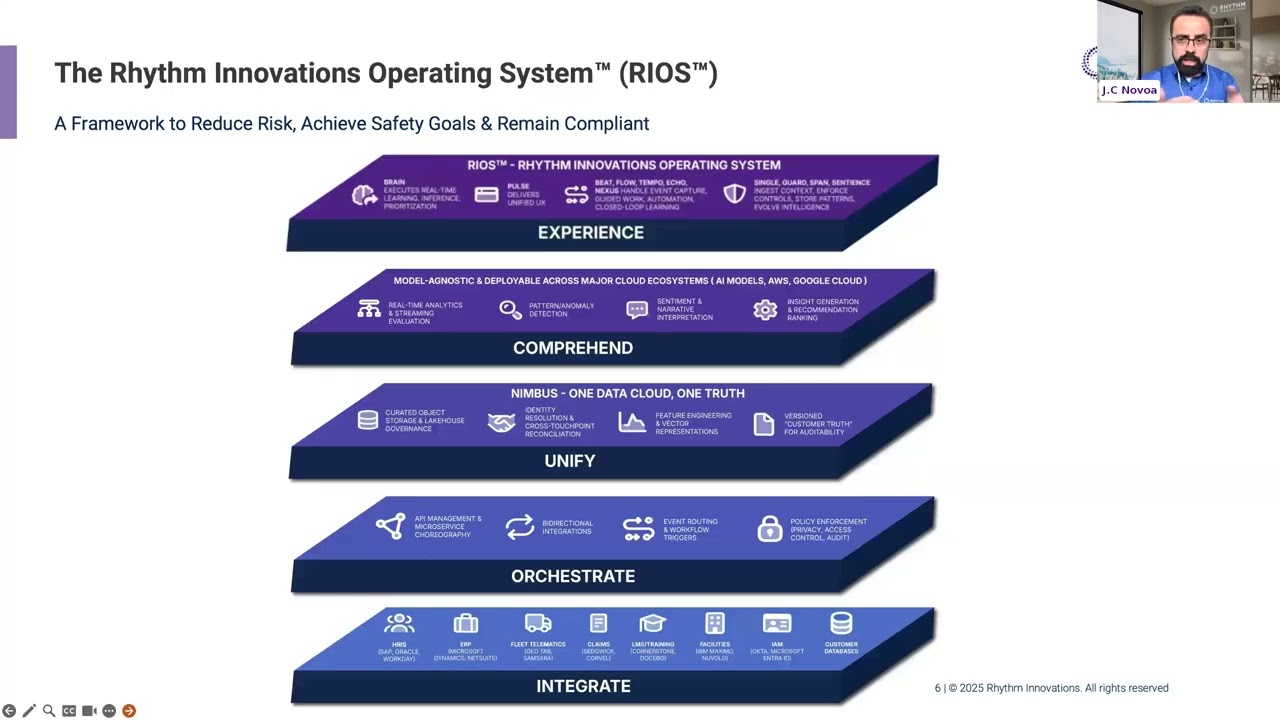
Thank you, Mina. Good afternoon, everyone. Thank you for joining our technology webinar series. As Mina said, I'm JC Novoa, Chief Technology Officer at Rhythm Innovations. We're here today because the fleet industry is at a crossroads. If you're a technology executive, a fleet executive, or a risk leader, you already know that the conversation around fleet operations has changed. For a decade, the dominant question was, how do we see what is happening on the field? And the answer was telematics, GPS, and dashboards. But in 2026, telematics is ubiquitous. Visibility is expected. Dashboards? Well, they are everywhere. But governance, provable, defensible, certifiable governance is rare. And that is why nuclear verdicts are rising and the question has shifted. The question now is, can we prove we govern risk before a crash, before a claim, before a lawsuit, before a fatality? Today's session is about the why and the what. Why governance is now a C-suite and board priority, and what you functionally and technically need to do to close the liability gap. Here's the flow for the next 30 minutes. First, we'll talk about what nuclear verdicts really are and why they happen. Second, we'll look at predictive signals, what research like ATRI tells us about risk multipliers. Third, we'll define the 4-pillar model for an ideal fleet score and why each pillar matters. Fourth, we'll connect to the FMCSA ecosystem and explain what it does and does not do for you. Fifth, we'll introduce frameworks like ISO 39001, which is likely the closest analog to IT governance frameworks you might know, like ISO 27001, but for road safety management, and highlight where the industry struggles to operationalize it. Finally, we'll explain what Rhythm Innovation's operating system is, what it means to operationalize governance digitally and how that directly reduces the narrative conditions to produce nuclear verdicts. If you're watching live, please drop a question in the chat as we go. We'll save the last 15 minutes for Q&A. In the meantime, to get a sense of what your organization has already operationalized, we would like to answer these poll questions. We'll give you a minute To answer those questions and to read through those. Okay, I know there's only 5, but they're pretty standard, and we'll take a look at the poll answers shortly. That way you'll be able to get a sense for where we are. I think we're good, Mina. You want to get the answers? Sean?
Very good.
Excellent. So we have folks that are already using telematics. And now that's one of the components that we're going to talk about. Okay, so let me, let me start with a technology analogy that will feel familiar to many of you in this audience. In information security, organizations used to focus on tools— firewalls, endpoint protection, intrusion detection, vulnerability scanners. Over time, leaders realized that tools alone don't equate protection. What mattered was governance— whether the organization could prove it understood its risk, had controls in place, monitored those controls, and improved continuously. That is exactly the mindset ISO 27001 formalized for the information technology industry, a risk-based management system you can build, audit, and certify against. Now, fleet safety is reaching the same maturity moment right now. For a decade, the conversation in fleet was dominated by one thing, visibility. Where are my vehicles? What are my drivers doing? Can I see harsh braking? Can I see speeding? Telematics and camera systems answer those questions. We spend billions as an industry to put boxes in trucks to see where they were. Visibility became common in many fleets. It became expected. But as we stand here in 2026, the executive question has changed and the reality has changed. Right? Visibility is now a commodity. Knowing where a truck is does not protect your balance sheet. The question is, can you prove you governed fleet risk before an incident? Can you prove you had a system that prevented foreseeable risk from becoming loss? Can you prove that you acted consistently, predictably, and with evidence? That is the difference between monitoring and governance. Today, we're gonna take a look at why your current technology stack may be creating a liability gap, and how the Rhythm Innovations Operating System is designed to close it. Today's session is focused on the why and the what. Why visibility is no longer enough? Why nuclear verdicts are rising? Why underwriters and regulators are expecting more than dashboards? and what a modern certifiable risk-based fleet safety framework looks like, especially one aligned with ISO 39001 and anchored on 4 pillars: telematics, NVR, LMS, and historical trends. Let's start with the market reality. I want to reference a 2026 Fleet Technology Trends Report. The data is telling us that 74% of your peers find telematics essential for ROI. But look deeper into those numbers. Fleets are no longer just looking for dots on a map. They're looking for ways to combat inflation and rising insurance costs. The report highlights that 57% of fleets are now prioritizing claim protection. Why? Because the cost of being wrong has never been higher. Most of you have invested in a telematics platform. We can see by the poll. It's a world-class system that tells you about harsh braking, speeding, and fuel efficiency. But here's the problem. Telematics only tells you about the behavior of the vehicle.
Yes.
This is what we call the liability gap. On one side of your house, you have behavioral data from the telematics platform. On the other side, you have legal compliance and MVR data from a continuous driver monitoring platform. In most organizations, these 2 systems live in total isolation. Your safety manager looks at the continuous driver monitoring platform portal once a year for an MVR pull. Your operations manager looks at the telematics platform dashboard every day for route efficiency. Neither of them sees the whole picture. Let's define the term plainly. In an era where nuclear verdicts, that is jury awards exceeding $10 million, are the new normal, visibility without governance is actually a liability. A nuclear verdict is a jury award that can exceed insurance limits and threaten the viability of an organization. The obvious explanation is that the incident was severe, of course, but that is not the main driver of the size of these awards. Nuclear verdicts happen when the jury believes the company is not merely involved in a tragic accident, but that the company failed to prevent a foreseeable risk. In other words, the company looks irresponsible, indifferent, or reckless in the eyes of ordinary people. And the way that narrative is constructed is not just through what happened on the road. It's constructed through what the company did before the event and what it can prove it did. That is why technology leaders need to care, because a plaintiff's attorney today doesn't just show the crash photo. They show the system. They show the company safety controls, Or the lack of them. They show patterns, missed interventions, training gaps, and that the organization had signals and did nothing. Let's make the courtroom narrative concrete. Imagine this scenario in a courtroom. The telematics platform system flagged a driver for 3 speeding events this month, but your system didn't cross-reference That with the fact that according to our continuous driver monitoring platform, that same driver's license was suspended 2 days ago on an off-the-clock violation. The plaintiff's attorney will ask, you had the data, why didn't you act? If your answer is, well, our systems don't talk to each other, that is the definition of negligent entrustment. You entrusted a vehicle to a driver when you should have known that decision created unreasonable risk. Imagine a crash occurs on a Friday afternoon. Within days, the plaintiff's team subpoena the data. They request driver files, training records, and safety policies. They request the telematics history for the prior 90 days, NVR monitoring logs, Prior incident reports, coaching notes, dispatch decisions, and route assignments. If your organization cannot show a coherent governance story, if it can show that risk signals triggered actions, then the plaintiffs build a timeline of missed opportunities. They will say the company knew the driver had prior risk behavior. The company had speeding and harsh braking patterns, an NVR violation, did not require training, did not restrict assignment, and did not document coaching. Therefore, the crash was foreseeable and the company chose profit over safety. That is the narrative in practice. You were a threat to community safety. Governance disrupts this narrative because it converts signals into actions and actions into proof. If you can show that a violation triggered an intervention, that a supervisor reviewed and documented conditions, and that improvement was tracked over time, then the company looks responsible even if an accident occurred. So the real question is not, how do we stop every crash? The real question is, how do we build a safety management system that reduces crash likelihood and proves we govern the risk we can foresee. Now, let's talk about predictability. You know, most people think crashes are random, but fleet risk is not random. It has predictors, some of them behavioral, some of them compliance-based, some of them competency-based, and some of them purely historical. This isn't just a what-if scenario, okay? It is backed by rigorous data. Research like ATRI's crash predictor exists to quantify those relationships. The American Transportation Research Institute analyzed over 435,000 drivers and The findings are staggering. A driver with a reckless driving violation on their MVR has a 114% higher probability of being involved in a future crash. If they have a failure to use a turn signal violation, that is a 106% increase. Think about that. If your system isn't unifying that MVR violation with today's harsh braking event from telematics, you are missing a 114% increase in crash probability. You are, you are not managing risk. You're just watching it happen. The important point here is not memorizing these numbers that I'm giving you. The important point is the principle. Certain behaviors and violations are leading indicators that correlate strongly with future crashes. When you see patterns like reckless driving, following too closely, improper lane changes, or repeated speeding, those are not just events. They are predictive warnings, and in a modern fleet, those predictive warnings show up in multiple places. Let's look at that. They show up in telematics as speeding, harsh braking, tailgating indicators, rapid acceleration, lane deviation. They show up in the motor vehicle report as citations and points. They show up in training records when someone is overdue for a defensive driving refresher or hasn't completed a required module. And they show up in historical data— prior incidents, near misses, Inspection findings, out-of-service events, and trend lines. If those signals remain siloed, your organization becomes the place where risk is observed but not governed. This brings us to our guiding principles, RIOS, for pillars of governance. If you like to think within the context of controls to make it feel like ISO 39001, let's try a mapping exercise. Let's look at pillar 1 being historical data and trends. Historical trends are your performance evaluation layer. You ask yourself, are controls working over time? History is not just what happened. It is your predictive baseline revealing whether interventions are working, revealing recurrence, and whether risk is increasing, stable, or decreasing. They allow you to show improvement over time, which matters for underwriters, regulators, and internal leadership. Pillar 2 is the Motor Vehicle Report. An MVR is your compliance baseline. Legal status and recorded violations. It captures violations, point accumulations, license status, suspensions, restrictions, and other items that directly tie negligent entrustment exposure. The MVR answers this question: What does the state's record show about this driver's legal risk posture? Pillar 3 is telematics. Now, telematics is your detection layer— near real-time behavioral signals. It gives you high-velocity signals about how vehicles are operated, speeding patterns, braking patterns, route risk, hours of operation, idling, sudden maneuvers. And other behaviors that correlate with incidents. What telematics answers is, is the following question: what is the driver doing right now, and what patterns are emerging this week? Now, pillar 4 is learning management. Now, LMS is your corrective action mechanism. You might want to call it a documented Competency improvement system. In this space, training is not optional in a mature safety system. So what does training answer? You know, has the driver demonstrated competency and have we ensured remediation after risk signals appear? Now, at a high level, let's summarize. Telematics captures harsh braking, MVR captures reckless driving, LMS shows overdue defensive training, and historical data shows a pattern over time. If those 4 pillars do not converge before dispatch, you're not governing. You are observing and recording evidence for a verdict. Now, when those 4 pillars are unified, right, you have detection, baseline, remediation, and measurement. Exactly the same logic modern security programs use. Here's the critical insight: none of these pillars alone is sufficient. Telematics alone gives you behavior, but not legal status or competency. MVR alone gives you legal history, but no real-time behavior. LMS alone gives you completion records, but not whether behaviors change. Historical trends alone tell you the past, but not what is happening today. A defensible fleet score is the integration of those 4 pillars into a single risk posture that drives decisions. This is the why behind the Rhythm Innovations Operating System. RIOS does not just integrate these systems. Like rivers of data flowing into a data lake, It unifies them into a single system of record. The heart of RIOS is our proprietary Rhythm Risk Index. For example, instead of asking your managers to interpret 2 different scores, RIOS calculates a holistic risk profile for every driver. For example, we might weigh behavioral signals from telematics platforms as, you know, at 72%, And legal compliance from continuous driver monitoring platforms at 28%. Why that split? Because behavior is the leading indicator, but compliance is the legal bedrock. When those 2 numbers converge, you get a defensible score. This is a number you can hand to an insurance underwriter or a board of directors to prove you are governing your fleet to a standard of care. You might ask, but JC, doesn't FMCSA exist to provide this information for free? Why do I need RIOS to manage my fleet? I, I, I would answer yes, but FMCSA provides several systems that surface safety and compliance data, and I think It's important that we that we review. For example, they provide this system called Safer, and that that gives a company snapshot that contains identification, size, cargo inspections, and out-of-service summaries, crash data, and safety ratings if one exists. They have this SMS, the safety measurement system, which aggregates. Roadsides inspections and crash report data over the last 2 years and uses it to identify carriers with elevated risk. SMS is used for prioritizing interventions, and as you probably know, by then it's too late. AI Online provides analysis and information access to safety-related data, and Data Cues provide a mechanism to challenge and correct FMCSA data you believe is incomplete or incorrect. And to track those requests. Now, these systems are valuable, but they are not your internal safety management system. FMCSA data is lagging. It reflects inspections and crashes that already occurred. It informs how the regulator views your risk and what insurance and litigators can find easily. but it does not by itself prevent tomorrow's crash. So the executive question becomes, how do we reduce what eventually shows up in SMS and SAFER from FNCSA? How do we maintain a defensible posture that stands up to public scrutiny? The answer is internal governance. Build to exceed minimum compliance and to operate continuously, not episodically when something happens. ISO 39001 is the closest equivalent to ISO 27001 for road safety. It is the international standard for a road traffic safety management system, providing a risk-based framework to reduce road traffic deaths and serious injury with a plan, Do-check-act approach. Certification frameworks matter because they create a shared language. Now, ISO 27001 became valuable not just because it improves security, but because it allowed customers and regulators to ask, are you certified? It became a procurement filter and a trust signal. ISO 39001 can serve as a similar role in road safety, especially for organizations that operate across jurisdictions and need a consistent management system. Auditors will ask, show me your risk assessment method. Show me how you treat risk. Show me corrective actions. Show me evidence of performance monitor. Show me a management review. A digital system that ties dispatch eligibility to risk posture, ties coaching to risk triggers, and ties trends improvements to measurable KPIs, a system that not only makes audits easier but also creates a compelling story for underwriters that you don't just comply, you govern. But here's the gap most organizations face. ISO 39001 is often policy-heavy and technology-light. Many organizations can write policies, few can operationalize those policies into daily decisions. The hard part is ensuring that the right decision happens at the right time and that the evidence exists when you need it. ISO 39001 needs a digital operating layer, a system that enforces governance, generates evidence, and drives continuous improvement. That is where RIOS fits in. RIOS is built to transform those 4 pillars into governance decisions, A driver, for example, begins the day. The system evaluates fit to drive based on behavior, MVR, training, and historical data. Now, the driver is either fit, fit with conditions, or not fit to drive at all. If fit with conditions, the system applies guardrails, a pre-dispatch checklist, a supervisor review, route restrictions. A coaching module or a schedule right along. And crucially, it logs the decision, the rationale, and the follow-up actions. If not fit, the system enforces a hold until criteria is met posture. As the driver improves, the posture improves, and that improvement is measurable throughout trend data. This is how you can prevent nuclear verdict narratives. But again, you know, a score is just a number unless it drives action. This is where Rhythm Go comes in. Rhythm Go is our mobile experience that puts governance in the palm of the driver's hand. We want to empower the driver, right? In the past, platforms focus on visibility. Today, we have moved to engagement. When the Rhythm Risk Index identifies a high-risk trend, the system doesn't just send an email to a busy supervisor handling a fleet of 15. It triggers an autonomous safety nudge directly to the driver via Rhythm Go. It empowers the driver to own their score. It provides them with the specific training modules from e-learning management system. The moment a behavioral anomaly is detected, not after. We are moving from a gotcha culture to a governance culture. Now, I want to translate these four pillars of governance into the only language. That the CFO cares about, and that is return on investment. When we talk about governance and compliance, it often sounds like a cost center, but when you operationalize RIOS, it becomes a profit protection engine. Let me say that again. RIOS can help what you're doing become Profitable? Yes. Let's look at the math on a representative fleet of 2,400 drivers. Now, first, incident reduction, right? This is where pillar 1, which is telematics, and pillar 4, historical trends, pay off. In this example, the fleet is driving 41 million miles with a collision rate of 9.63 per million miles, nearly double The field service benchmark of 4.9. By using RIOS to intervene before a crash, using those predictive signals we discussed, we target a conservative 2% improvement in that collision rate. That isn't magic, that is math. And that 2% reduction yields $178,500 in direct savings on collision costs alone.
Wow.
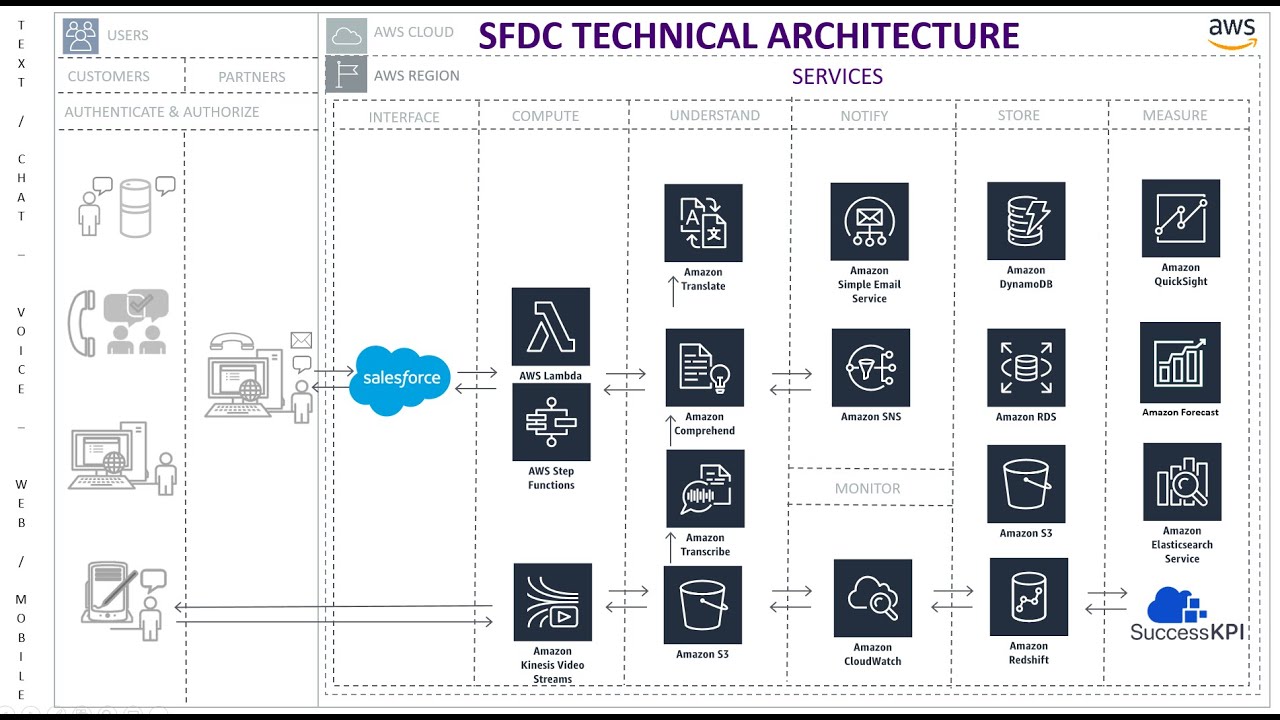
Second, insurance premiums. This is the value of pillar 2, which is MVRs, and pillar 3, which is LMS. When you can prove to an underwriter that you have a fit-to-drive standard, that you are monitoring MVRs daily and enforcing training automatically, you are no longer a standard risk. You are now a governed risk. On a $5 million annual premium, that same 2% we talk about, that improvement in your risk profile returns another $100,000 to the bottom line. Third, productivity. This is the hidden cost. Right now, your general managers are spending roughly 3 hours a month per driver on manual compliance, chasing rosters, checking logs, and assigning training. By automating that through the Rhythm Innovations operating system, even if we save you just 1 hour per driver per month at a generic management rate of $65 an hour across 2,400 drivers, that unlocks $156,000 in productivity. That is time your managers can spend on revenue, not paperwork. Now, when you total all that up, you're looking at $434,500 in annual savings on a $180,000 investment. That is the definition of a sustainable safety program. It reduces the risk, it achieves safety goals, but crucially, it pays for itself. Now, to wrap up this first session, I want to talk to the CIOs, the CTOs, the enterprise architects, you know, the IT directors and system admins in this room, and talk about, you know, with the advent of AI, hardware signals and software platforms have become commodities. You can buy telematics anywhere, and apparently most of you have. But what you cannot buy everywhere is proof and actionable insights. Rios is an outcome engine. By documenting every intervention, every time the AI copilot assigns a task, Every time a driver acknowledged a nudge and every time an MVR was synced, you are building a nuclear verdict shield. You are proving to the world that you have a closed-loop system of safety and governance. Nuclear verdicts are not just about the crash. They are about governance and proof. You don't prevent every incident by hope. You prevent incidents by governing what you can foresee, and you protect the organization by being able to prove what you did. Predictive signals exist across telematics, NDR, LMS, and history. FMCSA systems are the external mirror— valuable, but lagging. ISO 39001 provides a risk-based management framework, but fleets need a digital layer to operationalize it. RIOS unifies the 4 pillars into fit-to-drive decisions, closed-loop interventions, and evidence you can stand behind. In session 2 on March 19th, we hope you'll join us because we're going to go under the hood. We're going to show the technologies, how we actually build this using Salesforce, MuleSoft, and AWS. We'll cover integration, orchestration, unified system of records, AI Copilot, and the maturity path from crawl, walk, to run. But for today, remember this, the market has already bought visibility. Now is your time to adopt Rhythm Innovations operating systems for safety. Let us help you move away from merely describing what's happening on the field to diagnosing, predicting, and prescribing what your workforce needs to do to continue doing what they love in a safe and compliant manner. With that said, thank you for joining our session today. Let's open it up for questions, Mina.
That was an excellent, informative session. Thank you so much. Okay, a few questions that have come in. One is, we are already using telematics and pull MVRs. What exactly is the liability gap? that you're talking about?
Yeah, you know, the liability gap exists because your behavioral data from telematics and your legal compliance data from MVRs live in total isolation. In most organizations, you know, the safety manager looks at an MVR portal once a year, you know, while operations look at telematics every day. Perhaps if a driver gets suspended license off the clock and then triggers 3 speeding events in your trucks, but your systems don't connect those dots, you have a massive blind spot, pun intended. You know, that blind spot is the liability gap. And in a courtroom, you know, plaintiffs' attorneys define that as negligent entrustment. You have data, but they're not talking to each other. Hopefully that helped answer that question, Mina. Anything else?
Yes, excellent. We have another one that says, what does standard of care actually look like beyond basic compliance?
Yeah, you know, basic compliance relies on lagging indicators like FMCSA data, which only reflects inspections and crashes that have already occurred. A true standard of care, aligned with international frameworks like ISO 39001, requires an internal governance system that operates continuously to prevent foreseeable risk. It means computing a defensible score, like the Rhythm Risk index that integrates behavioral and legal compliance to drive proactive fit-to-drive decisions and closed-loop interventions before an incident ever happens. What else, Mina?
OK, we have one from a financial perspective. It says, how does this resonate with the CFO, and what is the real financial impact?
Yeah, I think it's important to look at that math briefly, right? When you operationalize governance, It transforms from a cost center into a profit protection engine, pretty much saving you costs. Based on our return on investment framework, for example, as I mentioned, for a 2,400-driver fleet, an investment on software like Rhythm Innovations systems at $180,000 will yield an annual benefit of about $434,500. Now, this comes from 3 direct financial impacts: targeting a conservative 2% improvement in collision rates, which will save over $178,000 in direct incident costs; proving to underwriters that you are a governed risk can actually save you about $100,000 of a $5 million premium; and more importantly, automating manual compliance will, you know, this task that your managers do on a daily basis, you know, will save you, you know, let's say an hour per driver per month. It will unlock about $156,000 a year worth of productivity. So, you know, as we gradually are putting all these things together, hopefully it's making sense. Anything else, Mina?
Yeah, definitely. We have a cultural question and it's How do you avoid the feeling that the driver is being surveilled?
Yeah, and, you know, the reality has been that systems in the past kept the drivers in the dark. We want to empower the driver. We want to be able to have the driver pull versus the manager push, right? We solve this by moving away from, you know, this gotcha, I gotcha culture to building a governance culture. You know, through the Rhythm Go mobile app, we put governance directly in the palm of the driver's hand, empower them to own their own score. Instead of a frustrated supervisor calling them to complain, the system relies on an objective AI copilot to deliver an autonomous safety nudge. It provides the drivers with the specific training modules they need the moment an anomaly is detected. Shifting their focus entirely to engagement and competency to keep them on the road, which is what they love doing anyway. So hopefully that helped.
Awesome. Okay, one final question is a forward-looking question. It's what separates fleets from fleets that just have visibility from those that are truly governing risk?
Yeah. Visibility is simply knowing where a truck is or if a driver is, you know, harsh braking or maneuvering. Governance is proving you had a system that prevented a foreseeable risk from becoming a loss. A governed fleet converts predictive signals across 4 pillars, as we spoke about: telematics, MVR, LMS, and historical trends. into documented actions and proof. If a tragic incident does occur, a fleet with mere visibility is left defending a timeline of missed opportunities, while a governed fleet can present a nuclear verdict shield showing them they acted consistently, predictably, and responsively. So, you know, as we look at these 5 questions, and we summarize everything that we talked about, we really hope that this brings it all together and helps you understand that we need to bring all this data in a way that is talking to each other. Anything else, Mina, before we adjourn?
I think that concludes our session today. I'll just wrap up unless you have anything final, any final thoughts you want to share.
No, just we look forward to seeing you on the next webinar. We talked about the why and the what today. And, you know, I'm a technologist at the end anyway, and I would really love to show you how we build this system so that you can trust us to help you. That's it. Excellent.
Thank you, JC. That was an excellent session, and we really encourage everyone to join us for the part 2 of that series. For anyone who's watching, you know, as you leave today's session, maybe take a moment to reflect on your current setup. And, you know, do you have a clear, connected view of risk, or are the pieces of the picture Mm-hmm. And when risk signals appear, do they lead to meaningful follow-up and action from your side?
Mm-hmm.
So that's what we explored today. Again, consider joining us for part 2 of the session where we go into the deeper question of how it's done, including the architecture behind this governance model and how it can be operationalized in real environments. So we hope to see you there. And if you, again, click on the QR code, that's where you can register, or you can visit rhythminnovations.com/webinars. And this is J.C.'s contact information if you have any questions, you want to connect with him directly and learn a little bit more with a side conversation about operating our operating system and how it might work for your current fleet system strategy. Here's his contact information. And again, you'll receive a recording of today's session. Thank you again for joining us, and we look forward to March 19th. Enjoy your rest of the day, everybody.
Thanks, everybody.
Thank you. Take care.