Chris Scott & J.C. Novoa, Accenture | AWS Executive Summit 2018

In a live interview at the AWS Executive Summit, Accenture leaders Chris Scott (Managing Director) and J.C. Novoa (Senior Manager) discuss how Amazon Connect can modernize stagnant contact‑center operations. They outline the core problems of legacy call centers—poor scalability, limited reporting, technical debt, and rigid phone‑tree experiences—and explain how Amazon Connect’s cloud‑native, omnichannel platform, combined with AI/NLP, enables more human, intent‑driven interactions. The conversation walks through Accenture’s implementation methodology: discovery workshops, phased channel rollout, and close collaboration with both IT and business stakeholders. A client example, Mutual of Omaha, illustrates how the solution drove better customer engagement, richer metrics, and faster time‑to‑value. The speakers also address change‑management challenges, executive buy‑in, and the future vision of AI‑driven, seamless human‑or‑machine conversations in contact centers.
Chapters
Live from Las Vegas, it's The Cube, covering the AWS Accenture Executive Summit, brought to you by Accenture.
Welcome back everyone to The Cube's live coverage of the AWS Executive Summit here at the Venetian in Las Vegas, Nevada. I'm your host, Rebecca Knight. We have 2 guests for this segment. We have Chris Scott, Managing Director, Accenture AWS Business Group, and J.C. Novoa, Senior Manager, Accenture AWS Business Group. Chris, J.C., thank you so much for coming on the show.
Yeah, no problem. Thank you, Rebecca, for having us here.
So we're talking today about the call center transformation and this— I'm excited about it as a customer who loathes call centers. So Chris, why don't you paint the picture for us right now of what a call center looks like, the customer experience, and then also the business experience too?
Yeah, absolutely. Well, thanks again for having us here. Really excited to talk about Amazon Connect. I think it's one of those services in Amazon that everyone, as you're saying, can really identify with 'cause they've We've all been through that kind of customer experience before. So I think what's really interesting about contact center is it really hasn't dramatically changed in the last 10 or 15 years. It's all kind of the same kind of phone tree type conversations. And I think there's a few companies that do it a little bit better, but still it hasn't really radically changed over the last 10 or 15 years. And I think Amazon's really playing in that space of disruption and really thinking, how can we do something different? In the contact center. So I think there's a lot of challenges that we see with contact centers today. They're not scalable, right? And a lot of representatives spend 90% of their day handling inbound calls, and that's just not scalable. You can't train people up to address that. Also, there's an issue with reporting. You don't get as much data about the customer experience when they call in. You don't understand their intent and what happened and how you improve in the process for the next round. And then I think another big challenge they have is the solutions for contact centers are very complex, and it takes a lot of time to address and change those solutions. So you amass a lot of technical debt over the years of operating this because you can't make those changes you really want to. So I think Amazon is really playing in this space, like I said, in disruption and really creating a better customer experience.
Yeah, not only creating that, but making it easier, right? Making it more human to some extent, right? Enabling customers to kind of peer behind the green veil and say, you know what, this is not that difficult, right? You should be able to implement something like Amazon Connect, which is a contact center as a service, and not have to worry about infrastructure, not have to worry about all the details and the minutia that goes into actually making that happen, and then be able to innovate immediately, right? Being able to introduce additional artificial intelligence to make that contact center experience more human again, right? To be able to introduce natural language processing and understanding, And then all these capabilities out of the box are able to be integrated with Amazon Connect in a way that improves that. And then additionally increase containment from the perspective of dedicating live agent interactions for things that matter. And then automating some of the activities that are more Q&A, FAQ type of things that can be addressed by a machine in a manner that makes it, you know, more understandable by the, person that is calling, right? And so that's kind of where we're going here with Amazon Connect.
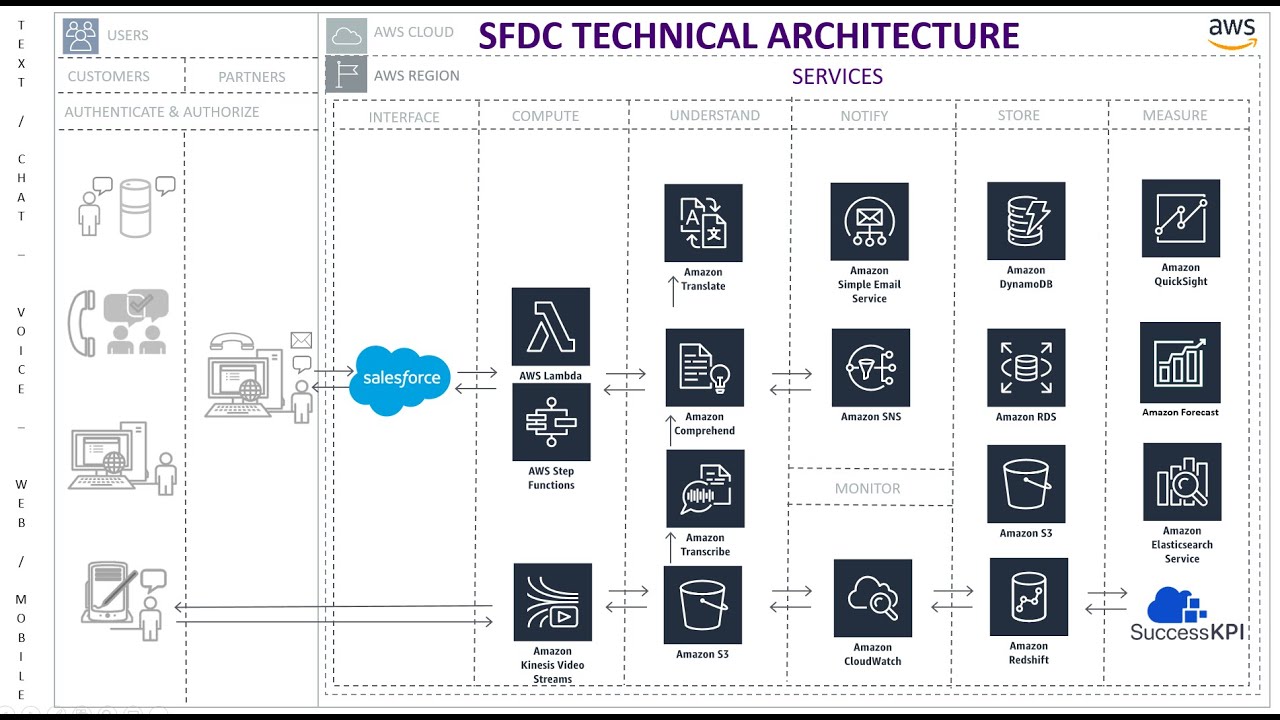
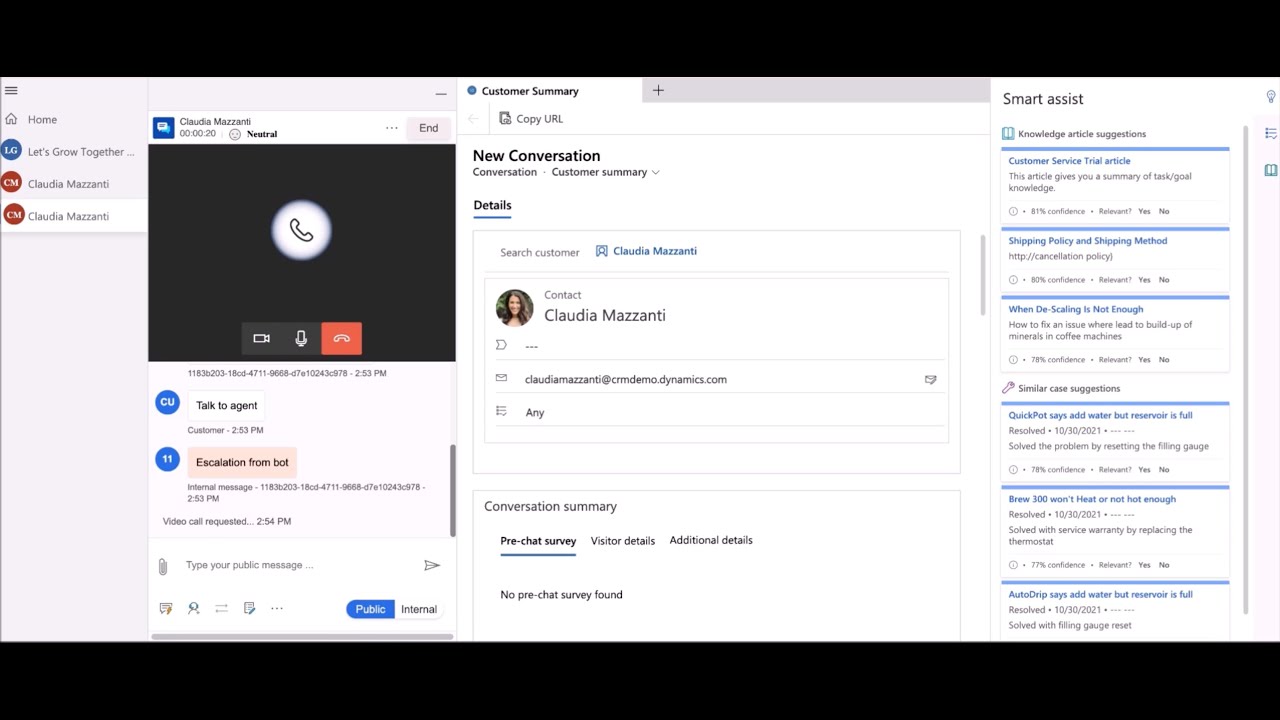
I want to dig into some of those features and capabilities because what you're describing is just making me excited about the next time I need to call a contact center. So explain exactly how this will work for a customer who calls up. What will happen? And then what's sort of happening behind the scenes with the technology?
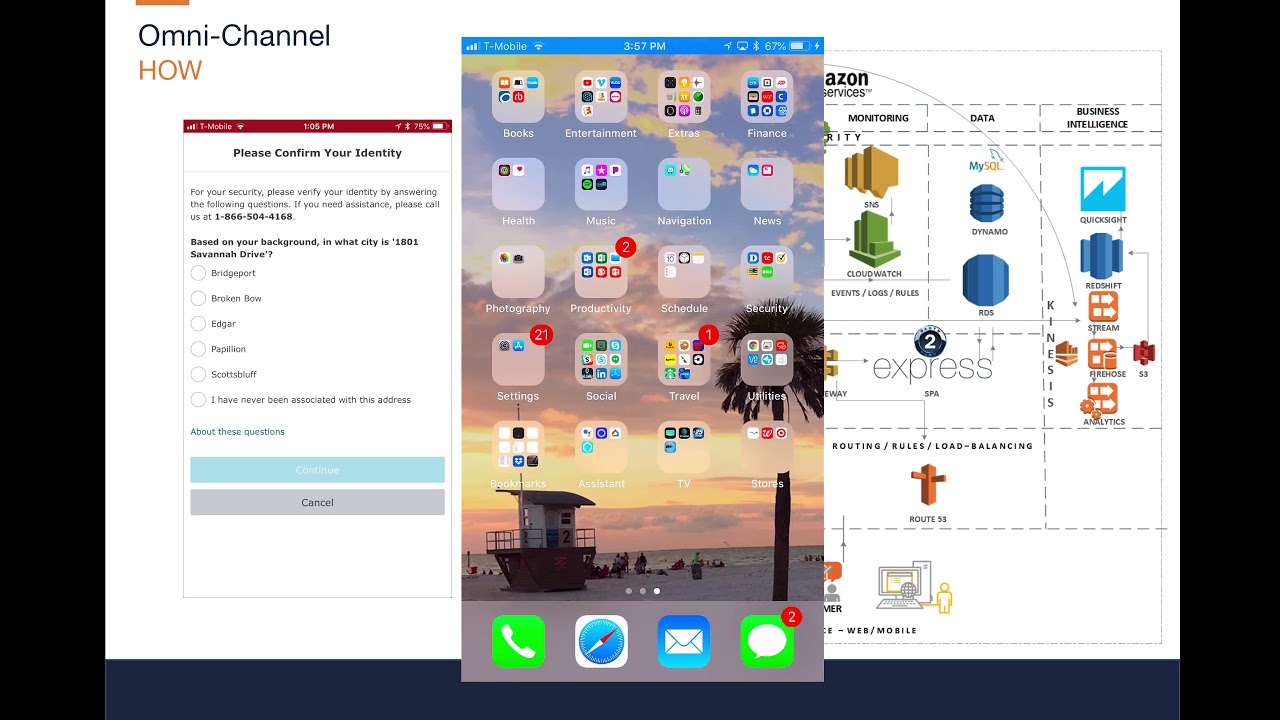
So when somebody, a customer calls, right, the idea would be to try to first identify the intent, as Chris was mentioning. What are they calling for, right? And then be able to identify who they are. You know, maybe there were interactions that were happening in different channels, right? This is some of the things that Amazon Connect provides, which is a mechanism for our clients to experience this omnichannel and kind of graduate across experiences for their clients, right? So being able to leverage that is important, right?
Yeah, omnichannel. I don't think I can underscore I don't think we underscore the importance of that enough. Because it's all about interacting with a system and a business the way you want to interact with them, right? Some folks want to be able to call up and have a conversation with an agent, but others want more rapid response, right? Maybe using a chatbot or even moving between all of those different channels within the same conversation. When we work with a client, for instance, a utility, in order to pick a date to schedule service, it's a lot easier to get a text message, go to a website, pull up a little calendar and choose your date rather than the representative giving you 10 options and you're thinking which one works best for you. And then you're also feeling, oh, I got to rush because this person needs to move on to the next customer. So this omnichannel thing really creates a much, much better experience for the user.
And Amazon Connect kind of enables that in a sense, right? It is our entry point for that omnichannel experience.
So describe for me how Accenture works with clients implementing Amazon Connect.
Yeah. So normally, you know, we want to be able to understand what the client needs is. and understand their customer base. So we go through the process of identifying what that use case looks like. How do we then determine what are the different channels that they wanna leverage initially? How do we help them graduate to the full omnichannel experience one channel at a time? So we conduct these workshops, we identify what is the current need, how do we ramp up and how do we introduce Amazon Connect? And Chris will tell us a little bit about the—
Yeah, a great example, and I believe you're speaking with them in a little bit, Rebecca, is Mutual of Omaha. Great client that we've worked with, and they're actually doing a breakout session here at re:Invent to talk about their journey out to Amazon Connect. They really started with, you know, the problem statement is they wanted to improve their customer engagement. They wanted to retain customers, they wanted to establish new customers, and sell new services to their existing customers. And they said, the best way for us to do this is improve our customer engagement through our contact center. So they went about in the market, looked at all the different solutions, looked at their existing solution, and they said, You know what, Amazon is the platform we want to use. We want to innovate on Amazon. It provides us a lot better features, that omnichannel experience. And that's led to better customer engagement. It's led to better tools for the agents and world-leading, you know, computer response and machine learning through Amazon.
Yeah.
And an overall better experience because now they can also get more metrics about what's going on and they can tailor that and continue to improve their solution and respond to customers and improve customer engagement.
So I'm curious though, but starting with the business problem, which was Mutual of Omaha, they said we want to do better by our current customers and then also attract new ones, so attract and retain. So is that sort of where you like— is that the starting point in terms of how you start to work with clients?
That was their starting point, and they said, you know what, we found a solution and that's Amazon. Now we need to find a partner that's going to help us with that transformation. And that's when they selected Accenture and us to help them with the journey.
But starting with the question.
Correct. Absolutely. They want to understand a couple of things, right? They want to be able to innovate, but they also want to be able to provide this excellent customer experience, right? And what has happened thus far is that the current offerings that they have in place are on-premise. They're not reliable, they're not scalable, and they're costly. You know, at the end of the day, a lot of these actually hits their bottom line, right? But the reality is that they want to be able to delight their customers and be able to provide channels that eventually are going to grow with their customer base, right? Because if you think about it today, that customer is going to expect more of these interactions to follow them through their day. In the morning, they might be able to talk to a device. Whether they're in the car, they might want to talk to a live agent. But when they're at the office, they might want to be able to chat with someone. And that kind of day in the life of a customer is what we're actually trying to help our clients solution, you know, moving forward.
I think also to your point is I think the folks that are interested in Connect are no longer just IT and AWS. It's now the business wanting to engage with AWS and really understanding this new solution. So I think this is a game changer in how Amazon interacts with businesses, 'cause now it's the business users that are buying. Not just IT.
And it's those decision makers who will ultimately— talk a little bit about, about who you go to in terms of, is it the CIO, is it the CTO, about the business decision and what kind of ROI these folks want to see?
I think it's a little bit of both. And I think there's a client that you've been working with, J.C., that's kind of been on this journey. We started with them. They're looking to expand their business. And for that new business expansion, they were looking to have a new solution for their contact center. So we started kind of selling to IT because that was the main buyer. But after IT heard about, wow, these are all the cool things that we can do, here's how we can improve our customer engagement, we went to the head of customer service for this company and they were blown away by the capabilities and they said, wow, this is really a platform that we can innovate on. So this, it changes.
Yeah, and the beauty about that is that those synergies actually is something that we brought together because they themselves were not talking to each other within the company, right, in terms of how they can help each other. But the reality is that the customer experience relies on data. And all these workloads that we're helping IT move to the cloud are actually gonna power Amazon Connect and create this more human and natural experience to their customers, right? So that's kind of the endgame here.
So when you are bringing this new technology to these companies, how hard is it? How big of a challenge is it to get the workforce on board? In some ways, the technology is the easy part.
It is, but I don't think it's all that difficult Because people are really excited about doing something different. As I said, this space in contact center hasn't really radically changed in 10 to 15 years. So now folks are saying, wait, I can do that? And it doesn't take me 3 months to do it? I can have what I want next week? That's a game changer. And I think that that's what's really getting people excited. And that's why the folks in the business want to work with us to implement Connect.
Yeah, of course there's change management, which I understand, right? You know, there's folks that are going to kind of push back. And we understand that, but the reality is at the end of the day, we have the buy-in from the executive team in these companies that we're working with, and they understand the value. And at the end of the day, they help us drive change. And so operationally, it's very much something that we're doing with them together as a journey. But at the end of the day, we're also working with the individual stakeholders within the companies actually to deliver. So we're taking them there.
Final question. What is the most exciting thing that you're seeing that you're thinking about innovating on for the contact center? What will it be like?
Artificial intelligence. I mean, if you think about how that conversation is going to happen in the future, right? You're not going to know whether you're talking to a human or you're talking to a machine. And if we can achieve that, then I think we're getting there, you know? So that's where I see it. I mean, I don't know.
Oh yeah, absolutely. It's understanding customer intent and being able to intelligently route someone to the right place without even knowing necessarily why they're calling or having to to tell the agent what they're trying to do. We know why they're calling. Maybe they had a billing issue in the past. So we know that ahead of time and we can address that proactively in the conversation.
Great. Well, Chris and J.C., thank you both so much for coming on The Cube. It was a pleasure talking to you.
Thank you.
Thank you very much, Rebecca.
I'm Rebecca Knight. We will have more from the AWS Executive Summit coming up in just a little bit.