12 Tips for Practicing Mindfulness During Uncertainty | Jack Canfield
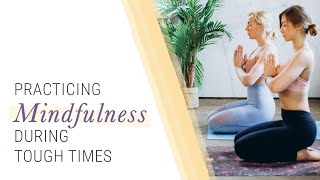
Jack Canfield teaches a breath-focused mindfulness practice to manage stress and anxiety. He walks through the steps: sit comfortably, notice where your body touches the chair, focus on your breath, and gently return your attention when it wanders. Ten to twenty minutes daily can improve emotional regulation and focus.
Chapters
You know, with everything that's been happening in the past few weeks, I know everyone is feeling more frazzled and more exhausted than usual. Everyone's feeling more stressed than we normally do. And so much of that has to do with worrying about the future. Will we survive? Will my loved ones survive? Will my business survive? Will my job be there when we come out of this? Will I lose my lease or my house? Will I have enough money to buy food or pay the bills? Will I have enough money just to get through this period? But the only moment that we can do anything about anything or have any impact on is this present moment, right now. So today, I'd like to share a simple mindfulness meditation that you can use to help you focus on the here and now and relieve your stress and anxiety so you feel more calm and more in control in the present moment. And that's going to help you stay positive, make better, smarter decisions, and do what you've got to do to thrive in the midst of uncertainty. I want you to know that I know what many of you are going through. I teach this stuff. And just a few days ago, I lost it for a few moments with my wife due to how I was reacting to the stress of California's Stay at Home order. I thought my wife was writing too many large checks to some of our family members and to some charities, and she thought I was spending way too much time doing webinars and podcasts about how to respond to the personal and professional impact of the coronavirus pandemic for my students and for other people's students, and not spending enough time with her. And after a few moments of loud, angry voices accusing each other of not understanding each other, I abruptly just walked out of the kitchen, went outside, and sat down in the chair in the backyard. But after a moment, I realized I had lost it. I realized I didn't want to spend the rest of the day feeling what I was feeling, and feeling separated from my wife. That was more social distancing than I wanted to be experiencing. So I closed my eyes, used the mindfulness technique of focusing on my breath, and. And after a few moments, realized that underneath my angry outburst was a fear. I was scared of running out of money during the potentially several months coronavirus shelter at home period, which is absurd, given how much money we have and how much credit we have. But it had been triggered by an apparently subconscious reaction to my childhood experience of growing up poor in West Virginia, where we literally didn't often have enough of what we needed, especially money. Now, once I closed my eyes and practiced the simple mindfulness technique I'm about to teach you. I was able to reconnect to my more essential and conscious self, see what was happening, realize we had plenty of everything we need, including money. And I was able to calmly apologize to my wife, have a clear and rational conversation about how much money we would be willing to give away and to whom and how much time I would spend with her every day as we went through this pandemic together. Now we actually went out to my office after that and wrote down the agreed upon times on my calendar each day. 8pm 8am Read to 2pm on Saturday, 10am to 3pm on Sunday, and all through the week. And I would be done by 6pm on work days and I wouldn't work into the night now let me take a minute to tell you about some of the benefits of this kind of meditation that have been scientifically proven. It's going to help you regulate your emotions as it did in the experience I just shared with you. It will decrease your anxiety, it increases your focus and attention on the present moment, it helps boost your self control, and it improves your ability to be creative and think outside the box, which is something we all need right now. These are exactly the kinds of traits you need to have, as I said, in this time of crisis. Not only that, scientists at Harvard have proven that meditation boosts energy metabolism and and reduces inflammatory responses and stress, which strengthens your immune system and makes you more resistant to disease, which we all want to be right now. And it's also been connected with slowing the cellular aging process, which we all want to do so we can live healthy and long lives. And the key is to take 10 or 20 minutes and do it every day. So here are some tips on how to start a simple but powerful daily meditation practice. First, choose a regular time to meditate. Wear comfortable, loose clothes. Don't meditate after eating or when you're tired. Now the best time is in the morning before you start your day. And you can mentally prepare yourself by reading, listening, or thinking about something that inspires you. It can be as short as an inspirational quote, a Bible verse, a short poem, or it can be a chapter from a spiritually uplifting book. If you have the time now, make sure to remove any distractions or possible interruptions, like turning off the ringer on your phone or your cell phone, or putting on a set of noise reduction headphones if you're unable to cut out all the sound around you. Now if you haven't meditated before. I suggest you Simply start with 10 minutes and if you feel like it, you can go up later to a higher number of minutes. I do usually 20 minutes, sometimes even 30. Now next thing you want to do is sit comfortably in a chair or cross legged on the floor or or on a cushion if that's comfortable for you. And then relax and sit up straight as if there were a string gently pulling your head toward the ceiling. And then close your eyes and feel where your body is touching the chair or the cushion and the floor. And then take a moment to notice the physical sensations of sitting. Just what does it feel like to sit? Be present to that. Then take a deep slow breath and then another. And then without trying to control your breath, just become aware of the physical sensations of breathing. You can focus on the sensation of the air as it comes into your nostrils as you inhale and as it exhales your nostrils as you exhale. Or you can focus on the rise and fall of your chest and stomach as you inhale and exhale. And then whenever your mind wanders, as it always does, simply bring your attention back to your breath. What's the physical sensation of your breathing? And that's all there is to this simple meditation, and yet it's so powerful now, simply focusing on being present in the moment and keeping your attention on your breath. And when your mind wanders, you use your breath as an anchor to return to the present moment. And I promise you'll feel so much calmer and less stressed out or frazzled and you'll be able to show up as your best self and make smart decisions in the moment, which is what you've got to do to thrive during this time. Now meditation is just one of the personal and professional success strategies that I walk you through in the Success Principles Workbook, which we released earlier this month. Now the workbook also includes a link to the audio of my powerful four part meditation that I teach the students in my live events. So if you want to go deeper into meditation or learn other valuable success strategies that will help you thrive in any situation in your life or your business, you can find my new workbook at the successprinciplesworkbook.com or wherever you buy your books online. So my recommendation and my challenge for you this week is to commit to meditating for 10 minutes every day. Pick a consistent time that will work for you every day, even if you have to get up 10 minutes earlier, write it into your calendar and then set a reminder on your cell phone if you have to and then honor that commitment to yourself. It's just 10 minutes. Anyone can find 10 minutes in a day. And right now, if you're sheltering at home or working from home, you probably don't have your normal 30 to 60 minute commute to and from work. So you have the time. And I guarantee the impact that it will have on your peace of mind, your outlook, your optimism, and even your sleep will be huge. Now if you feel inspired, please leave a comment below letting me know about your personal experiences with meditation. I'd love to hear about that. If they've ever helped you through a tough time before, let me know about it. I'd love to read your comments or your story. And if you found this video helpful, please make sure you like it, share it with a friend who may need it, and subscribe to my channel for more videos like this one, and for some additional exercises and tools for getting through this challenging time. Make sure to visit the successprinciples workbook.com and pick up a copy of this new book and some free bonuses while you're there. And thanks again for watching.
More from Jack







[EP 46] Creating Your Own Luck: The Power of Self-Confidence with Veronica de Andrés

[EP 45] Rewiring the Brain for Bliss: Activating Your Spiritual Intelligence with Dr. Dawson Church


[EP 43] Transform Your Life Through Visualization and Emotional Intelligence with Natalie Ledwell

[42] Enhancing Your Health & Longevity Through Peptides and Functional Medicine with Regan Archibald