[EP 14] Embracing Your True Self: Transformative Lessons with Shannon Kaiser
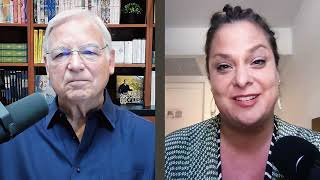
Shannon Kaiser, a spiritual guide and self-love teacher, shares practices for accessing intuition and heart-centered awareness. She discusses grounding in nature, coping with anxiety and chronic pain, finding your ikigai or purpose, and setting relationship boundaries. The conversation weaves personal story with practical self-love rituals and coaching tools.
Chapters
Foreign. Welcome to another episode of the Jack Canfield Podcast. And today I'm really, really thrilled to have a special guest with us. Shannon Kaiser is a renowned spiritual guide and self love teacher. And she's someone who has not only journeyed through the challenging valleys of depression and anxiety, but has emerged to help countless others find their path to fulfillment. She's the author of six transformative books, including the Self Love Experiment, Adventures for your Soul, and her latest book, which I consider to be a masterpiece, called return to you. 11 spiritual lessons for unshakable Inner Peace. And Shannon offers deep insights into achieving unshakable inner peace. And in today's world, finding direction when things seem lost is more important than ever. And with content reaching over 22 million people a month, which is amazing, she's been rightfully titled your go to happiness booster by by Health magazine. So without further ado, let's dive in. Welcome to the show, Shannon.
Hi. It's so great to be here with you. Thank you.
My pleasure. My pleasure. So as I mentioned in the introduction, your latest book is Return to you. I'm curious what inspired you to write a book about returning to your authentic self?
Yeah. Thank you for that and those kind words. You know, I wrote this book in 2020 and we all know what was going on in 2020. It was this basically a cry for help from my inner world that was looking out and seeing chaos every, everywhere, seeing people I love fighting with each other, seeing people really devastated with the health crisis and seeing the world just be split apart. And I saw all of that outside of ourselves and peace seemed very far away. And I realized what we really needed was peace, inner peace, and how can we learn how to have peace no matter what's going on in that outside world? And it really became a mission for me to discover peace through the chaos. And that's really what this process is I document in my journey. I tend to write. I've been writing for over 10 years now, and all of my books are really these experiments in life, in learning about living on a more authentic, deep level. And so I put myself through the process, I teach it, I embody it, and then it becomes these books and kind of gifts out to the world. And with this book particularly, it became almost like, as you say, this masterpiece of, of how we can come back to ourselves and stay true to ourselves no matter what's going on. And that is what authenticity is. It's about being so aligned to yourself so you can move forward and be a light the world.
And that's what produces the inner peace.
Well, there's a lot of layers to that. But yes, truly, when we start to go inward, we recognize that the outside world is always going. We live in a time, even now, several few years later, where there's everything pulling at our attention, Whether it's social media, whether it's somebody needing our help, we want to show up. But if we're distracted and not centered in self, we become less of a service to others. But we also, more importantly, we start to lose ourselves. And I don't know about you, Jack, but we were talking before we got on about being in conferences and showing up for these seminars. And it's so amazing to be in person with people now. And what I'm hearing from so many people, I was just at a conference this week and in my coaching sessions with people, is this. This feeling deep within ourselves of almost like this. This directionless kind of focus. It's like, what is the point? I'm trying so hard to make things work. And then it's, you know, everywhere I look, I feel like I'm being pushed out, or I'm feeling like I'm not making as big of a difference as I want. And we' kind of trying to make things happen. And I feel that that's because the distractions are outside of ourselves. So when we return to our center, which is why we come together in person and why we do all the work we do, we are so strong in self that we start to show up in the world in a different way instead of the world telling us who we need to be or trying to fit into the world. The inner peace comes from knowing that we are our true self in the world. And the world then can adjust. So there's a lot of layers to that, but that's the. That's the icing on the top.
So in your opinion, what are some of the biggest factors that you find that prevent people from living their authentic truth?
I love this topic of authenticity because, you know, when we hear the word authenticity or it's like a hashtag, you know, self, love, and, you know, we kind of. It gets thrown around a lot. But really what we want to ask ourselves is what is authenticity? To us, it's truth. It's about living in true accordance to who you are. One of the real things that separates us from the truth of being who we are is letting the outside world tell us who we should be. Whether it's through cultural conditioning, family pressure, even just dynamics of how we've grown up or Even when we're in relationships, we really care about those around us. We want to make them happy. You know, recovering people pleaser here. Anyone listening? We have these big hearts. We want to help others. But when we're showing up for others at sacrifice of self, that really does take us not only away from our inner peace, but also it takes us away from ourself. So one of the things we can recognize is looking at what's taking our attention. Is it lifting us up? Is it making us feel joy and connected? Do we get this excitement and energy from it? Or is it draining us? Is it pulling us down and making us taking our life force, if you will? That's a good place to start. See what's taking your attention now.
In your book, you mentioned what we all have, an inner guidance system. Can you elaborate on that and what that is and how people can access it?
Yeah. This is one of my favorite topics right now because it is about our inner guide, which is our intuition. And I think what I'm seeing in my own life and with so many people on the planet right now, we've lost track and kind of stifled that relationship with our inner guide. And when we start to practice listening to ourselves more, we will never be led astray, ever. And I know for you and some of the work you've talked about too, the choices we make, whether it's in business or relationships, they all come back down to, does this feel true for me? And that's your inner guide, your inner voice, your gut feeling talking to you. A good way to know about your intuition and how to kind of strengthen it is to ask yourself in a situation in your life right now, perhaps you're in a situation that feels frustrating, you're feeling anxious. Maybe you just. Just feels off. And you can look at what your thoughts about that situation are, what's led you into that situation? But then start to drop into your heart and ask yourself, what have I been feeling about this situation? Did I have a gut feeling before I went into this business deal that said something was a little bit off? And maybe you're towards the part where everything's not going the way you wanted, or you're in a relationship or you're. You're moving forward in life where you ignored that pivotal moment where it said go right, but you went left and you start to. You can journal on it, you can think about it, or just document that your intuition is always talking to you. And this intuition is our. It's our. You can, you know, talk to it and Work with it to let it be your best friend through life. And truly, when we're talking about authenticity and talking about returning to inner peace, it's that inner guide within you that will never lead you astray.
So, so let's, let's break this down a little more. So you said drop into your heart. How does one do that?
Yeah, one of my favorite activities to do, I lead a self love retreat. And in my book, the self love Experiment, I talk about this mind. Up here is the chatter. And it's the logical part of ourselves that really wants to make sense of the world. But our heart is kind of, if you were to think about it, it's that gentle intuitive nudge. So one of the very first things we can do, just put your hand on your heart and you start to, I close my eyes and you can return inward. And you ask. You know, it's so funny because when we're talking about feelings, I was in kind of a situation with a family member a couple months ago and we were kind of not seeing things eye to eye. And I kept saying, well, how do you feel? How do you feel through the kind of conflict we were having? And they said, I don't know how I feel. You keep asking me that. And it was frustrating them. And they said, I know what I think, but I don't know what I feel. And that was a turning point for both of us in our relationship because we realized that this person was coming at it from their logical side of I think this is not okay. And I was coming at it through the heart based, which is feeling an emotion. And when we're talking about dropping into your heart, it's knowing that your head and your mind will often tell you things that aren't always true. Or it's telling you things based on past experiences trying to protect you. Whereas your heart is the emotional self, it's part of you, your intuitive self. So we can drop in physically, putting your hand on your heart, but also asking yourself, how do I feel in each moment. That's another way to drop into your heart. And then there's a lot of activities, getting in touch with your creative side, going out into nature, being present instead of doing, you know, allowing ourselves to be the human beings that we are. These are all small things we can do. And then in my books, of course, I talk a lot about how we can and be more mindful in dropping into our heart.
I've been exploring this a lot with people lately, but, you know, heart centered and all this intuitive and you Know, listening to a deeper part of ourselves, getting out of our intellectual head. One of the things I found really helpful is to imagine breathing into your heart. So imagine that, you know, you, the first step is what you said. Put your hand on your heart so you literally feel your physical heart. But then to actually imagine inhaling oxygen through an opening in your chest and imagining with each inhalation it gets brighter and brighter and bigger and bigger. Kind of like you're blowing up a balloon. And what I find if you do that and then go into a state of appreciation, ask yourself, what's something person, pet, animal thing, my guitar or whatever that I really appreciate. If I do that, then I'm in my heart and then I can ask the questions that you're talking about. I find that really opens up that channel to the intuition because a lot of people, you know, we, we, those of us who teach this, we say things like, go into your heart, forgive somebody. And they go, wow. You know, and so I found that to be really helpful.
I love that the appreciation is, is such a superpower in itself. You know, I have, I think a lot of us in this space, the, the more you can appreciate that is the heart space. But also having an appreciation or gratitude practice. Every morning before I wake up, before I even open my eyes, before I do any will, you know, slowly start to wake up and I consciously turn on my brain and I will actually put my hand on my heart. I have a little furry friend I cuddle with and I go through at least three to five things I'm thankful for before I even open my eyes. And I think practices like this throughout the day or going to bed, writing down what you're grateful for. These are all small things to be in appreciation. So I love that you brought in that as well.
Yeah. And they bring you into the present moment. I was talking to someone the other day and he said most people wake up and they immediately reach for their cell phone. And when you start looking what's on your cell phone, it's all about the past. It's the news that already happened. It's people that wrote you about things yesterday. You know, it's a. We want to be in the present experiencing the beauty of that and then be open to these inner messages. And then from there we can create the future we want.
Yes.
A lot of your work focuses on self love and self care. So let's break that down a little bit too. Talk about why you feel these things are so important in a journey back to your authentic selves. And what exactly that mean? How does one do that?
Yeah, again, I think self love gets a little washed out. You know, it's all hashtag and it's like, oh, I'm going to take my bubble bath and get my massage. Those are very important and good. But not everyone has the means to be able to do that. And I think really self love is really about going inward and realizing that you matter. And we do that by understanding. It's about self respect and honoring ourselves. I was really thinking about self love. I wrote the book the Self love Experiment a few years ago, several years ago, and it was all about caring for yourself and the pillars of self love. There's self care, we have to care for ourselves, you know, which is the hygiene and taking care of our mental health as well. But it's also about self compassion. And self compassion is being nice to yourself even when you feel like you're off track. It's the voice that you're talking in your inner mind to that's really important in realizing that we can learn from what we go through. And then there's really the piece that gets missed, which is self trust. And self trust is one of the most important ones, especially right now when the world is pulling at our attention, when we're wondering which way we should go, are we living our purpose? Are we making the right choices? When you trust yourself, you make better choices that are aligned to your true self. And that is really what self love is. And so self love, the more love you have for yourself, the more you can help show up for others. But you know, Matthew Hussey is a relationship coach. I'm sure you're familiar. He talks about self love in a way that's really interesting because if you think about a parent who you tell, you ask a parent, right, why do you love your child or someone who has something they love like a pet? And it's, it's not like, oh, because they're, they're really good at school, they're getting great grades or they're excellent at their career. Like, those are all nice. But it's like, because it's my child, because it's my cat, it's my dog, it's because it's mine. And Matthew Hussey kind of talks about you are you, you're your own body. Like, give yourself permission to be your own person in the sense of you own you. And we are with ourselves more than anyone else on the planet. No matter how long our relationships are, we wake up with ourselves, we go to Bed with ourselves. We have gone through all the trials before that no one else has seen on the depths that we have. That in itself deserves love. So that, to me, is really what self love is about.
Reminds me of the story in the Little Prince where he loves this rose. And they say, why do you love this rose? Because it's my rose.
Yes, it's mine. We are our bodies. We are us. Right. It's me. And so we can start to become our own friend and make choices from a place of compassion, love, and respect. And it becomes a much more joyful and graceful journey. We're not struggling through life and trying so hard where I actually have a friend who's with us through everything.
In the book, you mentioned that one of the best ways to connect with our authentic self is through nature. And I agree with you and talk a little bit about that. What are some of your favorite ways to do that?
Yeah, nature is so special, right? Because I think, one, we can look to nature in any form of nature, and see how it works so well with everything else. You know, our emotions are like the ocean waves. They come and go. We don't have to hold on to them. And trees, very patient. Right. When I look at trees, I feel the trees can teach us a lot. So one of the activities I like to do is look at nature. Pick something in nature and have it be your teacher. You know, we go for hikes, we go into the mountains, we go to the beach, and we almost always feel more connected. And it's because there's energy. You know, there's a lot of science behind nature, too, with the ions and just the molecules, and it actually helps produce serotonin and dopamine in our brains and balance ourselves. But in 2020, one of the things that I saw, destruction and chaos going on and people fighting and arguing, and everyone was in fear. And the very first thing that I did was look at my daily practice of how I could continue to focus on peace, not fear. And one of the things that was most instrumental for me was grounding. And I went outside in the backyard, and I put my bare feet on the grass. I made sure to connect with Earth. And that's another way to be mindful. And as we do this, you literally will start to feel your body release. And we relax our shoulders, relax. Our brain stops overanalyzing and ruminating, and we just give ourselves to connect to Earth, you know, and that's. That's why our ancestors and our, you know, why sages of many, many eons talk about being close to nature. So if you're feeling stressed, you know, I used to suffer from clinical depression and anxiety. Nature became my therapy. And nature's so important. Getting in nature, eating more nature, being grateful for nature, nature in every way.
That's true. I do that grounding. Some people call it earthing, where you stand barefoot, either on grass or dirt or moss, Anything other than cement and ye fan can be there. Put your water and feed in the water. And, you know, everything's vibration. We're vibration. And when we're separated from the natural vibration of the earth, we start to get ungrounded. We. We use that term. We're ungrounded. And you know, and I know that for me, another technique I've used is really interesting, is when I go out of the nature, just also the color green. We know that green is very healing. In fact, if you go into most recovery rooms and hospitals, they're. They're painted a light green because that's a healing reality. Our cats will go and eat grass, which is green, when they're feeling a little sick. And. But what's interesting is to go out into nature and then just look around and see what captures your attention. Is it that rock? Is it that tree? Is it the river over there? And then imagine what's the message that it wants to give to me. Like, sometimes I'll see a rock and I go, I need to be more solid. I need to stand in my values more. I need to stand up to somebody. You know, if I see something else flowing, I need to let go and let things flow more. Or if I'm seeing a tree starting to bloom, I need to allow myself to express what I really feel and let it come out rather than holding it in. And it's fascinating. You can. Nature is a feedback system. If you let it be, it's really kind of interesting.
Yeah, absolutely. You know, as you were talking about that, it's interesting because you said rock, and there's a famous meditation teacher that has a quote I can't remember. You look it up. I'm not sure the name, but they talk about when we first start to meditate, it's sometimes like licking a rock. It feels very boring and, and. And mundane. And you're like, what is the point? But that's what came to my mind. Because when you were talking about nature, I went to mindfulness. And just being in nature, that's one way that we can capture more inner peace, by being nature. You know, in nature, we feel more mindful. But also, I Find nature as a form of meditation. You know, we don't have to sit and zone out like the Buddha under a tree. To me, another when we're talking tools as feeling better, I do think meditation is really about being so fully present in the moment and waking up to life versus tuning out life. So sometimes I'll walk barefoot in the waves. I live by the beach. That to me is a form of meditation. You know, petting. Petting a loved. A dog. I was gonna say a loved one, but a dog or cat and, and so really mindfulness is part of a nature experience as well.
Yeah, yeah, for sure. Now I agree with you when you say that we all have unique gifts and talents. How do you recommend people connect with their own unique gifts and talents?
Yes, this is one of my favorite things because when we feel off track or anxious or stressed, I know a lot of people that I work with in my coaching practice want to know that thing that they're, they're, they're made for that purpose. And I often say our purpose is actual purpose. Our purpose is personal expansion. And that means we all have things within us that we're curious about and we all have things that we're naturally good at. And distinguishing the two is important because you are really good at some things. We're born and you can nurture those talents and skills. Such as when I was little, and this is a great question to ask yourself, what did you love to do when you were little? You know, I used to be in a completely different career. I was very depressed and the first thing I did is say, well, what did I do when I was little? I would literally go on recess, sit out in the grass, write poetry and draw pictures. And that's when I realized I need to leave my career in advertising and follow my heart to be a writer and work from anywhere in the world so I can be in nature and explore. So there's clues in our life going back to when you felt free to be who you truly are, before the world told you who you needed to be or who you're supposed to be. What were you doing? Where were you? Because those are the essences, pulling the little strings of our truest self. And then there's the other aspect of what are we curious about and honoring that. You know, I like to cook, but I don't plan on going to open my own restaurant, at least not right now. But I can honor that as a hobby and explore. And so that's how we create a more passion filled life by balancing the Two and giving ourselves permission to nurture those.
Yeah, I've been studying something recently called ikigai, which is a Japanese concept that, you know, you first find out what is it you love to do and then are you any good at it? Because if you love to do it, you don't, you're not good at it, you're not going to be able to make a living from it. And then is it something that other people are willing to pay for? And then finally, the fourth aspect of vegan, this relates to people that live in Japan who live to be 100 and 100 five years old was relationships. You know, to really be in relationship with people. There's so much, especially after the pandemic and during the pandemic of isolation. In fact, we're now seeing countries that are developing people that are like the director of loneliness, you know, like to, to, to, to handle that. It's an issue which is creating lots of illness in our society. And so for me, when I was a kid, I love to learn things and teach other people. I love to get better at marbles than show other people how. I was good at that. Yo, yo. Baseball cards, we used to throw them against the wall. And when basketball, anything I could learn and then teach someone else, I loved it. And that's what I do today. You know, I remember once, my life purpose, we were doing a guided visualization and I saw myself climbing up a mountain to where there's a big ball of light, grabbing as much light as I could, coming down the mountain and handing out snowball size pieces of light. So I didn't have any more to hand out, you know, and so that's, that's very much so. It's like, you know, I often ask people, well, what did you love to do as a kid? And, and there's a lot, a lot in there. I had a client not too long ago who was a doctor who had migraine headaches all the time and they did all the usual pain medication stuff, nothing was working. And I asked him how he liked being a doctor. He said, I hate it. I said, why are you a doctor? His mother was a doctor, his father was a doctor, his brother was a doctor, his sister, all the cousins, everyone was a doctor. If you weren't a doctor, you were like a lower class person. I said, so what would you rather do? He said, I love to work on cars. He wanted to open a garage for like, you know, high end cars, Mercedes, Benz and that kind of thing. And so I said, go do it. And he gave himself permission to do it. Within two weeks, the migraine stopped. And he has this very successful, you know, exotic car garage that he fixes cars and stuff. And so it's like finding a thing you love and giving yourself permission. Someone described an entrepreneur as someone who's conned other people to pay them to do the thing they love to do. Do.
I like that. I like that. Yeah.
So we're talking about the fourth aspect of this ikigai, these people who live to be a hundred. And so is relationships. So what's your thoughts on the role of relationships in this journey back to authentic selves?
Yeah, you know, in my book. In the chapter, in my book, Return to you, I talk about the ikigai, too, and I put the diagram in there because it's. It's so important for us in establishing our authentic self. But, you know, relationships are so important because we can choose to live on an island all by ourselves, but the true learning comes from how we relate to others. But we're also in relationships with ourselves. One of the biggest lessons and one of the lessons for inner peace, if you will, and authentic living, is to recognize that everyone is on their own journey. And a lot of the times we get into partnerships, business partnerships, relationships where one person has a very clear vision, or if we're not sure within ourselves, we will kind of morph into what they want and we lose ourselves. And to recognize that you have your own path to get back to what you just shared with kind of. I love that you pointed out your entrepreneur client or your person who wanted to follow their heart and be, you know, not go with what the world told them, but work on cars. I truly believe if every single person on the planet got in touch with what they really wanted to do, not only would we just lessen our depression and anxiety, but the whole world would collectively rise because we would be happier not doing what we think we need to do. And I learned this in my own journey during 2020. I do feel that I was writing this book about inner peace, but I saw people I loved, relationships of decades be torn apart because of beliefs or because of perspectives or just because that's the. You know, not everyone is meant to go on the journey when we go into the next phase of our life. And I started to develop these health issues. I was actually bedridden in 2022, and for chronic pain, I woke up one morning and I was. My whole left side of my body was numb. You mentioned migraines, and that's what took me back to this experience. I had such bad migraines that were debilitating. And I went to the emergency room and they said, we think you're having a stroke. And here I am, a pretty healthy person. But I was realizing when they said that it's not a stroke because all these symptoms, they're telling me, you know, like that all the stroke symptoms I had been having for the past six to nine months. And so strokes, they usually come on. So they kept me overnight, ran multiple tests. They diagnosed me with complex migraines. But then they sent me to a rheumatologist and I was diagnosed with fibromyalgia, which is actually a muscle condition that's often diagnosed in many middle aged women. But in more research, it's. There's a lot of things that can contribute to it. In me learning about this disease or this chronic pain. I recognize that there's studies that are starting to be done, but it's a muscle deficiency of nutrients, so I wasn't getting enough nutrients. It was my lifestyle. But also people who have been in narcissistic, abusive relationships or people who have suffered a lot of trauma, have emotional pain that gets stored in the body. And we just don't know when there's not enough education out there. There's starting to be a lot more. But what I realized is once the doctor told me you have fibromyalgia, it was like, like I was in such darkness. I was so pulled away from self because I was looking at how can I make people's lives better? But I wasn't focusing on me. The light came on and it was a spotlight. And the first thing I did was look at my lifestyle. And then I looked at, well, what am I? The question became, what have I? Why and how am I not being true to myself? And what I recognized is my inner child wanted sunlight. She wanted to be by the beach. And so I literally looked at my whole life, changed my whole life. Started to get more nutrition, started to do yoga daily. I eliminated 60% of the people in my life who were very toxic and pulling at my energy and were only interested in what I could do for them. They didn't have my best interest. And I sold everything and moved to Mexico. And now I live in Puerto Vera, Mexico. I haven't had a migraine or fibromyalgia flare in over nine months.
Wow. Wow, that's great. I like Puerto Vallarta, by the way, my wife, numerous times.
I'll see you next time you come.
Okay? We'll make a Deal. You know, one of the things that I found early on in my work was if I had pain, to give the pain a voice and say, what are you trying to tell me? And you know, we talked about intuition and so forth and then just say, okay. Pain is a message. It's like a fire alarm going off. You know, it's like a. And a lot of what we often do, imagine you're in a house, you got this smoke alarm, it starts to go off, off. And what you do is go cut the cord because it's bothering you. And if that's called like try to get the pain, they'll go away by medication and you know all that stuff, pharmaceuticals. And it's really got a message to say, wait, something's off here, there's a fire, you need to pay attention. And when, when I remember to do that, it's amazing the things that I get told, you know, like you need to rest more, you need to take more in, you need to stop drinking so much wine, you know, whatever it might be. And when I follow it, it then it works. It's, it's, I think so many people right now. And you talked about, there's a book called the Body keeps Score, I think. And it's about the idea that we somatize our emotions. You know, the emotions that are not expressed are blocked energy. And if that energy doesn't move over time, it becomes disease. And that's what acupuncture does. It goes in and it has to unblock the energy. Also meditation can do that. All the things that you teach and that I teach so that we can move on. But I think so often is that we just need to check in. I had this accident about, I told you before we started to do came on air as it were, and I tripped and I was playing basketball with my 10 year old grandson and I literally hurt my back really badly. I was walking with a cane for three days. I had to sleep upright in a chair for a month because I couldn't lay down in bed because my back was so tweaked out. And when I asked myself the pain, you know what, what's your message? Says you've been working way too hard. We would have, we would have loved you to slow down. You didn't want to do it, so we did it for you, you know, and here I was in my bedroom, you know, 90% of the time, just relaxing, reading because I couldn't do anything else. And it was very, very healing. Not just in terms of my muscles coming Back my spine realigning and all that. But just a break from all the pressure of production and producing and meeting other people's needs and so on and so forth.
Yeah. Oh yeah. I think you really, you really got to it because I think sometimes when these things happen to us, it's almost like a redirection from the universe or a higher power. God, you know, it's this idea of coming back to pain. Happens as a, as a, almost a spotlight to get us back to center. And I'm sorry that happened to you, but I've learned too over the years to, you know, when people say I'm sorry that happened to you and people say I'm sorry you went through that, it's wonderful, empathetic and. But always it often if we look back on the times in our life when we did get through something or went through it, it almost always took us to a higher place. Rock bottoms or, you know, anything that feels like suffering when we go into it. It rises us higher.
Yeah, we have to develop something maybe courage, perseverance, moral self awareness, you know, consciousness that we wouldn't have otherwise. I'm curious, you know, if you were to take and say there's top three pieces of advice you have for someone who's ready to return to their authentic self, what would they be? Do you know?
Yeah, this whole conversation has been so joyful because of that. And I think the very first thing is to find out what brings you joy and be really honest about that and you know, return back to when you were younger, there's clues in our life and then give yourself more permission to show up for the that. Another side piece to that is don't betray yourself in the sense of be loyal to you. Which means really self love on a whole new level. Self love is, yeah, I love myself, okay? I'm showing up for myself, I'm doing the workouts, I'm taking care, taking my supplements, all that whatever. But truly, self love on the deepest level is being so honest with yourself, with am I living the life I really want to live? Am I surrounded by the people who truly uplift me, support me that I'm inspired by? Or are they taking from me and using and going even deeper? Am I living where I want to live? Am I doing the work? These are all beautiful journal questions that are in lots of the books that we see and on my website, they're all over, plastered everywhere on all the blogs. But what it really comes back down to is turning we, especially in our space. Jack, I know for you and me of in service, we care so much and we want to help. And every single one of us who, who comes to events like this and on a personal growth path, we're wanting to make a difference for make sure that you're also showing up for you and lifting your tank and. Or else we end up getting sick or we end up feeling like we can't be as high as service. So those are the three tips. But I also say another thing that's coming to mind is we learn the way on the way. I think a lot of times we don't make choices because we're so wanting to know how it will work out. Is this the right path? But fear will stop you. As soon as you take a step through that fear or as soon as you move towards that new vision that you're holding for yourself and your loved ones, you get clarity on the next step. One step gives you more, and then you start to go. So recognize that if you don't know where to go and which move to make right now, that's okay. What one thing can you do right now? What one thing. And just take that one step, and that step leads to more.
I like that we learn the way on the way. I saw a book title recently. It's called what's in the Way is the Way. I like that one as well. You know, the obstacles that show up are what you need to deal with in order to get it to take the next level. And I like what you said too, is that we don't need to see the whole path. I think Martin Luther King once said, you know, you don't have to see the whole stairway. Just take the first step and then the next step will appear. And it's. It's so true. It's so true. What's your next step? What are you focusing on? I'm just curious.
Yeah, I love this question, too, because I am in a place too, where I started to, you know, we write the books, we do. I have oracle decks that I'm working on, but I'm really just opening up to a new layer. And, you know, I'm starting to look at my life on kind of a personal development, wanting to really look at the dreams that haven't been manifested. And something I'm opening up to is wanting to do more documentaries. A documentary, a film. Do it. Maybe a TV series for Gaia. So I'm taking some of my books right now and working behind the scenes for those. And I just think there's a lot more Opportunity to spread the message of love, self love and authenticity and getting that out into the world. But to me, everything I do, I teach from a place of almost like being my own experiment and living it. We have to embody this to know that we're. You know, I love that you said when you were younger, you're a teacher. I wish I was friends with you when we were like, in sixth grade, because I'd sit there with you, and I just want to see you as little jack teacher, age 12.
Little Jackie Campfield.
Yeah. So I think. I think, you know, to that point, it's about my values. And I think that when we're talking about living from a place of authenticity, it is aligning to what your values are. And if you're living your life in a place that feels a little off, then perhaps the values have been a little bit skewed. For example, I'll just share because this is coming through to kind of open up to. I had for the longest time, connection and, you know, community was a big value, and I was driving connection and companionship. That was so important to me that it actually made me for many years turn a blind eye to a lot of red flags of people who were. I wanted to have a connection with them and build a friendship or a partnership. But there was a lot of actually mistreatment or disrespect coming from these people. And so I had to really look at the value system and is it truly helping me be the healthiest, happiest person, or is you look at your whole life like a life inventory? And I realized more empowering value would be to lead with love, to lead with respect. Is everybody in my life showing up in integrity? Because we have dreams and goals that we're working towards in our life, but if we're kind of being held back by the circumstances that we do have control over, then we're not really taking the steps forward. And so it really does come back down to the values. So I'm in a place right now where I'm really redefining my values, and that's giving me permission to step further into, you know, creating more and using my creativity to expand the messages.
That's great. I love what you're doing that. So one of the things I've been noticing with my clients, Shannon, is that a lot of them are, you know, we could say codependent. They're making other people's needs more important than their own. But they have a real problem saying no, saying no to requests, saying no to Toxic people, stopping relationships that are, you know, draining them and that are not nurturing them, that are not empowering them, the people aren't loving, they don't have integrity, etc. But for a lot of people, it's very difficult for them to stand up and say no and to stand in their own inner knowing to protect themselves and to only let nurturing people into their life. I have two friends who wrote a book called who's in your room? They talked about the people that are in your room in your life. You really need to have a doorman and don't let in people. And if they're already in there, then you need to, to usher them out, which is challenging because sometimes it's family members, sometimes it's people you've been in business for a long time, sometimes it's friends you've outgrown. Comment about that from your perspective.
Yeah. You know, and this is so important too, because it comes back to self respect. And this is a journey that a lot of people pleasers and empaths and, you know, givers will experience. I love that you talk about the room because I like to look at it as like a little target. Like there's the inner circle circle and those are the people who, you know, have your back. And then there's another circle, another circle, and then even another one. And then there's the island out in the ocean far away that you can put all the people that you don't need to see or think about again over there. Right. The inner circle is your protective sanctuary. And we, when we're talking about self love returning to you and anything in your life, authenticity is about really knowing that these people, not everyone, deserves access to your energy. And, and this is a part of us learning to recognize that the more we can say no to the wrong people, the people can come to us. You know, just recently I was in an experience. I had a best friend of several years, like decades. When I moved to Mexico, there was kind of a shift and we had kind of a falling out. It was very sad for me and I felt very betrayed by the experience because this was my bestest friend on the planet. And I just felt disrespected and we healed. We stopped talking. More recently, within the past couple weeks, this person came back into my life and they said, I'm ready to be friends again as if nothing had ever happened. And I've done a lot of forgiveness work. I've done a lot of showing up and, you know, not having any ill feelings towards People in this who have hurt me. But it was very clear to me what I needed to do. And I said, I love you. I'm so glad you're doing well. Thank you for updating me on your life. I'm doing well, too. But I'm at a place in my life where I'm no longer allowing people who have disrespected or betrayed me back into my inner circle. And it was a moment where I recognized that I. I haven't always been that way. I was very quick to forgive. Because you're spiritual. You're, you know, in the mindful space. You've got to forgive. But for me, we can't forgive at this, at the self. We can't avoid ourself by just letting people walk over us. And so the real truth is there's, you know, this. This idea of, how do we measure progress in life? Well, we measure progress by what's going on inside of ourselves. And I think that that was a beautiful moment for me and many of my clients, too, when they make small, little shifts. Shifts, little shifts where they realize, I would have done something different in the past, but now I'm showing up more. For me, same thing. It's your inner room. Protect that inner room. And, you know, we have a lot of love to give the world. Make sure the people in your space are giving from that same area.
Yeah, that's very good. Well, I want to thank you for joining us all today, Shannon, and sharing your wisdom and your experience with us. And I imagine that people want to get your new book and all your other books that go to Amazon.com and if people want to contact you, find out more about your work, where should they go to do that?
Yeah, My website is playwith.com and I'm on social media at Shannon Kaiser, K A I S E R Writes, which is my author page on Instagram and Facebook. And I love connecting with people. So it's been such a pleasure to be here with you today, Jack. Thank you.
Well, no, thank you. And finally, I want to thank all of you who tuned in today. You can find out more about my books and online courses and live workshops and mastermind coaching groups. Groups@jackcampfield.com so please make sure to let your friends know about this podcast. Make sure to join us again next time. Until then, keep working on being more authentic, trusting yourself, expressing your true self, being your true self and enjoying yourself because you're someone that's valuable, and you need to know that and trust yourself and just be yourself. I was recently doing a piece of work, and the intention was to. To. To ask yourself the question, who would you have me be? And the answer I got was, you don't have to try to be anyone. Stop being what you're not. So I'll leave you with that thought until next time.
More from Jack







[EP 46] Creating Your Own Luck: The Power of Self-Confidence with Veronica de Andrés

[EP 45] Rewiring the Brain for Bliss: Activating Your Spiritual Intelligence with Dr. Dawson Church


[EP 43] Transform Your Life Through Visualization and Emotional Intelligence with Natalie Ledwell

[42] Enhancing Your Health & Longevity Through Peptides and Functional Medicine with Regan Archibald