[EP 25] Reversing Diabetes and the Power of Evolutionary Health With Eric Edmeades
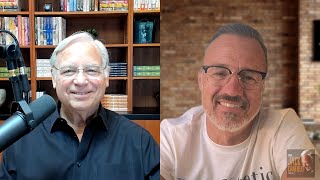
Eric Edmeades discusses his book Post Diabetic and the WildFit program, which claims to reverse diabetes through evolutionary nutrition and food psychology. Over 100,000 people have gone through the three-month program, with documented cases of people getting off insulin and reversing their diagnosis. Edmeades argues that pharmaceutical incentives favor keeping people sick rather than curing them.
Questions this video answers
Over 100,000 people in over 100 countries.
$400 billion this year (as stated).
In 90 days he lost 40 pounds, was no longer type 2 diabetic or hypertensive, and stopped 9 of his 10 prescription medications (as reported).
Dr. Ruben Ruiz (assistant professor of medicine at UCLA; described as a practicing internist) is named as co-author.
A QR code granting free access to the diabetes reversal multimedia program (normally priced around $300).
Chapters
Foreign.
I'm Jack Canfield, and welcome to the Jack Canfield Podcast. And today it's my pleasure to be joined by someone who's not just a friend, but also a visionary in the fields of health in human potential, Eric Edmeads. Now, Eric's a pioneer in the coming food revolution, deeply passionate about empowering people to take charge of their health. And he's here today to talk about his latest book, Post Diabetic, which was just released last month, which promises to be another impactful resource guiding readers toward vibrant health. And his book builds on his profound understanding of evolutionary biology and human nutrition, which we'll also talk about a journey which he began with his renowned WildFit program. So, Eric, fantastic to have you here.
Oh, it's really great to be here. And always good to see you.
Yeah, always good. I just. What most people don't know is we both belong to the Transformational Leadership Council, and whenever we're there together, I spend half my time with you just hanging out because you always know so much stuff and are so interesting to hang out with. So glad to do it online with you today and share that with all of our viewers and listeners.
And the feeling is very mutual.
Thank you. So last month you came out with your new book called Post Diabetic. So why don't you share a little bit about what inspired you to write it and what you hope readers will take away from reading it.
So it's interesting. This isn't a book that I felt particularly destined to write from the beginning. It sort of stumbled upon me. And the reason was that when I first created WildFit, I was really simply focused on helping people improve their relationship with food and consequently, their quality of life. And then what happened was all these people kept writing to us and telling us that they used to be diabetic and now they were pre diabetic. And, and I mean, first of all, that's kind of a magical thing. But secondly, it was a little irritating. I was like, wait a second. If you were type two and you've now, like, you know, you've now, like, pulled back from it, then it's not pre diabetes, is it? It's something else. Like, pre diabetes means you're on your way. It's pre, it's before. And, and so I started calling those people post diabetics. And one day I was having a conversation with our mutual friend Mark Hyman, and I said that to him and, and he's like, geez, that's a really important message. We got to get that out there. And it is an important message medically because, you see, you could have two people that have basically the same metrics, the same blood sugar numbers and other measurements, but one is trending toward type 2 and the other one's trending away. And that distinction should have an impact on the medical advice they receive. Only in the medical world, there was no distinction between those two things because type 2 diabetes is, you know, not, Not. Not regarded as a reversible condition. And so then one day, and this is, this is super, like, I don't know how you put this, but, like synchronistic or, or magical or whatever it is. But I, I ended up in a zoom call with a, with a, with a client. And he, and he told me he was a doctor. He was a. He ran three clinics in Southern California. He was an assistant professor of medicine at UCLA. And then he was 40 pounds overweight, and he was type 2 diabetic, and he was hypertensive. And, and, and, and he got in two car accidents in a week after stopping at Starbucks to get coffee each time. And, and that night after the second accident, he went online and he was looking for answers, and he found Wildfit, went through the process, and 90 days later, he'd lost 40 pounds. He was no longer type 2 diabetic, he was no longer hypertensive, and he got off nine of his 10 prescription meds. And he came to me and he said, nobody teaches us this in medical school. We have a pharmaceutical. We have a drug day, like every month to teach us about all the new drugs, and nobody teaches us this. And he says, how do we get this message out into the world? And his name is Ruben Ruiz, and he's my co author on the book, and that's why we did it. And, and it's making waves.
Wow. So talk a little bit about Wildfit and how that fits into the book and, you know, how they overlap, if they do, and how you got involved with Wildfit, because it's really the underlying thing of all this work.
Yeah, it's. It's. So my story really starts with being sick. You know, I was, I was overweight and not very healthy and, you know, just on a bunch of different medications and not doing very well. And I, I went to, funny enough, I went to a Tony Robbins seminar in, like, the early 90s, and for some reason, on the last day, you know, Tony starts talking all about food. And I'm like, you're not the food guy, you're the communications guy. You know, like, like, what's going on with this food conversation? And, but, but it did get me thinking. And so I, I, I went and I did some more reading, and then I decided to do an experiment. And I, you know, cut out some things and I added in some other things. And 30 days later, I was down 35 pounds. I no longer had acne. I no longer had throat infections, sinus infections. I no longer had digestive problems. And I was off all my medications. And that's after like almost a decade of visiting doctors and specialists. And I was like, wait a second. And so I ended up having a conversation with one of my doctors who was trying to convince me to have a surgery he prescribed that I no longer needed. And I told him, I don't want the surgery anymore. And he goes, yeah, but the pain's going to come back. He sounded like a used car salesman trying to save the sale. And, and then I asked him, I was, and bear in mind, I'm 21 years old and I looked about 15. And I, I said to him, I asked him how long he went to medical school. I swear that. What an impertinent question. How long did you go to medical school? You know, and he says, well, you know, six years. And, and I said, can you tell me how much of that time you spent studying nutrition or food? And, and the answer, like, I was expecting him to say, you know, six months or six days or maybe even at least six hours, but it was like literally nothing. Like, there was none. And now I suddenly felt like I was like I was on a plane. And I just found out that neither of the pilots studied landings. Somebody's gonna have to figure this out. And so I, at that point, started the journey of really diving deep into what we would now call nutritional anthropology. And that led me to a horrible discovery. One good discovery is that we basically know what humans need to be eating to be healthy. But the horrible discovery is people aren't willing to do it. You know, I, I would have all these friends come to me and they'd want to lose weight or get more healthy. And then I'd, I'd give them all the rules and they'd follow them for about a week, and then they'd be back to ordering garbage and going through the drive through. And so that set me on. My next batch of research was into what I think should now be called, like, because I don't think officially there is a category for this, but there, you know, you would now maybe call it food psychology, the understanding of why we eat what we eat, when we eat and the emotional components and the childhood programming and all that kind of stuff. And so about 10 years ago, 11 years ago, I decided to put all that together in a three month journey so that people could go through an iterative and incremental adjustment to their, to their eating styles. And that, that gave birth to WildFit. The first few classes went really well, and then, and then our mutual friend Pete Bissonnette, you know, said he wanted me to like share wildfit with, with a bunch of the clients at Learning Strategies. And we put like 200 people in a class and they got phenomenal results. And then of course, as you know, I offered WildFit to a bunch of our mutual friends through the Transformational Leadership Council and they got phenomenal results. And that's really what put wildfit on the map because everybody started telling their friends. And you know, to date we've had over 100,000 people in over 100 countries go through the program. And you know, the Canadian government brought me to Ottawa to give me a medal for the work that we've done in this area. It's really been phenomenal. But this one particular thing, this one discovery that diabetes is not, should not be considered a chronic disease that you medicate for life, but rather more like a repetitive stress disorder that can be rectified with balance. That's a big deal. And that message is important when you consider that diabetes will cost America $400 billion this year. Like, billion. The defense budget's only 800 billion. Like, it's a significant amount of money. And that money, of course, represents a phenomenal amount of personal suffering and a, an equally phenomenal amount of family suffering as they watch their, their relatives go through these things. And so taking the message out there to people that it is a reversible condition is, is super important. That also, by the way, makes it more frustrating that when we run ads and social media, when we create videos, they're all getting taken down. They're all getting, you know, we're really having a hard time with that. Luckily we're, we still managed to hit number one in diabetes and number one in nutrition. But it's an important message and it's not the easiest message to get out there.
They're taking down. Why? What are they saying? The reason is, you know, I think.
That, I mean, one might say that the reason could be that, well, I'm not a doctor and what business do I have writing about diabetes? Only my co author is a medical doctor. Long term medical internist, assistant, was an assistant professor of medicine at ucla. So you think I'd be okay there? And then the forward was written by Mark Hyman, who's only one of the most recognized doctors on the planet, so it can't be that. So then, then, then one has to ask what the other issue is. And I'm going to tell you, I mean, the positive and the negative. The positive is, is that when you help somebody reverse their diabetes, you immediately help them to save somewhere between 500 and $1,000 a month on either insurance premiums or medications or what however they're spending it. It's expensive disease to have. Never mind the pain, never mind the shortened life, the development of cancer, heart disease, the loss of your eyes, all those things are part of it too. But you have to remember that when we save them spending that money, somebody else isn't getting that money. And you know, and so I think that there's a. I think George Carlin said it best. You know, I'm not here to. It sounds like I'm a conspiracy theorist. And George Carlin said, you know, in order for a conspiracy to take place, you don't need a bunch of bad people to get into a room together and make a plan. You just need a bunch of people with convergent goals. And if the ultimate goal of pharmaceutical companies is to maximize profitability, well, they would rather manage a disease for life than stop the disease in its tracks.
Right. No, I totally believe that's true. And even, even I don't call big medicine. I mean, the hospitals, the, all the doctors that are not aware that make a lot of money off people being sick. And as you said, it's better if you even in psychiatry keep you going for a long time, keep coming back forever, you know, as opposed to solving the problem and moving on.
Jack, I don't think I ever told you this story, but it's, it's, it's to the point and kind of funny. So I, Many, many years ago, I had girlfriend and she, her parents were from Normandy, France. And so we were in London and we drove across in Normandy. She wanted me to have dinner with her folks. And of course I was aware that her father was a pharmaceutical psychiatrist. And, and which isn't. It's not my favorite, you know, profession in the world. And, and so she says, look, you know, please don't, you know, please don't pick a fight with my dad. And I'm like, of course I'm not. I want him to like me. I'm not going to pick a fight with him. And so we get there and we're having dinner and you know, we little bit of small talk and then he's like, so Eric, you know, I'm curious if you can tell me about your thoughts about, you know. And he starts asking about, you know, pharmaceutical psychiatry and drug, drug treatments. And I look over at my girlfriend, I'm like, look, I told you I wouldn't pick a fight. But I didn't say I would back down from my values, you know, like, what am I supposed to do? He's asking me outright. And so my normal answer to that is that for every 10,000 psychoactive pills that are prescribed, I think only one was actually necessary. That's my normal answer, which is, I know it's hyperbolic and out there, but. But for the sake of keeping the piece of dinner, I thought I'd dumb it down by an order of magnitude. And I said, well, for every 1,000 pills that are prescribed, I believe that only one of them is necessary. And now I'm kind of waiting for the now that dinner's going to get uncomfortable. It's like. And he goes, I think you're wrong. I think it's more like 10,000 to 1. And he went on to explain that the legislation had changed in the eu, as it has in, as it had in America, that was allowing pharmaceutical companies to advertise directly to the consumers. Are you having this emotional problem? You should take this pill? And those people are now walking into his office demanding the pill. And he's then saying, well, look, if we had two or three sessions first, then you might not need to go on the medication because, you know, after all they have side effects and what have you. And he said then people would say, write me the script or I'll go see another doctor. And so the pharmaceutical companies basically turned psychiatrists into unwilling salespeople. It wasn't. So suddenly I had a new respect. And by the way, how's this for quirky? And consider that my girlfriend's first request was don't pick a fight with my dad. He then booked me to speak at a conference on psychiatry on Mont St Michel, which is one of those magical islands. It's an incredible little place. And so I had to do two sessions for the psychiatrist there. The first session was on, was on how to convince a patient to be willing to try a non pharmaceutical method. Like they wanted me to do a whole workshop on how do you convince the client to do that. And then here was the other one and they Were a little embarrassed to ask, but it was like the second talk they wanted me to do is what do we even do anymore when we don't have drugs? Because they'd all gotten so used to just prescribing drugs that they'd kind of almost forgotten the therapeutic techniques and things that they'd learned. And so I gave them a crash course in some of the neuro linguistic programming techniques around, say, phobia curing and, and you know, emotional state management and what have you. So you're. We're in a tough place where the economic rewards are kind of not wired for our quality of life.
No. I work a lot with doctors who've written books because I coach people on how to write a good book, how to market their book, how to get it published, et cetera. And I do that about every six weeks. We'll do a group, about 15 people, it's online, and everyone gets in the hot seat and so forth. And I've had a number of doctors who've come up with cancer cures or at least things that cost less money and are more effective and they end up losing their hospital privileges. And they said, why? He says, well, we make more money on chemo and on the other stuff than we do on what you've come up with. So we're not making money. The purpose of the hospital is to make money as opposed to heal people. You know, it's really insane that we're being driven by that as well. And it's true about the advertising. It's really changed things a lot. And they've even made things that were not even diseases. They gave them names, you know, so all of a sudden you've got something that's very common. It's got a new name now, so it needs a drug to go with it.
This is a little off color. This is a little off color, Jack, but you and I have gone off color a few times. I'm just going to say, like the genius of coming up with the name erectile dysfunction. Listen, I'm not saying that that doesn't exist, but I have this feeling that there's a certain number of people that once they heard that such a thing could exist, they got so focused on the condition that it caused the very symptoms that it predicted.
Right. Get so worried about this.
What condition might I have? Oh crap, it doesn't work anymore.
There you go. There you go. So let's talk about wildfit a little bit and the human nutrition and evolutionary biology and what led you to that? And I know you went out into the plains of Africa to see how the healthiest people in the world were living and so forth. Give us some background on how all that evolved.
You know, it's a series of convergent weirdnesses. You know, like, first of all, my great grandfather found the oldest Homo sapien skull in the history. History of. Of Earth at the time. And so I grew up with this understanding that there was this family, you know, interest in. In human history and evolution. Then, of course, I went through my own health renaissance, as we talked about earlier. And then totally separately, I became really fascinated by, you know, the. The coaching and. And practical psychology and how you actually facilitate transformation for people and so on. But the nutrition piece that one really was, was interesting because, you know, we've all been taught certain things about food, but most of us are frankly confused because on any given day, you can see one headline that says eggs are good for you, and then you can see another headline that says that they're bad for you. And the same could be said for wine and bread and meat. And just about everything is one day good and one day bad. And so I really was puzzled about that. I went through this phase where I was absolutely convinced that it was all about veganism and that that's what you had to do because of all the terrible things that were in the meat and all this kind of stuff. And. And. But then I didn't feel very good after some years of experimenting with that, and I was really torn. And one day I had a big epiphany moment, and I was on a plane and I was doing a photo assignment. I was doing some wildlife photography at the time, and I was doing a photo assignment for Virgin Atlantic Airlines. And so I'm on the plane and we're headed down to Joburg, where I'm going to go do this assignment. And I open up the In Flight magazine and there's an article in there. And the article is talking about the history of captive elephants. It's talking about when they first started capturing elephants in the wild and putting them in zoos and circuses and all that kind of stuff. And the article went on to explain that they put the elephants in the zoos and the circuses, and the elephants would only live for six or seven years, but that was enough time to get a return on the investment. So the practice continued. And then there came this point in the sort of late 1800s, early 1900s, when people started taking a real interest in natural history, and they found out that in the wild Elephants could live like 70 plus years. And it's like before they were like, well, maybe they only live seven or eight years. Nobody knew, right? But now they know they live 70. So of course, while I would like to think at least some of the zoo and circus owners became concerned for their actual elephants, I'm thinking most of them saw an opportunity for bigger roi. Like hell, if I can get this thing to live 70 years instead of seven years, I'm going to make a lot more money. So the next bit of research, you know, happens and that is the com, the, the comparison. Why is it that these ones are not living as long as those ones? And of course the article starts to refer and this is where I had the biggest breakthrough moment. And this is the moment that gave birth to wildfit and post diabetic and all the work that I do in this space. The article went on to say that the elephants in the wild were on the wild diet and the elephants that were in, in the zoo were on a captive diet. And that irritated me because, well, scientifically that's not how you use the word diet. You know, like, like an elephant has a diet, they don't go on one. An elephant does not go on a diet. They have one. And, and lions don't go on a diet either. They have one. In fact, the only animals on earth that go on a diet are humans and our pets. And I wonder if it's any coincidence that we are also all of the sickest animals on this planet. And, and the fact is, is that, you know, the word diet means lifestyle. It means the way you live. You know that that's the origin of the word. And so as I'm reading this article, it's irritating me because the elephants in the wild are not on the elephant's wild diet. They're on the elephant diet. That's what they're on. And, and, and, and, and if you take them off the elephant diet, they're going to get sick. And I wanted to take out my red pen like my teacher did in school to all my papers and I wanted to circle everywhere it said wild diet and cross it out because it was grammatically wrong. That's not, it's not right. And then as I realized that, I was like, wow, this is not a mistake in this article. This is a mistake everywhere. It's only for our species that you go on a temporary alteration to your normal eating pattern in order to fit into a two piece swimsuit for the summer. Like we're the only ones that do this going on a diet thing. And that was the moment that everything turned where I really started doing a deep dive into evolutionary biology. I started studying archaeology. I went to go, as you mentioned, over 15 years of visits now with the Hadzabe people in East Africa, which are among the last proper African hunter gatherer tribes left on Earth. Because, and here's maybe the best way I can describe this, Jack. If, if, if you and Inga suddenly got a, you know, an exotic pet, a new exotic pet, and you were like, well, how do we, how do we take care of this pet? What do we do with this pet? You know, let's say you have two choices. The one is to go to PubMed and Harvard Medical School research papers and look for research papers to tell you what to feed your pet, understanding that those research papers were probably written and paid for by Purina. You know, on the other hand, you could go watch the Nature Channel for two hours and then you would look at what that exotic pet did in the wild and go, okay, that's what. Which do you think is going to work out better for the exotic pet? And so I would say we should use the same logic. For us, we know a great deal about human history, evolutionary biology. We know a great deal about the way humans lived and the way we evolved. We also know a great deal about the way hunter gatherers, modern day hunter gatherers live. And we also know a great deal about the way our closest relatives, chimpanzees and bonobos, live. And you know what's interesting, they're all incredibly similar. We're the only ones that are out of the pattern, and we are also the ones that are developing heart disease and cancer and a variety of other problems.
I think it's funny you called it Wild Fit after all that it's not a wild diet. But nevertheless, what are some of the tenets of wildfit in terms of what you say we should or shouldn't eat and how to do that? And I know you talk about seasons too, which is something I hadn't heard about before. Talk about that as well.
Okay, so the first part, the what we should and shouldn't eat. The truth is, most of us kind of know the answer to this. Pretty much everybody can create a list of what we shouldn't eat, processed foods and foods full of chemicals and with ingredients you can't possibly pronounce, and, you know, in, in gross types of seed oils and vegetable fats. And we all kind of know that those things aren't ideal. So what does that Leave. Well, it leaves seasonally available fruits, vegetables, nuts, seeds, beans maybe, and, and seasonally available meats, fish, eggs and poultry. That's basically what it leaves, which happens to coincide with what our ancestors ate and, and with what our contemporary relatives ate and, and with what modern day hunter gatherers eat. So, you know, that's the key thing, and this is a very important distinction because the diet industry right now is just as bad as the pharmaceutical industry, as far as I can tell. I mean, you know, they all use fear mongering. So now you have to be, these days you have to be afraid of kale, and last week you had to be afraid of eggs, and the week before that you had to be afraid of meat. And you know, the whole thing is predicated upon what you should be avoiding, when the truth is that your health is far more, far more dependent upon you getting your needs met than it is you avoiding anything. So as a thought experiment, if we were to take one of our, let's take Stuart, if you and I were to take Stuart and put him in a perfect human environment, you know, just in this perfect human environment with all the, all the right foods, like no junk food, no glyphosate, no sweeteners, no, he just got all the perfect food. Well, one would assume at that point that he would be a fairly healthy person, right? It makes sense he'd be fairly healthy. But what if we removed all the vitamin C from the citrus fruits, from the liver, we took all the vitamin C out. Now he still hasn't eaten any garbage, he still hasn't had any chemicals, he still hasn't had any refined sugar, he's still eating perfectly. He's just missing the vitamin C. What's going to happen? He's going to get skin sores, they're going to get septic, and he's going to die having never had chocolate ice cream. And so, you know, that's the first core principle, is that your health is far more dependent on you getting enough of the good stuff. Consider you and me, Jack, in a room and suddenly it starts filling up with smoke and we can't get out of the room. Obviously the smoke's not good for us. So should we stop breathing? Well, that's not going to work out very well either, is it? And so what we have to do at this point is make sure that we focus on eating enough of the good stuff. So sure, if somebody's eating meat, if they're not, say, vegetarian or vegan and they're eating meat, would it be better that they got organic grass fed, sure, it would be better, but should they give up all of it because they couldn't get it in that moment? No, they need those aminos and they need the fats and the B12 and what have you that's coming from it. So that's sort of the first principle. The second principle is the food psychology piece, which is to say that when you begin to understand why you eat what you eat, when you eat it, you get power over it. For example, we've all seen the moment where a kid's running along, trips, falls, skins, their knee, and they look up to see if a parent can spot, you know, saw it. If no parent saw it happen, the kid just jumps up and starts playing again. If a parent saw it, well, now there's some tears and there's some, you know, there's some crying. And now that parent's going to come over and give that child some hugs and love and maybe because the pain is so bad, a cookie. And then you wonder why it is that at 40 years old you walk in and buy a big box of Chips Ahoy cookies because you had a rough day at work. Well, because you were taught when you were six that food is an anesthetic. And so there's layers upon layers of food psychology that go into the way we help people deframe their existing relationships with food and create new ones. And then the third pillar is exactly what you brought up, and that is seasonality. And it's very important here to disclaim that. I don't mean the seasonality of, you know, you and Santa Barbara, or, you know, one of our, you know, like anybody in Minnetonka, Minnesota or what have you. We're talking about sub Saharan African seasons where humans evolved. Our ancestors evolved the ability, first of all, to survive these huge seasonal fluctuations. Mother Nature was not nice. Mother Nature would come along, go, hey, Eric and Jack, here's a bunch of root vegetables and fruits available for you. How nice am I? And then suddenly Mother Nature would come along and go, now they're gone. And by the way, there's no other food. It's winter. So I hope you fattened up. I hope you managed to fatten up enough to get through this winter I'm about to give to you. And that's how it was for our ancestors. They faced these huge and harsh seasonal fluctuations. And so we had to evolve a metabolism that would let us survive those. And then in time, we didn't just evolve a metabolism to survive those seasonal fluctuations, but to utilize them. So for example, and we know this, the science on it's really clear fasting, which seems to be the most awful thing in the world. And no pre human ever intentionally fasted. Like, can you imagine some early hunter gatherer going, hey Jack, let's not eat this week? Like, absolutely not. But mother nature forced them to fast from time to time. And so our bodies learned that that was a good time to burn protein, to get rid of the old sick and diseased proteins that were floating around our body that no longer had a purpose. It's called cleansing. And it's a super important thing to do. And yet the vast majority of people don't do it. And so by understanding the three metabolic modes of human beings, I.e. that we can be sugar burners, we can be fat burners, and we can be protein burners. Understanding those modes, the importance of them and how to trigger them is a massive part of longevity science and basically quality of life.
I know that when I was doing wildfit way back when that you were suggesting eating other than beef, although you were saying grass fed beef was better than not. But eating, was it buffalo or what do you call it?
Bison.
Why better? Why better?
The principle kind of works like this, that the, the every species on earth evolves certain nutritional requirements and certain capacity for capturing and processing nutrients to get those nutrient requirements met. So for example, I'm sitting here, you know, having this, and there's a table and say the table's made out of wood. Does that table have vitamins and minerals in it? Well, yes, it's an organic material. It'll have some of that. But do you or I have the genetic capacity for processing or extracting those nutrients from the wood? Well, hell, we don't even have the teeth for it. We're neither termites nor are we beavers. And so therefore, no, we don't. And equally our digestive system isn't very good at doing that. And so what we want to do is we want to eat foods that we have an evolved relationship with. And what I would say is that, you know, clearly we do not have an evolved relationship with Twinkies, you know, that like, or processed food or deep fried garbage. We don't have that. And that's one of the reasons that's really devastating for us. And we do have an evolved relationship with naturally occurring, seasonally available fruits and vegetables and seeds and nuts and meats and fishes and eggs and so forth. But even those things have changed a lot. You know, I mean, Jack, seriously, how big Was the strawberry when you were a little boy?
I think smaller than the ones that are there now? I don't know, I don't remember for sure.
Yeah, maybe the size of your thumb at most. And now they're the size of a small apple. You know, it's crazy. We've genetically modified all the things around us and even that isn't ideal. So a strawberry today is way more full of flavor and sugar than it ever was before. And they're more plentiful. Well, the same thing happened with meat. Average bison is a very low fat proposition. The meat that much more closely reflects the meat availability that our ancestors had because they were eating animals that existed in nature, that had to run for a living, that were by their very nature low in fat. We bred cows well for two reasons. One is to make them docile so we can keep them in, you know, in enclosures and what have you. And the other one was to make them yummy. And by the way, take a look at it. The more fat that's in that beef, the more you're paying for it. Have you ever looked how marbled a piece of white goof? You know, I mean it's marbled, it's full of fat. We're paying for that because of the, because it's flavorful. And so I would say, listen, I'm all for those people who eat meat and you know, obviously if you're vegetarian, probably shouldn't take this advice but, but for those of you eat meat, I'm all for, you know, eating ethically raised and responsibly created beef and what have you. I just think it might be optimal to also include what you might think of more as ancestrally accurate meat, like you know, say bison meat or ostrich meat or, or wild, you know, wild, wild, like sort of origin based meats.
Does that include things like goats and lambs and you know, well, when I say does that, where's all that fall in here?
Those are all genetically modified animals. We, we took something from the wild and turned them into a modern day goat or a modern day sheep or a modern day cow or what have you. And con, there are consequences for that. But like, you know, one of the reasons that bison is so good is that bison won't, at least as I understand the law in America today is you're not allowed to feed lot them there's, it's against the law. They have to be free range. They have to be out there eating the grass. And, and so to a degree, what I would say is that it's not so much about the species, it's more about how it was raised. And then in the case of chickens and goats and stuff, I mean, I think if you don't have access to say, ancestral meats, well, that's the best you're going to do. And you should do that.
Once you start doing the grain feeding and all the antibiotics and everything now you're in trouble.
You are in trouble. But again, you come back to the same problem. People go, well, I don't want to eat meat because of the antibiotics and the grain feeding. So what if that's the only meat that's available to you? I would put to you the same thing. If you and I are in a smoky room, we're going to have to figure out a way to breathe because holding our breath isn't an option. The fact is that if somebody avoids all meats because they're concerned with the hormones that are in the meat, they're now going to be missing a bunch of amino acids and fat profiles and other vitamins and minerals that they really need. And they're going to, you know, so of course we always get the best source that we can. But in the meantime, the fear mongering, well, avoid this thing because of this one thing that is, is a dangerous principle.
I hear you. Where, where does fish fall in all of that?
Fish falls into, in this sense that farm fish is generally speaking a pretty bad idea because they're in the same way that, you know, in the same way that, you know, like feedlot cows are a pretty bad idea. That said, same principle applies. If that's all you can get, it's all you can get. But you know, no, we've had a long ancestral relationship with fish and shellfish and yeah, I'm all for it as long as people are doing it in a, say, ethical and as environmentally friendly way as they can.
Okay, so let's talk about the psychology of eating for just a few moments. Because you talk about how people would do it for a few weeks, then quit, or how hard it is to get people to maybe follow through and getting them to actually do the diet. It's one thing, I think if you do it and you see the changes, you feel better, you lose weight and all that good stuff, that's a great reinforcer. But even then, some people don't stick with it. But what have you found to help people? I know that you're very successful with hundreds of thousands of people actually doing this and staying on it. Talk about the psychological aspect of that.
So the psychological component of the work we do is really interesting. And I want to pick up on something you said in the question that, you know, as long as somebody feels progress and motivation, they're more inclined to stay the course. That's only true until it isn't true. And what I mean is, is that some people are more motivated by moving away from pain than they are moving toward pleasure, especially if they haven't really associated to their goal or associated that pleasure. And so what that means is that, let's say somebody was carrying a little bit of extra weight, maybe their blood sugar was, you know, their A1C was headed toward the diabetes range. Maybe they inflammation or pain in their hands or knees or whatever. And then we work to help them change the relationship with food. The weight comes away, the inflammation goes away, the blood sugar rectifies, and with that, the pain goes away, and then the motivation goes away. And then they're at the drive through, you know, or they're making a bad food decision. And so one of the things that we do with clients is we. We work on creating something called a success tableau. And a success tableau is a moment in time generally reflected by an image with. With. With sounds and emotion. You know, like sort of a. A frame of a moment in life that is so emotionally powerful for them that it'll. That it'll draw them through to the future. In fact, I often reframe the law of attraction by saying, rather than thinking about you vibrating and. And attracting things to yourself, isn't it really about you developing such a strong emotional attachment to that thing that's out there that it will draw you through every single challenge you need to get to to get there? And so we're working with people on that success tableau principle. And so I'm talking to this one client about that, and he says, you know, he's recently a grandfather, and he notices that when he, like, wants to sit down on the floor that his knees hurt too much to get back up again. And that since he'd been going through the program, he was able to get up again. And he's like, my knees don't hurt. And so what we did is we created a success tableau for him that was all about him being able to get on the floor and wrestle with his kids and be able to get back up without asking his son for help, because that had been so difficult for him. And as soon as he saw that image, nothing could get in his way anymore. He didn't need the Pain to motivate him anymore. So that's one example of some of the psychology that we need to work on. But much more powerful, I mean, or not much more powerful, but much more important is the helping people to spot their food, decision reasoning, and to kind of change it, to figure it out. So you and I have a mutual friend who will remain nameless for the podcast, but she went through the program some years ago and she did very well. She wrote me this letter about being. She's in her 40s and for the first time since she was in high school, she was wearing a two piece bikini to the beach. And it was like, it just changed her whole life. It just changed everything for her. But she came back into one of our classes and she goes, listen, I'm doing really, really well, but I'm having this thing where I just don't understand, but I'm having this craving for icing all the time. And I was like, what do you mean? And she goes, I just crave it all the time. And I said, are you eating any other sugars and processed? And she goes, no, Rarely, if ever, no. And I said, okay, well, tell me about your. I imagine you used to bake with your mom and maybe there's something going on there. And she goes, yeah. I go, oh, I know your mom used to homemake icing and you got to lick out the bowl. And she goes, no, my mom was no kind of, no kind of cook. She. She just got the canned stuff. She just got the canned stuff and wiped it on. But whenever I heard the can opener, I'd come running down the stairs and I'd grab a spoon out of the drawer and I'd sneak a spoonful of it. And then my mom would catch me and she'd tickle me and then we'd bake together. I said, I see. Can you tell me, how are things with your mom right now? And she. She couldn't answer for a minute. Then I. Then her eyes just brimmed up with tears and she goes, I'm losing my mom to dementia a little bit more every day. And I don't say anything because, you know, if there's one thing I've learned about helping people transform is it's about listening a lot. I just didn't say anything and I waited. And then suddenly she looks at me dead in the eyes and she goes, oh my God, am I craving icing to feel closer to my mom as she slips away? And in that moment, in that moment, it was gone. The link was broken, it could no longer manipulate her. And we all have those. That happens to be a very visceral one. But we all learned that wine is a cure for depression and chocolate is a cure for loneliness. And we learned all these things and those linkages can be broken, that hypnosis can be undone. And when it's undone, something really magical happens and that is that people no longer have to rely on willpower to stay on track with their health goals. It's like their subconscious changes in their neurology rewires and they want to eat a certain way and they don't want to eat another way. And I'll tell you, that's really powerful. If somebody wants to eat a particular junk food item, they're gonna, it's just a matter of time. But if they literally don't want to anymore, then you've given them something special.
That's great, that's really good. Just a couple of final questions. I know you're a big proponent of AI and technology and I've heard you give some talks about that. And have you been using it? I know you've been using it to write things and to do research and so forth. Are you seeing a connection of how to use AI and perhaps different monitoring devices and things that are related to that to support the work you're doing with Wildfit and post diabetic?
Yeah, there's definitely some application and I've used it for research. In fact, one of the things I did that was really cool is I created a GPT Persona named Adam. And I used the. This is different than just having a conversation. I created a GPT Persona like the programmed, who the person was. And I told Adam that he was a 70 year old man and that his 70 years on Earth correlated with the 7 million years of human development. And so that when I asked him what was going on in his life at a particular age, he would answer for that particular era in human history. So for example, if I asked him how old he was when, when he first saw fire, he said, Well, I was 40 years old. That's about right. That's about right. And I said, could you tell me, could you tell me what it was like, you know, when, when you, when you first started having control of fire? And he said it was nothing less than life changing. Before we had fire, we would sleep with one eye open in fear of the big cats and other tribes that were constantly hunting for us. And suddenly with fire, for the first time, we could relax. For the first time, we could sit around and connect with our family. It was amazing how empathetically accurate this answer felt. And so I definitely and I talk to Adam quite often when I want the perspective, the, the sort of hunter gatherer or past history perspective. But I will say this, it's very difficult to use AI in the health space at the moment and that is because most of the large language models have very heavy biases. I'll give you an example. I used Chat GPT to create a table with a plugin and what it does is it populates an Excel spreadsheet for you. And I asked it to, I gave it all of the vitamins, minerals and amino acids and fats. And I then I had two columns and I said please populate one column with all the plant sources for these things because I wanted to know what all the plants were that were good for those things. And then I said please populate the other column with the animal sources for those things. And remarkably a couple of them fell in categories where it said no animal sources for this nutrient. And, and, and equally in, in at least one nutrient that there are no plant sources for. It's, it's cited a plant that, that doesn't do that. And I says like what's going on? Well, unfortunately the large language models have been indoctrinated with the low fat ancel keys lie and the, and the, you know, the, the plant based sort of anti meat movement, the politically correct you know, sort of movement. And so then I went back and I go well hey hang on a second now you said that vitamin C, there's no animal sources for that. Are you aware of any studies that indicate vitamin C availability and bioavailability from, from liver? And it writes back yes, of course. Liver's note is one of the greatest sources of vitamin C from a bio bioavailability perspective. Then why isn't it on the table? I'm sorry, I see the error of my ways now and I will update the table. You know, that's not a mistake, that's not a mistake, it's a mistake of programming. And so you gotta be really careful because these things have biases and you don't wanna let those biases inform, you know, inform your opinions.
What's next for you? I mean obviously promoting your book, continuing your work, you're researching all the time, learning tons of stuff. Do you have anything you're excited about now that on the horizon?
Yeah, you know, I mean the post diabetic book, I'm very, very excited about that. We're Already getting messages from doctors, you know, like, super excited about it and asking for copies of it. And we'd already been for years, having doctors contact us and say, what did you do to my client? They're no longer diabetic. And I didn't know that was possible. You know, in fact, in one country that we're currently working with their. Like, with their government, I'll leave them nameless for the podcast. But they have an app where once you become a diabetic, you're in the healthcare app. You start getting regular messaging about diabetes and what have you. And frankly, much of that messaging is way off base. But here's the really funny part. One of our clients wrote me and said, I went to my doctor and I'm now post diabetic. I'm no longer even pre diabetic. I'm fully post diabetic. And yet there's no way to remove the diabetic function from the app because it's regarded as a chronic disease. It'll never go away. Therefore, there's no functionality to remove it from the app. Like, just to give you an idea of how stuck the industry is. So I am really excited about getting that message in the world. I'm frustrated that social media platforms are censoring us and are preventing us from getting the message to the world, but I'm not going to stop. Of course, over the years, you've been a big inspiration to me in terms of books, and so has our mutual friend John Gray. And I remember talking to him once, like, you know, it's easy to make the assumption that Chicken Soup or Men are From Mars were just instantly amazing because they're such smart ideas and concepts and titles that they must have just been instant bestsellers. Then you find out the blood, sweat, and tears that you and John had to put into making that stuff happen. So John's telling me he would. He would sneak into bookstores and move the books to, like, to the front of the aisle and put them face out. And, like, he would, like, do everything he could. Then he gave me the great hack. He says, you've got to go to the bookstore and ask the manager if you can sign the books, because they can't send the books back. Then once they're signed, they have to be sold. So today, Jack, nobody's listening, but we went into the Barnes and Noble, and I'd never seen the book in a store before because it only came out about two weeks ago. And I've been on the road and I hadn't seen it in a store and we went into Barnes and Noble to see if it was there, and there it was. Spine out. Jack, My book was spine out. What the hell? Spine out. It needs to be cover facing. So of course we move it, rearrange them so they're cover facing then. And we got this all on video. Then I opened one out, took away pin sign it, stuck it back in the bookcase. I'm using the guerrilla marketing tactics that you and John have taught me over the years.
Well, the other thing you can buy on Amazon, little gold starburst that say signed by authority. And you can put that on the front of the book. And now it's really there.
Then they really can't send it back to the warehouse.
That's right. That's right. And the person that's buying the book would be more likely to buy it because it's signed by the author and they're just a roll of stickers, you know, like when you return address labels, those kind of things.
I'm doing that immediately. There's no question.
I show you that in the airport.
Yeah, I'm doing it. I'm getting them right now. I'm talking to Sherry immediately.
Yeah. One of the things, the book that sold the most in terms of being on the New York Times, the bestseller list for 12 years was a book on the New York Times bestseller list for 12 years in a row, every week. It was called the Road Less Traveled. And the guy who wrote that book did the first year, he did three interviews a day. Radio shows today to be TV, podcasts, YouTube, you know, Instagram, whatever, but three a day. And then for the next 11 years, he did one a day. And so part of the reality of, of what John and I both did was constantly, constantly, constantly. And I would do radio shows in, in, in. In Wyoming at midnight, figuring some truck drivers listening to the radio as he's driving across Wyoming, you know, and little by little then the word of mouth started to take off because everybody knows someone who's got diabetes or got prediabetes. It is so rampant. And the idea of people finding out about it, referring their friends to it, but yeah, it's a slog, but keep it up. I know, I went to the Amazon, I saw your book there. So people can find your book there. Probably you'll be on all the other major online bookstores, Barnes and Noble and so forth. And if they want more information about you and about Wildfit, give us some websites they should go to.
Sure. The first thing I should mention Is that in the first edition of the book, the one that's out now? So assuming somebody's watching this podcast, you know, fairly, should I say, before the end of 2024, the book has a QR code in it that gives them access to our diabetes reversal program, which is a, you know, like a multimedia program built on the same principles as WildFit. That program's normally like 300 or something, and they get it for free in the book now. So that's a big incentive to go out. And, you know, for 20 bucks, you get a $300 program. That's a pretty good deal. They can find out. They can. Obviously, they can get the book anywhere, but if they go to postdiabetes.com there's all kinds of information and resources there, and we'll be building out even more resources there as we build out that site even further. They can find out about me at www.eric.ee. and, of course, I'm on Instagram and I manage my own Instagram account. So if people write me questions, I do my level best to get back to everybody, and I'll certainly do that.
Very good. Very good. Well, first of all, I love you. I love everything you know, I love your willingness to share it. Your passion and your compassion is huge. And just your curiosity. I think that's one thing we share. We just want to know as much as we can. I once had this image when someone said, what's your purpose? And I was doing a guided visualization, and I found myself in the imagery climbing up to the top of the mountain, grabbing as much light as I could hold on to, climbing back down the mountain and handing out little snowballs of light. And when I ran out, going back up to the top of the mountain, getting more light, you know, does that same kind of thing that you do. I love it. So thank you very much for joining us. I really appreciate it, and keep up the good work, my friend. I look forward to when we get to talk next.
Thanks, Jack. Always a pleasure.
And all of you watching or listening, thank you for joining us. Let your friends know about this, share this podcast today with them. And also the idea that we're doing these every two weeks, and we have amazing people on help us grow this. So thanks for watching. See you next time.
More from Jack







[EP 46] Creating Your Own Luck: The Power of Self-Confidence with Veronica de Andrés

[EP 45] Rewiring the Brain for Bliss: Activating Your Spiritual Intelligence with Dr. Dawson Church


[EP 43] Transform Your Life Through Visualization and Emotional Intelligence with Natalie Ledwell

[42] Enhancing Your Health & Longevity Through Peptides and Functional Medicine with Regan Archibald