[EP 26] Embracing Spiritual Evolution with Dr. Michael Beckwith
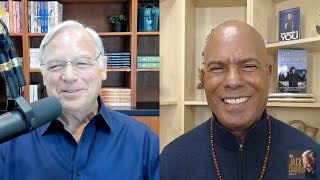
Host Jack Canfield interviews Reverend Dr. Michael Bernard Beckwith about his spiritual awakening (1975), the founding and growth of Agape International Spiritual Center (first public service Nov 30, 1986; grew from ~50 to global presence across ~180 countries online), and Beckwith's core teachings and practices. Key teachings covered: the law of resonance (shift from attraction → resonance → radiance → emergence), practical daily exercises (recalling moments of needs-met, magnifying feeling-tone, gratitude practices, imagining already having everything to hear soul purpose), the Life Visioning process (distinguishing visualization vs. visioning; articulating "what must I become?"), and how to navigate personal and organizational challenges (ego attacks, mediocrity attacking excellence). They also discuss evolving collective consciousness, climate/technology positives often unseen by media, and contact points (agapelive.com, michaelbeckwith.com, Take Back Your Mind podcast).
Chapters
Foreign. And welcome to today's episode of the Jack Canfield Podcast, where I get to sit down with my dear friend and a truly inspirational spiritual teacher, Dr. Michael Bernard Beckwith. And Michael is the founder and spiritual director of the Agape International Spiritual Center. It's a transdenominational community that's grown to encompass thousands of members worldwide. And Reverend Michael is not just a revered spiritual teacher, but he's also an author. He's a meditation guide. He's the originator of the life visioning process. And his teachings are not only profound, they're practical. They're designed to bring the experience of inner peace and awaken awareness into everyday life. Michael's touched lives of many from speaking at the United Nations General assembly, shared stages with the global leakers, global leaders like the Dalai Lama and Nelson Mandela. They are leaking love into the world. He's also the author of several books, including Spiritual Liberation, Fulfilling your soul's Potential, which won the gold medal Nautilus Book Award. He is the author of the Answer is you, A Life Visioning Book, 40 Day Mindfast, Soul Feast, Prosperity, Plenitude, and Infinite Possibilities, and A Manifesto of peace. And in 2018, his seminal book, Life Visioning was listed as one of the 15 books to help solve 15 problems on Oprah.com and today, we're going to delve into some deep topics with Michael, including the evolving spiritual consciousness for humanity and what this means for us individually as a collective, how we can, as individuals and communities, align with this transformational wave, and what challenges might we face and how can we overcome them to truly thrive in this new area? And he'll share his insights on these questions and more. So sit back, open your hearts, open your minds, and get ready for profound exploration of spirituality and transformation with the Reverend Dr. Michael Bernard Beckwith. Welcome, Michael.
Thank you, Brother Jack. Jack Canfield. I'm glad to be with you, and it's always good to be with you, and it's my joy to kick back and see what emerges.
I always love hanging out with you too, my brother. So for our listeners who might be meeting you for the first time, can you just share a little bit about your journey that led you to found the Agape International Spiritual Center?
Well, Agape, we're in our 38th year.
Wow.
And so November 30, 1986, was actually the first public service that came out of a number of months, my vision group meeting in my home every Thursday night for months upon months for us to actually tune ourselves to unconditional love, dynamic peace, and compassion and generosity so that we could actually carry that frequency before we did any business plans to even start a community. We wanted to be the right individuals vibrationally. And so that came about. That began in 1985. Prior to that, I had a spiritual awakening in 1975, when I was a senior at USC. Had a spiritual awakening that at the time I considered it pathological because I wasn't doing anything to wake up. I was in the psychobiology department. I was on my way, I thought, to med school. And I began to have a series of inner experiences that I labeled pathological. I was in the psychology department. So when I'm leaving my body and traveling and hearing voices and seeing visions and all kind of things were going on, I didn't know what to make of it. So the first thing I did at that time, I remember I stopped smoking weed, which I was selling at the time as well, and before it was legal.
Working your way through college, I know how you do that.
FC was expensive. I didn't have all my financial aid together at the time, but. But so. But when I stopped smoking weed, the experiences intensified and it culminated with a me being stabbed in the heart by a man. These two men held me down and one punched a knife into my heart. And the pain was excruciating physically as well as emotionally. And when I woke up from that, I could see that we were surrounded by this universal presence of love and beauty. That's what I called it for years, love, beauty. And then I extended it to love, beauty, intelligence. And then I re emerged and began to embrace the word God again. But it was not anthropomorphic like a man or anything like that was a presence that's never an absence. And so a number of. It took a number of years to integrate the insights I was having and the experiences I was having. Ultimately, I became a religious science practitioner. I became a spiritual therapist, saw clients, did workshops, seminars. And I was so resistant to starting a spiritual community, even though I graduated from a school of ministry. Took me five years to get through a three year program because I had no interest in being a minister. I just liked the dialogue and the conversations that were happening at that level. And then at some point I had to give up the resistance. My world started shrinking and I had a number of visions about agape. I'm giving you the short version of this story. And eventually I gave up resistance. I started the community. And I've been doing that ever since. And I remember at one point I had this dream. I was walking down the Street. In the dream, I was really small, and I saw this building, and it was all this beauty coming out of the building and love and music. And everybody was in the building, all nationalities. Straight, gay, gay, black, white. Everybody was there. And they were just having such a great time and so much love. And the voice said, this is what we want you to do. And in the dream, I'm really small. And I said, what. How am I. How am I going to do that? And they said, you say yes, and we'll do the rest.
Oh, wow.
And. And so that's when I started giving up my resistance to doing it and then ultimately established a vision group in my living room. And then after a number of months, it was time to actually go public. And I had a public service on November 30, 1986. About 400 people showed up, and then a lot of them were Lookie Loos and people that were coming to support. And I was left with a base of about 50 people. And I began with about 50 people. And then it grew and it grew and it grew. And then today it's, you know, we're in like 180 countries and online and a lot of people in person again, since we no longer locked down, and about 30 different kind of ministries within the community of Agape. And it's.
It's a.
It's a sweet place. It's a. We. We wanted to be an example of what the world could look like. You know, I remember we used to talk about the fact that in the world of academia, there was always a description of the beloved community, but we actually wanted to be the frequency of that so that, you know, it's like the Roger Bannister effect. You know, it's like once it exists somewhere, it could catch fire and go global. And so that's what we have today. It's a sweet community. Obviously, it's not perfect because there's no perfect human beings, but it's a constant community that's on the edge of evolution, of contributing compassion and love and generosity and goodwill to the planet.
Yeah, I think I shared with you once. I remember, well, when you started out in Santa Monica, and I actually went to some of the smaller gatherings you had when it first happened, and then you had the church over in Culver City. And I remember bringing my. I think he was probably 18 years old, son to. It was Easter, and. Which is always an amazing experience with the choir and everything. And we were leaving. It was the first time he'd been to Agape. And I said, to him, I said, so what'd you think? He said, dad, that was a soulgasm.
I remember you told me that.
Yeah, it was so funny. But it really was that. It's like it's a frequency of joy and love and fullness and happiness and expansive energy that gets created. And I love that there are all these ministries, I mean, in the prisons and schools and hospitals and working with the homeless. And there's so much good work that's going on. I love it. It's really beautiful.
And many people have emerged from Agape to start their own different ways of contributing in the world. So we birthed a lot of programs that may not be called Agape, but they emerged out of Agape. We have Peace for Kids in which Zayd Gail and his crew, they take individuals out of the foster care program and really develop a deep sense of self esteem and self love and tremendous work. And even though it doesn't have Agape's name on it, it came from Agape. It came from our. We call something called the Sacred Service Saturday, where we would go out into the world and we still do it. We're going to do it again this year. And we would flood LA and now around the world with volunteerism everywhere. And that was one of our programs. And then that became its own program. And so we have a number of things like that that are just out in the world, little satellites of goodwill that emanated from our communities.
It's.
It makes me feel really good that it's a beautiful legacy of wonderful people doing wonderful things that. That emerged right from here, right from the mothership.
That's great. The mothership. I like it. We're going to go all over the place here. Recently you were on as a guest expert for my Legacy Club group and you talked about the law of resonance, which really impacted people. I mean, for weeks they were going, oh my God, that that's changed how I think about everything. Could you talk about and explain what the law of resonance is for this audience and perhaps share how the practical application of that for people in their life?
Absolutely. What I teach is we move from attraction to resonance to radiance and then emergence. And so the linguistic convenience that we've grown up over the years is the law of attraction, where you either see and feel what it is you want and you bring it into manifestation, but the power behind it is the feeling tone that it's already happening and so it's not in the future. So that's resonance. You actually do a tremendous amount of Inner work to actually. You're actually resonating with it. It's existing now. You're feeling it now it's on a floor. Feeling nature, an emotional and feeling nature. And then as you're. As that resonance becomes your field, then there's a natural radiation. You're actually generating a degree of radiance from the depth of your being. It's going from within you out into the world you're radiating. And you can even practice things like you're about to walk into a room and you ask yourself, what do I want to meet when I go into this meeting? Well, I want to meet love. I want to meet compassion. I want to meet peace. And you radiate it. You touch. You have a level of resonance with it. Even if you have to strike the mystic chord of memory and remember moments where you felt like that, you radiate it. Now, as you're able to sustain that for a period of time, more of you emerges. The same way that if you take an avocado seed and you place it in the proper condition, then the roots and the shoots will emerge from the seed. It's already in the seed, but it has to be in the proper condition for it to emerge. So there's gifts and talents and all manner of good within us. And when we become the right vibrational condition, then it emerges from us. And it not just emerges from us, but it is actually dimensions of who we really are emerging. And it becomes a part of our consciousness, a part of our identity. And so that's. So I'll teach. The Law of attraction is a linguistic convenience that pulls us into resonance and then radiation and then emergence. And so you can actually do exercises all along the way until an individual is able to sustain it. To sustain that feeling even before manifestation, even in the midst of the world of phenomena, is topsy turvy. Things aren't going well. You find ways to still stay within that field of resonance. You can ask yourself things like, how can I be deliberately kind rather than right? And the midst of a conversation, you know, you can ask yourself certain questions such you're actually pulling qualities out of yourself that the ego doesn't hijack it and bring you back into scarcity and lack and separation.
Yeah, I'm just flashing on this image of my mother taking a avocado seed, putting two little toothpicks on it, sticking it in the glass, and then that root coming down. And we were being taught all this back when we were like eight years old and didn't even realize that this was part of the universal lesson. So you mentioned, and I agree with you, that really, it's all in there to come out. It's the essence of who we are. You mentioned that there are some exercises people can do to release, manage, bolster, because to me, it's about intentional being. It's about qualities of being that I'm going to intend rather than just hope that something outside of me. I think most people wait for something to make them happy. I'll be happy when she graduates. I'll be happy if that happens. Whatever. Now we're choosing to generate love and joy and gratitude and so forth. Can you talk about what people can do specifically to intentionally build that?
Absolutely. Basically everyone on the planet, regardless of whether they've come from difficult situations in their life or whether they haven't, there. There are moments that we actually have felt that our needs were met. We were safe or protected or supported, even if they were fleeting. So we can actually take our attention and come to that memory of a moment if someone really loved us, Perhaps it was a grandparent or someone that really understood us or supported us, or a moment where we actually felt that our needs were met. And then we take our attention and we actually go into that feeling. We separate ourselves from the external circumstance and we go into that feeling. And then we breathe and we allow ourselves to magnify that feeling so that our. We begin to create a new baseline. That our baseline is that feeling of connectedness or love or support or prosperity. We embrace it with a deep sense of gratitude because gratitude opens up our perceptual window so that we're able to see possibility more clearly rather than complaining. You know, I remember saying, many years ago, Dr. King didn't go to Washington, D.C. and say, I have a complaint today. You know, he said, I have a dream, you know, so we go into that feeling, tone of gratitude, even when it's hard. So as we're able, as we go into that. And that's just one exercise, you know, catch the feeling, magnify it. The feeling, tone of all needs met, whatever it is we're working with. Feeling, tone of being loved, all needs met, health, whatever the case may be, deep sense of gratitude. So now we're learning how to sustain that until that becomes a new baseline. So people, we. I invite people to do that on a daily basis until we have a baseline of support, love, prosperity, all needs met. And I'm grateful. You know, we sustain that. And then by law, universal law matches that signal that we're sending out. And then we have. After that, you have serendipity, you have spontaneous goodness. You know, coincidences, you know, everything you talk about, you know, things seem to start coming into place beyond our plans. I mean, it's good to have plans, but other things seem to show up beyond our planning because we're now involved in a. In a universal quantum field that's working for us. We're responding to the vibration that we are releasing. So, you know, that's one exercise. Sometimes I'll invite people to imagine that they have everything they want, everything. They have money, they have good health, good relations. And then from that feeling tone ask, now, what do I want? You have everything. You have the finances, you have the good health, you have a good partner or good friendships, whatever. You have everything you can want in the physical world. And then you ask, what do I want? And then from there, your soul will begin to speak, or you'll begin to hear your soul tell you what you are to contribute to the world so that all of your energy is not in getting something from the world, but what are you here to give? Because you have everything you already have. You have money, you know, even if you don't have it physically, you imagine you do have it, and you feel you do have it. Now you can hear your soul telling you why you came to the planet. You see, and as you start to walk in that direction, then also you become privy to the added things, which is the coin of the realm, which is ideal employment, good friendships, things of that particular nature. But so many people are caught up on the surface, you know, because we're inundated with materialism. We're inundated with external things that are trying to make us happy. And as you've talked about, you know, you. You get there and you realize, oh, this doesn't make me happy. I'm glad I have it, but it's not really bringing me happiness, you know, but if you imagine you have everything, then you can actually hear your soul tell you, why are you on. Why did you choose this incarnation? What gift are you supposed to give? How are you to contribute? And if you walk in that direction, then other things will flow to you as well.
Yeah. I remember reading a quote recently from Steve Jobs, and he said, I never did anything for money. He said I didn't want to be the richest guy in a cemetery, that I wanted to be able to lie in bed at night and think I'd done something wonderful for people. And I think when you're coming from that space, starting in the garage as he did. What happens is he was coming up with, I want to help people. This is my contribution. And when you come from that space, I've been doing muscle testing with people on this in my seminars. I'll have them put their arm out and I'll say, think of a goal of something you want and how it's going to benefit you if you have it and their arm goes weak. Then I say, think of the exact same goal. Could be Mercedes Benz, house in the Ocean, but only think about how it'll serve others if you achieve it, their arms stay strong. So it's coming from that quality of being of service, not the thing itself that really makes the difference in terms of you're being energized by that. And then obviously as we start to contribute, it comes back multiplied and all that good stuff.
Absolutely.
Yeah. That's very cool.
I was thinking about Paul Newman before he passed over. I put his story in one of my books, Spiritual Liberation, where he had come home. I think he had just won either an Emmy or an Oscar or something. And he was about to put it in his, you know, his. On his award shelf. But he didn't feel like it was fulfilling. I mean, he, like he appreciated the award he received, but it was something missing. So he remember he was saying to himself, you know, I want to change the game. I don't want to live life thinking how many awards I can get, how much money I can make. I want to see how much I can give away before I die. And then that's when he started his non profit business corporation and has the cereals and the dog food and all that stuff in which a significant amount of that goes into charities. And he has enough money kept within the business to sustain it and pay good salaries and all of that stuff. And he became way more happy generating and contributing rather than just acquiring a bunch of stuff. And by the time he left, he'd given over $100 million or more away, rather than just accumulating that like you say, you know, is he wanted to be the richest man in the cemetery, you know, so. So he had given, but he had more, much more joy. He still loved the awards, loved the Oscars. I mean, it was all beautiful. But he more enjoyed how much he gave away before he left. Yeah, and I think that when we ask how can we share and give and contribute, we get that, we get the coin of the realm, we get the recognition, we get the stuff, right. But we're giving from a sense of overflow and a sense of Joy.
Yeah. Well, even Brian Tracy said, you know, if you want to make more money, ask yourself, how can I serve more people more fully, you know, and then it comes back to you, you know, even if you start from that space, which is not necessarily where we're starting from. So I'm, I'm curious, you know, we've talked about overcoming personal challenges in this work a lot. And you know, here you are, you're very evolved. Do you still have challenges come up in your life? And if so, how do you navigate them?
Basically, I seek to maintain a certain practice, you know, and, and not to get off of that, you know, I seek to maintain and I think that the challenges are just more the ebb and flow organizationally. You know, you're dealing with, dealing with people, you're dealing with personalities, you're dealing with the ups and downs of finances to run an organization, you know, So I seek to maintain, like even kill and know that, and stay in the feeling tone of all needs met. Stay in the feeling tone of how am I going to support individuals to be their best. Whatever, whatever task or whatever department they're running. I think the gross challenges, you know, probably dissolve. They're more subtle, you know, and I, I don't deal with a whole lot of anxiousness or futurizing or anxiety, but there are moments of, when I am approaching another insight that I'm embodying there. There are ego attacks. For instance, when I, a couple of months ago, I went to Bio Cybernaut and did a seven day intense meditation retreat. And sometimes around the third day of that, your ego really attacks you. It really sees that you're about to go to another level and it just attacks you. It makes you feel defeated and why am I meditating? Why am I doing all this? And it feels like the whole world is just falling apart. And I remember sitting in my chamber meditating. It was like, oh my God, I'm failing. I'm defeated. I don't want to do this anymore. And that's the feedback I'm getting. But then when we look at the actual brain chart, it showed that my consciousness had expanded and I was at a much higher level of coherence, but the ego was giving me feedback that I was failing to stop me from doing it. So that happens in everyday life. You know, there'll be moments of tiredness, moments of oh my God, you know, am I making any difference in the world? You know, I've been doing this for over 40 years. Is, is it really making a difference? People are still hating Each other and people, you know, this is still going, whatever. And then, and then I have to sit with it and realize that it is making a difference. My ego is giving me bad narrative, bad feedback. And then I just have to just kind of stay with my practice until I break through that, you know. But when it's happening, it's debilitating, you know, it's drudgery, you know.
You know, it's interesting about this because I feel that way sometimes too. Is what I'm doing the right thing to be doing, to make a difference? Am I making a difference? All that kind of stuff. And I. I don't remember the guy's name right now. He was a evangelistic minister traveling around on the bus, you know, with his family, doing these, you know, altar call things where everyone comes down and surrender life to Jesus and so forth. And he was driving through Ohio. I remember that part in his bus. And he just said, God, I don't know if I'm making a difference, if this is the right thing to be doing. I need a sign. Then all of a sudden, one of his kids goes, dad, McDonald's. He said, well, that wasn't the sign I was thinking of. But anyway, they stop and the kids go into McDonald's. And he starts walking down the. The highway and he's walking through a gas station and the phone's ringing. Remember we used to have pay phones? Right, right, right. So it's ringing and no one's answering it. So finally he picked up the phone and the operator says, hi, I have a long distance phone call for whatever his name was. I'm like a Bill Smith. And he's looking around like, can the camera. Where is this? You know, whatever. And. And then finally he says, the library says, well, are you Bill Smith? Are you going to take the call? And he says, oh, yeah, okay, I'll take the call. And then this woman says, hi, I'm Millie. I live in Pennsylvania. I was about to commit suicide, and all of a sudden I. I asked God for help. And these numbers came into my head. I thought maybe they're a phone number. So I decided to call you. Are you in your office in Yakima, Washington? He said, no, I'm in a phone booth in Ohio. So he then helps her and helps her find her way back and everything. And he hangs up. And he's walking back to the bus his wife's getting on. He says, honey, guess what? God knows where I am. And he said, I got my sign, you know, so we all have those kind of show up, you know, and it's just part of the, part of the game. I want to look at one aspect of this as well. You and I were on a call just a few days ago. We're on the board of directors of a place called Rhythmia Life Advancement center, run by Jerry Powell. And Jerry had had a real attack from the outer world a couple years ago. And he called you and said, Reverend Michael, what do I do? And you said, well, if you're going to play a big game, you're going to get pushback. And you said something about if you're sitting on the couch watching tv, not going to be any pushback, but if you play a game, you're going to have to deal with this. Can you talk about that just a little bit?
Oh, absolutely. When you start to rise up and you come out of mediocrity, if you stay within the realm of mediocrity and what's normal present paradigm, you know, no one's going to really attack you. But once you start moving into the realm of excellence, doesn't matter whether you're excellent piano player or a plumber or teacher. Once you start and you break free from the limiting paradigm, you are attacked. One of the things I've taught over the years is that mediocrity always attacks excellence. That's just the way it is. And so that's what I was explaining to Jerry. I said, jerry, if you were still doing your old stuff, you know, having a lot of money, getting drunk and being crazy, nobody would even pay any attention to you. But you're now in another paradigm of helping people, contributing to the world. You're going to be attacked. You know, when I started agape, I was attacked. Agape was called a no fly zone. All of the churches in the area said that if you go to agape, you're going to go to hell. You're going to burn in hell, based on what I was teaching, you know, and so if I had just done a regular standard brand kind of thing, I wouldn't be attacked. So mediocrity does attack excellence. And I love this statement by Walter Russell that says that mediocrity is self inflicted and genius is self bestowed. That once you come out of mediocrity and you start to find your genius, you come out of the average way of thinking and you're not liked oftentimes. You know, I saw an interesting study. There was a poll taken by the most. They were taking a poll who are the most hated athletes on the planet. And that Would cross sports. It was all. It was football, track, baseball, basketball, soccer. And they listed the top 100 people that were the most hated. The top 10 or 20 were people who had won championships. They were MVPs. They weren't the guy sitting on the bench. All the top hated people were the ones who. Who had, you know, the Michael Jordans and LeBron's. Even Steph Curry was on the list. I'm saying, how does everybody hate Steph Curry? You know what I mean? I was just. And I was just thinking about the fact that these were people, even in soccer and baseball, who had gone beyond the average ball player. And they were hated. They weren't the people, the people that were riding the bench, they weren't hated. It was just the great people that were hated. So I think there's just something about the ego of people that are living in mediocrity that sometimes just hate success. They just. And they'll attack it. Oh, you know, I remember when Agape was growing, it was. People were always saying, you know, he must be doing something wrong. All these people are there. And all these different kinds of people, you know, that used to crack me up. What are we doing? We're not doing anything. We're just loving and praying and having good music and good message. But, yeah, I think that if a person decides they're going for excellence, you may not be totally embraced by the average person immediately. You may not even be embraced by your family or those who knew you or knew you or think they know you well. They know your imperfections. They know the mistakes you've made in life, you know, but you're not playing for them. You're playing for your soul.
No, I see this happening to Taylor Swift right now. I can hardly open any online, whether it's Rolling Stone or cnn, there's somebody criticizing her. And here she is. She's just become a billionaire. She gave a hundred million away to her truck drivers and bought homes for everybody on her heiress tour. And now they're criticizing her songs now and who she is. And it's insane. It's really amazing what happens if she.
Was just a person playing at a nightclub saying the same song. Nobody knew about her. No one would hate her. You know what it reminds me of when I used to coach a basketball team years ago, of these guys. They were in junior high school, going into high school in a special league, and most of the guys I was teaching, they, you know. You know, they were at risk kind of kids, you know, and I was kind of their Pseudo dad. And when I first started coaching, since me and my friend John, we were new coaches, so we, we didn't get a chance to pick our own team. We got what everybody else didn't want, and we read John Wooden's book. I taught the kids how to meditate, and I did a whole. It was. I didn't know how to teach basketball, so I just taught metaphysics. We went undefeated. We were loved. People would come into the stadium, people would start clapping for us because we were underdogs. Second year, we went undefeated, but toward the end of the season, we were hated. Same team, same coaches. Third year, we walked into the same gyms, people booed us. Same team, same coaches. But because now we were winning, you know, we lost one game in three years, and we were like, we were evil. You know, there's just something about the psyche of people, the root for the underdog. But if you're a winner, maybe we're not as well liked, you know? And I, I It was just an interesting psychological peak into people's mindsets. So if people want to be successful and prosperous, we say, praise the good wherever it is. You see somebody successful, don't gossip about the person, just use them as an example. Bless them. It's the Roger Bannister effect anywhere. If good is happening anywhere, that means it's imprinted in the newest sphere of the planet. And if you're grateful for it and you praise it, then you can vibrate with it. But if you put it down and say, oh, they must be doing something wrong. They're always winning. How'd they get so successful? You're actually blocking that good from within your own soul.
You know, it's funny, I, I My first teacher in all this was a man named W. Clement Stone, who was a friend of Napoleon Hill. In fact, they wrote a book together. And he used to take us when we were studying with him and send us down to the stock exchange in New York, in Chicago, and all these guys would be coming out in their long coats, getting in their limousines, and we were all like young college kids who are kind of countercultural, you know. And he said, I want you to go up to them and say thank you for being a model of what's possible.
And to start, he knew what he was doing.
He did know what he was doing. We used to call him a Tibetan monk, a reincarnated Tibetan monk in a Republican body. He was a very interesting guy, but he understood metaphysics in a very strong level.
You just. Any good you see anywhere is Happening for all of us.
Yeah, the model of what's possible. Talk for a moment. I mean, obviously, I think I would assume you agree with me. We'll see that there is an evolution of consciousness that's occurring, you often say, through you, as you and for humanity and what it means for us as humanity individually, as a collective. Where do you see us unfolding at this time in history?
Some people viewed a lot of this as woo, woo, 30, 40 years ago. Now it's a part of just our regular conversation. You know, it's just a part of. And now you have quantum physics, epigenetics, basically validating things that we were teaching years ago. And so I think that in terms of the evolution of the species, there has been an uplift in consciousness and that whenever there's an uplift, there's also a kind of a release of the lower frequencies into the field. So. So things oftentimes look worse as they are getting better on an individual level. I often say that a bad day for your ego is a good day for your soul. So that when you rise to another level, you have to release debris and ballast to go to the next level. So things look worse. So I think on the planet now, we are evolving to a higher state of consciousness. The planet itself is vibrating higher. And we're also seeing the debris of negativity flooding the global atmosphere in terms of wars and rumors of wars and things of that particular nature. Political divisiveness, you know. But what we're not seeing, because our media doesn't focus on the good necessarily, it focuses mainly on the lowest common denominator, human experience. So if you just watch the news, you're going to think that everything is going to hell in a handbasket. I don't know where the handbasket comes from, but anyway. But actually, there's so much good happening on the planet. You know, I was thinking just this past week we had a celebration of Earth Day at Agape, and we had people that flew in from around the nation that are leaders in working with climate change. And we were able to report some of the beautiful things that are happening on the planet through Tenzin Seldon, who has a what is called the Pulse Fund. They invest in companies that are on the cutting edge. And so one guy's here, and Jack, he's Nick. I mean, he just signed one of the biggest deals with British Airways to put a fuel that does not pollute the environment. So all British Airways planes are now going to be flying with fuel that does not have a carbon impact on the planet, and that's probably going to go to all other airlines. There were so many different organizations that are doing so much for our climate crisis that we're in, but no one really knows about it. So there are individuals that are living at the level of complaint, but they're also living individuals living at the level of the emerging technologies that are healing the planet. We don't know. Most people don't even know about it. So we dedicated the service to bringing some of that alive here at Agape. And that's across the board in medicine and healing education. There's so every solution that is necessary for the problems already exist that are beginning to emerge. And so I think that we're at a very good space in terms of what's trying to emerge. And the kind of work that we do is kind of like getting people ready, getting people in a. In a. In a believing, feeling tone about what's possible. Because if you can't, you know, as the saying goes, if your mind can't see what is possible, then you're not going to see the opportunities that are everywhere. You just. You won't see them. It's impossible to see them if you don't believe in the possibility of it. So I think that I have a very optimistic point of view because I'm in tune with a lot of the things that are happening that we don't even see on our media. We only see the lower common denominators of human experience.
I also think even some of the, like you call it debris, whether it's, you know, Ukraine, Israel, you know, the kids that get kidnapped by the insurgents in Africa and all that stuff, that we're more aware of it than we ever were. In other words, because we have television and because this news does make it on the Internet, it's kind of like the global nervous system is much more aware of itself. Before, you could have your foot being cut off and you wouldn't know it, something happening in South Africa or whatever, but now we know it. And I think because we know it, there's more and more people going, wait, this isn't good. There's gotta be a solution. I'm aware of this. I want to do something to help it. And we see a lot of back and forth now with all the, what should I call it, demonstrations that are going on, the divisiveness that's going on, but at least it's visible. Whereas before it wasn't visible. We didn't know. So now we can address it. I think it's like going to the doctor and getting a diagnosis and going, okay, we have to address this.
Right. That's what, you know, when you look at the Vietnam War as an example, when Ted Turner started showing what was happening in Vietnam, then that's when people, they started becoming conscious of what was going on. And then ultimately Nixon had to bring the troops home and say, you know, this is an unjust war. You know, and even though the kids were looked upon as radicals and against anti American, it was pro American values. You know, it was just, it was just anti. For the, you know, the way by which we were dealing with our foreign affairs at the time. Yeah. And it didn't happen until people could actually see it, you know, the soldiers. And the same thing has happened, as you say, many places around the world. People are actually seeing things and say what that's happening. You know, there has to be a better way. There has to be a solution. You know, I actually a number of months ago invited all soldiers all around the world to no longer go to war. Let the governments work it out. You know, transcend pseudo nationalism. You know, if somebody's, you know, obviously coming after you got to defend yourself. But transcend pseudo nationalism and lit the politicians and the governments talk to each other, but don't just go to war just because your government sends you to war. I know it's a, it's, it's probably, maybe, maybe rough ruffles of people's feathers. But at some point we have to think like that. We do, you know, you know, we have to think like that.
You know, it was like the women in Greece who said to the, finally, they're so sick of war. They said, okay, we're all going to get together and nobody's sleeping with their husband until this war is over and the war ended. Right?
Guys say, whoa, hold on. Yeah, it's like, it's like. But, you know, but young kids are so, you know, they're so brainwashed into whatever their government is saying. This is, this is all governments. I'm not pointing to any one government. You know, they're so brainwashed by the governmental influence, they would just go somewhere and have no understanding why they're even going there. They just. I'm just being patriotic. No, that's being asleep. Ask questions.
Well, in your, in your opening podcast that you do you have which is take back your mind, I think it's called yes, you talked about the fact that most people's minds have been hijacked by their parents, the church, the school, the government the media. You talk about that a little bit. And how do you kind of, kind of get the. Reclaim your mind? Absolutely.
Well, you know, we're not our mind. I say we're not our mind. We have a mind and we have a body, but this is not. This is not our identity, but it's the instruments that we have that we use that we get to express ourselves. So the. The mind is often hijacked by commercialism and this mass hypnotism that happens from a very young age, either religion or miseducation. And so my movement is to help people take back their mind, the mind. The mind has been programmed by fear, doubt, worry, separation, bigotry, racism, lack, helplessness, being a victim, you know, things of that particular nature. And we can actually. This is the work we do. We could actually take your mind back and program it yourself. Why allow the television to program it? Why allow an anchor person to program it? Why allow religious religiosity to program your mind? You begin to program your own mind with a dynamic peace, deep sense of well being, harmonizing, prosperity, perfect health. So, people, I'm trying to tell people that your mind might be hijacked. And the opinions that you have and the thoughts that you have, you don't even know where you got them from. You see, you know, where did they come from? You know, I was, I was watching, I think it was 60 minutes a few years ago, where this guy whose father was a grand wizard in the Ku Klux Klan, his grandfather, and so was he, and he was sitting watching television one day, and his son walks by and turns off the television. He says, what are you doing? He says, oh, there was a black person on television. You can't watch that, dad. He didn't use the word black, by the way. He used the N word. And his father, like, woke up. He's like, my son. Oh, no, I don't want my son to grow up like this. And he just woke up. He realized his mind had been hijacked by his father, his grandfather, his great grandfather, into being a clan member. And so he started acting differently and started meeting with different kinds of people that he would never meet with. And he lost custody of his child because his wife said he had lost his mom and started liking Jewish people and black people and gay people and just people. And it took him a while in court to actually be able to have joint custody with his, his child again. But he had changed so radically. But the point being, his mind had been hijacked since a little, very little kid. You Know what I mean? If the person was Jewish or Mexican or Japanese or black, they were bad, you know. And he never thought about it until his son walked in front of him and turned off the television because it was a black man on television, you see? And so we have to ask ourselves, you know, what thoughts, what opinion, what points of view are we holding that may not be in tune with the fundamental harmony of the universe? You know, take back your mind. That can be with, you know, prosperity. All rich people are bad, you know what I mean? So then you'll never be rich, you know, or, you know, or whatever, whatever, whatever, whatever has been hijacked.
I'd like to talk about one last thing. The time we have left here. You created a process called the life visioning process. Could you explain a little bit about that and how it works?
Right. Well, pretty much everybody knows what visualization is, you know, that is, you use your, you re. Enchant your imagination to actually see the life you want to live or see something you want to manifest. You wrap your feeling, tone your emotional body around it. You feel like you already have it, so you can bring it into manifestation. Those are the beginning stages of metaphysics. It's a very important stage to learn how to again, take back your own mind so that you're actually living with your. The re. Enchantment of your imagination. You're not imagining worst case scenarios, you're imagining best case scenarios. Now visioning is the next level. Visioning is an awareness that there's something within you. We're all distinct, unique, individual expressions of infinite potential. And there's something about me that wants to express. And so envisioning, I put myself in a position to ask, what is the vision for my life? Or what's trying to emerge? And as I ask that question, sincerely, I become available to my spiritual self, guiding me into what wants to come forward. It's beyond me just imagining what I want because what I want may be immature. I may have. I may want something because my mother wanted it for me or because society tells me I should do this. So we transcend what I should be to what I'm meant to be. The vision process taps you into what you're meant to be, why you chose this incarnation. So we ask, what is the vision? We learn to feel it and articulate it. What must I become? That's another question, meaning, what's my growing edge? Where must I grow in my own life to manifest the vision that I'm learning to articulate? What do I have that can be in service to the vision, we open ourselves up. The law states he or she who has more is given to he or she who has not. Even that which they have shall be taken away. So we embrace what we have. Resources, connections, talents, gifts that can be in service to the vision. And then we ask, what is it that I can now let go of that no longer serves me? These are all meditative processes in which we don't judge or censor. We just open and then we ask. You know, we catch a feeling of willingness. You know, if there's a willingness, there's a way, there's willfulness, there's a vibrational wall. You know, we tap into willingness to see and articulate the vision. To grow in the areas we're supposed to grow in, we need to grow in holding the feeling tone of having, being willing to let go of habits and conversations that no longer serves us. We stay in that vibration of willingness. And then the vision process is actually a transformative process for our own growth. So visualization, we're learning to manifest what we want. And sometimes it's good, sometimes it's limiting. Visioning is actually opening ourselves up to what we may not even know about. It may be invisible to us, but we're coaxing it into our awareness and realizing, oh, my God, there's something about me that really wants to come forward and I'm going to let it. So that's the vision process, in short. It's a. Just a short description.
Well, no, I love that because it really is about surrendering to who you really are and what's evolving, how that's evolving through you expressing that out into the world and getting beyond the ego and following our inner guidance, our intuition, our soul guidance, if you will. And I think that. I know you often talk about the four stages of spiritual growth. You know. Yes. Why God did you do that to me? And then you be the.
Those are the victim statements.
Yeah. And then maybe there's the point where you start saying, well, wait, maybe there's someone making up all these rules. What are these rules? And there's a law of attraction, law of residence, whatever. And. And then eventually it's like, well, maybe I should surrender to that. It's smarter than I am. And that's what you're talking about at some level now. And that was part of that, that evolution of our own consciousness up the spiritual ladder, if you will. So I really encourage people to check that out. It's profound work. I want to end by just telling everyone watching this that if you Spend more time with Michael. Your life's going to evolve in some beautiful ways. And so let's talk about some of those contact points. You've got the Agape International Spiritual Center. You have Sunday services. People can watch online. Where do they go for that? Is there a website?
Go to agapelive.com A, G, A, P, E, L, I, V, E. They can see the services. I have three services on Sunday. The first one at 6:45am Pacific Time is called the Way of Meditation service. I do a dharma talk about meditation, then we practice. And then the next two services are the fellowship celebration service. That's one's at 9 and one's at 11:30, both preceded by a meditation service at 8:30 and at 11. So yeah, they can go in there. There's a Agape University. They can take classes that I teach and other one of other teachers teach as well. They can go to my website, michaelbeckwith.com to see where I'm speaking. It's under construction right now. It's almost finished. But they can go there and then it's being revamped, I should say. And then they can go to the podcast Take Back youk Mind, in which I had a good conversation with Jack Canfield recently and other folks as well. That drops every Wednesday and then every Friday on Take Back youk Mind. I have a life question of the week that I dissect and answer as well. And so those are pretty much the three major ways. My website, Agape's website, and take back your mind. And then obviously I put something pretty much every day on my Instagram page. Meditations and little teachings and things of that particular nature that's there as well.
So they can find your podcast. I know on YouTube, Apple Podcasts, other places.
I'm sure wherever there's a podcast, take back your mind is there.
There's a podcast platform somewhere. Michael's on it. All right, good. Well, thank you so much, Michael. I appreciate it. I just, I get uplifted just being around you and listening to you and interacting with you and just really glad to be able to share that with all of our viewers and listeners. So thank you. Thank you. Thank you. Thank you.
Absolutely. Thank you for the invitation. And as I was saying the other day at the board meeting, you know, when you were on my podcast, we had a number of people that signed up to go to Rhythm after hearing your story. And one guy I didn't even know was my driver when I was doing Biocybernaut, and he didn't speak to me because he was nervous. And finally he said, I just got to talk to you. I know you're Michael Beckwith and I'm driving you. And I went to your Instagram page and I saw that you were interviewing Jack Canfield and I listened to Jack and you guys were talking about Rythmia and I signed up. I'm going, I'm only going because of you guys. Beautiful. Yeah, tell Jerry we sent you.
Those of you not aware Rythmia is a plant medicine based transformational center in Costa Rica. You can go to rythmia.com r y t h M I A and both Michael and I are big proponents of the transformation that occurs there. And a really safe, curated environment that allows for major, major, major breakthroughs and insights to occur. So check it out, right?
I teach there twice a year, January and June, July, beginning of end of June, beginning of July of the year.
I mean, I'm February and June, so we're pretty close. Anyway, love you, brother. Thank you so much.
Love you, Jack. Give your wife my love and I'll.
Talk to you soon. And thanks all of you for tuning in and watching. And tune in next time. I'll have another thought leader who can uplift your life in terms of health, happiness, abundance, prosperity, inner peace, freedom, all those things you want, we're here to help you get them. All right, take care, everybody. Love you.
Peace and blessings.
More from Jack







[EP 46] Creating Your Own Luck: The Power of Self-Confidence with Veronica de Andrés

[EP 45] Rewiring the Brain for Bliss: Activating Your Spiritual Intelligence with Dr. Dawson Church


[EP 43] Transform Your Life Through Visualization and Emotional Intelligence with Natalie Ledwell

[42] Enhancing Your Health & Longevity Through Peptides and Functional Medicine with Regan Archibald