[EP 28] The Science of Happiness with Marci Shimoff
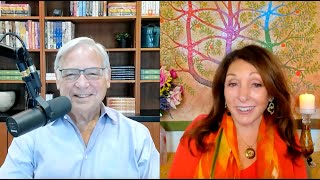
Podcast interview (Jack Canfield with Marci Shimoff) exploring Shimoff's career (Chicken Soup for the Soul origin story), her research-backed approach to happiness, and practical habits to raise baseline well-being. Key claims: happiness set point ≈ 50% genetics, 10% circumstances, 40% habits (modifiable); epigenetics may shift genetic expression via habits. Shimoff presents a seven-part "inner home" model (foundation: responsibility; pillars: mind, heart, body, soul; roof: passion/purpose; garden: relationships) and describes 21 happiness habits with concrete practices (sunning for serotonin, HeartMath heart-focused breathing/inner-ease technique, savoring positives/3:1 ratio). She also describes programs (30 Days to a Happier Life; Your Year of Miracles) and resources (happyfornoreason.com, youryearofmiracles.com).
Questions this video answers
2024-08-21
33 languages
121 weeks
50% genetics, 10% circumstances, 40% habits
Chapters
Foreign.
And welcome to the Jack Canfield Podcast. And I'm very excited to have with us today a truly remarkable guest, someone who's not just been a very dear friend for many, many years, but who is also one of the most influential voices in the fields of happiness and love and personal transformation. Marcy Shimoff, who's I guess, is the number one New York Times bestselling author, a world renowned transformational teacher, and an unwavering advocate for finding joy and love in every aspect of life. Now, Marcy's books, including the runaway bestsellers Happy for no Reason and Love for no Reason, along with her co authoring numerous Chicken Soup for the Soul books, including Chicken Soup for the Women's Soul, Chicken Soup for the Mother's Soul, Chicken Soup for the Single Soul, and last night I was just going, I went on Amazon and I did I miss any books here? I should imagine. I found out she's like in about, I don't know, God knows a million compilation books where she's written chapters. They're constantly contributing her knowledge to people all over the world in many, many languages. And she's inspired millions of people all over the world. And her books have been translated into 33 languages. Her books have been on the New York Times bestseller list for a total of 121 weeks. It's over two years. I love it. Making her one of the best selling female nonfiction authors of all time. She's also the host of the popular PBS special Happy for no Reason. She's a featured teacher in the book of the movie the Secret. And she brings miracles into people's lives through her podcast Living in the Miracle Zone and her global program, your Year of Miracles, which has thousands of participants for more than 80 countries, all participating this year. And today, we're going to dive into the secrets of living a happier, more miraculous life and hear more about her transformative journey and her teachings. Marcy, it's an absolute pleasure to have you here to talk with us today.
Well, Jack, it is an absolute pleasure to be here and talk with you today. And what wasn't, what you didn't say there is that I am here today because of you. And I have an older brother, he's 10 years older than I am and he always teases that everything that I know I learned from him. But I have to say that in terms of my career, everywhere that I am today is because of you and your amazing mentorship. We met in 1989 when I went to study at one of your training programs on self Esteem. And it has really, totally changed my life. So I'm so grateful to you and in so many ways. So we'll get to. We'll get to share with people the things I think that we both come across together and some. Maybe some inside stories that people have never heard.
Well, since you brought it up, let's go back. Let me ask you. This is a story I hadn't planned to ask you about, but since we're talking about the early days and supporting each other and all that, tell people how the book Chicken Soup for the Women's Soul came to be. Because there's a real important principle in there for success for everybody.
Well, I, you know, I. I learned early on in my 20s, that there were three keys to a little formula for success. And I learned it from Bill Levosy, whom, you know, you knew. And I love them because they rhyme. They are intention, attention, and no tension. Intention, be clear about what you want. Attention. But your thoughts, your words, your feelings, and your actions behind it, and no tension. Let go. Be in a state of peace and ease. And I was really good at intention and attention, but really bad at no tension. Really bad. So when I was 13 years old, I saw Zig Ziglar speak. I don't know how that ended up happening. You know, some friend of mine's parents took us to see him, and I went, oh, my God, that's what I'm supposed to do with my life. I'm supposed to be a speaker and an inspirational speaker. I went home and told my parents, who had their heart set on me being a dental hygienist because my dad was a dentist. And. But my mother teased with me. She said, honey, you sure talk enough. You might as well get paid for it. So I, I got an MBA in training and development, so I could. I could begin a career as a speaker. And I was doing my speaking and I was teaching in Fortune 500 companies. And one of the things I think I did that's a secret to success for anybody, is I really listened deeply to what the soul was saying. And I wanted to teach. I was teaching communication skills and leadership skills, and I wanted to teach self esteem. And there's that saying, we teach what we most want to learn. And so I didn't have self esteem, and I wanted to teach it. And I did some research on who I could learn self esteem from, and a couple names came up, but somehow this name, Jack Canfield, whom I'd never heard of before, like a light bulb, I went, oh, yeah, that's the guy. And I went and I did your training, Jack, and I loved it. This was in 1989 and in 1993, you came out with Chicken Soup for the Soul and I was assisting on one of your assisting teams. And I remember when you first announced the name Chicken Soup for the Soul. I turned to my best friend, Carol Klein, and I said, carol, that is the dumbest name for a book. And I was so glad I never went and told you that because I just kept it to myself. And of course, Chicken Soup of the Soul became a huge success in great part because of what you and Mark Victor Hanson did to promote it, because it was a great book. But I was still, you know, I had, my intention from a young age was to speak to audiences of thousands and thousands of people. And that wasn't happening for me. I was speaking to audiences of 30 people or 50 people in my trainings, but I wasn't, hadn't broken through and I was kind of beating my head against the wall. I had done intention very well and attention, I had really put my attention on being this big speaker, but I hadn't done the. No tension. And one day a dear friend of mine, Janet Atwood, whom you also know the Passion Test, came to me and said, marcy, you're burned out. She said, you need a rest. And I, that's. Those weren't the words she used. She said, you look like. And so I, she took me away with her on a seven day meditation retreat. That was silence. I said, I have never done silence for more than two hours. How am I going to do this? She said, no, come, you can do this. So on the fourth day, in the middle of a meditation, I was in that state of no tension. I was like really chill, relaxed, mellow. And out of the blue, a light bulb went off in my head and I saw the words Chicken Soup for the woman's soul. And I knew that was it. I knew that was my ticket to where I was going to be in bigger, bigger audiences. But there was one problem with the scenario. And the problem is I still had three more days of silence. I couldn't tell anybody my great idea. But as soon as the silence was over, I ran to the closest base. It was before there were cell phones. And I called you up and I said, jack, I've got it. Chicken Soup for the Woman's Soul. And that was before there were any specialty books ever conceived of. You said, oh, what a great idea. And you called the publisher who said, oh, what a great idea. And then I came and met with you, and you said, this is such a great idea, but why do I need you to do this? And I said, well, I speak to women's audiences. I'm a good writer. I have a passion for this, and I'm a woman. And you said, you got me on that last one. And that was the beginning of the Chicken Soup for this whole series, all the other books. So I thank you for that. And I thank intention, attention, and no tension. I was clear about what I wanted. I put my attention on it, and then finally I went into that state of no tension where I relaxed and let it happen.
No, it's great, and it would create an amazing series. And I think the other principle that's in there is asking. A lot of people will have an idea like that, and they won't ask. Patty Aubrey, who, you know is my business partner, wanted to do a Chicken Soup book for years and was so afraid to ask. And then when her mother got cancer, she said, you know, well, we should do Chicken Soup for the cancer survivor soul, and we give it to our mom and it'll inspire her. But it took her a year to work up the courage. And she and her sister came in together. They were so convinced. I'd say, no, you're an employee. Why would I do that? And I said, well, that's a great idea. Go do it. She almost fainted. And then she's gone on to do, I don't know, 14 New York Times bestsellers. And so. But I want to just say through you and this moment of time, that asking for what you want, when you have this inspired idea, which you had in this space of no tension, where literally you were responding and listening to your intuitive guidance, whether that was your high self, angels, God, we could argue about that forever who was guiding that information through you? But it really. It opened up, as you said, it was the first niche book we did, and then it was Chickens two for the Dog Lover Soul and the Pet Lover soul and the Basketball Fan Soul. I used to tell people, when you see Chicken Soup for the Delaware Soul, we probably reached the bottom of that, you know, but. But the reality is, you know, we've done now, I think there's 650 million books in print around the world, and you're helping us break out of that. That had to be a second helping, third serving, fourth course, fifth pot, you know, of chicken seed, whatever was significant. So you helped us as well as we helped you. So I want to jump into happiness with you for a minute, because that's one of the things you're an expert about and you've written a lot about. So you spent a significant part of your career exploring the theme of happiness. I'm curious what initially drew you to focus on this area? You know, wondering if your understanding of happiness also has evolved over the years, and if it has, tell us how.
Yeah, so I love this question. And actually, you, again, are part of the answer here for this. People always ask me, marcy, you must have been born happy. You know, you just. You've got this energy of happiness. You must have just been born that way. And my answer is absolutely not. I was born depressed. I came out of the womb with what I call existential angst. And I had great circumstances, a great family. I had, you know, everything on the outside was fine, but I had this dark cloud around me. I remember being in kindergarten, watching Romper Room and feeling like, how could anybody be happy when there's all this suffering in the world? And I now, I've come to think that I probably either carried in ancestral trauma or maybe past life, PTSD or who knows what. But I just was unhappy. And so my solution as a kid for my unhappiness was something called sugar. And I became a sugar addict because it made me temporarily feel a little bit better. But as we know, it didn't completely solve the problem. It actually made things worse. By the time I was in high school, I was probably 35 pounds overweight. And so I did what most people do. When I was in my 20s, I did what I think a lot of people do, and that is I set goals for myself. And I figured that once I reached those goals, then I would be happy. Now, there's nothing wrong with goals, but where the myth is, is thinking that when you reach those goals, you're going to be happy. And I set five goals for myself, and I'm going to just share them with everybody so that. Because I think people can relate to this, I wanted to have a successful career helping people. I wanted to have a wonderful husband or life partner, fabulous friends, a comfortable home, and the equivalent of Halle Berry's. Now I got four out of the five. I do not have Halle Berry's body, but I have a healthy body for which I'm very, very grateful. And I worked really hard, as you know, to get all my ducks in a row, to have those things happen, no matter where anybody is in their happiness level. We actually know scientifically, science has cracked the happiness code, and we know what.
You can do to shift that I know you have. I've read your book. And I, first of all, I agree with everything in there because a lot of those things I had studied as well. And then I've watched people change as a result of applying those things that you teach in your book. Now you've developed a program now called 30 Days to a Happier Life. Tell us about that.
So, well, the first thing that I'll do is I'm going to share with you what I think is the most important research about happiness that shifted my attention on it. And then I'm going to share some practical ways based on this framework that you spoke about, that we can all raise our happiness.
Great.
So this explains why people who win the lottery, you know, you think, oh, all I have to do is win the lottery to be happier. You would be happier for a few months. Maybe within about a year, you would return to your original happiness set point. So it's the set point that's the key. And the set point is determined. Here's the formula of how it's determined based on the research. It's 50% genetic. You're born with it. So I wasn't born with those good genes. It's 10%. Your circumstances. Now notice what a tiny, tiny piece of the pie is 10%. Yet that's what everybody's running after to try to change in order to be happier. The other 40% is our habits of thoughts and behavior, and they have the most levered happiness level. But I'm going to take it a step further and say that that 50%, that's genetic. Scientists in the field of epigenetics, like Dr. Bruce Lipton, whom we both know about the biology of belief, they will say that our genetics, our DNA can shift when we change our habits.
Right?
Happiness is what people have wanted from time immemorial, and we actually scientifically know how to get it. Now, I have found that the only difference between truly happy people, people who are what I call happy for no reason, which means unconditionally happy, and everybody else is that they have different habits. So, great news. I think we should be teaching this to our kids. What more important is there to learn than how to have a higher happiness set point?
No, I agree. And I think one of the things that important about that is I've been studying, as you have, also the law of attraction. And the law of attraction says you're going to attract things into your life at the same level of resonance and vibration that you are. And like your set point, as you say, you know where the thermostat normally goes to, what happens is that is your level of vibration. And when you can do these practices and habits and so forth, and then your set point goes up, you're going to attract more abundance, more opportunity, more people, more wealth, more health. All of that to you from the point of having an intention. But that, that, remember the secret ask, believe, receive. The reception part has to do with you being open to receiving at that vibrational level. So everything you're teaching about love and happiness is absolutely affecting that. I just interviewed Michael Beckwith a few weeks ago and he talks about the law of resonance and that when you're resonant at a high level, he calls it effluence, you're flowing out that level of energy which leads to affluence, which basically gives you more of what you want, which then leads to influence, which allows you to impact the world because you have all these resources to do it with. So what you're doing is so critical and when you begin to link it to all these things, it's truly, it's, it's foundational to getting everything you want in life.
And yeah, there's a tremendous. I agree with you completely, of course, I mean, you know, and we just know on a practical level, if you've got two business, two dry cleaners and they're right next to each other and everything about them is equal, they do equal quality and they do equal service. And one's got a really happy person there that you love to go see, and one's got somebody who's just a bummer to be around. You're going to go to the place that's got the vibration of happiness. You know, we, we catch happiness like we catch people's colds. It's called emotional contagion. And so, you know, I, I definitely experience that. You know, the reason I call it happy for no reason, it's not that I don't believe in having great things outside, I do, but it's on the basis of happiness first on the inside, happy for no reason means that you have an inner state of peace and well being that doesn't depend on your circumstances.
Right?
So you've got somebody like His Holiness. The Dalai Lama hasn't always had great circumstances in his life. But the, you can't be in the room without a room with him, without feeling the, the happiness and catching it. And so, you know what I say is people who are happy for no reason aren't looking to extract their happiness from their life experiences, but they're bringing their happiness to their life experiences. And the research shows that when you do that, when you resonate on that higher level, you have greater health. You, on average, live seven to nine years longer. You're one third less likely to get sick. Research has shown that you're more successful. You're 37% more successful. Happier people make more money over the course of their lifetime. They are less likely to get divorced. They have better relationships. So all the fringe benefits of happiness are these great things that come from us vibrating at that higher level.
Well, one thing that's interesting, too, is when you're happy, people are attracted. If I walk in a room and I hear people laughing over there, my general tendency is to walk over that direction. I took a training many, many years ago called the impact training, and the trainer said, I'll never forget. Said, you want to be the kind of person that if you were a plumber and someone met you on the beach and they talked to you for 10 minutes, they'd walk away going, there must be some plumbing I need. I want that guy to be in my life more, you know?
You know, it's so funny he would say that. Just this morning I had the Comcast cable guy come over and fix some things, and he was wonderful. He was just so happy that I wrote down his name and his ID number so that next time I call Comcast, he's the guy I want. We want to be around that. And you know what else is interesting, Jack, about this idea of emotional contagion is that research has found that we affect people. Five people, at least five people out. So when we're happier, we are impacting our neighbors, friends, sons, school teacher, somebody we don't even know, by virtue of spreading that energy of happiness.
I remember in the first Chicken Sewer to Soul book, there's a story about a guy walking down the street and he's just telling everybody, you're amazing. Hey, guys, building that building. It must be fun to be building a skyscraper knowing that you're contributing to that. And his friend said, you know what? What are you? Like, you're the man from La Mancha or something like that. And finally, this very homely woman walks by and he says, good morning, beautiful. And he says, you just said good morning to a homely person. Did you say beautiful? He said, yeah, maybe she's a schoolteacher. And if she is, those kids are going to have a great day. So it's like you said, it passes.
On, you know, Passes on. Jack, I'm always in awe of the fact that you can remember a story out of the, I don't know, 50,000 stories or more that you've published that you can remember a story that you probably haven't told in 25 years, and now you tell it, like just now. But it's absolutely true. So should we talk about how we can get happier?
Yeah. Talk about. You said there's habits, so maybe you can talk about some of those.
Yeah. So what I found is that there are 21 main happiness habits and that they fall into seven main areas. And so I'm going to go through these seven areas, and I want everybody to be thinking, where are you the weakest? Because wherever you're the weakest, that's your Achilles heel, and that's where you want to start. We all have different Achilles heels in the area of happiness. So in terms of these seven areas, I know that it's hard for people to remember seven of anything. So as I learned from my mentor, Jack Canfield, to create a metaphor or an analogy to make it easier for people to remember, so I created this analogy. It's called building your inner home for happiness. And a home has seven main components. It's got a foundation, it's got four corner pillars, it's got a roof, and it's got a garden. And here's how this relates to the seven main areas of your happiness. The foundation is taking responsibility for your life and your happiness. It's just what you teach Jack. It's not being a victim in life. It's showing up as a victor in life instead. And you know you're a victim when you're blaming, shaming, or complaining, blaming others for why you can't be happy. Shaming, which is blaming yourself for why you're not happy. Oh, I can't be happy. I'm too this, I'm too that. Or complaining about your circumstances. Any of those. You start with the foundation of taking responsibility for your happiness. Then you have the four corner pillars of your home, and there's the pillar of the mind, the heart, the body, and the soul. The pillar of the mind is your thoughts. Do your thoughts rob you of your happiness? Do you have these constant negative thoughts that are dragging you down? Then there's the pillar of the heart. I have never met a truly happy person who had a closed heart. You can't be happy and have a closed heart. Happy people are loving, they're generous, they're forgiving. And by the way, these are all towards themselves as well. They're loving, generous, and forgiving towards Themselves, they're compassionate. Then there's the pillar of the body. Do you have the biochemicals of happiness? You know, happiness is biochemical event. Do you have enough serotonin, enough oxytocin, enough dopamine, enough endorphins, the happiness chemicals? And by the way, that was my Achilles heel. And every time that I start to go a little bit down, that's where I go to first because that's what I know to be my weakling. Then there's the pillar of the soul. The pillar of the soul has to do with your connection to the greater energy of life. I don't care whether you call it God or the divine or, or Mother Nature or creative intelligence, but it's that feeling that you are part of this greater goal. And then there's the roof for your home, for happiness. The roof is your passion or purpose in life. Are you living an inspired life? Do you wake up saying, I'm doing today what I am on the planet to be doing? I believe we're all on the planet for a reason. And so are you living that. And. And then finally there's the garden of your home. And the garden is who are you surrounded with? Are you surrounded by people who uplift you, the roses and the gardenias of your life? Or do you have a lot of weeds in your garden? The people who are trying to choke out your happiness, who are dragging you down. So those are the seven areas. And Jack, I'm going to put you on the spot in just a minute and ask you where your weak link is, but let me just review them. So there's the foundation, which is taking responsibility for your happiness. There's the mind, your thoughts, the heart, your feelings, the body, your biochemistry, the soul, your spirit and connection. Then there's the roof, your passion and purpose. And there's the garden, who you surround yourself with. So, Jack, I'm going to put you on the spot and ask you where is your weak link?
I don't think it's the answer you want, but I really feel strong in all those areas. It's really amazing, you know, I. Foundation, you know, just all those things I've worked on for a long time and I've studied your work as well, and positive psychology. And I meditate and I go on spiritual retreats. I take plant medicine. I follow my intuitive guidance. I mean, literally, when I was living in Massachusetts, I had a full private practice for therapy. And all of a sudden I said, all the people that I could learn from live in California. So I want to go out to California. This is where Esalen Institute, where s training LifeSpring. Carl Rogers, the great psychologist, you know, all these gurus and stuff. And I surround myself with, you know, I think. Well, let me go back. I think where I was the weakest for the longest time was friends, relationships. Because I. I'm shy by nature. I'm more of an introvert than an extrovert. Most people would never know that. I'm going to call it a situational extrovert. I can generate that. But I love to be alone. That's why I can recharge and read and listen to music and do yoga and stuff. But I didn't have a lot of friends in this world, and they were all professional friends and they didn't leave where I lived. And so when I started the Transformational Leadership Council, it was to surround myself with people who do this work, people like yourself and John Gray and all these kind of people that we know, you know, Sue Mortar, et cetera, did you work with for years. And I think that was the weak thing for me. And now I'm really surrounded by that with the atl, tlc, all these different organizations. So, yeah, that probably was the weakest link. But now I will tell you, I get five to ten emails a day from all these people. I'm surrounded by wanting things. So I've had to learn to say no, to protect my time and focus on the things that are my passion. You know, the books I'm writing and so forth. But, yeah, that would have been the weakest link, I think. But I have to say, Marcy, I am really happy all the time. You know, I wake up happy. And I want to just share something with you too, because I remember I went to a conference, it was a woman named Frances Vaughn. She was an intuition expert.
Yeah.
And she said something about people with strong empathy, strong intuition, she said, because she was teaching intuition. So the danger of developing your intuition is you're going to feel more of the pain of the world, because as you develop your ability to feel deeply, there's so much pain, you're going to pick it up. And so for me, and I think I'm curious how you would respond to that, given that you had that issue is, I think, Byron, Katie's work was really important for me to be able to say that is what it is. If I want to contribute money or time, I can do that. But there's way more problems than one person, me can solve. And this was interesting. Ram Dass once said, for those who don't know Ram Dass. He was a spiritual teacher. He was a psychologist at Harvard, and then he became a spiritual teacher. And he said, you know, you're going to go to India, which I had never done. He said, you're going to see thousands of children on the street all asking for money, and you're going to be overwhelmed because you can't do it. He says, but one of those children will steal your heart, and that's the one you need to care for or contribute to their orphanage or get him into a school. And I thought, wow, that takes a lot of pressure off. I can't do everything. But if I'm drawn to support inner city music projects or teaching kids how to play baseball or building a school in Africa, like our friend Cynthia Kersey, does that just give yourself permission that that's enough. And then let go and get neutral about it, which really, really, really helped me. But I'm curious, throwing the question back at you now.
Yeah.
How did you deal with that?
I love this question, Jack. And I don't think I've ever spoken about this publicly. And I'm going to go a little woo on you. Is that okay?
That's what we're here for.
Okay, well, let's go woo then. Here we go. So I've, you know, Eckhart Tolle talks about there being a pain body, this energy around us that's a subtle form of the pain that you're picking up on. And certainly there is so much suffering in the world, and there's a tremendous kind of maybe global pain body. But I also believe, and I wrote about this in Love for no reason, that I believe, that there's a love body as well, which is a subtle, energetic field of love. And what I've noticed is, you know, like you, I like spending time and studying with people who are deeply awake, you know, and by awake, I mean awake to the truth of who they are, to the truth of divinity and their inner divinity. And I've spent some time lately with a wonderful woman named Polly who is 85 and is almost blind and is free, totally happy, free, enlightened, awake, whatever words you want to use. And what I notice is that she totally loves everybody and feels for everybody, but she is identified with the deeper truth of her, of her being as love. And that's what she sees in the world. She does. It's not that she doesn't see the pain, and it's not that she doesn't contribute in the ways that she is inspired to contribute. But it's that she doesn't get so overly identified with that as being the only reality. She actually has the experience of the field of love, of that subtle body, of the love body. And that is more of her truth. And so I think that that's ultimately where we're all going. Ultimately, the reason we're on the planet is to awaken to that truth. And as we do, I think that there will be less problem, less suffering in the world. But that's. And you think, oh, well, God, how can you turn your back to that? It's not that you're turning your back to the pain. It's not that you're not aware of it, but you're not identifying with it. Because us identifying with that pain doesn't help that person in pain. Yeah, identifying and growing with that love body is what really matters.
Mark Victor Hansen, our co author and all these chicken soup books, of which you were one with him as well, once asked the Dalai Lama. He said, the Dalai Lama, he said, what is the best thing I can do for all the poor people? He said, I really feel deeply about them. And his answer was, don't be one of them. And I was shocked by that. That just sounded so out of character. What he was saying is by you being abundant and experiencing that you are modeling for them what is possible. And don't get into the down energy of feeling bad. If there's something you want to contribute, do that. But the main thing is keep living an abundant life. And that is a model for what's possible, because there is literally abundance everywhere. And I would just say one other thing, too. I remember I worked for a guy, I'll not mention his name, who a lot of people hated. And I remember asking a very high spiritual person went, what's the deal with this guy? They said he was put on Earth so everyone else could learn to practice forgiveness.
Yes, yes, exactly.
Okay, we could go with that. You know, but to always be looking at kind of. There's a little higher level of it, you know, that you can attach yourself to or.
And that is ultimately the only way I can come to peace is to believe that there is a higher order to things and I can't know what's best for somebody else. If I see somebody struggling or, you know, having illness or financial problems, I can't know what their soul has contracted for in this life and what's serving them the most. And so I just have to believe that the universe is always on our side. You know, one of the principles that I learned in interviewing all these happy people is that they always believed that life was for them. You know, Einstein's. One of my favorite quotes of all time is Einstein saying that the most important question you'll ask yourself is, is this a benevolent universe? Is this a loving universe? And what I noticed is that no matter what was going on in those people's lives, they always believed that life was for them. Even if it wasn't happening the way they wanted it to happen. They believe that there was some higher, higher gift in it. You know, I always say, if something's happening not the way you think it should be happening, the empowered thing to do is ask the question, if this were happening for a higher purpose, or if this were happening for my highest good, what might that be? And that's a more empowered question to be asking.
Yeah, Well, I have to say, in my own life, there's been numerous times when things were happening in the past where I thought, this is unfair. It shouldn't be happening to me. I'm such a good person. Why are they winning this lawsuit? Why are they getting that money? Why did that happen? And now that I'm. I'll be 80 this summer, now that I look back on things that happened when I was in my late 40s, my 50s, whatever, I go, thank God that happened, truly. Because it actually turned out to benefit me in ways I never could have seen at the time. Whether I learned a new quality like perseverance, patience, compassion, whether a deal went down where I thought I got screwed. But later, the fact that it went down the way it did actually ended up profiting me five times more money than if I'd done it the way I thought I wanted to do it back then. So it's really interesting. And I live that way now. It's like, you know, what's. Napoleon Hill said? Every negative event contains within it an equal or greater benefit. And then the part that no one ever quotes, he said, but you have to look for it. And so the idea is, it's always there, but we have to be intentional or at least open to allow it to emerge over time. So I live by that rule that the universe is happening for me, not to me.
If people have a hard time remembering or experiencing this in our life, I just have to say, think about those. Some of those old relationships that we had, and that, you know, that at the time, I was devastated with a boyfriend who broke up with me. And thank God he did. You know, thank God I'm not in that relationship. There's One of my favorite sayings is rejection is God's protection and I'll share just another story. I don't think you know this. When I, after I'd written what I knew was kind of the last Chicken Soup for the Soul book that I could write it and honestly I had to walk away from. There were more Chicken Soup books to be written and my heart wasn't in it. I think I did seven of them and I was done. And I knew I had to go out on my own and do my own books. And so I wrote a book proposal for a book that I wanted to write. It was called 101 Heart Openers. And I took it to our mutual agent, Bonnie Solo, and she rejected it. She said, no, this isn't the book for you to write. It's not big enough for your, your next book. And I, I thought, how could she say no to me? That's terrible, how awful of her. And I forced me to go back to the drawing board and I, I actually went on a, on a four day meditation retreat. You know, the last book when I went on the, the seven day meditation retreat to come up with Chicken Soup for the Soul, Woman's Soul, I, I came up with it on day four. So I thought, I'm going to be a efficient here and I'm going to go now on a four day retreat and come up with the title of my new book and what my new thing is. And I realized I wanted to write a book on happiness. That's, that was the next frontier. And so, so I, I went for four days and came up with all kinds of titles and nothing was it. And on the fourth morning in the middle of a meditation, Happy for no Reason came out and I'm like, oh my God, I think that's it. And I came out of the meditation and I came out of Silence and I went to lunch. It was this collective place where everybody had been in silence. And I went over to this woman who, she'd intrigued me all four days and I sat down with her at lunch and I said, I've been just so wanting to talk to you. And I shared my experience of how I came up with this book title. Turns out she was a top LA brand expert. And I said, can I hire you to tell me whether to help me with this brand? I came to find out my brand and I think I came up with it. She said, well, tell me what it is. And I told her the name and she said, you don't need to hire me. That's it. That's the one to go with happy for no reason. So anyway, it was one more little plug for taking off a little time. And you don't even have to take off four days. But when it's time for you to take some. Some silent space or some meditation space, you may be amazed at what comes out from that.
Well, you remember the story, too, that we did not have a title for? Chicken Soup for the Soul. And so Mark and I agree. We would meditate for an hour or two a day per week, every day. And that was on Wednesday, third day. I'm a little ahead of you in time here. You take four, I take three. No, I'm just kidding. So what is that? No, I'm kidding. So what happened is on the third day, this hand came out. This big green chalkboard emerged. Hand came out, wrote Chicken Soup on it. And I figured it was God's hand. I said, what the heck does that have to do with this book? And the voice said, in my head, when you were sick as a child, your grandmother gave you chicken soup. And I said, but this is not a book about sick people. The voice answered back, people's spirits are sick. And I. I thought, chicken Soup for the Spirit. And that didn't work. And then I said, chicken Soup for the Soul. And I got goosebumps, God bumps, whatever you want to call them, called Mark. He got goosebumps. Told my wife she got goosebumps. Went to New York, told 21 publishers. Nobody got goosebumps. But eventually, again, like, being rejected 21 times by all those big New York publishers felt like a bad thing. You said, God's rejection is your protection. And what happens is that the 144th publisher we talked to was Peter Veggo at Health Communications. Very small publisher. But what happened was, because it was small, he only published, like, maybe 20 books a year. So the reality was we got a lot of support. Whereas if we were in New York with the publisher, like Simon Schuster, publishing 100 to 200 books a year wouldn't have been as much support getting that book out into the world. So it actually paid off. It was very good.
And rejection. Rejection is God's protection. And there's another one that I love. Delays are not denials.
There you go.
Just because it took a little more time didn't mean it was a denial. So.
That's right. That's right. Absolutely. There's a song by Garth Brooks called thank God for Unanswered Prayers, and he talks about the girl he dated in high school. And goes back to reunion. She's a drunk, you know, and everything. Thank God for answer prayers. Anyway, I want to move on with a little bit of time we have left. I want to talk about. You mentioned some habits. You talked about the different parts of the house, but talk about some habits that you teach. Yeah.
For those who have challenges in the area of biochemistry, which I did, where I just had low serotonin. And when you have low serotonin, it's just hard to feel good. It's also serotonin. Low serotonin is related to low melatonin. So when you don't have enough serotonin, you don't have enough melatonin. So you don't sleep well at night. When you don't sleep well at night, you don't have enough serotonin to feel good during the day. Research found that your happiness today is more dependent on the quality of sleep that you got last night than it is on your income level or your marital status. So I'm going to give you a sunning practice that I learned that can shift your serotonin levels. And I learned this from a man named Jill Marin, who is a chinitzong master, which is a form of qigong. And he said this will completely reset your serotonin. And what you do is you go outside and you stand in the sun, and I'll tell you in a minute what to do if there's no sun and you face the sun with your eyes closed. So this is really important, your eyes need to be closed. With your closed eyes, you face the sun and imagine, feel the sunbeams coming in through your closed eyelids and going in and hitting your pineal gland in the middle of your brain and lighting up, warming up the pineal gland. And that will start to stimulate more serotonin. You can also imagine it flooding down through your body. You do that for two minutes twice a day for one week, and you will have completely shifted your levels of serotonin. And what I say is, don't take my word for it. Use your own life as an experiment. Go try it and see what happens. And it's just. It's. I do it now often. You know, I don't do it twice a day, but I do it whenever. I just remember to walk outside. And if you can't go outside, you can still do it through the window, but not as effective. Now, if there is not sun, if it's cloudy, you can see where the sun is coming through the clouds. Those are good enough to imagine the sun's rays coming into your. Into your pineal gland. If it's raining, what you can do is you can look at nature. Anything beautiful in nature will also stimulate the serotonin. So you can look at beautiful flowers or look outside at some trees, and that will do it as well, not as powerfully. When it's nature, you do it with your eyes open, but when it's the sun, you do it with your eyes closed.
That's really cool. I never heard of that one before.
My goal was to find one that you hadn't heard yet, Jack.
Well, goal accomplished. What else do you got?
Well, let me do another one that I know you've heard of, but I love it. And I love it because we can experience it together in one minute, and it shifts the energy. So it's a practice that I learned from the institute of Heartmath. And we love the people at HeartMath. They're the world's leading researchers on the heart and happiness. And they found that five minutes of feeling anger or frustration, which, you know, a lot of people, we can go through our day and feel anger or frustration a number of times, they've found.
Called road rage.
Road rage, exactly. They found that just five minutes of anger or frustration will suppress your. Can suppress your immune system for up to six hours. It puts your heart in heart rhythm incoherence. But 5 minutes of love and appreciation can put you. It can stimulate your immune system to be stronger for up to six hours. So it strengthens your immune system for up to six hours. It puts you into heart rhythm coherence, where your heart rhythms are in very coherent patterns. So I'm going to give us a practice that I learned from them that will take maybe a minute and a half. We won't do five minutes. We'll do a minute or a minute and a half. And I just want everyone to do it with us and notice what shifts in you. And, Jack, you're going to be my guinea pig. So I'm going to ask you at the end of this, what's shifted in you. It's called the inner Ease technique. And you can do it with your eyes opened or closed. And we're going to do with our eyes closed, if you're able to right now, just because it goes a little deeper. So with your eyes closed, the first step is to simply place your hand over your heart, the palm of your hand over your heart. And that simple act starts the flow of a chemical called oxytocin. And oxytocin is dubbed the love hormone. Because it's what we have more of when we feel bonded and connected with each other. But just your own hand on your heart is creating more of the chemical oxytocin in your body. You're bonding with yourself here. The second step is to imagine that you're breathing in and out through the center of your heart, called heart focused breathing. So inhaling into your heart and exhaling out of your heart. Now your breath can go all the way down to your belly, but it needs to go through that center of your heart. So at your own pace, breathing into your heart and exhaling out of your heart. And you might already be noticing that there's a shift, but here's the piece de resistance, the third step. On each inhale, imagine that you are breathing in love, ease and compassion. So breathing into your heart on your inhale, love, ease and compassion. And just exhaling easily out of your heart. Now on your inhales, when you're breathing in that love, ease and compassion, you can think about someone who helps you feel that way, or a beloved four legged. Or you can remember a time when you last felt love, ease and compassion. Or you can just simply silently say those words to yourself. Any of those will work. So breathing in deeply one more time, love, ease and compassion into your heart. And on your exhale, you can let your hand drop. You can slowly, when you feel ready, stretch and open your eyes. And as you open your eyes and come back into the room, I want you to just notice what's shifted. What's shifted in your body, what's shifted in your heart, in your thoughts, in your sense of well being. And so Jack, you're the guinea pig of the day. Tell me what's shifted for you either physically or emotionally or both?
Well, physically, I feel like there's more space in my body. Like there's just, there's there's more kind of tingly energy. And my face kind of went into this, I was going to say stupid grin, but smiley face, you know, and I just. All those things I, I experienced that you talked about, you know, and it was very quick, very fast. And when you said you could breathe it down into your stomach, that, that deepened it for me. And I never heard that part of it before because I've done some Heartmath Institute stuff and I feel kind of like I've got that grin on my face I don't think was there before.
You know, that's also contagious when you smile. People smile. And so here's the thing, what you've Just described. And people, some people feel a warmth in their heart. Some people feel more grounded, more inner peace, you know, much just more chill. All of these are signs of moving into what science calls the love response. Science has very much identifies something they call the stress response. It's got its own brain activity, its own heart rhythms, and its own biochemistry. Well, science also has found the love response that has its own brain activity, heart rhythms, and biochemistry. And so what we started to do was move into the love response. Now, doing it once isn't going to change anything. It's just a nice experience. Yay, we feel better. Here's what will change. Here's the habit that will change you. If you were to do this a couple of times a day for the next week or two, you would start to habituate the love response. It would become more and more your default state. I've done this thousands of times, and now all I have to do is put my hand on my heart, and immediately it starts the flow of the love response. So I do this when I'm standing in line at the grocery store and I'm impatient. I just stand there. Nobody knows what I'm doing. I put my hand on my heart. I breathe in and out through my heart. I feel love, ease, and compassion, and everything shifts for me. So this is practical. And the reason that I share this is that it's so simple. And, you know, people think, oh, it can't work. It's so simple. That's wrong. It can work. The simple things do work. It's just a matter of doing them. Why I do simple things is that that's what we are more likely to do if we take on too much. We don't do any of it. So what we want to do is we want to take baby steps. Commit to one thing that you'll do differently after today's conversation and do it for the next week or two and see if it works.
Well, we've been teaching a lot about what we call micro actions and that idea that people overwhelm themselves. And even if you meditate for 10 minutes a day, it's better than no minutes a day. Everyone thinks they got to sit down for two hours or three days of a retreat or whatever, and what we find is those micro actions expand. And the other thing I want to just underline and highlight is that when you do a repetitive activity, it's creating neural pathways in your brain. And so, like, if I memorize a poem and I start like, I don't know why, but I started Thinking I. Oh, Lord, won't you buy me a Mercedes Benz? My friends all drive Porsches I must make them. Yeah. So as soon as I start the first part of that, all the other words are there. They're available. Right. Because I've sung it so many times. And what happens is, I remember I used to do this thing called a disidentification process. It would start with, I have a body. I'm not my body. I have emotions. I'm not my emotions. I have thoughts. I'm not my thoughts, all that stuff. Who I am is a pure center of awareness and choice. And as soon as I would start to say, I have a body, I'm not my body, the entire effect of that entire activity would show up. And I didn't even need to complete it because it set off a chain of neurons firing in the brain. So, like yours. Excuse me. So you're standing in line at the supermarket, and you start to do that, and that whole thing just cascades and you get the effect. So that's the value of repetition. Yeah.
Jackie, may I just share one other little technique that people can do that helps change the neural pathways in the brain?
Absolutely. That's what we're here for.
So this is. I love. It's scientific. And people, you know, when I talk about the pillar of the mind, and a lot of people say that they have a lot of challenges with their. With their mind and their thoughts, you know, that they really drag them down. And what I say is that if you start to have negative thoughts, you're normal. That doesn't mean you're the way that we want to be, but that's normal. According to the research, we have 60,000 thoughts a day. And according to the research, 80% of those for the average person are negative. It's called the negativity bias. We inherited it from our cavemen ancestors who had to remember the negative in order to survive. But we no longer need it, and we still hang on to it. My friend Rick Hansen calls it the Velcro Teflon Syndrome. We Velcro the negative to us, they stick to us. And the Teflon, we Teflon the positive slide off of us. You know, if you get 10 compliments in a day and one criticism, what do you remember at the end of the day? Most people remember the criticism. Happy people have Velcroed the positives. So here's how you do it. Three simple steps to Velcro the positives. And they're going to seem crazy simple. You've heard Them before, but put together in this formula, it really works. Step number one, be on the lookout for the good. We get 11 billion bits of information a second. What are you paying attention to? So one of the women I interviewed for Happy for no Reason says that she pretends that she's the Academy Awards committee and her job every day is to give out five Academy Awards. So she sees a cute little dog going for a walk, and she goes, oh, that dog gets the cutest dog of the day award. Or she sees an act of kindness, and that gets the act of kindness award. And by the way, if you have kids, this is a fabulous game to play with kids, the Academy Awards game. So that's number one. Be on the lookout for the good. Step number two is savor the good for at least 20 seconds. Research shows that it takes at least 20 seconds for the good to see stick to us enough to create new neural pathways in the brain. So if you see that cute dog, you go over to the owner and you go, oh, your dog gets my cutest dog of the day Academy Award. You know, you have conversation about it so that it's sticking to you. If you see a beautiful sunset, you don't just say, that's a pretty sunset. You let it stick. So savoring it like you would a delicious dessert. And then the third step is you go for a three to one ratio, three positives to every one negative. That doesn't mean you stuff down the negatives or beat yourself up. No, that's natural. It showed up out of an old habit. But what you do is you substitute. Now, if it's something that needs to be attended to, you attend to it. Absolutely. But then also, you find three other things that you can be appreciating in the moment to kind of over, you know, be the stronger energy. So those three steps, be on the lookout for the good, savor it for 20 seconds, and go for a 3 to 1 ratio.
I love it. You know, because one of the things that we all teach is gratitude. Gratitude, journals and gratitude. This. And somebody said recently, and it just really got to me was, you know, a lot of times you sit down in the morning, people go, I'm grateful for my dog, grateful my husband, grateful for my computer, grateful to Steve Jobs, because he meant whatever. And then you go. And it was like going, it's like a grocery list. Let's see a zucchini. You know, whatever. And there's no affect. There's no emotion, there's no. So they said, look for three new things. Every day that you're going to write the next day. So it forces you to start noticing things that you don't notice before. Like there's a flower there, there's this little thing growing up out of the crack of the sidewalk life, you know, not being resisted by some cement, you know, the dog, whatever. And I started doing that. I started noticing there's a lot more to be appreciative of than I was noticing because I was focusing on the same old, same old things all the time. So this is another way of doing.
That because it's all in the feeling, it's all in the vibration.
Yeah.
And so you savor the feeling of what you've just written down and feel it for 20 seconds. Wow, let me just be with this flower. Let me feel the love for my new puppy that I have thanks to you. And the inspiration for your puppy. Actually, Charlie inspired me to get my puppy.
Yeah, well, someone once said, stop and smell the roses. So that's what they were talking about. I love it. I just want to share one more thing I learned recently too. I love talking.
We could talk for hours and hours.
I know, I know. And then I had one last question for you too. So what happens is, someone share with me, take these little 2 by 3 inch post its, put them all around, one on the refrigerator, one in the bathroom mirror, one on your car dashboard, whatever. And every time you see one, stop and ask yourself, what am I thinking? Is it a negative thought or a positive thought? If it's a positive thought, congratulate yourself. Did you say savor it? And then the other thing is, if it's a negative thought, immediately say cancel. Cancel. Because you want your subconscious brain to not to take that on because it will manifest what you talk about and think about and then replace it with a positive thought. What I liked about it is we can have this idea that you should do these things, but we forget to do them. But if you have these little post its, you can even put a word on it. Mine don't have words on them, but it's the bottom of the stairs, on the refrigerator, on the bathroom mirror, next to my bed. And every time I see it, I go, okay, what am I thinking? Oh, I was thinking, I'm not going to get that done in time. I am going to get that done on time. It's going to happen. Miracles are going to happen. My staff's going to come forward. It's all going to work, you know, and it's shifted. So it's just a little Reminder thing.
I love that. That reminded me, Jack, of something that brother David Stendleross taught me. I interviewed him for Happy, for no reason and for those who don't know who Brother David is easy, I think probably now he's 96 or 97 year old Benedictine monk. And he had, he grew up during World War II and they were running, had nothing. His mother, they were running. And his mother taught him to be grateful for whatever he had. They would eat grass soup, soup made out of grass, and they would be grateful for the grass. So he does a practice every day where he picks a new item thing that he would see during the day. Let's say it's water. And every time he comes across water, you know, he sees a fire hydrant or he sees the word water or somebody says the word water. It's just his trigger to stop and be grateful for something. So instead of the post its, he's using that as the trigger. So today it might be leaf. And every time I see a leaf, okay, that's my trigger to go and be grateful for whatever. Not the leaf, but just whatever's in my life. He makes a game of it. He tries to not pick anything that he's picked before.
I don't know for those that are. He has a YouTube video. I don't know what it's called, but I've watched it several times. I've kind of fell upon it by accident. It's so it's about peace and love and acceptance and I don't remember exactly, but his voice is so calming and soothing. The images are amazing. So if you go to YouTube and type in Brother Sentinel Ras, it's watch the video. It's worth watching. Couple last thing. Here you have a Living in the Miracle Zone podcast. Talk about that. And then you have your Year of Miracles. So let people know about that as well.
Yeah, so about 12 years or so ago, I started realizing that I wasn't just living a happy life. I was living. It felt like it was miraculous. I would wake up in the morning and people would, the person would show up with an opportunity out of the blue that was phenomenal. And I realized, wow, I'm living a miraculous life. And I think that there are principles for living a miraculous life, just like there are principles for living a successful life and a happy life. And so I started this program, your Year of Miracles. We've now had tens of thousands of people through the program and I got the inspiration to start a podcast last year, which I'm loving doing and living in the Miracle Zone, where I hear from people about there are miraculous stories in life. I mean, Jack, this would be a whole other podcast for us to do together, which I'm going to invite you, of course, to be on my podcast. But, you know, when we read those Chicken Soup for the Soul books and all those stories that came into us, it became obvious that there are. We live in a miraculous world and there are miracles that happen all the time, every day. You and I could tell many, many miracle stories. And so how do we create the conditions for miracles to show up in our life? I say, you know, a miracle is defined by Webster's Dictionary as a surprise and welcome event that can't be explained by science that's often attributed to divine grace. So we can't create miracles. They're a gift of the divine. But what we can do is create the conditions for miracles to show up in our lives. And so what I do is I teach people to create the conditions for miracles to show up in their lives. And living. In the Miracle Zone podcast, we share miracle stories with a Jack Canfield one coming up.
I read a book recently, the guy who wrote both about miraculous children. I can't remember. Anyway, amazingly high conscious person. And I learned something I never knew before. It was about lightning. I always thought lightning just struck the tallest thing like a flagpole or church depot. Only to find out the truth is an electrical charge builds up on earth. And as that charge builds, it attracts the lightning to come down and join it, which means that we are responsible, if you will, to create that vibrational charge of happiness, of joy, of compassion, of appreciation and gratitude. And then that lightning charge from above which we're going to create what's called a miracle. What happens? It's now attracted to that and that metaphor. When I read that, I went, holy mackerel. That make it's in science, it's. It's so amazing that electrical charges, which we build up through intention and exercises, actually attracts other electrical charges which we call miracles and downloads and abundance. And it's. I mean, I'm sitting here as I'm saying it, it's freakishly.
I love that.
Anyway, I did you give out the web? We're going to put it in the.
Show notes youryearofmiracles.com and also happyfornoreason.com you can go to happyfornoreason.com and on there I have all 21 of the habits in a little workbook with a, with a exercise, a practice for each one of the habits, including the ones I've shared with you and an assessment on your happiness level. So that's a free gift for you@happyfornoreason.com.
Well, Marcy, as always, I wish we had more time. Thank you so much for joining us today. You're. Well, you.
As I said, I learned everything I know from you, and I. I'd love to close with one thing that I actually learned from you as well, if that's okay. So, you know, people always ask me, isn't it selfish to want to be happy? Because don't we have to be worried about the rest of the world? And we've spoken about this a little bit, but my answer is it's the least selfish thing that you can do because when you're happy, you are creating a better world. And so I like to sum this up by a Chinese proverb that I love that started out the first Chicken Soup for the Soul book. It's a quote that's in the first Chicken Soup for the Soul book, and it's really why I do what I'm doing. And it goes like this. It says, when there is light in the soul, there will be beauty in the person. When there is beauty in the person, there will be harmony in the house. When there is harmony in the house, there will be order in the nation. And when there is order in the nation, there will be peace in this world. And my prayer and my wish for every one of us is that we know that light in our own souls, that happiness in our own lives. And through that, we spread it through the world and create a world of peace.
That's beautiful. Thank you so much. Appreciate it and want to thank all of you who tuned in to this podcast today. Please let your friends know about the podcast and be sure to tune in again next time when I'll be talking with another leader in the human potential movement who can help you live a happier, healthier, more abundant and more fulfilling life, both personally and professionally. Until then, remember, you can choose happiness and choose love using the techniques that Marcy teaches. Anytime, anywhere. Just make sure you learn them, practice them, make them part of your life. It is truly a choice. I hope you make the right choice.
More from Jack







[EP 46] Creating Your Own Luck: The Power of Self-Confidence with Veronica de Andrés

[EP 45] Rewiring the Brain for Bliss: Activating Your Spiritual Intelligence with Dr. Dawson Church


[EP 43] Transform Your Life Through Visualization and Emotional Intelligence with Natalie Ledwell

[42] Enhancing Your Health & Longevity Through Peptides and Functional Medicine with Regan Archibald