[EP 30] Rekindling Love and Passion: A Conversation with Dr. Cheryl Fraser
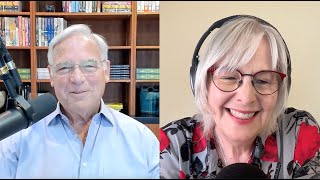
A YouTube interview where Jack Canfield and Dr. Cheryl Fraser discuss rebuilding and maintaining intimacy in long‑term relationships. Fraser introduces the “passion triangle” (intimacy, thrill, sensuality), offers practical tools (three‑breath hug, time‑outs for flooding, perspective‑taking, mindful apologies, scheduling sensual encounters, date nights), shares client examples, and points listeners to her Become Passion program and resources.
Chapters
Foreign. And welcome back to the show. Today, I'm excited to introduce a special guest, Dr. Cheryl Fraser. She's a Buddhist psychologist, a sex therapist, and a voice that stands out as an expert in the realms of love and intimacy. And Cheryl brings a unique blend of sharp insight, academic credibility, and straight talk to the table, helping thousands of couples rekindle their love and deepen their connection. And as the author of the book Buddhist Bedroom, the Mindful Loving Path of Sexual Passion and Lifetime Intimacy, she also has a popular podcast called Sex, Love and Elephants. We were just talking about the elephants part before we came on air and. Which has now 169 and counting episodes. Might be 170 since I got her resume. And you can check it out. I really encourage you to do that. It's called Sex, Love and Elephants Podcast. And then she's run a program called Become Passion Online, which has transformed the intimate lives of many, many, many people. And when she's not traveling to places like India or Tibet or deepening her practice on silent meditation retreats, she's living the passion she preaches on Vancouver Island. And today, we're going to dive into the essential elements of building and maintaining intimacy and connection in relationships. And whether you're looking to reignite that spark that might feel like it's kind of faded out a little bit or simply to deepen the bond you have with your partner, Cheryl's insights are going to offer you valuable guidance today. So, Cheryl, welcome to the show. It's fantastic to have you with us.
It's great to see you again, Jack. Thanks so much for hosting me. It's really a delight.
Oh, my pleasure to have you here. So we, we had you on as a guest expert for our Reignite youe Life program back in 2020, that famous year when the pandemic started. And I still use one of the analogies you shared about the different areas that make up our life and how health and relationships need to be your top two priorities. Do you mind sharing that with the audience, that analogy you share about that?
Sure, I'm happy to. And I want everybody to think off the top, bit of a thought experiment. What is most important to you in your life? You know, when we're hopefully on our deathbed at 105 and our mind is good and we're looking back on our life, what mattered the most? What matters the most? That's the first thought experiment. The second one is, is your current behavior, the prioritization of your time, your effort and your energy reflecting the answer to that first Question what matters most to you? So I want everybody to think of a wheel, like seven pieces of a pie, okay? A circle with seven pieces of the pie, which of course makes me want BlackBerry pie now. And I'm going to give an idea that for some of us, will fit of seven areas of our life that we value. Of course, people can tweak these as fits for their set of values, but, for example, might be career and finances. It's pretty important. Larger family might be another area, our health. And there I would include our physical health and our mental, emotional health as well. And then perhaps one for meaning or spirituality, something in that realm. One for service, perhaps being of service in our own ways. One for recreation, leisure, travel, and one for our intimate, romantic relationship. Now, of course, I'm aware not every person listening is currently in an intimate chosen partnership. They may choose or not choose to be in the future, but I'd like them to go along and think of a previous relationship or if they're interested in their future relationship as we speak today, primarily focusing on a romantic relationship. So then I want you to imagine that I take your circle, your seven pieces of the pie, and I put a ball on each one of these seven areas, and then I ask you to pick them up. Now, unless people listening are employed by Cirque du Soleil, we're not going to be good at juggling seven balls. I certainly am not. Although, what an analogy for all our lives, right? So you're trying to juggle these balls. And course what's going to happen is we're going to drop the ball, so to speak, several of them. Now, I want you to go back a step. Imagine I put seven balls on your seven areas of your life that you say is important to you, that you value, that you hope are predictive of living a fulfilled, meaningful, beautiful life. And I put a glass ball on your health little not quadrant, but your seventh. And I put a glass ball on your intimate relationship side. Now, I ask you to pick all the balls up and I ask you to juggle them. And of course, we know what happens next. Probably you're going to prioritize because maybe I say, if you don't break a glass ball, we're going to give you 100 bucks. Oh, okay. So I'm going to keep those glass balls as my two priorities, of course. And I will attempt to juggle the rubber balls of the other five areas that I have defined for myself as important. And when they drop, they bounce and they roll into the corner. Which means what? Well, When a ball drops and bounces into the corner, we know we can go retrieve it. We can dust it off, and we can put it back in play at any, any point. We can decide it doesn't need our time right now and leave it for a while and pick it up when we're ready. But when we drop the ball of focusing mindfully with decision, with precision, and making, as I say, our love life a hobby, making our romantic relationship important. And of course, we won't talk a lot about health today, but let's just throw that out there. If our health, mental or physical, is failing, everything else ceases to matter as much. Our career and our finances don't matter as much. When we've got a serious diagnosis, our focus goes there. And if we're in a chosen romantic relationship and it starts to hit the rocks and we're in a lot of trouble, other things don't feel as important either. So I want people to now look at if we were to allocate, and I get the couples I work with in my programs to do this, to actually map for a week where their hours go, where their focus is, and then take a look at that and say, based on where you're choosing, or maybe it feels like not choosing, but it is choosing to spend your time, what are you prioritizing? So the moral of the story is, I really am a champion for people to really value their romantic relationship, and I'm not just pulling this out of the ether. There's some terrific research to show, as Jack enters into another formative decade himself, that one of the best predictors of longevity, healthy aging, life satisfaction, and enjoying our life as we age is the strength and quality of our romantic relationships. So neglect it at our peril.
Very true. Very true. It's interesting. My grandson is out here this week from Brooklyn and say, here for three weeks. And my wife is. She's a. She has a grandmother DNA in her that somehow is amazing. You can't even get her near a baby. She'll try to kidnap it, you know, but what happens is, like, I was very busy this week getting ready for all these podcasts I'm doing. I did five TV shoots yesterday, and. And last night it was like, you know, come on, you're not spending any time with me and your grandson. Well, you know, and I realized, you know, just what you're saying. When I don't put the time in for that, it costs me. And then I'm worried about it, and I, you know, I don't lose sleep over It. But people do. And so that's really important. And I really been prioritizing as I'm reaching 80, as you animated next week as we record this, what happens is that I am becoming aware that I've overcommitted most of my life. And I'm. I just resigned from two board of directors. I'm saying no to a lot of requests. And I realized that a lot of my life was about wanting to feel significant, like I made a difference. And. And then what I realized is, you know, that was like working on some kind of external validation for who I am. I did some deep work on that and got to the other side of it. So now I am committed to spending more time with my family. And when you're 80, which I will be in a few days, you have to stop and think about things like, what am I prioritizing? You know? And so I want to go to my next question with you, which is you talk. You're. You're an expert in intimacy. And when you talk about it, you often mention it's more than just a physical connection. So unpack that a little bit. But what does true intimacy look like in a relationship?
Yeah. Terrific. So what I teach, actually, is the three main keys to a great relationship. And I'm going to briefly cover that because it'll help people hook everything else we're going to talk about today on this model. I call it the passion triangle or the three keys to passion. And word choice is really important, as you well know, my friend. And here, by passion, I don't just mean sensual and erotic passion. That's actually a pretty small part of our. Of our romantic partnership. I mean passion for life, for joy, for happiness, for depth, for connection. So here are the three key areas that it's really important for everybody listening. And I want you to do this yourself, Jack, as you listen. I know you will. Anyway, as a lifelong learner, rate yourself currently on how well you think you're doing on these three key areas in your marriage, as I will on mine. And the first, when I call intimacy, but I do not use the word here to mean sexuality. I don't use intimacy as a euphemism for sensuality. That's the third one. The first one I call intimacy. And what I mean is emotional communication, psychological closeness. So that's everything from, can I share my deep hopes and dreams and fears with you? Are you the first person I call when I get good news? I'm the first person I call when I get a flat tire. Do you have my back? Do I have yours? How do we work with conflict? How do we argue? Do we know how to fight fair? Spoiler. Probably most of us do not unless we've done some really significant work on that. Do we repair and apologize and let go of things? Well, do we know how to come back together after a nasty argument? Do we avoid conflict? So that whole ball of wax and in my program a lot of people misconstrue. They think I'm a sex expert, which is one of my hats. But really I'm a totality relationship expert because I could probably make a lot of money if I created the have great sex in three days with Cheryl's breakthrough formula with some drops you put on your tongue made from Passion Flower. I don't know, someone will patent that now. Go for it. It won't work. It wouldn't work. So what I teach are the three key areas to build the Triangle Foundation. So the first is intimacy. The second I call thrill. And this one's really easy to help people understand what I mean when I ask this question. Do you remember falling in love? Do you remember how you felt? What came up? I've asked this questions of thousands of people in my workshops. And what I get of course is oh, I love that we could talk for hours. We were endlessly curious about each other. I love how I thought about them all the time. I love how we plan special events and we tried to, we tried to thrill and excite each other. We generally didn't take people on a super lame lazy date when we were attempting to connect with them and know them. So that I call thrill. And of course in long term relationship that fades statistically and biochemically and psychologically. Around 18 months after falling in love, our cave people bodies move from must get mate to must have babies, pass on the Darwinian jeans and decorate the cave. And that thrill of the pursuit really slows down. And frankly, it's a bummer. I love being in love. I love the roller coaster of love. But I have enough maturity now to know that that roller coaster is going to pull into the station after six to 18 months, maybe a bit longer. And what do we do then? Do we fall onto the chase? A roller coaster pattern of serial relationships? I'm not saying that's a bad choice, but what if we could find ways to start the roller coaster some of the time? So that's the work of thrill, the third. And we only get to it now, right, Jack? The third aspect of creating and building and making effort to have an exceptional relationship. The word exceptional means what it means very rare is sensuality. And there I don't just talk about sex and eroticism. I talk about the entire sensual spectrum. For example, right now, everybody who's not driving as they listen to this can try this, which is you can close your eyes and take the, take one of your hands and just drift your fingers along your own palm. And if you do that mindfully with attention. I've done this with so many people, meditation students and couples both. I say, what did you notice? And they say it felt really intense. It actually felt very pleasant, pleasurable. I said, okay, terrific. Did I give you a special sauce of touch that made that feel different than if you just done this? I'm scratching my hand briefly. Anyone not seeing this? And they said the only difference was I slowed down and paid attention. So I work with couples around wherever they are sensually. We'll probably get to this later, but just let me mention it now because it's so important to educate people on. 30 to 40% of couples in longer term relationships you've been together for more than just a couple years are in a low sex or sexless relationship. Many of the remaining have a very poor sexual life, very big desire differences and more. So I don't start with go have Kama Sutra 67 position, hang off the rafters, try not to break stuff. I start with where you're at now. And for a lot of the couples in my program, that's a slow, maybe many months long journey from not having made love in seven years or one couple 40 years. And a briefly tell this story because it will inspire people listening. It's, it's a beautiful story. They're in their 70s. They've, they've, they've offered this story freely, their real names and they've got. There's a video testimonial people can go watch if they like. They're just a delight. Their names are Norman, Cheryl, same first name as mine and the wife. And they joined my program and they were in their early 70s at the time and they hadn't made love in. Excuse me, I've got to correct myself. About 30 years since they were in their 40s, they had multiple affairs in their relationship. Ugly fighting, just a really difficult time. They joined my program and they worked. They're kind of my superstar clients because what they did was they methodically did the work. Jack, don't you love it when people do the work you're offering?
Absolutely.
And they do all the exercises and it is hard and it takes a lot of time and it takes courage, vulnerability and grace to do the work. These two worked through all three sides of the passion triangle. We don't get to the sensuality part till the end the third, the last third of my three months. And they moved from being completely sexless to sexual. And they went on in an ongoing program I have. That's an option people can join for future, you know, accountability. And we do some date nights together and marvelous things. And they've shared a few of these things recently. For one, they renewed their vows last year in Mexico. For another, they said we hadn't seen each other naked in over 30 years. Each of us would change separately in our large walk in closet with the door closed. They say now we walk around the house. And we say, nice butt, baby, and smack each other on the ads. And they say they schedule a sensual encounter every six days. Which is one of the things I not necessarily six days. Each couple decides what their timing is. For Norman, Cheryl, it's every six days. And in that back to me, emphasizing that sensuality is the whole spectrum of our physical touch, taste, pleasure. It's not just sex itself. What I call nipple, nipple, crotch, good night is great. That's also lazy sex, but it's better than nothing. But for Norm and Cheryl and a lot of us, as we age or at any point in our trajectory, pregnancy, childbirth, busy lives, we may schedule a sensual encounter that does not involve traditional sex with intercourse or oral sex or orgasms, which are glorious and wonderful to cultivate. But it may be. We snuggle together naked, Jack, and we stroke each other's collarbones and we just feel that, that beautiful, literally bare intimacy that unless we live in a nudist colony, which would be kind of cool, we generally don't share with anybody. If we're choosing a monogamy path. And there are options other than that. But I'll speak to that general audience at this moment. So those are the three areas of intimacy. It's so much more psychological. Communication, conflict, kindness, listening. Then it's thrill, date, make some damn effort. Be a great partner. Romance your sweetheart again. Don't wake up for a wake up call like an affair or a diagnosis or has happened recently to me. My dearest friend's husband died suddenly. Don't wake for those wake up calls to make us see our partner with fresh eyes. Develop thrill and romance. And then the third, pay attention to your sensual life. Begin where you are. If you have poor or non existent sex, you are normal. 30 to 40% are in that boat. I don't know why this isn't talked about more, Jack. I've had a couple of interviews this year, one with the New York Times, one with the Boston Globe. And both those reporters who were good at their job and doing lots of research were blown away to hear how frequent sexless or low sex relationship is. And it's just not being talked about. So we got to build all aspects of relationship if we want. I'll just briefly come back to the word exceptional. Right. And again, a thought experiment for us all. In your, in your world right now, everybody, your own personal, professional, family world, how many couples do you know that are beyond the two or three year mark together that you would say? From what I know as an outsider, they seem to have a very special bond. They seem to be really kind and respectful. When we're at dinner parties, there's a sense of them edifying each other, looking at each other with some delight or some, some, you know, this is my sweetheart. Aren't they, Aren't they wonderful? They talk, they joke, they seem to still have some sort of sensual connection. You know, they touch, they cuddle, they. When I ask this question, I usually get the answer, I don't know any, or I know maybe one, and it's not us. So let's ground this in reality of how much really lovely, beautiful people who probably love their partner and aren't actively looking to divorce or have an affair are really being a lazy partner and not making that beautiful aspect of being live a priority.
So in a moment, I want to, I want to have you unpack each of those three years with some like, strategies, techniques, whatever you want to call them.
Yes.
For making those, you know, making those experiences exceptional.
Yes.
But before I do that, I want to ask you, I'm sure you've read the book the Five Love Languages and you know, I'm a nurturing touch person. My wife's quality time. And so for her, intimacy is her talking and me listening. And for me, for me it's hugging and snuggling and so forth. I remember I actually had a teacher many years ago about how I, you know, I read somewhere like, a hug should last 20 seconds. At least for me, I think that works better. And I've hugged people that have come out of yoga retreats and I think we probably hugged each other for two minutes. You know, the rest of the world we'd look like what? Those people are really weird.
Yeah, yeah.
But I love that, you know, and I love getting a massage and so Forth. When you have people with different love languages and you look at things like intimacy and so forth. Do you have any thoughts about that?
Yeah, absolutely. Again, I build a lot into the work I do to help address these sorts of things along the way. And one of them is fundamental, as you've said, fundamental understanding of how are we different. And how is what I call your side of the clock different from my side of the clock? We may talk about that or we may not, but what are you seeing? If I hold up a clock right now, I've got it over there. I do this a lot with couples. And. And the face of it is Roman numerals and it's gold. I say, what do you see, Jack? And don't use the word clock. Pretend you're a Martian. So you don't know what a clock is. Just describe this object. You go, well, it's about the size of your palm. It's gold. It's got Roman numerals on the front. It seems to have some dials. Great. You're 100% right. Inga's sitting next to you. I flip the clock around. I show her the back. I say, could you describe this object, sweetheart? She says, sure. It's black. It's got six sides. It's got, like, a handle or a kickstand and some black dials on it. I say, perfect, you're right. And I say to the two of you, okay, who's right? And you laugh and you say, either, well, neither of us is right, or we're both right. That comes back to what you just asked. So what most of us couples don't know very well how to do is to say, hey, Jack, what do you see from your side of the clock? What is your experience, perspective or need? And in this case, you'd say, boy, I feel lit up and connected to you. I feel calm and safe. And I feel really. It really activates my love when we touch, when we cuddle, that's my side. And she's like, oh, that's not how I grew up. Or I don't know her story, but I'm hypothesizing wildly. And she says, for me, when you fill up the car with gas, when you leave me a little love note, when you think of me, when you're away and you see some goofy. I don't know, I collect owls. And you see a goofy owl thing in the airport and you bring it. That's what fills me up. So we need to start with something that's so darn lacking. Which is, oh my Lord, you're different than me. And what I need and what is obvious to me and should be obvious to you isn't obvious to you. And it's okay, you don't need or want that. So it's learning how to say, hey, fascinating other person that isn't me. Who are you? What do you need? If that really is different for me, you may have to slowly, patiently work with me to coach me to meet that need. What I do, I push my couples reasonably hard with Love Is One and Jack. I have a complex program at the, at the end when I ask people, what did you get the most out of it? Over and over they say the three breath hug. Jack's like the crowd goes wild. That's mine. The three breath hug people I, the way I teach it very similar is, you know, literally embrace deeply and well, chest to chest, hold each other quite tight and breathe in together once, breathe out once and do it three times. And as you would know, but some of your listeners may not. Let's refresh them. That helps activate the parasympathetic nervous system system, which is the calm down system. And it helps lower blood pressure, lower heart rate, can even help some yummy neurochemistry and neurohormones get activated. And it also helps stimulate the vagal nerve, which is another wonderful way to calm and feel very good. Now, if your partner grew up in a strict XYZ family where nobody ever touched or hugged, they may need nurturing and kindness around learning to relax into that hug and to, to feel that hug. And then. So if I was working with you in Inga and you were much further behind where you are in your development at this time, I would work with bringing hugs in as a daily, multi daily thing. And then I would work with you who in this fictional, or maybe precise, I don't know, earlier vision of you acts of service you. I don't know what that is. I hug you all the time. You must feel loved because that's what works for me. Right? And to help you understand, listen, not be defensive and to begin to meet that need as well. I mean, so much of our focus when we're lonely in our relationship, when we're feeling unfulfilled and of course sometimes very deep hurts, very big wounds. We've been carrying a long time together. The focus tends to go to ego and to selfishness. And I'm not condemning any of us. That happens of course to me as well. And it becomes what can you do to help me feel Better. And that's an important question. It has a place. But I also help people with kind of stealth, bit of mindfulness and Buddhism I weave into what I do. How can I be a better partner to you? But, well, why should I be a better partner to them? I've been trying for five years to get them to be more romantic. I've been trying to get them to instigate lovemaking. I've been trying to get them to get off the couch and pay attention to me. And what I do is I witness that very real pain that absolutely needs to be worked with within that couple. And I need to ideally help them help partner B become more connected. But when I work with some couples, when they're ready to say, can you for a month do an experiment and step up and be a great partner for whatever you think your partner wants? Take the emphasis off me and my needs. It can open up to a what I think you and I would in our own languages define as actual love. The way you might have for a grandchild who's not difficult at this phase in their development. Just love meeting them, where they are, doing for them, what lights them up without. What can this four year old do to make me feel good today? You know, that makes sense.
So many things run through my mind. I mean, because all this is related to the essence of life, really. And, you know, the idea of be a go giver instead of a go getter, the idea that I like that. Yeah. You know, like if I start taking your needs to be important and trusting, you'll do the same for me. And I love the phrase what lights you up. You know, one of the phrases I've been saying a lot is a quote from Martin Luther King's mentor who said, don't ask what the world needs. Ask what lights you up and it makes you come alive. Because what the world needs are people who came alive. And the idea is the same idea that, you know, if I ask Inga what lights you up? And she tells me, then I want to give her that because I want her lit up, you know, and the same thing for me. And I like the three. You know, it's funny, I knew by the 22nd thing I heard that somewhere. But the three breasts, I think is much more profound. Easier. Easier to keep track of.
Yeah, it is. Yeah.
It has all of the neurobiological influences that you talked about or impacts that you talked about.
Yeah. And to make it just let me say to everybody listening, tip. Do this today, make it a daily practice and Hook it to something like when you get up in the morning or the first time you see your sweetheart when you've been in park, start for the day that it becomes a habit. It becomes a ritual. And the couples I work with, we, every month I give them a different daily practice that'll take under three minutes to do for that whole month. So we're building in what you would so deeply understand as new habit patterns, new ways of being, to make some of these things automatic as baselines of connection, and then freeing up more space to work on some of the bigger chunks any given couple might also be working.
Yeah. I took a course many, many years ago and the 12 week course, and one of the things we had to do was do an act of loverness is what they called it every day. Like, what would be something that your partner would love and figure out? Like, well, maybe she likes flowers. And so could I bring her a flower every day or could I enroll her in a class on ikebana or whatever it's called when you flower ranger, you know, whatever. And. And it was really profound because every day I had to think about how could I express love? You know, it's became a challenge for me. It became part of my daily routine. This was something, you know, just like brushing my teeth. And then it did become a habit. So it's very cool.
Yeah. Yeah. And it's what you would have done more naturally when you were dating and wooing her.
Yeah.
You would have been thinking and. And wanting and it would have been on your mind. Top of mind. Oh, oh. I'm gonna do this special thing. I'm gonna leave a rose on her car when I drive by while she's at work. And we did do it naturally when we were in must get made chemistry. Right. And to make it mindful when we're in the cave is good. The cave babies are okay. I'm gonna watch Netflix. You know, we need to mindfully when we need to mindfully choose to do that, which that course so skillfully did. Yeah.
Well, when Inga and I fell in love, there was this like, spark that jumped between our two hearts. Totally unexpected. We knew each other, we were friends. And then one day we're looking at each other and just like, something happened, you know? And I remember writing her a three page letter, like, what the hell just happened? You know? And she said, when I read your letter and I knew what had happened, but I didn't know how to explain it. And the sad part is we were both married, so it was like, you know this is not okay. We should be doing this. And.
Right. Right.
We had to go through a divorce, which is really painful, but we've been together for 25 years now, and it's worked out really well. But she said the moment I read that, I cried. And then you became my screensaver. Anytime my eyes closed, all I saw was you. And I just couldn't wait to be with you because being with you was so uplifting. And I could tell you now, after 25 years, I don't think I'm her screen saver anymore.
Well, we'll put her in my program, and I'll get her to where you're Jack's my screensaver again.
I know, but what I'm saying is, I think all the things you're talking about, I'm sitting here going, okay, Campfield, you teach this stuff. And I'm not sure I would have given myself above a 7 on any of those things you just mentioned in the three triangles.
Right. And. And if people are listening, be rating yourself. And I have a little quiz. We'll put the. We'll put the link below where you can take a little quiz on how am I currently doing on my three keys, my three sides? And this is a great thing for couples to do. Once a month, take 10 minutes together, sit down, and say, how did we do an intimacy? Oh, we did really poorly. We had those repeating fights. We didn't use skill. How are we doing in thrill? Pretty good. We really planned some great dates this month. How we did in sensuality. Not great. Not bad. We could have been more mindful. Let's schedule some more eroticism to come, like we do with other things that matter to us. Our health, our golf game, or whatever.
What I'm becoming aware of. Thank you for doing this podcast, because it's all about me as well as all the people listening.
Happy to help, buddy.
But seriously, one of the things I used to do was at the end of every week, ask her the question, on a scale of 1 to 10, how would you rate the quality of our relationship? And if it was less than a 10, the question was, what would it take to make it a 10? And she would tell me, right, you know, that's beautiful. And I do remember, because you talked about nipple, nipple crotch. And I remember one of the times I said, how would you rate the quality of our relationship? And she says, four. And I said, four. What would it take to make it a 10? And then she said, have you ever heard of foreplay?
Okay, well, Inga's Gonna send me a thank you card after this episode, I hope.
But what I'm taking away from this is the importance of commitment and habit and routine and scheduling it. And I have to admit, I've gotten a little out of that.
Yeah. And I so appreciate your transparency there because I get out of it as well. And it's so important not to blame and shame everyone. A lot of us get lazy. We take our partner for granted until there is a health scare, a wake up call, and then we're the center of our world again. And with anything we know this. The way I teach it that people find this phrase really helpful is make your love life a hobby. Make your love life a hobby. And then I ask, well, what, what are the qualities of a hobby? And people say, okay, well, first of all, you don't get paid for it. You do it because you want to. It's something you choose and you want to do. You usually create time for it. You practice. You might even get a golf coach or a pottery teacher to, to improve. I said, right, are you doing that with your love life? And so that phrase really resonates with people. So I offer it to our listeners is, you know, make your love life a hobby. Treat it the way you would anything else you've valued that wasn't your income earner that you don't have to do it, but it really enhances the quality of your life. Because for. I don't have an accurate statistic for this, but I will say clinical observation and tens of thousands of couples, about 94% of us are not making it a hobby. In between wake up calls or maybe a vacation where we spend more time on each other and in small and large ways, we can so improve the quality of our relationships and our lives, our happiness, our health, by investing in this, this glass ball, this precious glass ball.
Well, let's talk about the three points of the triangle there and maybe share with people that are listening some practical things they can do to bring those up to the level 10 is just to use that metaphor.
Sure, sure. Okay. So the first one I'll remind people is I call it intimacy, but it's really psychological, emotional communication, closeness, trust, having each other's one thing that I teach. It's a little too detailed to teach here, but I can give the idea and people can think about it for sure. Going to give three ideas around communication. The first is we got to triage the damage. We need to try to stop the bleeding. What I mean by that is when as many, many of us do not all get into an argument that is unhealthy and unskillful, even verbally abusive. Escalated. I'm not afraid of escalated emotions in a relationship talk at all. I'm not afraid of tears. I'm not afra of anger. I'm not afraid of frustration, grief, anxiety. They are welcome at my table. But how do we act when those are up? Many people may be familiar with the concept of being flooded. The technical term is diffuse physiological arousal. And when we're triggered emotionally, or by almost hitting a deer with our car, which happened to us recently, luckily, deer and us are fine. Our body floods with adrenaline and cortisol. And as you likely know, but let's make sure everybody knows, in that flooded state of diffuse physiological arousal. And if you want to know if you're in it, you can take your pulse or check whatever you wear on your watch. And if your Pulse rate's above 100 beats a minute, unless you're running and having physical exertion, you are physiologically flooded, whether you feel like it or not. This happens a lot. 90 plus percent of couples, even who don't fight ugly, say they get flooded during a difficult discussion or argument. Here's why that is so dangerous. When we're flooded, we more or less. This is oversimplified. We go kind of into reptilian brain. We aren't so much in contact with our beautiful forehead and our forehead brain as allegedly more evolved primates. And so our ability to reason, to think about the consequences of our actions, to pull ourselves back and be more reasonable, are literally impaired. And that's as too many of us sadly know where we might say and do things we don't really mean. Often they're targeted attacks on our partner's weakest link, because through their vulnerability, we knows what those are. You know, it's no wonder your dad thought that you were a wimp. Like the most horrible things we can say. So. So one technique I want people to learn is how to take a time out when you're flooded. This is the most difficult technique to do, because when we're flooded, as you know, we're irrational. And the very last thing we want to do is stop. We want to keep going and batter you down with my brilliant ideas. So you go, yes, Cheryl, goddess of all things, you're right, I'm wrong. Let me bow at your feet, I'll be better. That's really what the ugly part of us is more or less looking for. Or if you're a different style, as my sweetheart is you just want to run the hel away. So I teach people how to take a 30 minute timeout and how to work with self regulating their body during that time, which might be watching your silly show on your phone, doing some jumping jacks. And then I asked them to look at the second thing. So we have to start. Stop the damage is really critical for conflict avoidant people. They have another issue which is we don't need to stop the damage because we never get there because we don't talk about the difficult stuff. So I have to help them through that clock I mentioned is a concept I use a lot. What do you see from your side of the clock? I take people into a 30 minute listener understanding perspective taking. So you can't solve a communication or intimacy problem until you really have a very good handle on what the other person thinks and feels. And most of us completely bypass that. A simple example is those of you that are parents or work with kids in any way. Let's say your, I don't know, grade five child comes home and they're visibly upset and you say, what's up babe? And they say, everybody at school hates me. No one will sit with me. I had to sit alone at lunch and my friends were at a different table and I'm never going to have any friends ever. First of all, your heart cracks a little bit. And the second thing is usually what people will say is, oh honey, that's not true. I know it felt that way. You'll have friends. We can work on what to do. And they've completely invalidated that child's side of the clock. We need to start with the validation. Oh honey, that sounds really sad. That sounds like that was super hard. I'm really sorry you sat alone. Was that really yucky? And validate the perspective first. And then if skillful then or later then with that child, we might say, you know, let's go for a walk, let's talk a little bit about friends and how weird they can be and what you might do differently. So I take a less inflammatory example there than a couple's example. So to review, because I'm covering a lot quickly in the intimacy side, I teach a timeout. I teach much better perspective taking instead of of, you know, you're wrong and I'm right. You know, my partner's not wrong, they're just different is a slogan I use a lot. Not wrong, just different. And a third thing I really focus on is how to clean up our messes, how to apologize skillfully, how to actually Own what we did with dignity and grace. And like a big ass grown up, as I say. And then how to vow to do better. I teach a mindful apology. This is my book as well. If people are curious about it and want. Want to touch to get to it quickly. And it's fairly extensive of how to really deeply apologize, which is very different from I'm sorry. I'm sorry is a great start. A lot of people can't even do that because of their family and cultural conditioning. It makes them feel weak or like they've failed and all the things you'd understand. But how many of us. I certainly was guilty of this a lot. Little less so in the last five or six years where if I had a disconnect with a partner and we were angry or upset, big or small, and we kind of went off in a huff and both had to go to work, let's say I would obsess about it all day. I'd feel kind of anxious. My physiology was off. I'd feel a little sick to my stomach. Even if it hadn't been a very big deal, My abandonment stuff was up. I didn't feel, you know, connected. How many of us have wasted days, weeks and years in that sort of disconnect for an hour or a week or I have couples who, you know, don't talk for about anything other than who's picking up Johnny today for days. If we can repair that quickly, if we can get back into alignment quickly, even if the problem is still a looming monster, we need to do some work on this. This is not resolved, but I see you, I love you. You are my person. Honey, we will get through this. So there's a few. And then a quick one we've covered would be start with three breath hug. Start with three breath hug. Start with 3 breath hug. But we really need deep work on communication and understanding and less judgment. And that's a lifetime, lifetime bunch of work. I'm still working on it.
It's interesting about abandonment issues because my dad and mom got divorced when I was six. Her father committed suicide when she was eight. And so we both kind of have that and we addressed it recently. And one of the things she says to me now on a regular basis, I'm really mad at you. I don't even like you right now. But I'm not leaving.
Yes, that is really high level skill. Yeah, it's hard to get there and to allay the like, oh, my partner is probably flooded because of their stuff right now. And I can, I Can honestly say I don't like you. I'm super angry, but I'm not leaving.
Yeah.
Or sometimes Richard and I. That's my sweetheart. We. We use. We're safe.
We're safe.
Right. Really mad. Can't deal with this right now. We're safe. Or some very. That's. I'm so glad you shared that for people listening because it's. It's calling to our higher self that we're not in right now, but that knows and will know in the morning or tomorrow or later. I don't want to leave you, but absolutely. And this underlines when I am flooded. I can very deeply believe that movie in my head that we don't have any hope. I can't do this anymore. And of course, another thing we want to work on is not letting those come out of our mouth even when we're feeling them. And they are temporarily an altered reality for us.
Right. Okay. Second point on the triangle.
Thrill, thrill. So get off your lazy asses and romance your sweetheart. Apparently, the great Jack Canfield needed this advice today too. You know, make effort. Make your love life a hobby, which we've covered a bit already today. And some of the very practical ways to do this is I get couples to do what I call Friday night. Date night does not have to be on a Friday night. And dates need to be redefined for a lot of us who've been together a while. Don't talk about work, the mortgage, the kids, anything practical. Don't talk about what you're worried about unless it's relationship related between the two of you. And this is really hard for people to go on a date. It has to just be the two of you. Dates with other couples don't count. Those are fantastic. You should do them. They're a second thing. Date night is just the two of you. It can be in the house, it can be out of the house. It can be free, or you could spend a bunch of money. Anything goes. It's your creativity. And so you can talk about the two of you. You can reminisce about good times you've had. That's a beautiful thing to do. Maybe go over Christmases in the past or whatever holidays you celebrate in the past. And what was our first one when we met each other's family? Good, bad or ugly. You can talk about future plans. And that's one thing I really want people to do. And everybody's rolling their eyes going, I know everybody. Every dumb article I've read in a dumb magazine says, have date Nights. And I say, yep, are you doing it it? And they go, well, not really. So it's that I cherish you. Let's not wait till it's too late. Health, et cetera. Death, breakup affair, et cetera. Let's. Let's cherish you. This week. Another one is ask interesting questions. And don't worry if that's difficult for you to have them come to mind. I have a list of 20 interesting questions I use with my couples. And it's also in my book if people want to take a quick look or go to Dr. Google and say, interesting questions to ask my spouse on a date or interesting questions to ask on a date. And you, you'll get reams of lovely, great resources. There's little card decks, lots of wonderful stuff out there. And go on a date, go out for a mocktail or a cocktail or an appetizer or a walk on the beach, or sit on a bench or your own couch with your feet in each other's lap and ask interesting questions. For example, they can be playful, they can be deep. But one I use because most of us don't know the answer to it is, let's say we just won a great prize giveaway and it's going to give us all expensive, paid, and somehow they take care of our workload, so there's no workload. Three trips this year to anywhere we want. Each trip is two weeks long. Where would you want to go and why? Most of us can probably guess one, maybe two of our partners, hotspots, and maybe not, but it's just a fun way to go. I don't know everything about you. I had no idea you had a secret longing to learn to scuba dive. That's so cool. So, as Walt Whitman says, we are vast, we contain multitudes. And just because I've. I've woken up in the morning for the last 28 or 34 or 78 years next to you and I think, I know you, and I'm so tired of the time you tried to catch a fish, but you hooked a shark story. I've heard it 47,000 times and I roll my eyes when you start it again. If I could listen to the Fish was a shark story with an open mind the way I would have earlier. It's fascinating. Your partner is still fascinating. If you're bored with your mate, it's because you are bored in your own mind. And I give you a big poke to say, what can you do to look at this perfectly imperfect person standing right in front of you. And see who they actually are. And even the old story, which is new, hopefully to their new audience, is fascinating. Listen to it as a stranger. So there's a few ideas for people and some of them, some of those they can start doing right away. But it's as I say, Jack, I say, how can we fall in love again over and over again with the one we're already with?
You know, one of the things I'm thinking. Yeah, I love that. One of the things I'm thinking about, I think Tony Robbins once talked about relationships and he said one of the things that really helps is novelty. You know, something new. And so, you know, sometimes we go on, we'll go bowling. We did a art and wine class, you know. Yeah. And, you know, she's now become a tremendous oil painter. Not because of that class, but, you know, I go with her to the gallery where she takes her classes and we look at all the paintings. You know, that's something that's new for me, that I really love.
Yeah.
And if we go to a different kind of restaurant, we vacation to a different kind of place.
Absolutely.
Even. Even just listening to a different kind of music, Going to a concert, a comedy show. Yeah, it's all new.
Yeah.
And so, yeah, very cool.
I love that. In fact, that's one of the points I usually cover. And thank you because I forgot there's great research to show when we do something new or adventurous, we find our partner more attractive. Yeah, yeah. Biochemically as well.
So, yeah, that makes total sense. Even going to Disneyland first time we did.
Yeah, sure, that's fun.
Okay, third point on the triangle.
Sensuality and sexuality I've already described. I focus on the whole spectrum. But for now, and because we really want to help as many people as we can, I'm going to talk about sex itself. As I've said, 30 to 40% of couples in a longer term relationship aren't making love at all. There are various definitions for a sexless relationship. One that's used by a lot of experts is you make love six or fewer times a year. So about every two months, that's another group of us. And any phase or age, our sex life can be neglected. But often it's as we age, or when we're pregnant together or when we've got a young child. In fact, some research shows that the greatest drop in marital or relationship satisfaction is after the birth of the first child. Child doesn't mean the greatest drop in life satisfaction, but, you know, it's kind of. You've been A dad, right. We lose the specialness of it being all about you and I. And there's this third beautiful being. But so many young parents really lose each other and then they move into what I call relationship or marriage incorporated, where you're running the business of us, the kids, the family, the dog eating green stuff. And we lose each other. So back to sensuality. I want to briefly let people know that there are two types of sexual desire. One of them is spontaneous sexual desire. And it's the kind we all miss when it fades or is not showing up very often. And that's where it was very easy to be turned on for our partner. When my hubby, now hubby and I met 11 years ago. I was 49, he was 48. So we weren't young puppies. And we were so attracted to each other. That beautiful spark you talked about earlier with your beloved. And we would make love two times a day. He had a very challenging work schedule. He'd have to leave my house often at 5 in the morning. We'd set the alarm at 4:30 so we could have a quickie before he went. If he kissed me good night and our tongues touched and we were both super tired, we'd be turned on. That's spontaneous desire. It's easy turn on, you're attracted, you feel physically and or mentally aroused fairly easily. Well again, in that kind of magic 18 to 24 months, the heaviest part of that biochemically tends to fade. They're a subset of a smaller subset of couples where it stays strong for longer, which is great. Life gets in the way, stress, old wounds, just being busy, overbooking ourselves, bringing our most fatigued, burned out, mentally tapped out, maybe quite happy, but not our best self in any energy way to the, to the evening and to the bed with our partner. So that spontaneous sexual desire for many of us, we very rarely feel. And in long term relationship researcher Rosemary Bazon Besson, who does some great research on this aspect of sexuality, says the majority of long term couples start making love from a place of sexual neutrality. What that means quite simply is neither of us is turned on at all. We don't have any sexual feelings or thoughts. We start making love because we decide it's important. Now we're into the second type of sexual desire, which is, is responsive desire, desire that, that arises in response to something. And honestly, that can be as simple as it's Tuesday, we've made a commitment, we have a sensual encounter on Tuesday. So we might have a bath together, we might get in bed Together we're still completely not into it. Sexual neutrality. But we might kiss, we might touch, we might give each other oral sex, we might get a sexual toy, we might snuggle naked and stroke each other, whatever we might do. And gradually some arousal or desire can ar. I'm saying this very briefly and it's very complex and very multifactorial. So I don't want people to go away discouraged if they try this and it doesn't instantly work. But it's for us as a team, instead of saying, well, it's normal that desire kind of fades. We're pretty happy, we're good, we're older, we're not, our bodies have changed or they're not. And we just get lazy and complacent and under that is pain. We miss how it used to be. Easier if it was one, at least of a two person partnership. Usually longs for more. The other may feel burdened, pursued, guilty. I'm fine to be very low sex or no sex. But these conversations aren't happening. So when I work with people in the longer program, that's where I get them to start, is filling out home sheets on their own about what does turn me on and turn me off. What do I do, want or not want? Do I feel very content the way we are? Am I overburdened by my partner's wish to change it and to learn where we're each at, regardless of age or stage of this relationship and then to our partner to work on where they're at, bring it together. So I'm not giving any quick fixes here, but I'm saying, first of all, you are normal if you struggle with desire or low or no sex. One of the things I want to gently in their own pace. Each couple needs this differently at different paces, but move them toward is to schedule intimate encounters. Intimate sensual encounters. For a sexless couple like Norm and Cheryl, those first encounters were, you know, having a shower together with the lights out. Remember, they hadn't seen each other naked in 30 years. They changed in that walk in closet, right? So lights out with a candle gave them visual safety because they couldn't really see each other, but they could shower and maybe soap each other's back and maybe snuggle. And moving gently and slowly toward where they became actually sexual intercourse. Sexually active together again. And as they, as I repeated their beautiful story, they schedule a sensual encounter every six days to make sure it happens. If you wait around for spontaneous sensual desire, I say it's like having a teenager and waiting around for them to spontaneously decide to clean their room. You know, it's highly unlikely to happen. If it ever happens, enjoy the hell out of it, Be very grateful for it, but don't count on it. So we need to work with responsive desire and making our sensual life a priority. And I know that sounds, sounds tough because it is. And I know it doesn't sound very romantic. People say, oh, planning for sex doesn't sound romantic. And I say, you know what's really not romantic? Never having sex. Not cherishing this one small part of being alive. That if we're choosing a monogamy path, there are other paths as well. That if we're not exploring this in some way with our chosen partner, we're not exploring it all with another person. We may have a solo sexual life, a masturbation life, and that can be beautiful. But even to lie together nude, stroking each other's backs is a type of emotional, psychological. And I would put forward, it can be a very spiritual connection that I grieve when we give up on that and when people avoid it. And just to repeat this for everybody, if you're avoiding it, it's not because you don't care usually it's because you don't know how to start. And there's probably been a lot of pain and a lot of really tough dynamics around this, sometimes for years. And it's just the, we don't even go there anymore. And I want to hopefully help people and hold their hand, to slowly, gently start approaching that at a pace that works for them and in a way that could yield to some tough, beautiful, vulnerable conversations about our erotic or lack of sensual life and what we might maybe choose to do about that together.
Yeah, no, it's interesting. Withinga And I, I'm 80, she's 67. And, you know, I, I, I, I remember recently we had this conversation. I said, I've kind of lost my libido. You know, I don't, I don't, I don't miss it that much. And she said, right, I do.
Oh, yeah.
So, so I've taken away from this, like, scheduling it. Like we, we, we make. Not a lot, but we do do it. And often it's called like, okay, Sunday afternoon, we're going to take two hours and get into bed together. And once we get in the bed and we're naked, you know, with, it happens, we start stroking each other. And the most intimate I feel with her is after we have made love and we're just holding each other and all of a Sudden, my nurturing touch needs are getting met. She doesn't want to go anywhere. She's really connected to me physically lying there. So I think this idea of, like, building it in so it's scheduled just like you schedule getting your teeth cleaned or whatever, do it. And so I'm going to take that away. My wife is going to be so happy we had this conversation.
Well, and. And thank you for saying how you feel right after. And what I find with my husband Jack, is I also feel that for the rest of the day.
Yes, he does too.
You know, like you. Then you go for dinner or you're gardening or you're taking the dog to the vet. But there's this little spark, this little. The heart's often more melty. It's often more open. There's this little specialness even above and beyond any physical joy and pleasure, Just. Just the specialness of us, because it is a special act that we're generally not choosing to do elsewhere if we're choosing monogamy or attempting monogamy. So it's not just about, you know, five seconds in heaven or whatever. It's about the meaning of that and what it does to that and how it can melt some barriers between us.
Well, I would say with thing it lasts for three days. I mean, you know, we could be, like, just kind of distant from each other. We make love, and then, like, you know, know she loves me. The next day she wakes up, she's so in love with me. She tells me that, you know, and kind of reminds me of, like, you know, people. We say, well, I talk about motivation. That's one of the things I teach. And they say, well, I don't need to be motivated. And I said, well, you know, are you motivated now? Well, not really. Well, here's the things that can keep you motivated. Yeah, but, you know, maybe you go to a workshop. Do you feel motivated for three months? It wears off after three months. Well, then go to one every three months. You know, it's like. It makes sense.
Yes.
You know, so. Yeah. Okay, good. We're gonna build that in as a to do on my schedule. I live my life by a to do list. Not a to do list, but a calendar. If it's in the calendar, I do it. So good on you. I love it. Okay, so two quick things, and then we need to kind of wrap this up.
You betcha.
You talk about mindfulness and the mindfulness in a relationship. Can you briefly just mention. Mention that and talk about the importance of it?
Mindfulness. There's some research to show that couples who practice mindfulness, so they meditate maybe daily or several times a week. And I believe I don't have research on this, but I would put forward that likely other silence practices, prayer, even gratitude, contemplation could have some similar effects. My. My background and. And main trainings in Buddhism and Buddhist meditation. But couples who practice, they're married couples, there was some great research done to indicate that they tended to be a little less reactive or when they were reactive. There was a bit more of that gap we talked about earlier with building in with a timeout when we're actually flooded. But mindfulness is wildly misunderstood in our culture. We'd have to do a whole other podcast on that. But it's actually to help you develop introspective awareness of the mind and how you're reacting. It's not just watching the breath, although that has profound impact. But it's often done incorrectly as. But that's okay. What you do for now is good. We can clean it up later. But these couples were a little less reactive. They generally reported more satisfaction, a little more ease with kind of accepting the differences. What I talked about the other side of the clock and a little more happy and a little more calm within the relationship this particular research was looking at. So in my book Buddhist Bedroom, I take a pretty deep dive into the tenants of Buddhism, the reasons we suffer and why and how we use our mind and actually combine it it with the passion triangle. So people who are intrigued in that aspect of growth and development might find that helpful. Also, I have a colleague, Lori Br, who's got a great book called Better Sex Through Mindfulness. That's also a terrific resource. But when we work on taming and befriending our mind and asking ourselves, is that true or is that just my story? Can I rewrite that story? There's so many ways to teach this. You teach it beautifully in so many ways, perhaps slightly different language as well. But the only thing we can actually control in our world, in our human life, is our mind. And I don't mean control like dominatrix stuff. That's a whole nother podcast too. But I mean, when Cheryl's mind is making up a catastrophe story about something that may indeed be a serious problem, I am the only one that can choose how I relate to that narrative and that story. Whether I look at it more with more objectivity, maybe more compassion, more wisdom, whether I choose to rewrite that story and allow that to then help me make more wise action to Deal with the part of the story that needs dealing with. Not have my ego in it so much. Not be so defensive, reactive and self protective or notice those come up and help settle them. So it can be really helpful for our lives and really helpful for how we show up in any conversation or relationship and certainly with our sweetheart heart. That being said, you can be on your meditation cushion feeling the seventh level of Samadhi and depth and all one with the universe. And then your partner can come home and slam the door. Be quiet, I'm meditating. So you know, you got to take it off the cushion people as well.
That's funny. Oh my God.
It's funny because it's true, right?
I know, I know. Yeah, I know know. I remember Alan Cohen. I don't know if you know who he is, he's a wonderful teacher and he said once he was in a hotel room and next door neighbor was playing this song with a heavy rock and roll, you know, in the, in the next room and he could hear it and I don't remember the band but the, the, the key line was and another one bites the dust, you know, and he, oh, it's Queen. He said first he started resisting it. Gosh darn it, why is that happening? Happening. Then he went, wait, if I join with that and allow it to be, I could just go with like another one of my negative beliefs. Just bit the dust. Another stupid thing I think bit the dust, you know, so it's that idea of like can you allow what is to be and connect with that? Just that reminded me that story. It's wonderful.
Love it. So love it.
So unfortunately we're running out of time. I, I've enjoyed this. I know my wife will even enjoy it more. More. Probably send you a thank you note. Anyway, if people want to find out more about your work, you got the book Buddhist Bedroom. You have your online courses if you want to see any more about those and then where they can, where they can go like a website or something.
Like that, you betcha. So yeah, website. DrCheryl Fraser.com the links will be below where you're listening. I'm sure the program is very special. It's called Become Passion because of course it means you need to become the work, you need to become the passion you seek. I offer it once, sometimes twice a year. I'll be offering it October 2024 and that is a 12 week journey with me. I take only 100 couples and you get a weekly set of lessons but then I coach every other week live as well, you can bring me your questions and we can take a deeper dive. It's very precious to my heart and as a lead up to that I do teach a free two hour zoom workshop for couples. So I hope all everybody listening will join that. Learn more about your passion triangle where you're strong, where you're weak. Get some deeper explanations of a few of the things I've talked about today. So if people are interested in that, the best thing is probably to join the wait list which is we'll link that below and it's on my website and then you'll be the first to get invites to the fall 2024 free classes and then see if you want to be one of a hundred special couples to take a really great journey with me this fall. The other thing I mentioned, people can rate their passion triangle. Take the Passion quiz. It takes about 10 minutes. You can link to it through my or below where you're listening to this podcast and just, you know, get real. We have to start where we are. It's the only option we ever have. So if you're like we're 2 out of 10 on intimacy. We fight all the time. We don't apologize. I don't know his her there inner world right now, then that is sobering but important and brave knowledge. How you doing in thrill? How you doing in sensuality? That'll be really helpful. I send out weekly videos. You can sign up for my love bites. All the good things there's I'm on social but I'm not I Social is not how I use my mind, but I do do have a person who posts a bit on social. It's not really the greatest place to find me. Join my love bite list, get my weekly videos and tips and mainly really make love intentional. Don't give up even when you feel like giving up. Long term love. I don't think jacket's really a popular idea anymore. In a way, I think our we've learned probably correctly that long term love tends to be couples sitting in a restaurant looking at their phones because we're not developing these three areas and we're not not choosing to see how exceptional we can become as a couple. I'm a real champion for long term love. I'm not at all against divorce. You and I have both been divorced and are in in in later marriages. And I have no moral religious prohibition whatsoever against breaking up or divorce. But there's some great research to show that. They surveyed a whole bunch of people. This is back a couple decades Ago, actually. But. But two years after they divorced, only about 50% of the people who had initiated and desired the divorce thought two years later it was the best thing. In retrospect, with what they'd learned in those two years, it said, you know, if we'd tried harder, I think we could have gone the distance. So we're a bit of a disposable romantic culture. And somewhere in between, mindfully and compassionately dissolving a union for healthful reasons for one or both people is a beautiful path to take. But what happens if we could show up and love more fiercely and deeply right now and get the skills we don't have to work through? And that's where I'm blessed with the couples I work with, where some of the stories from I want a divorce to. They found me on a Facebook ad or something and came to the program, and he just. He wanted a divorce. They're in there. They've been together 35 years. She was gobsmacked, cried for four days, and said, look, we're worth more than this. Give us six months. He said, okay, but I'm moving out. He moved out. They were in text contact. They found my program and did the Become Passion program. And he just treated her to a birthday surprise where he brought six couples to their house. Three of them had to fly in from around the country. He kept it secret from his wife. No guys do that. He managed. He made dinner. Lobster mashed potatoes in chateaubriand or something. And he'd put together a 500 photo slideshow of their life together.
Her.
Her and her friends. The same guy who 18 years later, wanted a divorce. And that may sound unlikely, and I guess it's statistically unlikely, but I love that it's possible.
Yeah, me too. I love that you were here today with us. I want to thank you for joining us. I encourage everyone to reach out to you. I'm. I'm sitting here smiling because I feel tremendous joy inside. Just looking forward to what I'm going to be doing in relation to this and how it's going to affect our relationship. So thanks a lot, Cheryl.
Thank you so much, Jacques. Bye, everybody.
Yeah, and thanks to all of you who've joined us today. If you found this conversation valuable, please let your friends and family know about it. And make sure you tune in next time when I'll once again be talking with a transformational leader about how to be more conscious and experience more love, more joy, more happiness, more health, more success, and more true fulfillment in your life. Life until then go to her website, get involved. Learn what we never taught in school. The things we need to know most in life were never taught in school. So we have to take responsibility to learn them now and apply them as adults. So do that, and I promise you, you're going to have more fulfillment, more love, more joy in your life, just like Cheryl talked about. All right, everybody, take care.
More from Jack







[EP 46] Creating Your Own Luck: The Power of Self-Confidence with Veronica de Andrés

[EP 45] Rewiring the Brain for Bliss: Activating Your Spiritual Intelligence with Dr. Dawson Church


[EP 43] Transform Your Life Through Visualization and Emotional Intelligence with Natalie Ledwell

[42] Enhancing Your Health & Longevity Through Peptides and Functional Medicine with Regan Archibald