[EP 32] Transform Your Stress Into Inner Peace with Isabelle Tierney
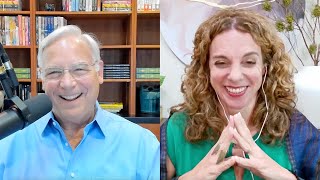
Isabelle Tierney teaches a three-step method to interrupt stress: stop and pause, slow down to breathe and restore your prefrontal cortex, then replace quick fixes with sustainable habits. She explains the neuroscience of amygdala hijack and shares her own recovery from burnout and an eating disorder.
Chapters
Foreign.
Welcome to our podcast where we dive deep in the principles and strategies that help us all live our best lives. And today I'm thrilled to have Isabel Turney join us. Isabel is not only a highly respected therapist and international speaker, but also a pioneer in transforming how we handle stress and enhance our well being. And I had the pleasure of hearing Isabelle present her Stress Less keynote and at our Transformational Leadership Council meeting in Ireland about a year ago. And I was incredibly impressed by her innovative approaches that align beautifully with the E plus R equals O principle that I teach that states that the outcomes we experience in life are determined by our responses to events, not the events themselves. And she's taking that simple thing and like just unpacked it so beautifully in so many deeper ways. So looking forward to talking with her about that. And what I learned at the conference is that after running a successful therapy practice for more than 10 years, Isabel's journey took a turn when her burnout from stress led to the loss of her health and loss of her marriage. In response, she developed her transformational and transformative methodology aimed at fostering a life of aliveness, inspiration and joy. So this comes out of her own life experience in a powerful way, which you'll hear about. And what she calls a choice point methodology that we always have Choices is a simple, proven map derived from neuroscience, from psychology and spirituality, and has been successfully implemented with diverse audiences from individuals to corporations. She just told me that she was down in Mexico teaching a seminar in Spanish to a group of people in a, I think like an elderly home. So amazing stuff that she does. She speaks three languages, I speak American and about 25 words in Spanish, a bonus Dias, things like that. Anyway, so her work is really broad based. It works for everybody in every kind of situation, helps them drastically reduce their stress levels. And we all know that we're suffering from a lot of stress in today's world. And her programs, which include Stress Less Less, Live Better program that she has and also the Stress Reset program, have proven to be game changers for people looking to take control of their reactions and lead a more inspired and joyful life. And have led to a 95% reduction in stress in just seven weeks. That's quite phenomenal. And with stress and burnout reaching the unprecedented levels that we're all seeing today, there's never been a more critical time to take change and take charge over how we manage that stress though. Isabelle, it's so wonderful to have you share your insights and strategies with everyone. And I'm really Eager for our audience to learn more about your work and about how they can start implementing these transformative practices that you've developed. Because I've applied them to my own life. And I know that everyone I know that's worked with you is really thrilled about it. So welcome.
Oh, thank you so much. It's so funny, I was thinking about when you said, you know, she went through a divorce and a health crisis, and then she just decided to build a methodology. Was like, I never thought about it quite like that. You know, I think you and I are like that. You know, we are growth mindset. People like not letting life define us, the turbulence of life define us, but we find a way to make what turbulence? To make it better. To make lemons out of lemonade.
Yes.
Is that right? Yes, to make lemonade out of lemons. So thank you. Thank you for having me.
So if you can figure out how to make lemons out of lemonade, we're really going to be. We can make a lot of money.
Well, let's explore that in our podcast today.
You know, Napoleon Hill said that every negative event has a seed within it of an equal or greater benefit, and that's what you were able to do with your experience. One thing he said, though, that never people, never quote, is you have to look for it. And because you're a seeker and a person who's constantly committed to growth, you did. And out of that came what you've created. So, as we talked about when I first met you at our Transformational Leadership Council meeting in Ireland, one of the things I mentioned, I teach, E +R equals O of M +response equals dot com. And the outcome we experience is, you know, our happiness, our health levels, the quality of our relationships, wealth and abundance, level of our stress and so forth are determined not by what happens to us, but by how we responded to it. And so you've taken this idea much deeper in your courses and so forth. Can you share how this principle integrates in your methodology? You know, how does it what underlying there, and then dive into how people can refine their responses to not just reduce stress, but to transform their approach, I think, really to any challenge they face in life, which is what creates the stress.
Yeah, I love that. So I had a difficult childhood, like many of us did, and had a lot of trauma, had all kinds of abuse. And the way that I managed that abuse was through developing an eating disorder. So I developed an eating disorder that lasted about 20 years. And, you know, on the outside, I was living this perfect life you know, three children, master's degrees, you know, all kinds of accomplishments. But what nobody knew, except for my husband, was what I was doing behind the scene, you know, what I was hiding. And I just, I just remember feeling so hopeless about this eating disorder. Didn't matter how many therapy sessions I was doing, all the work that I was doing, what I became obsessed about was like that moment of choice, right? I could read all the self development books till 10 o' clock at night, get all inspired, but in that moment of choice, at the end of the day when all my stress was up and I just could not stop myself from acting out my eating disorder. And so I formed this company named ChoicePoint because I discovered that Tara Bennett Goldman, who's Daniel Goldman's wife, who created emotional intelligence, talks about the choice point being this moment, this quarter second between the impulse, an impulse that we have, right? I'm going to yell at somebody or I'm going to have that chocolate chip cookie finish that glass of wine and the action, there's a quarter second. And they say for adolescents it's 1/64 of a second that they have room. And so I became obsessed to say like, well, what's out there in the self development world to help people at that choice point? Because it doesn't matter how intentional we are the rest of the day. And I started developing work to help us expand that choice point. All the products and services I've created is like, how do we expand it so that I can recover the, the power of choice? And instead of letting old neural pathways kidnap me down, you know, the routes that it's done every day for 40 years, do I have a moment to stand at that choice point and choose something new? And when we do that again and again and again, guess what? We create a new life. And it makes me kind of teary because it's, it's so simple and it's so powerful and so few people really know that the power of choice lives in that moment and that if they just learn to extend it, a whole new life can be attained. I don't like the word attained, but you know what I mean.
No, I hear you now. Okay, so let's talk about stress for a minute. You know, a lot of people don't even realize when they're in stress. In other words, they don't realize what they're doing is having a stress response to the experience. And you first have to be, I would think, aware of that in order to then have that choice point, you know, so talk about for Everyone out there. And a lot of people know when they're stressed, but some people may not. So talk about what are some of the kinds of signs that we're reacting to stress and then how could people become more aware of these in those moments? So before they overwhelm themselves with it.
I'm actually going to say teach something before that and then I'll talk about the signals. So the thing is, people think, oh, I'm stressed. You know, we, most of us know that 90% of doctor's visits are driven by stress. Or we, we all know stress, but it's kind of like this, it's kind of this fuzzy thing. What I discovered after my marriage fell apart and after my dream, I was diagnosed with adrenal exhaustion, is that when we are in the stress response, all these psychological things happen, not just these physiological things. And the two things that happen in the stress response is, number one, our frontal cortex gets kidnapped. So the frontal cortex, I know, you know, this is the part of our brain that is capable of rational decision making. It's the one that says, let me think about this before I take action on it. It's the source of all our conscious choices. When we are in the stress response, that gets kidnapped, literally, like turned off. What actually happens is all the blood leaves that part of the brain and then goes to our extremities to fight flight or freeze. So first thing that happened, we don't have conscious choice anymore because we can't think straight. It's act now, think later. And then the second thing that happens is we develop what's called the negativity bias. So because our brain is perceiving danger, even if we're not in danger, it is tracking for things to be wrong in the world so that I can protect myself from potential danger. So if it's 2 o' clock in the morning in the streets of New York City and you're by yourself, you want to be on the lookout for shadows and noises that might be a little strange, that might show you're in danger. The problem is that same negativity bias is present all the time when we're in the stress response, even in our daily life. And so when we talk about what stress, what's stress? Stress takes away your capacity to think rationally, makes you an impulsive human being, and makes you see yourself, others and the world from a completely distorted negative lens. So I wanted to pause there before I talk about signals, to hear how that lands with you.
To hear that someone recently called it. They said my Amygdala kidnapped me, Correct?
Correct. Yeah, correct. The amygdala is always scanning the horizon. And do you, I don't know if you know this about the amygdala, if it has experienced any kind of trauma. It only takes 5% of the information in the present moment before deciding that it's the same event and behaving the same way. 5% before saying, yeah, this is dangerous. So, Jack, if you look at me funny today and, and let's say I've had a childhood of people abandoning me, my amygdala is going to say, oh, my God, Jack is totally bored right now. He doesn't want to be with me because I want to take 5% of that information. So when our husband says something a little snarky, our partners or our boss, we so quickly can go into that stress response, and then we can't think straight. And every way we look at the world is in a negative with a negative lens. So that's just powerful. And so what I say to people is, who you become in the stress response, which I call the red zone, is not your fault. It's the fault of, you know, an evolutionary glitch is what we've been calling it, this evolutionary glitch, where the brain is outdated and still responding as though we're cave people. But it is your responsibility, once you start recognizing you are in that stress response, to shift out of it. And so let me talk a little bit about the signals. So, signals, when you say, well, everybody knows when they're stressed, it's actually fascinating when I ask people to do this work and to start tracking where they're at on the stress scale, most of them completely underestimate how stressed they are. They really, they're like, oh, life is good. And actually, people live way more in the stress response than they even acknowledge it to themselves. And so learning signals that let you know that you are in that stress response is vital because the sooner you catch them, the less you'll be kidnapped, the more you'll be able to do something at that choice point. Right? And so I have a list of signals. I have physiological signals like shortness of breath, clenched jaw, you know, tight muscles. My voice gets loud when I'm in the stress response. Other people's voices, they shut down. They don't speak. If they're more freeze response type of people, emotionally, I start feeling anxiety, I start feeling frustration and irritation. And if I'm in the stress response a long time, I can feel depression and loneliness mentally, my mind is spinning. My thoughts are going so fast, I'm ruminating, I'm catastrophizing. Right? Because that's the job of the negativity bias it is to catastrophize. You might get killed if you keep going down the streets of New York. Unfortunately, when it's two o' clock in the morning and I'm worried about money, I don't want to be catastrophizing at 2:00 in the morning. But that's what the stress response will do. And then I have a list of relational signals we become, we blame, we become defended, we are unkind. Like everything we don't want to be, we become in the stress response. And so this is where I go back. Like if people walk away from this podcast with it's not your fault who you become in the red zone in the stress response, but it is your responsibility because if not, your life will be really turbulent. And we all want to live a life, this is the point of your podcast, to live a life of well being and joy and inspiration. So we've got to learn to access that relaxation response, that green, what I call the green zone in any way that we can.
You know, it's interesting. This morning my wife's leaving to go to Santa Barbara with my grandson and I'm gonna go to San Diego, I live in Santa Barbara to visit her sister and all the nephews and nieces, they want to meet my 11 year old grandson. And I'm staying home doing the podcast with you and others today. And it's funny, like the first you say, well, I thought you would, wouldn't be so busy this week, you'd spend more time with me and your grandson. And my first reaction was to get defensive. Well, blah, blah, blah, blah, blah blah blah. Now then I took a breath, you know, because I, I, we have a L shaped bathroom where we both have a sink and walk in closets. And she's over there and I get to go to my side and I go like, oh, that's not good. I say, okay, take a deep breath, what's going on here? And then I could go into my rational mind and understand why she's upset, what her needs are. They were perhaps not getting met. And you know, I don't have to be defensive. I can go and say, hey, I really understand why you'd be upset and yada yada, and like start to, you know, do a more intelligent response. And her big thing is her father committed suicide when she was 8. So her big thing is like to feel abandoned, you know, when stress occurs. And so here I am abandoning her before she even leaves to go abandon me. I was like. But it was like all this stuff is going on with little triggers. And we got through it because we do know how to get into what you call the green zone, which we'll talk about in a moment. But that first response, it's like. It's almost like unconscious. It's like, you know, a bee just stung you and you go like this, you know, before you realize, okay, it's not going to kill you. No one ever died of a beef. Well, maybe some people have died from a bee bite. But anyway, you have to be politically.
Appropriate with bee death. So be careful. I love the story because. Right. We're not just talking about big life events happening that are so difficult. It's every day, especially when we are in relationships and long term relationship. But look at the skill you and Inga had. My hypothesis from what you shared is actually Inga, actually her amygdala translated you not being there. Right. You're not going with her. That was the first trigger. And then she blamed you. So now you're triggered because you feel blamed and now you're responding. And the fact that you could recognize this is what I'm talking about, learning these signals. We spend a whole week on signals. And I help people practice for months afterwards, recognize, oh, I'm defensive. And what else did you notice, Jack? Like it was. Did you notice anything physiological? Like if you were to super slow mo your defensiveness?
I feel. I contract. I notice that part of me. Yeah. And I think my posture goes like that. Like I feel guilty in some kind of way that I'm not creating happiness or contributing to the happiness of my wife. Ultimately. I know her happiness is her responsibility, but at the same time, I can either make it easier or harder for her to go into those negative places. I don't like that because I love my wife and I want her to be happy. And then. And I tend when that happens to when I start noticing it, I want to. I move away. Because I notice when I move away is I don't know if it's a fight or flight. And I'm fleeing flight. But it's giving me a little bit of time to like calm down and then go, oh, I see what's happening. She needs this. And I did that. And that's not helpful. And I can go back and say, hey, look, I'm sorry. I realize what's going on here and I own my part of It. And I realize I haven't been there that much the last two days, and, you know, blah, blah, blah, blah. And then she feels heard and we can move through it. But, yeah, it definitely.
Okay, so. Well, that's not flight. Flight would be if you. So for people. You know, I know we always talk about relationship, too, right? So the three choices in the stress response are fight, flight, or freeze.
Right?
So you could have defended back. Right. And been aggressive. And a flight red zone response is you would have left the room and not talked to her. So you actually did what John Gray talks about, right? You took space. You left to take up space. And it's so funny because. So Brian and I, the guy that we divorced, we're back together. And this work is one of the big reasons we're together. And the thing about it, I have attachment issues. So when Brian is. When we're in the red zone, what I want is I want him to talk to me. I want to repair it. I want to work it out. Brian needs to go in his cave. And so I literally. This is embarrassing, but I think it's so funny. And I always like to be really human. I used to persuade sue him in the bathroom when I was fully in the red zone because I just needed to finish the argument. And the more I pushed, the more he became red zone. Until eventually he would say something really unkind to me just to try to get me off him. Right? Because in the red zone, we perceive the other as the enemy. And now we've learned. Isabel, give him some space. Because Brian gets himself like you to the green zone really fast. And then we can have an amazing conversation. So for people who are in relationship, when you learn this work, it's really cool because you can say, what do you need in the red zone? And we might need different things in the red zone in order to come back to the green zone.
Well, in my first marriage, which was about 40 years ago, I'll be 80 in just a few days. But what happens is I was one of those guys who would slam the door and run out of the house, you know, like you kind of thing, you know? And I remember one day I did that. I slammed the door, and I'm on the porch and I go, now what? It's like. It's like, I'm leaving, but where do I go?
I love that. Did you have humor about it when that happened?
Not then.
Not then.
I wasn't that aware back then. Now I do. I remember once we were having a fight about money and I took my wallet out and I threw it at her. And I just said, here, take all the damn money. And, you know, and it went by her and broke a window. I got to spend the next day, about an hour fixing the window, really thinking about what I had done, you know. But, yeah, I was that kind of guy where I would explode, need to run away or explode kind of attack. Never physical violence or anything like that. But, you know, that was. That was never helpful, but. And I would see red. So I don't know if that's the part of the red zone. But anyway, a lot more conscious now, as you know, and so forth. But anyway, keep unpacking this. This is valuable.
Well, you know what? I love you just showed perfectly how somebody. So we talk about the red zone, yellow zone, green zone. So if people can imagine the map of consciousness has three zones. It's actually in the shape of a triangle that we call the feel good scale. So red zone is at the top. That's the stress response. And then the green zone, I call it the thrive response. It's when the nervous system is balanced and can go under stress when necessary or b, relapsed when necessary. What you showed is the red zone in fighting. You used to flee, right? So that's still your response to flee, to get out of there. And you have now transformed your red zone response into a green zone response. You still step away, but you do it from love, from consciousness with a beautiful intention to be like, hold on, wow, I'm defensive. Let me calm down. What does she need? I. I mean, like, I love that. That is one of the tricks that I use. I call it conscious fight or flight. As one of my tricks. I'm going to be in fight or flight. So sometimes I can't shift out of it by meditating or journaling. I am too stressed out. So I teach conscious fight or flight. So how can I use that energy that I would use to fight and say something really mean to Brian? Like, maybe I'll put a song on and I'll sing really loudly to I will survive. You know, like, you are doing a conscious fight flight. You are taking a moment, you're leaving the space to then make a green zone conscious choice. And so it's. Thank you for being my. An example of the work.
Oh, I can be an example of everything that doesn't work at some point.
Well, this one is what works. So, yeah, I mean, this is what's so cool about who you and I are. I think. You and I. I think I'M making an assumption about you, but what I know about you is we're very transparent. Transparent about what it's taken to get to this point in our lives where we can be conscious, responsible human beings with, you know, usually we can be amazing teachers. You know, I'm like, oh, I'm this perfect teacher. And then at home 10 years ago, I was not the person that I was, you know, in the public arena. And that's been something that's bothered me a lot. I want to be congruent with what I teach. It's very important to me.
I don't know who said this once, but he said every master was once a disaster.
Oh, that's so good.
Yeah, and that was true for me for sure. But I think the other thing I would say from that is you have to consciously do the work. And there is work to do. You know, it's like whether it's doing meditation, journaling, doing the steps you're going to be sharing with us today, it's like it's not just like it's easy, you can know this. But if you don't make the effort to intentionally use the techniques, whatever it is, I know you're going to share some of that with us. It doesn't change. You know, we always say nothing in the outer world changes until you change. And so that's that work that has to be done. So let's dive into that. I know you, you talk a lot about strategies and techniques for managing stress and so forth. So if you want to, I've got some questions for you, but sometimes you may have a better way of unpacking this than I'm asking the questions in my order. But you got these three zones and also you have these strategies. So just share from what what you think we need to know in relation to that.
So I'm going to talk about the three steps in a minute. What I want to say about the practice. You know, it's like if you decide to learn tennis, let's say you don't know how to learn tennis. Can you imagine if you went to a weekend, you know, event where you learn tennis and then you're like, I'm good, thank you, I don't need to learn tennis anymore and assume that I'm going to be able to play tennis like it's no different and actually think it's hard, harder because instead of changing our muscles, right, we are changing our brain when we do this work and we are pre wired to live in the stress response. Our brain is still that outdated. So you're fighting evolutionary biology, right? When you're trying to change, you're fighting any kind of trauma that you've had at some point in your life, which makes sure that you're always on the lookout and defensive and hypervigilant. And then you're fighting our culture, our culture value stress. Like, how are you? Oh, I'm so stressed out.
Ooh.
That means she's an important person if she's really stressed out, you know, we are we. So to, to really choose to be a human being that chooses well, being, that's grounded, that's calm, that's inspired, we have to get really serious about practicing it. I mean, I practice my own work every day. So I just had this event, two events happen in the last two weeks, right before I went to the TLC event. And I'll share very broadly. One, my right hand person quit from my company. Like, like it's a devastation, right. And number two, I lost money from three different places that were retirement, all at the same time, unrelated to each other, right. So like really severely impacting my retirement. And again, I'm a transparent human being. I always use my example so that can help people. So I had two choices. I've had two choices this whole few weeks. To lament, to worry, to blame myself, to be terrorized. Like, like to go into scary, scary, scary stories about my future. And that's the red zone, right? I knew the red zone was like a millimeter away. It was like this cliff that was waiting for me. Just waiting. And just come on in, sweetheart. We will go into worry because, you know, because there's a part of us that loves worry and catastrophizing. And about a month before that, Jack, I had decided to seriously practice Michael Singer's the Surrender Experiment. And I had really said, is it okay if I use the word God or is it better to source? Okay, great.
Absolutely.
So for me, God is love, right? So I had really said, I'm going to surrender to God. Like I'm, I'm, I'm just, I don't want to listen to my ego and my personal preferences, like something bigger is calling me. Well, these two things happened within a week of that. And I just decided that I would believe that this was part of my surrender experiment. Wow. I actually feel some emotion around that. It's like I decided to trust and have faith that this was what needed to be let go of. And instead. So I have been the last few weeks with a sense of immense curiosity, even some giddiness like, okay, God, what do you have in store for me? I've been invited to three more podcasts, two online summits. This thing with Andres, like, so much goodness has occurred that my ego would have never, never, never expected. But I chose to stay in the Green zone. And that's the point of your work and my work. It is a choice. And it would have been so easy for me to fall apart. And let me tell you something, there were times at 10 o' clock at night where it was like, it was like a slipping. But because I know my signals. Oh, I'm starting to think really fast. Oh, I'm starting to worry. Ooh, I'm getting anxiety in my belly. I couldn't recognize it and say, nope, not going to do that. So let me bring the three steps in now. But I wanted to know if there was anything you wanted to say from that, because I imagine you recognize the surrender experiment and you probably practiced that yourself.
Yeah, I like Michael Singer's work, and I think that life in general, I think the ultimate kind of end game that we're supposed to get to is surrender to what is, you know, Byron, Katie's work, you know, loving what is the surrender experiment? The Art of Allowing with Abraham Hicks, you know, so that at some level you get to the place where you trust. I'm going to be interviewing someone not too far in the distant future who wrote a book called Consciousness Is All There Is. And he states in the book that it's just all unfolding. There's an evolution. It's actually a good thing. The evolution is good. And if you trust that everything that's happening is happening for you, not to you, if there's some greater good that's going to come from it, like it did from your stress that you mentioned earlier that helped develop this program, then we just surrender, knowing it's all good. And I think a lot of us, we're trying to control everything because we've afraid if we don't control it, something bad will happen. And what I've realized is that we only try to control things we're afraid of. We control nuclear waste, we control the water we drink. We try to control our children, which never works. Children to control our spouse, which never works. You know, but we control things that are dangerous. You know, we want animals in the zoo or out in the jungle, then we feel safe, you know, et cetera. And so I think that the more we move in the direction of your work is taking us that other people's work in this Transformational movement is taking us leads to that place of trusting and allowing. And then when you're in that space of not stress, then the prefrontal cortex can come into play and. And you could come up with solutions. You attract things through the law of attraction, like your podcasts and summits. And as Byron Katie once said, what's the worst that could happen? Well, I'd be out on the street, sitting on the curb. And then what would you do? Well, I'd figure something out, you know, because you would. And so it's like the worst is never the worst. And we have the capacity to solve the problems that show up. And I believe, and I'll shut up and let you talk in a moment, but I believe that it's the hard times that help us develop the major qualities of acceptance, allowing, compassion, perseverance, all those things that are really the highest qualities in life that we wouldn't have to develop if everything was perfect.
Yeah. You know, it's interesting we could go into that whole conversation because I'm always fascinated by that. I did, you know, I've done a really bad job in some areas of my life, but I did a really good job parenting. Right. Because I grew up with such bad parenting. I did a really good job. So my children, even though they've experienced turbulence, they haven't experienced experience trauma. So it's been interesting because I like the story. If I experience a lot of trauma, I'm going to be this awakened human being. And Unfortunately, I'm not 100% sure because my kids, because they always have been raised in the green zone. It doesn't mean they don't get angry or frustrated, but they know how to stay in the green zone. They have proven my theory that you become a better human being because of suffering. So we can hold that theory because it makes us feel better, but hopefully that's not true for the next generations after us. Maybe it was a theory that was good for our generation.
We all learn, and then we pass on what we know to the next generation. And if we can not traumatize them. And I would suggest that even though you might have not traumatized them, some of their friends might have. Not making the football team or the cheerleading squad, getting an F in a course they love, not getting to the college of their choice, maybe being bullied, maybe not. Maybe their own self talk, you know, there's other things that come up that they have to face. You know, and one of the things, I'm writing a book with someone right now about some of this stuff. And one of the things she says is we all have to go through boot camp. And boot camp can be hard, like Navy Seal boot camp, or boot camp can be like band camp, you know, where you just went and played instruments and all that. But when you don't have challenges, then what happens is when big challenges do come along, you'd never develop the resilience you needed to deal with that. So I think that what you're teaching helps us build resilience because it helps us build the knowledge that we'll get through this, and we have the tools for that. So it's. It's interesting how it all plays out. But I do believe there's an evolution of consciousness. And as Michael Beckwith likes to say, the evolution of consciousness is happening through you as you. Meaning that as you evolve your consciousness, the whole evolution of consciousness for mankind, humankind, is expanding. So, anyway, back to you.
I know that the feeling that I get right now is that I am not the only one going through some. Like, there's a losing of what we thought would make us secure, that. I'm seeing a lot of people. I have three of the people trained in my work have been diagnosed with cancer, and one of them really serious in the last three months. I know a lot of people whose relationships are falling apart. I know other people with money. I know as people in tlc. Like, at least three people that I talked to in Vail had lost their whole leadership team. Like, there's something happening. So people listening to the podcast right now, if you have an event happening right now that you thought was something you could control and that was going to keep you safe, I really want to invite you to say, okay, something else must be showing up. And I actually believe these things are being taken away from me so that I can come back to the present moment, so I can come back and practice this work, so I can choose to be Green Zone in this moment. Because past and future are just illusions that the mind creates. They're not real. And I think, I hypothesize we're in a time in our evolution. We're coming back to the present and. And making that choice about how do I want to show up. Red zone or green zone is the one thing we can control. It's really the one thing we can control.
And I would add, when you're in the Green zone, which you're going to maybe unpack a little more and talk about the zones, but when you're in the green Zone, what happens is you are open to receiving your intuition. In other words, you can tune in to what's being brought forward in you. You know, intuitive impulses, higher level desires from your high self, from your angels, however you want to hold that. And when you're in stress, that's not happening. You're down here with all this mishigos of fear and so forth. And when we come back to the present moment, which is as we look at physics, it's all there is is now. And as Eckhart Tolle likes to teach us, if all there is is now, and you learn how to be in the now, you don't have to worry about the future because the future is simply now. Now, in other words, now everything we experienced before is not now. And everything is, we're about to experience is not now. So if I can learn to engage presently in the now and do that effectively and consciously, then everything that ever shows up is called now. And I know I will have that space. You call it the Green zone. To allow the intuitive impulses to come in through, this is what you need to do. Or the intellect to say, hey, this makes sense to do which we don't have when we're feeling bad about the past, feeling guilty, feeling scared of the future, as you just talked about, and all of a sudden all there isn't a now. And in your now, even though your future, you call your retirement is something to worry about, you're fine now. You have a house, you have a computer, you have food in your refrigerator. Now is working. Now is working.
That's, that's the, you know, it's, it's, you know, lately, research in heart math and what Joe Dispenza talks about, talks about that when we have the heart and the mind aligned. And so I really like what you're saying. It's like when I'm in the green zone, my heart and my mind are aligned. So my mind. You just said it beautifully. My mind can think straight and can, can think straight. But the heart, where our intuition lives, where our, to me, where our soul lives, it's even deeper than that. That becomes accessible too. And so literally right, we talk all the time about infinite possibilities. That's in the present, that's in the green zone. So as you listen to this podcast and let's say you have a problem you can't seem to solve right now, check out. Have you been looking at your problem from the red zone, or have you been looking at your problem from the green zone? And in the green zone, they will always be Solutions, even if, like, the long term solution isn't there, like you were saying, the present moment solution is there. Oh, my God, I have enough food. I have so much love. Like you said, I have light, I have electricity. And then the next thing shows up. Oh, Sally, I get an invitation to another podcast. Like, it's so fun. Because then we allow God to lead as opposed to thinking we know the future. We don't know the future. Even if we think we know the future. It is such a joke to think that we know the future. It's a good illusion. It's well maintained by the brain. But we all know this. We experience death, disease, all the things we could have never predicted, just like we experience amazing things we could have never predicted.
Let's talk about how people can get from the red zone to the green zone. What do they need to do good?
So one of the hallmarks of my work, which you know, is its simplicity. And what I understood really not too long ago is that in this downloading of this information I was given, first of all, the feel good scale, which is a universal shape. The triangle, right? The pyramid, and then universal colors. Everybody understands red, yellow, green. So have that image in your mind of red, yellow, green. So that's the first part of the work. It's the awareness. Bring awareness to where you're at on the feel good scale. The second part of the work is the action piece, and we're going to talk about the three steps. And my formula says awareness plus action equals transformation. So awareness, check yourself on the scale. And then if you are in the red zone, there are three steps, just as simple that go with the traffic light, that work. And even though they're going to sound simple, they're each of them scientifically backed. All right? So step number one, think about what you do at a red traffic light. You stop. So step number one is you stop. And what happens when you stop, just like you did with Inga this morning, is you remind yourself that the way you're seeing yourself in the world is distorted. And you stop yourself from taking any action or believing any of your thoughts or your feelings because you understand that the red zone is going to distort everything. So you stop. Now, what happens when you stop is those old neural pathways of habitual behaviors, of the negative behavior of you becoming defensive and then raising your voice at her. They're stopped. They're literally stopped in their tracks. And there's research that shows that just doing that already starts rewiring your brain because you're not Deepening the groove of the old habit. Step number two. This is what you did in the bathroom. Slow down and breathe. So now think yellow light, yellow traffic light. Slow down and breathe. And we all know about breathing, but what we might not know is that it is scientifically the fastest way for your body to realize that you are safe and to stop perceiving that you're in danger. Because when it thinks you're in danger, it makes you start breathing really fast so that you can get all that energy to your extremities to fight flight or freeze. So when you direct your body to take deep abdominal breath, you're bringing all your energy back to your center. Your digestive system starts working, your heart slows down, and your body goes, oh, I'm safe. That's when you start regaining your capacity to think. You literally said that you started regaining your capacity to think. Your frontal cortex come back online, and then third step is go right again. Traffic light, green, go. And what I say is, go for a feel good habit. So that is a habit that is going to keep you in the green zone for good. Because I compare those to false good habits. False good habits are yelling, having too much wine, overeating, and, you know how you temporarily feel good having them? It's like, oh, I used to love smoking. Did you ever smoke? Probably not.
I didn't.
Oh, I smoked for, like, 20 years, and I loved it so much. And, you know, for a minute, because what it really allowed me to do was to take a deep breath, right? To slow down and to take a break. But then it brought me back to the red zone. My eating disorder. That is a perfect false good habit. I literally would feel good for, like, two, two minutes after I acted up my behavior. Just two minutes. It actually brought me to the green zone. And then it would catapult me back to the red zone. And so the. In the work, I teach people to find what are their feel good habits that help them feel good sustainably. And then, do you know Rick Hansen's work? He talks about how when we do something that feels good, he talks about anchoring it by staying with it. So let's say, oh, so I'm talking to Jack. Let's say I'm talking to you right now, and it feels really good. So I'm like, oh, it feels really fun to talk to Jack right now. And I let my body really feel this habit. And what happens is your memory bank starts being able to absorb this feel good state and starts giving less room to negative memories. You literally Change changing your memory bank to start allowing more positive memories rather than negative ones that it's wired to do. So you see, each step does a very powerful rewiring of your brain. And as you pick the new feel good habit, you are now creating a new neural pathway. And in two minutes, you have started to change your brain. So those are the three steps. And then we can go deeper if you want.
Well, this is interesting. I'm sitting here and you said, you know, you know, well, two things. You know how whenever little kids are all upset, you go, slow down, take a breath. We've been doing that for centuries. Take a breath. You know, and that really is like part of the game. And I was sitting here and you started talking about, you know, being in that space that feels good and anchoring it. And I started to be self aware and I noticed my shoulders were a little tight and my breathing wasn't as deep as it could be. So I started breathing deeper. I felt more present. Then I said, well, why wasn't I there before? I said, well, I want to do a good job. So I'm anxious that I write, ask the right questions, that I respond to you. What I say is helpful, not unhelpful. And so when I let go of that and just be here, because I do enjoy you a lot, both here and when we got our transformational leadership council meetings, I just started to feel more present, you know, and so even me, who teaches this stuff, I'm sitting here going, oh, I just took a few deep breaths. I'm happier logging that in. And so it's funny how it's a constant, constant, constant, constant thing, an awareness and mindfulness. Because you talk about that, we have to be mindful of what we're experiencing. And most of us are so focused on something out there, in my case, doing a good job. And I wasn't as aware as I could be, but I became aware of that. And then when I did that, I relaxed. And now I feel more present. And I noticed my voice is calmer.
First of all, the vulnerability, like Jack Canfield being nervous that he wants to do a good job with me. Like, you know, first of all, thank you so much for sharing that. It's funny because I had this presentation with these Mexican people and as you know, Andres Portillo, that's who I was doing it with. I noticed the night before our presentation, I was like, oh, you're a little constricted. And I did the same thing as you. Like, I noticed the constriction a little bit of speedy thoughts. And then I thought, oh, I really want to do a good job for him because I really want a collaboration to work out with him. And then I was like, isabel, God has given you this chance, right, To. To present to his community. If it works out that something more happens that's meant to be, if it doesn't work out, that means it wasn't meant to be. So it was like this let go, let God moment. And our only job is to show up as much in the green zone as possible. That's. It's really, in the end, Jack, our only responsibility. It's like, if people walk away with that, like, how can I practice being in the green zone in any circumstance? And it's not always easy. So whether it's a big public presentation, if your partner is in the red zone, if somebody cuts you off in traffic, if you're having money fears. Like, we get tested all the time in big ways and small ways. So can we notice? Oh, yeah. Can we do the three steps? And, you know, the third step can be just continuing to breathe. That's what you did, right? You did stop and you noticed. You slowed down and breathe. And then you just kept breathing. But you. You brought your shoulders down, and then you went. You thought to yourself, what happened? What am I doing? Oh, I'm trying to do a good job. Like, you did the same thing with Inga. Oh, what's happening with her? Oh, yeah. I haven't been like, it's beautiful. But you see, your choice point is, what, three minutes now versus a quarter second? You've expanded your choice point so much because of the work that you do with yourself. That's what will stop wars, that's what will stop violence in the world, is when we can take that choice point. See, that creates a lot of emotion for me, too. Like, when we can actually take these choice points and not be reactive in politics and world governments. Like, that's one of the reasons I'm so, so motivated to share this work everywhere. Because this will end violence if people practice it.
Yeah, no, I get that. I have a friend who's now very conscious on the other side of all of this. But years ago, he was working with a therapist, and this guy was a multi, multi, multi, multi, multibillionaire. I think he's worth, like, $60 million or something like that. And it was addicted to drugs and alcohol and sex and so forth. He went to a rehab center, and as soon as he got out, he would rent a house in Malibu, order alcohol and cocaine, bring Prostitutes over. And it was like it never happened, you know? And then one day he said to the guy who ran the rehab center, he said, look, I want to hire you full time to just work with me and 24 hours a day or whatever, you know, eight hours a day. And the guy said, why would I do that? I got all these clients here. And he said, well, think about this way. I'll double your income, whatever it is, and you only have one asshole to deal with instead of 15 in the program. So he came over, but this guy who was his therapist told me once, I know them both now. He said we would go to a party or go to a bar or a restaurant, and I would silly count down like a second timer. Before he would hit somebody, someone looked at him strange. Someone bumped up against him accidentally, and he'd coldcock him. And it's like that stress was just so strong and the response was so fast. There was no reflection, no awareness, nothing. It all changed through a lot of different things. He did plant medicine, he did meditation. He took a lot of workshops, so forth. But the idea that stress response, when you talk about no wars, that's what I'm playing off of. How many fights start, get physical? How many people beat their wives when their wives say something negative to them, you know, and it goes, children, children, yeah, we do our children. We pick them up and shake them. And, you know, I've actually heard of babies that their brains were addled because their parents picked them up because they wouldn't stop crying. I know it's really sad.
But anyway, and I want to say this again, it's not our fault, but it is our responsibility, right? When you are in the red zone, the beautiful side of the red zone is you hear, the mothers can lift cars off their children, right? But this is to say how much power and energy we have available at our disposal in the red zone. And so if we're wired, we. I call it the homeostatic level. If your baseline level is as a red zone human being, it takes nothing to trigger you into wanting to hit somebody. So I am not condoning violence. I am helping us understand it, that it is who we become because we think we're in danger. And now it is our responsibility. And it is a serious responsibility, really, for the sake of our planet, to learn to get out of that red zone into the green zone. And so my work works in two ways. You were saying this earlier, it works in the moment, but we also have to work it foundationally, right? I used to be a level 2, 3 human being. For a long time, most of my childhood, most of my early 20s, I have wired myself into becoming an 8, 9, 10 human being. Right. And it's taken years. And you were saying we need to do other practices. So I use my work. I meditate two hours every morning. The. My new non negotiable. I think, you know, we're talking about this @t DLC. I also do nighttime now. I watched like one TV show and then I go outside and I just take a whole other hour just to be. And not to fill my brain with more stuff. I. It's a really. It's a big dedication. You know, if we want to create like Martin talks about, Martin Root talks about heaven on earth, we need to become really responsible and understand it's not people's house. You know what it is I'm trying to say? I'm trying to not judge. Like, I'm trying to have compassion for people and countries and places that are in the red zone while also not giving that an excuse or break for what they're doing. I just. It's so easy for us to become judgmental that. Oh my God, I can't believe those red zone human beings. Like, you know Barbara Brennan, that's who I studied. You know, the. The energy here.
Yeah, I know her. I've worked with. She used to.
Okay. She used to say, which used to be very controversial. We haven't fully done our work till we've owned the Hitler inside of us. And people would be like. People get all horrified about that. But what she meant is we are all capable of the worst red zone and the highest green zone. And we get to decide how we want to show up in, you know, event plus response. How we want to respond to life. That sometimes is very difficult and people don't have the skills. They've never been taught. They live in Israel, they live in Palestine, they live in places of war. How could they know the green zone unless they get taught a different way? So I don't know if I went a little bit too far, but hopefully.
No, no, no. I totally agree with you. I used to. I studied Gestalt therapy for many years and one of my trainers who trained me said once, if you're in a movie theater and someone's standing on your foot, they're not aware of it, then they're not responsible because they're not aware of it. But as soon as you say you're standing on my foot, all of us would get off the foot because now we're aware, you know, we can't make a choice without awareness. And so it's not. You're not a bad person for having done that. You know, you're just someone who wasn't aware. And I think one of the things that we don't do very well in our culture is we put people in prison, we punish them, but we don't expand their awareness. We don't teach them how to not be reactive. We don't teach them how to manage their states, which led to them getting into a fight or hitting somebody or killing somebody or whatever. And, you know, so I want to tell a quick story, then I want you to speak to just a couple techniques for getting back in the green zone. And then we'll have to wrap up, which I hate because this is such a great conversation. I know, it's so much fun.
We need to do a weekend thing. That way we don't have to stop.
There you go. There you go. So I went to was Fairfield, Iowa, where the school that the Maharishi people started, the, the TM people and I visited there. They have a school there for kids. All the students who live in, in Fairfield, most of them are in that world. And I was a guest and I was walking around in the school and in the morning you see all these little 6 year olds and 8 year olds sitting in meditation for 20 minutes and that. But that was cool. But then what floored me. I'm in the hall when they're passing from one class to another and this guy goes up to this girl and he starts teasing her and she looks at him and says, ronald, I know you're trying to tease me right now, and normally that's okay, you're one of my friends and we have fun with that. But I'm having a really bad day, so I request that you don't do that now. And he went, okay. And it was like I went, oh my God, this is so cool. You know. Her response was totally from a present state of calm, rational. This is not good right now. Please back off. And his, he was able to go, okay. And no guilt, no. No attachment, no defending, no back and forth. And I think that's what were possible when we talked about war and terrorism and the reaction, that's violent and so forth.
Yeah, I mean, I mean, obviously this kid, right. The boy had a nervous system that was regulated enough that he could hear that. Right. I don't want to underestimate. Like there are times somebody might practice saying that and their partner is so red Zone, they won't care. Sure, sure, it's up to the person to take care of them. But that is indeed what we can do. What we can, what we can practice. Yeah, you, you know, it's funny, I thought about like, well, what are, what are other strategies? And Jack, I think that one of the things in the self development world, it's, is that we learn, we, we imbibe so much information. I am, I mean, I have read every book under the sun. You know, when I read the Celestine Prince Prophecy in 1993, that's what opened me up to spirit. Like I had not, I didn't have one spiritual bone in my body until then. And then literally for the next two years, I did not read one fiction book. I read Buddhism. I, I read everything I could read. Manifestation, everything. So there's a part of me that's like, oh, let me be so cool and give you lots of other strategies. But I actually want to stay simple. I want to tell people that really, if they practice awareness. What, what zone am I in? You can do one to ten. Ten is I'm all the way green, right? You have a lot of life force at your disposal. One is you're constricted in the red zone. Check in multiple times a day. Where am I at? And if you are red or heading into red, which is better, you're hoping to catch yourself as you're heading into red. Like as you drive home from work, stop. Don't believe anything you think, feel or want to do. Slow down and breathe and then do something. Call a friend on your way home. Like, oh, come inside your house and just say, honey, I'm in the red zone. I need a few minutes. Or go and do a quick run. Like, take care of yourself. Find feel good habits that help you get out of and stay in the green zone. And it's really the only thing that I want people to walk away with. You do that practice, it is an infinite practice. You will always find new feel good habits. You will always find something new in doing the three steps. I still discover new things every time I practice the three steps. So I want to keep it simple, which is what the beauty of this methodology is.
One of the things I found for my wife and myself is when we, if, if it's feeling so overwhelming, the red zone energy is to do some kind of physical activity. Go for a run, lift weights, go. The result is cortisol streaming through the body. And when you do that, it lowers that. I think that's why kids have Temper tantrums that they need to move in order to release that physiology that's built up out of their frustration. You know, And I've been doing breath work lately and literally, like, you know, you start to breathe correctly or for the breath work, which is much different than our normal breathing. But all of a sudden, like, feelings come up. And then when I've been in classes, they'll now say, now just pound on the floor, move your legs like you're having a temper tantrum, let out sounds, you know, and all of a sudden like you almost go into an altered state. So we know that, that, that any exercise, we're all told we should do that. You know, we. Not everyone does breathing. We don't do that. And we can learn breath techniques that allow us to breathe more deeply with meditation, mindfulness awareness. One technique that I learned recently was putting little 3 by 5, 2 by 3 post it notes around. You could write on them if you want breathe or pay attention or tune in or am I in the green zone or red zone or whatever. But every time you see one, you have to stop and be mindful. And just little techniques like that that remind you. Because the word remind means to come back to our mind, you know, to return to the mind instead of the craziness that we're experiencing. And so I find having those kind of techniques are useful.
I'm going to say something, I'm going to try not to curse. All right. But I was doing a presentation, a podcast the other, and, and I was talking about, you can't meditate when you're in the red zone. The red zone is a place, as I was saying earlier, of so much potent life force that's constricted. So what I teach. If you're really in the red zone, just what you said, find a way to move that energy. You can't. If you tell me to journal, meditate in the red zone. And so we decided to be a T shirt that would say F, F Meditating in the red zone. Because you, you just can't. So thank you for bringing that in.
Or you go into your journal and you write fu, Fu, Fu.
Exactly. That's the way. But. Right, so what I talk about is in the red zone, we either discharge energy or I've invented a word, I call it in charge. We either take it against others in the red zone or we take it against ourselves. So we've got to find a healthy, conscious way to move that energy. And that's literally breath work is incredible. You know, that's what saying. Dancing to a song, you know, moving our bodies. Yeah, exactly. I love that. Thank you. That's why I love.
Dancing is good. I think that's why so many of the kids today, like, they go to the raves, whether they do it with the, you know, MDMA or not. But dancing is a great release, you know, and if you're doing it to rhythm, you're doing with others, you connect with that through the rhythm and the connection, the vibration. There's a lot of things that are really good. I'm watching a TV series right now called Tokyo Vice about an American who goes to Tokyo. He learns Japanese. He gets a job in a newspaper covering crime. And there's a lot of anti gaijin, you know, white guy energy in the, in the newspaper because he's the only one. And you see him about every second episode. He just goes to some dance club and dances crazy. He just goes off the wall, just movie, movie, movie, movie. But then he can come back to the work the next day and he's okay. So it's a good.
Yeah, it's a discharging. We have to discharge that light. It's literally life or death. Energy has to be moved before we can make conscious choices, so.
Well, I just had an awareness. You said discharge, you know, because what we're experiencing when we're in the red zone is we're. We're overcharged, you know, we're charged up too much. You know, we say you charge on that, you know, whatever, California talk. And it's a. We're discharging so we can come back to the neutral. I love it. I love it.
Yeah, me too. Me too. I don't want to end this. It was.
No, I know, I know, I know, I know, I know. Okay, take a deep breath.
Shoot. I got stuck in the future thinking. Thank you so much, Jack. You brought me back to the present.
It's fun. It's fine. So if people want to find out more about you, your programs, you got a lot of good stuff available for you. Where should they go?
Yes, the feelgoodlife.com is my primary website. And what's really great is you can actually go to the Learn tab and you can actually see the talk that I did at TLC there so that people can really see the scale and the three steps and get a deeper access. And then I work both with B2B. I have a seven week program that's called the stress resets. So if you see. Oh, my God, this would be great. That's where the 95% stress reduction occurred because we measured in B2B in seven weeks. I mean, people dropped 20 percentage point, 20 points of their blood pressure. They've become in remission of diabetes. It's incredible what happens with this work. So go to the feelgoodlife.com and then for you, for your community, if you go to the feelgoodlife.com habits, I have a great e book that really shares about the methodology, helps you build your bank of feel good habits and. And then puts it all together so that you can actually print out a page and have it around you like you were saying, so that you'll remember it's the feelgoodlife.com/jack.
Okay. Feel good Life. Jack. Okay. Jack.
Just for you.
Just for. They came from this podcast. Very good. All right, good. Well, as I said, you know, I. Every time I do a podcast, I go, I wish I had more time. But we don't for now it's fine. Because people now are aware of you and are aware of your work, which I think is really valuable or I wouldn't have had you here. And I want to encourage everyone go to those websites, they're in the show notes below. And make sure you take advantage of the work that she's done. Consider there are people out there, these what I call transformational leaders and teachers, who've done lifetimes of work, you know, many, many years of their own personal work, their intellectual work, gathering things, putting them together, creating systems that work and take advantage of that. You know, you're getting the value of their work to you in a shorter period of time. It's just really inefficient not to do that. You know, we don't have to read. I've read 3,000 books. You've probably read hundreds and hundreds of books. The reality is that we did that for ourselves, but we also did it for you. So we can shorten the time that you have to get to where you want to go. So thanks again, Isabelle.
Well said. Thank you so much for having me. And I look forward to more Green Zone with you.
Okay, very good. And also thanks to all of you who've joined us today. And if you found this conversation valuable, please let your friends and family know about it. We need more people living in the Green Zone. And make sure to tune in next time when I'll once again be talking with a transformational leader about how to be more conscious and experience more love, more joy, more happiness, more inner peace, more health, more wealth, success and true fulfillment, all of which comes from the kind of work we talked about today. Until then, remember to stop. Take a breath, tune in. Notice what you're experiencing. Now you have awareness. Take some of the actions we talked about and start creating a more peaceful which will lead to a more fulfilling, healthy, wealthy, successful life. Know that I love you and I look forward to seeing you next time.
More from Jack






[EP 46] Creating Your Own Luck: The Power of Self-Confidence with Veronica de Andrés

[EP 45] Rewiring the Brain for Bliss: Activating Your Spiritual Intelligence with Dr. Dawson Church


[EP 43] Transform Your Life Through Visualization and Emotional Intelligence with Natalie Ledwell

[42] Enhancing Your Health & Longevity Through Peptides and Functional Medicine with Regan Archibald

[Episode 41] The Success Principles 20 Years Later: What’s Changed and What Still Works