[EP 34] The Producer Mindset: How to Create Real Wealth with Garrett Gunderson
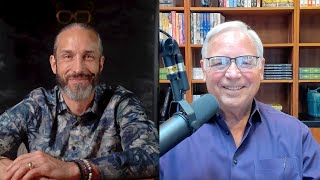
Garrett Gunderson explains how to shift from a consumer mindset to a producer mindset and build real wealth. He covers healing childhood money beliefs, investing in yourself, practical levers like tax optimization and cutting fees, and building intellectual property instead of relying on traditional investments. Design a life you don't want to retire from.
Chapters
Foreign.
Welcome, everyone. Today's episode is a definite must listen, especially for those of you interested in transforming your financial life. I'm thrilled to have with us today Garrett Gunderson. Now, he's best described as a financial pioneer, and he's an author of 10 books, including the Wall Street Journal bestseller Killing Sacred Cows. And as you'll see, his work challenges conventional financial wisdom and continuously ranks among the top in Amazon's wealth management category. Now, Garrett's not only a respected speaker, but he's also a stand up comedian who uses humor to demystify complex financial concepts. In his recent comedy special, the American Ream, I first heard Garrett speak at a Transformational Leadership Council meeting where he was a big hit because he brings a fresh and innovative approach to finance. It's about creating value and thriving in every aspect of your life. His philosophy of being a producer rather than just a consumer, which we'll talk about in depth today, advocates for creating a life filled with abundance and purpose. And I love this approach because it really empowers people to break free from all the conventional financial traps and step into roles where they create true wealth. I know a lot of you are listening to this podcast. You're looking to elevate your financial game, and Garrett has the insights and the strategies that can help you make that happen. And today we're going to explore these ideas in depth and discuss practical ways you can apply them to make better financial decisions and life choices. Garrett, it's so great to have you with us here today.
That was a. That Transformational Leadership Council that I gave to was such an amazing event. And, you know, I went up and I thanked you. I'm like, thanks for putting this on. You're like, you're welcome. I did it for me. I just love that comment, you know, but it was really good to finally get to know you. You know, when you introduce and see how many books I have, that's very small number compared to the number of books you have. But I do love the writing and I do have a few more years to go. Right. So we'll see how I do.
Well, a lot of my books are compilations where other people wrote things that I just edited, so not so bad. Anyway, I want to dive right in because you got some powerful ways our listeners can transform their approach to wealth and personal success. So you talk about something called the producer mindset, and you advocate strongly for adapting this mindset. I'd like you to talk about that and how you see the producer mindset influencing someone's financial Health and their overall life quality. And what changes someone can expect in their day to day life if they were to embrace this philosophy?
Well, there's kind of this epidemic going on where people are stuck in the consumer condition. Consumer condition is a place where people feel entitled, they want someone else to take care of them or do things for them. And they actually unintentionally look to take more value from the world than they give to it. So sometimes people in the consumer condition see profit as evidence of deception or coercion or they, you know, they, they feel this, this notion of there's only so much to go around and I've got to take what I can and get, get something because if someone else has that, it's less for me. And that scarcity mindset is really the greatest destroyer of wealth. Now, on the other hand, the producer paradigm, this producer mindset is where we add more value in the world than we take from it. We would see profit as evidence of value creation. We would see that, you know, innovation and ingenuity can create more abundance for all of us and that the real nature of the world is velocity. So even if there was a finite amount of money, there's an infinite number of times it can exchange hands. And the more times money exchanges hands, the more values create, the more values created, the more exchange there is, the more wealth there is. So much. It's actually the opposite of the consumer condition, of there's, you know, finite pie and only so much to go around. It's that we continually bake and create a bigger pie the more we exchange with one another. And that exchange comes through service, through solving problems, through adding value. And the world needs a lot of solving problems right now. So the bigger the problem, the bigger the payoff if people don't expect someone to do something for them, but instead take responsibility and become value creators. The consummate value creators are the ones that create the most wealth.
I agree with that. You know, one of my mentors early on said, if you want to make more money, provide more service to more people. So that's pretty basic. So, yeah, we live in a consumer culture where everyone's focused on getting more, getting more, getting more, getting more. And then you see all these millionaires and billionaires that are not really happy because that more wasn't what they really needed.
Moving target, moving forward.
So one of the things you talk about in your writings and in your workshops is overcoming financial fear. And it's obvious that fear often holds a lot of people back from making smart financial Decisions or taking the risk they need to take. And based on your extensive experience helping people with some of these, Overcoming how to overcome fear. Cultivate a mindset of can growth fear? I think most people are caught in fear rather than growth. Talk about how you do that. What are some of the fears you see and how you maybe help people address those.
I feel like people have this money story they've kind of adopted over time. Everyone has their own, and they have what they will share. They'll go out in the world and they'll say certain things. They have certain statements almost like memes or cliches, or they stay reserved and wrapped in, that is often emotions of guilt, shame, embarrassment, jealousy, envy, you know, all those things and fears kind of at the heart of all of it. And because they're afraid, they never really get to the core of the matter, which is what they won't share. What they won't share is the internal dialogue they have around money. Do they think it's good or bad? Do they feel like it's something that, you know, is scarce and they're not sure if they can get enough of it? Are they addicted to more and trying to get, you know, net worth? Do they think if they have too much of it, it makes them a bad person? Or like there's all of these myths that are kind of permeated often because it's like folklore handed down from their family for generation. It's like, hey, that person, they must have done something wrong. Or, hey, that person, nobody. Like. Like there's these notions that often we hear when we're kids before our brains fully form. And then we take that on subconsciously and often repel wealth to not be identified with that limited mindset, that limited belief. So if people get to the place where they're willing to express and open up about what they won't share, they can get to healing the relationship. Money. And what's interesting is if they do, if they say, well, you know, this is how I feel and this is what I've always believed, then they can start to reprogram. But underneath that is what they can't share because it's the hidden financial blind spots. And those hidden blind spots are kind of like the sludge in the basement. It's. It's, you know, more effort doesn't get them past that. Here's an example. If someone's like, oh, I want to make more money, they usually equate that to harder work, but not always the best work. So, like, my dad was a coal Miner, that's about as hard a work as there could be. So him putting in more hours wouldn't necessarily lead to wealth because hard work with the wrong philosophy still leads to limitation. So if we don't address these money myths or these money mindsets, some of those might be, oh, the finite pie. There's only so much to go around or avoid debt like the plague. You should never borrow. And I'm not saying that everybody should. But if that's the mindset, it's a limited frame or it takes money to make money. That's one that people say all the time, right? Or I'm in it for the long haul, I'll just save and scrimp and, you know, scrooge my way to wealth that one day someday I'll finally be worth millions of dollars. But no one will know because I never enjoyed it. See, like all of these faulty notions come from some level of protection that actually prevents that prosperity. So as soon as we can own up to these beliefs that we're not sharing, we can adopt new beliefs because we start to let them go and have freedom because they're not just held within. And then sometimes it's even a little bit deeper programming to get what's in the basement of what we can't share because it's such a blind spot. And I just think it takes a safe space. It takes a level of trust, it takes a level of vulnerability. And that transparency leads to this, this breakthrough that we don't have to hold on to these beliefs for the rest of our life. I mean, unfortunately, a lot of the world has adopted that. They think that budgeting is the key to wealth. Now, if you're a train wreck spending more than you make, budgeting is a necessary short term step. But the reality is automating your savings and then living off the difference and even differentiate your expenses and saying there's certain productive expenses that if I put a dollar in, more than a dollar comes out. I don't want to budget that I want to add to that as long as I can handle the customer service or to be a steward over that. And yet, if people are in the mindset of I just have to eliminate, cut back, reduce and not spend, it's a very myopic viewpoint that leads to frustration and isolation. And so that's just one example.
Yeah, I remember one of my friends saying, you know, all these people complain about how much everything costs, but they're spending their entire life complaining about how much everything costs. He said, go make more money. If Things are too expensive. Find the resources, create the resources, produce the resources to allow you to live that life. And otherwise, we're just. You talk about limiting beliefs, and often many of them are what I call subconscious. They were formed when you're really young. I mean, I had a client once who literally couldn't handle money and thought he couldn't. And so he just never went after it, didn't believe he deserved it. Because when he was a kid, we discovered this under the very deep process in a very safe space where he had been sent to the store to buy something for his mother. And they were on a very limited budget. They were very poor at the time. And somehow on the way home, when he got home, he didn't have the correct amount of change. And I don't know whether the store ripped him off or he dropped it or whatever, but he decided, at like, six years old, I can't handle money. And then that was his life story, but it was subconscious. He wasn't aware that he had that running. Is there a special way you have when you work with people to help them identify with some of those more in the basement beliefs that you talked about?
Yeah, two things. I want to make one comment about the last thing, which is people that complain everything's expensive don't realize that our skill sets, when developed, are exponentially outpacing inflation, even when it's high. I think that's really important for people to think about. The skill sets of communication, marketing, sales, you know, speaking, writing. There's these skill sets of building relationships and connecting. And as we're value creators, we can far outpace inflation. It's only those people that don't continue to grow that inflation becomes a big concern, because they're on a fixed mindset, a fixed budget, and a fixed income instead of that upward trend. And then I love this next question that you asked, which is, look, if we go back to our first memory of money, most people don't have a positive memory. Some do, but most don't. And I just took someone. I just took Yannick through this exercise two days ago, your friend Yannick Silver, and he identified something big. I said, what was your first memory of money? And we took. And we realized, like, you know, what his family's belief system was around that it was really helpful. But I take people to that. And I go, all right, what's that first belief? And what does that say? And then I go, you probably paradoxically hid that experience from your. From your conscious mind subconsciously. And anything in life that Reminds you of that moment, you immediately push away from you immediately, you know, sabotage, walk away, blame, complain. Because you don't want to go through that experience, but you don't, you're not even aware of it. So if I could take him back to that experience and then just ask him a series of questions. Sometimes they get where they need to go. Other times I've seen people do timeline therapy through nlp, actually go back and heal that. I've seen people use EMDR and they go back and they heal that. I've seen people use somatic method, sometimes medicinally or just somatic method, just with a therapist. But there's these, these childhood trauma kind of modalities. When I wrote the book Disrupting Sacred Cows, I had three pages of all of these things that I'm not the expert in that I'm not a therapist, I'm not licensed. But I've just had so many clients go through whatever it is, they go back and they rewrite that. They could go through programs like 40 Years of Zen that I went to, which you go through and you go to your 50 most painful experiences and you rewire your brain by flooding it with love and you watch the brain waves. There's so many things to do, you just have to pick something and do it. And it's not something that we can typically do in our office by ourselves because our adult mind doesn't let us go there. Now sometimes what I'll do is when people find that first memory, I say go find your childhood picture of that age, find that childhood picture. And I now want you to have an adult conversation with that child in terms that child can understand that that belief system is no longer serving them. And you've got this like I did that for myself and I started crying and at first I was like saying words that my five year old self, I actually have the picture over there, wouldn't be able to understand. And I kept dumbing it down, I kept feeling awkward doing this. And then all of a sudden I start break down crying. My wife comes out, sees me crying at 7am on the couch and she's like, what's going on? I'm like, I just had this breakthrough. I had this limited money belief because I was under the table hearing my parents argue about money and trying to pay the bills and there wasn't enough to go around. And I was afraid that I could never have enough to take care of my family. And so I always felt this press pressure around money that no matter how much I had, I Had to have more and that I couldn't understand all the problems. But I never wanted them to go through those problems, whether it was my siblings, whether it was my in laws and that I felt this level of responsibility, if I could just solve that. Then all of a sudden by talking to that five year old and letting know, hey, we've got this. It's okay. This is the reality, this is the truth. And I, again, I had to make it. But that really was the transformation for me. I also did some somatic work. I also did some of these other things. And I've really cleared out so many of those childhood beliefs that I didn't realize were there. You know, I remember my grandma saying, oh, they have a lot of money because they're corrupt. Like, what, what's corrupt? I was a kid, I actually asked, what's corrupt? Oh, they just steal from people. Oh, they, they set up this dump site to steal from people. That sucks. You know, and then like. But I was naive and young and then hid that for myself. Just tucked it in there. And then when I would see someone get wealthy, I'm like, I wonder what they've done wrong and tell logically that didn't make sense. And what's frustrating, Jack, is when people's logic and emotions don't match up. They know better, but they're still sabotaging themselves because of something that's hidden from them.
Yeah. You know, it's funny. No one ever asked me to go back to the earliest money memory I could. I have. And just as you did it in this moment, I don't know if it's the earliest one, but what popped into my mind was I lived in a little. It was a suburban neighborhood, but there was a park about three blocks wide, and in the middle of that park there was a pump. And you could pump water. So it was like from a well. It was mineral water, like we'd call it today. It was good, clear, clean water. And these older women who were health conscious would bring down these gallon like apple cider jars and we'd. They'd pump him. And then I learned that if I would pump it for them and then put it in the wagon and take it to their house, they would give me a nickel. And so I'm 80 years old, so a nickel was a lot of money. Then you could go to the movies for 20 cents. So anyway, I wanted to go see this movie about this football player who was a Native American. And I'd seen the previews. I wanted to go and my Parents wanted me to go to a picnic. This was on a Saturday or Sunday. I didn't want to go. The parents would just drink and, you know, the kids would not have a lot of fun. And so I just snuck out of the house, went down to the park, pumped a bunch of water bottles for people, took them to their house, got enough money to go to the movie and buy some popcorn. So I go down there, I'm in the movie, and all of a sudden I hear, well, Jack Canfield, please respond. You know, report to the box office. I thought, oh, damn, it's my dad. So I go out the exit door and on the side thinking I've escaped him. And he's standing right there because he knew what I would do, I guess. And he took me home and I got whipped, you know, with a hairbrush on my butt. And I realized as I'm talking about this, that one of the issues I had for a long time, and still probably there a little bit, is, is it okay to enjoy my wealth, you know, like to really go and do what I want to do without wondering what other people are going to judge me for or punish me for or, you know, rich guy elite who doesn't care about anyone else.
Which.
But that's interesting that I think there's still a residue of that in there from that, that one memory. That's amazing. I let my wife know if she sees me crying on the couch at 7am that's what's happening. Yeah. All right. So, yeah, I think belief change, work is really critical. And it's always something that you don't realize. It's. It's kind of pulling the rug out from under you. You don't know why. You go to reach for the phone and you don't make that phone call. You go to say something or make an ask and you don't do it. You don't know why you hesitated. But it's that money belief that you know. Many other beliefs as well, but this one around money.
No amount, no amount of savings, no discipline, no rate of return, no financial. None of that will save you if you don't address these money beliefs because they're the frame and perspective, and our perspective determines our actions. So if we don't clear this up, and it's hard because it's hidden, but like the fact that you just went back to that moment and talked about it, you just were able to share something you hadn't really shared. And I think that you'll already see a difference even here at 80 years old and you're someone that's provided massive value and had a lot of success. But here, this, you know, little program could be running from the time we were kids.
Yeah, I'm going to go out my movie theater now. You know, I'm just kidding. One of the big issues that comes up for people is balancing risk imbalance with their security. You know, I know for me, you know, I work with a financial planner. How much risk tolerance do you have? How much do you make if you don't risk and so forth? And how do you help people address that balance?
So I start with comedy in this, in this arena, I usually say, you know what drunken Wall street idiot said, high risk equals high return. Risk means chance of losing. So how does increasing my chance of losing help me win? I am big on. Risk isn't in the investment, it's in the investor. So the first notion of how we reduce risk is when you grow yourself and then grow your money with it. You lower your risk when you grow your money, but you don't grow yourself. You invite risk because you don't understand and it's mystical of how it works. And we usually relegate that responsibility, we hand it over and hope for the best. Now there are some tools that advisors will tell us. You could diversify, you could, you know, set up, stop losses that would automatically cash out if you're under a certain amount. There's some things. But what I find is like, I feel like you are really good at business and really good at intellectual property. Those are two of the big asset classes of the three. So you built your wealth with things that you had influence and control over. You make mistakes along the way, you learn from them. But for whatever reason, we start classifying investments as stocks and bonds outside of our control and knowledge. So what happens is if you could build substantial wealth within your influence, then you can transfer that to assets that have more mitigated, risk free kind of rewards and not have to speculate or take too much risk. A lot of times people speculate and take risk because they feel behind or because they're convinced. And I would argue, like with most financial advisors, that there isn't really such thing as risk tolerance. There's just loss tolerance. Like if you are. No, if the notion is you have to take risk to get reward, then we're going to be biased towards taking risk. But what if someone convinces you to take risk and the next day you lose all your money and they say, how did it feel to take risk? You're like you didn't have risk tolerance, you now have lost tolerance. I don't want, I don't want to tolerate that. But I was biased towards taking risk because of the framework that was given. So what can you do to have better due diligence? What can you do to mitigate risk and protect the downside? Creating cash flow along the way can be helpful. Adding collateral could be really helpful. Having downside protections that if things don't go according to plan, you move to cash. These are all things that can help us mitigate risk. But ultimately, if we invest in ourselves and in investing ourselves is three phases. Number one, quality of life is a critical part of investing in ourselves. People that don't improve their quality of life drain their energy over time and they become less interesting and they become less interested in life and they disengage from value creation. Number two, we increase our skill sets. What are the exponential skill sets that we invest in? We can add more value in the marketplace and we focus on making more money first. The second thing in making more money is we go, how do we keep more of our money without risk? There's four ways. Lower your tax bill legally and ethically. Lower the interest you pay by how you structure your loans, or allocate your funds, or simply negotiate better interest rates. The third is reduce drag on your investments. There's a lot of non performing fees and commissions that create unnecessary loss in people's portfolios. And the fourth is we make sure to design insurance where you don't have a duplicate coverages or improper structure. You transfer catastrophic risks, not inconsequential ones. It saves you money. So those four eyes, irs, interest, insurance and investments, we plug those leaks. And then the third category is, is you learn how to create cash flow with your investments. Because if your investments cash flow, you know whether they're working or not, if you're just accumulating for decades at a time, it's hard to tell whether you're on the right path or not or whether it's working because you go, well, it's down, but hopefully it'll come back. So I know that's a big shift from what probably most people hear when it comes to investments. Traditionally, like I said, it's diversification. It's, you know, that, that, that different asset classes. But I have an asset class that I use that has beat bonds every 30 year period of time in history and it never has capital depreciation. But the problem is it always loses the bonds the first 10 years. So I have to have a Little bit longer term perspective. But if I do, I don't have to worry about interest rate fluctuations on my fixed income of my portfolio. That means with my other assets, what do I do? I write books and I consider my books my assets. Each book is a piece of real estate. I don't invest in real estate other than to store my value. Jack, I. I used to have over 100 properties and that was like having a hundred headaches. Basically. I got to talk to bankers, I got to talk to attorneys. I got to talk to property managers and maintenance people. And every now and to get a tenant, not a single tenant ever sent me a Christmas card and ever wished me a Happy Thanksgiving. But when I write a book and I meet someone, we get awesome conversation. And that intellectual property is my asset. So what I do with real estate is I buy scarce properties that I store my value to overcome inflation. My house has a wonderful view. I just hosted a beautiful party here on, on Friday. Everybody had a great time, like, but it's not cash flowing. My wife wouldn't let me rent this out. She doesn't want strangers here when we're traveling or anything. The second thing is I have a cabin on a river. Hard to find a cabin like this on a river. It's kind of like a lodge. I host events there, I do things there. So it does have some element of cash flow. Bought another one close by because there's nothing for sale in that area. It's the biggest part of the. So those are hard properties to find. And even when the market's soft, I could sell those pretty easily. So I store my value there. It's protecting my cash that I'm not just sitting there losing the inflation. I invest in what I know with intellectual property and business and I just eliminate the rest. I have no money in the stock market. The only stocks I care about are the ones that I created with my private company. So I'm giving a little bit more of an answer to. Kind of a long answer to your question, but I love the question.
Oh, it's a good one. I. Yeah, most of my investments have cash flow. They're producing cash as well as sometimes they go up in value, sometimes they don't. But cash that comes out of there is pretty consistent as I'm being 80, which I just turned 80 a couple weeks ago.
Yeah, they said they wanted me to roast you for your birthday, but I want to remain friends.
Yeah, well, several people were asked to do that by my wife. They all declined. But over dinner they told me some of the things they would have said, which were pretty funny. But the issue, sense of humor.
So I could see that you would handle it pretty well.
Yeah. Yeah. Well, the issue for me now is, like, you know, as I look to slow down, do I have enough principle that I could literally just raid that the rest of my life and I'd be fine. But it basically is producing enough for me to live pretty much the way I live now without doing any additional income, earning. My issue is I love to do what I love to do. I love to speak. It's my fun time. I just spoke a couple days ago for a group of people, and it was just a kick. I loved it. So I always go retire and do what? Play golf? It's not my fun thing to do. My happy space is in front of a group, watching them light up, get breakthroughs like we're talking about now, and so forth. So, anyway, it's interesting because I went through what I call a nouveau re stage, where all of a sudden, I went from making 140,000 a year. I had a $6 million royalty year from Chicken Soup Books. It was like, oh, my God. Then I got to steward all this money, and, you know, for a while, I was buying. Couldn't decide what sweater color to buy. Buy all three. You know, it's not a big deal. I don't do that anymore. I had to go through that to get past it. But I think for me, I literally. Money was not something I spent a lot of time with, and I was. I was pretty unconscious about it. I always had enough, but I wasn't conscious. Now I am. I work with a good financial planner, and I talk to people like you, and I read books and so forth. And I think we grow up in a financially illiterate culture where we're not taught any of this stuff in school. You know, unless you go to Wharton or someplace like that. You can graduate from college out of ever having a class that would teach you about how to manage money, and that's insane. So I think people do have to take some responsibility for, you know, making that a field of study for themselves. You know, if you want to get good at anything, you have to study it or hire people that are really good, which I was able to do once I made a $6 million income. But I'm going to move on and talk about. You talk about being a creator rather than a producer. And so a lot of people are out there watching this, listening to this, who are maybe starting out. You know, they're beginning Entrepreneur, they're a coach. They just thought left the corporate world. Want to be a, you know, a giant trainer or whatever, speaker. What advice would you give them? Practical steps that they could begin to really develop themselves as a producer rather than just a consumer or an employee.
Yeah, first thing is for financial literacy, what you're just talking about, because I think you just gave an amazing roadmap of like, if you neglect it, it's going to be evasive. But you, as you built money, you've got the right team around, you think that a lot of times we know who's going to win based upon the team that's picked. And it's being intentional about that. Really helpful. The second thing is I'm happy to, with no opt in or anything. I'll give my three most important financial literacy books for free to any of your listeners. They can just hit me up on Instagram. Garrett B. Gunderson put in Jack Canfield. They give you money unmasked. It teaches your money Persona. I give you killing Sacred Cows 2, which just came out, which is all the money myths to avoid. And I'll give you what Would the Rockefellers Do? Which is one of the most important books on how you perpetuate wealth and how you can spend more money in retirement. So those three, I'll just give them the audio books, everybody, as a gift to kind of help with the financial literacy and just. Garrett B. Gunderson on Instagram, you can DM me. But Jack, on this other thing, you know, like, when I wanted to speak, I wasn't a good speaker when I started, I really wasn't. I have video because I hired a speaking coach who came to Costa Mesa and filmed a speech where I remember Dennis Waitley was in the crowd and I was a young kid and I'd listened to his stuff. So I was super nervous in my head. And it was not a good speech. Very monotone and really. And this coach really, like, broke it down. Here's what you did well, which I think was hard for him to find. And here's what you improve on. So I think we just have to invest in those skill sets. If you want to write, you want to speak. Like, what are those things that are going to move the needle for you? You're still speaking because I love it. I have a tagline break the life you don't want to retire from. And I feel like that's what you've done. You've been a great example to people because you love getting up on stage and speaking. You Love, like when we're all hanging out, you're telling funny jokes and as well as, you know, giving good insights. And so you've created this great life that way. And so that wasn't, you know, accidental. I mean, you, you've been very deliberate about what you've done and you increase those skill sets over time. So I have this formula for anyone that wants to be more of a producer. And it's this four pieces. The first piece is anything that you're really wanting to do, that you're committed to, that you fill it in your gut or in your bones or intuition or whatever it is. Find a co creator. Now this could be a mentor, it could be a peer, it could be an employee. It's just someone that's going to inspire you, someone that's going to create accountability for you, someone that's going to help you develop that when you don't feel like it. It's really critical. Every amazing athlete has a coach. Every, you know, like it's, it's that co creator. The second thing is, if we're going to do something new, we have to address our escapism. Escapisms are that self sabotage when we face insecurities or when we do something uncomfortable like, hey, I just won the Comedy Rumble. I, I didn't know what I had signed up for. There was eight comedians and the day of I'm running an event and I'm going to that thing that night and I go, you have to do a new minute. You've never done on stage. Like, great, I've got a couple hours to figure out my new minute and I was able to win. But when we raised the stakes like that, it's then sometimes like, oh, should I do this or should I go to my old material? Like, I was still in my head right before I went on stage and I ended up having a pretty good, you know, set because I've been writing for a while. But we've got to eliminate escapism. Escapisms could be getting addicted to watching sports or porn, I don't know, like whatever it is, it's like anything, oh, I got to clean my garage. It's any excuse that prevents us from doing the thing that we really want to do. But we might be afraid of the third thing. As we build momentum, as we have some profitability, delegation is key. Anything that we're going to do that's great, we have to delegate things to create the space. People lose it when they add more things without delegating. That's when they start to harm their health or lose their family. So we have to delegate. And I specifically recommend people delegate roles. R O L E S someone owns that, that we delegate instead of a task that comes back to us and so that they're responsible for it. And the fourth thing is collaboration. You're the king of collaboration. You know, you have these collaborative books where you take all these great stories. So like when we collaborate, something becomes more world class. When I want to do comedy, I called the comedian that was run up on Last Comic Standing said, can we, can we go to my office tomorrow? I want to write some jokes. He said, sure. And then I was like, all right, I'm going to do an open mic. Then the escapisms came in. Oh, I got to get. This is like anything. Because I was nervous, like I'm going to go up and do that. And so. But now I had the accountability. So I invited friends. Now I had six rows of friends. And they were waiting to see am I going to suck or they're going to make fun of me. Either way, they were going to have a good time. They knew that. And then, you know, I had to offload just some things for my life. What, what am I going to do less of? What can I delegate? And then to get a comedy special, I collaborated. I had Marty Kallner, who won an Emmy with Seinfeld. I had Barry Katz, who used to, you know, be a manager for Dave Chappelle. Like I had all these Emmy winners. Like that collaboration made that comedy special on Amazon infinitely better. So whatever it is that you're really committed to doing, you hire someone to be a co creator and that will get you to that next step.
That's really good advice. The thing you said that I thought was really powerful, that I had not heard before, is not to delegate tasks, but to delegate roles. So that I think that's really good. I know for me, you know, I think an entrepreneur starts out, you're everything, you know, you're doing everything.
You got one, customer service, sales, the whole thing.
Yeah, I started my company in the breakfast room of our little condo with a hollow corridor on top of two file cabinets, IBM Selectric typewriter. And yeah, I did everything I had to go to the Xerox place and go to the bank and go to the post office and write things up and. And then eventually I had a secretary then she could do a lot of that. And then eventually someone who did marketing. And Now I've got 12 staff. It didn't happen overnight. Each of those things. But now I don't even think about Internet marketing. I got staff that do that. I couldn't even tell you how to get into my LinkedIn account at this point. But it works because they're good at what they do. And I saw a quote recently, it said no one ever climbed Mount Everest without a team, and no one ever got to the moon without a team. And so you're talking about you surrounded yourself with a really good team. And I remember early on in my financial education, someone said, get to know your banker, get to know someone who knows about abundance investments. Today would be get also get to know maybe someone knows about crypto. If you want to play in that world, but don't try to do it alone, find people that are being successful at it that you can learn from. And I was fortunate enough to have W. Clement Stone, who was worth $600 million back in 1970s, take me under his wing and mentor me. And he said, I want you to go out and make $100,000. And I said, what? I was making $8,000 a year as a teacher in the Chicago school system. And based on what he taught me, I made $92,328 that year. And I was like, whoa, this stuff works. So I started applying it, but I've been fortunate. And then with Chicken Soup, I had Mark Victor Hansen, he's my partner, and we had all these other people contributing to the books. And then they were all out promoting the books. You know, 50 different people saying, you ought to read this book. And it's very, it's powerful what you said, each, each of those steps. So I encourage you, if it went by too fast, those of you watching, rewind your video and listen to it again if you're watching it on YouTube or something like that. So let me see where I want to go with this now. So you talked about personal development first or at least parallel to financial growth. And I know for me they've always been parallel. And often as I grow spiritually, emotionally, personality wise, getting rid of limiting beliefs, et cetera, my attraction for money, my ability to be not afraid anymore, you know, when you're fear, the energy's in your amygdala. And when you're not, you can have your energy up in your prefrontal cortex, which is much more creative and gets you out of fear. And where all the, I'm sure, where your comedy comes from and so forth from your experience. What's that been like for you? Or what would you recommend to people about making sure, they keep that both of those tracks growing alongside each other.
So this will be probably very different than expected advice on the front part of it because I feel like where we've underserved ourselves is people have lost the sense of hobby as they've aged. And if people are willing to have a hobby has nothing to do with money, has nothing to do with recognition, that's where we can start listening to ourselves. And when we can hear ourselves, we listen to ourselves, it starts to guide us on what to do. Then when we have that guidance, then it's about. I've always believed I had this notion when I graduated college. I'm like, I'm going to spend more every year outside of university than I ever spent in all four years towards my development, whether that's going to be masterminds, direct mentors, you know, courses. And what that allowed me to do was grow because I'm new money. I, I don't, I didn't know a lot of these things. But the fortunate thing, when I was 19 years old, I was able to at a young age be in finance and I would just go ask really intelligent older people about things and they liked that I was a 19 year old that was ultimately curious. So if we remain curious and, and we're in a world today that is different than, you know, my time back when I was 19 or your time when you got started, where if people have no money but they are willing to carve out the time, the resources are there to help us develop. There's so like this right here. Listening right now doesn't cost people. Like there's so many things, but you have to have that additional kind of internal fortitude and motivation. But once you have more money than you have time, you buy it, you bought, you pay for the people. You know. I've paid $8,000 a month for mentors more than once. I paid, you know, 25,000 up to be in masterminds and those have been so rich in resources because our community creates it. And then I go and ask for support. I have this list of people that I'm willing to receive from and call and say, hey, who do you know that does X, Y and Z so that I can meet them? So that really helps with the personal development side. There was a time in my 20s where I was far too arrogant and thought that I was much smarter than I was because I was very lucky at that time with real estate, had so many transactions do so well that I thought it was me and I, and I violated that, you know, investing every single year in the right help. And now thought I was the guy. And I remember I was interviewed in the year. It's like January 2008, I get interviewed for this magazine, and they're putting me on the COVID And it was like real estate riches or something like that. I. And I'm on there with my Bentley and looking all, like, trying to be all cool with these fancy boots on the salt flats. Someone called me a douchebag on social media. I probably deserved it, but. But the thing is, I said, I've got so. And I only had my net worth. Wasn't huge. It was $8 million. But I was in my 20s with $8 million. And I made the mistake of saying, well, I've just done so well. Now it's all about paying it forward and giving back. I gave that money all back to the banks. Jack. In 2008, I went from 8 to 0 because I didn't keep the mindset of, what, what don't I know? Who could I learn from? How can I grow? And my money grew past my mindset. And so I look back on that time, and I continue like, I just finished two days where I had someone consulting me on how I could more powerfully build community and finance. I just have continued to learn that lesson that I want to develop. I went to tlc. I learned so much. I took in so much in New Orleans that it was like I came back and taught my family and talked about it. So I just look at it like I zigzag my way there. Okay, that just grew. I need to continue to grow this. So I have the stewardship. It's a lot like the gym. If I. I once worked out with these two guys, not knowing they're on steroids, and they got 405 pounds. They benched it 10 times. And I looked at that, and I thought, if I just could potentially even get that off the. Off the. The bar, off the thing, it's going to collapse on me because I couldn't be a steward over it. So it takes that time. It takes those reps and takes the people that can kind of bring us along when we don't have the insight or don't know how to ask ourselves the questions. So we grow in development, and then we grow in stewardship. When we grow in stewardship, it's sustainable. If we're not stewards of it, it's fleeting.
You know, we're talking earlier about the idea of adding and growing and becoming more competent at what we do. And I remember I was running a workshop you just mentioned, like we talk about. I'm well known for. I tell a lot of jokes and I use cartoons in my slides and all this kind of stuff. And I was not funny. I was very, very, very serious. My sister took a workshop with me and it was called how to Build High Self Esteem. And at the end of it, she came up to me and said, if having high self esteem means becoming like you, I don't want to play. What? She said, you're too damn serious. And I thought, wow, I guess I am. I went out in those days. There were cassette tapes. I went out and bought about, I don't know, $80 worth of cassette tapes. They were probably $6 each or something from comedians. And I would just listen to them in my car all the time. Today when I drive around, the only channels I listen to are the comedy channels on SiriusXM. And I just laugh a lot. But I started to get more of a sense of humor and then people like being around joy and fun and so forth and so on. But it took years to develop that. And I took a storytelling class and I took a class on how to do good overheads and slides, you know, things that a lot of people think, oh, you just do that. But it was a matter of like developing that. And then like social media. One thing you said too, I wanted to just underscore for everybody is like, a lot of people think you have to have a lot of resources to think the next move. And I like to say you have to have resourcefulness, the idea that you have the ability to aggregate those resources. When you think about what's available online right now in terms of YouTube videos and podcasts, people say, well, I can't afford a book. I say, look up, go to YouTube, type in the author's name everything they ever wrote. They're going to have put in a YouTube video or a blog or a blog or something like that, because they had to. That's what they knew. And it's all available to us. You know, it's insane how much good information is out there. And there's a lot of people that are retired that would love to mentor new entrepreneurs and so forth. They're bored out of their gourd, you know, so a lot of resources around. Anyway, I just wanted to underline that.
So practical. And I fully. Yeah, I agree with that. I love that.
Yeah, you're known as someone who comes up with what they call innovative financial concepts and often turning traditional advice on its Head when it comes to what we're talking about. I know maybe we've shared some of that, but anything else along those lines that you like to share with us?
I feel like financial freedom, like I've created a definition for it that financial freedom is when money's no longer the primary reason or excuse we would do or not do something. It's a consideration, it's just not the consideration. So a lot of times people will have a situation where like, I can't afford that. And that's a debilitating statement and it shuts the brain down. So instead I would say ask, what would it take to afford that? Do I value that? How can I be more resourceful? Like using what you just said. And then all of a sudden it activates this notion of we're searching for answers versus being defeated. And you know, there's these three kind of lies people tell. I don't have the time, I don't have the money, I don't have the ability. Those are only limiting factors. We try to do everything on our own. And if we think we have to do everything on our own, that isolation leads to hard work that doesn't always produce the results that we want. So financial freedom is a state of mind. We can have it in a moment. Now financial independence is having enough cash flow from our assets to cover our basic expenses. And if we can create that recurring revenue to cover our basic expenses, we can swing for the fences and everything else we do, knowing that that foundation is solid and handled. As a matter of fact, we could take 100% of our active income and grow our assets if our assets are covering our lifestyle. And that's a little different than most people are taught. Most people are taught, pay off your mortgage, put your money in a retirement plan, and then live off the interest of the retirement plan. And it's. That's a way to do it. But the problem with that is you're now one dimensionally in a retirement plan. And there's a thing called the 4% rule that says if you take more than 4% from a volatile account, you run the risk of running out of money. And so instead, if you learn how to be a cash flow investor along the way, and if you focus more on investing in yourself and really using that formula of grow yourself first grow your income, then learn to keep more of what you make by being efficient with the four eyes that I talked about, then grow your money. Far too often people try to grow their money before they grow their income and they starve out their skill sets for risk and things they don't understand, and that often costs them. And then the thing to always work on is grow yourself, health as well. Design the life you love. Design the life you don't want to retire from. Enjoy life along the way. Take some trips, do some things where you're not just completely in work mode. Because when I went to Italy for a summer, it was hard to do. Like, I came from a family that left Italy because they couldn't make ends meet and then became coal miners. My great grandfather was a coal miner. My grandfather's and my dad. So when my wife was like, let's go to Italy for a summer. It's okay. I got scared. It triggered that kid in me where I was like, a summer. Like, I have a business. Like, we don't have to do it tomorrow. What time frame would we need to be able to do it? And we came up with 18 months. So we booked the villa, and then when the flights were available, we booked the flights. And then everything got really strategic between now and then. What could I offload and delegate as a role? What could I stop doing that I'm currently doing that isn't worth my time? And what could I start training my team to do so that they be prepared? And when I went for the summer, I came back, and that's when comedy came alive for me. That's when I. I started taking barista classes because I like to make a great latte for friends when they come over, you know, because I. I started drinking coffee when I was over there. I started doing a little fly fishing. So I had some downtime. And what happened is I started doing a lot more writing because I had a lot more clarity and I had a lot more energy. And so I think that we're all artists trapped in business clothing quite often. And if we can find a little bit of the art of living and enjoy life along the way, we actually create wealth. So this is my most foundational belief, that wealth is a byproduct of a life well lived. Wealth is a byproduct of life well lived. And a life well lived is someone that could be powerful enough to be present in the moment. And often our wealth, as in net worth, is at odds with our enjoyment along the way. Because we think that our net worth comes from budgeting or overworking or sacrifice. And then we lose who we are in that sacrifice, Never enjoying the process along the way. So why not just design that life you don't want to retire from? So that's some of my belief systems and some of the things that I kind of share along the way.
Oh, that's good. That's good. I remember Howard Thurman, who was Martin Luther King's mentor, said to him, don't ask what the world needs. Ask what makes you come alive. Because what the world needs are people who come alive. And I think for me, you know, come alive means you're experiencing your joy. And you know, all the people that teach law of attraction talk about joy as your feedback system that you're on purpose. And when you're not experiencing joy, it's the universe's way built into your system that says, of course, you know, I'm thinking about Italy. The guy who started Starbucks, that's where he got the idea, was in Italy, was the cafes in Italy and came back. So maybe a month in Italy is good thing for all of us.
It's some chicken soup for the soul, Jack. You get out there in Italy, man, it nurtures the soul, that's for sure. It's just like they know quality of life. Like, it was weird taking siesta. Now, I'll admit I was ready to come home. There's only so many four hour dinners I can have. But I did get to enjoy a lot of pizza and a lot of gelato without putting on weight, which was certainly nice because I think low cortisol levels, natural ingredients. It was, it was a really good, a really good trip. And it was my wife's was like, this is the first time we've spent this number of days uninterrupted where you didn't go to a speaking gig or have to leave. We, we stayed in the same bed. And the good news is she wanted to keep me around afterwards. Now the only downside was she made the mistake of saying I was kind of funny one of the days, which I translated to comedic God. And that's what got me into comedy. So she can blame Italy for me doing this venture into comedy, but she's liked it, I think, making her last my, like one of my best joys. Even more than any crowd, you know.
Where did you grow up that your father was a coal miner?
Price, Utah. Carbon County, Utah. There's a little town east Carbon. Originally we were there until I was in third grade. Then price was the bigger city with like 12, 000 people. And so, yeah, I grew up in Price. The people from Price are pretty amazing. For me, like, I started doing comedy. People from high school that I hadn't seen for 25 years showed up at my comedy stuff, cheering me on. Like it's been, it's been kind of a cool community. And you know, like even my coaches and, and you know, there was just people that invested me that were teachers there. And my dad never let me go in a coal mine. Won't let my kids see a coal mine. He's like, no, you're going to have a different life than that. But I certainly appreciate what he did. And he went and got a college degree while he was a coal miner, while he had his three kids at home. And my mom, you know, stepped up and took care of things and my mom was a disciplinarian. But the thing that those two brought me, that was the wealth is like they just let me know that I was loved and that anything was possible if I put my mind to it and supported me along the way. So I feel really blessed that way. And probably the wealthiest thing for me is that I get along really well with my in laws. My father in law is 75, still alive and, and doing well. And my mother in law and my. I was the best man for my wife's brother and her sister. You know, we really love and adore her and we get everybody up at the cabin. So I really feel like that's probably my biggest accomplishment more than New York Times and stuff like that, because it's not easy. It's not easy. You know, like, I'm a very opinionated, passionate guy, so I'm not always easy for them to be around. But we figured a way and you know, it's really cool that this hometown that maybe doesn't have a ton going on in the world has been very supportive of my path and cheered me on along the way.
Yeah. I grew up in West Virginia, which is also a big coal mining state.
My dad spent six months in West Virginia to get his mine inspector.
Yeah, well, we used to play in abandoned coal mines, which was really stupid. And then one was right next to a railroad and you'd be in there and the whole thing would start to shake. I'm surprised I didn't get caved in on at some point. But yeah, it's amazing the mindset, you know, which is the hard work and then you get the lung disease and all the things that come with that. Very, very unfortunate.
I always felt like they were always fighting for coal mining jobs and sometimes when politicians talk about it, I'm like, why don't they just go to the coal mine? Big. Is this really what you're fighting for? Maybe we can get you something better now. Like we're in a different world. But I get it. Sometimes people will buy into scarcity to keep what they know is like suffice at the expense of something great. And that's kind of. My dad saw that and he, you know, I take him hunting every year and last year I was like, do you have any regrets? He goes, I should have worked harder in school because he played basketball in college and he just dropped out to help my family, his family, because they were, you know, coal mines, went on strike and they were having difficult times and he had a lot of siblings and he's just one of those genuinely good guys that, you know, you'd love to be around. But you know, he. Coal mining was hard on him for sure. Mine rescue, pulling out dead bodies. So like I, I take the life that I have in like appreciation and gratitude for my, you know, my, my dad and my grandparents and my great grandfather and the bold moves that they made for me to, what I did. And my, my grandfather was really scared when I want to be an entrepreneur, but was super supportive at the same time, you know, and once he knew I was going to do okay, he just would always like get teary eyed and tell me how proud he was. And it was really meaningful to me because he was, he was definitely my hero and who I looked up to. He played the accordion in the band and he fixed TVs on the side those Zenith TVs when he wasn't in the coal mine. So I, you know, he kind of had this entrepreneurial spark that lit something in me.
That's cool. That's very cool. Yeah. I recently had an experience working with some shamans in South America about being grateful for all the people that came before me and what they sacrificed, the risks they took. Going all the way back to somebody who got on a boat from Europe and came to America with hardly any money and was willing to risk that to, to start a new life. And you know, my dad working three jobs sometimes and you know, just to make ends meet. And so yeah, it's. The gratitude's really important. It's. Well, obviously we all know that now and so taking time to do that. I have one last question for you. Other than how people can find out more about you and your work, which we'll talk about in a minute. You already mentioned some of that, but that's called emerging financial trends. You know, the, the fact is things are constantly changing and evolving. And I'm curious, as you look at the world today, do you See any trends that are emerging in the financial landscape, and if so, how do you think people should best prepare themselves to take advantage of these?
I think that moving forward, community is going to be more important than ever with AI taking over certain things. And so we're going to want more human connection, more human intimacy, more support. What I find is people that are isolated and they're not out in converse. Like, I go to TLC with you, you have these awesome conversations, meet great people. But if people are relegated to watching the news or just social media, they could get really, like, nervous about the future and really dark. So one thing we're going to find is a lot of companies aren't going to make it to the other side. And so the type of investing where people just set their money aside and forget about it and wait for 30 years, a lot of those companies will be displaced by artificial intelligence and new technologies. And so it's not quite the same way that the earlier generations invested. And so what I would really encourage people to seek is how do you build relationships? Because there's two forms of capital that are the most important. Mental capital and relationship capital. Mental capital is our ideas, our knowledge, our wisdom, our insights, our strategies, our tools, and relationship capital. The people, networks, organizations, mentors, friends, family, communities. And so being part of communities that inspire you, that uplift you, that are inspiring, that are constantly, like, educating and they're thinking about things. Like when I just went to the event that you put on in Bell, I mean, one of our mutual friends, Mike, I mean, the stuff that he teaches about AI about melted my mind. And I've been around him a bunch, but it's like, it's important to hear about some of those things and see what's going on. And so I think the trend is that we're just going to see a completely different way of investing. Because a, I think that we're going to find that retirement is a faulty notion. The notion that I'm going to stop working at 65 and live for 30 years without work is devoid of purpose. And when it's devoid of purpose, if they can't wrap themselves in their family or their grandkids, it becomes a really lonely, isolated place. And when you're not in control of the outcome of your income, just investments you don't control are. It actually invites a lot of fear. And when we see things like, you know, interest rate fluctuations or inflation or tax changes, that becomes a big burden on people that are retired. But if we start looking at, we have this huge amount of wisdom from 65 to 80. These last 15 years, you've imparted a lot of your wisdom on the world that if you would have just stopped doing that, the world would have missed out on that, and so would you. You had fun with the last speech that you gave. You have all these new relationships that you built. You know, you and I becoming friends. That happened because you continue to. To have work that mattered. I think we're going to see a different world where it's not just about retirement. It's really about perpetual value creation. And that's going to change the entire retirement planning landscape in the next 10 years. Between artificial intelligence disrupting it, and between people wanting to be engaged in their life because we're living longer. But if you want to live longer and not live sicker, you're going to have to have relationships, control of your money and purpose. You take those three things away, it's a very detrimental place for people to be.
Yeah, no, I, I agree with that. I think we see a lot of people retire and then they die within the next three years. They have no purpose. They. They, they lose their joy for living. So, yeah, we see that. I, I was in Hawaii. We used to take a month off every year, go to Maui and just rent a house on the beach and hang out, my wife and I. And then when the Maui fires happened, the pandemic, it kind of slowed that little process down. But what I noticed being over there, you'd see these people who were, like, obviously 65, 70 years old, and they'd be working in an ice cream shop, you know, and start up a conversation and go like, well, how'd you end up working here? Well, I retired. I moved to Maui. I thought I'd be happy. After a month, I. I was bored, so I had to do something. So I'm working here at the ice cream shop, you know, and obviously he was happy, but I think there's a lot of things that we can keep doing. I know for me, I'm writing four books right now. I'm just excited about what I'm doing. I'm going to go teach in India in February. Next year, I got invited to teach in China, which I'm not going to do, but, you know, this keeps happening. And so that's, that's what I love. And I love. I love this podcast, which I started this last year, is really fun for me. I get to interact with people like you who know a lot of things, some of which I know, some of which I don't As I prepare for the podcast, I learned things I didn't know. So anyway, I want to thank you for being on this episode and obviously you have a lot going on that you could share with people. You mentioned the books you want to give that again, like how people can do that and also anything else. I know you have videos that are available and you can interact with you on Instagram. So give people some data and we'll put that in the show notes as well. But go ahead and say it out loud.
Yeah, so I have the three books that I give on an audiobook. If you just direct message me on Instagram and put Jack Canfield in the. In the message, it's Garrett B. Gunderson. B as in boy. And then you can go see my comedy special on Amazon prime, the American Ream. Drop the D. It's an R. American Ream. If you go to my website, GarrettGunderson.com I do write a blog. It is me that's writing it. I love to write it. So you can check that out. If you, you go to forward slash tools, you can find out about your money Persona and understand what your success or sabotage is subconsciously and start to identify that. So there's some, there's some good resources there for sure. I have a newsletter I send out weekly. I write that because I love to write. So you know, if any of that intrigues you or is valuable to you, would love to have you involved in that.
That's great. Well, anyone watching this, listening to it, I'm sure is going away. That guy has figured out his life. He's really living. He's full of great ideas, he's living his dream life. He's constantly learning and growing and so forth. And I just want to say to everyone listening, this is possible for all of us and Garrett, myself and some others are examples of that. So let yourself be inspired. Don't compare yourself to us, only compare yourself to your own vision of what you can become and to follow your heart. I really believe that inside of us, we are programmed to to be attracted to that which is who we are and what we need to express. The people, the books, the podcast, the places you vacation, the flavor of gelato you like, whatever. And so give yourself permission to be yourself. And my experience is the more I do that, the less I try to be who I think I'm supposed to be, the more my life becomes fun, creative, fulfilled, loving, joyful, all of that good stuff. So again, thank you once again, Garrett, really appreciate you being here.
Hey, thanks for having me. I learned from you. It was great hearing you break down some of these things today. I appreciate that.
Oh, good. And thanks for all you for joining us. And tune in next time. We'll have another great transformational leader who can add value to your life and help you live a happier, healthier, more prosperous and abundant life.
More from Jack







[EP 46] Creating Your Own Luck: The Power of Self-Confidence with Veronica de Andrés

[EP 45] Rewiring the Brain for Bliss: Activating Your Spiritual Intelligence with Dr. Dawson Church


[EP 43] Transform Your Life Through Visualization and Emotional Intelligence with Natalie Ledwell

[42] Enhancing Your Health & Longevity Through Peptides and Functional Medicine with Regan Archibald