[EP 35] Designing Environments that Inspire Success with Jim Bunch
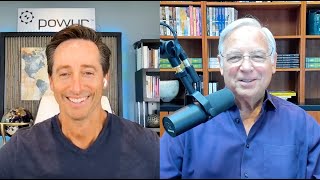
Interview (EP 35) of Jim Bunch by Jack Canfield exploring Jim's nine-environments framework (designing internal and external spaces to ‘inspire’ success) and his entrepreneurial impact work. Topics covered include practical tools (decluttering, hiring financial planners), the Ultimate Life platform and a gamified wellness app (previously in ~55 countries with ~20,000 users), Power (PUR) residential solar business (rapid revenue growth to ~$1B total revenue; operations across ~25 states plus HI and PR), equity crowdfunding via WeFunder, Impact CEOs network (connecting impact CEOs, investors, advisors), and perspectives on AI, blockchain, sustainable business, and scaling social impact. The tone is conversational, mix of personal stories and tactical advice.
Questions this video answers
www.ultimate.life
jimbunch.com (links to projects)
WeFunder (wefunder.com/forward/power)
~55 countries and ~20,000 users
Approximately 25 states, plus Hawaii and Puerto Rico
Chapters
Foreign. Welcome everybody. I'm really glad to have you here. I'm thrilled to be talking with Jim Bunch today. And Jim is not only a good friend but also a powerhouse when it comes to making a significant impact in the world through his innovative ventures in clean energy and technology and beyond all that been in the human potential movement. That's how we met many, many years ago. And he's taken a lot of the principles that he developed there and taken them out into the world. Organizations that need to be impacted industries, et cetera. We're going to talk about that. And many of you might remember Jim as we had him on as a guest expert in several of our programs, talking about the transformative concept of the nine environments, which is a fundamental tool and understanding how both your internal and external environments can either inspire you or expire you, as he says, which means holding us back so we don't get forward to where we want to go. And today Jim's work spans across numerous fields, including his role as a co founder of a company called Power and it's spelled P U R which is a public benefit corporation that's dramatically accelerating the adoption of clean energy around the globe. And under his leadership, Power has not only achieved remarkable financial success, but has also played a crucial role in sequestering billions that's with a B of of pounds of CO2 through residential solar installations. And Jim also leads what's called Ultimate Life Tech and an organization he started called Impact CEOs that are initiatives that are reshaping how entrepreneurs and leaders tackle the world's most pressing challenges. Today we're going to dive deep into how you can leverage your environments to foster personal and professional growth. We'll also touch on all of these other projects in energy education, blockchain AI. We could probably spend a week here just talking about all this. We've only got an hour, but we'll delve as deep as we can. So Jim, it's been way too long since we talked, so I'm really excited to have you here with us today to share your insights with me and also all the things you learned and your inspiring. I want not just your insights, but your inspiring journey, where you've come from and to where you've achieved because of what you've believed and what you've ascribed to and the principles you live by. So welcome.
Thank you, Jack. It's great to reconnect with you and it's an honor to serve however we can.
Whoever's listening, I appreciate that. I feel the same way. So I want to start with a quote that I heard from Bill Gates, who started Microsoft. And as you know, he said, most of us overestimate what we can accomplish in one year and underestimate what we can accomplish in 10 years. And I think your life exemplifies what can happen when you keep holding a big vision and keep acting on it. So let's dive into a few topics I want to explore with you that would, you know what, So I want to do exemplify that, if you will. So I don't want to go back to what I do want to go back to what you're focused on when I first met you and not spend too much time there because I know you've got so much more new work to talk about, but at least expose people to the breadth of your work. And as I remember, if you were working for Tony Robbins and you were traveling around, enrolling people in some of these big seminars will be filling stadiums with and so forth, and you noticed something that transformed your life and your work. Would you just talk about that for a moment?
Yeah, I was 30. That was 30 years ago. I was in my early 20s. To timestamp this a bit. And yeah, we put thousands of people every weekend to the seminar. They get excited, pumped up, some of them walk on fire and break arrows in their neck, you know, like all the, all the crazy fun stuff. And every one of them walks out of there excited, out of their mind to go change their health, their wealth, their, the relationships. But I didn't realize that 96% of those people were excited but didn't follow through until I started coming back to the same cities and I met some of those people. And I found out only about 4% of the people who go to the seminars were actually able to keep the results, you know, at that level. And a lot of them actually ended up becoming worse off. They would, because they were on such a high when they left. Then they would get, you know, overwhelmed or frustrated or like, why can't I maintain this energy? And then one of my mentors, Thomas Leonard, who's now passed, who's considered the, the grandfather or founder of modern day coaching, he formed the icf, the International Coach Federation, Coachville Coach University. I was his one private client. He was coaching 40,000 clients. I asked him one day, I said, why is it so many people want to change, but they can't maintain that change? And that, of course, is the concept of environments. And he said, most people are trying to use willpower to force themselves to not Eat that unhealthy food, or use willpower to force themselves day in and day out, to get up early and work out or start that business. But the environments are stronger than willpower. And if they learn how to craft or design the right environments, then the environments can do the work with them or for them. And that led me down a whole new path, Jack, as, of course, we've talked about it. And I started designing environments for myself and then for clients that would help them become happier, healthier and wealthier so that I didn't have to do all that work. They didn't have to, but they, they played this game that, that designed those environments, Right?
So unpack that for maybe like four or five more minutes. Talk about some of the environments and how they impact us. Because there's internal environments like your memetic environment. There's external environments like your. We think of environments often as the furniture and equipment around us and the clutter and all that. But just give a little bit of an overview, if you would, before we shift on to other things.
And yeah, it was, it was. This has been modified a bit, but this is the nine environments. In the very middle is the Y ou. That's the part of you that's always been here. You know, when you take your last breath and you release the body, this is the soul, right? And around this soul we have these memetics, as you mentioned. Mimetics comes from memes. A lot of people are familiar with social media memes and that kind of stuff. But this is your ideas, it's your belief systems. It's how you see the rest of the outer environments. And this is really that inner game. And we, we all know this, right? If you change the inner game, you have a lot better chance of winning the outer game. If you don't change that inner game, it doesn't matter what happens in the outer. It's going to go back to the old behavior. So the inner game, the psychology, your belief system is such a powerful piece. And I learned that from, from Tony Robbins and Bob Proctor and you and John Ashraf and other people who have been my mentors in really winning that inner game. Then you go to these outer eight environments. And so, like, I have a body, you have a body, right? We have a self environment, which is kind of like your strengths, your gifts, your talents. If you've ever taken a. An assessment or a profile, that's what that is. And then you got a spiritual environment, which is your connection to higher power. It's not religion. Religion Is two or more people with a common belief. That's a memetic. But spirituality, right? That connection to a higher power. Nature, of course, is life, seasons, outdoors. Your physical is a big one. This is your home. This is your office. And it's everything to do with, like, the lighting, your artwork, your desk, sit down, stand up, you have clutter. Is it clear, believe it or not, that's working on you 24 hours a day, seven days a week. And we've all been in a space where our environment's clean and clear and organized. And your mind, you know, your outer environment is then allowing the mind to be focused. But if you go into an environment that's got a lot of chaos or things are broken, or you've got stuff everywhere, your mind has to process all that, and so it oftentimes gets distracted. So your physical environment, again, is one of the first one that people realize that it's either inspiring me or it's expiring me. Because every environment's carrying energy that inspires you or expires you. That adds to your success, or it's draining your success. Of course. Then we've got financial environment, which is your money, it's your businesses, it's your possessions, all that. Then you've got your network, which is. We've all heard this. The five people you surround yourself with, or in our case, the 500 or 5,000 people. You know, you've got social networks and then your relationships. You know, your relationships are the people who are closest to you. Your friends, your family, your loved ones, your pets. And all of these environments are energy. So they're adding energy or they're draining energy. And if you start working on one environment, what's cool is because they're all connected, it sends a ripple through the other. So somebody starts working on their health, all of a sudden, boom. They start having better ideas, they start making more money. Their relationships improve. But it works in the opposite, too. So to kind of recap, that's about the fastest I think, I've ever done the environments.
That's good. Well, you know, our work with the people we work with, we constantly are working on this. And we're really grateful to you for the model. And I know for me, just in the financial. When I added a financial planner and then someone to run my family office, which I didn't even know existed, all of a sudden my life got a lot easier, and I didn't have to think about that. It's not my genius, you know, and we just had a group of people in a training we were doing where they were all cluttered to the max. And these seven women got on a zoom call on a Saturday morning and every hour they would meet for five minutes. The zoom call would stay open. They go declutter for 50 minutes, come back, tell each other what they were doing, share ideas. You know, if you go to Home Depot online, you can order this thing to put that under the bed with. And. And they really just made a huge. And they called me and they all said like, I can't believe how much freer I am, how much more creative I am, how much I feel like I want to rest in this room now instead of just walk through it quickly because I hated it. You know, so all of these things are so critical. If, you know, you, you started when I met you, you were running the ultimate game of life and now you have ultimate life and you've, you know, if someone wants to learn more about the nine environments and take that part of this away, where would they go? What would they do?
Yeah, they can go to www.ultimate.life it's not a dot com, it's a dot life. And they can find information there. All of my projects, you can go to Jim Bunch J I M B U n c h.com and at the bottom it hyperlinks over to whatever crazy new stuff I'm up to. And then I have not been on social media in a while, but I'm going to re engage on Facebook again. You can find me there. And that's. We give away resources like this. I think if 8 billion players in the game of life understood the environments and how to be happy, healthy, well wealthy, it make it easier for all of us to win. So.
I noticed you have an app on Apple. Could you talk about that for a minute?
Yeah, so. And we've gone through a couple of iterations. We're in between platforms right now. But years ago I realized that there wasn't an app to track daily happy, healthy, wealthy actions and give us points and prizes and leaderboards and badges and, you know, chat with the community and all that. So we built the app. It was going really well. It was in about 20 plus countries, sorry, 55 countries with about 20,000 people. And then the development partner, you know, went a different direction. So we're actually right now trying to figure out, do we rebuild that ourselves? Do we find a tech partner? So there's very limited capabilities on that app, but we will happily let people know when the new ones coming out.
Well, what I've been learning about apps is they're expensive to make. Then when you have it, you gotta maintain it. And then Apple and the other guys, they change their platforms, then you gotta reprogram. It's a lot of work. So anyway, people can look forward to that. And there's this worldwide community you have that all. You gamified a lot of stuff and that was one of your great breakthroughs. I think that helped a lot of people say, okay, I want to play. And we still use that concept in my work. Gamifying a lot of things because then people are engaged. So it's good they can find out more about that. So let's talk about sustainable living Made simple. You really have entered into that world. Your company, I just read across a billion in total revenues. And so you're in the world as an entrepreneur in a major way, which is something you always wanted to do, and you're applying, I assume, all the things you have taught us and I've lived by and so forth. Talk about building such a massive impact.
Yeah. So for those of you who are entrepreneurs and we're 12 years into this venture, just so everybody knows, it was almost 14 years ago that my friend Jonathan Bud and I went down to the Amazon rainforest with Lynn Twist, who I met through the Transformational Leadership Council, and Jack, I found the original Pachamama symposium book from 2007 that you and me and Lynn did at TLC.
Oh, that's too funny.
Yeah. For those of you who don't know, Lynn Twist and and Bill founded Pachamama, which is really to educate people about the importance of the impact we're having in the world, you know, the environment. And it was the first time I had ever been exposed to that. I started donating money to the nonprofit. And then Lynn calls a couple years later and says, hey, would you like to go on a private trip? Just a small handful of people deep into the Amazon rainforest. And so we were down there, we were working with the leaders, the indigenous leaders down there.
And.
And my partner Jonathan actually had the vision to come back and build the world's first technology platform that allowed the, you know, United States and eventually the rest of the world for anybody to sell, buy, install solar at scale. And so that was the idea came back and started that company, raised a little bit of capital, just a little over a million dollars. And that took us really into the beginning of building out this massive software platform that started 12 years ago. The first five years was incredibly hard. We didn't know anything about solar. We hadn't built this kind of technology before. We partnered with SolarCity as our install partner and they were having their problems. They were later on acquired by Tesla. But the long and short. Fast forward the last five years. The model took off. So we went from 0 to 1 million, then 2 million, then 5 million, 8 million. And then five, five years ago, we went from 8 million in revenue to 100 million, then 200 million, 300 million and then 360 million. So crossed over about a billion in five years time, even though it's been 12 years since we started.
Well, that's impressive because of the. Yeah, 1 billion in total revenue. So. So let's talk about that a little bit. Like, here you are, you've always been a visionary. You've always cared about the world, people, the planet, et cetera. And I want to unpack the journey a little bit. So you raised a million dollars for a lot of people. They go, yeah, people. You could do that. Was that easy for you? Was that hard for you? How'd you go about that?
I think anything you don't know how to do is hard at first. It's mostly you come up with the idea and then you spend the next couple of days, couple hours, days, weeks, months, talk, trying to talk yourself out of it, but realizing you have to do it anyways. And so not knowing how to do it and being one of the first to do crowdfunding. So we did one of the first equity crowdfunding. As a matter of fact, we were the first to raise over a million in 28 days. You know, in hindsight, Jack, for those who are interested in that we did on the We Funder platform, you can go to We Funder.com forward/power, and you can see exactly what we did. You can see the videos and the copy and the business plan. It's all there. I would tell you it's like anything, just make the decision you're going to do it and do a hundred times more work than you think it's going to take, because that's what it actually is. And everything that can break will break, but we stay committed to it. We made it happen. And it's really like anything else. You focus on it, you get better as you do it every day. We made a list of people we wanted to talk to. Most of the people we thought we were going to invest didn't. And the people we didn't know or didn't think they did invest. And we got just enough capital to take us through the next stage. And we almost Ran out of that and had to do another round and, you know, welcome to the game. Right?
Yeah. Well, good for you. It's the same with Chicken Soup for the Soul. You know, we, first of all, it took us forever to sell the book and then it took us almost 18, 14 months to get on a bestseller list. But we did five things every single day. The rule of five that we teach. And, and I remember getting up at three in the morning, doing radio shows in New York and, you know, whatever, and just constantly, sometimes five days in a row, like 15 radio interviews, you know, from 5 in the morning till 7 at night and then going, doing free talks everywhere and selling books in the back of the room and having a van with boxes of books in it. And now, you know, they pay me first class airfare to go all around the world and pay me a lot of money to talk about things and. But it wasn't like that in the beginning. You know, like you said, you know, you had to learn by doing it and be committed to it. That's the big issue.
Well, funny, funny aside about that too, Jack, is we're about ready to move out of the beach house that we've been in here for 10, 10 years watching surfers and dolphins and joggers and all that. And some of the pictures on my computer keep scrolling up of when we literally would have dinner parties here at our house and we'd pack 20, 30 people around a TV in our living room and we'd talk about this vision of the company that we're now, you know, living. And we have what, 360 employees and 7,000 salespeople and, and you know, at the time we were lucky to get, you know, 15 people in my living room talking about what we wanted to build. That was, you know, ten years ago. So.
Yeah, yeah, good for you. Good for you. So let's talk about greener and, you know, solar and just, you know, here you care about this, obviously. And we all know about the importance of having more green energy, but if people want to pursue that in their own life, we just put in, have you been to my house? I think you have multiple. So we have this big hill that goes from the top of the property down to the barn. That whole hill is now solar. And my electric bill went from 1200amonth to about $12 a month. And also we feel good about it because we're doing something that makes a difference. But for people that are kind of don't know as much as, you know, just talk about that for A little bit, yeah.
I mean it's first off, it's complex. We sell Solar in 25 states plus Hawaii, plus Puerto Rico. Right. And what a lot of people don't realize, it's different in every market. So I'm going to give that disclaimer. You know, you and I are both in California. You're in Santa Barbara, I'm in San Diego. And so welcome to California where we have, you know, the highest energy rates in the country with the exception of Hawaii. But what I encourage most people to do is to find an expert and then just give them your electric bill. It's literally that simple. Nowadays they can look at your electric bill, they can size your house and tell you whether it does or doesn't make sense. And that's what I tell people. For most people it's a financial decision first. I would love if everybody made the environmental decision. But I get it, it's, it's a financial decision. You know, a lot of things have changed in the last couple of years, especially in California with it. But find an expert. You know, you can go to power.com or power.com impact if you want. My wife actually she started selling on our platform a few years ago and has helped over 150 homeowners go, go clean energy. Just herself. She's got a team of over a thousand people that sell solar right now. So we're, it's a family business at this point. Even my kid had his Japanese teacher got solar from, you know, my mom and he's, you know, he was like mom, some, my teacher wants solar. Will you talk to her? And she's like yeah, of course. So.
So your son's learning Japanese?
He is actually in Japan, Jack, right now. He's going to college in a couple of weeks, but he went to Japan for two weeks. Apparently he's fluent and he never spoke a word to us.
You know what's so funny? I don't know if you noticed but my oldest son, he's not married but they're, they live together and they've had one son, my grandson. I call her my daughter in love instead of my daughter in law and she is Japanese, comes from Japan and though my, my grandson is half Japanese, he looks like a little guy you'd see in a karate movie or something. And he goes to Japan every year with his mom and his dad for about a month. Goes to Japanese school, goes to the classes and he went to a Japanese, English kind of combined school in New York for the first five years of his Education. And so that's funny that you've got that same thing going on. I love it.
Yeah. It actually came about during COVID He started watching anime, he drops out of Spanish, starts studying Japanese. He went through six Japanese things. We had no idea he could speak it until we had an exchange student come to the house. I'm sitting at this end of the dinner table. Michelle's at the other Tegan, my son is here. And Haruto, the Japanese student. And they bust into this full on Japanese language. We're like, oh, I guess he does know it. So he's going to school for, you know, Asian language studies and international business and he leaves in a couple of weeks. So you just never know, you know, follow your passions, your interests and. And I think this is one of those stories. We'll see how.
Yeah, well, it's interesting though, internationalism, it's moving around the world. So I know you know a lot about blockchain AI, all this stuff that's coming along in terms of the digital world, and I know a lot of people are feeling overwhelmed by it. Some people dove into it, some people are still on the sidelines. Talk about your experience with all that and what you would recommend to people in terms of as things move forward, what they ought to be thinking about or doing.
Yeah, I think for most people, I'll talk AI first because I think that's the primary conversation most people are familiar with. And you know, I always tell people, I say, listen, if, if you are not getting familiar with AI right now, that would be like saying, I don't want to learn how to use a word Doc or a Google Doc 10 years ago. It is pervasive. It's already in a lot of our technologies. I don't think people realize that. But the. I didn't want to do this, but I was asked by a friend of ours, Dr. Fab Mancini, to, to launch an AI mastermind, specifically in this case for health care business owners and that, you know, kind of got paid to. To learn it and dive deeper into it in addition to what we were doing with our companies. But the long and short is, you know, we're in the business world, we're integrating it into every area of business. And, you know, it actually has forced me to look at all of our businesses and how to scale them differently than I was even two years ago. So for marketing, for sales, for customer support, for finance, for legal. Just the other day, you know, I took, I've hired some CEOs to run a couple of My businesses. And I took the performance of CEO A and CEO B based on the financials for their time periods. I threw it into one of the software's ChatGPT and I said, here's two CEOs, please analyze their performance. Tell me what you think each One of these CEOs strengths were and their weaknesses and how would we get them to improve. And within seconds it gave me most of the stuff. I kind of picked up on one or two things were wrong, like flat out not right, but from, from, you know, 10 seconds of analyzing 15 years of P Ls. It gave me some pretty interesting insights I hadn't thought about, you know, so that's pretty incredible. We've got people that are building, you know, brand new companies from scratch and building their AI through marketing. You know, I was just testing some tech the other day that does outbound calls to customer lists to do surveys and you could not tell that it was not a human. So yeah, it was a voice outbound call system calling customers, say, hey, we notice you just bought this product. I'm curious, what did you like and what didn't you like? It waits, takes the answers, and then it knows how to ask additional questions. So we're entering into a really interesting world. There's obviously a lot of pluses to that. You can scale these impact companies with the same amount of people. Some people are letting people go who, you know, they're, they're being replaced by AI. I encourage all of our CEOs to not replace the humans, but, but to figure out a way to make a greater impact with the same team and teach all of them how to use these tools to get better.
No, you know, one of the things we're playing with, we haven't done it yet. It's like taking this podcast we're doing and literally translating it in five minutes into Spanish, into French, into Japanese, you know, whatever. And I remember the first time that I watched that happen, someone came up, gave a three minute talk, and then within seconds watching them, the lip movements are perfect, the eyes are blinking correctly, you know, and you would never know. Voice was perfect. That was amazing. So we're exploring that, like, you know, get our work, all of our online courses into all these other countries. So that's a big scalability thing for us that we're looking at as well. Cool. Another thing that happened, Patty, you know, my partner who, you know, Patty Aubrey, she's been really delving deep into it along with Mike Koenig who's been mentoring her and the Other day she just asked AI, she said, take Jack Canfield's book, the Success Principles. And if you were to build a 3 month, 50 minutes, twice a week class for a high school on these principles, what would the curriculum be? And within five minutes it came back with the whole thing. It would have taken me weeks to figure all that out. You know, it's like, oh my God. Yeah.
So it gives you the course outline. There's a couple of platforms that do that now too, in addition to GPT, but it can give you, give you the course outline. Then you can have, you know, have it build out the content, write the scripts for it, tell your, your AI avatar, you know, in your voice. You can train that within a couple of hours and you can have your own AI avatar. I don't know if you've played around with bots, but I've, I've had a couple of CEOs who build these bot companies give me access to software and say, hey, we'd like to take all your, your information on all the trainings you've done on life and business and dump it in there. So you have a 24,7 gym bunch bot. So we're testing that right now, whether it's free or a subscription, you know, whatever it is. And then training bots to answer your team's questions. Like, we're building a platform now that has a, an AI marketing bot, sales bot, a support bottle finance bot. And eventually these bots will turn into agents that allow them to start working together to make decisions about growing and scaling and automating your business. So it's pretty wild stuff.
I love it. I. Do you know who Eric E is?
I, I know Eric well.
Yeah, yeah, yeah, the wild fit. And I interviewed him a while back and we were talking about his first experience with AI. Was he. He said, write this chapter for me for a book I'm supposed to write a chapter for and look at all my work and write a chapter. And he got it back and he said, that's really good, but write it in the voice of Eric Edmeads. And then this is what blew me away. The AI said, oh, we've just looked at all Eric Edmeads stuff and his style is very personal, very conversational. We kind of like that. And we probably think people will relate to it a lot better. Let me get on that. And then five minutes later, it came back in his voice. I, I loved it. It was too much fun. All right, so you serve as the chairman of the board with the US Green Chamber. Of commerce. And their mission is to protect and promote America's emerging economy because as it stated, we believe businesses are the solution to fulfilled life, healthier planet and thriving economy. Can you talk about that for a moment?
Yeah, and I'm not as active in that as I was. It's more of an advisor role to the president of it. The concept is really simple because I'm, I'm off building now more companies. But the, the concept is really simple. If we can move all businesses to more sustainability, in other words, to have less of an environmental impact with the products they create and the services or, or how they do that right. Then we're going to move humanity into a better place. It'll it and it's actually financially better for most of these companies to start thinking about how do I align my business ventures with, with nature. It just makes sense. And so that was the initiative there and it's now spread to multiple countries. We have chambers, green chambers that have started all across the world. And it's educating business owners on some of the ways to make their businesses more sustainable. Whether they switch, you know, manufacturing processes or materials or you know, leverage more technology, use clean energy when know, powering that technology, these kinds of things to move them towards the SDG Sustainable Development Goals.
Okay, cool. So you, you, you, you're the, you've started this group that deals with impact venture capitalists and CEOs of companies and so forth. Talk about if someone wants to start like you're inspiring to me and a lot of people are going to watch this and if they want to do something similar that has this potential global impact or at least local impact on the environment or impacting anything because it's, you know, I have a friend who builds schools in Africa and he's all his money goes into doing those kind of things and he's an impact venture capitalist, if you will. So let's talk about that. Like you, I think you mentioned, or someone did recently about, you know, your business should be not about something you want to sell, but something you'd want to buy.
Oh yeah. So that was a concept around the core business wheel and I'm happy to share that and then to go into this other piece, but I mean, yeah, so this is how, you know, just like I look at nine environments, this is how I look at all of our businesses. And it starts with the values, the mission and the vision in the middle and then you build your products and services to fulfill on that, that center of the why. The why is the mission, the vision and the values. And then how we go to market, how we sell, how we support, you know, HR is the hiring, the coaching, the training of our teams, then legal, finance, ops and technology. So I look at our companies holistically like this. And so when I'm, when I'm looking at, you know, building a business, most people will tell you, oh, build a business you can sell someday. Right? One that has all of these pieces that's either fully automated or fully staffed and fully funded so that you can exit that business. My philosophy is a little different. My philosophy is build a business not just that you'd want to sell, build a business you want to buy so that it has all of these things in place. Something that is vision, mission, values driven, that has world class products and services and that market sells and supports the community that you're building those products and services for. So for me, that was that concept there.
Okay. And yeah, when I read it, I misinterpreted it. I said, build a business you'd be proud of. Did you want to own because it's doing such good work. So you have this group that you started, I think you started it, a CEO impact group and so forth. Talk about that.
Yeah. So this was actually a download in the middle of the night. This was not like, oh, I need another project on my hands. But what had happened is, is that we had a gentleman by the name of Paul Hawkin. Have you ever met Paul?
Oh, I know him very well. Yeah.
Okay. So we had hired Paul to come to our power studios and to be one of our keynotes, that we were broadcasting everybody. And afterwards, Paul and I went into our boardroom and I just loved his, his book, you know, drawdown. And it says draw down the most comprehensive guide ever proposed to reverse climate change. And so I read that and his other regenerate book. But inside of there, on page 222, he's got a chart. And that chart has all of the industries that are producing the most carbon that's basically heating up the planet. And so I looked at that and I remember that day, I read that chart and I went, wait a minute, there's only 80 industry categories here. There's 80 categories. There's 8 billion players in the game of life. There's unlimited money. We're printing capital like, you know, it's going out of style. And I go to bed that night and the next morning I wake up and I have this download, this vision that if we brought together three types of people, we could literally shift those 80 categories. And that's where I was told to leave bed, come into the office, type into the computer the word impact CEOs. And it was available in the domain, so I bought it. I get ready to go back to bed, and it says, come back. And it gave me like five other URLs to by. But the concept was this. If we could bring together the world's best impact CEOs, who are vision, mission and values driven, they built, sold, and exited companies, we could bring together the second group, which is the impact investors, the people who are either running private equity or venture capital, or family office or crowds, you know, the crowdfunding, whatever it is. People who want to Support those impact CEOs, those are the impact investors. And the third group is the impact advisors. These are the men and women who have expert knowledge in building companies or in technology or finance, whatever it is. If we can bring those three groups of people together to solve these 80 problems, we could literally shift the course of humanity. And I know I'm not the only one who's had a similar concept, because I'm starting to see other organizations come up. But the idea is there's millions of nonprofits out there, still over 2 million of them. They're all solving the same problems, but they're not playing together.
Right.
And if we could get people to play together and go, these are the 80 problems we need to solve. Or as the United nations said, There's 17 sustainable development goals. If we could get everybody to focus on those for a short period of time, we could shift the course of humanity in 10 years or less. And that was the vision, that was the download. Of course, as soon as I started that, you know, I got pulled into this blockchain company where we have 12, 12 companies that are doing that, and they're solving food, energy, health care, transportation, banking, like all these. These different verticals. And so that took me into my next conversation of all right, now I need to understand this concept of blockchain technology, which is going to decentralize all these things instead of centralizing. So, yeah, that's. No, it's a lot to process, but that's how CEOs came about.
Yeah, no, it's cool. The question is, like, I think in general, we watch the news and we see all the negative problems, you know, the climate crises that are showing up with wildfires and floods and heat domes and God knows all the things we're watching, and barking dogs that are outside. Anyway, what happens is I think there's a lot more going on that's good that people don't know about. Like, you know, I think you might know Ronaldo Brutico and Dawa Phillips and so forth. They're, they've created a program now to move hydrogen using blimps and putting pipelines where there's already pipelines and they push a pipeline inside a pipeline to get it to where we need it, like at gas stations and so forth. And I, I invested in that company and they're doing amazing things. They got all these new patents. Nobody knows about it. And so I'm just curious for you, because you're in that world as you're looking around and seeing the things that are happening, are you optimistic that we're going to get there and talk about that lack of awareness that we have because we're so over inundated by negative effects of the things that aren't working?
Yeah, I think it depends on where you get your media. Right? So if you get your media from traditional media sources, you know, their, their whole MO is to get your attention with the most dramatic footage. So that's, that's how they do it. And it used, you know, it used to be that they sold sex, now they sell fear. That's, that's the main media. If you go to social media, you're going to get a mix of whatever you've plugged into that algorithm. So if you're looking at puppies and kittens all day, that's what it's going to serve up, right? If you're looking at, at riots and you know, whatever you're going to get that, if you're looking at positive news and you're looking at impact stuff, you're going to get fed more of that. That's an algorithm, so it's operated a little differently. If I zoom out, Jack, I'm a bit of a realist in this. I'm optimistically realistic. So do I want humanity to step up and play a new game? 100%. That's part of why we're actually building a decentralized social impact platform. So instead of like your Facebooks and your Twitters and this and that, we're going to control the focus inside here to show here's the people who are doing great stuff in the world. Let's, let's focus on that. But if that doesn't work in time because Mother Nature doesn't, it's not going to wait. Right. Mother Nature is doing what Mother Nature is doing in response to us. And I think Covid was a great wake up. Like if we ever thought we couldn't do it, we couldn't shut down humanity. We did that during COVID for a couple of years. And nature came back. The Venice canals got clear and there were dolphins. They saw for the first time. You can see Kilimanjaro from 30km away. And they've never seen it because all the smog and float, you know, smoke that was there. So we saw that when humans stopped contaminating, nature came alive again. So I, I think nature is going to win no matter what. I hope that humans can leverage this new technology that's coming out to create less of an environmental impact and to clean up the air, clean up the water, and then clean up the land. It's that simple. So, you know, we have an impact. I don't know if, you know, if you don't believe it, then go take a gas powered car, sit in your garage for, you know, an hour and tell me how that works out for you. Right. I'd rather be sitting in my garage an electric car than I would a gas powered car. So.
Yeah, yeah, go ahead.
So, so when you look at the total numbers and if you haven't used chat GPT or something to do this, look at the data that's real. Look at how many cars are on the planet, how many offices are on the planet, how many refrigerators, believe it or not, every home car and, you know, grocery store and 711 and whatever has an AC unit. That's the number one cause of carbon releasing is the manufacturing and the air conditionings around the world. I mean, there's billions of them out there. And so we can change these things. We can change the way that we buy and use these products and services and we can have a better future.
I saw a headline the other day and it said we can't air condition the entire world. And there's a wake up call with that. In terms of what you're talking about, my favorite cartoon from the pandemic was two panels. First panel there's all these people looking at animals in the zoo, and the next panel was all these animals looking through a plate glass window of all these people in their living room.
Exactly. Yeah. It's a perspective shift, isn't it?
Yeah. We're getting close to ending here. Is there a question you wish I'd asked you or anything you'd like to talk about that I haven't brought up?
Well, I'd love to know you're out there talking to a lot of people from a lot of different companies. And a lot of different organizations. And I was doing that for a while, and now I'm focused on these particular projects. What are you optimistic about with the future and what do you hear from people out there? What do people want to have in their future?
I think everybody wants the same thing. They want a safe planet where they can breathe and not have the forever chemicals coming in through their water and their food. And, you know, I mean, people are waking up. You know, when you talk about umbilical cords of babies having plastic in them, when you look at all the islands in the Pacific where there are birds that are like thousands and thousands and thousands of miles from everything, they're dying. And when they do the thing, they got plastic in them. We're seeing the fire. I mean, people are starting to wake up and go, wait, this is not working. So I'm seeing more of that awareness happening everywhere, both in corporations and individuals. In the schools, I see young people because I do a lot of work with educators and young people, whether it's Gen Z or whether it's kids in high school or college who are basically not buying into the same BS that we all did growing up that I did. And they want to hold corporations and government responsible for this and start to have solutions, not just discussions. And they're willing to invest their time and energy in that, not just protesting, but in their changing their behaviors. So I see a lot of willingness to do that. I see through Lynne Twist, who started the Pachamam alliance, as you know, whose goal was to both save the rainforest because of the. It's the lungs of the earth, but also bring the indigenous wisdom of the south, they call it, to the north. The north, which is us, as you had your experience there, which helped create what you're doing now. And what happens is, I think that we're seeing a lot of. Through her, I'm seeing a lot of corporations that are starting to say, wait a second, I have grandchildren. This matters to me. And I didn't see that even 10, 15 years ago. And I think that's happening more. There's still a lot of greed. I mean, we're seeing that in the oil industry. That's got to get dealt with at some point. I mean, the reality is that there's a lot of people that are. They're dead to themselves. In other words, you and I are tapped into our souls. We're tapped into intuition. We take downloads like you talked about. We act on them. A lot of people are so wounded by their childhood traumas, they don't really have access to that. Their empathy is not fully there. And so we see things politically and corporately where you go, how can people do that? But a lot more people are saying, wait a second, we're not going to settle for that. So I don't know what's going to happen. I'm like you. I'm optimistically realistic. I see a lot of counter forces. But, you know, I am believer of some spiritual principle that says everything is happening for you, not to you. And therefore these are crises. Just like hitting bottom if you're an alcoholic. I think we kind of are hitting bottom, or maybe we actually hit bottom with the pandemic. I think maybe we have a little farther to go, maybe certain areas with certain people, countries and so forth. But I think we have to maybe hit bottom, wake up, to stop the addictions that are fueling us. The addictions of power, the addictions of money, the addictions of consumerism, et cetera. But I think it's slowly moving. So I'm, as I said, realistically optimistic. I think we can turn this around.
Yeah, I. I agree with you 100%. And I think most people will be happier and healthier and wealthier with this new game. It reminds me of Buckminster Fuller saying, don't fight the existing reality. Create a better one. And I don't put my energy into what they're doing. I think you're right. There's a number of people, individuals, corporate. And I don't want to say corporations, because corporations are people. So let's just call them people. There are people who are embarked on a very dark game of power and greed. And then you've got another whole group of people that are embarking on a lighter, brighter, better, quote, unquote, vision and mission. So choose which one you want to be. It's. It's really that simple. And get around the people who are creating the game that you want. And you know, and you know, I was talking to my son about this. He's 17, 18. And I said, listen, that. Don't just envision the world you want to create. Go create it. I'm sorry, don't just envision the world you want to live in, go create it. Because the moment you make that decision, you start feeling better. It's like, you know, cleaning up that clutter. It's instantaneous. The moment you start taking action on that vision of the future you want for yourself, your family, your community, your country, the world, it immediately aligns you with that energy, and you're there. It's not a 10 year down the road. It's like I'm experiencing what I want today.
Yeah. And start living, experiencing it now, that is like, you know, don't wait for it to show up later. But if you're wanting to have a better relationship, start relating better now. If you're wanting to live a more ecological, sustainable world, make sure all your behavior is supporting that and you're living within that. You're experiencing it.
I, that reminds me, by the way, real quick, that reminds me of one of our first conversations and we were doing the game. You remember that? And you're like, you want me to do push ups now?
I do. I'll tell people about it. So some number of people from the Transformational Leadership Council, Jim offered us, you know, to coach us and we do a little group together. And I'm on the phone and he says, okay, so what's your, what's your goal? What do you want to accomplish? And I said, I want to lose some weight and be healthier. He says, great, put down the phone and give me 20 push ups. I said, no, Jim, I'm talking about joining a gym, maybe eating differently. And he said, no, Jack, put down the phone and give me 20. I think we went back and forth five times before I actually did it. And what you were trying to teach me and what I did get was, it's not about, I'm going to do this tomorrow or before I go to bed tonight. Now start now. Do something different now. Take a deeper breath now. You know, put that was it. I think it was you. Someone I know was telling me they were at a party and this person was asking about losing weight. They had a chocolate in their hand or something and the person, maybe it was you said, well, put that down. And they laughed at you and said, okay, they're not going to lose weight.
But I think it was, might have been David Goggins. He gets on people about that too.
Yeah, it's called, you know, like now right now. So that was good for me. That was a very helpful thing that you taught me when that happened. So I appreciate that. I still tell that story occasionally.
I love it. I love you and I love that you were like, let's, let's do it. And you, you not only did it, you brought it to so many more people, you know, and I think that's. It is like there is no future. It's right now. Everything is right now. And let's, let's live for now and then let's help others do it.
And I would just end with this for both of us. I mean, not. I mean, the podcast. I'm going to say my final statement, then you can add anything you want. But for me, I now I lost my train of thought. Wait, Gim said. It's about. I am having a Joe Biden moment. Honestly can't remember what I was going to say.
We were talking about the chocolate, and then we were talking about the do it now.
Do it now. Oh, my God. It's too funny. I can't remember. So I'm not going to, like, take too much time trying to do that. But the reality is we all have the potential to create whatever we want. That's what I was thinking about, is that you and I. And this was what I was going to say. When I started tlc, I invited a lot of people to my living room and said, 30 people and said, would you like to start an organization of people who run transformational trainings? And all but two said, yes. And now we have 140 people from all around the world, some of whom we've mentioned on this call. And what happens was, I didn't think anyone would come because I didn't think I was anybody that was anybody that they would respond to. I mean, who am I? I'm Jack Canfield, right? And I think it doesn't matter who you are or how well known you think you are or how influential you think you are, there's someone that will respond to an invitation, whether it's your neighbor, someone else in your church group, whatever. And as a result of having the courage to reach out and say, okay, I want to create this organization which has now created so many good things, so many good things as a result of all the members and how they play together and how they've cooperated together and written books together and gone to each other's seminars and meeting Lyn and going to the rainforest, whatever it is. Because I had the courage to step out of my comfort zone. And you talked about stepping out of your comfort zone and how big it was and how scary it was, but you did it anyway because you were committed to the vision, the mission, and the values. And I think if we all tap into that, who are we? What are we meant to do here? Because I believe every one of us has a purpose that if we tune in, it tells us you get downloads as you turn intuitional hits. And if we have the courage to act on them, we can create anything, or at least what we're supposed to be creating. So you've done that. You've exemplified that in this call. And so I think it's a truth we all can step into and create amazing things in life.
I love it. I don't have anything else to add. Jack, you. You said it perfectly, and I think that's a great way to lead people as inspired.
Okay, good. Well, Jim mentioned a bunch of websites and things where you can reach him. We'll put that on on the show notes that you can contact him or his organizations and just encourage you to act on the things you heard here today and to be inspired and also to take that inspiration to move it into action. You know, Jim, one last thing. I wrote a quote for a book the other day, like a testimonial quote. This woman created a new term called affirmotions. You know, we talk about affirmations, but affirm motions put you into motion. You're not just affirming it and visualizing it, but you're then acting on it, as you were saying, like, you know. So I love that new concept, and I think we're seeing more of that being stated that you got to take the action. So good reminding everybody of that. All right, my friend, love you. Thank you for being here today. Appreciate it.
Love you too, Jack.
Okay, and all you watching, make sure you tune in next time. Tell people about this podcast that you've just watched. Let people know about it and appreciate all of your taking the time to grow yourself and to make a difference in the world. Take care, everybody. Bye.
More from Jack







[EP 46] Creating Your Own Luck: The Power of Self-Confidence with Veronica de Andrés

[EP 45] Rewiring the Brain for Bliss: Activating Your Spiritual Intelligence with Dr. Dawson Church


[EP 43] Transform Your Life Through Visualization and Emotional Intelligence with Natalie Ledwell

[42] Enhancing Your Health & Longevity Through Peptides and Functional Medicine with Regan Archibald